© 2018, IRJET | Impact Factor value: 6.171 | ISO 9001:2008 Certified Journal | Page 2398
Study on uses of recycled material in Highway Construction
Shweta Sinha
1, Piyush Das
21
M.Tech Scholar,
Department of Civil Engineering, Kalinga University, New Raipur, C.G, India,
2Asst. Professor, Department of Civil Engineering, Kalinga University, New Raipur, C.G, India.
---***---Abstract
-The materials chosen for structural upgradation should not pollute the environment and endanger bio reserves. They should be accessible to the ordinary people and be low in monetary cost. Coconut fiber is an abundant, versatile, renewable, cheap, lignocellulosic fiber and more resistant to thermal conductivity. The aim of investigation is to study the possibilities to use the coconut fiber in addition to the other constituents of concrete and to study the strength properties. A literature survey was carried out, which indicates that the detailed investigation of coconut fiber concrete is necessary. In the present study the deformation properties of concrete beams with fibers under static loading condition and the behavior of structural components in terms of compressive strength for plain concrete(PC) and coconut fiber reinforced concrete(CFRC) has been studied.
The testing of various material constituents of concrete was carried out according to the Indian Standard specifications. To identify the effects on workability and mechanical strength properties due to the addition of these coconut fibres, workability tests such slump, vee – bee, compaction factor test, Flow table tests, and the mechanical strength tests on standard specimens such as compressive strength, split tensile strength, modulus of rupture were conducted on the different aspect ratio. The standard cubes, cylinders and beams for conventional concrete and coconut fiber reinforced concrete were prepared and tested under compression testing machine and flexure testing machine respectively. The suitability of CFRC as a structural material is studied
Keyword
-
coconut fiber, strength, Conventional Concrete, Eco-friendlyIntroduction-
As the world population grows, so do theamount and type of waste being generated. Many of the wastes produced today will remain in the environment for hundreds, perhaps thousands, of years. The creation of non-decaying waste materials, combined with a growing consumer population, has resulted in a waste disposal crisis. One solution to this crisis lies in recycling waste into useful products.
Research into new and innovative uses of waste materials is continually advancing. Many highway agencies, private organizations, and individuals have completed or are in the process of completing a wide variety of studies and research projects concerning the feasibility, environmental suitability, and performance of using recycled products in highway construction.
These studies try to match society's need for safe and economic disposal of waste materials with the highway industry's need for better and more cost-effective construction materials.
This article summarizes current research on those waste materials that have shown promise as a substitute for conventional materials. It primarily focuses on new and innovative highway industry uses for waste materials and byproducts, rather than on more commonly followed practices.
Literature Review
Dried CS contains 33.61% cellulose, 36.51% lignin, 29.27% pentosans and 0.61% ash ( Shelke et al. 2014). CS has low ash content but high volatile matter which was about 65-75% ,Nagarajan et al. (2014) [1], CS also has resistance against impact, crushing and abrasion compared to others conventional crushed granite aggregate ( Shelke et al. 2014). It can be mix with asphalt mixture directly for the experiment except water absorption test.
Abiola et al.(2014) [2], reported that there have two methods to mix fiber into bitumen modification. The wet process blends the fibers with asphalt binder prior to incorporating the binder into the mixture while the dry process mix the fiber with aggregate before adding asphalt.
From the experiment result, Abtahi et al. (2008) [3], stated that there is no difference in the Marshall properties between the dry process and wet process. However, the dry process is easier to carry out and better distribute the fiber in the mixture. Besides that, there is no advantages carry out wet process since fibers would not melt in the
asphalt and the field work normally used dry process.
© 2018, IRJET | Impact Factor value: 6.171 | ISO 9001:2008 Certified Journal | Page 2399 0.5% of coconut staple fiber is workable in mixtures of
types SMA with CAP 50/70 can prevent the flow parameter. The length of coconut fiber should not be more than 20 mm.
On the other hand, Thulasirajan et al. (2011) [5], conducted a study on flow, stability and volumetric properties of the modified fiber with coconut fiber by varying binder content, fiber content and fiber length. A 5.72% of bitumen content with 0.52% of 15mm of fiber content shows good stability and volumetric properties. The research can conclude that coconut fiber can improve the structural resistance to traffic loads in flexible pavement
Hadiwardoyo et al. (2013) [6], has investigated the contribution of short coconut fiber to pavement skid resistance and the results are presented. The length of coconut fibers used was 0.5-1.25 cm and mixed with pen 60/70 asphalt and the percentages of fiber contents used were 0%, 0.75% and 1.5%. The modified asphalt mixtures mixed with course aggregate then mold and compacted with wheel tracking compactor by using an 8.16 ton of standard vehicle axle load. Skid resistance was tested by using British pendulum tester at temperature of 26°C, 30°C, 35°C, 40°C, 45°C and 50°C. The samples were cut into 120 mm x 50 mm x 50 mm for skid resistance test to get the British pendulum number. His result shows that the modified asphalt with 0.75% of coconut fiber has higher skid number when compared to others two specimens. However, the skid number has decreased when temperature reached above 30°C. Meanwhile, skid number for modified asphalt with 0.75% and 1.5% of coconut fiber has after 2520 load passes has decreased after 30°C. The skid number has decreased for three different specimens, however, the modified asphalt with 0.75% of coconut fiber still has higher skid number when compared to others two specimens. It is concluded that modified asphalt with 0.75% of coconut fiber improved skid resistance but did not increase the resistance of the asphalt and temperatures changes.
Al-Mansob et al.(2013) [7], has investigated the modified asphalt with palm oil shells (POS) and coconut shells (CS) as additives. Both additives are added by using 4.75 mm with various percentages (0, 5, 10, 15 and 20%) of the total weight of size 4.75 mm of the aggregate. The modified asphalt samples were compacted by Superpave method and tested the modulus, static and dynamic creep tests by using IPC Global Universal Testing Machine. Besides that, the POS and CS had been tested for their density, relative density and absorption according to ASTM C 127 and ASTM C . His result shows the specific gravity of the aggregated and additives that used. The result shows that Gsg of CS is much lower than conventional aggregate which is 0.94 and 2.63 accordingly
Materials and Methods
3.1 Material Used
This section introduces the properties of materials used in this research. All materials were obtained from local sources.
3.1.1 Coarse Aggregate
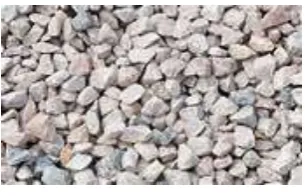
[image:2.595.358.511.294.392.2]Aggregates which are used in the surface course have to withstand the high magnitude of load stresses and wear and tear due to abrasion. Such aggregates should possess sufficiently high strength of resistance to crushing. The aggregates further need to be hard enough to resist the wear due to abrasive action of traffic. All of the coarse aggregate used in the study were sieved to obtain only single-sized aggregate. Well graded crushed aggregate passing through 20mm sieve and retaining on 10mm sieve.
Fig 3.1- Coarse aggregate
[image:2.595.382.534.485.569.2]3.1.2 Sand- Passing through 4.75mm sieve Coarse aggregate- 20mm and downsize.The fine aggregate passing through 4.75mm sieve is tested as per IS: 2386(part III) and specific gravity is fine aggregate is 2.52.
Fig 3.1- Sand
3.1.3 Coconut fiber - Fibres are strong, light in weight. The addition of coconut fiber can reduce the thermal conductivity of the composite specimens.
© 2018, IRJET | Impact Factor value: 6.171 | ISO 9001:2008 Certified Journal | Page 2400 3.1.4 Cement- Ordinary Portland cement of 43 grade is
used.
3.2 Methodology
Methodology adopted in present research-For completing the present research following steps are followed -
Test sample preparation and laboratory tests will be introduced in this section. First of all, the type and amount of each material were selected. The selection of various material and values, water cement ratio, aspect ratio was based on the literature reviews. After determining factors to be considered for mix design, a detailed plan for the experimental program (sample preparation and lists of tests) was developed to determine various properties as per Indian standards and conditions.
4. Experimental Results and Discussion
This chapter summarizes the results and discussion over it. Following are the details of prepared specimens and conducted tests -
[image:3.595.77.247.406.514.2]Table 4.1 -Properties of fresh Concrete
Table 4.2 - Compressive Strength of CFRC at 7 days (N/mm2)
Aspec t Ratio
% of Coconut Fiber
0% 1% 2% 3%
125
AR 33.33 30.94 34.35 30.77 75 AR 33.3
[image:3.595.339.530.639.728.2]3 30.53 32.14 31.703
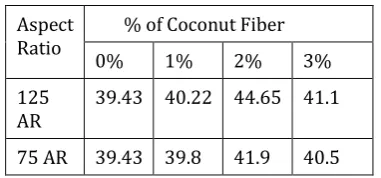
Table 4.3- Compressive Strength of CFRC at 28 days (N/mm2)
Aspect
Ratio % of Coconut Fiber
0% 1% 2% 3%
125
AR 39.43 40.22 44.65 41.1 75 AR 39.43 39.8 41.9 40.5
Compressive strength has also a decreasing trend with increasing fibre content in CFRC. But CFRC with 2% fiber
S/
no properties Plain Concre te
Plain Concret e with 1% of Coconut fiber
Plain Concrete with 2% of Coconut fiber
Plain Concrete with 3% of Coconut fiber 75
A R
12 5A R
7 5 A R
125 AR 75A
R 125 AR
1 Slump
Value(m m)
84 59 56 4
2 38 29 24
2 Comp. Factor( %)
91.82 87
.0 8
82. 96 84.
3 0
80. 23 81.9
0 79. 01
3 Vee-Bee
test (sec) 8 14 16 17 18 23 45 4 Flow
Table Test (%)
80.13 60
.0 0
58. 26 58.
6 7
53. 23 55.1
© 2018, IRJET | Impact Factor value: 6.171 | ISO 9001:2008 Certified Journal | Page 2401 content has higher compressive strength as compared to
that of PC. In comparison to compressive strength of Plain Concrete, Compressive strength is increased up to 1% for 75 aspect ratio and 2% for 125 aspect ratio with 1% fibre.
[image:4.595.323.555.81.232.2]Compressive strength is increased up to 6% for 75 aspect ratio and 13% for 125 aspect ratio with 2% fibre. Compressive strength is increased up to 3 % for 75 aspect ratio and 4% for 125 aspect ratio with 3 % fibre. As compared to 2% coconut fibre 1% and 3% coconut fibre has given the lesser compressive value. Higher fibre content in CFRC might have caused voids resulting in decreased compressive strength.
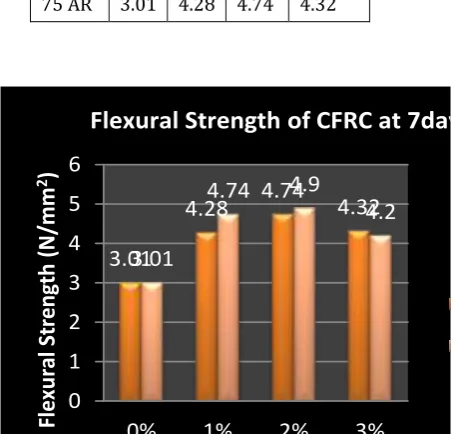
Table 4.4- Flexural Strength of CFRC at 7 days (N/mm2)
3.01
4.28
4.74
4.32
3.01
4.74
4.9
4.2
0
1
2
3
4
5
6
0%
1%
2%
3%
Fl
ex
ur
al
St
re
ng
th
(N/
mm
2
)
% of Coconut Fiber by weight of Cement
Flexural Strength of CFRC at 7days
75 AR
125 AR
Table 4.5- Flexural Strength of CFRC at 28 days (N/mm2)
4.2
5.56
6.1
5.62
4.2
6.16
6.3
5.5
0
2
4
6
8
0%
1%
2%
3%
F
lex
ural
St
rengt
h(
N/mm
2
)
% of Coconut Fiber by weight of Cement
Flexural Strength of CFRC at 28days
75 AR
125 AR
i. Flexural Strength =Pl/bd2 When ‘a’>13.3cm
ii. Flexural Strength =3Pa/bd2 When ‘a’<13.3cm and > 11cm.
Where P= Average applied load, d= Depth of specimen, b= Breadth of specimen, a= Cracking distance from nearest support, l = Length of specimen.
As compared to 2% coconut fibre 1% & 3% coconut fibre has given the lesser tensile value. Flexural strength is increased up to 32% for 75 aspect ratio & 47% for 125 aspect ratio with 1% fibre. Flexural strength is increased up to 45% for 75 aspect ratio & 50% for 125 aspect ratio with 2% fibre. Flexural strength is increased up to 34% for 75 aspect ratio & 31% for 125 aspect ratio with 3% fibre. As compared to 2% coconut fibre 1% & 3% coconut fibre has give the lesser Tensile value.
5. Conclusion
Based on the objectives set in the present study and the experimental work carried out in the laboratory, the following conclusions are drawn.
Properties of fresh concrete:
As the fiber content was increased, the mix became more cohesive. Workability decreased as the fiber content increased.
Slump test
As compared to normal concrete, slump decreased 30% for 75 AR and 33% for 125AR for 1% fiber content. Similarly slump value decreased for 2% and 3% fiber content.
Compaction factor test
As compared to normal concrete, compaction factor value decreased 5% for 75 AR and 10% for 125AR for 1% fiber content.
Similarly workability decreased for 2% and 3% fiber content.
Aspect
Ratio 0% % of Coconut Fiber 1% 2% 3%
125
AR 3.01 4.74 4.9 4.2
75 AR 3.01 4.28 4.74 4.32
Aspect
Ratio % of Coconut Fiber 0% 1% 2% 3%
125
[image:4.595.54.282.342.559.2]© 2018, IRJET | Impact Factor value: 6.171 | ISO 9001:2008 Certified Journal | Page 2402
Vee-bee test
As compared to normal concrete, time taken to change the shape from cone to cylinder increased 75% for 75 AR and 100% for 125AR for 1% fiber content.
Similarly there was increase in time for 2% and 3% fiber content.
Flow table test
As compared to normal concrete, flow was decreased 25% for 75AR and 27% for 125AR for 1% fiber content.
There was decrease in flow for 2% and 3% fiber content.
Properties of hardened concrete:
The compressive strength, Split tensile strength and Flexural strength has a increasing trend upto 2%. Later, strength decreased with the increase in fiber content. CFRC with 2% fiber content has higher compressive strength and Flexural strength as compared to that of PC.
Compressive strength
Optimum results were found when 2% of coir by weight of cement fibers were used, there was 6% and 13% increase in compressive strength as compared to normal concrete for 75AR and 125 AR respectively.
Flexural strength
Modulus of Rupture increased up to 45% for 75 aspect ratio and 50% for 125 aspect ratio with 2% fibre.
Cement content can be reduced by using 125AR fibers. This reduces total production of cement content there by resulting in less emission of CO2.Thus the coir is found
effective in reducing environmental pollution
References
[1] Abiola, O., et al. 2014. Utilisation of Natural Fibre
as Modifier in Bituminous Mixes: A Review. Construction and Building Materials. 54: 305-312.
[2] da Silva Dias, T. M. and B.-H. A. da Silva. 2014.
Potential Utilization of Green Coconut in Asphalt Paving in Rio de Janeiro and Its Benefits for the Environment.
[3] Nagarajan, V. K., et al. 2014. Experimental Study on
Partial Replacement of Cement with Coconut Shell Ash in Concrete. International Journal.
[4] Shelke, A. S., et al. 2014. Coconut Shell as Partial
Replacement for Coarse Aggregate: Review. International Journal of Civil Engineering Research. 5: 211-214.
[5] Al-Mansob, R. A., et al. 2-013. Comparison
between Mixtures of Asphalt with Palm Oil Shells and Coconut Shells as Additives. Jurnal Kejuruteraan. 25: 25-31.
[6] Hadiwardoyo, S. P., R. J. Sumabrata, and P. Jayanti.
2013. Contribution of Short Coconut Fiber to Pavement Skid Resistance. Advanced Materials Research. 789: 248-254.
[7] Vale, A.C.d., M. D. T. Casagrande, and J. B. Soares.
2013. Behavior of Natural Fiber in Stone Matrix Asphalt Mixtures Using Two Design Methods. Journal of Materials in Civil Engineering. 26(3): 457-465.
[8] Gunasekaran, K., R. Annadurai, and P. Kumar. 2012.
Long Term Study on Compressive and Bond Strength of Coconut Shell Aggregate Concrete. Construction and Building Materials. 28(1): 208-215.
[9] Tan, I.A., et al. 2012. Effect of Mercerization and
Acetylation on Properties of Coconut Fiber and its Influence on Modified Bitumen. UNIMAS e-Journal of Civil Engineering. 5(1).
[10] Thulasirajan, K. and V. Narasimha. 2011. Studies
on Coir Fibre Reinforced Bituminous Concrete. International Journal of Earth Sciences and Engineering ISSN. 0974-5904.
[11] Chen, H. and Q. Xu. 2010. Experimental Study of
Fibers in Stabilizing and Reinforcing Asphalt Binder. Fuel. 89(7): 1616-1622
[12] Panda, N. 2010. Laboratory Investigations on Stone
Matrix Asphalt Using Sisal Fibre for Indian Roads. NATIONAL INSTITUTE OF TECHNOLOGY ROURKELA.
[13] Al-Hadidy, A. and T. Yi-Qiu. 2009. Mechanistic
Approach for Polypropylene-modified Flexible Pavements. Materials & Design. 30(4): 1133-1140.
[14] Abtahi, S., et al. 2008. An Investigation on the
Use of Textile Materials to Mechanical Reinforcement of Asphalt-Concrete (AC) Structures and Analysis of Results by an Artificial Neural Network (ANN). 4th Nat Cong on Civil Eng.
[15] Asi, I. M. 2007. Performance Evaluation of