PLANNING MALAYSIA
Conservation With Development: Focus On Langkawi
BIOSITE 6: SUNGAI KILIM/KISAP
Sg. Kilim basin is dominated by the oldest rock formation of the area, i.e. the lower Ordovician to Middle Devonian Setul Formation (Kamal Roslan et al. 2005). This formation is placed on top of the Kisap Thrust Fault, thrusted over the younger rock units west of the fault plane. Underneath this fault are shale, mudstone and sandstone of the Early Permian Singa Formation, and the overlying Middle Permian limestone of the Chuping Formation. Thus, Sg. Kilim basin supports unique mangrove vegetation on top of a limestone substrate. The karst hills along the coastline come in various heights up to 300m, and can be seen protruding from the mangrove forests. The karst hills are formed by a combination of dissolution and horizontal denudation processes due to rock falling process (Tanot and Komoo 2005). Many species of vertebrate animals use the mangrove and karst habitats here as their foraging grounds and breeding nests/dens. The notables species are the the White-bellied sea eagle (Haliaeestur leucogaster), Brahminy kite (Haliastur indus), Brown-winged kingfisher (Pelargopsis amauroptera), Smooth otter (Lutrogale perspicillata), Mangrove pit viper (Cryptelytrops purpureomaculatus), Dusky leaf monkeys (Trachypithecus obscurus) and Water Monitor lizard (Varanus salvator). The Brown-winged kingfisher is a near-threatened species and Totally Protected under the Wildlife Conservation Act 2010, confined to Pulau Langkawi, preferring mangroves (Jeyarajasingam and Pearson 1999). Most records are of single birds.
At present there is no evidence of any planning for physical development in this area. However, there could be problems related to the high volume of tourists that flock to the area. Although tour boats have speeding limits to adhere to, some errant boatmen choose to ignore this. Some of the riverbanks are heavily eroded due to backwash effects, but efforts to rehabilitate by replanting with mangrove seedlings are already in place, although the effectiveness of these programmes are still in question.
BIOSITE 7: SG. TEMURUN RECREATION FOREST
BIOSITE 8: GUA KELAWAR
Gua Kelawar is located at the north-east of Langkawi (6o24.102’N 99o51.544’E), within the mangrove swamps of Sungai Kilim in Kisap Forest Reserve. The cave is about 60m long and was named as such because it supports hundreds of fruit bats. The forest type here is estuarine mangrove forest, with vegetation mainly consisting of Rhizophora spp. and Brugueira spp. trees. There were three species of bats that seek refuge in GuaKelawar. They are Hipposideros armiger, Hipposideros larvatus and Miniopterus medius (Norhayati et al. 2007). Among these three species, Hipposideros armiger is the largest, while Miniopterus medius is the smallest. This area is within a Forest Reserve, and threats to the faunal life here are considered as low in terms of illegal collection. However, there are issues concerning the carrying capacity of the cave since the number of tourists visiting the cave has increased each year. Signboards have been put up to warn tourists not to make noise or shine their torch lights directly towards the bats. However, there is a lack of regulatory measures, enforcement and public awareness in place to ensure that the guidelines are adhered to. Nevertheless, workshops and seminars have been organised by LADA from time to time to create awareness among tour operators about how to handle tourists in sensitive areas/sites. One way to overcome this problem actually depends on tour guides who must be aware of the rules and regulations and keep a watch on their groups.
BIOSITE 9: TELUK DATAI
PLANNING MALAYSIA
Conservation With Development: Focus On Langkawi FIGURE 1 : Locations of biosites of significant importance in terms of conservation
DISCUSSION AND CONCLUSION
Four years have passed since the announcement of Langkawi Geopark as a member of the UNESCO Global Geopark Network in 2007. To this date, no single biosite has been identified although Langkawi Island is rich with biodiversity of flora and fauna, many of which are endemic. Since the discovery of the first endemic reptile in Langkawi by Grismer et al. (2006), many new findings, mostly endemic species, have been discovered and reported. Many of the new species occur in certain habitats and do not occur elsewhere. Thus, these animals must be conserved based on their rarity alone. By identifying these species, their conservation status, threats, and conservation measures could be formulated. The conservation measure can be in the form of a biosite. These biosites could then be included in the Langkawi District Local Plan to aid in processing planning applications for future development. When biosites have been identified, policies related to biosites could be formulated and recommended to be included in the Kedah State Structure Plan.
Although the biosites identified in this article are within either Forest Reserves or protected areas under the State Land, there are other issues and challenges to overcome, mostly related to increased human contact due to high volume of tourists to the areas. Many of the identified biosites are also within the high impact tourist areas which require carrying capacity studies to assess the impact of tourism, such as Gua Kelawar, and Temurun Waterfalls. Other impacts include excessive collection of animals for trade.
There are many stakeholders involved in establishing biosites, but generally, if a biosite is within a forest reserve, jurisdiction of the biosite should be the respective authority of the area. However, if a biosite is situated outside protected areas, then the landowner should be advised on the existence of the biosite and his roles should be defined. Some sort of acknowledgment for his understanding and cooperation from the authority should also be defined. Management and proper planning can contribute to retaining and enhancing biological and ecological values. However, they are only one of a range of ‘tools’ and actions that can contribute to this. Importantly the role of landholders in retaining and maintaining biosites in their current or enhanced condition needs to be acknowledged. In order to achieve biodiversity outcomes, positive landowner attitudes supported by appropriate management regimes and legislation designed to protect biodiversity are very fundamental. Several of the main legislations/acts/policies include:
• Environmental Quality Act 1974 (amended 1985) • Fisheries Act 1985 (Act 317)
• Land Conservation Act 1960
PLANNING MALAYSIA
Conservation With Development: Focus On Langkawi • National Parks Act 1980
• National Policy on Biological Diversity 1998 • The National Forest Policy 1978; revised in 1992 • Town and Country Planning Act 1976
• Wildlife Conservation Act 2010
For future plans, actions to be taken to ensure sustainable development of ecotourism pertaining to natural resources at and neighbouring protected areas should also be identified. For ensuring long-term viability of threatened and significant species and communities of Langkawi Geopark, recovery actions should be detailed including the parties who will undertake these actions. The recovery actions may include: (i) protecting existing native vegetation; (ii) revegetation of priority sites; (iii) control and/or eradication of introduced verterbrate and invertebrate fauna; (iv) research and monitoring of species’ ecology and management options; (v) monitoring the impacts of climate change; (vi) surveys of potential habitat; and (vii) community awareness. However, at this identification stage, the main emphasis is on the establishment of biosites for integration of cultural and natural heritage to complement the emphasis on geotourism for Langkawi Geopark. In the meantime, efforts must be stepped up to conduct surveys and inventories to other islands in the archipelago. This is to ensure discoveries of more new and endemic species.
ACKNOWLEDGEMENTS
We would like to thank Langkawi Development Authority (LADA) for granting permission to conduct this study, and Mohd Izzuddin for providing the Biosite map. Thanks are also due to the rangers of the Forestry Department of Kedah for helping with the fieldwork. This work had been supported by research grants UKM-AP-PLW-01-2009 and UKM-GUP-PLW-08-11-045 from Universiti Kebangsaan Malaysia.
REFERENCES
Amirrudin, A. and Lim, K. K. P. 2006. Inland Fishes Recorded from the Pulau Langkawi, Peninsular Malaysia. Malayan Nature Journal, 59(1), 103-120.
Berry, P. Y. 1975. The Amphibian Fauna of Peninsular Malaysia. Tropical Press, Kuala Lumpur.
Grismer, L. L. 2011. Lizards of Peninsular Malaysia, Singapore and Their Adjacent Archipelagos. Chimaira Buchhandelsgesellschaft mbH, Frankfurt am Main, German. 728.
Grismer, L. L. and Chan, K. O. 2010. Another New Rock Gecko (genus Cnemaspis Strauch 1887) from Pulau Langkawi, Kedah, Peninsular Malaysia. Zootaxa, 2419, 51-62.
Grismer, L. L. and Norhayati A. 2009. A New Insular Species of Cyrtodactylus (Squamata: Gekkonidae) from the Langkawi Archipelago, Kedah, Peninsular Malaysia. Zootaxa, 1924, 53–68.
Grismer, L. L., Norhayati, A., Chan, K. O., Belabut, D., Muin, M. A., Wood, P. W., Jr. and Grismer, J. L. 2009. Two New Diminutive Species of Cnemaspis Strauch 1887 (Squamata: Gekkonidae) from Peninsular Malaysia. Zootaxa, 2019, 40–56. Grismer, L. L., Youmans, T. M., Wood, Jr., P. L., Ponce, A., Wright, S. B., Jones, B.
S., Johnson, R., Sanders, K. L., Gower, D. J., Norsham, S. Y. and Lim, K. K. P. 2006. Checklist on the Herpetofauna of Pulau Langkawi, Malaysia, with Comments on Taxonomy. Hamadryad, 30, 61–74.
Helbig, A. J., Kocum, A., Seibold, I. and Braun, M. J. 2005. A Multi-Gene Phylogeny of Aquiline Eagles (Aves: Accipitriformes) Reveals Extensive Paraphyly at the Genus Level. Molecular Phylogenetics and Evolution, 35(1), 147-164.
Ibrahim Komoo, Marilah, S. and Syafrina, I. 2010. Langkawi Islands: The Malaysian Candidate for a Future Geopark. In Geological Heritage of Malaysia: Geoheritage Conservation (1997-2009). Che, A. A. and Mohd Shafeea, L., eds. Institute for Environment and Development, Universiti Kebangsaan Malaysia, Bangi, Malaysia. 219-224.
Ibrahim Komoo. 1999. Geologi Pemuliharaan Kepulauan Langkawi [trans. Geological Conservation of Langkawi Archipelago]. In Geological Heritage of Malaysia-Conservation Geology for Geotope Development. Ibrahim Komoo and Mohd Shafeea Leman. eds. Bangi:LESTARI, Universiti Kebangsaan Malaysia. 3-32. Ibrahim, J., Shahrul Anuar, M. S., Norhayati, A., Shukor, M. N., Shahriza, S. Nurul’Ain,
E. Nor Zalipah, M. and Mark, R. D. 2006. An Annotated Checklist of the Herpetofauna of Langkawi Island, Kedah, Malaysia. The Malayan Nature Journal, 57, 369–382. Iskandar, D. T. 1998. The Amphibians of Java and Bali, Puslitbang Biologi, LIPI, Bogor. Izzati , A. Z. and Samat, A. 2010. Diversity and Distribution of Stream Fishes of Pulau
Langkawi, Malaysia. Sains Malaysiana, 39(6), 869-875.
Jeyarajasingam, A. and Pearson, A. 1999. A Field Guide to the Birds of West Malaysia and Singapore. Oxford: Oxford University Press.
PLANNING MALAYSIA
Conservation With Development: Focus On Langkawi Lim, B. L., Noor Alif Wira, O., Chan, K. O., Daicus, B. and Norhayati, A. 2010. An
Updated Checklist of the Herpetofauna of Pulau Singa Besar, Langkawi, Peninsular Malaysia. Journal of Malysian Applied Biology, 39(1), 13-23.
Matsui, M., Nabhitabhata, J. and S. Panha. 1999. On Leptobrachium from Thailand with a Description of a New Species (Anura: Pelobatidae). Jpn. J. Herpetol, 18, 19–29. Medway, L. 1966. The Mammals: Obervations of the Fauna of Pulau Tioman and Pulai
Tulai. Bulletin of the National Museum of Singapore, 34, 33-38.
Medway, L. 1983. The Wild Mammals of Malaya and Singapore. Kuala Lumpur: Oxford University Press.
MNS-Bird Conservation Council. 2005. A Checklist of the Birds of Malaysia. Conservation Publication No. 2. Malayan Nature Society, Kuala Lumpur, Malaysia. Ng, P.K.L. and Ping, N.H. 1989. Exploring the Freshwaters of Pulau Langkawi. Nature
Malaysiana, 14(3), 76-83.
Noramly, G. 1998. Birding around Datai Bay, Langkawi. Suara Enggang 3, (May-June), 16-21.
Norhayati, A., Juliana, S., Daicus, B., Chan, K.O. and M.N. Shukor. 2007. An Account of the Herpetofauna of Pulau Tuba, Langkawi. In Warisan Budaya dan Sumber Asli Langkawi: Selat Kuah [trans. Cultural Heritage and Langkawi Natural Resources: Selat Kuah]. Norhayati, A., Kamal Roslan, M., Shukor, M.N., Mustaffa, O. and A. Latiff. eds. The Forestry Department of Peninsular Malaysia, Institute for Environment and Development (LESTARI), Universiti Kebangsaan Malaysia and the Langkawi Development Authority. 243-247.
Norhayati, A., Shukor, Md. Nor, Shahrul Anuar, M. S., Nurul Ain, E. and Norzalipah, M. 2007. Note on Bats of Gua Kelawar, Langkawi Island. Journal of Wildlife and Park, 24, 1-6.
Robinson, H. C. and Kloss, C. B. 1911. On Birds from the Northern Portion of the Malay Peninsula including the Islands of Langkawi and Terutau, with Notes on other Rare Malayan Species from the Southern Districts. Ibis, 10-80.
Robinson, H. C. and Kloss, C. B. 1910. On Birds from the Northern Portion of the Malay Peninsula including the Islands of Langkawi and Terutau, with Notes on other Rare Malayan Species from the Southern Districts. Ibis, 659-675.
Robinson, H. C. 1917. On a Collection of Birds from Pulau Langkawi and Other Islands on the North-West Coast of the Malay Peninsula. Journal of the Federated Malay States Museums, 7(3), 129-191.
Scrivenor, J.B. and Willbourn, E.S. 1923. The Geology of Langkawi Islands. J. Mal. Br. Roy. Asiatic Soc., Vol. 1, 338-347.
Institut Alam Sekitar dan Pembangunan (LESTARI) Universiti Kebangsaan Malaysia, Bangi, Selangor, Malaysia. 243-258.
Shukor, M. N., Norhayati, A., Yusof, A., Juliana, S. and Rashid, Y. 2005. Notes on the Bird Species of Kilim, Langkawi Island, Malaysia. In Lembangan Kilim – Warisan Budaya dan Sumber Asli Langkawi [trans. Kilim Basin - Cultural Heritage and Natural Resources of Langkawi]. Leman, M. S., Komoo, I., Latiff, A. and Hood, S, eds. Penerbit LESTARI UKM, Bangi. 299-303.
Siti Hawa, Y. 1984. Survey of Mammals and Bird Species in Tanjung Hantu Forest Reserve, Perak, Gunung Machincang Forest Reserve Pulau Langkawi and Kuala Gula Bird Sanctuary, Perak. Journal of Wildlife and National Parks, 3, 18-36. Tanot Unjah. 2009. Status Terkini Sumber Warisan Geologi di Langkawi (trans.
Current Status of Geological Heritage Resources in Langkawi). In Siri Pembangunan Penyelidikan Kelestarian - Menjana Keilmuaan Kelestarian (trans. Sustainability Research Development Series-Generating Sustainability of Knowledge). Saiful Arif Abdullah and Adnan A. Hezri. eds. LESTARI, UKM. Bangi. 153-171
Tanot, U. and Komoo, I. 2005. Characterisation of Kilim Valley Karst Landscape: A Study Based on Horizontal View. In Lembangan Kilim – Warisan Budaya dan Sumber Asli Langkawi [trans. Kilim Basin - Cultural Heritage and Natural Resources of Langkawi]. Leman, M. S., Komoo, I., Latiff, A. and Hood, S., eds. Penerbit LESTARI UKM, Bangi. 199-210.
Tweedie, M. W. F. 1936. A List of the Fishes in the Collection of the Raffles Museum. Bulletin Raffles Museum, 12, 16-28.
Wells, D. R. 1974. Bird Report. 1970 and 1971. Malayan Nature Journal, 27, 30-49. Yeap, C. A. 2005. Langkawi Archipelago Bird Report. Malayan Nature Journal, 57(1),
91-144.
PLANNING MALAYSIA
Conservation With Development: Focus On Langkawi Appendix 1 : Vertebrate fauna of high importance values at langkawi geopark.
Cnemaspis roticanai. Upper: holotype ZRC 2.6860 (male). Lower: paratype LSUHC 9453 (male).
(Photo: L.Lee Grismer).
Cnemaspis macrotuberculatus (Photo: Norhayati, A.)
Cnemaspis monachorum (Photo: Norhayati, A.).
Limnonectes macrognathus (Photo: L.L. Grismer)
Leptobrachium smithii (Photo: Norhayati, A.)
Pelagorpsis amauroptera (Photo: M.A. Muin)
PLANNING MALAYSIA
Conservation With Development: Focus On Langkawi
PLANNING FOR HERITAGE TOURISM: THE CASE OF
LANGKAWI GEOPARK
Ong Puay Liu1
Institute of Ethnic Studies (KITA) UNIVERSITI KEBANGSAAN MALAYSIA
Sharina Abd Halim2
Institute for Environment and Development (LESTARI) UNIVERSITI KEBANGSAAN MALAYSIA
Abstract
The principal building blocks underlying Langkawi’s status as a tourist destination and a geopark are its nature and culture. Both these resources provide the platform for Langkawi to grow as a tourist destination since 1980s and receiving the geopark status by GGN and UNESCO in 2007. This paper discusses that while tourism is a commercial enterprise, it has an important role in ensuring Langkawi’s natural environment is well-protected, and local communities’ cultural traditions safeguarded. Central to this need for protection is ‘heritage’ - the basic ingredient in sustaining Langkawi as a premier tourism destination. This necessitates the need to view tourism and heritage management as interdependent, as both rely on the same ‘heritage resources’. Planning can act as the bridge to connect tourism, whose products are identified for their extrinsic values as tourist attractions, and heritage in which assets are identified for their intrinsic values to a community, state, country and the world .
Keywords: Heritage tourism, heritage conservation, geopark heritage management, planning
INTRODUCTION
The tourism sector is one of the world’s top job creators and a lead export sector, especially for developing countries. According to the April 2011 Interim Update of the United Nations World Tourism Organisation (UNWTO) World Tourism Barometer,
___________________________________
1Professor, Deputy Director, Institute of Ethnic Studies (KITA), Universiti Kebangsaan Malaysia,
43600 UKM Bangi, Selangor, Malaysia. e-mail: [email protected]
2Fellow, Institute for Environment and Development (LESTARI), Universiti Kebangsaan Malaysia,
43600 UKM Bangi, Selangor, Malaysia. e-mail: [email protected]
PLANNING MALAYSIA
Conservation With Development: Focus On Langkawi
international tourist arrivals grew by close to 5% during the first two months of 2011, consolidating the rebound registered in 2010. Over the past six decades, tourism has experienced continued expansion and diversification, becoming one of the largest and fastest growing economic sectors in the world. Despite occasional shocks, international tourist arrivals have shown virtually uninterrupted growth: from 25 million in 1950 to 277 million in 1980, 435 million in 1990, 675 million in 2000 and 940 million in 2010 (UNWTO 2011).
As a service industry, tourism involves a network of different but inter-related segments that have their respective needs, capacities and roles. These segments are located both in the tourist generating (tourists, home government, tour businesses) and tourist receiving (host population, host government, tour businesses) countries. The study of tourism is incomplete if it disregards this wider, multi-dimensional context. An integrated and holistic approach is necessary because tourism is “a bilateral exchange” (Lanfant 1993: 77); “a give-and-take transaction” (Nash 1981: 467); and “a journey of people, organised by people for the benefit of people” (Baswedan 1993: 42).
In the context of Langkawi Archipelago as a tourist destination and a geopark, the principal building blocks for Langkawi’s tourism industry are the islands’ nature and culture. Both these natural and cultural resources provide the platform for Langkawi to grow as a popular tourist destination since the 1980s and to be bestowed the geopark status by GGN-UNESCO in 2007. Tourism is undoubtedly a fast growing industry in Langkawi but it should be regarded as more than an economic, pleasure-based activity. This paper discusses that while tourism is a commercial enterprise, it has an important role in ensuring that Langkawi’s natural environment is well-protected, and local communities’ cultural traditions safeguarded. Central to this need for protection is ‘heritage’ - the basic ingredient in sustaining Langkawi as a premier tourism destination. This calls for the need to view tourism and heritage management as interconnected and mutually-interdependent, and not as two different and unrelated sectors. Planning can act as the bridge to connect tourism whose products are identified for their extrinsic values as tourist attractions, and whose assets are identified for their intrinsic values to a community, state, country and the world.
PLANNING MALAYSIA
Conservation With Development: Focus On Langkawi THE EPISTEMOLOGY OF TOURISM
A change in perspective towards a better understanding of making ‘heritage’ the central subject of ‘responsible tourism’ i.e. a non-destructive utilisation of geological and landscape resources and biodiversity and cultural resources [Wong 2008: 107] which Langkawi is promoting and advocating through its geopark status,, calls for a reflection on the epistemology of tourism. This understanding is important in the context of tourism industry’s interconnectedness with heritage management. Writing about cultural tourism and cultural heritage management, McKercher and du Cros (2008: Preface) argue that cultural tourism and cultural heritage management operate as parallel activities in most places, with remarkably little dialogue between the two. There seems to be a lack of mutual cooperation or partnership between these two inter-related activities, even though both cultural heritage management professionals and the tourism industry have mutual interests in the management, conservation and presentation of cultural and heritage assets. The result, McKercher and du Cros argue, is many lost opportunities to provide quality visitor experience while managing rare and fragile resources in a socially, environmentally and ethically responsible and sustainable manner. Following McKercher and du Cros’ argument (2008: 6), there is a need for people involved in cultural heritage management to understand that cultural tourism - in Langkawi’s case, including geotourism and biotourism - is a form of tourism, and not a form of cultural heritage management. As a form of tourism, cultural tourism must be based on sound, commercial tourism reasons first and cultural heritage management second.
In pre-industrial era, travel was predominantly confined to the upper classes or elites who travelled individually or in very small groups for trading purposes, educational intentions, cross-cultural alliances through marriages (Walji 1990) or for pleasure, culture and pilgrimages (Urry 1990: 4). Few people outside the upper classes travelled to see objects unconnected with work or business. After the Industrial Revolution, travel gradually developed into a mass, popular leisure activity. People in post-industrial societies have opportunities for travel or tour with their accumulation of disposable incomes and time, facilitated by the increase in infrastructure and organised travel services.
place of residence and resumes the daily routine. The traveller who embarks on this circular movement not for work or cash remuneration purposes is a ‘tourist’. He or she is free from primary obligations, gainful employment, study, family and community responsibilities (Nash 1981: 461-462).
THE SOCIALITY OF TOURISM
The rise of tourism as a major social phenomenon in contemporary era has encouraged many governments, especially in developing countries, to harness its potential in assisting the process of development. To take advantage of rising statistics in tourist arrivals, these developing countries invest heavily in the tourism sector without giving careful and sustained consideration to its potential impacts and demands. In principle, a nation’s tourism policy aims to integrate the economic, political, cultural, intellectual and environmental benefits of tourism cohesively with the local people and the nation in order to improve the quality of life and provide a foundation for peace and prosperity. In practice, however, national tourism strategies are often detached or not integrated with local needs and conditions. This is so because the authorities believe that the success of the nation’s economic and development aspirations through tourism depend directly on customer satisfaction with the products the nation has to offer. Each nation therefore strives to have the competitive edge in the 4 Ps - product, presentation, pricing and promotion.
The outcome of the preoccupation with product development that caters to customer (tourist) needs and satisfaction is the replication of prevailing conditions from the already established industrial countries to the industrialising tourist destinations, a paradoxical situation clearly noted by Turner and Ash (quoted in Urry 1990: 7): ‘These national tourism productions reflect universal communality whereby the pursuit of the unique and unrivalled ironically ends in uniformity’. The paradox is that to survive in the 1990s and beyond, the tourism industry must provide top quality tourism products, superior service, achieve extraordinary responsiveness to the consumer, have an international outlook, create uniqueness, make sales and service forces into heroes, pursue fast-paced innovation and launch into a customer revolution (Edgell 1991: 194-196). Tourists have come to expect more from every country, business, organisation and person employed in the tourism industry with respect to quality, accuracy, variety, convenience, value and professionalism.
PLANNING MALAYSIA
Conservation With Development: Focus On Langkawi The question is how do the respective countries develop tourism packages that promote uniqueness in their cultural makeup, heritage and indigenous resources?
The alternative approach to tourism as a factor of change in community development recognises the ‘sociality of tourism’. Since tourism involves the movement and meeting of people of different backgrounds, it is a sociological and anthropological object and the subject matter of sociology and anthropology. Indeed, tourism is necessarily a form of ethnic relations in so far as tourists and the people of the host country belong to different ethnic groups, cultures and religions. The sociological and anthropological perspective on how people define themselves and how they relate with people from their own community and from other communities becomes more significant in the context of international tourism and globalisation.
In the wake of globalisation and a globalising economy, the sense of oneness that results from the ideology of modernisation, homogenisation and universal applicability (one size fits all) has put human cultures and historical heritages at risk. In natural sciences, natural phenomenon such as gravity can be globally defined and applied (Yearly 1996) because gravity is a natural law. Globalisation, as a human phenomenon, cannot be based on this ‘science’ or ‘natural law’ paradigm. In a similar context, tourism as a social-cultural phenomenon cannot be based on this science paradigm and subjected to a universal application of planning and development.
Human beings are reflective, thinking people, able to distinguish, compare, categorise, evaluate, create and recreate. People do not just live in a society; they produce the society in order to live (Carrithers 1992: 1). Peaceful co-existence between people and their natural environments have been sustained for millions of years. The people have learned through time to carve a symbiotic relationship with their environment and develop a way of life or culture that illustrates their connectivity with the world around them. Human society thus has a history and a past that has shaped the present. Changes imposed onto a society for the sake of global tourism disregard the local history and local context. To present a society and its environment as unchanged is to take away the essential human capacity to change and adapt, replacing it with a belief that “human societies come into being spontaneously” (Carrithers 1992: 9).
The foregoing narration of the epistemology and sociality of tourism is intended to bring forth the fact that tourism (whether cultural, eco, nature adventure, educational, or health etc.) is ‘essentially a commercial activity’ (McKercher & du Bois 2008: 26). Speaking for cultural tourism, (the same principle could also be applied to other forms of tourism), McKercher & du Bois state that as a tourism activity, cultural tourism will attract nonlocal visitors (or tourists) who are travelling primarily for pleasure on limited time budgets and who may know little about the significance of the assets being visited. Successful cultural tourism products must be shaped with this type of visitors in mind (McKercher and du Bois 2008: 7).
The discussion above on the increasing significance of the tourism sector in the development of countries world-wide, and on the need to understand the meaning of tourism as a commercial activity as well as its connectedness with heritage management reflects the situation in Langkawi Island, the first GGN-UNESCO recognised ‘global geopark’ in Malaysia and Southeast Asia.
LANGKAWI, MORE THAN A TOURIST DESTINATION
Comprising 99 islands, Langkawi archipelago is one of eleven administrative districts within the State of Kedah. It is divided into six mukims or sub-districts, each with their respective features and traditions that, taken together, contribute to Langkawi being known as ‘99 Magical Islands’, ‘Isles of Legends’, ‘Duty Free Islands’, and ‘Tourism City’. Three out of the 99 islands have human inhabitants; they are Pulau Langkawi (main island), Pulau Tuba and Pulau Dayang Bunting (Maps 1 & 2 below).
MAP 1 : Location of Langkawi Island in Malaysia
PLANNING MALAYSIA
Conservation With Development: Focus On Langkawi MAP 2 : Langkawi Island
Source: Mohd Shafeea Leman et.al. (2007)
The Langkawi archipelago, with its unique island and karst landscapes, and diverse geological features and landscapes that are of high heritage and aesthetic values, epitomise an incomparable national treasure that can help to meet the three components of a geopark and its sub-components as stated above. In addition, the attractiveness of Langkawi also lies in its local culture and traditions (Anwar Abd Rahman et.al. 2004, 232).
These natural and cultural assets of Langkawi have been capitalised by the tourism authorities and media. Tourism Malaysia, in its official website, tries to capture the European market by promoting Langkawi as follows:
More than just clear waters and age-old legends. If you’re longing for an unforgettable eco-adventure, then your next holiday must be at Malaysia’s spellbounding Langkawi Geopark, the first UNESCO geopark in Southeast Asia and recently acclaimed as one of the few geoparks in the world! Marvel at its natural beauty – all of 478 sq km of it. Explore its diverse landscape and intriguing rock formations formed 550 million years ago. Float down mangrove forests and take in all the flora and fauna the 99 islands of Langkawi have to offer. There’s truly more with every visit. It must be Malaysia, where you can experience the warm welcome from people of Asia’s three greatest civilisations and other indigenous cultures (Tourism Malaysia Corporate Website (2011).
Located in the northern state of Kedah, it is unique in the sense that it was formed on 99 islands that made up the legendary Langkawi Archipelago … Langkawi has been dubbed as the birthplace or the fetus land of the region … (LADA brochure Undated)
Langkawi Geopark … unfolding hidden wonders … a complete nature experience. (Galeria Perdana brochure Undated)
Langkawi, intriguing legends and nature’s wonders. The Langkawi archipelago consists of 99 islands situated in the Andaman Sea, south of Thailand. Tourists flock here for the delightful beaches, superb resorts and refreshing nature-based activities … Most tourists agree that Langkawi’s biggest attraction is its natural, undisturbed state (Tourism Malaysia 2008)
Discover the natural beauty and tranquility of the island. Langkawi has approximately 8000 hectares of untouched mangrove (Ken Makmur Enterprise brochure Undated)
Are these tourism media misleading the market? A review of the ‘what’s there in Langkawi’ will perhaps allow the truth behind the media’s claims of the uniqueness and ‘specialness’ of Langkawi to be acknowledged:
a) The nature of Langkawi, including its rocks, landscapes, flora and fauna have been its biggest assets for thousands and millions of years (Mohd Shafeea et.al 2007: 23);
b) Vegetation at the top of Gunung Machincang is unique because most trees are short, similar to the heath forest type. A total of 60 species from 40 families were recorded at Gunung Machinchang (Mohd Shafeea et.al 2007: 27);
c) Langkawi is also home to one of the richest mangrove communities in Malaysia. In the Kilim mangrove complex, a total of 55 species from 40 genera and 27 families of mangrove plants were recorded. This represents about 53% of the total species of mangrove flora in Malaysia and about 48% of the world’s total mangrove species (Mohd Shafeea et.al 2007: 27);
d) Faunal diversity in Langkawi is represented by a total of 44 species of mammals and 79 species of herpetofauna The famous Crab-eating Macaque is perhaps the most interesting as the generic name implies it can dive and swim in the sea to catch crabs and other marine life forms. On higher grounds, the Spectacled Monkeys swing effortlessly from one tree to another searching for food or simply playing around (Mohd Shafeea et.al 2007: 27);
PLANNING MALAYSIA
Conservation With Development: Focus On Langkawi
f) There are fishing villages (about 20 villages with 2671 active fishermen, according to Annual Fisheries Statistics 2005 [quoted from Sharina Abdul Halim & Hood Salleh 2007: 33), with four Fishermen Economic Groups (KEN) that were formed to venture into fishing and water-related tourism activities. The four KEN groups are located at Kubang Badak, Kuala Teriang, Kilim and Kuala Chenang (Sharina Abdul Halim & Hood Salleh 2007: 33);
g) Myths and legends that make up the cultural landscape of Langkawi, with the Mahsuri legend providing the historical trajectory and mystical aura of Langkawi, and the Machincang and Mat Raya saga providing the tapestry of place names in Langkawi (please refer Rahimah Aziz & Ong’s paper in this volume);
h) Traditional Malay houses (Sharina Abdul Halim & Ibrahim Komoo 2007: 36) which symbolise the master craftsmanship of housebuilders in Langkawi in days gone by; and
i) The minority Thai, Achehnese, Chinese, and Indian communities whose history and culture add to the richness of Langkawi’s socio-cultural history and landscape but not given much attention
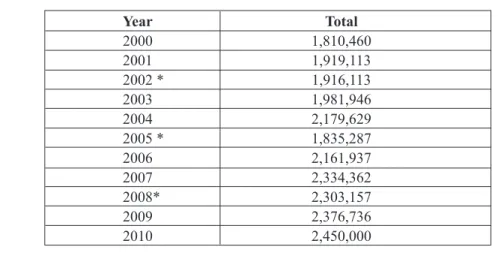
The above array of natural and cultural attractions stand in good stead for the development of Langkawi’s heritage tourism industry. With a population of about 99,000 in 2010, Langkawi has seen a steady rise except in 2002, 2005, 2008) of tourist arrivals through the years, often reaching a figure higher than the local population, as shown in Table 1 below:
TABLE 1 : Increasing tourist Arrivals to Langkawi, 2000-2010
NOTE : *indicates drops in the figures which generally show a rising trend.
SOURCE : Langkawi Development Authority (2009, 57); Langkawi Development Authority (2011, online)
Year Total
2000 1,810,460
2001 1,919,113
2002 * 1,916,113
2003 1,981,946
2004 2,179,629
2005 * 1,835,287
2006 2,161,937
2007 2,334,362
2008* 2,303,157
2009 2,376,736
With the rapid development of the tourism industry and its related infrastructural development, one would be surprised to read that Langkawi Islands were once considered a sleepy hollow or dead island. The late 1980s witnessed the growth of Langkawi into a tourism destination and a duty free island (1987) (Mohd Shafeea et.al 2007: 29-30). Langkawi has emerged from the backwaters and gained reputation as a popular tourism destination worldwide, enhanced by its geopark status. Nevertheless, such accolades inevitably come with consequences, as Langkawians and Malaysians, as well as visitors in general, are witnessing a rapid transformation of Langkawi through infrastructural and industrial development projects, especially with the formulation and launching of the Northern Corridor Economic Region (NCER) in 2008.
The NCER development plan states that its main focus is tourism and logistics services, leveraging on the Northern Region’s strengths such as Langkawi and Pulau Pinang as premier tourist destinations, and the strategic location of the Northern Corridor with respect to the Indonesia-Malaysia-Thailand Growth Triangle (IMT-GT). The plan enhances Langkawi’s position as a world-class tourist destination. The NCER Implementation Authority (NCIA) which was formed made several key decisions as follows: (a) to attract world-class hotels and holiday resorts to be set up on the island, so designed to increase the length of stay of both foreign and local tourists; (b) with government’s approval, the NCER Tourism Development Incentive Package will be established, which shall include fiscal incentives, provision of key infrastructure and waivers from meeting certain government requirements; (c) certain qualifying criteria have to be met before investors can be eligible for these incentives. These include the minimum size of the initial investment, the type of investment expenditure and the benefit that the project is expected to bring, e.g. in terms of the number of foreign tourists and the anticipated tourist spending; (d) the NCIA will work with existing agencies to plan, facilitate and monitor all investments made in Langkawi to ensure sustainable development of the tourism industry on the island; and (e) efforts are planned to broaden the range of attractions in Langkawi.
The fact that Langkawi is targeted for high level development illustrates the confidence the Federal and State governments have towards Langkawi’s potential. To understand the prominence of tourism in Langkawi, it is imperative to see how the sector has developed over the years.
BACKGROUND TO LANGKAWI TOURISM
PLANNING MALAYSIA
Conservation With Development: Focus On Langkawi visitor development of the Langkawi Islands. TDC engaged a consulting team headed by Peat, Marwick, Mitchell & Co. (PMM&CO.) in November 1976 to conduct a master plan study for the development of the Langkawi Islands into a visitor destination area (Yoong 1999).
In 1984, the first announcement was made that Langkawi was to be developed as a major tourist centre of the country. In relation to the Federal policy to turn Langkawi into a major island resort, the Federal Government proclaimed that, effective 1 January, 1987, Langkawi would be declared a free port under the Financial Act (No. 2) of 1986. The Federal Government’s direct involvement in accelerating the growth of the tourism industry and the socioeconomic development of Langkawi was further demonstrated by the establishment of the Langkawi Development Authority (LADA) under the chairmanship of Tun Daim Zainuddin, the former Finance Minister and Economic Adviser to the Malaysian Government. LADA was incorporated by an Act of Parliament, Act 423, on 1 January, 1990 (Yoong 1999). LADA, being the foremost authority in the development of Langkawi as a tourist destination, has set out to achieve the following objectives, as stated in its Annual Report (LADA 2009): (a) to spearhead the socioeconomic, infrastructural and product development; (b) to provide investment opportunities to develop the economic and tourism sectors; (c) to encourage community participation in the socioeconomic and cultural activities; and (d) to promote Langkawi as an international tourism destination.
In view of these developments, the State Government of Kedah adopted the Langkawi Structure Plan 1990-2005 that was prepared under the Town and Country Planning Act 1976 (TCPA 1976). As a planning document, it stresses the preservation of the natural environment and landscape, keeping in line with the Langkawi Declaration on Environment (1989) to transform the island into a ‘nature paradise’. The Langkawi Structure Plan was prepared to encourage, control and guide development in Langkawi. Primary concerns were the established framework for planning tourism, land use patterns, environmental improvement measures, public facilities and utilities as well as transportation up to the year 2005 (Yoong 1999).
The high profiling of Langkawi’s tourism industry in the government agenda is evidenced by the announcement (on April 10, 2011) of the Minister in the Prime Minister’s Department, Tan Sri Nor Mohamed Yakcop, that the government is planning several proactive measures to give a new lease of life to Langkawi’s tourism industry. The Minister said focus would be given to the development of eco-tourism as Langkawi has several advantages and uniqueness (The Star Online 2011).
Such seriousness in wanting to develop Langkawi into a premier tourist destination calls for a critical reflection on the intensity of tourism development as well as the types of tourism the government (through NCER) will be promoting. With increasing efforts to develop tourism in Langkawi, it is most likely that there will be increased land clearance for hotel development, real estate development, destruction of existing structures, damage to the environment and ecology, commoditisation of products, and at the same time, increasing number of tourist arrivals.
The NCER Development Plan and the NKEAs are all ‘economic plans’ aimed to transform Langkawi into a premier tourist destination through high investments, massive infrastructural development, widening the range of attractions, so as to attract high end, high spending and long stay tourists to Langkawi. With a land area of about 478,848 hectares, such planned and ‘authorised’ massive transformation will most likely change the natural landscape of Langkawi and the cultural milieu of the local people.
Pertinent and worrying questions arise. Will due consideration and emphasis be given to conservation of Langkawi’s natural and cultural heritage? Is there a clear policy definition on heritage and clear guidelines on tourism development vis-à-vis heritage conservation? Will there be a sustainable tourism development model that will integrate planning for tourism and heritage management? In addition, what is the position of Langkawi’s status as a geopark? As a GGN-UNESCO recognised geopark, the main ingredient of Langkawi’s appeal is its ‘three-in-one’ heritage’ – geo, bio and cultural heritage.
PLANNING MALAYSIA
Conservation With Development: Focus On Langkawi island’. Earlier sections of this article have mentioned that Langkawi’s development is synonymous with tourism. Eighty per cent of Langkawi’s economy is linked to tourism, since its promotion as a major tourism destination in the late 1980s by the Malaysian government. Langkawi has since then been exposed to tremendous physical development to provide improved tourism infrastructure and facilities (Langley 2002), and will be further subjected to more development with the implementation of the NCER Development Plan of 2008.
Hence, while the government aims to ensure sustainable tourism industry in Langkawi, it also has to bear in mind that attention has to be given to Langkawi’s heritage as well as having a management plan for the protection and conservation of this heritage. Tourism and heritage conservation are like two sides of the coin, but as mentioned earlier in this article, these two fields often operate in isolation and not in partnership. Corresponding to having a sustainable tourism development policy, the government should also think of a sustainable heritage conservation policy in order to ensure that the use of heritage assets (geo, bio, cultural) for tourism will be sustainable, benefitting both the tourism industry and heritage conservationists. Instead of having two separate policies, the two policies can be merged into a policy to be termed as a sustainable heritage tourism development policy.
‘Heritage tourism’ is emphasised in view of Langkawi’s status as a tourist destination and as a geopark. The significance of tourism in Langkawi, and the understanding of the value of heritage that is attached to Langkawi’s status as a geopark is acknowledged. Nevertheless, the concept of geopark need to be understood, and how Langkawi came to earn such recognition from GGN-UNESCO in 2007 and which has since then been extended for another four years [2011-2015] after Langkawi was given the ‘green card’ when it was revalidated by GGN-UNESCO evaluators in June 2011.
LANGKAWI ISLAND AS A GLOBAL GEOPARK
The beginning of the 21st century saw the introduction of a new concept for ‘sustainable heritage tourism’ by geologists or Earth scientists - a concept that promotes protection and conservation of specially designated geological sites recognised as ‘heritage’, but at the same time, promoting sustainable economic activities for the local communities living at or around these special sites. Upholding the idea of sustainable economic development for the local communities living at these sites means ensuring the communities’ involvement in the conservation process from the very start. These specially designated geological sites are called ‘Geoparks’ (McKeever 2009: 14).
Geo is an inclusive term to include Earth’s fundamental assets of nature (bio-geo) and anthropos/people (socio-culture). Protecting these bio, geo and sociocultural assets means protecting Earth’s heritage. By understanding the workings of the Earth through this tripartite heritage, people can learn and better understand their place and their role in helping to protect the Earth. The interdependence between this tripartite heritage of geo, bio and cultural is eloquently captured through GGN-UNESCO’s definition of a geopark, which is
… a geographical area where geological heritage sites are part of a holistic concept of protection, education and sustainable development. The geopark should take into account the whole geographical setting of the region, and shall not solely include sites of geological significance. The synergy between geodiversity, biodiversity and culture, in addition to both tangible and non-tangible heritage are such that non-geological themes must be highlighted as an integral part of each geopark, especially when their importance in relation to landscape and geology can be demonstrated to the visitors. For this reason, it is necessary to also include and highlight sites of ecological, archaeological, historical and cultural value within each geopark. In many societies, natural, cultural and social history are inextricably linked and cannot be separated (GGN April 2010).
This GGN-UNESCO geopark concept recognises the relationship between people and geology as well as biology and the ability of a geoheritage or bioheritage site to serve as a focus for economic development. This concept agrees closely with the trend for integrating science and culture whilst recognising the unique importance of the physical landscape. Hence, tourism activities in a geopark can use the unique heritage features in terms of the synergy between the geo, bio and cultural landscapes, and create a special brand of tourism for geoparks called ‘geo-bio-cultural heritage tourism’, or ‘geotourism’ ( Ibrahim Komoo 2004: 224).