BORROWED PROFANITY VERSUS BOUNDLESS PURISM
The Use of Native Dutch Swearwords and English-Borrowed Swearwords in Dutch
Rosalie van Hofwegen s1154974
[email protected] MA Thesis
Word count: 21,847 01-03-2016 Mr. drs. A.A. Foster
Dr. D. Smakman
“It would be impossible to imagine going through life without swearing, without enjoying swearing. There used to be mad, silly, prissy people who used to say that
TABLE OF CONTENTS
Chapter 1: Introduction_______________________________________________ 6 Chapter 2: Literature review___________________________________________ 11
TABLES AND FIGURES
Table 3.2.1 List of cathartic and non-cathartic swearwords used in the survey__50
Table 3.3.1 Demographic background of all respondents__________________ 53
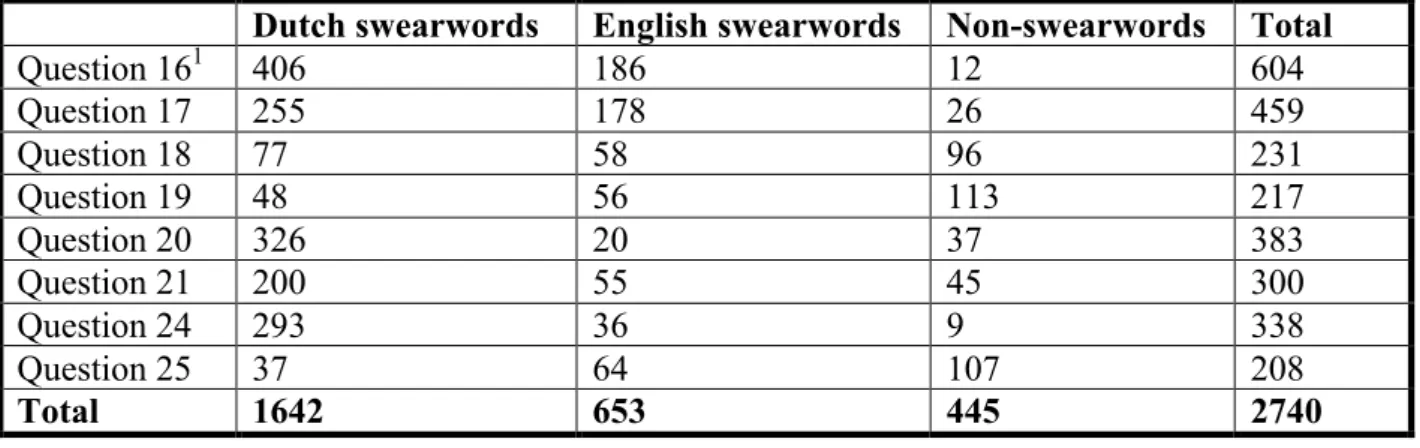
Table 4.2.1 Overview of answers provided in the open question section (one response per respondent)__________________________________ 58
Table 4.2.2 Overview of answers provided in the multiple-choice section,
corresponding to the open questions (multiple responses)________ 59
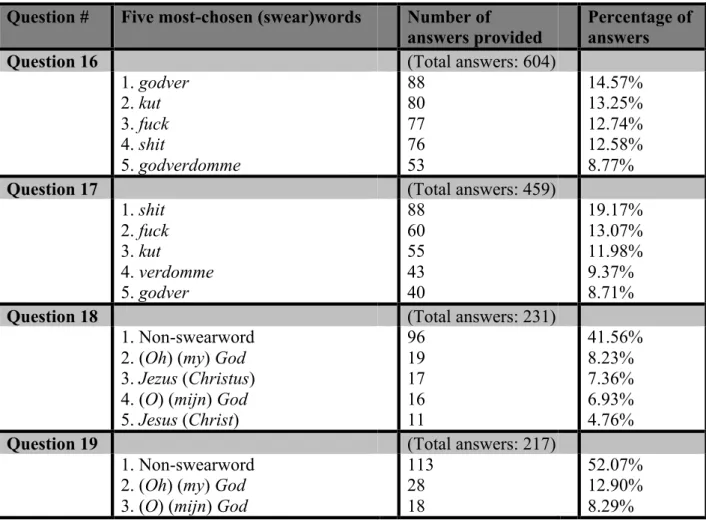
Table 4.3.1.1 Top five most-used swearwords in different situations (multiple responses)_____________________________________________ 62
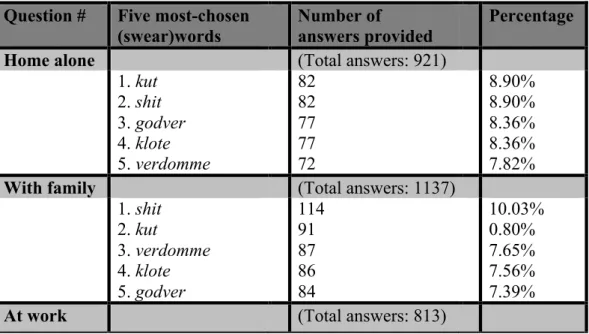
Table 4.3.2.1 Top five most-used swearwords in different contexts (multiple responses)_____________________________________________ 65
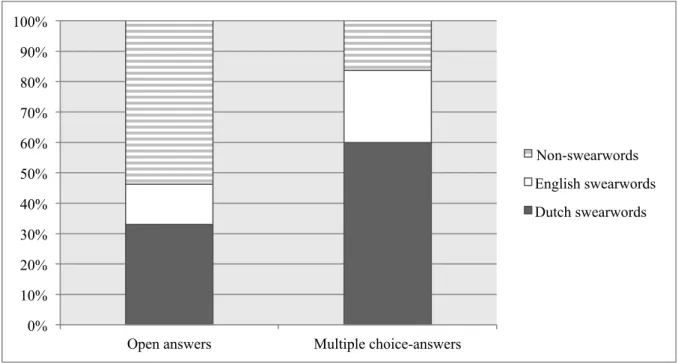
Figure 4.2.1 Comparison of respondents’ answers provided in the open section and multiple-choice section_______________________________ 61
Abstract
1. Introduction
To ask a person what their favorite swearword is would be like asking a person on a strict diet to name their favorite snack – it would be wrong (or even naughty) for them to think about it, let alone to even speak of the matter. Despite this
consciousness, they will have one (if not many more) guilty pleasures and it may be expected that in due time they will succumb to the temptation. Swearing is a sinful yet satisfying part of our lives; it may relieve tension or stress, it provides a relatively cultivated alternative to physical abuse or violence, and it is able to create and
strengthen social bonds (Crystal, 1995, p. 173). Although people are generally not necessarily proud of using swearwords – or even ashamed, one could say – it is an essential part of our lives. More strongly so, it may not only be an essential part of our lives but even an essential part of the actual descent of man. Darwin’s notion that the missing link in evolution between primate calls and human language are these ‘verbalized outbursts’ has recently received new attention from cognitive
neuroscientists (Pinker, 2007, p. 368).
and being a part of many layers of society, swearing and swearwords play a major role in the life of human beings which is why they most certainly form an interesting field to be investigated more thoroughly.
A striking tendency in previous linguistic research on swearwords is that relatively little of it has been conducted on swearing in Dutch or on swearing by native speakers of Dutch. Evidently, much more research exists on swearing in English, given its status as sole lingua franca. While Piet van Sterkenburg, former professor at the Leiden University and famous for his extensive research on the Dutch language, has contributed a fair share of research on this particular topic, his
contribution mostly consisted of general informative texts about swearwords and comprehensive listed overviews of swearwords in use in Dutch. In both 1998 and 2007, van Sterkenburg conducted a research on the contemporary swearing habits of native speakers of Dutch in both the Netherlands and Flanders. In Vloeken is niet meer wat het geweest is (2008a), van Sterkenburg compares the two studies and summarizes the changes that took place over a period of 10 years. In his most recent work, van Sterkenburg provides a total of 27 tendencies over the period between 1998 and 2007. A few of the most important changes are: the use of blasphemous swearwords has decreased considerably, older people swear more than they did so ten years earlier, progressively more so-called ‘combination curses’ are used (i.e.
‘godverdefuk’; “bloody fuck”), and swearwords have become and are still getting shorter (van Sterkenburg, 2008b, p. 35-42). Also, some trends have stayed
Sterkenburg also notes that fact is that Dutch expletives are disappearing in favor of primarily Anglo-Saxon ones (p. 40). Yet, van Sterkenburg is not the first and only one to have noticed the popularity of borrowed English swearwords.
In Rassin and Muris’ 2005 research on the swearing habits of Dutch women, they too concluded that ‘several popular English swearwords are incorporated in Dutch without translation’ (p. 1673) – shit actually being the most often used
swearword by women in their research (p. 1672). In addition, Zenner, Speelman, and Geeraerts found in their research on lexical borrowing in Dutch reality television that shit and fuck were used most often with 20 instances and 13 instances, respectively (2014, p. 10). Yes, however, was the third most-used English borrowing in their findings and was used only 8 times (p. 10). They conclude their research by stating that English is not only used to express negative emotions but also because these ‘highly expressive/pragmatic English discourse markers such as shit and fuck’ helps them to ‘express their own emotions, meanwhile underlining their identity as young, modern individuals’ (p. 27-28).
Lastly, Hindriks and van Hofwegen conducted a research in December 2014 on the swearing habits of participants of the Dutch reality television game show Wie is de Mol?. The results of this research were in full accordance with Zenner,
in both time fragments, with a total of 19 English swearwords in 1999 and 29 English swearwords in 2014.
The research
For these reasons of scarcity in research and importance of the use of
swearwords and English in daily life of native speakers of Dutch, I wanted to further examine the use and influence of English-borrowed swearwords in Dutch. In this research, the concept of swearing will be defined as David Crystal’s ‘narrower sense’ of swearing, namely: ‘the strongly emotive use of a taboo word of phrase’ (p. 173). Using Crystal’s definition a working definition for this thesis, the research questions central to this thesis will be:
1. Do native speakers of Dutch have a particular preference for Dutch or English-borrowed swearwords in the case of (near-)synonyms?
2. Is this preference for a specific swearword or language influenced by context or situation?
3. Does the demographic background of a native Dutch speaker play a role in the preference of using Dutch or English-borrowed swearwords?
It is hypothesized that native speakers of Dutch have started to develop a greater liking towards using English-borrowed swearwords than native Dutch swearwords. Also, it is expected that some situations or contexts may indeed trigger the speaker to use a Dutch swearword rather than an English-borrowed one or vice versa. In the case of demographic factors, it is hypothesized that people from the Randstad, the
and for the youngest speakers to not only use more swearwords but also use more English-borrowed swearwords than the older age groups.
The results of this research will attempt to provide new insights into the use of swearwords by providing a most recent overview of the use of English-borrowed and Dutch swearwords as well as attempting to discover whether factors such as context, situation, and demographic background of the speaker influences their use of
swearwords. This area of linguistics certainly deserves more attention for not only are there few other nationalities which enjoy swearing as much as native speakers of Dutch do, but also (as summarized rather eloquently by Pinker) mostly because:
More than any other form of language, [swearing] recruits our expressive faculties to the fullest: the combinatorial power of syntax; the evocativeness of metaphor; the pleasure of alliteration, meter and rhyme; and the motional charge of our attitudes, both thinkable and unthinkable.
2. Literature review
2.1. Swearing and Speech Act Theory
As an introduction to the pragmatics of swearing and to this literature review in general, we shall first briefly discuss Austin and Searle’s Speech Act Theory. In order to provide a better understanding of the implications of swearing and of different types of swearwords, the relationship between Speech Act Theory and swearing will be investigated in this section. Further below, not only the relation between Austin and Searle’s speech acts and specific aspects of swearing will be explained but also how the structure of this literature review is loosely based on these speech acts.
Speech Act Theory (henceforth: SAT) was developed by John Austin and John Searle and distinguishes three main types of speech acts: the locutionary act, the illocutionary act, and the perlocutionary act (Trask, 2007, p. 267; Austin, 1962; Searle, 1969). These acts respectively represent ‘the act of saying something’, ‘performing an act in saying something’, and ‘performing an act by saying
something’ (Leech, 1983, p. 99). Austin claims that, in general, a locutionary act is always and ‘eo ipso’ accompanied by an illocutionary act through acts of for example ‘asking or answering a question’, ‘giving some information or an assurance or a warning’, ‘announcing a verdict or an intention’, and so forth (p. 98-99). However, the example provided below – a declarative statement that is not necessarily directly addressed to a hearer – seems to indicate otherwise. Contrary to any of Austin’s subcategories of illocutionary acts, the example in A demonstrates that an
A: The sun is shining.
Secondly, it is also possible to utter a phrase that contains only a locutionary act and an illocutionary act. In this case, we do not only have a simple objective, declarative statement but an implied meaning as well. It should be noted here that this example could be interpreted as a perlocutionary act as well.
A: My steak tastes a bit bland.
B: There is some salt and pepper in the cupboard.
Phrase A seems, on first hand, an objective statement but, if we take a closer look, it also shows intentions of requesting a solution for the problem at hand: the bland-tasting steak. By uttering phrase B, the speaker does not only state that there is salt and pepper in the cupboard but implicitly spurs A to grab the salt and pepper in the cupboard in order to make the steak tastier.
language involved in swearing, we shall also look at the speakers involved, considering the sociolinguistics of swearing in the final section of this literature review.
For the use of swearwords aimed at a person in specific, there is a clear speaker-listener situation; we find one obvious speaker who utters the word and by those means performs a locutionary, illocutionary, and perlocutionary act, and an obvious hearer who receives the words and subsequently produces an either intended or unintended effect. The general motive and thereby also illocutionary act for this type of swearing is ‘shocking or plainly insulting one’s audience’ (Rassin & Muris, p. 1670). The desired or intended effect, and thereby ensuing perlocutionary effect, is to make the audience feel hurt or shocked. So, if a speaker would for example say “You’re such an asshole!”, the locutionary act is the utterance of the phrase, the illocutionary act is the speaker wanting to hurt the hearer, and the perlocutionary act is speaker X actually hurting the hearer. However, as Austin also notes, ‘when the speaker intends to produce an effect it may nevertheless not occur’ (p. 106); although a speaker may intent to verbally abuse a hearer, the hearer may not feel hurt or shocked at all. Another “complication” presents itself when the effect is bigger or smaller than the speaker has intended (Austin, p. 106). Here, we might also assume that, depending on the linguistic nature of a swearword (Dutch or English in the case of this thesis) and the taboo value the uttered swearword holds in the mental lexicon of the hearer, the insult-effect or shock-effect may be bigger or smaller than the speaker intended. These aspects of taboo value and perceived rudeness will be further addressed in the following section.
off steam after experiencing aversive emotions’ (Rassin & Muris, p. 1670) – i.e. the speech acts only apply to the speaker here. There is a simple locutionary act – the swearword is uttered – but the illocutionary and perlocutionary acts are different from a situation in which one person swears at another person as such that the acts are focused on the self. In some hypothetical speech act situation, a speaker might be building a garden shed and, while attaching two planks to one another, accidentally hits his thumb with the hammer. When the speaker utters a swearword, he or she experiences an immediate relief of tension – an emotional effect of swearing that has been confirmed by various literature (Sharman, 1884; Johnson, 1948; Hartings, 1967; Montagu, 1967; Mealy, 1973). Because it is precisely this type of swearing that is so deeply – one might even say innately – embedded in our linguistic system, it is triggered in such a quick and primal manner that a person does not even have time to consider any illocutionary or perlocutionary acts (if he or she consciously would intend to). In addition, the act of seeking emotional relief cannot be joined under any of Austin’s illocutionary act categories. Still, it can be argued that the relief a person feels is however manifested in the illocutionary and perlocutionary acts in a similar way; in saying a swearword we subconsciously try to create relief and by saying this swearword the speaker actually experiences the intended relief.
Finally, while it may seem as if a speaker is always to some level aware of the intended effects of uttering a cathartic swearword, unintended effects could still be triggered. If a speaker utters the swearword cathartically in the vicinity of any
2.2. The semantic fields of Dutch swearwords
While the Dutch are already considered world champions at swearing (van Sterkenburg, 2008, p. 29), they continue to exploit many other semantic fields in order to enlarge an already extensive swearing lexicon. For this section, we use the term semantic field as defined by Matthews: ‘a distinct part of the lexicon defined by some general term or concept’ (“semantic field”, 2014). Following the
above-discussed order of the locutionary, illocutionary, and perlocutionary, it seemed essential first to provide the reader with an overview of the current swearing
vocabulary in Dutch in the first section of this literature review. Below, a division is made into six different semantic domains from which swearwords in Dutch originate: diseases; profanity, blasphemy, and invocations; excrement and genitalia; and gender, sexual orientation, and sexual intercourse. Ljung (2011) adequately observes that a classification of swearwords often proves to be problematic for the fact that a swearing utterance may either fall under several categories of motive or semantics and that a more exact specification of categories is associated with a higher difficulty in subcategorization of a swearword or a swearing utterance: by means of illustration, the utterance “Jesus fucking Christ!”‘is either simultaneously profane, obscene and vulgar or blasphemous, obscene and vulgar’ (p. 25.).
section, not all swearwords lend themselves for both purposes. Furthermore, what seems to be most striking within this particular subdivision of semantic fields is the fact that not all fields are exploited for the borrowing of English swearwords. For example, within the category of “blasphemy” we see “Oh my God” and “Jesus (Christ)” and within the category of “sexual intercourse and sexual orientation” we see “fuck you”and gay, the latter being a relatively new swearword. In contrast, within the category of “diseases” no swearwords have been borrowed from English and we only find native Dutch words such as kanker (“cancer”), tering
(“tuberculosis), and tyfus (“typhoid fever”). In the following subsections an overview shall be provided of swearwords that are in current use in Dutch, either originating from Dutch or English. By doing so, it will become much more evident in which semantic areas we may find English and Dutch synonymic or near-synonymic swearwords and on which swearwords the research in this thesis should be based. Finally, it should be noted that while the most frequent swearwords and compiled swearwords are listed below, a myriad of existing or possible swearword
compilations remain or will be created in the future.
2.2.1. Diseases
As was noted above, the semantic area of diseases is one of the most prolific sources of swearwords in Dutch. These expressions which all represent ‘something evil that might befall people’ are not only found in the history of swearing in Dutch but in many other languages as well such as in English: A pox on (your) …! (Ljung, p. 43). Dutch, however, is one of the very few languages in which disease-related
exploited as swearwords, presumably due to their rare occurrence. Of interest here is that the disease-related swearwords that have been in use in Dutch the longest all used to be infectious diseases (McKay, 2014): tyfus, tering, k(o)lere (“cholera”), pleuris/pleures (“pleurisy”), and pokke(n) (“smallpox”). These diseases were variably introduced into Dutch in between the beginning of the fourteenth century and the first half of the twentieth century through frequent processes of borrowing, such as with klere which derives from French colère (“tering”, van Dale; “kolere”, van Dale). Some time later, Dutch experienced the introduction of aids to this group though this swearword is considerably less popular than those mentioned above (van
Sterkenburg, 2008a, p. 33).Contrary to the earlier-mentioned tendency, kanker (“cancer”) – a non-infectious disease – has also been added fairly recently to this particular semantic domain and has gained increasing popularity over the past decade. It may be argued that this growing popularity of kanker is caused by the fact that cancer is generally not perceived anymore as an untreatable disease and for this reason people do not fear to utter the name anymore (Rozendaal, 2007).
Although many of these diseases may differ in nature, their verbal use is generally quite similar. They can be used non-cathartically, in which case they are often preceded by the phrase “Krijg de …” (“Get …”) or followed by the affix “– lijer” (“sufferer of …”) and cathartically, generally with much vocal power. Lastly, as was noted before as well, this category of swearwords does not borrow from English.
2.2.2. Profanity, blasphemy, and invocations
Montagu defines the former as ‘the unsanctioned use of the names or attributes of the figures or objects of religious veneration’ and the latter is defined as ‘the act of vilifying or ridiculing the divine Being, the Bible, the Church, or the Christian Religion’ (p. 101). Following these definitions, utterances such as Jesus and God are be perceived as examples of profanity while utterances such as Goddamn are
perceived as an example of blasphemy. As becomes clear from the examples provided in the previous sentence, I have decided to include the category of “invocations” here for its close affiliation with the categories of “profanity” and “blasphemy”.
The majority of swearwords in this category are no longer-taboo laden in (former) Christian societies, including the Netherlands, while also the use of
Jezus, hemel (“heaven”), and hel (“hell”), which are then also often morphologically or syntactically expanded through affixes such as ‘-ver(domme) (-“damn(it)”) or phrases such as “(O) mijn …” (“(Oh) my …”). Swearwords that have been borrowed from English within this category are primarily literal translations and have been brought into the Dutch language as a simple loanword. English-borrowed swearwords that are currently most popular are Damn, “Jesus (Christ)”, God, “Oh my God”, and “What the hell” in which cases the English synonymic equivalents are sometimes actually used even more frequently than the native Dutch forms (van Sterkenburg 2008a, p. 28; Hindriks & van Hofwegen, p. 42-45). Because most of these
swearwords are already invocations by nature or self-damnations by origin, they are never used to address someone in particular (e.g. they are only used in a strictly non-cathartic manner). These swearwords can however be used in subject position when talking to another person, e.g. “What the hell ben je aan het doen?” (“What the hell are you doing?”).
2.2.3. Excrement and genitalia
prominent English borrowing within this category, is found to be the most-used swearword in Dutch in various researches, often being preferred to native Dutch swearwords (van Sterkenburg 2008a, p. 27; Rassin & Muris, p. 1672; Zenner, Speelman & Geeraerts, p. 10).
Except for English-borrowed shit, practically all of the native Dutch
swearwords within this category can be used both non-cathartically – “Lul!” – as well as cathartically – “Kut!”. However, in contrast to the usage restriction of most of the swearwords in this category, shit can actually be used in different syntactic and morphological environments. Not only are native Dutch swearwords able to be used as morphological affixes within different contexts – kutdag (“shit day”), klootzak (“asshole”)– but English shit, too, can be used in different morphological contexts: shitdag (“shit day”), shitzooi (“shitty mess”). In addition, shit seems to have acquired the same syntactic flexibility as all other native Dutch swearwords, allowing the word to be used as an outburst (“Shit!”), as a modifier (“Wat een shitdag!”) (“What a shit day!”), and as an independent noun (“We zitten flink in de shit.”) (± “We are in deep trouble”). In addition, its morphologically expanded form bullshit has also come into frequent use during recent years (van Sterkenburg, 2008a; Hindriks & van
Hofwegen). The fact that shit may be used thus diversely and has become grammatically thus flexible shows that shit has completed the process of
“integration” into Dutch; shit has reached ‘the degree to which a word is felt to be a full member of the recipient language system’ (Haspelmath, 2009, p. 43).
2.2.4. Gender, sexual orientation, and sexual intercourse
these sex-related insults are a cultural universal (Flynn, 1976, p. 1). These particular categories have been combined in this section not only because they are semantically closely related, but also because they behave similarly syntactically and
morphologically. This latter feature is primarily found in the generally non-cathartic use of most swearwords within this domain. In addition, it is within this particular domain where we find another highly productive and flexible borrowing from English that has completed the process of integration, just like shit. Fuck namely holds a prominent position in Dutch as well, especially since it has undergone several phonological adaptations on which some elaboration shall be provided below.
The most-used gender-related swearwords are those used non-cathartically at women while in many cases simultaneously referring to dog-specific gender names or prostitution, such as teef (“bitch”), slet (“slut”), hoer (“whore”), and
English-borrowed bitch. In 2005 already, out of these four swearwords, bitch was used most often in Dutch and in 2007 it ended in second place, closely followed by slet (Rassin & Muris, p. 1672; van Sterkenburg, 2008a, p. 32). It may be argued that this small trend can be seen as the beginning of a preference for English-borrowed swearwords over native Dutch ones, though (for now) this tendency is only found within this particular semantic field. A final note should be made here on the fact that the trends mentioned above in this category only apply to the women-oriented swearwords since no swearwords related to male dogs or male prostitution exist or are used in Dutch.
(“faggot”) ended fourteenth and the earlier-mentioned swearwordsdid not even make an appearance in the list, much changed over the course of seven years. The recent growing popularity of homo and gay were also noticed by “Pestthermometer”, an organization which researches bullying amongst school children of 8 years and older. Results of their research indicated that in 2014 homo was actually the most-used swearword among school children (Brasser, 2014). School children often use this word ‘to refer to someone as stupid, without specific sexual connotations, although these may be implied’ (Isaacs, 2014, p.1). Also, in 2010, more than half of the Dutch population was of the opinion that the use of homo as a swearword should not be considered a problem (“Straight test: ‘Homo als scheldwoord moet kunnen’,” 2010). Most striking here is the dichotomy found between male-related swearwords and female-related swearwords in which ‘insults based on sexual looseness [are] only [directed] to women’ whereas ‘homosexual insults [are] directed only to men by other men’ (Jay, 1992, p. 181). Further on this matter, Isaacs states that some swearwords are commanded by certain ‘identity politics’ (p.1); people from the same ‘in-groups’ are allowed to call each other names though anyone outside of this group would be considered an “asshole” in doing so. One gay man can call another gay man a faggot or one member of the African-American community can is allowed to call another member a nigger while anyone outside of these groups would be considered rude and disrespectful (ibid.).
Lastly, we examine the category of sexual intercourse in which we solely find the swearword English-borrowed, though it holds a key position in the current
shock someone, want to rattle someone or want to belittle them (2008a, p. 12). Despite this antithetic opinion, most recent researches – including van Sterkenburg’s own – have however considered this word as a swearword. In addition, Rassin & Muris also clearly state this as one of the main motives for swearing (p. 1672). In all researches on swearing in Dutch performed conducted the past decade, fuck ended within practically every top-five of most-used swearwords while still growing in popularity (Hindriks & van Hofwegen; Rassin & Muris; van Sterkenburg, 2008b, Zenner, Speelman & Geeraerts).
Over time, fuck managed to obtain broader syntactic and morphological freedom – a process that was earlier noticed with shit as well. Within the linguistic area of syntax, fuck now makes its appearance in a variety of word categories: as a noun: “Ik snap er geen fuck van” (“I don’t understand a fuck of this.”) or nominalized verb “Wat een fucker ben je ook” (“You’re such a fucker”); as a verb: “fuck jou” (“fuck you”); as an adjective: “je kamer is een fucking bende” (“your room is a fucking mess”); and as an adverb: “ik heb er fucking veel zin in” (“I am fucking excited”). Due to this syntactic process, morphological adaptation was required to maintain grammaticality in Dutch. As the examples above illustrate, fuck can be adapted morphologically through prefixes: “ik voel me echt gefuckt” (“I really feel fucked”); and affixes: “wat een fucking mooie dag” (“what a fucking beautiful day”). In addition to these syntactic and morphological processes, fuck has undergone phonological adaptations as well which will be further discussed in the following section. Similar to this last construction, Dutch also has the native form “naaien” (“to screw”/”to be screwed over”), though this expression seems to be completely
2.3. The stylistic and pragmatic power of swearwords
In this second section, the different stylistic aspects of Dutch and English-borrowed swearwords and their use will be addressed. For quite a few of the English-borrowed swearwords into Dutch, phonological adaptations have been made (as was hinted at in the previous section already). In addition, we should keep in mind that using swearwords in general but also using certain specific swearwords may be bound to certain contexts and certain speakers – aspects that will be addressed in the final two paragraphs of this section. The categories of stylistics and pragmatics have been combined in this section because of their interwovenness within the act of swearing. In this literature review, the broader rather than the narrower ‘American’ sense of pragmatics will be followed since also elements such as Speech Act Theory, taboo value, and perceived rudeness are included here, which are considered outside of the pragmatic realm by many American linguists (Trask & Stockwell, 2007, p. 157).
2.3.1. Swearwords and their phonology
the connotations humans have attached to it make them as powerful as we know them to be today. Although in earlier times these words were used ‘to promise solemnly’ or ‘invoke a supernatural power to inflict punish’ upon another (Isaacs, p. 1), their current purposes are rather different as they are nowadays used to, for example, insult the hearer or relieve tension. An example of the latter modern motive is the fairly new Dutch swearword kanker which is used by the majority of speakers not because they wish it upon the listener but simply because it rolls nicely off the tongue; younger speakers of Dutch understand it is hurtful, but simply find it a “good” word to swear with (“Kanker is meestgebruikte scheldwoord in Nederland,” 2015). Although McEnery claims that ‘the phonology of [swear]words is unremarkable’ (McEnery, 2006, p. 1), this seems a bit a too simple a statement since an important part of the power of a swearword is in fact found in its phonological properties. More than that, Bowers and Pleydell-Pearce (2011) claim that, through what they call verbal
conditioning, the phonological form of a word is able to directly elicit a negative emotional response (p. 2). This phenomenon, deriving from the field of linguistic relativity, is what is called ‘not-thinking-for-speaking’ and provides an explanation for why a euphemism is not considered offensive while a (swear)word is; although a euphemism contains the same semantic meaning/property as the synonymous
(swear)word, it does not evoke any anxious or hurt feelings because the phonology is different, proving the phonological force of (swear)words (p. 7).
only is this pattern of fricatives and plosives found in almost all native Dutch swearwords – i.e. klootzak, godverdomme, jezus, and kut – but also in those
swearwords the Dutch language has borrowed from English such as bitch, shit, Jesus, and fuck.
On frequent basis, lexical loanwords, or borrowings, undergo a certain sound adaptation when implemented into a recipient language (Paradis, 2006, p, 976.). In this thesis, the “phonological approach” will be followed, as proposed by LaCharité and Paradis (2002). This approach entails the belief that ‘borrowers have access to both linguistic codes, the L1 and donor language (L2) codes’ (Paradis, p. 977). Because the English-borrowed swearword fuck, which we shall examine here further for its phonological adaptation, still exists both in its ‘original’ form and in its ‘adapted’ form, LaCharité and Paradis’ phonological stance seems most convincing. Although fuck was originally adopted into Dutch in its original English form, it has developed phonologically over time. Not only has fuck undergone morphological and syntactic adaptation but phonological adaption as well. In 2008, van Sterkenburg already noted that fuck and fucking, realized with Dutch /ʏ/, had already degenerated into fok /fɔk/ and fokking /fɔkɪŋg/ (2008b, p. 77). Later, in 2014, another phonological form – namely fack /fɑk/ – was not only noticed but was actually used more
this “badness” is however hidden in a non-native and therefore somewhat unfamiliar-looking word (van Sterkenburg, 2008a, p. 77).
2.3.2. Taboo and perceived rudeness
An aspect of substantial importance in this research is the taboo value and perceived rudeness of the borrowed and non-borrowed swearwords under examination. In 1983, Thomas already noted that for topics such as politeness, rudeness, and swearing, native and non-native speakers have different knowledge (p. 96). It may therefore be expected that not only the perceived rudeness of swearwords in English and Dutch will be different to their native speakers, but more importantly, that native speakers of Dutch will perceive English-borrowed swearwords differently as well. Since an in-depth examination of the perceived rudeness and taboo value of all swearwords mentioned in chapter 2.2 would be too extensive for this literature review or completely relevant since it is not the focus point of this research, a more general insight will be provided into these two aspects. We shall focus here on English swearwords in their native context, Dutch swearwords in their native context, and English-borrowed swearwords in Dutch context.
as mentioned in chapter 2.2; since these non-native swearwords are less coarse, they are “easier” to be used and therefore may be used in more (diverse) contexts. In 2004, Dewaele’s research showed that in a speaker’s native language the ‘perceived
emotional force’ is strongest whereas with any language learned at a later stage this force will decline (p. 212). Because the emotional or intensitive value of borrowed swearwords will either have been lost or altered during the process of borrowing they will be used considerably different by speakers of the ‘receiving’ language than by speakers of the ‘donor’ language (Montagu, p. 91).
In accordance with these assumptions, Krouwels’ (2014) and Jay &
Janschewitz’s (2008) found that the perceived rudeness of swearwords and swearing in general is indeed different for speakers of English and Dutch. Jay and Janschewitz found that the swearwords cocksucker, cunt and fuck are considered relatively ‘high’ taboo words, while bastard, goddamn, and piss are said to have ‘medium-tabooness’ and lastly words like crap, hell, and idiot are perceived as ‘low’ taboo words to native speakers of English (p. 277). In contrast, when we look at the position fuck holds in Dutch, this taboo value appears is considerably lower. In 1998, fuck was considered the sixth coarsest swearword in Dutch, preceded by christus, godverdorie, godver, kut, and godverdomme (van Sterkenburg, 2008b, p. 58). Accordingly, Krouwels’ findings showed that in Dutch the general use of fuck is perceived as ‘moderate’ rather than ‘harsh’ or ‘very harsh’ (p. 22). Moreover, when “fuck you” appears in an English context, such as in “John says ‘fuck you’”, native speakers of Dutch find it coarser than when it appears in a Dutch context: “Jan zegt ‘fuck you’” (p. 27).
English and American English versus 47.7% for speakers of Dutch (p. 20, p. 24). Finally, a rather contrasting and therefore interesting result was the finding that speakers of English showed to be considerably less bothered by swearing than speakers of Dutch with 25% and 10.5%, respectively (p. 24).
2.3.3. The influential factors of borrowing swearwords
Not only for the creation of new words, but also for the borrowing of existent words in other languages, some factors are more influential than others. The
‘gap-argument’, for example, is of no importance for the creation of new words nor is it for the borrowing of words (Metcalf, 2002, p. 49). For example, while the Dutch
language borrows swearwords from English (and other languages) fervently this is not because there are no native swearwords already or because certain semantic fields are not exploited yet; before the introduction of English bitch, Dutch already had semantically synonymous teef as well as pragmatically synonymous kutwijf. However, there are some factors that do play a role in the borrowing of English swearwords into Dutch.
Metcalf’s FUDGE factors
In order to test the FUDGE factor scale, we shall examine the English-borrowed swearword fuck. For the first category Frequency of Use, or simply called ‘popularity’, fuck thrives positively as it features many top-five listings of most used swearwords in Dutch in recent researches (see section 2.2.4). On the category of Unobtrusiveness, Metcalf notes that ‘there are professional critics who lead the charge against new words, defending the supposed purity of older vocabulary against incursions of new’ (p. 156). Borrowings have a similar group of adversaries: the language purists. Although many have expressed their concern about the influx of English borrowings and while most English-borrowed swearwords may have been ‘obtrusive’ on first introduction in Dutch, we find both fuck as well as verbalized fucken in the official Dutch Dikke van Dale dictionary. For the third factor of
through these various morphological processes, confirms its place at the higher levels of the Generation factor (Metcalf, p. 161). The final factor we consider is Endurance of the Concept for which the intricate nature of a swearword proves to be helpful. Metcalf stresses that new words which express ‘intangible qualities that will never disappear’ receive the highest Endurance rating (p. 163) – a definition that is definitely applicable to swearwords. What becomes clear from these ratings is that fuck (and many other English-borrowed swearwords) score high for practically each factor which therefore partly explains its popularity and expected durability.
However, the one real problem that swearwords do face is their susceptibility to popularityand contemporaneity. Although some swearwords will linger in a language for longer, such as tyfus and tering in Dutch (which have been in use since the
beginning of the 18th and 14th century respectively), many swearwords come and go. For example, although vlegel may have been highly popular a few decades ago, it is nowadays perceived as archaic or even jocular. In conclusion, while the concept of a (swear)word may ‘endure’, its popularity remains highly susceptible to trendiness.
Sense patterns, frequency and dispersion
While Metcalf’s FUDGE factors have shown to be able to explain the popularity of current English-borrowed swearwords to a certain extent, they are unfortunately inadequate to explain why other English-borrowed swearwords have not been entrenched into the Dutch language. The reasons for Dutch not to adopt certain swearwords lies mainly in two different factors that correspond to Paula Chesley’s notions of sense pattern and dispersion (2011, p.39, p. 41-42).
The aspect of sense pattern is found both in the general semantics of
that borrowings from a source language will be entrenched easier within the recipient language when they share semantic content with previously existent words in that particular recipient language, which is also the case with swearwords (p. 40). What we understand from this statement is that semantic correspondence plays an
important role for the adoption and entrenchment of borrowings and therefore for English-borrowed swearwords in Dutch too. As was noted before, the words that English does borrow are – in a sense – already found in Dutch; though Dutch already had kak, it borrowed shit from English and, although it already had teef, it borrowed bitch from English as well. Furthermore, Dutch only borrows from certain semantic fields in English and the words that are borrowed are usually those that have
synonyms or near-synonyms in Dutch.
all but forgotten some years later’ (Chesley. p. 42). Subsequently, if certain swearwords are favored in English and are therefore heard more frequently on different English-spoken media such as television, cinema, and music in the Netherlands, they will more likely be adopted in Dutch. While English has many other swearwords to offer, Dutch has only borrowed those swearwords that are used most frequently in English and are preferred by native speakers of English. From this we may derive that swearwords like sodding, wanker, twat, ass, and dickhead have never been borrowed simply because they are not used frequently enough in the English language (Krouwels, p. 29; McEnery, p. 39; Ljung, p. 45). However, we should of course keep in mind that this may still happen in the (near) future.
In conclusion, the likeliness that a swearword will be borrowed relies most heavily on the availability within certain semantic fields and the popularity of a swearword within the source language. Phonology is of no considerable importance within this area, since the phonological preferences as described by Crystal are an Anglo-Dutch universal as such that both Dutch and English swearwords follow the same phonological tendencies.
2.4. External factors: situation and context
However, other research indicates otherwise and this thesis’ research, too, will attempt to show that context actually is of influence. In addition, because swearing is actually a kind of ‘automatic speech’ – mostly because it concerns just a limited selection of speech functions – we may expect it to occur in a wide variety of settings, whether desired or undesired (van Lancker & Cummings, 1999, p. 84).
Different researches have shown that the use of taboo words is indeed determined by a situation or context, especially with regard to the relationship between the speaker and hearer. For example, an average Dutch teenager would not dare to use the swearword kanker in the presence of his mother or father but would happily and repeatedly use it when conversing with his friends. Another issue which deserves some debate is whether an (English-speaking or Dutch-speaking) man would (or can) call another woman a cunt just as easily as he would with a man? For, ‘in trying to understand how speakers use language, we must consider the context (…), speakers’ conversational styles, and most crucially, the interaction of their styles with each other’ (Tannen, 2003, p. 224).
fucks was uttered in a business environment rather than in a leisurely environment (p. 238). Finally, ‘swearing, like strategic rudeness […] may be socially advantageous’ in some settings, though [it is] generally found in informal speech situations (Jay & Janschewitz, p. 275). Because swearing is a kind of speech behavior that is chiefly exhibited among friends, and irrespective of race or gender, it can be used as a way to create a group feeling or, as was noted earlier, strengthen social bonds (Fägersten. 2012, p. 139). With regards to speech situations, speaker-hearer relationships, and swearing, it may be concluded that the act of swearing in general and the choice of swearwords used is dependent upon ‘the boundaries of what is considered
situationally appropriate in discourse’ (Jay & Janschewitz, p. 268).
2.5. Motives for swearing
While there are many different ways to distinguish motives for swearing – as previous research shows – this thesis will follow the four-part division made respectively by Rassin & Muris of which two motives have already been hinted at briefly. This particular distinction is followed for its relative broadness and clarity, which will also prove useful for the survey of this thesis’ research. Within the four motives Rassin and Muris distinguish, two of these motives can be categorized as what van Lancker & Cummings describe as ‘automatic speech’ while the two other motives are related to a more conscious type of speech as such that the speaker deliberately chooses the vocabulary uttered. A fifth category we shall consider is swearing as a term of endearment (or jocularity).
produced in a subconscious-like manner (Rassin & Muris, p. 1670). The first motive for swearing basically denotes all cathartic swearing, i.e. fuck!, shit!, and damn!. In Hindriks and van Hofwegen’s research, results showed that this type of swearing is highly prevalent among speakers (p. 28). Various other researches confirmed this trend, though sometimes to different extents, depending on the context and setting (van Sterkenburg 2008b, p. 50; Rassin & Muris, p. 1672; Tamborini, Chory, Lachlan, Westerman & Skalski, 2008, p. 250). For the second motive of habit, we consider those swearwords that behave in similar fashion as linguistic fillers such as “erm”, “like”,“well”, “I mean”, and so forth. Because this type of swearing also answers to the definition of a ‘form which can be used at a given place, or slot, in a structure’ in spontaneous conversation, it can positively be categorized as a type of filler (Crystal, 2003, p. 179; Crystal, 2010, p. 54). In addition, since speakers do not have any control over these kind of utterances (just as with fillers), this type of swearing is understood here as automatic speech.
The three remaining motives of rhetorical force, shocking or insulting your audience, and endearment, behave differently from the two earlier-mentioned motives as such that they are conscious linguistic choices of the speaker. The motive of
rhetorical emphasis, for example as in that’s fucking brilliant or as morphological infixing as in fan-fucking-tastic (Rassin & Muris, p. 1670), is used to strengthen a word, phrase or statement. Likewise, the shit in “Shit it’s cold today”, is not uttered to relieve tension but rather to emphasize how cold it actually is – this kind of swearing is normally only used with an ‘in-group’ or people the speaker feels
fourth motive classified by Rassin and Muris is shocking or insulting the audience (p. 1672), which is done out of anger or frustration with another person rather than with a situation itself. Especially in this category the choice of language can be of particular importance; a female speaker of Dutch may feel more or less offended when being called a bitch or a kutwijf. Relatively closely connected to this category is the final motive of endearment. In this case, context plays a crucial role since this motive does not require a stressful, angry or irritated situation. Though Jay and Janschewitz claim that swearing normally requires contexts like trait anger, religiosity or verbal
aggression (p. 271), this last type of motive is an exception to the rule. Often used in an ironic sense as well, the swearwords used for this motive show love, compassion, and friendship. This motive is mostly found in the swearing of younger generations, for example when conversing with a speaker of the same age or ‘in-group’;
“Whatsup, my nigger?”; “Look at your abs, you bitch!”(Fägersten, p. 283-84; “bitch”, Urban Dictionary).
2.6. The sociolinguistics of swearing
Not only is a speaker and their choice of swearwords influenced by which words roll easiest off the tongue and their notions of taboo and perceived rudeness but also (possibly) by their sociolinguistic, or demographic, background. Factors like gender, age, social class, education, religion, and so forth, may have a small or big impact on the particular use of swearwords by an individual. These factors may not only
influence their language use in general but also their choice of vocabulary; ‘regional, ethnic, political, and class differences are undoubtedly reflected as much by a
In this subsection, sociolinguistic factors that may be of influence on the swearing choices of native Dutch speakers will be discussed and considered both in relation to swearing in general as well as to the choice of language while swearing. However, we should keep in mind that these speakers are not simple compositions of sociological factors; ‘a person is not simply female or male, child or adult, employer or worker’ (Bonvillain, 1993, p. 4).
2.6.1. Gender
Within existent literature on swearing by men and women, a dichotomy presents itself between older and more recent research: in older research men are generally perceived as swearing more and feeling less offended by swearing and hearing
swearwords whereas in more recent research this difference between men and women has disappeared while women have started to swear more.
In 1992, Jay noted that general opinion is that women will be less inclined to swear than men in equivalent position (p. 37). In correspondence with Jay’s
statement, Tannen noted in 2002 that research on language and gender had been fairly consistent as such that women generally communicate more cooperatively and will try to avoid conflict whereas men communicate more competitively and ‘are more likely to engage in conflict’ (p. 221). In addition, swearing is regularly considered a symbol of masculinity, ‘often provid[ing] a resource for the construction of a masculine identity (Stapleton, 2003, p. 32)
swearwords and few others still agree (p. 18; Zenner, Speelman & Geeraerts; Fägersten, 2012), recent researches have started to indicate an opposing trend. In 2008 van Sterkenburg already noted that women swear just as often as men do while in Krouwels’ 2014 research gender was ‘not of major influence’ and Jay & Jay (2013) agreed by stating that there was ‘no gender difference’ in their most recent research on swearing (de Moor, p. 30; p. 471). The strongest evidence is found in Hindriks & van Hofwegen’s 2014 research results in which women actually used more swearwords than men (p. 22-24). In addition, they also found that in the most recent season women used considerably more Dutch swearwords than men (p. 24). What should be kept in mind here, however, is the fact that these recent researches are primarily focused on Dutch participants while the older research by Jay and Tannen focused on native English-speaking participants. Nevertheless, since this thesis is focused on Dutch participants, it would be interesting to see whether this tendency is also found in this research.
2.6.2. Age
Janschewitz state that age influences semantic choices as such that children are more appealed to words of mild taboo-value such as fart and dork contrary to adults who prefer more intricate swearwords with a certain abstract, symbolic or political layer, such as damned Nazi, while adolescents are drawn more heavily towards taboo words which are polysemous such as pig or baby (p. 272).
Consequently, it may be assumed that age will also have an impact on other aspects of swearing – a claim that has indeed been confirmed by previous research. While a more narrow age division was used by Hindriks and van Hofwegen, the average number of swearwords used between a count in 1999 and 2014 showed that contestants of 45 years and older in the game show Wie is de Mol? swore
combined with the high social status of English makes it seem more than logical that this group of Dutch speakers uses more English swearwords than any other.
However, due to the scarcity of research within this field, more research is required in order to draw any solid conclusions on this matter.
2.6.3. Social class and education
In addition to the categories of gender and age, we will also look at the social class and/or and education of the swearer. As was noted earlier, swearwords are generally not perceived as appropriate vocabulary for speakers of upper classes or for higher-educated people since it is habitually perceived as a sign of poor education or
upbringing. Nonetheless, various news articles demonstrate that speakers of any layer of society swear; in July 2015 Prince Philip of England was recorded telling
photographer to ‘just take the fucking picture’ and Dutch politician Jan Marijnissen called the Secretary of Foreign Affairs a flapdrol (“wally”) in parliament (Holden, 2015; van der Kloor, 2009). According to van Sterkenburg, in the Netherlands the swearing behavior of people from different layers of society is not impeded by rank or class (2008b, p. 60). While speakers of different social classes are not expected to necessarily swear more or less, it is however likely that they will use different swearwords given the fact that they often live in completely different environments. Following Bonvillain, we may expect that ‘language use both reflects and reinforces class differences’ (p. 208).
Similar expectations may be held for the relationship between swearing and educational background since speakers of different educational levels will find
English, results showed that there was no heavy influence from the education level of the speaker except a more frequent use of fuck by speakers who had received less education (2004, p. 263). In the case of higher-educated native speakers of Dutch, it may be expected that they use more English swearwords since they are exposed to more English on daily basis than lower-educated native speakers of Dutch. The primary environments in which higher-educated speakers of Dutch are found – education, the academic world, and the business world – have been primarily
English-speaking since the mid 1990s (Ridder, 1995, p. 45). The intense contact these speakers have with the English language does not only result in a larger exposure to the language itself but logically also results in a higher level of speaking and
understanding the language, influencing their perception of likelihood and
offensiveness (Jay & Janschewitz, p. 276). Although no research is available on this particular topic, it may be assumed that native Dutch speakers who are higher-educated in general and/or higher-higher-educated in English will use both different and more English-borrowed swearwords than native Dutch speakers who are lower-educated and/or lower-lower-educated in English, though currently no evidence exists for these assumptions. While van Sterkenburg notes that it is more likely that swearing is not strictly bound by gender, age or social class but rather is a personal matter and is associated with personality, birth, courtesy, and good manners, the results from this thesis’ research will have to show whether these statements hold true (2008b, p. 33)
2.6.4. Region and religion
because in the Netherlands – and other countries – these two categories correlate with one another. Just as in other countries such as Sweden, Canada, Italy, the United States, and New Zealand, the Netherlands has a Bible Belt region which is in the last case a northwest, diagonal belt ‘encompass[ing] areas like Zeeland, Veluwe, Urk, and Overijssel’ (Garber, 2013, p. 202). Within this area, we find the largest Dutch
communities of strong conservative Protestants. Furthermore, research has confirmed that especially the element of religion may influence the swearing behavior of a speaker. In 2007, van Sterkenburg concluded that secular Dutch speakers and
Roman-Catholic Dutch speakers swear the most while Islamic Dutch speakers swear the least (2008a, p. 37). Although the Bible clearly states ‘thou shalt not take the name of the Lord thy God in vain’ many Christians do however take His name in vain on regular basis yet this is predominantly done for motives of sincerity or proof of gravity rather than because of improper Christian behavior (Ex. 20:7, The King James Version; van Sterkenburg 2008a, p. 41). Furthermore, the fact that Islamic speakers swear the least is an interesting trend since languages like Arabic and Turkish ‘are famous for the range and imagination of their swearing expressions’ (Crystal, 2010, p. 63), also being two languages which together comprise the majority of mother tongues of the Islamic population in the Netherlands (van Herten & Otten, 2007, p. 52).
Though no literature is available on the relation between regions or provinces in the Netherlands and swearing habits of local speakers, research has shown that Dutch speakers and Flemish speakers do swear differently, though not necessarily more or less. In Flemish, we find quite a few French-related or French-borrowed swearwords such as dju (“damn”), nom de dieu (“name of god”) and mieljaar
cathartic curses, excrement-related swearwords, and for piling swearwords onto one another, which results into utterances such as godverdegodverdenakendegodnondeju which roughly translates into a simple English “goddamnit” (van Sterkenburg 2008b, p. 111). Finally, Dutch speakers of any age range from the Netherlands stick close to the semantic field of diseases while in Flanders only the youngest generation swears with diseases though they do confine themselves primarily to “krijg de tering” or “krijg de tyfus” (“get typhoid”) (van Sterkenburg, p. 114).
Speakers of bilingual communities generally swear in their mother tongue rather than the official or institutional language (DeWaele, p. 102). Harris, Aycicegi & Gleason’s 2006 research showed that bilinguals react more strongly on taboo words in their L1 than their L2 as measured through skin conductance; taboo words and reprimands in the L1 elicited ‘stronger physiological responses’ than those from the L2 (p. 574). In ethnic minorities of larger cities in the Netherlands, speakers may therefore be more inclined to use swearwords from their native “home” languages such as Turkish, Arabic, Chinese, and Papiamento. Yet, if the level of Dutch of the parents of the speaker from an ethnic minority is relatively high, he or she will be more inclined to use Dutch as the general language of communication (Vermeer, 1985, p. 60). Therefore, it may be expected that this will also influence the language in which they swear. Finally, the language of the lexicon these speakers use will however also depend on the speaker-hearer relation. These particular speakers will be more inclined to use vocabulary from their minority language when in company with other native speakers of that language than when being in the presence of
monolingual native speakers of Dutch (DeWaele, p. 102).
In this literature review, an attempt was made to provide the reader with all (most recent) relevant researches and background theory associated with the phenomena of swearing in Dutch and borrowing English swearwords into Dutch. In the first section, the structure of this review was provided through linking swearing to Leech’s and Austin’s Speech Act Theory, while in the second section, an overview was provided on the currently most-used swearwords in Dutch, including those borrowed from English. The third section served as an exposition of a swearword in itself while also examining the borrowing of English swearwords into Dutch more closely. In the fourth section, then, the elements of situation and context were discussed which will prove particularly relevant to this research, as will become more clear in the
following Methodology section. Finally, the most important demographic factors for this particular research were discussed while discussing the most recent findings on these demographic factors and their influences on swearing and swearing in Dutch.
3. Methodology
In order to answer the research questions of this thesis, a survey on the swearing habits of native speakers of Dutch was created via SurveyMonkey. The survey was spread primarily through email and Facebook and was accessible online for exactly three weeks. On the introductory page of the survey, it was noted that the participants were required to be native speakers of Dutch, born and raised in the Netherlands, and not raised bilingually. To ensure that the data would not solely consist of students from a city in Zuid-Holland with a C2 level of English – being the group I am
currently in closest contact with – I actively sought other respondents as well to make sure that the acquired respondents would be from an as various demographic
background as possible. The majority of the survey was based on the model used for Smakman’s 2012 research on defining standard language; the first part of my survey allowed me to obtain unbiased input from the participants through the use of open answers while the second and third part of the survey ensured that I would obtain the answers I required for my research through the use of multiple choice questions. In Appendix A below, the complete survey is provided.
3.1. Methodological approach
“real”, unbiased language through the first part of open questions while also ensuring that he or she will receive desired results through the second multiple-choice part of the survey. Rather than distributing the survey through email and paper versions, as Smakman did in his research, I only chose the former manner for this required much less ‘time, effort, and money than in-person surveys and allow[ed] for a broader population coverage in a shorter amount of time’ (Schilling, 2013, p. 98). Especially this latter advantage appealed to me for I required participants from various
demographic backgrounds in a relatively short amount of time. In addition, by using an internet-based survey, I ensured the data from the research would be reasonably well-organized, detailed, and easily accessible (Schilling, p. 99).
Then, to create questions which would elicit good and usable data, I studied some of the elements involved in research folk linguistics. Niedzielski and Preston note that folk linguistics research consists of a threefold division; ‘(states and
processes which govern) what people say’, ‘what people say about [something]’, and ‘how people react to what is said’ (2000, p. 26). Within this research, I was
particularly interested in the first category, which pertained to Austin and Searle’s locutionary act,and in two aspects of the second category, namely what people say about ‘how it is done’ and ‘how they react to it’ (p. 27).
3.2. Materials/Tools
number of questions, the approximate time it would take them to complete the survey, and the specific group of respondents required.
Next, I asked the participants for their demographic background in terms of gender, age, region of birth and/or upbringing, education, religion, and level of English. As can be seen in the actual survey (found under appendix A), the level of education was based on the Dutch secondary school system while the level of English was estimated through the Common European Framework of Reference for
Languages. The drawback of asking people for their level of English rather than testing them is the undesired subjectivity that is involved; a participant may consider his or her level of English very high while this may not actually be the case, or vice versa. Despite the involved subjectivity, it was important for the sake of the research to include these types of questions in order to be able to discover any demographic trends within the data.
writing it down themselves. In addition, I deliberately chose for an equal distribution of “positive” and “negative” use of swearwords within the three different motives to maintain a systematic line of questioning.
In the second part of the survey, I asked the participants the same questions but instead of asking them to answer freely in a comment box, I provided them with a list of swearwords complemented by an option to add a different (swear)word and by an option to express that they would not use a swearword in this particular situation. In addition to the four non-cathartic swearing situations and the two cathartic-situations, I added two extra questions on non-cathartic use of swearwords. The selection of swearwords used in the survey was based on the swearwords found in the most recent researches on swearing which were discussed in the literature review (i.e. van Sterkenburg, 2008a; van Sterkenburg, 2008b) and can be found in Table 1. Using the swearwords that were found to be most popular in the most recent researches on swearing habits would hopefully provide the participants with a list that was as up-to-date as possible though, unfortunately, these kinds of lists are inevitably still subject to contemporaneity. In order to also account for the possibility that a participant cannot find the particular (swear)word he/she would use in a certain situation, an option to write down additional swearwords was also added.
Table 3.2.1 List of cathartic and non-cathartic swearwords used in the survey.
Swearwords to relieve tension
Swearwords to
shock/insult the hearer
Swearwords to strengthen an argument
damn bitch fucking
fuck eikel godverdomme
godver gay kak-
godverdomme hoer kanker-
Jezus (Christus) kankerlijer klote-
kak klerelijer kut-
kanker klootzak pleures-
klote kutwijf pokke(n)-
kut lul shit-
(O) (mijn) God slet tering-
(O) (mijn) hemel teef tyfus-
(Oh) (my) God teringlijer verdomme
pleures trut
shit tyfuslijer
tering zak
tyfus verdomme what the hell
In the third part of the survey, I provided the participants with a matrix/rating scale on which they could indicate in what contexts they would use which
swearwords in which also, again, the participant were able to select the option to express that they would not use a swearword in a particular situation. For this third part of the survey, I used the same list of swearwords that was used for the questions on swearing in order to relieve tension as found in the left column in Table 1.
3.3. The participants
of several attempts by one person or the sole completion of the first page on the demographic background of the respondent. Because of this, I realized that only the data from the completed surveys would be useful for my research and therefore decided to only use the data from these respondents for my research.
Although I hoped that by spreading the survey through Facebook and finding as many different people and groups as possible, the background of respondents would be very diverse, this was not necessarily the case. However, as Table 3.3.1 shows, there were some strong trends within the demographic background data of the respondents.
The group of “full” respondents consisted of 153 persons who were born and raised in the Netherlands, considered Dutch as their native language, and were not raised bilingually. From this group, 56 respondents were male while 97 respondents were female. A convincing majority of the group of respondents was between 20 and 29 years old (52.29%) while the other age categories were much more equally divided between 8% and 15%. While the division of respondents having been born and/or raised in a village or city was practically equal, 50.33% versus 49.67%, the provinces from which the respondents came were much more varied; Noord-Holland, Noord-Brabant, and Zuid-Holland were most strongly represented within this survey with 33.33%, 24.18%, and 23.53%, respectively. Unfortunately not highly
Demographic background factor
Category Number of
respondents (153 total) Percentage of respondents (!00% total) Gender Female Male 97 56 63,40% 36,60% Age category 0-9 years 10-19 years 20-29 years 30-39 years 40-49 years 50-59 years 60-69 years 70 years and older
0 4 80 14 16 20 17 2 0,00% 2,61% 52,29% 9,15% 10,46% 13,07% 11,11% 1,31%
Province of origin
Noord-Holland Noord-Brabant Zuid-Holland Limburg Gelderland Utrecht Zeeland Overijssel Groningen Friesland Drenthe Flevoland 51 37 36 10 5 5 5 3 1 0 0 0 33,33% 24,18% 23,53% 6,54% 3,27% 3,27% 3,27% 1,96% 0,65% 0,00% 0,00% 0,00%
Town or city of
origin Town City 77 76 50,33% 49,67% Level of education Higher than VMBO/HAVO/VWO
Finished VMBO/HAVO/VWO Less than VMBO/HAVO/VWO
95 53 5 62,09% 34,64% 3,27% Religiosity No Yes 125 28 81,70% 18,30%
Estimated level of English C2 C1 B2 42 38 38 27,45% 24,84% 24,84%