Advanced Technologies Academy
Course Catalog
2016-2017
MISSION STATEMENT
The mission of Advanced Technologies Academy is to empower a diverse student body to succeed in a competitive world by promoting academic concepts, technological skills, and ethical behavior.
Advanced Technologies Academy
Administration
Jonathan Synold ... Principal Roseann Hill ... Assistant Principal Joshua Hager ... Dean of Students
Advanced Technologies Academy
Counselors
Student Last Name Counselor Name Alpha A-E ... Maribel Romero Alpha F-L ... Rabin Gokul Alpha M-S ... Jeanne Moore Alpha T-Z ... Tisha Forfia
Advanced Technologies Academy
Office Phone Numbers
Main Number ... 799-7870 Fax Number ... 799-0656 Principal ... Ext. 4100 Asst. Principal ... Ext. 4200 Dean of Students ... Ext. 4500 Attendance Office ... Ext. 4035 Banker ... Ext. 4044 Counseling ... Ext. 4300 Student Services ... Ext. 4500
TABLE OF CONTENTS
General Information ... 2
Academic Probation ... 3
Activities and Athletics ... 7-8 Advanced Diploma ... 15
Advanced Honors Diploma ... 16-17 Advanced Placement (AP) ... 12
CCSD Guidance & Counseling Website ... 4
Class Fees ... 3
Code of Honor ... 9
College Readiness Assessments ... 6
Concurrent Credits ... 5
CTE College Credit ... 5
Duplicate Course Work – Repeating Courses ... 2
External Credit Options ... 6
Four-Year Course Plan ... 4
Governor Guinn Millennium Scholarship Program ... 11
Graduation ... 10
High Honor and Honor Graduates ... 10
Program Honor Medallion ... 10
Valedictorian and Salutatorian ... 10
Homework Policy ... 3
Honors Program ... 11
Mission Statement ... 1
Prerequisites ... 2
Programs of Study ... 40
Release of Student Directory Information ... 4
Required High School Student Class Load ... 2
Schedule Change Policy ... 3
Special Programs... 4
Standard Diploma ... 14
Teacher Recommendations ... 2
Technology Equipment and Network Access ... 3
21st Century Course Study ... 13
COURSE DESCRIPTIONS
Architectural Design ... 41-42 Business Management ... 43 Computer Science ... 44-45 Engineering ... 46 English ... 18-21 Foreign Language ... 22-24 Graphic Design ... 47 IT Networking ... 48-49 Legal Studies ... 50-51 Mathematics ... 25-28 Miscellaneous Electives ... 53-59 Performing Arts... 29 Physical Education/Health ... 30 Science ... 31-35 Social Studies ... 36-39 Web Design & Development ... 52 The Clark County School District does notknowingly discriminate against any person on the basis of race, color, creed, religion, national or ethnic origin, sex, age, or disability in admission or access to, or treatment or employment in, or participation in its programs and activities and provide
GENERAL INFORMATION
This Registration Guide provides students and parents with information to assist with the students’ program choices. Students should discuss course selections with their parents, teachers, and counselor. Students are encouraged to enroll in courses that challenge them and provide the best possible preparation for successful employment and to ensure post-secondary education readiness.
REQUIRED HIGH SCHOOL STUDENT CLASS LOAD
The State of Nevada, NAC 387.345, requires all high school students be enrolled as follows: Ninth, tenth, and eleventh grade students must be enrolled in eight classes or the equivalent of eight periods per day.
Twelfth grade students must be enrolled in at least four classes or the equivalent of four periods per day. [Seniors must take at least two classes per day on the block schedule.]
Please Note: Although Concurrent Courses, Distance Education, Dual Credit, External Courses, and Work Experience are considered equivalent coursework, students must receive prior approval of the counselor and administration.
Exceptions to the class load guideline include concurrent course enrollment and/or Early Studies Program enrollment at UNLV or CSN. A Senior Request for Open Period must be completed if any reduction from 8 classes is requested (seniors only). Students must still be enrolled in 4 courses at A-TECH (English, US Government, program area course and elective).
If an open period is granted, students must have their own transportation to leave campus at the end of their scheduled classes. No student with an open period is allowed to be on campus before their scheduled classes begin or after their class schedule ends. ** Students are allowed to return for extra-curricular activities. **
DUPLICATE COURSE WORK – REPEATING COURSES
Students may repeat a failed course one time to improve a grade. Regardless of the number of times a course is repeated, a grade of an “F” will only be removed once. If applicable, all other “F’s” will remain on a transcript.
TEACHER RECOMMENDATIONS
Students will have the opportunity to choose courses based on course prerequisites and teacher recommendations. In the event that some electives are filled or an insufficient number of students enroll in a class to offer the class, students will be enrolled in their alternate choices, if available, in the order listed. Each course is described by content and prerequisites. Every effort is made to aid students in planning their high school programs and projecting these programs toward long-term goals; however, the ultimate responsibility for each student’s individual program must rest with the student and parent. When selecting courses, students should consider graduation and post-high school education or occupational entrance requirements. Please read this entire Registration Guide carefully before selecting classes.
PREREQUISITES
Prerequisites are listed in this Registration Guide to help students and parents decide on courses for next year. Both semesters of a prerequisite course must be successfully completed and, if required, the stated grade earned. Students may repeat a course for no additional credit in order to meet prerequisite requirements.
COURSE CHALLENGE
Course placement is based on the student’s ability level, teacher recommendations, and other indicators. The student and parent/guardian should carefully consider all prerequisites for each course. Students may challenge
recommendations which they feel do not meet their academic needs, however, only students who have
successfully completed the course prerequisite(s) with at least a "C" grade will be permitted to challenge
course recommendations. Students may not challenge courses above their grade level. Students wishing to
challenge a course must submit a signed Course Challenge Contract. Students must remain in challenged
classes for a FULL YEAR. It is the student’s responsibility to get the appropriate signatures on their
registration forms.
CLASS FEES
Class fees are charged for courses with special projects. These fees are set by CCSD and are listed under "prerequisites." Please contact your child's counselor or respective teacher if family circumstances do not allow immediate payment of fees. Class fees should never be a deterrent for a student not to select a course.
TECHNOLOGY EQUIPMENT and NETWORK ACCESS
A-TECH is the only CCSD high school with unfiltered Internet access. Students will be required to complete the Acceptable Use Policy agreement prior to accessing A-TECH’s computer network. Access to the Clark County School District’s educational network resources is designed for educational purposes, and the District has taken precautions to eliminate access to controversial material. However, please recognize it is impossible for the District to restrict access to all controversial materials. Furthermore, if a student does not follow the Clark County School District’s Acceptable Use Policy, privileges to access the District computer network resources may be revoked.
Students are expected to use equipment, hardware, software, network, Internet, and other technology at A-TECH in an appropriate and responsible manner. Actions by students which result in damage, alteration, or interference of any of the above, violation of copyrights, or accessing inappropriate material will result in disciplinary action. Disciplinary action may include a required parent conference (RPC), suspension, referral to legal authorities, or to an alternative site and/or monetary reimbursement to correct or repair the problem.
Students are encouraged to bring personal technology and communication devices such as cell phones, laptops, or tablets to enhance instruction and student achievement under the Bring Your Own Device Program (BYOD). Students and parents are required to complete a BYOD agreement each year. These devices may be only used before and after school, during lunch or with the approval of the classroom teacher. A-TECH is not responsible
for lost or stolen devices. See CCSD Policy 5136 for more information regarding personal technology and
communication devices.
HOMEWORK POLICY
Homework assignments should generally be an outgrowth of classroom interests and activities. Students should expect homework in all classes. Due to the increased rigor, Advanced Placement classes may assign summer, weekend and holiday homework. The student should always understand the purpose of the homework assignment and be certain as to what to do or what to look for. Students are encouraged to attend a teacher’s Assistance period to ask clarifying questions about a homework assignment before leaving campus.
SCHEDULE CHANGE POLICY
The master schedule for all classes offered is the end result of months of planning, student/parent opportunities for guidance, student choices for classes, and staffing needs of the school. As a consequence of this extensive planning, schedule changes will not be made after registration. Student-initiated requests for a schedule change are considered only during the first 18 days of the semester, are subject to space availability, and are considered for the following specific reasons:
- Adding required graduation courses - Successful completion of summer school - End of Course exam preparation
- Concurrent and/or Early Studies Enrollment
After eighteen (18) days into the semester, no student may change or withdraw from a class due to the required number of hours to earn credit. Students who withdraw from a class after 18 days into the semester will receive a grade of “F” for the semester on their transcripts and will not receive credit for the new class. Class changes will not be granted for failing grades, poor work habits, request for a teacher, request for an easier course load, change of mind, or lunch period.
ACADEMIC PROBATION
All students and parents are required to sign a Magnet Program Contract when enrolling at A-TECH. The contract states that students must maintain a minimum grade point average of an overall 2.0 unwieghted GPA (C average). Students who fall below a 2.0 GPA will be placed on Academic Probation for one semester. If a student on Academic Probation fails to maintain a 2.0 GPA by the end of the following semester, they will be withdrawn from A-TECH and must return to their home school.
ENROLLMENT ADJUSTMENTS
The administration may, due to increased/decreased enrollment and staff changes, balance sections by transferring students from one class and/or teacher to another section. Effort will be made to ensure a smooth transition for students.
RELEASE OF STUDENT DIRECTORY INFORMATION
The CCSD releases directory information, which is information not generally considered harmful or an invasion of privacy if disclosed (Regulation 5125.1). This information will be made available to qualified agencies upon request. Qualified agencies include, but are not limited to public colleges and universities, Nevada State Treasurer’s Office, and the military branches. Federal No Child Left Behind legislation requires that all branches of the military have access to directory information upon request.
The term “directory information” means one or more of the following items: Student name, address, telephone number, date and place of birth, school attended, grade level, participation in officially organized activities and sports, weight and height of the members of athletic teams, and degrees and awards received. Parents have the right to have directory information restricted upon request. If parents prefer to restrict the release of their child’s directory information, they may sign a Restrict Release of Student Information form that is available in the Registrar’s office.
CCSD GUIDANCE & COUNSELING WEBSITE
The Guidance and Counseling website which can be found at http://ccsd.net/departments/guidance-counseling is designed to provide students and parents with information on counseling services provided by the school district. It also serves as a support reference for preparing students for their future educational decisions. Information on diploma requirements, scholarship opportunities and post-secondary opportunities are just a few of examples of what is available on the website.
COUNSELING OFFICE
799-7870 x4300
Four academic counselors are available to assist students and parents. The mission of the school counseling program at Advanced Technologies Academy is to provide equitable access to a rigorous curriculum and to support diverse learners within a caring learning community. We encourage students to challenge themselves academically, use technology effectively, and to develop self-advocacy skills in order to achieve their educational, personal/social, and career goals.
MATRICULATION
Grade classification for high school students is determined by years in school, not on credits earned. Students are classified to the next grade level at the end of each school year.
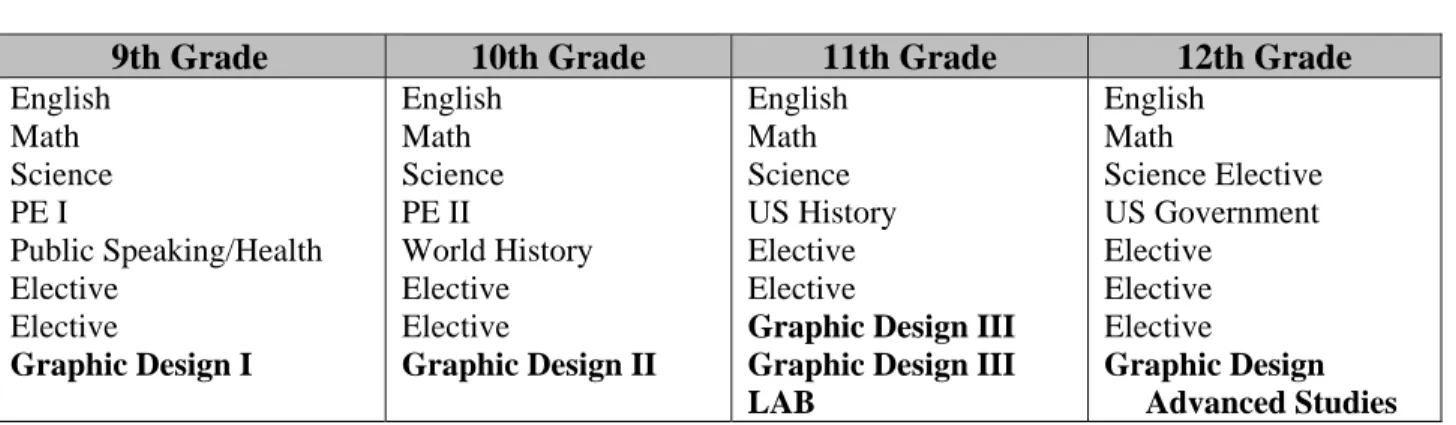
FOUR-YEAR COURSE PLAN
A four year Course Plan will be created by all 9th grade students and updated each year thereafter in Infinite Campus. This plan sets forth specific educational goals that students intend to achieve before graduation. The Course Plan, which includes a four year high school Academic Program, will be used as a guide to manage the student’s educational development and course selection in alignment with an identified Academic Program. Revising the Course Plan annually will assist students in preparation for graduation and post-secondary goals. The plan includes students and parents:
• Working in consultation with a school counselor to develop the Course Plan • Parent review and approval
• Reviewing the plan yearly and revising as needed
SPECIAL PROGRAMS
An Individual Education Plan (IEP) for each special education program student must be developed and reviewed annually. To assist these students, a team-teaching program is available in core subject areas as deemed necessary in students’ IEPs. In this program, the classroom teacher receives support, assistance, advice, and supplemental material from the consulting special education teacher. Planning is a joint effort while the primary responsibility for instruction lies with the regular classroom teacher.
CTE COLLEGE CREDIT
CTE College Credit provides an opportunity for secondary students who complete state-approved programs in career and technical education (CTE) to earn postsecondary credit at no cost to the student. CTE College Credit is articulated credit, the high school coursework aligns to postsecondary courses and the teacher of record is a high school CTE teacher.
To qualify for the CTE College Credit, students must:
(1) Earn a 3.0 grade point average in their CTE course sequence; (2) Pass the state end-of-program technical content assessment;
(3) Pass the state Workplace Readiness assessment for employability skills.
Students who complete a CTE program of study according to the criteria are eligible to earn the CTE College Credit within three years of graduating from high school and upon admission to the postsecondary institution. The amount of credit is dependent upon the state standards for each high school CTE program and how the standards align to the college courses for a certificate or degree in a related career pathway.
CONCURRENT CREDIT OPTIONS
Students may earn credits beyond the regular school day by enrolling in any of the approved concurrent
programs. There is no limit to the number of concurrent credits a student may earn. See your counselor for more information on the following concurrent programs:
Nevada Learning Academy - For specific
information, including fees, call (702) 855-8435 or visit
http://nvlearningacademy.net/. .
• Adult Education - For specific information on this program, call (702) 799-8650, extension 317 or visit http://schools.ccsd.net/aded/
• Sunset High Schools/Programs - Call (702)
855-9775 for more information or visit
http://ccsd.net/divisions/education-services- division/adult-education-horizon-sunset-high-schools.
• Summer School - Students may earn credit during the summer. Registration information is available in the counseling office in the spring. Additional information is available at
EXTERNAL CREDIT OPTIONS
Students currently enrolled in a Clark County high school may earn a maximum of six external credits toward graduation. External credits are credits earned beyond the regular school day. No external credit will be granted without prior approval and completion of the appropriate application.
See your counselor for prior approval and applications for the following External Credit options:
Community Service Credit – A maximum of one
credit may be earned for students who complete 120 hours of volunteer service with an approved community agency. One-half credit may be earned for 60 hours of service; court mandated hours do not count for Community Service credit.
Credit-By-Exam – Students may earn credit by
obtaining a score of 70% or better on an examination for a course they have not taken previously or are not enrolled in currently. For a complete list of credit by exam course offerings and fees, see the NVLA website at
http://nvlearningacademy.net/. Credit by Exam cannot count toward Honors credit.
Dual Credit – High school credit can be earned for approved college or university courses not offered at the student's school of enrollment. A three-credit college/university course equals one-half unit of high school credit.
Educational Travel Credit – A maximum of one
credit may be granted to students who keep a journal while traveling for 42 consecutive days or 1/2 credit for 21 consecutive days. Students must submit their completed journals for evaluation to determine credit.
Enrichment Program Credit – Students may
receive credit for academically accelerated courses taken at accredited institutions.
Music Equivalent Credit – A maximum of one
credit may be granted to students participating in a music program not offered by the Clark County School District. Credit granting is monitored by the CCSD Department of Fine Arts. Specific application forms must be submitted along with a fee. Call (702) 799-8531 for more information.
Online Courses: Credits may be earned for courses
completed by mail or online from approved institutions. The cost of courses vary. Students must conform to the procedures set by the credit granting institution.
COLLEGE READINESS ASSESSMENTS
All Clark County School District students will take the PSAT at no cost (pending final budget allocations) during the sophomore year to provide data that will assist in determining the student’s potential success in Advanced Placement (AP) courses. Taking the PSAT in the sophomore year also prepares the student for the SAT. The PSAT taken as a junior (at the cost of the student) is used to identify National Merit Scholarship Semi-finalists.
All juniors will take the ACT with Writing exam in the Spring. The College and Career Readiness Assessment (ACT with Writing) is a requirement for graduation. Juniors will take the ACT in spring of their junior year at no cost. Students planning to attend college may also prepare for the ACT entrance exam by taking the PLAN test during his/her sophomore year. It is recommended that students take ACT and/or SAT in the spring of their junior year, as most four-year colleges/universities require either test for admission. In addition, some
colleges/universities require a minimum score on the ACT and/or SAT to determine placement in freshman English and math courses. Finally, some universities determine scholarship eligibility on ACT and/or SAT results.
Note: It may be necessary to retake the ACT and/or SAT to increase the student’s score. This may enable a student to avoid placement in a remedial math and/or English college course. Remedial courses at Nevada System of Higher Education Institutions provide no college credit and are not paid for by the Millennium Scholarship program.
VOCATIONAL TESTING
The Armed Services Vocational Aptitude Battery (ASVAB) is offered to 11th and 12th grade students at no cost. Results indicate student ability, achievement, and interest areas. Individuals do not need to be interested in joining the military to participate.
ACTIVITIES AND ATHLETICS
Students at A-TECH are encouraged to participate in activities and/or athletics beyond the classroom. ACTIVITIES
Over forty different clubs and organizations exist at Advanced Technologies Academy. Clubs are based on an A-TECH program and/or special interests of students.
Student body and class officer elections are held each year. Students have the opportunity to be involved in student elections either as a candidate, member of a campaign committee, or as an informed voter.
ATHLETICS
Students with an interest in competition sports are encouraged to participate in tryouts for the sport(s) of their choice at their zoned schools. Busing for sports is not available from A-TECH to the zoned school. Students must contact the zoned school for tryout schedules.
Clark County School District Athletic Eligibility: Initial Eligibility – General Requirements:
1. Must be enrolled in grades 9-12.
2. Must reside in the school of enrollment’s attendance zone.
3. Must be enrolled in a minimum of two units of credit consisting of at least four classes per semester and regularly attend school.
4. Must have passed a minimum of two units of credit the immediate preceding semester with a minimum grade point average of 2.0. A student may earn a maximum of one unit of external credit (summer school,
correspondence, etc.) to improve previous semester deficiency.
5. Transfer students are automatically presumed ineligible. Rebuttal of presumption of ineligibility guidelines are contained in Nevada Interscholastic Activities Association (NIAA) regulations (NAC 386.785 – 386.799). 6. Secondary Magnet School students who enroll for less than a three (3) year program or enroll in individual
classes are ineligible for athletics at the Magnet School for 180 school days. Students who drop from the Magnet program will become automatically ineligible for athletics at the Magnet School for 180 school days. If a student chooses to return to his/her school of residence, he/she would be ineligible for the remainder of that school year and for 180 school days in any sport in which his/her name appeared on a NIAA roster during his/her attendance at the Magnet School.
7. Secondary Open Enrollment students who are selected to attend an Open Enrollment school are eligible to
participate in athletics. Students who change schools will become automatically ineligible for the remainder of the current school year and for 180 school days in any sport his/her name appeared on an NIAA roster during his/her attendance at the Open Enrollment school.
8. Career Technical Academy/Charter School/Home-Schooled students are eligible to participate in athletics
in the school that is located in the attendance zone of the residence of the parent or legal guardian. Maintenance of Eligibility
1. Must maintain passing grades in all subjects during the current athletic season.
2. Must regularly attend school. Must be in school in order to participate in practice or games on any given day. 3. Must maintain positive citizenship. Students on RPC or suspension are not eligible to participate. Serious
and/or chronic behavior infractions may result in suspension of athletic participation for up to one year, at the discretion of the principal. Additional specific eligibility guidelines are contained in Nevada Interscholastic Activities Association (NIAA) regulations (NAC 386.776 – 386.855) and Clark County School District regulation 5135.
PHYSICAL EDUCATION II WAIVER CREDIT
A maximum of ONE credit of Physical Education Waiver credit may be earned toward graduation. Students may earn PE Waiver credit by two methods.
Students may earn a PE II Waiver if they participate in and complete one of the school-sponsored activities/athletics listed below:
Baseball – Varsity, Junior Varsity
Basketball – Varsity, Junior Varsity, B-Team
Bowling – Varsity, B-Team
Cheerleaders – Varsity, Junior Varsity, B-Team
Cross Country – Varsity
Flag Football – Varsity, Junior Varsity, B-Team
Football – Varsity, Junior Varsity, B-Team
Golf – Varsity
Marching Band/Flags/Mascots
Soccer – Varsity, Junior Varsity, B-Team
Softball – Varsity, Junior Varsity
Swimming – Varsity
Tennis – Varsity
Track – Varsity
Volleyball – Varsity, Junior Varsity, B-Team
Wrestling – Varsity, Junior Varsity
Team Managers are not eligible for the P.E. II Waiver; however, they may be eligible for Community Service credit.
Students may also earn P.E. Waiver credit by completing 120 hours of external course work under the direct supervision of a qualified instructor or coach who is a credentialed and/or licensed professional outside the school district. Use of external credit for the P.E. Waiver credit requires completion of the CCF-850: External Credit Application. The activity must be geared toward competition or performance-based and it is expected that the student will compete/perform in the activity. Membership in a gym does not meet this criterion.
NCAA ELIGIBILITY REQUIREMENTS
In order to participate in collegiate athletics,students must register with the NCAA at www.eligibilitycenter.org. This should be initiated in the student’s junior year. NCAA Division I and Division II require 16 core courses. See the charts below.
NCAA Division I will require 10 core courses to be completed prior to the seventh semester (seven of the 10 must be a combination of English, math or natural or physical science that meet the distribution requirements below). These 10 courses become "locked in" at the start of the seventh semester and cannot be retaken for grade improvement.
Division I core GPA required to be eligible for competition on or after August 1, 2016, is 2.300. The Division I ACT/SAT minimum score is determined by the core GPA on the Division I sliding scale. Division II requires a minimum SAT score of 820 or ACT sum score of 68 and a core GPA of 2.0. Beginning August 1, 2018, Division II
core GPA to be eligible for competition is 2.200.
Be sure to look at your high school’s List of NCAA Courses on the NCAA Eligibility Center's website (www.eligibilitycenter.org). Only courses that appear on your school's List of NCAA Courses will be used in the calculation of the core GPA.
Beginning August 1, 2016, it will be possible for a Division I college-bound student-athlete to still receive athletics aid and the ability to practice with the team if he or she fails to meet the 10 course requirement, but would not be able to compete.
Required Courses* Division I Division II
English 4 3 Mathematics 3 2
(Alg I or higher)
Science 2 2
(minimum 1 lab science)
Additional In Above 1 3 Social Studies 2 2 Additional Core 4 4 Courses**
*Remedial, special education, compensatory or related courses do not qualify for initial eligibility. **From any core area, foreign language, comparative religion or philosophy.
CODE OF HONOR
Nevada Department of EducationThere is a clear expectation that all students will perform academic tasks with honor and integrity, with the support of parents, staff, faculty, administration, and the community. The learning process requires students to think, process, organize, and create their own ideas. Throughout this process, students gain knowledge, self-respect, and ownership in the work that they do. These qualities provide a solid foundation for life skills, impacting people positively throughout their lives. Cheating and plagiarism violate the fundamental learning process and compromise personal integrity and one’s honor. Students demonstrate academic honesty and integrity by not cheating, plagiarizing, or using information unethically in any way.
What is cheating?
Cheating or academic dishonesty can take many forms, but always involves the improper taking of information from and/or giving of information to another student, individual, or other source. Examples of cheating can include, but are not limited to: • Taking or copying answers on an examination or any other assignment from another student or other source
• Giving answers on an examination or any other assignment to another student
• Copying assignments that are turned in as original work
• Collaborating on exams, assignments, papers, and/or projects without specific teacher permission
• Allowing others to do the research or writing for an assigned paper
• Using unauthorized electronic devices
• Falsifying data or lab results, including changing grades electronically
What is plagiarism?
Plagiarism is a common form of cheating or academic dishonesty in the school setting. It is representing another person’s works or ideas as your own without giving credit to the proper source and submitting it for any purpose.
Examples of plagiarism can include, but are not limited to:
Submitting someone else’s work, such as
published sources in part or whole, as your own without giving credit to the source
Turning in purchased papers or papers from the
Internet written by someone else
Representing another person’s artistic or scholarly works such as musical compositions, computer programs, photographs, drawings, or paintings as your own
Helping others plagiarize by giving them your
work
All stakeholders have a responsibility in maintaining academic honesty. Educators must provide the tools and teach the concepts that afford students the knowledge to understand the characteristics of cheating and plagiarism. Parents must support their students in making good decisions relative to completing course work assignments and taking exams. Students must produce work that is theirs alone, recognizing the importance of thinking for themselves and learning independently, when that is the nature of the assignment. Adhering to the Code of Honor for the purposes of academic honesty promotes an essential skill that goes beyond the school environment. Honesty and integrity are useful and valuable traits impacting one’s life.
Questions or concerns regarding the consequences associated with a violation of the Code of Honor may be directed towards your child’s school administration and/or the school district.
GRADUATION
Students who graduate from A-TECH must meet all state, district, and A-TECH requirements. Students may
not graduate from A-TECH prior to the completion of their senior year (12th grade).Students who desire
to graduate early must return to their zoned high schools or an alternative school and meet the graduation
requirements of that school in order to graduate early.Seniors who complete all graduation requirements and
complete their 12th grade at A-TECH will earn an A-TECH diploma.
VALEDICTORIAN & SALUTATORIAN
Valedictorian status is awarded to the student(s) earning the highest grade point average (with Bonus Points) in the graduating class. Salutatorian status is awarded to the student(s) earning the second highest grade point average (with Bonus Points) in the class. Candidates for the valedictorian/salutatorian designations will be identified at the end of the fall semester of their senior year. The final ranking will be based on any and all completed high school credit granting courses completed by the end of eight semesters, including those courses which receive Bonus Points.
HIGH HONOR and HONOR GRADUATES
High Honors Graduates are students who have earned a 3.8 grade point average with Bonus Points and no failing grades (F) through the seventh semester of their senior year. High Honors Graduate will wear white caps and gowns and gold stoles at graduation.
Honors Graduates are students who have earned a 3.5 to 3.799 grade point average with Bonus Points and no failing grades (F) through the seventh semester of their senior years. Honors Graduates will wear silver cords at graduation.
PROGRAM HONOR MEDALLION
The Program Honor Medallion is designed to recognize students who exhibit excellence in their chosen program area. Students who successfully complete all required program credits and have earned a 3.25 grade point average without Bonus Points or higher and no failing grades (F) in all program classes through the seventh semester of their senior year are awarded the Program Honor Medallion. The Program Honor Medallion is worn at the graduation ceremony.
CTE PROGRAM EMBLEM
Graduates who successfully pass the CTE End of Program Exam and CTE Workplace Readiness Skills Exam will receive a program emblem on their diploma issued by Nevada State of Education.
GOVERNOR GUINN MILLENIUM SCHOLARSHIP PROGRAM
The State of Nevada's Governor Guinn Millennium Scholarship Program provides financial support to Nevada's high school graduates who attend an eligible Nevada community college, state college, or university. You may receive up to a maximum award of $10,000 for undergraduate coursework during the six years following your high school graduation. There is no application form to complete. If you meet all Millennium Scholarship requirements upon high school graduation, the District will submit your name in mid-July to the Office of the State Treasurer. You will receive an award notification early August. A factsheet on policy guidelines and requirements for eligibility can be obtained by calling 1-888-477-2667 or at www.nevadatreasurer.gov. Please note that this information is subject to any changes in state law, policies adopted by the NSHE Board of Regents, availability of funding, and any related matters hereto.
HONORS COURSES WITH BONUS POINTS
Students will earn Bonus Points for successful completion of Honors, Advanced Placement (AP), and International Baccalaureate (IB) courses will be added as follows:
Honors .025
Advanced Placement (AP) .050 International Baccalaureate (IB) .050
THE GPA CAP WITH BONUS POINTS FOR THE HONORS PROGRAM FOR STUDENTS WILL BE ADDED AS FOLLOWS:
• The GPA with Bonus Points for the Honors Program is no more than twenty-eight semesters (14 classes) of Honors/AP/IB courses. The highest possible GPA under this system is 4.80.
• Students will receive Bonus Points of .050 for four semesters (2 classes) of AP and/or IB courses and will also receive Bonus Points of .025 for twenty-four semesters (12 classes) of Honors courses. • Students who choose to enroll in only Honors level courses will receive Bonus Points of .025 for
twenty-eight semesters (14 classes) of Honors courses.
HONORS PROGRAM - (H)
The Honors program consists of advanced classes. Students participating in the Honors program should be mature and highly motivated. Honors classes are classified as accelerated, rigorous courses designed for students who plan to apply to colleges or universities with admission requirements that are competitive. The
level and amount of homework is greater than regular level classes. With an eight period day, parent and
student should consider the student’s total workload before selecting classes that have more homework. Each Honors course successfully completed receives a weighted factor of .025 (for a maximum of 28 semesters) added to the semester grade point average. First-year foreign language classes, fifth-year classes, and external credit options will not receive Honors credit.
Advantages of the Honors Course Offerings
• Most competitive colleges and universities consider not only students’ grades, but also their academic background evidenced by courses listed on the transcript, letters of recommendation from teachers and counselors, and SAT I or ACT scores.
• Enrollment in the Honors Program will assist students in their preparation for college entrance exams. • The GPA with Bonus Points is used when determining ranking in class.
Students may take Honors/Advanced Placement courses even if they have not chosen to complete the requirements for the Advanced Honors Diploma.
ADVANCED PLACEMENT - (AP)
Advanced Placement tests are developed by the National Educational Testing Service. AP courses on a student’s transcript are evaluated by universities as the most significant entry that can appear on a transcript. AP students may be required to attend at least one weekend study session and utilize outside study exam preparation
materials in addition to classroom preparation. In May, a cumulative exam is administered for each AP
course. AP exams are graded on a scale of one (minimum) to five (maximum). The cost for each exam is paid for by the student. Students are expected to take the AP Exam. Students may take an AP Exam without having taken the AP class. Waivers and reduced fees are available to students who demonstrate financial hardship. See your counselor for further information. Credit is generally granted by the college or university for test scores of 3 and above. Based on a student’s AP test scores, he/she may earn as many as 18 semester hours of college credit. This represents significant financial savings to the student and parent. Students are responsible for checking the AP policy for colleges they are considering attending. The weighted grade point factor for successful completion of a maximum of 28 semesters of Honors and/or AP courses is .025 for Honors and .050 for AP.
All AP courses fulfill the honor course requirements for an Advanced Honors Diploma. The following Advanced Placement courses are offered at A-TECH based on student interest:
AP Course
AP Biology AP Calculus AB AP Calculus BC AP Chemistry AP Computer Science A AP Computer Science Principles AP Economics (Micro / Macro) AP English Language and Composition AP English Literature and Composition AP Environmental ScienceAP European History AP Human Geography
AP Physics 1 – Algebra Based AP Physics 2 – Algebra Based AP Physics C: Mechanics
AP Physics C: Electricity and Magnetism AP Psychology
AP Spanish Language and Culture AP Spanish Literature and Culture AP Statistics
AP Studio Art
AP U.S. Government & Politics AP U.S. History
AP World History
21ST CENTURY COURSE OF STUDY EXPECTATIONS
The Clark County School District expects all students to meet the requirements of the 21st Century Course of Study Expectations. In addition to the three years of mathematics and two years of science necessary to graduate with a high school standard diploma, students will be scheduled into a fourth year of mathematics, which will include Algebra II, and a third year of science, which will include Biology. The school district expects its students to satisfy the 21st Century Course of Study expectations so that they may competitive in higher education and the workforce and be prepared to take full advantage of what the world has to offer beyond high school.
The Clark County School District believes that all students must be prepared for the following post-secondary opportunities:
• University/Four-Year College • Community/Two-Year College • Trade/Technical School • Workforce
21st CENTURY COURSE OF STUDY EXPECTATIONS
AREAS OF STUDY UNITS
ENGLISH 4
MATHEMATICS (Includes Algebra II) 4
SCIENCE (Includes Biology) 3
WORLD HISTORY or GEOGRAPHY 1
U.S. HISTORY 1
U.S. GOVERNMENT 1
PHYSICAL EDUCATION 2
HEALTH ½
USE OF COMPUTERS ½
ELECTIVES (Includes one Arts/Humanities or Career &
Technical Education Course) 5 ½
TOTAL 22 ½
The 21st Century Course of Study provides the following for students:
Opens Doors to Post-Secondary Education and Workforce Opportunities
Nevada System of Higher Education (NSHE) University Admissions Preparation
o Grade Point Average (GPA) and Core Curriculum Requirements are:
3.00 GPA (weighted or weighted with Bonus Points) in the core curriculum
Approved NSHE Core Curriculum (4 English, 3 Math – including Algebra I or higher, 3 Natural Science, 3 Social Science & History = 13 units)
Prepares Students for the Governor Guinn Millennium Scholarship
o GPA and Core Curriculum Requirements are:
3.25 cumulative GPA (weighted or weighted with Bonus Points), 21 ACT Composite score,
or 990 combined (reading and math) SAT score and the core curriculum
Approved NSHE Core Curriculum (4 English, 4 Math – including Algebra II, 3 Natural Science, 3 Social Science & History = 14 units)
STANDARD DIPLOMA
The following subjects are needed to meet graduation requirements:STANDARD DIPLOMA
REQUIRED/ELECTIVE AREAS OF STUDY UNITS
*ENGLISH 4 **MATHEMATICS 3
SCIENCE 2
WORLD HISTORY or GEOGRAPHY 1
U.S. HISTORY 1 U.S. GOVERNMENT 1 ***PHYSICAL EDUCATION 2 HEALTH ½ ****USE OF COMPUTERS ½ ELECTIVES 7½
TOTAL
22½
*English course units for the Class of 2017 and the Class of 2018 must include English 9 or English 1( 1.0 credit, semester 1 and 2) and English 10 or English 2 (1.0 credit, semester 1 and 2).
**Mathematics course units for the following cohort years:
• Class of 2017 and Class of 2018- must include Algebra I or Principles of Algebra (1.0 credit, semester 1 and 2), and Geometry or Principles of Geometry, (1.0 credit, semester 1 and 2).
• Class of 2019 and beyond- must include Algebra I or higher.
*** A maximum of ONE credit may be earned for a P.E. II Waiver by participating in a school approved activity/athletic.
****Satisfactory completion of a semester of a computer literacy course offered in grades 6, 7, or 8 will meet the requirement for the use of computers.
To receive a diploma from a Nevada high school, students in the Classes of 2017 and 2018 must participate in each of the End of Course Exams and pass the aligned courses, take the College and Career Readiness Assessment- ACT with Writing, in addition to meeting course requirements. Students in the Class of 2019 must receive a passing score on each of the End of Course Exams, take the College and Career Readiness Assessment- ACT with Writing and meet course requirements. Passing scores for the End of Course Exams will be determined by the Nevada State Board of Education. AB288 in the 2013 Legislature eliminated the Certificate of Attendance. Students must meet all of the graduation requirements to receive a diploma and participate in graduation ceremonies. Students receiving an adjusted diploma as prescribed by IEP requirements can also participate in graduation ceremonies.
ADVANCED DIPLOMA
The following subjects are needed to meet the Advanced Diploma requirements:ADVANCED DIPLOMA
REQUIRED/ELECTIVE AREAS OF STUDY
UNITS
*ENGLISH 4 **MATHEMATICS 4
SCIENCE 3
WORLD HISTORY or GEOGRAPHY 1
U.S. HISTORY 1 U.S. GOVERNMENT 1 ***PHYSICAL EDUCATION 2 HEALTH ½ ****USE OF COMPUTERS ½ ARTS / HUMANITIES or
CAREER AND TECH ED ELECTIVE 1
ELECTIVES 6
TOTAL(3.25 GPA without Bonus Points)
24
*English course units for the Class of 2017 and the Class of 2018 must include English 9 or English 1( 1.0 credit, semester 1 and 2) and English 10 or English 2 ( 1.0 credit, semester 1 and 2).
**Mathematics course units for the following cohort years:
• Class of 2017 and Class of 2018- must include Algebra I or Principles of Algebra (1.0 credit, semester 1 and 2), and Geometry or Principles of Geometry, (1.0 credit, semester 1 and 2).
• Class of 2019 and beyond- must include Algebra I or higher.
*** A maximum of ONE credit may be earned for a P.E. II Waiver by participating in a school approved activity/athletic.
****Satisfactory completion of a semester of a computer literacy course offered in grades 6, 7, or 8 will meet the requirement for the use of computers.
To receive a diploma from a Nevada high school, students in the Classes of 2017 and 2018 must participate in each of the End of Course Exams and pass the aligned courses, take the College and Career Readiness Assessment- ACT with Writing, in addition to meeting course requirements. Students in the Class of 2019 must receive a passing score on each of the End of Course Exams, take the College and Career Readiness Assessment- ACT with Writing and meet course requirements. Passing scores for the End of Course Exams will be determined by the Nevada State Board of Education. AB288 in the 2013 Legislature eliminated the Certificate of Attendance. Students must meet all of the graduation requirements to receive a diploma and participate in graduation ceremonies. Students receiving an adjusted diploma as prescribed by IEP requirements can also participate in graduation ceremonies.
ADVANCED HONORS DIPLOMA
The following subjects are needed to meet the Advanced Honors Diploma requirements:Students planning to apply to universities with competitive admission requirements may pursue the CCSD Advanced Honors Diploma. The Advanced Honors Diploma requires additional rigorous coursework beyond those required for the Advanced Diploma. Students will be required to fulfill the 24.0 credit Advanced Diploma requirements (including 4-years of mathematics, 3-4-years of science and an additional Arts/Humanities or Career and Technical Education course) and must complete the Honors, International Baccalaureate (IB), or Advanced Placement (AP) courses required of the Honors Course Program. Students must achieve a minimum of a 3.25 without Bonus Points GPA and 3.85 GPA with Bonus Points. GPA calculations are exact and not rounded to meet diploma requirements.
ADVANCED HONORS DIPLOMA
REQUIRED/ELECTIVE AREAS OF STUDY ADVANCED DIPLOMA UNITS HONORS COURSE PROGRAM UNITS *ENGLISH 4 3 **MATHEMATICS 4 2 SCIENCE 3 2
SOCIAL STUDIES (must earn all 3 credits) World History or Geography
U.S. History U.S. Government 3 2 ***PHYSICAL EDUCATION 2 HEALTH ½ ****USE OF COMPUTERS ½ ARTS / HUMANITIES or
CAREER AND TECH ED ELECTIVE 1
+ELECTIVES 6 3*
TOTAL (3.25 GPA without Bonus Points
and 3.85 GPA with Bonus Points) 24 12
+Must include one Honors Foreign Language Course. First year foreign language classes will not receive Honors credit. Student must achieve a minimum 3.25 GPA without Bonus Points and a minimum 3.85 GPA with Bonus Points.
*English course units for the Class of 2017 and the Class of 2018 must include English 9 or English 1( 1.0 credit, semester 1 and 2) and English 10 or English 2 ( 1.0 credit, semester 1 and 2).
**Mathematics course units for the following cohort years:
• Class of 2017 and Class of 2018- must include Algebra I or Principles of Algebra (1.0 credit, semester 1 and 2), and Geometry or Principles of Geometry, (1.0 credit, semester 1 and 2).
• Class of 2019 and beyond- must include Algebra I or higher.
*** A maximum of ONE credit may be earned for a P.E. II Waiver by participating in a school approved activity/athletic.
****Satisfactory completion of a semester of a computer literacy course offered in grades 6, 7, or 8 will meet the requirement for the use of computers.
To receive a diploma from a Nevada high school, students in the Classes of 2017 and 2018 must participate in each of the End of Course Exams and pass the aligned courses, take the College and Career Readiness Assessment- ACT with Writing, in addition to meeting course requirements. Students in the Class of 2019 must receive a passing score on each of the End of Course Exams, take the College and Career Readiness Assessment- ACT with Writing and meet course requirements. Passing scores for the End of Course Exams will be determined by the Nevada State Board of Education.
AB288 in the 2013 Legislature eliminated the Certificate of Attendance. Students must meet all of the graduation requirements to receive a diploma and participate in graduation ceremonies. Students receiving an adjusted diploma as prescribed by IEP requirements can also participate in graduation ceremonies.
Honors Courses with Bonus Points
Students will earn Bonus Points for successful completion of Honors, Advanced Placement (AP), and International Baccalaureate (IB) courses will be added as follows:
Honors .025
Advanced Placement (AP) .050 International Baccalaureate (IB) .050
English
Recommended Course Sequence
(See course prerequisites)
English 9 English 10 English 11 English 12 English 9 Honors English 10 Honors English 11 Honors English 12 Honors AP Language & Composition AP Literature & Composition
ENGLISH
AP English Language & Composition
Prerequisite:
• C or better in English 10 H or A in English 10or B in English 10 with teacher
recommendation
This one-year course is designed with an emphasis on meeting the requirements of the College Board Advanced Placement AP English Language and Composition examination. This college-level curriculum engages students in becoming skilled readers of prose written in a variety of rhetorical contexts and in becoming skilled writers who compose for a variety of purposes. Both their writing and their reading should make students aware of the interactions among a writer’s purposes, audience expectations, and subjects, as well as the way genre conventions and the resources of language contribute to the effectiveness of writing. Instructional practices incorporate integration of diversity awareness including appreciation of all cultures and their important contributions to society. The appropriate use of technology and digital media are integral parts of this course. This course fulfills one of the English credits required for high school graduation. It isexpected students will take the AP exam in May. See your school counselor if you have a financial hardship.
AP English Literature & Composition
Prerequisite:
• C or better in AP English Lang/Compor B or better in English 11 H or A in English 11
or B in English 11 with teacher
recommendation
This one-year course is designed with an emphasis on meeting the requirements of the College Board Advanced Placement AP English Literature and Composition examination. This college-level curriculum engages students in the careful reading and critical analysis of imaginative literature. Through the close reading of selected texts, students deepen their understanding of the ways writers use language to provide both meaning and pleasure for their readers. As they read, students consider a work’s structure, style and themes, as well as smaller-scale elements such as the use of figurative language, imagery, symbolism, and tone. Instructional practices incorporate integration of diversity awareness including appreciation of all cultures and their important contributions to society. The appropriate use of technology and digital media are integral parts of this course. This course fulfills one of the English credits required for high school graduation. It is expected students will take the AP exam in May. See your school counselor if you have a financial hardship.
English
9
Prerequisite:
• NoneThis one-year course (Foundations in Composition and the Elements of Text) provides instruction in the English Language Arts strands identified by the Common Core State Standards as reading, writing, speaking and listening, and language. This course is designed to build on knowledge and skills acquired in earlier grades but in more sophisticated ways such as mastering the language, structure, and rhetoric of text; completing more complex writing assignments; reading and analyzing a range of literary and informational discourse, both classic and contemporary; delivering more extensive oral presentations; and participating in a variety of conversations and collaborations with peers. Instructional practices incorporate integration of diversity awareness including appreciation of all cultures and their important contributions to society. The appropriate use of technology and digital media are integral parts of this course. This course fulfills one of the English credits required for high school graduation.
English 9 Honors
Prerequisite:
•B or better in Accelerated English8 or A in English 8This one-year course (Foundations in Composition, Language, and the Elements of Text) provides instruction in the English Language Arts strands identified by the Common Core State Standards as reading, writing, speaking and listening, and language. This course is designated as honors level by the accelerated instructional pacing and depth of content. This course is designed to build on knowledge and skills acquired in earlier grades but in more sophisticated ways such as mastering the language, grammar, structure, and rhetoric of text; completing more complex writing assignments; reading and analyzing a range of literary and informational discourse, both classic and contemporary; delivering more extensive oral presentations; and participating in a variety of conversations and collaborations with peers. Instructional practices incorporate integration of diversity awareness including appreciation of all cultures and their important contributions to society. The appropriate use of technology and digital media are integral parts of this course. This course fulfills one of the English credits required for high school graduation.
English
10
Prerequisite:
• NoneThis one-year course (Composition and Themes in Global Text) provides instruction in the English Language Arts strands identified by the Common Core State Standards as reading, writing, speaking and listening, and language. This course focuses on traditional (e.g., argument, persuasion, expository), technical, and creative modes of composition. Through the study of themes found universally in global text, both literary and informational, instruction emphasizes not only critical analysis of text, but also writers’ historical, philosophical, cultural, and ethical perspectives. Instructional practices incorporate integration of diversity awareness including appreciation of all cultures and their important contributions to society. The appropriate use of technology and digital media are integral parts of this course. This course fulfills one of the English credits required for high school graduation.
English
10
Honors
Prerequisite:
• C or better in English 9 Hor B or better in English 9
This one-year course (Composition and Themes in Global Text) provides instruction in the English Language Arts strands identified by the Common Core State Standards as reading, writing, speaking and listening, and language. This course is designated as honors level by the accelerated instructional pacing and depth of content. This course focuses on traditional (e.g., argument, persuasion, expository), technical, and creative modes of composition. Through the study of themes found universally in global text, both literary and informational, instruction emphasizes the critical analysis of text and writers’ historical, philosophical, cultural, and ethical perspectives. Instructional practices incorporate integration of diversity awareness including appreciation of all cultures and their important contributions to society. The appropriate use of technology and digital media are integral parts of this course. This course fulfills one of the English credits required for high school graduation.
English 11
Prerequisite:
• NoneThis one-year course (Composition and Themes in American Text) provides instruction in the English Language Arts strands identified by the Common Core State Standards as reading, writing, speaking and listening, and language. This course requires expository, analytical, and argumentative writing assignments that are based on readings representing a wide variety of prose styles and genres. The course is also structured around multicultural themes and perspectives found in literary, non-fiction, and expository texts by American authors to encourage students to think conceptually about the American past, present, and future as well as about the ethnic and cultural diversity of the American experience. Instructional practices incorporate integration of diversity awareness including appreciation of all cultures and their important contributions to society. The appropriate use of technology and digital media is a part of this course. This course fulfills one of the English credits required for high school graduation.
English
11
Honors
Prerequisite:
• C or better in English 10 Hor B or better in English 10
This one-year course (Composition and Themes in American Text) provides instruction in the English Language Arts strands identified by the Common Core State Standards as reading, writing, speaking and listening, and language. This course is designated as honors level by the accelerated pacing and depth of content. This course requires expository, analytical, and argumentative writing assignments that are based on readings representing a wide variety of prose styles and genres. The course is structured around multicultural themes and perspectives found in literary, non-fiction, and expository texts by American authors to encourage students to think conceptually about the American past, present, and future as well as about the ethnic and cultural diversity of the American experience. Instructional practices incorporate integration of diversity awareness including appreciation of all cultures and their important contributions to society. The appropriate use of technology and digital media are integral parts of this course. This course fulfills one of the English credits required for high school graduation.
English
12
Prerequisite:
• NoneThis one-year course (Post-Secondary Composition and Universal Themes in Text) provides instruction in the English Language Arts strands identified by the Common Core State Standards as reading, writing, speaking and listening, and language. Instruction focuses on refining the skills required for post-secondary success. The writing focus in this course includes analysis, synthesis, and argumentation as they relate to workplace and real-world situations. A framework structured around universal themes that connect people across cultures and time anchors texts to real-life reading, writing, and speaking and listening opportunities likely to be experienced beyond high school. Instructional practices incorporate integration of diversity awareness including appreciation of all cultures and their important contributions to society. The appropriate use of technology and digital media are integral parts of this course. This course fulfills one of the English credits required for high school graduation.
English 12 Honors
Prerequisite:
• C or better in English 11 Hor B or better in English 11
This one-year course (Post-Secondary Composition and Universal Themes in Text) provides instruction in the English Language Arts strands identified by the Common Core State Standards as reading, writing, speaking and listening, and language. This course is designated as honors level by the accelerated instructional pacing and depth of content. The writing focus in this course includes analysis, synthesis, and argumentation as they relate to post-secondary education and/or careers. Instruction focuses on refining the skills required for postsecondary success. A framework structured around universal themes that connect people across cultures and time anchors texts to real-life reading, writing, and speaking and listening opportunities likely to be experienced beyond high school. Instructional practices incorporate integration of diversity awareness including appreciation of all cultures and their important contributions to society. The appropriate use of technology and digital media are integral parts of this course. This course fulfills one of the English credits required for high school graduation.
Foreign Language
Recommended Course Sequence
(See course prerequisites)
Spanish I Spanish II H Spanish III H AP Spanish Language and Culture Intermediate Spanish Literacy H Advanced Spanish Literacy H AP Spanish Literature and Culture
FOREIGN LANGUAGE
Advanced Spanish Literacy H
Prerequisite:
• Must be fluent Spanish Speaker • C or better in Spanish II H orSpanish for Spanish Speakers II H
• Placement determined by
CAPE score
Formerly Spanish for Spanish Speakers III H. This one-year course is designed for students from a Spanish-speaking background who demonstrate a proficiency level of intermediate-mid as identified in the foreign language proficiency guidelines established by the American Council on the Teaching of Foreign Languages (ACTFL). Students continue to refine proficiency in the target language with the end-of-course goal of demonstrating proficiency at the intermediate-high level. The focus is communication in the target language incorporating an understanding of the target cultures, connecting with other disciplines, comparing native language to the target language, and participating in multicultural communities. The course provides practice in correct use of vocabulary and language structures to enable students to function effectively within realistic settings. ACTFL recommends that at least 90% of the instructional time in class be conducted in the target language. Instructional practices incorporate integration of diversity awareness including appreciation of all cultures and their important contributions to society. The appropriate use of technology is an integral part of this course. This course fulfills either one of the elective credits or the Arts/Humanities credit required for high school graduation.
AP Spanish Language and Culture
Prerequisite:
• C or better in Spanish III H or B or better in Advanced SpanishLiteracy H
or instructor approval
This one-year course is designed with an emphasis on meeting the requirements of the College Board Advanced Placement AP Spanish Language and Culture examination. This college-level curriculum prepares students to use the three modes of communication (interpersonal, interpretive, and presentational) in the Intermediate to Pre-Advanced range as described in the American Council on the Teaching of Foreign Languages (ACTFL) Performance Guidelines for K–12 Learners. This course engages students in an exploration of culture in both contemporary and historical contexts. Instructional practices incorporate integration of diversity awareness including appreciation of all cultures and their important contributions to society. The appropriate use of technology is an integral part of this course. This course fulfills either one of the elective credits or the Arts/Humanities credit required for high school graduation. It is expected students will take the AP exam in May. See your school counselor if you have a financial hardship.