Implementing clinical pharmacogenomics in the classroom: student pharmacist
impressions of an educational intervention including personal genotyping
By: Hijrah El-Sabae
Senior Honors Thesis
Eshelman School of Pharmacy
University of North Carolina at Chapel Hill
April 1, 2018
1. Introduction
Pharmacogenetics is the study of the relationship between genetic biomarkers and variation of individual drug response, metabolism, and transport. The application of clinical pharmacogenomics can provide a patient-personalized approach to drug therapy by using genetic information to guide drug dosing and selection. Using patient pharmacogenetic information, healthcare providers can choose drugs that are more likely to be efficacious, avoid side effects, optimize patient-specific doses, and/or determine the need for closer monitoring. The US Food and Drug Administration lists over 140 therapeutic products with pharmacogenomic information in which specific action must be taken based on biomarker information [1] and various evidence-based, peer-reviewed guidelines on pharmacogenomic implementation guidelines [2, 3] exist to assist health providers in patient drug
management. As the most accessible healthcare providers and medication experts, pharmacists are well-suited to direct and deliver pharmacogenomics-based patient care [4-7].
Substantial scientific progress has been made in the understanding between genetic variation and variability of drug response and effect; however, pharmacogenomic testing has not been fully accepted or implemented in clinical practice. Potential barriers include cost-effectiveness and reimbursement, ethical concerns, and required educational and equipment infrastructure. Healthcare professionals, including pharmacists, report a lack of confidence in applying clinical pharmacogenomics despite the belief that it is important [4, 8]. Opportunities to improve patient care based on pharmacogenomic-guided recommendations are missed due to insufficient clinical training and knowledge of how to translate genetic test results into clinical action based on currently available evidence. While 92% of US pharmacy schools have incorporated pharmacogenomics into their curricula [9], only 17% of practicing pharmacists reported their understanding of pharmacogenomics as 'excellent', 'very good', or 'good' [10]. This knowledge gap is a significant barrier to widespread implementation of pharmacogenomic-based medicine and exposing student pharmacists early in the curriculum may further increase student comfort and foster a positive perspective towards pharmacogenomics [11-12]. Established core competencies outlined by the American Association of Colleges of Pharmacy (AACP) [13], Genetics/Genomics Competency Center (G2C2) [14] and the 2014 American Society of Health-System Pharmacists (ASHP) statement that pharmacists have a fundamental responsibility to ensure pharmacogenomics testing is performed when needed and that results are used to optimize medication therapy [15] may help strengthen the focus of pharmacogenomic education in PharmD program curriculums and advance the role of the profession.
The purpose of this study was to evaluate the impact of an educational intervention including personal genotyping on student pharmacists’ attitudes and self-efficacy towards clinical pharmacogenomics. This study was a
continuation of a previous study [16] and combines the results of both years. It was hypothesized that this innovative approach would lead to more real-life understanding of the benefits of personal genomics and clinical acceptance.
2. Materials and Methods
Subjects included second-year pharmacy students attending the UNC Eshelman School of Pharmacy during the Fall 2014-Spring 2016 academic years. The student cohort included both the Chapel Hill and Asheville campuses who were enrolled in a 15-week course titled Pharmaceutical Care Lab (PCL), a requirement of the former “legacy”
PharmD curriculum. Student participation in this study was voluntary and did not influence their coursework grade. This study was determined to be exempt from review by the UNC Institutional Review Board and was conducted in accordance to Good Clinical Practice, International Conference of Harmonization guidelines, and all applicable state and federal laws.
instructors (e.g., PharmD residents, PharmD, post-graduate students, etc) in the large and small group sessions. Educational intervention materials consisted of 1) a PowerPoint presentation with background information about pharmacogenomics; 2) an educational video to help students understand basic methodologies employed in pharmacogenomics tests; 3) a demonstration to guide students through logistics of sample acquisition and pre-testing consult using the 23andMe platform; 4) small group case reviews with hands-on training for managing drug therapies based on the pharmacogenomic results from a demo 23andMe test; and 5) exposure to real-world patient case scenarios through various counseling exercises. Further details describing the timing of the various components of the educational intervention are described in the Appendix.
An anonymous electronic survey was administered during week 8 of the PCL course before the introductory pharmacogenomic presentation, and the same survey was conducted with additional questions upon completion of pharmacogenomic lecture series in week 15. The survey was adopted from prior published surveys on medical
and graduate students’ attitudes towards genomics and personalized medicine [17-19] and modified to target student pharmacists. The survey gathered student demographics and assessed enrollment in previous genetics
courses. Additionally, the survey questioned student pharmacists’ personal and professional attitudes and self -efficacy in regards to clinical pharmacogenomics and personal genome testing. Survey questions prompted to respond to level of agreement with various statements using a five-point Likert scale (i.e., strongly agree, agree, neither agree nor disagree, disagree, and strongly disagree), yes/no, or yes/no/maybe answers. Survey responses were linked using the same alphanumeric code for the pre- and post-intervention surveys to maintain student anonymity.
The pharmacy students were offered voluntary personal genomic testing by the direct-to-consumer 23andMe test (Mountain View, CA) at a discounted price of $30.00 through funding from the UNC Center for Pharmacogenomics and Individualized Therapy (CPIT). Students were informed about the nature of their participation, including personal health information and potential risks before their participation. Willing participants could obtain the 23andMe test on campus or online and ship his/her saliva samples directly to 23andMe with a prepaid shipping label. The results of the 23andMe genotype test were delivered within 4-8 weeks (prior to the completion of the PCL course) through a free online 23andMe account to be accessed solely by the student for personal use.
23andMe provided participants with information limited to ancestry, carrier status, and genetic variability from the Illumina HumanOmniExpress-24 format chip consisting of 730,525 markers (San Diego, CA). Students were
instructed on how to use the 23andMe website and download raw data but were also provided with demo profile
information if they opted out of testing. Student pharmacists were referred to third party websites for detailed health information along with precautions and limitations of using various online resources. Student pharmacists
also had the option of extracting personal pharmacogenomic data from the raw 23andMe genotype file using an
Excel spreadsheet developed by our lab using gene haplotype translation tables from PharmGKB for CYP2C19, CYP2C9, CYP3A5, CYP2D6, DPYD, TPMT, G6PD, IFNL3, SLCO1B1, and VKORC1. The data could be interpreted by using hyperlinked Clinical Pharmacogenetics Implementation Consortium (CPIC) guidelines within the spreadsheet. None of the individual pharmacogenomic results from the 23andMe tests were accessed, collected, or used in any of the teaching materials or for any research purpose.
Responses from the pre-intervention survey were collected for all student pharmacists to assess initial attitudes towards clinical pharmacogenomics. Data from students who completed both the pre- and post- intervention surveys was analyzed in a paired subset group and further delineated between those who underwent personal genotyping versus those who did not undergo personal genotyping. Students who responded to at least 70% of both the pre- and post- survey questions were included in the paired subset. Paired pre- and post-intervention
survey responses were analyzed with McNemar’s test for binary comparisons and the Wilcoxon signed-rank test for Likert items. Responses between genotyped and nongenotyped students were analyzed with Fisher’s exact test for binary comparisons and the Mann-Whitney U-test for Likert items. Results were considered statistically
3. Results
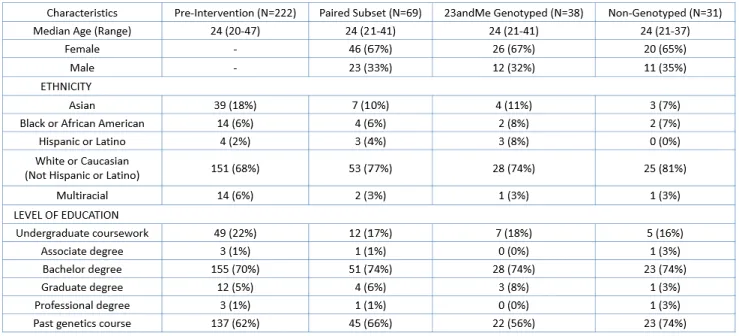
There were no statistically significant demographical differences between students who completed the pre-intervention survey and students in the paired subset group or between the genotyped and nongenotyped groups (Table 1). The median age of pharmacy students was 24 years. The majority of students reported their ethnicity as White or Caucasian (68%) and having taken a previous genetics course (62%). Prior to the initiation of this study, only one student in the paired subset had pharmacogenomic testing performed in a medical setting. Thirty-one percent of students who completed the pre-intervention survey (N=69/222) also completed the post-intervention survey, termed the paired subset. Fifty-five percent of students who completed both the pre-and post-surveys also obtained personal genotyping.
Table 1. Study population demographics and previous experience with clinical genetics.
The number (and percentage) of students with each corresponding characteristic is reported.
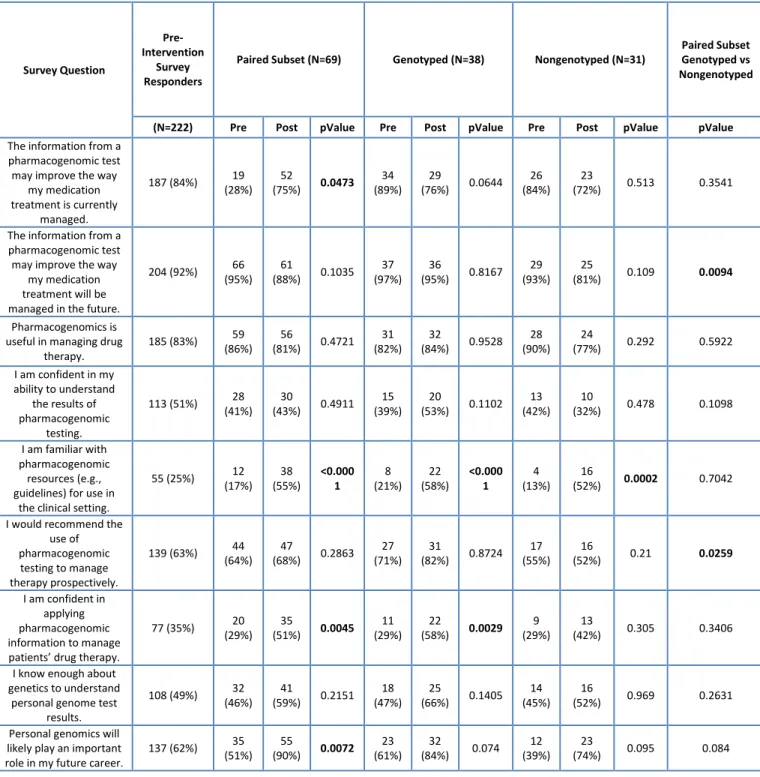
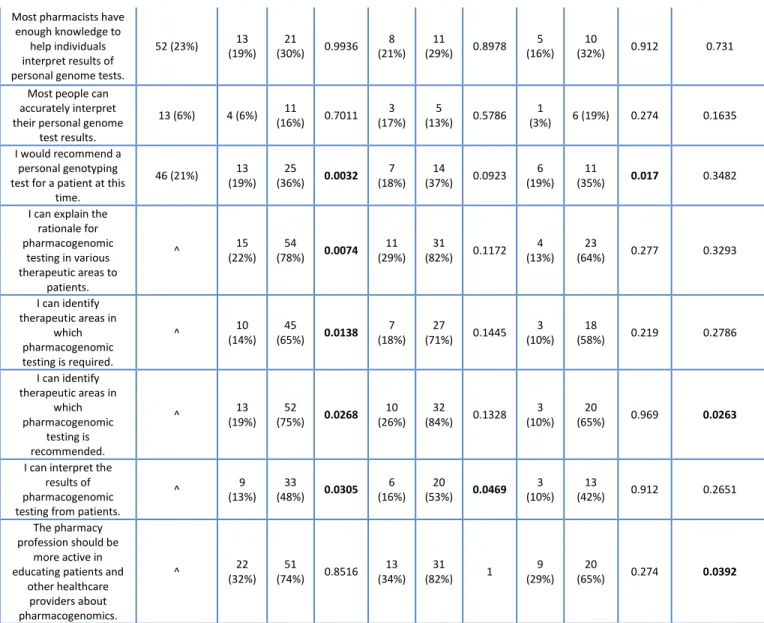
Table 2 summarizes the differences between the paired subset overall, in addition to the differences between the genotyped and nongenotyped groups, after the educational intervention. In the post-survey, 36% of students in the paired subset reported that they would recommend personal genotyping for a patient compared to just 19% before the pharmacogenomic intervention (p=0.0032). Students were more confident (51% post-survey vs 29% pre-survey, p=0.0045) in applying pharmacogenomic information to manage patients’ drug therapy. Overall after the educational intervention, more students (51% pre-survey versus 90% post-survey) believed that personal genomics will likely play an important role in their future career (p=0.0072). There was a significant increase in the number of students who reported to be more familiar with pharmacogenomic resources for use in the clinical setting after the pharmacogenomic educational intervention regardless if they were genotyped (p<0.001). Students also became more confident in their ability to identify therapeutic areas in which pharmacogenomic testing is required or recommended. Students became more confident in their ability to interpret the results of pharmacogenomic testing from patients overall and within the genotyped groups, but not within the
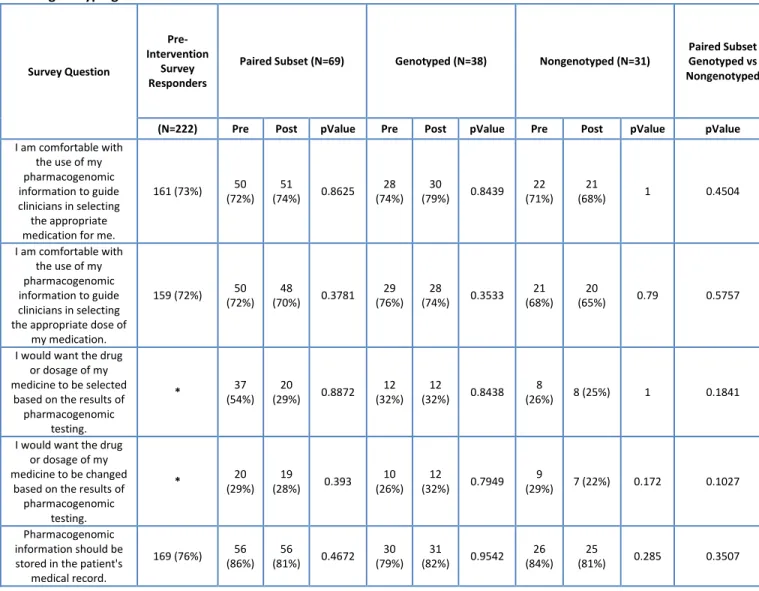
nongenotyped groups. More students reported that they could explain the rationale for pharmacogenomic testing in various therapeutic areas to patients than in the pre-survey (p=0.0074). Table A1 in the appendix lists additional findings between the paired subset and genotyped and nongenotyped groups after the educational intervention.
pharmacogenomic testing to manage patient therapy prospectively (p=0.0259). There was a significant difference in the belief that the pharmacy profession should be more active in educating patients and other healthcare providers about pharmacogenomics between the genotyped and nongenotyped groups (p=0.0392).
Table 2. Personal and professional reflections and attitudes towards pharmacogenomics and personal genotyping Survey Question Pre-Intervention Survey Responders
Paired Subset (N=69) Genotyped (N=38) Nongenotyped (N=31)
Paired Subset Genotyped vs Nongenotyped
(N=222) Pre Post pValue Pre Post pValue Pre Post pValue pValue
The information from a pharmacogenomic test may improve the way
my medication treatment is currently
managed.
187 (84%) 19
(28%) 52
(75%) 0.0473 34 (89%)
29
(76%) 0.0644 26 (84%)
23
(72%) 0.513 0.3541
The information from a pharmacogenomic test may improve the way
my medication treatment will be managed in the future.
204 (92%) 66
(95%) 61
(88%) 0.1035 37 (97%)
36
(95%) 0.8167 29 (93%)
25
(81%) 0.109 0.0094
Pharmacogenomics is useful in managing drug
therapy.
185 (83%) 59
(86%) 56
(81%) 0.4721 31 (82%)
32
(84%) 0.9528 28 (90%)
24
(77%) 0.292 0.5922
I am confident in my ability to understand
the results of pharmacogenomic
testing.
113 (51%) 28
(41%) 30
(43%) 0.4911 15 (39%)
20
(53%) 0.1102 13 (42%)
10
(32%) 0.478 0.1098
I am familiar with pharmacogenomic
resources (e.g., guidelines) for use in
the clinical setting.
55 (25%) 12
(17%) 38 (55%) <0.000 1 8 (21%) 22 (58%) <0.000 1 4 (13%) 16
(52%) 0.0002 0.7042
I would recommend the use of pharmacogenomic
testing to manage therapy prospectively.
139 (63%) 44
(64%) 47
(68%) 0.2863 27 (71%)
31
(82%) 0.8724 17 (55%)
16
(52%) 0.21 0.0259
I am confident in applying pharmacogenomic information to manage patients’ drug therapy.
77 (35%) 20
(29%) 35
(51%) 0.0045 11 (29%)
22
(58%) 0.0029 9 (29%)
13
(42%) 0.305 0.3406
I know enough about genetics to understand
personal genome test results.
108 (49%) 32
(46%) 41
(59%) 0.2151 18 (47%)
25
(66%) 0.1405 14 (45%)
16
(52%) 0.969 0.2631
Personal genomics will likely play an important role in my future career.
137 (62%) 35
(51%) 55
(90%) 0.0072 23 (61%)
32
(84%) 0.074 12 (39%)
23
Most pharmacists have enough knowledge to
help individuals interpret results of personal genome tests.
52 (23%) 13
(19%) 21
(30%) 0.9936 8 (21%)
11
(29%) 0.8978 5 (16%)
10
(32%) 0.912 0.731
Most people can accurately interpret their personal genome
test results.
13 (6%) 4 (6%) 11
(16%) 0.7011 3 (17%)
5
(13%) 0.5786 1
(3%) 6 (19%) 0.274 0.1635
I would recommend a personal genotyping test for a patient at this
time.
46 (21%) 13
(19%) 25
(36%) 0.0032 7 (18%)
14
(37%) 0.0923 6 (19%)
11
(35%) 0.017 0.3482
I can explain the rationale for pharmacogenomic
testing in various therapeutic areas to
patients.
^ 15
(22%) 54
(78%) 0.0074 11 (29%)
31
(82%) 0.1172 4 (13%)
23
(64%) 0.277 0.3293
I can identify therapeutic areas in
which pharmacogenomic testing is required.
^ 10
(14%) 45
(65%) 0.0138 7 (18%)
27
(71%) 0.1445 3 (10%)
18
(58%) 0.219 0.2786
I can identify therapeutic areas in
which pharmacogenomic
testing is recommended.
^ 13
(19%) 52
(75%) 0.0268 10 (26%)
32
(84%) 0.1328 3 (10%)
20
(65%) 0.969 0.0263
I can interpret the results of pharmacogenomic testing from patients.
^ 9
(13%) 33
(48%) 0.0305 6 (16%)
20
(53%) 0.0469 3 (10%)
13
(42%) 0.912 0.2651
The pharmacy profession should be
more active in educating patients and
other healthcare providers about pharmacogenomics.
^ 22
(32%) 51
(74%) 0.8516 13 (34%)
31
(82%) 1
9 (29%)
20
(65%) 0.274 0.0392
Items assessed on a five-point Likert scale are presented as the number and percentage of student pharmacists agreeing or strongly agreeing with the corresponding statement.
* was not collected in the survey for the first year and the pre-survey for the second year -- was not collected in the survey for the first year
^ was not collected in the pre-survey for the first year
For students who elected to undergo personal genotyping (Table 3), 76% reported that their learning experience was enhanced by doing so and 71% claimed to have a better understanding of pharmacogenomics based on undergoing personal genotyping.
Table 3. Reflections and attitudes towards personal genome testing for students who elected to undergo genotyping
Survey Question Paired Subset Individuals who were Genotyped
N=38
My learning experience was enhanced by undergoing personal genotyping. 29 (76%)
I have a better understanding of pharmacogenomics on the basis of undergoing personal
genotyping 27 (71%)
Undergoing personal genotyping was an important part of my learning. 21 (55%)
This course helped me understand what a patient’s experience might be like if they chose to
The cost for personal genome testing was reasonable 33 (87%) I would be willing to pay the full price (less than $100.00 plus shipping and handling) for
personal genome testing. 6 (15%)
I was pleased with my decision regarding personal genome testing. 34 (89%)
I experienced anxiety when deciding whether to undergo personal genome testing. 6 (15%)
I experienced anxiety when awaiting my personal genome testing results. 5 (13%)
I experienced anxiety after receiving my personal genome testing results. 1 (2%)
The opportunity to ask healthcare professional for help in interpreting the results is an
important component to a personal genome testing offer. 31 (81%)
The personal genome testing experience was favorable. 15 (39%)
The information received from personal genome testing was easy to understand. 10 (26%)
The information received from personal genome testing was misused, mishandled, or
misinterpreted. 1 (2%)
The information received from personal genome testing will be helpful when making clinical
decisions in the future. 9 (23%)
4. Discussion
As pharmacy schools are the leaders and innovators that drive pharmacy practice forward, educational interventions should have a positive and beneficial impact to shape student thoughts and impressions of
pharmacogenomics that will ultimately be carried with them into clinical practice. Education in pharmacogenomics helps pharmacy students understand the clinical utility and application of pharmacogenomics-guided therapeutic
drug selection and adjustment. Students demonstrated a significant increase in their confidence in applying clinical
pharmacogenomic information and knowledge of clinical resources to manage patients’ drug therapy. Additionally,
students were more likely to recommend personal genotyping for a patient.
Limitations of this study include a relatively low response rate due to optional survey participation and a lack of a testing component to assess objective learning competencies. Despite an objective assessment of student learning, this study was beneficial to demonstrate that pharmacogenomic educational interventions can make a difference in student attitudes that could eventually lead to more acceptance of clinical pharmacogenomics in practice.
As pharmacogenomic testing services become increasingly available to patients, either through healthcare providers or direct-to-consumer routes, there is more opportunity for pharmacists to provide pharmacogenomic counseling as an extension of medication-therapy-management (MTM) services. Pharmacists are ideally equipped to evaluate medication therapy challenges and implement solutions based on evidence-based precision medicine research. Healthcare professionals who are confident with their pharmacogenomic knowledge begins with adequate pharmacogenomic education. Effective pharmacogenomic educational interventions in PharmD
curriculums can help pharmacy students better understand what a patient's personal genotyping experience might be like and empower them to implement these valuable clinical services in their practice as future pharmacists.
President Barack Obama launched the Precision Medicine Initiative in his 2015 State of the Union address as an innovative approach to healthcare that takes into account individual differences in people’s genes, environments,
Appendix
During week 8 of the 1-hour large student group session of PCL, student pharmacists completed a pre-intervention survey before observing an introductory lecture on pharmacogenomics. In this same lecture, students received information regarding voluntary, anonymous personal genomic testing through 23andMe (Mountain View, CA).
The large group lecture included the following student learning objectives: define pharmacogenomics, discuss the
importance of pharmacogenomics in drug therapy, examine how pharmacogenomics is used to manage drug therapy, and provide examples of pharmacogenomic-guided algorithms.
During week 11 in the small group sessions of PCL, pharmacogenomic patient cases using demo 23andMe data were discussed and relevant pharmacogenomic clinical resources were reviewed. A final lecture was given in week
15 of PCL to the large, complete student group with the following student learning objectives: discuss 23andMe results, demonstrate how to obtain pertinent pharmacogenomic information and utilize online resources, and review a clinical case focusing on the use of pharmacogenomics to manage drug therapy. Throughout the
educational intervention, eight different drug-gene pairs were described using clinical cases. After the wrap-up lecture in week 15, students were asked to complete the post-intervention survey.
Table A1. Additional personal and professional reflections and attitudes towards pharmacogenomics and personal genotyping Survey Question Pre-Intervention Survey Responders
Paired Subset (N=69) Genotyped (N=38) Nongenotyped (N=31)
Paired Subset Genotyped vs Nongenotyped
(N=222) Pre Post pValue Pre Post pValue Pre Post pValue pValue
I am comfortable with the use of my pharmacogenomic information to guide clinicians in selecting the appropriate medication for me.
161 (73%) 50
(72%) 51
(74%) 0.8625 28 (74%)
30
(79%) 0.8439 22 (71%)
21
(68%) 1 0.4504
I am comfortable with the use of my pharmacogenomic information to guide clinicians in selecting the appropriate dose of
my medication.
159 (72%) 50
(72%) 48
(70%) 0.3781 29 (76%)
28
(74%) 0.3533 21 (68%)
20
(65%) 0.79 0.5757
I would want the drug or dosage of my medicine to be selected
based on the results of pharmacogenomic
testing.
* 37
(54%) 20
(29%) 0.8872 12 (32%)
12
(32%) 0.8438 8
(26%) 8 (25%) 1 0.1841
I would want the drug or dosage of my medicine to be changed
based on the results of pharmacogenomic
testing.
* 20
(29%) 19
(28%) 0.393 10 (26%)
12
(32%) 0.7949 9
(29%) 7 (22%) 0.172 0.1027
Pharmacogenomic information should be stored in the patient's
medical record.
169 (76%) 56
(86%) 56
(81%) 0.4672 30 (79%)
31
(82%) 0.9542 26 (84%)
25
Pharmacogenomics will likely play an important role in my future career.
165 (74%) 53
(77%) 57
(83%) 0.657 31 (82%)
34
(89%) 0.9896 22
(71%) 23(74%) 0.689 0.438
I understand the risks of using personal genome
testing services.
-- 8
(12%) 13
(19%) 0.4034 6 (16%)
8
(21%) 1
2
(6%) 5 (16%) 0.277 0.9634
I understand the benefits of using personal genome testing services.
-- 15
(22%) 23
(33%) 0.2056 10 (26%)
13
(34%) 0.6172 5 (16%)
10
(32%) 0.219 0.5685
Most physicians have enough knowledge to
help individuals interpret results of personal genome tests.
48 (22%) 10
(14%) 19
(28%) 0.7498 5 (13%)
10
(26%) 0.8294 5
(16%) 9 (29%) 0.877 0.5478
Personal genome testing companies provide an accurate
analysis and interpretation of
genotype data.
46 (21%) 14
(20%) 22
(32%) 0.7314 9 (25%)
12
(32%) 0.958 5 (16%)
10
(32%) 0.804 0.6758
Personal genome testing companies should be regulated by the federal government (i.e., the Food and Drug
Administration).
129 (58%) 39
(57%) 41
(59%) 0.9315 22 (58%)
23
(61%) 0.6575 17 (55%)
18
(58%) 0.705 0.7559
I can discuss the risks of pharmacogenomic testing with patients.
-- 6
(9%) 11
(16%) 0.328 4 (11%)
9
(24%) 0.1582 2
(6%) 2 (6%) 0.095 0.0584
I can discuss the benefits of pharmacogenomic testing with patients.
-- 17
(25%) 25
(36%) 0.0783 11 (29%)
14
(37%) 0.1875 6 (19%)
11
(35%) 0.877 0.5711
Items assessed on a five-point Likert scale are presented as the number and percentage of student pharmacists agreeing or strongly agreeing with the corresponding statement.
* was not collected in the survey for for the first year and the pre-survey for the second year -- was not collected in the survey for the first year
^ was not collected in the pre-survey for the first year
Table A2. Post-intervention professional reflections and attitudes towards personal genotyping in genotyped versus nongenotyped groups
Survey Question Genotyped (N=53) Nongenotyped (N=55) p-value
The Pre-Pharmaceutical Care Lab lecture enhanced my learning of
pharmacogenomics. 39 (74%) 36 (65%) 0.5035
The cases in Pharmaceutical Care Lab enhanced my learning of
pharmacogenomics. 35 (66%) 34 (62%) 0.6653
The supplementary class materials for interpreting personal pharmacogenomic
results are useful. 34 (64%) 27 (49%) 0.4720
The supplementary class materials for additional personal genome testing
results are useful. 35 (66%) 29 (55%) 0.3158
More time should be spent on pharmacogenomics material in Pharmaceutical
Care Lab. 17 (32%) 8 (15%) 0.9278
More time should be spent on pharmacogenomics material in the curriculum. 20 (38%) 18 (33%) 0.4547
A separate pharmacogenomics course should be required in the curriculum. 12 (23%) 9 (16%) 0.8097
Pharmacogenomics should be covered early in the curriculum prior to
therapeutic coursework. 24 (45%) 11 (20%) 0.4202
Pharmacogenomics should be covered as needed in therapeutic coursework.
48 (91%) 42 (76%) 0.0135
Pharmacogenomics should be covered in practical clinical coursework. 41 (77%) 31 (56%) 0.6082
Pharmacogenomics cases should be incorporated into coursework. 37 (70%) 26 (47%) 0.0384
References
1. Food and Drug Administration. Table of valid genomic biomarkers in the context of approved drug labels. www.fda.gov/Drugs/ScienceResearch/ResearchAreas/Pharmacogenetics/ucm083378.htm (accessed on 11 March 2018).
2. Whirl-carrillo M, Mcdonagh EM, Hebert JM, et al. Pharmacogenomics knowledge for personalized medicine. Clin Pharmacol Ther. 2012;92(4):414-7.
3. Relling MV, Klein TE. CPIC: Clinical Pharmacogenetics Implementation Consortium of the Pharmacogenomics Research Network. Clin Pharmacol Ther. 2011;89(3):464-7.
4. Nickola TJ, Green JS, Harralson AF, O'brien TJ. The current and future state of pharmacogenomics medical education in the USA. Pharmacogenomics. 2012;13(12):1419-25.
5. Owusu-obeng A, Weitzel KW, Hatton RC, et al. Emerging roles for pharmacists in clinical implementation of pharmacogenomics. Pharmacotherapy. 2014;34(10):1102-12.
6. Williams MS. Genomic medicine implementation: learning by example. Am J Med Genet C Semin Med Genet. 2014;166C(1):8-14.
7. Mills R, Haga SB. Clinical delivery of pharmacogenetic testing services: a proposed partnership between genetic counselors and pharmacists. Pharmacogenomics. 2013;14(8):957-68.
8. Mccullough KB, Formea CM, Berg KD, et al. Assessment of the pharmacogenomics educational needs of pharmacists. Am J Pharm Educ. 2011;75(3):51.
9. Murphy JE, Green JS, Adams LA, Squire RB, Kuo GM, Mckay A. Pharmacogenomics in the curricula of colleges and schools of pharmacy in the United States. Am J Pharm Educ. 2010;74(1):7.
10. Roederer MW, Van Riper M, Valgus J, Knafl G, McLeod J. Knowledge, attitudes and education of pharmacists regarding pharmacogenetic testing. Per. Med. 9(1), 19-27 (2012).
11. Moen M, Lamba J. Assessment of healthcare students' views on pharmacogenomics at the University of Minnesota. Pharmacogenomics. 2012;13(13):1537-45.
12. Nickola TJ, Munson AM. Pharmacogenomics primer course for first professional year pharmacy students. Pharmacogenomics. 2014;15(1):39-48.
13. Johnson J. A., Bootman J. L., Hudson R. A., Knoell D., Simmons L., Straubinger R. M., et al.
14. Roederer MW, Kuo GM, Kisor DF, et al. Pharmacogenomics competencies in pharmacy practice: A blueprint for change. J Am Pharm Assoc (2003). 2017;57(1):120-125.
15. ASHP statement on the pharmacists’s role in clinical pharmacogenomics. AM J Health-Syst Pharm. 2015. 72:579-81.
16. Frick A, Benton CS, Scolaro KL, et al. Transitioning pharmacogenomics into the clinical setting: Training future pharmacists. Front Pharmacol. 2016;7:241.
17. Ormond KE, Hudgins L, Ladd JM, Magnus DM, Greely HT, Cho MK. Medical and graduate students' attitudes toward personal genomics. Genet Med. 2011;13(5):400-8.
18. Salari K, Karczewski KJ, Hudgins L, Ormond KE. Evidence that personal genome testing enhances student learning in a course on genomics and personalized medicine. PLoS ONE. 2013;8(7):e68853.
19. Lee KC, Hudmon KS, Ma JD, Kuo GM. Evaluation of a shared pharmacogenomics curriculum for pharmacy students. Pharmacogenomics. 2015;16(4):315-22. D
20. White House. The Precision Medicine Initiative. https://obamawhitehosue.archives.gov/node/333101 (accessed on 11 March 2018).
21. Chua EW, Kennedy MA. Current state and future prospects of direct-to-consumer pharmacogenetics. Front Pharmacol. 2012;3:152.
22. Dobson MG, Galvin P, Barton DE. Emerging technologies for point-of-care genetic testing. Expert Rev Mol Diagn. 2007;7(4):359-70.
23. National Human Genome Research Institute. The cost of sequencing a human genome.
www.genome.gov/27565109/the-cost-of-sequencing-a-human-genome/ (accessed on 11 March 2018).
24. Cavallari LH, Lee CR, Duarte JD, et al. Implementation of inpatient models of pharmacogenetics programs. Am J Health Syst Pharm. 2016;73(23):1944-1954.
25. Dunnenberger HM, Biszewski M, Bell GC, et al. Implementation of a multidisciplinary pharmacogenomics clinic in a community health system. Am J Health Syst Pharm. 2016;73(23):1956-1966.
26. Weitzel KW, Alexander M, Bernhardt BA, et al. The IGNITE network: a model for genomic medicine implementation and research. BMC Med Genomics. 2016;9:1.