Using Systematic Implementation Methods to Improve Public Health Delivery: A Smoking-Cessation Case Study
By
Cecilee Steinmetz
A Master’s Paper submitted to the faculty of the University of North Carolina at Chapel Hill
In partial fulfillment of the requirements for the degree of Master of Public Health in
the Public Health Leadership Program.
Chapel Hill 2013
________________________________ Advisor:
________________________________ Second Reader:
Abstract
Despite increased attention to developing sustainable and scalable public health interventions, the gap between interventions tested in designed experiments and field-based delivery continues to widen. This paper discusses how implementation failures can impede progress in reducing health-related morbidity and mortality, and how to address these program deficiencies through the application of a systematic implementation approach. Research-based interventions are needed to enhance the likelihood of achieving sustainable improvements in population health, but they may fail to achieve desired outcomes if they cannot be adopted in practice. Little guidance in established public health research or practice is offered on how to apply science to a variety of situations and contexts. Consequently, practitioners are unable to determine whether implementation failures are a result of incomplete delivery, lack of evidence to support the theory behind an intervention, resource constraints, failed systems, or a poorly designed program.
The accompanying case study applies the Implementation Science Framework to the development of a tobacco cessation program at a North Carolina Adult Drug and Alcohol Treatment Center. In four project phases, this case study illustrates how methods and tools from the Implementation Science Framework were used towards the goal of achieving sustainable reductions in smoking prevalence in the facility.
How Poor Planning and Execution Contributes to Implementation Failure of Public Health Programs
Introduction
system is a necessary prerequisite to effective, efficient, and equitable interventions that promote the health of all populations.
This master’s paper explores these issues within the context of a tobacco-cessation case study. It explores the need for improved public health delivery and outlines a step-by-step process for instituting a systematic implementation approach to public health. A concluding discussion further delineates the advantages of this methodology as an extension of existing quality improvement frameworks.
scientific evidence into practice,” yields inconsistent and suboptimum outcomes, but remains the most pervasive method of public health service delivery (Bhattacharyya, Reeves & Zwarenstein, 2009, p. 491). Part of the challenge lies in maintaining the integrity of the original intervention but adapting the characteristics and processes that render a complex intervention successful to a variety of unique and varied settings. A framework from which to adapt a strategy and a clear understanding of the specific factors influencing the effectiveness of an intervention are needed (Jackson & Waters, 2005).
Implementation Science: Engineering Improved Health What is Implementation Science?
A wide body of tools and techniques has been developed to support program implementation. Quality assessment, quality improvement, quality control, quality assurance, evidence-based interventions, translational research, diffusion of innovations, the RE-AIM (Reach, Efficacy, Adoption, Implementation, Maintenance) framework, among many others provide guidance to public health professionals on how to deploy and evaluate established interventions (Glasgow, Vogt & Boles, 1999). However, little guidance is offered on how to apply these tools in a systematic way so as to effectively implement programs in a variety of situations and contexts. Similarly, systems improvement techniques such as process mapping, Lean/Six Sigma and continuous quality improvement (CQI) have been widely disseminated to public health and healthcare settings in order to improve the quality and sustainability of population health improvements (Sollecito & Johnson, 2013). Their application has produced inconsistent results, perhaps because of the difficulty in synchronizing and managing resources, information, and technology across different settings and specialties (Foy, Eccles, & Grimshaw, 2001; Mugglestone et al, 2008).
defines and guides the specific techniques that can be used to design and execute successful interventions. Implementation research involves the theory of what makes a system effective, whereas implementation science emphasizes methods that can be used to build a sustainable system in practice across different settings. Implementation research is not possible without the use of scientific methods to optimize implementation. Fundamentally, implementation science endeavors to improve the quality of care and reduce ineffective or inefficient practices by ensuring transferability of proven strategies (Foy, Eccles, & Grimshaw, 2001).
Terminology used in the field of implementation research and implementation science stems from a diverse range of disciplines, including education, agriculture, social work, engineering, and healthcare (Rabin et al, 2008). In the absence of a standardized set of definitions appropriate to a public health context, this paper includes a synthesis of definitions from multiple sources. Implementation research described by Rabin et al (2008) and from common use amongst major public health agencies such as the Center for Disease Control and the National Institute of Health is defined as:
“Implementation research seeks to understand the processes and factors that are associated with successful integration of evidence-based interventions within a particular setting…[and] assess whether core components of the original intervention were faithfully transported to the real-world setting” (p. 119).
“The scientific study of methods to promote the systematic uptake of clinical research findings and other evidence-based practices into routine practice, and hence to improve the quality and effectiveness of healthcare. It includes the study of influences on healthcare professional and organizational behavior” (Bhattacharyya, Reeves & Zwarenstein, 2009, p. 492).
The combined approach of implementation research and implementation science can be best defined by Fixsen, Blase, Naoom, and Wallace (2012, p. 532) as a “process where outside experts…work with organizations, systems, and practitioners to achieve high fidelity use of the products of science and to assure benefits to consumers.”
Finally, both process and outcome measures are analyzed in order to identify contextual factors that affect the gap between knowledge and practice (Bhattacharyya, Reeves & Zwarenstein, 2009).
Examples of Use of Implementation Science in Health Settings
Several approaches have been developed to establish and promote the benefits of implementation science in public health and healthcare settings. To address the intersectoral relationships common in healthcare settings, for example, large public health entities such as the British National Health Service (NHS) and the Institute of Medicine have begun to adapt implementation science tools to a variety of increasingly complex systems (Mugglestone et al, 2008). The NHS has reduced variation in its nationwide health improvement programs by applying a four-stage design and testing approach to enact the country’s largest health care improvement effort, “The 10 High Impact Changes” (Bevan et al, 2013). Similarly, an intervention to decrease South African childhood mortality rates associated with malnutrition demonstrates the potential public health impact of implementation science. “Sustained training and supportive supervision” was paired with continuous monitoring to improve deficiencies in skills, knowledge, resources, and leadership, and led to a 33% reduction in case-fatality rates (Sanders & Haines, 2006).
processes unique to their particular setting, and generate results that would have otherwise been difficult to attain without a comprehensive understanding of the patient experiences and the interrelationship between physicians and patients, as well as the ability to identify causal steps in the diagnostic process (Vandborg et al, 2012).
These examples demonstrate the many possible approaches and tools used in implementation science. Because of the relative diversity in applied methods, no single integrated framework could be identified within published literature. This paper therefore describes an implementation science framework that was designed and used for the tobacco-cessation case study detailed in later sections.
Implementation Science Framework
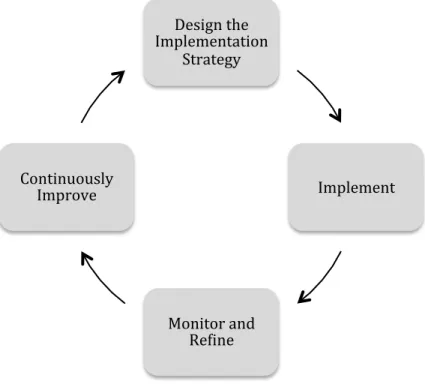
The framework presented in this paper is a customized approach to implementation science that was developed for the tobacco-cessation project described in the case study. This framework extended the models developed by several implementation science researchers (Wandersman et al (2008), Brown (2008) and Fixsen et al (2009), to include principles of design thinking, and continuous quality improvement (CQI). Our framework has four phases.
the cycle with an outcome evaluation and ongoing monitoring through continuous quality improvement.
Figure 1. Implementation Science Framework
In order to develop and facilitate a successful evidence-based intervention, the processes, the organization that will be affected by the intervention, and the public health system responsible for delivering the intervention must be aligned. An important first step in the Implementation Science Framework is conducting an initial needs, resource, and capacity assessment to determine the organizational and structural factors that influence the ability to implement in the desired setting. The process objectives and vision must be established in accordance with the available assets (financial, physical, and manpower). An organization’s readiness for change and initial considerations of cultural support and alignment are evaluated, and stakeholder buy-in is secured at this stage.
Design'the' Implementation'
Strategy'
Implement'
Monitor'and' Re6ine' Continuously'
Designing the implementation strategy also involves defining a problem according to stakeholders’ needs and, through collective participation, developing a viable process or intervention that meets those needs. Critical in this approach is the makeup of the process design team, which includes end beneficiaries, and individuals who will design and implement the program. An initial pilot or “prototype” program may also be deployed within a population subset to rapidly explore new ideas and observe human behavior in practice (Brown, 2008, p. 3). Potential barriers to implementation such as technology gaps, financial constraints, or poor cultural integration are identified. More effective alternatives are incorporated into the initial process and full program implementation begins.
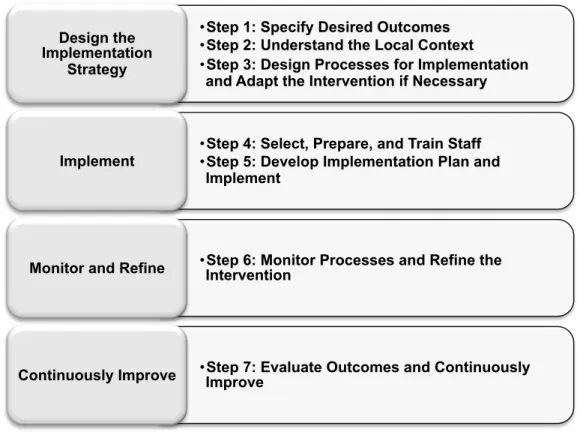
Figure 2 expands the framework of Figure 1, adding specific activities to each phase that are described in greater detail below.
Figure 2. Activities within the Implementation Science Framework
A detailed description of each activity step follows:
1) Specify Desired Outcomes: Using available evidence, identify gaps in care or deficiencies in desired outcomes and define the underlying causes if possible. Then clarify the focus and scope of the intervention. Identify professionals that can guide and inform strategic priorities based on existing knowledge of a system’s needs and objectives (Stans, Stevens & Beurskens, 2013).
• Step 1: Specify Desired Outcomes • Step 2: Understand the Local Context
• Step 3: Design Processes for Implementation and Adapt the Intervention if Necessary Design the
Implementation Strategy
• Step 4: Select, Prepare, and Train Staff • Step 5: Develop Implementation Plan and
Implement Implement
• Step 6: Monitor Processes and Refine the Intervention
Monitor and Refine
• Step 7: Evaluate Outcomes and Continuously Improve
2) Understand the Local Context: Through interviews, surveys, and direct observation, conduct a systematic analysis of the organization, culture, values and behaviors likely to influence an intervention’s success. Interviews are conducted amongst participants and beneficiaries. A thorough analysis identifies communication networks, initial staff and leadership perceptions towards the desired change (feasibility and degree of advocacy), organizational barriers to change, the health system structure and available resources, existing skills and knowledge of staff, as well as the broader regulatory, economic, and political environment. In addition, desired quality improvements, and financial and timeline constraints are clarified.
based on perceived complexity; the intervention’s quality and validity; compatibility, or the degree to which a program can be tailored to a specific setting; “trialability” which involves the ability to test, observe, and refine a specific strategy; and the tangible and opportunity costs associated with implementation (Damschroder et al, 2009).
Design the strategy based on fit with existing programs. Determine whether the new strategy will supplement, replace, or enhance other programs that are being offered (Wandersman et al, 1998). Distinguish functional relationships and interactions between health professionals, support roles, and target populations/health care recipients. Identify duplicative processes or excessive and unnecessary steps that contribute little to no value to a process. Determine areas of excess capacity where resources can be moved or cross-trained to perform multiple roles. Then, prioritize desired intervention strategies and build the desired state process within the existing system.
Equally important in this step is to develop mechanisms for data collection. Identify performance, impact, and quality measures that can be embedded in the new process and contribute to post-intervention analysis on whether a program is operating as intended (Habicht, Victora & Vaughan, 1998).
the initiative. Once staff is selected, ensure readiness through training, coaching, and consultation (Fixsen, Blase & Naoom, 2012). Staff may have the desire and capacity to support an intervention strategy but lack the confidence or ability. A pre-training needs assessment survey identifies knowledge gaps that can be addressed in training, as well as preferred delivery methods such as web-based or interactive modules. Training should consist of both theory and case studies that enable participants to practice techniques and receive feedback (Fixsen, Blase & Naoom, 2012). Post-training surveys identify whether participants have improved levels of self-efficacy and gained the requisite knowledge and skills for success.
5) Develop Implementation Plan and Implement: Although simple in definition, implementation involves coordinating the resources, systems, and participants that will be impacted by an intended change. If a delivery system has been redesigned during step 3, new pathways for communication and collaboration must be identified. Clarify any changes in roles and responsibilities and clearly communicate how those roles fit into the newly designed process. Collect ongoing qualitative and quantitative process and impact data that identifies whether the intervention is meeting desired targets.
‘champions’ that can recognize and lead interim changes in areas where a process is not working as intended. Encourage “high-fidelity practitioner behavior” through a consultative discussion with staff in how they are applying the training and implementation strategies defined in previous steps (Fixsen, Blase & Naoom, 2012). Conduct on-the-job training through supportive coaching and periodic performance assessments wherein health workers are provided the opportunity to practice intervention-specific skills and assess the resulting outcomes. These evaluations enhance integration within the health system and increase long-term sustainability. Results from research conducted by Rogers, Wellins, and Conner (2002) indicate that training complemented by consultative coaching is highly successful, resulting in a 95% knowledge-transfer rate among teachers, compared to just 5% with theory, discussion, practice, and feedback (Fixsen, Blase & Naoom, 2012).
Case Study: Using the Implementation Science Framework to Develop a Smoking Cessation Intervention at an Inpatient Drug and Alcohol Treatment Center in North Carolina
The following case further describes how the Implementation Science Framework presented in this paper was used to implement a smoking cessation program in an addiction treatment facility in North Carolina.
Background
Becoming tobacco-free is a critical pathway to mental health and substance abuse patients’ recovery. Tobacco addiction is the leading cause of preventable mortality, yet North Carolina remains the top tobacco producer in the US and ranks as the 12th highest for smoking prevalence, with 21% of the adult population designated as smokers (CDC, 2010; NC Department of Agriculture and Consumer Services, 2013). Individuals with substance abuse and/or mental disorders are particularly vulnerable. They consume approximately 44% of cigarettes sold in the US and suffer from nearly half of preventable smoking-related deaths (UCSF, 2012).
The state of North Carolina has issued several legislative measures to address tobacco’s negative health effects. A 2007 regulation required that all state-run hospitals become smoke-free and a 2008 regulation banned smoking in all state government buildings (NC DHHS, 2013). Despite these measures, patients at state mental health and substance abuse facilities retained smoking privileges if outside the premises.
the opportunity to view smoking as a unique addiction and to implement programs to promote staff and patient smoking cessation. However, with little guidance on how to achieve these aims, ADATCs responded by offering nicotine replacement therapy for the duration of a patient’s stay and no treatment for the underlying addiction.
The 2011 ruling presents an opportunity to implement an integrated smoking cessation intervention that yields sustainable reductions in morbidity and mortality
across a vulnerable population. Smoking cessation practice guidelines developed by the CDC (2008) recommend the use of pharmacological aids such as buproprion
(Wellbutrin) or varenicline (Chantix) to improve cessation rates over quitting without a treatment protocol. Behavioral counseling is also effective, particularly as a distinct focus in addiction therapy treatment. Most effective is the combination of
pharmacological and behavioral treatments, which produces greater long-term
improvement than either strategy alone (Maziak et al, 2004). An important challenge was how to introduce these complex interventions into ADATCs that are suffering from budget cuts, reduced resources and an ever increasing work load. The implementation science framework, described here, with its emphasis on iterative roll out strategies and continuous, ongoing improvement seemed particularly suited to this problem. The project is still underway; the case study description provided here summarizes the activities that have been completed and those that are still to take place in the future.
Study Design in a North Carolina Treatment Setting
per year. The primary intervention site, RJB, will receive the full intervention package of smoking cessation and quality improvement training, environmental assessments,
capacity building, process design, and ongoing implementation and quality improvement support. Two comparison sites, WBJ and JFK, will receive smoking-cessation training and an implementation guide that includes the intervention strategy developed at RJB. All three sites will be evaluated on outcome measures such as percentage of patients who smoke, percentage of patients who express interest in quitting, and percentage of patients who perceive they were assisted by the facility in quitting smoking. In addition, RJB will be evaluated on process measures such as program fidelity and quality.
A post-discharge assessment will also be completed to determine the effects of treatment 30 days after release. WBJ is currently a smoke-free facility but does not follow the same design and implementation structure that will be used at RJB. JFK will become a smoke-free facility in tandem with RJB, and will receive the intervention design but will not receive implementation coaching and support.
Approach: Applying the Implementation Science Framework in Practice
Table 1. Tools and Methods Used in Designing the Tobacco-Cessation Intervention
Step Activity Tools Used
1 Specify Desired Outcomes Theory-of-change modeling
2 Understand the Local Context Stakeholder interviews
3
Design Processes for
Implementation and Adapt the Intervention if Necessary
Process mapping, risk mitigation assessments
4 Select, Prepare, and Train Staff
Critical appraisal of evidence-based literature; staff questionnaires; staff and leadership team interviews 5 Develop Implementation Plan
and Implement Process, impact, and quality indicators
6 Monitor Process and Refine the
Intervention PDSA (Plan-Do-Study-Act) Cycle
7 Evaluate Outcomes and
Continuously Improve
Process evaluation, outcome and impact evaluation, lessons learned
Step 1: Specify Desired Outcomes
Further collaboration with the Medical Director of the NC Division of State Operated Healthcare Facilities, the state head of ADATCs, the Director of Tobacco Cessation at the NC Public Health Tobacco Prevention and Control Branch, and members of the state Department of Health and Human Services leadership team occurred via face-to-face meetings. The team revealed four state objectives, including development and implementation of a program for substance abuse treatment settings, development of a process guide that can be used at other facilities, a program that addresses staff tobacco use, and an intervention that aids patients transitioning from inpatient to post-discharge addiction management. The state also set a broader goal of reducing smoking prevalence in individuals with substance abuse disorders to 50% by 2016. Combined, the quantitative data and qualitative discussions led to the ultimate public health objective of preventing the use of, and reducing the prevalence of tobacco use in North Carolina by ADATC staff and patients.
Project objectives were also defined at the facility-level. Meetings with individuals involved in the management and provision of substance abuse services at the primary ADATC, RJB, provided further information on perceived interest of management in the smoking cessation program, professional practices at the facility, and the staff
operational areas: counseling and treatment, psychiatry, medical, quality improvement, business operations, nursing, and human resources.
Step 2: Understand the Local Context
Stakeholder interviews were conducted at the facility level to gauge the organizational readiness for change. Fourteen interviews with members of the
leadership team, the design team, front-line staff and support staff evaluated the extent to which staff felt smoking cessation should be an objective of the ADATC, any barriers to implementation such as cultural or structural limitations, concerns about patients or staff adopting the new program, and the extent of perceived leadership support. Ninety-three percent of interviewed staff reported smoking cessation as an important objective for the ADATC, however; they also noted that the program would exacerbate patient behavior problems if denied cigarettes and disparities in responsibility between the medical and psychology staff would be issues to address. The organization disagreed as to whether smoking cessation should be a primary responsibility of the medical staff, the nursing team, or the psychiatrists. They also reported a desire for clear direction on individual roles and responsibilities, well-defined milestones and deadlines, and
specific tobacco-cessation program that is independent of existing treatment programs, or if the tobacco-cessation counseling should be integrated into current curricula.
Step 3: Design Processes for Implementation and Adapt the Intervention if Necessary Information collected through the formative discussions, interviews, kick-off sessions, and qualitative and quantitative analyses informed the development of a culturally appropriate and resource sensitive smoking cessation intervention. Facility practitioners did not have a comprehensive understanding of the patient flow, that is, the process required to refer, admit, diagnose, treat, and discharge a patient. A process mapping exercise conducted during the design team meetings revealed that a patient may encounter as many as ten different types of staff roles in a single day, independent of the total staff with which they may interact. Each of these encounters represents an opportunity to educate a patient about the dangers of tobacco use and offer counseling and/or pharmacotherapy. High variability in chart tracking as a patient is handed off to different teams meant that a continuum of care was not always followed. The design team needed to first gain a better understanding of existing operations before a contextually appropriate program could be developed.
Process mapping was used to identify the high-level stages in treating a patient, the outcomes at each stage, and the specific process steps carried out by designated roles. By aligning the project objective with the organization’s current activities, the design team was able to evaluate whether sufficient capacity existed for incorporating a new smoking cessation program. A “current state” process flow chart (detailed in
redundancies, and inconsistencies in service delivery. It was discovered, for example, that both psychiatrists and nursing staff collected identical patient data but neither group utilized the information from the other business units. Patients were asked redundant questions that could lead to frustration and low compliance should a smoking cessation intervention add additional redundancies in the medical records. Further, evening and weekend schedules presented large gaps in an otherwise structured treatment regimen, and patients routinely complained of boredom during these times. Day nurses shared a large burden of responsibilities, while evening nurses experienced significant downtime and held primarily observational duties.
Using the “current state” process map as a guide, the design team developed a tobacco-cessation intervention that could be incorporated into their existing process. Critical components of the intervention strategy include establishing a smoking
awareness regimen for all patients, establishing an individual smoking cessation group for patients who wish to quit, conducting smoking assessments at four separate phases in care, establishing a tobacco Quitline referral process prior to discharge so that
patients may receive medication and therapy post-discharge, and extending the community provider network to include resources for ongoing smoking cessation. The new intervention design will also leverage the evening nurse capacity to offer
quitting smoking. The treatment regimen will include an individual development plan and daily monitoring of progress. Upon completion of the individual track, these patients will transition to the general awareness group. All patients will be offered nicotine
replacement therapy in addition to the counseling sessions.
Patients will be evaluated for their smoking status and desire to quit at intake and if they decline smoking cessation support, will be asked after detoxification, during their treatment plan review meetings, and prior to discharge. Again using the process maps as a guide, the design team determined that streamlining patient chart forms would allow them to gather additional patient data while reducing overall administrative paperwork. Handoff processes between the psychiatrists who evaluate patients at intake, the medical staff, and the nursing staff were solidified and the final “to be” process maps were developed (Appendix B).
Finally, a comprehensive project plan including timelines, required deliverables, and associated roles and responsibilities was developed to ensure a systematic roll-out would occur once the legislation came to pass. Preparatory activities such as policy and form updates were established in advance, as was the development of staff training.
Step 4: Select, Prepare and Train Staff
comparison sites in order to establish baseline readiness for the tobacco-cessation legislation. A pre-implementation survey will be released in tandem with the training and will evaluate staff’s perceptions of their ability to deliver the intervention and knowledge of tobacco treatment therapies. The survey will be re-administered six months post-intervention.
Program Implementation, Evaluation and Continuous Quality Improvement
The program is currently at the beginning of the implementation stage. Additional design tools, such as the Impact / Effort Matrix (Appendix C) and a risk mitigation
strategy ensured due diligence in evaluating the organization’s capacity for
implementing the new program prior to full rollout. This process began by identifying specific activities that would be required in order to become smoke free, such as updating policies, updating patient medical record forms, identifying and training resources, and building the curriculum for the new group sessions. These activities were prioritized according to effort required and impact they would have on the
organization, and then developed a risk mitigation strategy to talk through some of the challenges that might be encountered as the design team hands off processes to the Implementation team.
comparison sites. The evaluation will test whether the training and implementation science-based process design strategy implemented at the intervention site results in decreased smoking among patients compared to just training implemented at the comparison site.
Discussion
Applying the Systematic Implementation Approach to the Field of Public Health
The tobacco cessation case study illustrates how an implementation science framework can be applied in a public health setting. Preliminary results indicate that clear goal definition, an environmental analysis, staff cross training, and laying out a pre- and post-implementation process map generated additional services capacity without increasing staff or funding. By representing project objectives within a patient flow structure, project staff was better able to determine current treatment gaps and reduce excessive or complex handoffs. They were then able to integrate additional processes into their current regimen of care in a more efficient manner. After implementation, further data will determine if the case is successful in improving adoption and compliance, and whether more patients with long-term quit status compared to a non-intervention site. Future objectives for this program are to extend the implementation science framework that was used to other ADATC sites and guide future program planning activities in other areas of treatment.
inadequate program delivery, not lack of knowledge about what constitutes an effective intervention.
The application of CQI is an important step towards developing practices through which productivity and quality gains can be achieved in public health; however, it is not enough. Merely improving poorly designed intervention strategy does not address the underlying cause of the implementation failure in the first place. Performance evaluations that are retrospective emphasize program compliance rather than program improvement. A more comprehensive framework that addresses the entire spectrum of design, delivery, and continuous improvement is needed.
Although implementation science favors a customized approach to each setting, its core principles are generalizable to the broader field of public health. The pursuit of “scientific truth into the complexities of clinical and community settings” ensures that research is not futile outside of a controlled setting (Rubenstein & Pugh, 2006, pg. S63). By strengthening the view that public health delivery is an organic, proactive process that depends on greater awareness of situational barriers and assets, and more strategic inclusion of communities in program design and dissemination, considerable gains could be achieved in improving the efficiency and effectiveness of complex health interventions, and ultimately, the health of the public.
opposed to program development by either party alone. Further, implementation science fosters ongoing dissemination and adoption of an intervention through capacity building and adaptive training and coaching support—strategies that have generated demonstrable improvements in long-term compliance. Unfortunately, the dearth of standardized definitions and approaches in the field impede health practitioners’ ability to understand and integrate implementation science into everyday care. Consistent use of terminology and techniques would improve the overall adoption and advocacy of this approach. The heightened attention to this field by large health organizations such as the English National Health Service and major funders such as the World Bank is encouraging, and will aid in further promoting implementation research as a means to achieving long-eluded public health improvements.
APPENDIX A: Current State Process Map
A sample current state process map, shown below, includes the process steps that are involved in treating a patient at the
facility. The left column shows the team members responsible for the activity, the square boxes indicate the process
activities, and the diamonds represent a decision that needs to be made. Arrows indicate the patient flow pattern from left
APPENDIX B: Future State Process Map
APPENDIX C: Impact / Effort Matrix
As outlined in the graphic, the design team anticipated that the highest impact and highest effort activity would be
REFERENCES
Berwick, D., Nolan, T., & Whittington, J. (2008). The Triple Aim: Care, health, and cost.
Health Affairs, 27(3): 759-769.
Berwick, D. (2004). Lessons from developing nations on improving health care. British
Medical Journal, 328:1124-1129.
Bevan, H., Robert, G., Bate, P., Maher, L., & Wells, J. (2007). Using a design approach
to assist large-scale organizational change: “10 high impact changes” to improve
the National Health Service in England. The Journal of Applied Behavioral Science,
43(1), 135-152.
Bhattacharyya, O., Reeves, S., & Zwarenstein, M. (2009). What is implementation
research? Research on Social Work Practice, 19(5), 491-502.
Brown, T. (2008). Design thinking. Harvard Business Review. Retrieved from:
http://hbr.org/2008/06/design-thinking/.
CDC. (2008). Clinical Practice Guideline: Treating tobacco use and dependence, 2008
update. Accessed on October 28, 2013 from:
http://bphc.hrsa.gov/buckets/treatingtobacco.pdf.
CDC. (2010). North Carolina tobacco statistics. Accessed on October 3, 2013 from:
http://www.cdc.gov/tobacco/data_statistics/state_data/state_highlights/2010/pdfs/st
Damschroder, L., Aron, D., Keith, R., Kirsh, S., Alexander, J., & Lowery, J. (2009).
Fostering implementation of health services research findings into practice: A
consolidated framework for advancing implementation science. Implementation
Science, 4(50).
Fixsen, D., Blase, K., Naoom, S., & Wallace, F. (2009). Core implementation
components. Research on Social Work Practice, 19(5), 531-538.
Foy, R., Eccles, M., & Grimshaw, J. (2001). Why does primary care need more
implementation research? Family Practice, 18(4), 353-355.
Glasgow, R., Vogt, T., & Boles, S. (1999). Evaluating the public health impact of health
promotion interventions: the RE-AIM framework. American Journal of Public Health,
89(9), 1322-1327.
Grimshaw, J., Eccles, M., Thomas, R., MacLennan, G., Ramsay, C., Fraser, C., & Vale,
L. (2006). Toward evidence-based quality improvement. Journal of General Internal
Medicine, 21, S14-20.
Grol, R. & Jones, R. (2000). Twenty years of implementation research. Family Practice,
17, S32-S35.
Habicht, J., Victora, C., & Vaughan, J. (1998). Evaluation designs for adequacy,
plausibility and probability of public health programme performance and impact.
Honore, P., Wright, D., Berwick, D., Clancy, C., Lee, P., Nowinski, J., Koh, H. (2011).
Creating a framework for getting quality into the public health system. Health
Affairs, 30(4): 737-745.
Jackson, N., & Waters, E. (2005). Criteria for the systematic review of health promotion
and public health interventions. Health Promotion International, 20(4), 367-372.
Kothari, A., Hovanec, N., Hastie, R., & Sibbald, S. (2011). Lessons from the business
sector for successful knowledge management in health care: a systematic review.
BMC Health Services Research, 11, 173-184.
Madon, T., Hofman, K., Kupfer, L., & Glass, R. (2007). Implementation science.
Science, 318, 1728-1729.
Maziak, W., Eissenberg, T., Klesges, R. C., Keil, U., & Ward, K. D. (2004). Adapting
smoking cessation interventions for developing countries: A model for the Middle
East. International Journal of Tuberculosis and Lung Disease, 8(4):403-413.
Mugglestone, M., Maher, L., Manson, N., & Baxter, H. (2008). Accelerating the
improvement process. Clinical Governance: An International Journal, 13(1), 19-25.
National Research Council. (2001). Crossing the Quality Chasm: A New Health System
for the 21st Century. Washington, DC: The National Academies Press.
Neuhauser, L., Kreps, G., Morrison, K., Athanasoulis, M., Kirienko, N., & Van Brunt, D.
communication: ChronologyMD case example. Patient Education and Counseling,
92, 211-217.
North Carolina Department of Agriculture and Consumer Services (2013). Marketing
statistics. Accessed on October 3, 2013 from:
http://www.ncagr.gov/markets/commodit/horticul/tobacco/.
North Carolina Department of Health and Human Services (2013). House Bill 24
Passed (July 8, 2007): State Buildings Smoke-Free; Local Governments Can Do
the Same. Retrieved from:
http://www.tobaccopreventionandcontrol.ncdhhs.gov/hb24.htm.
North Carolina Department of Health and Human Services. (2012). NC-TOPPS: ADATC
data. Retrieved from: http://www.ncdhhs.gov/mhddsas/providers/NCTOPPS/
Rabin, B., Brownson, R., Haire-Joshu, D., Kreuter, M., & Weaver, N. (2008). A glossary
for dissemination and implementation: Research in health. Journal of Public Health
Management Practice, 14(2), 117-123.
Rubenstein, L. & Pugh, J. (2006). Strategies for promoting organizational and practice
change by advancing implementation research. Journal of General Internal
Medicine, 21:S58-64.
Sanders, D., & Haines, A. (2006). Implementation research is needed to achieve
Sollecito, W., & Johnson, J. (Eds.). (2013). McLaughlin and Kaluzny’s Continuous
Quality Improvement in health care. (4th ed.). Burlington, MA: Jones & Bartlett
Learning.
Stans, S., Stevens, JG., & Beurskens, A. (2013). Interprofessional practice in primary
care: Development of a tailored process model. Journal of Multidisciplinary
Healthcare, 6, 139-147.
Stephenson, J., & Imrie, J. (1998). Why do we need randomised controlled trials to
assess behavioural interventions? British Medical Journal, 316.
UCSF. (2012). Behavioral Health: Mental Health and Substance Use Disorders.
Accessed on October 3, 2013 from:
http://smokingcessationleadership.ucsf.edu/BehavioralHealth.htm.
UCSF. (2013). Substance Use Disorders and Tobacco. Accessed on October 3, 2013
from: http://smokingcessationleadership.ucsf.edu/substanceuse.htm.
Vandborg, M., Edwards, K., Kragstrup, J., Vedsted, P., Hansen, D., & Mogensen, O.
(2012). A new method for analyzing diagnostic delay in gynecological cancer.
International Journal of Gynecological Cancer, 22(5), 712-717.
Varkey, P., Karlapudi, S., Bennet, K. (2008). Teaching quality improvement: a
collaboration project between medicine and engineering. American Journal of
Wandersman, A., Morrissey, E., Davino, K., Seybolt, D., Crusto, C., Nation, M.,
Goodman, R., Imm, P. (1998). Comprehensive quality programming and
accountability: Eight essential strategies for implementing successful prevention
programs. The Journal of Primary Prevention, 19(1): 3-30.
Wandersman, A., Duffy, D., Flaspohler, P., Noonan, R., Lubell, K., Stillman, L.,
Blachman, M., Dunville, R., & Saul, J. (2008). Bridging the gap between prevention
research and practice: The Interactive Systems Framework for dissemination and
implementation. American Journal of Community Psychology, 41:171-181.
Weiner, B. (2009). A theory of organizational readiness for change. Implementation