Health care utilization patterns and follow-up care of elderly patients
with monoclonal gammopathy
By Joanne Wu
A Master's Paper submitted to the faculty of The University of North Carolina at Chapel Hill in partial fulfillment of the requirements for The degree of Master of Public Health
in the Health Care and Prevention Program.
Chapel Hill 2003
b
i
F-L '
!
L
Abstract
Purpose: To assess adherence to existing clinical practice standards regarding screening and
monitoring of patients with monoclonal gammopathy of undetermined significance (MGUS) to
detect progression to multiple myeloma. To accomplish this, this study will determine if having
MGUS or a higher level of monoclonal protein (M-protein) significantly increases measures of
health care utilization.
Background: Current clinical standards recommend monitoring MGUS patients with annual
serum protein electrophoresis (SPEP) to detect changes in M -protein level. It is important to assess whether MGUS patients seek sufficient care and are adequately followed, because a
significant portion of MGUS cases can progress to more clinically significant plasma cell
disorders such as multiple myeloma.
Patients and Methods: Subjects were from the Duke Established Populations for the
Epidemiologic Study of the Elderly, a random sampling of community residents. Subjects were
interviewed annually from 1986-1992 and once in 1996 to assess a broad range of social and
health conditions, including health utilization patterns. Subjects aged 70 or older (n=1730),
t--consented to a blood draw in 1992. SPEP and immunofixation were used to determine
monoclonal immunoglobulins, and 106 subjects were diagnosed with MGUS. In 1996, subjects were asked about their health care utilization practices, including number of hospitalizations,
outpatient medical visits, emergency room (ER) visits, and nursing home (NH) admissions in the
past year. Student's t-test analysis for continuous variables and Fisher exact test for categorical
variables were used to compare MGUS and non-MGUS subjects on several factors. Pearson's
correlation between M-protein level and health care utilization outcomes was performed. Linear
health care utilization when controlled for demographics, habits, and comorbidities. To validate
the MGUS subjects' responses and assess the completeness of follow-up care, a medical record
chart review study was performed.
Results: The number ofER visits was significantly lower (p=0.04) and the number ofNH
admissions significantly higher (p=0.04) in subjects with MGUS compared to those without.
The number of hospitalizations and outpatient visits were not significant! y different between
MGUS subjects and controls. M-protein level was found to be correlated with the number ofER
visits (r=0.48, p<O.OOOl) and hospitalizations (r=0.60, p=0.02), but not with the number of
outpatient visits or NH admissions. Qualitative assessment of medical charts revealed sparse and
incomplete medical follow-up of MGUS.
Conclusion: It would be expected that, if adequately followed, MGUS patients should experience
higher health care utilization compared to those without. We found that patients with MGUS
had increased NH admissions and decreased ER visits but did not differ significantly in number
of hospitalizations or outpatient visits, a better indicator of follow-up care for MGUS. M-protein
level was associated with the number of ER visits and hospitalizations, but not NH admissions or
outpatient visits. Combined with the inadequate follow-up seen in the medical records, these
findings suggest a need to increase awareness among patients and physicians of existing
guidelines for follow-up care of an MGUS patient and the significant potential for MGUS to
Acknowledgements
I would like to thank Dr. Pearl Seo for her immeasurable help in guiding my research and
analysis and in the shaping of my thesis. I would also like to thank Dr. Vijaya Hogan for her
help in editing and improving my thesis, and Dr. Harvey Cohen for his support and advice
Table of Contents
Introduction ... p.1 Materials and Methods ... p.5 Results ... p.lO Discussion ... p.14 References ... p.20
Figures and Tables
Figure 1. Distribution of M -protein level among subjects with MGUS
Table 1. Comparison ofMGUS vs. non-MGUS subjects on demographic, behavioral, and comorbidity factors. EPESE, 1992
Table 2. Beta estimates and odds ratios for the association between MGUS diagnosis and health care utlilization. EPESE, 1992
Table 3. Correlations between M-protein level and health care utlilization. EPESE, 1992 Table 4. Serum globulin level and health utilization among subjects with MGUS
Introduction
In adults, multiple myeloma is the most common primary cancer of the bone, with an
annual incidence of 4 per 100,000, and it accounts for 1% of all cancer-related deaths in the
Western countries (1 ). Multiple myeloma is characterized by a malignant proliferation of plasma cells in the bone marrow that can lead to clinical manifestations that include anemia, bone
destruction, renal failure, hypercalcemia, hyperviscosity, and recurrent infections. The myeloma
plasma cells secrete homogeneous immunoglobulins that are detected in serum protein
electrophoresis (SPEP) as a monoclonal protein (M-protein).
The development of multiple myeloma is preceded by a much more common
asymptomatic condition known as monoclonal ganunopathy of undetermined significance
(MGUS). There are over 1 million cases of MGUS diagnosed in the United States per year (2).
As in multiple myeloma, uncontrolled proliferation of plasma cells from a single clone occurs in
MGUS, but clinical symptoms are absent and theM-protein level is lower. The diagnosis of
MGUS is made through the detection of an M-protein, usually IgG or IgA, by SPEP. In MGUS, the monoclonal level of IgG is less than 3.5 g/dL and IgA is less than 2 g/dL, there are fewer
than 10% plasma cells in the bone marrow, and there are no or minimal amounts of M -protein in
the urine (less than 1 g/24h) (3). MGUS occurs in about 0.15% of the general population (4),
and is concentrated mainly among the elderly. In a study of 7,000 subjects with MGUS in
Malmo, Sweden, there was a prevalence of 2% in subjects aged 70-79 and a 5.7% prevalence in
those over 80 (5).
In the spectrum of plasma cell disorders, MGUS is the most benign and common condition. In the natural progression of MGUS, it most frequently continues in a benign
including smoldering multiple myeloma, systemic amyloidosis, Waldenstrom's disease, multiple myeloma, or other lymphoproliferative disorders. Most patients with MGUS eventually die of an unrelated disease, but clinically significant plasma cell disease does emerge in about 1.5% of MGUS patients each year (6). In their lifetime, about 20-30% of MGUS patients go on to develop a malignant process (3). In Kyle's study following 241 patients with MGUS for 20 to 35 yrs at the Mayo Clinic, 24% of patients eventually developed multiple myeloma, systemic amyloidosis, macroglobulinemia, or a malignant lymphoproliferative disorder (7). The median age of diagnosis of MGUS was 64. The median time interval from detection of an M-protein to diagnosis of a clinically significant plasma cell disease ranged from 8 to 10.5 years. Other studies have shown a shorter median time to transformation (6-8 yrs) for multiple myeloma (3). In Pasqualetti's study, 263 subjects with MGUS received 5 to 20 years of follow-up, and 18.3% developed multiple myeloma or another lymphoproliferative disease in that time period (8). Of the patients in Kyle's study who developed a clinically significant plasma cell disorder, 68% specifically developed multiple myeloma, which translates to an annual risk of 0.8% (7). Significantly, MGUS can convert to malignancy years after initial detection, so patients should be informed of the risks and receive close follow-up.
34% for 3 g/dL. Corresponding rates for progression were 16%,41%, and 64%, respectively, at
20 years.
It is important for a patient with MGUS to receive good follow-up care, because if multiple myeloma is discovered, treatment can be initiated to decrease morbidity and improve
quality of life. For example, appropriate chemotherapy can be started or symptoms can be
treated, such as giving erythropoietin for anemia or managing hypercalcemia (10). Currently,
multiple myeloma is incurable, but earlier treatment can delay the development of severe clinical
manifestations, such as lytic lesions and renal failure.
Certain follow-up medical tests should be done with patients presenting with a new
diagnosis of MGUS. In 1999, a panel of experts formed by the College of American
Pathologists, in conjunction with the American Society of Hematology, the American College of
Rheumatology, the Clinical Center of the National Institutes of Health, and the Clinical
Immunology Society, established the first set of guidelines for laboratory diagnosis and
monitoring of monoclonal garnmopathies. The recommendations describe the clinical conditions
in which monoclonal protein should be sought, the optimal sequence of testing to diagnose and
monitor these patients, and the most effective laboratory procedures (2,11). According to the
guidelines, immunofixation should follow the initial high-resolution SPEP in order to define the
type of abnormal protein. At minimum, an asymptomatic MGUS patient with a noncontributory
history and physical exam and serum M-protein less than 1.5 g/dL should receive annual SPEPs.
For an asymptomatic patient with M-protein of 1.5 to 2.5 g/dL, additional minimum studies
should include nephelometry for quantitation of immunoglobulins and collection of a 24-hour
urine specimen for electrophoresis and immunofixation. SPEP should be repeated in 3 to 6
are present. If theM-protein is greater than 2.5 g/dL, there is a higher likelihood of multiple myeloma, so a metastatic bone survey, including single views of the humeri and femurs, should
be done. An aspirate and biopsy of the bone marrow should also be seriously considered. If these studies are negative, then SPEP should be repeated in 2 to 3 months, then again in 3 to 4
months if stable, and then annually if still stable.
From a public health perspective, it is important to assess whether patients who are
diagnosed with MGUS seek sufficient care and are adequately followed medically. The purpose
of this study is to assess adherence to existing clinical practice standards regarding screening and
monitoring of patients with MGUS to detect progression to multiple myeloma. To accomplish
this, the study looks at whether having MGUS is associated with significantly increased health
care utilization, measured by hospitalizations, emergency room (ER) visits, nursing home (NH)
I
admissions, and outpatient visits. More specifically, this study also explores whether the
presence of M -protein is correlated with the amount of health utilization. Health care utilization
outcomes are controlled for age, gender, race, education, marital status, employment status,
pack-year smoking, alcohol consumption, and comorbidities, because all of these confounding
variables may affect a person's health care utilization (12). Additionally, available medical
records were reviewed to validate subjects' health care utilization and assess the completeness of
follow-up care for MGUS. It is hypothesized that, compared to subjects without MGUS, patients with MGUS should have significantly higher health care utilization due to existing clinical
recommendations for increased monitoring and follow-up care. It is also hypothesized that, within the group of subjects with MGUS, higher levels of M-protein should correlate with
increased health care utilization in concordance with the guidelines for care of a patient with
Materials and Methods
Subjects
Subjects of this study originated from the Duke University Established Populations for
the Epidemiologic Studies of the Elderly (EPESE) (14). The EPESE project was designed as a
6-year (1986/87-1992/93) longitudinal study of community residents aged 65 years and older on
whom information was obtained annually. EPESE began as a random sample of 28,000 persons
over the age of 65 who live in five adjacent counties in the Piedmont region of North Carolina.
It was structured to select approximately equal numbers of black and white participants. The annual evaluations were designed as in-home personal interview or telephone interview with a
combination of self-reported, interviewer-tested and interviewer-observed information was
collected. Additionally, a personal interview was performed in 1996. The evaluations assessed
subjects' cognitive and functional status, depression, life satisfaction, social interactions, chronic
health conditions, medications, and health utilization (13,14).
All subjects in this study are aged 70 or older, which is the select age range of the
population with highest prevalence of MGUS. Furthermore, there are a significant number of
African Americans in the MGUS group, which is important because prevalence of MGUS
among African Americans has been found to be significantly higher than among Caucasians. In a previous study involving our subjects, there was a prevalence of 8.4% in African Americans
Main Outcome Variables
The main outcome variables are number of outpatient visits, ER visits, hospitalizations,
and nursing home admissions over the last 12 months preceding the interview in 1996. The year
1992 was treated as the baseline year of diagnosis of MGUS, and endpoints were assessed using
data from the 1996 interview. In 1996, living patients were asked about health utilization, including the number of times that they were seen in an outpatient setting, had visited an ER,
were hospitalized overnight, and had been admitted to a nursing home within the past 12 months.
The total number of hospitalizations, ER visits, NH admissions, and outpatient visits were
compared between MGUS and non-MGUS subjects. These numbers were collected from the
EPESE dataset as discrete counts, and the mean number of each variable was found for the
MGUS group and the non-MGUS group. Dependent variables were measures of health care
utilization, including number of outpatient visits, ER visits, hospitalizations, and nursing home
admissions. These variables were also examined within the MGUS patients for association with
initial M-protein leveL
Main Exposure Variable
MGUS and M-protein level. The independent variable was whether the subject had MGUS
(n=l06 with MGUS, n= 1624 without MGUS). In 1992-1993, serum protein electrophoresis was conducted on 1,730 of the EPESE patients who consented to blood drawing, all of whom were
over 70 years of age at the time. A total of 106 subjects were found to have abnormally elevated
serum protein levels. The 106 subjects were made aware of their elevated protein level at the
time of their bloodwork and given the option of having their primary care physician notified of
Co variates
Convariates measured included age, gender, race, education, marital status, employment
status, pack-year smoking, alcohol consumption, and comorbidities found in the 1992 evaluation.
Age, education, smoking, and alcohol consumption. These variables were coded into SAS as
discrete numbers representing age, number of years of education (maximum=17), pack-years of
smoking, and drinks per month for alcohol consumption.
Gender, race, marital status, employment. These variables were coded into SAS as postive or
L
negative, with female gender, African American, married, and employed set as positives.
Comorbidities. A total of sixteen comorbid conditions were analyzed. At the outset ofEPESE,
subjects were asked at each annual interview whether they had experienced a myocardial
infarction, stroke, hip fracture or fracture of another bone or were diagnosed with cancer,
diabetes or hypertension during the past year. In 1992-1993, additional information regarding
the presence of arthritis, osteoporosis, glaucoma, Parkinson's disease, anemia, lung disease, liver
disease, depression, and cognitive impairment was collected. A total of 2,567 subjects
participated in the in-home personal interview in 1992-1993. Subjects were coded as either
positive or negative for having each of the comorbidities.
Validation Study
To validate subjects' responses to their health care utilization and follow-up care for
MGUS, a medical chart review study was performed from October 2002 until April 2003. The
106 subjects or, for deceased subjects, their power of attorney, were contacted to consent them
to participate, 1 spoke Spanish only, and 49 failed to return consents after repeated requests or
had outdated contact information and could not be reached. On the consent forms, patients were
asked to list names of their primary care physicians, any hospitals where they have received
treatment, and any names of nursing homes where they have stayed since 1992.
Medical records were obtained for 37 patients, some of whom listed multiple sources of
health care utilization (primary care physician and hospital). Some records for deceased patients
could not be located. In total, 23 records were received from primary care physicians, 29 records were received from hospitals, and 2 records were received from nursing homes. A chart review
was done on these medical records to examine whether there was any follow-up regarding the
monoclonal protein diagnosis, medical care and tests appropriate for the diagnosis of MGUS,
and number of hospitalizations, ER visits, NH admissions, and outpatient visits. All
MGUS-related studies (such as UPEP, nephelometry, bone scans, or bone marrow analysis) done from
1992 to 1993 were included as baseline studies for initial workup ofMGUS. 1994 was defined
as the first year of follow-up, 1995 as the second year, etc.
Statistical Analysis
In our study, we hypothesized that, compared to subjects without MGUS, patients with MGUS should have significantly higher health care utilization due to existing clinical
recommendations for increased monitoring and follow-up care. We also hypothesized that,
within the group of subjects with MGUS, higher levels of M-protein should correlate with
increased health care utilization in concordance with the guidelines for care of a patient with
L
Univariate analysis of all independent and dependent variables and covariates was
performed to describe the characteristics of the study population. Bivariate analyses were
performed to assess for differences between the MGUS group and controls. Continuous
variables (age, education, smoking, and alcohol consumption) were analyzed using Student's
t-test. Categorical variables (gender, race, marital status, employment, and comorbidities) were
evaluated using contingency tables with Chi-square analysis utilizing Fisher exact test.
Linear regression models were then constructed to determine the independent effect of
MGUS diagnosis on each of the health care utilization indicators, controlling for the covariates.
All the variables of age, gender, race, marital status, employment, education, smoking, alcohol
consumption, and comorbidities were included and controlled as possible confounders, because
these factors can influence health care utilization.
Separately, within just the MGUS group, Pearson's correlation was used to test for linear
association between level of M-protein and each of the outcome variables. M-protein level and
the outcomes are continous variables, so Pearson's correlation was used.
A two-sided p (<0.05level of significance) was used to determine whether to accept or
recject the null hypothesis. A two-sided test was used instead of a one-sided test because results
would be still have important implications if MGUS patients were found to have lower health
Results
The age of the 1,730 subjects ranged from 71 to 102 years with a mean age of 78.
Women constituted 65% of the subjects, and 53% of subjects were African American. MGUS
was found in 106 ( 6.1%) of the subjects. The serum globulin levels ranged from 0 to 4.4 g/dL,
and the mean globulin level was 1.32 g/dL. TheM-protein levels ranged from 0.12 to 4.32 g/dL
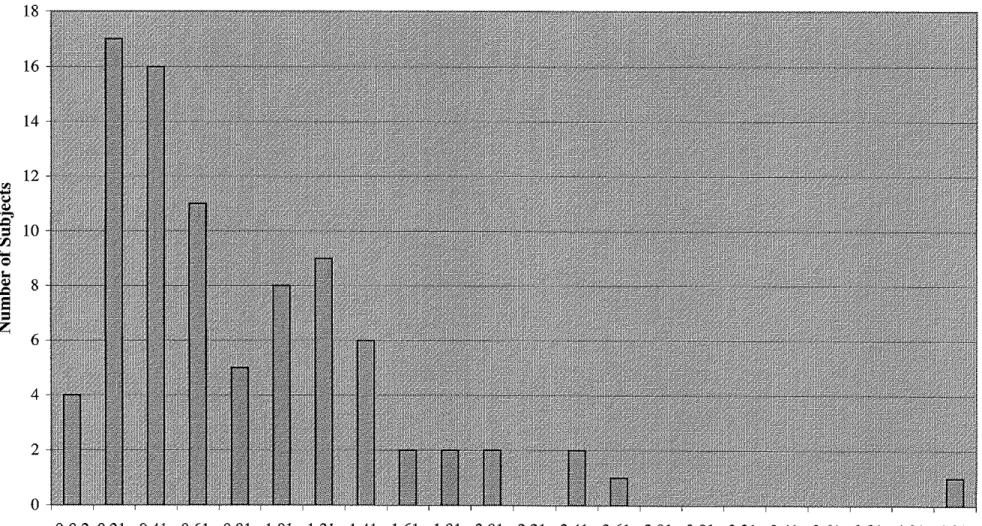
and the mean M-protein level was 0.94 g/dL. Figure 1 shows the distribution of M-protein levels
among the subjects.
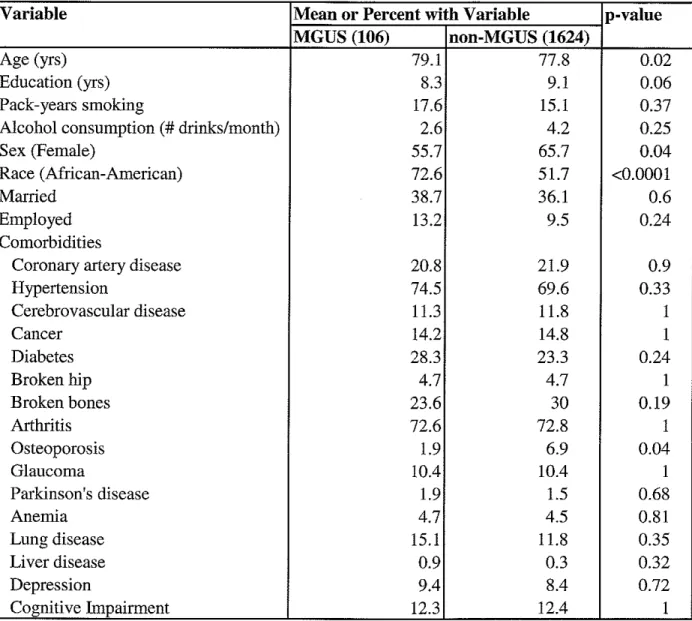
Table 1 describes the characteristics of the MGUS and non-MGUS groups. The means
(for continuous variables) or percentages (for categorical variables) for the MGUS and
non-MGUS group are listed along with the p-value. The non-MGUS group was older, mean age 79.1
years, compared to the MGUS group, mean age 77.8 years (p=0.02). Compared to
non-MGUS subjects, non-MGUS subjects had a higher percentage of African Americans (p<0.0001) and
males (p=0.04) and a lower incidence of osteoporosis (p=0.04). None of the other variables are
significantly different between the MGUS and non-MGUS groups.
Table 2 lists the results of the regression analysis of tbe association between the presence
of MGUS and the health care utlilization outcomes. After controlling for confounding variables
with linear regression, having MGUS was associated with a decreased number of ER visits
(0R=0.76, p=0.04). The MGUS group had a mean of 0.3 visits (range 0-4) while the
non-MGUS group had a mean of 0.5 visits (range 0-15). Having non-MGUS increased the likelihood of
NH admissions (OR=l.34, p=0.04). The MGUS group had a mean of 1.4 admissions (range 1-2)
while the non-MGUS group had a mean of 1.1 admissions (range 1-3). There were no
significant differences between the 2 groups in the number of overnight hospitalizations and
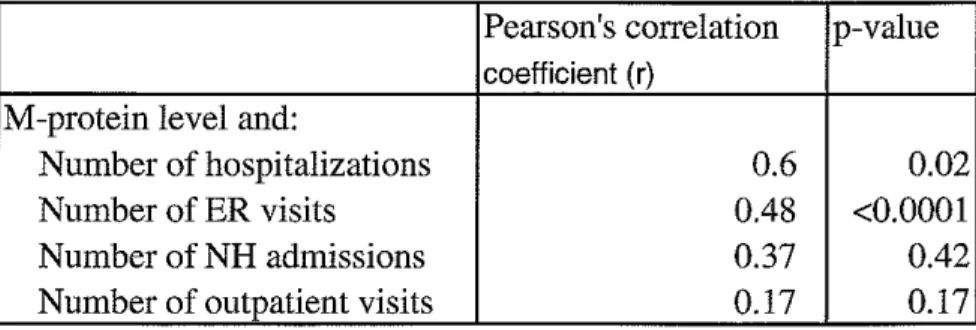
Tab!~ 3lists the results of the correlation analysis between M-protein level and health
care utlilization outcomes. There was no significant correlation found between M-protein level
and number of outpatient visits (r=0.17, p=0.17) and nursing home admissions (r=0.37, p=0.42).
However, the correlation between M-protein level and ER visits (r=0.48, p<0.0001) and
hospitalizations (r=0.60, p=0.02) was significant.
In the second portion of our study, the medical chart review, records were obtained for 37
of the 106 subjects (34.9%). Of these, 23 were women (62.2%) and 23 were African-Americans
(62.2%). In 1992, 15 ofthe 37 subjects (40.5%) had requested that results of the abnormal protein study be sent to their primary care physicians at the time. For all 15 subjects, the primary
care physicians noted the MGUS finding in their medical charts. Serum immunoglobulin levels
ranged from 0.31 to 4.18 g/dL, with a mean level of 1.245 g/dL.
Follow-up studies at and after diagnosis of MGUS were inadequate for the majority of
subjects. From 1992 to 2003, only 7 of the 37 subjects (19%) had medical records that included
documentation of at least one repeat SPEP, and of those, 2 were diagnosed with multiple
myeloma in 1993 (initial SPEPs in 1992 were 4.18 g/dL and 1.32 g/dL), and 1 developed
multiple myeloma in 1999 (initial SPEP 1.25 g/dL). During the baseline years of 1992-1993,
general labs including creatinine, calcium, hemoglobin, platelets, and white blood cell counts
with differential were performed on 10 of the subjects (27%). UPEPs were noted in the charts of
3 subjects (8.1 %), who had initial SPEPs of 1.32, 1.35, and 4.18 g/dL. Bone marrow biopsies
were performed on 6 subjects (16.2%), with findings of 40%, 60%, 80% plasma cells (initial
SPEPs respectively, 0.44 g/dL, 1.25 g/dL, 4.18 g/dL), 1 subject's bone marrow biopsy was noted
as "without plasma cells" in the chart, and 2 subjects without bone marrow biopsy results in their
SPEPs of 4.18, 1.48, 1.32, 1.04, and 0.44 g/dL, all of which were negative for lytic lesions. One of those subjects had a history of prostate cancer (SPEP 1.48 g/dL).
In the first year of follow-up (1994), 10 subjects had documentation of being seen in the medical community, either at a hospital, outpatient clinic, or ER. In 1995, 10 subjects were seen, one who had a bone metastasis from a previous colon cancer, had light chains found in a urine
study, and had a negative bone survey (initial SPEP 1.45 g/dL). In the third year, 12 subjects
L
were seen, and 1 subject developed low grade B-ee!! follicular lymphoma (initial SPEP 0.86g/dL). In the fourth year, 9 subjects were seen. 9 subjects were also seen in the fifth year (1998), and a diagnosis of MGUS, typed as IgM lambda, was noted for 1 patient who did not have mention of the disease previously in her chart (initial SPEP 0.35 g/dL). During this year, the patient with lymphoma also developed acute monoblastic leukemia. Another subject
I
developed breast cancer (initial SPEP 0.44 g/dL). In the sixth year, 11 subjects were seen, one who developed multiple myeloma, as mentioned previously. Her SPEP level rose from an initial value of 1.25 g/dL to 2.96 g/dL by 1999. She was started on chemotherapy with melphalan and prednisone and was followed with monthly SPEPs. In 2000, 11 subjects were seen, with one beginning to have annual SPEP evaluations (initial SPEP 0.44 g/dL). In 2001, 13 subjects were seen, and one had an SPEP with a globulin level of 0.9 g/dL (initial SPEP 0.35 g/dL). UPEP was done on this patient without results noted in the chart. In the ninth year, 13 subjects were seen in the medical community, and 7 have been seen so far this year (2003).
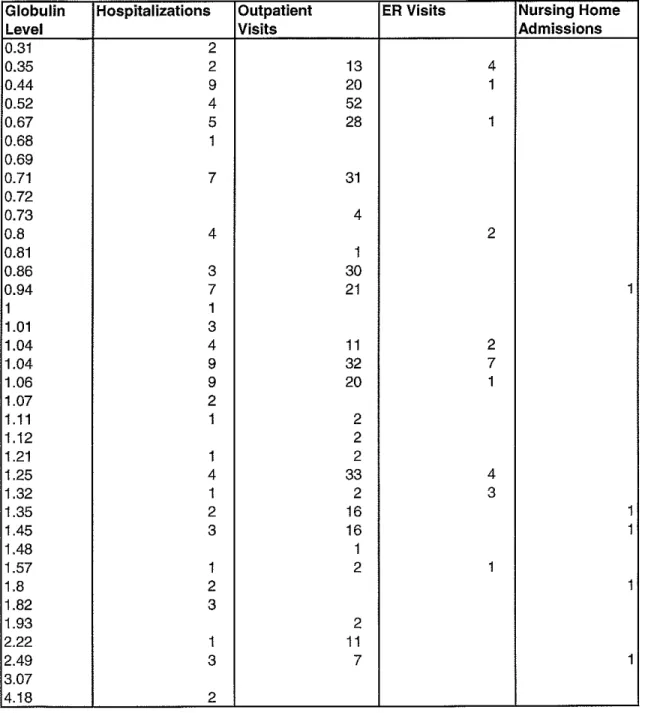
documented had initial SPEPs that ranged from 0.68 to 2.22 g/dL. The number of outpatient
clinic visits ranged from 1 to 52, with a mean of 15. The patient with the highest number of
outpatient visits had an initial SPEP of 0.52 g/dL, and the subjects with only 1 outpatient visit
documented had initial SPEPs of 0.81 and 1.48 g/dL. The number of ER visits ranged from 1 to
7, with a mean of 2.6. The subject with the highest number ofER visits had an initial SPEP of
1.04 g/dL, and the subjects with only 1 ER visit documented had initial SPEPs that ranged from
0.44 to 1.57 g/dL. 5 NH admissions were noted, in subjects with initial SPEPs of 0.94, 1.35,
Discussion
MGUS is a plasma cell disorder that has significant potential to progress to more serious
disease such as multiple myeloma. Because there are no factors other than M-protein level that
can help predict progression of the disease, it is important for patients with MGUS to receive
regular follow-up. In this study, we examined the health utilization patterns and follow-up care of MGUS patients. No previous studies have looked at these outcomes in MGUS patients.
Our hypothesis that MGUS patients should experience higher health care utilization was
not fully supported, since we found that having MGUS was not significantly associated with
increased outpatient visits, hospitalizations, or ER visits. The MGUS subjects did have
significantly more NH admissions than the non-MGUS subjects, but the number of outpatient
visits is likely a stronger outcome variable than NH admissions for measuring adequate health
utilization, because many more patients make an outpatient visit than become admitted to a
nursing home. MGUS subjects were also found to have significantly fewer ER visits than
non-MGUS subjects.
One explanation for why there were no significant differences in number of
hospitalizations and outpatient visits between the subjects with MGUS and those without is that
the general overall health in the two groups is similar. In a previous study (15), it was found that the presence of MGUS was not associated with specific comorbidities nor impaired functional
status, and none of the health conditions surveyed, including cancer, cardiovascular disease,
cerebrovascular disease, diabetes, hip fracture or other broken bones, or arthritis, showed any
correlation with monoclonal garnrnopathy prevalence (all P>0.24). This suggests that general
health and disease status does not differ significantly between those with and without MGUS. If the overall health and functional status is similar in those with MGUS and those without, then
L
!
i
: L
~-there probably is no need for increased hospitalizations, or ER vists. However, it would still be
expected that MGUS patients should have a greater number of outpatient visits in order to
receive the recommended follow-up studies.
Within the group of subjects with MGUS, the level of M-protein was found to be
correlated with number of ER visits and hospitalizations, but not with outpatient visits or NH
admissions. This may indicate that subjects with higher levels of M -protein develop more
L
serious disease than those with lower levels, requiring a higher rate of hospitalizations and ER
visits for acute care rather than outpatient visits or NH admissions, which are better indicators for
long-term follow-up care. Without a corresponding increase in outpatient visits, it cannot be
concluded that patients with higher levels of M-protein are receiving more follow-up care for
MGUS than those with lower levels of M-protein.
Guidelines state that asymptomatic MGUS patients should receive, at minimum, annual
SPEPs to follow M-protein levels (11). Furthermore, patients with higher M-protein levels
require more studies and more frequent follow-up. If the recommendations were adequately followed, MGUS patients should have a higher number of outpatient visits compared to those
without, and patients with higher M-protein levels should have more outpatient visits compared
to those with lower levels. This was not the case in our study, which, along with the incomplete
follow-up of MGUS found in the majority of medical records, may indicate that MGUS patients
generally do not receive proper follow-up.
Medical records of 37 patients from 1992 to 2003 revealed that, after initial diagnosis of
MGUS, baseline studies were very inadequate, with only a small minority of patients receiving
UPEPs, bloodwork including creatinine, calcium, hemoglobin, platelets, and white blood cells,
with only 19% receiving repeat SPEPs. Although these results are derived only from a sample of
the totall06 patients with MGUS, they may be representative of the general care of older MGUS
patients. These results are concerning, because M-protein levels need to be followed to watch
for development of serious plasma cell disorders.
There are several possible explanations for the lack of follow-up in these MGUS patients.
On the one hand, we may just have received incomplete medical records for the patients.
Patients may not have listed all of their health care providers on the release of medical
information consent forms, which would have resulted in our failing to request medical records
from all of their sources of medical care. Also, we were unable to locate all medical records, so
that records may have been obtained from primary care physicians but not hospitals, or vice
versa. In addition, few nursing homes were able to provide medical records, so if a patient received the majority of their medical care in a nursing home, we had little documentation of
that. Alternatively, it is possible that patients did receive follow-up, but the studies were not
thoroughly documented in the medical records. Another explanation for the lack of follow-up is
that some of the patients' health care providers may have been unaware of their patients' MGUS
'
[
status. Only 15 of the 37 patients with medical records available had specifically requested that
M-protein results from the study in 1992 be sent to their primary care physicians, so we only
know for snre that those providers were aware of their patient's MGUS diagnosis. However, it
would be hoped that the other 22 patients might have mentioned the abnormal proteins to their
physicians as well, initiating some labwork.
On the other hand, the inadequate follow-up of the MGUS patients seen in onr study
might indicate that the condition of MGUS is frequently deemed as unconcerning and eventually
precedence in the physician's "assessment and plan" list. Examining the medical charts in which
the diagnosis of MGUS was noted, MGUS typically was listed prominently under the
"assessment and plan" for the first few months following diagnosis, but gradually fell lower and
lower on the list. With MGUS, patients are clinically asymptomatic, so they do not remind their
physicians of their condition each time they come in for a check -up. They present with
complaints of other ailments that do manifest symptomatically, and these ailments then become
the primary concern of their health care providers. Gradually, if the physician does not vigilantly
keep track of all the patient's health conditions, MGUS can disappear from the "assessment and
plan" list altogether. Unfortunately, these patients still have considerable risk of developing
mnltiple myeloma and other plasma cell disorders (6).
Ageism is another factor that may play a role in reducing follow-up care of older MGUS
patients. The workup of MGUS, with the potential need for radiological evaluation and bone
marrow biopsy, may not be deemed as important or may even be considered a bother to older
subjects. Ageism has been found to affect many aspects of medical care, from diagnosis and
monitoring to treatment. It was found in a study of 15,299 patients with colorectal cancer that
increasing age was associated with markedly decreased rates of histological verification of the
cancer, surgery, and chemotherapy (16).
It is important to emphasize to both patients and physicians the importance of following
up MGUS. Regarding patients, health care utilization patterns have been found to be strongly
associated with a patient's perception of his or her own need for medical care. In a study looking at determinants of health care access and use, 4,162 residents of North Carolina were surveyed,
and it was found that self-perceived need for care (self-rated health status) was the highest
predictor for health services use (12). Other factors like gender, education, marital status, and
t
I
t
age all had much weaker effects on health care utilization. Therefore, physicians should take
time to help their MGUS patients comprehend the potential for progression to more serious
disease and the necessity for follow-up in order to establish a self-perceived need for care.
Physicians themselves should follow an MGUS patient with similar vigilance as for a
patient with any other pre-malignant condition. Screening for MGUS and its possible
progression to multiple myeloma is comparable to other forms of cancer screening. Just as a
patient with adenomatous polyps would receive more frequent colonoscopies to watch for
development of colon cancer, a patient with MGUS should receive annual SPEPs to watch for
development of multiple myeloma (17). Screening is appropriate for diseases that are common,
have a detectable presymptomatic phase during which treatment can benefit the patient more
than treatment after symptoms occur, and when benefits of testing and early treatment outweigh
the harms. A screening test also needs to be simple, sensitive and specific, reliable, low in cost,
as convenient and painless as possible, and not cause morbidity (18,19). Serial SPEPs are a
reasonable screening test in those with MGUS to watch for development of multiple myeloma.
In elderly patients, myeloma is relatively common, and it is detectable in its presymptomatic
phase as MGUS. SPEP requires a blood-draw from a patient, which can be done when blood is
collected for other routine labwork, reducing its cost. It is also high! y sensitive and specific in
identifying abnormalities consistent with monoclonal gammopathies. In a study of 1,518 patients, agarose gel electrophoresis had a sensitivity and specificity of 91% and 99%,
respectively (20). If an M-protein is discovered and becomes progressively higher in follow-up, surpassing the threshhold for diagnosis of multiple myeloma, treatment can be initiated before
As with other cancer screening, the presence of other comorbidities should not
discourage follow-up of MGUS as screening for multiple myeloma. Even though other
comorbidities may seem to warrant more attention and have more immediate impact on quality
of life due to clinically apparent symptoms, cancer screening should not be neglected.
Auspiciously, in one study of 2,225 elderly members, subjects with high numbers of
comorbidities were generally not found to receive significantly less cancer screening than those
with fewer comorbidities (21). The types of cancer screening analyzed in that study included
clinical breast examination, mammography, Papanicolaou smear, and fecal occult blood testing.
One would hope that follow-up of MGUS in the form of annual SPEPs would not be
overshadowed by other comorbidities as well.
Lastly, follow-up of MGUS patients may be inadequate because physicians and patients
are unaware of the guidelines for clinical practice standards regarding screening and monitoring
of patients with MGUS. The guidelines were published in 1999 in a medical journal, but they
have not been disseminated to the public or professionals beyond. These were also the only
guidelines that have been published regarding the follow-up care of a patient with MGUS. An
update of these guidelines to an increased audience may prove useful in improving the follow-up
care of an MGUS patient.
The results of this study suggest a need to increase awareness among patients and
physicians of existing guidelines for follow-up care of an MGUS patient and the significant
References
1. George ED, Sadovsky R. Multiple myeloma: recognition and management. Am Fam
Phys. 1999;59(7): 1885-1893.
2. Keren DF, Alexanian R, Goeken JA, et al. Guidelines for clinical and laboratory
evaluation of patients with monoclonal gammopathies. Arch Pathol Lab Med.
1999;123:106-107.
3. Brigden ML. The search for meaning in monoclonal protein: is it multiple myeloma or
monoclonal gammopathy of undetermined significance? Postgrad Med.
1999;106(2): 135-142.
4. Bataille R, Harousseau JL. Multiple myeloma. NEJM. 1997;336(23): 1657-1664.
5. Axelsson U, Bachmann R, Hallen J. Frequency of pathological proteins
(M-components) in 6,995 sera from an adult population. Acta Med Scand. 1988;179:235-247.
6. Kyle RA. Monoclonal gammopathy of undetermined significance and solitary
plasmocytoma. Hematol Oneal Clin North Am. 1997; 11:71-87.
7. Kyle RA. Benign monoclonal gammopathy- after 20 to 35 years of follow-up. Mayo
Clin Proc. 1993;68:26-36.
8. Pasqualetti P, Festuccia V, Collacciani A, Casale R. The natural history of monoclonal
gammopathy of undetermined significance. Acta Hematol. 1997 ;97: 17 4-179.
9. Kyle RA, Rajkumar SV. Monoclonal gammopathies of undetermined significance. Rev
Clin Exp Hematol. 2002;6(3)225-252.
10. Zaidi AA, Vesole DH. Multiple myeloma: an old disease with new hope for the
future. CA Cancer J Clin. 2001;51:273-285.
• •
i
=
~--11. Kyle RA. Sequence of testing for monoclonal gammopathies. Arch Pathol Lab Med.
1999;123: 114-118.
12. Blazer DG, Landerman LR, Fillenbaum G, Homer R. Health services access and use among older adults in North Carolina: urban vs rural residents. Am J Pub Health.
1995;85(10): 1384-1390.
13. Cornoni-Huntley J, Ostfeld AM, Taylor JO, et al. Established populations for
epidemiologic studies of the elderly: study design and methodology. Aging Clin Exp Res.
1993;5:27-37.
!
F
r
14. Blazer DG, Burchett BM, Service C, George LK. The association of age and
depression among the elderly: an epidemiologic exploration. J Gerontal Med Sci.
.
1991;46:M210-M215.
~
..
I
15. Cohen HJ, Crawford J, Rao MK, et al. Racial differences in the prevalence of
monoclonal gammopathy in a community-based sample of the elderly. Am J Med.
1998; 104:439-444.
16. Austin D, Russell EM. Is there ageism in oncology? Scottish Med J. 2003;48(1):17-20. 17. Cohen HJ. Monoclonal gammopathies: a model for neoplasia in older persons. In: Balducci
L, ed. Geriatric Oncology. Philadelphia: JB Lippincott; 1992:92-96.
18. Cole P, Morrison AS. Basic issues in population screening in cancer. JNCI. 1980;64:1263-72.
19. Silverman MA, Zaidi U, Barnett S, et al. Cancer screening in the elderly population.
Hematology/oncology Clinics of North America. 2000; 14(10):89-112.
electrophoresis and immunotyping of monoclonal proteins by immunosubtraction. Am J
Clinical Path. 1998;110(4):503-509.
21. Heflin MT, Oddone EZ, Pieper CF, Burchett BM, Cohen HJ. The effect of comorbid illness
on receipt of cancer screening by older people. JAm Geriatrics Soc. 2002;50(10):
. ·"··~.!· ••.. .. L ..• , " . J.,... . . ..• ". "'"'" . ··'·'"' .... l.i,,i,i""'" ... .I..,J~IIIIIIIIU~,U. . .,J.;,.,l"'' ,, , ,,, , .•.•. ,.,,~""'" ,,,,,,,I ···"··•k• • ·•
Figure 1. Distribution of M-protein level among subjects with MGUS
18
16
14
"' 12
...
"'
"'
.
...,
'§
10"'
...0
..
"'
8-e
=
z
6
4
2
0
0-0.2 0.21- 0.41- 0.61- 0.81- 1.01- 1.21- 1.41- 1.61- 1.81- 2.01- 2.21- 2.41- 2.61- 2.81- 3.01- 3.21- 3.41- 3.61- 3.81- 4.01- 4.21-0.4 0.6 0.8 1 1.2 1.4 1.6 1.8 2 2.2 2.4 2.6 2.8 3 3.2 3.4 3.6 3.8 4 4.2 4.4
Table 1. Comparison of MGUS vs. non-MGUS Snbjects on Demographic, Behavioral, and Comorbidity Factors. EPESE, 1992
Variable Mean or Percent with Variable p-valne
MGUS(106) non-MGUS (1624)
Age (yrs) 79.1 77.8 0.02
Education (yrs) 8.3 9.1 0.06
Pack-years smoking 17.6 15.1 0.37
Alcohol consumption (#drinks/month) 2.6 4.2 0.25
Sex (Female) 55.7 65.7 0.04
Race (African-American) 72.6 51.7 <0.0001
Married 38.7 36.1 0.6
Employed 13.2 9.5 0.24
Comorbidities
Coronary artery disease 20.8 21.9 0.9
Hypertension 74.5 69.6 0.33
Cerebrovascular disease 11.3 11.8 1
Cancer 14.2 14.8 1
Diabetes 28.3 23.3 0.24
Broken hip 4.7 4.7 1
Broken bones 23.6 30 0.19
Arthritis 72.6 72.8 1
Osteoporosis 1.9 6.9 0.04
Glaucoma 10.4 10.4 1
Parkinson's disease 1.9 1.5 0.68
Anemia 4.7 4.5 0.81
Lung disease 15.1 11.8 0.35
Liver disease 0.9 0.3 0.32
Depression 9.4 8.4 0.72
Cognitive Impairment 12.3 12.4 1
Table 2. Beta Estimates and Odds Ratios for the Association Between MGUS Diagnosis and Health Care Utlilization. EPESE, 1992
Beta OR p-value
MGUS and:
Number of hospitalizations 0.16 1.17 0.53
Number ofER visits -0.27 0.76 0.04
Number of NH admissions 0.29 1.34 0.04
Number of outpatient visits -1.81 0.16 0.08
Table 3. Correlations Between M-Protein Level and Health Care Utlilization. EPESE, 1992
Pearson's correlation p-value coefficient ( r)
M -protein level and:
Number of hospitalizations 0.6 0.02
Number of ER visits 0.48 <0.0001
Number of NH admissions 0.37 0.42
Number of outpatient visits 0.17 0.17
j =
~----Table 4. Serum Globulin Level and Health Utilization Among Subjects with MGUS 1992-present
Globulin Hospitalizations Outpatient ER Visits Nursing Home
Level Visits Admissions
0.31 2
0.35 2 13 4
0.44 9 20 1
0.52 4 52
0.67 5 28 1
0.68 1
0.69
0.71 7 31
0.72
0.73 4
0.8 4 2
0.81 1
0.86 3 30
0.94 7 21
1 1
1.01 3
1.04 4 11 2
1.04 9 32 7
1.06 9 20 1
1.07 2
1.11 1 2
1.12 2
1.21 1 2
1.25 4 33 4
1.32 1 2 3
1.35 2 16
1.45 3 16
1.48 1
1.57 1 2 1
1.8 2
1.82 3
1.93 2
2.22 1 11
2.49 3 7
3.07
4.18 2