PHYSICAL AND BEHAVIORAL HEALTH NEEDS OF REFUGEE WOMEN RESETTLED IN THE UNITED STATES
Erum Agha
A dissertation submitted to the faculty of the University of North Carolina at Chapel Hill in partial fulfillment of the requirements for the degree of Doctor of Philosophy in the School of Social Work
Chapel Hill 2020
Approved by:
Gary, S. Cuddeback
David Ansong
Mimi V. Chapman
Dilshad Jaff
ii
©2020 Erum Agha
ABSTRACT
ERUM AGHA: Physical and Behavioral Health of Refugee Women Resettled in the United States
(Under the direction of Dr. Gary S. Cuddeback)
The United States has offered resettlement to more than 3 million refugees who
present a high risk for physical and behavioral health problems. Women comprise more than
half the resettled refugees and are more vulnerable to these problems. However, more
information is needed on the physical and behavioral health needs of resettled refugee
women. This three-paper dissertation provides information regarding the physical and
behavioral health needs of refugee women resettled in the United States. Paper 1 is a
systematic review of factors related to behavioral health problems among refugee women
resettled in the United States and the challenges presented by these behavioral health
problems. Paper 2 is a qualitative study that examines the physical and behavioral health
needs and challenges to accessing and utilizing health and behavioral health services among
refugee women resettled in the United States. Paper 3 is the analysis of a nationally
representative cross-sectional dataset, The New Immigrant Survey (NIS-2003-1), and
examines the group differences in physical and behavioral health needs and service
utilization of resettled refugee women from rural and urban origins and compares the
findings with those for resettled refugee men. Findings suggest that both pre-migration
trauma and post-migration stressors are risk factors for poor behavioral health outcomes. In
iv
appropriate. Findings also suggest a need for examining the differences between refugee
subgroups such as those belonging to rural and urban origins as needs for these groups may
differ. Implications related to understanding the behavioral health needs of resettled refuge
women in a cultural context and addressing these needs in culturally appropriate ways are
ACKNOWLEDGMENTS
I would like to express my deepest gratitude to my research advisor and dissertation
chair, Dr. Gary S. Cuddeback for his dedicated mentorship that helped conceptualize this
dissertation research and led it to completion. Gary gave generously of his time and
guidance, reviewed each paper several times and helped me revise my work until the final
version was ready. I am fortunate to have the opportunity to learn under Gary’s dedicated
mentorship.
I would also like to thank Dr. David Ansong, Dr. Mimi Chapman, Dr. Dilshad Jaff,
and Dr. Rain Masa for serving on my dissertation committee and for their support in
completing this dissertation. I am also grateful to the late Dr. Matthew O. Howard for his
TABLE OF CONTENTS
LIST OF TABLES ... iii
LIST OF FIGURES ... iv
LIST OF ABBREVIATIONS ...v
INTRODUCTION ...1
References: Introduction ...6
PAPER I: FACTORS RELATED TO THE BEHAVIORAL HEALTH OF REFUGEE WOMEN RESETTLED IN THE UNITED STATES: A SYSTEMATIC REVIEW: ...9
Introduction ...11
Method ...16
Results ...23
Discussion ...30
Limitations ...35
Conclusions ...36
References: Paper I ...37
PAPER II: PHYSICAL AND BEHAVIORAL HEALTH NEEDS AMONG RESETTLED REFUGEE WOMEN FROM SYRIA: A QUALITATIVE STUDY ON THE PERSPECTIVES OF RESETTLEMENT SERVICE PROVIDERS ...70
Introduction ...71
Method ...78
Results ...82
ii
Limitations ...90
Conclusions ...91
References: Paper II ...92
PAPER III: GROUP DIFFERENCES IN PHYSICAL AND BEHAVIORAL HEALTH NEEDS AMONG RURAL AND URBAN REFUGEE WOMEN RESETTLED IN THE UNITED STATES ...104
Introduction ...106
Method ...111
Results ...121
Discussion ...128
Limitations ...131
Conclusion ...132
References: Paper III...133
DISCUSSION ...150
iii
LIST OF TABLES
Table 1.1 List of excluded studies ...49
Table 1.2 Details of measures used...50
Table 1.3 Factors related to behavioral health ...62
Table 1.4. Systematic review results ...63
Table 1.5. Abbreviations ...70
Table 2.1. Resettlement service provider interviews ...102
Table 3.1. Demographics of male and female refugees ...138
Table 3.2. Demographics of rural and urban refugees ...139
Table 3.3. Demographics of rural and urban female refugees ...140
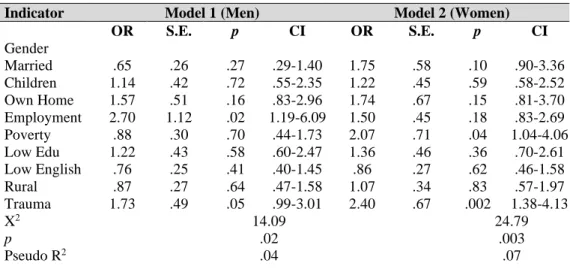
Table 3.4. Logistic regression for health of male and female refugees ...141
Table 3.5. Logistic regression for behavioral health of male and female refugees ...142
Table 3.6. Logistic regression for service use of male and female refugees ...143
Table 3.7. Logistic regression for health of rural and urban refugees ...144
Table 3.8. Logistic regression for behavioral health of rural and urban refugees ...145
Table 3.9. Logistic regression for service use of rural and urban refugees ...146
Table 3.10. Logistic regression for health of rural and urban female refugees ...147
Table 3.11. Logistic regression for behavioral health of rural and urban female refugees ..148
iv
LIST OF FIGURES
Figure 1.1 PRISMA flow diagram ...48
Figure 1.2 Academic journals ...59
Figure 1.3 Disciplines ...60
v
LIST OF ABBREVIATIONS
AS Alienation Scale
ASCL Afghan Symptom Check List
AUDIT Alcohol Use Disorders Identification Test
CAFI-XC Culturally Adapted Functioning Index-Cross-Culture Version
CES- D Center for Epidemiological Studies Depression Scale
CIDI Composite Diagnostic Interview (World Health Organization)
CSI Coping Strategies Indicator
CTEI Communal Traumatic Events Inventory
DIS Disability Injury Survey
HSCL-25 Hopkins Symptoms Check List
HOS Health Opinion Survey
HTQ Harvard Trauma Questionnaire
ICG Inventory of Complicated Grief
INQ Interpersonal Needs Questionnaire
LIB Language, Identity, and Behavior Scale
LSNS- 6 Lubben Social Network Scale
MHI Mental Health Inventory
NIS New Immigrant Survey
PCL PTSD Checklist
PCL-C PTSD Checklist -Civilian
PDS Posttraumatic Diagnostic Scale
PMLD Postmigration Living Difficulties Checklist
vi
PSS* PTSD Symptom Scale
PSS** Perceived Social Support
PSS-10 Perceived Stress Scale-10
PMLD-CL Post Migration Living Difficulties Checklist
RHS-15 Refugee Health Screener
SSI Scale for Suicide Ideation
SSMS Social Support Microsystems Scale
TBDI Talbieh Brief Distress Inventory
TEIA Tangible, Emotional, and Informational Assistance
TES Trauma Events Scale (from Harvard Trauma Questionnaire)
TLEQ Traumatic Life Events Questionnaire
INTRODUCTION
PHYSICAL AND BEHAVIORAL HEALTH NEEDS OF REFUGEE WOMEN RESETTLED IN THE UNITED STATES
More than 71 million individuals are forcibly displaced due to war and conflict
globally and are in need of housing, medical, education and economic assistance. This largest
ever humanitarian public health crisis has grown from 44 million to 71 million in the last 10
years and has surpassed the 60 million individuals who were displaced by World War II
(United Nations High Commissioner for Refugees, 2020). These individuals have witnessed
or experienced extreme violations of human rights including torture, trauma, killings and
persecution by armed forces or rebel groups (Silove, Ventevogel, & Rees, 2017). Often the
plight of refugees is multi-generational which manifests as issues in physical health,
behavioral health, inter-personal relations, poverty, and lack of education (Efird &
Bith-Melander, 2018).
The United Nations has acknowledged a shared responsibility for managing this
refugee crisis through international cooperation and many Western countries, including the
United States, have responded to the call by providing resettlement to war refugees (United
Nations, 2016). The United States currently hosts 3.3 million refugees from more than 100
nations who are resettled by government and non-government agencies in partnership with
the United Nations (U.S. Department of State, 2020). These refugees have unique physical
and behavioral health needs as a result of hardships endured as a result of war (Turrini et al.,
2
Impact of Trauma and Stressors on Refugee Behavioral Health
Cumulative exposure to war, violence, and related trauma in the pre-migration and
transit stages is linked with a wide range of physical and behavioral health problems among
refugees (Turrini et al, 2017). In particular, refugee women are further marginalized due to
the intersectionality of race, gender, lower education, less financial independence, and
cultural norms (Schweitzer et al., 2018). Behavioral health problems resulting from untreated
trauma for refugee women are associated with impaired parenting, poor family relations, and
poor communication styles (Dalgaard, Tod, Daniel, & Montgomery, 2016). Further, maternal
trauma and distress have been associated with distress among their children (Sangalang &
Vang, 2017).
In addition to the pre-migration trauma, ongoing stressors in the post-migration stage
are also linked with high levels of distress among resettled refugee women (Savic,
Chur-Hansen, Mahmood, & Moore, 2016). Thus, there is evidence that greater levels of maternal
trauma and resulting behavioral health problems are associated with greater distress among
the children in the family, which in turn impacts these children’s ability to optimize their
potential in their homes, schools, and communities (Sangalang & Vang, 2017). Although
studies on the prevalence rates of commonly occurring mental health problems among
refugees are available, studies that discuss the risk factors are scarce and few studies exist
that are aimed at highlighting and addressing behavioral health issues specific to refugee
women (Goodkind et al., 2014; Lionis et al., 2018).
Gaps in the Literature
There are significant gaps in the literature regarding the health and behavioral health
needs and service utilization of refugee women. First, the lack of research on factors related
3
comprehensive information is not available on which to base health and psychosocial
interventions to address these illnesses (Miller & Rasmussen, 2017). Second, the perspectives
on the behavioral health needs of resettled refugee women have not been adequately
documented in the published literature which means that often there is a gap between
provider and client understanding of refugee women’s behavioral health needs. Third, little is
known about how the physical and behavioral health needs and patterns of health service
utilization differ among male and female refugees and among refugees from rural and urban
backgrounds. This dissertation begins to address these gaps in the research though a
systematic review, a qualitative study and secondary data analysis.
Factors related to the behavioral health needs of resettled refugee women.
Limited information is available about the distinct factors that impact the behavioral health of
refugee women in the and post-migration stages. Exposure to trauma in the
pre-migration stage and resettlement related stressors in the post-pre-migration stage remain some of
the strongest factors associated with impaired behavioral health. However, comprehensive
details for these factors as well as information about the challenges encountered by resettled
refugee women is largely missing from the literature (Kirmayer et al., 2011; Silove,
Ventevogel, & Rees, 2017). This information is necessary to develop policies and
interventions and inform social work practice to address the behavioral health problems
among resettled refugee women.
Perspectives of resettled refugee women. There is a lack of representation of resettlement service providers perspectives in the literature, which means, to a large extent,
policy and practice are poorly informed regarding their needs and challenges (Felsman,
4
shaped by resettled refugee women’s beliefs and cultures (Colvin, 2018). This information
may provide insight into the physical and behavioral health needs of resettled refugee women
and their attitudes towards health and healing (Baer, Singer, Long, & Erickson, 2016).
Differences in behavioral health needs among rural and urban refugees.
Refugees are not a homogenous group and differences exist among them based on gender,
and geographical areas of origin in terms of their physical and behavioral health needs and
service utilization (Floyd & Sakellariou, 2017). Examining these differences may provide
important insight into understanding the unique needs of rural refugees based on these
differences (Robertson, Savik, Mathiason-Moore, Mohamed, & Hoffman, 2016).
Organization of the Dissertation
This introduction provides justification for the research studies that follow. The three
papers in the dissertation are prepared as individual manuscripts around a central theme of
physical and behavioral health needs of resettled refugee women. There is some overlap in
the content of the introductions of the three papers; however, each paper has its own unique
methods, design, sample, measures and analysis.
Paper 1 presents findings from a systematic review of factors related to behavioral
health problems among refugee women resettled in the United States and the challenges
presented by these behavioral health problems. Paper 2 presents findings from a
phenomenological qualitative study that examines the physical and behavioral health needs
and challenges to accessing and utilizing health services among resettled refugee women
from the perspectives of resettlement service providers. Paper 3 presents the results from
5
(NIS-2003-1), and examines the group differences in physical and behavioral health needs
and service utilization among rural and urban refugee women resettled in the United States.
This dissertation concludes with a combined Discussion section that synthesizes and
integrates findings from each of the three papers. The three papers are cohesive and
complementary in that together they will begin to address significant gaps in our
understanding of the physical and behavioral health needs of a highly vulnerable and
marginalized population and promise to provide information that will guide social work
practice, policy and future social work research for one of the most pressing humanitarian
6
REFERENCES: INTRODUCTION
Baer, H. A., Singer, M., Long, D., & Erickson, P. (2016). Rebranding our field? Toward an articulation of health anthropology. Current Anthropology, 57(4), 494-510.
Colvin, J. W. (2018). Voices of newly arrived refugee women. Journal of Intercultural Communication Research, 47(6), 581-595.
Dalgaard, N. T., Todd, B. K., Daniel, S. I., & Montgomery, E. (2016). The transmission of trauma in refugee families: Associations between intra-family trauma communication style, children’s attachment security, and psychosocial adjustment. Attachment and Human Development, 18(1), 69-89.
Efird, J. T., & Bith-Melander, P. (2018). Refugee health: An ongoing commitment and challenge. International Journal of Environmental Research and Public
Health, 15(1), 131.
Felsman, I. C., Humphreys, J. C., & Kronk, R. (2019). Measuring distress levels of refugee women to enhance community-based psycho-social interventions. Issues in Mental Health Nursing, 40(4), 310-316.
Floyd, A., & Sakellariou, D. (2017). Healthcare access for refugee women with limited literacy: Layers of disadvantage. International Journal forEquity in Health, 16(195), 1-10.
Goodkind, J. R., Hess, J. M., Isakson, B., LaNoue, M., Githinji, A., Roche, N., …Parker, D. P. (2014). Reducing refugee mental health disparities: A community-based
intervention to address post-migration stressors with African adults. Psychological Services, 11(3), 333–346.
Kirmayer, L., Narasiah, L., Munoz, M., Rashid, M., Ryder, A., Guzder, J., …Pottie, K. (2011). Common mental health problems in immigrants and refugees: General approach in primary care. Canadian Medical Association Journal, 183, E959-E967.
Lionis, C., Petelos, E., Mechili, E. A., Sifaki-Pistolla, D., Chatzea, V. E., Angelaki, A., … Hoffmann, K. (2018). Assessing refugee healthcare needs in Europe and
implementing educational interventions in primary care: A focus on methods. BMC International Health and Human Rights, 18(11), 1-8.
Miller, K. E., & Rasmussen, A. (2017). The mental health of civilians displaced by armed conflict: An ecological model of refugee distress. Epidemiology & Psychiatric Sciences, 26(2), 129-138.
7
Sangalang, C. C., & Vang, C. (2017). Intergenerational Trauma in Refugee Families: A Systematic Review. Journal of Immigrant and Minority Health, 19(3), 745–754.
Savic, M., Chur-Hansen, A., Mahmood, M. A., & Moore, V. M. (2016). ‘We don’t have to go and see a special person to solve this problem’: Trauma, mental health beliefs and the processes for addressing ‘mental health issues’ among Sudanese refugees in Australia. International Journal of Social Psychiatry, 62(1), 76-83. Schweitzer, R. D., Vromans, L., Brough, M., Asic-Kobe, M., Correa-Velez, I., Murray, K, …
Lenette, C. (2018). Recently resettled refugee women-at-risk in Australia evidence high levels of psychiatric symptoms: Individual trauma and post-migration factors predict outcomes. BMC Medicine, 16(149), 1-12.
Silove, D., Ventevogel, P., & Rees, S. (2017). The contemporary refugee crisis: An overview of mental health challenges. World Psychiatry, 16(2), 130-139.
Turrini, G., Purgato, M., Ballette, F., Nose, M., Ostuzzi, G., & Barbui, C. (2017). Common mental health disorders in asylum seekers and refugees: Umbrella review of
prevalence and intervention studies. International Journal of Mental Health Systems, 11(51), 1-14.
UNHCR (2020). Figures at a glance. Retrieved from:
https://www.unhcr.org/en-us/figures-at-a-glance.html.
United Nations (2016). Refugees and Migrants: New York Declaration. Retrieved from: https://refugeesmigrants.un.org/declaration
8 PAPER I
FACTORS RELATED TO THE BEHAVIORAL HEALTH OF REFUGEE WOMEN RESETTLED IN THE UNITED STATES
Abstract
The United States has resettled more than 3 million refugees of which 1.5 million are women. Behavioral health problems are widely prevalent among resettled refugee women. Exposure to traumatic events related to war and conflict, or ‘pre-migration’ issues, are associated with a range of behavioral health problems. Likewise, ongoing stressors after resettlement, or ‘post -migration’ issues, continue to negatively impact these women. The combined and prolonged effect of the pre- and post-migration issues must be understood in order to comprehensively address the extent of behavioral health problems
among resettled refugee women. This systematic review synthesizes findings from published studies on factors related to the behavioral health of refugee women resettled in the United States. Six databases were searched and fourteen studies were found that identified evidence of both pre - and post-migration stressors among 3,001 adult resettled refugee women. Findings reveal multiple behavioral health issues and a need for services and interventions to address these issues. In addition, a need for culturally appropriate services to address the challenges was reported by the studies. Given the implications of impaired
behavioral health on resettled refugee women’s physic al functioning, family relations, and ability to work, which ultimately result in negative outcomes for these women and their families, addressing these behavioral health problems is an urgent public health concern.
9 Introduction
At the end of 2019, more than 71 million people around the world were refugees,
asylum seekers, or internally displaced due to war or conflict (United Nations High
Commissioner for Refugees, 2020), which represents an increase of more than 6 million from
the beginning of 2017 and the largest number of displaced persons ever recorded (United
Nations, 2020). Among these 71 million individuals, 41.3 million people are internally
displaced within their own countries, 26 million are refugees, and about 3.5 million are
asylum seekers (UNHCR, 2020). The mass displacement of people from various areas of
conflict throughout the world has dismantled the infrastructure for health, education and
economy in war zones in numerous countries and has created the worst global humanitarian
public health crisis since World War II (UNHCR, 2020). Many of the displaced individuals
have experienced severe and numerous traumatic events and consequently present with
complex health and behavioral health needs (Silove, Ventevogel, & Rees, 2017). These needs
have been found to be greater than those among non-war affected populations and may
persist or even increase over time (Bojic, Njoku, & Priebe, 2105).
Resettlement is the process of relocation of refugees from an asylum country to
another country that has offered to admit them, and ultimately grant them permanent
settlement, with the goal of restoring human rights that have been violated, such as security,
protection, freedom of expression and religion. The United States has historically been in the
forefront for resolution of refugee issues and has provided resettlement to more than three
million refugees to date. These newly resettled refugees are often in need of services and
interventions to address their unique behavioral health needs. However, refugees arrive from
countries that are greatly different from the United States; therefore, little is known about the
10
address these problems. In addition, much of the research on resettled refugees is conducted
in Western Countries other than the United States and information from the programs and
services in these countries may not fully depict the needs of refugees resettled in the United
States. To begin to address this gap in literature, a systematic review was undertaken to
identify the factors related to behavioral health problems among refugee women resettled in
the United States.
Physical Health Needs of Resettled Refugee Women
Physical health needs for refugee women are different from, and often greater than,
those of their male counterparts due to the added exposure to gender-based violence in war
zones, in refugee camps, and during flight from conflict (Baird, 2012; Guruge, Roche, &
Catallo, 2012; Newbold, Cho, & McKeary, 2013; Schweitzer et al., 2018). Consequently,
refugee women are at a greater risk for developing long-term physical and mental health
problems (Bojic, Njoku, & Priebe, 2015; Small, Kim, Praetorius, & Mitschke, 2016).
Behavioral Health Needs of Resettled Refugee Women
High levels of depression, anxiety and posttraumatic stress disorder are widely
prevalent among refugee women (Charlson et al., 2019; Silove, Ventevogel, Rees, 2017;
Steele et al., 2009). The risk of developing a serious mental illness is significantly higher in
war refugees when compared with the general population and this risk persists years after
resettlement (Bojic, Njoku, & Priebe, 2015; Jamil et al., 2010; Vaage, Thomsen, & Silove,
2010). The global prevalence of mental health disorders (depression, anxiety, PTSD, bipolar
disorder and schizophrenia) is 2-18% but their prevalence can be as high as 22% in
populations affected by war and conflict (Charlson et al., 2019). As a comparison, the
11
13.5%, respectively, in refugees, whereas these rates are 4.4%, 3.3% and 7.3%, respectively,
among the world’s population (Charlson et al., 2016; Georgiadou, Zbidat, Schmitt, & Erim, 2018).
In addition, exposure to trauma has also been strongly associated with alcohol and
substance use and other behavioral health problems among refugees (Bastin et al., 2013;
Craig, Sossou, Schnak, & Essex, 2008; Horniyak, Melo, Farrell, Ojeda, & Strathdee, 2016).
For the most part, epidemiological data and studies about alcohol and substance use among
refugees is very limited; however, some studies have reported rates as high as 36% for
alcohol use and 17-36% for drug use in refugee camp settings and 4-7% among those who
are in resettlement countries (Ezard, et al., 2010; Horyniak et al., 2016).
Higher risks for refugee women. Women are a particularly vulnerable group within the refugee population regardless of age, education or socio-economic status (Schweitzer et.
al., 2018; Shin & Lee, 2015). Exposure to violence and war heightens the female refugees’
risk for developing a mental illness which, when combined with the intent and deliberateness
to cause physical, emotional and psychological harm through rape or other forms of sexual
violence, puts refugee women at a greater risk for developing PTSD and complex trauma
(Getnet, Medhin, & Alem, 2019; Schulz, Marcovic-Johnson, & Huber, 2006).
Women are twice as likely as men to be diagnosed with depression and high prevalence of
depression in refugee women mirrors the higher prevalence of depression in women globally,
which is estimated at 5.5% for women vs. 3.2% for men (Albert, 2015; Altemus, Sarvayia, &
Epperson, 2014). Similarly, there is a higher prevalence of anxiety in women (23%)
compared with men (14%) (Anxiety and Depression Association of America, 2019). Rates of
12
2019). These trends from the global population are also observed in refugees and both the
refugee women who are in camps and resettled refugee women screen positive for a much
higher prevalence of these disorders when compared with refugee males and resettled refugee
males (Kim, 2018; Vitale & Ryde, 2018). Refugees endure a myriad of physical, emotional,
and psychological stressors in their home countries, in camps, and after resettlement
(Shawyer, Enticott, Block, Cheng, & Meadows, 2017; Tay et al., 2015). Moreover, both pre-
and post-migration factors contribute towards impaired behavioral health in resettled refugee
women and must be examined simultaneously (Chen, Hall, Ling, & Renzaho, 2017; Miller &
Rasmussen, 2017; Savic, Chur-Hansen, Mahmood, & Moore, 2016).
Combined impact of pre- and post-migration factors on refugee women.
Adversity at different stages of pre-migration, transit, and post-migration may equally
contribute to behavioral health problems in the refugee population (Miller & Rasmussen,
2017; Murray, Davidson, & Schweitzer, 2010; Rousseau, 2018; Turrini et al., 2017).The
cumulative impact of multiple stressors during these stages is an established risk factor for a
range of physical health problems, mental illnesses, and substance abuse, as well as
precursors for diminished long-term physical and behavioral health outcomes (Horyniak,
Melo, Farrell, Ojeda, & Strathdee, 2016; Knipscheer, Sleijpen, Mooren, ter Heide, & van der Aa, 2015; Li, Liddell, & Nickerson, 2016).
Compromised behavioral health limits a refugee woman’s well-being and ability to
attain self-sufficiency (Craig, Jajua, & Warfa, 2009; Li & Anderson, 2015). In addition, the
effects of impaired behavioral well-being are transferred to the family in that maternal
traumatic distress is linked with reduced family functioning (Krauss, Wilson, Padron, &
13
maternal trauma, for example, include impaired parenting, family relations and
communication styles (Dalgaard, Todd, Daniel, & Montgomery, 2016; Field, Muong, &
Sochanvimean, 2013). Furthermore, there is a relationship between the traumatic experiences
of the mother and distress levels in children in that greater levels of maternal and/or family
trauma are associated with greater distress among the children in the family (Muhtz et al.,
2015; Sangalang, Jager, & Harachi, 2017; Sangalang & Vang, 2017).
Additionally, there is also significant evidence about the delayed effects of trauma
and its impact on an individual’s physical and behavioral health. That is, a person who was
able to cope with trauma at the time of exposure may feel the traumatic stress later in life
(McFarlane, 2010; Nelson-Peterman, Toof, Liang, & Grigg-Saito, 2015). This is especially
true if cues from daily life act as reminders of the trauma and reactions to those cues are
manifested as reactivity or avoidance (Badour & Feldner, 2013).
Gaps in the Literature
Several factors are associated with behavioral health problems among refugee
women. Exposure to trauma in the pre-migration stage and issues related to resettlement in
the post-migration stage are some of the strongest determinants of behavioral health
problems among refugee women (Schweitzer et al., 2018; Small, Kim, Praetorius, &
Mitschke, 2016; Turini et al., 2017). However, few studies examine both pre- and
post-migration issues simultaneously, which is important if these needs are to be addressed fully
(Miller & Rasmussen, 2017).
Additionally, the impact of behavioral health problems on the daily life of refugee
women has not been adequately studied (Kirmayer et al., 2011; Silove, Ventevogel, & Rees,
14
and PTSD and are often conducted, illnesses such as bipolar disorder, schizophrenia and
other psychotic illnesses are not assessed (Haagen et at., 2017). Likewise, studies of
smoking, drug and alcohol use and suicidality are rare (Charlson et al., 2016).
Furthermore, few interventions have been developed to address depression, anxiety
and PTSD among resettled refugee women. Additionally, often the improvement of
symptoms is only examined in clinical settings such as results from pre- and
post-interventions, which are assessed using instruments developed for Western populations
(Song et al., 2018). This study begins to address these gaps by synthesizing the existing
literature regarding factors related to behavioral health of refugee women resettled in the
United States and the challenges resulting from these behavioral health problems.
Current Study
The current review synthesizes the literature regarding the factors related to
behavioral health problems and behavioral health needs and related challenges of adult
refugee women over 18 years of age who have been resettled in the United States. The
review has two research questions: (1) What are the factors related to behavioral health
problems among resettled refugee women, such as mental illnesses, substance use and other
addictions? (2) What challenges do these behavioral health problems present and how do
they influence the lives of resettled refugee women?
Method Systematic Review Protocol
A review protocol in accordance with the Cochrane Collaboration guidelines for
systematic reviews outlined the procedure to be adhered to during the review (Higgins &
15
librarian to ensure that appropriate databases, key words and search terms were included. In
addition, experts in refugee behavioral health and refugee resettlement were consulted to
solicit additional feedback regarding the relevance of the search terms. The final systematic
review protocol was established thorough an iterative process and was submitted to Prospero
for registration. Once registered, the protocol will be available for public use (Registration
pending).
This systematic review follows PRISMA guidelines and makes use of the tools that
optimize accuracy and reliability of systematic reviews and are considered the gold standard
for reporting (Littell, Corcoran, & Pillai, 2008; Moher et al., 2009). Accordingly, the review
has the following dimensions which are typically used to assess the quality of systematic
reviews: (1) transparency, (2) completeness, (3) methodological soundness, (4) credibility,
and (5) relevance for practice (Bronson & Davis, 2012).
The systematic review was guided by the aforementioned research questions, which
were formulated after careful consideration of: (1) the purpose of the systematic review, (2)
the parameters of the research questions, and (3) the relevance of the questions to
researchers, practitioners and policy makers (Bronson & Davis, 2012). A descriptive
synthesis approach was employed to synthesize and present findings from studies with
diverse study designs (Verbeek, Ruotsalainen, & Hoving, 2012).
Eligibility Criteria
A priori eligibility criteria were developed to guide the inclusion and exclusion of
studies in the review. This review limited studies to those that were published in
peer-reviewed journals. The studies were required to meet the following inclusion criteria: (1)
16
of one or more measures to assess mental health and/or substance use disorders; (3)
published between 2000 - 2019; and (4) reported outcomes separately for resettled refuge
women.
The decision to include studies between 2000 – 2019 was intended to capture the
studies that would reflect the recent waves of refugees and their related problems. This
strategy was projected to better align with the scope of the dissertation as well as provide
information that is useful to practitioners and policy makers in the United States and other
Western countries. However, studies conducted in Western countries were excluded because
many approaches in those studies, although providing useful information, may not be
applicable in the Western settings (Bell, Lori, Redman, & Seng, 2015; Segal, Khoury, Salah,
& Ghannam, 2017).
Studies were excluded if they were qualitative, did not use a behavioral health
measure, had refugee women younger than 18 years in the sample, and/or did not report
outcomes separately for resettled refugee women if other populations such as men, internally
displaced persons, asylum seekers, or immigrants were also included in the study. Qualitative
studies were not included due to methodological differences between qualitative and
quantitative studies, implications of synthesis, and a lack of methods to assess confidence in
the findings from mixed systematic reviews (Noyes et al., 2019).
Databases, Keywords and Search String Parameters
The following six databases were identified: (1) PubMed, (2) PsycInfo, (3)
PTSDpubs (PILOTS), (4) CINAHL, (5) Scopus, and (6) Social Service Abstracts. These
databases were selected based on their inclusion of articles focusing on refugees. The
17
librarian. All the identified databases were accessible through the UNC library systems and
access to full text articles was available.
A search for titles and abstracts was conducted by the first author. For databases that
did not facilitate a combined title and abstract search, such as PsycInfo, PILOTS, CINAHL,
and Social Service Abstracts, two separate searches were conducted: (1) a search for titles;
and (2) a search for abstracts. This process increased the probability of capturing duplicate
articles.
To ensure that the search was exhaustive and reviewed all available articles, gray
literature searches and hand searches were also conducted. To review gray literature,
searches were conducted using the Proquest Dissertation and Thesis database and Conference
Proceedings Citation Index. In addition, reports from the United Nations High Commissioner
for Refugees (UNHCR) and from the Office of Refugee Resettlement (ORR) were also
reviewed for the search period (2000-2019). Additionally, hand searches were conducted for
the search period (2000-2019) for the Journal of Refugee Studies, a leading journal in
publishing studies related to refugees, to further ensure that relevant studies were not
omitted. Finally, the reference lists of the selected articles were also examined. Two studies
were identified through the Proquest Dissertation and Thesis database, which were also
retrieved through peer reviewed searches. No studies were identified through hand searches.
The following search string was used for searches in each of the databases:
Refugee* OR displaced AND woman OR women OR female* AND health OR behavior*
OR behaviour* OR mental OR depression OR anxiety OR PTSD OR posttraumatic OR
post-traumatic OR post post-traumatic OR trauma* OR substance OR alcohol OR drug OR
18
verified during consultations with an expert reference librarian. The world “displaced” was
included to capture any mention of forcibly displaced populations; however, using this
strategy also captured a multitude of medical articles (i.e., displaced bones). The word
“resettled” was not used in the search string because not all research refers to refugees
resettled in other countries as “resettled”, but uses a variety of other descriptors. Therefore,
using “resettled” would have restricted the searches. The first author conducted test searches
to verify this hypothesis, which proved correct and further verified the robustness of the
search string created for this systematic review.
Screening and Abstraction
A total of 6,414 articles were retrieved through title and abstract searches using the
six databases for peer reviewed studies and two databases for gray literature. No articles were
retrieved through hand searches. Of these, 1,827 articles were duplicates and were removed.
The remaining 4,587 articles were screened by the first author who reviewed titles and
abstracts. A total of 4,528 articles were deemed irrelevant and removed. A total of 59 articles
were selected for full text review. Of these 45 were excluded with reason and 14 articles
were selected for abstraction (Figure 1.). A list of excluded studies with reasons for exclusion
is attached (Table 1.1).
The first author completed all initial searches and screened all titles and abstracts. A
secondary author reviewed all articles selected for full text review. Disagreement occurred
for one article, which was resolved through discussion until consensus was reached. The first
author then extracted findings from the 14 articles.
19
Key findings were abstracted across the following domains: (1) article characteristics,
(2) design and sampling, (3) population, (4) measurement of behavioral health, (5) results,
(6) pre-migration factors, (7) post-migration factors, and (8) outcomes related to challenges
faced by the resettled refugee women.
Article characteristics. Abstraction details included author names, journals in which the article was published, and year of publication to identify the researchers, disciplines, and
universities conducting research with resettled refugees in the United States.
Design and sampling. Methodological details were abstracted to identify the rigor of the study design, study methods and sampling procedures in assessing for the prevalence of
behavioral health problems among resettled refugee women and their resulting challenges.
Population. Details of study population were extracted due to differences in
population characteristics based on countries of origin and time and context of displacement
and resettlement.
Measurement of behavioral health. Details about the instruments used to measure the behavioral health of resettled refugee women were abstracted. This information also
provided details of behavioral health problems, i.e., prevalence, type, intensity, and details of
diagnoses. Additionally, details about the reliability and validity of the measures, when
available, were also abstracted.
Results. Results reported in the studies were abstracted.
Pre-migration factors. Types of premigration factors associated with behavioral health problems were abstracted. The different types, duration, and frequency of exposure
20
Post-migration factors. Factors related to issues emerging after migration along with resettlement related issues were abstracted. Details of the types and intensity of factors were
also abstracted when available.
Key outcomes related to impaired behavioral health. Outcomes such as difficulties and challenges and their impact on the lives of resettled refugee women and their families
were abstracted.
Assessment of Quality and Rigor
In addition to the information collected for key findings, data were also abstracted to
assess each article for risk of bias. These assessments were made by the first author using the
Mixed Methods Appraisal Tool (MMAT; Pluye et al., 2011). The MMAT provides
methodological quality criteria for randomized control trials, non-randomized studies, and
qualitative studies. Only the criteria for non-randomized studies were used to appraise the
studies included in this systematic review. Specifically, questions that evaluated selection
bias, sampling strategies, and reliability and validity of measures were used for quality
assessment.
In addition, reporting bias refers to the bias in the reporting of the results, by selective
revealing or suppression of information. This occurs when significant differences are
reported but non-significant differences are not reported. Thus, there is a possible risk of
reporting bias in the studies examined for this review (Cochrane Methods, 2018). This
review provides a narrative summary of the methodological strengths and limitations for each
study. Each area of bias was assessed for risk using “High” for high risk, “Low” for low risk,
and “Unclear” when the risk for bias was not clear. If these risks were described in the
21
on biases, were coded as unclear. Biases for each study are reported in the narrative
summary.
Results Article Characteristics
The studies included in this systematic review (n=14) were published in 13 different
journals (Figure 2.). The most prevalent journal was American Journal of Orthopsychiatry
(k=2, 14%). Each of the following journals published one study: Journal of Counseling and Development, American Journal of Public Health, Journal of Social Work Research and Evaluation, Journal of Studies on Alcohol and Drugs, Traumatology, International Journal of Culture and Mental Health, Journal of Loss and Trauma, Journal of Immigrant and Minority Health, International Journal of Environmental Research and Public Health, Asian American Journal of Psychology, Journal of Nervous and Mental Disease, and Issues in Mental Health Nursing. All studies were published between 2002 and 2019.
Several disciplines were represented and social work was the most prevalent
discipline (k=5, 36%). As shown in Figure 3., other disciplines included medicine/public
health (k=1, 7%), psychology (k=1, 7%), epidemiology (k=1, 7%), counseling (k=1, 7%),
sociology (k=1, 7%), social science research (k=1, 7%), nursing (k=1, 7%), think tank (k=1,
7%), and the United States Center for Disease Control (USCDC) (k=1, 7%).
Design and Sampling
Design. All the studies in the review (k=14, 100%) were cross-sectional. Therefore, although associations were made between factors related to behavioral health outcomes,
22
Sampling. A total of 3,001 resettled refugee women were sampled in the fourteen studies included in this review. Less than half the studies reviewed selected a random sample
(k=5, 30% random; k=1, 7% mixed random and non-random) and the rest used a purposive
sample (k=8, 57%) to recruit study participants. Among the studies that used random
sampling (k=4, 28%), three studies used simple random sampling (Chung et. al., 2002; Craig,
et al., 2008; Vonnahme et al., 2015), one study (7%) used 3-stage random sampling
(D’Amico, et al., 2007), one study (7%) used stratified random sampling (Ellis et al., 2015),
and one (7%) used a mix of random and purposive sampling (Stempel et al., 2016). A variety
of data collection strategies were reflected in the samples including mailed surveys, surveys
completed through resettlement agencies, and face-to-face participant interviews in homes
and at community centers.
Populations represented. A diverse population of refugees was included in the review, represented by Afghan (k=2, 14%), Bhutanese (k=2, 14%), Bosnian (k=1, 7%),
Burmese (k=1, 7%), Karen (k=1, 7%), Somali (k=1, 7%), Vietnamese (k=1, 7%), Kosovar
(k=1,7%), Cambodian (k=1, 7%), and southeast Asian (Vietnamese, Cambodian, Laotian,
k=1, 7%). Two studies (k=2, 14%) included mixed refugee populations, with one study
representing refugees from eight different countries and the other study representing refugees
from 35 different countries. Only one study was conducted exclusively with women (k=1,
7%), the rest of the studies (k=13, 93%) included both men and women; however, outcomes
for women were reported separately.
Measurement of behavioral health. A total of 32 different measures were used to assess mental health (Figure 4.). The most commonly used measures were the Hopkins
23
(HTQ) used by 4 (29%) studies, the Perceived Stress Scale (PSS-10), used by 2 (14%)
studies, the Refugee Health Screener (RHS-15) used by 2 (14%) studies, the Composite
Diagnostic Interview (CIDI) used by 2 (14%) studies, and the Alcohol Use Disorders
Identification Test (AUDIT)also used by 2 (14%) studies.
All other scales were used in one study only (7%). These scales included: the
Alienation Scale (AS); the Afghan Symptom Checklist (ASCL); the Culturally Adapted
Functioning Index (CAFI-XC); the Center for Epidemiological Studies Depression Scale
(CES-D); the Coping Strategies Indicator (CSI); the Communal Traumatic Events Inventory
(CTEI); the Disability Injury Survey (DIS); the Health Opinion Survey (HOS); the Inventory
of Complicated Grief (ICG); the Interpersonal Needs Questionnaire (INQ); the Language,
Identity and Behavioral Scale (LIB); the Lubben Social Network Scale (LSNS-6); the Mental
Health Inventory (MHI); the PTSD Checklist (PCL), the PTSD Checklist Civilian Version
(PCL-C); the Post-migration Living Difficulties Checklist (PMLD); the PTSD Screening and
Diagnostic Scale (PSDS); the PTSD Symptom Scale (PSS*); the Perceived Social Support
(PSS**); the Scale for Suicide Ideation (SSI); the Social Support Micro Systems Scale
(SSMS); the Talbieh Brief Distress Inventory (TBDI); the Tangible, Emotional and
Informational Assistance (TEIA); the Trauma Events Scale (TES); the Traumatic Life Events
Questionnaire (TLEQ); and a 32-item screener, which was a researcher-developed measure
compiled for the study in which it was used (Shannon et al., 2015).
Although most studies (k=9, 64%) used more than one scale to measure behavioral
health among resettled refugees, five studies (36%) used only one measure (Chung et al.,
24
Reliability and validity. Reliability and validity are important concepts of measurement. Reliability refers to the consistency of a measure, and validity refers to the
accuracy of the measure (Heale & Twycross, 2015). Ten (71%) studies included in this
systematic review reported at least one marker of reliability and validity for the measures
used (Ai et al., 2004; Alemi et al., 2015; Birman et al., 2008; Chung et al., 2002; Craig et al.,
2008; Ellis et al., 2015; Kim, 2018; Jaranson, et al., 2004; Song et al., 2018; & Stempel et al.,
2016).
Four studies did not provide any information about the psychometric properties of
any instruments used: (RHS-15; Felsman et al., 2019; HSCL-25, HTQ, PSS-10, CSI,
PMLD-CL; Vohnahme et al., 2015; HTQ, CIDI, AUDIT; D’Amico et at., 2007; and 32-item
screener; Shannon et al., 2015). However, authors for three (21%) of these studies reported
that all measures were validated and standardized and had been used with the refugee
populations in several other studies (Felsman et al., 2019; D’Amico et at., 2007; &
Vohnahme et al., 2015), whereas the fourth author provided details of the measure created
specifically for the study (Shannon et al., 2015).
Reliability and validity specific to refugee populations. The demonstrated use of the measures with refugee populations is a more relevant metric to assess the reliability and
validity of the instruments used. Given that concepts present in one culture may not
necessarily be present in another, research that spans across cultures must be assessed for
relevance in those cultures (Gopalkrishnan, 2018; Worabo et al., 2016).
Although many measures used by the studies included in this systematic review had
been tested with refugees; however, there were also some that had not been tested among
25
pertaining to the individual measures used with refugee populations in this systematic review
are provided for each measure used in the studies included in this systematic review (Table
1.2.).
Psychometric properties of the measures used. A few of the authors did not report the psychometric properties of some of the instruments used in the study. For example, in
one study, Song and colleagues (2018) did not provide information for HSCL-25 and PCL
stating that these instruments have been found to be reliable and valid over time. Similarly,
reliability was not reported for the CTEI (Ai et al., 2004) and for the TES (Birman et al.,
2008). Authors reported that the TES is subscale of the HTQ, which is a reliable and valid
scale. Similarly, reliability was not reported for the HOS (Chung et al., 2002); however, the
authors made reference to a previous study which reported the psychometric properties of the
measures. Upon examining the referenced study, Cronbach’s alpha was found to be high,
suggesting that the HOS is a reliable measure (.92 Chinese Vietnamese, .94 Lao, and .95
Cambodians; Chung et al., 2002).
Other studies reported Cronbach’s alphas for the measures used, as follows: the TEIA
(.70 and .75 for tangible help, .82 and .81 for emotional support, .76 and .81 for
informational assistance; Ai et al., 2004); the PSS* (.91 for total score, .78 for
re-experiencing, .80 for avoidance, .82 for arousal; Ai et al., 2004); the CES-D (.85 in general
population, .90 in patient sample; Ai et al., 2004); the ASCL (.94; Alemi et al., 2015); the
LSNS-6 (.69; Alemi et al., 2015); the PSS-10 (.81; Alemi et al. 2015); the LIB (.97 for
English, .89 for American acculturation, .87 for behavioral acculturation; Birman et al.,
2008); the SSMS (.86 for spouse, .83 for other family, .75 for Vietnamese friends, .79 for
26
Birman et al., 2008; .87 for depression and .89 for anxiety, Ellis et al., 2015; .89 for
depression, .92 for anxiety, Kim 2018); the AS (.76, Birman et al., 2008); the PSDS
(.94-.98, .97 for Bosnian version; Craig et al., 2008); the ICG (.96; Craig et al., 2008); the
MHI (.81-.92 for primary factors, .94 for psychological distress, .92 for well-being, .96 for
general mental health index score; Craig et al., 2008); the INQ (.70 for thwarted
belongingness, .67 for perceived burdensomeness; Ellis et al., 2015); the HTQ (.89; Ellis et
al., 2015); the PSS** (.78; Ellis et al., 2015); the RHS-15 (.89 for Burman, .92 for Karen;
Kim, 2018); the PCL-C (.93; Jaranson et al., 2004); the AUDIT (.86 for both Burman and
Karen groups; Kim, 2018); and the TBDI (.96; Stempel et al., 2016).
In addition, kappa’s were reported for the TLEQ as ranging from .45 and .91 for four
different populations by Craig et al. (2008). The study by Ellis et al. (2015) also included a
focus group which used questions from the CIDI-suicide module and the PMLD.
Pre-migration factors. The most commonly reported factors related to behavioral health were events that occurred in the pre-migration stage, reported by the studies, and
stated as migration factors, migration trauma, migration stressors or
pre-migration traumatic experiences. Among these pre-pre-migration factors, trauma was reported by
participants in all the studies (k=14, 100%), followed by torture, reported in five (36%)
studies (Ai, et al., 2004; D’Amico et al., 2007; Jaranson et al., 2006; Shannon et al., 2015, &
Song et al., 2018). Three (21%) studies reported stay in camp as a significant pre-migration
stressor (Ellis et al., 2015; Kim et al., 2018; Shannon et al., 2015). Grief was also reported by
three studies (21%; Alemi et al., 2015; Chung et al., 2002; Craig et al., 2008). One (7%)
27
Studies that reported stressors experienced in the transit stage such as stay in camps, included
them with pre-migration stressors (Chung et al., 2002; Ellis et al., 2015; Kim, 2018; Shannon
et al., 2015). It is often the case that when reporting pre-migration traumatic events
experienced by resettled refuges, events occurring in the country of origin and those
occurring in the transit stage are collectively reported as the pre-migration factors (Chen,
Wu, Ling, & Renzaho, 2019).
Post-migration factors. Post-migration or resettlement-related stressors were reported by most (k=13, 93%) studies. Only one study did not seek information on
post-migration issues (Craig et al., 2008). The most commonly reported post-post-migration factors
related to behavioral health were as follows: (1) language barriers reported by eight (57%)
studies (Ai et al., 2004; Alemi et al., 2015; Chung et al., 2002; Ellis et al., 2015; Felsman et
al., 2019; Jaranson et al., 2004; Song et al., 2018; Stempel et al., 2016); (2) social isolation
reported by seven (50%) studies (Alemi et al., 2015; Birman et al., 2018; Craig et al., 2008;
D’Amico et al., 2007; Felsman et al., 2019; Jaranson et al., 2004; Shannon et al., 2015); (3)
adjustment or acculturation issues, reported by four (28%) studies (Birman et al., 2008;
Chung et al., 2002; Stempel et al., 2016; Vonnahme et al., 2015); (4) family separation,
reported by two (14%) studies (Felsman et al., 2019; Stempel et al., 2018). Additionally,
factors such as, (5) housing (Song et al., 2018), education (Kim, 2018), and (6) mental health
literacy (Shannon et al., 2015) were reported by one (7%) study each.
Key outcomes related to challenges. The most significant challenges reported by the resettled refugee women in the studies were as follows: (1) finding and maintaining
employment reported by seven (50%) studies (Ai et al., 2004; Alemi et al., 2015; Chung et
28
culturally appropriate services reported by six (43%) studies (D’Amico et al., 2007; Ellis et
al., 2015; Felsman et al., 2019; Shannon et al., 2015; Song et al., 2018; Vonnahme et al.,
2015); (3) reduced family functioning reported by four (28%) studies (D’Amico et al., 2007;
Ellis et al., 2015; Stempel et al., 2016; Vonnahme et at., 2015); (4) financial hardship
reported by two (14%) studies (Ellis et al., 2009; Felsman et al., 2019); (5) difficulty in
maintaining religious and cultural practices reported by two (14%) studies (Jaranson et al.,
2004; Vonnahme et al., 2015); (6) difficulty in finding social networks reported by one (7%)
study (Chung et al., 2002); and (7) challenges related to alienation and life satisfaction
reported by one (7%) study (Birman et al., 2018). Factors related to the behavioral health of
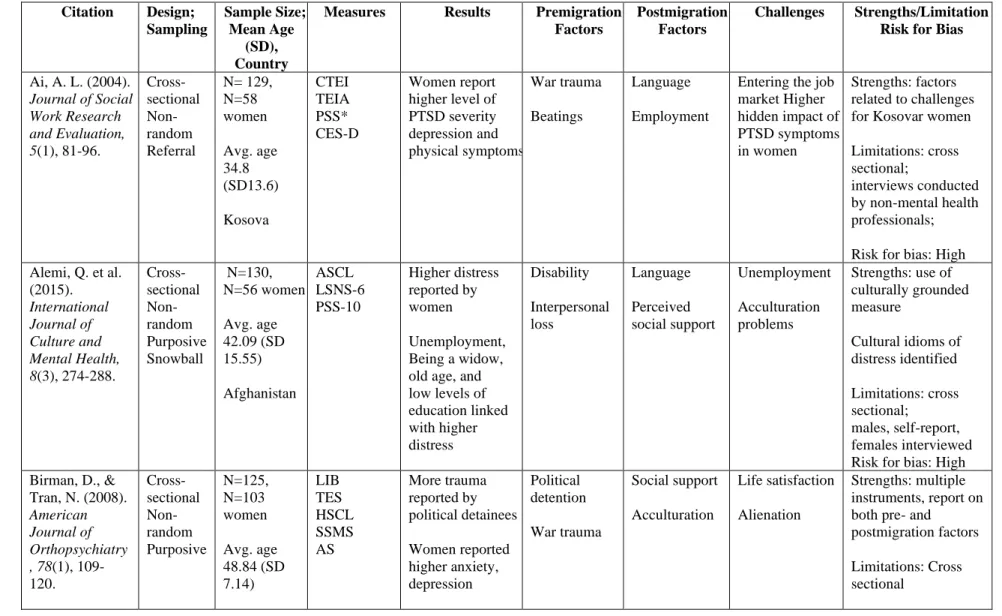
resettled refugee women and the resulting challenges are presented in the appendix (Table
1.3.). The complete findings for this systematic review are tabulated and presented (Table
1.4.) and abbreviations related to the measures are also listed (Table 1.5.).
Discussion
This systematic review was undertaken to identify various factors associated with the
behavioral health needs of refugee women resettled in the United States and the challenges
presented by these behavioral health problems. A total of 14 studies were identified through
six databases for the period of 2000-2019 with 3,001 resettled refugee women. This review
found that both the pre-migration trauma and post-migration stressors are associated with
behavioral health problems among resettled refugee women. Additionally, challenges
encountered by these women as a result of these behavioral health problems are also
discussed.
29
Several important findings were identified in this systematic review with respect to
the factors related to behavioral health problems among refugee women resettled in the
United States. First, resettled refugee women identified distinct traumatic events in the
pre-migration stage and resettlement related stressors in the post-pre-migration stage and the events
in both these stages were found to impact their behavior health. Second, the resettled refugee
women reported several challenges in their lives presented by their behavioral health
problems. Third, findings suggest a need for culturally relevant services and interventions to
address the behavioral health problems of resettled refugee women. These findings are
discussed below.
Pre-migration trauma and post-migration stressors. The findings of this
systematic review highlight the risk of behavioral health problems that exist among women
who have experienced multiple traumatic events and prolonged stays in refugee camps. The
pre-migration trauma is especially concerning because research has linked it with higher rates
of PTSD and anxiety among refugees (Hameed, Sadiq, & Din, 2018; Tinghog et al., 2017).
Likewise, post-migration stressors also contribute to impaired behavioral health of resettled
refugee women, putting them at a high risk for depression. This is also concerning because
research shows that maternal depression negatively impairs family functioning and is linked
with reduced outcomes for children at home and schools (Hameed, Sadiq, & Din, 2018;
Tinghog et al., 2017). The findings related to behavioral health problems arising from the
pre-migration trauma and post-migration stressors fully answer the research question seeking
factors related to the behavioral health problems among refugee women resettled in the
30
The combined effect of pre- and post-migration stressors warrants more research in
finding ways to address these stressors simultaneously and in a timely manner (Miller &
Rasmussen, 2017). Given that the refugee women come from cultures that are very different
from the American culture, and considering a need that they have themselves identified,
programs and interventions to address any behavioral health problems must be culturally
relevant to better engage these women in the interventions (Bemark & Chung, 2017).
Measurement of behavioral health. Thirty-two different measures were used among the studies included in this systematic review, some of which have low reliability and
validity among the refugee populations. Most studies used several measures to asses for any
behavioral health problems; however, four studies used only one measure. Use of a single
measure is unlikely to measure the breadth of behavioral health problems among the resettled
refugee women. Further, the use of measures that are validated in clinical settings but not in
research settings is also concerning. Thus, the lack of use of appropriate measures is
problematic in that it affects the ability to precisely measure the prevalence of behavioral
health problems and associated factors among the resettled refugee women.
Challenges resulting from behavioral health problems. The list of challenges synthesized in this study addresses the second research question which explores the
challenges faced by the resettled refugee women as a result of their behavioral health
problems. The challenges reported by resettled refugee women, such as unemployment,
acculturation problems, reduced family functioning, and a lack of access to culturally
appropriate services to address trauma and family disruption, are in line with existing
literature. These challenges constitute risk factors and predictors for poor physical and
31
the second research question in formulated for this systematic review (Murray, Davidson, &
Schweitzer, 2010; Tomlinson, 2010; Ozturk, Serin, & Altinoz, 2019).
The ability of resettled refugee women to find and retain employment is impacted by
the prevalence of behavioral health problems. In addition, not having employment and being
faced with financial hardship as a consequence further exacerbates the behavioral health
problems and resulting challenges for these women. Thus, there is causality between
employment and behavioral health problems.
Given the relevance of the challenges posed by both pre-migration and post-migration
factors for resettled refugee women to the well-being of these women and their families more
research must focus on examining both these factors. Furthermore, interventions at both
clinical and community-levels must be developed and delivered to address these factors in a
comprehensive manner.
Need for culturally relevant services. The findings of this systematic review also include a need for culturally relevant services. The women identified language barriers, lack
of employment opportunities, difficulties in accessing health and behavioral health services,
social isolation, role disruption, and reduced family functioning as their most urgent needs.
Above all, the women expressed a need to learn these skills in ways that were culturally
relevant and understandable to them. Given that resettled refugee women typically adhere to
their cultural beliefs and practices and may take longer to understand and adjust to the
Western approach regarding learning new skills, taking a less rigid approach to developing
and delivering interventions may better engage the women in these services (Lenette,
Brough, & Cox, 2012). Hence, community style settings rather than classroom settings may
32
Acquiring English language skills is critical to finding and retaining employment,
navigating the healthcare system and utilizing health and behavioral health services in the
United States. In addition, the ability to speak and understand English is also helpful in
making adjustments to the role disruption and family functioning for resettled refugee
women with families. School-age children and men who are employed learn English quicker
than resettled refugee women, specifically women with young children who may also be
socially isolated. Thus, developing and delivering interventions for learning English can
additionally provide a venue for making social connections and learning new skills relevant
to the American job market. Considering that all necessary services may not be available in
the resettled refugee women’s native languages, having better English comprehension can
provide more options for participating in individual and group interventions geared towards
socialization, skill development, and interventions for behavioral health.
In addition to having culturally relevant services and interventions, the individuals
delivering these interventions must also be culturally competent. Practitioners who are
sensitive to the cultural beliefs and practices of resettled refugee women are likely to
facilitate easier discussions around behavioral health, which is a sensitive issue among most
resettled refugee women, and is also the first step in engaging these women in any treatment
or intervention (Bemark & Chung, 2017; Mangesha, Dune, & Perz, 2016).
These findings also provide preliminary evidence for addressing both the
pre-migration trauma and post-pre-migration stressors simultaneously among resettled refugee
women. Given the magnitude of challenges resulting from these behavioral health problems,
providing identification, treatment and ongoing support to address these behavioral health
pre-33
migration trauma and post-migration stressors in a timely manner are likely to improve the
psychosocial and economic outcomes for the resettled refugee women and their families.
An important consideration here is the limited resources available in terms of
funding, culturally competent and trained personnel, and the infrastructure for providing the
interventions. Therefore, delivering interventions in stages such as short-term interventions
for the most immediate needs, mid-term for less critical needs and long-term for needs that
more funding, training and infrastructure. Given the information at hand about newly arrived
resettled refugee women, delivering interventions for language is an urgent need, health and
behavioral health literacy and orientation for navigating the healthcare system in the United
States becomes the mid-term step and program development for optimal functioning of
resettled families is a suitable long-term agenda.
Limitations
There are several limitations to this review, therefore, findings should be interpreted
with caution. First, only studies from peer-reviewed journals were included, hence there is a
strong possibility of publication bias. Although gray literature was searched, no studies met
the inclusion criteria. Also, inclusion of unpublished work was beyond the scope of this
review. Secondly, findings were included from studies conducted in the United States only,
due to their relevance to practice and policy in the United States. Much of the research on
resettled refugee women is conducted in Western countries other than the United States,
hence possible important findings from studies conducted in those countries were not
captured. Similarly, studies conducted in refugee camps were not reported in this review.
Third, studies that did not report women’s outcomes separately were not included, hence
34
studies were selected for this review. Many studies with refugee women use a qualitative
methodology, however, including qualitative studies was beyond the scope of this review.
Finally, accurate assessment of behavioral health disorders among refugee women from
non-Western countries may be difficult to capture when using non-Western instruments, especially
those that have not been validated among the refugee population.
Conclusion
There is a need for gender-specific research for refugee women that also takes
cultural factors into account. Gender alone shapes the migration experience very differently
for refugee women, and when combined with culture, the impact is enormous. However,
research on refugee women that examines gender and culture simultaneously is lacking and
is much needed. Research conducted with this approach will provide a more comprehensive
understanding of the complexity of behavioral health needs for resettled refugee women, and
will help practitioners, policy makers, and service providers to adequately serve this
marginalized population.
Funding
The research for this systematic review was funded by a Dissertation Completion
Grant from the University of North Carolina at Chapel Hill.
Declaration of Competing Interest
The author declares no potential competing interest with respect to research or