Appendix: Supplementary material [posted as supplied by author]
Part 1: MCE supporting materials and historical context
Tribute to Dr. Ivan Frantz in leading the Minnesota Coronary Experiment team
Reared on Margarine and to the Tune of Spinning Ultracentrifuges:
A Son’s Recollections of Ivan D. Frantz, Jr. During the Early Days of Lipid Research
Robert P. Frantz, M.D.
As the youngest son of Ivan and Veronica Frantz, I was born in Minneapolis, MN in 1958 at the
University of Minnesota Hospitals. My father spent long days in his laboratory at the Variety Club Heart Hospital on East River Road. In the evening he would sit at the dining room table, a yellow pad in front of him, armed with a pencil, an eraser and sharpener, and an array of papers and files. He hand wrote his drafts, and as he did, the entire table would jostle. He had impeccable cursive, having won awards in school for his penmanship. On weekends he would take me down to the laboratory, pushing back a heavy wooden door with his name on it, revealing an exciting world filled with the sound of spinning ultracentrifuges. He showed me the miracle of separating lipid fractions with Percoll gradients, and the evolving techniques of electrophoresis. On crisp autumn Saturdays we would stop in before the Minnesota Gopher football game, and if we were lucky he would make a stellar New England clam chowder in a beaker over a Bunsen burner.
My father was a brilliant, yet humble man. His goal was to do the best science possible, and to promote public health through efforts to develop sufficient understanding of factors driving cardiovascular disease to permit informed intervention. He did not seek the spotlight. In the early days of lipid research,
computers were in their infancy. As computing evolved and became an important tool for research, he taught himself computer languages, including Fortran and Cobol. He rarely took vacation, and when he did always brought along things to work on.
As I reflect on the evolution of thought regarding diet and cardiovascular risk, and having sifted through thousands of files from my father’s basement that pertained to his passionate pursuit of lipid research, I think about what my father would have thought of the additional analyses so painstakingly conducted by Dr. Chris Ramsden and colleagues and reported in the accompanying manuscript.
long as this state of ignorance persists, one must harbor some misgivings that, despite a satisfying fall in blood lipid concentrations, the treatment may be doing more harm than good 1.” In that paper, he closed by noting the remarkable Japanese fishermen who had a lifelong diet low in cholesterol and saturated fat, and wondering whether that lifelong approach was likely to be greater than what could be achieved by dietary modifications later in life.
He performed small crossover studies of the effects of various diets on lipid lowering in healthy college students, trying to understand whether the partially hydrogenated soybean oil favored by food
manufacturers was as effective as corn or unhydrogenated soy oil in lipid lowering. The partially hydrogenated oil did lower cholesterol, but not as much as the other oils, and had less effect on triglycerides 2.
The campaign to undertake large clinical trials of dietary modification took many years to come to fruition. It was necessary to convince those responsible for public health that such trials were not only worth the expense, but also feasible. Therefore my father undertook preliminary studies to prove feasibility 3. The Minnesota Coronary Survey thus was many years in the making, from its roots in epidemiology of cardiovascular disease, to development of analytical techniques capable of measuring lipid levels reproducibly, to designing the clinical trials and convincing the necessary policy stewards and funding agencies that such trials could and should be carried out. Completing the MCS was an enormous effort on the part of many individuals, including the subjects who agreed to participate. My father would praise the whole team for their efforts in making the work possible. The entire lipid research team at the U of M was passionate about what they were trying to accomplish. Accordingly the disappointment when the overall study results were negative must have been profound. My father officially had retired from the U of M in 1984, though it was hard to see any major difference in his work ethic as an Emeritus Professor in the years after that, culminating in the publication of the MCS study results in 1989 when he was 74 years old.
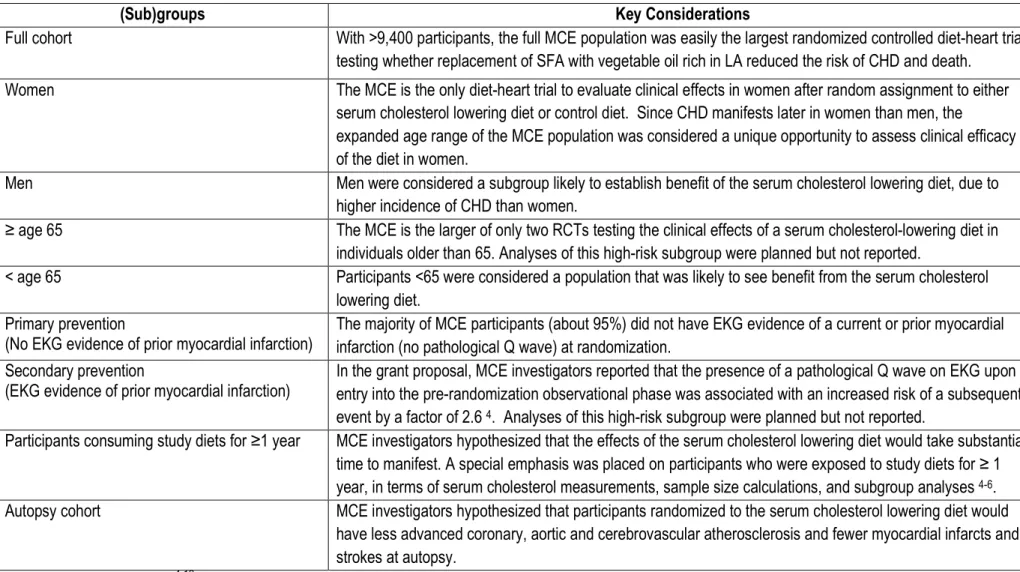
Table A. Full cohort and pre-specified subgroups of the Minnesota Coronary Experiment
(Sub)groups Key Considerations
Full cohort With >9,400 participants, the full MCE population was easily the largest randomized controlled diet-heart trial
testing whether replacement of SFA with vegetable oil rich in LA reduced the risk of CHD and death.
Women The MCE is the only diet-heart trial to evaluate clinical effects in women after random assignment to either
serum cholesterol lowering diet or control diet. Since CHD manifests later in women than men, the
expanded age range of the MCE population was considered a unique opportunity to assess clinical efficacy of the diet in women.
Men Men were considered a subgroup likely to establish benefit of the serum cholesterol lowering diet, due to
higher incidence of CHD than women.
≥ age 65 The MCE is the larger of only two RCTs testing the clinical effects of a serum cholesterol-lowering diet in
individuals older than 65. Analyses of this high-risk subgroup were planned but not reported.
< age 65 Participants <65 were considered a population that was likely to see benefit from the serum cholesterol
lowering diet. Primary prevention
(No EKG evidence of prior myocardial infarction)
The majority of MCE participants (about 95%) did not have EKG evidence of a current or prior myocardial infarction (no pathological Q wave) at randomization.
Secondary prevention
(EKG evidence of prior myocardial infarction)
In the grant proposal, MCE investigators reported that the presence of a pathological Q wave on EKG upon entry into the pre-randomization observational phase was associated with an increased risk of a subsequent event by a factor of 2.6 4. Analyses of this high-risk subgroup were planned but not reported.
Participants consuming study diets for ≥1 year MCE investigators hypothesized that the effects of the serum cholesterol lowering diet would take substantial time to manifest. A special emphasis was placed on participants who were exposed to study diets for ≥ 1 year, in terms of serum cholesterol measurements, sample size calculations, and subgroup analyses 4-6.
Autopsy cohort MCE investigators hypothesized that participants randomized to the serum cholesterol lowering diet would
have less advanced coronary, aortic and cerebrovascular atherosclerosis and fewer myocardial infarcts and strokes at autopsy.
Recovery and validation of MCE data and study materials
We recovered raw data from the Minnesota Coronary Experiment (MCE) stored on two 9-track magnetic tapes (‘tape 2’ and ‘tape 4’) (see fig A below), using similar methods as we previously
employed to recover missing Sydney Diet Heart Study (see the web appendix of 13). Technical expertise in data recovery and conversion was provided by John Svee (Data Conversion Resource, Inc., Aurora, Colorado, USA). Computer Logics software was used to read the raw tape to disk via a pertec interface with 9-track equipment attached to Windows 98 boxes in pure DOS mode. Tape 2 contained data written to tape on the 327th day of 1988. The raw MCE ‘tape 2’ data was split into 2 logical files with standard zero-length separation blocks between files. These data were stored on the tape in fixed length American Standard Code for Information Interchange (ASCII) text files. Tape 4 contained data written to tape on the 183rd day of 1985. We determined that it was written using Kronos operating system, version 53. This Kronos data was found to be expressed in 6-bit, rather than standard 8-bit characters. The data format and the exact character conversion table code (Table B-2 on page 106 from 14) were identified and translated by trial and error, ultimately resulting in readable ASCII characters which were found to represent a related series of punched cards. Each “record” of punched card data ended in a series of “:” characters. These were translated from the original varying number of colon characters per line into PC record marks (character 13 + character 10). Next these punch card records were programmatically assembled into fixed length ASCII text records. This file of 57,664 records was split into three files representing Type D records (MCE data collection form 011, see Appendix Section VI.), Type R sub-records (MCE form 02) and Type X sub-sub-records (MCE forms 02/11).
In addition to the tape processing, Data Conversion Resource was used to post-process the results of numerous scanned data summary tables on green-bar paper. This process took the scanned documents translated via OCR and corrected for various OCR errors such as numeral “5” resulting as “:S” and so forth. These fully converted and corrected documents were triple-verified to ensure accuracy of character recognition. For further validation, each of the recovered MCE datasets were compared to each other and to data reported in the 1989 study publication 8, the 1981 Master’s Thesis 9, and the 1975 conference proceedings 10-12, as well as numerous other recovered MCE documents and data sources. After validation, data elements from all sources were merged into a master file in a format suitable for statistical analysis.
We also recovered an extensive collection of FORTRAN cod Frantz, which outlined the analysis plans
related coding sheets included the original, extensive plans for
atherosclerosis, aortic atherosclerosis, and cerebrovascular atherosclerosis, arteriosclerosis and infarcts according to treatment group, and stratified by gender, age and time on study diets.
We also found evidence that (Tape #380, written on 12/12/1974) yet been able to recover this tape.
fig A: Recovered 9-track magnetic “tape 4” with MCE data recovered an extensive collection of FORTRAN coding sheets
analysis plans for autopsy materials and other aspects of the study
the original, extensive plans for analyses of myocardial infarcts, coronary is, aortic atherosclerosis, and cerebrovascular atherosclerosis, arteriosclerosis and infarcts according to treatment group, and stratified by gender, age and time on study diets.
We also found evidence that all autopsy-related data was stored on a 9
(Tape #380, written on 12/12/1974) entitled ‘Autopsy-stones’. Despite an extensive search, we have not yet been able to recover this tape.
track magnetic “tape 4” with MCE data
ing sheets authored by Dr. Ivan for autopsy materials and other aspects of the study.
Autopsy-analyses of myocardial infarcts, coronary is, aortic atherosclerosis, and cerebrovascular atherosclerosis, arteriosclerosis and infarcts according to treatment group, and stratified by gender, age and time on study diets.
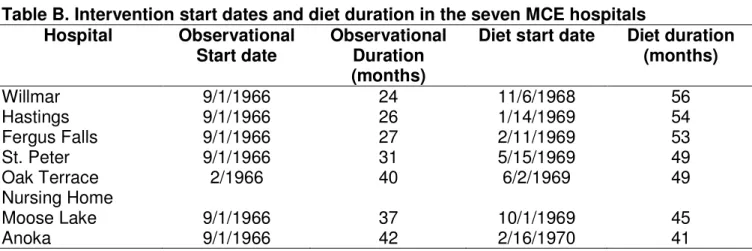
Table B. Intervention start dates and diet duration in the seven MCE hospitals
Hospital Observational
Start date
Observational Duration (months)
Diet start date Diet duration
(months)
Willmar 9/1/1966 24 11/6/1968 56
Hastings 9/1/1966 26 1/14/1969 54
Fergus Falls 9/1/1966 27 2/11/1969 53
St. Peter 9/1/1966 31 5/15/1969 49
Oak Terrace Nursing Home
2/1966 40 6/2/1969 49
Moose Lake 9/1/1966 37 10/1/1969 45
Chemical compositions of the intervention and control diets in the seven MCE hospitals
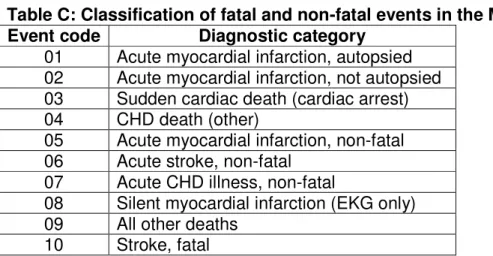
Table C: Classification of fatal and non-fatal events in the MCE
Event code Diagnostic category
01 Acute myocardial infarction, autopsied
02 Acute myocardial infarction, not autopsied
03 Sudden cardiac death (cardiac arrest)
04 CHD death (other)
05 Acute myocardial infarction, non-fatal
06 Acute stroke, non-fatal
07 Acute CHD illness, non-fatal
08 Silent myocardial infarction (EKG only)
09 All other deaths
10 Stroke, fatal
Ascertainment and coding of fatal and non-fatal events
Fatal and non-fatal events were assigned specific International classification of diseases codes 5 by the PI under masked conditions based on evaluation of hospital chart and autopsy findings and, when necessary, consultation with the attending physician. Each event was later assigned to one of ten categories of MCE coded events (table C). To ensure masking was not compromised by the anticipated between-group differences in follow-up serum cholesterol, the PI did not have access to serum
cholesterol measures 7.
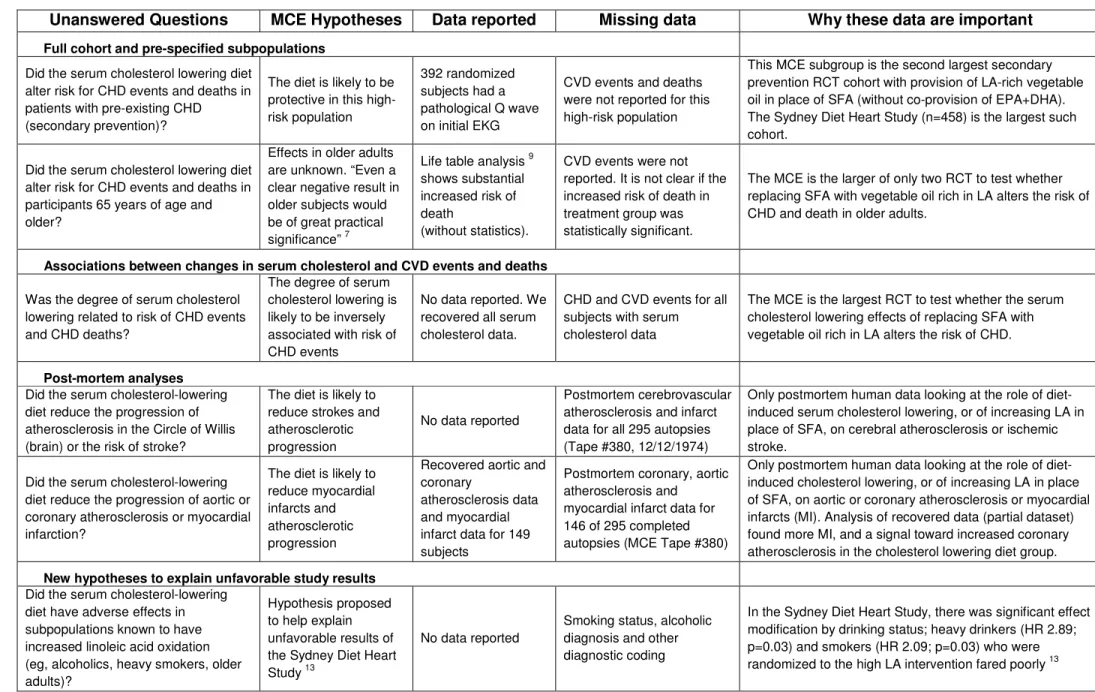
Table D: Important MCE data that remain missing
Unanswered Questions MCE Hypotheses Data reported Missing data Why these data are important
Full cohort and pre-specified subpopulations
Did the serum cholesterol lowering diet alter risk for CHD events and deaths in patients with pre-existing CHD (secondary prevention)?
The diet is likely to be protective in this high-risk population
392 randomized subjects had a pathological Q wave on initial EKG
CVD events and deaths were not reported for this high-risk population
This MCE subgroup is the second largest secondary prevention RCT cohort with provision of LA-rich vegetable oil in place of SFA (without co-provision of EPA+DHA). The Sydney Diet Heart Study (n=458) is the largest such cohort.
Did the serum cholesterol lowering diet alter risk for CHD events and deaths in participants 65 years of age and older?
Effects in older adults are unknown. “Even a clear negative result in older subjects would be of great practical significance” 7
Life table analysis 9 shows substantial increased risk of death
(without statistics).
CVD events were not reported. It is not clear if the increased risk of death in treatment group was statistically significant.
The MCE is the larger of only two RCT to test whether replacing SFA with vegetable oil rich in LA alters the risk of CHD and death in older adults.
Associations between changes in serum cholesterol and CVD events and deaths
Was the degree of serum cholesterol lowering related to risk of CHD events and CHD deaths?
The degree of serum cholesterol lowering is likely to be inversely associated with risk of CHD events
No data reported. We recovered all serum cholesterol data.
CHD and CVD events for all subjects with serum cholesterol data
The MCE is the largest RCT to test whether the serum cholesterol lowering effects of replacing SFA with vegetable oil rich in LA alters the risk of CHD.
Post-mortem analyses
Did the serum cholesterol-lowering diet reduce the progression of atherosclerosis in the Circle of Willis (brain) or the risk of stroke?
The diet is likely to reduce strokes and atherosclerotic progression
No data reported
Postmortem cerebrovascular atherosclerosis and infarct data for all 295 autopsies (Tape #380, 12/12/1974)
Only postmortem human data looking at the role of diet-induced serum cholesterol lowering, or of increasing LA in place of SFA, on cerebral atherosclerosis or ischemic stroke.
Did the serum cholesterol-lowering diet reduce the progression of aortic or coronary atherosclerosis or myocardial infarction?
The diet is likely to reduce myocardial infarcts and atherosclerotic progression
Recovered aortic and coronary
atherosclerosis data and myocardial infarct data for 149 subjects
Postmortem coronary, aortic atherosclerosis and
myocardial infarct data for 146 of 295 completed autopsies (MCE Tape #380)
Only postmortem human data looking at the role of diet-induced cholesterol lowering, or of increasing LA in place of SFA, on aortic or coronary atherosclerosis or myocardial infarcts (MI). Analysis of recovered data (partial dataset) found more MI, and a signal toward increased coronary atherosclerosis in the cholesterol lowering diet group.
New hypotheses to explain unfavorable study results
Did the serum cholesterol-lowering diet have adverse effects in subpopulations known to have increased linoleic acid oxidation (eg, alcoholics, heavy smokers, older adults)?
Hypothesis proposed to help explain unfavorable results of the Sydney Diet Heart Study 13
No data reported
Smoking status, alcoholic diagnosis and other diagnostic coding
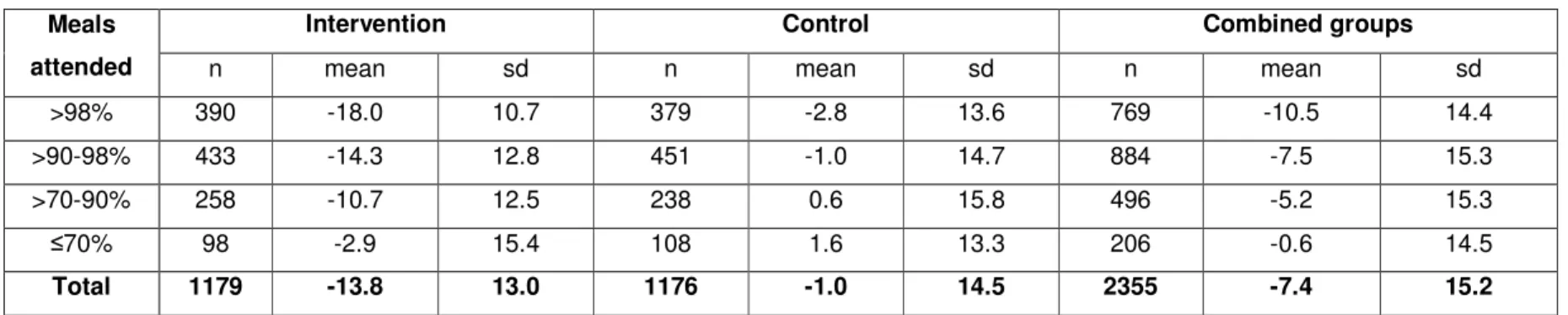
Table E: Serum cholesterol lowering according to diet adherence in the MCE
Data are from the ≥1 year serum cholesterol cohort. Values are for average change in serum cholesterol from baseline. Meals
attended
Intervention Control Combined groups
n mean sd n mean sd n mean sd
>98% 390 -18.0 10.7 379 -2.8 13.6 769 -10.5 14.4
>90-98% 433 -14.3 12.8 451 -1.0 14.7 884 -7.5 15.3
>70-90% 258 -10.7 12.5 238 0.6 15.8 496 -5.2 15.3
≤70% 98 -2.9 15.4 108 1.6 13.3 206 -0.6 14.5
Table F: Characteristics of the MCE autopsy cohort (n=149)
Intervention Control t-Test
p-value
Mean (SD) n Mean (SD) n
Age at randomization, years 71.1 (11.9) 76 67.8 (14.1) 73 0.127
Systolic blood pressure, mmHg 127 (22.9) 75 128 (19.8) 68 0.829
Diastolic blood pressure, mmHg 77 (13.4) 75 75.1 (11.5) 68 0.363
Serum Cholesterol, mg/dL 214 (50) 69 206 (65) 62 0.403
Serum Triglycerides, mg/dL 109 (39.7) 69 113 (70.5) 62 0.699
BMI 23.6 (4.5) 69 23.2 (3.6) 61 0.617
Diet exposure in days 345 (272) 76 352 (312) 73 0.886
% Missed meals† 3.4 (5.4) 69 3.7 (7.0) 62 0.788
% Male 60.5 (49.2) 76 68.5 (46.8) 73 0.313
Table G: Association between serum cholesterol and risk of infarct and atherosclerosis in the MCE autopsy cohort
Intervention Control Both Groups
n Coef† 95% CI
p-value n Coef† 95% CI
p-value n Coef† 95% CI p-value
Coronary
atherosclerosis score 64 -1.75 (-3.88, 0.38) 0.09 59 -0.24 (-2.27, 1.80) 0.78 123 -0.51 (-1.89, 0.87) 0.40
Aortic atherosclerosis score
61 0.10 (-0.23, 0.43) 0.49 56 -0.12 (-0.49, 0.26) 0.47 117 -0.02 (-0.33, 0.28) 0.85
n OR‡ 95% CI
p-value n OR‡ 95% CI
p-value n OR‡ 95% CI p-value
Myocardial infarcts 65 0.98 (0.56, 1.72) 0.96 59 1.02 (0.52, 1.99) 0.95 124 1.19 (0.84, 1.69) 0.34
†Coefficients are change in atherosclerosis score for each 30 mg/dL decrease in average serum cholesterol. Based on linear regressions for atherosclerosis score as a
function of average follow-up serum cholesterol, adjusted for baseline serum cholesterol, age, BMI, gender, adherence to the diet, and systolic blood pressure, and clustering within hospital.
‡ Odds ratio for each 30 mg/dL decrease in average serum cholesterol. Based on logistic regressions for having at least one infarct as a function of average follow-up serum
Fig B: Ecological association between States in the 20th century
Ecological associations between LA
Notable confounders in the 1909-1960 interval include diagnostic bias due to increasing availability of electrocardiograms, increased health care
coronary heart disease. Notable confounders in the 196
(eg, major declines in smoking & secondhand smoke exposure, widespread ambulances), and major advances
treatments (e.g., coronary artery bypass graft, angioplasty).
†Mean annual LA intakes are estimated from USDA economic disap percentage of food energy 15; ‡CHD mortality data downloaded from Abbreviations: CHD, coronary heart disease; LA, linoleic acid;
Ecological associations between LA intake and CHD mortality have been cited as supp
the diet-heart hypothesis17. However, these associations are subject to many important
confounders and wholly dependent on the timeframe selected (
rise in per capita LA intake between 1909
steep rise in CHD mortality. By contrast, the comparatively modest inc
between 1960 and 2000 coincided with a steep decline in CHD mortality. Drawing a causal
inference from this latter interval requires disregarding both the rise in CHD, and many potential
dominant confounders (see legend of
per capita LA intake in the United States occurred before 1961, when serum cholester
lowering dietary advice was initiated.
: Ecological association between change in LA and CHD mortalit
l associations between LA and CHD mortality are subject to many important confounders. 1960 interval include diagnostic bias due to increasing availability of health care access, and growing appreciation for the presence of coronary heart disease. Notable confounders in the 1960–2000 interval include public health initiatives
secondhand smoke exposure, widespread access to defibrilla major advances in medications (eg, aspirin, antihypertensives, statins) , coronary artery bypass graft, angioplasty).
are estimated from USDA economic disappearance data and expressed as a CHD mortality data downloaded from 16.
Abbreviations: CHD, coronary heart disease; LA, linoleic acid; en%, percentage of energy
between LA intake and CHD mortality have been cited as supp
. However, these associations are subject to many important
confounders and wholly dependent on the timeframe selected (fig B). For example,
between 1909 and 1960 in the United States
steep rise in CHD mortality. By contrast, the comparatively modest increase
0 and 2000 coincided with a steep decline in CHD mortality. Drawing a causal
interval requires disregarding both the rise in CHD, and many potential
dominant confounders (see legend of fig B). It is also notable that the majority of the increase in
per capita LA intake in the United States occurred before 1961, when serum cholester
lowering dietary advice was initiated.
and CHD mortality in the United
are subject to many important confounders. 1960 interval include diagnostic bias due to increasing availability of
growing appreciation for the presence of 2000 interval include public health initiatives
access to defibrillators and hypertensives, statins) and surgical
pearance data and expressed as a
en%, percentage of energy from foods.
between LA intake and CHD mortality have been cited as support for
. However, these associations are subject to many important
For example, the steep
in the United States was accompanied by a
rease in dietary LA
0 and 2000 coincided with a steep decline in CHD mortality. Drawing a causal
interval requires disregarding both the rise in CHD, and many potential
). It is also notable that the majority of the increase in
Table H: Linoleic acid contents of nuts, seeds, and vegetable oils
Whole food or extracted oil LA content
(g/100g)
Corn 0.5
Corn Oil 53.5
Soybeans 10.8
Soybean Oil 51.0
Sunflower Seeds 23.1
Sunflower Oil† 65.7
Cottonseed Oil 51.5
Canola Oil 19.0
Almonds 12.3
Pecans 20.6
LA, linoleic acid. Fatty acid contents of oils vary to some extent by season, latitude, and other conditions. USDA National Nutrient Database numbers: corn 11167, corn oil 04518, soybeans 16111, soybean oil 04044, sunflower seeds 12036, sunflower oil 04506, cottonseed oil 04502, canola oil 04582, almonds 12061, pecans
Part 2
Systematic review & meta-analysis of RCTs that replaced SFA with LA rich vegetable oil
Effects of Replacing Saturated Fat with Vegetable Oils Rich in Linoleic Acid on Coronary Heart Disease Mortality: A Systematic Review and Meta-Analysis of Randomized Controlled Trials
ABSTRACT Background
A key component of dietary guidelines has long been to replace saturated fat (SFA) with vegetable oils (e.g., corn oil, safflower oil, soybean oil) that are rich in linoleic acid (LA). This advice is based on the traditional diet-heart hypothesis prediction that replacement of SFA with LA decreases coronary heart disease (CHD) and all-cause mortality by reducing serum LDL and total cholesterol.
Objective
To conduct a systematic review and meta-analysis of randomized controlled trials (RCTs) that
specifically tested whether replacement of SFA with LA-rich vegetable oil decreases CHD mortality and all-cause mortality.
Methods
Studies published in English from 1950 to Sept. 2015 were identified through systematic searches of PubMed, EMBASE, and CINAHL, hand-searching of related publications, grey literature sources, and contact with study investigators and family members of deceased investigators to identify potentially unpublished trials and endpoints. Studies were included if they randomly assigned individual participants to a diet intervention that provided vegetable oil rich in linoleic acid in place of saturated fat compared to a usual care control diet, reported deaths from CHD or all-causes, and were not confounded by unequal intensity of major concomitant dietary or medical interventions. Study quality and bias assessment included the following: random sequence generation; adequacy of allocation concealment; adequacy of blinding of participants and personnel; adequacy of blinding of outcome assessments; selective
reporting; systematic differences in between-group care; and study-specific sources of potential bias. All review stages were conducted independently by two investigators. Pooled hazard ratios (HR) were calculated using inverse-variance weighted random-effects meta-analysis.
Results
Of 1270 publications initially identified, only five RCTs were included in the main analysis representing 10,808 participants, 324 deaths attributed to CHD, and 1,001 deaths from all-causes. The mean change in serum cholesterol in the course of these trials ranged from 7.8 to 13.8% lower in the intervention vs. control groups. In meta-analyses, these cholesterol-lowering interventions showed no evidence of benefit on CHD mortality (HR 1.13; 95% CI 0.83, 1.54) or all-cause mortality (HR 1.07; 95% CI 0.90,
1.27). There was evidence of statistical heterogeneity in both magnitude and direction of effect for the CHD mortality (I2: 45.1%; Tau2: 0.0534) and all-cause mortality (I2: 38.8%; Tau2: 0.0132). In sensitivity analyses including additional 3 RCTs that were confounded by provision of n-3 EPA+DHA and other major diet changes, and/or relied on advice only (with modest diet changes) null results were noted for both CHD mortality (HR 1.00; 95% CI 0.81, 1.24; I2: 37.5%;) and all-cause mortality (HR 1.00; 95% CI 0.87, 1.15; I2: 34%). Reasons for heterogeneity of the pooled HR among the eight studies were explored; neither the dose of LA nor differences in between-group cholesterol lowering helped explain the heterogeneity.
Available RCT evidence demonstrates that replacement of SFA with LA-rich vegetable oil effectively lowers serum cholesterol, but does not support the hypothesis that this translates to lower risk of death from CHD or all-causes.
INTRODUCTION
The traditional diet-heart hypothesis predicts that replacing dietary SFA with vegetable oils rich in LA will reduce CHD events and deaths by lowering serum cholesterol. Advice to replace SFA with LA-rich vegetable oils (e.g., corn oil, sunflower oil, safflower oil, cottonseed oil, or soybean oil) has been a cornerstone of dietary guidelines for the past half-century (see main paper, Figure 10). However, the lack of supporting RCT evidence for such advice has been a source of controversy.13, 19 Several
diet-heart meta-analyses have been published, but they have not specifically examined the effects of replacing SFA with LA-rich vegetable oils. For example, a meta-analysis by Hooper et al 20 included RCTs that lowered SFA but did not distinguish between trials that replaced SFA with LA-rich oils, from those that replaced total and saturated fat with carbohydrates, and also included RCTs that markedly increased dietary EPA+DHA alongside LA. Similarly, Mozaffarian et al 21 included RCTs that markedly increased dietary EPA+DHA from seafood and cod liver oil, among other diet changes (e.g. sugar restriction, increase in fiber). EPA and DHA are not present in vegetable oils and are reported to influence CHD pathogenesis by mechanisms independent of cholesterol lowering. Therefore, it is not clear whether the results of previous meta-analyses are driven by 1) reductions in SFA, 2) replacement of SFA with LA-rich vegetable oil, 3) or to increases in EPA+DHA. The objective of this systematic review and meta-analysis is to determine whether RCTs that specifically replaced SFA with LA-rich vegetable oil(s) provide evidence to support the traditional diet-heart hypothesis.
METHODS
We followed the PRISMA (www.prisma-statement/org) guidelines22 throughout the design, implementation, analysis, and reporting of this systematic review and meta-analysis.
Data sources
Table I. PubMed Search Terms, 25 September 2015
("Fatty Acids, Omega-6"[Mesh] OR "unsaturated fatty acid"[tiab] OR "unsaturated fatty acids"[tiab] OR "unsaturated fat"[tiab] OR "unsaturated fats"[tiab] OR "polyunsaturated fatty acid"[tiab] OR "polyunsaturated fatty acids"[tiab] OR "polyunsaturated fat"[tiab] OR "polyunsaturated fats"[tiab] OR "omega-6"[tiab] OR "linoleic"[tiab] OR "octadecadienoic acid"[tiab] OR "safflower oil"[tiab] OR "sesame oil"[tiab] OR "soybean oil"[tiab] OR "soyabean oil"[tiab] OR "corn oil"[tiab]) AND ("cardiovascular diseases"[Mesh] OR "cardiovascular disease"[tiab] OR "cardiovascular diseases"[tiab] OR "heart disease"[tiab] OR "heart diseases"[tiab] OR "myocardial infarction"[tiab] OR "myocardial infarctions"[tiab] OR "heart
attack"[tiab] OR "heart attacks"[tiab] OR "sudden death"[tiab] OR "sudden deaths"[tiab] OR "coronary syndrome"[tiab]) NOT ("Case Reports"[Publication Type] OR "stroke"[tiab] OR "strokes"[tiab] OR "cerebrovascular accident"[tiab] OR
"cerebrovascular accidents"[tiab] OR "Fatty Acids, Omega-3"[Mesh] OR "omega-3"[tw] OR "n-3"[tw]) AND ((Clinical Trial[ptyp] OR Meta-Analysis[ptyp] OR Randomized Controlled Trial[ptyp]) AND "humans"[MeSH Terms] AND "adult"[MeSH Terms])
Study selection and data extraction
Included in the main analysis were all serum cholesterol-lowering RCTs with a publication in English that (a) randomly assigned individual participants, (b) provided an LA-rich vegetable oil intervention in place of SFA, compared to a usual care control diet, (c) were not confounded by the addition of large quantities of n-3 EPA and DHA or by other major concomitant interventions (e.g., complex diet pattern changes) or unequal intensity of medical management (e.g., smoking cessation advice or blood pressure control), and (d) reported deaths due to CHD or all causes. Hence, RCTs that provided large quantities of n-3 EPA and DHA, or provided advice only without provision of LA rich oils were excluded from the main analysis, as were studies with only biochemical or intermediate endpoints. Sensitivity analyses included diet-heart RCTs that also provided large quantities of n-3 EPA and DHA or provided advice only without provision of an LA-rich study oil, but otherwise met the inclusion and exclusion criteria for the main analysis.
All review stages were conducted independently by two investigators. Studies were screened based on an inspection of their titles and/or abstracts. Methods papers were carefully examined to determine key elements of the dietary interventions. Duplicate publications and abstracts from the same study were reviewed to examine consistency and to glean additional information about design and study outcomes but were otherwise not considered. Reviews and commentaries were not considered. Studies with a primary focus on medication evaluation were also excluded.
diets. The change in total cholesterol by group assignment was calculated for each study. Also noted was whether the sample populations were institutionalized or free living and whether the study target was secondary prevention of CHD (e.g., population recruited from post-infarction population) or a population with and without CHD at baseline.
Bias Assessment
Risk of bias was assessed for individual studies and included the following study characteristics: 1) random sequence generation; 2) allocation concealment; 3) blinding of participants and personnel; 4) blinding of outcome assessments; 5) selective reporting; 6) systematic differences in between-group medical care; and 7) study-specific sources of potential bias. Two investigators rated the risk of bias independently and resolved any discrepancies with discussion.
Statistical Analysis
We calculated pooled risk estimates (hazard ratios with 95% confidence intervals and p-values) for CHD death and all-cause mortality for the five RCTs that met inclusion criteria (main analysis) and again including Oslo Diet Heart Study, the St. Thomas Atherosclerosis Regression Study, and the Diet and Re-infarction Trial in sensitivity analysis. When hazard ratios were not available, they were estimated by calculating risk ratios. Results of random effects models are reported using the Dersimonian and Laird inverse-variance weighting method 23 . Between-study heterogeneity was assessed with the I2 statistic along with an estimate of between-study variance (Tau-squared) and stratification by study oil. Publication bias was assessed by visual inspection of a funnel plot of the treatment effect versus standard error. Because there was some evidence of imbalance in the funnel plot, in a sensitivity analyses, estimates were examined using a trim and fill procedure and excluding the small Rose Corn Oil Trial. Potential sources of heterogeneity were explored using stratified fixed effects meta-analysis (for type of PUFAs) and inverse variance weighted meta-regressions (for between-group cholesterol reduction and increases in dietary linoleic acid).
Results
The searches returned a total of 1260 articles, 301 of which were duplicate articles or additional articles on the same study (fig C 3). Ten additional articles were identified through review articles. Most
screened studies were excluded because they were supplement-only studies, they were drug interventions, or they only reported biochemical endpoints. Others were observational studies,
commentaries, genetic studies, trial design studies, studies to develop dietary measures, or compliance reports. Particular attention was given to the 60 studies reporting dietary interventions (table J).
Fig C. PRISMA diagram: Study screening and eligibility
S cr e e n in g In cl u d e d E li g ib il it y Records screened (n = 969)
Records excluded (n =906)
Full-text articles assessed for eligibility
(n = 63)
Full-text articles excluded, with (overlapping) reasons
(n = 55) No mortality outcome
(n = 48) Multi-component diet
(n=13) No randomization of
individuals (n=1) Studies included in
qualitative synthesis (n = 8)
Studies included in quantitative synthesis (meta-analysis)
(n = 5) Records identified via
database searching (n = 1260)
Id e n ti fi ca ti o n Records identified via other sources
(n = 10)
Records after duplicates removed
(n = 959) Duplicates
Table J. Characteristics of the 60 excluded dietary intervention studies
First author or Study Name, primary aim
Dietary interventions Concomitant interventions
Mortality outcome
1. Finnish Mental Hospital Study (FMHS)24-26
Effects of diets on mortality
Participants were not randomized. Crossover study of two hospitals (one control, one intervention) (see p. 47)
Higher exposure to cardiotoxic drug thioridazine in control
CHD mortality
2. Lyon Diet Heart Study 27-29
Secondary prevention of CHD death
Multiple between-group differences in
diet
Did not substitute LA-rich oil in place of SFA
No between-group imbalance
CHD mortality Non-fatal infarction
3.THIS-DIET30
Secondary prevention of CHD events and death
Multiple between-group differences in diet
Did not substitute LA-rich oil in place of SFA
No between-group imbalance
Composite outcome: all-cause + CHD deaths, MI, CHD, HF or stroke
4. Indo-Mediterranean Diet-Heart Study 31
Secondary prevention of CHD events and death
Multiple between-group differences in diet
Did not substitute LA-rich oil in place of SFA
No between-group imbalance
Fatal and non-fatal MI, SCD, composite events.
5. Indian Diet Heart Study32
Secondary prevention of CHD events and death
Multiple between-group differences in diet
No between-group imbalance
Fatal and non-fatal MI, SCD
6. Women’s Health Initiative33 (Howard)
Secondary prevention of CHD events and death
Multiple between-group differences in
diet
Did not substitute LA-rich oil in place of
SFA
None Non-fatal MI, CHD
death, CABG/PCI, composite CHD
7. Droste 34
Effects of diet on cerebral blood flow
Multiple between-group differences in
diet
Did not substitute LA-rich oil in place of
SFA
Between-group imbalance in lifestyle change recommendations
None
8. Korhonen 35
Effects of diets on blood pressure
Multiple between-group differences in diet
No between-group imbalance
None
9. Esposito36
In metabolic syndrome, effects of diet on endothelial function and inflammatory markers
Multiple between-group differences in diet
Did not substitute LA-rich oil in place of SFA
No between-group imbalance
None
10. RESMENA 37-40
In metabolic syndrome, effect on body composition and oxidative stress
Multiple between-group differences in diet
Did not substitute LA-rich oil in place of SFA
None None
11. Castañer 41
Effects of diets on gene expression
Multiple between-group differences in
diet
Did not substitute LA-rich oil in place of SFA
First author or Study Name, primary aim
Dietary interventions Concomitant interventions
Mortality outcome
12. OmniHeart 42, 43
Effects of diets on CHD risk factors in metabolic syndrome
High vs. low CHO diet
Did not substitute LA-rich oil in place of SFA
None None
13. Lichtenstein 44
Effects of diets on CHD risk factors in hypercholesterolemia
AHA Step 2 diet vs. usual Western Unspecified PUFA
None None
14. Mangravite45, 46
Effects of diets on CHD risk factors
High vs. low SFA: CHO vs. beef
Did not substitute LA-rich oil in place of
SFA
None None
15. Lecerf47
Effects of diets on lipid profile in hypercholesterolemia
SFA replaced with MUFA & mixed n-3/n-6 PUFA
Multiple between-group differences in
diet
None None
16. Nielsen48
Effects of diets on lipid oxidation in hypercholesterolemia
Canola vs. olive. vs. sunflower oil feeding
Did not substitute LA-rich oil in place of
SFA
None None
17. Goyens49
Effects of diets on CHD risk markers in older adults
ALA vs. EPA/DHA rich diet
Did not substitute LA-rich oil in place of
SFA
None None
18. Azadbakht50
Effects of diets on CHD risk factors in Type 2 diabetics
Multiple between-group differences in diet
Did not substitute LA-rich oil in place of SFA
None None
19. Raatz51
Effects of diets on lipid metabolites in postmenopausal women
High fat vs. low fat diet
Did not substitute LA-rich oil in place of
SFA
None None
20. Moore52
Effects of diets on CHD risk factors
High/low LA+/- high/low n-3 diets
Did not substitute LA-rich oil alone in place of SFA
None None
21. Zhang53
Effects of diets on lipid profile in hypercholesterolemia
Fatty fish substituted for
pork/chicken/beef
Did not substitute LA-rich oil in place of SFA
None None
22. Madigan54
Effects of diets on lipid profile in Type 2 diabetes
LA-rich vs. Oleic acid-rich diet
Did not substitute LA-rich oil in place of
SFA
None None
23. Minihane55
Effects of diets on lipids and insulin in Asian Indians
Moderate vs. high n-6:n-3 PUFA diet
Did not substitute LA-rich oil in place of
SFA
None None
24. Singer56
Effects of dietary oils on CHD risk factors in hypertensive men
Oleic vs. LA-rich vs. ALA-rich oils
Did not substitute LA-rich oil in place of SFA
First author or Study Name,
primary aim Dietary interventions
Concomitant
interventions Mortality outcome 25. Puska57-59
Effects of diets on blood pressure
Two levels of increased PUFA substituted for SFA
None None
26. TRANSLinE Study 60-62
Effect of diets on CHD risk factors
High vs. low TFA
Did not substitute LA-rich oil in place of
SFA
None None
27. Han63
Effect of diets on cytokines and cellular immune markers
SFA vs. TFA vs. Soy oil None None
28. Beltsville Human Nutrition Center lipid studies64-66
Stearic acid, oleic acid feeding studies
Did not substitute LA-rich oil in place of SFA
None None
29. Dyerberg67
Effects of diets on CHD risk factors
TFA vs. n-3 PUFA
Did not substitute LA-rich oil in place of
SFA
None None
30. Sanders68
Effects of diets on lipids/hemostasis
n-6 vs n-3 PUFA vs. SFA None None
31. RISCK trial69
Effects of diets on insulin sensitivity and CHD risk factors
Multiple between-group differences in diet
Did not substitute LA-rich oil in place of SFA
None None
32. Gustafsson70
Effects of diets on lipids
Diets with P/S ratios of 1.3 and 0.7 None None
33. Erkkilä71
Effects of diets on lipids
Lean vs. fatty fish vs. meats
Did not substitute LA-rich oil in place of SFA
None None
34. Kondo72
Effects of diets on endothelial function
Fish vs. control diet
Did not substitute LA-rich oil in place of SFA
None None
35. Lindqvist73
Effects of diet on CHD biomarkers
Fish vs. control diet
Did not substitute LA-rich oil in place of SFA
None None
36. Williams74
Effects of diets on serum lipids
MUFA vs. control
Did not substitute LA-rich oil in place of
SFA
None None
37. Lithander75
Effect of diets on adiponectin
High vs low SFA:UFA diet
Did not substitute LA-rich oil in place of
SFA
None None
38. Mclaughlin76
Effects of diets on CVD risk factors
High vs. low CHO in calorie restricted diets
Did not substitute LA-rich oil in place of SFA
None None
39. Muzio77
Effects of diets on CHD risk factors in metabolic syndrome
High vs. low CHO in calorie restricted diets
Did not substitute LA-rich oil in place of SFA
First author or Study Name, primary aim
Dietary interventions Concomitant interventions
Mortality outcome
40. Raff78, 79
Effects of diets on CHD risk factors
CLA vs. Control fat
Did not substitute LA-rich oil in place of
SFA
None None
41. Rivellese80
Effects of diets on CVD risk factors
Mixed FA and CHO dietary changes
Did not substitute LA-rich oil in place of
SFA
None None
42. LIPGENE study81-88
Effects of diets in metabolic syndrome
Hi MUFA vs. SFA vs. CHO
Did not substitute LA-rich oil in place of
SFA
None None
43. Rasmussen89
Effects of diets on CVD risk factors
MUFA vs. SFA
Did not substitute LA-rich oil in place of
SFA
None None
44. Zhao90, 91
Effects of diets on vascular inflammation in
hypercholesterolemia
ALA vs. LA vs. SFA diets
Did not substitute LA-rich oil in place of
SFA
None None
45. Nigam92
Effects of diets on NAFLD
Olive or canola oil substituted for usual cooking oil—neither is LA-rich
None None
46. OPTLIP93
Effects of diets on insulin sensitivity
4 diets altering n-6:n-3 ratios
Did not substitute LA-rich oil in place of
SFA
None None
47. Insull94
Effects of diets on lipids
Partially hydrogenated soybean, corn, sunflower oils; Did not substitute LA-rich oil in place of SFA
None None
48. Annuzzi95
Effects of diets on CHD risk markers in metabolic syndrome
n-3 +/- polyphenols vs. control Did not substitute LA-rich oil in place of SFA
None None
49. de Roos96, 97
Effects of diets on CHD risk markers
TFA vs. SFA
Did not substitute LA-rich oil in place of SFA
None None
50. Jenkins98
Effects of diets on CHD risk markers
MUFA VS. SFA
Did not substitute LA-rich oil in place of SFA
None None
51. Foley99
Effects of diets on lipids
MUFA vs. PUFA vs. SFA None None
52. SYSDIMET100 (de Mello) Effects of diets on endothelial function in metabolic syndrome
Multiple between-group differences in diet
None None
53. Fuentes101
Effects of diets on endothelial function
SFA vs. MUFA vs. n-6+n-3 PUFA Did not substitute LA-rich oil in place of SFA
None None
54. Fuentes102
Effects of diets on endothelial function
SFA vs. Mediterranean vs. low TF/SFA diet Did not substitute LA-rich oil in place of SFA
First author or Study Name, primary aim
Dietary interventions Concomitant interventions
Mortality outcome
55. WISH-CARE103 (Vasquez)
Effects of fish consumption on lipids in metabolic syndrome
White fish vs. no fish
Did not substitute LA-rich oil in place of SFA
None None
56. Houtsmuller 104
Effects of LA vs. SFA margarine on diabetic micro- & macro-angiopathy
Linoleic acid-rich intervention vs. ‘saturated margarine’ intervention (35%E as SFA).
Comparison group with unrealistic amount of SFA (35%E) exclusively from ‘saturated margarine’; No usual care control group
None None
57. Borchgrevink105
Secondary prevention of CHD mortality
Linseed oil (ALA) vs corn oil (LA) in place of other oils ; no SFA control group
None CHD and all-cause
mortality; CVD events
58. Ashton 106
Effects of diets on lipids/insulin in healthy males
Low fat, high carbohydrate diet vs. high oleic sunflower oil (MUFA)
Did not substitute LA-rich oil in place of SFA
None None
59. Teng 107
Effects of diets on inflammatory markers
Partially hydrogenated soybean oil vs. high oleic palm oil vs. palm stearin
Did not substitute LA-rich oil in place of SFA
None None
60. Christiansen 108
Effect of diets on DM
markers/lipids among diabetics
SFA vs. MUFA vs TFA (trans MUFA)
Did not substitute LA-rich oil in place of SFA
None None
Abbreviations: ALA = alpha linolenic acid; CABG/PCI = coronary artery bypass surgery/percutaneous coronary intervention; CHD = coronary heart disease; CHO = carbohydrate; LA = linoleic acid; MI = myocardial infarction; MUFA = mono-unsaturated fatty acid; PUFA = poly-unsaturated fatty acid; SCD = sudden cardiac death; SFA = saturated fatty acid; TF = total fat; TFA = trans fatty acid.
RCTs included in the main analysis
Only five RCTs met our inclusion criteria: the Minnesota Coronary Experiment (MCE) 8-12, 109, the Sydney Diet Heart Study (SDHS) 13, 110-113, the Rose Corn Oil Trial (RCOT) 114, the Los Angeles Veterans study (LA Vet) 115-122, and the Medical Research Council Soy study (MRC Soy) 123, 124 (table K). These are the five known RCTs that randomly assigned individual participants to a diet intervention that provided vegetable oil rich in linoleic acid in place of saturated fat compared to a usual care control diet, reported deaths from CHD or all-causes, and had no between-group differences in major concomitant
RCTs included in sensitivity analyses
Three additional RCTs were included in a sensitivity analysis: the Oslo Diet Heart Study (ODHS), the St. Thomas Atherosclerosis Regression Study (STARS), and the Diet and Re-infarction Trial (DART) (table K). These diet-heart trials, which randomly assigned individual participants and reported CHD deaths and all-cause mortality, have been included in previous meta-analyses on this topic. However, two of these trials were confounded by unequal application of other dietary factors, and another achieved only a very modest change in dietary LA without provision of study oils.
ODHS
The ODHS has often been represented as a test of the replacement of SFA with an LA-rich vegetable oil (soybean oil). However, in addition to soybean oil, the intervention group received a very large dose (≈5 grams per day) of n-3 EPA+DHA from provision of sardines canned in cod liver oil, and was advised to restrict sugar intake and to replace refined carbohydrates with less processed selections 125-127. Since EPA+DHA (and sugar) are reported to influence CHD risk by mechanisms independent of serum cholesterol lowering, it is not possible to determine which intervention components were responsible for study results.
STARS
STARS 128-130 has often been represented as a test of the replacement of SFA with an LA-rich vegetable oil. However, unequal administration of multiple dietary factors do not allow for determination of the effects of LA. For example, the STARS intervention group received advice (and some study foods) to: (1) reduce total fat and SFA; (2) increase n-6 and n-3 polyunsaturated fatty acids, (3) avoid processed 128 foods, and (4) increase dietary fiber (especially the soluble fiber polygalacturonate) 129. While this intervention had only a very modest (non-statistically significant) increase in n-6 LA (+1.6%E) 128, it doubled EPA+DHA from (100 to 210 mg per day), lowered total fat by 27%, and increased fiber by 53%. Given these multifaceted changes, the very modest increase in LA likely accounted for only a small fraction of the observed 12.2% serum cholesterol lowering achieved. Taken together, this study design provides little insight into whether replacement of SFA with LA rich vegetable oils can reduce CHD and death. Nevertheless, since other meta-analyses on this topic included STARS, we include it here in sensitivity analysis.
DART
reduces risk of CHD and death (the traditional diet heart hypothesis) 131-136. Nevertheless, since other meta-analyses on this topic included DART, we include it here a sensitivity analysis.
The eight RCTs in the sensitivity analysis represent a total of 13,328 individuals (6664 in each diet group) with a total of 609 CHD deaths (304 in the treatment, 305 in the control group) and 1,315 deaths from all causes (668 treatment, 657 control).
Exclusion of the Finnish Mental Hospital Study (FMHS)
Bias Assessment
All studies included in both the main and sensitivity analyses were parallel-group randomized controlled trials with blinded outcome assessment and no apparent systematic between-group differences in medical care (tables K and L). The possibility of selective reporting has been documented for both the SDHS13 and, in this report, the MCE. Potential sources of bias in the five RCTs included the main analysis are summarized in tables K and L.
In the MCE and SDHS, the intervention groups replaced major sources of SFA (e.g. animal fats, common hard margarines, shortenings) with both LA-rich vegetable oils and polyunsaturated soft margarines. Since polyunsaturated margarines contain some trans fatty acids (TFA), it has been speculated that the unfavorable results of these trials could be due to TFA
(http://www.bmj.com/content/346/bmj.e8707/rr/629609). However, upon careful examination of the intervention diets and the control diets in these RCTs, it becomes clear that between-group differences in TFA are an exceedingly unlikely explanation for these unfavorable findings (reviewed in
http://www.bmj.com/content/346/bmj.e8707/rr/631590). For example, the liquid vegetable oils and polyunsaturated margarines provided to the intervention groups displaced substantial amounts of common hard margarines, shortenings and other TFA-rich foods that were present in the control diets (see Limitations section in the main paper).
The RCOT was small (n=84), and we only used two of the three randomized groups (corn oil group (n=28) and control diet group (n=26)).
The baseline and control diets in the LA Veterans Study were rich in hydrogenated oils 121 and contained ≤0.1%E α-linolenic acid (ALA). This extraordinarily low (deficient?) level of ALA is rare in modern diets and is unlikely to be achieved without extensive hydrogenation. Since the intervention increased n-3 ALA to more normative levels (0.7%E), the results of this study may be confounded by one group experiencing recovery from a deficient state.
Table K. Characteristics of randomized controlled trials that replaced SFA with LA-rich vegetable oil(s)
Trial Population Group CHD
deaths All-cause deaths Total sample Provided LA-rich oil in place of SFA Confounded by EPA+DHA Reduction in serum cholesterol‡ Maximum follow-up time
Studies included in primary analysis†
Minnesota Coronary 8-12, 109
Institutionalized Men & Women with and
without CHD
Intervention 61 269 4541
Yes No -13.8% ≤ 4.5 years
Control 54 248 4516
Sydney Diet-Heart 13, 110-113
Ambulatory Men with
CHD Intervention 36 39 221 Yes No -7.8% ≤ 7 years
Control 24 28 237
Rose Corn Oil 114
Ambulatory Men with
CHD Intervention 5 5 28 Yes No -11.8% ≤ 2 years
Control 1 1 26
Los Angeles Veterans115-122
Institutionalized Men with and without CHD
Intervention 42 174 424
Yes No -12.7% ≤ 8 years
Control 51 178 422
Medical Research Council Soy 123, 124
Ambulatory Men with CHD
Intervention 25 28 199
Yes No -13.3% ≤ 7 years
Control 25 31 194
Studies included in sensitivity analysis only
Oslo Diet-Heart 125-127 Ambulatory Men with CHD
Intervention 37 41 206
Yes Yes
(5 g/day) -13.9% ≤ 5 years Control 50 55 206
St. Thomas
Atherosclerosis 128-130
Ambulatory Men with CHD
Intervention 1 1 27
No
Yes (doubled from 100 to 210 mg/day)
-12.2% ≤ 3 years
Control 3 3 28
Diet and Re-infarction Trial 131-136
Ambulatory Men with CHD
Intervention 35 111 1018
No No -4% ≤ 2 years
Control 47 113 1015
Table L. Risk of bias and methodological quality and assessments for included randomized controlled trials
RCT Random
sequence generation Allocation concealment Blinding of participants & personnel Selective reporting Systematic between-group differences in medical care
Other potential bias Increased
dietary LA?
Concurrent increase in n-3 ALA and/or EPA+DHA Achieved serum cholesterol reduction
Studies included in main analysis
MCE 8-12, 109
Low Low Double-blind Moderate ‡ Low Low Yes (+8.5%E)
No Yes
(-13.8%) SDHS 13,
110-113
Low Low Blinded outcome assessment
Moderate ‡ Low Low Yes
(+7.1%E)
No Yes
(-7.8%)
RCOT
114
Low Low Blinded outcome assessment
Low Low Small trial with 3 study groups
Yes (+≈14%E)
No Yes
(-11.8%)
LA Vet
115-122
Low Low Double-blind Low Low Control diet high in hydrogenated oils and n-3 deficient
(<0.1%E n-3 ALA)
Yes (+10.0%E) Yes (+0.6%E ALA) Yes (-12.7%) MRC Soy 123, 124
Low Low Blinded outcome assessment
Low Low Low Yes
(+≈15%E)
Yes, (+≈2%E ALA)
Yes (-13.3%)
Studies included in sensitivity analysis only
ODHS
125-127
Low Low Blinded outcome assessment
Low Low Treatment group reduced sugar, low quality carbohydrates. Control diet very high in partially hydrogenated fish oil.
Yes (+12.3%E)
Yes¶ (+≈5g/d of n-3 EPA+ DHA)
Yes (-13.9%)
STARS
128-130
Low Low Blinded outcome assessment
Low Low Small trial with 3 study groups. Run-in phase with cholestyramine.
Low-fat diet, increased soluble fiber. Very modest (+1.6%E) § Doubled EPA+DHA (from 100mg to 210mg per day)
Yes § (-12.2%)
DART
131-136
Low Low Blinded outcome assessment
Low Low Advice only, modest diet changes
Modest (total PUFA +2.8%E) ǁ
Unknown Very modest (-4%) ǁ
‘Low’ refers to low risk of bias, ‘moderate’ refers to moderate risk of bias
‡ Recovered data included in 2013 and 2015 publications ¶ Massive dose of EPA+DHA due to provision of sardines canned in cod liver oil;
§ STARS had very modest increase LA (+1.6%E), which is predicted to account for only a very small amount of serum cholesterol lowering that was achieved.
ǁ DART had modest increase in total PUFA (+2.8%E) and modest reduction in serum cholesterol (-4%).
Meta-analysis
For the CHD mortality outcome, the 0.83, 1.54) with evidence of moderate squared = 45.1%; Tau-squared: 0.0534
(HR 1.07 (0.90, 1.27); (I-squared of 38.8%; Tau
Fig D. CHD mortality in RCTs providing place of SFA (main analysis)
Results are based on random-effects models. Risk
Abbreviations: MCE, Minnesota Coronary Experiment; SDHS, Sydney Diet Heart Study; R Angeles Veterans Trial; MRC-Soy, Medical Res
For the CHD mortality outcome, the main analysis resulted in a pooled hazard ratio of
with evidence of moderate heterogeneity in both magnitude and direction of effect squared: 0.0534). The all-cause mortality analysis resulted in
of 38.8%; Tau-squared of 0.0132) (fig E).
RCTs providing vegetable oils rich in LA (without added n
effects models. Risk ratios were substituted for hazard ratios where the latter were unavailable. MCE, Minnesota Coronary Experiment; SDHS, Sydney Diet Heart Study; RCOT, Rose Corn Oil Trial; LA
Soy, Medical Research Council Soybean Oil Trial; LA, linoleic acid; SFA, saturated fatty acids. in a pooled hazard ratio of 1.13 (95% CI: in both magnitude and direction of effect (fig D: I-cause mortality analysis resulted in similar findings
vegetable oils rich in LA (without added n-3 EPA+DHA) in
Fig E. All-cause mortality in RCTs providing EPA+DHA) in place of SFA (main analysis)
Results are based on random-effects models. Risk ratio
Abbreviations: MCE, Minnesota Coronary Experiment; SDHS, Sydney Diet Heart Study; R Angeles Veterans Trial; MRC-Soy, Medical Research Council
SFA, saturated fatty acids.
Publication bias analysis
Funnel plot inspection of the five RCTs in the main analysis with the Rose Corn Oil Trial an ou
presumed missing study, along with analyses excluding the small Rose Corn Oil Trial. These analyses had minimal influence on pooled HR estimates.
pooled HR was 1.10 (95% CI: 0.79, 1.52). similar: pooled HR 1.09 (95% CI: 0.81, 1.46 44.5%. The pooled hazard ratio for
0.90, 1.23) with comparable heterogeneity (
With the inclusion of the three additional diet DHA, or provided advice only without provision of
RCTs providing vegetable oils rich in LA (without added n (main analysis)
effects models. Risk ratios were substituted for hazard ratios where the latter were unavailable. MCE, Minnesota Coronary Experiment; SDHS, Sydney Diet Heart Study; RCOT, Rose Corn Oil Trial; LA
Soy, Medical Research Council Soybean Oil Trial; LA, linoleic acid;
RCTs in the main analysis suggested the possibility of publication bias with the Rose Corn Oil Trial an outlier (fig F). Thus, a trim and fill analysis was performed
presumed missing study, along with analyses excluding the small Rose Corn Oil Trial. These analyses had minimal influence on pooled HR estimates. For the CHD mortality
pooled HR was 1.10 (95% CI: 0.79, 1.52). The estimate with the Rose Corn Oil Trial removed was very 1.09 (95% CI: 0.81, 1.46). Heterogeneity remained evident with an I
. The pooled hazard ratio for all-cause mortality without the Rose Corn Oil Trial was ) with comparable heterogeneity (I-squared 34.0%).
three additional diet-heart trials that provided large quan
d advice only without provision of a study oil that was rich in LA, there was no suggestion
vegetable oils rich in LA (without added n-3
s were substituted for hazard ratios where the latter were unavailable. , Rose Corn Oil Trial; LA Vet, Los LA, linoleic acid; ALA, alpha-linolenic acid;
suggested the possibility of publication bias was performed, filling in the presumed missing study, along with analyses excluding the small Rose Corn Oil Trial. These sensitivity
For the CHD mortality outcome, the filled, The estimate with the Rose Corn Oil Trial removed was very
). Heterogeneity remained evident with an I-squared of cause mortality without the Rose Corn Oil Trial was 1.05 (95% CI:
of publication bias (fig G). The pooled hazard ratio for CHD mortality (see 0.81, 1.24; I-squared: 37.5%) and for all
(fig I).
Fig F. Funnel plot for CHD mortality in Funnel plots of treatment effect versus standard error (on skew, raising a concern about potential publication bias. Re
Fig G. Funnel plot for CHD mortality in eight RCTs with oil provision with LA-rich oils, with or without confounding by n
). The pooled hazard ratio for CHD mortality (see fig
and for all-cause mortality 1.00 (95% CI: 0.87, 1.15; I
Funnel plot for CHD mortality in five RCTs providing LA-rich oils in place of SFA ct versus standard error (on the natural log scale) for CHD mortality showed som skew, raising a concern about potential publication bias. Removal of the Rose Corn Oil Trial mitigated this concern
Funnel plot for CHD mortality in eight RCTs with oil provision or advice to replace SFA without confounding by n-3 EPA+DHA
fig H) was 1.00 (95% CI: 00 (95% CI: 0.87, 1.15; I-squared: 34.1%)
in place of SFA
natural log scale) for CHD mortality showed some evidence of mitigated this concern.
Fig H. CHD mortality in eight RCT
or without confounding by n-3 EPA+DHA
Abbreviations: MCE, Minnesota Coronary Experiment; SDHS, S Angeles Veterans Trial; MRC-Soy, Medical Research Council Soy Heart Study; STARS, St Thomas Atherosclerosis Regression Study.
Fig I. All-cause mortality in eight with or without confounding by
Abbreviations: MCE, Minnesota Coronary Experiment; SDHS, Sydney Diet Heart Study; RCOT, Rose Corn Oil Trial; LA Vet, Los Angeles Veterans Trial; MRC-Soy, Medical Research Council Soy Oil Trial. DART, Diet and Reinfarction Trial; ODHS, Oslo Diet Heart Study; STARS, St Thomas Atheroscler
eight RCTs with provision or advice to replace SFA 3 EPA+DHA (sensitivity analysis)
MCE, Minnesota Coronary Experiment; SDHS, Sydney Diet Heart Study; RCOT, Rose Corn Oil Trial; LA Medical Research Council Soy Oil Trial. DART, Diet and Reinfarction Trial; ODHS, Oslo Diet Heart Study; STARS, St Thomas Atherosclerosis Regression Study. LA, linoleic acid; ALA, α-linolenic acid; SFA, satur
eight RCTs with provision or advice to replace SFA with LA n-3 EPA+DHA (sensitivity analysis)
Coronary Experiment; SDHS, Sydney Diet Heart Study; RCOT, Rose Corn Oil Trial; LA Vet, Los Soy, Medical Research Council Soy Oil Trial. DART, Diet and Reinfarction Trial; ODHS, Oslo Diet Heart Study; STARS, St Thomas Atherosclerosis Regression Study. LA, linoleic acid; ALA, α-linolenic acid; SFA, saturated fat.
ision or advice to replace SFA with LA-rich oils, with
, Rose Corn Oil Trial; LA Vet, Los Oil Trial. DART, Diet and Reinfarction Trial; ODHS, Oslo Diet
linolenic acid; SFA, saturated fat.
replace SFA with LA-rich oils,
Coronary Experiment; SDHS, Sydney Diet Heart Study; RCOT, Rose Corn Oil Trial; LA Vet, Los Soy, Medical Research Council Soy Oil Trial. DART, Diet and Reinfarction Trial; ODHS, Oslo Diet
Heterogeneity Exploration
We explored the following potential sources of n-6 and n-3 fatty acid composition
provided/achieved in the intervention group; and (3) in the intervention group compared to control. T both n-6 LA and n-3 ALA, and two
between groups was statistically significant (p=0.03; I either the LA+ALA or LA+EPA/DHA groups (I
persisted (I2 =37.5%), but was related to the magnitude rather than the direction of the effect. The pooled HR for CHD mortality for the
(0.77, 1.15) for studies with LA+ALA
Fig J. CHD mortality in eight RCTs or without confounding by n-3 EPA+DHA analysis)*
*fixed effects estimates
Abbreviations: MCE, Minnesota Coronary Experiment; SDHS, Sydney Diet Heart Study; R
Angeles Veterans Trial; MRC-Soy, Medical Research Council Soybean Oil Trial. DART, Diet and Reinfar Diet Heart Study; STARS, St Thomas Atherosclerosis Regression Study.
We explored the following potential sources of heterogeneity for CHD mortality 3 fatty acid compositions of intervention vs. control diets; (2) the dose
provided/achieved in the intervention group; and (3) the degree of serum cholesterol lowering achieved in the intervention group compared to control. Three RCTs increased n-6 LA only
3 ALA, and two others increased both n-6 LA and n-3 EPA+
between groups was statistically significant (p=0.03; I2 =37.5%) with no evidence for heterogeneity EPA/DHA groups (I2 = 0%). Evidence for heterogeneity in the LA only
related to the magnitude rather than the direction of the effect. The pooled HR for CHD mortality for the studies providing LA alone was 1.33 (0.99, 1.79) compared to 0.94
r studies with LA+ALA and 0.72 (0.50, 1.05) for studies providing LA+EPA/
eight RCTs with provision or advice to replace SFA
3 EPA+DHA, stratified by n-6 and n-3 fatty acid content
MCE, Minnesota Coronary Experiment; SDHS, Sydney Diet Heart Study; RCOT, Rose Corn Oil Trial; LA Soy, Medical Research Council Soybean Oil Trial. DART, Diet and Reinfar
Diet Heart Study; STARS, St Thomas Atherosclerosis Regression Study.
for CHD mortality in the eight RCTs: (1) the doses of n-6 LA
degree of serum cholesterol lowering achieved only, three others increased
+DHA. Heterogeneity =37.5%) with no evidence for heterogeneity within = 0%). Evidence for heterogeneity in the LA only group related to the magnitude rather than the direction of the effect. The
was 1.33 (0.99, 1.79) compared to 0.94 viding LA+EPA/DHA (fig J).
ision or advice to replace SFA with LA-rich oils, with 3 fatty acid content (sensitivity
Meta-regression analyses explored heterogeneity in the CHD mortality HR due to between-group
cholesterol lowering and the magnitude of the increase in LA in the intervention groups. Across the eight studies, every one-unit decrease in between-group cholesterol lowering was non-significantly associated with a 2% increase in the HR (1.02; 95% CI: 0.95, 1.10). This model performed poorly compared with the model without between-group cholesterol lowering with a residual I2 of 42% and an adjusted R2 of -107%. Similar null findings are noted when the change in LA (%E) is examined (HR 1.02; 95% CI: 0.95, 1.10; residual I2 42%; adjusted R2 of -76%), suggesting that neither the magnitude of serum cholesterol lowering nor the dose of LA help to explain the heterogeneity among the trials.
Effects on composite CHD endpoints non-fatal myocardial infarction
The traditional diet-heart hypothesis predicts that replacement of SFA with LA-rich vegetable oils will reduce the risk of both fatal and fatal CHD events, however, our meta-analysis does not include fatal CHD event data. Unfortunately, several critical deficiencies in the collection and reporting of fatal CHD events in these RCTs make it unfeasible to reliably estimate risk of composite CHD or non-fatal events. For example, one of the five RCTs in the main analysis (the SDHS) did not report non-non-fatal CHD events 113. Another RCT (the MCE) reported only a composite outcome and did not distinguish between soft endpoints (e.g. routine follow-up EKG suggestive of silent/asymptomatic myocardial infarction), and hard endpoints of acute non-fatal myocardial infarction (MI) and CHD deaths 8.