LATE MISSISSIPPIAN CERAMIC PRODUCTION ON ST. CATHERINES ISLAND, GEORGIA
Anna M. Semon
A dissertation submitted to the faculty at the University of North Carolina at Chapel Hill in partial fulfillment of the requirements for the degree of Doctor of Philosophy in the Department
of Anthropology.
Chapel Hill 2019
Approved by:
ABSTRACT
Anna M. Semon: Late Mississippian Ceramic Production on St. Catherines Island, Georgia (Under the direction of Vincas P. Steponaitis)
This dissertation examines Late Mississippian pottery manufacturing on St. Catherines Island, Georgia. Data collected from five ceramic assemblages, three village and two mortuary sites, were used to characterize each ceramic assemblage and examine small-scale ceramic variations associated with learning and making pottery, which reflect pottery communities of practice. In addition, I examined pottery decorations to investigatesocial interactions at community and household levels.
surface decorations (specifically, incised, check stamped, and complicated stamped wares), and a variety of rim attributes associated with each assemblage. I use these analyses to examine
ceramic variability and identify Late Mississippian ceramic micro-styles and potting
communities of practice on St. Catherines Island. The attribute data identified additional ceramic temporal changes between middle Irene phase and early Mission period. These changes include increased use of sand and sand/grit tempers, different firing conditions, increase in wall
thicknesses, wider rimstrips and folds, and greater diversity of stamped and incised designs. Although data reflect numerous temporal trends, inter-site grit tempered pottery comparison revealed a long-lived, grit tempered ceramic tradition that changed through time. The pattern implies a large community of practice in which Irene potters on St. Catherines learned similar clay recipes, coil making, vessel building, and firing techniques. In addition, I characterize filfot cross variation among the assemblages. From the five assemblages, I identified 14 diagnostic designs, 21 partial designs, and 97 paddles. The evidence shows a range of filfot designs, some shared among sites and other unique to a site. The shared designs suggest interaction and affiliations among potters from different sites, while the unique designs indicate intentional distinctions.
Chapter 5 provides a detailed discussion of complicated stamped pottery within each village site. In this chapter, I take a closer look at the filfot cross stamped pottery and
indicate a persistent grit-tempered filfot pottery tradition. In addition, the midden filfot attribute research highlights a few other patterns, including temporal trends, a distinct clay tempered filfot community of practice, and shared filfot designs that reflect social interactions. The final chapter summarizes this research by discussing the four major findings, explores Irene potters and
ACKNOWLEDGEMENTS
There are numerous people I want to thank for their support and guidance during this process. First, I want to thank David Hurst Thomas for introducing me to St. Catherines Island and providing continuous support and guidance. Dave, you have set an example as an
archaeologist, a collaborator, and mentor that I aspire to. Without Dave’s support I would not be part of the St. Catherines Archaeological Project, finished the dissertation, or have the job I have today. Dave has provided me with endless opportunities and I am truly grateful. You have my deepest thanks. Vin Steponaitis, my sincere thanks for your support, guidance, and patience during my time at Chapel Hill. You are a role model as an archaeologist, Mississippian scholar, mentor, and teacher. I am grateful for all the opportunities you provided me while at UNC. I would also like to thank Lorann Pendleton Thomas for her advice, support, and persistence for hiring me back in 2005. I hope that I have lived up to your expectations. I am grateful for my coworkers over the years Tom Blaber, Elliot Blair, Matt Sanger, Ginessa Mahar, Christina Friberg, Rachel Cajigas, Matt Napolitano, Nick Triozzi, Glen Keeton, and Diana Rosenthal-Roberson. You made the work at the American Museum and St. Catherines Island never dull.
helping facilitating our work and research on the island. Thank you Christa Hayes for always opening your home to archaeologists and being a gracious hostess.
In addition, this work could not have been done without the numerous field and lab crews from North American Archaeology Lab at the American Museum of Natural History. Thank you for helping with the numerous excavations, artifact cleaning and cataloging, and the ceramic analyses. I owe a wealth of gratitude to Matt Sanger and Elliot Blair for our archaeology
conversations, field work opportunities, road trips, and conference adventures. Thank you Elliot and Sarah Bergh for convincing me to study Mississippian pottery. Thank you Matt Napolitano and Elliot Blair for the many stimulating ceramic discussions. Camilla Strum, I truly appreciate our catch-up sessions and your editing assistance.
I would also like to thank my committee Margie Scarry, Steve Davis, Anna Agbe-Davis, and John Scarry for your support and the many ideas, questions, and suggestions related to this research. I am grateful to the UNC Research Labs of Archaeology for the use of lab space and assistance over the years. I would also like to thank my University of North Carolina family for all their support during graduate school. Thank you to my cohort members Sara Juengst,
socializing. Thank you Caela O’Connell and Julianna Parks for opening your home during my visits to Chapel Hill. Lindsay Bloch, thank you for introducing me to the pottery studio in Chapel Hill, which provided an outlet for my limited creativity. I am also grateful for your editing
assistance and the time we spent working on our chemical sourcing projects.
TABLE OF CONTENTS
LIST OF FIGURES ...xiii
LIST OF TABLES ...xvi
LIST OF ABBREVIATIONS ...xx
CHAPTER 1: INTRODUCTION ...1
Irene pottery and previous research ...4
Theoretical foundations ...7
Anthropology of technology and technological style ...7
Practice theory ...10
Communities of practice and situated learning ...12
Dissertation objectives and questions ...14
Dissertation samples ...16
Dissertation organization ...20
CHAPTER 2: BACKGROUND ...23
Introduction ...23
Ecological setting ...23
Pre-Mississippian culture history ...27
Mississippian radiocarbon chronology, typology, and culture history ...31
Irene village sites on the Georgia coast ...44
Irene period research on St. Catherines Island ...46
Irene mortuary sites on St. Catherines Island ...49
South End Mound I ...49
Fallen Tree Cemetery ...51
Irene village sites on St. Catherines Island ...55
Meeting House Field ...55
Back Creek Village ...64
Fallen Tree Midden I-A ...69
CHAPTER 3: CERAMIC TYPOLOGY ...75
Methods of analysis ...76
Statistics ...78
Ceramic typology results ...79
Ceramic typology discussion ...96
CHAPTER 4: ATTRIBUTE ANALYSES ...105
Methods of analysis ...107
Fabric analyses ...107
Temper ...107
Firing conditions ...109
Surface decorations ...110
Rim attributes ...112
Statistics ...114
Fabric ...115
Temper analysis results ...115
Grit temper results ...119
Firing conditions ...123
Rim attribute results ...125
Rim shape ...126
Vessel forms ...126
Lip forms ...130
Rim elaborations ...131
Rim treatments ...134
Rim thickness measurements ...137
Minimum number of vessels ...139
Surface decoration attribute results ...147
Incised decoration attributes ...147
Stamped attribute results ...153
Check stamped results ...154
Complicated stamped results ...158
Filfot elements ...160
Diagnostic filfot designs ...165
Attribute analyses discussion ...172
CHAPTER 5: A CLOSER LOOK AT FILFOT STAMPED POTTERY ...177
Introduction ...177
Filfot vessel firing conditions within village assemblages ...183
Filfot vessel body sherd thicknesses within village assemblages ...186
Filfot vessel designs and paddles within village assemblages ...189
Summary of village filfot assemblages ...194
Village versus mortuary sites ...196
Filfot mortuary tempers ...196
Designs and paddles ...199
Filfot paddle matches ...201
Filfot stamped pottery discussion ...203
CHAPTER 6: CONCLUSIONS ...205
Irene potters and pottery on St. Catherines Island ...210
Broader significance ...215
Future research directions ...217
APPENDIX A: VILLAGE ARTIFACTS BY SITE AND LEVEL ...219
APPENDIX B: GEORGIA COAST CERAMIC TYPES ...234
APPENDIX C: MISSISSIPPIAN CERAMIC TYPES BY SITE ...237
APPENDIX D: SELECTION OF RIM PROFILES ...244
APPENDIX E: RIM TREATMENTS AND ELABORATIONS FOR VILLAGE SITES ..248
APPENDIX F: FILFOT DESIGN CODES ...267
LIST OF FIGURES
Fig. 1.1. Map of the Georgia coast with an inset of St. Catherines Island ...2
Fig. 1.2. Caldwell and McCann’s Irene ceramic illustrations ...5
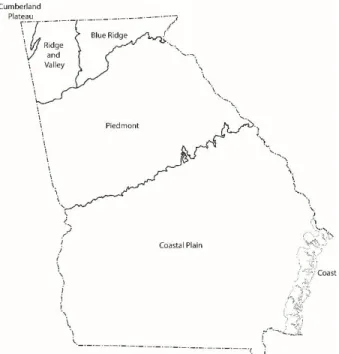
Fig. 2.1. Physiographic Provinces of Georgia ...24
Fig. 2.2. Location of St. Catherines Island and the region for Irene period sites ...37
Fig. 2.3. Distribution of Irene period sites on St. Catherines Island ...47
Fig. 2.4. Site locations of recent Irene investigations ...48
Fig. 2.5. Illustration of Moore’s excavations of South End Mound I ...50
Fig. 2.6. Fallen Tree Cemetery plan view of burial caps ...52
Fig. 2.7. Fallen Tree Cemetery burial map ...53
Fig. 2.8. Fallen Tree radiocarbon dates ...54
Fig. 2.9. Meeting House Field map ...56
Fig. 2.10. Graph of Meeting House Field radiocarbon dates ...60
Fig. 2.11. Midden B western wall profile ...62
Fig. 2.12. Middens tested at Back Creek Village in 2008 ...66
Fig. 2.13. Graph of Back Creek Village radiocarbon dates ...67
Fig. 2.14. Fallen Tree midden outlines and various excavation locations ...71
Fig. 2.15. Comparison of Fallen Tree mortuary and village radiocarbon dates ...72
Fig. 3.1. St. Catherines Island ceramic type analysis diagram ...76
Fig. 3.2. Bar chart of Mississippian, non–Mississippian, and unidentified categories ...83
Fig. 3.3. Percentages of decorated and plain wares ...86
Fig. 3.5. Cluster analysis of Meeting House Field middens ...89
Fig. 3.6. Meeting House Field midden cluster based on combined datasets ...89
Fig. 3.7. Back Creek Village midden cluster analysis ...91
Fig. 3.8 Back Creek Village map with clusters identified ...91
Fig. 3.9. CA plot of decorated sherds and sites ...95
Fig. 3.10. Bar graph of Mississippian surface decorations for village sites ...97
Fig. 3.11. Bar graph of Mississippian surface decorations for mortuary sites ...98
Fig. 3.12. Plot of surface decorations from selected Mississippian and Mission sites ...101
Fig. 4.1. Diagram of attribute analyses ...106
Fig. 4.2. Sherd profiles showing various tempers ...109
Fig. 4.3. Firing condition examples ...110
Fig. 4.4. Check stamped examples ...111
Fig. 4.5. Incised sherd examples ...111
Fig. 4.6. Complicated stamped sherd examples ...112
Fig. 4.7. Rim treatment examples ...113
Fig. 4.8. CA plot of Mississippian tempers ...119
Fig. 4.9. Bar chart of percentages of grit temper size by assemblage ...120
Fig. 4.10. Percentages of grit temper abundance within each assemblage ...123
Fig. 4.11. Histogram of rim diameters village assemblages ...141
Fig. 4.12. Histograms of rim diameters for the mortuary assemblages ...142
Fig. 4.13. Box plots of incised line widths ...149
Fig. 4.14. Box plots of incised line depths ...150
Fig. 4.16. Selective punctated and incised rim sherds from Fallen Tree ...153
Fig. 4.17. Diamond (top) and rectangular (bottom) check stamped sherds ...155
Fig. 4.18. Box plots of check sizes ...156
Fig. 4.19. Illustration of complicated stamped designs ...159
Fig. 4.20. Filfot scroll direction illustration ...161
Fig. 4.21. Illustration of filfot center elements ...163
Fig. 4.22. Illustration of filfot end elements ...164
Fig. 4.23. Fourteen diagnostic filfot designs identified in this study ...167
Fig. 4.24. CA plot of filfot paddles and sites ...172
Fig. 5.1. CA plot of all middens and temper categories ...182
Fig. 5.2. CA plot of all middens and grit temper categories ...183
Fig. 5.3 CA plot of middens based on filfot firing conditions ...184
Fig. 5.4. Boxplot of all village filfot thicknesses ...187
Fig. 5.5. CA plot of midden clusters based on paddle designs ...194
Fig. 5.6. CA plot pf middens, mortuary sites, and filfot tempers ...197
Fig. 5.7. CA plot sites based on only grit tempered filfot sherd percentages ...198
Fig. 5.8. First filfot paddle match at Meeting House Field ...202
LIST OF TABLES
Table 1.1. Dissertation excavation contexts ...17
Table 1.2. Ceramic counts and weights by site ...20
Table 2.1. Chronology on the North Georgia Coast ...28
Table 2.2. List of reported Irene burial mounds on the Georgia coast ...40
Table 2.3. South End Mound I radiocarbon dates ...51
Table 2.4. Fallen Tree Cemetery radiocarbon dates ...54
Table 2.5. Meeting House Field radiocarbon dates ...59
Table 2.6. Radiocarbon sum probabilities for middens at Meeting House Field ...61
Table 2.7. Artifact counts at Meeting House Field ...64
Table. 2.8. Back Creek Village radiocarbon dates ...66
Table 2.9. Radiocarbon sum probabilities for middens at Meeting House Field ...67
Table. 2.10. Artifacts counts from Back Creek Village ...69
Table. 2.11. Fallen Tree Midden I-A radiocarbon dates ...71
Table. 2.12. Artifacts recovered from Fallen Tree 2005 and 2013 midden excavations ...73
Table. 2.13. Summed probability dates at each site ...74
Table 3.1. All ceramic identified by site ...80
Table. 3.2. Ceramic percentages by site ...81
Table 3.3. Mississippian versus/non-Mississippian sherds ...83
Table 3.4. Mississippian sherds by site ...84
Table 3.5. Mississippian surface treatment summary ...85
Table 3.7. Diagnostic stamping for Mississippian sherds ...94
Table 3.8. Mississippian size breakdown ...95
Table 3.9. Mississippian sherd size percentages ...96
Table 3.10. Pottery surface decorations from selected Mississippian and Mission sites ...100
Table 4.1. Mississippian sherd counts for detailed attribute analyses ...114
Table 4.2. Dominant tempers for Mississippian sherds ...116
Table 4.3. Minority tempers for Mississippian sherds ...116
Table 4.4. Combine tempers for Mississippian sherds ...117
Table 4.5. Grit temper sizes ...120
Table 4.6. Grit temper shapes ...121
Table 4.7. Grit temper abundance ...122
Table. 4.8. Counts and percentages of firing conditions ...125
Table 4.9. Frequencies and percentages of rim shape ...126
Table 4.10. Frequencies and percentages of vessel forms based on rim sherds ...127
Table 4.11. Frequencies and percentages of vessel form and rim shape ...129
Table 4.12. Frequencies and percentages of bowl lip forms ...130
Table 4.13. Frequencies and percentages of jar lip forms ...131
Table 4.14. Frequencies and percentages of rim elaborations ...132
Table 4.15. Rimstrip width measurements ...133
Table 4.16. Folded rim width measurements ...134
Table 4.17. Frequencies and percentages of rim decorations ...136
Table 4.18. Cane punctation direction ...137
Table 4.20. Wall thickness measurements 1 cm below lip ...138
Table 4.21. Wall thickness measurements 3 cm below lip ...139
Table 4.22. Minimum number of vessels at each site ...139
Table 4.23. Summary of vessel size frequency within each assemblage ...144
Table 4.24. Breakdown of diagnostic vessel forms by size category ...145
Table 4.25. Incised sherd frequencies ...147
Table 4.26. Incised stylus shapes ...148
Table 4.27. Clay conditions during incising ...148
Table 4.28. Incised line width measurements ...149
Table 4.29. Incised line depth data ...149
Table 4.30. Types of incised designs ...151
Table 4.31. Check stamped measurements ...155
Table 4.32. Percentages of check sizes ...156
Table 4.33. Percentages of Mississippian check stamped sherds ...158
Table 4.34. Frequencies of complicated stamped designs ...159
Table 4.35. Filfot cross scroll directions with counts and percentages ...161
Table 4.36. Filfot cross center element categories with counts and percentages ...162
Table 4.37. Filfot cross end elements with counts and percentages ...164
Table 4.38. Filfot land measurement summary by site ...165
Table 4.39. Filfot groove measurement summary by site ...165
Table 4.40. Diagnostic filfot designs with counts and percentages ...166
Table 4.41. Diagnostic filfot designs with multiple sherds ...168
Table 4.43. Frequencies of unique filfot paddles within each assemblage ...171
Table 5.1. Number of temper categories per midden ...180
Table 5.2. Firing condition for filfot sherds for each midden ...185
Table 5.3. Body sherd thickness summary by each midden ...188
Table 5.4. Diagnostic filfot designs by midden ...190
Table 5.5. Partial filfot designs by midden ...191
Table 5.6. Filfot land measurements summary by midden ...192
Table 5.7. Filfot groove measurements summary by midden ...192
Table 5.8. Filfot paddle counts from each midden ...193
LIST OF ABBREVIATIONS
BCV Back Creek Village
CA Correspondence analysis
FTMA Fallen Tree Midden I-A
FTMC Fallen Tree Cemetery
MHF Meeting House Field
CHAPTER 1
INTRODUCTION
In this dissertation, I explore Late Mississippian pottery manufacturing and decoration using archaeological data from village and mortuary sites on the Georgia coast. My primary goals are to characterize village and mortuary ceramic assemblages and examine small-scale ceramic variations associated with learning and making pottery, which reflect pottery
communities of practice. In addition, I examine pottery decorations to investigatesocial interactions at community and household levels.
Fig. 1.1. Map of the Georgia coast with an inset of St. Catherines Island. Map courtesy of Division of Anthropology, American Museum of Natural History.
The Mississippian period and culture for interior Georgia began around A.D. 1000 and consisted of matrilineal groups with ranked social hierarchy under the control of a single leader, which researchers have characterized as chiefdoms (Hally and Mainfort 2004; Worth 2004). Mississippian chiefdoms contained communities with one or more earthen platform mounds and localized clusters of farmsteads, smaller hamlets, and villages. This period saw a shift in
agriculture. There is considerable regional variability for Mississippian societies, including coastal Georgia where only a handful of Mississippian ideas were adopted relatively late. Although the interior coastal plain had several mounds, villages, and homesteads, the coast only had one temple mound site, the Irene site (Anderson 1994; Caldwell and McCann 1941).
However, the coast did see an increase in sites, iconography, and objects related to the
southeastern ceremonial complex, likely due to a population increase (Cook and Pearson 1989a; Thomas 2008). The chiefdoms on the Georgia coast lacked platform mounds and had small populations; however, the coastal populations relied on maize agriculture, and mortuary practices indicate social differentiation. Broadly speaking, researchers have documented significant social, environmental, and ecological changes during the Mississippian period in Georgia, especially within the Savannah River Valley. Anderson (1994) identifies the abandonment of the river valley and argues that displaced populations went west towards the interior or east towards the coast. Thomas’ (2008) transect survey on St. Catherines Island documents the increase of Late Mississippian period, Irene sites suggesting that these displaced populations settled in the coastal region, like St. Catherines.
The material culture for the Irene period has several diagnostic artifact types, including coarse grit-tempered pottery, effigy pipes, shell pins, shell beads, and several types of shell gorgets. Although mortuary practices vary, there is evidence for social differentiation based on burials with grave goods and those without. In addition, there are distinctions between
IRENE POTTERY AND PREVIOUS RESEARCH
Irene period pottery is associated with the broader Lamar ceramic tradition on the southern Appalachians (Hally 1994, Hally and Rudolph 1986, Wauchope 1966, Williams and Shapiro 1990). Irene ceramics were first described by Caldwell and Waring in 1939 and refined by Caldwell and McCann in 1941 during their analysis of the Irene Mound site. Originally, Irene pottery was categorized into three types: Irene Plain, Irene Incised, and Irene Filfot Stamped (fig. 1.2). Other researchers have slightly modified the types to include Irene Burnished Plain and broadening the filfot stamped to complicated stamped, in order to include additional designs (DePratter 1991). Irene ceramics are typically tempered with coarse grit, and interior surfaces are burnished or smoothed. Exterior surface decoration includes complicated stamping, incising, plain, and some checked stamping (although never formally defined as a ceramic type by
and the paddles were pressed into damp vessel walls prior to firing (Snow 1998). More recently, Saunders (2000, 2009) has argued that the filfot cross was a variant of the circle-and-cross motif and represented a cosmology shared by Southeastern Indians. Saunders (2009: 86) stated the “presence of a central dot (or other element) was used as proxy for the coherence of the native
belief system through time.”
Fig. 1.2. Caldwell and McCann’s Irene ceramic illustrations. (Caldwell and McCann 1941).
documented that rim treatments changed through time; the pattern shows applique nodes and rosettes occur early, with plain rimstrips appearing later. This is followed by the use of rimstrips punctuated by canes or reeds or segmented rimstrips. Eventually, the use of rimstrips decreased and punctations were placed directly on the vessel.
Some researchers have divided the Irene period into two phases: early Irene (ca. A.D.
1300–1450) and late Irene (A.D. 1450–1550) (Cook 1980a; DePratter 1979 and 1991; Pearson 1977; Saunders 2000). The difference between early and late Irene is the presence of incised pottery. Alternatively, Braley (1990) divided Irene into three phases: Irene (A.D. 1300–1350), Pipemaker’s Creek (middle Irene, A.D. 1350–1450), and Pine Harbor (late Irene, A.D. 1450–
1580). DePratter stated that the filfot-cross design was the only motif during early Irene, but later in Pine Harbor and Altamaha (A.D. 1580–1700) phases, motifs included concentric circles, “figure nines” crosses, line blocks, and others (1991: 190). Researchers have also identified that
lands and grooves tend to be narrow in early Irene and become wider in Pine Harbor and Altamaha phases (Blair 2015; Saunders 2000).
Irene pottery on St. Catherines Island has been examined and reported by David Hurst Thomas (2008, 2009), Rebecca Saunders (1992, 2000, and 2009), and the current author.
Thomas used diagnostic Irene pottery and radiocarbon dates to develop a chronology specifically to St. Catherines Island and identify the number of Irene sites on the island. Saunders conducted fine-grain ceramic analyses to compare Irene pottery from Meeting House Field to Altamaha pottery from Mission Santa Catalina de Guale.
rim attributes, and incised designs (Caldwell and McCann 1941; Cook 1986; DePratter 1991; Pearson 1984; Cook and Pearson 1989a; Thomas 2008). Although typologies and rim attributes are critical for our understanding of site chronology and culture history, very few studies explore small-scale variations of temper, firing conditions, decoration techniques, or design motifs to identify differences between sites and explore potting communities (Blair 2015; Saunders 1992, 2000). This study provides new information on Late Mississippian small-scale ceramic variation within local micro- and macro-social contexts. In addition, this research provides new data on Late Mississippian social interactions. My research draws on technological style (Dietler and Herbich 1989; Hegmon 1998; Lechtman 1977), practice theory, and communities of practices, and more specifically situated learning theory (Cordell and Habicht-Mauche 2012; Lave and Wenger 1991; Minar and Crown 2001; Roddick and Stahl 2016; and Wenger 1998) to reconstruct learning, manufacturing, and consumption practices and social interactions at public and sacred spaces during the Late Mississippian period. These theories and concepts provide a framework to identify and explore small-scale ceramic variations that reflect manufacturing choices and
learning by Late Mississippian potters on St. Catherines Island. In addition, these theories/concepts provide a way to explore social contexts and networks.
THEORETICAL FOUNDATIONS
ANTHROPOLOGY OF TECHNOLOGY AND TECHNOLOGICAL STYLE
archaeologists use many approaches to study and define style, but there are two basic themes researchers agree on: “style is a way of doing something” and “style involves choice among various alternatives” (1992: 517-518). Initially, researchers viewed style as an aspect of material culture variation, which could be read as a code, and style distributions could define spatial and temporal trends (Hegmon 1992). In other words, style communicates information (Wobst 1977). However, researchers critiqued the information-exchange approach as passive and argued that style is more complex because it is a component of human activity (Dietler and Herbich 1989; Shanks and Tilley 1987; Wobst 1977). Although past research has focused on style as material variation or an aspect of human activity, more recent research bridges the gap by recognizing both approaches. For example, recent studies have looked at when and how information was exchanged, examined the causes of material variation (production or exchange), determined how style was produced and perpetuated (i.e. learning techniques/practices), and studied the social lives and histories of objects (Appadurai 1986; Hegmon 1992; Hodder 1985; Wallis 2011).
Although many researchers define style in different ways, Sackett (1982, 1986) and Wiessner’s (1983) approaches have been used and advanced by other researchers. Sackett argues
that style relates to the choices an artist makes, which he calls ‘isochrestic variation.’ The choices are learned and reflect social interactions and historical context (Sackett 1982). Sackett also uses the term ‘iconological variation,’ which is a “symbolic expression of social information” (1982: 82). Wiessner (1983) believes that style transmits information on identity and defines style as
researchers explore the relationships between material culture, style, and cultural processes. A variety of the studies focus on symbolic meaning, social differentiation, learning, interactions, power, and social inequality (i.e., Arnold 1983; Braun 1991; DeBoer 1990; Dietler and Herbich 1989; Earle 1990; Hegmon 1992). Meanwhile, other researchers have explored how technology can have style (Lechtman 1977; Lemonnier 1986; Sackett 1982).
Recent research into the anthropology of technology draw on the works of Marcel Mauss and Andre Leroi Gourhan. Researcher’s use Gourhan’s chaine operatoire concept, which focuses on the operational sequences and steps to make a material object, as analytical methodology (Stark 2006). At the same time, a few American archaeologists fused together art, technology, and structuralist theory to examine technological and symbolic systems (Hegmon 1998;
Lechtman 1984). Integral to the American archaeological approach to technology is the concept of ‘technological style’ (Lechtman 1977). Technological style is the “experience and custom [that] combine to establish a body of information and practice governing the manufacture of a pottery vessels … resulting in a characteristic final product with a unique range of properties” (Rice
1987:201). In other words, technological style represents the sum of multiple choices made during the manufacturing process and these choices leave visible characteristics that
archaeologists can observe. Scholars argue that technological style is more resistant to change than decorative style because manufacturing actions and choices by the craftsperson are structured by the social group (Gosselain 1992; Lechtman 1977; Lemonnier 1992; Rice 1984; Sackett 1990; Wallis 2007). Scholars who engage with technological style challenge the
1977).
Scholars have argued that technology is not just the final product, but also includes embodied material practices (Cordell and Habicht-Mauche 2012; Mauss 1935). For example, ceramic technology contains techniques, gestures, and production sequences which are taught/learned through demonstrations, verbal instruction, and physical guidance of the apprentice to learn the standards that characterize the local group of producers and conform to preference of the user (Gosselain 1992). This technology consists of a set of choices made by the potter, which are socially defined and constrained (Lechtman 1977; Lemonnier 1986). Scholars have argued that the choices made at production, distribution, use, and discard can be used to follow multiple socially developed networks or communities of practice at different scales (Cordell and Habicht-Mauche 2012).
PRACTICE THEORY
Archaeologists have increased their attention to practice theory, which originated with the work of Bourdieu (1977) and Giddens (1979). Practice theory focuses on the routinized activities of individuals as they perform daily activities and therefore emphasizes the individual action as a driving force of behavior (Stark 2006). It moreover views society as an aggregate of individuals’ practices and asserts that cultural and technological transformations unfold through practice (Dobres 2000: 127). Bourdieu’s concept of habitus reflects the culturally specific ways of doing
of these decisions are unconscious and reflect the general context of socialization and cultural reproduction, or a “community of practice.” For example, several construction techniques used to manufacture goods, like ceramics, are taught and this information becomes part of the practice and appears unconscious (Dietler and Herbich 1998; Sassaman and Rudolphi 2001). These techniques, motor skills, gestures, and behaviors are social productions that are transmitted within and across generations.
Practice theory lends itself to archaeological data because it stipulates that people reproduce their culture and social positions through daily practice. In essence, daily practice leaves patterned traces in the archaeological record (Shennan 1993). Practice theory can be used as a conceptual framework for studying style and social boundaries (e.g., Sackett 1990; Hegmon 1998), as a methodological approach to look at patterns in the archaeological record (e.g., Lightfoot et al. 1998; Dietler and Herbich 1998; Gosselain 1998), or to focus on learning frameworks (e.g. Crown 2001; Minar and Crown 2001; Lave and Wenger 1991; Sassaman and Rudolphi 2001). Additional scholars argue that the learning process has as much to do with the production as it has to do with the use of an object (Fenn et al. 2006). Therefore, examining the “social history” of material objects provides a better understanding of the relationship between
the objects and the social dynamics of the communities who produce and use them (Appadurai 1986).
Ceramics, like other material objects, reflect technical choices that leave material traces for
archaeologists to study (Sillar 1997, 2000; Sillar and Tite 2000). Therefore, archaeologists have used
practice theory to frame interpretations of technological and decorative ceramic characteristics to
emphasize social boundaries between ethnic groups and modes/organization of production (Costin 1991;
For example, ethnoarchaeologists Dietler and Herbich (1998) have examined pottery production among
the Luo and identified distinctive ceramic styles in different potter communities. These styles were the
result of women learning the craft from their husband’s relatives. Therefore, pottery often preserves the
physical attributes that provide information concerning the techniques, allowing archaeologists to
interpret conditions in which items were produced, used, and discarded. Dietler and Herbich argue that no
style can be identified by a single attribute, but must be identified by a set of attributes. Studies like
Dietler and Herbich’s show how pottery can provide insights into varying production practices and social
processes. In addition, practice theory allows archaeologists to focus on the people who live in diverse
social networks (Joyce 2012). Practice theory provides a useful framework to examine Late Mississippian
ceramic variability and identify distinct micro-styles, both technological and decorative, which reflect the
actions associated with pottery knowledge, raw materials, and social context. In other words, this
approach will help me characterize local pottery styles which are the result of potters making different
decisions throughout the production process by using a similar set of tools and techniques available to all
potters within an area.
COMMUNITIES OF PRACTICE AND SITUATED LEARNING
practice as constellations. Situated learning targets the way a community learns how to do things and how the community members reproduce the knowledge. Situated learning also examines the negotiated relationships between teacher and apprentice in a community of practice. Different modes of apprenticeship contribute to the stability of a tradition or encourages innovation.
Rosemary Joyce (2012) summaries the situated learning model by stating that successful learning is promoted when learners engage in tasks that are actively part of the production processes which contribute to a shared goal. Situated learning and communities of practice help
archaeologists think about “how crafting is structured as embodied practices transmitted over generations” (Joyce 2012:150). In addition, the framework helps archaeologists focus more on
the people and the social interactions that create the material objects.
Situated learning and practice theories have been applied by ceramic ethnoarchaeologists (Bowser 2000; Gosselain 2008), Southwestern archaeologists (Crown 2001; Eckert 2008;
Habicht-Mauche et al. 2006), and several Southeastern archaeologists (Blair 2015; Sanger 2015). Southwestern archaeologists, in particular, have illustrated the usefulness of these theories and concepts in studying pottery, by characterizing local and regional pottery technologies,
techniques, and style, and by studying how potters and communities of potters learn and transmit information (Cordell and Habicht-Mauche 2012). The southwestern research also highlights the complex and interrelated social networks involved in manufacturing and circulating pottery.
Blair (2015) used the concept of communities of practice grounded in situated learning to examine habitual repetitive actions that produced similarities in behavioral practices and material objects. He targeted locally made ceramics and glass beads recovered from the 16th and 17th
identified micro-styles within ceramic assemblage related to distinct neighborhoods within the Indian village. In addition, he examined glass beads from the mission cemetery to explore social relationships. Blair used bead manufacturing practices and chemical recipes together with the bead distribution among individuals buried with the mission cemetery to identify bead
communities of consumption within the Santa Catalina cemetery and broader surrounding Indian village.
Sanger (2015) used communities of practice framework to study Late Archaic pottery from two shell rings on St. Catherines Island. He examined the direction of fiber tempered inclusions from CT-scans to identify unique pottery construction techniques related to distinct groups at each shell ring. In addition, he identified each shell ring had different construction techniques and shaped storage pits which provided additional lines of evidence for distinct community practices. Blair’s and Sanger’s studies illustrate the effectiveness of a communities of practice framework to examine pottery micro-styles and identify distinct groups using St.
Catherines Island during the Late Archaic and distinct neighborhoods in the Indian village surrounding Mission Santa Catalina de Guale during the 16/17th centuries.
DISSERTATION OBJECTIVES AND QUESTIONS
fine-grained understandings of pottery used in everyday cooking and serving contexts and vessels used in mortuary practices. This research looks at data from two scales: the site, which is viewed as the community level, and discrete contexts within each site, such as shell middens and burials, which are viewed as the household (or individual in the case of burials) level. My hope is that focusing on the local scale, will provide future opportunities to understand trends on a more regional scale.
My research focuses on three questions: (1) How do the village and mortuary ceramic assemblages vary (typology, morphology, composition, decoration) within and between sites? (2) Are there unique Late Mississippian pottery production and social practices that reflect pottery communities of practice at each site? (3) Does pottery circulate among and between the sites and if so, what types of interactions/social relationships might these reflect? These questions will be addressed through ceramic typology and detailed technological and stylistic attribute analyses at both the site and midden level. The purpose of the detailed attribute analysis is to study the variation in coastal pottery. I use the village sites as my baseline to determine if each of the villages has a distinct pottery practice. More specifically, by examining similarities and differences of temper, firing conditions, surface decorations, and rim treatments, which reflect shared knowledge and techniques for manufacturing pottery, I attempt to identify pottery communities of practice and examine the associated social relationships. In addition, these questions generated three hypotheses, which I test with the filfot stamped pottery assemblage.
one large manufacturing and stylistic tradition, in which potters shared the same knowledge, learned the same manufacturing practices, and used the same filfot designs.
Hypothesis 2. Filfot pottery is technologically and stylistically heterogeneous among and within St. Catherines Irene villages. In other words, the evidence would show tempers, firing conditions, vessel constructions, and filfot designs are different across all village sites. This would indicate multiple pottery manufacturing and stylistic practices and not just one unified tradition. The different tempers, wall thickness, and firing conditions would suggest smaller-scale learning of filfot pottery, likely on the household level. Alternatively, the filfot diversity could indicate outside groups moving into these villages or possible trade wares.
Hypothesis 3. Village filfot pottery has a combination of similar and unique technological and stylistic traits. In other words, the evidence falls somewhere in between hypotheses 1 and 2. One possibility could be tempers, firing conditions, and vessel constructions are similar across all village sites. But filfot designs would differ. The technological homogeneity would indicate one large potting community of practice. But filfot design heterogeneity could indicate
distinctions among potters or households that reflect ideology or affiliations.
DISSERTATION SAMPLES
excavated by AMNH in 1979 and 1981 (Larsen and Thomas 1986), and the collection is now curated at the Fernbank Museum of Natural History. Table 1.1 provides details on excavation contexts.
Table 1.1. Dissertation excavation contexts.
Site Unit Area Excavation
Date
Context
Fallen Tree Midden I-A (9Li8)
A 1 m2 2005 Fallen Tree Midden 1-A
B 1 m2 2005 Fallen Tree Midden 1-A
D 1 m2 2005 Fallen Tree Midden 1-A
E 1 m2 2005 Fallen Tree Midden 1-A
F 1 m2 2005 Fallen Tree Midden 1-A
G 1 m2 2005 Fallen Tree Midden 1-A
H 1 m2 2005 Fallen Tree Midden 1-A
Operation 9 4x3 m 2013 Fallen Tree Midden 1-A Meeting House
Field (9Li21)
N501 E080 1 m2 2008 Meeting House Field
Midden E Delta 1 m2 2009/2015 Meeting House Field
Midden 12
Gamma 1 m2 2009 Meeting House Field
Midden 12
Alpha 1 m2 2009 Meeting House Field
Midden 21
Beta 1 m2 2009 Meeting House Field
Midden B
Epsilon 1 m2 2009 Meet House Field
Midden D
Zeta 1 m2 2009 Meeting House Field
Midden H
Eta 1 m2 2009 Meeting House Field
Midden J
Theta 1 m2 2009 Meeting House Field
Midden M
Iota 1 m2 2009 Meeting House Field
Midden N Back Creek Village
(9Li207)
N585 E441 1 m2 2008 Back Creek Village
Midden A
N586 E441 1 m2 2008 Back Creek Village
Midden A
N587 E437 1 m2 2008 Back Creek Village
Midden A
N575 E453 1 m2 2008 Back Creek Village
Site Unit Area Excavation Date
Context
N576 E453 1 m2 2008 Back Creek Village
Midden B
N569 E458 1 m2 2008 Back Creek Village
Midden C
TP IV clean-up 2008 Back Creek Village
Midden C
TP VII 1 m2 2008 Back Creek Village
Midden C
N584 E466 1 m2 2008 Back Creek Village
Midden D TP III clean-up 2008 Back Creek Village
Midden D
TP VI 1 m2 2008 Back Creek Village
Midden D
N557 E482 1 m2 2008 Back Creek Village
Midden F
TP II clean-up 2008 Back Creek Village
Midden F
TP VIII 1 m2 2008 Back Creek Village
Midden F
N513 E507 1 m2 2008 Back Creek Village
Midden G
TP I clean-up 2008 Back Creek Village
Midden G
TP IX 1 m2 2008 Back Creek Village
Midden G
N488 E495 1 m2 2008 Back Creek Village
Midden H
N493 E499 1 m2 2008 Back Creek Village
Midden H South End Mound
I (9Li3)
6 vessels recovered by C.B. Moore
C.B. Moore excavations
1897 Mississippian burial mound
I 1 m2 1979 Mississippian burial
mound
II 1 m2 1979 Mississippian burial
mound
III 1 m2 1979 Mississippian burial
mound
IV 1 m2 1979 Mississippian burial
mound
V 1 m2 1979 Mississippian burial
mound
VI 1 m2 1979 Mississippian burial
mound
1981-I 1 m2 1981 Mississippian burial
Site Unit Area Excavation Date
Context
1981-II 1x2 m 1981 Mississippian burial
mound Fallen Tree
Cemetery (9Li8)
Operation 8 excavations
Approx. 17x23 m
2013–2015 Mississippian cemetery
For this dissertation project, I looked at 41,365 sherds from the five assemblages (Table 1.2). To characterize the assemblages and study variation related to pottery manufacturing, I analyzed sherds in two stages. The first stage of analysis consisted of a ceramic typological investigation, which allowed me to distinguish between Mississippian and non-Mississippian ceramics. The second stage focused on detailed attribute analysis of the Mississippian sherds to see if I could identify pottery micro-styles within the Irene ceramic assemblages and distinct potting communities of practice on St. Catherines Island. The St. Catherines Island
from Fernbank in 2014, I received more than 1,300 sherds. Due to time constraints, a reanalysis was not conducted on the South End Mound I ceramic assemblage. I only studied the
complicated stamped and incised wares and all rim sherds.
Table 1.2. Ceramic counts and weights by site.
State Number Site Name Site Type Sherd counts Weight (g)
9Li8 Fallen Tree
Midden I-A
Village 6,666 20,061.80
9Li21 Meeting House
Field
Village 4,567 12,295.99
9Li207 Back Creek
Village
Village 3,006 13,866.14
9Li3 South End Mound
I
Mortuary 1,399 –
9Li8 Fallen Tree
Cemetery
Mortuary 25,798 67,618.53
Totals 41,365 112,639.43
DISSERTATION ORGANIZATION
The dissertation is organized in six chapters. In Chapter 2, I describe the ecological setting for Georgia, especially the coast. This is followed by a summary of the pre-Mississippian culture history and details about Mississippian radiocarbon chronology, ceramic typology, and culture history. Next, I discuss the Mississippian site types, village and mortuary, for the Georgia coast.
site, the Mississippian component is the largest. Next in Chapter 3, I target the Mississippian sherds and present sherd sizes and surface treatment data. Using the surface treatment data and comparing to previous surface data (Saunders 2000), I identify shell midden clusters within Meeting House Field and Back Creek Village with different percentages of plain, stamped, and incised wares, indicating not all middens are contemporaneous. In other words, the Irene period occupation at Meeting House Field and Back Creek Village can be divided into at least two components. In addition, I compare the cluster data from Meeting House Field and Back Creek Village to the remaining sites in this study and identify ceramic surface treatments trends for the Irene and early Mission period sites.
Chapter 4 focuses on the technological and stylistic attribute analyses for selected
Mississippian ceramics. In this chapter, I discuss details about temper, firing conditions, surface decorations (specifically, incised, check stamped, and complicated stamped wares), and a variety of rim attributes associated with each site. I use these analyses to examine ceramic variability and identify Late Mississippian ceramic micro-styles and potting communities of practice on St. Catherines Island. Chapter 4 concludes with a discussion about the broader patterns identified between sites from the attribute analyses.
Chapter 5 provides a detailed discussion of complicated stamped pottery within each village site. In this chapter, I take a closer look at the filfot-cross stamped pottery and
characterize technological and stylistic variations at the midden level to test the three hypotheses outlined earlier in this chapter, as a way to identify ceramic micro-styles, unique potting
community of practice among Late Mississippian villages on St. Catherines. Yet, Back Creek Village has evidence of a distinct clay tempered filfot community of practice existing at the same time as the grit tempered practice, likely relating to intermarriages. Filfot design analysis shows similarities between sites with a few shared designs, but overall many designs are currently unique to a village and midden. Patterns also show greater filfot design diversity at the Fallen Tree Cemetery.
The final chapter presents the conclusions for the dissertation. The chapter begins with a summary of the research, which is followed by a discussion of the broader significance of this research, including the study of pottery variation and the use of multiple scales, within the wider context of Mississippian studies in the Southeast. The chapter concludes by discussing future research directions.
Until recently, very little attention has been given to characterizing Irene pottery
variation, especially the complicated stamped wares and what this variation means. My research fills this gap by examining subtle technological and stylistic variations and establishing a
baseline for Late Mississippian village ceramic variation, which is then compared to the
mortuary assemblages. In addition, my research explores the social relationships within each site based on the similarities and differences observed in the filfot-stamped ceramic assemblage. This dissertation research demonstrates the value of exploring small-scale ceramic variation through multiple lines of evidence and contexts to provide a better understanding of the Late
CHAPTER 2 BACKGROUND
This chapter provides several overviews of environmental and cultural history for the southeastern United States in general and the Georgia coast in particular. I start by describing the ecological setting and then review the pre-Mississippian culture history. This is followed by a detailed discussion of Mississippian culture history and chronology, focusing on the Georgia coast.
ECOLOGICAL SETTING
Fig. 2.1. Physiographic Provinces of Georgia. Modified map based on by Griffith et al. 2001.
The Georgia coast is within an area known as the Georgia Bight. The Georgia Bight extends from Cape Hatteras, North Carolina to Cape Canaveral, Florida and consists of a mainland area and a series of barrier islands separated by deep tidal inlets. The mainland contains a low, flat region of well-drained, gently rolling hills and poorly drained flatlands (Thomas 2008: 48). The barrier islands are typically comprised of Pleistocene and Holocene sediments with low, sand beaches on the ocean side and back-barrier marshes on the landward side. The islands range from 5 to 15 km in length and 1 to 5 km in width (Hubbard et al. 1979). Island elevations normally do not exceed 7 meters, although some dunes can be higher
(Thomas 2008: 48; Johnson et al. 1974: 11). Between the mainland and the barrier islands are salt marshes.
marshes are characterized by mud flats, oyster bars, and a maze of meandering tidal creeks. The salt marsh estuaries provide a diverse habitat for a variety of invertebrates, including fiddler crabs, periwinkles, ribbed mussels, oysters, and clams. On the other hand, riverine estuaries provide habitat for a diversity of fauna.
Clays common in the southeastern United States include kaolinite, smectite, illite, and chlorite (Steponaitis et al. 1996). The geographic distribution of clays is linked to geology and drainage. Specifically for Georgia, kaolinite clays are predominantly found in the Piedmont, montmorillonite — a member of the smectite clay family — are predominately in the Coastal Plain, and illite clays are found as part of the continental shelf sediments off the coast (Neiheisel and Weaver 1967). Clay mixing occurs along the Atlantic coast, due to flood tides and the erosion of coastal sediments (Windom et al. 1971). According to geologists, illite clays dominate the Georgia coast (Meyer 2010; Windom et al. 1971), yet, researchers have identified unique signatures of mixed clays and heavy minerals from Sapelo Sound and several river basins,
including Savannah, Ogeechee, Altamaha, and Satilla rivers. Researchers have reported a suite of clay mineral deposits in estuary and delta environs along the Atlantic coast and have argued that clay minerals can be used to provide insight into provenience of depositional materials, fluvial process, and condition of drainage basins (Meyer 2010; Neiheisel and Weaver 1967; Steponaitis et al. 1996). Coastal clays are deposited by fluvial processes, local erosion of materials,
longshore transport, and inland transport of sediments from the continental shelf (Meyer 2010). Similar to Sapelo Sound, St. Catherines Sound lacks the influence of a major freshwater
In 2014, Clara Rucker, Georgia Southern University undergraduate, completed a thesis that identified specific clay minerals from mud strata and examined mineralogical variations based on depositional environments on St. Catherines Island. She conducted X-ray diffraction (XRD) on 22 mud samples, which were collected by three techniques: grab sample, vibracore, and punch core. Samples were selected from young salt marsh deposits, relic salt marshes deposits, and a probable older freshwater clay deposit, in order to examine variations in clay minerals from contrasting depositional environments. Many of the grab sample deposits were collected from exposed relic marsh on North and South Beach. Rucker identified five minerals: montmorillonite, illite, kaolinite, gibbsite, and quartz. She noted the clay minerals were
homogenous and found little variation among samples when comparing depositional environment, relative age, and general location. This clay homogeneity implied that clay sourcing studies would not be able to distinguish between current or past clay sources on St. Catherines Island.
In 2016, Ann S. Cordell conducted physical properties and petrographic studies of 15 clay samples collected from beach, creek, deeply buried deposit (approx. 3.7 m deep) in South Pasture, and marsh contexts on St. Catherines Island (Cordell 2016). In addition, four samples were collected from archaeological contexts at Fallen Tree (9Li8). These studies characterized the local St. Catherines Island clays and assessed their suitability for pottery manufacture. In addition, the archaeological clay samples were compared to the local island clays to identify similarities, differences, and potential sources. The physical properties showed that St.
Catherines Island clays exhibited variable workability and firing properties. Cordell noted that Fallen Tree samples could be used “as is” while most of the local clays required processing
eliminated a connection with the Fallen Tree clays. Cordell acknowledged that Fallen Tree clay samples closely resembled the deeply buried clay from South Pasture, but could not rule out another source. The petrographic analysis showed that the archaeological samples from Fallen Tree were homogenous and lacked gypsum and diatoms. Cordell ruled out marsh, beach, and creek samples as possible sources of the Fallen Tree clays because the marsh, beach, creek samples contained both gypsum and diatoms. The South Pasture sample, yet again, resembled the Fallen Tree samples because it lacked gypsum and diatoms. Cordell provisional concluded that the archaeological samples from Fallen Tree are unique due to low iron content, high workability, and lack of gypsum and diatoms when compared to the other St. Catherines clay samples. The South Pasture clay seemed like a viable source for the Fallen Tree clays, however, the South Pasture clay would not have be accessible in the past unless it was closer to the ground surface and exposed along the island perimeter or in a marsh creek. In addition, other clay sources cannot be ruled out. The St. Catherines Island clay studies identified differences among local clay sources, which will be useful for future sourcing studies.
PRE-MISSISSIPPIAN CULTURE HISTORY
have identified over 50 shell-ring sites and debates continue over their function, especially
whether these sites were used for domestic or ceremonial purposes, or both. Coastal Late Archaic
peoples relied on local riverine, estuarine, and terrestrial food resources such as oysters, clams,
mussels, crabs, acorns, hickory nuts, turtle, deer, and a variety of fishes (Cannarozzi 2012, 2014;
Colaninno 2010; Reitz 2008). In addition, Late Archaic people developed ceramic technology,
specifically ceramic vessels, which allowed for changes in cooking technology (Sassaman 1993).
St. Simons pottery was made with fiber temper and surface treatments ranged from plain,
punctated, incised, and stab and drag. Late Archaic sites include Stallings Island on the Savannah
River and several locations along the Georgia coast, including two on St. Catherines Island: the
St. Catherines Shell Ring and McQueen Shell Ring.
Table 2.1. Chronology on the North Georgia Coast.
Eastern Woodlands
Periods
North Georgia Coast
Dates
Periods Phases
Mission Altamaha Altamaha A.D. 1580–1700
Mississippian
Irene Irene II/Pine Harbor Pipemaker’s Creek A.D. 1450–1580A.D. 1350–1450 Irene I A.D. 1300–1450
Savannah Savannah II A.D. 1200–1300 Savannah I
Late Woodland/
Mississippian St. Catherines St. Catherines A.D. 1000–1200
Woodland
Wilmington Wilmington A.D. 500–1000 Walthour
Swift Creek Late Swift Creek A.D. 550–850 Early Swift Creek A.D. 200–550 Deptford Deptford II 400 B.C.–A.D. 500
Deptford I
Refuge Refuge III Refuge II 1100–400 B.C. Refuge I
The Late Archaic is followed by the Woodland period (1100 B.C. to A.D. 1000), which is divided into several periods and phases on the Georgia coast. Early Woodland consists of the Refuge period (1100 to 400 B.C.) and contains three ceramic phases: Refuge I, II, and III. Next is the Deptford period (400 B.C. to A.D. 500), which includes two phases Deptford I and II. Refuge and Deptford pottery consists of sand and/or grit tempers; yet, differences in surface decorations distinguish the two types. Refuge surface treatments consists of plain, punctated, incised, and simple, check, and dentate stamps. Deptford pottery has similar surface treatments with Refuge, but is distinguished by cord marked and complicated stamps. Surprisingly, very little is known about Refuge settlements and subsistence. On the other hand, Deptford sites and pottery have been studied in more detail. Deptford people were more sedentary than Late
A.D. 1200) followed Wilmington, although some view the St. Catherines phase as a transition period between Late Woodland and Early Mississippian (Sipe 2013a). Wilmington and St. Catherines pottery consists of fired clay (or grog/sherd) temper. Wilmington pottery is characterized by larger clay inclusions, than St. Catherines. Wilmington surface decorations include plain, cord marked, fabric marked, brushed, and check and complicated stamps. The St. Catherines surface treatments include plain, burnished plain, cord marked, and net marked. Wilmington sites consists of shell middens and low sand burial mounds. Coastal Wilmington village sites with stratified shell midden deposits include Walthour site, Oemler site, Meldrim site, and 47 Wilmington occupation sites from St. Catherines Island (DePratter 1991; Thomas 2008). Wilmington burial mounds (McLeod Mound, Cunningham Mounds D and E, and one burial within Cunningham C and Seaside I Mounds) were recorded on St. Catherines Island by Thomas and Larsen (1979, 1982). They report mounds with central pits and several interment types (primary extended, secondary bundles, and evidence of cremation practices).
Woodland period chronology, pottery production and use, social interactions, design construction, symbolic representation, and woodcarving technology.
St. Catherines period groups also constructed low sand burial mounds with center pits; however, these central pits were often lined with wooden logs and the pit was covered with a large shell cap (Larsen and Thomas 1982; Thomas 2008). Burials consisted of primary extended, secondary bundles, and a few cremations. Mortuary demographics changed in the St. Catherines period to include more subadults buried in mortuary contexts (Thomas 2008). Mortuary evidence reflects an egalitarian social network during Deptford and Wilmington periods; afterwards, starting in the St. Catherines period, leadership and social status were ranked based on birth (Thomas 2008). St. Catherines period sites include Dotson Mound and Deptford Mound on the mainland and South End Mound II, Johns, and Marys Mounds on St. Catherines Island
(DePratter 1991; Larsen and Thomas 1982, 1986; Thomas 2008). This brief overview of the pre-Mississippian periods provides a better understand of the past groups, social organization, subsistence, and mortuary practices along the Georgia coast.
MISSISSIPPIAN RADIOCARBON CHRONOLOGY, TYPOLOGY, AND CULTURE HISTORY
In the Southeast, the Mississippian period starts around A.D. 1000 and ends A.D. 1600. This period marks significant changes in subsistence strategies, sociopolitical organization and economy, settlement patterns, site architecture, and mortuary treatment (Anderson 1994, 2012; Cobb 2003; Hally 1999; Muller 1986; Steponaitis 1986). The Mississippian period is
Mississippian subsistence strategies relied on a mixture of resources including a variety of animals, shellfish, maize, beans, squash, nuts, berries, and native cultigens (Keene 2004;
Steponaitis 1986). In general, Mississippian settlements in the Southeast consisted of year-round residences located on river floodplains (Muller 1986; Smith 1978). Large nucleated villages were comprised of several platform and burial mounds surrounding a plaza (Anderson 1994; Hally 1996, 1999). Platform mound summits were often the home to elite residences, mortuary temples, or other public buildings (Hally 1999; Lindauer and Blitz 1997; Milner and Schroeder 1999). Additional site types include nucleated villages without mounds, civic-ceremonial centers with few residents, and dispersed farmsteads or hamlets (Hally 1999; Smith 1978; Steponaitis 1986). On St. Catherines, Mississippian sites consisted of year-round villages and low earthen burial mounds. Platform mounds are rare on the Georgia coast. St. Catherines Mississippian people subsisted on mixture of local resources, including shellfish, fishes, deer, turtles, nuts, berries, and native cultigens including maize.
“stand as obstacles to understanding what really happened in the ancient world.” While I am not
opposed to terms like “chiefdom” and “chief,” I believe these terms have intellectual baggage to consider. In addition, these terms imply group similarities; however, scholars continually
acknowledge the considerable spatial and temporal variability. Regional studies have highlighted the degrees of variation among Mississippian societies, along many dimensions: political
structure and economy (Cobb 2000; Muller 1997; Scarry 1996), settlement patterns (Hally 1993, 1999, 2006; Pluckhahn and McKivergan 2002; Smith 1978; Steponaitis 1978), the instability of chiefly polities (Anderson 1994, 1996; Blitz 1999), interpolity relationships (Livingood 2011), prestige goods economies (Brown et al. 1990; Welch 1991), elite provisioning (Scarry and Steponaitis 1997; Welch and Scarry 1995), and internal ranking and organization (Blitz 1993; King 2003; Welch and Scarry 1995; Worth 1998). Scholars describe Mississippian chiefdoms administrative hierarchy that consists of “simple chiefdoms,” “complex chiefdoms,” and
“paramount chiefdoms” (Anderson 1994; Steponaitis 1986). Simple chiefdoms should have one
administrative center and several associated communities, complex chiefdoms have two or more administrative centers with one distinctly larger, and the paramount chiefdom is a loosely-organized group of several separate chiefdoms led by one leader (Anderson 1994; Hally 1993, 1999; Steponaitis 1986).
Boudreaux 2007b; Fairbanks 1950; Ferguson 1971; Hally 1994; Hally and Langford 1988; Hally and Rudolph 1986; King 2003; Rudolph and Hally 1985; Wauchope 1966). Etowah pottery is characterized by rectilinear stamped pottery, Savannah is identified by curvilinear stamped pottery that is well executed, and Lamar pottery is predominantly curvilinear stamped and boldly incised (Fairbanks 1950).
Lamar sites consist of earth mounds (platform and burial), plazas, non-mound buildings (council house), domestic structures, and village sites. Lamar polities (Hally 1994) focused around platform mound sites. Hally argued that these sites were the focus of political and ceremonial activities. Settlements are characterized by “rectangular floor plans measuring approximately 6–7 m across, depressed floors, individual-post exterior wall construction, wall-trench entrances passage, four interior roof support posts, interior wattle-and-daub partitioned walls, and a central hearth” (Hally 1994: 154). Circular structures have also been identified.
Regional variations of Lamar pottery have been identified since 1938 (Caldwell and McCann 1941; Ferguson 1971; Griffin 1967; Hally 1994; Kelly 1938; Williams and Shapiro 1990). Over the decades researchers identified 12 contemporary Lamar variations or phases, which includes the Irene period from coastal Georgia. A.R. Kelly in 1938 referred to coastal Irene pottery as “Lamar-like” because it resembled Lamar Complicated Stamped and Lamar Bold Incised. Caldwell and McCann (1941) promoted Kelly’s idea that Irene pottery is a variant of Lamar, especially the complicated and incised wares. In 1971, Ferguson stated that Irene ceramics from the Georgia coast fell within the South Appalachian Mississippian tradition.
MISSISSIPPIAN SITES ON THE GEORGIA COAST
The Mississippian period on the Georgia coast started around A.D. 1200 and consisted of two periods: Savannah (A.D. 1200–1300) and Irene (A.D. 1300–1580) (DePratter 1979;
within the Savannah period: Savannah I and II (1976, 1979, 1991). Savannah I (A.D. 1200– 1300) surface treatments included plain, burnished plain, and cord marked. Savannah II (A.D. 1300–1325) pottery consisted of the Savannah I ceramic types, with the addition of check stamped and complicated stamped surface decorations. Savannah check stamped pottery was comprised of diamonds or squares with a distance of 3–6 mm between the intersection of lines (DePratter 1991). Savannah Complicated Stamped vessels were decorated by a carved wooden paddle and designs included “figure eights,” “figure nines,” concentric circles, concentric diamonds (Caldwell and McCann 1941; DePratter 1991). The Savannah period was associated with platform mound construction, plazas, and burial mounds. Anderson (1994) argued that the Savannah River Basin was abandoned around A.D. 1450 which created a vacant corridor. Coastal Savannah sites include the Irene site, Seven-Mile Bend, Deptford Mound, Goodyear Mound, Taylor Mound, Oatland Mound, Lewis Creek Midden E, and Middle Place site on Ossabaw Island (Caldwell and McCann 194; Cook 1966, 1971; Cook and Pearson 1973; DePratter 1991; Pearson 1977, 2001). No Savannah sites have been recorded on St. Catherines Island.
Irene pottery was made with grit temper and surface treatments include plain, burnished plain, incising, and complicated stamping. A detailed discussion of Irene pottery is provided in the following chapter. As stated in Chapter 1, DePratter (1991) and others used the presence of
incising to divide the Irene period into two phases: Irene I (early Irene, A.D. 1300–1450) and
Irene II (late Irene, A.D. 1450–1550). Braley (1990) argued that incising was used in in the
middle Irene and divided Irene into three phases: Irene (early Irene, A.D. 1300–1350),
Archaeological evidence indicates Irene sites are confined to a narrow coastal strip of Georgia, stretching approximately from the Savannah River to the Altamaha River (fig. 2.2) (Braley et al. 1986; Caldwell and McCann 1941; DePratter 1991; Pearson 1979, 1984; Saunders 2000; Thomas 2008). This region of back-barrier islands and the adjacent mainland contains a diverse set of terrestrial and maritime resources that prehistoric populations exploited for thousands of years.
Fig. 2.2. Location of St. Catherines Island and the region for Irene period sites.
(Bushnell 1994; Crook 1986; DePratter and Howard 1980; Jones 1978; Larson 1978, 1980a; Pearson 1979, 1980; Pluckhahn and McKivergan 2002; Saunders 2000; Thomas 1978, 1987, 1993, 2008; Worth 1995, 1998).
Scholars used ethnohistoric and archaeological data to suggest Late Mississippian people were organized into chiefdoms (Jones 1978; Saunders 2000; Thomas 2008). Jones (1978, 1980) believes the Late Mississippian people “were largely sedentary foraging farmers, who lived in
optimally positioned marshside dispersed towns, grew significant quantities of maize and other domesticated crops, and maintained a complex chiefdom level of social organization with centralized, inherited leadership and long distance trade networks with the interior” (Thomas
2008).
Alternatively, Larson (1969) and Crook (1978) believed that Irene groups had a semi-sedentary lifestyle. This interpretation was based on Jesuit ethnohistoric accounts complaining how the Guale frequently relocated within the forest and did not spend much time in one place (Larson 1969; Jones 1978). Larson argued that coastal soils were poor quality; therefore, coastal groups relied less on maize agriculture. Meanwhile, Jones (1978) argued that the Jesuit accounts were problematic and instead focused on other historic accounts, including Franciscan
missionary records. Jones’ ethnohistoric research identified the Guale as a chiefdom society with
communities that lived in “dispersed towns.” The towns consisted of permanent villages associated with chiefly lineage, community buildings, and surrounded by smaller hamlets horticultural fields, forest and marsh resources. The debate over pre- and post-contact Guale mobility and subsistence was defined as the “Guale Problem” by Thomas (2008). Numerous