42
An empirical study of authentication methods to
secure e-learning system activities against
impersonation fraud
Shauna Beaudin, Nova Southeastern University, Florida, USA, [email protected] Yair Levy, Nova Southeastern University, Florida, USA, [email protected]
James Parrish, Nova Southeastern University, Florida, USA, [email protected] Theon Danet, Florida Institute of Technology, Florida, USA, [email protected]
Abstract
The demand for e-learning systems in both academic and non-academic organizations has increased the need to improve security against impersonation fraud. Although there are a number of studies focused on securing Web-based systems from Information Systems (IS) misuse, research has recognized the importance of identifying suitable levels of authenticating strength for various activities. In e-learning systems, it is evident that due to the variation in authentication strength among controls, a ‘one size fits all’ solution is not suitable for securing diverse e-learning activities against impersonation fraud. The focus of this exploratory study was to investigate what levels of authentication strength users perceive to be most suitable for activities in e-learning systems against impersonation fraud and aimed to assess if the ‘one size fits all’ approach that is mainly used is valid when it comes to securing e-learning activities from impersonation fraud. A sample of 1,070 e-learners was analyzed using descriptive statistics and exploratory factor analysis to uncover suitable levels of authentication strength to secure e-learning activities against impersonation fraud. The findings determined that there is a specific set of e-learning activities that have high potential for impersonation and need a moderate to high level of authentication strength to reduce the threat.
Keywords: Authentication in e-learning systems, e-learning impersonation fraud, risk mitigation in e-learning, authentication in e-learning activities, suitable authentication strength in e-learning activities
Introduction
e-43
assessments are high-stakes activities used for promotion, placement, certification, and accountability. E-learning systems must ensure that users completing e-learning activities are legitimate (Peres, Lima, & Lima, 2014).
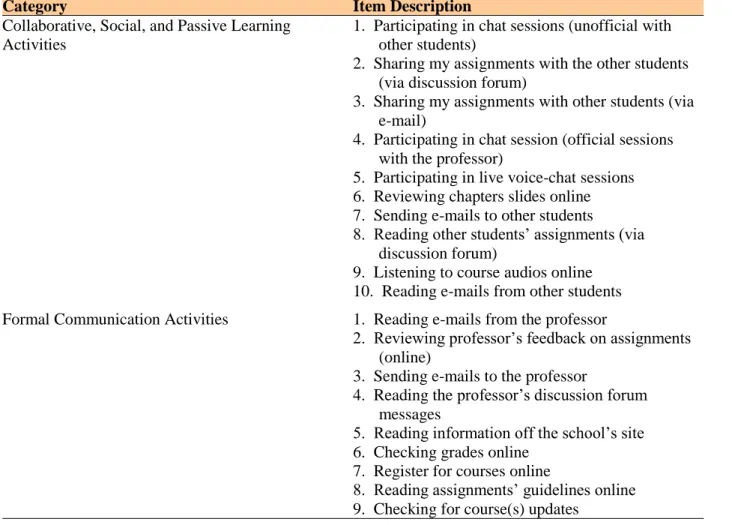
In e-learning systems, activities are completed by users as a means to assess the success of the user’s outcomes (Lam, 2004). In Levy (2008), critical value factors (CVFs) were used to identify what e-learning activities offer the most value to learners within an online learning system. Levy (2008) defined CVFs as, “the factors that educational institutions should pay attention to in order to increase the learners’ perceived value, which in turn may help reduce dropout in online learner courses” (p. 1664). Levy (2008) further categorized the findings by grouping them into five CVFs: (a) Collaborative, Social, and Passive Learning Activities; (b) Formal Communication Activities; (c) Formal Learning Activities; (d) Logistic Activities; and (e) Printing Activities. Levy (2008) concluded that e-learning activities within the first three categories (a, b, & c) have the highest learners’ perceived value within e-learning systems, therefore, categories (d) and (e) were not included in this study. Table 1 depicts categories (a), (b), and (c) along with the e-learning activities used within the Levy (2008) study.
Table 1. Adapted From List of the CVFs on Online Learning Activities (Levy, 2008)
Category Item Description
Collaborative, Social, and Passive Learning Activities
1. Participating in chat sessions (unofficial with other students)
2. Sharing my assignments with the other students (via discussion forum)
3. Sharing my assignments with other students (via e-mail)
4. Participating in chat session (official sessions with the professor)
5. Participating in live voice-chat sessions 6. Reviewing chapters slides online 7. Sending e-mails to other students
8. Reading other students’ assignments (via discussion forum)
9. Listening to course audios online 10. Reading e-mails from other students Formal Communication Activities 1. Reading e-mails from the professor
2. Reviewing professor’s feedback on assignments (online)
3. Sending e-mails to the professor
4. Reading the professor’s discussion forum messages
5. Reading information off the school’s site 6. Checking grades online
7. Register for courses online
44
Table 1. Adapted From List of the CVFs on Online Learning Activities (Levy, 2008) (continued)
Category Item Description
Formal Learning Activities 1. Replying to students’ discussion forum messages 2. Posting new discussion forum messages
3. Reading other student’s discussion forum messages
4. Submitting course(s)’ assignments online 5. Reviewing other students’ personal Websites 6. Developing personal Website, profile, or blog 7. Replying to professor’s discussion forum
messages
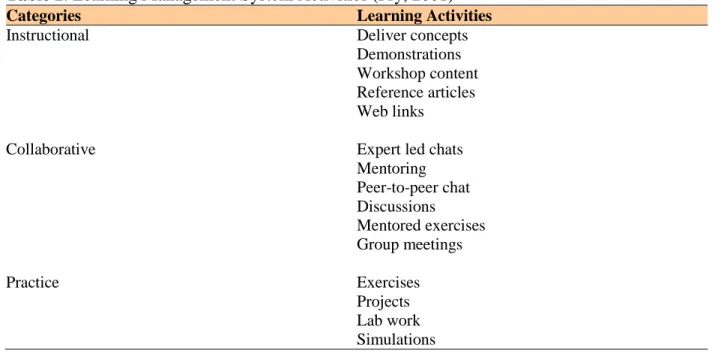
Categories (a) and (b) have been traditionally classified as formative assessments. Sadler (1989) described the purpose of formative assessments as a way to identify the gap between current understanding and the desired goal by providing feedback, dialogue, and non-assessed activities that can be developed into learning. Category (c) has been traditionally classified as summative assessments. Rovai (2000) described summative assessments as high-stakes assessments used for promotion, placement, certification, and accountability in learning environments. As depicted in Table 2, e-learning in an organizational context has grouped learning activities into similar categories’ such as instructional, collaborative, practice, and assessment (Fry, 2001).
Table 2. Learning Management System Activities (Fry, 2001)
Categories Learning Activities
Instructional Deliver concepts Demonstrations Workshop content Reference articles Web links
Collaborative Expert led chats Mentoring Peer-to-peer chat Discussions Mentored exercises Group meetings
45
Table 2. Learning Management System Activities (Fry, 2001) (continued)
Categories Learning Activities
Assessment Performance testing Proficiency testing Certification testing Customized assessments
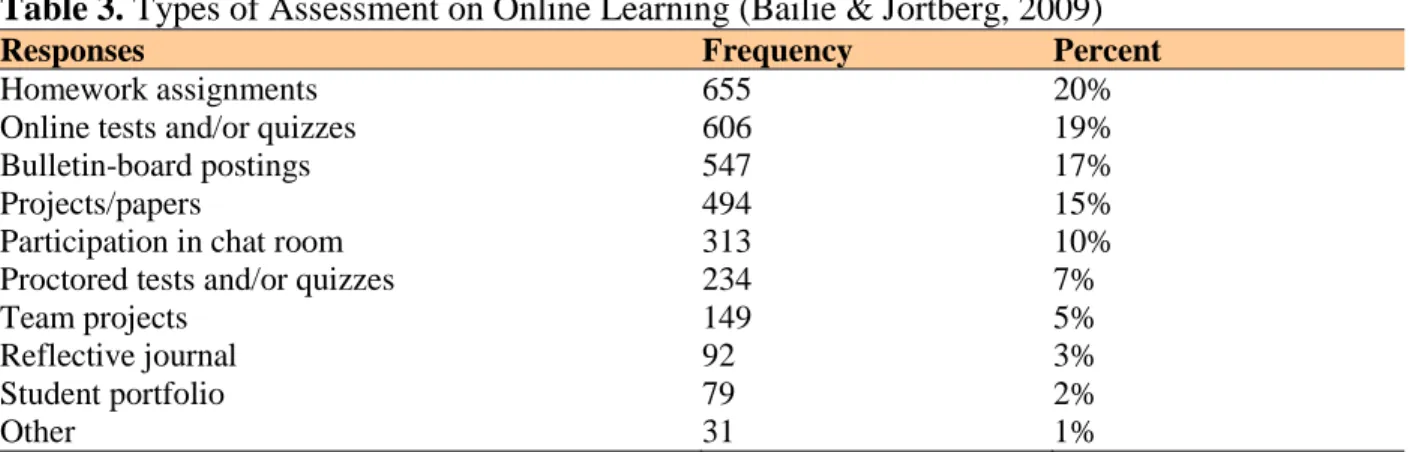
In additional to Levy (2008)’s list of valuable learning activities, studies have identified exams, quizzes, and course projects as critical summative assessments (Bailie & Jortberg, 2009). Bailie and Jortberg (2009) compiled a list of 10 broad categories of e-learning assessments from 3,200 responses sorted by frequency of use depicted in Table 3.
Table 3. Types of Assessment on Online Learning (Bailie & Jortberg, 2009)
Responses Frequency Percent
Homework assignments 655 20% Online tests and/or quizzes 606 19% Bulletin-board postings 547 17%
Projects/papers 494 15%
Participation in chat room 313 10% Proctored tests and/or quizzes 234 7%
Team projects 149 5%
Reflective journal 92 3% Student portfolio 79 2%
Other 31 1%
E-assessments have been defined by the Joint Information Systems Committee (JISC) (2006) as, “the end-to-end electronic assessment processes where [Information & Communications Technology] ICT is used for the presentation of assessment activity and the recording of responses” (p. 43). Bailie and Jortberg (2009) stated that “proving identity in every situation that a student performs is not realistic, practical or cost effective” (p. 199). For the purpose of this study, items from Tables 1, 2, and 3 adapted from prior studies that meet the JISC (2006) definition of assessments that are either formative or summative, known collectively as e-learning activities, were included in the initial survey instrument.
A risk to e-learning systems is when users deliberately reveal their authentication details to allow another user to impersonate them (Apampa, Wills, & Argles, 2010). Impersonation is considered the intentional collaboration between users with the intent to commit a fraudulent behavior by the misrepresentation of identity potentially undermining the value of the system (Apampa et al., 2010; Gathuri, Luvanda, & Kamundi, 2014).
46
username/password or personal identification number (PIN), a token, or a single biometric. Passwords can be easily distributed so this authentication method is often considered inadequate to protect critical e-learning activities from impersonation fraud (Apampa et al., 2010). Biometrics is defined as the identification of an individual based upon the uniqueness of physiological and behavioral characteristics, which is a stronger authentication than simply using passwords (Gao, 2012). Biometric authentication may only deter impersonation because an imposter can take over the activity once the biometric is matched (Apampa at el., 2010; Levy & Ramim, 2007; Song, Lee, & Nam, 2013). Due to the ease of use and high user acceptance, single-factor authentication such as username/password, a token, or a biometric is most commonly used to authenticate users within e-learning systems (Jalal & Zeb, 2008).
To improve authentication strength, two single-factor authentications can be combined into a two-factor authentication (Gao, 2012; Marnell & Levy, 2014). A two-factor authentication approach is the use of live-proctor authentication along with username/password or biometric authentication. Live-proctor authentication is the observation of remote e-learners via a Web-cam and a live proctor over the Internet, irrespective of the location (Kitahara, Westfall, & Mankelwicz, 2011; Hylton, Levy, & Dringus, 2016). Multi-factor authentication, combining three factors, creates a very strong authentication and improves reliability against impersonation fraud (O’Gorman, 2003; Ross, 2007; Ross, Nandakumar, & Jain, 2006). The problem this study addressed is that identity and authentication controls do not reliably secure the diverse activities in Web-based systems against user impersonation fraud (Apampa et al., 2010; Prince, Fulton, & Garsombke, 2009). Therefore, the research questions this study focused on are organized into 4 sets shown in Tables 4, 5, 6, and 7.
Table 4. Research Questions on High Potential for Threats of Impersonation
Set 1 High Potential for Threats of Impersonation for E-learning Activities
RQ1a: What e-learning activities are perceived by users to have a high potential for threats of impersonation?
RQ1b: What e-learning activities users perceived that their peers will identify to have a high potential for threats of impersonation?
47
Table 5. Research Questions on Suitable Level of Authentication Strength
Set 2 Suitable Level of Authentication Strength for Assessed E-Learning Activities
RQ2a: What levels of authentication strength are perceived by users to be most suitable against the threats of impersonation for these assessed e-learning activities?
RQ2b: What levels of authentication strength are perceived by users that their peers will identify to be most suitable against the threats of impersonation for these assessed e-learning activities? RQ2c: How do the levels of authentication strength perceived by users to be most suitable
against the threats of impersonation for these assessed e-learning activities differ than what is perceived by users that their peers will identify?
Table 6. Research Questions on Significant Components for Assessed E-Learning Activities
Set 3 Significant Components for Assessed E-learning Activities
RQ3a: What are the significant components of the levels of authentication strength perceived by users to be most suitable against the threats of impersonation for these assessed e-learning activities?
RQ3b: What are the significant components of the levels of authentication strength perceived by users that their peers will identify to be most suitable against the threats of impersonation for these assessed e-learning activities?
RQ3c: What are the differences between the significant components of the levels of authentication strength perceived by users to be most suitable against the threats of impersonation for these assessed e-learning activities versus than what is perceived by users that their peers will identify?
Table 7. Research Questions on Demographic Variables
Set 4 Significant Differences of Demographic Variables
RQ4a: Are there significant differences of perception of high potential for threats of impersonation based on gender?
RQ4b: Are there significant differences of perception of high potential for threats of impersonation based on age?
RQ4c: Are there significant differences of perception of high potential for threats of impersonation based on e-learning experience?
Methodology
48
feedback from an expert panel to adjust the instrument to improve validity (Phase 2). Table 8 lists the 18 e-learning activities to be assessed in this study.
Table 8. Assessed E-Learning Activities
E-Learning Activities
1. Develop a personal Website, profile, or blog 2. Participate in text-chat sessions with the professor 3. Participate in text-chat sessions with other students 4. Participate in live voice-chat sessions with the professor 5. Participate in live voice-chat sessions with other students 6. Post a new discussion forum message with the professor 7. Post a new discussion forum message with other students 8. Reply to discussion forum messages with the professor 9. Reply to discussion forum messages with other students 10. Send e-mails to the professor
11. Send e-mails to other students
12. Share assignments with other students (via discussion forum) 13. Share assignments with the other students (via e-mail) 14. Submit assignments online
15. Submit exams online 16. Submit quizzes online
17.Submit ungraded practice quizzes online 18. Submit projects online
The survey contained three sections (Section A, B, & C). To answer RQ1a, RQ1b, and RQ1c, Section A asked respondents to rate the following for the e-learning activities listed in Table 8:
I think this e-learning activity has a high potential for impersonation fraud by users, and I think my peers will identify that this e-learning activity to have a high potential for
impersonation by users.
Section A used a 7-point Likert scale ranging between the positive and negative extremes (1) ‘Strongly Agree’, (2) ‘Agree’, (3) ‘Somewhat Agree’, (4) ‘Neither Agree or Disagree’, (5) ‘Somewhat Disagree’, (6) ‘Disagree’, to (7) ‘Strongly Disagree’.
To answer RQ2a, RQ2b, and RQ2c, Section B asked respondents to rate the following for the e-learning activities listed in Table 8:
I think the selected Authentication Strength is suitable for the e-learning activity to reduce impersonation fraud, and
I think my peers will identify the selected Authentication Strength as suitable for the e-learning activity to reduce impersonation fraud.
49
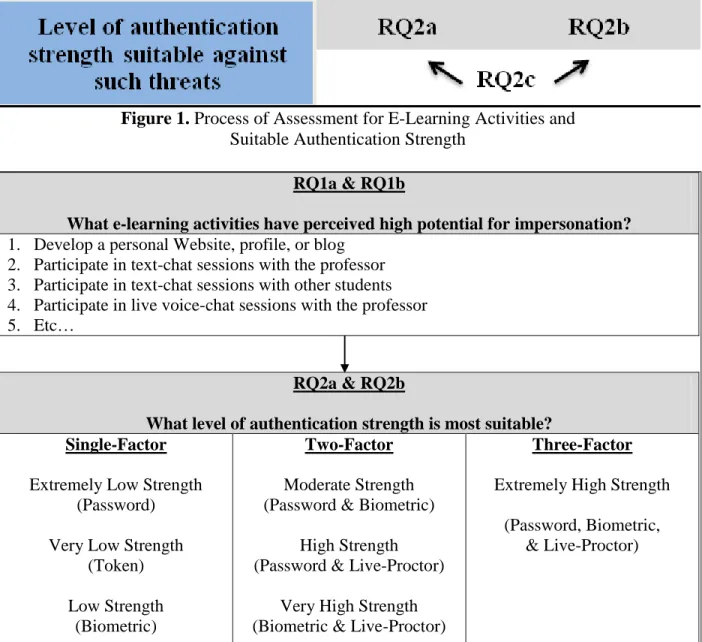
Figures 1 and 2 depict how RQ1a and RQ1b as well as RQ2a and RQ2b assessed e-learning activities for high potential for impersonation and suitable authentication strength.
Figure 1. Process of Assessment for E-Learning Activities and Suitable Authentication Strength
Figure 2. Research Factorial Design for Assessment of E-learning Activities and Suitable Authentication Strength (RQ1s & RQ2s)
RQ1a & RQ1b
What e-learning activities have perceived high potential for impersonation? 1. Develop a personal Website, profile, or blog
2. Participate in text-chat sessions with the professor 3. Participate in text-chat sessions with other students 4. Participate in live voice-chat sessions with the professor
5. Etc…
RQ2a & RQ2b
What level of authentication strength is most suitable? Single-Factor
Extremely Low Strength (Password)
Very Low Strength (Token)
Low Strength (Biometric)
Two-Factor
Moderate Strength (Password & Biometric)
High Strength (Password & Live-Proctor)
Very High Strength (Biometric & Live-Proctor)
Three-Factor
Extremely High Strength
50
The same e-learning activities that were assessed for high potential of impersonation were used in RQ2a and RQ2b, respectively. RQ2a and RQ2b identified what levels of authentication strength to be most suitable for assessed e-learning activities. Section C collected demographic data on gender, age, and e-learning experience, while it was used to assess for RQ4a, RQ4b, and RQ4c. The finalized survey instrument was used to collect quantitative data for analyses (Phase 3). The link to the Web-based survey was sent to all e-learners at a single university within the northeastern United States (US). A pre-analysis data screening was conducted to detect abnormalities with the data collected, which resulted in 1,070 cases for final analysis.
The ordinal Likert scale data is described as categorical. However, Carifio and Perla (2007) as well as Norman (2010) argued that assigning an equal distance between ordinal categories creates a quantitative representation of the responses that is more interval than ordinal. Thus, response means and standard deviations can be analyzed as interval quantitative data. The practical use of parametric statistical analysis such as paired sample t-test on ordinal data is demonstrated in a significant number of studies where the assigned distance between each Likert value is identical and, therefore, can be analyzed as interval quantitative data (Norman, 2010). Since the value of each item represents likeliness of the perception and given the direction of the responses from Strongly Agree to Strongly Disagree, Velleman and Wilkinson (1993) stated that Likert scale data does not necessarily underperform in analyses intended for continuous data with respects to reliability analysis such as Cronbach’s Alpha. Given these methodological limitations acknowledged, the parametric statistical analyses were performed for this study.
To answer RQ1a and RQ1b the useful cases were analyzed using descriptive statistics to calculate the means and standard deviations for e-learning activities. The means were sorted from lowest to highest perceived potential for threat of impersonation. The results were separated into two groups: (a) agree – all e-learning activities that have a mean of < 3.0; and (b) disagree – all e-learning activities that have a mean of ≥ 3.0.
Figure 3 depicts the two groups, which shows a clear distinction between the e-learning activities with a perceived high potential for impersonation as opposed to those that do not. The left pie graph identifies four e-learning activities (22%) for RQ1a that had a mean of < 3.0 indicating they have a high potential for impersonation. They were: ‘Submit quizzes online’, ‘Submit exams online’, ‘Submit assignments online’, and ‘Submit projects online’, which are considered high-stakes summative e-assessments. The remaining 14 e-learning activities (78%) for RQ1a had a mean of ≥ 3.0 indicating they do not have a high potential for impersonation.
51
Figure 3. Grouped Means for RQ1a and RQ1b (N=1,070)
52
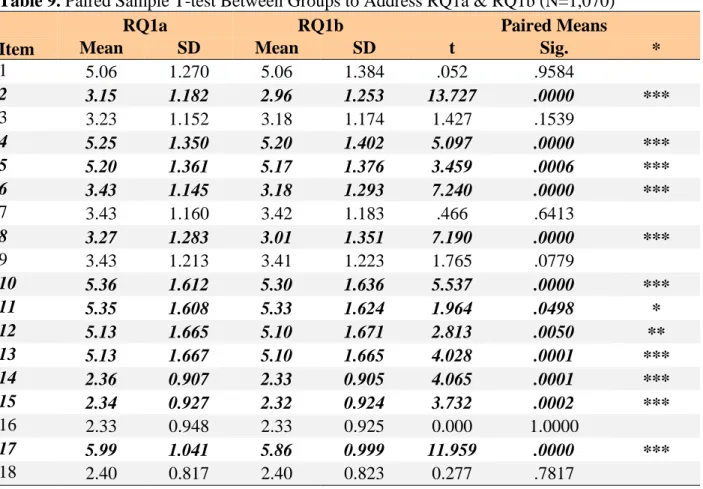
Table 9. Paired Sample T-testBetween Groups to Address RQ1a & RQ1b (N=1,070)
RQ1a RQ1b Paired Means
Item Mean SD Mean SD t Sig. *
1 5.06 1.270 5.06 1.384 .052 .9584
2 3.15 1.182 2.96 1.253 13.727 .0000 ***
3 3.23 1.152 3.18 1.174 1.427 .1539
4 5.25 1.350 5.20 1.402 5.097 .0000 ***
5 5.20 1.361 5.17 1.376 3.459 .0006 ***
6 3.43 1.145 3.18 1.293 7.240 .0000 ***
7 3.43 1.160 3.42 1.183 .466 .6413
8 3.27 1.283 3.01 1.351 7.190 .0000 ***
9 3.43 1.213 3.41 1.223 1.765 .0779
10 5.36 1.612 5.30 1.636 5.537 .0000 ***
11 5.35 1.608 5.33 1.624 1.964 .0498 *
12 5.13 1.665 5.10 1.671 2.813 .0050 **
13 5.13 1.667 5.10 1.665 4.028 .0001 ***
14 2.36 0.907 2.33 0.905 4.065 .0001 ***
15 2.34 0.927 2.32 0.924 3.732 .0002 ***
16 2.33 0.948 2.33 0.925 0.000 1.0000
17 5.99 1.041 5.86 0.999 11.959 .0000 ***
18 2.40 0.817 2.40 0.823 0.277 .7817
*** p < 0.001, ** p < 0.01, * p < 0.05
In each instance the RQ1b mean response for the threat of impersonation was higher than the RQ1a response mean. Although there were significant differences in the means for more than half the e-learning activities being measured, the four activities identified in RQ1a and RQ1b with the highest perceived threat of impersonation were not significant.
53
Level of authentication strength perceived by users that their peers will identify as most suitable
for assessed e-learning activities Level of authentication strength
perceived by users most suitable for assessed e-learning activities
Figure 4. Grouped Means for RQ2a and RQ2b (N=1,070)
54
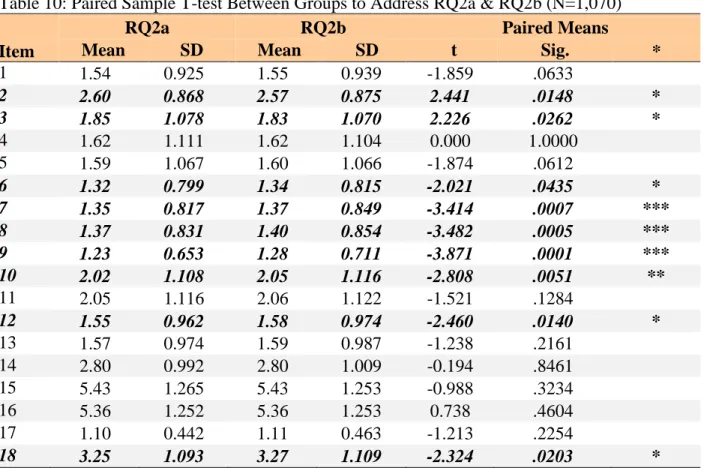
Table 10: Paired Sample T-testBetween Groups to Address RQ2a & RQ2b (N=1,070)
RQ2a RQ2b Paired Means
Item Mean SD Mean SD t Sig. *
1 1.54 0.925 1.55 0.939 -1.859 .0633
2 2.60 0.868 2.57 0.875 2.441 .0148 *
3 1.85 1.078 1.83 1.070 2.226 .0262 *
4 1.62 1.111 1.62 1.104 0.000 1.0000
5 1.59 1.067 1.60 1.066 -1.874 .0612
6 1.32 0.799 1.34 0.815 -2.021 .0435 *
7 1.35 0.817 1.37 0.849 -3.414 .0007 ***
8 1.37 0.831 1.40 0.854 -3.482 .0005 ***
9 1.23 0.653 1.28 0.711 -3.871 .0001 ***
10 2.02 1.108 2.05 1.116 -2.808 .0051 **
11 2.05 1.116 2.06 1.122 -1.521 .1284
12 1.55 0.962 1.58 0.974 -2.460 .0140 *
13 1.57 0.974 1.59 0.987 -1.238 .2161
14 2.80 0.992 2.80 1.009 -0.194 .8461
15 5.43 1.265 5.43 1.253 -0.988 .3234
16 5.36 1.252 5.36 1.253 0.738 .4604
17 1.10 0.442 1.11 0.463 -1.213 .2254
18 3.25 1.093 3.27 1.109 -2.324 .0203 *
*** p < 0.001, ** p < 0.01, * p < 0.05
The only two activities that were significant based upon the responses from RQ2a and RQ2b were item 2 ‘Participate in text-chat sessions with the professor’ and item 18 ‘Submit projects online’. Item 2 had indicated a stronger authentication in RQ2a, whereas, item 18 had indicated a stronger authentication in the RQ2b group. For the other three items identified in RQ2a and RQ2b there was no significant differences indicating that users believed their peers would perceive the same level of authentication strength is necessary for those summative e-assessments.
55
terms of authentication. Following this conclusion and based on the low loadings values for the items, it was determined that removing the items from the analysis provided the best loading of items retained. After the items were removed, eight components were identified. A Cronbach’s Alpha analysis on all components was completed to review reliability of the retained components with more than one item. Four components with a Cronbach’s Alpha of 0.70 or higher indicating a very high reliability were described by categories used from prior studies as Collaborative: Voice Chat; Practice: Share Assignments; Assessment: Quizzes and Exams; Collaborative: Sending E-mail (Fry, 2001, Levy, 2008). Three components that had a moderate Cronbach’s Alpha of 0.50 ≥ or < 0.70 were described as Collaborative: Text-Chat,Collaborative: Discussion Post, and Collaborative: Discussion Reply. Yoon, Guimaraes, and O’Neal (1995) stated that in
exploratory research values 0.50 and above were acceptable. One component set containing item one and item 17 had an extremely low Cronbach’s Alpha of < 0.50 and was removed. The removed component often represents ungraded or informal activities such as practice quizzes or setting up online profile and was identified as highly unlikely to be susceptible to impersonation. Upon completion of the two PCAs, 14 of the 18 items with a factor loading of at least 0.50 were retained in seven components, accounting for more than 80% of the variability. Table 11 lists the items along with their category and activity description (Fry, 2001; Levy, 2008).
Table 11. List of Reliable E-learning Activities Grouped by Category Item Category E-learning Activity
2 Collaborative:
Text-Chat
Participate in text-chat sessions with the professor
3 Participate in text-chat sessions with other students
4 Collaborative: Voice-Chat
Participate in live voice-chat sessions with the professor
5 Participate in live voice-chat sessions with other students
6 Collaborative:
Discussion Reply
Post in new discussion forum message with to the professor
7 Post in new discussion forum message with other students
8 Collaborative:
Discussion Post
Reply to discussion forum messages to the professor
9 Reply to discussion forum messages with other students
10 Collaborative: Sending E-mail
Send e-mails to other students
11 Send e-mails to the professor
12 Practice:
Share Assignments
Share assignments with other students (via discussion forum)
13 Share assignments with other students (via e-mail)
15 Assessment:
Quizzes & Exams
Submit exams online
16 Submit quizzes online
56
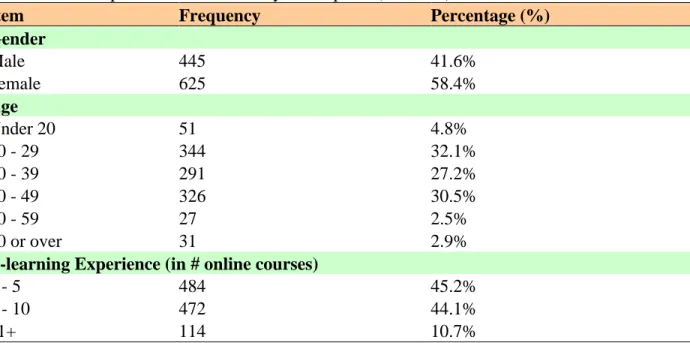
level of authentication most suitable for the 14 retained activities. Demographic data collected on gender, age, and e-learning experience. Table 12 shows the demographic distribution of the results of the 1,070 study participants. The rate of responses from females was slightly higher than males at: 58% females versus 42% males. A similar distribution of gender frequencies has been in a number of studies on e-learning and, therefore, is a representative of the population of e-learners (Chua & Montalbo, 2014; Ong & Lai, 2006; Suri & Sharma, 2013). The age of most of the respondents were between 20 and 49 accounting for approximately 90% of the sample. The population mean for e-learners is an average of 34, therefore, the sample mean age was also a representation of the population (Ong & Lai, 2006). Finally, over half of the respondents had completed at least six to 10 courses in e-learning. The population mean of e-learners was 10 completed courses, therefore, the sample mean e-learning experience was also a representation of the population (Ong & Lai, 2006).
Table 12. Descriptive Statistics of Study Participants (N=1,070)
Item Frequency Percentage (%)
Gender
Male 445 41.6%
Female 625 58.4%
Age
Under 20 51 4.8%
20 - 29 344 32.1%
30 - 39 291 27.2%
40 - 49 326 30.5%
50 - 59 27 2.5%
60 or over 31 2.9%
E-learning Experience (in # online courses)
1 - 5 484 45.2%
6 - 10 472 44.1%
11+ 114 10.7%
Demographic responses were analyzed using the mean responses for the 18 e-learning activities to see if there were significant differences between the perceptions of high potential for threats of impersonation resulting for RQ1a and RQ1b using an analysis of covariance (ANCOVA). With gender as the control variable, two items showed a significantly difference in means; item eight and item 17. With age as the control variable, only item nine showed a significantly difference in means. Finally, with e-learning experience as the control, no items showed any significant differences. As seen in the results, only a few items showed a significant difference, therefore, a large majority of responses showed no significant differences on any of the demographic variable for the items assessed between RQ1a and RQ1b.
Discussion and Conclusions
57
et al., 2010; Jalal & Zeb, 2008). In response, this research explored the need to identify a suitable authentication level specific to an e-learning activity in order to deter IS misuse. Based on descriptive statistics, it was determined that there were a specific set of e-learning activities perceived by users and that users perceived that their peers would identify had a high potential for impersonation. Additionally, the same set of items were identified as needing moderate to high levels of authentication strength in order to reduce the threat of impersonation. A paired sample t-test for means showed that overall there was no significant difference in how the users responded in each group responses (RQa vs. RQb). Significant components were identified and categorized in order to provide a clear list of e-learning activities that are similar in terms of assessment types. The results have made the case that e-learning systems need to authenticate at e-learning activity level for summative e-assessments using suitable authentication strength to ensure the identity of the remote user. The use of stronger multi-factor authentication that involves biometric and/or live-proctor authentication will reduce the opportunity for deliberate impersonation for selected e-learning activities. The results of this study contributes notably to the body of knowledge, and have several implications within the field of IS as well as for future research in the domain of authentication and e-learning. Most relevant is that users do perceive the need for different levels of authentication suitable to the activity being completed, as opposed to a ‘one size fits all’ systems approach. This is due to the perceived high potential of threat of impersonation on selected summative assessments such as exams and quizzes. Although 18 e-learning activities were assessed, many were viewed as having a low potential for impersonation due in part to the formative nature of the activity. Only four activities categorized as summative were consistently identified within an e-learning system as having a high potential for impersonation. The findings in this study are relevant to e-learning providers in both academic and non-academic environments where the possibility of IS misuse due to deliberate impersonation can undermine the value of the system (Apampa et al., 2010). E-learning providers may find it important to incorporate stronger authentication such as biometric and/or live-proctor authentication for summative activities in order to reduce the threat of impersonation fraud.
References
Alwi, N., & Fan, I. (2010). E-learning and information system management. International Journal of Digital Society, 1(2), 148-156.
Apampa, K. M., Wills, G., & Argles, D. (2010). User security issues in summative e-assessment security. International Journal of Digital Society, 1(2), 135-147.
Bailie, J. L., & Jortberg, M. A. (2009). Online learner authentication: Verifying the identity of online user’s. Journal of Online Learning and Teaching, 5(2), 197-207.
Carifio, J., & Perla, R. J. (2007). Ten common misunderstandings, misconceptions, persistent myths and urban legends about Likert scales and Likert response formats and their antidotes. Journal of Social Sciences, 3(3), 106-116.
Chua, C., & Montalbo, J. (2014). Assessing students’ satisfaction on the use of virtual learning environment (VLE): An input to a campus-wide e-learning design and implementation.
58
Fry, K. (2001). E-learning markets and providers: Some issues and prospects. Education & Training, 43(4/5), 233-239.
Furnell, S. (2007). An assessment of Website password practices. Computers & Security, 26 (7-8), 445-451.
Gao, Q. (2012). Using IP addresses as assisting tools to identify collusions. International Journal of Business, Humanities and Technology, 2(1), 70-75.
Gathuri, J. W., Luvanda, A., & Kamundi, S. M. M. S. (2014). Impersonation challenges associated with e-assessment of university students. Journal of Information Engineering and Applications,4(7), 60-68.
Helkala, K., & Snekkenes, E. (2009). Formalizing the ranking of authentication products.
Information Management & Computer Security, 17(1), 30-43.
Hylton, K., Levy, Y., & Dringus, L. (2016). Utilizing Webcam-based proctoring to deter misconduct in online exams. Computer & Education, 92-93, 53-63. doi:10.1016/j.compedu.2015.10.002
Jalal, A., & Zeb, M. A. (2008). Security enhancement for e-learning portal. International Journal of Computer Science and Network Security, 8(3), 41-45.
Joint Information Systems Committee. (2006). E-assessment glossary (extended). Retrieved from
http://www.jisc.ac.uk/uploaded_documents/eAssess-Glossary-Extended-v1-01.pdf
Kasraie, N., & Kasraie, E. (2010). Economies of elearning in the 21st century. Contemporary Issues in Education Research, 3(10), 57-62.
Kitahara, R., Westfall, F., & Mankelwicz, J. (2011). New, multi-faceted hybrid approaches to ensuring academic integrity. Journal of Academic and Business Ethics, 3(1), 1-12.
Lam, W. (2004). Encouraging online participation. Journal of Information Systems Education, 15(4), 345-349.
Levy, Y. (2008). An empirical development of critical value factors (CVF) of online learning activities: An application of activity theory and cognitive value theory. Computers & Education, 51(4), 1664-1675.
Levy, Y., & Ramim, M. (2007). A theoretical approach for biometrics authentication of e-exams.
Chais Conference on Instructional Technologies Research, The Open University of Israel, Raanana, Israel.
Marnell, J. W., & Levy, Y. (2014). Towards a model of factors affecting resistance to using multi-method authentication systems in higher-education environments. Information Security Education Journal, 1(1), 36-44.
Norman, G. (2010). Likert scales, levels of measurement and the “laws” of statistics. Advances in health sciences education, 15(5), 625-632.
O’Gorman, L. (2003). Comparing passwords, tokens, and biometrics for user authentication.
59
Ong, C. S., & Lai, J. Y. (2006). Gender differences in perceptions and relationships among dominants of e-learning acceptance. Computers in Human Behavior, 22(5), 816-829.
Penteado, B. E., & Marana, A. N. (2009). A video-based biometric authentication for e-learning web applications. Enterprise Information Systems, (24)4, 770-779.
Peres, P., Lima, L., & Lima, V. (2014). B-learning quality: dimensions, criteria and pedagogical approach. European Journal of Open, Distance and e-Learning, 17(1), 56-75.
Prince, D. J., Fulton, R. A., & Garsombke, T. W. (2009). Comparisons of proctored versus non-proctored testing strategies in graduate distance education curriculum. Journal of College Teaching and Learning, 6(7), 51-62.
Ross, A. A. (2007). An introduction to multibiometrics. Proceedings of the 15th European Signal Processing Conference (EUSIPCO), pp. 20-24, Poznan, Poland.
Ross, A. A., Nandakumar, K., & Jain, A. K. (2006). Handbook of multibiometrics. New York, NY: Springer.
Rovai, A. P. (2000). Online and traditional assessments: What is the difference? The Internet and Higher Education, 3(3), 141-151.
Sadler, R. (1989). Formative assessment and the design of instructional systems. Instructional Science,18(2), 119-144.
Song, K. S., Lee, S. M., & Nam, S. (2013). Cognitive biometrics application for e-learning security enhancement. International Journal of Bio-Science and Bio-Technology, 5(3), 143-152.
Suri, G., & Sharma, S. (2013). The impact of gender on attitude towards computer technology and e-learning: An exploratory study of Punjab University, India. International Journal of Engineering Research, 2(2), 132-136.
Velleman, P. F., & Wilkinson, L. (1993). Nominal, ordinal, interval, and ratio typologies are misleading. The American Statistician, 47(1), 65-72.
Yoon, Y., Guimaraes, T., & O’Neal, Q. (1995). Exploring the factors associated with expert systems success. MIS Quarterly, 19(1), 83-106.
Authors' Biographies
60
independent Process Consultant then as an IT Director whose primary focus was to develop and deploy system solutions for organizations to streamline their business processes.
Dr. Yair Levy is a Professor of Information Systems and Cybersecurity at the College of Engineering and Computing, at Nova Southeastern University, the Director of the Center for e-Learning Security Research (CeLSR), and chair of the Information Security Faculty Group at the college along with serving as the director of the Ph.D. program in Information Assurance. He joined the university in 2003, was promoted to an Associate Professor in 2007, and to full Professor in 2012. During the mid to late 1990s, Dr. Levy assisted NASA to develop e-learning platforms as well as manage Internet and Web infrastructures. He earned his undergraduate degree in Aerospace Engineering from the Technion (Israel Institute of Technology). He received his Masters of Business Administration (MBA) with Management Information Systems (MIS) concentration and Ph.D. in MIS from Florida International University. He heads the Levy CyLab, which conducts innovative research from the human-centric lens of four key research areas Cybersecurity, User-authentication, Privacy, and Skills (CUPS), as well as their interconnections. He authored over 60 articles, three book chapters, one book, and his publications have been cited for over 1,400 times by other scholarly research. Dr. Levy has been an active member of the US Secret Service (USSS)'s - Miami Electronic Crimes Task Force (MECTF) and The South Florida Cybercrime Working Group (SFCWG). He was trained by the Federal Bureau of Investigation (FBI) on various topics, and actively serves as a member of the FBI/InfraGard, and consults the FBI/Cyber Task Force (CTF). Dr. Levy serves on the national Joint Task Force of Cybersecurity Education, as well as other national initiatives related to cybersecurity workforce, education, and research. He is also a frequent invited keynote speaker at national and international meetings, as well as regular media interviews as a Subject Matter Expert (SME) on cybersecurity topics. Find out more about Dr. Levy and his research lab via:
http://cec.nova.edu/~levyy/
Dr. James Parrish is an Associate Professor of Information Systems and the Chair of the Department of Information Systems and Cybersecurity at the College of Engineering and Computing at Nova Southeastern University. He is also the Vice President of Student Chapters for the Association of Information Systems and serves on the board of directors for multiple organizations in industry and academia. His research interests include information systems security, knowledge management and design science.
Dr. Theon Danet is the Chief Enterprise Architect in the Information Technology (IT) Directorate with the Defense Contract Management Agency (DCMA) at their headquarters in Ft. Lee, VA. She is responsible for aligning DCMA’s IT investments with the Agency Mission and Vision. She leads and directs a team with diverse functional and technical disciplines to include information technology architects, data analytics specialists, data security specialists and business intelligence analysts.
Past Federal Government assignments include:
61