IMPROVING THE TRANSITION PROCESS FROM PEDIATRIC TO ADULT HIV CARE IN NORTH CAROLINA: A PATIENT- AND FAMILY-CENTERED PERSPECTIVE SYSTEM DYNAMICS
MODEL
Sue Lynn Ledford
A dissertation submitted to the faculty at the University of North Carolina at Chapel Hill in partial fulfillment of the requirements for the degree of Doctor of Public Health in the Department of Health
Policy and Management in the Gillings School of Global Public Health.
Chapel Hill 2015
Approved by:
iii ABSTRACT
Sue Lynn Ledford: Improving the Transition Process from Pediatric to Adult HIV Care in North Carolina: A Patient and Family-Centered Perspective System Dynamics Model
(Under the direction of Andrea K. Biddle)
When the adolescent’s journey to adulthood is compounded by a complex chronic disease such as HIV the young person and their caregivers are oftentimes overwhelmed by the multifaceted array of issues. HIV-infected youth must learn to navigate a complex health regime and the social stigma that is associated with HIV. Studies show that youth may lack skills and confidence to adapt to the impersonal nature of many adult care institutions, and adherence to care regimes and medications is frequently a challenge. The parenting of HIV-infected youth is also a challenge and caregivers often lack the support they need. Youth need transitional care that is supportive and empowers self-efficacy.
This study focuses on transition of care from the perspective of HIV-infected young adults and the parents/caregivers of HIV-infected adolescents with a goal of formulating a patient-family-centered set of recommendations. The study assesses the common barriers and predictors of successful transition of care from the perspective of those most affected. The three-phase qualitative research design assessed effective transition strategies. Phase 1 consisted of key informant interviews (KII) with HIV-infected young adults and family members. Phase 2 prioritized key themes from the KIIs and correlated existing recommendations from the American Academy of Pediatrics (AAP) Committee on Pediatric AIDS (COPA) and the literature review findings to formulate a system dynamics causal loop diagram. Phase 3 involved a Stakeholder Action Planning (SAP) Session composed of: HIV-infected young adults 18-25 years of age, caregivers of HIV-infected adolescents, and healthcare providers to address “sticking points” identified in the transition process. Findings were then triangulated to propose key
iv
v
This dissertation is submitted in gratitude for God’s grace to navigate a challenging period of time. It is dedicated to my husband, Ronnie, for his unwavering love and support.
I acknowledge my parents, Herman and Wilma Murphy, for instilling into me the value of hard work and a love of people.
To my children and grandchildren, thanks for your patience and for understanding that my commitment to this task took time away from each of you.
To my siblings and the ever-expanding Murphy-Ledford family, thanks for your prayers and encouragement.
vi
ACKNOWLEDGEMENTS
Without the help of the following family, friends, colleagues, and faculty, this dissertation would not have been completed. I sincerely thank all of you.
• My husband, Ronnie Ledford. You are my life partner and best friend. Thank you for being my
research assistant, chief encourager, and prayer partner.
• My chair, Dr. Andrea K. Biddle, thank you for the encouragement, the hours of review, your
willingness to work with time sensitive deadlines, and your excellent editing skills.
• My dissertation committee: Kristen Hassmiller Lich, Asheley R. Skinner, Dorothy R. Cilenti,
Evelyn M. Foust. Thanks to each of you. Kristen, I also thank you for your support with the System Dynamics portion of this research.
• Cohort 8, I shall never forget each of you. What a blessing to know you and to have studied
alongside of each of you! Thanks for your generosity and support.
• The UNC DrPH faculty team, you have become my mentors and friends. Thank you.
• Thank you to the Wake County Public Health Division, and the entire Human Services Team.
Special thanks to Lechelle, Nicole, and the HIV Outreach and Clinical staff.
• My Key Informants, I will always remember that you were the backbone of my research effort.
vii
TABLE OF CONTENTS
LIST OF TABLES ... ix
LIST OF FIGURES ... x
LIST OF ABBREVIATIONS ... xi
CHAPTER 1: INTRODUCTION ... 1
A. Statement of the Issue: Transition in Care for HIV-infected Individuals ... 1
B. Background ... .3
C. Perspectives of Health Providers, HIV-infected Individuals, and Caregivers ... .5
D. Significance of Issue ... .8
E. Research Objective ... 8
CHAPTER 2: REVIEW OF THE LITERATURE ... 9
A. Methods and Results ... 9
B. American Academy of Pediatrics (AAP) Recommendations ... 11
C. Limitations of the Review Process ... 16
CHAPTER 3: RESEARCH DESIGN AND METHODOLOGY ... 18
A. Conceptual Framework ... 18
B. Specific Aims and Research Objective ... 19
C. Study Approach and Design: Design Overview ... 21
D. Data Analysis Process ... 28
E. IRB Considerations ... 31
CHAPTER 4: RESULTS ... …………32
A. Involvement and Contribution of Stakeholders ... 32
viii
C. Key Findings and Recommendations ... 33
D. Policy Implications and Plan for Change ... 62
APPENDIX 1: NVIVO CODED KEY THEMES ... 67
APPENDIX 2: CAUSAL LOOP CODING THEMES ... 68
APPENDIX 3: SYSTEM DYNAMICS MODEL CAUSAL LOOP DIAGRAM ... 78
APPENDIX 4: ACUITY RANKING FOR HIV CASE MANAGEMENT STAFFING ... 79
APPENDIX 5: STAKEHOLDER ACTION PLANNING SESSION ... 82
ix
LIST OF TABLES
Table 1: Nine Key Factors to Consider for Coordination of Care for HIV-infected Children ... 13
Table 2: Part II Literature Review Findings and Key System Barriers Identified for Children with Chronic Diseases ... 14
Table 3: Agenda for Stakeholder Action Planning Session ... 24
Table 4: Prioritization Exercise Form for Top Ten Factors of Successful Transition ... 25
Table 5: Summary of Recommendations for Successful Transition ... 34
x
LIST OF FIGURES
Figure 1: HIV Transition Social-Ecological Model ... 19
Figure 2:Transition Social-ecological Model with Individual and Family ... 33
Figure 3: Core Components of Healthy Adolescent Transition ... 37
xi
LIST OF ABBREVIATIONS AAP American Academy of Pediatrics
ACA Affordable Care Act
ACO Accountable Care Organizations ADAP AIDS Drug Assistance Program
AHRQ Agency for Healthcare Research and Quality AJPH American Journal of Public Health
AJPM American Journal of Preventive Medicine APHA American Public Health Association ART, ARV Antiretroviral Therapy
CDC Center for Disease Control and Prevention
CHAMP Collaborative HIV Prevention and Adolescent Mental Health Program
CLD Causal Loop Diagram
COPA Committee on Pediatric AIDS
EHR, PHR Electronic Health Record, Personal Health Record
HIPAA Health Insurance Portability and Accountability Act of 1996
HIV, BHIV, PHIV Human Immunodeficiency Virus, Behavioral (BHIV), Perinatal (PHIV) HRSA Health Resources Services Administration
IDU Injecting Drug Users IRB Institutional Review Board
JAID Journal of HIV/AIDS & Infectious Diseases
KI Key Informant
KII Key Informant Interviews MCO Managed Care Organization MSM Men Who Have Sex with Men
xii NCMJ North Carolina Medical Journal
NCPHA North Carolina Public Health Association PCMH Patient Centered Medical Home
SAP Stakeholder Action Planning SCD Sickle Cell Disease
SD System Dynamics
SEM Social-Ecological Model PI Principal Investigator
1
CHAPTER 1: INTRODUCTION A. Statement of Issue: Transition in Care for HIV-infected Adolescents
Transitioning HIV care and other health services (hereinafter referred to as "transition") is only one of many transitions that adolescents with human immunodeficiency virus (HIV) face. Adolescence is a time of tumultuous change even when there are no complex health concerns to address, but when the adolescent’s journey to adulthood is compounded by a complex chronic disease such as HIV the child and their caregivers are oftentimes overwhelmed by the multifaceted array of issues that must be addressed. This study assesses how best to facilitate a transition that is as free of barriers as possible and enables improved health and social outcomes for youth and young adults with HIV. The study was conducted from the perspective of HIV-infected young adults and the parents/caregivers of HIV-infected adolescents.
As the HIV-infected adolescent population emerges, there is a distinct need to facilitate a clear pathway and a well-defined process to prepare them, their families, healthcare providers, policymakers, and others involved in their care and well-being. Attention must be focused on developing a stronger understanding of their unique health and social support needs and the potential barriers that preclude their healthy transition into adult HIV care. In most ways these youth and emerging adults are no different than others at this challenging adolescent phase of life with the associated complexities. Transition
corresponds with adolescence, a phase that is typified by self-exploration and risk-taking behaviors such as sexual debut, short-term consecutive partners, and experimentation with alcohol and drugs.1-3
However, HIV-infected youths must learn to navigate a complex health regime and the social stigma that is associated with HIV to protect themselves and to avoid transmission of the disease to others.
2
The primary burden of service inefficiency is the diminished quality of life for HIV-infected children and their families. There is also the issue of HIV transmission associated with population health and the elevated local, state, and federal economic burden of lifelong healthcare. In 2010, the total lifetime direct medical cost of persons in the United States living with HIV was estimated to be $9.5-$15.7 billion.4
Like other healthcare expenses, these costs will continue to rise.5,6 The total for North Carolina1 is
estimated to be $631 million.6
Adolescence is commonly defined as a developmental phase between childhood (under 10 years) and adulthood (over 19 years) characterized by physical, psychological, and social changes at the
individual level. Within this timeframe, there is a wide range of developmental stages. Although 18 is the legal age of adulthood, adult behaviors are not necessarily fully adopted by then. The American Academy of Pediatrics (AAP) Committee on Pediatric AIDS (COPA) describes the instability and impulsive nature of adolescence as “a developmental stage characterized by immature concrete reasoning often manifested by denial of illness, a sense of invulnerability reflected by risk taking, and behaviors that are strongly influenced by peer norms. These characteristics all have potential to negatively affect the ability to adhere to complex medical regimens.”7
A Massachusetts study on transition framed the issues and the common factors for young people in simple terms. The youth, their caregivers, and their health providers are fearful of change because the process is complicated. There is no standardized process for transition, and no clear model; therefore, every institution has its own protocol. Additionally, youth lack the skills and confidence to adapt to confusing adult care institutions, and adherence to care regimes and medications is frequently a challenge. The parenting of HIV-infected youth is also a challenge. Most caregivers lack the support they need and there is often a dilemma of too much parenting or too little parental involvement. Youth need support as they assume control of their care.8
3
In June 2013, COPA released recommendations for transitional care of pediatric HIV patients which promise to improve guidance and standardization of HIV transition care for providers.7 COPA
offered tools for transitioning pediatric to adult care. The five important recommendations will be discussed later in this document.
B. Background
Nationally an estimated 22% of persons ages 13–24 living with diagnosed HIV infection were infected through hemophilia, blood transfusion, birth, or unknown transmission mode, or infected
perinatally.9 The majority of the HIV cases, however, are behaviorally transmitted via having unprotected
sex with someone who has HIV. 10 Gender and race also make a difference. Males are three times more
likely to be infected, and 77% of HIV diagnoses were attributed to male-to-male sexual contact whereas 13% were due to perinatal exposure. In young women, 56% were attributed to heterosexual contact and 34% to perinatal exposure.11 African Americans account for an estimated 44% of all new HIV infections
among adults and adolescents (ages 13 years or older) in 2010. Although African Americans represent only 12% of the US population, this ratio represents a population rate that is 8 times that of the white population.12 These national trends emphasize the need to address HIV in adolescents and young adults to
prevent further spread of HIV to this high risk population.
HIV in children and adolescents continues to present a unique set of challenges for HIV-infected children, their families, healthcare providers, and public health around the world as well as here in the United States. Seropositive HIV infection in the pediatric population necessitates a highly coordinated and specialized system of care to achieve the best client outcomes.7,13,14 Distinctive age-appropriate
4
age of 21-25 years of age for transition; one interviewee said, “There’s a lot of growing up goes on between 16 and 25.”
The Centers for Disease Control and Prevention (CDC) report that young populations account for 39% of all new HIV infections in the United States. For comparison's sake, persons ages 15–29
comprised 21% of the US population in 2011. The highest number of newly diagnosed infections was among the 20-24 years of age group with 6,237 new infections. The majority of these infections are believed to have been transmitted during the teen years. The CDC HIV in Youth report reveals an unsettling trend among youth in the United States. An estimated 8,294 young people ages 13-24 were diagnosed with HIV infection in 2009 in the 40 states with long-term HIV reporting. This age group represents approximately 20% of the persons diagnosed during that year. Seventy-eight percent of these diagnoses occurred in young people ages 20–24 years; young black men who have sex with men (MSM) have the highest incidence, accounting for 55% of new infections. 9,11
Because of improvements in antiretroviral therapy (ART), very few perinatally infected children are born in the US. Fortunately, children who are perinatally infected and children who are behaviorally infected now survive into adulthood and have the potential to live a full lifespan if properly treated with ART.15 HIV is considered by most to be a chronic health condition if under the proper care. 16 Since the
mid-1990s, the introduction of ART greatly extended the life expectancy of people living with HIV and has caused a dramatic drop in AIDS deaths.17
Children born with HIV in the 1990’s are now transitioning into adulthood. With the increase of HIV infection in the 15-24 age groups from behavioral infections, North Carolina can anticipate an ongoing need for adequate transitional care. In North Carolina, as of December 2012, there were 313 known pediatric cases (birth to 19 years of age) including 73 children birth-13 years of age and 240 children ages 14-19 years.18 If the older group (i.e., 20-25 years of age) is included, the number of
5
families, and their medical providers. This study explores from their point of view how to improve the transitional process.
In 2011, North Carolina’s newly diagnosed infections among adolescents and young adults varied according to gender and causative factors. Among males, the young MSM and injecting drug users (IDU) accounted for 79% of new HIV disease cases. Among the adult/adolescent females 92% of HIV cases were attributable to heterosexual contact, and 8% were from injecting drug use. Overall, 20% of all newly diagnosed HIV disease cases were among adolescent males, 13 to 24 years old.19
The combination of factors surrounding adolescence and young adulthood places these
individuals at high risk of contracting and transmitting HIV. Physical changes, impulsiveness, denial of illness, a sense of invulnerability, increased risk taking behaviors, behaviors that are strongly influenced by peers, as well as the disconcerting new sexual impulses, create a climate that demands a continuum of care to assure the safety of the HIV-infected youth and also to prevent possible disease transmission to others.
C.Perspectives of Health Providers, HIV-infected Individuals, and Caregivers
Differing factors and opinions contribute to a variety of issues that must be considered by healthcare providers as they assist in the successful transition planning for young HIV-infected patients. Although most practices indicate that they do discuss transition, the related research indicates that there are seldom written medical plans and that the transition is less than an optimal formal process. The pathway to adult care is often wrought with challenges.20 The primary concerns are related to the
patients’ continuity and quality of care while circumnavigating complex medical systems and social service agencies, and while simultaneously opening up communication channels with their providers.7,21-23
6
always facilitate an uninterrupted care pathway, and financial instability is an added obstacle. Financial insecurity is a big reason for depression among those with HIV. Additionally, many young adults lose health insurance coverage as they “age out”, with this loss adding to the chaotic transitional process.25
The need to address the systemic factors that influence individual and family response, including how the healthcare provider and support staff may influence the transition process for HIV-infected youth and facilitate an improved transition could yield far-reaching benefits, both for the infected youth and also for population health by decreasing transmission rates for this at-risk population. Adolescents with HIV present distinct challenges for healthcare providers and many HIV-infected youth are initially diagnosed and cared for by pediatricians and their staff.
Again, the incidence of HIV in adolescence and young adults is disproportionately elevated accounting for 39% of all new HIV infections in the United States.11 The implications of this high
incidence indicate a serious gap in the continuum of care for HIV-infected individuals. CDC estimates that only 28 percent of the more than 1 million individuals in the U.S. who are living with HIV/AIDS are fully benefiting from treatment and therefore not likely to manage their disease and keep the virus under control.3 The growing evidence that “treatment is prevention” for HIV increases the promise of
preventing transmission of HIV if adherence to ART is achieved; accordingly CD4 counts will be maintained and viral loads will decrease.26-28 To decrease transmission of HIV, adherence and continuity
in care must be meticulously managed during transition. The COPA describes the instability and
impulsive nature of adolescence as “a developmental stage characterized by immature concrete reasoning often manifested by denial of illness, a sense of invulnerability reflected by risk taking, and behaviors that are strongly influenced by peer norms. These characteristics all have a direct negative effect on the ability to adhere to complex medical regimens.”7
7
also the challenging hurdle surrounding the topic of disclosure and at times status may not even be shared with parents initially. 3,8,29,34-38 The act of transitioning to adult HIV care is a long-term process and is not
bound to a particular age.24 Age-appropriate transition must be based on developmental readiness,
maturity, and responsibility.14 Differing factors and opinions attribute a variety of dynamics to successful
transition. Barrett et al.24 indicate that psychosocial factors may not significantly affect successful
transition for HIV-infected adolescents and young adults, and propose that the unmeasured individual factors such as relationship with support staff and self-efficacy may have an even greater impact on successful transition. They also add that future studies should explore the individual factors, including how the healthcare provider and support staff impact the transition process in HIV-infected youth in their successful transition.24 Findings from the current study would support Barrett’s theory that an array of
individual factors have significant impact on positive outcomes. 39,40
As stated by Fair et al., significant differences exist between pediatric and adult HIV clinic models. Adequate planning and groundwork is critical for successful transition.13 Recently released
recommendations from the American Academy of Pediatricians provide new established guidance on the transitional steps necessary for healthcare professionals who care for HIV-infected youth. Other groups such as AIDSTAR-One emphasize the access to HIV testing and counseling, the need for sexual health guidance, and psychological care; ART supervision and medication adherence strategies are also foundational for transition. “Transition programs must be tailored to a patient's individual capacities, readiness, and developmental age. A ‘one-size-fits-all’ approach will not work.”41
8
individualization of care that can address their unique sexual experience, relationships with peers, and often a casual attitude toward sex.
D.Significance of Issue
To break the cycle of transmission and to decrease the human and societal impact of HIV in youth, the multifaceted issues associated with the disease must be approached systematically. If optimal individual and social health outcomes are to be derived, improvement must be realized in every element of care.15 Silos of care and strategies that do not integrate across the service systems leave the adolescent
in transition with outcomes that are less than desirable. Due to the complexity of the issues associated with transitional care for HIV-infected youth, the perspective of the various stakeholders and the key factors associated would benefit from a systemic analysis. Systems science has yet to be applied to the study of transitional care for HIV-infected individuals, their families, and the healthcare providers who care for them. The systems science methods are designed to address complex processes that change over time, are nonlinear in relationships, may be bidirectional (causal feedback loops), and may have time-delayed effects, as well as emergent properties or phenomena that are observed at the system level. 43 The
inability to link one or two specific issues directly to an outcome requires a systems analysis to better understand and plan strategic interventions along the path and best influence improved outcomes.
E. Research Objective
9
CHAPTER 2: REVIEW OF LITERATURE A.Methods and Results
Search strategies for this systematic literature review focused on articles that offered insight and approaches to improve care coordination and health outcomes for HIV-infected children and their families. The topic of HIV is highly published; therefore, the literature review employed narrow date parameters (2008-2015) to capture the most recent and relevant published articles, although some highly relevant articles prior to 2008 were included. Articles were also chosen based upon the potential to facilitate improved transition for pediatric to adult care and/or possible barriers to the transition in care. Literature that provided evidence regarding proven or promising practices and single- or
multi-dimensional approaches that address the needs of HIV-infected children and families was included. The articles could address issues with children or adolescents who acquired HIV either perinatally or via behavioral infection. Additionally, articles that dealt with the various components of wellness— physical, emotional, and behavioral health issues of children, adolescents, or their family—were noted.
Three primary search engines were utilized for key word searches: EMBASE, Google Scholar, and PubMed. The literature was initially identified using a broad array of key terms related to adolescent HIV, transition of care, behavioral health issues, family and relational care, health providers, substance abuse, medication adherence, preventive measures, risk-taking behaviors, and others. Key words
included: “HIV”, “pediatric or (children, adolescent)”, “transition of care,” “community,” “intervention,” “prevention,” “disclosure,” “foster care,” “adherence,” “family,” “cost,” “system dynamics.” EMBASE was highly effective and often had a more extensive number of relevant articles. EMBASE allowed additional selective filters which proved to be useful for a highly published topic such as HIV. EMBASE was also more user-friendly due to ease of importing articles into RefWorks. PubMed was also an
10
limited number of highly relevant articles and found this method to be an effective tool to identify articles that otherwise were not in the EMBASE or PubMed searches. Google Scholar was also utilized in a similar manner. Although websites are not generally considered for literature reviews, many of the highly relevant surveillance and evidence-based topics were not included in the review of EMBASE and
PubMed. Therefore, a review of the CDC website was utilized due to the agency’s extensive work with the topic of HIV.
The PubMed search revealed a large number of articles on pediatric HIV; therefore, as mentioned the scoping was refined to a more specific timeframe (2008-2015) to assure the most current and relevant materials were thoroughly reviewed. A limited number of “related articles” published prior to 2008 were utilized when they were identified as being highly relevant to the purpose of this research. The literature review was limited to articles on pediatric patients or young adults and English language articles. Initially the articles were limited to those articles that were specific to developed countries. Later in the review some examples from developing nations were analyzed. AIDSTAR-One is one such example; their literature on HIV transition to care in Sub-Saharan Africa was highly relevant. Scoping the literature revealed some important new information on the pediatric to adult transition process and as well as some significant gaps in research materials. The majority of literature on recommended practice for HIV transitional care was from the healthcare provider’s perspective and segmented into relevant but
fragmented interventions and programs.1,3,15,21,22,44-57 Most articles focused on only one or two of the key
concepts, thus begging for a comprehensive system dynamics approach to improve care and outcomes for HIV-infected children and their families. The June 2013 AAP COPA report, however, brings forward the newest set of recommendations for transitional care and serves as the foundational platform for this dissertation research with HIV-infected young adults and their families.
11
processes for children with other chronic diseases. Part II of the literature review examines the general topic of system dynamics and the review of various health issues and systems that influence outcomes. Emphasis is placed on how socio-ecological systems impact the planning for a transitional plan for HIV-infected adolescents, young adults, and their families.
B.American Academy of Pediatrics (AAP) Recommendations
In June 2013, the American Academy of Pediatrics (AAP) Committee on Pediatric AIDS offered the following guiding recommendations for transitioning pediatric to adult HIV care. This recently published report proposes five important recommendations (pp. 196-197):
1. Pediatric, adolescent, and family medicine HIV care providers, in collaboration with suitable adult HIV care providers, should develop a formal process for transition from youth to adult healthcare. 2. The patient and his or her family should be introduced to the concept of transition to adult healthcare
early in adolescence well in anticipation of the actual transfer of care. The youth should be informed of his or her HIV status before initiating the process.
3. The transition process involves 4 key steps:
a. The referring provider should develop written policies to define the process of transition of HIV-infected youth to adult healthcare. The plan should be shared with all pediatric/ adolescent or family medicine providers, staff, and patients and their families with appropriate staff training. Written documents, such as brochures and Web-based information, can be helpful in
implementing the policy. Providers should establish a system to identify and track youth as they progress through the transition process.
b. The provider, the youth, and the family should jointly create an individualized transition plan well in anticipation of transition, which should include creation of a portable medical summary and/or electronic health record (EHR) and an emergency care plan. Providers may use a readiness assessment tool, and the transition plan should be revised on the basis of these assessments. c. Transition to the adult HIV care provider should be initiated with appropriate communication,
including a transfer letter and portable medical summary. A pre-transfer visit by the patient to meet the adult healthcare provider can assist in establishing a successful long-term relationship. d. Completion of the transition should be documented, and the outcome of the process should be
evaluated. The referring healthcare team should be available to the adult healthcare provider to serve as a resource during the immediate post-transfer period.
4. The healthcare coverage of the youth should be evaluated regularly to ensure that healthcare coverage and access to medications remains uninterrupted during transition.
12
The June 2013 release of these AAP COPA recommendations provides new guidance for healthcare providers. The anticipated next steps will be adoption into practice for those providers who care for HIV-infected children and young adults. Previous research on other transition plans for children with chronic conditions such as sickle cell disease (SCD) found that although 89% of healthcare providers agreed that a systematic transition process was needed, only 67% of practitioners reported any transition activity.58 Moreover, the providers who accept young patients with SCD find transitional care is poorly
coordinated, and they report communication or adherence issues with teen or young adult patients that often results in interruptions between pediatric and adult care that exacerbate SCD crises.59-62 At this time,
no studies to assess the level of adoption of the AAP COPA recommendations in North Carolina have been conducted, and the majority of the NC-based research findings provide primarily the perspectives of pediatric and adult infectious disease care providers.13,21
Markers of successful transition in care have also primarily been viewed from the medical model perspective with few studies that reflect the patients’ social, mental, or familial perspectives.1,21,47,55,63-67
Providers who care for HIV-infected youth typically identified both behavior and serologic indicators of successful transitions. Behavioral indicators included keeping appointments, medication adherence, and demonstrating ownership of medical care. Providers also identified serological markers of a successful transition, specifically viral load and CD4 count.13,21 Several studies did assess “readiness” as a valuable
perspective of youth transition. Weiner et al. used the “Transition Readiness Questionnaire” which assesses obstacles to a successful transition including identification of an adult care provider, access to medical insurance, and knowledge of disease status and medications.68 These findings also were reflective
of the medical providers’ perspectives.
The literature review identified a transition questionnaire that could be easily modified for HIV-infected youth: the Jacksonville Health and Transition Services College of Medicine, Transition
Readiness Assessment Questionnaire.69 A modified version with HIV-specific queries is included in the
13
My research employed findings from the literature review and the AAP COPA recommendations to formulate questions for the key informant interviews for HIV-infected young adults and parents/ caregivers of HIV-infected adolescents. Table 1 outlines both the nine key factors to consider in
coordinating care for HIV-infected adolescent and young adults, and the number of articles identified in the review as examining each factor.
Table 1: Nine Key Factors to Consider for Coordination of Care for HIV-infected Children
Factor Number of
times
cited in articles 1. Mental/behavioral health and substance abuse factors 40
2. Multi-modal or multi-dimensional care elements 28
3. Primary and secondary prevention efforts 23
4. Family/caregiver involvement 23
5. Transition planning from pediatric to adult care 21
6. High incidence in African American children 17
7. Disclosure of status 11
8. Foster care and incidence of child abuse/ neglect 10
9. New technology methods to improve adherence and prevention 10
Part II of the literature review examined the general topic of system barriers and the dynamics that influence health outcomes for children with chronic diseases. Emphasis was placed on the social ecological systems affected in the transition planning process for HIV-infected adolescents, young adults, and their families.
From the healthcare perspective, the primary barrier to successful transition was the lack of, or poorly coordinated transitional planning. Issues included no written plan, poor communication
mechanisms between pediatric and adult providers, and no formal healthcare team responsible for the transition.25,50,59-62,70-75 These factors were consistently reported across the studies for transitioning of
14
Another systems issue identified was the need to consider developmental age rather than simply basing transitional plans on the chronological age of the adolescent. As adolescence is a period of intense physical, psychosocial, emotional, and cognitive growth, there can be great variability in teens as they mature.25,64,71,76 Lack of training in adolescent development has been indicated as a significant barrier to
the implementation of effective transitional programs. The time sequence for transition is very dependent upon the developmental level of the youth; accordingly, third party payers, malpractice coverage for pediatric practices, and convenience of timing often do not align with this reality.
Other barriers noted were issues such as deficiency in knowledge for disease management among the receiving provider and the transitioning young adult and their caregiver/parent. Healthcare providers may also need training and preparation to receive the complex care responsibilities. One study of general internists, for example, found that only 32% felt comfortable being the primary provider for HIV-infected individuals. In many rural areas of North Carolina there are few, if any, specialty adult primary care providers available for challenging health issues such as HIV.25,60,63,70,74,75
Also, issues related to financial obstacles were noted in the literature. Financial independence, self-advocacy, and decision-making experience is an expectation in adult healthcare settings. Young adults also frequently deal with changes to healthcare payer systems, at times losing insurance coverage and potentially jeopardizing their care due to the inability to pay for services.61,77 Loss of coverage for
periods of time is not an infrequent issue. Additionally, the reimbursement systems may decrease the willingness of adult healthcare providers to see complex care patients, whose care can be time-intensive and less lucrative than that of other patients.25,78,79 Part II of the literature review summarizes the system
barriers identified for children with chronic diseases during transition to adult care in Table 2.
Table 2: Part II Literature Review Findings and Key System Barriers Identified for Children with Chronic Diseases
System Barrier Health
Provider
Patient/Family Suggestions to Decrease Barriers
Poorly coordinated or inadequate
X Assure well-coordinated written and
15 transition plan
(no formal or interdisciplinary transition team and lack of verbal and written plans)
expertise from a multidisciplinary team.
Must consider developmental age (rather than chronologic age) should guide transition
X X
Assess predictors of success and advocate for transition readiness to guide transition. Assure multidisciplinary team is involved with transition.
Adolescents and family may lack knowledge and self-advocacy skills and lack of educational tools and resources to support
transition
X X Multi-modal, gradual plan that assures access to important transition benchmarks and guidance on self-advocacy.
Receiving adult healthcare providers may also lack adequate
knowledge of the disease and care recommendations
X Seek progressive healthcare providers to offer educational support during and after transition. Financial factors (Inadequate payment, reimbursement system inadequate, or loss of insurance coverage)
X X Advocacy and education regarding the financial factors that influence transition.
Fewer interdisciplinary support services and less expectation of familial support in adult-care settings
X Consider partnerships among
interdisciplinary services and active engagement of familial support in adult systems.
Parents of a patient are not actively involved in the transition
16 program
No formal forum for peer support and family interaction
X X Consider enhancement of peer support and forums for to increase interaction among families and young HIV-infected individuals.
C.Limitations of the Review Process
The studies have added valuable insight into the clinical perspective of transitional care for HIV-infected adolescents. However, there has been limited study on the HIV-HIV-infected young adult and familial perspectives. Also the system dynamics that impact the transition from pediatric to adult HIV care have limited discussion in the literature. The literature review revealed research gaps that confirm the need for additional study in these areas. Although a substantial amount of literature on HIV research exists, the inquiries seem to be siloed into relevant, but fragmented interventions and programs. Most articles focus on only one or two of the key concepts, thus begging for a comprehensive approach to improve care and outcomes for HIV-infected children and their families.
The Collaborative HIV Prevention and Adolescent Mental Health Program (CHAMP) states that “grim reality becomes a serious public health issue as youth transition though adolescence, a time of increased experimentation with sexual risk behavior and drug use.” 80 For those adolescents who are
already HIV-infected there must be a highly integrated system of care to protect their health and the health of the population they are part of.
Significantly, the other major take-away from this literature review is the lack of research based upon the perspective of the HIV-infected patient and his or her family. The current fragmentation and the lack of a cohesive, patient-centered model is likely a contributing factor to less than ideal outcomes for this population. There is a definite need for predictable and sequential plans that can be individualized for this population of HIV-infected children, adolescents, and their families. Although the new AAP
17
No articles were found on “systems science and HIV transition.” The potential to provide a transition model that is based on the social-ecological model, which is cited throughout public health and CDC literature, 81,82 and the systems that influence the family and individual perspectives for program
18
CHAPTER 3: RESEARCH DESIGN AND METHODOLOGY A.Conceptual Framework
This study applied the social-ecological model (SEM) which is widely utilized in public health.81
The multi-faceted model (Figure 1) is grounded in the premise that sustainable, positive health outcome change requires a systems approach. The SEM conceptualizes health determinants broadly and is inclusive of multiple factors that affect health. The SEM recognizes that health is affected by the interaction between the individual decisions, the group/community interaction, and the physical, social, and political environments.83 This study incorporates the healthcare system and educational factors due to
the age group in question.
Use of the SEM among public health professionals is generally for the purpose of identifying health factors that contribute to health outcomes. These factors include the individual, the
interpersonal/relational level, the healthcare, community, society, and policy (Figure 1). These factors are then analyzed in depth to develop methodologies that prevent disease and promote improved health outcomes for individual health and population health.
In this study of the transition process from pediatric to adult HIV care, the research primarily focuses on the individual, the family relational aspect, and the healthcare system dynamics of the SEM. The intent is to consider the influence of various interrelational factors for HIV-infected adolescents and young adults in transition, and the research methods to be utilized for this study will be centered on this particular spectrum of the SEM. Although research in general is more likely to be focused on the
19 Figure 1: HIV Transition Social-Ecological Model
B. Specific Aims and Research Objective:
The overarching research objective is to learn how to better support HIV-infected adolescents in becoming healthy independent adults. While AAP COPA recommendations guide clinical practice through transition to adulthood, this research seeks to integrate those recommendations with insights from the literature and stakeholder engagement to guide more holistic system improvements. Specifically, this
Policy
Societal
Community
School
Health Care System
Relational
20
research seeks to improve and integrate understanding of what is most needed to support transition based upon the HIV-infected young adult and family perspective.
AIM 1: To understand the most important factors shaping transition outcomes among HIV-infected young adults and their families through conducting ten semi-structured key informant interviews with HIV-infected young adults and/or parents/caregivers of HIV-infected pediatric clients.
AIM 2: To develop a more holistic understanding of how factors crossing socio-ecological levels come together to shape outcomes through adolescence and young adulthood by using system dynamics causal loop diagramming2 to integrate insights from the literature review, AAP COPA guidelines, and key
informant interviews conducted in Aim 1.
• Assimilate key findings from literature review, AAP COPA guidelines, and KII transcript key themes, then document all causal linkages (i.e., when a change in one factor leads to a change in another factor over time –ripple effects).
• Develop a causal loop diagram to integrate all causal linkages.
• Review, iterate, and affirm resulting causal loop diagram (CLD) with three key informant interviewees for key themes.
AIM 3: To work with a stakeholder action planning (SAP) group to prioritize identified targets from Aim 1 and Aim 2 for intervention, to brainstorm needs, and to develop action steps to improve outcomes among HIV-infected young adults. The process involved three stages:
• Convened the stakeholder group (HIV-infected young adults 18-25 years of age, caregivers of HIV-infected adolescents, and healthcare providers) to review work from Aim 1 and Aim 2; introduced background process, causal loop diagramming, system approach, and key themes from findings.
• Prioritized the ten broad leverage points (priority areas) identified in Aim 1 and Aim 2 through use of prioritization exercise. For each of the ten priority areas, discussed the dynamics in depth and elicited action steps or targets for which action is most needed. From the CLD, a list of all relevant factors was developed for each priority area and discussed in detail. Stakeholders were asked what action could be taken or was needed related to each target variable.
2
21
• Based on insights from the stakeholder action planning session, a concrete plan for change was developed.
C.Study Approach and Design: Design Overview
Research methods science recommends the triangulation of multiple data sources and studies to corroborate reliability of findings.86 The triangulation of methods is well suited for system analysis and to
adequately reflect the complex process of transition from pediatric to adult HIV care. Correlation of key factors that facilitate transition and identification of the major barriers to successful transition will yield recommendations from the patient-and family-centered perspectives for effective transition from pediatric to adult HIV care. Each aim employed an interpretive empirical research theory that analyzed the actual patient and/or caregivers’ experiences during the transitional process from pediatric to adult HIV care.87
HIV-infected individual’s experiential context is crucial to the course of this research. This analysis is intended to emphasize the individual’s “lived experience”. By capturing qualitative findings that are based upon life experience and personal perceptions from the descriptions provided by HIV-infected young adults and caregivers of HIV-infected adolescents, the researcher was able to better understand which processes or actions facilitate transition and which processes or actions have deterred individuals and their families during the long transition process spanning from age 10 through age 25. The hope is to understand more fully the challenges at each level of the social-ecological stratum over the life course. 26
The reality of their responses and management of the day-to-day circumstances of transition has provided depth to the current medical model recommendations for transitioning of the HIV-infected adolescent.
The Research Triangle region of North Carolina, setting for the study, is an eight-county region in central NC and includes Raleigh, Cary, Durham, and Chapel Hill metropolitan statistical areas. The 2012 US Census estimates the area’s population to be 1,998,808, and the area is ranked as one of the fastest growth areas in the United States.88 Due to the population density the setting was conducive to conducting
22
7,229 HIV cases in the region19. The exact number of HIV-infected individuals from birth to 25 years of
age in the Research Triangle region is not defined by the state at this time; however, it can be extrapolated from the national statistics that approximately 20% or 1,445 of those diagnosed with HIV would be in this age group.9 As of December 31, 2012 there were 318 HIV-infected pediatric cases in NC from birth to 19
years of age; 240 of these are age 14-19.18
A three-phase qualitative research design with three primary aims was utilized for this project. The qualitative approach facilitated exploration of attitudes, experiences, and responses from the
perspective of those individuals most affected by the transition experience. The inductive inquiry focused on the HIV-infected individuals and their families and synthesized the complex nature of the life
circumstances they find themselves in as they transition to adult care.89
Phase 1 (for Aim 1) consisted of semi-structured key informant interviews (KII) with 10 HIV-infected young adults and/or parents/caregivers of HIV-HIV-infected pediatric clients and was conducted in November and December 2014. KII participants were recruited with the assistance of Triangle region HIV care providers. Interviews were in person or by phone, and arranged to assure confidentiality and convenience of the interviewees. Recorded interviews were then transcribed and coded for key themes utilizing the NVivo qualitative analysis platform. The interviewees were found to be receptive and forthcoming with their responses and appreciative of the research intent to improve transition processes. See Appendix 1 for NVivo coded key themes and Appendix 2 for Causal Loop Coding Themes.
Interview questions incorporated the individual’s “HIV experience story timeline” with inquiries such as, “Tell me the story of when and how your child was initially diagnosed with HIV?” or, “Tell me how you first found you were HIV infected,” in the case of the 18-25 years of age group. Additional questions were based on themes from the American Academy of Pediatrics COPA Recommendations on Transitioning HIV-infected Youth into Adult Healthcare, 7 and literature review findings. Table 1 in the
23
Also, the questions utilized the Fair et al. 7 indicators of transition success, the Weiner et al. 68
identified barriers for transitioning, and the COPA recommendations to formulate questions for the key informant interviews.7,21,68 Following are examples of questions that reflect the recommended practices:
1. Will you discuss the transition process (formal process for transition) used by your pediatrician? And do you have a written copy of the plan?
2. Do you recall when your pediatrician’s office first introduced the concept of transition to adult healthcare? Can you share how that was done?
3. When were you (as a youth) informed of your HIV status?
4. Was there an individualized transition plan that was jointly created (provider, the youth, and the family)? Did you participate actively in the plan?
5. Can you recall specific discussion regarding how the transition in healthcare would/will happen? 6. Were the topics of education, vocational plans, and/or social service needs discussed? Can you
elaborate on these topic discussions?
InJanuary 2015, the second phase of the study began by assimilating findings for Aim 2. The literature review, AAP COPA guidelines, and key informant interviews conducted in Phase 1 were compiled to address the various socio-ecological stratum. Each of the SE stratum shape outcomes along the life-course for adolescence and young adulthood. By using system dynamics causal loop diagramming we integrate these insights. The objective of the process is to reveal evidence of the reciprocal
relationship of multiple factors in the social-ecological framework that contribute positively or negatively to the transitional process for adolescents and young adults living with HIV. Upon completion of the CLD, three key informant interviewees were enlisted to review findings and affirm results for key themes and to prioritize a top 10 list of issues. The list was then used to facilitate Aim 3 Stakeholder Action Planning (SAP) Session.
24
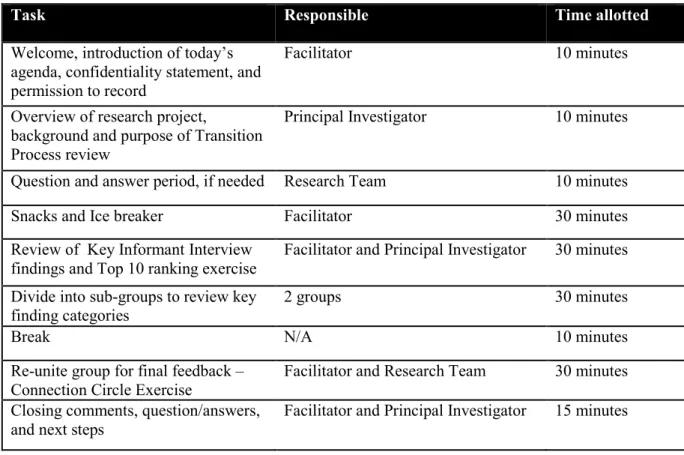
the stakeholders. A trained facilitator along with the principal investigator began the SAP group discussion by introducing the group to the transition research background and objectives of the study to inform and to re-familiarize the stakeholders. Adequate time for questions and answers was provided throughout the process to assure understanding. Causal loop diagrams and system dynamics concepts were explained briefly to assure understanding of process. The SAP group was then led in a prioritization exercise of the top ten factors derived from the Key Informant Interviews (KII). Each participant was asked to determine the top three issues. Results from the exercises are reported in the findings section.
Table 3: Agenda for Stakeholder Action Planning Session
The discussion included the most challenging problem areas, the “sticking points”, and also the identified strengths. The first prioritization exercise for the group involved identifying the ten most important factors contributing to transition success. The discussion leader and principal investigator utilized the SD causal loop diagram technique to illustrate KI interview findings and to elucidate the
Task Responsible Time allotted
Welcome, introduction of today’s agenda, confidentiality statement, and permission to record
Facilitator 10 minutes
Overview of research project,
background and purpose of Transition Process review
Principal Investigator 10 minutes
Question and answer period, if needed Research Team 10 minutes
Snacks and Ice breaker Facilitator 30 minutes
Review of Key Informant Interview findings and Top 10 ranking exercise
Facilitator and Principal Investigator 30 minutes
Divide into sub-groups to review key finding categories
2 groups 30 minutes
Break N/A 10 minutes
Re-unite group for final feedback – Connection Circle Exercise
Facilitator and Research Team 30 minutes
Closing comments, question/answers, and next steps
25
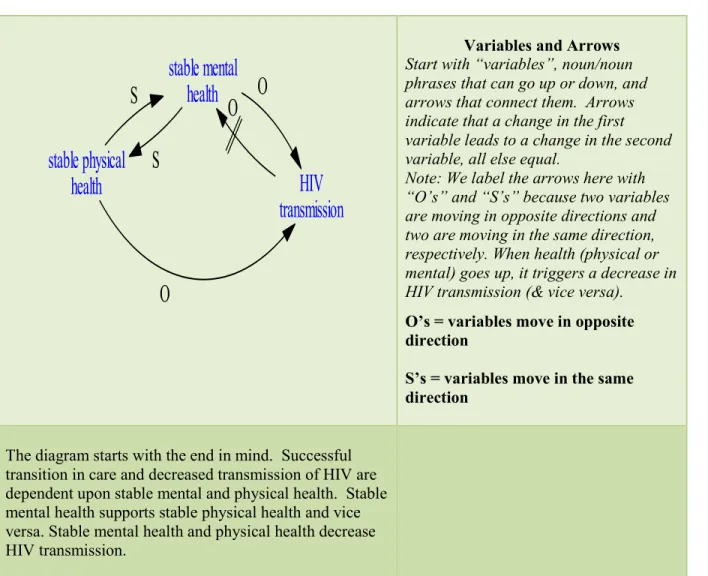
complex systems that affect transition (See Appendix9: Phase 3 Stakeholder Action Planning Session PowerPoint and Appendix 7: System Dynamics Model). The principal investigator began by reiterating that one must begin with the end in mind to understand the core components of healthy adolescent transition. Stable physical health and stable mental health reduce the risk of HIV transmission and improve outcomes for young people living with HIV. The principal investigator was then able to demonstrate how the KIIs had contributed to identification of the additional factors that shape physical and mental health.
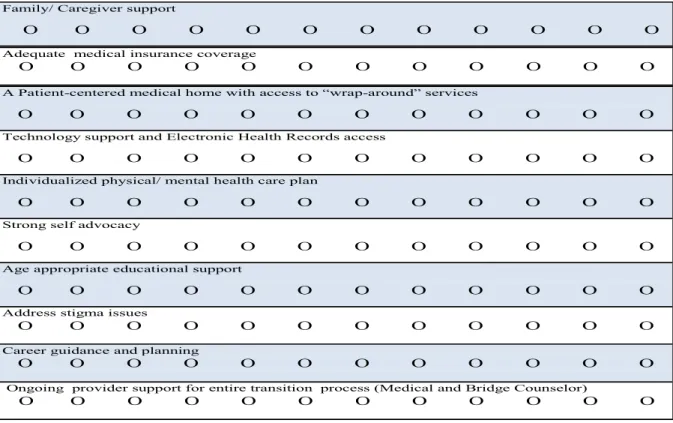
The principal investigator diagramed the current context, and identified leverage points for consideration and potential solutions that push these leverage points. The group responded with their views and prioritized the most challenging of these problem areas while identifying methods to address the sticking points, see Table 4 Prioritization Exercise. Health literacy levels were taken into
consideration as participant’s educational ranges varied.
Table 4: Prioritization Exercise Form for Top Ten Factors of Successful Transition (Stakeholder Action Planning Session participants placed a dot on prioritized items.)
Family/ Caregiver support
O O O O O O O O O O O O
Adequate medical insurance coverage
O O O O O O O O O O O O
A Patient-centered medical home with access to “wrap-around” services
O O O O O O O O O O O O
Technology support and Electronic Health Records access
O O O O O O O O O O O O
Individualized physical/ mental health care plan
O O O O O O O O O O O O
Strong self advocacy
O O O O O O O O O O O O
Age appropriate educational support
O O O O O O O O O O O O
Address stigma issues
O O O O O O O O O O O O
Career guidance and planning
O O O O O O O O O O O O
Ongoing provider support for entire transition process (Medical and Bridge Counselor)
26
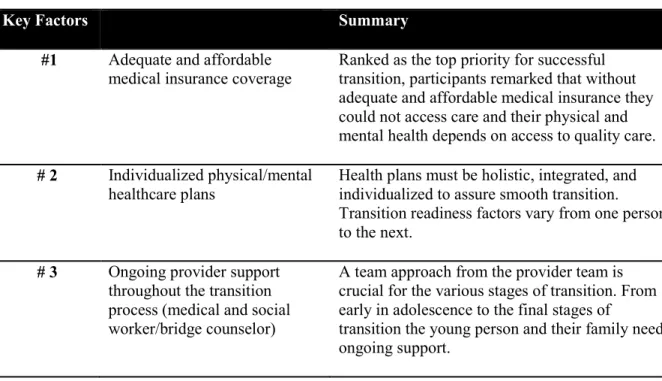
Next the SAP group evaluated each of the top ten target areas and further ranked relevant themes for each. This group prioritization exercise (Table 4) synthesized the compilation of Phase 1 and the Phase 2 key findings from literature review, AAP COPA guidelines, and KII key themes. The SAP feedback provided prioritized findings and a finalized set of recommendations for transition. At the conclusion of the exercise feedback the group re-united to review results and allow further questions. The closing activity for the stakeholder’s discussion was the “Connection Circle Exercise.” The purpose of the connection circle, which is considered a promising practice, 99 is “to see important variable and
connections between variables.” Each participant engaged in the exercise. (Appendix 5 Stakeholder Action Planning Session, slide 23- Connection Circle) The product that resulted from the connection circle exercise was a chart drawing from each participant of their perceptions of how the systems should connect to improve outcomes. The final products from the SAP formulated the recommendation for transition from the key stakeholders’ perspective. SAP group participants were all age 18 or older and were fluent in English. A $25 gift card was provided to all participants other than health care providers to compensate for time and travel expenses.
Sample Selection and Recruitment Process: Participants were drawn from healthcare provider sites that serve HIV-infected pediatric and young adult clients in North Carolina’s Triangle Region. Cultural diversity of the interview sample was consistent with the HIV population in this region. No one was excluded due to race, ethnicity, gender, or sexual identification.
Personal phone calls were made and emails were sent to the providers explaining the research intent and criteria for inclusion in the study. Recruitment of potential interview subjects was done by use of informational flyers placed in clinics and referrals from the HIV clinical practice providers. The selection of interviewees was based upon the first 15 individuals who responded. Subjects were given an email and phone number to contact the principal investigator. Although only 10 subjects were needed to complete the study, 15 were enrolled with the understanding that some may not be required to participate. A $25 gift card was offered to offset the cost of travel to the interview site. After initial contact by
27
provide a brief, standardized descriptive script of the study. All personal identifiers were omitted and interviewees were assigned a numerical identifier (WC01- WC10). When participants agreed to be interviewed, an appointment was scheduled at a time and location convenient to them. The meetings were private, conducted face to face, or by phone when necessary. All sessions were recorded with permission.
The decision to limit the interviews to 10-15 participants was based upon the concept of data saturation, which is important for qualitative research as it addresses content validity. Purposive sample size generally relies on the theory of an adequate “saturation” level which is the point at which no new information or themes are observed in the data.Research findings of Francis et al. 90,91 indicated that data
saturation and variability over the course of thematic analysis found saturation occurred within the first
twelve interviews and basic elements for meta-themes were present as early as six interviews.91Mason
also reports that qualitative samples must be large enough to assure that the majority of the perceptions
that might be important are revealed, but that data samples that are too large become repetitive, and
eventually, superfluous.90 It should be noted that this KI interview process began to reach “saturation”
level after the first eight interviews.
Inclusion Criteria: Two groups were targeted for interviews—family members or caregivers of HIV-infected children and HIV-infected young adults 18-25 years of age. All interviews were conducted in English. All subjects were either related to, currently were caring for or had cared for an HIV-infected child/youth/or young adult, or were themselves a young HIV-infected adult 18-25 years of age. Subjects spoke English and were self-identified from clinics that provide HIV care.
Prior to the interview, consent to audio-record the interview was sought in order to assure that a complete transcript of the interviews was available. Also, brief handwritten notes of significant findings during the interview were kept. The “UCLA Center for Health Policy Research”92 model was used along
28
interviews were conducted face to face, or by telephone when the subject was unable to schedule a face to face interview. Interviews were completed between October and December, 2014.
Subjects with less than two years of experience caring for HIV-infected children or young adults, parents of HIV-infected children less than 5 years of age, and non-English speaking subjects were excluded. The interview process took approximately 60-90 minutes and covered material in a 25-question, semi-structured interview protocol. The questionnaire followed best practice in design for interview protocol89. Participants were advised that they would receive a final summary of the research
findings and a thank-you statement to acknowledge their invested time and participation.
D.Data Analysis Process
The purpose of the research analysis was to provide an account of the complicated dynamics that young HIV-infected individuals and their families face as the infected adolescent transitions into adult healthcare. The goal is to formulate a patient-/family-centered set of recommendations for the care transition process.
Specifically, the qualitative, primary data obtained from the key informant interviews and the SAP group’s evaluation of the prioritized HIV Transition Model required an iterative process of working backwards and forwards to assure that a comprehensive set of themes emerged. Creswell’s book,
Research Design: Qualitative, Quantitative, and Mixed Methods Approaches 3rd edition89, describes an
inductive process of generalizing themes which was utilized in guiding this research. The qualitative data were analyzed by reading the transcripts multiple times to identify major themes. The transcribed KII data were entered into NVivo platform, a qualitative data analysis software program, to further scrutinize the key themes and trends. Interview responses were divided by question and independently coded by the principal investigator and a research assistant for cross verification.
29
research phases (Aim 1-KIIs, Aim2- Causal Loop Diagram summary, and Aim 3- SAP group) and key stakeholders were involved in each phase to guide the findings. The correlation of the key factors that facilitate transition and identification of the major barriers to successful transition yielded
recommendations from the patient- and family-centered perspectives for effective transition from pediatric to adult HIV care. The following subsections describe the data analysis process for each aim.
Aim 1: A less prescriptive key informant interview style assured ample opportunity to explore emergent themes from the interviews and overall research process. The interpretive inquiry process of qualitative research requires the PI to provide an explanation of what is heard and seen from the
interviews with KIIs.89 The interviewees’ verbal responses and statements as well as their non-verbal cues
were documented. The multiple views of the principal investigator, participants, and even the readers of the transcribed notes provide various interpretations of the questions and answers. 89 Repetition of themes
(such as stigma or self-efficacy), transitions (such as accessibility of care and provider support), similarity (financial resources, insurance, and affordability of care), and differences were noted and coded. Key themes were also framed based upon successful patterns, challenges, and potential missing components to best understand barriers or issues. Relationships with family, community, and health providers were noted and consideration also was given to the segregation of responses from caregivers which varied at times from the responses of the 18-25 age group.
Coding analysis of relevant phrases, words, and concepts was completed and documented as discrete categories for connections between concepts utilizing the NVivo platform for qualitative analysis. Furthermore, phrases or comments that were confirmatory of the information identified in the literature review were coded as such. Coding tables were utilized to disaggregate and organize findings for each question (see Appendix 2: Causal Loop Coding Themes). MacQueen et al. offered a concise formula to structure coding using three components: code name/label, definition, and an example.93 A similar
30
investigator assumed that role). The coding scheme was kept as simple as possible by segmenting KI statements into themes (sentences or words) and citing specific quotes. As coding is an iterative process, there were multiple readings and reviews of the key informant interview responses.
Aim 2: During this phase of the research an iterative process of analysis and coding was used to review the qualitative data from the KI interviews. The NVivo qualitative data analysis software platform facilitated a method of organization and analysis of content from the various interviews. With the intent of developing a more holistic understanding of how the various factors influence health outcomes for HIV-infected adolescents and young adults, attention was concentrated on the KI interviews with cross-analysis of insights from the literature review and AAP COPA guidelines. As the key themes emerged they were outlined in table format to summarize causal theme categories, cross connections, factors that improve transitional process or control HIV, and factors that worsen transition or the control of HIV. See Appendix 2 Causal Loop Coding Themes for Causal Loop Diagram. The CLD started with the end in mind and evolved from the core components of healthy adolescent transition. Stable physical health and stable mental health reduce the risk of HIV transmission and improve outcomes for young people living with HIV. From that set of core components additional causal themes from the coding were integrated to demonstrate the various factors that shape physical and mental health.
The system dynamics causal mapping approach is utilized to facilitate understanding of non-linear processes or behavior in complex systems such as transitional care. The iterative modeling technique builds the CLD and aids visualization of how variables are interrelated and connect to shape outcomes. 40,94 Three of the key informant interviewees were chosen to participate in a one-on-one
31
Aim 3: Analysis of the findings from the SAP session discussions was based upon the collective feedback of four HIV-infected young adults 18-25 years of age, two caregivers of HIV-infected
adolescents, and four healthcare workers. These participants divided into two subgroups to further prioritize the sub-category problem areas and to suggest methods to address problem areas (for more information, see Appendix 6 Stakeholder Action Planning Session, slides 8-22). Each group was assigned five of the top ten areas and asked to prioritize the sub-topic system issues which were previously derived primarily from Aim 2 compilation findings in the causal loop exercise.
Documentation of the discussion that occurred in the various groups/subgroups included flip chart notes, audio-recorded notes, written summary transcripts by principal investigator and research assistant of what was said, and descriptive narratives of the group interaction. Recordings were transcribed to assure that no crucial information was omitted.
The qualitative findings were analyzed with the assistance of a DrPH committee member, who also assisted with the group process facilitation (KHL). The findings then were assigned by the principal investigator to the key themes and categories based upon patterns or contrasts. The process included data reduction and analysis of contextual factors such as participant’s age, infection status (behaviorally or perinatally infected), role (young adult, caregiver, or healthcare provider), socioeconomic status, race/ethnicity.98 This cumulative SAP session data analysis was then assimilated into the final transition
recommendations.
E.IRB Considerations
32
CHAPTER 4: RESULTS A.Involvement and Contribution of Stakeholders
Key stakeholders expressed genuine interest in the research on transitional care from adolescence to adult HIV care. Caregivers, health providers, and the HIV-infected young adults embraced the
opportunity to offer meaningful contributions in the hope of impacting the complex systems that
influence outcomes for young HIV-infected youth. Accordingly, the individual interviewees and the SAP participants were transparent and eager to share their input in the hope of improving life for HIV-infected youth transitioning to adult care in the future. One young interviewee lamented, “It’s the mix of
everything, the money, the stigma, health problems, no insurance, remembering to take the meds, whether you have someone to help support you, you know, help you along the road. It’s a lot to juggle and it’s easy to get down in the dumps.”
B.Link to Conceptual Model
The research identified key factors were applied to the social-ecological model (SEM).81 By using