OUTCOMES AND COSTS OF POST-HOSPITALIZATION TRANSITIONS IN URBAN AND RURAL SETTINGS
Matthew Robert Toth
A dissertation submitted to the faculty at the University of North Carolina at Chapel Hill in partial fulfillment of the requirements for the degree of Doctor of Philosophy in the Department of Health Policy and Management in the Gillings School of Global Public Health.
Chapel Hill 2015
Approved by: Pam Silberman Mark Holmes
Courtney VanHoutven Mark Toles
©2015
ABSTRACT
Matthew Robert Toth: Outcomes and Costs of Post-Hospitalization Transitions in Urban and Rural Settings
(Under the direction of Pam Silberman)
The Patient Protection and Affordable care Act introduced new incentives and reforms to improve hospital 30-day readmission rates and reduce unnecessary expenditures during a post-discharge period. Early follow-up care and home health utilization are key elements to
improving these outcomes and costs. Little is known on how rural Medicare beneficiaries fare during a post-discharge period. This project will determine whether rural beneficiaries
experience poorer quality of post-discharge care compared to urban beneficiaries (Aim 1), and assess whether the effect of early follow-up care and home health care on outcomes and costs are modified by rural residency (Aim 2 and Aim 3).
Rural beneficiaries had fewer follow-up visits and a greater probability of ED use over 60-days post-discharge. There were no rural-urban differences in the effect of follow-up care and home health on readmission and mortality; however we found that rural beneficiaries experienced a greater benefit of 14-day up care on reducing 30-day ED use. Early follow-up care increased expenditures for low-cost beneficiaries, and decreased expenditures for high-cost beneficiaries. High-high-cost rural beneficiaries who received a follow-up visit expended more Medicare expenditures compared to high-cost urban beneficiaries.
These findings support the role of early-follow-up care on reducing readmission, ED use, mortality, and expenditures. Efforts to improve access to early follow-up care for rural
beneficiaries, and targeting high-cost beneficiaries for early follow-up care, may be
ACKNOWLEDGEMENTS
Pam Silberman was my advisor and Chair of this dissertation project. Her guidance and commitment in this role was crucial for the success of this project. Mark Holmes spent many hours with me in helping to work through the statistical analysis of this work, of which I am very grateful. Courtney Van Houtven played a key role in helping me think through the instrumental variable analysis, and always provided essential feedback. I am grateful to Mark Toles, who provided outstanding feedback and was always supportive. Finally, the support and guidance of Morris Weinberger was crucial in completing this project. This project was funded by a T-32 National Research Service Award, Sheps Center for Health Services Research, Grant #:
TABLE OF CONTENTS
LIST OF TABLES ... ix
LIST OF FIGURES ... x
CHAPTER 1: INTRODUCTION ... 1
Introduction ... 1
Background ... 3
Conceptual Model ... 8
Summary ... 10
References ... 12
CHAPTER 2: METHODS ... 16
Data Source ... 16
Study sample ... 16
Key Independent variables ... 17
Dependent Variables ... 18
Instrumental Variables ... 19
Control variables ... 22
Analytic Approach ... 22
References ... 29
CHAPTER 3: RURAL MEDICARE BENEFICIARIES HAVE POORER FOLLOW-UP CARE AND GREATER EMERGENCY DEPARTMENT USE POST-DISCHARGE ... 33
Introduction ... 33
Methods ... 35
Results ... 38
Discussion... 40
REFERENCES ... 51
CHAPTER 4: RURAL-URBAN DIFFERENCES IN THE EFFECT OF FOLLOW-UP CARE AND HOME HEALTH SERVICES ON POST-DISCHARGE OUTCOMES ... 55
Introduction ... 55
Methods ... 57
Discussion... 69
REFERENCES ... 81
CHAPTER 5: IMPACT OF POST-DISCHARGE FOLLOW-UP CARE ON MEDICARE EXPENDITURES: DOES RURAL MAKE A DIFFERENCE? ... 85
Introduction ... 85
Methods ... 87
Results ... 95
Discussion... 99
REFERENCES ... 111
CHAPTER 6: CONCLUSION ... 115
LIST OF TABLES
Table 2.1: Key Explanatory Variables ... 28
Table 3.1: Summary Statistics of Index Admissions among Medicare Beneficiaries by Rural Status, MCBS, N=11,986 ... 47
Table 4.1: Summary Statistics of Index Admissions among Medicare Beneficiaries by Rural Status, MCBS, N=12,050 ... 73
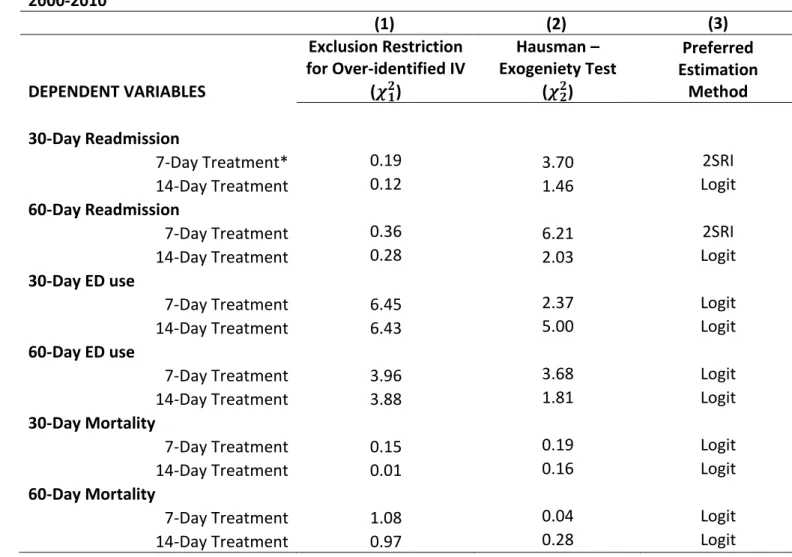
Table 4.2: Exclusion Restriction and Exogeniety Tests for Dependent Variables, MCBS, Cost and Use, 2000-2010 ... 75
Table 4.3: Average Marginal Effects of Follow Up Care and Home Health on Readmission ... 76
Table 4.4: Average Marginal Effects of Follow Up Care and Home Health on ED Use ... 77
Table 4.5: Average Marginal Effects of Follow Up Care and Home Health on Mortality ... 78
Table 5.1: Summary Statistics of Index Admissions among Medicare Beneficiaries by Rural Status, MCBS, N=10,958 ... 105
Table 5.2: Instrument Strength for 7- and 14-day Follow Up and Exclusion Restriction for Expenditure Outcomes ... 107
Table 5.3: 2SRI Quantile Regression of Follow Up Care on 30-day Expenditures ... 108
Table 5.4: 2SRI Quantile Regression of Follow Up Care on 60-day Expenditures ... 109
LIST OF FIGURES Figure 1.1: Adapted Anderson Healthcare Utilization Model for
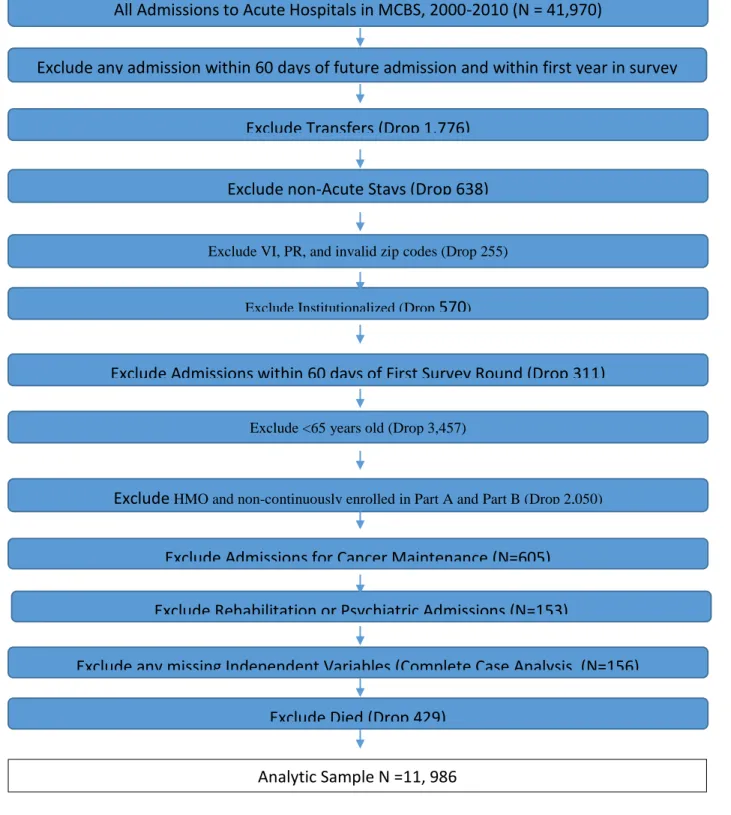
Post-Hospital Transition ... 11 Figure 3.1: Study sample selection of admissions in the MCBS, Cost
and Use Files, 2000-2010. Selection criteria resulted in 11,986 total observations ... 44 Figure 3.2: Adjusted Risk of ED Use for Rural and Urban Beneficiaries,
MCBS, 2000-2010, N = 11,977. Adjusted for socio-demographic,
health, and hospital characteristics ... 45 Figure 3.3: Adjusted Rate of Follow-Up Care among Rural and Urban
Beneficiaries, MCBS, 2000-2010, N = 11,977. Adjusted for socio-demographic,
health, and hospital characteristics ... 46 Figure 4.1: Average marginal effect of 7-day follow up on 60-day
readmission by Charlson Co-morbidity score, MCBS, 2000-2010, N = 11,487 ... 79 Figure 4.2: Average marginal effect of 14-day follow-up care on 30-day
ED use by rural status, MCBS, 2000-2010, N = 11,487 ... 80 Figure 5.1: Treatment effects of early follow-up care across the distribution
CHAPTER 1: INTRODUCTION
Introduction
Medicare spending on post-acute care has doubled from $26.6 Billion in 2000, to $58 billion in 2010, and is the largest contributor to geographic variation in Medicare expenditures.
1, 2 Beneficiaries receiving these services are often vulnerable with complex medical needs that
complicate a post-hospital transition home. Complicated care transitions can lead to
preventable readmissions and emergency department (ED) use, costing Medicare $12 Billion each year.3, 4 Certain care elements lead to a successful care transition, specifically receiving
follow up care within 7 or 14 days post-discharge and home visits.5, 6 Rural beneficiaries may
have poorer access to these care elements. The degree to which post hospital transition patterns and outcomes are associated with a patient’s rural residency is poorly understood.
Access to appropriate follow up care is key to a successful care transitions, but whether rural beneficiaries have adequate access to health services is unclear.7-10 Few studies have identified
whether rural beneficiaries receive timely follow up care post-discharge. Additionally, rural beneficiaries may receive fewer home health visits and a more limited range of home health services.11 Whether rural beneficiaries are at greater risk for readmissions or ED use
post-hospital discharge is unclear. However, it appears that rural beneficiaries may have greater 30-day mortality rates, and receive poorer quality of inpatient and, potentially, outpatient
and post-hospital transition outcomes by utilizing the Medicare Current Beneficiary Survey, 2000-2010, a nationally representative sample of the Medicare population.
My overall objective in this project is to identify whether rural Medicare beneficiaries experience less favorable outcomes post-hospital discharge than their urban counterparts. Further, this project will identify policy relevant factors that are associated with these outcomes. My central hypothesis is that rural Medicare beneficiaries will experience more unplanned acute care, emergency care, and more Medicare expenditures post-discharge
compared to their urban counterparts. Further, due to fewer post-discharge resources in the outpatient and post-acute setting and potentially poorer access to specialty providers for patients with chronic conditions,14, 15 the beneficial effect of a 7 day or 14 day follow up, and
home health use, will be smaller among rural beneficiaries. This central hypothesis will be tested by pursuing these three specific aims:
AIM 1: Determine whether rural beneficiaries have a greater probability of all-cause readmission, emergency department (ED) use, follow-up care within 7 to 14 day compared to urban beneficiaries. Hypothesis: Rural Medicare beneficiaries will have a greater likelihood of a readmission, emergency department use, and a lower likelihood of follow up care compared to urban beneficiaries. A Cox proportional hazard model, controlling for individual and hospital level characteristics, will be used to test this hypothesis.
AIM 2: Assess whether rural residency modifies the effect of 7 to 14 day follow up care and home health use on all-cause 30-day and 60-day readmission, ED use, and mortality.
beneficiaries compared to urban beneficiaries at 30- and 60-days. A logistic regression with a difference in difference estimation strategy will be used to conduct this analysis. An
instrumental variable approach will be used to account for treatment selection bias. We will test a number of instruments captures from the Area Resource File and Dartmouth Atlas of Health Care.
AIM 3: Assess whether rural residency modifies the effect of 7 to 14 day follow up and home health use on 30-, 60-, and 180-day Medicare expenditures. Hypothesis. Early follow-up care and home health care will be associated with a smaller reduction in Medicare expenditures among rural beneficiaries compared to urban beneficiaries. Quantile regression with an
instrumental variable approach will be used to account for treatment selection bias. We will test a number of instruments captured from the Area Resource File and Dartmouth Atlas of Health Care.
This research will identify policy modifiable factors associated with outcomes and costs of post-hospital care transitions among rural beneficiaries. This project will guide policymakers in improving the delivery of care among elderly rural Medicare beneficiaries, particularly in the context of bundled payments and Accountable Care Organizations. Project findings will help providers in developing interventions to better support the improvement of quality, efficiency, and effectiveness of care among the rural elderly population.
Background
Care Act (ACA), hospitals now have financial incentives to invest in better post-discharge care to reduce readmissions. It is important to better understand what kind of post discharge
interventions may be helpful. It is understood that there are certain components of a successful care transition, specifically whether a patient receives follow up care within 7 to 14 days post-hospital discharge and home visits.6, 17 Studies suggest that early follow up care reduces the risk
of a readmission and emergency care. 16, 18 However, a recent review of transitional care
programs, of which early follow-up care is a component, found mixed results on reducing readmission among adults with chronic conditions.19 Furthermore, certain conditions may
require home health care services. Some research points to the role of home health on reducing the risk of readmission and improving health outcomes.20, 21 Rural beneficiaries may
have poorer access to needed home health services.22 Indeed, rural beneficiaries may have
fewer options of discharge care, adding to the concern that penalizing hospitals for post-discharge outcomes may disproportionately affect rural safety net hospitals. Whether rural beneficiaries have a similar mix of post-hospital transition care and outcomes to urban beneficiaries has not been fully examined. Additionally, home health agencies recently began reporting 30-day readmission and ED use as a quality metric to the Centers for Medicare and Medicaid Services (CMS). Moreover, 60-day care transition episodes are currently being considered by CMS in designing the post-acute care bundled payment.25 Thus, this study has
The literature on post-discharge care in rural settings does not provide a clear action agenda. Some studies point to better access to care among rural patients through having a usual source of care and greater use of urgent and elective surgical procedures. 7, 8 Other
studies suggest poorer rural access to follow up and post – acute care as evidenced by greater hospitalizations for ambulatory care sensitive conditions and emergency room visits. 26, 27 The
extent to which post-hospital transitions home have differential patterns and outcomes across urban and rural settings is unclear. Studies that look at 30-day readmissions, a commonly used care transition outcome for policymakers and researchers,28 have illustrated mixed results. 29, 30
Other studies are often limited to one disease category,31, 32 and have methodological
First, findings from this study can point to ways to improve cost incentives and penalties for hospitals serving rural and disadvantaged beneficiaries. Should this research show poorer post-discharge outcome in rural settings, then it will 1) provider further evidence of potential disproportionate penalties under CMS’s Hospital Readmission Reduction Program,28 and 2)
perhaps suggest alternative models of de-incentivizing readmissions. For example, Medicare could establish a single episode price for an admission that covers reduced payments for readmission between 15 and 30 days.33 Second, evidence could inform CMS on reimbursement
policy and allocation of resources to providers serving rural beneficiaries. Greater
reimbursement for discharge planning services, case management, or other post-discharge interventions that improve access to early follow-up care may be called for, particularly within post-acute bundled payments to rural providers.34 Third, findings could have implications for
future care transition interventions. Interventions that include 7/14 day follow up care or home health care would receive increased attention from policy makers if Medicare expenditures are negatively impacted. Finally, findings from this study can also highlight areas for intervention to support efforts to reduce all cause 30-day readmission and ED use, and lower Medicare costs among rural beneficiaries. For example, patients from rural settings may require further post-discharge support, such as tele-health case management, to improve follow up care and reduce the risk of readmission.35
administrative claims, and cannot account for key environmental and personal level control variables, such as personal socio-economic status, number of functional limitations, and discharging hospital-level characteristics.37, 38 Indeed, the use of claims data to assess
transitions of care outcomes may suffer from omitted variable bias. Additionally, few studies have explored the variation in post-discharge follow up care, by rural and urban settings, and use of home health services. Two recent studies suggest a relationship between rural residence and follow up care39 and the subsequent effect on Medicare expenditures and readmissions.40
However, small sample sizes and methodological limitations constrain the generalizability of these studies. Other studies of have identified differences in home health utilization and outcomes rural and urban beneficiaries entering care from the community,22, 41 but no study to
my knowledge has identified the role home health services plays during a post-hospitalization transition among rural Medicare beneficiaries.
Second, this study will use econometric analyses not previously applied in this setting. Because patients who receive follow up care post-hospital discharge, or who receive home health care, may be different than their counterparts who do not receive these services, the treatment effects examined for both Aims 2 and Aims 3 may be biased. Indeed, there may be observed and unobserved selection bias in the use of follow up care, and the use home health services.21, 42 For example, sicker patients may be more likely to receive a follow up
bias,43 it cannot account for other unobserved characteristics that effect treatment selection.
Similarly, sicker individuals with greater functional limitations are more likely to utilize home health services, and are also at greater risk for ED use and readmission. Instrumental variables (IV) have been used to account for unobserved endogeneity in treatment selection in health service utilization.44 To my knowledge, no study has used an IV approach to assess the effect of
follow-up care on readmission, ED use, mortality, and expenditures by rural and urban setting (AIM 2 and AIM 3). For both AIM 2 and AIM 3, I intend to use self-reported, area level physician supply and area level home health agency (HHA) supply, through the Area Resource File, and a number of county-level service utilization variables from the Dartmouth Atlas of Healthcare, and distance from residence to the nearest HHA and discharging hospital from CMS’s Provider of Service files as instruments for the main explanatory variable.42, 44 Thus, this study will be the
first to utilize an IV approach to account for selection bias in receipt of follow up care, and home health services, among Medicare beneficiaries during a post-hospitalization transition.
Conceptual Model
Similar to other studies on rural-urban differences in health service utilization, this study will use a conceptual model grounded in Anderson’s Behavioral Model of health care utilization. 45 This model is comprised of four components: Environment, Individual
enabling individual characteristics to determine services utilization and outcomes. 45 The main
explanatory variable in AIM 1, rural/urban status, is considered an environmental variable that has direct effects on follow-up care and home health utilization, and outcomes, as well as indirect effects on the main outcome variables through receiving 7 to 14 day follow up care and home health care. In ordered to adapt this model to account for a care transition episode, facility level characteristics of the discharging hospital are included. In this case, hospital characteristics are associated with whether the hospital is rural or urban. Simultaneously, whether a beneficiary is rural or urban is associated with the type of hospital they are admitted too.
This model also helps explain the instruments of choice for Aim 2 and Aim 3. In order for an instrumental variable to appropriately be used, it must not have a direct effect on the
outcome of interest, and only an indirect effect principally through the endogenous explanatory variable. 42 For Specific Aim 2 and Specific Aim 3, I intend to use both physician supply and HHA
supply through the Area Resource File. In addition, % 14-day follow-up care at the county level, average physician reimbursement per enrollee, and average HHA episodes per enrollee at the county level from the Dartmouth Atlas of Health Care will be tested. Finally, residence distance to discharging hospital and closest HHA will also be tested. These potential
instrumental variables are considered environmental characteristics in a model of
Summary
REFERENCES
1. Grabowski, D.C., et al., Medicare Postacute Care Payment Reforms Have Potential To Improve Efficiency Of Care, But May Need Changes To Cut Costs. Health Aff, 2012. 31(9): p. 1941-1950.
2. MedPac, A Data Book: Health Care Spending and the Medicare Program, M.P.A. Commission, Editor 2011: Washington, DC.
3. Naylor, M.D., et al., Comprehensive discharge planning and home follow-up of hospitalized elders. JAMA, 1999. 281(7): p. 613-620.
4. Vashi, A.A., et al., Use of Hospital-Based Acute Care Among Patients Recently Discharged From the HospitalAcute Care Use After Recent Hospital Discharge. JAMA, 2013. 309(4): p. 364-371.
5. Boutwell, A.E., et al., An early look at a four-state initiative to reduce avoidable hospital readmissions. Health Affairs, 2011. 30(7): p. 1272-1280.
6. Hansen, L.O., et al., Interventions to reduce 30-day rehospitalization: a systematic review. Annals of Internal Medicine, 2011. 155(8): p. 520-528.
7. Larson, S.L. and J.A. Fleishman, Rural-urban differences in usual source of care and ambulatory service use: analyses of national data using Urban Influence Codes. Medical care, 2003: p. III65-III74.
8. Francis, M.L., S.L. Scaife, and W.E. Zahnd, Rural-urban differences in surgical procedures for Medicare beneficiaries. Archives of Surgery, 2011. 146(5): p. 579.
9. Laditka, J.N., S.B. Laditka, and J.C. Probst, Health care access in rural areas: evidence that hospitalization for ambulatory care-sensitive conditions in the United States may increase with the level of rurality. Health Place, 2009. 15(3): p. 761-770.
10. Stensland, J., et al., Rural And Urban Medicare Beneficiaries Use Remarkably Similar Amounts Of Health Care Services. Health Aff, 2013. 32(11): p. 2040-2046.
11. McAuley, W.J., W. Spector, and J. Van Nostrand, Formal home care utilization patterns by rural–urban community residence. The Journals of Gerontology Series B:
Psychological Sciences and Social Sciences, 2009. 64(2): p. 258-268.
12. Joynt, K.E., et al., Quality of care and patient outcomes in critical access rural hospitals.
13. Lichtman, J.H., et al., 30-Day risk-standardized mortality and readmission rates after ischemic stroke in critical access hospitals. Stroke, 2012. 43(10): p. 2741-2747. 14. Gamm, L., G. Castillo, and S. Pittman, Access to quality health services in rural
areas-primary care: A literature review. LD Gamm, LL Hutchinson, BJ Dabney, BJ and AM Dorsey (Eds.), Rural healthy people, 2010.
15. Toth, M., C. Quach, and G.M. Holmes, Rural-Urban Differences in Continuity of Care among Medicare Beneficiaries, 2014, University of North Carolina at Chapel Hill: Sheps Center for Health Services Research.
16. Hernandez, A.F., et al., Relationship between early physician follow-up and 30-day readmission among Medicare beneficiaries hospitalized for heart failure. JAMA, 2010. 303(17): p. 1716-1722.
17. Hubbard, M., et al., Association Between Outpatient Visits Following Hospital Discharge and Readmissions Among Medicare Beneficiaries With Atrial Fibrillation and Other Chronic Conditions. Am J Med Qual, 2013: p. 1062860613493827.
18. Sharma, G., et al., Outpatient follow-up visit and 30-day emergency department visit and readmission in patients hospitalized for chronic obstructive pulmonary disease. Arch Intern Med, 2010. 170(18): p. 1664.
19. Verhaegh, K.J., et al., Transitional Care Interventions Prevent Hospital Readmissions For Adults With Chronic Illnesses. Health Aff, 2014. 33(9): p. 1531-1539.
20. Ellenbecker, C.H., et al., Patient Safety and Quality in Home Health Care, in Patient Safety and Quality: An Evidenced Based Handbook for Nurses. 2008.
21. Hadley, J., et al., Posthospitalization home health care use and changes in functional status in a Medicare population. Medical Care, 2000. 38(5): p. 494-507.
22. Schlenker, R.E., M.C. Powell, and G.K. Goodrich, Rural‐Urban Home Health Care
Differences Before the Balanced Budget Act of 1997. The Journal of Rural Health, 2002. 18(2): p. 359-372.
23. James, J., Health Policy Brief: Medicare Hospital Readmissions Reduction Program. Health Affairs, 2013. November 12, 2013.
25. Morley, M., et al., Medicare post-acute care episodes and payment bundling. Medicare & medicaid research review, 2014. 4(1).
26. Culler, S.D., M.L. Parchman, and M. Przybylski, Factors related to potentially preventable hospitalizations among the elderly. Medical care, 1998. 36(6): p. 804-817.
27. Jia, H., et al., Postacute Stroke Rehabilitation Utilization: Are There Differences Between Rural‐Urban Patients and Taxonomies? The Journal of Rural Health, 2012. 28(3): p. 242-247.
28. Joynt, K.E. and A.K. Jha, Thirty-day readmissions—truth and consequences. New England Journal of Medicine, 2012. 366(15): p. 1366-1369.
29. MedPac, Report to Congress: Medicare and the Health Care Delivery System, C.f.M.a.M. Services, Editor 2012: Washington, DC.
30. Klug, M.G., A. Knudson, and K. Muus, Geographic differences in potentially preventable readmission rates in rural and urban hospitals, 2010, The University of North Dakota: Upper Midwest Rural Health Research Center.
31. Bennett, K.J., et al., Missing the handoff: post-hospitalization follow-up care among rural Medicare beneficiaries with diabetes. Rural and Remote Health, 2012. 12(3).
32. Bennett, K.J., et al., Lower Rehospitalization Rates Among Rural Medicare Beneficiaries With Diabetes. J Rural Health, 2012. 28(3): p. 227-234.
33. Berenson, R.A., R.A. Paulus, and N.S. Kalman, Medicare's readmissions-reduction program—a positive alternative. New England Journal of Medicine, 2012. 366(15): p. 1364-1366.
34. Bernheim, S.M., Measuring Quality and Enacting Policy Readmission Rates and
Socioeconomic Factors. Circulation: Cardiovascular Quality and Outcomes, 2014. 7(3): p. 350-352.
35. Jackson, C., et al., Transitional care cut hospital readmissions for North Carolina
Medicaid patients with complex chronic conditions. Health Aff, 2013. 32: p. 1407-1415. 36. Vest, J.R., et al., Determinants of preventable readmissions in the United States: a
systematic review. Implementation Science, 2010. 5(1): p. 88.
38. Greysen, S.R., et al., Functional Impairment and Hospital Readmission in Medicare Seniors. JAMA Internal Medicine, 2015.
39. Kociol, R.D., et al., Associations of patient demographic characteristics and regional physician density with early physician follow-up among medicare beneficiaries hospitalized with heart failure. Am J Cardiol, 2011. 108(7): p. 985-991.
40. Lin, C.Y., A.E. Barnato, and H.B. Degenholtz, Physician Follow‐Up Visits After Acute Care Hospitalization for Elderly Medicare Beneficiaries Discharged to Noninstitutional
Settings. Journal of the American Geriatrics Society, 2011. 59(10): p. 1947-1954.
41. Vanderboom, C.P. and E.A. Madigan, Relationships of rurality, home health care use, and outcomes. Western Journal of Nursing Research, 2008. 30(3): p. 365-378.
42. Landrum, M.B. and J.Z. Ayanian, Causal effect of ambulatory specialty care on mortality following myocardial infarction: a comparison of propensity score and instrumental variable analyses. Health Services and Outcomes Research Methodology, 2001. 2(3-4): p. 221-245.
43. Austin, P.C., A critical appraisal of propensity‐score matching in the medical literature between 1996 and 2003. Statistics in medicine, 2008. 27(12): p. 2037-2049.
44. Frances, C.D., et al., Does physician specialty affect the survival of elderly patients with myocardial infarction? Health services research, 2000. 35(5 Pt 2): p. 1093.
CHAPTER 2: METHODS Data Source
The Medicare Current Beneficiary Survey (MCBS), 2000-2010, will be the main data source used to conduct this study. The MCBS is longitudinal panel survey of a nationally representative sample of the Medicare population. Survey data is collected three times a year over a four year period. These data include information on the beneficiary’s health status, access to care, household composition, health service use and expenditures, as well socio-demographic characteristics. Survey data is linked with Medicare claims which are collected continuously for the duration of the beneficiary’s participation in the survey. Claims data include the beneficiary’s utilization of inpatient care, outpatient care, skilled nursing facilities, home health, hospice, medical equipment, and physician carrier services. The Area Resource File will be linked to the beneficiary’s zip code to capture provider supply characteristics of the beneficiary’s environment. I will link facility identification variables from the MCBS to the Provider of Service File to collect hospital level variables. The Provider of Service File is administered by the Centers for Medicare and Medicaid Services, and contains detailed information on Medicare authorized providers, including hospitals. This data is collected on a quarterly basis.
Study sample
or an index admission, I will restrict the sample to admissions without a previous admission 60 days before. Of beneficiaries with an index admission, I will keep those 65 years and older, enrolled in Fee for Service, have a discharge date, and alive for 60 days post discharge. We also excluded index admissions for cancer management and a primary diagnosis of a psychiatric or rehabilitation condition (not usually in acute stay hospitals).1 The sample will be further
restricted by including only beneficiaries discharged to a non-institutional setting. Figure 1 illustrates the sample selection for this study population for Aim 1. For Aims 2 and 3, the sample will come from the Aim 1 sample, but with further specification in that I will exclude observations that were readmission/ ED visits (Aim 2) and have any acute or post-acute spending (Aim 3) prior to 3 days post-discharge, to ensure the potential to receive follow up care and home health services. The reason for this exclusion is 1) there should be enough time post-discharge for the beneficiary to receive the treatment 2 and 2) acute and post-acute
outcomes that occur closer to the discharge date reflect inpatient quality rather than outpatient quality.3
Key Independent variables
Follow up care was defined as any Evaluation and Management visit in an outpatient or office based setting (HCPCS codes >=99241 & <=99245, >=99201 & <=99205, and >=99210 & <=99215) during the 7 and 14-day period that takes place before any acute events and expenditures (Aim 2 and Aim 3) or post-acute expenditures (Aim 3). 4 Home health use was
coded as a dichotomous variable (Rural vs. Urban). RUCA codes combine standard Census definitions with area commuting behaviors to capture functional and work relationships between regions.
Dependent Variables
Readmission. For the purposes of this study, the Yale/CMS all cause 30 day readmission measure will be used as the primary outcome. As described by Horwitz et al.,5 any readmission
is undesirable and exposes the patient to greater risk. The Yale/CMS all-cause 30 day readmission measure includes all condition categories. Readmissions under this measure included all unplanned admissions. Because it is difficult to assess what a “planned” admission might be using administrative claims data, this measure excludes admissions for maintenance chemotherapy or rehabilitation, and where at least one of 35 typically planned procedures occur but were not coded as being 1 of 27 acute primary diagnosis.6 Readmission will be
measured as “time to readmission” in Aim 1, and the probability of 30- and 60-day readmission in Aim 2.
Emergency Department Use. ED use as a 30-day care transition outcome has received increased attention.7 Studies that identify 30-day ED use generally do not distinguish between
using the ED as a result of the underlying health condition or because of some other event or accident.8 While there is some literature on distinguishing between emergent and
non-emergent ED use,9 any ED use within 30 days and 60 days of discharge is an appropriate
emergency department visit that does not result in a hospitalization within 30 and 60 days post-discharge for all Aims.
Mortality. Aim 2 will include as a dependent variable the probability of death within 30- and 60-days post-discharge. Mortality will be captured retrospectively from responses by proxies of the participant in the MCBS.
Medicare Expenditures. Aim 3 will assess Medicare expenditures within 30-, 60-, and 180-days post-discharge. Expenditures will be obtained from Medicare inpatient, outpatient, carrier, hospice, skilled nursing facility, home health, and medical equipment claims. Total 30-, 60-, and 180-day expenditures will be calculated by summing all claims within specified post-discharge period.
Instrumental Variables
Provider distance. I will calculate a straight line distance between the geographic center of the beneficiaries’ residency zip code to the: (1) center of the admitting hospital zip code and (2) nearest home health agency (HHA). Distance to provider has been used as instrument for health outcomes in other studies. 11 The closer a resident is to the discharging hospital, the
more likely that person would receive a follow-up visit as they are more likely to live within that hospital’s network of providers and outpatient facilities, simplifying care coordination. Once patient level demographic, health, and hospital characteristics are controlled for, distance to the hospital should have no relationship with the outcome, except through follow-up care. 12
supply of primary care physicians reduces the number of preventable hospitalization in a county 14, yet I argue here that the beneficial effect of physician supply on 30- and 60- day
post-discharge outcomes is a result of better access to primary care and better continuity of care 15,
which in this case would represent an early follow-up visit. Therefore, physician supply can be validly excluded from our outcome models because its principal relationship with 30- and 60-day outcomes will be captured by whether the beneficiary receives an early follow-up visit. Residents living in in communities with a higher density of primary care providers should be more likely to receive a follow-up visit within 7 and/or 14 days of discharge, compared to residents living in areas with lower primary care density.
County Follow-up Rate. County level rates of 14-day primary care follow-up (percent follow up) will be acquired from the Dartmouth Atlas of Health Care. Federal Information Processing Standard (FIPS) values from the Dartmouth files can be linked with beneficiary zip-codes. Geographic practice patterns are frequently used as instrumental variables in the literature and should be a good candidate for an IV in this analysis. 16, 17 County level 14-day
follow-up care is an indicator of coordination of care within the county. 18 Any relationship
Physician Medicare Reimbursement (Aim 3 only). County level average of Medicare Part B reimbursement per enrollee will be obtained from the Dartmouth Atlas of Health Care, 2000 to 2010. Federal Information Processing Standard (FIPS) values from the Dartmouth files with will be linked with beneficiary zip-codes. Dartmouth uses prices adjusted averages, thus the variation across FIPS should reflect service intensity. Variation in Medicare expenditures within Hospital Referral Regions (HRR) are mostly associated with post-acute service utilization, such as SNF, Home Health care, rehabilitative care and inpatient care. 19 As such it may be the case
the average physician reimbursement per enrollee at the county level may be validly excluded from models on 30-, 60-, and 180-day post-discharge expenditures because 89% of expenditure variation within HRR are a result of post-acute and acute service utilization. Thus, conditioning on a recent discharge and controlling for health status, hospital characteristics, and whether the beneficiary receives a follow up visit, physician reimbursement per enrollee should not have any explanatory power in an expenditure model.
Control variables
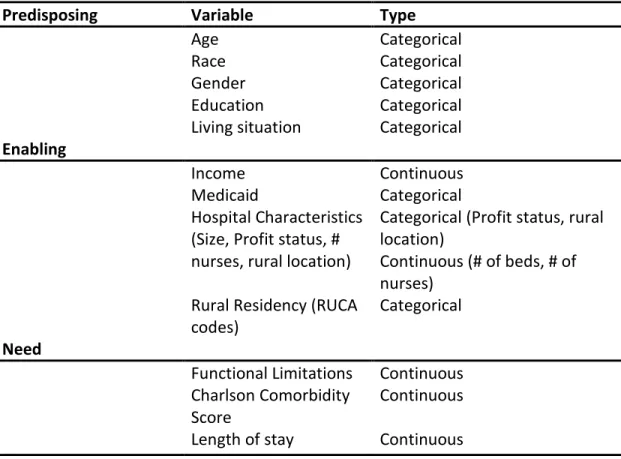
Table 2.1 describes the control variables used for this study. Predisposing variables will include age, race, gender, education, and living situation (lives alone, with kids, with spouse, etc…). Enabling variables will include income, Medicaid status, and hospital characteristics. Similar to other care transition outcome studies, hospital characteristics will include size, number of full-time registered nurses, profit status, and geographic location. 20-22 Hospital level
variables will come from the Provider of Service File. Need variables will include the number of limitations of activities of daily living (ADLs) and instrumental activities of daily living (IADLs), length of stay, and the Charlson Comorbidity Index (CCI). The CCI is a calculated score to predict risk of mortality, based off primary and secondary diagnosis.23 It is frequentally used to control
for confounding of disease severity on outcomes.21, 24
Analytic Approach
For Aims 1 and 2, I will adjust for MCBS’s complex survey design by using survey weighted regression with replicate cross-sectional weights and bootstrapped standard errors For Aim 3, I will adjust for the complex survey design using non-replicate weights.
Specific Aim 1. Hypothesis: Rural Medicare beneficiaries will have a higher risk of all-cause readmission, ED use, mortality, and lower risk of 7 to 14 day follow up at 30 and 60 days
𝑃𝑟(𝑡 = 𝑇|𝑋) = exp(𝑋𝑡𝛽)
∑ exp(𝑋𝑡𝛽)𝑤ℎ𝑒𝑟𝑒𝑋𝛽
= 𝛼 + 𝛽1(𝑃𝑒𝑟𝑠𝑜𝑛𝑎𝑙𝐶ℎ𝑎𝑟𝑎𝑐𝑡𝑒𝑟𝑖𝑠𝑡𝑖𝑐𝑠) +𝛽2(𝐻𝑜𝑠𝑝𝑖𝑡𝑎𝑙𝐶ℎ𝑎𝑟𝑎𝑐𝑡𝑒𝑟𝑖𝑠𝑡𝑖𝑐𝑠)
+𝛽3(𝐸𝑛𝑣𝑖𝑟𝑜𝑛𝑚𝑒𝑛𝑡𝑎𝑙𝐶ℎ𝑎𝑟𝑎𝑐𝑡𝑒𝑟𝑖𝑠𝑡𝑖𝑐𝑠) + 𝛿𝑅𝑢𝑟𝑎𝑙𝑅𝑒𝑠𝑖𝑑𝑒𝑛𝑐𝑦 + 𝛾𝑇𝑖𝑚𝑒
+ ɛ(𝐸𝑞𝑢𝑎𝑡𝑖𝑜𝑛1)
The probability of an outcome at time T will be calculated as the exponentiated values of the X betas at time t given the outcome, over the summation of the exponentiated values of the X betas at time t without the outcome. The β’s represent the predisposing, enabling, and need characteristics described in Table 1.1. The outcome variables will be time to event for all-cause readmission, follow up within 7 days to 14 days, ED use, and mortality. Rural residency will be a dichotomous (1= Rural, 0 = Urban) indicator, represented by 𝛿. Year fixed effects will be included to control for the trend in readmission, ED use, follow up care, and mortality over time.
Sample Size for Aim 1. There are approximately 11,000 hospital admissions in the MCBS from 2000 to 2009 where the beneficiary was discharged home. Recent estimates of
un-adjusted readmissions among Medicare patients by rural settings suggest a 0.1% to 4% difference,25, 26 while other studies show similar rates across urban and rural hospitals.28 To
expect to have close to this many observations 30 in the rural category, and perhaps twice as
much in the urban category.
Specific Aim 2. Hypothesis: Receipt of a follow up visit within 7 to 14 days post-discharge and home health services will have a smaller reduction in readmission, ED use, and mortality
among rural beneficiaries compared to urban beneficiaries. I will employ an instrumental variable using a two-stage residual inclusion strategy to control for treatment selection bias.31
Two first-stage equations will be run for follow-up care and for home health care. The coefficients 𝛽1- 𝛽5 represent the instruments and 𝛿 represents a vector of pre-disposing, enabling, and need covariates listed in Table 1.1. The calculated residuals of the probability of having a follow up visit and the probability of having home health use will be interacted with a rural dichotomous variable, amounting to 4 residuals included in the 2nd stage model.
1𝑠𝑡𝑆𝑡𝑎𝑔𝑒:𝑃𝑟𝑜𝑏(𝑇𝑟𝑒𝑎𝑡𝑚𝑒𝑛𝑡|𝑍1− 𝑍5, 𝑋)𝛼 + 𝛽1(𝑃ℎ𝑦𝑠𝑖𝑐𝑖𝑎𝑛𝑆𝑢𝑝𝑝𝑙𝑦)
+ 𝛽2(𝐶𝑜𝑢𝑛𝑡𝑦𝐿𝑒𝑣𝑒𝑙%𝐹𝑜𝑙𝑙𝑜𝑤 − 𝑢𝑝𝑅𝑎𝑡𝑒𝑠) + 𝛽3(𝐷𝑖𝑠𝑡𝑎𝑛𝑐𝑒𝑡𝑜ℎ𝑜𝑠𝑝𝑖𝑡𝑎𝑙) + 𝛽4
+ 𝛽4(𝐷𝑖𝑠𝑡𝑎𝑛𝑐𝑒𝑡𝑜𝐻𝐻𝐴)
+ 𝛽5(𝐶𝑜𝑢𝑛𝑡𝑦𝐿𝑒𝑣𝑒𝑙𝐻𝐻𝐴𝐸𝑝𝑖𝑠𝑜𝑑𝑒𝑠𝑝𝑒𝑟𝑏𝑒𝑛𝑒𝑓𝑖𝑐𝑖𝑎𝑟𝑦) + 𝛿𝑋 + ɛ
(𝐸𝑞𝑢𝑎𝑡𝑖𝑜𝑛2)
2𝑛𝑑𝑆𝑡𝑎𝑔𝑒: 𝑃𝑟𝑜𝑏(𝑌|𝑋)
= 𝛽𝑜+ 𝛽1(𝑋) + 𝛽2(𝐹𝑜𝑙𝑙𝑜𝑤𝑢𝑝) +𝛽3(𝐻𝑜𝑚𝑒𝐻𝑒𝑎𝑙𝑡ℎ) +𝛽4(𝑅𝑢𝑟𝑎𝑙)
+ 𝛽5(𝑅𝑢𝑟𝑎𝑙 ∗ 𝐹𝑜𝑙𝑙𝑜𝑤𝑈𝑝) +𝛽6(𝐻𝑜𝑚𝑒𝐻𝑒𝑎𝑙𝑡ℎ ∗ 𝑅𝑢𝑟𝑎𝑙) + 𝛾̂1 +𝛾̂2 + 𝛾̂3
+𝛾̂4(𝐸𝑞𝑢𝑎𝑡𝑖𝑜𝑛3)
In this model 𝛽1 are the predisposing, enabling, and need characteristics, plus years. The effect of follow up care among rural beneficiaries is represented by the linear summation of 𝛽2+𝛽4 + 𝛽5. The effect of home health among rural beneficiaries is represented by 𝛽3+
𝛽4+ 𝛽6. The difference in difference effect of rural residency on the effect of follow-up care on
the on the outcome will be 𝛽5. The difference in difference effect of rural residency on the effect of home health care on the outcome is represented by𝛽7. Finally, 𝛾̂1 − 𝛾̂4arethe residuals from the first stage equation and account for the unobserved endogeneity associated with the treatment variables in the second stage equation.The marginal effects of the
treatment variables will calculated using the method of recycled predictions, and the standard errors will be bootstrapped.
Sample size for Aim 2. Estimates on the effect of follow up care on readmission and ED use vary by widely by study, and by certain disease categories. These estimates range from a 3% to 23% reduction of risk, to about 90% decrease in the odds of a 30-day readmission. 8, 32, 33
To detect a 5 percentage point difference in the probability of a 30-day ER visit at α = .05 and β = .80, I will need approximately 1,231 observations in each group. I have approximately 12,000 index admissions, and I expect at least 20% are rural admissions.28 Assuming 37% receive a
timely follow up (7 days or less),29 I should have the observations I need to detect at least a 5
Studies that have included home health services as part of a broader care-transition intervention show relative risk reductions of 22% to 45% of hospitalizations at 6 months.34-36
Other studies suggest odds reductions of 12 month hospitalization of 0.65 37 or a 4% point
effect size when the sample re-hospitalization average was 34%. Only one study evaluated rural-urban differences in hospitalization from home-care services and found rural patients were 5% points more likely to be hospitalized at 120 days, compared to urban patients.38 As no
study directly tests the modification effect of home health services on 30 and 60 day outcomes among rural beneficiaries, I assume an effect size of 0.05 to be conservative. Using Stata’s powerlog command, and an R2 of 0.02 among the included covariates, I will need approximately
640 observations to detect a change 0.05 in the predicted probability of a readmission, at α = .05 and β ≥ 0.80, assuming a readmission average of 29%. Assuming at least 20% of discharges receive home health services, I should have an appropriate sample size to detect this change.
Specific Aim 3. Hypothesis: Receipt of a follow up visit within 7 to 14 days post-discharge and home health care will have a smaller reduction in Medicare expenditures among rural
treatment effects on the conditional distribution of the 30-, 60-, and 180-day expenditure variables.39 Conditional quantile regressions will be run for the 10th, 25th, 50th, 75, and 90th
percentiles of 30-day, 60-day, and 180-day Medicare expenditures. The right hand side variables for this model will be equivalent to Equation 3. The marginal effects of interest will the same as in Aim 2. For example, 𝛽4 represents the baseline association between rural
residency and the conditional expenditure outcome. The marginal effect of home health service use among rural beneficiaries is represented by 𝛽3+ 𝛽4+𝛽6. The marginal effect of follow up services on Medicare expenditures among rural beneficiaries is represented by 𝛽2+ 𝛽4+ 𝛽5.
Most likely the expenditure dependent variables will be logged, 40 thus the marginal
effects will be re-transformed and calculated using the method of recycled predictions:
𝑀𝑎𝑟𝑔𝑖𝑛𝑎𝑙𝐸𝑓𝑓𝑒𝑐𝑡($) = 𝑄𝜏𝑒𝑥𝑝(𝑙𝑜𝑔𝑔𝑒𝑑𝑦|𝑇𝑟𝑒𝑎𝑡𝑚𝑒𝑛𝑡 = 1)̂ -
𝑄𝜏𝑒𝑥𝑝(𝑙𝑜𝑔𝑔𝑒𝑑𝑦|𝑇𝑟𝑒𝑎𝑡𝑚𝑒𝑛𝑡 = 0)̂
Sample size for Aim 3. It is expected that receipt of follow up services and/or home health services can reduce Medicare expenditure during a post-acute period. Care transition interventions have demonstrated expenditure differences between the intervention and
control groups at 180-days and one year.41, 42 These differences range from approximately $500
to $7,000. An observational study determined estimated around $10,000 difference between those who received follow up care within 90-days post-discharge and those who did not over a year period.2 Using the sampsi command in Stata, to detect a $1000 difference in Medicare
Table 2.1: Key explanatory variables
Predisposing Variable Type
Age Categorical
Race Categorical
Gender Categorical
Education Categorical
Living situation Categorical Enabling
Income Continuous
Medicaid Categorical
Hospital Characteristics (Size, Profit status, # nurses, rural location)
Categorical (Profit status, rural location)
Continuous (# of beds, # of nurses)
Rural Residency (RUCA codes)
Categorical Need
Functional Limitations Continuous Charlson Comorbidity
Score
REFERENCES
1. Horwitz, L., et al., Hospital-Wide All-Cause Unplanned Readmission Measure, 2012, Yale New Haven Health Servicces Corportation Center for Outcomes Research & Evaluation 2. Lin, C.Y., A.E. Barnato, and H.B. Degenholtz, Physician Follow‐Up Visits After Acute Care
Hospitalization for Elderly Medicare Beneficiaries Discharged to Noninstitutional Settings. Journal of the American Geriatrics Society, 2011. 59(10): p. 1947-1954.
3. Sood, N., et al., Medicare’s bundled payment pilot for acute and postacute care: analysis and recommendations on where to begin. Health Aff, 2011. 30(9): p. 1708-1717.
4. Hubbard, M., et al., Association Between Outpatient Visits Following Hospital Discharge and Readmissions Among Medicare Beneficiaries With Atrial Fibrillation and Other Chronic Conditions. Am J Med Qual, 2013: p. 1062860613493827.
5. Horwitz, L., et al., Hospital-Wide (All-Condition) 30-Day Risk Standardized Readmission Measure: Measure Methodology Report, 2011.
6. MedPac, Medicare and the Health Care Delivery System, in Report to Congress2013: Washginton, DC. .
7. Vashi, A.A., et al., Use of Hospital-Based Acute Care Among Patients Recently Discharged From the HospitalAcute Care Use After Recent Hospital Discharge. JAMA, 2013. 309(4): p. 364-371.
8. Sharma, G., et al., Outpatient follow-up visit and 30-day emergency department visit and readmission in patients hospitalized for chronic obstructive pulmonary disease. Arch Intern Med, 2010. 170(18): p. 1664.
9. Hossain, M.M. and J.N. Laditka, The influence of rurality on the volume of non-urgent emergency department visits. Spatial and Spatio-temporal Epidemiology, 2011. 2(4): p. 311-319.
10. Fox, J.P., et al., Hospital-Based, Acute Care Use Among Patients Within 30 Days of Discharge After Coronary Artery Bypass Surgery. The Annals of thoracic surgery, 2013. 11. Hadley, J., et al., An exploratory instrumental variable analysis of the outcomes of
localized breast cancer treatments in a medicare population. Health economics, 2003. 12(3): p. 171-186.
13. Yasaitis, L.C., J.P. Bynum, and J.S. Skinner, Association between physician supply, local practice norms, and outpatient visit rates. Medical care, 2013. 51(6).
14. Laditka, J.N., S.B. Laditka, and J.C. Probst, More may be better: evidence of a negative relationship between physician supply and hospitalization for ambulatory care sensitive conditions. Health services research, 2005. 40(4): p. 1148-1166.
15. Macinko, J., B. Starfield, and L. Shi, Quantifying the health benefits of primary care physician supply in the United States. International journal of health services, 2007. 37(1): p. 111-126.
16. Hadley, J., et al., Comparative effectiveness of prostate cancer treatments: evaluating statistical adjustments for confounding in observational data. Journal of the National Cancer Institute, 2010. 102(23): p. 1780-1793.
17. Bound, J., D.A. Jaeger, and R.M. Baker, Problems with instrumental variables estimation when the correlation between the instruments and the endogenous explanatory variable is weak. Journal of the American statistical association, 1995. 90(430): p. 443-450. 18. Goodman, D.C., E. Fisher, and C. Chang, After Hospitalization: A Dartmouth Atlas Report
on Post-Acute Care for Medicare Beneficiaries, in Dartmouth Atlas Project, T.D.I.f.H.P.a.C. Researccha, Editor 2013.
19. Institute of Medicine, Variation in Health Care Spending: Target Decision Making, Not Geography, J.P. Newhouse, et al., Editors. 2013: Washington DC.
20. Hernandez, A.F., et al., Relationship between early physician follow-up and 30-day readmission among Medicare beneficiaries hospitalized for heart failure. JAMA, 2010. 303(17): p. 1716-1722.
21. Joynt, K.E., E.J. Orav, and A.K. Jha, Thirty-day readmission rates for Medicare beneficiaries by race and site of care. JAMA, 2011. 305(7): p. 675-681.
22. Lichtman, J.H., et al., 30-Day risk-standardized mortality and readmission rates after ischemic stroke in critical access hospitals. Stroke, 2012. 43(10): p. 2741-2747.
23. Epstein, A.M., A.K. Jha, and E.J. Orav, The relationship between hospital admission rates and rehospitalizations. N Engl J Med, 2011. 365(24): p. 2287-2295.
24. Anderson, K.M., Discharge Clinical Characteristics and 60-Day Readmission in Patients Hospitalized With Heart Failure. J Cardiovasc Nurs, 2014. 29(3): p. 232-241.
26. Klug, M.G., A. Knudson, and K. Muus, Geographic differences in potentially preventable readmission rates in rural and urban hospitals, 2010, The University of North Dakota: Upper Midwest Rural Health Research Center.
27. Bennett, K.J., et al., Missing the handoff: post-hospitalization follow-up care among rural Medicare beneficiaries with diabetes. Rural and Remote Health, 2012. 12(3).
28. MedPac, Report to Congress: Medicare and the Health Care Delivery System, C.f.M.a.M. Services, Editor 2012: Washington, DC.
29. Kociol, R.D., et al., Associations of patient demographic characteristics and regional physician density with early physician follow-up among medicare beneficiaries hospitalized with heart failure. Am J Cardiol, 2011. 108(7): p. 985-991.
30. Stranges, E., L. Holmquist, and R. Andrews, Inpatient stays in rural hospitals, 2007, A.f.H.R.a. Quality, Editor 2010: Washington, DC.
31. Terza, J.V., A. Basu, and P.J. Rathouz, Two-stage residual inclusion estimation:
addressing endogeneity in health econometric modeling. Journal of health economics, 2008. 27(3): p. 531-543.
32. McAlister, F.A., et al., A systematic review of randomized trials of disease management programs in heart failure. The American journal of medicine, 2001. 110(5): p. 378-384. 33. Van Walraven, C., et al., Continuity of Care and Patient Outcomes After Hospital
Discharge. Journal of General Internal Medicine, 2004. 19(6): p. 624-631. 34. Hughes, R.G., et al., Patient Safety and Quality in Home Health Care. 2008.
35. Jeppesen, E., et al., Hospital at home for acute exacerbations of chronic obstructive pulmonary disease. Cochrane Database Syst Rev, 2012. 5.
36. Naylor, M.D., et al., Comprehensive discharge planning and home follow-up of hospitalized elders. JAMA, 1999. 281(7): p. 613-620.
37. Intrator, O. and K. Berg, Benefits of home health care after inpatient rehabilitation for hip fracture: health service use by Medicare beneficiaries, 1987–1992. Archives of physical medicine and rehabilitation, 1998. 79(10): p. 1195-1199.
38. Schlenker, R.E., M.C. Powell, and G.K. Goodrich, Rural‐Urban Home Health Care
39. Koenker, R. and K. Hallock, Quantile regression: An introduction. Journal of Economic Perspectives, 2001. 15(4): p. 43-56.
40. Manning, W.G. and J. Mullahy, Estimating log models: to transform or not to transform?
Journal of Health Economics, 2001. 20(4): p. 461-494.
41. Coleman, E.A., et al., The care transitions intervention: results of a randomized controlled trial. Archives of internal medicine, 2006. 166(17): p. 1822.
CHAPTER 3: RURAL MEDICARE BENEFICIARIES HAVE POORER FOLLOW-UP CARE AND GREATER EMERGENCY DEPARTMENT USE POST-DISCHARGE
Introduction
Medicare spending on post-acute care has more than doubled from $26.6 billion in 2000 to $62 billion in 2012, and is the largest contributor to geographic variation in Medicare
expenditures.1-3 Beneficiaries receiving these services have complex medical needs that
complicate care transitions from hospitals to home. Complicated care transitions, defined as care transitions from lower to higher levels of medical care (e.g., from home back to hospitals), frequently lead to unplanned hospital readmissions and emergency department (ED) use, costing Medicare $12 billion each year.4-6 Studies demonstrate that timely receipt of follow-up
post-discharge care can reduce the risk of hospital readmissions and Medicare costs.7
Studies of access to post-discharge care and patient outcomes for rural vs. urban Medicare beneficiaries suggest that rural beneficiaries experience unique challenges as they seek post-acute care after hospitalization; however findings in available research are
incomplete and suggest the need for further research. For example, a recent MedPac report found no major unadjusted differences in post-acute care utilization and outcomes at the provider level in rural and urban settings.8 However, 30-day and 60-day readmission rates
among rural hospitals was higher than urban hospitals for some conditions.9 Moreover, ED use
also has been used as a measure of the quality of post-acute care. 106 Among Medicare
beneficiaries, 17% 11 to 24% 12 had an ED visit within 30 days of hospital discharge. ED visits
diagnosis, infections, and procedural site complications. 11 The literature suggests that overall
utilization of the ED from the community is lower in rural settings; however, it is unclear whether rural Medicare beneficiaries are at greater risk of an ED visit during a post-discharge period. Indeed, poorer access to key post-discharge services, like follow-up care, may increase the risk of an ED visit.13
Two factors may explain the low rate that rural beneficiaries receive follow-up after hospital discharge.141516 It is widely believed that increasing the frequency of follow-up care
after hospitalization is a commonly noted for reducing hospital ED visits post-discharge;13
however, beneficiaries in rural settings have access to fewer physicians than those urban areas,17 and geographic barriers to care in rural areas may limit patients’ access to follow-up
care.18 Finally, rural providers may face systematic barriers to ensuring rural beneficiaries
receive appropriate post-discharge services.
Public and private payers have introduced incentives to hospitals to reduce unplanned 30-day readmissions, and improve post-discharge services. The Centers for Medicare and Medicaid Services (CMS) is considering post-acute bundled payments to incentivize providers to coordinate and communicate across acute, post-acute, and outpatient settings of care.
Moreover, CMS may soon consider post-acute episodes of care longer than 30-days.19 Despite
these policy changes, providers serving rural beneficiaries may not have the necessary resources or incentives to invest in activities to improve post-discharge outcomes.20 Thus,
This study seeks a greater understanding of follow-up care and health services utilization (hospital readmissions and ED use) among rural Medicare beneficiaries during the first 60 days after hospital discharge. We hypothesize that rural Medicare beneficiaries will have a lower likelihood of follow-up care and greater likelihood of a readmission and ED visit compared to urban beneficiaries.
Methods
Data Source. The Medicare Current Beneficiary Survey (MCBS), Cost and Use files from 2000-2010, is the main data source for this study. The MCBS is a longitudinal panel survey of a nationally representative sample of the Medicare population. Survey data are collected from each respondent three times a year over a four-year period. These data include beneficiaries’ health status, access to care, household composition, health service use and expenditures and socio-demographic characteristics of the sample. Survey data are linked with Medicare claims, which are collected continuously for the duration of beneficiaries’ participation in the MCBS. Claims data include beneficiaries’ utilization of inpatient care, outpatient care, home health care and physician office based services. Hospital level characteristics were captured from CMS Provider of Service File, which comes from a yearly survey of Medicare certified hospitals.
and a primary diagnosis of a psychiatric or rehabilitation condition (not usually in acute stay hospitals).21 Of 41,970 admissions to an acute care hospital, 11,986 index admissions were
included in the sample after selection criteria were applied (Figure 3.1).
Key Variables and Measures. The main dependent variables were days between discharge from the index hospital admission to the first hospital readmission, ED visit, and follow-up visit during the 60 days post-discharge. Hospital readmission was defined using the Yale/CMS all-condition 30-day unplanned readmission measure.21 To account for planned
readmissions, admissions for selected medical conditions were excluded from the sample, including maintenance chemotherapy or rehabilitation and readmissions in which at least one of 35 typically planned procedures occur without having a primary diagnosis of an acute event.22 ED use included all ED visits that did not result in a hospitalization.6 Time to follow-up
care included follow-up visits that were coded as an Evaluation and Management visit in an outpatient or office based setting (HCPCS codes >=99241 & <=99245, >=99201 & <=99205, and >=99210 & <=99215) during the 60-day period after hospital discharge.23
Rural residency, the main explanatory variable, was created from the Rural-Urban-Commuting Codes (RUCA) and coded as a dichotomous variable (Rural vs. Urban). RUCA codes combine standard Census definitions with area commuting behaviors to capture functional and work relationships between regions; this rural-urban taxonomy offers a more precise definition of “rural” and has been used in other studies 18 and by federal agencies. 8
(ADLs) and instrumental activities of daily living (IADLs), length of the index hospitalization, and the Charlson Comorbidity Index (CCI). The CCI predicts risk of mortality based on beneficiaries’ primary and secondary diagnosis24 and is frequentally used to control for confounding of
disease severity on post-discharge outcomes.25, 26 Hospital facility-level variables included the
number of beds, number of registered nurses, for-profit status and geographic location. 26-28
Statistical Analysis. Descriptive statistics of the sample were weighted using full-sample cross-sectional weights for the year they were in the survey. We compared rural versus urban residency for the control and dependent variables using t-tests (continuous variables) and chi-square (categorical variables). To assess risk of readmission, ED use, and receipt of follow-up care, a survey weighted Cox Proportional Hazard model was employed with cross-sectional probability weights. Replicated weights with bootstrapped standard errors were used in the multivariate models. Observations were censored at the end of the 60 day post-discharge period. The hazard model was adjusted for demographic, health status, and hospital level characteristics. A smoothed hazard estimate was created for each dependent variable. Statistical tests for proportionality cannot be used for survey weighted data; thus, Kaplan Meyer curves were used to inspect any violation of this assumption. We found the proportionality assumption to be reasonably met for each dependent variable.
died during the post-discharge period. These tests did not indicate differences in the outcomes, so we dropped those who died during the 60-day post-discharge period. A complete case analysis was used. This study was exempt from approval of University of North Carolina at Chapel Hill’s Institutional Review Board.
Results
There were 7,943 beneficiaries with hospital admissions who resided in urban areas and 4,043 who resided in rural areas (see Table 3.1). Compared to urban beneficiaries, rural
beneficiaries were slightly younger, less likely to have a high school education, have lower income, and more likely to be insured by Medicaid. There were no statistically significant differences in self-reported limitations in ADLs and IADLs; however, compared to urban beneficiaries, rural beneficiaries had a significantly lower CCI score (3.06 vs. 3.29, respectively, p<0.01). Moreover, 68% of rural beneficiaries were admitted to a rural hospital, whereas, less than 3% of urban beneficiaries were admitted to a rural hospital (p<0.001).
large rural hospitals had a 24% and 44% greater relative hazard of a readmission, respectively (p<0.01).
ED Visits. Rural beneficiaries had a 27% greater unadjusted risk of an ED visits compared to urban beneficiaries (p<0.01) (Table 3.2, Row 2). After adjusting for demographic, health status and, finally, hospital characteristics, rural beneficiaries maintained a 23% to 27% greater risk of ED use, compared to urban beneficiaries, during a 60 –day post-discharge
period(p<0.01). Unlike the model for hospital readmissions, hospital location did not significantly predict the risk of ED use during a 60-day post discharge period. Figure 3.2
illustrates the survival curve for both rural and urban beneficiaries over 60-days post-discharge.
Follow-up Care. Rural beneficiaries, compared to urban beneficiaries, had a lower unadjusted hazard for follow-up care during a 60-day post-discharge (Table 3.2, Row 3). After adjusting for demographic, health status, year and hospital level characteristics, rural
beneficiaries had 14% lower hazard of receiving a follow-up visit during a 60-day post-discharge period (p<0.01). There was no relationship between the rural location of the discharging
hospital and follow-up care. Figure 3.3 displays the proportion of rural and urban beneficiaries receiving follow-up care over the post-discharge period.
Discussion
We found valuable evidence about the quality and outcomes of post-discharge care delivered to rural Medicare beneficiaries. Compared to urban beneficiaries, rural beneficiaries had higher rate of ED visits and a lower rate of follow-up visits. These findings are especially interesting in that rural beneficiaries did not have a greater risk of readmission, even though, all things being equal, beneficiaries who were discharged from rural hospitals were at greater risk of readmission. These findings might be explained by several factors.
First, the location of the discharging hospital may explain the risk of hospital
readmission. Rural hospitals have lower caseloads, which can affect process and outcome level quality measures.29 For example, evidence suggests hospital staff that more frequently manage
care for patients with certain conditions provide better care than staff that manage fewer of these cases (for example, in isolated rural hospitals).30 Rural hospitals also tend to have fewer
resources, fewer providers and operate in poorer communities, which also limits the ability of hospital staff to coordinate and plan care transitions across settings.20, 31
Second, delays in receiving follow-up care may explain the risk of greater risk of ED use during a post-discharge episode. Studies identify few differences in overall hospitalizations and outpatient visits among rural and urban settings;32 however, our findings suggest that rural
beneficiaries, compared to urban beneficiaries, are more frequently using the ED, and are less frequently or seen in medical follow-up visits. Previous research suggested that patients in rural areas had more ED use and hospitalizations, in part because of poor access to primary care.33, 34
urban beneficiaries is not clear.8 Indeed, recent work suggests that a greater number of
reported barriers to care was associated with a greater number of ED visits that person had in a given year.16 Rural Medicare beneficiaries may be experiencing a greater number of barriers to
follow-up care, resulting to greater ED use during a post-discharge period.
Contrary to previous studies, this study did not find a relationship between rural residency and readmission. Previous work offers contradictory evidence. For example, readmission among rural diabetic beneficiaries appears to be lower than among urban beneficiaries.35 Other studies found elderly rural veterans to have a slightly higher odds of
readmission compared to their urban counter parts.36 Unique to those studies, this study
controls for characteristics of the discharging hospital that, once included in our final model, seemed to explain the association between rural residency and readmission.
These findings have implications for health care delivery systems and payment reforms. Medicare’s Hospital Readmission Reduction Programs aims to improve post-discharge
outcomes by penalizing hospitals with greater than expected 30-day readmission rates. Consistent with previous work on safety-net and low-volume hospitals, our study finds that rural hospitals serving elderly Medicare beneficiaries may be disproportionately penalized under this program; if so, poor readmission outcomes among these hospitals may
exacerbated.20, 37 Improving access to follow-up care among rural Medicare beneficiaries is a
reduce Medicare Part B expenditures and out of pocket costs for beneficiaries. Failure to overcome barriers to follow-up care may make it more difficult for providers in rural settings, and hospitals serving rural beneficiaries, to reduce inefficiencies and costs in a bundled payment context.
There are several limitations to this study. First, while this was a nationally representative sample of the Medicare population, the MCBS does not allow population estimates of hospitals. As such, we cannot generalize our findings to rural hospitals nationally. Additionally, Critical Access Hospitals are a key source of acute care for rural patients, yet they represented less than 2% of the overall sample of hospital discharges in our study. Secondly, this study uses claims data to identify utilization. So, we could not capture community-based post-discharge services that may affect the outcomes. Finally, sample size prevented our analysis from producing stratified samples based off disease cohorts, such as Congestive Heart Failure, which may have differential use and outcomes in rural settings.
We found that treatment in rural hospitals explained the risk of readmission among rural Medicare beneficiaries. Once controlling for hospital characteristics, there was no