THE EFFECTIVENESS OF VISUAL AND TEXT FRAMES IN HEALTH COMMUNICATION
Jennah M. Sontag
A dissertation submitted to the faculty at the University of North Carolina at Chapel Hill in partial fulfillment of the requirements for the degree of Doctor of Philosophy in Mass
Communication in the School of Media and Journalism.
Chapel Hill 2017
Approved by:
Allison J. Lazard
Seth M. Noar
Russell B. Clayton Maria Comello
ABSTRACT
Jennah M. Sontag: The Effectiveness of Visual and Text Frames in Health Communication (Under the direction of Allison J. Lazard and Seth M. Noar)
Text and visual frames in health-related messages can influence the emotions and perceptions of viewers based on what is emphasized in these two frames, which can determine whether viewers will avoid or heed the message. Two separate experimental studies investigated the effectiveness of text and visual frames in depression messages. Study 1 tested three specific visual frames: suffering, treatment, and recovery. Study 2 tested the interaction of gain and loss text frames and positive (i.e. recovery) and negative (i.e. suffering) visual frames.
In both studies, participants were randomly assigned to message conditions; Study 1’s suffering, treatment, and recovery message conditions, and Study 2’s gain text with positive
visual frame, gain text with negative visual frame, loss text with positive visual frame, and loss text with negative visual frame conditions. Participants viewed three messages each, then answered questions pertaining to emotion, stigma, identity, perceived behavioral attainment, aspiration, and other behavior predictors. The recovery/positive visual frames elicited positive emotion and increased viewers’ aspiration to be like the exemplars depicted in the messages
positive emotion mediated the relationship between recovery/positive visual frames and
To Jesus Christ, my parents, and Micah.
ACKNOWLEDGEMENTS
I want to express my appreciation to Dr. Allison Lazard and Dr. Seth Noar for serving as co-chairs on my dissertation committee. Your standards and thorough feedback set the bar high and taught me how to reach it. Thank you, also, to my other committee members, Dr. Russell Clayton, Dr. Mimi Chapman, and Dr. Nori Comello. Thank you for your help and expertise every step of the way. To the committee as a whole, Dr. Spencer Barnes, and Dr. Heidi Hennink-Kaminski, thank you for teaching me how to inquire further, dig deeper, and develop a greater passion in my research area. I appreciate your encouragement to stand behind my area of interest and embrace my identity as a researcher, and I appreciate all of your support throughout this process.
TABLE OF CONTENTS
LIST OF TABLES……….………. x
LIST OF FIGURES………xi
CHAPTER 1: INTRODUCTION………... 1
CHAPTER 2: LITERATURE REVIEW……… 6
Overview………... 6
Visual Framing……….. 6
Visual Dominance………10
Message Framing……… 12
Behavior Assimilation……….15
The Integrated Behavioral Model – A Theoretical Framework……….. 17
Depression as Context for this Study……….…. 19
Stigma: A Barrier to Seeking Help and Prior Efforts to Reduce It………. 20
Visuals in Depression Messages………. 21
Message Frames Used in Depression Messages………. 22
The Current Study……….. 23
Hypotheses and Research Questions ………. 26
Study 1……….. 26
Study 2……….. 27
Study 1……… 29
Overview………. 29
Participants – Study 1………30
Message Pretest – Study 1……… 32
Stimuli – Study 1……….. 34
Measures – Study 1………... 36
Procedure – Study 1……….. 41
Data Analysis – Study 1……… 41
Study 2……….... 42
Overview………. 42
Participants – Study 2………... 42
Message Pretest – Study 2……… 43
Stimuli – Study 2 ………. 45
Measures – Study 2………... 47
Procedure – Study 2……….. 47
Data Analysis – Study 2……… 48
CHAPTER 4: RESULTS……….. 49
Study 1……… 49
Positive and Negative Emotion (H1) ………49
Attitudes, Personal Agency, Norms, Intentions (H2) ……….. 49
Stigma (H3) ……….. 49
Perceived Message Effectiveness (RQ1) ………. 50
Mediation Effects……….. 52
Study 2……… 59
Positive and Negative Emotion (H1, H2, H3) ………. 59
Attitudes, Personal Agency, Norms, Intentions (RQ7, RQ8, H4) ………... 59
Stigma (RQ9, RQ10, H5) ……….60
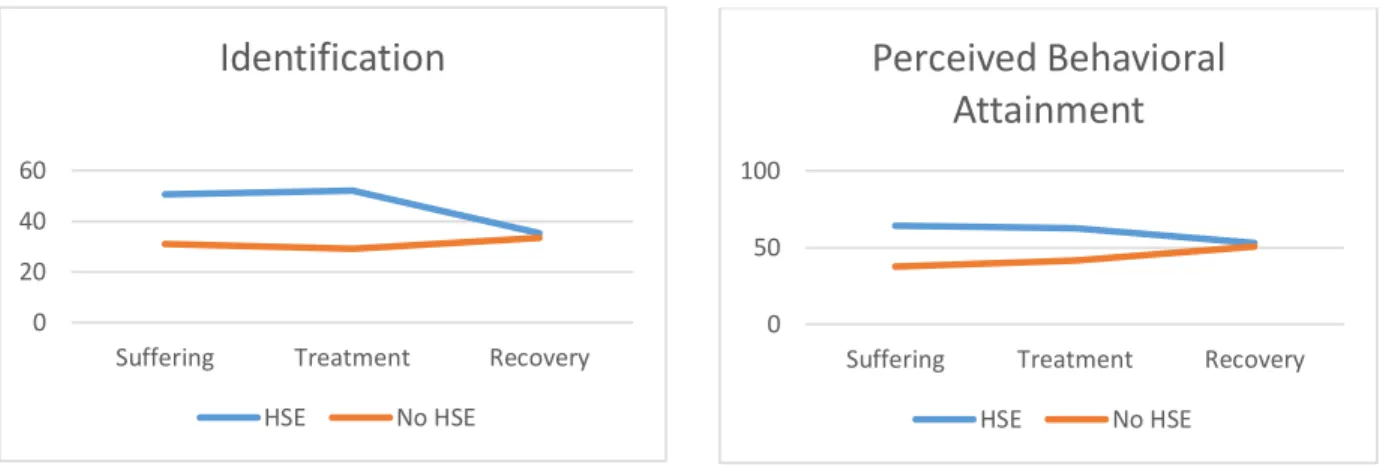
Identification, Perceived Behavioral Attainment, Aspiration (RQ4, RQ5, RQ6) ……... 60
Perceived Message Effectiveness (RQ9, RQ10, H5) ………... 61
Mediation Effects……….. 62
CHAPTER 5: DISCUSSION……… 70
Study 1: Findings……….. 70
Study 2: Findings……….. 77
Overall Discussion……… 81
Implications for Message Designers ……… 83
Limitations and Future Research ………. 84
Conclusion……… 85
APPENDIX 1: PERSONAL STIGMA QUESTIONS………. 87
LIST OF TABLES
Table
1. Hypotheses and Research Questions (Study 1 and 2) ………. 26
2. Study 1 participant demographics………. 31
3. Means for category fit for suffering, treatment, and recovery images (Study 1)……… 33
4. Pleasantness mean ratings for suffering, treatment, and recovery images (Study 1) ………... 34
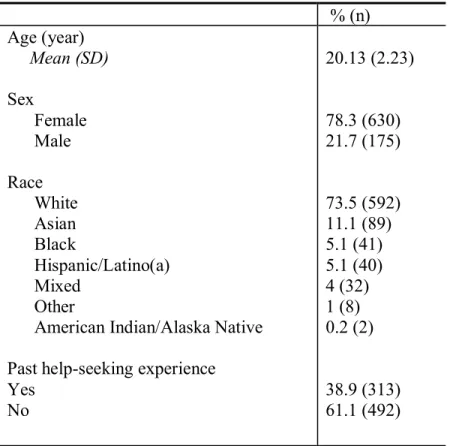
5. Study 2 participant demographics………. 43
6. Means for category fit, gain or loss frame (Study 2) ………... 44
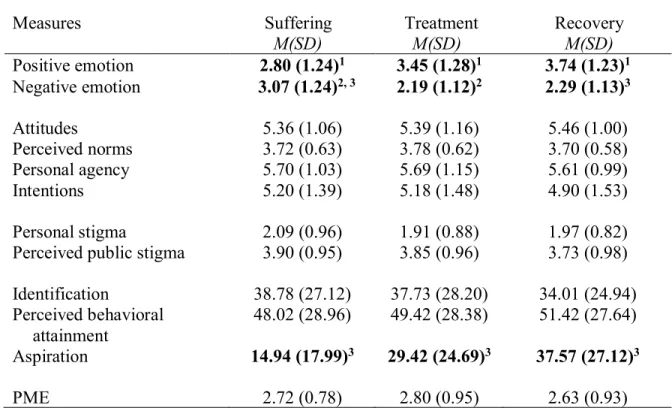
7. Mean ratings for outcome variables (Study 1) ………. 50
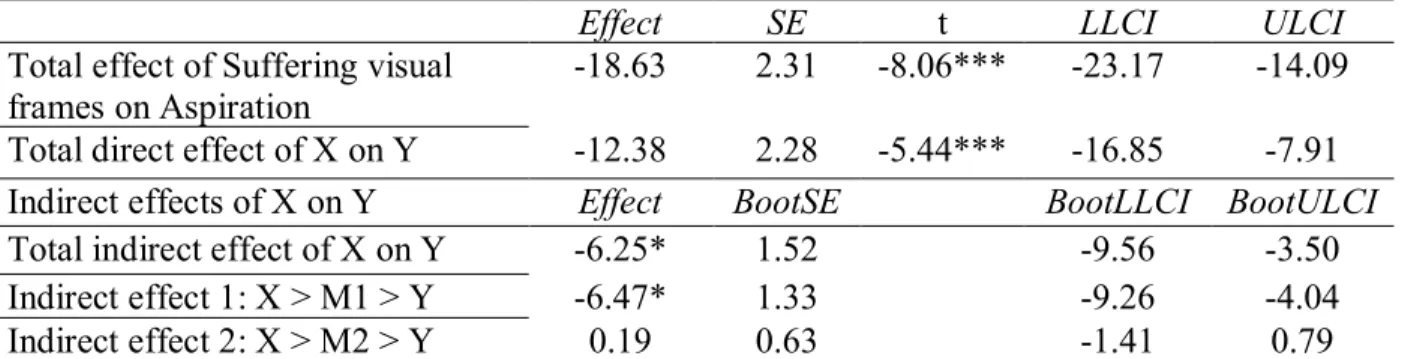
8. Direct, indirect, and total effects of suffering visual frames on aspiration (Study 1) ……….. 54
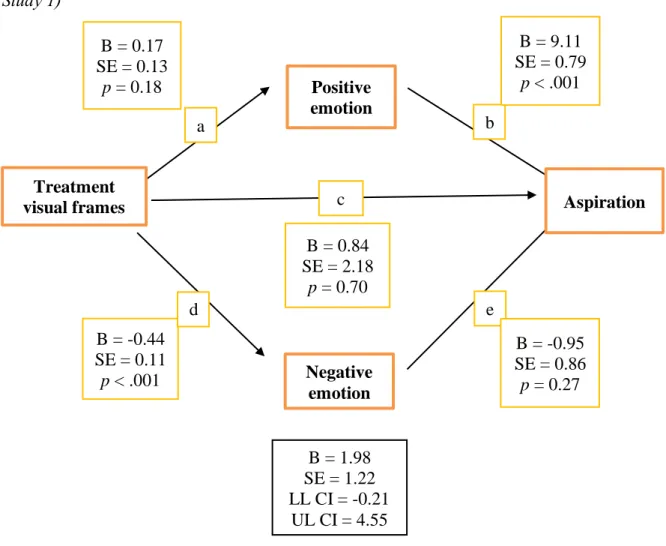
9. Direct, indirect, and total effects of treatment visual frames on aspiration (Study 1) ………... 56
10. Direct, indirect, and total effects of recovery visual frames on aspiration (Study 1) ……….. 58
11. Mean ratings for outcome variables (Study 2) ………..62
12. Direct, indirect, and total effects of positive visual frames on aspiration (Study 2) ……….. 64
13. Direct, indirect, and total effects of negative visual frames on aspiration (Study 2)………... 66
LIST OF FIGURES
Figure 1 - Study 1 stimuli for suffering, treatment, and recovery visual frames……….. 35 Figure 2 - Study 2 stimuli for text and visual frame messages………. 46 Figure 3 - Study 1 interaction effects between visual frame and help-seeking experience on identification and perceived behavioral attainment………. 51 Figure 4 - Study 1 positive and negative emotion mediation of the suffering visual frames
messages and aspiration………... 54 Figure 5 - Study 1 positive and negative emotion mediation of treatment visual frames and aspiration……….. 56
Figure 6 - Study 1 positive and negative emotion mediation of recovery visual frames and
aspiration……….. 58 Figure 7 - Study 2 interaction effects between text frame and visual frame on emotion and
between visual frame and help-seeking experience on perceived behavioral attainment and identification……….. 61
Figure 8 - Study 2 positive and negative emotion mediation of positive visual frames and
aspiration……….. 64
CHAPTER 1: INTRODUCTION
Media messages are sometimes designed to persuade audiences to change their behavior by changing viewers’ perceptions about that particular behavior and its outcomes. Health
communication is one area of communication that uses persuasion to influence behavior; therefore, health messages pertaining to depression, one of the most common mental illnesses nationwide (U.S. Department of Health and Human Services) will provide context for this dissertation. Viewers’ perceptions about behavior and its outcomes can be influenced by how a particular point-of-view is emphasized, or made salient, in the message through the use of visual and text frames. Visual framing involves the use of visuals to depict or symbolize issues, moral evaluations of those issues, or solutions by what they make visually salient to viewers (Entman, 1993; Rodriguez & Dimitrova, 2011); text frames are similar but involve the use of text to make certain points salient to viewers.
Tedesco et al., 2006; Shoemaker, 1982; Slater, Karan, Rouner, & Walters 2002; Zillmann,
Gibson, & Sargent, 1999). Other research demonstrates how framing influences how people think about a particular issue, which affects their thoughts, decisions, and actions (Goffman, 1974; Thaler & Sunstein, 2008; Tversky & Kahneman, 1981, 1986).
Visual frames can have a persuasive power because of the particular reactions they elicit, which in turn can influence message perceptions and behavior. Researchers have found that visual frames used in a variety of contexts can elicit strong emotions from viewers, which in turn influences their attitudes and beliefs about particular issues such as the Gaza conflict (Branter et al., 2011), risky health-related behaviors (Andrews, Netemeyer, Kees, & Burton 2014; Slater, Karan, Rouner, & Walters 2002), environmental issues (O’Neill & Nicholson-Cole, 2009), and presidential candidates (Coleman & Banning, 2006). For example, in the Andrews et al. (2014) study, participants were exposed to health warnings against smoking, which included visuals that emphasized the negative outcomes of smoking through graphic depictions. In turn, these
depictions affected fear, which influenced beliefs about the harms of smoking and lead to
increased thoughts about quitting. In addition, research has demonstrated that text frames, which included visuals that were used to supplement these frames, can elicit reactions that lead to actual health behavior change. For example, Schneider, Salovey, & Pallonen, et al. (2001) found that visual and auditory messages about smoking that emphasized the benefits of quitting influenced smoking avoidance and cessation behaviors. Detweiler, Bedell, Salovey, et al. (1999) found that messages encouraging about sunscreen use through emphasis of positive outcomes increased requests for sunscreen among participants, along with self-reported intentions to apply it while at the beach. In addition, Gallagher and Updegraff’s (2012) meta-analysis on health message
influenced behavior change in areas such as diet, oral health, physical activity, and safe sex, while messages that made negative outcomes of avoiding certain behaviors salient influenced behaviors such as breast cancer screenings.
The purpose of this dissertation was to assess different visual frames, text frames, and the way they interact to determine whether visual and text framing used in messages about seeking help for depressive symptoms makes a difference in audience reactions that predict behavior. The objective of this study was to demonstrate that when it comes to message design, images should be carefully and thoughtfully selected based on what designers want to make salient and the reactions they are hoping to produce – reactions that can lead to positive behavior.
Some health-related messages that are persuasive in nature warn audiences of a risky behavior, then inform them of behaviors to adopt or change in order to avoid those risks (Witte & Allen, 2000). In the context of depression, those with symptoms who do not seek help are at risk for worsening symptoms; therefore, persuasive health messages warn viewers of this risk and encourage this behavior in order to avoid this risk. These types of messages may include text along with visuals that illustrate and supplement the text, but visuals do more than simply
illustrate a concept because they are mentally processed faster than text (Sibley, 2012) and can suggest meanings that go beyond what is conveyed through text (Abraham & Appiah, 2006). Visuals draw in viewers’ attention as they are processed faster than text and make it easier to
in the context of health communication, can be used to demonstrate behavior or outcomes through implied behavior that provoke lasting mental images in viewers’ minds, making
behavior-related messages easier to recall long after message exposure (Blackwell et al., 2015). Just because visuals have been shown to be effective in influencing health behavior (Sims, Langley, Lewis, Richardson, Szatkowski; 2014; Whatley, Mamdani, & Upshur, 2002; Roter, Rudd, Keogh, & Robinson, 1987; Delp & Jones, 1996; Ngoh & Shepard, 1997), selection of visuals based on their attention-getting quality, relevance or similarity to the viewer is not a sufficient strategy for selecting visuals. Visuals that grab a viewer’s attention or portray
exemplars that are similar to the viewer do not always elicit message reactions that lead to
positive behavior. The way in which visuals are framed can influence what message they convey, which may or may not supplement the text or appropriately convey the message that message creators were hoping to communicate. Visual framing, therefore, can be a more sufficient strategy in making a significant difference in how audiences react to messages.
Because health-related messages pertain to people, it is logical that photos of people are used in messages because of their ability to realistically depict individuals that relate to message viewers and their ability to demonstrate behaviors and outcomes (Messaris, 1997). Individuals in photographs can be used to represent different stages of behavior, such as risks, behavior
changes needed to avoid those risks, or the positive outcomes of an implied behavior change. These models serve as exemplars to which message viewers can compare themselves. Exemplars that are perceived as similar to viewers elicit viewers’ need to compare themselves socially to the
differentiate their behavior (Lockwood & Kunda, 1997). In summary, the way that text frames and visual frames influence perceptions, frames can also influence how exemplars and their behaviors are perceived.
The following chapter of this dissertation reviews the literature on visual frames and text frames, as well as behavioral assimilation and contrast effects and the integrated behavior model, both of which can predict behavioral outcomes. Also included in the literature review is a
discussion of prior work in these same areas specifically in the context of mental health (i.e. depression), further providing context for this dissertation. As one of the most common types of mental illness, depression provides a specific health-related context through which messages were developed and tested. Hypotheses that aim to close gaps in the literature are presented and divided into two experiments that were conducted simultaneously and used to assessed different types of framing manipulations and their effects on message reactions. The chapter that follows explains the procedures used in each experiment to examine the impact of text and visual framing manipulations on the effectiveness of messages that encourage individuals with
CHAPTER 2: LITERATURE REVIEW
Overview
Text frames and visual frames used in media messages influence viewers’ perceptions and behavior (Chan & Lee, 1984; Coleman & Wu, 2006; Edwards, Elwyn, & Mulley, 2002;
Gibson & Zillmann, 2000; Gilovich, Griffin, & Kahneman, 2002; Hutchinson, Alba, & Einstein, 2004; Kahneman, Slovic, & Tversky, 1982; Shoemaker, 1982; Zillmann, Gibson, & Sargent,
1999) by making a particular viewpoint more salient than another, especially when the message’s
purpose is to persuade viewers to engage in a certain behavior. Because of this, viewers are more likely to process information or make decisions based on perspectives presented in those frames (Thaler & Sunstein, 2008; Tversky & Kahneman, 1981, 1986).
Visual Framing
Visual framing, through the use of metaphors, depictions, or symbols, involves the use of visuals to define problems and their causes, evaluate them from a moral standpoint, or provide solutions (Entman 1993), or any combination of these, in order to capture the essence of an issue or event graphically (Rodriguez & Dimitrova, 2011). While some researchers testing visual frames define visual framing as message themes (Borah & Bulla, 2006; Patridge, 2005), others have described visual frames as ideological positions held by the visuals used in the messages, where the visuals serve as ideological representations (Griffin, 2004; Pieterse, 1992; Rodriquez & Dimitrova, 2011). Rodriquez & Dimitrova’s (2011) review of visual framing studies identifies
a particular theme, or area of focus, when covering an issue or event. Stylistic-semiotic refers to how photographic techniques, such as point-of-view, camera angle, proximity, color, shading, focal point, and detail, convey different meanings. Connotative frames refer to using visuals as symbols to convey meanings commonly understood within cultural or social contexts or to represent abstract concepts, for example, how the American flag is commonly used to symbolize patriotism. Ideological representations are visual frames that make certain ideas dominant or that emphasize a particular points-of-view in order to further an agenda or viewpoint, be it religious, political, or ethical.
For the purposes of this dissertation, visual frames refer to the perspectives made salient in photographs, through depictions of models, to promote a health-related agenda. This type of visual framing fits into Rodriquez and Dimitrova’s (2011) ideological and connotative
representation categories of visual frames, as the depictions of models are used to make certain social ideas (i.e. about a specific health behavior) salient and represent abstract concepts (i.e. outcomes of an implied health behavior).
Visual framing researchers have tested various visual frames, the outcomes they have produced, and the persuasive power they have had on viewers. In one study, visual frames used in news stories about war that emphasized war casualties elicited stronger negative emotions, which then reduced news audience support for U.S. military presence in Iraq (Pfau, Haigh, Fifrick, Hole, Tedesco et al., 2006). Because the focus of the visuals was on war causalities and not on the war’s purpose or any positive outcomes of the war, these negative perspectives shaped
viewers’ negative perceptions and emotional responses toward the war. Had the visual frames
visual frames with political frames used in news stories about the Gaza conflict in 2009 and found that human-interest frames elicited stronger emotional responses and higher ratings of communicative quality (Branter et al., 2011). These findings demonstrate that the emotions elicited by the visual frames had an effect on perceptions of and reactions to news stories.
Other researchers assessed how visual frames affected viewers’ perceptions by testing how visual frames that focused on the causes of certain diseases and traffic accidents increased viewers’ risk perceptions (Edwards, Elwyn, & Mulley, 2002; Gibson & Zillmann, 2000;
Zillmann, Gibson, & Sargent, 1999). Similarly, research assessing visual frames that focused on the risks of certain health-related behaviors found that visual frames depicting threatening, graphic, negative outcomes significantly increased negative attitudes about the outcomes and elicited fear (Andrews, Netemeyer, Kees, & Burton 2014). This research demonstrates that viewers’ perceptions and attitudes reflect what was emphasized through visual frames.
Other studies compared positive and negative visual frames. One study investigating the effects of presidential candidate portrayals found that negative portrayals of candidates, such as depictions of unflattering gestures and facial expressions including closed eyes, slouchy posture, passive listening, and indirect eye contact, left negative emotional impressions on viewers (Coleman & Banning, 2006). Climate-change messages that used positively-framed visuals, through depictions of houses with solar panels and fields with wind turbines, were more effective than negative, fearful visuals depicting flooded houses or houses falling off cliffs and forest fires, on viewer engagement with the message; participants who were exposed to the negative visuals reported feeling too scared and depressed to think further about the issue (O’Neill &
protests (Arpan, Baker, Lee, Jung, Lorusso et al., 2006; Newhagen & Reeves, 1989). Again, results from each of these studies demonstrate support for the use of visual frames to shape viewers’ emotions, perceptions, and attitudes about certain issues. In summary, this literature
demonstrates that visual frames influence emotions and perceptions in ways which can then influence attitudes, which in turn influence behavior (Montano, Kasprzyk, Glanz, Rimer, & Viswanath, 2008). Therefore, visual frames in health-message contexts can be used to influence behavior.
The literature demonstrates the effect that visual frames have on emotion and perceptions. In the context of depression, visual frames can emphasize different stages of depression, whether it is a pre-treatment suffering stage, treatment stage, or post-treatment recovery stage (Alvidrez, Snowden, Rao, & Boccellari, 2009; Blackwell et al., 2015; Cabassa et al., 2012; Holmes et al., 2006, 2008; Renner et al., 2016, WeBlau et al., 2015; Xia, Merinder, & Belgamwar, 2011). The suffering frame depicts a pre-behavior-change stage of emotional suffering; the treatment frame depicts individuals doing the behavior of receiving help; and the recovery frame depicts individuals at a post-behavior-change stage experiencing positive outcomes of seeking help. The following hypotheses and research questions were posed. Study 1:
H1: Messages using the treatment or recovery visual frames will elicit significantly greater positive emotions than messages using the suffering visual frames, while messages using suffering visual frames will elicit significantly greater negative emotions than the other visual frames.
RQ1: Which visual frame – suffering, treatment, or recovery - will be perceived as most effective by participants?
H1: Messages using the positive visual frames will elicit significantly greater positive emotions than messages using the negative visual frames, while messages using negative visual frames will elicit significantly greater negative emotions than the other visual frames.
RQ1: Which visual frame – positive or negative - will be perceived as most effective by participants?
Visual Dominance
The way in which visuals are framed can make a significant difference in what messages communicate because of the ability of visuals to communicate more powerfully than text. Visuals provoke automatic neurological responses faster than other message components; they are mentally processed 60,000 times faster than text (Sibley, 2012). In addition, sixty percent of people are visual learners (Walsh, 2005). Visuals have implications for decision processes and outcomes because of their ability to suggest meanings beyond the text, depending on how they are used with text (Abraham, 1998, 2003; Abraham & Appiah, 2006; Bettman & Kakkar, 1977).
Visuals can suggest meanings beyond what is conveyed in the text through the use of photographs used to depict models that illustrate a behavior or its outcome (Messaris, 1997). Although the text may not explicitly say that a certain behavior results in a particular outcome, it can be implied in how a model is depicted. A health-related example of this is seen in print advertisements about Nicorette Gum, where the model depicted in the photograph is smiling and not smoking. Even though the text may reference using the gum to control cigarette cravings, the visual implies that the smiling individual has successfully used the product to develop self-control until he or she no longer craves cigarettes. The text and the visual do not explicitly communicate anything about the process of the 12-week program (i.e. the behavior), but they communicate the positive outcome of the behavior.
Visuals can also influence other types of reactions. Houts et al.’s (2006) review of
found support for the presence of visuals in health-behavior messages to improve attention. One reason visuals draw attention is because they relate to the viewers’ needs or interests (Messaris,
1997). In addition to grabbing viewer attention, visuals have a positive effect on message comprehension, especially among low-literacy audiences (Austin, Matlack, Dunn, & Kosler, 1995; Michielutte, Bahnson, Digman, & Schroeder, 1992; Mansoor & Dowse, 2003; Hämeen-Antila, Kemppainen, Enlund, Patricia, & Marja, 2004; Leiner, Handal, & Williams, 2004; Morrow, Hier, Menard & Leirer, 1998). Visuals can make it easier for viewers to interpret information or they can make patterns more recognizable, especially if the message content is unfamiliar or if there is a language barrier. Also, the concrete representations they provide, for example, through the use of exemplars, allow viewers to form mental images that last after exposure (Blackwell et al., 2015).
Lastly, because of the ability of visuals to increase attention, comprehension, and
emotional reactions, it is not surprising that they have also been shown to have significant impact on behavior change (Sims, Langley, Lewis, Richardson, Szatkowski; 2014; Whatley, Mamdani, & Upshur, 2002; Roter, Rudd, Keogh, & Robinson, 1987; Delp & Jones, 1996; Ngoh & Shepard, 1997) because these variables are predictors of behavior (Ajzen, 1991; Ajzen & Fishbein, 1980; Montano et al., 2008).
Because visuals are so effective and can be more powerful than text, the way in which they are framed makes a difference in emotional reactions or perceptions of the behaviors portrayed in those messages; these perceptions, in turn, influence whether viewers will
behaviorally heed the messages (Branter et al., 2011; Coleman & Banning, 2006; Gallagher and Updegraff’s, 2012; O’Neill & Nicholson-Cole, 2009; Schneider, Salovey, & Pallonen, et al.,
Message Framing
Like visual framing, message framing either defines problems and their causes, evaluates them from a moral standpoint, or provides a solution (Entman, 1993), or offers a combination of these. Messages frames emphasize certain perspectives through text (i.e. text frames) and
sometimes visuals that accompany it. If message designers do not carefully select or design visuals framed to support the text frame, then the two frames may conflict and only one, likely the visual frame, might influence viewers’ reactions.
Text frames make certain perspectives of an issue more salient than others in order to influence decisions and how audiences think about decision outcomes (Gilovich, Griffin, & Kahneman, 2002; Hutchinson, Alba, & Einstein, 2004; Kahneman, Slovic, & Tversky, 1982; O’Keefe & Jensen, 2007; 2009). Like visual frames, text frames can elicit affective reactions,
where positively framed message can elicit positive emotion and negatively framed messages can elicit negative emotion (Chang, 2008; Roney, Higgins, & Shah, 1995). Text that encourages a specific behavior can be framed to make the positive outcomes of the behavior salient, while other messages make the negative outcomes associated with avoiding the behavior more salient (O’Keefe & Jensen, 2007; 2009). This is known as gain and loss framing. Gain-framed messages
about seeking help for depressive symptoms, for example, emphasize the positive outcomes of doing so, such as reducing symptom frequency, while loss frames will focus on the negative outcomes of not seeking help, such as increased frequency and intensity of symptoms.
frames used in messages about prevention behaviors, O’Keefe & Jensen (2007) found that
gain-framed messages were significantly more effective than loss, but only for disease prevention behaviors such as dental hygiene, not for prevention behaviors related to safer-sex, skin cancer prevention, and nutrition. Studies have also assessed the effects of gain- and loss-framed messages about prevention-related behaviors related to vaccines and exercise. Research on the impact of gain and loss text frames for messages encouraging HPV vaccines shows that gain-frames are more effective (Gerend et al., 2008). For messages pertaining to exercise intentions and cognitive elaboration about exercise, positive and negative frames were compared, and positive frames were found to be significantly more effective for these outcomes (Jones et al., 2003).
Other studies found no significant differences in the effects of gain or loss-framed messages; however, among participants with greater risk perceptions, loss frames were more effective, such as in the context of HIV testing (Apanovitch, McCarthy, & Salovey, 2003), mammography screenings (Gallagher, Updegraff, Rothman, & Sims, 2011), and cholesterol screenings (Maheswaran & Meyers-Levy, 1990).
Salovey & Wegener (2003) discuss how some behaviors can be framed as either a preventative behavior or as a detection behavior and that doing so can produce significant differences in message reactions. These authors discussed different studies they conducted to investigate the interaction of the two types of frames: prevention versus detection and gain versus loss. Prevention frames are those that take the position that certain behaviors can prevent risky outcomes by influencing viewers’ perceptions that they can do something to avoid risks by
health. Detections frames, on the other hand, give viewers the perception that certain behaviors run the risk of finding a problem that, if left unattended, will result in negative outcomes (Rothman & Salovey, 1997). These types of messages will likely encourage behaviors such as health screenings to detect whether an individual has cancer, for example.
Various studies assessed which frame was most effective on behavioral intentions when the same behavior was presented as a prevention or detection behavior. Pap smears presented as a prevention behavior may emphasize the importance of annual pap smears as part of overall health assessments; however, they may be presented as a detection behavior if messages
emphasize their use for detecting cervical cancers (Salovey & Wegener, 2003). STD screenings can similarly be presented as either prevention or detection (Garcia-Retamero & Cokely, 2011. For both of these studies, the gain frame was more effective when the behavior was framed as a prevention behavior, while loss frames were more effective when the behavior was framed as a detection behavior. This literature on text frames demonstrates that both gain and loss text frames have had significant, positive effects on behavior and behavioral intentions but that the frame that was most effective was dependent upon the health issue.
This literature on text frames demonstrates that, like visual frames, text frames influence emotions and perceptions by what is made salient to audiences; gain text frames emphasize positive outcomes and loss text frames emphasize negative outcomes. Therefore, the following hypothesis and research question were posed regarding the effect of text frames on emotion and perceptions.
Study 2:
RQ2: Which text frame – gain or loss- will be perceived as most effective by participants?
Because visual frames and text frames have been shown to elicit respective affective reactions, the following hypothesis was posed regarding the combination of both frames; in addition, the following research question was posed.
H3: Messages using gain text frames with positive visual frames will elicit significantly greater positive emotions than all other messages, while messages using loss text frames with negative visual frames will elicit significantly greater negative emotions than all other messages.
RQ3: Which text and visual frame combination will be perceived as most effective by participants?
Behavior Assimilation
When messages are relevant to the viewer and there is perceived similarity (between the viewer and the model in the message), there is an increased likelihood that social comparison will occur (Wood, 1989) so that viewers can establish their social identity. Text frames and the way models are visually framed provoke viewers to establish their identity either by assimilating with or differentiating themselves from the models (Brewer, 1991). Viewers behaviorally
assimilate to models when they perceive the models to be similar in that they, too, have had similar experiences or share certain characteristics with the viewer. For example, a cancer patient sees himself or herself as similar to a recovering cancer patient in that they have both
Meichenbaum, 1971) by taking on actual behavioral traits (Abrams, 1999). For example, frames give viewers the perception that they can do certain behaviors to avoid risks. This perception is shaped by the positive mental imagery viewers produce as they envision themselves successfully doing the behavior. When viewers can successfully visualize doing a behavior, they behave similarly (Chan & Cameron, 2012; Gregory et al., 1982; Loft & Cameron, 2013; Renner et al., 2016; Whiting and Dixon, 2013); therefore, the way in which models are visually framed influences this visualization. If a model’s behavior emphasizes a positive behavior that the
viewer can visualize himself or herself doing, then positive behavior will likely result. If a model’s negative behavior is emphasized, such as one that negatively stereotypes individuals or
reinforces stigma, viewers may assimilate with this behavior.
If viewers, on the other hand, believe that the behavior portrayed by the model is not similar or if it is perceived as unattainable because the viewer cannot visualize himself or herself doing the behavior successfully, then they are less likely to assimilate their behavior with that of the models due to the perception of a missed opportunity or lack of ability (Lockwood & Kunda, 1997).
The literature on behavioral assimilation explains how the visual portrayals of exemplars used in messages can influence behavior when the viewer identifies with the exemplar in the visual, perceives the exemplar’s behavior to be attainable, and aspires to have the same
experiences as the exemplar. The following research questions were posed to examine which visual frame would be best in eliciting these three outcomes.
Study 1:
Study 2:
RQ4a-c: Which text frame elicits greatest a) identification, b) perceived behavioral attainment, and c) aspiration?
RQ5a-c: Which visual frame elicits greatest a) identification, b) perceived behavioral attainment, and c) aspiration?
RQ6a-c: Which text and visual frame combination will elicit greatest a) identification, b) perceived behavioral attainment, and c) aspiration?
The Integrated Behavioral Model - A Theoretical Framework
According to the integrated behavioral model, which stems from the theory of reasoned action (Ajzen & Fishbein, 1977, 1980; Fishbein & Ajzen, 1975) and the theory of planned behavior (Ajzen, 1988, 1991), attitudes and perceptions predict behavior change (Montano, Kasprzyk, Glanz, Rimer, & Viswanath, 2008). The primary determinant of behavior change is behavioral intentions (Ajzen & Fishbein, 1980; Fishbein & Ajzen, 1975). Behavioral intentions are determined by a person’s attitudes, perceived norms, and personal agency about the behavior.
Montano et al., (2008) describes these predictors in depth:
Attitude refers to “an individual’s overall perception of favorableness or un-favorableness toward a behavior.” More specifically, there are two types of attitudes in response to messages:
experiential attitude, which involves the viewer’s emotional response toward the recommended behavior, and instrumental attitude, which is influenced by the viewer’s beliefs about the
behavioral outcomes (Ajzen, 1991; Ajzen & Fishbein, 1980; Montano et al., 2008).
Perceived norms refers to the social pressures one feels to perform or not perform a particular behavior. This construct also has two parts: injunctive norms and descriptive norms. Injunctive norms involve people’s perceptions about what those close to them think they should
The third predictor of behavioral intentions is personal agency, or the perception that the behavior is in the viewer’s control. This two-part construct includes self-efficacy and perceived
behavioral control. Self-efficacy is the viewers’ beliefs about their ability to carry out the recommended behavior. This derives from the belief as to whether they have the perceived ability or confidence to do the behavior. Perceived behavioral control involves beliefs about the amount of control they have over the behavior, and whether there are environmental factors that might prevent them from performing the behavior.
Because framing can influence perceptions (Andrews, Netemeyer, Kees, & Burton 2014; Branter et al., 2011; O’Neill & Nicholson-Cole, 2009) it is possible that framing can influence viewers’ attitudes, perceptions about norms, and perceptions about personal agency pertaining to
a behavior emphasized in a health message. These message outcomes are all predictors of behavioral intentions, which is the strongest predictor of behavior (Montano et al., 2008).
Several studies demonstrate that the integrated behavioral model (or earlier models of TRA, TPB) has successfully predicted numerous behaviors. A meta-analysis of studies that tested the behavioral model found that intentions to use condoms was a function of attitudes, and that intentions were significantly related to behavior (Albarracín, Johnson, Fishbein,
Muellerleile, 2001). In another study, authors tested the model to determine whether attitudes, perceived norms, and perceived personal agency predicted intentions for cancer screening
behaviors including mammography, colonoscopy, prostate-specific antigen tests, exercise, eating fruits and vegetables, and dieting (Smith-McLallen & Fishbein, 2008). Results confirmed the model’s assumption in that attitudes and perceptions, as influenced by health messages, predicted
Because of the nature of visual frames and their effect on attitudes and perceptions, as demonstrated in the literature on visual framing, the following hypotheses were posed as they pertain to outcomes outlined in the integrated behavioral model. However, because gain and loss text frames do not necessarily influence positive and negative outcomes, respectively, the
following research questions pertaining to the effect of text frames were posed. Study 1:
H2a-d: Messages using the treatment or recovery visual frames will increase a) attitudes toward help-seeking, b) personal agency about help-seeking, c) perceived help-seeking norms, and d) help-seeking intentions than messages using the suffering visual frames.
Study 2:
H4a-d: Messages using the positive visual frames will increase a) attitudes toward help-seeking, b) personal agency about seeking, c) perceived seeking norms, and d) help-seeking intentions than messages using negative visual frames.
RQ7a-d: Which text frame will increase a) attitudes toward help-seeking, b) personal agency about help-seeking, c) perceived help-seeking norms, and d) help-seeking intentions?
RQ8a-d: Which text and visual frame combination will increase a) attitudes toward help-seeking, b) personal agency about help-help-seeking, c) perceived help-seeking norms, and d) help-seeking intentions than all other messages?
Depression as Context for this Study
To better examine the effects of visual frames and text frames on message reactions, this dissertation assessed messages pertaining to depression. Depression is one of the most common mental illnesses nationwide (U.S. Department of Health and Human Services), and college students experience depression at a rate greater than that of the general population (Ibrahim, Kelly, Adams, & Glazebrook, 2013). Despite the opportunities for college students to seek help on campus for their symptoms, more than 80% of them do not do so (Eisenberg, Hunt, Speer, & Zivin, 2011), because stigma and negative perceptions and beliefs discourage this behavior (Cheang, & Davis, 2014; Lannin et al., 2015; Reynders et al., 2014).
One of the most common barriers to seeking help for depression is stigma, or negative stereotypes, toward those with depression (Gulliver et al., 2010). Part of this stigma is the belief that depression is a personal weakness (Angermeyer & Dietrich, 2006; Angermeyer &
Matschinger, 2003; Corrigan & Watson, 2002; Crisp, Gelder, Goddard, & Meltzer, 2005; Yap, Reavley, & Jorm, 2013). Extant research in the area of mental illness stigma identifies different types of stigma, including personal stigma and perceived public stigma, that deter individuals from seeking help (Gulliver et al., 2010). Personal stigma is an individual’s own prejudices
toward those with mental illness (Griffiths, Christensen, Jorm et al., 2004), which has been operationalized using measures that focus on first-person attitudes, such as, “I would willingly accept someone who has received mental health treatment to marry into my family.” Perceived
public stigma refers to an individual’s perception of the public’s prejudices toward those with
mental illness (Corrigan et al., 2011). This form of stigma is operationalized using measures of third-person attitudes toward those with mental illness, such as, “Most people would willingly accept someone who has received mental health treatment to marry into my family.”
While one type of stigma might be a significantly greater barrier to seeking help than another (Eisenberg et al., 2009; Lally, O’Conghaile, Quigley, Bainbridge, & McDonald, 2013), previous research efforts have been made to try to reduce stigma. One of the earlier approaches to reducing stigma toward individuals with depression was to improve attitudes about seeking help through education. Results from several studies found that when individuals with depression received information about mental illness, there was a significant increase in positive attitudes sustained over time about mental health and about seeking help (Esters, Cooker, & Ittenback, 1998; Paykel, Hart, & Priest, 1998; Van den Broek, O’Donoghue, Ishengoma, Mbega, 1998).
for longer than three months. Even more promising were the results from Paykel et al.’s study
(1998) that revealed that after a newspaper, magazine, radio, and television campaign, attitudes toward treatment and willingness to consult with a doctor about depression increased both at three and five years after the campaign.
McGinty, Goldman, Pescosolido, & Barry (2015) tested written messages portraying those with depression who experienced successful treatment versus those who were left untreated to determine this effect on stigma. Participants who read portrayals of untreated individuals experienced an increase in stigma toward individuals with mental illness, while those who read portrayals of successfully treated individuals showed a decrease in stigma, a decrease in desire for social distance, and an increased belief in the effectiveness of treatment. Because the messages these authors assessed were text only, researchers did not assess the effect of how visual portrayals of treatment might affect stigma. Perhaps visual portrayals that are framed to make treatment behavior salient will also decrease stigma. In addition, this study did not assess for the effects of visual frames through visual portrayals of models on message reactions that theoretically predict behavior.
Visuals in Depression Messages
Only a few studies have assessed the effects of visuals in depression messages. Visuals have been shown to reduce depression stigma related to those receiving treatment, while improving literacy, language barriers, attention to messages, comprehension, memory, and self-efficacy in identifying symptoms (Broussard, Radkins, & Compton, 2014; Cabassa, Molina, & Baron, 2012; Unger, Cabassa, Molina, Contreras, & Baron, 2013). These results are not
surprising being that visual have been effective in improving recall, adherence, and
2005; Mansoor & Dowse, 2003), medication instructions (Morrow et al., 1998), oral rehydration therapy (Patel et al., 1990), and penicillin information for children (Hämeen-Anttila et al., 2004).
While this literature reflects the assessment of the effects of visuals used in health-related messages, the framing of those visuals was not assessed. Previous literature (discussed above) demonstrates that visuals and the way they are framed have effectively influenced health-related behavior (Andrews, Netemeyer, Kees, & Burton 2014; Schneider, Salovey, & Pallonen, et al., 2001; Slater, Karan, Rouner, & Walters 2002). Because visuals have been effective in depression
messages and other health-related contexts, it is necessary to assess different visual frames as a potentially effective strategy for provoking positive message reactions that lead to message adherence and behavior compliance.
Message Frames Used in Depression Messages
One of the greatest challenges of creating persuasive mental health messages is to
determine how to persuade individuals to seek help (Lannin, Vogel, Brenner, Abraham & Heath, 2015, 2015; Reynders, Kerkhof, Molenberghs, & Van Audenhove, 2014). A lack of research in the area of text framing of mental illness-related messages requires a review of literature that has assessed messages pertaining to health issues for similar help-seeking behaviors.
depression. These studies offer insight as to how frames can impact attitudes about mental illness. Myrick et al. (2014) found that during an 18-year span of TV news coverage, mental illness was episodically framed and included sources that were mostly from psychiatrists. Authors explain that this type of framing, which does not include statistics about mental illness, may cause audiences to overestimate their own risks of either getting a mental illness or
becoming a victim of someone with a mental illness. In a study by Issakainen (2015), adolescent participants with depression wrote personal narratives about what influenced their decision to open up about their depression to others. The themes found within these narratives fit into one of three categories: support, connection, handling (i.e. coping). In other words, participants opened up with others about their struggle, either to gain their support, make a connection with others, or receive help with how to handle their symptoms. A study that conducted content analyses on depression frames found that significantly more thematic, versus episodic, frames were used (in China) (Zhang et al., 2014), which typically attribute blame on society as a whole for the issue; however, in the U.S., frames that attribute causal and problem-solving responsibilities upon the individual were used more frequently (Zhang, Jin, Tang, 2016).
As demonstrated above, researchers have assessed various frames of depression messages; however, no research has been conducted to investigate how gain and loss frames have influenced help-seeking behaviors, and research has not investigated the effectiveness of visual frames in depression messages. The following hypotheses were posed based on the nature of the visual frames being tested, while research questions pertaining to text frames were also posed.
Study 1:
Study 2:
H5: Messages using positive visual frames will reduce stigma significantly more than messages using negative visual frames.
RQ9: Which text frame - gain or loss - will reduce stigma significantly more?
RQ10: Which text and visual frame combination will reduce stigma significantly more than all other messages?
The Current Study
The above literature review demonstrates that visuals and the way they are framed are an effective tool used in the decision-making process because of their ability to make certain information more salient, make interpretation of text easier to visualize, elicit emotions, and improve attention, comprehension, recall, cognitive elaboration, and behavior (Rodriguez & Dimitrova, 2011). The literature also validates the persuasive effects of text frames on the decision-making process (Gilovich, Griffin, & Kahneman, 2002; Hutchinson, Alba, & Einstein, 2004; Kahneman, Slovic, & Tversky, 1982; O’Keefe & Jensen, 2007; 2009). While several
studies have investigated the effects of text frames and visuals used in depression messages, there is a lack of knowledge about the effectiveness of visual frames used in these messages. Therefore, the current study aims to close this gap in the literature by investigating the effects of several visual frames used in depression messages on viewers’ behavioral intentions to seek help.
Because of the influential power of frames and the ability of visuals to elicit emotions, visual frames can influence viewers’ experiential attitudes, a construct in the integrated model
Gutiérrez-Maldonado, Caqueo-Urízar, & Ferrer-García, 2009; Holmes et al., 2006, 2008; Issakainen, 2015; Link et al., 1997; Renner et al., 2016, WeBlau et al., 2015; Xia, Merinder, & Belgamwar, 2011). Some depression messages include a visual of a person suffering with depression, which, for the purposes of this study, will be referred to as a “suffering” frame. This visual frame depicts exemplars with depression who suffer from the symptoms. Research demonstrates that a negative, symptomatic stage is what depressed individuals who do not get help for their symptoms experience (Cabassa et al., 2012; WeBlau et al., 2015), a pre-treatment stage.
An alternative visual frame tested in this study is one that depicts a depressed individual receiving help, or a “treatment” frame. Researchers have assessed how various portrayals of
getting help, representative of a treatment stage, positively influence audience reactions (McGinty et al., 2015; Unger et al., 2013). Another visual frame to test, a “recovery” frame,
depicts exemplars in a recovery stage. Visuals for this frame portray individuals who have presumably received help for their symptoms and are now experiencing some of the positive outcomes of doing so. Researchers have tested how perceptions related to a post-treatment recovery stage have positively influenced perceptions related to seeking help (Blackwell et al., 2015; Holmes et al., 2006, 2008; Issakainen, 2015; Link et al., 1997; Renner et al., 2016). In addition, recovery-oriented, visually-based psychoeducational tools have been shown to improve attitudes, perceptions, message adherence, as well as reduce relapse of symptoms and stigma, promote social functioning, and improve quality of life (Alvidrez, Snowden, Rao, & Boccellari, 2009; Gutiérrez-Maldonado, Caqueo-Urízar, & Ferrer-García, 2009; Xia, Merinder, &
frames. Therefore, a visual frame that depicts an individual modeling treatment in the “treatment” frame, or a model experiencing a positive outcome in the “recovery” frame, can
influence the viewers’ personal agency about their ability to perform the behavior and motivate
them to positive behavior. For individuals with depression, visual frames of “suffering” could lead to behavioral assimilation, and viewers would not be motivated to assimilate with positive behavior.
Hypotheses and Research Questions
This dissertation involves two studies. Study 1 investigates three visual frames: suffering, treatment, and recovery and their effect on emotion, predictors of behavior change, and stigma. Study 2 investigates two text frames, gain and loss, in combination with positive or negative visual frames and their effect on the same outcomes as Study 1. Study 2 also investigates whether there is an interaction effect between visual frame and text frame.
Based on the findings from previous research and the theoretical assumptions of the integrated behavioral model and assimilation literature, the following hypotheses and research questions were posed:
Table 1. Hypotheses and Research Questions (Study 1 and 2)
H/RQ # Hypothesis/ Research Question
Study 1
H1 Messages using the treatment or recovery visual frames will elicit significantly greater positive emotions than messages using the suffering visual frames, while messages using suffering visual frames will elicit significantly greater negative emotions than the other visual frames.
RQ2a-c Which visual frame elicits greatest a) identification, b) perceived behavioral attainment, and c)
aspiration?
H2a-d Messages using the treatment or recovery visual frames will increase a) attitudes toward help-seeking, b) personal agency about help-help-seeking, c) perceived help-seeking norms, and d) help-seeking intentions than messages using the suffering visual frames.
H3 Messages using the treatment or recovery visual frames will reduce stigma significantly more than messages using the suffering visual frames.
Study 2
H1 Messages using the positive visual frames will elicit significantly greater positive emotions than
messages using the negative visual frames, while messages using negative visual frames will elicit significantly greater negative emotions than the other visual frames.
RQ1 Which visual frame – positive or negative - will be perceived as most effective by participants?
H2 Messages using gain text frames will elicit significantly greater positive emotions than messages using loss text frames, while messages using loss text frames will elicit significantly greater negative emotions.
RQ2 Which text frame – gain or loss- will be perceived as most effective by participants?
H3 Messages using gain text frames with positive visual frames will elicit significantly greater positive emotions than all other messages, while messages using loss text frames with negative visual frames will elicit significantly greater negative emotions than all other messages. RQ3 Which text and visual frame combination will be
perceived as most effective by participants?
RQ5a-c Which visual frame elicits greatest a) identification, b) perceived behavioral attainment, and c)
aspiration?
RQ6a-c Which text and visual frame combination will elicit greatest a) identification, b) perceived behavioral attainment, and c) aspiration?
H4a-d Messages using the positive visual frames will increase a) attitudes toward help-seeking, b) personal agency about help-seeking, c) perceived help-seeking norms, and d) help-seeking intentions than messages using negative visual frames.
RQ7a-d Which text frame will increase a) attitudes toward seeking, b) personal agency about help-seeking, c) perceived help-seeking norms, and d) help-seeking intentions?
RQ8a-d Which text and visual frame combination will increase a) attitudes toward help-seeking, b) personal agency about help-seeking, c) perceived help-seeking norms, and d) help-seeking intentions than all other messages?
H5 Messages using positive visual frames will reduce stigma significantly more than messages using negative visual frames.
RQ9 Which text frame - gain or loss - will reduce stigma significantly more?
RQ10 Which text and visual frame combination will reduce stigma significantly more than all other messages?
Two separate studies, conducted simultaneously, examined the effects of framing on message reactions; one assessed visual frames, while the other assessed text frames, visual frames, and their interaction effects on attitudes, norms, personal agency, and intentions. As illustrated in the integrated behavioral model described in the literature, these message reactions predict behavior. Both studies also examined the effects of frames on emotion, stigma, perceived message effectiveness (PME), and behavior assimilation (i.e. identification, perceived behavioral attainment, aspiration). Study 1 assessed the effects of three visual frames. Study 2 assessed the effects of two text frames and two visual frames. The purpose of both studies, ultimately, was to assess which visual frame (Study 1) and which text and visual frame combination (Study 2) best promoted help-seeking behavior.
Study 1
Overview
The purpose of Study 1 was to determine how different visual frames impacted message perceptions and reactions that predict behavior as well as how these visual frames impact stigma. To examine this, a controlled experiment was used to investigate the influence of visual frames on attitudes, norms, personal agency, intentions, emotion, stigma, PME, and assimilation.
Research conducted in the area of depression messages recognizes a negative,
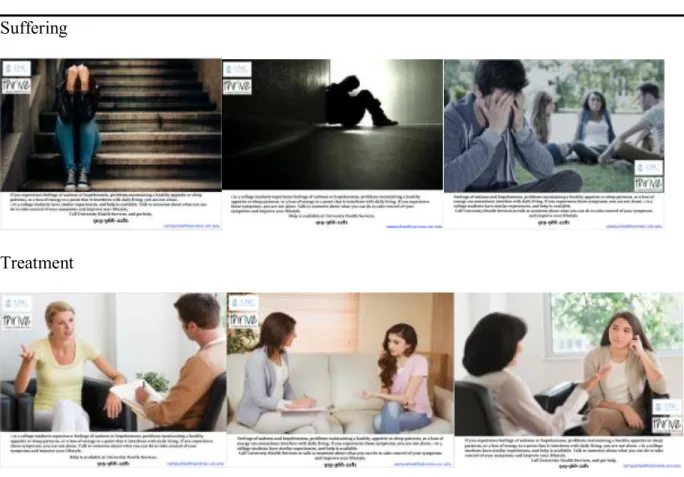
depictions of behaviors that individuals with depression would likely experience: the suffering frame, which depicts a pre-behavior-change stage of emotional suffering experienced by individuals with depression; the treatment frame, depicting individuals doing the behavior of receiving help; and the recovery frame, which depicts individuals at a post-behavior-change stage experiencing positive outcomes of seeking help. Participants were randomly assigned to one of three visual frame conditions: suffering, treatment, or recovery, where they viewed messages using similar text but different visuals to represent the respective experimental visual frame treatment conditions (Figure 1).
Participants- Study 1
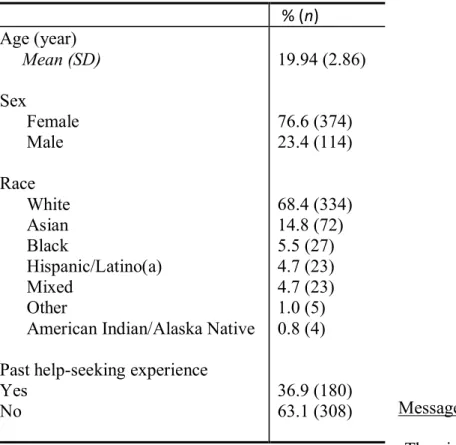
Participants (N=488) consisted of a convenience sample of undergraduate students. Undergraduates were recruited via email announcements. Email addresses were obtained through student records available to the public upon request. Recruitment emails included a link to an online survey for participants to take at their convenience, followed by a reminder email a week later to encourage those who had not yet participated to do so. As an incentive for participating, students were entered into five drawings for $50 Amazon gift cards. The Institutional Review Board at the University of North Carolina granted approval for study procedures before Study 1 began.
moderating effects. To measure participants’ experiences with help-seeking, participants were
asked if they had ever sought help from a professional (i.e. psychologist, counselor, etc.) for depressive symptoms, with response choices of yes or no; 180 participants (36.9%) reported having experience with seeking professional help (Table 2).
Table 2. Study 1 participant demographics (N=488)
Message Pretest- Study 1
The visuals were pretested to ensure that the three visual frames (i.e. suffering, treatment, recovery) were perceived as such by viewers. The pretest was conducted using undergraduate students (N=65) from the University of
% (n) Age (year)
Mean (SD) Sex
Female Male Race White Asian Black
Hispanic/Latino(a) Mixed
Other
American Indian/Alaska Native Past help-seeking experience Yes
No
19.94 (2.86)
76.6 (374) 23.4 (114)
68.4 (334) 14.8 (72) 5.5 (27) 4.7 (23) 4.7 (23) 1.0 (5) 0.8 (4)
North Carolina’s School of Media and Journalism. Participants were recruited in-person and via
email announcements. As an incentive for participation, participants were entered into a drawing for one of three ten-dollar Amazon gift cards. Participants ranged in age from 19 to 22
(M=20.08, SD=.76). The sample consisted of 84.6% females; 86.2% were White, 4.6% Asian, 4.6% Hispanic/Latino, 3.1% African American, and 1.5% mixed races.
Participants consented to participate, then viewed the following paragraph, “You will
view 30 images, then respond to several questions pertaining to each image. Each image will
show an individual (or multiple people) in one of three stages of depression: suffering, treatment,
recovery. Suffering refers to individuals in a state of suffering who have likely not received help
for depressive symptoms such as feeling sad or worthless, having low energy, or irregular sleep
patterns. Treatment refers to those receiving professional help with depressive symptoms
through individual or group therapy. Recovery refers to those who have received professional
help to learn how to cope with symptoms and experience positive lifestyle changes.” Participants then viewed, in random order, 10 images depicting individuals representing the suffering stage, 10 images depicting individuals representing the treatment stage, and 10 images depicting individuals representing the recovery stage.
Lang, 1994): “How pleasant is the content in this image?” using a scale from 1=Not at all
pleasant to 9=Very pleasant.
Final images for stimuli were selected based on category fit and pleasantness to ensure that images for each category were perceived as belonging to that category and to account for the confound of the positive and negative imagery of the images. Paired-sample t-tests were used to determine whether the means for each category were significantly different. For each category, images with the highest category fit (suffering, treatment, or recovery) means that were not significantly different from each other but significantly different (p<.001) from the two
remaining category fit means were chosen (Table 3). For the three images that were chosen, their means for the pleasantness ratings were then compared using paired samples t-tests to ensure that they were not significantly different from each other (Table 4).
Table 3. Mean ratings for suffering, treatment, and recovery images (Study 1)
Image Depicts Suffering
Depicts Treatment
Depicts Recovery
Mean (SD) Mean (SD) Mean (SD)
Suffering 1 Suffering 2 Suffering 3
4.41 (0.76)1
4.56 (0.61)1
4.62 (0.66)1
1.47 (0.80)2 1.32 (0.73)2 1.28 (0.58)2
1.19 (0.59)3 1.24 (0.78)3 1.09 (0.30)3 Treatment 1
Treatment 2 Treatment 3
1.73 (0.83)1 1.79 (0.98)1 1.48 (0.77)1
4.43 (0.82)2
4.21 (0.88)2
4.23 (0.92)2
2.77 (0.94)3 2.65 (1.23)3 2.45 (1.06)3 Recovery 1
Recovery 2 Recovery 3
1.16 (0.37)1 1.12 (0.55)1 1.12 (0.54)1
2.87(1.50)2 1.67 (1.05)2 2.00 (1.30)2
4.06 (1.09)3
3.73 (1.44)3
4.00 (1.23)3
Means in each category are in bold. Means within categories are not significantly different from each other (p > .05) and share the same superscript; however, means between category groups are significantly different from each other (p < .001).
Image Pleasantness Mean (SD) Suffering 1
Suffering 2 Suffering 3
2.44 (1.61) 2.09 (1.19) 2.50 (1.70)
Treatment 1 Treatment 2 Treatment 3
5.43 (1.28) 5.53 (1.29) 5.65 (1.02) Recovery 1
Recovery 2 Recovery 3
7.74 (1.44) 7.91 (1.49) 7.59 (1.37)
Pleasantness ratings within each category are not significantly different from each other but are significantly different between categories (p<.001).
Stimuli- Study 1
order in which this information was given. An example of the text is as follows: Feelings of sadness and hopelessness, problems maintaining a healthy appetite or sleep patterns, or a loss of
energy can sometimes interfere with daily living. If you experience these symptoms, you are not
alone. 1 in 3 college students have similar experiences, and help is available. Call University
Health Services to talk to someone about what you can do to take control of your symptoms and
improve your lifestyle [number and website provided].
Figure 1. Stimuli for suffering, treatment, and recovery visual frames (Study 1)
Suffering
Treatment
Measures- Study 1
Attitudes. Three 7-point semantic differential items were used to measure experiential
attitudes, and three items were used to measure instrumental attitudes, adapted from Montano & Kasprzyk (2008). Combined, these two attitude measures (6 items total) indicate viewers’ overall attitudes toward the message. Experiential attitudes capture the viewers’ emotional responses to
the idea of help-seeking behavior, as encouraged by the message. Items were, “In the event that I experience depressive symptoms, seeking help seems…” with responses from 1=Unpleasant to 7=Pleasant, 1=Worthless to 7=Useful, and 1=Harmful to 7=Beneficial.
Instrumental attitudes are the beliefs about the outcomes of seeking help (Montano & Kasprzyk, 2008). Using responses from 1=Extremely unlikely to 7=Extremely likely, items were, “Seeking professional help for depressive symptoms is a helpful way to learn how to
manage symptoms; Those who seek professional help for depressive symptoms will experience a better life; Seeking professional help for depressive symptoms will result in fewer and/or less frequent symptoms in the future.” Responses from both types of attitudes were averaged
together, with higher scores indicating positive attitudes (M= 5.40, SD= 1.07, coefficient alpha = .81).
& Kasprzyk (2008). Combined, these two measures (5 items total) indicate viewers’ overall
perceived norms pertaining to help-seeking behavior. Injunctive norms capture the viewers’ perceptions of what those close to them think about help-seeking behavior. Items were, “Most people who are important to me think that those with depressive symptoms should seek professional help; People whose opinion I value think that those who experience depressive symptoms should seek professional help; My closest friends/family members think that people who experience depressive symptoms should seek professional help,” with responses from 1=Extremely unlikely to 7=Extremely likely.
Descriptive norms capture the viewers’ perceptions of whether those close to them who
experience depressive symptoms seek professional help, adapted from Montano & Kasprzyk (2008). Using responses from 1=Extremely unlikely to 7=Extremely likely, items were, “Most people in my life who experience depressive symptoms seek professional help for how to cope with their symptoms; Most people at my university seek professional help for depressive symptoms they experience.” Responses from both types of norms were averaged together, with
higher scores indicating greater perceived norms pertaining to help-seeking behavior (M= 3.71, SD= .61, coefficient alpha = .69).
Personal agency: Three 7-point semantic differential items were used to measure
self-efficacy, and three items were used to measure perceived control. These two personal agency measures capture the viewers’ self-perception of their ability to do the behavior (Montano &
I know how to seek professional help for depressive symptoms using resources on campus; I have a way to contact on-campus resources for help if I needed them.”
Perceived control refers to the viewers’ beliefs about how much control they perceived to
have over their own behavior. Using responses from 1=Strongly disagree to 7=Strongly agree, items included, “The decision to seek professional help is in my control; I am able to seek
professional help if I need to; There are no constraints keeping me from seeking professional help if I need it.” Responses from both measures of personal agency were averaged together.
Higher scores indicate greater personal agency. These 6 items had a coefficient alpha of .87, M= 5.66, SD= 1.06.
Intentions: Three 7-point semantic differential items were used to measure intentions to
seek professional help (Montano & Kasprzyk, 2008). Intentions are the likelihood of performing the behavior. Items included, “In the event that I experience depressive symptoms, I plan to get
help from a professional; I would want help from a professional if I experience depressive symptoms; and I will seek professional help if I experience depressive symptoms,” using
responses from 1=Strongly disagree to 7=Strongly agree. These three items had a coefficient alpha of .92, M= 5.09, SD= 1.47. Responses were averaged, with higher scores indicating stronger intentions.
Stigma: Personal stigma. To measure personal stigma, participants responded to twelve
7-point semantic differential first-person items that were adapted for this study (Corrigan, 2004; Griffiths et al., 2004). Statements included: “I would willingly accept someone who has received treatment for depression as a close friend; I think less of a person who has received treatment for depression; I believe that someone who has received treatment for depression is just as
7=Strongly agree. Items were recoded and averaged so that high scores indicate greater stigma (M= 1.99, SD= .89, coefficient alpha = .90). See Appendix I.
Perceived public stigma. To measure perceived public stigma, participants responded to
the same twelve 7-point semantic differential items that were adapted for this study for the personal stigma measure above, but statements were changed to third person (Corrigan, 2004; Griffiths et al., 2004). Sample statements include: “Most people would willingly accept someone
who has received treatment for depression as a close friend; Most people think less of a person who has received treatment for depression; Most people believe that someone who has received treatment for depression is just as trustworthy as the average person,” using options ranging from
1=Strongly disagree to 7=Strongly agree. Items were recoded and averaged so that high scores indicate greater stigma (M= 3.83, SD= .96, coefficient alpha = .88).
Emotion. Participants’ affective reactions were measured based on emotions expected to
be elicited by the messages, adapted by Crawford & Henry (2004). Participants responded to the following question, “How do you feel after looking at these messages?” using a 7-point Likert
scale with 1=Not at all to 7=Extremely, to rate seven positive emotions: happy, hopeful,
encouraged, proud, confident, peaceful, optimistic, and seven negative emotions: sad, hopeless, discouraged, ashamed, guilty, worried, fearful. Emotion ratings were averaged; higher scores indicate stronger positive/negative affective reactions (positive emotion: M= 3.34, SD= 1.31, coefficient alpha = .91; negative emotion: M= 2.51, SD= 1.23, coefficient alpha = .90).
Identification. Identification refers to viewers’ perceptions of whether they are similar to
the exemplars visually portrayed in the messages (Escalas & Bettman, 2003). To measure this, participants rated three statements adapted by Escalas & Bettman (2003): “I feel a personal