PROBLEM SOLVING SKILLS IN MATHEMATICS
by
Cosmas Toga Tambara
A dissertation presented in partial fulfilment of the requirements
for the degree of
Doctor of Philosophy
at
Stellenbosch University
Supervisor:
Dr H.M. Wessels
Co-supervisor:
Dr J.H. Smit
March
201
5
DECLARATION
By submitting this thesis electronically, I declare that the entirety of the work contained therein is my own, original work, that I am the sole author thereof (save to the extent explicitly otherwise stated), that reproduction and publication thereof by Stellenbosch University will not infringe any third party rights and that I have not previously in its entirety or in part submitted it for obtaining any qualification.
Date: ………..
COPYRIGHT © 2015 STELLENBOSCH UNIVERSITY ALL RIGHTS RESERVED
ABSTRACT
In this study, the pedagogical knowledge of Foundation Phase teachers is explored (and unpacked) in order to obtain insight into their understanding of the teaching and learning of mathematics. The teacher’s knowledge is explored, as it is one of the most important variables that impacts on what is done in the classroom. The exploration is undertaken against the background of the very poor overall achievement of learners in the national systemic evaluations and in international assessment studies, which is currently a cause for great concern. This has resulted in different nation-wide intervention programmes that are aimed at improving teacher performance and effectiveness. In this study, the teacher is the focal point of the intervention. Problem-based learning (PBL), which is well-regarded as being one of the best examples of a constructivist learning environment, is introduced to a group of 15 Foundation Phase teachers. The study is an unpacking of the Foundation Phase teachers’ pedagogical knowledge and beliefs regarding, and practices in, the teaching and learning of mathematics, as well as in the use of PBL as a vehicle for the teaching and learning of mathematics. The unpacked knowledge can be used to address the challenges that are related to the improvement of the teaching and learning of mathematics in the Foundation Phase.
A combination of qualitative and quantitative research methods, including questionnaires, interviews, lesson observation, and workshops, were used to explore the teachers’ current pedagogical knowledge, beliefs and practices with regard to problem-solving. It was also used to expose the teachers to PBL as an alternative approach to teaching and learning mathematics in the Foundation Phase. The study provides a body of knowledge on the Foundation Phase teachers’ pedagogical knowledge, practices and beliefs regarding the teaching and learning of mathematics in general, and approaches to problem-solving in particular, thus providing insights into some of the factors that might lie behind learner outcomes.
Study findings indicate that the majority of teachers’ daily mathematical teaching culture was deep-rooted in the traditional approach (direct transmission). This approach was characterised by the teachers concerned focusing on the following of rules and procedures, and on doing demonstrations on the chalkboard, whereafter the learners were encouraged to practise what they had learned by asking them to do pen-and-paper calculations. The lessons were generally not structured to develop critical thinking and reasoning skills. In instances where the teachers created learner-centred activities that were conducive to the development of such skills, deep-rooted traditional approaches manifested themselves in the way in which the teachers showed the learners how to solve their given problem at the
earliest signs of any difficulty in doing so was exhibited by the learners. In so doing, the majority of the teachers, despite initially creating learning opportunities by posing problems to their learners, they soon snatched away the selfsame opportunities from them. This was because they did not allow sufficient time for the learners to grapple with a problem, and to engage in critical thinking.
After exposure to PBL, the educators were able to implement PBL so effectively that they could address the problems related to low learner achievement in mathematics, as reflected in the international assessment studies, and in the national systemic evaluations within the current South African context.
OPSOMMING
In hierdie studie is die pedagogiese kennis van Grondslagfase-onderwysers ondersoek ten einde insig te verkry in hulle begrip van die onderrig en leer van wiskunde. Die onderwysers se kennis is ondersoek aangesien dit een van die belangrikste veranderlikes is wat 'n invloed het op dit wat in die klaskamer uitgevoer word. Die ondersoek is onderneem teen die agtergrond dat die algehele prestasie van leerders in die nasionale sistemiese evaluerings en internasionale assesseringstudies uiters swak en 'n bron van groot kommer was. Dit het gelei tot verskillende intervensieprogramme wat gemik is op die verbetering van onderwyserprestasie en -doeltreffendheid. In hierdie studie is die onderwyser die fokuspunt van die intervensie. Probleem-gebaseerde leer (PBL), wat beskou word as een van die beste voorbeelde van 'n konstruktivistiese leeromgewing, is aan 'n groep van 15 onderwysers in die Grondslagfase gebring. Die studie was ‘n poging om nuwe kennis te identifiseer ten opsigte van Grondslagfase-onderwysers se pedagogiese geloof en praktyke in die onderrig en leer van wiskunde, en die gebruik van PBL as 'n middel vir die onderrig en leer van wiskunde – kennis wat gebruik kan word om die verwante uitdagings aan te spreek ter verbetering van die onderrig en leer van wiskunde in die Grondslagfase.
'n Kombinasie van kwalitatiewe en kwantitatiewe navorsingsmetodes, wat vraelyste, onderhoude, les-waarneming en werkswinkels ingesluit het, is aangewend om die onderwysers se huidige pedagogiese sienings en praktyke met betrekking tot probleemoplossing grondig te ondersoek en dan voort te gaan om die onderwysers bloot te stel aan PBL as alternatiewe benadering tot onderrig en leer van wiskunde in die Grondslagfase.
Die studie het bevind dat die meerderheid van die onderwysers se huidige onderrigkultuur een was wat diep gewortel is in die tradisionele benadering van onderrig en leer van wiskunde (direkte oordrag): dit is gekenmerk deur die onderwysers se onderrig van wiskunde deur te fokus op reëls en prosedures, demonstrasies aan die klas op die swartbord en leerders dan te laat oefen deur pen- en papierberekeninge te doen. Dié het die meerderheid van die onderwysers daagliks gedoen. Lesse is oor die algemeen nie gestruktureer om kritiese denke en beredenering te ontwikkel nie. In gevalle waar die onderwysers leerder-gesentreerde aktiwiteite geskep het wat weens hulle ontwerp bevorderlik is vir die ontwikkeling van kritiese denke en redenasie, het die diepgewortelde, tradisionele benaderings hulself gemanifesteer in die feit dat die onderwysers, met die eerste aanduiding dat die leerders sukkel, hulle te hulp gesnel het en die leerders gewys het hoe om die probleem op te los. Met dié optrede het die meerderheid van die onderwysers
aanvanklik leergeleenthede geskep (deur probleme aan hulle leerders voor te hou), maar dit spoedig dan weer weggeraap weens die feit dat hulle nie genoegsame tyd toegelaat het vir hulle leerders om met idees te worstel en deel te hê aan kritiese denke nie.
Blootstelling van die opvoeders aan PBL het aan die lig gebring dat opvoeders in die Grondslagfase PBL doeltreffend kan implementeer om probleme rondom lae leerder prestasie in wiskunde aan te spreek wat in internasionale assesseringstudies en in die nasionale sistemiese evaluerings binne die huidige Suid -Afrikaanse konteks weerspieël word.
ACKNOWLEDGEMENTS
It is with great appreciation and sincerity that I want to acknowledge the following: • the Lord Almighty, for the gift of life, strength and endurance;
• my wife, Dorothy, and our children, for their love for, patience with, and support of me as a student, husband and father;
• my parents and extended family, for their words of encouragement and interest expressed during my studies;
• my colleagues and fellow facilitators for their encouragement, critique and constant support;
• the management team at the Institute of Mathematics and Science Teaching University of Stellenbosch (IMSTUS), which is now the Stellenbosch University Centre of Pedagogy, for the financial support, and for availing me the time to pursue this study;
• Prof. Martin Kidd of the Centre for Statistical Consultation, for all his statistical assistance;
• Ingrid Mostert for editing the text, under such great pressure, and particularly for the insightful suggestions that she has made;
• the principals of the schools that were involved in this research, for allowing me access to their schools, and the educators who were involved in this research, for allowing me into their classrooms; and
• my promoter, Dr Helena Wessels, and my co-promoter, Dr Kosie Smit, for their expert advice and guidance, and for affording me the freedom to explore the ramifications of the study without undue pressure.
DEDICATION
I dedicate this dissertation to my late uncle, Edmond Toga Tambara. I am what you once were.
ACRONYMS
ANA... annual national assessment
CAPS... Curriculum and Assessment Policy Statement CDC………... Centers for Disease Control and Prevention
CLIMMB... Curriculum, Literacy, Mathematics and Management Buzz CORI... Concept-Oriented Reading Instruction
DET………Department of Education and Training HOR………House of Representatives
IMSTUS... Institute of Mathematics and Science Teaching University of Stellenbosch
KCS... Knowledge of Content and Students KCT... Knowledge of Content and Teaching MKT... mathematical knowledge for teaching
NCTM... The National Council of Teachers of Mathematics NGO………….…..non-governmental organisation
OECD……… Organization for Economic Co-operation and Development PBL... problem-based learning
PCK... pedagogical content knowledge PCL... problem-centred learning RME... Realistic Mathematics Education SDL………..self-directed learning
SPSS………Statistical Package for the Social Sciences TALIS………Teaching and Learning International Survey
TIMSS... Trends in International Mathematics and Science Study TLLM……… Teach Less, Learn More
TSLN……… Thinking School, Learning Nation WCED... Western Cape Education Department
CONTENTS DECLARATION……….II ABSTRACT………...III OPSOMMING………V ACKNOWLEDGEMENTS………..VI DEDICATION………..VII ACRONYMS………...VIII LIST OF TABLES……….XIV LIST OF FIGURES………XVI
ORIENTATION, RATIONALIZATION AND CONTEXTUALIZATION………...1
CHAPTER 1: 1.1 INTRODUCTION ... 1
1.1.1 Background to the study ... 1
1.1.2 Motivation for the proposed research ... 1
1.1.3 Statement of the problem ... 2
1.2 THE PURPOSE AND AIMS OF THE RESEARCH ... 2
1.3 RESEARCH DESIGN ... 3
1.4 THE FOCUS ON PROBLEM SOLVING ... 3
1.5 DEFINITION OF TERMS ... 5
1.6 ETHICAL CONSIDERATIONS ... 7
1.6.1 Ethical Considerations regarding research participants ... 7
1.6.2 Ethical considerations regarding research data ... 7
1.6.3 Validity and reliability of data ... 8
1.7 SIGNIFICANCE OF THE STUDY ... 9
1.8 LIMITATIONS ... 17
1.9 DELIMITATIONS ... 18
1.10OVERVIEW OF THE RESEARCH ... 18
THE EFFECTIVE TEACHING AND LEARNING OF MATHEMATICS……...21
CHAPTER 2: 2.1 INTRODUCTION ... 21
2.2 EFFECTIVE TEACHING OF MATHEMATICS... 21
2.3 DEFINING UNDERSTANDING ... 24
2.3.1 Instrumental understanding ... 24
2.3.2 Relational understanding ... 25
2.4 EDUCATIONAL CHANGES THROUGH THE YEARS ... 26
2.4.1 The drill and practise phase ... 27
2.4.2 The meaningful arithmetic phase ... 27
2.4.3 The new maths phase ... 27
2.4.4 The back to basics phase ... 28
2.4.5 The problem-based phase ... 28
2.5 TAKING COGNISANCE OF THE PAST; BUT FOCUSING ON THE FUTURE FOR SOUTH AFRICA .. 29
2.6 OVERARCHING THEORY UNDERLYING EFFECTIVE TEACHING AND LEARNING. ... 29
2.6.1 Behaviourism ... 30
2.6.2 Maturationism ... 30
2.6.4 Constructivist learning ... 33
2.6.5 Criticism of educational constructivism ... 35
2.6.6 The effectiveness of constructivism toward instructional design ... 35
2.6.7 The effectiveness of constructivist techniques for all learners ... 36
2.6.8 Unguided methods of instruction ... 36
2.6.9 Constructivism is a thoroughly problematic doctrine ... 37
2.6.10 Response to Criticism ... 37
2.7 MATHEMATICAL KNOWLEDGE FOR TEACHING ... 38
2.8 SUBJECT MATTER KNOWLEDGE ... 41
2.9 PEDAGOGICAL CONTENT KNOWLEDGE ... 41
2.9.1 Knowledge of content and students (KCS) ... 43
2.9.2 Knowledge of content and teaching (KCT) ... 45
2.9.3 Instruction delivery ... 46
2.10KNOWLEDGE OF THE CURRICULUM ... 47
2.10.1 The teacher’s beliefs about the role of curriculum materials ... 47
2.10.2 The teacher’s strategies and practices: the use of curriculum materials ... 47
2.10.3 Why the concern about knowledge of curriculum? ... 48
2.11THE RELATIONSHIP BETWEEN MKT AND EFFECTIVE TEACHING ... 49
2.11.1 The role teachers’ MKT plays in their teaching ... 49
2.12THE IMPACT OF TEACHERS’ BELIEFS ON THEIR PRACTICE. ... 51
2.12.1 Teachers’ beliefs about the learning of mathematics ... 53
2.12.2 Teachers’ beliefs about the teaching mathematics ... 54
2.12.3 Key issues about teachers’ beliefs and the teaching and learning of mathematics ... 57
2.13SUMMARY OF THE CHAPTER ... 58
PROBLEM SOLVING……… …………..59
CHAPTER 3: 3.1 INTRODUCTION ... 59
3.2 PROBLEM SOLVING ... 59
3.2.1 The nature of problem solving ... 59
3.2.2 The history of problem solving in the teaching and learning of mathematics. ... 60
3.3 APPROACHES TO PROBLEM SOLVING ... 62
3.3.1 Teaching about problem solving ... 64
3.3.2 Teaching for problem solving ... 65
3.3.3 Teaching via problem solving. ... 68
3.4 INTERNATIONAL APPROACHES TO PROBLEM SOLVING ... 72
3.4.1 Singapore ... 72
3.4.2 Hong Kong ... 73
3.4.3 England ... 74
3.4.4 The Netherlands ... 74
3.4.5 The new South African approach ... 79
3.5 PROBLEM-BASED LEARNING (PBL) ... 81
3.5.1 Origins of problem-based learning ... 83
3.5.2 How problem-based learning works ... 84
3.5.3 The Problem-based learning Process and Conditions ... 84
3.5.4 Roles and procedures in problem-based learning ... 87
3.5.5 Cognitive effects of problem-based learning ... 88
3.6 REASONS FOR THE PARADIGM SHIFT TOWARDS PBL ... 90
3.6.2 The success of PBL in the first few schools where it was attempted ... 90
3.6.3 The process of learning itself ... 90
3.6.4 Consistency with current philosophical views ... 91
3.6.5 Seizing the opportunity ... 91
3.7 WHEN PBL IS NOT PBL ... 92
3.8 THEORETICAL ADVANTAGES CLAIMED FOR PBL:AN ANALYSIS ... 93
3.9 TYPES OF KNOWLEDGE AND PROBLEMS IN PROBLEM-BASED LEARNING ... 95
3.9.1 Types of Knowledge ... 95
3.9.2 The construction of a problem ... 96
3.9.3 Characteristics of a good PBL problem ... 98
3.9.4 Feature and function characteristics of problems ... 99
3.9.5 The role of the teacher in PBL... 100
3.10ASSESSMENT IN PROBLEM-BASED LEARNING ... 104
3.10.1 Why are we assessing the learners?... 105
3.11SUMMARY OF THE CHAPTER ... 106
PROFESSIONAL DEVELOPMENT………112
CHAPTER 4: 4.1 INTRODUCTION ... 112
4.2 PROFESSIONAL DEVELOPMENT MODELS ... 113
4.3 THE PROFESSIONAL DEVELOPMENT PHASE OF THE RESEARCH ... 115
4.4 CONCLUSION ... 124
RESEARCH DESIGN AND METHODOLOGY………..125
CHAPTER 5: 5.1 INTRODUCTION ... 125
5.2 REVISITING THE RESEARCH QUESTIONS ... 126
5.3 RESEARCH POPULATION AND SAMPLE ... 127
5.3.1 The study sample... 128
5.3.2 The sampling process ... 129
5.4 RESEARCH DESIGN ... 130
5.4.1 The research instruments ... 133
5.4.2 The validity and reliability of research’s questionnaire ... 136
5.4.3 Establishing the questionnaire’s validity and reliability. ... 138
5.5. DATA SOURCES AND DATA GENERATION ... 147
5.5.1 Data sources ... 147
5.5.2 Data Generation ... 148
5.6 REASONS FOR USING OBSERVATION FOR DATA COLLECTION ... 151
5.6.1 The processes of conducting observations ... 152
5.6.2 Collecting useful observation data ... 152
5.7 DATA ANALYSIS ... 153
5.8 SUMMARY OF THE RESEARCH METHODOLOGY PROCESS ... 154
5.9 ADHERENCE TO ETHICAL STANDARDS ... 156
5.10CONCLUSION ... 157
DATA PRESENTATION, ANALYSIS AND DISCUSSION……… ………….158
CHAPTER 6: 6.1 INTRODUCTION ... 158
6.2 SECTION1:DATA FROM THE QUESTIONNAIRE ... 158
6.2.1 Sub-section 1: Mind map on problem solving ... 159
6.2.2 Sub-section 2: Approach to the teaching and learning of mathematics ... 168
6.2.4. Sub-section 4: Self rating ... 175
6.2.5 Sub-section 5: Problem solving lessons ... 176
6.2.6 Sub-section 6: Teachers’ beliefs. ... 180
6.2.7 Sub-section 7: Teachers’ problem solving skills ... 183
6.2.8 Sub-section 8: Selection of suitable teaching/learning materials ... 185
6.2.9 Sub-section 9: Demographic data ... 189
6.2.10 Summary findings of Section 1: data from the questionnaire ... 191
6.2.11 Discussion, factual and interpretative conclusions ... 194
6.3 SECTION2:DATA FROM THE TEACHER PROFESSIONAL DEVELOPMENT EVALUATION ... 195
6.3.1 Participant benefits from the teacher professional development ... 195
6.3.2 Ability to apply PBL in your class ... 196
6.3.3 The nature of assistance required by the teachers in future ... 197
6.3.4. Discussion, factual and interpretative conclusions ... 199
6.4 SECTION3:DATA FROM THE LESSON OBSERVATIONS ... 199
6.4.1 The role of the teacher ... 199
6.4.2 The traditional knowledge transmitter ... 200
6.4.3 The facilitator role ... 205
6.4.4 The PBL lesson structure ... 207
6.4.5 Discussion, factual and interpretative conclusions ... 209
6.5 SECTION4:DATA FROM THE TEACHERS’ LESSON REFLECTIONS ... 209
6.5.1 Effect on learner performance ... 210
6.5.2 Achievement of the lesson objectives ... 211
6.5.3 Effort (own satisfaction)... 212
6.5.4 Discussion, factual and interpretative conclusions ... 213
6.6 SECTION5:DATA FROM PROBLEMS USED BY THE TEACHERS IN THEIR PBL LESSONS ... 214
6.6.1 Functional Characteristic 1: Problems that lead to intended learning issues .. 215
6.6.2 Functional Characteristic 2: Problems that trigger critical thinking/reasoning . 216 6.6.3 Functional Characteristic 3: Problems that trigger interest ... 216
6.6.4 Functional Characteristic 4: Problems that promote teamwork ... 217
6.6.5 Functional Characteristic 5: Problems that promote self-directed learning ... 217
6.6.6 Functional Characteristic 6: Problems that promote collaboration ... 217
6.6.7 Discussion, factual and interpretative conclusions ... 218
6.7 SECTION6:DATA FROM THE 1ST TEACHER INTERVIEWS ... 218
6.7.1 Dealing with dominating group members ... 224
6.7.2 Discussion, factual and interpretative conclusions ... 225
6.8 SECTION7:DATA FROM THE 2ND TEACHERS’INTERVIEWS ... 225
6.8.1 Reasons for continuing using PBL ... 226
6.8.2 An effective teaching/learning method ... 227
6.8.3 Reasons for not continuing using PBL ... 228
6.8.4 Support associated with materials resources ... 234
6.8.5 Support associated with the PBL process ... 234
6.8.6 Discussion, factual and interpretative conclusions ... 236
6.9 CONCEPTUALIZATION OF PBL WITHIN THE FOUNDATION PHASE ... 237
6.9.1 Reading the PBL problem in foundation phase ... 237
6.9.2 Research in the foundation phase PBL environment ... 238
6.9.3 Major issues of concern in the implementation of PBL within the foundation phase ... 238
REFLECTIONS AND RECOMMENDATIONS FOR IMPLEMENTING CHAPTER 7:
PROBLEM-BASED LEARNING IN THE FOUNDATION PHASE………..240
7.1 INTRODUCTION ... 240
7.2 BUILDING A REFLECTION FRAMEWORK ... 241
7.3 ADDRESSING RESEARCH QUESTIONS AIMS AND OBJECTIVES ... 242
7.4 BELIEFS TEACHERS HAVE ABOUT PROBLEM SOLVING ... 244
7.5 TEACHER SUPPORT IN PROBLEM-BASED TEACHING METHODS ... 247
7.5.1 Constructing Quality Problems for PBL ... 248
7.4.2 Involvement of weak learners in PBL ... 249
7.4.3 Lesson reflection ... 249
7.4.4 Showing and Telling ... 250
7.6 CONTRIBUTIONTOTHEORYANDPRACTICE ... 252
7.6.1 Knowledge of teachers’ pedagogical knowledge, beliefs and practices that shape effective teaching of mathematics... 252
7.6.2 Professional development framework for introducing PBL in Foundation Phase mathematics ... 253
7.6.4 Barriers to the intervention efforts to improving the teaching and learning of mathematics ... 254
7.7 RECOMMENDATIONS ... 254
7.8 LIMITATIONS OF THE STUDY ... 255
7.9 RECOMMENDATIONS FOR FUTURE RESEARCH ... 256
7.10CONCLUDING COMMENTS ... 257
REFERENCE………259
APPENDICES………...289
APPENDIX 1:TEACHER QUESTIONNAIRE ... 289
APPENDIX 2:INFORMATION SHEET AND CONSENT FORM ... 297
APPENDIX 3:LETTER OF PERMISSION TO CARRY OUT RESEARCH IN SCHOOLS ... 300
APPENDIX 4:PBLWORKSHOP PROGRAMME ... 301
APPENDIX 5:WORKSHOP EVALUATION OPEN-ENDED QUESTIONS ... 302
APPENDIX 6:EXAMPLE OF WORKSHOP EVALUATION RESPONSE ... 303
APPENDIX 7:LESSON OBSERVATION SCHEDULE ... 304
APPENDIX 8:EXAMPLE OF COMPLETED LESSON OBSERVATION SCHEDULE ... 305
APPENDIX 9:EXAMPLE OF A LESSON OBSERVATION SUMMARY ... 306
APPENDIX 10:PBL PROBLEMS DEVELOPED AND USED BY THE TEACHERS. ... 308
APPENDIX 11:EXAMPLES OF THE TEACHERS’ LESSON REFLECTION COMMENTS ... 309
APPENDIX 12:INTERVIEW 1 SCHEDULE ... 310
APPENDIX 13:EXAMPLE OF A TRANSCRIBED INTERVIEW FOR INTERVIEW 1 ... 311
APPENDIX 14:INTERVIEW 2SCHEDULE ... 314
LIST OF TABLES
Table 1.1: Percentage of learners performing well in the knowledge and skills tested ... 4
Table 2.1: An overview of constructivism and behaviourism ... 32
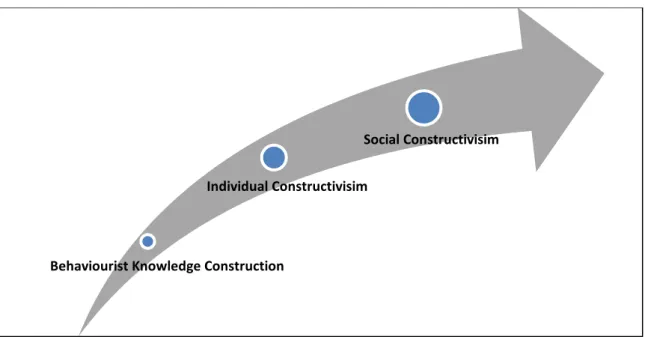
Table 2.2: Forms of constructivism ... 34
Table 2.3: Teachers’ beliefs about the learning of mathematics ... 54
Table 2.4: Teachers' beliefs about the teaching of mathematicS ... 55
Table 3.1: Main features of the Montessori early-childhood programme ... 86
Table 3.2: Characteristics of problem-based learning ... 88
Table 3.3: Characteristics of a good problem ... 99
Table 4.1: Models of professional development for teachers ... 114
Table 5.1: Summary of the project population ... 127
Table 5.2: Adaptation of other questionnaires ... 135
Table 5.3: Reliability statistics for the approach to the teaching and learning of mathematics ... 141
Table 5.4: Item total statistics for the approach to the teaching and learning of mathematics ... 141
Table 5.5: Summary of the run and rerun for the approach to the teaching and learning of mathematics ... 141
Table 5.6: The interpretation of Cronbach’s alpha ... 141
Table 5.7: Reliability statistics for approach to problem-solving ... 143
Table 5.8: Item total statistics for approach to problem-solving ... 143
Table 5.9: Summary of run and rerun for approach to problem-solving ... 144
Table 5.10: Reliability statistics for self-rating ... 144
Table 5.11: Item total statistics for self-rating ... 144
Table 5.12: Summary of run and rerun for self-rating ... 144
Table 5.13: Reliability statistics for the problem-solving lessons ... 144
Table 5.14: Item total statistics for the problem-solving lessons ... 145
Table 5.15: Summary of run and rerun for the problem-solving lessons ... 145
Table 5.16: Reliability statistics for teacher beliefs about mathematics and its teaching ... 145
Table 5.17: Item-total statistics for teacher beliefs about mathematics and its teaching ... 145
Table 5.18: Summary of run and rerun for teacher beliefs about mathematics and its teaching ... 146
Table 6.1: Teachers’ views on what problem-solving is ... 161
Table 6.2: Teachers’ views on what problem-solving is not ... 163
Table 6.3: Teachers' views on what problem-solving requires of the teacher... ... 164
Table 6.4: Teachers' views on what problem-solving requires of the learner... ... 166
Table 6.5: Reliability statistics: approach to the teaching and learning of mathematics. ... 168
Table 6.6: Item-total statistics: approach to problem-solving ... 168
Table 6.7: Responses to questions on the approach to the teaching and learning of mathematics ... 170
Table 6.8: Reliability statistics: Approach to problem-solving ... 171
Table 6.9: Item-total statistics: Approach to problem-solving ... 171
Table 6.10: Responses obtained in response to questions on the approach to problem-solving ... 173
Table 6.12: Item-total statistics: Self-rating ... 175
Table 6.13: Self-rating ... 176
Table 6.14: Reliability statistics: the problem-solving lessons ... 177
Table 6.15: Item-total statistics: the problem-solving lessons... 177
Table 6.16: The problem-solving lessons ... 178
Table 6.17: Reliability statistics: teacher beliefs ... 180
Table 6.18: Item-total statistics: Teacher beliefs ... 180
Table 6.19: Teachers' beliefs ... 181
Table 6.20: Analysis of the responses to Question 20 ... 184
Table 6.21: Selection of visual aid materials ... 186
Table 6.22: Choice of visual aid ... 186
Table 6.23: Access to key documents on problem-solving, and on problem-solving workshop attendance ... 190
Table 6.24: Personal details of the teachers concerned in this study ... 191
Table 6.25: Summary of findings from Section 1: data from the questionnaire ... 192
Table 6.26: Summary of findings from Section 1: data from the questionnaire ... 193
Table 6.27: Benefits gained by the teachers from the teacher professional development ... 195
Table 6.28: Ability to implement PBL ... 197
Table 6.29: Nature of assistance required ... 197
Table 6.30: Reflections on the teachers’ lessons ... 210
Table 6.31: Feature characteristics and function characteristics of problems used ... 215
Table 6.32: Continuation of the use of PBL in the teachers’ mathematics lessons ... 226
Table 6.33: Sharing of PBL with others ... 232
Table 7.1: Target percentage of the TIMSS 2011 mathematics cognitive domains in the fourth and eighth grades ... 246
LIST OF FIGURES
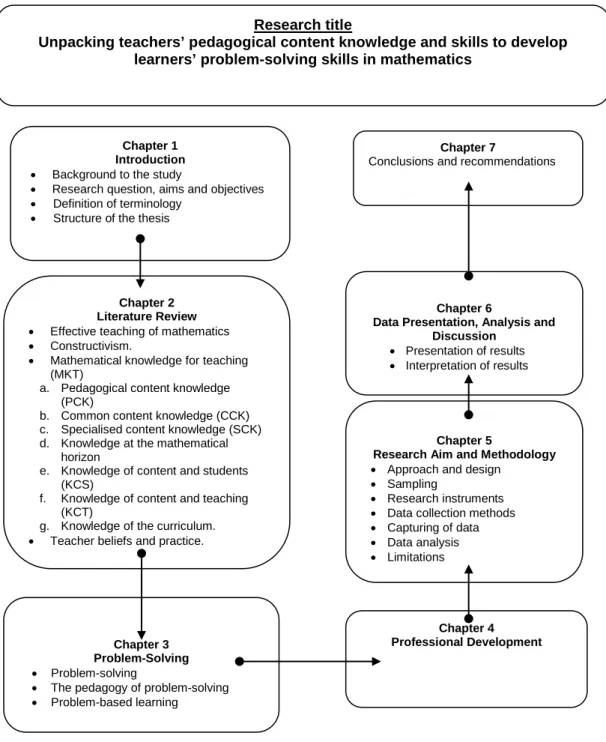
Figure 1.1: Summary of the research structure ... 19
Figure 2.1: Paradigm shifts affecting the teaching of mathematics ... 23
Figure 2.2: Using the long-division algorithm ... 24
Figure 2.3: Different phases in mathematics education ... 26
Figure 2.4: Domain map for the mathematical knowledge of teaching ... 39
Figure 2.5: The network of pedagogical content knowledge ... 42
Figure 2.6: The didactic triangle ... 43
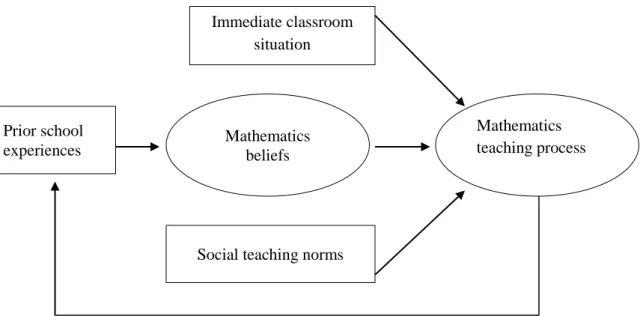
Figure 2.7: A model of the relationship between mathematics beliefs and teaching practices ... 53
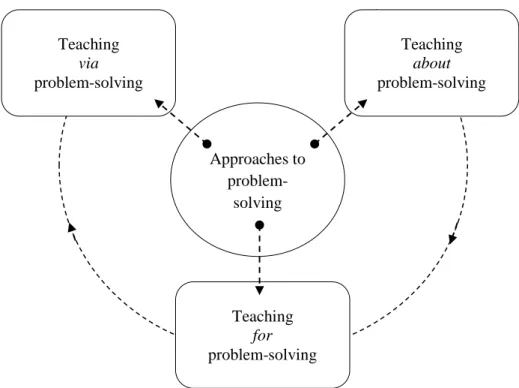
Figure 3.1: Approaches to problem-solving in the teaching process ... 62
Figure 3.2: Factors contributing to successful problem-solving ... 66
Figure 3.3: Problem-solving work card ... 68
Figure 3.4: Comparison of the goals of PBL and PCL ... 69
Figure 3.5: Framework of the Singapore mathematics curriculum ... 73
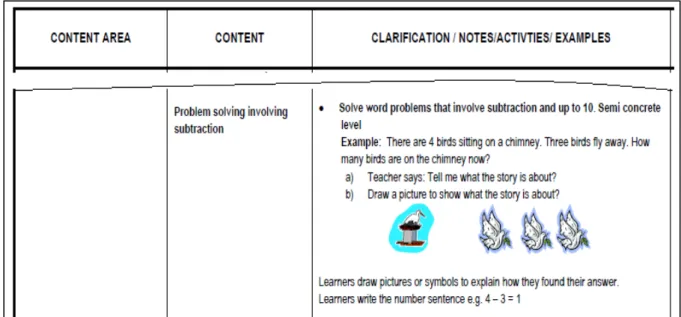
Figure 3.6: Example of approach to problem-solving ... 80
Figure 3.7: The problem-based learning cycle ... 82
Figure 3.8: The components constituting standards for PBL ... 89
Figure 3.9: The different kinds of knowledge and problems ... 95
Figure 3.10: The structuring of a problem in PBL ... 97
Figure 3.11: Typology of problem types ... 98
Figure 3.12: Functions and feature characteristics of problems ... 100
Figure 3.13: The five roles of the teacher in PBL ... 101
Figure 3.14: The three-phase structure for PBL lessons ... 102
Figure 4.1: The research timeline ... 112
Figure 4.2: Extract from the professional development module ... 116
Figure 4.3: Model of teacher assessment as a mechanism for teacher change ... 119
Figure 4.4: Relationship between beliefs and their impact on practice ... 122
Figure 5.1: Mind map of research study ... 125
Figure 5.2: The research timeline ... 126
Figure 5.3: The sampling process ... 130
Figure 5.4: Establishing research instruments' validity and reliability ... 139
Figure 5.5: Generation of research data ... 148
Figure 5.6: General process of data analysis ... 154
Figure 5.7: Summary of the research methodology process ... 155
Figure 6.1: Mind map about problem-solving ... 160
Figure 7.1: Reflection framework for the study ... 242
Figure 7.2: Teacher support required for the implementation of PBL ... 248
ORIENTATION, RATIONALISATION AND
CHAPTER 1:
CONTEXTUALISATION
“The international achievement studies enabled South Africa to benchmark its learner performance, and thus its education system, against those of other countries. Overall, the achievement of learners in the national systemic evaluations and in international assessment studies was very poor and a cause for great concern.”
(WCED, 2008, p. 41)
1.1
INTRODUCTION
1.1.1
Background to the study
This research was carried out when the researcher was a mathematics facilitator in an intervention Project X run by a South African university (which is not named for reasons of confidentiality and protection of the participants). The intervention Project X was involved in the professional development of teachers in the teaching of mathematics at Foundation Phase. It was during the researcher’s interaction with the teachers in the project schools, which took the form of lesson observations and feedback discussions, that the researcher was motivated to research the teachers’ pedagogical content knowledge (PCK) in general, and that regarding problem-solving, and its use as a vehicle for the teaching and learning of mathematics in particular.
1.1.2
Motivation for the proposed research
Despite the majority of South African learners enjoying above-average levels of public and private education resources, yet their performance in mathematics, on both regional and international tests, has been found to be extremely weak (Fleisch, 2008; Moloi & Chetty, 2011; Moloi & Strauss, 2005; Mullis et al., 1999; Mullis, Martin, Beaton, Gonzalez, Kelly & Smith, 1997; Mullis, Martin, Gonzalez & Chrostowski, 2003; Reddy, 2006; Van der Berg, 2007; Van der Berg, Taylor, Gustafsson, Spaull & Armstrong, 2011; WCED, 2006, 2009). The teacher’s role in teaching and learning is identified as a common and necessary factor in addressing this poor performance (Brown, 1992; Even & Tirosh, 2008; Hiebert & Carpenter, 1992; Schoenfeld, 2011; Van der Sandt & Nieuwoudt, 2003), with the teacher’s knowledge being one of the most important variables that impact on what is done in the classroom (Fennema & Franke, 1992; Turner-Bisset, 2001).
Similarly, teachers are an important factor in the success of any curriculum, because they filter the curriculum through to the learners (Graham & Fennell, 2001; Swan, 2001; Walsaw,
2010). It has also been observed that it is the teacher who makes the most important contribution to improvements in terms of mathematical achievement (Ball & Forzani, 2009; Ball, Sleep, Boerst & Bass, 2009; Bansilal & Wallace, 2008).
1.1.3
Statement of the problem
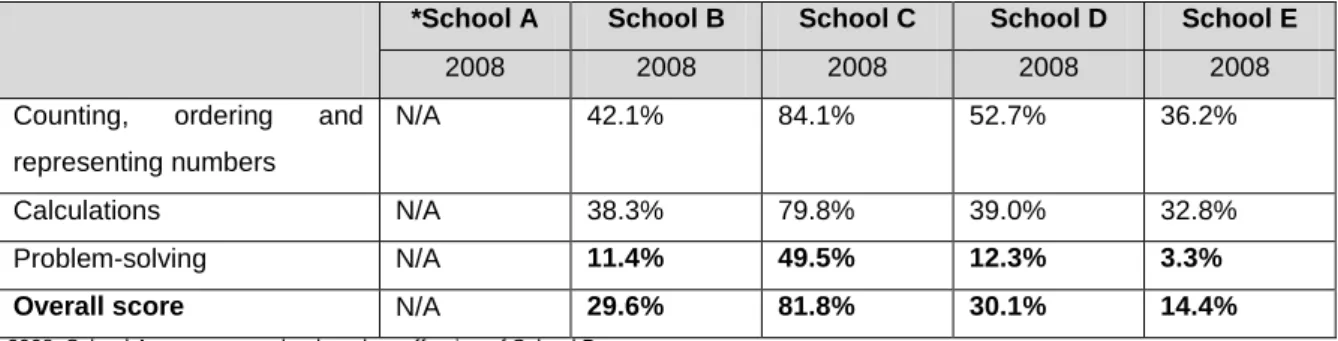
The Grade 3 Systemic Assessment indicated that the learners in the schools falling within the parameters of Project X were performing poorest in problem-solving, compared to the other knowledge and skill areas (WCED, 2008). It was, therefore, important to determine the teachers’ knowledge of, and skills concerning, problem-solving, and its use as a vehicle for the teaching and learning of mathematics in the project schools.
1.2
THE PURPOSE AND AIMS OF THE RESEARCH
Fleisch (2008) points out that one of the more complex and controversial issues is the average level of teacher competence, with the empirical evidence in this regard being inconclusive. Few studies previously undertaken have provided clues about teachers’ pedagogical skills. Currently, pressure exists to establish evidence of teachers’ capacity, skills and knowledge regarding learners’ learning (Hill, Sleep, Lewis & Ball, 2007, p. 111). The purpose of the present research was to contribute towards the complex issue of understanding teacher competencies in the development of problem-solving skills in learners. The research undertaken in this respect, thus, focused on the teacher as a critical variable in the improvement of the teaching and learning of mathematics in a group of schools that fell within the ambit of Project X.
The aim of this research was:
• to analyse the teachers’ PCK in general, and in relation to problem-solving as a vehicle of effective learning;
• to determine what role beliefs play in teachers’ use of problem-solving as a vehicle for learning; and
• to facilitate the use of problem-solving as a vehicle for learning. The research sought to answer the following questions:
• What PCK do teachers have in general, and in relation to problem-solving and its use as a vehicle for learning?
• What beliefs do teachers have about problem-solving in general, and about its use as a vehicle for learning?
• What are the support needs of teachers in using problem-solving as a vehicle for learning?
1.3
RESEARCH DESIGN
The current research adopted a mixed-method research design. The advantage of using such a design is that it combines both qualitative and quantitative methods of research, and it can, hence, both show the results obtained (quantitative), and explain why they were obtained (qualitative) (Denzin & Lincoln, 2000; McMilan & Schumacher, 2006). Three types of mixed-method designs exist: the explanatory design; the exploratory design; and the triangulation design (McMilan & Schumacher, 2006, p. 28). The present researcher used the triangulation design (Bogdan & Biklen, 2006; Cohen, Manion & Morrison, 2007; Kelly, 2007) as use of the design allowed for the simultaneous collection of both qualitative and quantitative data, as well as for the application of “the strengths of each approach to provide not only a more complete result but also one that was more valid” (McMilan & Schumacher, 2006, p. 28). Details of the research design are shown in Chapter 4.
1.4
THE FOCUS ON PROBLEM-SOLVING
Problem-solving skills, in the current context, refer to the learner’s ability to perform calculations; organise data; recognise patterns; make models; write equations; guess; eliminate possibilities; and check results (Reiss & Törner, 2007; Salmon & Grace, 1984; Voyer, 2011).
The development of problem-solving skills is important for a number of reasons. Firstly, problem-solving is a skill that is central to mathematics learning (Cooper, 2010; Dhlamini, 2009; Govender, 2010; Janassen, 2000; Sweller, Clark & Kirschner, 2010). It is one of the critical outcomes of the National Curriculum Statement, and of the Curriculum and Assessment Policy Statement (CAPS) (Republic of South Africa. Department of Education, 2011). Problem-solving has, in fact, been allocated time daily in mathematics lessons in Grade 1 to Grade 3 (Republic of South Africa. Department of Education, 2011).
Secondly, problem-solving is the cognitive domain to which 40% of the time is devoted during learner assessment in the mathematics assessment framework for the Trends in International Mathematics and Science Study (TIMSS) (Heugh, Diedericks, Prinsloo, Herbst & Winnaar, 2007). TIMSS is an international comparative study that primarily measures learner achievement in mathematics and science. The TIMSS assessment framework has been designed to ensure comparability, and so as to benchmark performance (Reddy, 2006). The same framework is used by the Department of Education in the design of its systemic tests (Heugh, Diedericks, Prinsloo, Herbst & Winnaar, 2007).
Thirdly, the learners who are assessed at the end of the Foundation Phase (Grade 3) are performing poorly in terms of problem-solving. Observations are that the poor performance of South African learners in international tests (namely, TIMSS), and in schools in general, requires that an emphasis should be placed on problem-solving in the teaching and learning of mathematics (Cooper, 2010; Mwakapenda & Dhlamini, 2010; Van der Berg, Taylor, Gustafsson, Spaull & Armstrong, 2011). This observation was confirmed in the five schools involved in Project X, according to their 2008 Grade 3 assessment results, which showed that the learners were performing poorest in problem-solving, and thus affecting the school’s overall score negatively (see Table 1.1 below).
*School A School B School C School D School E
2008 2008 2008 2008 2008 Counting, ordering and
representing numbers
N/A 42.1% 84.1% 52.7% 36.2% Calculations N/A 38.3% 79.8% 39.0% 32.8% Problem-solving N/A 11.4% 49.5% 12.3% 3.3%
Overall score N/A 29.6% 81.8% 30.1% 14.4%
*In 2008, School A was a new school, and an offspring of School B.
Table 1.1: Percentage of learners performing well in the knowledge and skills tested (WCED, 2008)
The poor performance in problem-solving illustrated above was a compelling reason for examining the teachers’ mathematical knowledge for teaching (MKT). MKT includes mathematical reasoning, insight, understanding, and the skills needed to teach mathematics, as well as the skills needed to develop learners’ problem-solving abilities (Hill, Rowan & Ball, 2005; Silverman & Thompson, 2008). Finally, there has been a general shift towards problem-solving, rather than towards the mastering and applying of skills (Hiebert et al., 1996). As South African learners continue to perform poorly in the TIMSS, there is a need to learn from such countries as Singapore that have consistently performed well in the TIMSS. Singapore was first in both the fourth and the eighth grades in the TIMSS comparison assessments that were conducted in 1995, 1999 and 2003, and it ranked among the top three in 2007 (Clark, 2009). This success has been attributed to various factors, including a coherent national curriculum, teacher training, a public belief in the importance of mathematics, and, notably, an emphasis on the importance of problem-solving. In 1992, Singapore began to emphasise the latter in its curriculum (Clark, 2009).
Clark (2009) points out that, in addition to paying careful attention to the teaching and cultivating of problem-solving skills, the belief prevails in Singapore that problem-solving is a requirement for the twenty-first century. This outlook, the researcher believes, is worth
considering in the efforts that are exerted to making one’s country’s learners competitive on an international scale.
In South Africa, the current curriculum reforms’ emphasis on problem-solving is a desirable shift towards good practice, as an emphasis on problem-solving has been found to prevail in countries that continue to do well in the TIMSS. Most South African teachers have only experienced a very traditional, whole-class approach, in which the teacher is the expert conveyor of knowledge, and in which the pupils are encouraged to be passive recipients. The selfsame teachers are being asked to adopt changes that are very different from their current understanding of the teaching and learning of mathematics. According to Stigler and Hiebert (1998, p. 6), there is a need to understand that teaching is a cultural activity, resulting in the need for growing awareness of the cultural scripts that teachers use. As the South African current curriculum emphasises problem-solving as a way of learning and practising mathematics, it has become equally important to understand their present teaching culture (Stigler & Hiebert, 1998).
1.5
DEFINITION OF KEY TERMS
The key terms that are used in this research are explained below:
A teacher’s knowledge refers to the teacher’s awareness, or understanding, of a circumstance or fact, which is gained through association or experience, books, media, encyclopaedias, academic institutions, and other sources.
A teachers’ pedagogical knowledge refers to the specialised knowledge of teachers that is aimed at creating effective teaching and learning environments for all the students that they teach.
A teacher’s knowledge and skills refers to the teacher’s awareness, or understanding, of a circumstance or fact, and their ability to use and/or to apply that awareness, or understanding, of a circumstance, or fact, in context.
A teacher’s pedagogical skills refers to the teacher’s ability to plan, and to provide, a set of learning opportunities that offer access to crucial concepts and skills for all learners, as well as to the teacher’s ability to assess student learning.
Mathematical knowledge for teaching (MKT): MKT refers to the mathematical knowledge that is used in the classroom. Exceeding the knowledge of formal mathematics, it is the mathematical knowledge that one needs for carrying out one’s work as a teacher of mathematics (Hill et al., 2008).
Pedagogical content knowledge (PCK): PCK refers to the teacher’s knowledge of the nature of the matter to be taught, of how the learners learn the matter, of how best to teach the matter, of the materials that are suitable for teaching the matter, and of how the matter fits into the curricula.
Common content knowledge: Common content knowledge is the mathematical knowledge and skills that are used in settings other than teaching, with an example of such knowledge being that of the algorithm required for multiplying two numbers together (Ball, Thames & Phelps, 2008). Knowledge of this nature informs such teaching tasks as knowing whether a learner’s answer is correct, knowing the definition of a concept or object, and knowing how to carry out a procedure (Hill & Ball, 2009; Sullivan, 2008).
Specialised mathematical knowledge: This form of knowledge includes being able to model integer arithmetic, using different representations (Hill & Ball, 2009; Sullivan, 2008).
Horizon knowledge: Horizon knowledge is a kind of mathematical ‘peripheral vision’ that is required in teaching. It encompasses having a view of the larger mathematical landscape that teaching requires (Ball, Thames & Phelps, 2008, p. 69).
Problem-solving: Problem-solving refers to the learners’ ability to use, and to apply, mathematics in relation to practical tasks, real-life problems, and mathematics itself (Hiebert et al., 1996; Libeskind, 1977; Schoenfeld, 1992). It applies to a wide variety of situations, ranging from routine mathematical problems occurring in an unfamiliar context, to open-ended investigations that make use of the relevant mathematics and thinking processes (Fai, 2006; Hino, 2007). Problem-solving is a process wherein the learner encounters a question for which he/she has no immediately apparent solution or algorithm available to directly apply so as to obtain the appropriate answer (Tripathi, 2009). It is an important way of doing, learning and teaching mathematics (Chapman, 2005).
Problem-based learning (PBL): PBL is a learner-centred instructional approach in which learners solve problems collaboratively, and then reflect on their experiences. It is a learning environment in which problems drive the learning involved (Kyeong Ha, 2003; Schroeder & Lester, 1989).
Unpacking: Unpacking refers to revealing, deciphering, encoding, shedding light on, or exploring the teachers’ PCK, practices and beliefs by means of lesson observation, interviews and questionnaires.
1.6 ETHICAL CONSIDERATIONS
The ethical issues of informed consent, deception, confidentiality, anonymity, privacy, and caring (Christians, 2000; McMillan & Schumacher, 2006), were addressed according to the ethical code of Stellenbosch University, hence the following ethical conditions and considerations were fulfilled during this research.
1.6.1
Ethical considerations regarding research participants
Participant’s consent: The participants were provided with an opportunity to give their consent to freely participate in the research. They were, therefore, not involved in the research without their knowledge or consent, and neither were they coerced into participating in it, nor were they induced into committing acts that diminished their self-esteem.
Participant’s anonymity: The participants’ right to remain anonymous was respected throughout the research.
Transparency: Transparency was ensured by openly discussing the purpose, the objectives, and the goals of the research with everyone who was involved in the research. At no time did the researcher withhold information about the true nature of the research.
Honesty and uprightness: The evaluation of the research was carried out with the honesty and uprightness expected in research. There was no fabrication, falsification or misrepresentation of evidence, data, findings, and conclusions. There was no tampering with the evidence. The researcher communicated the findings in clear, straightforward and appropriate language to all stakeholders.
Participant’s respect, safety, dignity and self-worth: The researcher respected and safeguarded the safety, dignity and self-worth of all the research participants by being mindful of the cultural, religious, gender and other significant differences present in the research population.
1.6.2 Ethical considerations regarding research data
Criteria for generation of data: The data generated in this research were scrutinised according to the criteria for data generation, so as to ensure authenticity, believability, validity and reliability (Janesick, 2000; Lincoln & Guba, 2000).
Authenticity and believability of data: Authenticity of data refers to the genuineness of data, while the believability of data is the extent to which data are regarded as true and credible, with both aspects being major reflections of quality (Marco & Larkin, 2000, p. 693).
The believability of data depends on their origin or source, and on their subsequent processing history (Prat & Madnick, 2008, p. 7). The two informal ways by means of which data can be assessed for authenticity and believability are external criticism and internal criticism.
External criticism: In this research study, external criticism was used to verify whether the data concerned were collected from legitimate sources. The data in this research came from real teachers in the Foundation Phase, resulting in their accuracy, as far as they comprised real responses from teachers (origin). The data, however, varied among the teachers, as they took the form of spontaneous responses to open-ended questions.
Internal criticism: Internal criticism is concerned with data accuracy and bias (Marco & Larkin, 2000; Prat & Madnick, 2008). As a result, the data generation and processing methods undertaken in the research were discussed with various researchers in the field of educational research, in order to substantiate the legitimacy of the methodology used (processing history).
1.6.3 Validity and reliability of the data
This section briefly introduces the concepts of validity and reliability, which are examined in greater detail in Chapter 6. The validity of a research measuring instrument is the extent to which it measures what it is intended to measure, whereas reliability is the consistency with which the research instrument yields a certain result when the sample being measured has not changed (McMillan & Schumacher, 2006, p. 134; Shank, 2006). The validity and reliability of a research instrument influence the extent to which one is able to learn something about the subject under research (Golafshani, 2003; Lincoln & Guba, 2000, p. 178). The probability that one will obtain statistical significance in one’s data analysis, and of being able to draw meaningful conclusions from one’s data, is related to the data validity and reliability (Howe & Lewis, 1994).
On completion of the draft questionnaire, its validity was established by means of consulting the necessary experts, and by pilot testing it. The questionnaire was pilot tested with teachers teaching in the Foundation Phase in five schools with the same demographics as the research sample schools. The data collected from the pilot test were analysed using the Statistical Package for the Social Sciences (SPSS). The test provided two key pieces of information, namely a ‘correlation matrix’ and a ‘view alpha if item deleted’ column (Radhakrishna, 2007). Changes were made based on both a field test, and on expert opinion.
1.7 SIGNIFICANCE OF THE STUDY
At the time at which the present study was undertaken, little information existed about the South African Foundation Phase teachers’ pedagogical knowledge, beliefs and practices related to problem-solving in the teaching and learning mathematics. Such information is important for understanding and improving the teaching and learning of mathematics in the Foundation Phase. The teachers’ pedagogical knowledge, beliefs and practices are closely linked to the teachers’ strategies for coping with the day-to-day challenges of shaping the learners’ mathematics learning environment, as well as the learners’ motivation and performance. Very little research has been done on profiling teachers’ MKT related to problem-solving, and its use as a vehicle for the teaching and learning of mathematics. To the best of the researcher’s knowledge, this study is the first full-fledged research of its nature to have, as yet, been undertaken at Foundation Phase level, and to have focused on the teacher’s pedagogical knowledge of, and skills for, mathematics problem-solving, and the facilitation thereof as a vehicle for learning mathematics in South Africa. The overall significance of the study, therefore, is that it provides a robust relevant analysis of the teacher’s pedagogical knowledge, beliefs and practices. It was set to provide information that would be useful in the review and development of teacher professional development that would be conducive to effective learning.
The following benefits were intended to result from the study:
1. The analysed data would provide an overall picture of the current situation regarding teachers’ pedagogical knowledge in general, and regarding problem-solving, and its use as a vehicle for the teaching and learning of mathematics.
2. Professional development needs for the intervention programme would be identified. 3. Recommendations would be made about how to improve the teaching of
mathematics through PBL, which is an approach that uses problem-solving as a vehicle for the teaching and learning of mathematics.
1.8 CONTEXT OF THE STUDY
This study was carried out while the researcher was a mathematics facilitator involved in an intervention Projected X run by the Institute for Mathematics and Science Teaching. The three-year intervention project involved the professional development of teachers in the teaching of mathematics at Foundation Phase. In my brief discussion with these teachers, I had observed that the teachers seemed to possess scant knowledge of how to use a problem-based approach in the teaching of mathematics. I was curious both about their beliefs, and about their PCK, regarding the use of problem-solving as a vehicle for learning. As a paucity of recorded evidence existed regarding the use of PBL in the Foundation Phase
in South Africa, I decided to address this gap in my study. I then decided to investigate the beliefs and PCK regarding problem-solving of the teachers in the 5 schools involved in the project. I also wanted to investigate ways in which to support the teachers in their use of problem-solving as a vehicle for learning mathematics. To contextualise the above-mentioned research, this section discusses the following:
• the role of the mathematics facilitator; • the project schools;
• the nature of the Institute; • an overview of Project X; and
• The Foundation for Learning Campaign.
1.8.1 The role of the mathematics facilitator
In addition to discussing the role of a facilitator, the section draws a link with the research. Most professional development initiatives that have been undertaken in South Africa have been prompted by the TIMSS results, and by the subsequent desire to improve learner achievement. In the past (Higgins, 2005), the main focus of such professional development has been the teacher’s content knowledge. However, lately the shift has been towards helping the teacher implement the new practices in their everyday teaching that is aimed at improving learner achievement.
The primary responsibility of the mathematics facilitator in Project X was to increase teacher capacity in terms of mathematics content skill, knowledge and pedagogy, so as to improve the current low learner performance in mathematics. In view of the renewed emphasis on problem-solving, it was the hope of the present facilitator, therefore, that the research undertaken would provide data that would contribute towards the understanding of the teacher’s mathematics content skill, knowledge and pedagogy. The professional growth of the educators concerned in the new teaching practice, in which problem-solving is both a primary goal and a vehicle for teaching mathematics, was anticipated. Such growth was intended to promote the understanding that was to form the basis for professional development in relation to problem-solving.
In general, a mathematics facilitator (Carlson, Moore, Bowling & Ortiz, 2007) must be able to demonstrate exemplary classroom mathematics practice. In addition, they must be able to observe and coach classroom teachers, to plan and conduct mathematics professional development, and to collect, analyse and report school and district data to administrators and others, as needed or requested.
The core functions of the mathematics facilitator in Project X were in many ways similar to those described above. They were to:
• provide expertise in mathematics content and mathematics pedagogy; • present demonstration lessons to the educators;
• work collaboratively to improve the instruction of mathematics, using research-based approaches and intervention;
• demonstrate and share exemplary classroom mathematics practices;
• plan and conduct mathematics professional development for the mathematics educators; and
• apply a variety of instructional theories and models, incorporating best practices, child-centred learning, and differentiated instruction approaches aimed at achieving the success of all learners concerned.
The observation of poor performance in the key area of problem-solving by learners in the schools in Project X motivated the facilitator to carry out the research in line with the third point bulleted above.
1.8.2 Description of the project schools
For one to have an appreciation of the environment within which the research was carried out, the following brief description of each of the schools in the project is given. This description is based on the data that were collected during the initial phase of Project X.
1.8.2.1 School A
Demographic data
The school had 5 educators and 250 learners in the Foundation Phase at the dual-medium school (isiXhosa and English) concerned. IsiXhosa was the medium of instruction in the Foundation Phase. The Foundation Phase had an average of 45 to 50 learners per class. This comparatively new school was established in 2006 as a spring-off from school B, which is described below.
Resources
Being a new, totally prefabricated township school, with overcrowded classrooms and an inadequate number of up-to-date textbooks, school A lacked both a library and a laboratory.
Little, if any, provision of reading materials made it difficult for the learners to develop the grade-appropriate reading skills required.
Management and staff
Good management and coordination were in place, with both the principal and the educators being keen to see the performance of learners at their new school improve. The adoption of a team approach was evident in the school.
Learners
Most of the learners came from poor families and social backgrounds, with some of the learners being said to come to school without breakfast. Over half of the learners were on the school’s feeding scheme. A growing number of the learners were said to be in the high- risk category. The school did not experience any serious cases of absenteeism from either the educators, or the learners. No serious disciplinary problems were present among the learners in the Foundation Phase.
Community/Parental involvement
The school shared the same community with school B described below. The educators had observed that a significant number of their learners came from single-parent households. The level of poverty was high in the community, due largely to the prevailing levels of unemployment. The educators also observed that the home supervision of learners was lacking.
1.8.2.2 School B
Demographic data
The school had 15 teachers and 675 learners in the Foundation Phase. It was a dual- medium school (isiXhosa and English), with isiXhosa being the medium of instruction in the Foundation Phase. The Foundation Phase had 40 to 45 learners per class.
Resources
The school was a poorly resourced previous Department of Education and Training (i.e. ex-DET) (African) township school, with overcrowded classrooms, and an inadequate number of up-to-date textbooks. Some of the school buildings were in disrepair, probably as a result of the neglect of maintenance work.
Management and staff
Good coordination was in place in the Foundation Phase, with both the deputy principal and the teacher in charge showing efficient control of the functioning of the phase. The latter member of staff was both very energetic and keen to have the school’s Foundation Phase performance improve.
Learners
The learners generally experienced numeracy problems. Both the levels of literacy and of numeracy were low, as indicated by the low annual national assessment (ANA) and systemic test scores. The learners experienced transition problems from Grade 3 to Grade 4. The educators and the learners at the school did not exhibit any absenteeism. The school had no serious problems with the discipline of the learners in the Foundation Phase.
Community/Parental involvement
Some parents were seasonal workers. Unemployment severely impacted on the community. The school management was not satisfied with the amount of parental support that they received.
1.8.2.3 School C
Demographic data
The school had 9 educators and 35 to 37 learners per class in the Foundation Phase. The school was a previous House of Representatives (i.e. ex-HOR) (coloured) school. Despite the school being dual-medium (English/Afrikaans), in addition some isiXhosa-speaking learners received their instruction in either English or Afrikaans.
Resources
The school was well resourced, with a science laboratory, a computer laboratory, and a library.
Management and staff
The school had an inspiring principal, who was very involved in, and enthusiastic about, the project. Both the principal and the educators were very enthusiastic about the project. Good management and coordination was in place. A motivated team approach was evident, and serious commitment to learner success was observed.
Learners
The learners were from mixed social backgrounds, among whom there were a number of unemployed and poor parents. The language of instruction was an issue for the isiXhosa learners. A number of the learners were in the high-risk category. The learners experienced problems in transitioning from Grade 3 to Grade 4. The prevailing literacy and numeracy levels were said to be improving at the time of the study. Neither absenteeism nor discipline was a problem, with measures to curb any arising already being in place.
Community/Parental involvement
The school is based in a community of parents of mixed backgrounds. Although unemployment was a challenge of some significance, the parents assisted with fundraising.
1.8.2.4 School D
Demographic data
The school had 12 educators and 503 learners in the Foundation Phase. It was a dual-medium school (English and Afrikaans), although 10% of the learners were isiXhosa speakers. Per class in the Foundation Phase there were 40 to 42 learners.
Resources
This ex-HOR (Coloured) school was well resourced, with a Khanya Computer laboratory, plus a second computer laboratory.
Management and staff
The principal and educators were very enthusiastic about the project. They expressed a need for new ideas and assistance. Good management and coordination was in place. A team approach was evident. The school was striving to improve its systemic test results.
Learners
The learners came from poor social backgrounds. Levels of unemployment were high among the parents. Language was an issue for the isiXhosa-speaking learners, as the language of instruction (English or Afrikaans) was not their mother tongue. Some of the Afrikaans-speaking learners preferred to be taught in the English medium. A number of learners were in the high-risk category. Literacy and numeracy levels were low. Absenteeism and discipline were not problematic at the school, as measures had been put in place to minimisethe existence of either. Staff turnover figures were stable.
Community/Parental involvement
Single parenting and unemployment were factors of great significance in the community, which was generally poor. Despite the existence of such challenges, the parents still found energy and time enough to assist with sport coaching.
1.8.2.5 School E
Demographic data
The dual-medium (English/isiXhosa) school had 14 educators and 754 learners in the Foundation Phase. Per class in the Foundation Phase there were 40 to 55 learners.
Resources
The school was a poorly resourced ex-DET (African) township school, with overcrowded classrooms, and inadequate up-to-date textbooks. Over a quarter of its classes were accommodated in prefabricated structures. The school was equipped with a computer laboratory, a library, and an empty science laboratory.
Management and staff
Both the principal and the educators expressed the need for the project. The staff showed a positive attitude towards the project, and they expressed the need for new ideas and assistance. The principal expressed the need for the school to improve its learner performance, which was, at that stage, very poor.
Learners
A number of the learners, who were taught in isiXhosa up to Grade 3, were in the high-risk category. The prevailing literacy and numeracy levels were low. The learners experienced problems in transitioning from Grade 3 to Grade 4. Absenteeism and discipline were not problematic at the school, as measures were in place to minimise such challenges. The staff turnover was stable.
Community/Parental involvement
The levels of parental involvement were very low. The school community was generally poor, with it being beset by unemployment.
1.8.3 The Institute
The Institute, which is part of the Faculty of Education, is found in the Department of Curriculum Studies. Its main focus is the improvement of the teaching and learning of Mathematics and Science in schools. This is achieved through the empowerment of the teachers concerned, and through the improved instruction of the learners. The Institute targets mostly the disadvantaged communities, both in the rural and in the urban areas, of the province in which it is located.
The Institute’s initiatives focus on rural and urban areas in the province through the implementation and maintenance of systemic, long-term intervention programmes whose primary aims are to:
• equip and support teachers academically and didactically to effectively implement strategies for classroom and curriculum management; and
• widen the base of learners who take Mathematics and Science, preparing them with the necessary knowledge, life skills and motivation to enrol for tertiary studies in the fields of the Natural Sciences, Mathematics, and related applied fields
The Institute’s intervention programmes (of which Project X was one), among other aspects, include the provision of:
• in-depth, interactive, hands-on workshops for teachers; and
• facilitators who visit the relevant schools to monitor the progress of teachers and learners, and to offer them support.
1.8.4 Overview of Project X
In May 2009, Project X, whose objective was to address literacy, numeracy and school management in a group of poor performing schools, was implemented. The focus of the intervention was Numeracy and Literacy in the Foundation Phase. The researcher was a mathematics facilitator in the numeracy intervention arm of the project, with the research being carried out in the 5 schools in which he was a mathematics facilitator.
• The nature of the needs prompting the implementation of Project X
At the time of the conceptualisation of Project X, the Institute was part of a consortium of nine service providers running a collaborative project. For the project, the Institute selected five secondary schools, and ten feeder primary schools. The project focused on the teaching and learning of Mathematics, Mathematics Literacy, Natural Science, the Life Sciences and the Physical Sciences in the Intermediate and Senior Phases, or from grades 4 to 12.
In the course of implementation of this project, the schools concerned indicated that the problems being experienced in the Intermediate Phase were being inherited from the Foundation Phase. Hence, the request was made that an intervention programme be conducted in the Foundation Phase, too. Project X was, thus, launched in response to the expressed demand, in acknowledgement of the need for intervention at the phase in question.
• The objective of Project X
The objective of Project X was to assist, motivate and equip the Foundation Phase teachers concerned with the necessary subject knowledge, didactical skills and sound classroom management skills to enable them to effectively improve the numeracy skills and knowledge of their learners. It was also aimed at creating a stable and organised environment in which learning could be facilitated.
1.8.5 The Foundation for Learning Campaign
Project X was implemented during the era of the Foundation for Learning Campaign. This was a four-year campaign that was run by the Department of Education to create a national focus on the improvement of numeracy abilities in South Africa. The initial focus of the campaign was on primary schools, starting with the Foundation and Intermediate Phases. The campaign, in its provision of guidelines for daily teacher activities during numeracy instruction, provided for 15 minutes for grades 1 and 2, and for 20 minutes for Grade 3, as the amount of time that was stipulated for problem-solving. The campaign was a national response to national, regional and international studies that had shown, over a number of years, that South African children were not able to count at the expected levels, and that they were unable to execute tasks that demonstrated key skills associated with numeracy. All primary schools were expected to increase their average learners’ performance in numeracy to not less than 50%. Project X had, thus, come at the right time for the schools concerned, as it provided the help that was needed to achieve the identified target.
1.9 LIMITATIONS
Limitations are the potential research weaknesses that are related to the research design, or to the research methodology concerned (Pajares, 2007). If they are not adequately controlled, the limitations of a study can restrict the application and interpretation of the research findings involved. The notable limitation of the current research lay in its purposive sampling (Devers & Frankel, 2000, p. 265; Oliver, 2006, p. 245).The researcher’s lack of capacity to take the optimum number of samples was the major limitation. This weighed