UNIVERSITY OF KWAZULU-NATAL
Managing the challenges of digital divide among first year students:
A Case of UKZN
By
Samuel Temitayo Faloye
216046532
A dissertation submitted in fulfilment of the requirements for the degree of
Master of Commerce
(Information Systems & Technology)
School of Management, IT and Governance
College of Law and Management Studies
Supervisor: Dr. Nurudeen Ajayi
Co-supervisor: Mr Rushil Raghavjee
i
DECLARATION
I, Samuel Temitayo Faloye declare that:
(i) The research reported in this dissertation/thesis, except where otherwise indicated, is my original research.
(ii) This dissertation/thesis has not been submitted for any degree or examination at any other university.
(iii) This dissertation/thesis does not contain other persons’ data, pictures, graphs or other information, unless specifically acknowledged as being sourced from other persons.
(iv) This dissertation/thesis does not contain other persons’ writing, unless specifically acknowledged as being sourced from other researchers. Where other written sources have been quoted, then:
a) their words have been re-written, but the general information attributed to them has been referenced;
b) where their exact words have been used, their writing has been placed inside quotation marks, and referenced.
(v) Where I have reproduced a publication of which I am an author, co-author or editor, I have indicated in detail which part of the publication was actually written by myself alone and have fully referenced such publications.
(vi) This dissertation/thesis does not contain text, graphics or tables copied and pasted from the Internet, unless specifically acknowledged, and the source being detailed in the dissertation/thesis and in the References sections.
Signature:
ii
ACKNOWLEDGEMENTS
Firstly, I would like to thank God for granting me the grace to start and complete this study. Also, for carrying me through the difficulties I encountered during the course of this study. It would not have been possible without the gift of life He has bestowed upon me.
I would like to express my sincerest gratitude towards Dr. Nurudeen Ajayi for his guidance, continuous support and “patience” that has contributed into my academic research journey. My deepest appreciation also goes to Mr. Rushil Raghavgee for his immense knowledge, open door policy and continuous motivation. Both your insights as my supervisors have stretched me and has allowed my research to extend from various perspectives. Your time and inputs are invaluable.
Special thanks to my parents, Dr. & Mrs. Faloye. I am grateful to have achieved your endless support, inspiration and prayers throughout my study. I would like to thank Dr. Richard Ogunnubi and wife Dr. Olufunmi Faloye Ogunnubi for being my backbone from the inception of my studies in UKZN till date. Also, I would like to thank Prof. Irene Govender for providing me with opportunities within UKZN.
My siblings, Ope and Tosin, thank you for your continuous words of encouragement and for those extensive phone call conversations. To my friend Victor Faniran, thank you for always availing yourself whenever I needed research assistance. Last but not least, to my special friend Nothando Ngwane, your efforts are appreciated.
iii
ABSTRACT
The integration of technology into the educational system has brought about changes in the style of teaching and learning. Nowadays, institutions are adopting technologies such as computers and the Internet to enhance their teaching and learning activities. Students that grew up using computers and related technologies are often at an advantage with their learning because they would have developed the skills required for using technological resources to enhance their learning. However, students that have not been exposed to any form of technology are often at a disadvantage with their learning because they often lack or do not possess sufficient technological skills. The disparity between students that have been exposed to technology and those that have not, is often referred to as digital divide. The literature shows that the digital divide is a challenge that is impacting on students’ academic performance. This study was therefore conducted to understand the challenges faced by the first-year students of UKZN with regards to the digital divide.
In this study, a quantitative research methodology was employed. The findings of this study show that students with little or no exposure to technology prior to joining the university often face challenges that include the use of application programs (e.g. MS Word, Spreadsheet), downloading of informative materials, conducting online tasks and navigating the Internet. The findings also show that time of access/ownership to technology (before or after joining the university), technology skills and computer anxiety affects student’s computer self-efficacy. However, the study’s findings also showed that irrespective of student’s exposure level to technology prior to joining the university, students are faced with the university’s technological challenges that include insufficient technological resources (e.g. printer, computers, scanners), power interruption, poor Wi-Fi connectivity and lack of technology assistants.
Based on the findings in this study, it is therefore recommended that universities organize frequent orientation and IT training programs for first year students. Such programs should focus on the effective use of technologies for learning purposes. In addition, universities should ensure the availability of administrative and technical support whenever students are performing technology related learning tasks. Furthermore, universities should setup a team that will focus on continuous monitoring of whether students are coping with technology or not. This team should also evaluate the available resources on monthly basis to identify the possible or required maintenance.
iv TABLE OF CONTENTS DECLARATION ... I ACKNOWLEDGEMENTS ... II ABSTRACT ... III LIST OF ACRONYMS ... X CHAPTER 1: INTRODUCTION ... 1 1.1 Introduction ... 1
1.2 Background of the study ... 2
1.3 Research Problem ... 3
1.4 Research questions ... 4
1.5 Research Objectives ... 4
1.6 Significance of the study ... 4
1.7 Scope of study ... 5
1.8 Justification ... 5
1.9 Methodology ... 5
1.10 Limitations ... 7
1.11 Outline of the Dissertation ... 7
1.12 Conclusion ... 8
CHAPTER 2: LITERATURE REVIEW ... 9
2.1 Introduction ... 9
2.2 Information and Communication Technology ... 9
2.3 Digital Divide ... 10
2.3.1 Digital Divide Classifications ... 11
2.4 Effect of Apartheid on the Digital Divide ... 14
2.5 The Digital Divide Challenges ... 15
2.5.1 Challenges with using a computer and computer input peripherals ... 15
v
2.6 Impacts of the digital divide challenges on students ... 17
2.7 Technological Adoption and the digital divide ... 19
2.8 Factors influencing digital divide... 20
2.8.1 Digital technologies ... 21 2.8.2 Infrastructure ... 22 2.8.3 Individual attributes ... 23 2.8.4 Government priority ... 27 2.8.5 Psychological factor ... 27 2.8.7 Geographical region ... 29 2.8.8 Urbanization ... 29
2.9 Technology Integration into Academic Institutions ... 30
2.10 Educational Technology and Academic Performance ... 32
2.11 Digital Literacy ... 35
2.12 Towards Bridging Digital Divide ... 36
2.13 Conclusion ... 38
CHAPTER 3: RESEARCH METHODOLOGY ... 39
3.1 Introduction ... 39
3.2 Research Design ... 39
3.3 Research approaches ... 40
3.4 Research Aims and Objectives ... 40
3.5 Sample design ... 41
3.6 Study site ... 41
3.7 Target population ... 41
3.8 Sample size ... 41
3.9 Sampling Techniques ... 42
3.10 Data collection Techniques ... 44
3.11 Questionnaire ... 45
vi
3.13 Reliability and Validity ... 47
3.14 Theoretical Framework ... 48
3.14.4 Perceived usefulness ... 50
3.14.5 Perceived ease of use ... 50
3.15 Ethics ... 50
3.16 Conclusion ... 51
CHAPTER 4: FINDINGS AND ANALYSIS ... 52
4.1 Introduction ... 52
4.2 Response rate ... 52
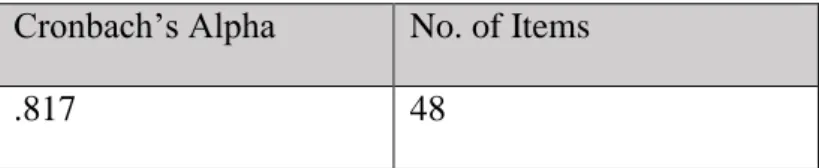
4.3 Consistency and Reliability ... 52
4.4 Distribution of data: Normality ... 53
4.5 Descriptive statistics ... 53
4.5.1 Gender ... 54
4.5.2 Respondents Age... 54
4.5.3 Racial grouping of participants ... 55
4.5.4 Respondents Registration per college ... 55
4.5.5 Technology ownership ... 56
4.5.6 Technology Accessibility ... 57
4.5.7 Constructs used in the study ... 59
4.6 Cross Tabulations ... 65
4.6.1 Cross tabulation between Race and Technology Accessibility ... 65
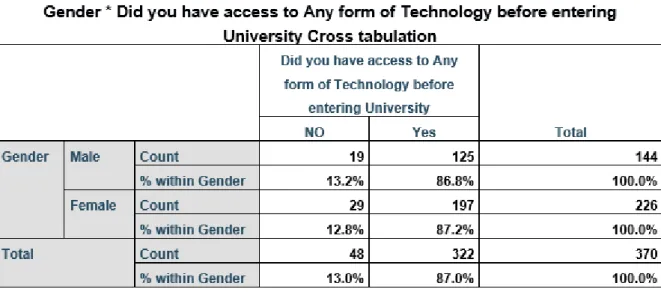
4.6.2 Cross tabulation between Gender and Technology Accessibility ... 66
4.6.3 Cross tabulation between Technology access and Computer competency level ... 67
4.6.4 Cross tabulation between Access to technology and Internet competency ... 68
4.6.5 Cross tabulation between computer ownership and competency level ... 69
4.6.6 Cross tabulation between Internet accessibility and Internet competency level ... 70
4.6.7 Cross tabulation between Access to Any Form of Technology and Use of Technology for Learning Purposes ... 71
vii
4.6.8 Cross tabulation between Gender and Level of Competency with Desktop Computer
72
4.6.9 Cross tabulation between Gender and level of competency with Internet Browsing ... 73
4.6.10 Cross tabulation between Gender and Comfortability with the Use of Technology for Learning Purposes ... 74
4.6.11 Cross tabulation between Internet Accessibility and Academic Performance ... 75
4.6.12 Cross tabulation between Computer Accessibility and Academic Performance ... 76
4.6.22 Cross tabulation between Access to Any Form of Technology before Coming to the University and Perceived Ease of Use (PEOU) ... 87
4.7 Challenges Students Face with the Use of Technology for Learning Purpose ... 88
4.8 Open ended questions ... 89
4.9 Conclusion ... 92
CHAPTER 5: DISCUSSION OF RESULTS ... 93
5.1 Introduction ... 93
5.2 Research objectives ... 93
5.2.1 Research Objective 1: Understanding the Factors affecting students’ computer self-efficacy 93 5.2.2 Challenges faced by first year students in the use of technology for learning ... 97
5.2.3 Possible Means to Manage the Digital Divide Challenges ... 103
5.3 Conclusion ... 106
CHAPTER 6: CONCLUSION ... 107
6.1 Introduction ... 107
6.2 Overview of the dissertation. ... 107
6.3 Conclusion of the study ... 108
6.4 Recommendations ... 109
6.5 Future Research... 110
REFERENCES ... 111
viii
LIST OF TABLES
Table 4.1: Reliability Statistics ... 53
Table 4.2: Cross tabulations between Race and Technology Accessibility ... 66
Table 4.3: Cross tabulation between Gender and Technology Accessibility ... 67
Table 4.4: Crosstabs between Technology access and Computer Competency Level ... 68
Table: 4.5 Cross Tabulation between Technology Access and Internet Browsing Competency Level 69 Table 4.6: Cross Tabulation between Computer ownership and computer competency level ... 70
Table 4.7: Cross tabulation between Internet Accessibility and Internet competency ... 70
Table 4.8: Cross tabulation between Access to Technology and level of comfort with using technologies for learning purposes ... 72
Table 4.9: Cross tabulation between Gender and respondent’s competency level with computer ... 73
Table 4.10: Crosstab between Gender and level of competency with Internet Browsing ... 74
Table 4.11: Cross Tabulation between Gender and I feel comfortable using technology for learning purposes ... 75
Table 4.12: Cross tabulation between Internet accessibility and performance ... 76
Tab 4-13 Cross Tabulation between Computer accessibility and academic performance ... 77
Table 4.14: Crosstab between Race and Level of competency with Computer ... 78
Table 4.15 Cross tabulation between Race and Internet competency ... 79
Table 4.16: Crosstabulation between Race and difficulty with using computer application programs 80 Table 4.17: Cross tabulation between Race and difficulty with navigating the Internet ... 81
Table 4.18: Cross tabulation between Race and Difficulty with Doing Learning Tasks on a Computer ... 82
Table 4.19: Cross tabulation between Race and difficulty with doing online self-studies ... 82
Table 4.20: Crosstabulation between Race and difficulty with downloading informative learning materials ... 83
Table 4-21 Chi-Square Test result between Race and Perceived usefulness ... 84
Table 4-22: Chi-Square test result between race and Perceived ease of use ... 84
Table 4.24: Chi-Square test result between Race and Perceived ease of use (v1) ... 85
Table 4.25 Chi-Square test result between Race and Perceived ease of use (v2) ... 85
Table 4.26: Chi-Square test result between Race and Perceived of use (v3) ... 86
Table 4-27: Chi-Square test result between Race and Perceived ease of use (v4) ... 86
Table 4.28: Chi-Square test result between Race and Perceived ease of use (v6) ... 86
Table 4.29: Chi-square Test Result between did you have access to any form of technology and Perceived ease of use (PEOU) ... 87
ix
LIST OF FIGURES
Figure 3.1: The digital divide framework (Wei et al., 2011) ... 49
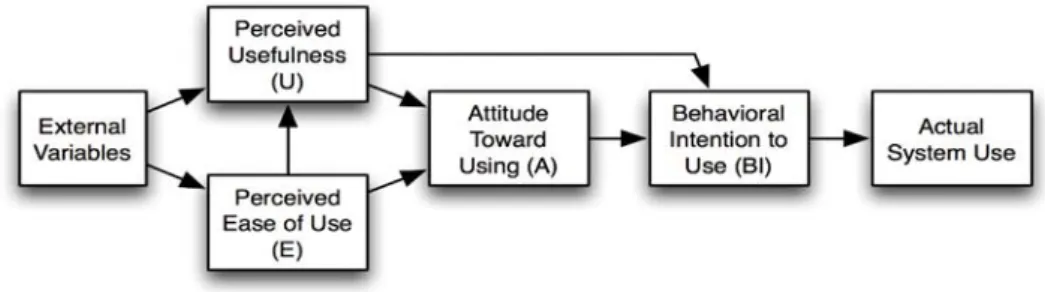
Figure 3.2: Technology Acceptance Model (Venkatesh & Davis, 2000) ... 50
Figure 4.1: Gender distribution of Respondents ... 54
Figure 4.2: Age distribution of the respondents ... 54
Figure 4.3: Race distribution of Respondents ... 55
Figure 4.4: Registration of respondents per college ... 56
Figure 4.5: Information about Technology ownership ... 57
Fig: 4.6 Information about Technology Accessibility ... 59
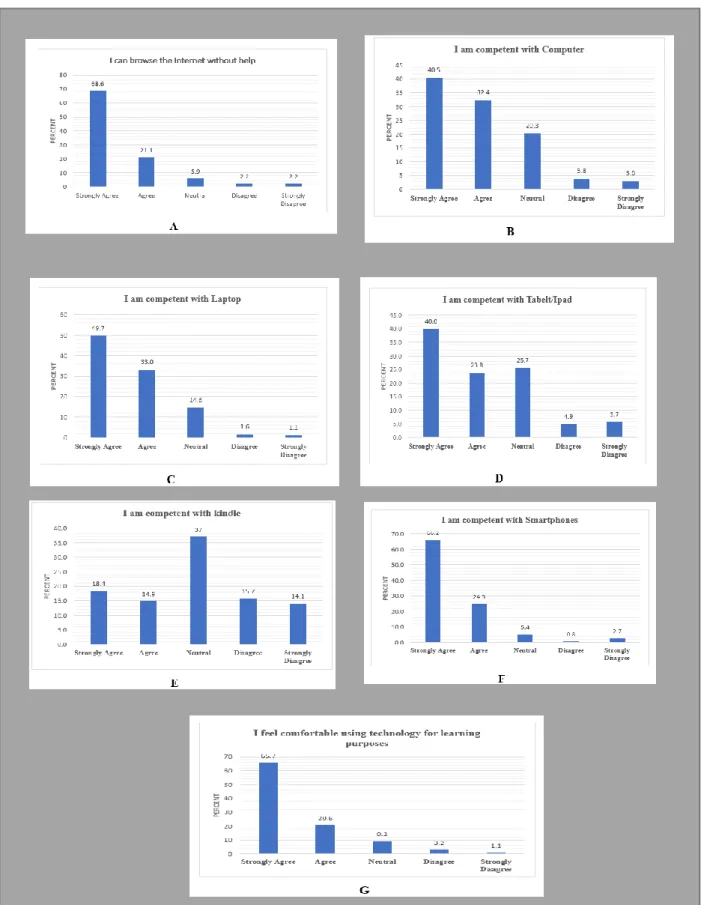
Figure 4.7: Information about respondents’ level of competence ... 62
Figure 4.8: Respondents Access to Technology and their Performance ... 64
Figure 4.9: Information about challenges students face with the use of technology for learning ... 89
Fig 4.9A Challenges student face while using technologies (open ended question) ... 91
Fig: 4.9B Suggestions from students based on the challenges they face while using Technology (open-ended question) ... 92
x
LIST OF ACRONYMS
APA - American Psychological AssociationMOOC - Massive Open Online Courses BL - Blended Learning
ICT - Information and Communication Technology EL - Electronic Leaning
DD - Digital Divide DI - Digital Immigrant DAD - Digital Access Divide DSTV- Digital Satellite Television PPV - Pay-Per-View
DCD - Digital Capability Divide DOD - Digital Outcome Divide USA - United States of America IT - Information Technology
NTIA - National Telecommunications and Information Administration UI - User Interface
OS - Operating System
HCI - Human Computer Interaction SE - Self Efficacy
PLATO - Programmed Logic for Automated Teaching Operation TAM - Technology Acceptance Model
UKZN - University of KwaZulu-Natal PMB - Pietermaritzburg
CBT - Computer Based Test
CBA - Computer Based Assessment PC - Personal Computer
PDA - Personal Digital Assistant LMS - Learning Management System
xi SDL - Self-Directed Learning
TL - Technology Literacy CL - Computer Literacy DL - Digital Literacy
PEOU - Perceived Ease of Use PU - Perceived Usefulness LAN - Local Area Network
1
CHAPTER 1: INTRODUCTION
1.1 Introduction
The emergence of the Internet and other forms of technology has reformed the ways in which individuals, organizations and governments communicate, disseminate, and manage their information (Mikre, 2011; Pierce, 2019). Today’s society is, however, still separated by the gap that exists between individuals with access to technologies and skills to use such technologies, and those without such access and skills. This gap is referred to as the “digital divide” (Burkhardt et al., 2003; Elbert & Alston, 2005; Broadbent & Papadopoulos, 2013; Datta, Bhatia, Noll, & Dixit, 2019). The digital divide is a prominent challenge affecting the individuals and organisations in developing countries, just as much as in the developed countries.
As for the developed countries, the digital divide is still a challenge because large segments of these countries are still faced with the challenge of digital divide, even though they are considered to have high technology availability (Ragnedda & Muschert, 2013; Lussier-Desrochers et al., 2017). Developing countries are also faced with challenges which include, lack of technological infrastructures and insufficient modern technological innovations. As a result, such countries are at a disadvantage. Similarly, individuals who are owners of technology or have access and the skills to use technology are at an advantage over those that do not. This is because such individuals are capable of using technology to carry out their IT related tasks.
The Digital divide has been classified into three categories which are digital access divide, digital capability divide and digital outcome divide (Wei, Teo, Chan, & Tan, 2011; Berrío-Zapata, 2014). A digital access divide refers to inequalities in terms of physical access to technology, particularly hardware and software. A digital capability divide is concerned with the issue of usage and skills with regards to technology, while a digital outcome divide focuses on the variation in the outcome after an individual has used technology (Smith, 2015).
In recent years, technology has been introduced to students by learning institutions through online registration, e-learning, podcasting, etc (Dočekal & Tulinská, 2015). This introduction has made technology become an integral part of teaching and learning in higher educational institutions. It has also made it possible for students to be able to access study materials online
2
and to make online submissions. However, it has also contributed to the digital divide among students (Broadbent & Papadopoulos, 2013; Barnidge, Diehl, & Rojas, 2019). This is because students who have not been exposed to technology prior to enrolling into a university tend to struggle in their learning process due to insufficient or lack of technological skills (Waycott, Bennett, Kennedy, Dalgarno, & Gray, 2010; Ritzhaupt, Liu, Dawson, & Barron, 2013; Calderón Gómez, 2019). This challenge has compelled the need to devise mechanisms through which the effect of the digital divide among the students can be managed.
1.2 Background of the study
The digital divide became prevalent as a result of the technological evolution and use of technology (J. Van Dijk & Hacker, 2003; Pick & Sarkar, 2015; Pierce, 2019). Despite the increase in the access and use of technology, studies have shown that there is still disparity in its access and use (Tarman, 2003; Fuchs & Horak, 2008; T. D. Oyedemi, 2012; A. J. van Deursen, Mossberger, & internet, 2018). The disparities in access is sometimes caused by the variations in individuals’ level of access to technology. According to Cohron (2015), the individuals’ skills and access to technology, particularly computers and the Internet, are sometimes determined by the income level, educational level, race, ethnicity and geographical location.
The need to enhance teaching and learning efficiency at educational institutions has led to emergence of different technology innovations that have been and are continuously being integrated into educational systems. One of such technologies was the Program Logic for Automated Teaching Operations (PLATO) that was developed at the University of Illinois. The PLATO project was developed with the focus of assisting teachers to design and deliver module materials (Chetty et al., 2018). In 1974, the International Business Machine (IBM) research center also developed a computer program, capable of teaching linguistic and scientific modules (Reddi, 2004; Garrison, 2011). These innovations brought fame to the use of technology in education. In addition, the use of technology in education has become a global trend (Reddi, 2004; Garrison, 2011; De Vries, 2018).
In recent years, there has been an increase in the adoption of technology into educational institutions. Some of which can be found in e-learning and Computer Based Assessments (CBA). E-learning facilitates the online delivery of lectures and study materials (Adikwu, Agunbiade, & Abah, 2017). It also allows students to communicate with teachers, and make
3
online submissions of their school work (Garrison, 2011). Students who are familiar with technology due to their previous exposure often use such technological resources effectively for learning purposes, and as a result, tend to achieve better performance (Sun & Metros, 2011; Rashid & Asghar, 2016; Pierce, 2019). However, students who do not have technological skills prior to joining an educational institution may not perform very well in the use of such technological resources and consequently, in their studies (Sun & Metros, 2011; Broadbent & Papadopoulos, 2013; Rashid & Asghar, 2016; Pierce, 2019).
The first prominent survey to address the issue of the digital divide was done in 1994 by the National Telecommunications and Information Administration (NTIA) in the United States (Cohron, 2015). The findings in the survey showed that age, income level and geographical location are some of the key determinants of access to technology (Cohron, 2015). In recent times, however, research has shown that there has been a rapid reduction in the digital divide, possibly due to the pervasiveness of technology (Garrison, 2011; Cook & Polgar, 2014; Goncalves, Oliveira, & Cruz-Jesus, 2018). The pervasiveness can for instance, be seen in cellular phones that were traditionally mainly used for phone calls and SMSs. Nowadays, smartphones have become pervasive, allowing individuals not only to communicate but to search the web, use multimedia functionalities and for gaming purposes (Lavery et al., 2018b).
1.3 Research Problem
Technology plays a vital role in modern society since it impacts all facets of modern life. Its impact is perceived more at schools and tertiary institutions as it has been considered as a catalyst towards improving teaching and learning efficiency in educational systems (Dornisch, 2013). As IT skills become one of the core requirements for success in tertiary institutions, there exists a gap between those students who have and do not have the skills required to utilize the technological resources.
The digital divide emerged from the disparities between individuals who have access and can use technology and those who do not have (Waycott et al., 2010; Sun & Metros, 2011; Broadbent & Papadopoulos, 2013). This disparity has compelled the need for those who do not have technological skills to seek for such skills. According to Jones and Bridges (2016), the digital divide concept includes the “haves” and the “have-nots”. The “haves” are the individuals who own or have access to information technologies (Cohron, 2015). These are the individuals who are mostly benefitting from the prevalent digital age. The ‘have-nots’ are the individuals who do not own computers or have access to information technologies (IT). The
4
individuals who are born in the digital age and have exposure to technologies are referred to as digital natives, while the individuals who were born prior to the digital age , yet adapting to the digital age are referred to as digital immigrants (Smith, 2015).
The digital divide does not only hinder students’ access to institutions resources such as online library and module materials, but also denies them the opportunity to use the available technology at institutions of learning. The challenges faced by digitally disadvantaged students has necessitated the need to properly understand, from student’s perspective, digital divide, its challenges, impacts on students and how the challenges can be managed. Such investigation will assist in devising adequate strategies to manage digital divide challenges, especially among first-year students and also enhance their technological skills. The research questions and objectives of this study are therefore aimed at identifying the challenges of digital divide among first-year students and propose ways by which its impact can be minimized.
1.4 Research questions
The following are the research questions of this study:
1. What factors affect students’ computer self-efficacy (or lack-off), prior to joining the university?
2. What are the challenges faced by first year students in the use of technology for learning?
1.5 Research Objectives
The following were the objectives of this study:
1. To understand the factors that affects student’s computer self-efficacy (or lack-off), prior to joining the university.
2. To identify the challenges faced by first year students in the use of technology for learning.
3. To propose ways in which the challenges of the digital divide can be managed, especially among first year students.
1.6 Significance of the study
The issue of the digital divide in universities cannot be over-emphasized, considering the dynamic nature of technology and its increasing use in academic institutions to support learning. This study proposes ways by which the issue of digital divide in institutions could be
5
managed. Also, the study could provide academic institutions with the options that can help strategize, so as to support the technology immigrants that are entering the institution.
1.7 Scope of study
The study focused on digital divide and its challenges, impacts, digital literacy, technology integration in educational systems. One of the key areas where digital divide is prevalent is within academic institutions (Dornisch, 2013). Hence this study was conducted at University of KwaZulu-Natal (UKZN) Pietermaritzburg (PMB) campus. Additionally, this study was conducted among first year students because inequalities in technological skills exist among students, especially first year students (Castaño-Muñoz, 2010; A. J. van Deursen et al., 2018).
1.8 Justification
The integration of technology into education has made computers and the Internet become crucial components to modern day classrooms (Mikre, 2011; Broadbent & Papadopoulos, 2013; Chetty et al., 2018). The literature shows that there exists a gap, the digital divide, between those students who are digital natives and those who are not (Sun & Metros, 2011). Students who are familiar with using computers and Internet facilities for study purposes are at an advantage over those who have no familiarity. Those with no familiarity often struggle with their technology-related modules and as a result, have the potential to do poorly academically. To understand how digital divide can be managed within academic institutions so as to manage its impact on students’ performance, studies that would investigate the digital divide and devise mechanism by which it can be managed are of importance. This study therefore provides academic institutions with insight that can help in addressing the issue of digital divide.
1.9 Methodology
To achieve the objectives of the study, a descriptive design approach was implemented. According to Bhattacherjee (2012, p. 93), descriptive study seeks to describe the characteristics of the observed phenomenon. The primary aims of a descriptive study is to give the detailed description of the crucial factors surrounding the phenomenon of interest. Ary, Jacobs, Irvine, and Walker (2018) stated that descriptive design tends to investigate whether some certain factors are associated with the phenomenon. In the context of this study, the descriptive design offered the researcher clear insight on the factors that contribute to the digital divide as well as how its challenges among the first-year students can be managed. According to Bhattacherjee
6
(2012), target population is the population from the study site which covers the total number of people under investigation. In the scope of this study, the target population were the first-year students of UKZN, PMB campus, of which there are 9741 students (PMB Campus).
The quantitative research approach which, according to Ingham-Broomfield (2014), is a technique for testing a proposed theory through examining the relationships existing between variables, was adopted in this study. In the context of this study, the researcher conducted the quantitative approach using questionnaires, and also, probability sampling strategy was implemented. According to Bhattacherjee (2012), probability sampling technique helps in eliminating sampling bias by giving every student in the target population a chance of being selected. In order to select the required sample for this study, a cluster probability sampling technique was employed. Based on the choice of sampling technique, the entire population was divided into separate group (cluster) and sample (simple random sampling) was drawn from each cluster. All the drawn samples combined together formed the final sample (370). Questionnaires were distributed in person to the participants to increase the probability of high response rate (Nulty, 2008). Prior to filling the questionnaires, respondents were asked to give their consent to participate in the study.
The study adopted two frameworks which are Digital Divide Framework, Wei et al. (2011), and Technology Acceptance Model (TAM) (Venkatesh & Davis, 2000). These frameworks offered the researcher a clear insight about the research questions that underpin the study. The digital divide model has three constructs namely digital access divide, digital capability divide and digital outcome divide (Wei et al., 2011). The constructs helped the researcher to understand the extent to which students had access to technology before joining the university and the specific technological devices that students are most familiar with. In addition, the constructs helped in investigating students’ competency level in the use of technological devices. The TAM framework has two independent constructs, namely; perceived usefulness and perceived ease of use (Venkatesh & Davis, 2000). The two independent constructs were adapted to the study in order to understand the perception of students towards the use of technological resources for learning purposes. In this study, the perceived usefulness was used to investigate the extent to which students believe technologies such as computer, Internet are useful for learning purposes. The perceived ease of use was used to examine the extent to which a student believes he/she finds it easy to use available technological resources to carry out learning tasks.
7
Furthermore, in the context of this study, the use of technology resources by the student, for learning purposes is compulsory. Hence, the behavioural intention construct was not adapted to this study because the construct measures the likelihood or probability of using technology, whereas, in this study, the use of technology is compulsory. Also, the usage behaviour construct of TAM is directly influenced by behavioural intention (Venkatesh & Davis, 2000). Therefore, since behavioural intention was dropped, then its effect (usage behaviour) was also dropped.
1.10 Limitations
The research focused only on first year students and was carried out in one out of five campuses of the University of KwaZulu-Natal, because of the researcher’s proximity to the campus and also, time and financial constraints. This affects the generalizability of the research findings. For a research finding to be generalized to the school, such research could use higher population, and samples should be drawn from each of the five campuses.
1.11 Outline of the Dissertation
This dissertation consists of six chapters. These chapters are presented in the sequence the study was carried out. A short explanation of each chapter is presented below.
Chapter 1: The chapter introduced the study. It presents a brief background to the digital divide and its associating factors. The chapter also presents the problem statement, research questions and objectives. A succinct explanation of the methodology employed was also provided.
Chapter 2: Presents literature review that has been carried out on the digital divide. In addition, studies on digital literacy, technology and student’s academic performance and technology integration into the educational system were also reviewed.
Chapter 3: Explains the methodology employed to carry out the research. It also presents and explains the frameworks used in the study. Explanations on type of research design, research approach, sampling and survey techniques were also presented.
Chapter 4: Presents the results of the analysed data as well as the interpretations.
Chapter 5: Presents detailed discussions of the findings in this study.
8
1.12 Conclusion
In this introductory chapter, a short overview on the digital divide, problem statement, research questions and objectives were presented. An outline of the dissertation was also presented. It was ascertained that the Digital divide emerged from the disparities between individuals who have access and can use technology and those who do not. (Waycott et al., 2010; Sun & Metros, 2011; Broadbent & Papadopoulos, 2013). In addition, the digital divide has compelled the need for technological skills to be introduced into educational systems globally. The introduction of technical skills into the educational systems has also become important because technology has brought about a significant change to the teaching and learning approach in educational systems. Students who are familiar with technology due to their previous exposure and education are likely to use technological resources effectively for learning purposes. However, students who do not have such familiarities are likely to experience difficulties while using technologies. Therefore, a clear understanding of the digital divide and its associated factors would help in devising mechanisms to manage its challenges. Chapter two presents the review of literature conducted on the study.
9
CHAPTER 2: LITERATURE REVIEW
2.1 Introduction
The previous chapter presented an introduction into the study. It also presented the research questions as well as objectives, and also, the significance of the study. In this chapter, a review of existing literature on the digital divide is presented. This chapter also highlights the factors influencing digital divide, the digital divide challenges as well as its impact on students. Furthermore, the chapter presents a review of literature on digital literacy, technology in education, and the relationships between technology and students’ academic performance.
2.2 Information and Communication Technology
According to Elirea Bornman (2016) information and communication technology (ICT) is described as any technological tool such as computers, smartphones, personal digital assistant and satellite that enable individuals to access, create, modify, analyze and exchange information. Hamiti, Reka, and Baloghová (2014) went further to state that ICTs are diverse technological tools that enable users to create, communicate, disseminate, store and manage information. Furthermore, Cardullo, Wilson, and Zygouris-Coe (2018) observed that ICTs are network devices, standalone computers and other telecommunication technologies with several modes of operation, capable of performing data communication and supporting interactive communication.
The dynamic nature of today’s ICT is reforming the way individuals, societies, and academic institutions perform their various tasks. It is also causing a reality that is compelling the need for individuals to possess information and technological skills, which are considered prerequisites to be partakers in the present digital and technological world (Meyers, Erickson, & Small, 2013; Elirea Bornman, 2016). Nowadays, private firms and government organisations are in need of knowledge workers with adequate technological skills to carry out complex operations. Individuals who lack technological skills are at a severe disadvantage, especially in competing for such jobs. In addition, ICT is opening possibilities that allow individuals who are challenged by geographical barriers to learn. An example is the Massive Open Online Courses (MOOC) usually conducted in an online environment (Dočekal & Tulinská, 2015). These courses cover various areas and typically last several weeks. Some of the interesting features of MOOC include discussion forums which allows individuals to discuss and address questions among each other and with their educators. It is therefore
10
perceived that, MOOCs provide individuals and professionals, who are faced with geographic challenges, with educational opportunities (Valentin, 2015).
ICT has changed today’s teaching and learning approach through its interactive and dynamic nature (Garrison, 2011; Rashid & Asghar, 2016). The pedagogical activities in academic systems have now been subjected to various technological approaches such as e-learning and blended learning (Mikre, 2011). For instance, ICT, through the e-learning system, has made it possible for students to be able to access study materials online and to make online submissions. Several studies have showed that the effective use of ICT in schools offer student higher learning gains. For example, a study by Ziemba and Becker (2019) showed that students who utilize online computer tutorials for computer programming, mathematics and social sciences performed better than their counterpart who do not use such technologies.
However, in spite of the benefits of ICT in educational systems, studies have shown that there is disparity in terms of skills and access to technology. This disparity, often referred to as the digital divide (A. Van Deursen & Van Dijk, 2011; Olawande Oni, 2013; Elirea Bornman, 2016), signifies the gap between individuals who have access and skills to use technology and those who do not (Ritzhaupt et al., 2013). The issue of digital divide in the educational system in South Africa has been in existence since the apartheid era. Naidoo (2011); Newling (2012); T. D. Oyedemi (2012) Lavery et al. (2018b), indicated that during the era, there were no adequate provision for technology infrstructures and teaching resources in some academic institutions. This put students who had enrolled in such institutions at a disadvantage. The insufficient technological infrastructures remain a contributing factor of the digital divide. Furthermore, Berrío-Zapata (2014) observed that student background and geographical location play a crucial role in the issue of digital divide in educational systems. For instance, students from wealthy homes are likely to have developed basic technological skills. They are often therefore at an advantage to their counterparts who lack technological knowledge. This disparity, between student who have access and skills to use technologies and those who do not, has compelled the need for technological literacy for students, especially also, as ICT is increasingly becoming an integral part of educational systems.
2.3 Digital Divide
Several definitions have been given to Digital Divide, but most of the definitions revolve around the disparities of the individual’s access, skills, and use of ICT. According to Peroni and Bartolo (2018), digital divide is the gap between individuals who have access and skills to
11
use ICT and those that do not have such access. The author emphasized on the access, skills and use of information and technological tools such as the Internet and computers. Maketa (2007)and Dornisch (2013) highlighted in theirstudies that the advancement in technology has triggered the technological gap between people and has also compelled the need for technological skills globally. This is because technology has become a crucial tool for participating in today’s global economy. It is also a requirement for self-development and social (especially online) interaction (T. D. Oyedemi, 2012).
Studies by Sun and Metros (2011), Broadbent & Papadopoulos (2013) and Smith (2015) indicated that the emergence of the Internet in the early 1990s brought about the information gap. Individuals who grew up using technology are referred to as Digital Natives (Prensky, 2001; Cronin, 2002; Crews & Feinberg, 2002; Nworie, Nworie, & Mintah, 2010; Waycott et al., 2010; Sun & Metros, 2011) while those that were not born in the digital era, but are adapting to the technological evolution, are referred to as Digital Immigrants (Prensky, 2001; Z. W. Goldman & M. M. J. C. E. Martin, 2016; Peroni & Bartolo, 2018; Chetty et al., 2018). The digital immigrants tend to struggle with technological tools due to the lack of basic skills to utilize technology, and as a result (in some cases) are lagging in the digital world.
2.3.1 Digital Divide Classifications
Digital divide has been classified into digital access divide, digital capability divide and digital outcome divide (Tien & Fu, 2008; Chikati, 2013; Peroni & Bartolo, 2018; Ziemba & Becker, 2019). These classifications are described below.
2.3.1.1 Digital access divide
Digital access divide refers to the inequality in terms of access to information technology (Chikati, 2013). According to Nyahodza, Higgs, and Science (2017), factors that influences digital access divide include peoples’ educational and income level. Similarly, A study by Yu, Ellison, McCammon, and Langa (2016) shows that an individual with low educational and income level, living in an underdeveloped area and aged above 55, most likely lacks the opportunity to gain access to basic technology such as the Internet and computers. However, the issue of digital access divide in schools has been alleviated. This is because, efforts are being made by most countries in the provisioning of physical technological access such as computers and the Internet to students (Cox, Cheng, & Forbes, 2018).
12
Chikati (2013) indicated that before a user gains physical access to any form of technology, there often exist a motivation for such a user to have acquired such technology. In the same vein, the studies by J. A. Van Dijk (2006); Ghobadi and Ghobadi (2015) indicated that an individual’s accessibility to technology lies on two factors, namely motivation and material. An individual’s lack of such factors brings about digital access divide (J. A. Van Dijk, 2006; Ghobadi & Ghobadi, 2015). Peroni and Bartolo (2018) added that many of those who experience digital access divide, have motivational problems, which often result from their lack of exposure and awareness.
The term ‘motivation’ in the context of technological adoption is the wish to acquire any form of technology, and also technical skill (J. A. Van Dijk, 2006; Ramorola, 2013). Motivation to acquire technology is often associated with individuals’ income level, as individuals with low income level are most likely unable to afford technologies (Ghobadi & Ghobadi, 2015; Santos, Sequeira, & Ferreira-Lopes, 2017). Digital access divide appears to be closing at a point whereby individuals are able to acquire a personal computer and have access to the Internet. However, digital access divide still exists because there are individuals who often avoid using technology due to technological anxiety even though they are financially fit (Riggins & Dewan, 2005; Saadé & Kira, 2009; Akin & Iskender, 2011). Similarly, J. A. Van Dijk (2006); Lavery et al. (2018b) found that, mental barrier also contributes to digital access divide.
Material factor on the other hand, entails conditions an individual requires to meet and the other tools an individual is expected to acquire before gaining complete connection or access to some form of technologies (Ghobadi & Ghobadi, 2015; Lavery et al., 2018b). The material factor is often granted in conditional manner such as subscriptions and pay-per-view. For example, the Internet and Digital Satellite Television (DSTV) subscriptions, allow individuals to purchase a decoder, open an account and make subscriptions. Access is granted after individuals have acquired the tools and also, when conditions have been satisfied. Although, income level, occupation and education are often associated with material factor (Nworie et al., 2010; Lavery et al., 2018b).
2.3.1.2 Digital capability divide
Digital capability divide refers to inequality in the skills required to utilize information technology resources (Elirea Bornman, 2016). These inequalities sometimes arise from socioeconomic statuses, family background and education (Tien & Fu, 2008; Cook & Polgar, 2014; Cohron, 2015; Nyahodza et al., 2017). Berrío-Zapata (2014) highlighted that the digital
13
capability divide occurs due to the first level digital divide, lack of access to technologies and differences in individuals’ technological skillsets. In the same vein, A. Van Deursen and Van Dijk (2011); Ballano, Uribe, and Munté-Ramos (2014) found that users who are competent and frequently use technology often differ in the style of usage to those who are new to the use of technology. Their findings further showed that users gain confidence and develop affinity towards the use of technology when they frequently engage in technology related activities especially the ones that involve the use of computers and the Internet.
As pointed out by Ghobadi and Ghobadi (2015), meaningful use of technology is determined by the available technological infrastructure and the individual’s skillset. J. A. Van Dijk (2006); Chetty et al. (2018) further claimed that digital skill goes beyond operating computers and other technological tools. They stated that it involves the ability to search, select, process and apply information from a different source in a specific context. Waycott et al. (2010); Datta et al. (2019) in their studies, however, stated that, in the case of technological devices, individual skills are likely to increase with time. This is because, the frequent use of technological devices by individuals increasing and consequently bringing about strong affinity towards technology, and also in turn leading to high competency in the use of technology.
A. Van Deursen and Van Dijk (2011) categorized the concept of skills into operational, informational and strategic skills. The authors claimed that meaningful use of technology lies on the three skills. Operational skill is the ability to operate computer, network hardware and software (A. Van Deursen & Van Dijk, 2011). Informational skills entail the ability to use web-based search engines effectively, as well as identifying and processing the necessary information on all forms of technologies. Strategic skills, on the other hand, refers to the individual’s ability to employ technology as a means of achieving goals and as a tool for participating in modern society. However, Leu et al. (2011): Ghobadi and Ghobadi (2015); and A. J. van Deursen et al. (2018) indicated that “digital skills” is succeeded by motivation to adopt technology. In addition, they stated that usage and skills are often shaped by individuals’ educational and income level as well as family background.
Furthermore, Ghobadi and Ghobadi (2015) indicated that disparities in the use of technology emanated from the variation in the use of ICT applications for daily activities. A. Van Deursen and Van Dijk (2011) categorized the concept of ICT usage into active and passive use. Active use of ICT is determined when an individual makes a contribution to the Internet through media
14
platforms such as blogs and online social networks. Passive usage occurs when technology is employed for a specific purpose (Montague & JieXu, 2012). For instance, in an e-learning system, students are passive users if teachers are sole operators of the technological resources. While students are also active users if they perform tasks using the computer and the on Internet. However, both active and passive usage of ICT is highly associated with individual’s demographic attributes such as age, sex, income, and education level (Osterman, 2013).
2.3.1.3 Digital outcome divide
Digital outcome divide signifies the disparities in individuals’ outcomes (e.g. academic performance and productivity) of using technology. The main concern of this level of digital divide is to understand and present whether individuals are familiar and have attained the required knowledge to use technology to carry out certain tasks effectively. As indicated by Wei et al. (2011), the digital outcome divide arises from the individual’s ability or inability to effectively utilize IT. Therefore, each individual’s digital outcome will vary. In certain circumstances, the digital outcome is also based on users’ previous exposure and experience with technology (Sun & Metros, 2011; A. Van Deursen & Van Dijk, 2011; Wei et al., 2011). That is, the third level digital divide (digital outcome divide) would be influenced by the first and second levels of digital divide. This is because, an individual must have gained access to technology before they experience its benefits (the outcome). In addition, frequent use of such technology is likely to bring about a strong affinity towards the use of the technology which in turn leads to high competency in its use. Furthermore, in a study conducted by Alam, Imran, and People (2015), it was evident that in order to attain the characteristics of the third level digital divide, individuals need to engage themselves in giving meaning to the technologies they have access to. This is because the digital outcome divide is dependent on the way individuals engage themselves in technologies.
2.4 Effect of Apartheid on the Digital Divide
Prior to 1994 in South Africa, meeting the academic needs in the education system was highly dependent on racial stratification which was also based on the geographical (urban and rural) locations of schools (Nyahodza et al., 2017) . This stratification brought about unequal access to resources, which further caused inequalities in terms of basic technological infrastructures between schools across South Africa. Similarly, Nyahodza et al. (2017) indicated that the apartheid era promoted substandard education to some races. On the other hand, privileged races were provided with quality education. Swartz and Foley (1996); Sherer (2000); Newling (2012);Christopher (2018) affirm that university students that come from such underprivileged
15
schools demonstrate inadequate information technology knowledge. This is because their prior schools did not expose their students to technologies, because they lacked the required financial resources for technology provisions. In turn, this becomes a crucial factor contributing to digital divide till date.
The social and economic inequalities that still exists amongst the racial groups provides an understanding of how the lack of basic infrastructure came into existence in schools across South Africa. The impact of unequal distribution of basic technological infrastructures across schools is, however, still prevalent, as can still be found amongst some of the university’s first-year students (Motala, 2018). These inequalities also brought about stigmatized stereotypes relating to education and technology (Newling, 2012). For instance, the disadvantaged racial groups were often perceived to be lagging in terms of education, career, exposure and the digital world. Odunaike, Olugbara, and Ojo (2013) noted that the racial division caused an impact on students as they demonstrated lack of knowledge, in university, towards technology and adequate career guidance. Consequently, a number of these challenges stand to date and continuously remain a part of the major factors contributing to digital divide. However, the South African government is actively working towards liberating the disadvantaged races from the outcome of the apartheid era that occurred over two decades ago (Cox et al., 2018).
2.5 The Digital Divide Challenges
The digital divide presents challenges that became prevalent during the mid-1990’s (Lavery et al., 2018a). This was due to the increase in the reliance on technology for everyday life activities. The growth in the usage of digital technology and the Internet brought about social inclusion, accessibility and academic performance challenges (Hill & Lawton, 2018). It is also believed that digital divide challenges stems from computer anxiety which in turn affects the student’s academic performance (Scheerder, van Deursen, & van Dijk, 2017) . The challenges with digital divide that have been identified in the literature are:
2.5.1 Challenges with using a computer and computer input peripherals
In the studies conducted by Schneider et al. (2018) and Hill and Lawton (2018), it was evident that some students lack prerequisite computer background knowledge such as switching on a computer. Observation from the studies also showed that when students have to use the computer for their academic activities, they have anxiety due to their lack of familiarity of how
16
to use the computer. Literature revealed that the main computer parts that have been challenging to use by students that have previously not been exposed to any form of technology devices are the keyboard and mouse. Students that experience the digital divide encounter keyboard challenges that relate to typing (Keengwe, Onchwari, & Wachira, 2008; Ritzhaupt et al., 2013; Lavery et al., 2018b). In most instances, the students fail to use the keyboard to accurately type out what they want to search for due to the unfamiliarity with keyboard. Also, searching for a site and typing the required website address (Uniform Resource Locator ), becomes a challenge as students do not know how to insert punctuation marks such as hyphens and forward slashes for particular website names (T. Oyedemi & Mogano, 2018). This results in low confidence level towards using computer keyboards due to the many functions that students are unfamiliar with. Using a computer mouse also becomes challenging to students who experience digital divide. The challenge that students face is when the mouse pointer is frozen, students do not know that they can simply use the keyboard options such as Alt and F4 key to end the programs that are causing the mouse pointer to freeze (Nyahodza et al., 2017). In other instances, the pointer freezes due to several applications that are running in the background, that the student is not aware of. This is also a result of the student’s unfamiliarity with the use of computers.
2.5.2 E-learning challenges
In universities, students are often challenged when using online learning systems due to their insufficient knowledge of ICT. One of the major challenges that universities encounter is the adjustability and adaptability of students that were previously technologically disadvantaged to the technology enhanced learning (Checchi, Rettore, & Girardi, 2018). According to T. Oyedemi and Mogano (2018), first year students fail to cope with the pressure of the technological change. Similarly, in a study conducted by Katoch, Doan, and Dadashi (2019) it was highlighted that first year students are challenged when having to use e-learning systems, such as Moodle, for learning activities as the such systems encourage independent work. This is a challenge because in secondary school, students are taught to work in collaboration and assist one another within the classroom (Z. W. Goldman & M. M. Martin, 2016). However, on LMS the concept varies as the assessments are individual based work that is completed and submitted independently by the students. In most instances, students are expected to know how to use the online learning site and are offered no support in the area of the online learning platform (Katoch et al., 2019). Students are therefore challenged when having to complete their online assessments as they are not technology inclined as a result of their unfamiliarity with
17
technology. Furthermore, McGuinness and Fulton (2019) found that students encounter navigation challenges when using online learning platforms. In the same vein, Tuah, Herman, and Maknun (2019) indicated that students struggle to post in discussion forums that are held on the online learning system. Consequently, such students are hindered in the discussion participation and communication with the lecturer and fellow classmates. This difficulty is based on the challenge of students’ inability of using computer input devices. As a result of lack of poor navigation capability, students further encounter challenges of how to download and correctly save learning material from the LMS.
2.6 Impacts of the digital divide challenges on students
The introduction of technology in universities has brought about challenges in the way that students conduct their tasks (Jerrim, 2018). Universities have also encountered concerns regarding how to equip students with the relevant skillsets that allows the students to be competent with technology usage (Buzzetto-Hollywood, Elobaid, Elobeid, & Objects, 2018). The continuous technology evolution introduces new learning patterns that create digital divide challenges among students. For instance, students become challenged with the use of learning platforms such as Moodle. This challenge reduces the possibility of obtaining better academic performances (Camerini, Schulz, Jeannet, & Society, 2018). It is believed that educational systems need to be restructured in order to accommodate the new digital world into all spheres of learning. This entails an understanding of the digital divide challenges that exist and further increasing the digital skills amongst students.
The implementation of different e-learning platforms has become a challenge due to the different educational backgrounds of first year students (Mahmood, Khattak, Haq, & Umair, 2018). This is considered to be a social problem being that some students are reaping the advantages of technology as compared to those students who are not (Robinson, Wiborg, & Schulz, 2018). This digital divide challenge impacts students as it brings about social divisions amongst those students who have technology skills and those that do not. According to Essien (2018), White students are more than likely to have owned computers as compared to the Black students. Although the Black ethnic group is growing in terms of computer ownerships and accessibility (Lavery et al., 2018b). The proportion of growth has not balanced across the different racial groups, and this has transpired into universities as White and Indian students show more competence with the use of computers and other technology resources as compared to their fellow Black students (Essien, 2018). The Black students encounter added challenges
18
as they have to familiarise themselves with the technology as well as their academic workload. On the other hand, Doolan and Gilbert (2017) noted that psychological aspects such as socioeconomic statuses affect student’s academic outcomes. For instance, students who do not know how to use resources, such as Moodle, affects their self-esteem as they consider themselves as failures. This in turn affects their academic performance due to lack of self-belief which is considered a psychological aspect.
Nowadays, technology has become a requirement at universities across South Africa (Nyahodza et al., 2017). For instance, at the University of KwaZulu Natal, it has been made compulsory for first year students to have laptops as part of the e-learning adoptions. In addition, the university also provides Local Area Networks and Internet connectivity to facilitate e-learning activities. As a result, first year students who have had no prior exposure to technology encounter technology disadvantages. This is because students who are familiar with technology manage to save time and are also able to adequately support their academic tasks. Additionally, the transition to the university’s learning platforms, such as Moodle, does not become a challenge. Also, technology use of students, who fall within the digital divide gap, works to their disadvantage when it comes to choosing career choices that consist of technology. Whereas, students who were familiar with technology in high school are able to choose qualifications from various IT disciplines. On the other hand, it is believed that students who are challenged by technology encounter academic hinderances that further shape their decision making about the career paths they decide to take (Wu, Damnée, Kerhervé, Ware, & Rigaud, 2015). Furthermore, university’s technology platforms offer broader career choices to students who enter university with technology knowledge (Elirea Bornman, 2016). For instance, students who have technology knowledge are knowledgeable to take on advanced technology career paths such as computer engineering and computer science. In accordance, Camerini et al. (2018) stated that students who have background knowledge of their chosen qualification tend to obtain better academic results. This suggests that, based on lack of technology exposure and usage, students who unfamiliar with technology are limited towards acquiring qualifications that consist of IT. Also, this means that students who take on IT careers yet impacted by digital divide, may not perform as well as students who have previous technology knowledge and exposure.
Digital divide has been understood to impact students’ social life at universities. Over the years, due to the evolution of technology, students are continuously adapting to the different approaches to learning. According to Z. W. Goldman and M. M. J. C. E. Martin (2016) in
19
universities, the majority of first year students aremillennials that are between the ages of 16 and 21 years. These students have demonstrated higher interests and aptitudes towards technology than the previous generation of learners. As noted by Mansfield (2017), post millennial students embrace the digital era since they prefer being taught and learning using technology approaches. For example, during lectures, post millennials no longer take down notes for later learning purposes, instead, they take pictures using their smart phones (Hill & Lawton, 2018). The flexibility of using technology allows for a balanced social and academic university life. However, not all post millennial students benefit from the advantages brought by technology as some students are not equipped to use technology for learning purposes. This impacts students who are not familiar with technology as they have to manually conduct learning activities that could be done through technology facilities. As a result, students who are not technology inclined have less social university life as they do not know how to use technology to capitalise on technology for their learning purposes.
2.7 Technological Adoption and the digital divide
In a study conducted by Francis, Ball, Kadylak, and Cotten (2019), it was argued that the adoption of technology brings about digital divide which often overwhelms those who are not adopting technology. In the same vein, Cheng and Yuen (2018) noted that technology adoption increases students’ level of exposure. However, Iqbal and Bhatti (2015) noted that technology adoption is governed by market forces. This is because the early adopters purchase the technology at higher costs as compared to the late adopters. The individuals who purchase technology after some time period, due to the depreciation in technology, purchase such technologies at cheaper costs. Also, in a study conducted by Tsay, Kofinas, and Luo (2018) it was found that students who bring digital devices into the classes and also use learning management systems, have effortless learning experiences and more learning power. Despite the advantages provided by technology adoption to educational systems, there are several factors that hinder on the universities capability of fully adopting e-learning technologies. As a result, academic institutions encounter challenges as new learning systems are adopted, since some students have not caught up with the digital technologies.
According to Scheerder et al. (2017), the digital divide gap can also be caused by external factors other than technology adoption. For instance, having no access to the digital technologies is more than likely to cause a digital divide gap as compared to the adoption of
20
technology. Additionally, the impact of no physical access to computers and the Internet are considered as the major catalysts that cause a digital divide gap. In most instances, the major digital divide catalysts are caused by individuals’ socioeconomic statuses. In agreement, Gherardi (2016) noted that low income level individuals often lack Internet literacy due to financial constraints towards investing in technology. Furthermore, in a study conducted by Lavery et al. (2018a), it was affirmed that digital divide is caused by income inequalities. It was further discovered that students who had no prior access to technology experience the digital divide. This is because lack of access to technology limits the students’ career, social and educational advantages. Also, in universities, students who are digitally excluded due to lack of access to technology demonstrate slow development towards information technology fundamentals. Mansfield (2017) in his study recommended that equal access to technological devices would lead to more technology adoption which in turn lessens the digital divide gap amongst students. Therefore, it can be argued that technology access and other external factors play the integral part to the emergence of digital divide. Students encounter the digital divide due to limited or no access to technology. Thus, adoption to technology cannot occur if students have no physical access to the technological devices. As a result, access to technology impacts digital divide. In addition, technology adoption is influenced by access to technology and does not directly influence digital divide.
2.8 Factors influencing digital divide
Over the years, authors have identified a variety of factors such as socio-economic status, age, gender, income level, geographical location and level of education as factors that contribute to digital divide (Murelli, 2002; Rooksby, Weckert, & Lucas, 2002; J. Van Dijk & Hacker, 2003; Ahmed, 2007; Fuchs & Horak, 2008; Hilbert, 2010; A. Van Deursen & Van Dijk, 2011; Naidoo, 2011; Olawande Oni, 2013; Berrío-Zapata, 2014; Cohron, 2015; Adhikari, Mathrani, & Parsons, 2016; Lavery et al., 2018b). A. J. Van Deursen and Helsper (2015) categorized the aformentioned factors and other related factors by different reseachers into four subgroups namely; digital technology, lack of infrastructures, individual attributes and geographical region. However, factors which include psychological, government priority, and urbanization were also identified in the literature as influencing factors of digital divide. These factors are discussed as follows: