Social Work Master’s Clinical Research Papers School of Social Work
2014
School Choice and Self-Efficacy
Jessie Mayo Phillips
University of St. Thomas, Minnesota
Follow this and additional works at:https://ir.stthomas.edu/ssw_mstrp
Part of theClinical and Medical Social Work Commons, and theSocial Work Commons
This Clinical research paper is brought to you for free and open access by the School of Social Work at UST Research Online. It has been accepted for inclusion in Social Work Master’s Clinical Research Papers by an authorized administrator of UST Research Online. For more information, please [email protected].
Recommended Citation
Phillips, Jessie Mayo, "School Choice and Self-Efficacy" (2014).Social Work Master’s Clinical Research Papers. 372. https://ir.stthomas.edu/ssw_mstrp/372
School Choice and Self-Efficacy
by
Jessie Mayo Phillips, B.A.
MSW Clinical Research Paper
Presented to the Faculty of the School of Social Work
St. Catherine University and the University of St. Thomas St. Paul, Minnesota
In Partial fulfillment of the Requirements for the Degree of Master of Social Work
Committee Members Kendra Garrett, Ph.D., (Chair)
Joseph Musich Ramon I. Reina, LICSW
The Clinical Research Project is a graduation requirement for MSW students at St. Catherine University/University of St. Thomas School of Social Work in St. Paul, Minnesota and is conducted within
a nine-month time frame to demonstrate facility with basic social research methods. Students must independently conceptualize a research problem, formulate a research design that is approved by a research
committee and the university Institutional Review Board, implement the project and publicly present the findings of the study. This project is neither a Master’s thesis nor a dissertation.
Abstract
This study explores school choice policy and its relationship to student feelings of self-efficacy. Bandura’s (1999) Social Cognitive Theory is used to conceptualize the research question. School choice is the predominant model in which many families find themselves embedded as their student approaches schooling. Given this context,
families/students that make a conscious choice about where to attend school tend to have positive academic outcomes. A sample of 36 students from a mid-sized, private
university in St. Paul, Minnesota was surveyed about whether or not they chose their high school, how they felt about the school they attended, and then assessed their feelings of self-efficacy using the New General Self-Efficacy Scale (Chen, Gully & Eden, 2001). The survey also explored demographic factors that tend to be related to high feelings of self-efficacy and/or better academic outcomes. Results of a t-test on the self-efficacy scale revealed no significant difference between the mean self-efficacy scores of school choosers versus non-choosers. A significant difference was found between school choosers and non-choosers on their perceptions about the quality of the school they attended. Further research is recommended to explore how school perception may affect individual feelings of self-efficacy with a larger, more diverse sample. The social justice of school choice policy is questioned, as it relates to providing equal access to the perception of a good education. Recommendations are made for school and community social workers to empower students by boosting their self-efficacy through mastery experiences, and social modeling reflective of their own communities. Further,
suggestions are made to challenge negative school perception on the micro, mezzo and macro level.
Table of Contents Section Abstract………1 Introduction………..3 Literature Review……….5 Methods………..19 Results………27 Discussion………..35 Figure List Figure 1………22 Figure 2………23 Figure 3………24 Figure 4………25 Figure 5………28 Figure 6………29 Figure 7………31 Figure 8………33 Figure 9………34 Appendices Appendix A………43 Appendix B………45
School Choice and Self-Efficacy
According to Cullen, Jacob and Levitt (2005), “the impact of school choice depends on which students take advantage of choice, the types of options that these students have, and what happens to the students who are left behind” (p. 732). School choice refers to the conscious selection of a school or educational program as opposed to passive enrollment into the neighborhood public school. It is an educational model designed using free-market principles to promote competition among public schools in order to encourage each to provide the best educational product. The model allows families to select a school for their student, or “vote with their feet” (Howe, Eisenhart & Betebenner, 2002), as opposed to having their student attend the school to which the district assigned them based on their home address.
Before school choice became widely available, there was some choice in the form of magnet schools which were created to offer specialized programming to lure middle-class students back into city schools in an effort to desegregate them, since many families were leaving urban areas for suburban schools. Now, Open Enrollment is the predominant model, which allows students to enroll at any public school in a district, or in another district as long as there is space left in a school after all those who live in its neighborhood who wanted to enroll have been served. Charter schools have grown in number and popularity as well, allowing for greater variability of educational offerings, but with varying quality and consistency (Orfield & Luce, 2013a).
Currently, school choice has sustained support from many advocates, participants, and state and federal government initiatives. However, not everyone has access to choice options, and while some students enroll and attend their first choice school, many do not
choose, or worse, do not receive their choice, leaving them behind in a school they wanted to avoid (Rosenbloom, 2010). To add to the problem, many district public schools lose students to choice options, which has a negative effect on their budgets. By measures of both resources and morale, district public schools not deemed desirable by students and families suffer the consequences (Howe, Eisenhart & Betebenner, 2002; Orfield & Luce, 2013a).
Several studies have suggested that students who choose a school (as opposed to being involuntarily assigned) fare better academically, and in many cases, socially. One suggested reason for this has to do with students’ increased feelings of self-efficacy; that schools of choice offer a “value added” perception that fosters higher achievement (Gamoran, 1996; Silverstein, 2002), and higher satisfaction (Howe, Eisenhart & Betebenner, 2002; National Center for Education Statistics [NCES], 2010). Various studies (Hsieh & Urquiola, 2006; Orfield & Luce, 2013a) reveal that less clear is whether or not these schools actually offer a better educational product. A consistent theme in the school choice literature is student sorting and stratification (Cullen et al., 2005; Hsieh & Urquiola, 2006; Orfield & Luce, 2013b). It appears that many students who make a choice about where to enroll choose schools where people are more like them. This sorting process leads to some schools performing extremely well as they become filled with students who have the resources to learn about, visit or tour different schools of choice; apply, manage extra application materials or interviews, travel to and from the school, and engage other members in their social web to assist them in the process (Ball, & Vincent, 1998; Howe et al., 2002; Rosenbloom, 2010). More often than not, this has
an effect on the school that those students left behind as well, impacting them with lowered academic achievement, budgets, and desirability.
The school choice model is a legitimate way for families to exercise agency and reap the rewards of that choice through greater feelings of self-efficacy. Often, these families are already privileged and efficacious, so the process is mutually reinforcing. However, families that are stymied in their own ability to make a choice through lack of information, lack of access, or lack of resources are less able to exercise agency through choice and therefore feel less efficacious in the choice process and, it is presumed, future pursuits. The results of this study will inform the field of social work by questioning the social justice of the school choice model, as well as explore how feelings of self-efficacy can be used to empower individuals. This study surveyed recent high school graduates about whether or not they made a choice about where to attend high school, their attitudes about the school they attended, and their own feelings of self-efficacy.
Literature Review
This review of the literature introduces and defines school choice and documents current trends. Empirical research on the direct and indirect effects of school choice is reviewed, as is the construct of self-efficacy and its relevance to the research question: does exercising school choice affect student feelings of self-efficacy? This paper conceptualizes school choice using Bandura’s (1999) social cognitive theory, through which human behavior is understood as the result of human agency. The very foundation of human agency, according to Bandura, is self-efficacy. Social cognitive theory
contributors: behavioral patterns, environmental events, and internal
which include cognitive (thought), affective (emotion) and biological events.
Triadic Reciprocal Model of Causation
Social cognitive theory contends that human behavior cannot be based on a simple cause and effect model that only consid
classic behavioral explanation of action and rewards. Nor can it be strictly dependent on internal drives or states of being. Rather, social cognitive theory considers the
mechanisms behind observable human behavio
people construct and understand their own realities. The triadic reciprocal model of causation represents the bidirectional interaction of all three sources of information that influence human behavior. Bandura (199
The human mind is generative, creative, proactive, and self
reactive. People operate as thinkers of the thoughts that serve determinative functions. They construct thoughts about future courses of action to suit ever changing situations, assess their likely functional value, organize and deploy strategically the selected options, evaluate the adequacy of their thinking based on the effects which their actions produce and make whatever changes may be necessary (p. 23).
Social cognitive theory recognizes that human development, adaptation and change are based in social systems. Humans construct social structures that subsequently contributors: behavioral patterns, environmental events, and internal personal factors which include cognitive (thought), affective (emotion) and biological events.
Triadic Reciprocal Model of Causation
Social cognitive theory contends that human behavior cannot be based on a simple cause and effect model that only considers observable information, such as the classic behavioral explanation of action and rewards. Nor can it be strictly dependent on internal drives or states of being. Rather, social cognitive theory considers the
mechanisms behind observable human behavior that more accurately explain the way people construct and understand their own realities. The triadic reciprocal model of causation represents the bidirectional interaction of all three sources of information that
behavior. Bandura (1999) stated:
The human mind is generative, creative, proactive, and self-reflective not just reactive. People operate as thinkers of the thoughts that serve determinative functions. They construct thoughts about future courses of action to suit ever
ng situations, assess their likely functional value, organize and deploy strategically the selected options, evaluate the adequacy of their thinking based on the effects which their actions produce and make whatever changes may be
ial cognitive theory recognizes that human development, adaptation and change are based in social systems. Humans construct social structures that subsequently
personal factors which include cognitive (thought), affective (emotion) and biological events.
Social cognitive theory contends that human behavior cannot be based on a ers observable information, such as the classic behavioral explanation of action and rewards. Nor can it be strictly dependent on internal drives or states of being. Rather, social cognitive theory considers the
r that more accurately explain the way people construct and understand their own realities. The triadic reciprocal model of causation represents the bidirectional interaction of all three sources of information that
reflective not just reactive. People operate as thinkers of the thoughts that serve determinative functions. They construct thoughts about future courses of action to suit
ever-ng situations, assess their likely functional value, organize and deploy strategically the selected options, evaluate the adequacy of their thinking based on the effects which their actions produce and make whatever changes may be
ial cognitive theory recognizes that human development, adaptation and change are based in social systems. Humans construct social structures that subsequently
affect human experience. These social structures serve to organize and guide human affairs, yet also impose parameters and/or provide resources and opportunities that affect personal development and functioning (Bandura, 1999). For example, in the United States, the mission of the educational social structure is to “promote student achievement and preparation for global competitiveness by fostering educational excellence and ensuring equal access” (U.S. Department of Education, n.d.). Federal and state education policies dictate the organization of public schooling, its funding, its standards, and its accessibility. Currently, education policy embraces school choice as the appropriate way to achieve the mission of educational excellence and equal access. This model provides opportunities for educational excellence for families who have the social and financial resources to choose, yet concurrently imposes parameters on those who have less accessibility to this model due to their lack of resources. Arguably, the limited
accessibility these families have affects their development and functioning as it relates to their own educational achievement and excellence. Employing this framework, this research posits that through the process of choosing a school, students are responding to the explicit and implicit messages provided in their environment that characterize school choice as an informed decision that promises better academic outcomes. Further, there are consequences to not making a choice within this context, which represents, or fosters, lower feelings of self-efficacy. Although the literature reviewed pinpoints several
variables that contribute to the likelihood of a student/parent making a choice, including social capital and socioeconomic status, this research will try to tease out the effect of exercising choice by comparing survey results between those who chose and enrolled in their choice school and those who did not choose or enroll in their first choice school and
its impact on the student’s perceived self-efficacy. However, other variables that contribute to the social context of the students’ lives will also be analyzed.
School choice
According to Finn (1986), school choice is defined as “the conscious selection of a school, and education program, or a particular set of academic courses, as opposed to involuntary assignment” (p. 44). It is a model that has been growing in scope as a free-market, competitive model to improve public education. The idea was introduced in the 1950’s when the free-market economist Milton Friedman posited that if parents could “shop” for schools, public schools would have to improve in order to compete for student enrollment (PBS, 2001). Over the next several decades, the model was applied in-whole or in-part as a public education reform strategy to achieve school desegregation,
increased educational opportunity for families living in impoverished areas, and globally competitive academic achievement for all participants in the form of magnet schools, vouchers, and charter schools.
Public school choice, or Open Enrollment (OE), allows families to apply to any public school within a district or in another district. It includes charter schools, which are public schools that provide free education to students under a specific charter granted by the state legislature or other authority and can operate independent of the state board of education; this means they are free of some of the regulations district schools must adhere to. Magnet schools are public schools designed to attract students with specialized
academic or social themes which originated to encourage voluntary desegregation of districts that were not well integrated by their neighborhood drawing area. Private and
parochial schools are also choice options for families with the financial means to enroll, and there are a handful of publicly funded voucher options nationwide available for families to apply toward private schools (NCES, 2010).
Currently, local and national policy measures reflect a sustained focus on the school choice model. According to the United States Department of Education (n.d.), a Voluntary Public School Choice Program exists to support “States and school districts in their efforts to establish or expand a public school choice program” through competitive awards from the Department to “State education agencies, local education agencies, or partnerships that include both, and other public, for-profit or nonprofit organizations” (para. 4). The criteria for award money is that the state or district offer a wide variety of choice options, have the greatest impact by allowing students in “low-performing schools” to attend “higher-performing schools” (para. 4), and propose partnerships to create an inter-district approach to providing greater school choice. The Voluntary Public School Choice Program is one of the programs offered as a parental option on the
Department of Educations’ Office of Innovation and Improvement website. Other initiatives include charter school programs encouraging the development and growth of charter school options in those states that allow charters—42 states and the District of Columbia (National Alliance for Public Charter Schools, n.d.), and public-private partnerships with the private sector and philanthropic community called Investing in Innovation.
Minnesota was the first state to grant a charter for such a school, and the first state
to offer Open Enrollment (OE) in 1988 (Orfield & Luce, 2013b). Minnesota OE law requires that all school districts in the state allow applicants to attend district schools
from anywhere in the state; the law also permits districts to refuse admission based on some circumstances including certain kinds of previous behavior by the applicant and school capacity issues. According to the Minnesota Department of Education, the first charter schools in the state opened in 1992; as of 2012, there were 146 charter schools in operation in the state. Currently, approximately thirty percent of K-12 public school students in Minnesota exercise school choice through open enrollment, charter schools, magnet schools, online learning or State-Approved Alternative Programs.
Trends in school choice
According to the National Center for Education Statistics’ (NCES) report on Trends in the Use of School Choice: 1993 to 2007 (2010), the percentage of students enrolled in assigned public schools dropped from 80 percent to 73 percent. During the time examined, the trend away from attending assigned public schools had a measurable difference for students who were White, Black, non-poor, students whose parents had some college education or graduate/professional education, students who came from two-parent households, and students from all regions of the country. Those who did not show measurable difference in moving away from assigned public schools were Hispanic students, near-poor and poor students, students from one-parent households, and students whose parents had a high school diploma/GED or less. The report also found that
generally, chosen schools (public or private) were associated with greater parent satisfaction and involvement than assigned public schools.
In Minnesota, two recent reports issued by the Institute on Metropolitan
OE (inter and intra district public school choice) and charter school options have increased racial segregation, supporting the notion other studies have found that school choice encourages student sorting (Abdulkadiroglu & Sonmez, 2003; Howe, Eisenhart & Betebenner, 2002; Hsieh & Urquiola, 2006; Koedel, Betts, Rice & Zau, 2009). Open Enrollment in the Twin Cities metro area as measured from 2000 to 2010 found that segregative student moves grew significantly from 23 percent to 36 percent; primarily due to a large increase in White open enrollees (Orfield & Luce, 2013b). Charter school students of all races were more likely to attend a segregated school than traditional school students. In particular, charter schools in suburban areas have become increasingly segregated into a predominately White student makeup (with 80 percent or more of White students); 67 percent of suburban charters were predominately White as compared to 44 percent of traditional schools in the suburbs. Often, these charters rise up in areas near traditional public schools that have greater diversity.
Effects of School Choice
Advocates of school choice believe that if parents are allowed to have a choice about where their child attends school, it will encourage schools to compete for students by offering the best educational product. Critics argue that choice will isolate the most disadvantaged students in the worst schools. There is support for the argument that disadvantaged students will be left behind, and that the loss of students to choice options ends up stripping district school budgets that count on per-pupil money. There is also support for the notion that some schools of choice perform better, but this is not
on statewide tests in particular (Orfield & Luce, 2013a). However, student sorting and stratification is a consistent theme in the literature.
For example, Hsieh and Urquiola (2006) conducted a study in Chile after the government created a voucher program essentially allowing for any student to attend a private school. The researchers were able to use twenty years’ worth of data after program implementation in 1981 to examine the effects of the system on aggregate student achievement and stratification. The study found that shortly after its
implementation, middle-class students left the public education sector in large numbers. Public school productivity (as measured by test scores and repetition rates) dropped in areas that had more voucher programs. However, the authors contend that it is nearly impossible to disentangle the effects of sorting and school productivity. For example, if students leave the public system for a private school, it is hard to determine if the
students’ test scores improve because the school is more productive or because they now interact with “better” peers. Interestingly, the study did not find significant improved educational outcomes, as was expected by school choice advocates whose philosophy believes in the market response to competition. However, the authors of the study did find increased student sorting and assert that the private schools did respond to
incentives—not by improving their productivity, but by using their greater ability to select the very best students, creating a “perceived quality” (p. 1500).
Cullen et al. (2005) and Lauen (2009) both looked at school choice and its association with graduation rates in the Chicago Public School system. Both found that there is a positive graduation benefit by exercising school choice. At the same time, both point out the importance of unobservable variables affecting this graduation benefit. For
example, Lauen found that students who tend to exercise school choice are more likely to have high test scores, high socioeconomic status, high parental education and support and tend to live in wealthier neighborhoods. Cullen et al. found that those who exercise school choice have better grades, higher expectations for graduation and the future, and have better educated parents and parents who are more involved in their school activities. In these studies, choosers do differ from non-choosers, but less clear is the mechanism behind it. Subsequently, Lauen questions if school quality could be more of a function of “selection” rather than “value added,” meaning that the “higher quality” may be a result of similarly highly motivated peers attending one school as opposed to any real
difference in school content or quality; or in the act of choosing itself (p. 183). Cullen et al. poses the essential social justice question: “To the extent that school quality is
affected by the composition of the students, a school choice regime in which over half the students opt out is likely to lead to important changes in school quality for those who remain behind” (p. 744).
Meaning of school choice
Schools are academic and social institutions that carry significant meaning for their participants. Not only do people take into consideration the education a school provides as determined by test scores, but also the social environment as it is perceived via factors such as extra-curricular offerings, safety, peer group, and future possibilities. Ball, Davies, David and Reay (2002) explored choice as it related to decisions about higher education in the United Kingdom. They frame choice as occurring between two measures of meaning and action; one being “cognitive/performative,” and relating to matching individual performance to the selectivity of the institution or courses; the other
being “social/cultural,” and relating to social classifications of the individual and the institution (p. 52-53). Based on this idea, the authors conclude that choice-making is a process that involves cultural and social capital, material constraints, social perceptions and distinctions, and forms of self-exclusion, which have a homogenizing effect on institutions while also generating and replicating patterns of internal differentiation (p. 54). Put another way, students use the social context they are embedded in to define who they are, what they are capable of, and where they belong. These effects then ripple outward from the individual: “choice takes on a key role in strategies of social and economic reproduction” (Ball & Vincent, 1998).
Ball and Vincent (1998) examined the role of the “grapevine” as it related to school choice meaning and decision-making among parents in the London area. The “grapevine” refers to information received from friends, neighbors and relatives about their opinions, impressions and experiences. The authors stress the importance of this kind of social context in choosing schools for their children, and downplay the role of rational, objective calculations in the same process. For example, they characterize official school marketing materials that include test score, curriculum and extra-curricular data as “cold” knowledge as compared to the “hot” knowledge that comes from the “grapevine” (p. 380). The authors discover the pressures families feel to choose the “right” school, which must adequately meet their child’s needs for safety, happiness, match with their school, and continuity with a similar social group. The “grapevine” is able to provide knowledge about people “like us’ and ‘others’ not ‘like us” (p. 393), and to assist parents in navigating school choice within a greater social context that implies that “being a good parent means taking choice seriously” (p. 393).
As can be expected, some families do not have an established “grapevine” from which to draw such information. Rosenbloom (2010) conducted an exploratory study of school choice decision makers in New York City and found that the student (and not the parent/family) was more often the deciding party in the case of transfer students,
immigrant students, children of immigrant parents, and children of less educated parents. Rosenbloom suggests decision-making limitations may be experienced by poor, working class and minority students who do not have access to “well-informed adults who have the resources and time to guide them through the process” (p. 18). Similarly, Howe, et al. (2002) looked at public school choice within one district in Denver and found that district practices “favor parents with savvy, time, and resources” (p. 22) by requiring parents to find their own information about schools available through open enrollment, only
offering information in English, requiring that parents visit the school they want to enroll their student in, and requiring that families provide their own transportation. In some cases, parents were asked to sign formal written agreements promising a certain amount of parent participation.
Rosenbloom’s (2010) study also explored what happens when a student is not admitted to his or her school of choice. While the student and/or family may have employed agency toward choosing a school deemed best for them, capacity constraints can deny that choice (Abdulkadiroglu & Sonmez, 2003; Koedel et al., 2009). In some instances, admission preferences as in the case of siblings, former graduates, staff/teacher children; or requirements such as additional application forms or interviews may be to blame (Abdulkadiroglu & Sonmez, 2003; Howe et al., 2002). Regardless of the reason, the perceptions of the students who were “non-admits” (Rosenbloom, 2010) have critical
importance. Rosenbloom conducted interviews with students in the New York City public school system who were not admitted into their school of choice and subsequently ended up attending the neighborhood school that must accept them based on their
inclusion in the school’s designated area. Results suggested that school choice has social implications because it brings groups together in a sorting process that has “significant social meaning about an individuals’ academic and future potential” (p 16). The students Rosenbloom interviewed over the course of four years reveal that the students typically moved from believing they can “learn anywhere” to questioning the fairness of the process, and eventually blaming themselves for not getting into a better school, others in the school for being “bad kids,” and/or the system. In some school systems like New York City, the percentage of “non-admits” is close to the number of “choosers” (p. 17).
Role of self-efficacy
The literature on school choice suggests that exercising choice may foster better educational outcomes. This paper hypothesizes that choosing students likely have greater perceived self-efficacy than those who do not choose, either as a result of choosing itself, or as a result of attending a chosen school. Self-efficacy was introduced by Bandura (1977) as the perception people have about their ability to complete certain tasks. As part of Bandura’s social cognitive theory, self-efficacy is a concept that is used to predict the way in which people will “approach, explore, and try to deal with situations within their self-perceived capabilities, but they will avoid transactions with stressful aspects of their environment they perceive as exceeding their ability” (p. 203).
Perceived self-efficacy is an important component of human agency, because efficacy beliefs affect the way people feel, think, motivate themselves and behave (Bandura, 1993). It plays a key role in self-management processes because it affects actions directly as well as indirectly, through its influence on cognitive, motivational, decisional and affective determinants (Bandura, Caprara, Barbaranelli, Gerbino & Pastorelli, 2003). Self-efficacy beliefs influence many different areas including
aspirations, strength of goal commitments, motivation levels, perseverance in the face of difficulty, resilience to adversity, quality of analytic thinking, causal attributions for success or failure, and vulnerability to stress and depression (Bandura, Barbaranelli, Caprara & Pastorelli, 2001, p. 1206). Bandura et al. (2001) assert that the more people perceive themselves as self-efficacious in educational pursuits, the more they perceive themselves as efficacious in occupational roles, which in turn broadens the career options they consider for themselves and the steps they will take to prepare themselves
academically for them. In short, only if people believe they can produce desired outcomes through their own actions will they have the incentive to take action or to persevere when faced with difficulties.
Self-efficacy is developed through the means of “mastery experiences, social modeling, and persuasive forms of social influences” (Bandura et al., 2003). Mastery experiences refer to success on a task in the past; this is considered the most influential source of self-efficacy beliefs because it is perhaps the most tangible evidence that a person has the ability to complete a certain task, and therefore creates a feeling of confidence that a person could be successful on a similar task in the future (Usher & Pajares, 2008). For example, a mastery experience could be choosing a school as early as
preschool, and/or having the financial or social capital to choose and be successfully enrolled into schools that are widely perceived as desirable and match one’s social and cultural peer group.
Social modeling refers to the influence of a person’s self-comparison with a model as well as the outcomes the model attains. If the person deems the model more capable, then the person will discount the idea that s/he could attain the same outcome as the model (Zimmerman, 2000). This can be understood as who a person feels
comparable to, as a role model. There is evidence in the literature, for example, that the accomplishments of relatives have an influence on a student’s own perceived
self-efficacy (Jonson-Reid, Davis, Saunders, Williams & Williams, 2005; Ball et al., 2002).
Social influences include outcomes that are described to the subject, not directly witnessed, and therefore are dependent on the credibility of the person describing them to the subject (Zimmerman, 2000). It is once removed from social modeling. An example of this kind of influence is the media, or what a person observes in his or her own community or social context. It could be argued, for example, that the overarching messages about exercising school choice that students receive from “on high” are deemed credible or un-credible depending on that student’s experiences with other information or opportunities promised by those in positions of authority or power.
Self-efficacy is a powerful determinant of whether or not a person employs personal agency toward a desired outcome, yet its development is largely effected by social influences present outside the person. According to Alexander (2001), the exercise of choice is socially constrained. He argues that “we need to allow space for personal
agency in our models of educational stratification and somehow to keep young people’s orientations toward the future distinct from the press of social context that frames the development of these orientations” (p. 171). Similarly, Ball et al. (2002) state, “where choice suggests openness in relation to a psychology of preferences, decision-making alludes to both power and constraint” (p.51). As it is currently operating, school choice is not effectively alleviating social constraints, but rather appears to be reinforcing them. In fact, school choice made within these social parameters may influence subsequent
competencies, interests and social networks. “This is because the social influences operating in selected environments continue to promote certain competencies, values, and interests long after the self-efficacy determination of their choice has rendered its
inaugurating effect” (Bandura, 1993; p. 135).
Methods
The research question for this paper is: Does exercising school choice affect student feelings of self-efficacy? The hypothesis is that making a choice about where to attend high school will increase student feelings of self-efficacy. The research design is a quantitative survey of college students about whether or not they (or their
parents/guardian/family) consciously chose a high school or if they attended a high school by involuntary assignment based on their address. The survey asked open and closed-ended questions to gather data. Data sought included if a conscious choice was made, if that choice was granted, attitudes/beliefs about the school attended, a short self-efficacy scale (Chen, Gully & Eden, 2001), and some demographic information to
describe the sample. The survey took less than ten minutes to complete and was accessed via a Qualtrics link or via a paper survey given to students who volunteered to participate
in-person. This research design was deemed the most effective way to gather data from a large number of respondents in an effort to test the research hypothesis and to increase its generalizability (Monette, Sullivan & DeJong, 2011).
Sample
The survey was presented to a convenience sample of students at the University of St. Thomas as a voluntary option. Students were recruited two ways: through an intranet “Blackboard” system dependent on the course instructor’s willingness to participate, and in-person at the student center. The intranet approach requested that professors of 100-level courses required by the university post or email a recruitment flyer to their students. The flyer briefly described who is conducting the survey and why, requested participation, and provided access to an online Qualtrics link to willing
volunteers. Because this method yielded a modest number of participants, the researcher additionally recruited volunteers in-person by setting up a table outside a cafeteria in the student center and providing paper surveys to complete. Candy was given to volunteers in exchange for their participation. In total, 36 subjects volunteered; 12 males and 24 females. Further demographic information about the participants is covered below.
This sampling technique was determined by considering the access provided to the researcher, the constraint of time for completion of the project, the subjects’ proximity to their secondary school experience, and their ability to consent to
participation of their own accord. The University of St. Thomas is a mid-sized, private Catholic university located in the mid-sized urban area of St. Paul, Minnesota.
Sample Demographics
This sample was made up of 12 males, representing 33% of the sample and 24 females representing 67% of the sample. Thirty (83.3%) of the respondents self-identified as white/Caucasian, 2 (5.6%) self-self-identified as African-American, 1 (2.8%) self-identified as Hmong, and 1 (2.8%) self-identified as Asian-American. Two respondents did not self-identify. When asked to identify themselves culturally, 29 respondents answered White/American or named origins of northern European countries (Ireland, Germany, Scandinavia, Russia). One answered Shamanism, 1 answered Asian, 1 self-identified as mixed culture, and 4 did not respond at all.
When asked if the respondent had “one (or more) trusted adult(s) to support you at any point through your elementary and secondary schooling?” 35 respondents answered yes, 1 respondent answered no. Following are several frequency distributions describing the sample of respondents for this survey.
Figure 1. Parents’ Highest Level of Education
Figure 1 displays the results of the highest level of education obtained by the
respondents’ parents: 4 respondents, or 12% of the sample, had parents who completed high school or less; 13 respondents, or 36% of the sample, had parents who had some college or completed up to a 4-year degree; 19 respondents, or 53% of the sample, had parents who completed some graduate work up to advanced graduate work or the Ph.D. level.
Figure 2. Family Economic Status at Time of High School Enrollment
Figure 2 displays the economic status of the respondents’ family at the time of their high school enrollment: 3 respondents, or 9% of the sample, identified their economic status as lower or lower-middle; 15 respondents, or 42% of the sample, identified their
economic status as middle; 18 respondents, or 50% of the sample, identified their economic status as upper-middle to upper class.
Figure 3. Area Where Respondent Grew Up
Figure 3 displays the results for where the respondents grew up: 4 respondents, or 11% of the sample, grew up in a rural or small town; 10 respondents, or 28% of the sample grew up in a sized town; 9 respondents, or 25% of the sample, grew up in a mid-sized urban area; 9 respondents, or 25% of the sample, grew up in a suburb of a major metropolitan area; 4 respondents, or 11% of the sample, grew up in a major metropolitan area.
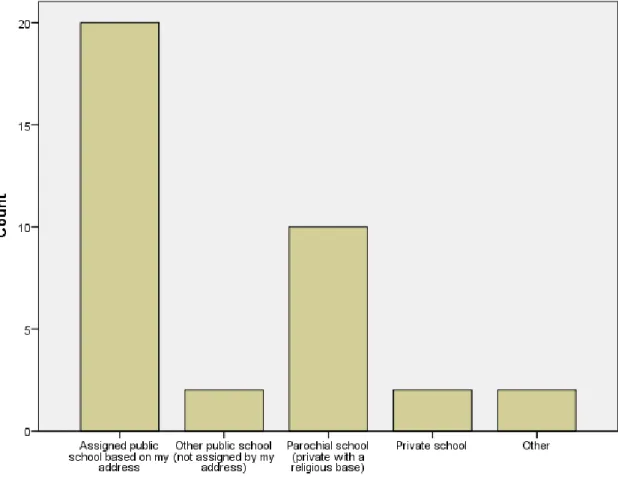
Figure 4. Description of the High School Attended by Respondent
Figure 4 displays the results of the way respondents best described their high school: 20 respondents, or 56% of the sample, attended the public school assigned to them by address; 2 respondents, or 6% of the sample, attended a public school not assigned by address; 10 respondents, or 28% of the sample, attended a parochial school; 2
respondents, or 6% of the sample, attended a private school; 2 respondents, or 6% of the sample, selected “other.” In the text box provided, 1 of the respondents stated “only high school in town.” No respondents attended a charter school.
Protection of Human Subjects
This research method presented low risk to participants. The survey was distributed online or given in paper form, and no identifying information was collected through either means. If taken online, volunteer participants accessed the survey link from an online flyer provided by an instructor via an intranet “Blackboard” site. If taken in person, no identifying information was requested, and completed surveys were placed by the participant directly in a box without the researcher handling it. Both modes had informed consent information presented before questioning began, notifying the students of the completely voluntary nature of their participation, their anonymity, and that they were free to stop participation at any point with no repercussion (although once the survey was turned in the researcher would be unable to find or return it). Questions were not excessively personal in nature.
Measurement
The measurement tool for this research was a questionnaire (Appendix B) that consisted of three yes/no questions about if a choice was made and if it was granted; four to five (depending on if a choice was made) Lickert Scale questions assessing attitudes and beliefs about school quality and climate; two open-ended questions about who made the choice and why; eight demographic questions to describe the sample, and the eight-question New General Self-Efficacy Scale (Chen, Gully & Eden, 2001). According to the authors, this scale has demonstrated high reliability, predicted self-efficacy in a variety of contexts, and shown superior construct validity compared to the 17-question Sherer et al. (1982) General Self-Efficacy scale, based on studies in two countries (Chen
et al., 2001). The demographic questions about economic status, gender and environment growing up came from the Student Attitudes, Attributions, and Responses regarding Poverty (SAARP) survey (Toft, Brommel, Ferguson, Garrett, Hill & Kuechler 2010). The climate and attitudinal questions about school choice were peer-reviewed for content, clarity and intent.
Data Analysis
A T-test was conducted to determine if there was a statistically significant difference between those who chose a high school and those who did not on their self-efficacy responses. One additional T-test was run to determine if there was a statistically significant difference between those who chose their high school and those who did not on their “good school” scale score as well. Frequency distributions were run to describe the sample and Measures of Central Tendency were used to display the distribution of self-efficacy scores and school attitude/climate scores (“good school” scale score).
Results
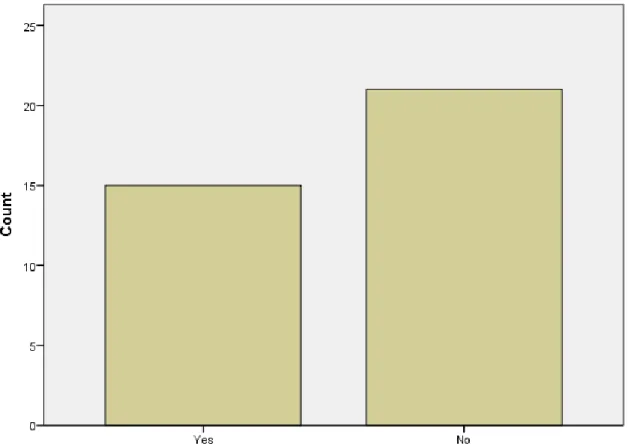
The number of respondents for this project was 36. Of the 36 respondents, 15 subjects representing 41% of the sample reported that they had made an intentional choice about where to attend high school. Twenty-two subjects, representing 59% of the sample, report that they did not make an intentional choice. Figure 5 shows this
Figure 5. Intentional Choice
Of those respondents who did make a choice, two open-ended questions followed. The first asked who made that choice, the second asked why the choice was made.
Figure 6. Who made the choice?
As shown in Figure 6, 21 respondents, or 58.3% of the sample, did not make an intentional choice about where to attend high school. Of choosers, 6 respondents or 16.7% of the sample reported that they were the decision maker. There were 3 respondents, or 8.3% of the sample, that reported that their parents/family were the decision makers. Finally, 6 respondents, or 16.7% of the sample reported that the decision was mutually shared among themselves and their parents/family.
Responses to the open-ended question about why the school was chosen yielded 15 qualitative answers summarized here. They were not mutually exclusive, meaning
some answers included more than one of the following sentiments: 4 referenced a Christian/Catholic education, 8 specifically referenced the high educational quality of the chosen school, 2 referenced the availability of sports or other specific programs (band, art), 2 referenced that their friends were going to the same chosen school, 2 referenced that their family or siblings attended the same chosen school, 2 referenced commute time/location, and 2 referenced the higher quality of the chosen school over the available public school.
When subsequently asked to rate the level from 1 to 5 to which they agreed with the following statement, “The school I attended was of higher quality than the public school I would have been assigned to based on my address,” 1 respondent, or 7% strongly disagreed with the statement (rated it 1), 3 respondents, or 20% neither agreed nor disagreed with the statement (rated it 3), 2 respondents, or 13% agreed with the statement (rated it 4), and 9 respondents, or 60% strongly agreed (rated it 5). The mean score was 4.2.
Self-Efficacy scores were established for the respondents by adding up the total score of the 8-question New General Self-Efficacy Scale (Chen, Gully & Eden, 2001). Each question was measured with a Likert scale design with the following values: 1 for strongly disagree, 2 for disagree, 3 for neither agree nor disagree, 4 for agree, and 5 for strongly agree. When all 8 questions were added together, the lowest possible score was 8, and the highest possible score was 40. The self-efficacy scores tended to run high in this sample of respondents, with the mean score equaling 34.27.
Figure 7 shows the distribution of respondent scores. Note that only 33 respondents had self-efficacy scores; 3 respondents did not answer one of the eight questions, so their results were invalid.
Figure 7. Self-Efficacy Score
A T-test was conducted to determine if there was a statistically significant difference between those who chose a high school and those who did not on their self-efficacy scores. The hypothesis for this statistic was that making a choice about where to attend high school will increase student feelings of self-efficacy. The results of this test show that the mean self-efficacy score was 34.46 with a standard deviation of 3.5 for
choosers and 34.15 with a standard deviation of 4.33 for non-choosers. The p-value of the t-test was 0.830, which is greater than 0.05, meaning there is no statistically
significant difference between the two groups. This means that there is no significant difference between those respondents who intentionally chose where to attend high school and those respondents who did not make a choice on their self-efficacy scores.
The sample was also questioned about school quality and climate in the survey, and those answers were added together to create a “good school” scale score. This score was the sum of the respondents’ agreement with the following statements: “The students at my school cared about their education,” “The school I attended had strong academics,” and “The school I attended had a talented student body.” These statements had Lickert-style responses similar to the Self-Efficacy items, with 1 being the value for “strongly disagree” and 5 being the value for “strongly agree.” The lowest possible score for the “good school” scale score was 3, and the highest possible score was 15. The results are shown separately for the two groups of respondents (choosers and non-choosers) and displayed below.
Figure 8. Good School Scale Score for Choosers
The mean score for choosers was 13. This reflects an overall high level of agreement with the statements indicating their school was “good”. The lowest score for this group was 9 and the highest was 15.
Figure 9. Good School Scale Score for Non-Choosers
The mean score for non-choosers was 11.19, reflecting an overall high level of agreement with the statements indicating their school was “good”, although not as high in agreement as the choosers. The lowest score for this group was 7 and the highest was 15. A T-test was run to compare the mean scores between choosers and non-choosers on the “good school” scale scores. The results of this T-test show that the p-value is 0.009, which is less than 0.05. This result means that there is a statistically significant difference between choosers and non-choosers on their “good school” scale scores.
Discussion
The research question, “does exercising school choice affect student feelings of self-efficacy?” and the related hypothesis that making a choice about where to attend high school will increase student feelings of self-efficacy were not substantiated with this study. There was no statistically significant difference between non-choosers and
choosers on their self-efficacy scores. There was a statistically significant difference, however, between choosers and non-choosers on their “good school” scale scores designed to measure their attitudes about school quality and climate. This may speak to the idea that within the context of school choice policy there is a perception held by students that making a choice to attend a particular school has implications for educational success.
For choosers, there is often nothing that occurs throughout their education at that chosen school that disabuses them of their perception, supporting the idea that they were right about selecting it. But, this may have more to do with a perception of quality (Hsieh and Urquiola, 2006) that could be related to being among similarly motivated peers (Lauen, 2009), people who are more like the student or the student’s family and/or are deemed a desirable peer group (Ball, Davies, David and Reay, 2002), or based on the notion that selectivity is on par with caring more about education (Ball & Vincent, 1998; Rosenbloom, 2010). The qualitative responses gathered from the choosing respondents about why they chose their school support these suggestions; the most widely noted response had to do with the perceived quality of the chosen school.
Self-efficacy, according to Bandura (1977), is described as the perception people have about their ability to complete certain tasks. With this sample, choosers and
non-choosers were all students of a well-regarded private university. The university ranks No. 112 among 281 schools in the National Universities category (US News & World Report, 2013). This could influence the way the respondents perceived their own abilities, which could explain why most of the respondents had high self-efficacy scores despite different perceptions about the quality of the education they received as
differentiated by choosing and not choosing. In other words, it could be that those who did not choose and had more negative views of their school felt they were able to rise above their high school environment and achieve what others there could not. They may see themselves as efficacious because they were able to be accepted into the selective university despite not choosing and receiving the best high school education among the best and brightest peers. Those who did choose may see their ability to be accepted into the university as the natural extension of the soundness of their educational decision-making process.
By and large, this sample of respondents was predominantly white, predominantly upper-middle to upper class, predominantly supported, and predominantly children of one or more parents who have an education above a 4-year college degree. These
characteristics have been found to contribute to making a choice and better educational outcomes (Trends in the Use of School Choice: 1993 to 2007, 2010; Cullen et al., 2005; & Lauen, 2009). In this sample, these characteristics are associated with both choosers and non-choosers since the majority of the respondents were non-choosers. More research is needed to better understand the way these contextual factors foster higher feelings of efficacy in individuals, although we can see some of the factors for self-efficacy development present. Self-self-efficacy is believed to be developed through
“mastery experiences, social modeling, and persuasive forms of social influences” (Bandura et al., 2003). Although we are able to deduce that the respondents had the necessary academic success to be accepted into the university, less is known about the mastery experiences of their earlier schooling. However, the majority of the respondents had at least one parent to use as a role model toward their abilities in the educational realm, an example of social modeling. The majority of the respondents also fit into the mainstream culture, which allows them to identify with norms of educational attainment that have been established for American citizens for generations. These norms are persuasive forms of social influences that are present in nearly all forms of media, and reinforced via our social institutions. One need not look far to find an example of what a successful businessman, teacher, politician, banker, doctor, lawyer, judge, and so on, often looks like.
Regardless of the method in which the respondents in this study obtained such high levels of self-efficacy, it is important to note the predominantly privileged trend in this sample in terms of race, education, economic status and religion (the university from which the sample was recruited has a Christian/Catholic tradition). In this study, the majority of choosers and non-choosers still had an upbringing that included membership in a social group that is afforded opportunity, privilege, and high expectations due to its congruence with the mainstream culture in which the university is embedded. To better access implications for social justice, as well as increase its generalizability, this research would need to be broadened to include members of populations who have not graduated from high school, who have not furthered their education, and who come from a broader
range of postsecondary educational institutions to get a better understanding of their upbringing experiences and social context.
While it would be helpful to use this survey with a much larger and more diverse sample, it would also be informative to conduct qualitative research with a diverse sample to elicit how respondents construct and understand their own realities, as considered through a social cognitive theory perspective. For example, what kinds of external factors have the greatest effect on their self-appraisal and subsequent decision-making processes? Or, what information can we learn through semi-structured
interviews about the school choice processes of students/families in a variety of different choice situations? These approaches could broaden the understanding self-efficacy development and perhaps offer concrete examples from which social workers could draw strategies to use on an individual, family, community or macro basis.
Finally, it would be interesting and informative to get case study data on a public school versus a school of choice that typically compete for the same students, and then work to document the tangible and intangible implications of a pro-school choice environment.
Implications:
Perception has presented itself as an important predictor of self-efficacy as well as the way we interpret the social context in which we conduct our lives. It would be
important to understand the way we perceive our own abilities based on our own social membership and based on the way others view that membership. For example, who or what dictates the way we feel about ourselves and subsequently, our abilities? Do our parents define the way we appraise ourselves? Do the opinions of others with whom we
self-compare or who hold positions of authority, power, or widespread public admiration affect our thoughts and beliefs about ourselves? School choice policy is just one way of making those opinions explicit. The perception of whether a school is good or not is judged largely on who attends that school. If the perception is that a school is made up of people who have the qualities of desirability—or the perception of themselves and those like them as high-quality, desirable, and destined for success, then that has implications for all who go there. On the other side of the coin, if a school is perceived as undesirable, all the students there get lumped into undesirable status. Why is membership in an urban public school, for example, seen as less valuable or desirable than membership in a chosen (and in this study, often parochial or private) school? It is possibly due to selectivity; not everyone is able to attend. This has broad and critical implications for social justice because everyone cannot attend schools perceived as “good” because of the nature of a school choice policy that encourages leaving “low-performing schools” for “higher-performing schools” (United States Department of Education, n.d.). There will always be students in the low-performing schools. The challenge for social work on policy at the macro and mezzo level as well as for work on the individual level is to challenge the perception that only those in a position of privilege are able to constitute desirable, high-quality schools.
Based on the results of this study, social workers in schools and in the community in particular are poised to address the culture of their school(s) by promoting a climate of pride, safety, opportunity and high expectations. It would be important to create reasons for people to desire the school, starting within the school but also within the community. The social worker should provide access to social modeling by having the school reflect
the students’ own community as well as showcase a balance of high-achievers so that all students can relate to some racially or culturally. It would be beneficial to encourage a broad range of successful alumni to return to speak with current students about their paths after graduating from the school they all have in common. The social worker should collaborate with staff to get excited and creative about drawing on the strengths of the student body; together, students and staff could make the environment welcoming and stimulating. Finally, social workers should empower students by giving them room to contribute to making their school “high performing” and also, their own.
Strengths and Limitations
The strengths of this research design are its reliable, valid questions. The age of the participants is beneficial, as they were recently in the high school setting but are now poised toward future endeavors. This is concurrently a weakness of the design. The subjects have all been accepted to a well-ranked postsecondary institution. It is likely that due to, or in spite of, the subjects’ perceived self-efficacy that they applied to this university and were accepted. This acceptance likely rendered an effect on the subjects. It is also noted that this is one university in one city, and the sample was small, limited and voluntary, restricting its generalizability. It is possible that there are unobservable factors that contribute to feelings of self-efficacy that were not addressed in this survey. There were no charter school students who responded, limiting our ability to see their influence, if any.
Conclusion
School choice policy is one method of encouraging schools to improve by increasing competition among them. It creates a context in which choosing a school is typically associated with caring about education. The concept of making a choice about school has become widespread in the current parental lexicon. As is the case with many social phenomena, those who have adequate social and financial resources end up reaping the intangible benefits associated with having a student who experiences high levels of self-efficacy. Unfortunately, the results of this study do not illuminate the role of choice in self-efficacy development.
What this study does suggest, is that school choice may affect the way students feel about their school; i.e. how they perceive the environment and their role in it. Because of observed or unobserved factors, the majority of our sample did have high levels of self-efficacy. However, the respondents who did not choose perceived their schools as less desirable or lower quality than those who chose their school. Given that social context is critical in the way we understand and construct our own realities, school choice policy still poses risks for those who have barriers to resources necessary to make an informed choice or any choice at all. Further, a collective understanding that non-choice public schools are more likely to be lower-performing schools is a damaging construct to those students and staff who attend or work there on an intangible level as well as on the tangible level of reduced funding.
School choice policy may not be associated with higher levels of self-efficacy in this study, but it may reveal important differences in school perception, which promises
to have implications for participants and non-participants alike. The question now is: has school choice policy improved education for everyone, or just those students with
resources who were doing well before its implementation? People with resources will most always fare well. When can we expect a model of education policy that serves to empower those without resources? Allowing people to jockey for position will only benefit those with the strongest legs.
Appendix A
CONSENT
F
ORM
UNIVERSITY OF ST
.
T
HOMAS
[School Choice and Self-Efficacy]
[544305-1]
I am conducting a study about school choice and how it relates to self-efficacy. I invite you to participate in this research. You were selected as a possible participant because you are a student at the University of St. Thomas. Please read this form and ask any questions you may have before agreeing to be in the study.
This study is being conducted by: Jessie Phillips, MSW candidate in the School of Social Work working under the supervision of Dr. Kendra Garrett.
Background Information:
The purpose of this study is: to explore if making a choice about where to attend high school affects individual feelings of self-efficacy. Information gathered will be used for my research project on school choice and self-efficacy, and may contribute to the body of knowledge around school choice as a public education policy.
Procedures:
If you agree to be in this study, I will ask you to do the following things: Read through this consent form (or listen as it is read to you) and determine if you agree to participate. Then, you will be given a paper survey that will take approximately 10 to 15 minutes to complete. Once you complete the survey, you will be asked to place it in the box or envelope left by the researcher in the front of the room. When all the surveys have been placed in the box or envelope, a student volunteer or the professor will let the researcher know and it will be taken at that time
Risks and Benefits of Being in the Study:
The study has no known risks. The survey has no direct benefits.
This survey is anonymous. The paper surveys will be entered into a computer with password protection, and then destroyed.
Voluntary Nature of the Study:
Your participation in this study is entirely voluntary. Your decision whether or not to participate will not affect your current or future relations with the University of St. Thomas. If you decide to participate, you are free to withdraw at any time up to and until you submit the completed survey. If you choose not to participate, you may leave the survey blank or scribble on it.
Contacts and Questions
My name is Jessie Phillips. You may ask any questions you have now. If you have questions later, you may contact me at 651-485-5908; you may contact my supervisor, Dr. Kendra Garrett at 651-962-5808; or you may also contact the University of St. Thomas Institutional Review Board at 651-962-5341 with any questions or concerns.
Appendix B
1. Did you intentionally choose your high school (or online education program) as
opposed to attending public school as determined by where you live? Y N
***(if you answered no, please skip to question #7)
2. Did you choose to change schools midway through your high school experience?
(if yes, please answer survey questions based on the school you feel fit you best)
Y N
3. Were you able to enroll into your first choice school? Y N
4. Who made the decision about what school to choose?____________________
5. Why was the school chosen?
________________________________________________________________________ ________________________________________________________________________
On a scale from 1 to 5, with 1 being “strongly disagree” and 5 being “strongly agree” please rate the following statement:
6. The school I attended was of higher quality than the public school I would have
been assigned to based on my address.
strongly disagree 1 2 3 4 5 strongly agree
On a scale from 1 to 5, with 1 being “strongly disagree” and 5 being “strongly agree” please rate the following statements:
7. The students at my school cared about their education.
strongly disagree 1 2 3 4 5 strongly agree
8. The school I attended had strong academics.
9. The school I attended had a talented student body.
strongly disagree 1 2 3 4 5 strongly agree
10. I felt like a member of the student body (had a sense of belonging).
strongly disagree 1 2 3 4 5 strongly agree
11. I will be able to achieve most of the goals that I have set for myself
strongly disagree 1 2 3 4 5 strongly agree
12. When facing difficult tasks, I am certain that I will accomplish them.
strongly disagree 1 2 3 4 5 strongly agree
13. In general, I think that I can obtain outcomes that are important to me.
strongly disagree 1 2 3 4 5 strongly agree
14. I believe I can succeed at most any endeavor to which I set my mind.
strongly disagree 1 2 3 4 5 strongly agree
15. I will be able to successfully overcome many challenges.
strongly disagree 1 2 3 4 5 strongly agree
16. I am confident that I can perform effectively on many different tasks.
17. Compared to other people, I can do most tasks very well.
strongly disagree 1 2 3 4 5 strongly agree
18. Even when things are tough, I can perform quite well.
strongly disagree 1 2 3 4 5 strongly agree
19. I grew up in:
____________ Rural or small town (less than 1,000)
____________ Mid-sized town, not a suburb (1,000 - fewer than 50,000)
____________ Mid-sized urban area, not a suburb (50,000- fewer than 500,000)
____________ Suburban area near major metropolitan area
____________ Major metropolitan area (500,000 or more)
20. The high school I went to is best described as:
_____________ Assigned public school based on my address
_____________ Other public school (not assigned by my address)
_____________ Charter school
_____________ Parochial school (private with a religious base)
_____________ Private school
_____________ Other
21. Racially, I identify as: ___________________________________________
23. At the time of my high school enrollment, my family economic status was: ____ Lower ____ Lower-Middle ____ Middle ____Upper-Middle ____Upper
24. Did you have one (or more) trusted adult(s) to support you at any point through
your elementary and secondary schooling? Y N
25. Highest level of education of your parent(s) (please answer based on the parent
with the highest level of education): ____ Elementary school only
____ Some high school, but did not finish ____ Completed high school
____ Some college, but did not finish ____ Two-year college degree / A.A / A.S. ____ Four-year college degree / B.A. / B.S. ____ Some graduate work
____ Completed Masters or professional degree ____ Advanced Graduate work or Ph.D.
26. What is your gender? ____ Male
____ Female ____ Transgender