among Saudi EFL learners
Author(s) Alghizzi, Talal Musaed
Publication date 2017
Original citation Alghizzi, T. M. 2017. Complexity, accuracy, and fluency (CAF) development in L2 writing: the effects of proficiency level, learning environment, text type, and time among Saudi EFL learners. PhD Thesis, University College Cork.
Type of publication Doctoral thesis
Rights © 2017, Talal Musaed Alghizzi.
http://creativecommons.org/licenses/by-nc-nd/3.0/
Embargo information No embargo required
Item downloaded
from http://hdl.handle.net/10468/4815
Complexity, Accuracy, and Fluency (CAF) Development in L2 Writing: the Effects of Proficiency Level, Learning Environment, Text Type, and Time among Saudi EFL Learners
Talal Musaed Alghizzi
A Dissertation Submitted in Fulfillment of the Requirements for the Degree of Doctor of Philosophy in Applied Linguistics in the College of Arts, Celtic Studies and Social Sciences
at National University of Ireland, Cork
January, 2017
1 Table of Contents Declaration... 7 Abstract ... 8 Dedication ... 10 Acknowledgements ... 11 List of Tables ... 12 List of Figures ... 14 Chapter One ... 15 Introduction ... 15
1.0 Research Background and Rationale: English in a Saudi Educational Context... 15
1.2 Statement of the Problem ... 20
1.3 Research Questions ... 23
1.4 Research Objectives ... 23
1.5 The Significance of the Research ... 24
Chapter Two ... 26
Literature Review Part I: Writing Acquisition, Definitions, Teaching Environments, and Approaches ... 26
2.0 Introduction ... 26
2.1 Writing Skill Acquisition Studies ... 26
2.2 Definitions of Writing Skills ... 28
2.3 Teaching Environments and Approaches to Writing Skills ... 32
2.3.1 Traditional learning context (TLC). ... 34
2.3.1.1 Product approach(es)... 35
2.3.1.2 Process approach(es). ... 37
2.3.1.3 Genre approach(es). ... 40
2.3.1.4 Process genre approach(es). ... 42
2.3.2 Writing Skills and Technology ... 44
2
2.3.2.1.1 Definitions and types of BLC... 47
2.3.2.1.2 BLC’s benefits, drawbacks, and challenges. ... 48
2.3.2.1.3 BLC in Saudi Arabia. ... 51
2.3.2.2 Online learning context (OLC). ... 52
2.3.2.2.1 Definitions and types of OLC. ... 53
2.3.2.2.2 OLC’s benefits, drawbacks, and challenges. ... 55
2.3.2.2.3 OLC in the Arab countries and in Saudi Arabia. ... 59
2.4 Summary ... 62
Chapter Two ... 63
Literature Review Part II: Complexity, Accuracy, and Fluency ... 63
2.5 The Origin of Complexity, Accuracy and Fluency (CAF) ... 63
2.6 CAF Research Challenges... 70
2.7 The Challenges in Defining and Measuring CAF Constructs. ... 70
2.7.1 Complexity. ... 72 2.7.1.1 Syntactic complexity. ... 73 2.7.1.1.1 Definitions. ... 73 2.7.1.1.2 Measurements... 78 2.7.1.2 Lexical complexity... 84 2.7.1.2.1 Definitions. ... 84 2.7.1.2.2 Measurements... 87 2.7.1.2.2.1 Lexical density. ... 88 2.7.1.2.2.2 Lexical sophistication. ... 89 2.7.1.2.2.3 Lexical Variation... 91 2.7.2 Accuracy. ... 95 2.7.2.1 Definitions. ... 95 2.7.2.2 Measurements. ... 97 2.7.3 Fluency. ... 101
3
2.7.3.1 Definitions. ... 101
2.7.3.2 Measurements. ... 104
2.8 The Challenge in Determining CAF’s Linguistic and Psycholinguistic Correspondences, Factors, and Correlations. ... 108
2.8.1 Skehan’s limited attentional capacity model. ... 111
2.8.2 Robinson’s triadic componential framework. ... 113
2.8.3 CAF studies on writing tasks and task complexity factor. ... 118
2.9 Summary ... 127
Chapter Three ... 128
Methodology ... 128
3.0 Introduction ... 128
3.1 Statement of the Problem ... 128
3.2 Research Design ... 128
3.3 Setting ... 130
3.4 Participants ... 130
3.5 EFL Courses ... 131
3.6 Teaching Methodology, Teaching/Learning Contexts, and Participants ... 132
3.6.1 Traditional learning context groups for level one and six students (TLC1/TLC6). ... 133
3.6.2 Blended learning context group for level one and six students (BLC1/BLC6). ... 133
3.6.3 Online learning context groups for level one and six students (OLC1/OLC6). ... 134
3.7 Materials and Procedures for Data Collection ... 136
3.7.1 Materials: writing paragraphs/essays. ... 136
3.7.2 Procedures. ... 137
3.8 Ethical Considerations ... 139
3.9 Data Analysis ... 139
3.9.1 Complexity. ... 141
4
3.9.1.2 Lexical complexity analysis. ... 143
3.9.2 Accuracy analysis. ... 146 3.9.3 Fluency analysis. ... 147 3.10 Conclusion ... 149 Chapter Four ... 150 Results ... 150 4.0 Introduction ... 150
4.1 The CAF Constructs ... 150
4.1.1 Syntactic complexity. ... 151
4.1.1.1 Comparative changes in syntactic complexity within the low- and high-proficiency groups. ... 151
4.1.1.1.1 Low-proficiency groups. ... 151
4.1.1.1.2 High-proficiency groups. ... 152
4.1.1.2 Comparison changes in syntactic complexity between low- and high- proficiency groups. ... 156
4.1.1.2.1 Low-proficiency groups. ... 156
4.1.1.2.2 High-proficiency groups. ... 157
4.1.2 Lexical complexity. ... 159
4.1.2.1 Lexical density and sophistication. ... 159
4.1.2.1.1 Comparative changes in lexical density and sophistication within the low- and high-proficiency groups. ... 159
4.1.2.1.1.1 Low-proficiency groups. ... 159
4.1.2.1.1.2 High-proficiency groups. ... 161
4.1.2.1.2 Comparative changes in lexical density and sophistication between the low- and high-proficiency groups. ... 165
4.1.2.1.2.1 Low-proficiency groups. ... 165
4.1.2.1.2.1 High-proficiency groups. ... 166
5 4.1.2.2.1 Comparative changes in lexical variation within the low- and
high-proficiency groups. ... 167
4.1.2.2.1.1 Low-proficiency groups. ... 167
4.1.2.2.1.2 High-proficiency groups. ... 169
4.1.2.2.2 Comparative changes in lexical variation between the low- and high-proficiency groups. ... 174
4.1.2.2.2.1 Low-proficiency groups. ... 174
4.1.2.2.2.2 High-proficiency groups. ... 176
4.1.3 Accuracy. ... 179
4.1.3.1 Comparative changes in accuracy within the low- and high-proficiency groups. ... 179
4.1.3.1.1 Low-proficiency groups. ... 179
4.1.3.1.2 High-proficiency groups. ... 181
4.1.3.2 Comparative changes in accuracy between the low- and high-proficiency groups. ... 184
4.1.3.2.1 Low-proficiency groups. ... 184
4.1.3.2.2 High-proficiency groups. ... 186
4.1.4 Fluency. ... 187
4.1.4.1 Comparative changes in fluency within the low- and high-proficiency groups. ... 187
4.1.4.1.1 Low-proficiency groups. ... 187
4.1.4.1.2 High-proficiency groups. ... 188
4.1.4.2 Comparative changes in fluency between the low- and high-proficiency groups. ... 192
4.1.4.2.1 Low-proficiency groups. ... 192
4.1.4.2.2 High-proficiency groups. ... 193
Chapter Five ... 194
6
5.0 Introduction ... 194
5.1 Research Question One ... 194
5.1.1 Low-proficiency level participants: CAF effects in complex and non-complex tasks. ... 195
5.1.2 High-proficiency level participants: CAF effects in complex and non-complex tasks. ... 198
5.1.3 Summary of the findings and comparison to other task complexity studies. ... 201
5.2 Research Question Two ... 206
Chapter Six ... 216
Conclusion ... 216
6.0 Introduction ... 216
6.1 Summary of the Results ... 216
6.2 Implications and Recommendations ... 220
6.3 Limitations and Suggestions for Future Research ... 222
References ... 225
7
Declaration
I hereby declare that the thesis I am submitting is my own work and has not been submitted for another degree, either at UCC or elsewhere. All external references and sources are clearly acknowledged and identified within the contents.
8
Abstract
The purpose of this longitudinal exploratory research is to investigate the influence of four factors: proficiency levels, text types, times, and learning environments on the writing complexity, accuracy, and fluency of Saudi students majoring in the English language. Specifically, the study seeks to determine how and when the CAF constructs and
sub-constructs of low- and high-proficiency Saudi EFL undergraduates in three learning contexts: traditional learning context (TLC), blended learning context (BLC), and online learning contexts (OLC), are affected longitudinally across two writing tasks (classification and argumentative) that differed in their level of complexity. Also, it intends to specify when and which of the three learning contexts: TLC, BLC, and OLC, will lead to the most/least
increases or decreases in the CAF constructs and sub-constructs of the low- and high-proficiency Saudi EFL undergraduates across the two composition tasks. To answer such questions, 75 Saudi EFL university students were recruited from the pool of two proficiency levels (low and high). Six groups of equal number of students were generated from dividing randomly the 45 Low-proficiency participants and the 30 high-proficiency participants. Each of these groups was exposed to one of the previously mentioned learning contexts and undertook three tests: pre-test, mid-term test, and post-test. The 450 students’ writings were analyzed according to 45 measures of CAF constructs and sub-constructs and by using two statistical tests: t-test and ANOVA. For the first question, the t-test results showed that the similarities and differences of effect on CAF constructs between the two writing tasks were observed to be group-specific as they were based on the proficiency levels, learning contexts, and timescales (i.e., short term and long term). In other words, depending on whether a construct in the two text types was influenced similarly or differently, such influence did not generally occur in a systematic way and across the same number and types of metrics for the same group, or even across the groups of the same or different proficiency levels in the short term and long term. The findings only lent partial support to Skehan and Foster’s Limited Attentional Capacity Model and Robinson’s Multiple Attentional Resources Model since some constructs increased (e.g., accuracy, lexical variation, and syntactic complexity) or decreased (e.g., lexical density, lexical sophistication, lexical variation, syntactic complexity, and fluency). There were many other cases which were beyond the predictions of the
aforementioned researchers and their explanations on how the students’ attention is deployed while performing the complex task(s). For instance, altering task complexity led some constructs to remain unaffected (e.g., syntactic complexity, lexical density, lexical
9 increases (e.g., fluency), increases more than decreases (e.g., lexical variation), less increases (e.g., accuracy), or less/more decreases (e.g., syntactic complexity and lexical sophistication). In terms of the second question, the ANOVA test results indicated mixed findings because each of the three learning environments resulted in benefits in some ways. In the two proficiency levels, the TLC, BLC, and OLC had the same level of success/unsucess in enhancing all the measures of some CAF constructs in both writing tasks in the short term and long term. Nevertheless, in the other CAF constructs, there was no uniform linear development or deterioration of all measures across the six groups. In each of these
constructs, the differences between these groups emerged from one or more measures, but not from all measures. Each of these learning contexts stood alone in being the most or least successful in increasing some constructs. Nonetheless, this was dependent on the
participants’ proficiency levels, text types, and timescales. This study provides several pedagogical implications and recommendations for academic research, EFL writing instructors at pre-university and university levels, and task-based investigators.
Keywords: writing, proficiency levels, teaching methods, learning environments, text
10
Dedication
11
Acknowledgements
Reflecting on my long journey of choosing a topic, planning, conducting research, and actually writing up a dissertation, what stands out the most is how fortunate I have been to have such supportive mentor, family, and colleagues throughout my career as a doctoral student at University College Cork University. First and foremost, praise be to Allah the Almighty, the most Gracious and most Merciful, for paving the way for me to finish my dissertation. Second, since the production of this thesis has been lengthy and required an arduous effort, I would like to seize the opportunity to extend my gratitude to some people. My thanks must go to my supervisor, Dr. Martin Howard, for his steadfast and unlimited support, encouragement, and perseverance over almost four years. Without his help, the fact that his erudition has been always available to me and that he has allowed me to work in my own way, this dissertation would not have seen the light of day. I would also like to express my appreciation to Dr. Muhammad Abdel Latif for his abundant and invaluable assistance in teaching two of the research six groups. Moreover, I would like to convey my special thanks and my indebtedness to my friends, here and overseas, and to the participants of my research. Finally, so much gratitude is due to my family: my wife, Mashael, and my four children, Yazan, Yasser, Elias, and Taraf. All of them have always been there for me through
hardships, have changed my life for the better, and have helped me bring this dissertation to a successful conclusion.
12
List of Tables
Table 1 Text Type Definitions……….31
Table 2 Factors Affecting/not CAF Research Studies……….68
Table 3 Skehan’s (1998, p. 99) Limited Attentional Capacity Model………...……111
Table 4 Robinson’s (2007, pp. 15-16) Triadic Componential Framework………...….114
Table 5 Prompts of Pre-test, Mid-Term Test, and Post-test………..….137
Table 6 Definitions of Terms .. ………...142
Table 7 Syntactic Complexity Measures, Formula and Analysis and Coding………..…….143
Table 8 Lexical Complexity Three Dimensions Measures, Formula and Analysis and Coding………..……….……….145
Table 9 Accuracy Measures, Formula and Analysis and Coding………...147
Table 10 Fluency Measures, Formula and Analysis and Coding………..…….148
Table 11 TLC1, BLC1, OLC1, TLC6, BLC6, and OLC6 Syntactic Complexity Metrics: Significant Results of the T-Test………...154
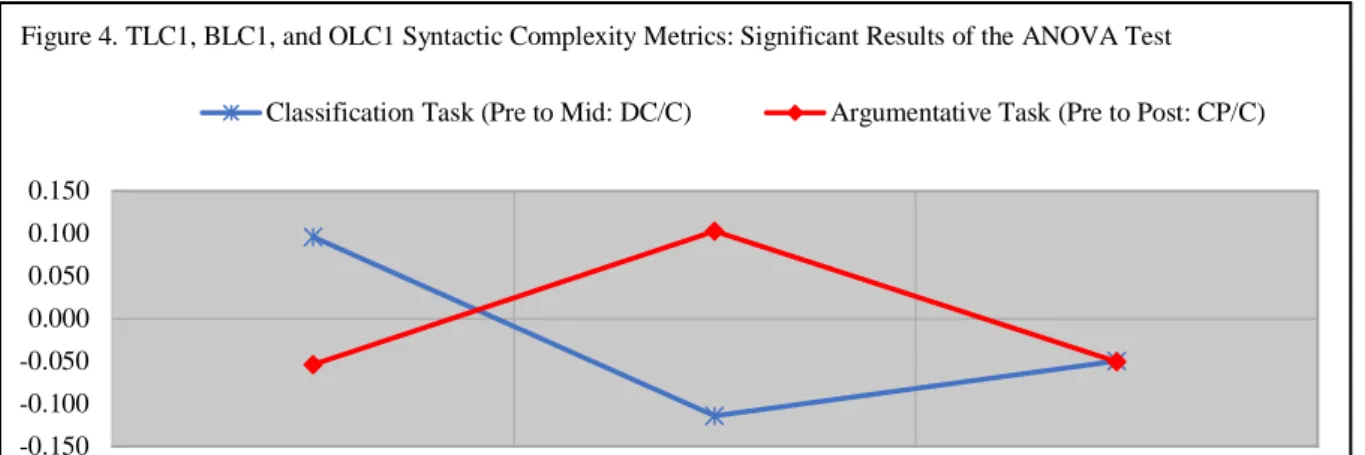
Table 12 TLC1, BLC1, and OLC1 Syntactic Complexity Metrics: Significant Results of the ANOVATest………...………...156
Table 13 TLC6, BLC6, and OLC6 Syntactic Complexity Metrics: Significant Results of the ANOVA Test ... 158
Table 14 TLC1, BLC1, OLC1, TLC6, BLC6, and OLC6 Lexical Density and Sophistication Metrics: Significant Results of the T-Test ... 163
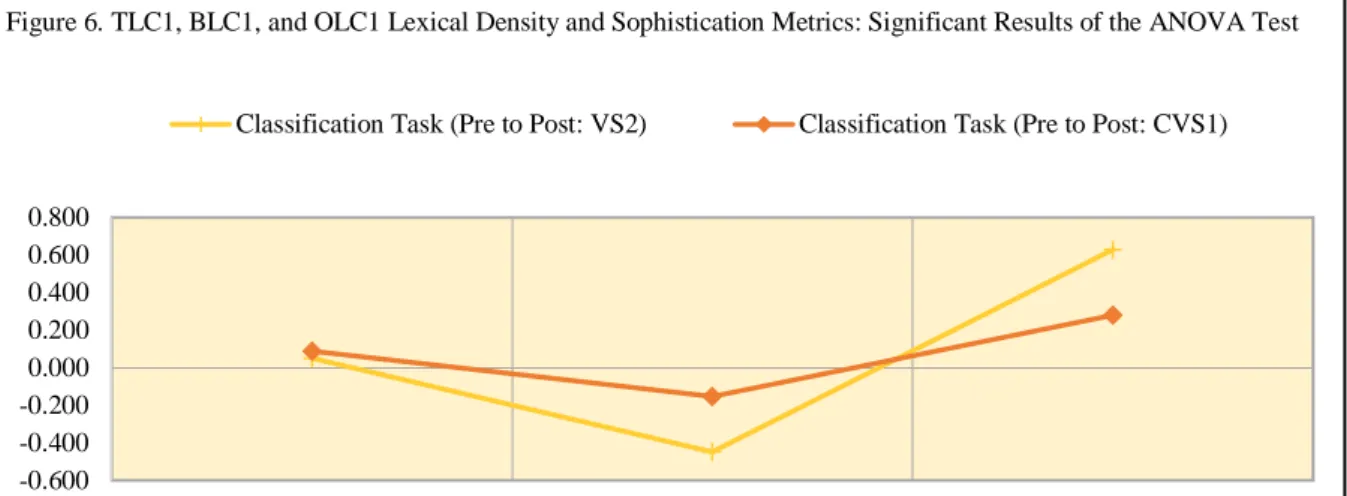
Table 15 TLC1, BLC1, and OLC1 Lexical Density and Sophistication Metrics: Significant Results of the ANOVA Test………...165
Table 16 TLC6, BLC6, and OLC6 Lexical Density and Sophistication Metrics: Significant Results of the ANOVA Test…………..………...………..167
Table 17 TLC1, BLC1, OLC1, TLC6, BLC6, and OLC6 Lexical Variation Metrics: Significant Results of the T-Test………... 171
Table 18 TLC1, BLC1, and OLC1 Lexical Variation Metrics: Significant Results of the ANOVA Test... 175
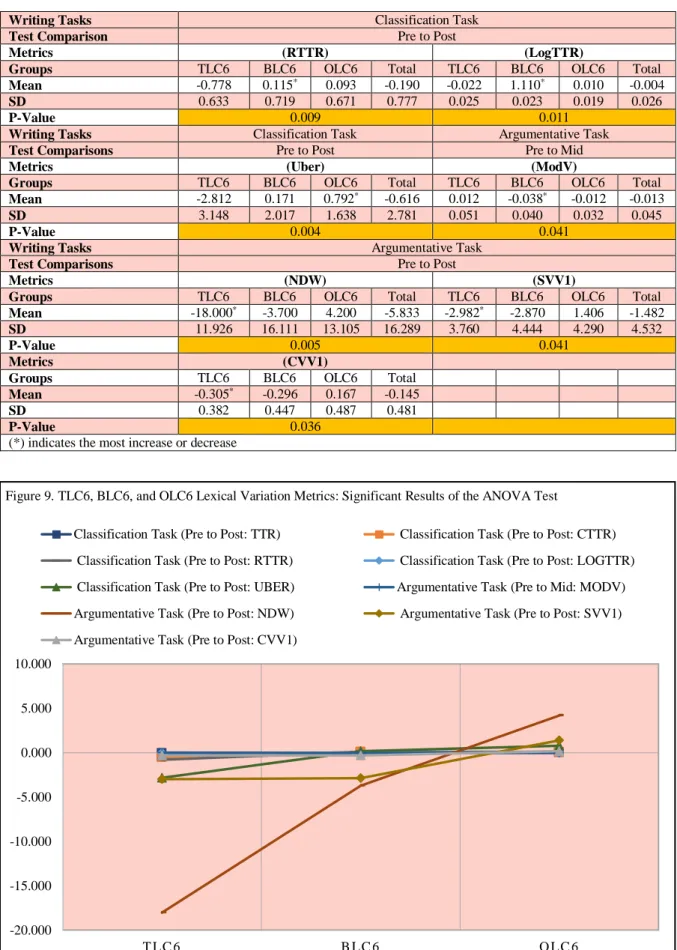
Table 19 TLC6, BLC6, and OLC6 Lexical Variation Metrics: Significant Results of the ANOVA Test………..177
Table 20 TLC1, BLC1, OLC1, TLC6, BLC6, and OLC6 Accuracy Metrics: Significant Results of the T-Test ... 182
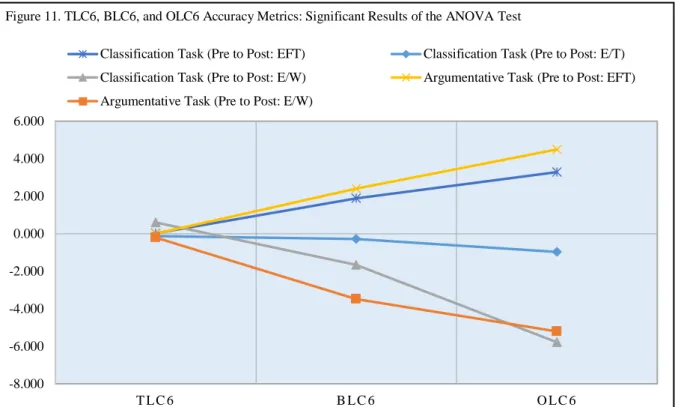
Table 21 TLC1, BLC1, and OLCI Accuracy Metrics: Significant Results of the ANOVA Test……….185
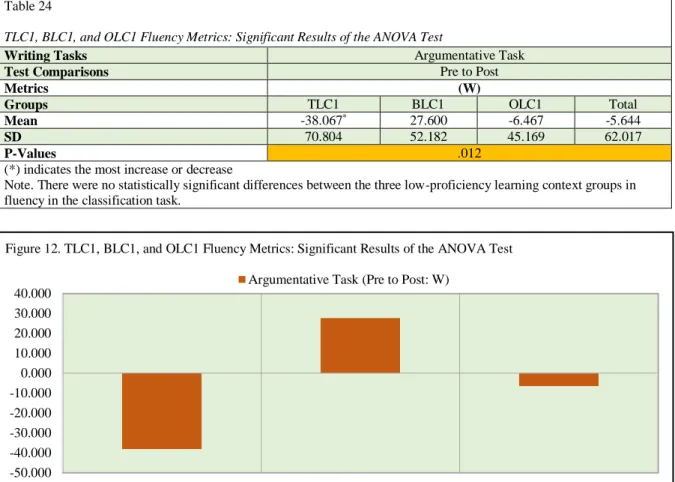
13 Table 22 TLC6, BLC6, and OLC6 Accuracy Metrics: Significant Results of the ANOVA Test……….186 Table 23 TLC1, BLC1, OLC1, TLC6, BLC6, and OLC6 Fluency Metrics: Significant Results of the T-Test………...190 Table 24 TLC1, BLC1, and OLC1 Fluency Metrics: Significant Results of the ANOVA Test……….192
14
List of Figures
Figure 1 Different Levels of Syntactic Complexity Specification ... 77 Figure 2 Different Levels of Lexical Complexity Specification ... 86 Figure 3 The Organization of Presentation of All Participants’ Significant Results ... 149 Figure 4 TLC1, BLC1, and OLC1 Syntactic Complexity Metrics: Significant Results of the ANOVA Test ... 157 Figure 5 TLC6, BLC6, and OLC6 Syntactic Complexity Metrics: Significant Results of the ANOVA Test ... 158 Figure 6 TLC1, BLC1, and OLC1 Lexical Density and Sophistication Metrics: Significant Results of the ANOVA Test ... 166 Figure 7 TLC6, BLC6, and OLC6 Lexical Density and Sophistication Metrics: Significant Results of the ANOVA Test ... 167 Figure 8 TLC1, BLC1, and OLC1 Lexical Variation Metrics: Significant Results of the ANOVA Test ... 176 Figure 9 TLC6, BLC6, and OLC6 Lexical Variation Metrics: Significant Results of the ANOVA Test ... 178 Figure 10 TLC1, BLC1, and OLC1 Accuracy Metrics: Significant Results of the ANOVA Test ... 185 Figure 11 TLC6, BLC6, and OLC6 Accuracy Metrics: Significant Results of the ANOVA Test ... 187 Figure 12 TLC1, BLC1, and OLC1 Fluency Metrics: Significant Results of the ANOVA Test ... 192
15
Chapter One
Introduction
1.0 Research Background and Rationale: English in a Saudi Educational Context
English is a widely used language as a means of communication between people from different ethnicities and language backgrounds. Therefore, it is a lingua franca (Crystal, 2005; Jenkins, 2006; Seidlhofer, 2001,2005) which represents a threat to the multilingualism for other languages (cf. House, 2003). The dominance of such language is attributed to many factors. For example, Al-Jarf (2008) noted that the language is important because it is:
The language of 85% of international organizations and the main language of technology, business, finance and tourism. Most research, references, technical terms, international conferences, electronic databases are in English. World famous newspapers, T.V. stations, movies, airlines, multi-national companies, and 90% of the material published on the internet use English as a primary language. (p. 197)
Because of the rapidly-increasing dominance of English, some Arab countries
manifested interest in teaching the language by implementing it as a compulsory subject in the pre-university (i.e., primary, intermediate, and secondary) school curricula, and by opening colleges/departments where students can specialize in the language. These steps were needed as the importance of English has been underscored in much research (e.g., Al-Tamimi & Shuib, 2009; Al Noursi, 2013; Bani-Khaled, 2014; Tahaineh & Daana, 2013; Tanni, 2015). These studies concluded that Arab EFL learners have developed the motivation to acquire English as a means of achieving instrumental goals, advancing their careers, reading technical materials, and translation. For example, Zughoul (2003, p. 2) stated that: “Despite the
hegemonic and imperialistic nature of English, it is still badly needed in the Arab world for the purposes of communicating with the world, education, acquisition of technology and development at large.” Tahaineh (2009) maintained that not only do better job opportunities, particularly in private companies, demand competence and knowledge in English, the fact that government officials are almost always bilingual in Arabic (First/Source language [L1/SL]) and English (Second/Target language [L2/TL]), but some people also may feel that the L1 is moved to a secondary status due to the frequent use of the L2. However, Syed (2003)
contended that what painted a very unflattering picture of the education in the Arab world and gulf countries is that there are continuous challenges that have led to disastrous outcomes for learners in English. These challenges were the lack of or insufficient support system and of qualified teachers, outdated methodologies and curricula, students’ gradual loss of motivation,
16 literacy, underachievement, and reliance on high-stake testing, memorization, and rote
learning.
In the case of Saudi Arabia, all of the points mentioned are applicable. To clarify this, ever since the introduction of the English language there, the status of the language has fluctuated from one status to another.1 Historically, it is unclear when exactly English was
introduced in the education system in Saudi Arabia, but there was a mutual agreement of some researchers that the formal beginning was immediately or some years after the establishment of the General Directorate of Education, nowadays known as the Ministry of Education (MoE), in 1924, 1925, or 1928 (Al-Abed Al-Haq & Smadi, 1996; Al-Ahaydib, 1986; Alhajailan, 2015; Al-Seghayer, 2011, Faruk, 2014a). At that time, English was taught as a subject in the public primary schools (Al-Abed Al-Haq & Smadi, 1996). Unfortunately, after 13 years, the teaching of English at such a stage stopped for undeclared reasons
(Alhajailan, 2015). Then, in the 1940s, the intermediate and secondary levels were established, and their English textbooks were similar to the ones in the Arab countries (Alhajailan, 2015). Alamri (2008) maintained that in the first application of English at the previous two levels, there were no single specific syllabi, but later, that is in 1953, the MoE imported Egyptian English textbooks. However, they were later deemed as unsuccessful and were changed due to many factors such as the differences between the Saudi students’ customs and needs. In addition, Alamri (2008), Al-Seghayer (2011), Alhajailan (2015), and Mahboob and Elyas (2014) stated that the French language was also taught for some years at intermediate and secondary stages, but it was cancelled and English became the only
registered subject in the education cycle. In 2004 —as stated by Alamri (2008)—there was a reintroduction of the English language into the curriculum by the MoE, which passed a law mandating that it be taught, starting at the sixth grade in primary schools. A year later, English was introduced, beginning in the 5th grade to primary school students, and, 6 years later (i.e.,
in 2011/2012), English began to be taught to students in the 4th grade. The decision by the
ministry to make English an obligatory subject, commencing from grade 4 onward shows how important that language is deemed to be. As claimed by Liton (2013), and Rahman and
Alhaisoni (2013), the status of English at these educational stages for both teachers and
1 Many researchers (Al-Abed Al-Haq & Smadi, 1996; Al-Ahaydib, 1986; Alamri, 2008; Alhajailan, 2015; Alrashidi & Phan 2015; Al-Seghayer, 2011, Faruk, 2014a; Mahboob & Elyas, 2014) who addressed the topic of English in Saudi Arabia revealed discrepant points in terms of the language introduction date, its teachers, syllabi, textbooks, and hours of classes. Yet, the overview supplied is relatively an enough elaboration on how the status of the language changed gradually to become the only second language taught in the pre-university cycle. Cited studies are recommended for further reading.
17 students is no more than a compulsory subject to be learned for the purpose of passing
examinations, and with almost no emphasis on acquisition efficiency. Yet, many studies (e.g., Al Asmari, 2013; Al-Jarf, 2008; Al Samadani & Ibnian, 2015; Faruk, 2014b) found that recently Saudi students started to have positive attitudes towards learning the language adequately for a variety of reasons. For instance, the investigation of Al-Jarf (2008) on the effect of English on Arabic showed that the majority of the 470 Saudi female participants majoring in medical fields and computer sciences adduced the superiority of the L2 in relation to the native language since it is the language of modernity, and a prerequisite of higher education and jobs. Also, most of these students indicated that the mastery of the language would contribute to better social status, self-esteem, and self-confidence. With such change of attitudes and perceptions, the MoE has had no choice but to continue its long-lasting scheme, which started since the early introduction of English, for the betterment of planning a
purposeful curriculum, refining textbooks, and developing teachers and effective administration (Khan, 2011a, 2011b).
In other words, the first step by the MoE was to recruit foreign EFL instructors who according to Al-Awad (2002, as cited in “Ministry eyes ways,” 2002) reached 1300 teachers. Al-Seghayer (2011) maintained that in 1970, the ministry designed a training program for secondary school graduates who wanted to become English teachers. Those graduates were required to study the language intensively for one year, passing a comprehensive exam, and finally, studying the language abroad for two years and one month in British universities to obtain a teaching certificate. Whoever successfully accomplishes such task would become an English instructor in intermediate schools (Al-Seghayer, 2011). Then, when universities such as Umm Al-Qura University (UQU), King Saud University (KSU), and Al-Imam Muhammad Ibn Saud Islamic University (IMSIU) were established in 1949, 1957, and 1974, respectively, their graduates were offered the possibility to go through the previous processes to become EFL instructors. Finally, the third major step by the MoE was to require universities to open English colleges/departments.
In these colleges/departments of English language, there are two options of curricula, either to study courses which belong to the language major fields such as literature,
translation, theoretical and applied linguistics, or only to specialize in one of these fields and be exposed to various courses addressing its different branches. In all of these options, extensive teaching of the basic skills such as reading, writing, listening, and speaking is included in their curricula. The Department of English Language and Literature, in the College of Languages and Translation, at IMSIU, falls into the first option. According to this
18 college website (2016), there are ten objectives of the English Department. We present these below (our translation).
1) To provide a variety of educational and cultural services that meet the needs of students and their preparations.
2) To educate the student in terms of the diversity of linguistic system through studying variety of language subfields
3) To enable students to recognize the fields and subfields of the modern language, including the history of the English language, sounds, grammar, uses, styles, as well as literary works, theoretical and applied linguistics, and translation. 4) To encourage authoring, research and investigation in the areas of language,
translation, literary and critical studies, and holding training courses, educational and scientific meetings.
5) To work on the preparation of scientific cadres specialized in the areas of English language teaching, translation, and literature by working on sharpening their translation skills, evolving their critical abilities, introducing them to different theoretical and literary styles, and promoting their educational and teaching potentialities.
6) To provide the student with the essences, concepts, theories, and recent trends of the field of English language.
7) To provide technical and practical consultations in the field of English language teaching and translation.
8) To work on strengthen the ties and links between the college and the community by offering academic programs, and specialized courses that contribute to raising the efficiency of members of the community in the field of English language, all of which are in line with the objectives of the development plans.
9) To make cadres acquire a good knowledge and command of English which will hopefully qualify them to enter working life efficiently and effectively, whether it is in the field of education, translation, or other developmental areas that require knowledge of English in public and private institutions.
10) To promote cooperation between the college and the centers/institutions of research and studies in similar local and international colleges.
However, graduates from the English colleges/departments who became EFL instructors have successfully fulfilled half of the MoE’s aim to replace foreign teachers. The other half of the aim, namely improving pre-university students’ English proficiency in general and their
19 writing skills in particular, is yet to be accomplished. The latter task seems to be far-fetched as it has been found that most of the Saudi EFL instructors are still weak, and ill-equipped to teach such skill (e.g., Al-Seghayer, 2015). For example, in the pre-university-level English classes, Alharbi (2015), Alresheed (2008) and Al-Seghayer (2014a, 2015) contended that the most commonly adopted teaching approaches are the Grammar Translation Method(GTM), and the Audio Lingual Method (ALM). Mart (2013) emphasized the benefit of the GTM in enabling the learners to understand how the language systems of the L1 and the L2 work, that is, by allowing them to notice the similarities and differences between the two languages. Al-Nofaie (2010) even reported general positive attitudes toward GTM by both Saudi teachers and students with a preference for limited usage of the mother tongue in certain situations and for specific reasons. In addition, Al-Hazmi (2006) maintained that what has had a negative effect on pre-university students’ composition development is that the skill is taught with a focus on sentence-level structure and linguistic features. Alghizzi (2011, 2012) found that not only did most EFL instructors tend to use an unspecified approach, but they also required their students to memorize ready-made sample texts. These teachers taught learners how to recite and/or adjust samples according to the topic(s) they are required to write about (see Elyas & Picard, 2010; Shukri, 2014). The question to be asked is why do most EFL
instructors in Saudi Arabia tend to use or focus on the aforementioned method and nothing else? The simple answer could be because they lack the adequate training to do so.
Al-Seghayer (2011) cited a study conducted by the MoE in 2004, which substantiated that the Saudi EFL teachers at intermediate and secondary school levels were “neither competent in English nor in the affair of teaching it” (p. 23). The study linked such
weaknesses to the lack of proper training when these EFL instructors were undergraduates. It is true that other factors such as learners’ psychology, experiences, perceptions towards learning the language, aspects of the curricula, pedagogy, administrative processes, language policy, methods, strategies, and assessments (Al-Seghayer, 2014a, Khan, 2011b), contributed to the weaknesses and unsatisfactory outcomes of the students, but these variables would have been resolved better if the teachers were proficient and trained to do so. Unfortunately, following the in depth investigation of the EFL instructors’ pre-service and in-service preparation programs by Al-Hazami (2003), and Al-Seghayer (2014b), they called for the refinement, updating, and reform of such courses. The suggestions they made were that these programs should educate future/current EFL instructors on how to design lesson plans and activities, adopt teaching methodologies and technologies, use assessment and time
20 Dr. Sami Alshwairkh, the director of the English language teaching initiative in Tatweer Corporation for Educational Services (T4EDU), declared that the agency would launch a distance education project, aiming in the first stage at developing up to 2000 EFL teachers’ language skills, training them on the different teaching methodologies, how to use
technologies and the new pre-university levels’ English textbooks once they become available to all levels in 2014/2015. In 2015, Alshwairkh announced that only 8700 EFL instructors of primary, intermediate, and high school educational levels, had successfully finished 450 training workshops held by 150 professional EFL trainers across the country on the new English textbooks (Alghamidi, 2015). He also stated that 1200 EFL instructors had attended 32 writing skill training workshops held by 64 trainers. The latter workshops were under the supervision of the Teachers College at Columbia University (Alghamidi, 2015). The issues here are that in order for such a project to reach all current EFL instructors, it will consume a lot of time and effort, let alone the fact that designing training workshops for writing are still not enough since it has always represented a challenge for both teachers and students. Consequently, the initiative to equip EFL teachers to teach composition effectively should start from the English colleges/departments themselves.
1.2 Statement of the Problem
No one doubts the importance and significance of teaching English writing skills as one of the fundamental aims of the colleges/departments of English in Saudi Arabia. The
importance of such a skill arises from not only being one of the language’s basic skills, but also because of the fact that high acquisition of it will most likely lead to achieving the above-mentioned objectives, and others. Thus, it is reasonable to expose EFL students, regardless of their fields in English, to intensive writing courses during their four-to-five-year bachelor degree(s). These courses can start from the first year (i.e., semester one), and last to the third year (i.e., semester six). The goal behind this, is to develop undergraduate EFL students’ writing to the level of near mastery; in not violating the rules, norms, features, and conventions of the language (i.e., grammar, style, organization, spelling, word choice,
punctuation, capitalization, text type norms), and to make them capable of teaching it to their future students.
Nevertheless, in spite of the keen interest and effort by these colleges/departments in developing writing skills, as well as other language skills of their students, it seems that Saudi students still generally lack the ability to compose effectively in English. Many studies
21 other skills such as speaking (Al Fadda, 2012). It is true that some extra efforts and effective interventions have been made, but they were limited, with temporary positive effects, and initiated personally by EFL writing instructors who are specialized or at least have profound expertise in the field of writing, and not by the faculties of English colleges/departments themselves. These ambitious instructors intended to develop their EFL students’ composition by investigating, for example, the impact of applying and examining various types of tools, contexts, and supplementary materials such as mind mapping software, word processor, blogs, revision checklists and feedback, online courses, and cooperative learning in small groups, on writing ability (e.g., AbuSeileek, 2006, 2012; Al-Hazmi & Scholfield, 2007; Al-Jarf, 2002, 2004a, 2004b, 2006, 2007a, 2009a, 2013; Aljumah, 2012; Fageeh, 2011).
Regardless of how persistent writing weaknesses are, it is the belief of the present researcher that Saudi EFL undergraduate learners can improve their composing abilities and can rise to meet the English colleges/departments’ expectations and objectives. Nonetheless, in order to do so, attention must be given to studies that examine and compare the effect of factors such as teaching and learning contexts, proficiency levels, and text types, on the development of CAF constructs (i.e., complexity, accuracy, and fluency [CAF]) in the written texts of under- and post-graduate students. The analyses of these studies may provide
educators, L2 writing skills instructors, curricula designers, and faculties with relevant
information on the most appropriate environment for teaching writing skills, the best methods to track its development and remediation. Should this be done, it can contribute to improving Saudi EFL undergraduate students’ ability to a level of competence that is more likely to be satisfactory.
Finally, according to McMullen (2009), any EFL instructor who experienced teaching composition in Saudi Arabia may confirm that the skills “always represent…a unique challenge for Saudi EFL students” and to the EFL teachers themselves (p. 18). From such observation, there were three problems that inspired the current study. First is the fact that in Saudi Arabia, rarely have the faculties of English colleges/departments assigned the teaching of composition to well experienced specialists. The tendency is to allow professors or
lecturers from other fields of interest such as literature, theoretical/applied linguistics, or translation to take such responsibility. The priority of such instructors is to teach the courses in regular traditional classrooms, and with no exposure to other contexts by which students’ self-autonomy towards writing would be ignited and developed. Second, the evaluation of students’ writing is predominantly undertaken by adopting one of two most common
22 impressionistic quick qualitative procedures for ranking and categorizing a written text. The goal is not to perfect the production by identifying its weaknesses, or even correcting and editing it, but rather to assign a value to it based on a previously establish criteria. Hamp-Lyons (1995), Park (2008), Weigle (2007), and Wolcott (2004) similarly provided various points of criticisms toward this evaluation technique. Some of these points were that there is no consensus on the characteristics that constitute good writing, the lack of diagnostic power in identifying weaknesses and strengths, which is always demanded by L2 writing teachers, the fact that the assigned value of a text does not allow raters to distinguish between different aspects of composition like organization, vocabulary depth, and grammar mastery, and is given as if the text were a final product, with no credits given to the writing processes.
In the analytical assessment, it is most likely for university writing instructors to
develop their own rubrics-based evaluation by developing several score levels, such as one to five, with a detailed description of what is expected at each level regarding some writing elements of their choice. Alternatively, these teachers may adopt some widely used rating scales such as ‘ESL Composition Profile,’ which was developed by Jacobs, Zingraf,
Warmuth, Hartfiel & Hughey (1981). The profile is a scoring procedure which divides writing into five major components each with designated points: content (30 points), organization (20 points), vocabulary (20 points), language use (25 points), and mechanics (five points). The total score can range from 34 minimum to 100 maximum. Also, each of these components’ ratings is further broken down into numerical ranges which correspond to four levels of mastery: very poor, fair to poor, good to average, and excellent to very good (Jacobs et al., 1981). Haswell (2011) maintained that this rating scale “in its main features,…is no different than dozens of similar guides by which raters have decided, and continue to decide, the
academic fate of thousands upon thousands of [L2] students” (p. 107). Therefore, he criticized it for having a limited number of component/traits, proficiency levels, and subtraits, and for disregarding other features of writing such as cleverness, logic, creativity, humor, suspense, tradition, and shock-appeal. Wiseman (2012) noted that the scale consumes both time and money, while Myford and Wolfe (2003, p. 395) adduced that it suffers from “halo effect,” that is the fact that a rating on one scale will likely affect the rating on another scale. Becker (2011, p. 115) explained this by saying that “this rater effect reflects the tendency of raters to let one trait influence evaluation of another trait.” However, whether the scale of assessing writing skills is holistic or analytical, there are still important issues as both of them lack the ability to specify the levels of development of students’ writing ability and overlook
23 students perform different tasks, instructors will not be able to justify and understand why the former would prioritize some constructs such as grammar (i.e., complexity and accuracy) over others such as the sounding of the text (i.e., fluency) or vice versa, and how their attention towards these constructs is deployed during the production.
The third issue that stimulated this research is the fact that there is little or almost no information on tracing the writing development of Saudi EFL undergraduate students in terms of CAF constructs, and on how development of the latter constructs would be affected and/or differ depending on teaching and learning environments (traditional [TLC], blended [BLC], and online [OLC]), proficiency levels (low and high), text types (classification and
argumentative), and timescales (short term and long term). The present study focusses on the last two problems and seeks to provide some information on such matters.
1.3 Research Questions
The primary agenda for this study is to examine, describe, and explore the differences between a traditional learning context, a blended learning context, and an online learning in the case of Saudi university students in English writing skills with regard to CAF, as well as the impact of four different factors: proficiency levels, learning contexts, text types, and timescales on such constructs. Specifically, the study addressed the following research questions:
1. How are the CAF constructs and sub-constructs of the low- and high-proficiency Saudi EFL undergraduates in the three learning environments: TLC, BLC, and OLC, affected longitudinally across two writing tasks (classification and argumentative) that differed in their level of complexity? And when? 2. Which of the three learning environments: TLC, BLC, and OLC, lead to the
most/least increase or decrease in the CAF constructs and sub-constructs of the low- and high-proficiency Saudi EFL undergraduates across two writing tasks: classification and argumentative? And when?
1.4 Research Objectives
To obtain information on when and how the CAF constructs and sub-constructs of the low- and high-proficiency Saudi EFL undergraduates in the traditional, blended, and online learning contexts will be influenced in the two writing tasks: classification and argumentative, that differ in the level of complexity.
To obtain information on when and which of the traditional, blended, and online leaning contexts will lead to the most/least increase or decrease in the CAF
24 constructs and sub-constructs of the low- and high-proficiency Saudi EFL
undergraduates across two writing tasks: classification and argumentative.
1.5 The Significance of the Research
The significance of this study derives from three reasons. First is the fact that it attempts to explore, describe, and capture longitudinally a new area in the writing skills field, that is, the role and effect of four factors: learning environments (i.e., TLC, BLC, and OLC), proficiency levels (i.e., low and high), text types (i.e., classification and argumentative), and timescales (i.e., short term and long term), on the writing development of Saudi EFL
undergraduates. Second, it adopts, for the purpose of analysis, a large number of indices for complexity: syntactic and lexical, accuracy, and fluency, all of which underlie writing skill development. Third, it shows when, where, why, and for whom the increase/decrease of writing development aspects will occur. As such, this study provides information on the development of writing skills in a Saudi context.
Many studies in the Arab world in general and in Saudi Arabia in particular have addressed the writing skills from different angles. The topics of such research were: analysis of writing textbooks, academic features, and written mistakes/errors, incorporation of various text types, teaching approaches, and teaching and learning contexts, impact of L1/SL,
planning conditions, and various correction types (i.e., teacher-correction, peer-correction, and self-correction) on L2 writing, and finally, the effect of and/or the relationship between other skills such as reading, listening, and speaking with writing. However, research which investigates the effect of four factors (i.e., proficiency levels, learning environments, text types, and timescales) on Saudi EFL undergraduate writing development is scarce. Therefore, the investigation of such a topic is urgently needed, due to the continuity of ineffective
practices of writing skill instructors when assessing, tracing the development, and teaching EFL learners, especially to those majoring in English.
To elucidate this, composition is regarded as the last, and perhaps the most difficult, language skill acquired by native speakers of English language, and by EFL learners (Breland & Jones, 1982; Hamp-Lyons & Heasly, 2006). As mentioned before, in Saudi Arabia, the faculties of the colleges/departments of English language have always assigned the teaching of such skills to non-specialists. The issues emerged from the fact that most such instructors would embrace the traditional context of teaching (i.e., in regular on-campus classrooms) of such a difficult skill, and incorporate an ad hoc assessment method such as Jacob et al. (1981). Such a teaching environment is not necessarily suitable for all students, especially those with
25 different learning style preferences, while the adopted assessment method is limited in what it can tell about students’ writing development levels. The assessment, as Khongput (2010) maintained, has also been prone to rater bias, subjectivity, perceptions of good writing, and cultural and professional background. What can be postulated is that most of these current students and prospective future EFL teachers will continuously have some deficits in their writing abilities and will lack the ability to teach the skills to their students.
Thus, this study is important because in order for EFL writing instructors and faculties of English colleges/departments in the Arab world in general and specifically in Saudi Arabia to help their EFL students to overcome their writing problems, and measure their
development in the different writing tasks accurately, they need some information that allows them to choose the most appropriate teaching environment/contexts and assessment
technique, and to understand how their learners deployed their attention when performing tasks. The research will be beneficial for not only L2 writing skill instructors, but also for task-based researchers, by extending the scope of investigation to reach a Saudi context, that has rarely been examined in relation to the above-mentioned factors; providing them with a picture of which of the CAF construct measures will effectively capture the significant
increase/decrease, in which text types and learning contexts, and for which proficiency levels. Finally, since writing skills are essential to general academic success, it is hoped that the present results, along with their pedagogical implications, will contribute to more successful outcomes for Saudi EFL students and the refinement of the hypotheses proposed by language-task researchers who, majorly, overlooked the impact of learners’ learning contexts on their prioritization and depririoritzation of CAF constructs and sub-constructs when performing tasks that are different in their level of complexity.
26
Chapter Two
Literature Review Part I: Writing Acquisition, Definitions, Teaching
Environments, and Approaches
2.0 Introduction
This chapter presents existing literature on certain aspects of writing skills. The literature review includes two principal parts. The first part discusses composition acquisition/development studies, as well as the definition, teaching environments, and approaches of composition. The second part presents issues related to CAF, one of the assessment methods of composition, and its origin and research challenges (e.g., definitions and measurements, linguistic and psycholinguistic correlations and interconnections, and the factors affecting them).
2.1 Writing Skill Acquisition Studies
Most languages consist of four skills: listening, speaking, reading, and writing. The last is regarded to be the last step on the ladder of L1 and L2 acquisition, and it is extremely difficult to master for both native and nonnative speakers (Abedi, Latifi, & Moinzaden, 2010; Al-Khairy, 2013; Breland & Jones, 1982; Buckley, 1986; Fageeh, 2011; Gallavan, Bowles, & Young, 2007; Ghorbani, Gangeraj, & Alavi, 2013; Hammad, 2014; Hamp-Lyons & Heasly, 2006; Levy & Ransdell, 1995; Mourtaga, 2010; Osman & Abu Bakar, 2009; Shen, Tseng, Kuo, Su, & Chen, 2005; Tangpermpoon, 2008). For example, Javid and Umer (2014)
contended that in the language learning natural order hypothesis, although composition skill is at the end, its importance is very high since classroom learners are obliged to complete
written texts as a means of showing what they have learned. Both Hammad (2014) and Abedi et al. (2010) have emphasized that while the skill is difficult to master for L2 learners, it is also difficult for L1 learners (see also Breland & Jones, 1982). McNamara, Crossley, and McCarthy (2010) maintained that “writing well is a significant challenge for students and of critical importance for success in wide variety of situations and professions” (p. 58). Buckley (1986) stated that composition “is the most difficult and abstract form of verbal thinking” (p. 371).
Thus, it should be asked why “both professional and nonprofessional writers often lament that the process of writing is arduous and complex…[and think that] perhaps not coincidentally, writing is also one of the least understood language-production tasks” (Levy & Ransdell, 1995, p. 767). In other words, what are the reasons that writing is so hard to master?
27 For the last three decades, the field of writing has intrigued L1 and L2 researchers. The sole aim has been to determine the factors that could lead to or escalate the difficulty of acquiring and developing the skills. The accumulative studies of theoretical and applied L1 and L2 writing acquisition were categorized by specialists into different orientations. For example, McCarthy, Guo, and Cummins (2005) stated that the L1 and L2 composition research
revolving around their processes could be divided into three kinds: studies that investigate the rhetorical and linguistic patterns between the processes of the L1 and the L2 compositions and how such patterns are similar and different in the two languages, studies that examine the role played by culture in differentiating between the writing in both languages, and lastly, studies that emphasize the role of instruction on the L1 and L2 writers. Barkaoui (2007) provided more general classifications, such as “text-focused, process-focused, and sociocultural” orientations (p. 35).
In the Arab world in general and in the Gulf countries in particular, some researchers divided L2 writing acquisition into different categories. For Ezza (2010), there are only two types of studies: “Cross-cultural…and instruction-oriented” research (p. 35). Alghizzi (2011) added a third category: “Area-specific studies” (p. 14). Both Abdel Latif (2011) and Alghizzi (2012) pointed out that there are various research clusters concerning the interference or transfer of the native language, discourse and error analysis, the assessment of writing, pedagogies and curricula, the evaluation of practices, weaknesses in L1 composition, other skills and writing, writing conventions and features, and teaching methodologies. It is true that factors such as writing and learning strategies and styles, technologies, teaching and learning contexts, feedback, and others (see Table 2 on page 66 for other variables) may not fall into any of the aforementioned clusters; yet, they are sufficient examples of how
diversified the field of writing development is. Some of the studies exemplifying a variety of classifications and factors include AbuSeileek (2006), Ahmed (2012), Ahdal, Alfallaj, Awaied and Hattami (2014), Hammadi (2010), Hazmi and Scholfield (2007), Al-Jamhoor (2001), Al-Jarf, (2002, 2004a, 2004b, 2009a, 2009b), Alkhawaldeh (2011), Alkubaidi (2014), Al-Mansour and Al-Shorman (2014), Almelhi (2014), Alnufaie and Grenfell (2012), Al-Quran (2010), Alsamadani (2010), Alshahrani and Storch (2014), Alsulayyi (2015), Bataineh (2005), Btoosh and Taweel (2011), Ezza (2010), Fageeh (2011), Glasgow and Fitze (2008), Javid and Umer (2014), Khan (2011a), Mahmoud (2011),
McMullen (2009), Mourtaga (2010), Rajab (2013), Salebi (2004), Sawalmeh (2013), Sharma (2015), and Tahaineh (2010). The research papers found that these clusters and variables could contribute to learners’ challenges in acquiring and developing the composition skill.
28 However, this discussion will focus on two factors—writing characteristics and teaching contexts and approaches—since these are the most relevant to the present research.
2.2 Definitions of Writing Skills
It has been argued that the definition of writing skill could be one of the reasons for students’ struggles to master such a skill. The definition of composition, despite being meant to provide learners with a clear and precise picture of what the skill is, can actually exacerbate the difficulty of learning, acquiring, teaching, applying, and even assessing composition. In other words, when learners search for or teachers adopt an interpretation of the skill, they are really looking for something that, by its mere application, will lead to the production of written texts that meet the conventions of high-quality writings—a high level of rhetorical, syntactic, stylistic, and lexical language. However, according to Coulmas (2003), because of composition’s long history, its importance, and the multiple meanings of English words, it is extremely challenging to define the construct clearly. He validated this assertion by providing six possible connotations of the word composition: (a) visible or tactile symbols that make up a system to record a language; (b) the use of such a system to record information; (c) the text that is recorded by employing such a system; (d) the specific format that such a text uses (block letters); (e) an author’s creation; (f) the occupation of a professional or of an amateur. Cumming (2002) highlighted various ethical concerns that emerge “according to how the construct of writing is defined” (p. 73). White (1993) maintained that not only does a huge range of interpretations exist as a result of the sophisticated sequence of learning this skill, but when these interpretations (either in whole or in part) are used to analyze texts, they have to be specified. Otherwise, people may have “different conceptions of what is being measured” (p. 105).
Yi (2009) deduced that the range of proposed definitions for writing and the lack of consensus regarding a unified interpretation can be attributed to the fact that the different definitions can be based on teachers’, educators’, or researchers’ philosophies and experiences in such skill; on the teaching approaches adopted; on the contexts (e.g., task, situation,
organization, writer, setting, and materials); on the aim of the pedagogy; or on students’ characteristics. In each of the above-mentioned cases, the interpretations not only varied but could also be criticized, thereby accelerating the difficulty in learning the skills.
First, with regard to defining writing in terms of the features of learners, Matsuda (2003) discussed how, for example, a “basic writer” (i.e., an amateur) had been interpreted in the literature, concluding that the epithet had been overgeneralized to include—and
29 sometimes to exclude—different types of learners without any reference to their educational, linguistic, or cultural backgrounds (p. 68). He criticized the reliance on definitions based on immigration status, language background, or the placement test scores of writing skill, suggesting the inclusion of “all students who are subject to the disciplinary and pedagogical practice of basic writing” (p. 84). On the other hand, Kellogg (2006) acknowledged the difficulty in defining expertise in composition (i.e., a professional writer), believing that it stemmed from “the task [being] ill structured…and the types of texts generated by
professionals [being] so varied” (p. 389). In other words, the problem in interpreting
‘professional writers’ is linked to the lack of agreement and specification of what constitutes writing professionally, as well as the fact that its multiple aims are described with general terms, such as “cohesion” (p. 389). Kellogg also maintained that such a phrase could refer to other specialists in other fields who devote large amounts of time to writing but define their profession in different ways, such as engineers, businessmen, playwrights, novelist,
professors, and scientists.
Second, a definition of writing may be based on the specific characteristics of writing. There are two issues when using such a technique. One is that teachers, researchers, and educators sometimes highlight characteristics that are shared by the other language skills. For instance, Byrne (1993) questioned the interpretation of writing as “graphic symbols: that is, letters or combinations of letters which relate to the sounds we make when we speak,” since just as speech is more than the production, writing is more than the production of graphic symbols (p. 1). Writing involves a long process of joining symbols together to form words, which are then joined together to form sentences, each of which has to be based on language norms (Byrne, 1993). Therefore, many other researchers believe that writing is unique in both its mode of learning (Emig, 2011) and its features (Şahin, 2010). Mourtaga (2010) stated that such a skill demands a continuous productive process of active and intensive thinking to transfer ideas and thoughts to written communication—not merely letters and words on papers. Hammad (2014) believed that such a sophisticated process as composition “involves a series of forward and backward movements between the writer’s ideas and the written text” (p. 1), which calls for an advanced level of generating ideas, planning, revision, controlling the language, goal setting, evaluation, and monitoring. In an attempt to accentuate the
distinctiveness of writing, Byrne (1993) and Emig (2011) drew comparisons between writing and speaking. According to these authors, writing, in contrast to speaking, is a learned behavior, an artificial process, and a technological device—slow, stark, barren, and even naked as a medium. Its context involves an audience that is usually unknown and absent with
30 no immediate feedback. Writing usually leads to a visible graphic product, which is a more responsible and committed act related to the source and form of learning, since the written word is characterized by an aura, ambience, and mysterious meaning conveyed by such devices as punctuation, capital letters, sentence organization and construction, and, lastly, indications of sentences’ boundaries.
The second problem in interpreting writing by its characteristics is that specialists, teachers, researchers, and even universities’ websites, online writing centers, or their published writing guides emphasize different features. For example, in direct opposition to Byrne’s (1993) artificial definition of writing—a production of a “sequence of [related] sentences arranged in a particular order and linked together in certain ways [coherently]” (p. 1)—Şahin (2010) interpreted writing as “a behavior including various closely interrelated complex skills such as punctuation, handwriting, spelling, creativity, and self-expression…as well as specific writing components such as grammar, mechanics, production, order of writing, linguistics, and understanding” (p. 777). The Writing Development Center of Newcastle University (2016) defined it as clear structure, logical development, analytical, filled with sources, explicit, objective, cautious, and formal language. Similarly, the book
Academic Writing, published by the University of Technology Sydney (2013), interpreted
good writing as “linear, informative, complex, formal, precise, objective, explicit, accurate, qualification/hedging, and responsibility” (pp. 3-4), while the University of Southern California’s (2016) definition of good academic writing is as follows:
A particular style of expression that researchers use to define the intellectual boundaries of their disciplines and their areas of expertise. Characteristics of academic writing include a formal tone, use of the third-person rather than first-person perspective (usually), a clear focus on the research problem under investigation, and precise word choice. Like specialist languages adopted in other professions, such as, law or medicine, academic writing is designed to convey agreed meaning about complex ideas or concepts for a group of scholarly experts.
Composition skills may also be interpreted based on the text types emphasized in classrooms or textbooks. In English, for example, as a consequence of there being various types of writing (of which, only the fundamental ones—narrative, expository, classification, descriptive, and argumentative—will be discussed here), the definition of the construct varies. This causes two issues. The first is that by observing the interpretations suggested, each type of text can be defined in two ways, as shown in Table 1.
31 Table 1
Text Type Definitions
Text Types Succinct/Implicit Definition Informative/Explicit Definition
Narrative
“A text in which events are related causally or
thematically, and happen through time” (Wolfe & Woodwyk, 2010, p. 342).
“Relating a sequence of events which occurs over some period of time. Both what happens and the order in which the events occur are communicated to the reader.
Effective narration requires a writer to give a clear sequence of events (fictional or non-fictional) and to provide elaboration for it” (Gallick-Jackson, 1997, p. 8).
Expository
“Texts that describe a system or even in terms of its processing or structure” (Wolfe & Woodwyk, 2010, p. 342).
“Presenting reasons, explanations, or steps in a process. Logical order should be used with appropriate
sequencing of ideas or steps in a process. Effective expository writing should contain a main idea, supporting details, and a conclusion” (Gallick-Jackson, 1997, p. 8).
Descriptive
---
“The clear description of people, places, objects or events using appropriate details. An effective description contained sufficient and varied elaboration of details to communicate a complete sense of the subject being described. Details used were usually sensory ones selected to describe vividly what the writer saw, heard, smelled, touched, and tasted” (Gallick-Jackson, 1997, p. 8).
Argumentative
“…writing that takes a point of view and supports it with either emotional or logical appeals” (Crowhurst, 1990, p. 349).
“Writing that takes a position on an issue and gives supporting evidence to persuade someone else to accept, or at least consider, the position. [It] is also used to convince someone to take (or not take) an action…[It] helps you persuade people to see things your way, or at least to understand your position. Most of us have experienced the feeling of being a helpless victim — just standing by while something that we do not want to happen does occur. Although knowing how to argue will not eliminate all such situations, it will help you to stand up for what you want. You may not always win, but you will sometimes, and you will at least be able to put up a good fight” (Anker, 2010, p. 258).
Classification
“Dividing things by dividing into subcategories” (Saito, 1994, p. 50).
“Writing that organizes, or sorts, people or items into categories. It uses an organizing principle: how the people or items are sorted. The organizing principle is directly related to the purpose for classifying. For example, you might sort clean laundry (your purpose) using one of the following organizing principles: by ownership (yours, your roommate’s) or by where it goes (the bedroom, the bathroom)” (Anker, 2010, p. 188).
The second issue is that some types of texts can be confusing when they encompass several subtypes (Wolfe & Woodwyk, 2010). For example, in the case of an expository text, there are several subtypes: time sequence, comparison and contrast, problem and solution, description, explanation or process, and cause and effect (Gunning, 2010, as cited in
32 Mongillo & Wilder, 2012, p. 28). Moreover, each kind of texts can be used in other domains. For instance, after defining descriptive writing, McCarthy (1998) argued the following:
Descriptive writing is a ‘maverick’ sort of domain that—ideally—appears in other domains as well. In expository writing, we use description to present facts clearly. In narrative writing, we use description to show clearly what is happening, event-by-event. In persuasive writing, we choose strong descriptive words to present and support our opinions. (p. 5)
Finally, according to Swarts and Odell (2001), effective writing should not be defined by good punctuation or grammar, but, rather, by the context of its use. This means that the best interpretation of the skill is the one that describes it in “contextual terms, conventionalize it, and share it” (p. 26). Therefore, many teachers define writing by the approaches they use to teach it. However, this method of interpreting skills is not particularly simple, since it entails disputes among specialists regarding which of the approaches to use. For example, White (1993) refused to define writing as being concerned with the final, finished, correct, and neat product (i.e., the product approach), since composition will “remain…a matter of guessing about the rules which govern correctness” (p. 110). Instead, he preferred a definition (the process approach) that included the sophisticated judgments of writing competence—one that observed writing as a group of “overlapping activities, all of which have to do with critical thinking and problem solving: invention and prewriting, drafting, refining and rethinking, connecting, revising, and (finally) editing” (p. 111). When this is combined with other
teaching approaches and contexts, it grows difficult to develop a single agreed-upon definition of writing or reach a mutual agreement among specialists regarding how to define the
construct accurately.
To sum up, the first challenge that instructors, researchers, and learners of L2 writing skill will mostly likely encounter is driven from the fact that writing can be interpreted in various ways depending on its possible meanings, characteristics, pedagogy, text types, and learners’ features. There is also an issue of defining the skill according to its applied teaching environments and methodologies, which will be elucidated below. Seemingly, no matter how writing is interpreted, such interpretations will only contribute to the difficulty of acquiring and developing it by learners.
2.3 Teaching Environments and Approaches to Writing Skills
According to Farooq, Uzair-UI-Hassan, and Wahid (2012), “Writing is not a natural activity, so explicit instructions are required for learning this skill” (p. 184). They maintained that because it depends on elements such as linguistics, conventions, mechanics, cognition,
33 and production, writing is regarded as the “best academic achievement” (p. 184). Along the same lines, Breland and Jones (1982) summarized the hurdles involved in teaching writing that prevent learners from improving. They stated, for example, that L1 writing instructors lack proper equipment and knowledge, that they are unwilling to exert effort in teaching the skills, that they lack agreement regarding the weight that should be assigned to various errors (i.e., similar errors may be assigned different marks depending on the teacher), and that their learners do not practice the skill sufficiently. These claims mirror the ones emphasized by Khan (2011a, 2011b), and Mourtaga (2010) in regards to L2 students.
For Barnett (1989), “Work[ing] on teacher approaches to both first and second language writing indicates that much of our share disappointment and sense of futility may well result from our view of writing” (p. 31). Johns’ (1990) own observation of the research on writing pedagogy concluded that, “Unfortunately, there has as yet been little discussion of the development of coherent and complete theories of ESL[/EFL] compositions allied to—or separate from—the various theories of L1 composition” (p. 24). Therefore, EFL writing skills teachers—whether native or nonnative—encounter many problems when teaching it. For example, Matsuda (2011) stated that because of the vast number of L2 learners located in English-speaking countries, even native writing skill teachers often experience teaching such students. The issue here is that despite the similarities in instructing native and nonnative speakers, instructors could face “a unique set of challenges” (i.e., cultural and linguistic differences) inherent in such learners. Consequently, due to these factors and others that can interfere with learning processes, “Instructors [have] to become more sensitive to the unique needs of ESL writers” (p. 674). Likewise, nonnative instructors of L2 writing are obliged to base their choice of classroom approaches on the trial and error method (Farooq et al., 2012). The true consequence of this struggle is that “the approaches of writing suffer from a
drawback of either total control or total freedom…[and] dysfunctional writing styles can create obstacles through one’s life” (Farooq et al., 2012, p. 185).
According to Silva (1990), “There is no doubt that development in EFL composition have been influenced by and, to a certain extent, are parallel to development in the teaching of writing to native speakers of English. However, the unique context of ESL composition has necessitated somewhat distinct perspectives, models, and practices” (p. 11). Ezza (2010) maintained that “a number of approaches have been proposed to provide guidelines for
(successful) writing pedagogy” (p. 34). The four influential approaches to teaching writing are the product, process, genre, and process-genre approaches, each of which can be used in different learning contexts (i.e., traditional, blended, or online).