DigitalCommons@University of Nebraska - Lincoln
Theses, Student Research, and Creative Activity:Department of Teaching, Learning and Teacher Education
Department of Teaching, Learning and Teacher Education
Summer 7-30-2014
Supporting Representation-Rich Problem-Solving
in High School Physics
Lyrica L. Lucas
University of Nebraska - Lincoln, [email protected]
Follow this and additional works at:http://digitalcommons.unl.edu/teachlearnstudent
Part of theScience and Mathematics Education Commons, and theSecondary Education and Teaching Commons
This Article is brought to you for free and open access by the Department of Teaching, Learning and Teacher Education at
DigitalCommons@University of Nebraska - Lincoln. It has been accepted for inclusion in Theses, Student Research, and Creative Activity: Department of Teaching, Learning and Teacher Education by an authorized administrator of DigitalCommons@University of Nebraska - Lincoln. Lucas, Lyrica L., "Supporting Representation-Rich Problem-Solving in High School Physics" (2014).Theses, Student Research, and Creative Activity: Department of Teaching, Learning and Teacher Education. 48.
IN HIGH SCHOOL PHYSICS
by
Lyrica L. Lucas
A THESIS
Presented to the Faculty of
The Graduate College at the University of Nebraska In Partial Fulfillment of Requirements
For the Degree of Master of Arts
Major: Teaching, Learning, and Teacher Education
Under the Supervision of Professor Elizabeth B. Lewis
Lincoln, Nebraska
IN HIGH SCHOOL PHYSICS Lyrica L. Lucas, M.A. University of Nebraska, 2014 Adviser: Elizabeth B. Lewis
The literature on physics education research (PER) promotes the use of multiple representations (such as pictures, diagrams, written explanations, and mathematical expressions) to enhance the problem-solving ability of students through instruction. The purpose of this study was to explore the use of a scaffolding strategy that involved the use of multiple representation tasks in problem-solving in a modeling physics class in high school. Another class with similar background was selected as a comparison group. In 12 in-depth problem-solving interviews of students drawn from the two classes, I
investigated in detail how the students responded to the multiple representations tasks and how it affected their problem-solving performance, use of representations, and the quality of their representations compared to students who were not guided to generate
representations in solving similar problems. Aggregate data on student problem-solving performance and use of representations was collected from 14 study problems and cross-checked with findings from cognitive interviews. I found that more students from the scaffolding group constructed visual representations in their problem-solving solutions, while their use of other representations did not differ with that of the comparison group.
Despite the increase in the use of visual representations, there was no observed improvement in problem-solving performance relative to the comparison group. Also, analysis of the problem-solving work of the relatively successful problem solvers in both
concepts. The data from the interviews revealed that students do not believe that it is necessary to write down physics concepts because visual representations help them more in problem-solving. I found that the relatively similar performance in problem-solving of both groups can be attributed to shared misconceptions and common novice-like
ACKNOWLEDGEMENTS
There are numerous people I wish to thank for helping me in the process of creating this thesis. Their contributions, in different ways, have made the completion of this research project possible.
First and foremost, I offer my sincerest gratitude to my advisor, Dr. Elizabeth Lewis, who has supported me with her expertise, patience, and understanding. She asked the hard questions and made me clarify my ideas. I am thankful for her hard work on this thesis and her words of encouragement.
I am also grateful to Dr. Daniel Claes and Dr. Lorraine Males, for agreeing to serve on my research faculty committee. I greatly appreciate the advice, insight, and thoughtful comments that they have given.
I am indebted to Mark Shearer for his invaluable support. Despite his busy schedule as a science teacher, he always made time for discussions with me about what needs to be done in the study. His commitment to research-based instruction is
noteworthy.
I offer many thanks to the Philippine-American Educational Foundation (PAEF) and the Fulbright Scholarship Program not only for the financial support that they have extended to me but most importantly for the opportunity to be exposed to different cultures and landscapes. My Fulbright experience has allowed me to recognize and appreciate diversity. I especially thank Dr. Esmeralda Cunanan at PAEF and Tom
Koerber and Emily Bosio at the Institute of International Education (IIE), for readily responding to my queries and concerns as a Fulbright scholar.
I also thank the DKG International Society for Key Women Educators for the financial assistance that they have given me through their World Fellowship Program. I am particularly grateful to Marilyn Peterson of the DKG’s Lincoln Chapter for
introducing me to women educators at Lincoln and for sharing her years of experience as a school principal.
Fellow graduate students, who read my research proposal, listened to my presentations, provided thoughtful ideas, and offered encouraging words, have been instrumental to the completion of this study. I am delighted to be part of a learning community and I truly appreciate the knowledge sharing culture.
I am also grateful to Dr. Leticia Catris, Dr. Feliciano Rosete, Dr. Cornelio Garcia, Dr. Elizabeth Farin and Prof. Crisanta Ocampo, for their assistance in writing letters and for years of advice and encouragement.
I acknowledge the support and care of many friends who helped me overcome obstacles and stay focused on my graduate study. Although they often had to bear the brunt of my writing frustration, they still listened and said “You’ll be fine” at times of critical need. I am also grateful to the Filipino families that helped me adjust to a new country.
Finally, I would like to thank my family for their constant love and support. I have the courage to take risks in life because they remind me every day that I have a place to come home to.
TABLE OF CONTENTS ABSTRACT ii ACKNOWLEDGEMENTS iv LIST OF TABLES x LIST OF FIGURES xi CHAPTER 1 – INTRODUCTION 1 1.1 Background Literature 3
1.1.1 Emphasis on Multiple Representations in Research-based Curricula 4 1.1.2 The Role of Using Multiple Representations in Problem Solving: Cognitive
Theory Perspectives 6
1.1.2.a. Expert-Novice Research on Problem-Solving 6
1.1.2.b. Cognitive Theory Perspectives 9
1.1.2.c. Heuristics 11
1.1.3 Scaffolding Supports in Physics Education 12
1.2 Rationale 13
1.3 Research Questions 16
CHAPTER 2 – METHODOLOGY 18
2.1 Context 18
2.1.1 Participants 19
2.1.1.a Ethical Considerations 21
2.2.1 Research Approach 22
2.2.1.a Structure of the Study 22
2.2.1.b Researcher Statement 24
2.2.2 Instruments 25
2.2.2.a SIS, MPEX, and FCI 25
2.2.2.b Homework Problems 26
2.2.2.c Checklist of Problem Solving Tasks 27
2.2.2.d Interview Problems 30
2.2.3 Validity and Reliability 31
2.2.3.a Internal Validity 31
2.2.3.b Reliability 33 2.2.3.c External Validity 34 2.2.4 Analysis Methods 34 CHAPTER 3 – FINDINGS 40 3.1 Data: Participants 40 3.2 Data: Homework 44
3.2.1 Problem Solving Performance 44
3.2.2 Use of Representations 49
3.2.3 Quality of Student-generated Representations 55
3.2 Data: Cognitive Interviews 58
3.2.1 Cognitive Interviews 59
3.2.1.b Comparison Group 69
3.2.2 Group Comparisons 76
3.2.2.a Misconceptions and Limited Use of Concepts 76 3.2.2.b Observed Problem Solving Behaviors 79 3.3.2.c Comparison of the Interview Data and Homework Data 81
CHAPTER 4 – DISCUSSION 85 4.1 Claims 86 4.1.1 Research Question 1 86 4.1.2 Research Question 2 90 4.1.3 Research Question 3 92 CHAPTER 5 – CONCLUSIONS 95
5.1 Implications for Instruction 95
5.2 Suggestions for Future Research 99
REFERENCES 100
APPENDIX A – Sample Activity on the Use of Multiple Representations in Modeling
Instruction 104
APPENDIX B – Student Information Sheet 105
APPENDIX C – Maryland Physics Expectations Survey 106 APPENDIX D – Note about the Force Concept Inventory 109 APPENDIX E – Expert Responses to the MPEX Survey Items 110
APPENDIX F – List of Problems Used 111
APPENDIX H – Interview Protocol 115
APPENDIX I – Cognitive Interviews 116
LIST OF TABLES
TABLE 1. Summary of Major Differences between Experts’ and Novices’ Problem-solving Behavior and Characteristics of Declarative Knowledge from Problem-Problem-solving
Studies 8
TABLE 2. Distribution of Students by Age, Year Level, and Sex 20
TABLE 3. The Two Problems Used in the Interviews 31
TABLE 4. Rubric for Scoring Students’ Problem Solving Work 37
TABLE 5. Codes for Student-generated Representations 38
TABLE 6. Students’ Responses to SIS Items 40
TABLE 7. Percentage of Students’ Favorable and Unfavorable Responses to the MPEX
Survey 42
TABLE 8. FCI Pre- and Post-test Scores 43
TABLE 9 Key Physics Concepts on the 14 Homework Problems 44
TABLE 10. Student Performance on the 14 Study Problems 45
TABLE 11. Diagrams Generated by Students for the “Lake” Problem 57
TABLE 12. Interview Problems 59
TABLE 13 Selected Students for Interview Based on Post-FCI Scores 60
TABLE 14. Comparison of Problem Solving Behaviors in the Interview 77
LIST OF FIGURES
FIGURE 1. Structure of the Study. 23
FIGURE 2. Example Homework Problem Used in the Study 27
FIGURE 3. Triangulation. 32
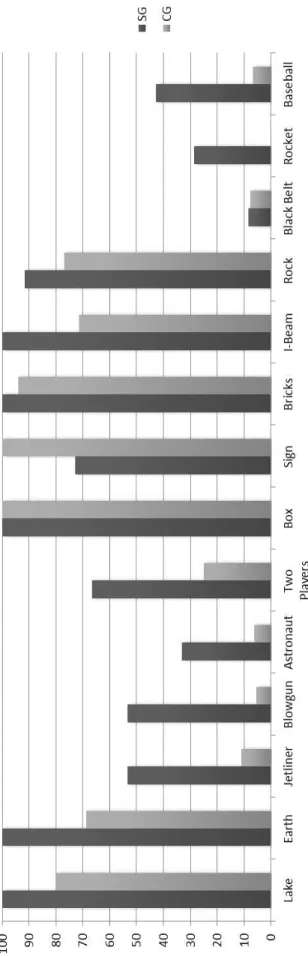
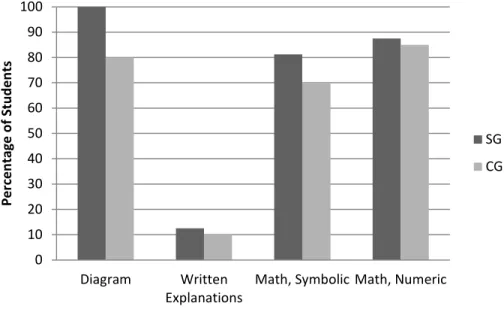
FIGURE 4. Analysis Method for the Homework Data. 35 FIGURE 5. Students’ Performance on the 14 Homework Problems. 46 FIGURE 6. Students’ Use of Visual Representations. 48
FIGURE 7. Text of the “Lake” Problem. 50
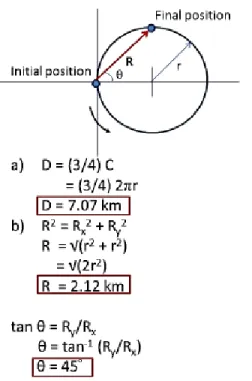
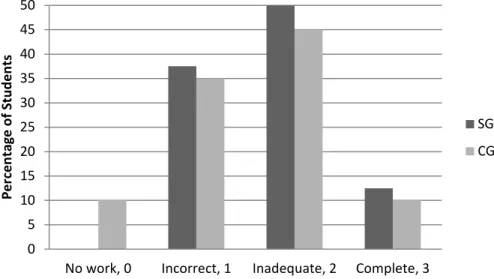
FIGURE 8. Sample solution to the “Lake” problem 51 FIGURE 9. Distribution of Students’ Scores on the “Lake” Problem. 52 FIGURE 10. Use of Representations in the “Lake” Problem. 53 FIGURE 11. Responses on the Checklist of Problem Solving Tasks
in the “Lake” Problem. 54
FIGURE 12. Scaffolding Group’s Use of Multiple Representations
in the “Lake” Problem. 55
FIGURE 13. Comparison Group’s Use of Multiple Representations
in the “Lake” Problem. 56
FIGURE 14. Noah’s Problem Solving Path for the “Blowgun” Problem. 61 FIGURE 15. Noah’s Problem Solving Path for the “Skier” Problem. 62 FIGURE 16. Abby’s Problem Solving Path for the “Blowgun” Problem. 64 FIGURE 17. Abby’s Problem Solving Path for the “Skier” Problem. 65
FIGURE 18. Cat’s Problem Solving Path for the “Blowgun” Problem. 67 FIGURE 19. Cat’s Problem Solving Path for the “Skier” Problem. 67 FIGURE 20. Joshua’s Problem Solving Path for the “Blowgun” Problem. 69 FIGURE 21. Joshua’s Problem Solving Path for the “Skier” Problem. 70 FIGURE 22. Anna’s Problem Solving Path for the “Blowgun” Problem. 72 FIGURE 23. Anna’s Problem Solving Path for the “Skier” Problem. 73 FIGURE 24. Mary’s Problem Solving Path for the “Blowgun” Problem. 74 FIGURE 25. Mary’s Problem Solving Path for the “Skier” Problem. 75 FIGURE 26. Students’ Use of Representations in the Interview Problems. 84
CHAPTER 1 INTRODUCTION
A major goal of most high school physics courses is to provide the students with a clear and logical presentation of the basic concepts and principles of physics and to strengthen an understanding of the concepts and principles through a broad range of applications that involve problem-solving. Several fields of study aside from physics such as engineering, architecture, biology, medicine, mathematics, and teaching require
problem-solving as a requisite skill. Thus, developing problem-solving skills early on in a student’s education is vital regardless of the career path in which the student eventually applies his or her knowledge and skills.
Physics textbooks and curriculum materials used in schools show that problem-solving is known to be an intrinsic part of any physics course. Problem-problem-solving guides and examples of solved problems are commonly included in physics textbooks and physics teachers usually expect that students learn from these examples. It should be noted, however, that recent studies reveal that students increasingly find textbooks as the least helpful component of a physics course compared to other components such as homework and lecture discussions (Sadaghiani, 2011; Brooks et al., 2009; Cooney et al., 2002). Also, instructional environments vary depending on the pedagogical approach adopted by a physics teacher. There are documented cases of problem solving instruction that fail because little attention is given to requisite modes of reasoning and instead focus
primarily on the use of mathematics, leading students to prefer formula-centered problem-solving methods (Hestenes, et al., 1992).
To help students understand physics concepts and solve problems, the literature on physics education research (PER) endorses the use of multiple representations (Etkina, et al., 2009). Kohl and Finkelstein (2008) noted that “representations” can both refer to external and mental representations. Both types of representations have been the subject of various studies in physics education. The use of representations to make a problem solving task easier is found to be an expert-like approach. Experts are observed to typically start with visualizing the problem and performing the conceptual analysis and planning steps before resorting to the implementation of the plan, while novices may simply look for plausible formulas without regard to applicability of concepts (Mason & Singh, 2011).
Physical quantities and concepts can often be visualized and understood better by using concrete or external representations referring to the various ways of depicting objects and processes such as written language, diagrams, equations, graphs, and sketches. These concrete representations assist qualitative and quantitative reasoning. Studies on the interplay between the use of representations and problem-solving serve as a window to students’ mental representations and in so doing, give educators the
opportunity to develop tools necessary to produce a more coherent understanding of how students solve physics problems.
The findings of PER on the multiple differences in the approaches of experts and novices to problem solving have led to an interest in studying how expert-like
characteristics in problem solving develop and whether the development is a gradual process or if it is a result of certain types of exposure or instructional scaffolding. Several studies suggest that effective problem solving skills may be cultivated by implementing scaffolding supports (Bao et al., 2011; Lin & Singh, 2011). Similarly, exposure to a learning environment also has a significant role in the development of problem solving skills. Kohl and Finkelstein (2006) found that a pervasive use of different representations and multiple representations by teachers in a learning environment appear to broaden the representational skills of students. These results serve as a valuable source of
information for research-based instruction models such as the Modeling Instruction Program. Recently, in the U.S. there have been many professional development programs available to teachers to learn how to use a modeling instruction approach.
1.1Background Literature
This study seeks to understand how a guided approach for the use of multiple representations affects the problem solving performance and use of multiple
representations of physics students at a public U.S. Midwestern high school. The design of this study is based on the results of other recent PER findings. Physics education researchers have been interested in understanding the effects of using a problem-solving heuristic and the differences between expert and novice learners. Studies in this area have led to the development of pedagogical strategies in problem-solving; the physics
literature on problem-solving is robust, but I only looked into the work of researchers that involved the use of multiple representations.
Since this study is within the field of problem-solving research, it is necessary to adopt a definition for problem-solving. The National Council of Teachers of Mathematics (NCTM) identified problem solving as one of the five fundamental mathematical process standards (NCTM, 2000). The NCTM defines problem-solving as engaging in a task for which the solution is not known in advance. In physics education, the emphasis on problem solving as opposed to rote acquisition of knowledge is easily verified by examining physics textbooks and common course syllabi. Problem-solving is
emphasized in textbooks through recurrent displays of examples interwoven throughout the text. Mathematical and scientific activities involve problem-solving, which is why it is necessary to study and understand its intricacies.
1.1.1 Emphasis on Multiple Representations in Research-based Curricula Curricular developments in the field of promoting the use of multiple
representations resulted from the recommendation of physics education literature. For instance, Heuvelen (1991) developed a curriculum called Overview, Case Study Physics (OCS) that was based on the use of representations. Heuvelen’s work was grounded on research in problem-solving and multiple representations (Larkin, et al., 1987; Heller & Reif, 1984). Students who received instruction in OCS were found to be more likely to correctly solve a problem and they exhibited greater qualitative reasoning as evidence by the correct use of physics principles, free-body diagrams, and vector components. In the
OCS curriculum, the instructor uses representations such as pictures, words, diagrams, and graphs to help students understand a concept and then students use these
representations to solve quantitative problems based on this concept. Students’ learning gains on a diagnostic test from the OCS course were 15% higher than those in a
traditional class, and the OCS students were also able to retain information longer (Etkina et al., 2009).
Like OCS, Modeling Instruction also puts emphasis on the use of multiple representations. Modeling Instruction is an evolving, research-based program for high school science education reform that was supported by the National Science Foundation (NSF) from 1989 to 2005. Teachers participate in a series of workshops and acquire robust teaching methodology for developing student abilities to make sense of physical experience, understand scientific claims, articulate coherent opinions of their own and defend them with cogent arguments, evaluate evidence in support of justified belief. In a comparative analysis of Force Concept Inventory (FCI) test scores, it was found that teachers who utilize the modeling method most fully have the highest student posttest FCI mean scores and gains (Dukerich et al., 2008). The FCI instrument was designed to evaluate student understanding of the fundamental concepts in Newtonian physics (Hestenes et al., 1992).
These examples of research-based curricula aim to correct the weaknesses of traditional lecture-demonstration classroom environment. According to Hestenes et al., (1995), the bane of traditional instruction is that most students cling to a "plug-and-chug" problem-solving strategy that severely limits their skill development. The initial
qualitative analysis of the problem, including the construction and use of suitable diagrams is the key to effective problem-solving.
1.1.2 The Role of Using Multiple Representations in Problem Solving: Cognitive Theory Perspectives
It is relevant to review the findings of studies on the similarities and differences between experts and novices in problem solving and their use of multiple representations. It has been shown that experts are able to smoothly use multiple representations and move between representations when they are thinking and sharing ideas (Kohl & Finkelstein, 2008; Kozma, 2003). Also, the expert-like use of multiple representations has been argued to be an important goal of physics education for successful problem solving and a strong conceptual understanding (Heuvelen & Zou, 2001). Having a clearer picture of how experts and novices differ in their approaches to multiple representation problem solving will allow us to better bridge the expert-novice gap with education.
1.1.2.a. Expert-Novice Research on Problem Solving
Two forms of problem solving knowledge are often described in expert-novice research (Gagne et al., 1993). The first one is declarative knowledge, which refers to knowledge of facts, theories, events, and objects. The other is procedural knowledge that includes motor skills, cognitive skills, and cognitive strategies. When problem solving occurs, both declarative and procedural knowledge are activated in working memory and interact in a variety of ways. Nonetheless, studies show that general problem solving knowledge is an incomplete explanation of how problem solving occurs.
Expert–novice research reveals that experts use domain knowledge, basic
automated skills, and domain-specific expertise in problem solving (Abel, 2003; Gerace, 2001; Chi et al, 1981; Larkin et al, 1980). Experts were found to exhibit better conceptual understanding of their domain, use more automated skills and domain-specific strategies and have a declarative conceptual understanding and procedural basic skills and
strategies.
The actual information in memory and the organization of that information in memory defines an individual’s conceptual understanding in a domain. This can be related to the schema theory: information is stored in memory as knowledge structures and frameworks and activated to provide a lens through which to view new information (Norman, 1992; Gagne, 1985). A problem solver may also perform necessary and routine operations without much thought using basic, automated skills. These skills have been mastered by the problem solver that they have become habitual and may even be unconsciously applied in the problem solving process allowing an individual to operate quickly and accurately. The expert’s speed and skill of execution compared to a novice is explained by the use of automaticity (Chi et al, 1988). Unlike basic, automated skills, the problem solver may also use domain-specific strategies that remain under conscious control. These strategies refer to the processes in a domain that the problem solver must consciously think about in order to solve a problem.
Expertise relies on both domain-specific knowledge and problem-solving skill. From this standpoint, experts and novices can be observed to manifest problem solving behaviors that can be associated to conceptual and procedural knowledge. A summary of
main differences between experts and novices in problem solving by Gerace (2001) is listed in the following table.
TABLE 1
Summary of Major Differences between Experts’ and Novices’Problem-solving Behavior and Characteristics of Declarative Knowledge from Problem-solving Studies
Expert Novice
Problem Solving Behavior
Conceptual knowledge impacts problem solving
Problem solving largely independent of concepts
Often performs qualitative analysis, especially when stuck
Usually manipulates equations Uses forward-looking concept-based
strategies
Uses backward-looking means-ends techniques
Has a variety of methods for getting unstuck
Cannot usually get unstuck without outside help
Is able to think about problem solving while problem solving
Problem solving uses all available mental resources
Is able to check answer using an alternative method
Often has only one way of solving problem
Declarative Knowledge Characteristics
Store of domain specific knowledge Sparse knowledge set
Knowledge richly interconnected Knowledge mostly disconnected, Amorphous
Knowledge structured hierarchically Knowledge stored Chronologically Integrated multiple representations Poorly formed and unrelated
representations
Good recall Poor recall
It is important to note that experts and novices differ on their perception of a problem’s difficulty because experts use external representations to support mental representations. Experts successfully use representations as cognitive tools to help construct understanding; instead of processing everything internally, students can create an external representation to reduce the cognitive load (Nieminen et al., 2012). From this
perspective, the use of representations is very important to make a problem solving task easier by reducing cognitive load. Unfortunately, this idea is not shared by many
students. An outlook on problem-solving that is prevalent among students who can be characterized as novice problem-solvers is described by Hestenes et al., (1995): “The student sees that the answer to a problem invariably comes from plugging numbers into equations and chugging a little arithmetic, all that fluff about diagrams and physical intuition can be ignored, and the key to problem solving is finding the right equation in which to plug the given numbers.”
1.1.2.b. Cognitive Theory Perspectives
The difference between experts and novices can be viewed from the perspective of Cognitive Learning Theory (CLT). Most theories of human problem solving consist of some formulation of the following seven stages: (1) problem categorization, (2) construction of a mental representation of the problem, (3) search for the appropriate problem-solving operators (e.g., strategies or procedures), (4) retrieval and application of those operators to the problem, (5) evaluation of problem-solving progress and solution, (6) iterating stages 1–4 if not satisfied with progress/solution, and finally (7) storage of the solution. These stages may not be strictly sequential, but may be iterative (Chi et al., 2010). They show that cognitive psychologists view problem solving as a process that includes introspection, observation, and the development of heuristics.
Characteristics of experts and novices can be understood by looking into these stages. For instance, in problem categorization tasks, representations play a significant role in the way experts and novices differently categorize physics problems. Experts
based their categories in terms of physics principles used in solving them while novices are distracted by the context or surface features of problems and therefore put inclined planes and pulleys in separate categories (Chi et al., cited by Mason & Singh, 2011).
CLT focuses on information processes which are governed, or constrained, by the Information Processing System (Newell, 1972). This theory stands in contrast to
Behavioral Learning Theory (BLT), which focuses on stimulus-response associations. CLT gives emphasis to the role of working memory capacity, organization of long-term memory, and cognitive retrieval of relevant information when an individual is engaged in the several separate activities in the process of problem solving such as creating patterns, interpreting figures, developing geometric constructions and proving theorems.
Differences between experts and novices can also be better understood by reviewing Gagne’s taxonomy of learning outcomes. Within the cognitive domain of Gagne’s (1985) taxonomy, intellectual skills, verbal information and cognitive strategies are identified as categories of capabilities. Knowing how to do something involves the use of intellectual skills, which can be essentially referred to as procedural knowledge. The ability to communicate facts by writing, speaking, or drawing involves the processing of verbal information is the use of declarative knowledge. Cognitive strategies refer to the capabilities to control processes such as remembering information or concepts and solving problems. In PER, differences in these categories of capabilities within the cognitive domain are described in studies concerning the problem solving approaches of experts and novices (Chi et al, 1981; Abel, 2003; Larkin et al, 1980; Gerace, 2001).
1.1.2.c. Heuristics
As a complex cognitive activity, cognitive psychologists provide different descriptions of problem solving. Historically, Polya (1973) defined mathematical
problem solving as a process that involved several dynamic activities: understanding the problem, making a plan, carrying out the plan, and looking back. These activities or general problem solving strategies have also been referred to as heuristics (i.e. the general methods used in problem solving). Polya (1973) was known for promoting the idea that the application of general problem solving strategies was crucial to problem solving expertise. Although his work was monumental and has been the foundation on which much of the work in problem solving heuristics has been based, Schoenfeld (1985) extended the interpretation of problem solving to not only consider heuristics, but to take into account a larger framework that includes resources (base knowledge), heuristics (problem-solving techniques), control (selecting and deploying of resources), and belief systems (misconceptions, attitudes).
As elaboration on problem solving continued various cognitive heuristics
approaches were developed (Reif, Larkin, & Bracket, 1976; Larkin, 1981; Heller & Reif, 1984; Heuvelen, 1991; Leonard, Dufresne, & Mestre, 1996; and Beichner, 1997). In recent years, the use of representations has been integrated in cognitive approaches to accommodate research findings on the differences between experts and novices. For instance, Heller, Keith & Anderson (1992) suggested that students should make a
systematic series of translations of a problem into different representations, each in more abstract and mathematical detail. They promoted the use of five steps: (1) visualize the
problem, (2) describe the problem in physics terms, (3) plan a solution, (4) execute the plan, and (5) check and evaluate. Reference textbooks in introductory physics typically include a problem solving guide based on research-based cognitive heuristics approaches.
Experts and novices differ in their use of representations when they apply heuristics to problem solving. Larkin (1981) found that experts almost always draw a picture to visualize the problem and then creates a conceptual representation (e.g., free-body diagram) to describe the problem in physics terms while novices typically jump to executing a plan (Heuvelen, 1991). Research-based curricula in the recent years have had a great impact in addressing this difference. In a study by Etkina, et al., (2009) using two multiple choice physics problems, 17% of students from a traditional introductory course constructed a diagram compared to 68% of students from a course that promoted the use of representations.
1.1.3 Scaffolding Supports in Physics Education
Anderson (cited by Frederiksen, 1984) describes in detail a theory about the acquisition of problem-solving expertise that involves three stages: (1) declarative stage, during which the learner receives instruction that is encoded as a set of facts; the
information may be used to generate behavior, but the retrieval of the relevant facts must be rehearsed to keep them available; (2) a knowledge compilation stage, during which the knowledge is converted into a set of procedures that can be carried out without any interpretive operations; and (3) a procedural stage, during which the activity can be carried out autonomously.Instructional scaffolding adheres to this theory and the theories
in cognitive learning and problem solving that I have described in the previous sections. When concepts and skills are first introduced to students, opportunities to practice should be established in the learning environment.
The development of scaffolding supports in challenging learning environments has become a flourishing theme in PER as researchers continue to seek effective ways in developing expert-like problem solving behaviors among students. Podolefsky &
Finkelstein (2007) reported the effectiveness of a curriculum that builds on analogical scaffolding. Bao et al., (2011) found that conceptual scaffolding in solving synthesis problems (i.e., problems combining two major topics that are broadly separated in a teaching timeline) encouraged students to search for and apply appropriate fundamental principles, and that repeated training using synthesis problems helped students to make cross-topic transfers. Lin & Singh (2011) showed how isomorphic problems could be used to design different types of scaffolding for problem solving. All of these studies highlight the relevance of constructing effective scaffolding supports. Since the development of expert-like traits occurs in stages, the goal of instruction should be to help the students make successful transitions from one stage to the next.
1.2 Rationale
There are a variety of challenges that physics students confront in the process of problem solving. Physics teachers encounter numerous cases of students attempting to solve physics problems, but are unsure how to start, how to proceed, or how to interpret the problem correctly. Similarly, there are also students who can immediately explore a
problem and develop a better understanding of underlying physics concepts by choosing a variety of strategies. The difference in problem solving abilities among students is an important issue to be addressed. Teachers must constantly develop and select
instructional methods and design scaffolding supports that aim to better bridge the performance gap among students.
The starting point for this vein of work was identifying problem solving aspects of the high school physics course in which the students may be supported to practice the use of multiple representations. In order to develop students’ representational skills as they apply to problem-solving, we should attempt to create an instructional environment that encourages the use of multiple representations across all aspects of the course (Kohl and Finkelstein, 2006).
The Modeling Instruction Program has embedded scaffolding supports for the use of multiple representations in laboratory activities (See Appendix A). I wanted to look into other aspects of the high school physics course that involved problem-solving and study how problem solving performance and use of multiple representations might be affected if the use of multiple representations in problem solving is constantly
encouraged. Aside from problem-solving activities integrated in laboratory
investigations, students are expected to solve physics problems, usually called “warm-up exercises” during large-group meetings and to work on sets of homework problems. The fading of scaffolding supports in these activities may be justified if the students have mastered the skill of using multiple representations. However, this may be too much to ask of physics students considering the short amount of time given to them to learn
fundamental physics knowledge and skills. Lin and Singh (2011) found that a common difficulty among introductory physics students working on a quiz problem was that they did not draw a free-body diagram, resulting in many mistakes in their analyses. They also observed that the students did not develop a habit of drawing an acceleration vector.
Developing expert-like traits in problem solving and in any domain takes time. Much research shows that a minimum of 10 years of daily deliberate practice is necessary to develop expertise in most domains (Ericsson et al., 1993). Ericsson and colleagues referred to deliberate practice as repeated experience in which the individual can attend to the critical aspects of the situation and incrementally improve his or her performance in response to knowledge of results, feedback, or both from a teacher. This perspective suggests that in order to develop problem solving skills such as the use of multiple representations, we can explore the use of instructional scaffolding that focuses on deliberate practice.
In high school physics, students begin to encounter mathematical problems that are multistep and require some systematic approach. Most standardized tests in science and math include multistep problems to evaluate conceptual knowledge. Unfortunately, recent trends in evaluation that focus on test scores may not reveal how the use of representations affects the problem solving performance of students. In this study, I collected data from homework and interviews to understand how students use multiple representations in solving multistep problems. Since the literature in PER and the
framework supporting the modeling instruction program suggest that expert-like problem solving skills such as the use of multiple representations may be supported by target
training, I selected specific problem-solving tasks that point to the use of multiple representations and formed a checklist of these tasks for the students to use. Performing these tasks during problems solving could serve as a scaffolding support for the sustained use of multiple representations in problem solving.
1.3 Research Questions
The purpose of this study is to explore the role of using a guided scaffolding approach for generating representation-rich solutions to problems in a high school physics course. Guided scaffolding involved the use of specific problem-solving tasks, which are assumed to lead the students in using various representations (e.g., verbal, mathematical, pictorial, graphical) that may assist students’ sense-making. This study investigates three questions:
1. How does the scaffolding strategy of using problem solving tasks affect the: (a) students’ use of representations, (b) students’ performance in problem solving, and (c) quality of the representations they used?
2. How do students address the problem solving tasks in the process of solving problems? Which representations do they use and how do they use them?
3. What differences in misconceptions and problem solving behaviors related to the use of representations, if any, can be observed?
The answers to these questions provide insight about the use of multiple representations in teaching and learning physics in high school. Quantitative and qualitative data were used to analyze how students can be further supported to use
multiple representations in problem solving. A better understanding of how problem solving takes place can allow us to develop research-based pedagogical approaches that are responsive to the needs of our students.
CHAPTER 2 METHODOLOGY
2.1 Context
This study was conducted in selected algebra-based physics classes during an 18-week-long semester at a public, U.S. Midwestern, high school. The school operates on a 4x4 block schedule, a type of academic scheduling in which a student has fewer classes per day, but each class is scheduled for a longer period of time than normal (i.e., 90 minutes). A block section physics class meets every day and students finish the course within one semester. Two classes taught by a high school teacher who uses the Modeling Instruction curriculum were selected for this study. The physics course offered by the teacher uses a broader selection of representations than a comparable traditional course. The course aims to provide students with a clear and logical presentation of the basic concepts and principles of physics and to strengthen an understanding of the concepts and principles through a broad range of applications.
Modeling instruction is a reform effort that has had great success at the high school level, which emphasizes active student construction of conceptual and mathematical models in an interactive learning community through the use of activities that are focused on the process of building, validating, and deploying models (Brewe et al., 2009). Modeling instruction is organized into modeling cycles with two main stages: (1) model development and (2) model deployment (Dukerich, et al., 2008). Model development typically begins with a demonstration and class discussion with the goal of
establishing a common understanding of a question to be asked of nature. Then, in small groups, students collaborate in planning and conducting experiments to answer or clarify the question. At this stage, it should be noted, that the model puts emphasis on the use of multiple representations. Students present and justify their conclusions in oral and written form, including the formulation of a model for the phenomena in question and an evaluation of the model by comparison with data. Technical terms and representational tools are introduced by the teacher as they are needed to improve models, facilitate modeling activities, and improve the quality of discourse. In the model deployment stage, students apply their newly-discovered model to new understanding by working on challenging worksheet problems in small groups, and then they present and defend their results to the class with the use of portable whiteboards. Students also complete quizzes, tests, and lab practicums to demonstrate their understanding of the model. The use of multiple representations is further promoted by asking students to offer brief explanations of their strategies when solving problems.
2.1.1 Participants
This study had two data gathering phases: (1) collecting problem solving work of students (n=43) for a period of 10 weeks and (2) interviewing selected students (n=12). The students were enrolled in an honors physics course that uses the Modeling Instruction curriculum. The students in this study were in two sections with the same teacher to eliminate instructor effects when comparisons between the sections are made. I arbitrarily assigned one section as the scaffolding group (SG) and the other section as the comparison group (CG). I gathered demographic data at the beginning of the semester to
present the characteristics of both groups. It is important to compare the two groups on various measures since it was not possible to randomly assign students to which group they would belong. The sample of this study was a convenience sample. They were selected by virtue of being the students of the high school teacher who have agreed to collaborate with the researcher.
TABLE 2
Distribution of Students by Age, Year Level, and Sex
Characteristics Scaffolding Group, % n = 23 Comparison Group, % n = 20 Age 15-16 17 8 17-18 83 60 Year Level Sophomore/Junior 30 50 Senior 70 50 Sex Male 39 40 Female 61 60
Table 2 shows the distributions of students in both groups by age, year level, and sex. The average age of the SG students was 17.04 (SD=0.13) while that of the CG students was 16.65 (SD=0.17). In both groups, 17 is the most common age. Majority of the students (60%) were in their senior year. More of them were female (60%).
At the beginning of the semester, students from both groups were asked to
complete a Student Information Sheet (SIS) (Appendix B). The Force Concept Inventory (FCI) (Appendix C) and Maryland Physics Expectations Survey (MPEX) (Appendix D)
were also administered to both classes to respectively gauge their physics background knowledge and attitudes toward the subject.
2.1.1.a Ethical Considerations
The participants in this study are still considered minors. Parent permission was obtained before the students were allowed to participate in the study. Since there were two phases of data collection, parental consent forms approved by the Lincoln Public Schools Institutional Review Board (IRB) were sent to the parents of prospective participants for each phase and only the students who have obtained permission from their parents were invited to participate in the study. To make sure that the students were voluntarily participating in the study and not coerced to do so, they were fully informed about the procedures involved in the study. The contents of the youth assent form were discussed before data was collected (i.e., at the beginning of the semester in the first phase and before the conduct of an interview in the second phase) to inform the students that there is no obligation at all for them to participate in the study and that they can withdraw at any time.
To safeguard the identity of the research participants, pseudonyms were used to keep each person anonymous. I also kept all materials confidential, securing digital copies of documents and audio-video files in a password-protected computer and hard copies of written transcripts and student problem solving work in a locked filing cabinet.
2.2 Methods of Investigation
In this section, I described the design of the study, the instruments I used, and how I analyzed the data. I also addressed the issues of validity and reliability through a discussion of methodological issues and limitations of the study.
2.2.1 Research Approach
This study employed a multi-method research design to explore the effects of a scaffolding strategy for the use of multiple representations in physics problem-solving.
2.2.1.a Structure of the Study
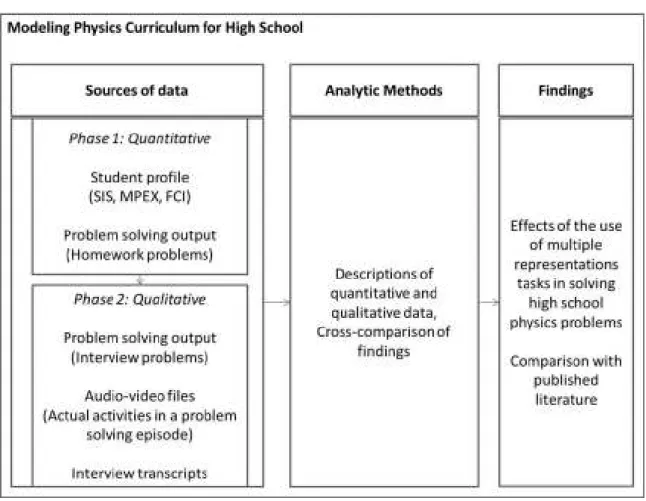
There were two phases in this study as shown in Figure 1. In Phase 1, two high school physics classes with a common teacher were identified as the research population. Random assignment of students to groups was not possible so pre-existing classes were used. One class was arbitrarily identified as the Scaffolding Group (SG) and the other class as the Comparison Group (CG). Student background data was collected from both groups using survey instruments administered during the first week of class to ensure that the two groups shared similar characteristics. A total of fourteen (14) homework
problems were given to both groups within a period of 10 weeks. At least one problem was given each week, two problems at most. The checklist of problem solving tasks was introduced by the teacher to the SG students as a scaffolding strategy for the use of multiple representations.
FIGURE 1. Structure of the Study. The figure shows the two phases of the study.
In Phase 2, a purposeful sample of 12 students was selected for cognitive interviews. For this study, I used the data from six SG students and six CG students. My aim was to sample heterogeneity in the use of multiple representations in problem solving. I used maximum variation sampling to capitalize on diversity relevant to my research questions. The six students from each group were comprised of more successful problem solvers and less successful problem solvers in their respective groups.
The research was exploratory; therefore, the findings that I have described in this study are not definitive. This study will tell us where to look in attempting to understand the use of representations in problem solving. That is, the patterns found in the multiple
sources of data can be used to guide future research agenda, both qualitative and quantitative, in addressing the problems that have been identified in this study.
2.2.1.b Researcher Statement
Merriam defines the researcher’s position as the process by which the researcher puts forth his or her biases, assumptions, and experiences (Merriam, 2009). I am a graduate student pursuing a Master’s degree in teaching and learning, and teacher education. I have previously worked on a Master’s degree in physics to enhance my background in physics education. As a researcher, I assume a learning role rather than a testing one and view my work within the post-positivist paradigm. I conduct my research among other people, learn with them, rather than conduct research on them. When managing interviews, I strive to engage in social construction of a narrative with respondents to activate their stock of knowledge. The open-ended and exploratory character of post-positivist research leads me to understand the nature of problems that I set out to investigate. In this study, I aim to understand how the students’ use of multiple representations in problem solving might be supported rather than try to control or resolve issues in problem solving.
My prior experience as a physics instructor in a different cultural setting can potentially intrude with my data collection and analysis; thus, it is necessary to broaden my perspective. Since 2012, I have been observing physics classes at the high school where I planned to conduct research to familiarize myself with the curriculum and classroom culture. This experience has allowed me to build a working relationship with
the high school physics teacher and eventually facilitated my transition from learning about the educational setting to conducting classroom-based research.
In this study, I must acknowledge that I interacted with the participants as an observer despite my efforts to distance myself from any causal effect on the outcomes. Because of this, the research may be value-laden. That bias, however, does not attempt to force specific results, but should be interpreted based on the research paradigm that I subscribe to as a researcher. Also, my judgment of the students as individuals is limited since I was mainly focused on their cognition.
2.2.2 Instruments
The research questions in this study were examined in several parts: problem solving performance, use of multiple representations, and the quality of representations used in problem solving. In order to understand how the scaffolding affects each of these components, it is necessary to examine each of these separately. Thus several different instruments were used.
2.2.2.a Student Information Sheet (SIS), Maryland Physics Expectations Survey (MPEX), and the Force Concept Inventory (FCI)
This set of instruments was used to determine how similar the two groups were based on a number of background variables. All of these instruments were administered to all students during the first week of class. The SIS was designed to gather demographic data. From the SIS, I was able to gather data on age, year level, sex, feeling of
preparation for the course, high school math background, expected grade in the course, and expected amount of study time.
The MPEX was used to gauge the attitudes, beliefs, and expectations of students that have an effect on what they learn in an introductory physics course. The MPEX was developed at the University of Maryland by Redish et al. (1998). In the survey, students are asked to agree or disagree on a five point scale with 34 statements about how they see physics and how they think they work in their physics course. The authors have given the survey to a group of experienced university faculty committed to reforming their teaching to increase its effectiveness and have used this group's response as their definition of "expert" responses (Appendix E). In interpreting MPEX results, the authors of the survey referred to a response that agrees with that of the “expert” as “favorable” and the
response that disagrees with that of the “expert” as “unfavorable”.
The FCI is a widely used physics test of students’ conceptual understanding of forces. The 30-question multiple-choice test has been demonstrated to be valid and reliable. The FCI is regularly administered by the high school physics teacher in this study as an overall measure of effectiveness of instruction. The FCI data for the two groups were taken from the teacher’s class record.
2.2.2.b Homework Problems
The homework problems used in these activities are selected from the pool of the end-of-chapter (EOC) problems in the adapted textbook for the high school physics course. A total of 14 homework problems were collected for 10 weeks. In some weeks, students were asked to solve one problem and in other weeks they were given two
problems depending on the lessons that were already discussed in class. Both groups solved the same sets of problem. I coordinated with the teacher to select problems that are well-defined (i.e., problems with discrete representations and finite goals). Also, the problems were multistep and situational; solving them would require both qualitative and quantitative analyses. Figure 2 shows one of the problems used in this study.
Two soccer players start from rest, 48 m apart. They run directly toward each other, both players accelerating. The first player has an acceleration whose magnitude is 0.50 m/s2. The second player’s acceleration has a magnitude of 0.30 m/s2. (a) How much time passes before they collide? (b) At the instant they collide, how far has the first player run?
FIGURE 2. Example homework problem used in the study.
At the beginning of the semester, I created a pool of problems with solutions and gave them to the physics teacher for review. This step was necessary since the teacher knew which topics were already discussed in class, thus he was in a better position to evaluate which problems should be assigned to the students on a certain week. Some problems (i.e., “Box” and “Bricks”, See Appendix F) were added by the physics teacher from his teaching unit.
2.2.2.c Checklist of Problem Solving Tasks
The checklist of problem solving tasks was introduced by the high school physics teacher to all the SG students (Appendix G). A copy of the checklist was attached to the weekly homework problems described in the previous section. The checklist was also used by the SG students who were interviewed in the second phase of data collection.
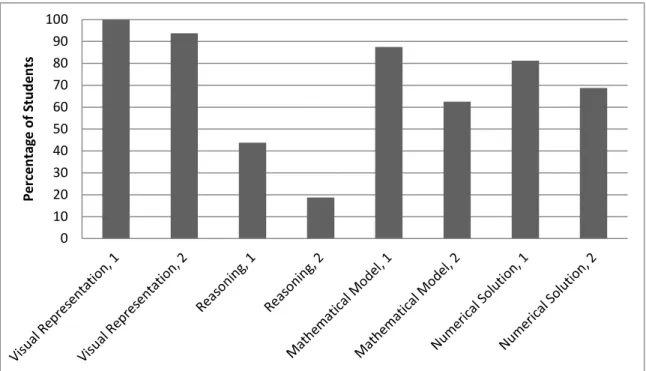
The checklist includes eight tasks that were designed to influence students’ problem solving by creating awareness about multiple representations that can be used in problem solving. Visual representations, reasoning in written language and mathematical
representations are the expected outputs from the SG students along with a numerical solution to well-defined physics problems. The components of the checklist are as follows:
A. Visual representations
The students were expected to produce a visual representation with the following prompts:
1. Draw a diagram(s) that represents your understanding of the problem (chart, graph, sketch, free-body diagram, picture, arrows).
2. Label the diagram(s) with symbols of physical quantities given in the problem.
These tasks were included in the checklist because using visual representations is typical among expert problem solvers. Thus, students should be given opportunities to practice generating visual representations in problem solving. Silver and Stylianou (cited by Etkina et al., 2009) investigated the role of visual representations in advanced
mathematical problem solving and they found that experts not only constructed visual representations more frequently but used them to explore the problem space, develop a better understanding of the situation, and to help solve the problem.
B. Reasoning expressed in written language
The students were expected to express their reasoning in written language with the following prompts:
1. Identify the key physics concepts that you think are relevant to solving the problem.
2. Briefly explain how you will use the key concepts in your procedure for solving the problem and evaluating if your answer is correct.
These tasks were included in the checklist because it is important to teach to identify underlying key concepts in physics problems and create opportunities for them to explain how these key concepts could be used to solve a given problem. This is the reason why students are asked to justify their conclusions from laboratory investigations in oral and written form. Studies show that beginners in physics have difficulties in describing a general approach for solving a given problem and typically attempt to solve them by finding and manipulating equations (Dufresne et al., 1996).
The ability to describe the approach that one would take in order to solve a problem is an archetypal expert trait. Experts typically describe a problem solving approach by including the identification of physics concepts or principles together with the rationale for why they apply, and a general procedure for applying them.
C. Mathematical representations
The students were expected to use mathematical representations with the following prompts:
1. Identify the equations that you would need.
2. Derive the mathematical model that you would need to use in order to find a numerical solution.
In the process of constructing mental representations of a problem, experts use different concrete representations to aid reasoning (Chi et al., 2010). Mathematical representations assist both qualitative and quantitative reasoning and problem solvers
typically move in and out of representations to make connections with multiple ideas. Hestenes et al. (1995) suggested that problem-solving performance can be improved by making the model in every problem explicit.
D. Numerical Output
The students are expected to arrive at a numerical solution:
1. Identify the numerical values of the physical quantities given in the problem. 2. Perform the appropriate operations on your derived mathematical model. After going through the stages of problem solving with the use of multiple representations, the student should be able to use the mathematical model to find the value of an unknown quantity or quantities.
2.2.2.d Interview Problems
The interview problems were selected after an initial examination of the students’ problem solving work on the 14 homework problems has conducted. In the interviews, the “Blowgun” problem was given first and the “Skier” problem last. Like the homework problems, these problems are well-defined and require the student to engage in multiple steps to find the unknown physical quantity. Table 3 shows the two problems used in the interviews.
TABLE 3
The Two Problems Used in the Interviews
Blowgun Problem. (Uniformly Accelerated Motion)
The length of the barrel of a primitive blowgun is 1.2 m. Upon leaving the barrel, a dart has a speed of 14 m/s. Assuming that the dart is uniformly accelerated, how long does it take for the dart to travel the length of the barrel?
Skier Problem. (Newton’s Laws of Motion)
A skier is pulled up a slope at a constant velocity by a tow bar. The slope is inclined at 25.0 with respect to the horizontal. The force applied to the skier by the tow bar is parallel to the slope. The skier’s mass is 55.0 kg, and the coefficient of kinetic friction between the skis and the snow is 0.120. Find the magnitude of the force that the tow bar exerts on the skier.
2.2.3 Validity and Reliability
Producing valid and reliable knowledge in an ethical manner is the concern of any research. In this section, I discuss the issues of validity and reliability and explain how these issues were dealt with in this study.
2.2.3.a Internal Validity
The limitations of this study result from the chosen research approach, analysis tools, and the data set. Therefore, if this research is to be meaningful and add to the sum of what we know about students’ use of multiple representations in problem solving, then I must explain the methodological issues and limitations of the study. To do this, I will address issues on validity and reliability in this section to establish the trustworthiness of the study.
The most well-known strategy that researchers use in order to promote the
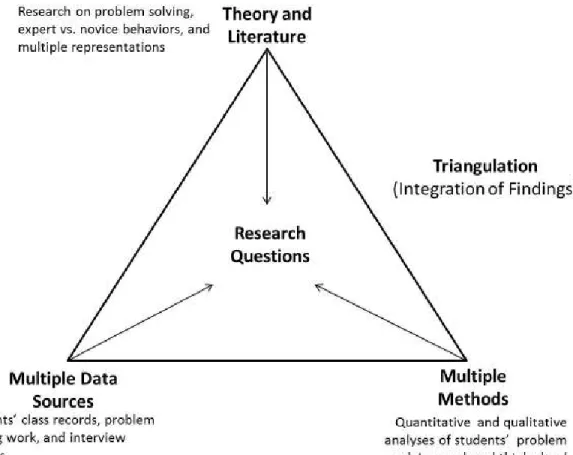
internal validity of a study is triangulation (Merriam, 2009). In this study, I used multiple methods and multiple sources of data and then I compared my findings with the literature on problem-solving research. Figure 3 shows the triangulation concept that I applied in
this study. We can see that in order to answer the research questions that I put forth in the beginning of the study, I attempted to view the findings from multiple points of reference.
FIGURE 3. Triangulation. The figure shows the concept of triangulation applied in this study to establish internal validity.
Another validation strategy that I used in this study is prolonged engagement and persistent observation in the field (Creswell, 2013). I learned the high school physics curriculum for more than a year through class observations and maintained regular correspondence with the high school physics instructor about the conceptualization and implementation of the research. I was also regularly present in two class sessions per
week from the beginning to the conclusion of the two phases of data collection in order to build trust and long-term contact with the participants of the study.
In one of the previous sections, I have included a clarification of researcher bias as a validation strategy. This strategy is sometimes labeled researcher’s position
(Merriam, 2009). I articulated and clarified my experiences and theoretical orientation to the study to allow the reader to better understand possible influences in my interpretation of the data. Another validation strategy that is built into this thesis project is the process of peer review (Merriam, 2009). The study had to pass through a faculty committee for comments on the design in prior to the implementation and comments of the findings upon its completion.
2.2.3.b Reliability
For this research to be reliable, it is important to carefully document the data collection and analysis procedures to make it possible for another researcher, with similar knowledge of the content and context of the research, to replicate the study if needed. This study, however, allows for limited replication since a sample of convenience was used and the participants in the interviews have unique characteristics that may not have been completely described in this study due to the limitations inherent to the research instruments. Because each physics course has unique features, such as the teacher, textbook, and student population, precise replication is not possible. It is more important and practical to build upon this study rather than to replicate it since this is an exploratory research. In one of the previous sections, I have discussed how the findings of this study
might be used in designing a quantitative or qualitative study that would lead to definitive results or findings.
2.2.3.c External Validity
The high school teacher in this study used a Modeling Instruction curriculum for physics. This means that the population of students in this study is exposed to a
representation-rich learning environment. Because the course uses a particular pedagogy that may not be the preferred program of instruction in other schools, the results of this study are not transferable to traditional courses in which students are not exposed to activities that put emphasis on the use of multiple representations. More scaffolding supports based on the results of PER are needed to address the challenges in traditional physics classrooms.
The external validity of this study therefore depends on applying it to a similar context and content. Are the results transferable to other honors, algebra-based, high school physics courses, with similar curriculum? Since a sample of convenience was used in this study it would be better to think in terms of translating the results to a comparable situation rather than generalizing the findings to the same context and content (Lincoln & Guba, 1985). To make transferability possible, I aimed to provide sufficient descriptive data of the students’ background and problem-solving work.
2.2.4 Analysis Methods 2.2.4.a Data: Homework
A large data set was accumulated in this study and as a result, I was selective in my presentation by choosing subsets that are descriptive and concise. For instance, in the
examination of the effect of the use of problem solving tasks on the students’ use of representations, I presented information from the aggregate data and then I pulled the data apart by selecting data from a specific problem and drew meaning from the
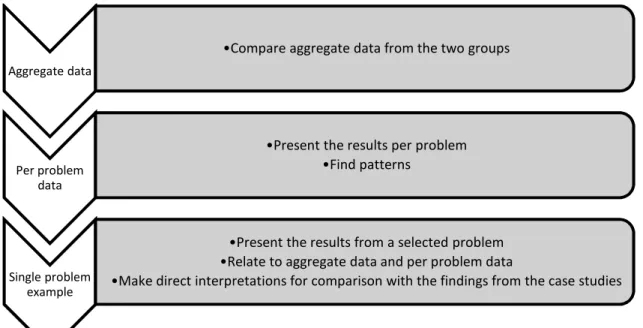
information that was not apparent from the examination of the data set as a whole. Figure 4 shows how I advanced in analyzing the data set from the 14 problems given to the students during the first phase of data collection.
FIGURE 4. Analysis Method for the Homework Data. This figure shows the analysis procedure for the data gathered from the 14 study problems given to the students in the two groups.
To illustrate the advantage of analyzing the data in different levels, I invite the reader to consider the research question pertaining to the effects of using the problem solving tasks. One of the first things that we would want to know would be which of the two groups performed better. Which group has the higher average problem solving score in general? To answer this question, we would have to look at the aggregate data.
Aggregate data
•Compare aggregate data from the two groups
Per problem data
•Present the results per problem •Find patterns
Single problem example
•Present the results from a selected problem •Relate to aggregate data and per problem data
The information from the aggregate data, however, is limited, and there might be differences between the two groups that we may overlook if we don’t pull apart the data. For instance, if there was no difference in problem solving performance it would not necessarily mean that there was no difference in the use of representations. Presenting the results per problem would allow us to find patterns and trends. If the two groups were found to have relatively the same average problem solving score, then it would mean that if we examine the results per problem, we would see that in some problems the SG students performed better than the CG students and in other problems CG students performed better than SG students, or in all problems both groups had relatively equal problem solving scores leading to the result that we have seen in our inspection of the aggregate data. We can then examine if we would be able to observe the same results if we look at the use of representations of each group per problem. We can be more confident in saying that the scaffolding resulted to more students drawing visual representations if this is the trend in most of the problems, or at best, in all of the problems.
Finally, analyzing the results for one problem allows us to examine special cases and look into details that are not apparent from the first two levels of analysis. A problem in which students generated different diagrams that can be categorized in some way is more valuable to interpret compared to a problem where the students had the same output or problem solving score. I summarized my findings from my analysis of the data from different levels and to serve as a source of information in my analysis of the data from the cognitive interviews.
To address the research questions, the solutions to homework problems (and interview problems as well) were scored based on the rubric shown in Table 4. The score of the students will be used as a measure of performance on problem solving.
TABLE 4
Rubric for Scoring Students’ Problem-solving Work 0 NO WORK 1 INCORRECT 2 INADEQUATE 3 COMPLETE No evidence of problem solving work
The solution reflects that the student was unable to identify the key concept(s) needed to proceed from one step to the next; typically shows plug-and-chug work
The solution reflects that the student was able to identify some key concept(s) and was able to come up with a somewhat organized solution; typically shows success in choosing equations and reveals misconceptions that lead to an incorrect answer
The solution reflects that the student was able to identify the key concept(s) needed to proceed from one step to the next; typically shows organized work and an
understanding of the problem
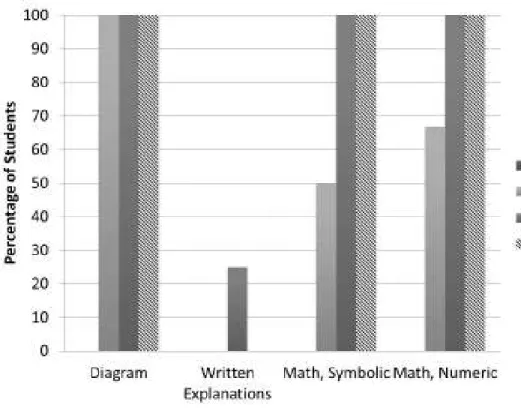
Similarly, the representations used by the students should be identified and coded for data analysis. Table 5 shows the specific representations defined in this study for comparison purposes.
TABLE 5
Categories of Student-generated Representations
Representations Description and Examples
Diagram Drawing or alteration of a picture or a
schematic diagram
(e.g., drawing of a box of mass m pushed by a worker)
Written Explanations Sentences or phrases expressing an idea or physics concept; explanation of problem-solving approach
(e.g., “When a projectile reaches maximum height, the vertical component of its
velocity is momentarily zero.”)
Math, Symbolic Equation(s) or derivation of mathematical model
(e.g., “ΣFx= - Fg(x) – Fk(x) + Fa = 0”)
Math, Numerical Numerical expressions
(e.g., “227 + 58 = 285”)
2.2.4.a Data: Cognitive Interviews
There were two groups in this study: the scaffolding group and the comparison group. To provide “depth” to my analysis of the interviews, I used multiple sources of information. In this study, the sources of information are the problem solving solutions of the students from the two groups for 14 physics problems, the responses to the checklist of problem solving tasks, verbatim transcripts of the interviews, observations of the audio-video files, and student background information gathered from surveys (i.e., SIS, FCI, MPEX) and instructor’s class records.
To analyze the data, I began by transcribing the interviews. I used two types of descriptions, one is a narrative description and the other is a pictorial description to supplement the narrative descriptions and provide a quick and easy sense of the students’