1
1
0
0
C
C
O
O
M
M
M
M
U
U
N
N
I
I
T
T
Y
Y
S
S
E
E
R
R
V
V
I
I
C
C
E
E
S
S
S
S
T
T
R
R
A
A
T
T
E
E
G
G
Y
Y
OverviewThe Gulf communities lack access to a range of fundamental community facilities and welfare services. This is primarily due to the remote and scattered nature of the population, low population levels and the high costs involved in supplying community services.
A coordinated and equitable approach to the delivery of community services and infrastructure such as health care, housing, emergency services, law and order and sport and recreation is to be strived for in the Gulf region. These services should be provided on the basis of need. Service delivery should focus on key townships and the surrounding rural populations and outstations and seasonal tourist influxes.
The aims of this Strategy are to:
• coordinate the delivery of community services and facilities;
• meet community demand for a range and choice of housing in an equitable and affordable manner;
• provide equitable access to a full range of health services;
• provide equitable access to emergency services;
• reduce crime rates through prevention and improve law enforcement; and
• provide a range of sporting and recreational facilities and programs in a manner which meets community needs.
10.1 COMMUNITY SERVICE DELIVERY
10.1.1 Issues
In the Gulf, socio-economic indicators such as average income welfare dependency, education, qualifications and skills compare unfavourably with national figures.
Household structure, birth and death rates are also significantly above national averages. Refer to Table 10.1.1 below. There are a considerable number of agencies across all levels of Government involved in community service delivery throughout the region. Their respective roles and responsibilities are often not clear leading to inefficiencies and duplication of services in some circumstances. There are also considerable gaps in service delivery where there is no specific responsible agency. In addition, the services that are being provided are often not appropriate to the community needs. Service provision should be undertaken in consultation with the relevant communities.
There is a need to clarify the roles and responsibilities of service providers, in order to develop effective and efficient services to communities. In order to coordinate service delivery to Doomadgee the Aboriginal Community Council has called for a meeting of all service providers. If
successful, this approach could be trialed in other communities throughout the region. The level of strategic planning undertaken by social infrastructure providers varies. In general, emphasis is being placed on meeting immediate needs rather than planning for the medium to long term. In addition, social infrastructure delivery usually only receives minor consideration in
land use planning and development activities.
An emphasis needs to be placed on co-ordination and improving the cost-efficiency of delivering community infrastructure and services particularly as there is increasing competition for existing resources. However, in some cases communities with special characteristics, such as high levels of social dysfunction, will require particular attention and may require high priority responses. This may be the case where substance abuse, youth suicide, juvenile offending, child protection and domestic violence issues are prominent. Some communities have higher demands for community services than others. Government service delivery could be improved through the introduction of evaluation procedures to:
• establish minimum standards set for Government performance;
• coordinate of Government services to avoid duplication;
• fine tune existing services;
• investigate the need for more mobile service deliverers;
• provide programmes adjusted to local needs and circumstances;
• greater cooperation between existing services;
• extend Government functions; and
• increased community participation and involvement in service delivery
programs
Table 10.1.1: Socio-Economic Indicators
Socio-economic Indicator Gulf Qld
Life Expectancy – Male 56 74
Life Expectancy - Female 60 80
Weekly Individual Income - Percentage below $200 44.6 35.6
A key concern throughout the Gulf region relates to the level and operation of Government departments particularly in terms of a reduction or withdrawal of services. State and Commonwealth Government agencies generally have a low presence in the region. QGAP offices, which provide residents with access to and information on the full range of State Government services and programs, appear to be very successful.
There are currently QGAP offices located at Normanton, Croydon and Georgetown. The expansion of this service throughout the region could alleviate a number of the concerns relating to the lack of access to Government services.
There is a need for a QGAP facility in the western Gulf to service Burketown, Gregory and Doomadgee. This would enable residents to have simpler and faster access to a range of Government services. It could be developed as a "joint operation"
between Burke Shire Council and
10.1.2 Strategy
Desired Strategic Outcomes
• Coordinated, efficient and effective delivery of a full range of community service, infrastructure and social welfare programs.
• Long term planning programs for community services by all service providers.
• Improved Government representation, service delivery and administrative arrangements in the Gulf.
• Develop medium and long term plans for the delivery of Government services based on the needs of the community.
• Clarify the roles and responsibilities of the community services providers and improve levels of cooperation and coordination between Government service providers in the region.
• Involve the community in the development and delivery of
community services and social welfare.
• Improve access to Government information and services within the region.
• Develop mechanisms to regularly review, evaluate and report on Government service delivery.
10.1.3 Priority Actions
• Host forums in each of the Gulf communities of all the Government community services and social welfare providers in order to coordinate service delivery, identify gaps and avoid duplication.
• Review and develop land use planning mechanisms for local Governments and Aboriginal Community Councils to incorporate provisions for the delivery of community services and related infrastructure.
• Establish a QGAP office to service the western Gulf communities of Gregory, Doomadgee and Burketown.
10.2 HEALTH
10.2.1 Issues
The Gulf region has access to a wide range of health services, including the RFDS, visiting specialists, mobile allied health teams, as well as local health staff and facilities. The number of specialist visits to a range of centres has increased in recent years via the RFDS. In addition a mobile allied health team drives to the eastern parts of the region and a mobile women’s clinic visits a number of communities. More doctors are now employed in the Aboriginal communities, new hospitals have and are being built, and more environmental and primary health funding is also being allocated.
The nature of the size of the region and the scattered population means that health services are not equivalent to those in the cities and regional centres. There are considerable variations in the delivery of health services in the region. The range of services provided to any particular area is largely dependent on the size of the community. A high priority needs to be placed on further improving these services and increasing the number of resident doctors in the region.
Doctors and Nursing Staff
There is a critical shortage of doctors and trained medical staff throughout the region, with some existing medical positions remaining vacant for extended periods. The larger communities of Normanton, Doomadgee and Mornington Island have hospitals with at least one full time doctor, 6-10 registered nurses and a number of nurses’ aides. There are positions for two doctors in Doomadgee and Mornington Island but at present only Doomadgee has doctors in residence. Kowanyama has a health clinic, aides and a full time doctor who has recently been provided by the RFDS on a monthly rotational basis. All these communities have access to 24 hour medical care. Residents in the centres of Karumba, Georgetown, Croydon and Burketown have access to health care seven days a week through health clinics. Forsayth now only has access to a five-day
clinic after recently being downgraded from a clinic that operated seven days a week. Mt Surprise, Einasleigh and Gregory have facilities in which clinics can be held, some of which operate only once a month when the RFDS visits. It is primarily the smaller communities that have comparatively low levels of access to medical care.
There is no health clinic at Raft Point on Bentinck Island, despite the local population being a similar size as Gregory. In the longer term, as outstations develop along the mainland coast from Doomadgee there will be a need to provide a health clinic at Old Doomadgee to service the coastal population.
Delivery of health services in remote regions may be under threat from a National policy to limit the number of doctors arriving from overseas. Few Australian doctors are willing to practice in remote communities, and for many years overseas doctors have filled doctor placements in the Gulf.
Without local doctors, the daily burden of community health care falls entirely on nurses. In some locations, one registered nurse can be responsible for 24-hour care, seven days a week. It is increasingly difficult to obtain nursing staff and even more difficult to keep them for any length of time in remote areas. It is also proving very difficult to release nurses for in-service training due to staff shortages.
Tourists are placing an increasing burden on health services in the Gulf region, particularly in towns like Karumba where the population can double in the peak season. As an example, over 80,000 tourists visited Karumba in 1998 (Northage and Associates, 1998).
The Normanton hospital operates at capacity in the tourist season with the workload trebling between April and
September. There are insufficient beds and staff to meet the health needs of the older tourists, who represent around half the tourist numbers. As there are no chemists
in the Gulf, prescriptions need to be filled by the hospitals and health clinics.
There is a need for a second doctor and increased hospital staff to serve Normanton and Karumba. Increased medical staff are also required during the tourist season. This additional support could be provided on a rotational basis during the peak season.
There is also a longer-term need for a doctor in the eastern Gulf to service, Georgetown, Croydon, Forsayth, Einasleigh and Mt Surprise. However, there is
concern that a doctor located in the region will result in the loss of monthly RFDS clinics. With high turnover rates for doctors, there is concern the eastern Gulf
community will be more often without a doctor in residence than is presently provided by the RFDS service.
Specialists and Allied Health Services There is a lack of consistency in the visitation levels of specialists and allied health services throughout the Gulf region. The allied health mobile team from Atherton is a significant improvement in health service delivery.
Few communities are able to obtain visits from psychiatrists or psychologists;
however, social workers travel to a number of the communities. With improvements in technology, teleconference link-ups are now being trialed in some parts of the state. This allows a specialist consultation without the need for travel.
There is an acute shortage of dentists servicing the region. The North West dental district based at Mt Isa has recently been expanded to include Normanton, which used to be serviced from Cairns. There are only 3 dentists to cover the North West region of Queensland.
Difficulty in obtaining specialist referrals is an issue in the locations without regular access to doctors. The cost for travel and accommodation to attend specialist appointments is a considerable health inequity. Current funding support does not fully cover travel costs and only partly covers accommodation expenses. There is a need to review the subsidies available for patient travel.
Primary Health Care
The level of primary health care in the region is still low, although the Aboriginal and Torres Strait Islander Health Services in Normanton, Mornington Island and Doomadgee provide a range of functions from their health clinics. Home visiting is not widespread and tends to deal with immunisation and monitoring of existing health problems. There is an urgent need for Indigenous environmental health workers. The National policy is one Aboriginal health worker for every 150 Indigenous people and this has not yet been achieved in the Gulf region.
Croydon Shire Council recently became the first non-Indigenous Local Government to employ an Indigenous health officer. There are some difficulties in the training and retention of Aboriginal health workers, as trainees often leave town once qualified. This means that resources are constantly being spent on training but the centre ends up with few fulltime trained workers. Primary health efforts focusing on children are urgently required. Young children suffer respiratory, eye and ear infections and well as malnutrition in addition to other ailments.
Aged Care
The number of aged units available in the Gulf region has increased over the last decade. However, more self-contained units are required. The aged care facilities in the region are as follows:
• Normanton has an Aged Care Hostel with 15 beds, run by Bynoe Aboriginal Corporation, but stage 2 of the nursing home has not been funded. Normanton also has 8 self-contained units for the aged.
• Karumba has 13 self-contained units.
• Croydon has 4 self-contained units and has purchased land alongside the hospital for an aged care facility.
• Doomadgee has an aged care hostel with 10 units, providing three meals a day and other support services.
• Mornington Island currently has an 18 bed aged care hostel and a new 20 bed centre is currently being constructed.
• Kowanyama has a 16 bed aged care centre. Three meals a day are
provided and meals to needy people in the community are also distributed from this centre.
• There are no aged care facilities in the Burke and Etheridge Shires.
Home and Community Care (HACC) funding supports some of the programs run by the Aboriginal aged care hostels. Croydon is reported to have a very good HACC service in contrast to its absence in some of the smaller communities elsewhere in the region.
There are no nursing homes in the Gulf, requiring residents to leave the region to access nursing homes facilities in Mt Isa or elsewhere. To avoid the need for the elderly to leave communities, some hospitals allocate beds for nursing home patients for between 4 to 6 days at a time. There is a longer-term need for nursing homes to be established in conjunction with existing hospitals. In this regard, Croydon Shire Council has already purchased land in proximity to the hospital for use as an aged care facility.
Support for People with Disabilities and their Families
There are no disabled care services provided in the region. There is generally a shortage of funding for the disabled as well as a lack of information about how to obtain resources and access support systems. There needs to be allowance for the provision of disability services to remote communities. The Department of Families, Youth and Community Care is piloting a local area co-ordination model of service which will provide locally based services to people with disabilities and assist
communities with information and training to provide appropriate services. This model will be trialed in 1999-2000 in five locations throughout Queensland with an expectation that it will be extended to other communities over time.
Substance Abuse
Indigenous people in the region suffer high mortality rates with life expectancies 15 to 20 years less than that found in the mainstream. A critical factor to this poor health status is alcohol and substance abuse, which is especially implicated with health problems, suicide and injuries. There are few existing programs in the Gulf and these tend to concentrate on
rehabilitation and treatment rather than causes.
The Management of Public Intoxication Program (MPIP) is ongoing in Mornington Island and Doomadgee. The success of this pilot project is still be evaluated and ongoing recurrent funding is yet to be decided.
The timing of income payments should be coordinated with the opening hours of stores to encourage increased household expenditure on food and other household items. This is especially important for family allowance payments that are generally the first money to come into the household each week.
The group most implicated with alcohol and injuries are men in the age group of 16 to 44. There is a need to develop specific interventions that provide support to this group, such as men’s groups and other activities.
There is a need to promote alternatives to substance abuse, including culture, religion, sports, recreation, and income generating activities.
Environmental Health
Environmental health is another area of considerable need. This applies in particular to housing, water supply, sanitation and waste disposal. The Infrastructure Strategy addresses water supply, sanitation issues and waste disposal. The housing section of this strategy addresses community-housing needs.
There are also potential significant
environmental health problems associated with cyclones, storm surges and flooding which are regular events throughout the Gulf region. The Emergency Services section of this strategy addresses the need for counter disaster strategies. In addition, the Communications section of the
Infrastructure Strategy addresses the need for improved communications within and beyond to the region for health, emergency and other essential purposes. A long-term health issue that has not been addressed to date is the number of domestic dogs. In some instances the population of dogs is reported to outnumber residents. Many dogs are diseased and represent a particular health hazard to children. A full time dog ranger now services the Karumba and Normanton areas.
Dust from unsealed residential roads in the towns is also a problem in terms of eye and throat illnesses. There is currently a strategy in place for the sealing of all local roads within the Gulf townships. This should remain a high priority on community health grounds until all residential roads are sealed.
“Model of Care” approach to Health Care Queensland Health’s Northern Zonal Management Unit, through the appointment of a clinical coordinator, will be progressing a ‘model of care’ approach to service provision in Indigenous communities, commencing with Cape York Peninsula. This would be achieved in partnership with Indigenous communities, trialed and if appropriate, extended to the Indigenous communities within the GRDP region. The key aspects of this model of care include:
• implementation of a primary health model of care based on contemporary best practice;
• enhancement of the role of Indigenous health workers in program
management and outreach services;
• improved and enhanced clinical coordination;
• increased GP services;
• development of a remote workforce strategy;
• implementation of a health information system;
• increasing of local employment in mainstream health jobs;
• development of a community led alcohol and drug strategy; and
• active participation with other agencies to address upstream determinants of health problems.
Coordination of Health Services While Queensland Health is the lead agency for health services, there are also a number of other agencies involved in the delivery of health care. For example, Education Queensland employs allied health specialist to deal with disabled children in schools. In addition the Department of Families Youth & Community Care are responsible for community substance abuse schemes. Local Governments and Aboriginal Community Councils are responsible for a number of community controlled health initiatives and health related issues including control of domestic pets, water supplies, waste disposal and the sealing of residential streets.
There is evidence that most of these health programs operate in isolation and there is little coordination between agencies. As a result there has been duplication of services in some areas and a total lack of service in others. In two instances, regional Education Queensland health workers have been flown into remote communities to deal with disabled children only to discover Queensland Health had flown out the children in question for treatment. Similarly, regional staff are aware of children who have slipped through all health services undetected and have not been treated. At the local level there is good will and significant efforts between staff to
coordinate service delivery, however, there are no formal arrangements or agreements in place. There is a need to ensure health service delivery is coordinated. Joint ventures should also be encouraged. This will foster acceptance that health issues are a whole of community problem and not just the responsibility of a single Government agency.
10.2.2 Strategy
Desired Strategic Outcomes
• Coordinated and cost efficient delivery of health programs and services.
• Improved and equitable community and tourist access to health care services, specialists, and allied health services.
• Aged care facilities throughout the region.
• Programs of support for people with disabilities and their families.
• Primary health care programs.
• Substance abuse programs.
• Environmental health strategies in each of the Gulf communities.
• Establish mechanisms and arrangements to improve the co-ordinated delivery of health care services and avoid duplication of effort.
• Ensure the delivery of health services is based on accurate assessments of community need including existing and potential tourist demands.
• Increase the number of doctors and medical staff in established townships and ensure all areas of the Gulf have access to medical services within their district.
• Improve access to a range of specialist and allied health services by:
− Increasing specialist visits, and mobile health team activity.
− Teleconference consultations between patients and specialists.
• Review, Government travel subsidies for referrals to specials medical services outside the region to ensure their adequacy in terms of actual costs.
• Develop and implement a strategy for the delivery of aged care services and infrastructure in each of the Gulf communities.
• Develop and implement programs of support for people with disabilities and their families.
• Develop and implement a strategy for the delivery of primary health services.
• Increase the numbers of Indigenous Health workers consistent with National policy.
• Develop and implement substance abuse programs in co-operation with communities and with emphasis on Aboriginal communities and centres with a large Indigenous population.
• Ensure substance abuse programs are adequately resourced and that such programs have facilities, such as rehabilitation centres, and are supported by educational initiatives.
• Coordinate family allowance payments with store opening hours to encourage increased household expenditure on food and other household items.
• Promote other alternatives to compete with substance abuse, including men’s groups, culture, religion, sports, recreation and income generating activities.
• Develop and implement strategies and programs to improve environmental health in communities.
10.2.3 Priority Actions
• Provide additional doctors in Normanton/Karumba and ensure all existing vacancies are filled.
• Raise awareness of the implications of National policies to limit the number of overseas doctors with Federal
Government in terms of the difficulties in recruiting and retaining medical personnel in remote locations such as the Gulf.
• Undertake a detailed assessment of disabled care requirements across the region and develop and implement strategies to meet existing and future demand.
• Undertake an education program to ensure residents are able to access assistance and advice in relation to disabled care services.
• Undertake an assessment of the aged care needs of each of the Gulf
communities and develop strategies to coordinate delivery of aged care services and infrastructure including Home and Community Care schemes, increased provision of aged care accommodation, nursing home facilities and existing health services.
• Promote the establishment of
Indigenous health worker training and employment programs to meet the National standard of one worker for 150 Aboriginal persons in the
population. This should be progressed in consultation between Queensland Health, Local Governments and Aboriginal Community Councils.
• Develop local laws for Local Governments and Aboriginal Community Councils to control dog populations in each of the Gulf towns. This should include a community health awareness strategy in relation to dogs.
• Ensure the current strategy to seal all residential streets in Gulf towns is progressed to its completion.
• Promote the potential health benefits resulting from strategies to improve community water supplies, waste disposal, counter disaster plans, emergency services and
communications.
• Investigate provision of small health clinics at Raft Point on Bentinck Island, and in the longer term at Old
Doomadgee, and progress their establishment if justified.
• Promote the establishment of men’s groups in Indigenous communities to target men in the age group of 16 to 44.
10.3 HOUSING
10.3.1 Issues
Private Housing
Housing construction costs are high in comparison to most other regions in the State. Freight for building materials and skilled labour costs add considerably to the cost of housing. To contain costs the size and finish of houses are frequently reduced. Banks and building societies are reluctant to provide finance for building in remote areas. This is because the cost of
construction can often exceed resale value. Other financing alternatives need to be found. Special Housing Loans, insurance arrangements or concessions for housing in remote areas could be considered.
The Department of Housing undertakes policy and analysis work on housing needs and affordable housing issues. The Department’s Affordable Housing Unit is exploring many of the actions suggested in these sections. The Department would be the most appropriate agency to provide leadership across government in the development of policies and programs relevant to housing, including impacts on the private housing market.
Most private housing in the Gulf is occupied on a permanent basis. Rental
accommodation in the region is extremely scarce, restricting accommodation options in the region – particularly for the
disadvantaged sections of the community who are unable to “compete” with other more “desirable” rental applicants. Public service accommodation is in short supply in the region. Some Government departments have invested little in housing for staff, creating an acute shortage of adequate or appropriate accommodation. Share accommodation and communal quarters are often the only form of housing provided, limiting opportunities for families to live and work in the Gulf region.
Due to the lack of rental accommodation in the Gulf towns, it is important that the few private rental properties that become available are not occupied by Government
employees inadequately housed by their respective departments. In this regard, Government departments need to increase investment in housing in the Gulf region. Government employees should be provided with sufficient quality and choice of housing to compensate for the remote location. There is also a lack of accommodation for employees other than Government agencies. This is due in part to the high building costs, but is also a result off the Fringe Benefits Tax. The tax essentially creates a disincentive for employers to invest in worker’s accommodation. At present, there is a critical shortage of housing in Karumba, as a result of the construction workforce for the Century Mine pipeline and part facilities. While Century Mine employees have been provided with company housing, there are a number of subcontractors who require accommodation in the town. This has pushed local private rental fees out of the range of most tenants. Provision of employee housing by
employers may require action by other State agencies and by the private sector (such as mining and infrastructure development companies) whose activities increase demand for housing in the region. Social Housing
Government has the major responsibility for assisting low income and disadvantaged households through housing assistance and public housing programmes.
The Department of Housing is responsible for the delivery of a range of housing assistance to the Queensland public including:
• Public rental housing;
• Community housing;
• Aboriginal and Torres Strait Islander rental housing program (ATSIHP);
• Capital works grants to DOGIT communities for housing;
• Bond loans;
• Housing loans; and
• Advice and advocacy for tenants in the private rental market.
In addition, a housing project, providing accommodation for up to 30 Indigenous students from communities attending TAFE at Normanton, was completed under the Department’s Housing Infrastructure program.
The Aboriginal and Torres Strait Islander Housing Program (ATSIHP) only serves Indigenous people.
The ATSIHP rental program is not an income-based program, but instead focuses on increasing access to appropriate
housing for Indigenous people. This has significant benefits in terms of community health and well being.
The ATSIHP provides capital funds for construction and major upgrades to Doomadgee, Kowanyama and Mornington Island communities, and has a five-year capital works plan to address housing needs on all DOGIT communities. In addition, ATSIC administers several Indigenous housing programs. These are also only open to Indigenous Australians, and include:
• Community Housing and Infrastructure Program (CHIP);
• Health Infrastructure Priority Project (HIPP);
• Home Ownership Assistance. There is also specialist accommodation provided by Aboriginal Hostels, Aged Care Programs, the Supported Accommodation Assistance Program and Crisis
Accommodation Program.
Most of these existing programs are targeted at Indigenous people in order to address the serious problems of
overcrowding and poor environment living conditions. Despite considerable
investment, there is still a critical need for improved housing.
There are also limited public housing options for non-Indigenous people to access.
Few houses have been constructed in the Gulf region for mainstream public rental. Recent and planned construction of public housing in the region includes:
• Normanton: 2 x 3br detached houses (planned construction of 2 x 2br duplex in 1999 - 2000 draft Capital Works Program);
• Burketown: 1 x 2br and 1 x 3br dual occupancy dwellings (separate
dwellings on one site) and constructing 2 x 3br detached houses and 3 x 1br youth units in this financial year;
• Karumba: 5 x senior’s units (planned construction of 2 x 2br dual occupancy dwellings in 1999 - 2000 draft Capital Works Program);
• Georgetown: 1 x 3br detached house and 2 x 2br duplex;
• Croydon: constructing 1 x 3br detached house and 2 x 2br dual occupancy dwellings in this financial year (planned construction of 1 x 3br detached house in 2001 - 2002 draft Capital Works Program).
It should be noted that this public housing is available for all sections of the community including Indigenous people.
The Department of Housing is aware that the disproportionately small amount of public housing accommodation compared to ATSIHP, and other housing programs targeting Indigenous people has resulted in a feeling of “reverse discrimination” for some sections of the community. The Department of Housing has “fast-tracked” some construction projects in the region (e.g., public housing in Burketown), in recognition of the need for more public housing accommodation. However, more housing is required.
It is suspected many people in the Gulf are aware of the limited available housing stock, or unaware of public housing and assistance programmes, and have not registered for inclusion on the wait list. An accurate assessment of the public housing shortage needs to be undertaken.
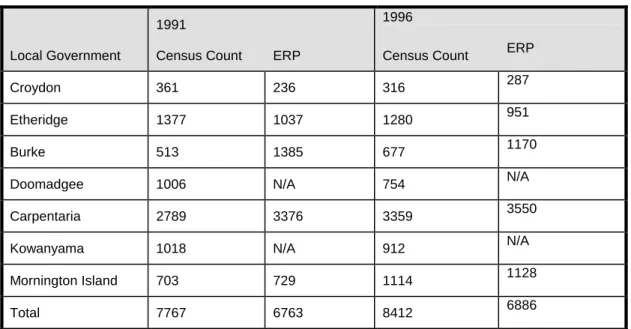
However, ABS data should be used with caution, as there is evidence of widespread non-participation in the Census particularly in some Gulf Aboriginal communities. (The Community Planning and Development Strategy addresses this matter further.)
Information in relation to mainstream public housing schemes should be more widely distributed. Criteria should include a weighting system for locations where there is little or no private rental accommodation, distance from nearest town with available accommodation, and the income of the local population.
The Department of Housing does not currently campaign for people to list for public housing or promote its services such as bond loans or public housing due to the limited availability of housing, both public housing and private.
Anecdotal evidence suggests there is demand for public housing, although this is difficult to quantify. The Department’s current need indicators for public housing include wait list information, although other data such as Department of Social Security data are also being used to determine broader housing need.
There are a number of targeted housing programs in the Gulf region, which are not centrally coordinated by one body. These programs have their own target groups, funds and management arrangements. Attempts have been made to better coordinate public housing with other agencies although there have been difficulties due to differing roles and priorities of housing providers.
The Department of Housing has signed a bilateral agreement with the Torres Strait Regional Authority for the provision of housing and infrastructure services to the Torres Strait. Other parties to the agreement are the Department of
Aboriginal and Torres Strait Islander Policy and Development, and the Commonwealth Department of Family and Community Care. The Department of Housing is also negotiating a similar housing and
infrastructure bilateral agreement for the balance of the state with ATSIC. These agreements require notional pooling of all State and commonwealth housing and infrastructure funds targeted to Indigenous people, in both the public and community housing sectors, and joint planning to deliver improved housing outcome to Indigenous people.
Social Housing Maintenance Social housing in the Gulf often has problems associated with maintenance, particularly in Aboriginal communities. In many instances a considerable proportion of the public housing stock is uninhabitable. When a dwelling is no longer habitable, tenants move in with family, which exacerbates already high levels of
overcrowding. These conditions are often coupled with inappropriately designed or poorly constructed housing that lacks regular maintenance.
Community Councils do not receive recurrent funding for housing maintenance and must rely on rent collection to pay for all maintenance and management costs. Problems with rent collection are common and rent arrears are substantial. Evictions are difficult to enforce due to family and kinship obligations. Councils will often elect to not do maintenance unless rent is paid, which exacerbates maintenance problems and significantly shortens the life of housing.
It is well accepted in the community-housing sector that recurrent funding is essential for special “crisis” and “transitional” housing programs. The ATSIC supported housing cooperatives in non-Indigenous towns, such as Moungibi in Burketown, receive recurrent funding assistance. In Community Councils, housing management must compete for resources with other pressing Council activities. Repairs, maintenance and tenant relations are often neglected.
Lack of skills, resources and knowledge has contributed to the critical housing situation in many communities. This applies in particular to:
• tenancy management policies and procedures for to improve rent collection;
• equitable allocation policy;
• improved information systems for recording and managing tenancy and property information;
• routine asset management procedures; and
The ATSIH Program (Program Development Unit) is implementing a
Community Housing Management Strategy. The strategy aims, over five years (1999-2004), to assist Aboriginal and Torres Strait Islander Community Councils to develop, establish and implement long-term tenancy and asset management capacity within their communities in order to increase the viability of housing programs.
The ATSIC Home Living Skills Assistance (Homemaker) Program provides funding training in home making skills, education (health), minor repairs and household budgeting. Community housing
organisations can access funding from this program and undertake training as needed. Kowanyama Community Council is in a position where its housing stock in 85 leases is held in private lease
arrangements and the Council is unable to actively repair or maintain the housing stock. The housing in this community is in considerable disrepair and a mechanism to allow the Community Council to intervene needs to be developed. If this can be achieved then the Council can re-develop in the existing town area. If not, then new areas of the town that currently have no infrastructure or services will need to be developed, at considerable cost. Social Housing Design
The design of Department of Housing’s mainstream and targeted public rental stock has significantly improved as a result of consultation with communities and tenants. There is however room for considerable improvement with the design of Indigenous housing.
The critical issue in Indigenous housing design is accommodating the fluctuation in household occupancy levels due to high levels of inter- and intra- community mobility. This applies in particular to the design of toilets and wet areas, and in the provision of ample verandah space to accommodate visitors. It also requires higher standards of detailing for items that are subject to extraordinary wear and tear. There is no model or prototype “Aboriginal” house, and individual housing designs should proceed on a case-by-case basis.
The Department of Housing has developed Minimum Construction Standards, which should be adhered to in the construction of all housing funded by the department. The department also provides Councils with a range of designs to choose from, and there is always the option of engaging architects. Design should accommodate the particular needs of the proposed residents through a design consultation process. The common standard enclosed concrete block style housing is often not appropriate to Aboriginal communities and lifestyles. Until relatively recently, Aboriginal people have been given little choice in housing design and standards. Today, Aboriginal communities are given more choice during design but this has come at a price which has resulted in less housing units being constructed for the same allocation. Housing design has also in some instance focussed too much on the architectural form, rather than more pragmatic and ergonomic factors.
An architect design tropical style of housing has recently been constructed in
Kowanyama that arose from a community consultation program. However, these homes were not trialed before a number were built, and the community is not satisfied with the new designs. The construction of these houses should have been accompanied with a post-occupancy evaluation.
The challenge for house design is to balance community preferences with reasonable budget limitations. The benchmark for cost comparison should be the number of people accommodated in the house, rather than unit costs per houses. It is not appropriate to compare the costs between a two and four bedroom house. A broader range of types of housing is required - housing for singles, couples, disabled people, large families, and older people.
The ATSIHP “Appropriate Housing - Vision 2000” project is nearing completion and has gathered a lot of data from councils and residents to inform the development of appropriate housing on Indigenous communities funded by the Department.
Appropriate design for climate is being progressed by the advent of an energy efficient housing program as well as the installation of evaporative air-conditioning in public housing in the western areas of the state. This evaporative cooling area incorporates Croydon and Georgetown (Government is reviewing this policy on advice that evaporative cooling units are inappropriate).
Research has shown that neighbourhood overcrowding is perhaps as equally health determinant as housing overcrowding. Housing should be sited to provide more space between neighbours and to accommodate different social groupings. The Tropical Public Health Unit’s (TPHU) team of environmental health officers should be consulted in terms of a
“coordinated approach to public housing”. Past input from the TPHU into housing designs proposed by the Department of Housing has seen numerous improvements incorporated into these designs and their construction.
Crisis Housing
The Community Services Strategy identifies serious issues in relation to the lack of an accommodation safety net. There is only limited crisis accommodation available in the Gulf, which includes a women’s safe house on Mornington Island and a new safe house in Doomadgee that is currently under construction.
There is also a need to transitional housing for homeless or transient people. Families also need short term housing relief during housing refurbishment programs.
Given the high level of domestic violence and abuse in some communities, there is a need for additional funding for crisis
10.3.2 Strategy
Desired Strategic Outcomes
• An affordable range of private housing stock in each of the Gulf townships.
• Banking and financial institution confidence in the housing construction industry in the region.
• Adequate and appropriate housing for employees.
• Coordination of the housing agencies, cooperatives and stakeholder groups in the delivery of public housing.
• Increased access to a range of social housing options based on an accurate assessment of demand.
• Improved maintenance of public housing stock.
• Crisis housing in each of the Gulf communities.
• Develop and implement mechanisms to improve housing affordability throughout the region.
• Explore options to enhance support from financial institutions to improve access to the means with which private housing can be developed in the Gulf region.
• Develop and implement mechanism to increase the private rental housing stock to meet demand in each of the Gulf communities.
• Ensure employee housing is appropriate and adequate.
• Initiate a holistic and coordinated approach to the provision of social housing with participation by all Government agencies and non-Government stakeholders.
• Develop and implement mechanisms to provide social housing to meet community need.
• Extend recurrent funding, resources and training to assist with housing management.
• Homemaker training programs should be made available to tenants who are experiencing difficulties with managing a rental house.
• Ensure a high quality of housing construction is maintained through improved housing inspection.
• Ensure that residents are consulted during housing design. Design should also address the fluctuations in household occupancy levels, high levels of wear and tear and still stay within reasonable budget limitations. The success of new designs should be measured through post-occupancy evaluations.
• Housing should be sited to provide more space between neighbours and to accommodate different
neighbourhood social grouping.
• Explore options to ensure Kowanyama Community Council has appropriate jurisdiction over housing maintenance in the community.
• Review the design of public housing, within reasonable costs, in terms of culture, climate and lifestyles and ensure construction of prototypes with any new or innovative designs.
• Allocate funding to provide crisis accommodation in each town.
10.3.3 Priority Actions
• Undertake an assessment of housing affordability in the region and in each of the Gulf towns, with a priority being given to Karumba.
• Develop a housing affordability
strategy for the Gulf region addressing:
− lack of support from financial institutions; and
− the impact of a lack of employee housing on the private rental market.
• Provide crisis housing in each of the Gulf communities.
• Undertake a thorough assessment of the shortage of mainstream public housing in the Gulf townships based on an accurate assessment of need.
• Facilitate the proposed Bilateral Indigenous Housing Agreement currently under development.
• Facilitate the ongoing ATSIHP
“appropriate housing - Vision 2000”
project. Explore the feasibility of extending recurrent finding to Indigenous Community Councils to resource housing maintenance.
• Promote community access to existing programs which fund homemaker training in Indigenous communities.
• Instigate a review of housing inspection procedures during construction of public housing.
• Institutionalise a process whereby tenants are consulted during design, including post occupancy evaluations.
• Institutionalise a process whereby new subdivisions provide adequate space and separation between adjacent houses, especially in Indigenous communities.
• Facilitate the ongoing efforts of Kowanyama Community Council to obtain jurisdiction over the private leases in the community.
10.4 EMERGENCY
SERVICES
10.4.1 Issues
The Gulf communities are subject to a number of potentially catastrophic threats including wild fire, cyclones, floods and storm surges. The settlement pattern makes it difficult to develop a regional scale and coordinated strategy to deal with disasters or to provide an adequate level of emergency services. One scheme that could benefit the entire region is the facility for early cyclone warnings in the Gulf. This is the responsibility of the bureau of meteorology.
As mentioned in the Health section of this strategy some of the larger Gulf towns have hospitals and access to medical services. Some have daily RFDS health clinic. For those clinics that do not operate daily it is essential they be provided with RFDS emergency kits.
The remaining towns and the entire rural population are dependent on the RFDS for medical emergencies. Therefore, individual airstrips need to be maintained at a
standard suitable for RFDS aircraft. This includes appropriate lighting for
emergencies through the night; however, the new RFDS aircraft are not able to land on shorter airstrips. The minimum required strip length is 900m. The RFDS aircraft have been modified with heavy-duty tyres and strengthened undercarriages to cope with rougher conditions. The Integrated Transport Strategy addresses this matter. In circumstances where the RFDS cannot land, particularly where the airstrip is not suitable or where the patient cannot be transported to an airstrip, medical evacuations need to be performed by helicopter. (In order to meet the costs of such an emergency, Burke Shire has established an Emergency Response Helicopter Fund)
The Queensland Government Helicopter Rescue Service (Queensland Rescue) provides a range of aeromedical and air rescue services to Queensland
communities. Queensland Rescue’s 3 twin-engine multi-role Bell 412 helicopters and
one Squirrel helicopter play an essential role in counter disaster operations in Queensland. Queensland Rescue Air Units are strategically based in Brisbane,
Townsville and Cairns. The helicopters are capable of deploying to anywhere in the State to undertake such tasks as the resupply of townships and properties, transport of medical teams and patients, evacuations and inspections of disaster affected areas.
It should be noted that, the Queensland Ambulance Service is able to charter aircraft (either fixed wing or rotary wing) for the transport of patients or to transport QAS/medical staff to the patient.
It is understood there is a strong lobby for the establishment of a helicopter base at Mt Isa. This would significantly reduce the response time to emergencies in the western part of the region and in the Gulf waters.
The Department of Emergency Services (DES) advises of a number of proposals to establish an emergency helicopter service in North-West Queensland. To date, DES has not received a formal proposal for the establishment of an emergency helicopter service in Mt Isa.
The newly established interdepartmental Government Aviation Committee will consider all new proposals forwarded to Government for the establishment of aeromedical/air rescue helicopter services on a whole-of-Government basis.
With the number of people fishing in the Gulf, both commercially and for recreation, a local form of air rescue will increasingly become a necessity. Burketown and Karumba have volunteer marine rescue services and Mornington Island has an SES boat as well as two additional boats fitted with HF Radios. Queensland Transport has established a marine operations base at Karumba that enhances marine safety in the Gulf of Carpentaria. However, there is no dedicated search and rescue aircraft in the area, the nearest being in Cairns.
Only Normanton, Karumba and Mornington Island have permanent ambulance officers. Burketown has a part time ambulance officer, while the remaining towns and communities must rely on arrangements with Queensland Health for health staff, volunteers or police to drive ambulances. A number of ambulances are not 4WD and are limited in the area they can service, particularly during the wet season when unsealed road conditions are poor. 4WD ambulance vehicles are based in
Mornington Island, Karumba, Normanton, Burketown and Doomadgee.
Volunteers run a considerable number of emergency services and organisations, in the region, especially in the smaller towns where there is a far greater reliance on informal services. Normanton has a fully trained road accident rescue group in the SES with appropriate vehicle and
equipment. However, in other areas equipment is lacking or is not maintained. The Doomadgee SES vehicle is no longer operational. These groups rely heavily on the Police and Local government support. Gulf Local Governments and Aboriginal Community Councils each have counter disaster plans in the event of catastrophe. These plans have been coordinated with the SES, RFDS, Bureau of Meteorology and the Australian Defence Force. There is a need for coordination between local Governments and Aboriginal Community Councils in terms of counter disaster strategies. For example the out station at Old Doomadgee may be serviced by facilities at Mornington Island when access to Doomadgee is cut off.
Carpentaria and Etheridge Councils have been granted Interim Disaster Mitigation Plan status resulting in a lower trigger point for Natural Disaster Relief Arrangement funding of $50 000 and they have given an undertaking to carryout a full disaster risk assessment by 31 March 2002
Pompuraaw Aboriginal Community Council was granted funding under the Natural Disaster Risk management Studies program to carryout a full disaster risk assessment however they subsequently withdrew the application due to lack of Council supporting funds.
Funding and support assistance at State level to carryout full disaster risk
assessments in all Aboriginal Community Council areas should be investigated. The extent to which any regional scale and coordinated emergency service strategy can be affected is also limited by the quality and reliability of existing communication systems. If, in the time of need,
communication cannot be made, then even the best counter disaster plans and
emergency services will fail to respond. There is a need for improved HF radio services for use during emergencies. This is particularly important during the
intervening time between the emergency and when assistance arrives. Some properties and outstations have HF radio, as do some Local Governments (Croydon Shire has provided a UHF repeater station which allows coverage for the whole shire and some areas beyond), however, there is a need to implement a comprehensive network of radio links for emergency services. The Infrastructure Strategy addresses communication in more detail. It is important to note that in contrast to other emergency service networks, disaster management communication networks are not structured around communication centres but are organised around local authorities. This means that network architecture is different and that linking paths suitable for other emergency services may not be appropriate.
Design of the structure and capabilities of disaster networks requires a clear understanding of the operational requirements – the Department of Emergency Services stresses that specialist advice must be sought about disaster communication network design. There are considerable potential health hazards resulting from emergencies such as cyclones, storm surges and flooding. Mechanisms need to be in place to minimise health hazards in these eventualities.
Local Government and Aboriginal
Community Council Counter Disaster Plans should form the basis of emergency services strategies for the Gulf region. These plans should include the following features:
• Coordination between Local Governments and Aboriginal
Community Councils for emergencies
• Coordination with key Government services including SES, RFDS, local hospitals and ambulance services
• Inclusion of volunteer services and organisations such as the army reserve, coast watch, SES and rural fire brigades in counter disaster plans
• A strategy for improved local volunteer services including the rural fire
brigades, SES and first aid offices. Appropriate training and equipment for all local volunteer services
• A network of public and private airstrips capable of accommodating RFDS flights day and night
• A strategy for improved
communications for emergency services throughout the region, including communities in remote locations.
• A strategy to deal with the resultant health hazards of cyclones, storm surges and flood events.
10.4.2 Strategy
Desired Strategic Outcomes
• Improved access to emergency services throughout the Gulf region.
• Coordinated, resourced and equipped delivery of emergency services.
• Improve levels of support and
resourcing for emergency services and their related volunteer organisations across all levels of Government to ensure such services are capable and reliable with adequate training, facilities and equipment.
• Improve access to local emergency support facilities including:
− early warning system for cyclones;
− HF Radio systems and satellite phones;
− RFDS emergency kits;
− emergency helicopter to be based in Mt Isa;
− mail planes to carry passengers for medical transfers;
− increased ambulance staff in the Gulf communities; and
− 4WD ambulances.
• Develop and implement Counter Disaster plans and programs at the regional level to ensure coordination of emergency service activity, training and use of facilities.
• Develop Karumba as the primary base for air-sea rescue operations with secondary facilities at Burketown and Mornington Island.
• Develop and implement a long-term strategy to provide a dedicated marine search and rescue aircraft in the Gulf and to manage air-sea rescue activities in the interim.
10.4.3 Priority Actions
• Undertake an audit of existing emergency services in the region and develop a strategy for the
improvements to training and
resources where services are found to be lacking.
• Provide 4WD ambulance vehicles where community access is via unsealed roads, and emergency boats in all communities for use in wet season.
• Provide RFDS kits to Health Clinics that do not operate seven days a week.
• Review and develop Counter disaster plans for the Gulf Local Governments and Aboriginal Community Councils to address:
− regional coordination of emergency services;
− inclusion of volunteer services;
− improved volunteer services;
− a network of public and private RFDS airstrips;
− communications during emergencies; and
− health hazards during emergencies.
• Consult with the Department of Emergency Services with regard to a review of disaster management networks across the region.
• Lobby for the location of an emergency helicopter in Mt Isa.
• Initiate training and employment schemes to increase ambulance staff in the Gulf communities.
• Lobby for an early warning system for cyclones in the Gulf.
10.5 LAW AND ORDER
10.5.1 Issues
Law and order is a major issue for a number of remote settlements in the Gulf region. Alcohol related crime is high and offences against persons or property are often very serious. Additionally, an emerging community safety issue is associated with the increasing number of tourists traversing the region and the influx of visitors for special events.
“Sly grog” dealing is a major problem in the “dry” Indigenous communities. In response, the Queensland Police Service and the Department of Tourism and Racing (Liquor Licensing Division) have established a Sly Grog Steering Committee, aimed at overseeing a crackdown on sly grogging activities in Indigenous communities. The Police Service continues to facilitate
projects in isolated communities addressing drug and alcohol issues and juvenile crime. The Liquor Licensing Division is also creating Indigenous Liquor Licensing Officer positions to be located at Cairns, Townsville, and Mt Isa.
In Aboriginal communities there are community police programs in place to assist the Queensland Police and these are primarily the responsibility of the respective Aboriginal Community Councils. The Regional Education and Training staff of the Queensland Police Service endeavour to provide training for Community Police, however the provision of this training is dependant on funding through the
Department of Aboriginal and Torres Strait Islander Policy and Development. The effectiveness of Community Police is substantially reduced by a lack of resources including vehicles, uniforms and equipment, and a turnover in Community Police
Officers.
An assessment is being made of the feasibility of transferring the responsibility of this service to the Police Service. The Queensland Aboriginal and Torres Strait Islander Police (QATSIP) project is being trialed in some aboriginal communities outside the Gulf, with an evaluation of the project to be made in mid 2001. The success of this program may see services extended to other communities, including those in the Gulf.
Some communities, such as Gregory, have no permanent police presence. The Queensland Police Service will continue to monitor crime trends across the region, including Gregory, as part of ongoing operational reviews.
Police staff introduced to the region are often young and inexperienced. Few have the preparation and skills to deal with a cross cultural and remote environment. The Queensland Police Service’s Cultural Advisory Unit and Police Service Academy are currently devising training programs to address Aboriginal and Torres Strait Islander cultures and protocols. This training, in conjunction with the required cultural awareness training, should enable police staff to be better prepared for dealing with life in remote and isolated
communities.
Members of the Police force are active in the Gulf community, running such community programmes as blue light discos, sporting events and the like. The Department of Justice and Attorney-General is currently running a program to train members of remote Aboriginal and Torres Strait Islander communities as Justices of the Peace (Magistrates Court) with the aim of establishing Magistrates Courts constituted by these local JP’s.
The objectives of the program are to increase the participation of Indigenous people in the administration of justice and to establish guidelines for the operation of courts convened by Aboriginal and Torres Strait Islander Justices of the Peace which are acceptable to all the stakeholders in the justice process.
The Local Justice Initiatives Program provides funding to form and resource community justice groups. This has proved to be a particularly effective initiative in Kowanyama where the Justice Group works closely with the State School to address truancy. The Justice Group bus is used by the school to collect students. Problem children are referred to the Group who then involve the parents. The group also has initiatives relating to domestic violence, child abuse and alcohol. There is an active women’s group in the community that has established a women’s shelter and a mother baby centre at Kowanyama. A ‘Kiddies Cop Program’ was initiated using local youth and children as part of
community policing.
The Department of Families, Youth and Community Care provide a 008 state wide Domestic Violence crisis phone line. This service provides assistance to women and children in remote areas in accessing information and practical and financial help in escaping domestic violence.
Kowanyama has introduced a “Best Practice” prevention process in order to reduce domestic violence.
The communities of Normanton and Croydon have formed consultative
committees from the community and police to discuss local law and order issues. In addition, there are formal and informal crime prevention programs being conducted in Croydon and Kowanyama. When people are sent away for
incarceration they are not provided with any means to return to the community when they have completed their sentences. Most watch houses in the region are only used for temporary incarceration. Many of the Aboriginal communities are keen to follow up periods of incarceration with
rehabilitation time spent at an outstation or homeland. In this regard, the individuals are kept away from trouble and are able to better integrate back into the community.
10.5.2 Strategy
Desired Strategic Outcomes
• Equitable access to law enforcement throughout the Gulf region.
• Introduction of crime prevention strategies.
• Improved police support.
• Improved police and community relations.
• Develop programs and strategies to meet existing and future law and order demands including those presented by tourists and visitors to the region.
• Support ongoing police and Liquor Licensing Division programs to discourage the sly grog trade.
• Establish agreed strategies and procedures between police, the Liquor Licensing Division and Aboriginal Community Councils to control substance abuse in communities.
• Investigate the option to employ community police within the
Queensland Police Service rather than through Community Councils.
• Provide continued support, resources and training for community justice groups.
• Increase use of diversion from custody programs, including the use of
appropriate outstations.
• Support training for police officers being transferred to the region to develop the skills to manage and understand different cultures and the impacts associated with remote locations.
• Investigate and develop programs to improve police/community relations, and crime prevention strategies. This includes improved consultation with the Police Service in the lead up to special events, in order to better address crime prevention.
10.5.3 Priority Actions
• Initiate discussions with the
Queensland Police Service to address community expectations regarding Policing in Gregory.
• Lobby for the extension of community policing and crime prevention
programs.
• Provide and resource Aboriginal community policing and community justice programmes.
10.6 SPORT AND RECREATION
10.6.1 Issues
The lack of sport and recreational opportunities in the Gulf is a major impediment to the quality of life in
communities. Considerable research has shown the link between good health, both physical and mental, and participation in sport. In a region such as the Gulf, with poor health indicators, there is a strong need for affirmative action in increasing the provision of sport and recreation
opportunities. Factors such as the provision of quality facilities, transport, access, costs and skill development need to be considered for this task.
Facilities
A Regional Sport and Recreation Plan has recently been completed. This plan includes:
• A review of existing sport and recreation facilities, services and programs, both local and regional;
• An assessment of current and future needs for regional scale sport and recreation facilities;
• The identification of appropriate locations for future regional sport and recreation facilities to best service the entire Gulf region;
• A prioritised action plan for the individual local councils and
communities and a prioritised regional action plan for GSD for sport and recreation facility development, service and provision;
• The development of strategies to address the issues of distance, cost and travel for sport and recreation participation;
• The development of a plan for ongoing regional management of sport and recreation that considers programming, resources and future planning; and
• The investigation of the concept of a regional sport and recreation budget and an appropriate management structure for its distribution.
Development of sporting facilities is primarily the responsibility of Local Governments and Aboriginal Community Councils. Provision of adequate and accessible facilities is difficult to achieve because of the scattered nature of the population and the isolation of townships. Duplication of large sporting facilities is generally beyond the resources of Local Government. Over the last few years, some Shires in the region have benefited from additional revenue from the Grants Commission process, due to weighting’s for relative disadvantage.
The larger Gulf communities generally have one or two tennis courts, an oval,
rodeo/race ground, and a swimming pool. None of the coastal communities have swimming enclosures or tidal swimming pools. The smaller communities have little in the way of facilities with possibly, a racecourse, tennis court or cricket pitch. The Education Department has provided school sporting facilities in most towns but maintenance of these facilities in some locations is a problem. Opportunities exist for better coordination between the
community and the school to enable shared resources in the planning, construction and maintenance of facilities and to avoid duplication of expenditure in remote locations. The Sport and Recreation Division of DCILGPS has attempted to address this issue by introducing a new funding program allowing partial financial assistance to be given to education institutions in the construction of sport and recreation facilities for the community (Community Sport and Recreation Facility Program).
While the allocation of funds for the construction of facilities will in some way support the community use of schools, the most significant barriers to success are:
• the willingness of the Education Department to encourage and provide resources to assist in the management of facilities and/or programs; and
• the community’s willingness to pay market prices for the use of the facilities or assist in the maintenance and management of them.