Widening and sustaining postgraduate taught (PGT)
STEM study in the UK: a collaborative project
Creating change through understanding expectations and attitudes towards
PGT study, experiences and post-study outcomes from the perspective of
applicants, students, universities and employers.
Analysed and written by Michelle Morgan and Ines Direito
Edited by Michelle Morgan
Contents
Foreword 3
Dedication 5
Acknowledgments 6
List of Key Links and Institutional Researchers from the participating partners 7
Diagrams, figures and tables 9
Abbreviations and acronyms 13
Chapters:
1) Introduction 18
a. Setting the postgraduate taught (PGT) scene 18
b. Rationale and outline of PSS Phase 1 funded by HEFCE 19
2) Introduction to the Postgraduate Experience Project (PEP) 20
a. Background and rationale 20
b. Outline of aims, objectives and outcomes 20
c. Delivery of aims, objectives and outcomes 22
d. Approach to the PEP report 23
e. Approach to the research methodology 23
f. Data collection processes 23
g. Associated project documents 31
3) PEP scholarships 32
a. Key points 32
b. Application and allocation process 32
c. Offers, acceptances and declines of PEP scholarships 36
d. Comment about the process 39
e. Comment on the PEP scholarships, applications and enrolments 39
f. Comment on the impact of the PEP scholarships 40
4) Descriptives of the main surveys 42
a. Non-enrolment Groups A–D 42
b. Entry to Study 42
c. Finance 55
d. Employer 59
e. Integrated 60
f. Postgraduate Taught (PTES) 2015 (HEA) 62
5) PGT study motivations and decisions 64
a. Key points 64
b. PGT study motivations 66
c. University and course choices 68
d. Expectations 73
e. Concerns, confidence and anxieties on starting PGT study 77
f. Support 84 g. Comment 87 h. Summary 89 6) Finance 90 a. Key points 90 b. Funding PGT study 92
d. Financial barriers to PGT study 104
e. Importance of fee levels 107
f. Study debt 110
g. Financial anxiety levels and issues 115
h. Financial support 117
i. Respondents attitudes to the current funding regime 120
j. Viable funding options 120
k. Comment 121
l. Summary 123
7) Learning and teaching 124
a. Key points 124
b. Expectations of how to study at PGT level 125
c. Previous academic feedback experience 126
d. Current academic feedback expectations 129
e. Current feedback experiences 133
f. Contact and independent study 134
g. Preferred method of learning and assessment 135
h. Learning and teaching satisfaction 137
i. Learning strengths and weaknesses 138
j. Comment 142
k. Summary 143
8) Employability 144
a. Key points 144
b. Employment expectations 146
c. Immediate completion expectations and future impact 153 d. Company collaboration and engagement with higher education institutions 156
e. Comment 158
f. Summary 159
9) Integrated study 160
a. Key points 160
b. Setting the scene 160
c. Funding and motivations 162
d. Comment 168
e. Summary 170
10) Future challenges and moving forward 171
11) Recommendations 180
References 181
Foreword
There has been a dramatic expansion in postgraduate taught study (PGT) in the UK in recent years, but this is now faltering, especially amongst UK domiciled students and those undertaking part-time study. As a result, sustaining the participation required to meet national skill needs as well as the PGT market in the UK has become a pressing challenge. Although there is a growing body of evidence looking at the postgraduate student experience, there is still a paucity of research exploring participation barriers, understanding students’ and employers’ expectations of PGT study, progression and retention, and post-study outcomes. The UK government is committed to the continued expansion of the postgraduate taught student body, particularly in STEM subjects, in order to improve the UK’s industrial and educational competitive global position. HEFCE understand that these are important areas to research if long-term approaches to stimulating and sustaining full-time and part-time PGT study in England (and other areas in the UK) are to be achieved.
With the recent changes in the UK higher education landscape, the aim of this
multi-institutional and stakeholder project was to provide valuable contributions in understanding, shaping and helping to sustain the PGT sector, at both institutional and national level. This project has addressed many of the neglected research areas mentioned above.
This report details the key findings and suggests approaches to how PGT study can be stimulated, sustained, be inclusive and equitable in terms of participants, and meet the skill requirements of business and industry, and considers how institutional and national strategies can be developed in growing and sustaining the PGT market in the UK.
David Mackintosh
Senior Deputy Vice-Chancellor Kingston University
Foreword
The PEP project was born out of a long history of practical research I have undertaken over the years to improve the postgraduate taught student experience at the coal face as well as institutional strategy and policy. That research has been informed and shaped over the past decade by the work of organisations such as the Higher Education Policy Institute, UK Graduate Council for Education and the Higher Education Academy, as well as the individuals such as Dr Paul Wakeling, a key commentator and leader in the field, renowned widening participation champions such as Professor Sir David Watson, Professor Sir Peter Scott and Professors Mary Stuart and Geoff Layer, and Professors Sally Brown and Phil Race who have developed learning and teaching approaches at postgraduate level.
My motivation in constructing the aims and objectives of the PEP project was to obtain a base line of data from a significant number of universities across the UK that provided a map of knowledge in understanding the attitudes, expectations, barriers and expected outcomes of applicants, students, university staff and employers in, through and out of the postgraduate taught STEM study cycle. The outcomes were to use the findings to help inform and shape institutional and national initiatives, strategies and policy in supporting, widening and importantly, sustaining PGT study in the UK.
The aims and objectives have been achieved as a result of the senior university managers, project institutional key links, researchers and other key colleagues in all of the universities and business and industry involved in PEP being committed, engaged and dedicated to the achieving them. The project has already generated immediate outcomes, with the universities in PEP using the findings to enhance their internal processes such as admissions and
marketing, learning and teaching and non-academic support services. Some of the practical initiatives specifically developed and implemented as a direct result of the project can be found in the Good Practice Guide document. Many of the findings have already contributed to national debates and activities such as the discussion on student loans, a comprehensive and effective admissions process at PGT level and the development of a national PGT expectations survey on entry. There is one stage of the project currently being completed and that is examining the destination outcomes of the PEP scholarship recipients. The findings will be published in Briefing Paper on the project website.
This report has been written so readers can easily dip in and out of the different themed chapters. Hopefully, as you read through the chapters of this report, you will also see the complexity of issues and challenges that applicants, students, university staff and employers at PGT-level study face, which became evident to the project partners as the findings emerged. Although the findings in this project are for STEM disciplines only, many of the findings could easily be applicable to students in different disciplines and across other institutions.
PEP has highlighted that in order to obtain a full understanding of the challenges facing us as individual educators and senior managers at both institutional and national level in improving, widening and sustaining PGT study requires not only further research across many more
institutions in the UK, but also on an international level in order to understand competing markets, motivations and barriers facing EU and overseas applicants and students coming to the UK. Michelle Morgan
Principal Investigator and Project Lead Postgraduate Experience Project
Dedication
The right to learn throughout life
is a human right
Professor Sir David Watson 1949 - 2015
Acknowledgments
The Postgraduate Experience Project would like to thank a number of people who helped make the project possible. These include:
• the Higher Education Funding Council for England (HEFCE) for initiating the
Postgraduate Support Scheme in England and making a difference to so many lives; • Brooke Storer-Church, Paul Wakeling and Chris Millward for all their support and
advice to PEP;
• all of the senior managers at the institutions who agreed to participate in PEP due to their determination to help shape and support the widening of postgraduate taught STEM participation;
• all of the academic and professional staff across the 11 participating institutions who helped implement the project;
• colleagues at Kingston University for their hard work in helping to shape the project’s ethical and delivery approaches;
• the PEP Institutional Key Links and Researchers, who worked so hard to collect the data to help inform our understanding of the postgraduate landscape in order to make a difference;
• the Lead Researcher for the Project, for understanding and embracing the aims of the project and helping to deliver it;
• all of the business and industry and educational specialist advisers who gave their time for free to the project; and lastly,
• all the applicants and students who participated in the project, without whom the research would not have been possible.
Michelle Morgan
List of Key Links and Institutional
Researchers from the participating partners
University of BrightonAndrew Lloyd Key Link
Rachel Bowden Key Link
Matthew Chell Institutional Researcher Coventry University
Phillip Lewis Key Link
Natalie Tyldesley Institutional Researcher University of Edinburgh
Sue Rigby Key Link
Hazel Marzetti Institutional Researcher Kingston University
Michelle Morgan Principal Investigator and Project Manager Ines Direito Lead Researcher
University of Lincoln
Andrea Abbas Key Link
Rachel Spacey Institutional Researcher Manchester Metropolitan University
David Lambrick Key Link Yvette Solomon Key Link
James Duggan Institutional Researcher University of Portsmouth
Carolyne Jacobs Key Link
Melita Sidiropoulou Institutional Researcher Plymouth University
Debby Cotton Key Link
Mick Fuller Key Link
Karen Gresty Key Link
Patricia Nash Institutional Researcher Teesside University
Diane Nutt Key Link
Cath Nixon Institutional Researcher University of South Wales
Jo Smedley Key Link
Lynsey Muir Institutional Researcher University of Wolverhampton
Business, industry and educational advisers
Deborah Anderson Employer Insight, Kingston UniversityJane Artess Higher Educations Careers Services Unit, Director of Research Graeme Atherton Head, AccessHE, London Higher
Julian Braybrook LGC
Sally Brown Independent adviser and PG Student Experience/Learning and Teaching Specialist, Emeritus Professor, Leeds Beckett University James Denholm-Price Critical Friend, Faculty of Science, Engineering and Computing,
Kingston University
Ray Farmer Chair of the PEP Think Tank, Associate Dean, Coventry University Mick Fuller Chair of UK Council for Graduate Education
Juan Guerra Student Funder
Mike Lister Marketing Specialist and Visiting Professor, University of Southampton Jules Morgan KPM Marine Limited
David Pollard Federation for Small Businesses
Emma Pollard Senior Researcher, Institute of Employment Studies Richard Robinson Barclays Bank (Student Funding)
Andrew Teverson Chair of the Research Working Group, Kingston
Diagrams, figures and tables by chapter
Chapter 2 Introduction to the Postgraduate Experience Project (PEP)
Diagram 1 Aims and objectives of PEP for the different key stakeholders Diagram 2 Capturing applicant and student (A/S) behaviour across STEM
MSc study lifecycle Table 1 NS-SEC analytical classes
Chapter 3 Postgraduate Experience Project (PEP) scholarships Table 2 Type of PEP scholarships awarded
Chapter 4 Descriptives of the Non-enrolment, Entry to Study, Finance, Employer and Integrated surveys
Figure 1 Commute to place of study from residence Figure 2 Social class and generational status
Figure 3 Generational status and social class Figure 4 Respondents by integrated discipline Figure 5 Respondents by year
Figure 6 Gender participation within each discipline Table 3 Domiciled status responses of Groups A-D Table 4 Domiciled and generational status
Table 5 Russell Group domiciled and generation status Table 6 Domiciled status within each ethnic group Table 7 Age within each ethnic group
Table 8 Domiciled status, type of accommodation and living status Table 9 Different variables by mode of study
Table 10 Characteristics of PEP and UK non-PEP respondents Table 11 Social class within scholarship status and domicile Table 12 UK domiciled social class within generational status Table 13 Social class within mode of study
Table 14 Major qualifications held on entry Table 15 Qualifications by HESA discipline
Table 16 All qualifications on entry by generational and domiciled status Table 17 Most popular qualification by age
Table 18 Year of previous highest qualification and scholarship status Table 19 Entry route and year of highest qualification achieved Table 20 Year highest qualification achieved and age
Table 21 Study by institution and age Table 22 Incorporated work experience
Table 23 Incorporated work experience of previous degree and current discipline Table 24 Length of incorporated work experience
Table 25 Respondents’ gender by scholarship status and domicile Table 26 Part-time delivery mode
Table 27 Type of residence
Table 28 Commute to place of study from residence Table 29 Age by domiciled and PEP scholarship status Table 30 Generational status and social class of UK subset Table 31 Sector and size of the company
Chapter 5 PGT study motivations and decisions Figure 7 Expected outcomes of PGT study
Table 32 Reasons for undertaking postgraduate taught study Table 33 Top four ranked reasons for choosing a course Table 34 Reasons for choosing their current university Table 35 Reasons for choosing full-time study
Table 36 Reasons for choosing the course by generational and gender status Table 37 Reasons for choosing part-time study
Table 38 Reasons for choosing part-time study by gender Table 39 Reasons for choosing part-time study by age Table 40 Delivery style
Table 41 Expectations on studying the course Table 42 Expectation of study at postgraduate level Table 43 Concerns by domiciled status
Table 44 Confidence levels Table 45 Anxiety levels Table 46 Desired support
Table 47 Anticipated use of university support services by domiciled and scholarship status
Table 48 Helpful support and information
Chapter 6 Finance
Figure 8 Group A funding intentions Figure 9 Groups B–D funding intentions
Figure 10 Groups B–D funding intentions by domiciled status
Figure 11 Expected main sources of funding of PEP scholarship amount Figure 12 Expected main sources of funding by social class
Figure 13 Parental funding by social class and generational status Figure 14 Group A main reason for giving up on masters-level study Figure 15 Group B–D main reason for giving up on masters-level study Table 49 Expected sources of funding PGT study
Table 50 Expected main sources of funding within social class Table 51 Sources of funding PGT study by generational status Table 52 Sources of funding PGT study by mode of study Table 53 Sources of funding PGT study by age
Table 54 Sources of funding PGT study by entry route
Table 55 Impact of funding method on study choice by domiciled status Table 56 Impact of funding method on study choices by age
Table 57 Main source of funding in rank order
Table 58 Actual funding by domiciled and PEP scholarship status Table 59 Main search sources of funding by aggregate sample, PEP
scholarship and domiciled status Table 60 Search sources of funding by age
Table 61 Search sources of funding by entry route
Table 62 Group A main reason for not submitting an application
Table 63 Groups B–D main reason for not completing the application to enrolment process
Table 64 Reasons for enrollers withdrawing
Table 65 Top four ranked reasons for choosing a course Table 66 Importance of fee levels
Table 67 Importance of fee levels by PEP scholarship level Table 68 Importance of fee levels by age
Table 69 Importance of fee levels by social class
Table 70 Importance of fee levels by scholarship and domicile
Table 71 Previous existing study debt by scholarship and domiciled status Table 72 Debt levels by domiciled status
Table 73 UK domiciled status and age by debt levels Table 74 Impact of previous study debt on choice of study
Table 75 Expected PGT STEM debt only by domiciled status and PEP scholarship Table 76 Expected level of PGT debt only by mode of study
Table 77 Expected level of PGT debt only by generational status Table 78 Total study debt by domiciled and PEP scholarship status Table 79 Anxiety by domiciled and PEP scholarship status
Table 80 Anxiety levels of UK domiciled respondents by age Table 81 Anxiety levels by social class and generational status Table 82 Financial issues by theme
Table 83 Top three ranked largest associated debt costs Table 84 Difficulties in paying bills
Table 85 Helpful support
Table 86 Useful level of alumni discount
Table 87 Viable funding method by domiciled and scholarship status Chapter 7 Learning and teaching
Figure 16 Academic feedback method preferences Figure 17 Most helpful type of academic feedback Figure 18 Timeframe in receiving academic feedback Figure 19 Contact versus independent study hours Figure 20 Preferred study method
Figure 21 Preferred assessment Figure 22 Quick assimilation of ideas Figure 23 Organise independent study Figure 24 Study skills
Figure 25 Knowledge of subject Figure 26 Literacy skills
Figure 27 Numeracy skills
Table 88 Expected learning behaviour changes Table 89 Purpose of feedback
Table 90 Types of academic feedback received
Table 91 Most and least important academic feedback activities Table 92 Academic feedback at PGT-level preference
Table 93 Method of returning academic feedback within a specific timeframe Table 94 PTES feedback responses of six PEP partners
Table 95 Expected contact hours and reasons why
Table 96 Expected independent study hours and reasons why Table 97 Learning and teaching satisfaction
Table 98 Very strong and strong responses of skill level Table 99 Satisfaction levels of resources and services
Chapter 8 Employability
Table 100 Work intentions
Table 101 Work intentions and study mode
Table 102 Skill development – combined definitely agree/agree responses Table 103 Expected different outcomes by mode of study
Table 104 PTES 2015 expected skill development
Table 105 Intended activities to achieve future skills requirements Table 106 Most or least important skills to develop in undertaking a
postgraduate course
Table 107 Expected skills when employing postgraduate candidates Table 108 Issues when employing postgraduates
Table 109 Immediate completion expectations Table 110 Future impact
Table 111 Expected career area of PGT respondents Table 112 Level of engagement with universities
Table 113 Priorities of higher education institutions, according to company’s perspective
Chapter 9 Integrated Study
Figure 28 All the ranked reasons for choosing an integrated degree Figure 29 Benefit awareness of an integrated degree
Table 114 English HEI integrated enrolments statistics by domiciled status 2002-2014
Table 115 Change in integrated enrolments by year Table 116 Finding out about an integrated degree
Table 117 Top three ranked reasons for choosing an integrated degree Table 118 Top three ranked reasons by year for choosing an integrated
degree - Reason one
Table 119 Expected benefits of obtaining an integrated degree
Table 120 Reason for not undertaking an integrated degree placement by discipline
Table 121 Intention of funding future study
Table 122 Method of funding future study by year of study Chapter 10 Future challenges and moving forward
Figure 30 PG enrolment decrease by English Region and domiciled status between 2010/11 and 2013/14
Abbreviations and acronyms
Below are the common abbreviations and acronyms used in this report.
9E group: The nine English universities participating in the Postgraduate Experience Project (PEP). Academic feedback: Comments, advice and guidance given to students for their assessed and non-assessed academic work.
Aggregate sample: Total number of respondents of a survey under analysis. The aggregate sample creates a dataset.
Alumni discount: A discount given to students by a university from which the student has graduated. Assessment (assessed and non-assessed work): Assessment refers to the wide variety of methods that educators use to evaluate, measure, and document the academic readiness, learning progress, and skill acquisition of students.
Briefing papers: The briefing papers for the project contain the headline findings of the different surveys and key discussion points, and can be viewed at: http://www. postgradexperience.org/briefing-papers/
CASCOT: Computer Assisted Structured Coding Tool which is a computer program designed to make the coding of text information to standard classifications simpler, quicker and more reliable. The software is capable of occupational coding and industrial coding to the UK standards developed by the UK Office for National Statistics, such as the Standard Occupational Classification (SOC).
CHERP Research Ethics Committee: Centre for Higher Education Research and Practice
Research Ethics Committee at Kingston University that passed ethical approval for the surveys undertaken with the project.
Chi square tests: A test that explores the relationship between categorical variables (e.g. gender, discipline) by comparing the frequencies observed in certain categories to the frequencies expected to get in those categories by chance.
Contact hours/independent study hours: Contact hours are the hours where students have some form of contact with staff in the learning processes. Independent hours are hours where students are expected to study by themselves or with other students outside of the contact hour learning process.
Data legacy: The datasets will be used by the partners in the future to produce further research findings.
Dataset: A collection of related sets of information that is composed of separate elements and that can be manipulated as a unit by a computer. In this report, the different datasets correspond to different surveys.
and researched as part of higher education. In this report it refers more broadly to science, technology, engineering and mathematics (STEM), and more specifically to HESA JAC codes (Biological Sciences, Physical Sciences, Mathematical Sciences, Engineering, Computer Sciences, and Technologies).
Domiciled status: The country where a student’s permanent residence is when they are not studying. It can assume the following categories: United Kingdom (UK), other European Country (EU and Overseas (OS)).
Employers survey: The Employers survey consists of a long and short survey.
Entry to study survey: The survey that new incoming students into the academic year 2014/15 were invited to complete. It contained questions about their previous learning experiences, their PGT expectations and expected outcomes.
Ethnicity: The fact or state of belonging to a social group that has a common national or cultural tradition. In the surveys, the five broad ethnic groups were used: Asian, Black, Mixed, Other, White
Fee status (not necessarily domicile status): The tuition fees for which students are liable based on their status as a Home (UK) student, European Union (EU) student, Offshore student or International student.
Finance survey: The survey all PGT STEM students across the 9E group were invited to complete between March and May 2015. Questions related to how they were funding their studies, their financial experience whilst studying and their future financial expectations.
Focus groups: A focus group is a form of qualitative research in which a group of people are asked about their perceptions, opinions, beliefs, and attitudes about something. A semi-structured interview schedule was adopted in the project’s focus groups based on the findings in the Entry to Study survey.
Generational status: A student whose parents (or guardians) have not been to university is described as a first generation student and those that have had one or both parents attend is known as second generation.
Governance structure: The system of rules, practices and processes by which the project is directed and controlled.
HEA: Higher Education Academy
HEFCE: Higher Education Funding Council for England HESA: Higher Education Statistics Agency
HESA JAC codes: The Joint Academic Coding System (JACS) is owned and maintained by the Universities and Colleges Admissions Service (UCAS) and the Higher Education Statistics Agency (HESA) and is used for subject coding of provision across higher education in the UK. Institutional partner: The name given to each of the 11 universities participating in the project.
Institutional researcher: The person appointed to analyse their institution’s data and undertake other institutional project responsibilities.
Institutional Working Group (IWG): Responsible for the implementation and delivery of the
processes and practices agreed by the Steering Group and Research Working Group in a local setting. Integrated survey: The survey that integrated degree students across all levels of study
were asked to complete. It contained questions about how they were funding their studies, motivations for undertaking an integrated degree and future study intentions.
Key Link: The main person at each institution involved in the project responsible for the management of the research within their university.
Lead Researcher: The project’s main researcher based at Kingston University who managed the work of the institutional researchers.
Lead Institution: The Lead Institution (Kingston University) responsible for managing the project.
Memorandum of Collaboration: The legal document that describes a formal agreement between the parties in the project. It lays out the conduct and expected outcomes of all parties.
Methodology: The body of research methods, tools, guidelines, and processes designed and employed by the project.
Mode of study: This refers to the study load of the student, whether full-time or part-time. Mode of study can be defined by hours each week or credits being undertaken.
MSc: This is the acronym for master of science degree
National Dialogical Conference: The project’s overall conference was held at Kingston University on 14 and 15 July 2015 and discussed in depth the key findings from the project. Institutional Dialogical Conference: The institution’s conference where their key findings were discussed.
Non-enrolment (A–D) survey: The survey enquirers and applicants who did not enrol were invited to complete.
NS-SEC: National Statistics Socio-Economic Classification, used to help determine social class. Orientation period: This is another term to describe the ‘induction’ period and related to the first two weeks of the new academic year.
PEP: Postgraduate Experience Project
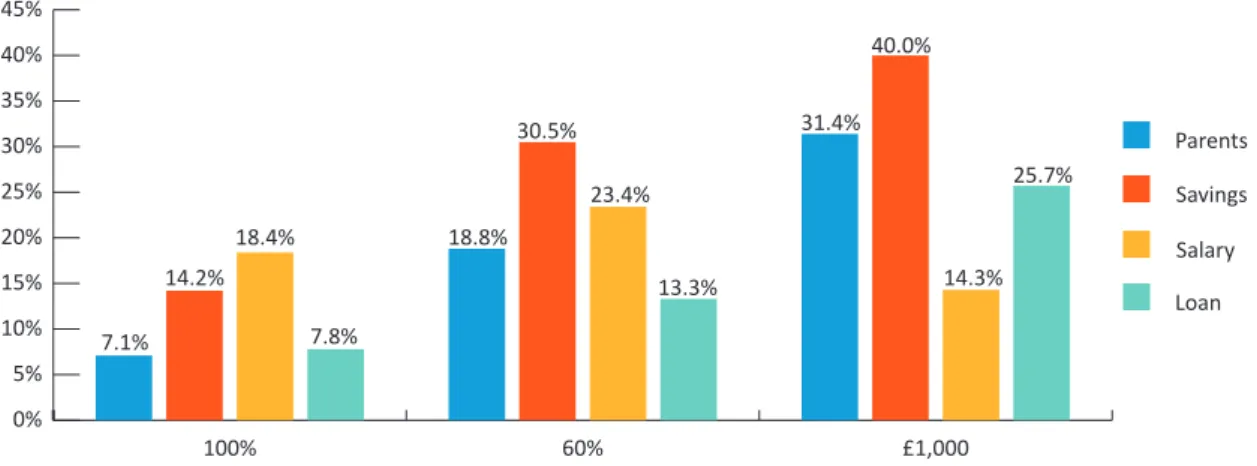
PEP scholarship: Students in receipt of a scholarship funded by PEP Project. The scholarships were for fees and the three levels were 100 %, 60% and £1000.
PG: Postgraduate
PGT: Postgraduate taught
Post-1992: Former polytechnics, central institutions or colleges of higher education that were given university status in 1992 through the Further and Higher Education Act 1992.
Postgraduate course/programme: Units of study that are combined to create a course (can also be called programme).
Practical PEP initiative: These are the initiatives created by each of the 9E participating universities as a result of their findings. They are funded by the PEP Practical Initiative Fund that each 9E university received as part of the project.
PR Hub: Principal Research Hub based at Kingston University that comprises the Principal Investigator and Lead Researcher.
Principal Investigator/Project Manager: The person designated by HEFCE as responsible for leading and managing the project.
Project timescale: The period of time required to complete the phases of the project and the overall project.
Project website: A set of pages explaining the project and containing its key documents.
http://www.postgradexperience.org/
PSS: Postgraduate Support Scheme launched by HEFCE in July 2013 to test innovative activity and finance models to support progression to, and participation in, taught postgraduate education. Qualification: A pass of an examination or an official completion of a course.
Qualitative: Qualitative methods are ways of collecting data that are concerned with describing meaning, rather than with drawing statistical inferences. They provide a more in-depth and rich description that statistical data.
Quantitative: The term quantitative data is used to describe a type of information that can be counted or expressed numerically. This type of data can be manipulated and statistically analysed, and is represented visually in graphs, histograms, tables and charts.
Research Working Group (RWG): The RWG is the ultimate decision-making body of the project and made up of the Key Link and Institutional Researchers of the 11 participating institutions. Respondents: Completers of the surveys and focus groups (students and employers).
Route into study: Two questions of the Entry to Study survey were used to calculate this variable: 1) year of highest qualification; and 2) activity before commencing PG course. Students coming straight from university were the ones who completed their highest qualification in 2014. Students coming straight from work were the ones who completed their highest qualification before 2014 and were in full-time or part-time paid jobs in the few months immediately before starting their postgraduate courses. All the other cases were labelled as ‘Other’ route into study (e.g. on voluntary work).
The Russell Group: Self-selected association of 24 prestigious British public research universities. The University of Edinburgh is the only Russell Group university participating in PEP.
Significant: For the purpose of this report, ‘significant’ refers to a noticeable or substantive difference in the findings. It does not refer to ‘statistical significance’.
SOC2010: The standard occupational classification 2010 (SOC2010) is a common classification of occupational information for the UK. It is used to help determine social class.
Social class: Social class is a set of concepts in the social sciences and political theory centred on models of social stratification in which people are grouped into a set of hierarchical social categories, the most common being the upper, middle, and lower social classes.
SPSS: SPSS is the acronym of Statistical Package for the Social Science. SPSS is one of the most popular statistical packages that can perform highly complex data manipulation and analysis with simple instructions.
Steering Group (SG): The Steering Group is the advisory body of the project and consist of members of the RWG and external stakeholders such as business and industry leaders, educationalists and critical friends.
STEM: This is the acronym for sciences, technology, engineering and mathematics. SurveyMonkey: SurveyMonkey is a web-based survey tool that provides free, online and customisable surveys, as well as a suite of paid back-end programs that include data analysis, sample selection, bias elimination, and data representation tools. https://www.surveymonkey.com Think Tank: Constructive forum for the exchange of ideas and information between the parties and other key stakeholders to the project.
Tools: Instruments used to collect data such as surveys and focus groups.
Undergraduate (UG): The term undergraduate refers to someone undertaking a first degree at university.
UK PEP: The term given to respondents in the report that received a PEP scholarship.
UK non-PEP: The term given to a respondent in the report that is UK domiciled, but not in receipt of a PEP scholarship.
Variables: A variable is defined as anything that has a quantity or quality that varies. The dependent variable is the variable a researcher is interested in and an independent variable is a variable believed to affect the dependent variable.
1. Introduction
a. Setting the postgraduate taught (PGT) scene
There are two major issues facing PGT study in the UK. Firstly, although the postgraduate taught market (known as PGT hereafter) has seen a dramatic expansion in the UK in the past 20 years, there has been a recent decline in growth in the overall PGT student numbers, most noticeably amongst UK and Overseas domiciled students (Millward and Creasey, 2013; HESA 2013a,b; Morgan 2013a; Morgan, 2014). The part-time study mode (traditionally dominated by UK domiciled students) and STEM disciplines have been greatly affected. Although intuitive reasons can be made to explain the decrease, including the lack of a viable funding scheme for students to fund their studies (Boorman et al., 2009; UUK, 2013), there is limited evidence to provide accurate explanations enabling the development of practical strategies to reverse this pattern. Secondly, although extensive research has been undertaken in the field of the student experience and learning and teaching at undergraduate level (e.g. Tinto, 1988; Woodrow, 1998; Thomas, 2002; Hatt et al., 2005; Morgan, 2011), there is limited, albeit a growing body of research, in the area of PGT study (Wakeling, 2005; Green, 2005; Stuart et al., 2008). This led to the Higher Education Commission commenting in 2012 that postgraduate education is a forgotten part of the sector (Higher Education Commission, 2012:17). The available research tends to concentrate on recording and assessing the PGT experience at the end of the course (e.g. the annual Postgraduate Taught Experience Survey (PTES) by the Higher Education Academy) rather than understanding motivations, expectations and transitions (e.g. Stuart et al., 2008; Tobell et al., 2008; Morgan and Jones, 2013; Morgan, 2013a). Although the Higher Education Statistics Agency (HESA) records student data, there is a lack of accurate and detailed retention data available (Millward and Creasey, 2013; Morgan, 2013a). The recent changes in higher education, as a result of the White Paper Students at the Heart of the System (Department of Business, Innovation and Skills, 2011), and the falling PGT numbers, has made research into identifying factors impacting on participation and successful progression very pressing. The UK government is committed to expanding PGT study to improve the UK’s industrial competitive global position (DTI, 1998) as well as the UK’s position in the global market of HE.
Concern has been expressed by a number of organisations about the future of postgraduate education including the Higher Education Commission, the 1994 Group, the Higher Education Policy Institute, the National Union of Students and the Sutton Trust, and they have called for further research to be undertaken. Wakeling and Hampden-Thompson’s report entitled Transition to higher degrees across the UK was the first comprehensive research undertaken examining PG growth within the UK (Wakeling and Hampden-Thompson, 2013). In their report, they suggested that there are a number of avenues that require further research. These include studying institutional and subject differences, and having a better understanding of student transitions into and out of PGT study. Other valuable research includes that of Machin and Murphy who have been exploring the financial issues and implications of PG-level study for all stakeholders (Machin and Murphy, 2010). However, if higher education is to become sustainable through the delivery of high-quality teaching, research and knowledge exchange as well as supplying knowledge and skills to industry, professions and students, then future research undertaken and resulting action requires the input of a range of stakeholders. Postgraduate taught study is complex and differs in many respects to undergraduate study so not only is dedicated examination crucial, it is also essential to avoid a ‘one size fits all’ approach to the student experience at this level of study.
b. Rationale and outline of PSS Phase 1 funded by HEFCE
The UK government has stated that it is committed to the continued expansion of the
postgraduate taught student body, particularly in STEM subjects, in order to improve the UK’s industrial and educational competitive global position (Higher Education Commission, 2012). HEFCE has understood that the issues highlighted above are important areas to research if long-term approaches to stimulating and sustaining full-time and part-time PGT study in England (and other areas in the UK) are to be achieved. As a result, a number of activities are currently being undertaken including HEFCE funding a two-phase scheme to explore how postgraduate-level study can be sustained.
PSS Phase 1 (January 2014-August 2015)
HEFCE’s Postgraduate Support Scheme (PSS) Phase 1 funded 20 projects from a £25 million publicly-funded programme. The aim of Phase 1 was to test ways to support the progression into taught postgraduate education in England by working with universities and employers to stimulate participation of applicants who would not have otherwise progressed to this level of study. The call was announced on 2 July 2013 with proposals required to be submitted by 16 September. The successful projects were officially announced early December, started on first January 2014 and reported to HEFCE by mid-August 2015. Overall, the 20 Phase 1 projects have supported more than 2,800 students and have involved a range of support activities including financial and pastoral support, mentoring and networking, curricula change, funded studentships, work placements and a variety of bursary and loan schemes. A requirement of the scheme was that the majority of the funding obtained from HEFCE by the successful projects must be delivered to students. The majority of the projects have now been completed and the findings can be accessed by going to: http://www.hefce.ac.uk/sas/PSS/ Funded,projects/
PSS Phase 2 (November 2014-November 2015)
In its 2014 Autumn Statement, the government confirmed that HEFCE in its PSS Phase 2 Scheme would provide £50million to institutions during 2015-16. The funding would enable 10,000 masters students to each receive a £10,000 contribution towards the cost of their studies. The cost of each contribution would be equally divided between HEFCE and the institution. This aim was to build upon the PSS Phase 1 scheme, and to provide a bridge to the proposed implementation of an income-contingent loan scheme for masters students wishing to undertake a postgraduate taught masters in any subject from 2016-17 onwards. At the time of this report being published, it is uncertain as to the structure of the scheme.
2. Introduction to the Postgraduate
Experience Project (PEP)
a. Background and rationale
The Postgraduate Experience Project (PEP) was one of 20 projects funded through HEFCE’s £25million Phase 1 Postgraduate Support Scheme. PEP was the largest consortium funded by HEFCE and comprised 11 universities (nine English [9E Group], one Welsh and one Scottish), which are geographically dispersed across the UK. The collaborative partners included the universities of: Brighton, Coventry, Edinburgh, Lincoln, Manchester Metropolitan, Portsmouth, Plymouth, South Wales, Teesside and Wolverhampton. Business and industry leaders and higher educational specialists were also involved. The aim of the PEP was to explore the neglected research areas mentioned in Chapter 1 by looking at the expectations and attitudes towards postgraduate taught (PGT) science, technology, engineering and mathematics (STEM) study, and post-study outcomes from the perspective of students, universities and employers across a group of institutions diverse in student body and geography, and with the input of stakeholders from different sectors. With the recent changes in the UK higher education landscape, the intended outcome was that the findings would provide valuable contributions in shaping and helping to sustain the PGT sector, at both institutional and national level. The project originally entitled Investigating the expectations and attitudes towards postgraduate taught (PGT) science, technology, engineering and mathematics (STEM) study, and post-study outcomes from the perspective of students, universities and employers to support and sustain PGT growth in the UK: A collaborative project, started in January 2014 and reported the majority of its headline findings at a National Dialogical Conference at Kingston University on 14th and 15th July 2015.
b. Outline of aims, objectives and outcomes
The project’s overarching aims and objectives were constructed to maximise the sector’s knowledge regarding the participation, progression and success of new PGT STEM students across the participating universities and non-institutional stakeholders. It aimed to provide an understanding of issues within each institution, and across the 9E Group, as well as giving a UK perspective through the participation of the Scottish and Welsh universities. PEP wanted to produce baseline data that would provide immediate insights into applicant and student behaviour as well as creating a template for other institutions wishing to undertake their own comparative research at a later date. Ultimately, the aim was to undertake practical research to provide practical outcomes that could help sustain the PGT market. The aims and objectives are highlighted in Diagram 1.
Diagram 1. Aims and objectives of PEP for the different key stakeholders
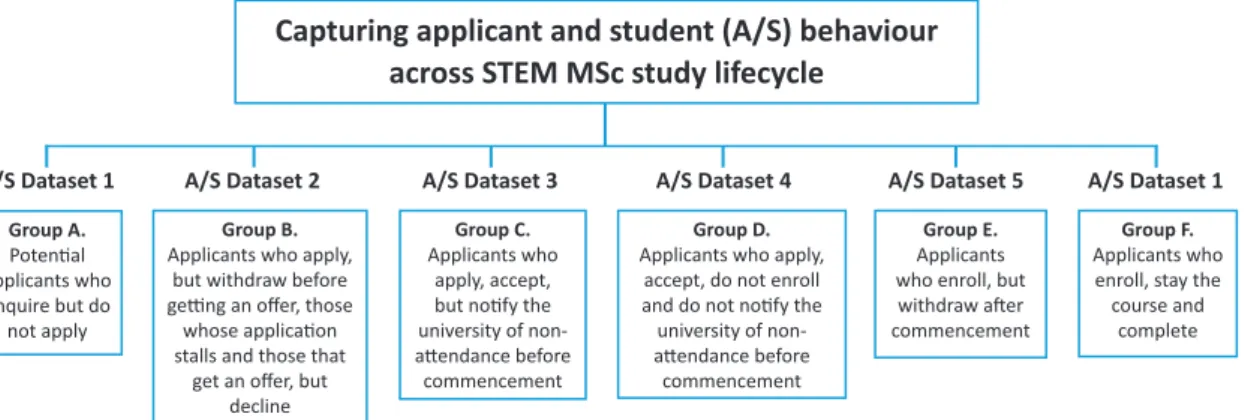
Applicant and student behaviour on STEM MSc courses was collected via the datasets highlighted in Diagram 2.
Diagram 2. Capturing applicant and student (A/S) behaviour across STEM MSc study lifecycle Aims and objectives of PEP for the different key stakeholders
Applicants and students Business and industry (B&I) Universities and community
• Explore applicants and student perceptions, motivations, expectations of PGT study
• Explore the barriers of applicants and students to PGT study
• Explore the experiences of students undertaking PGT study
• Explore the outcomes of students as a result of undertaking PGT study • Explore which variables impact on
attitudes, expectations and the retention of PGT students (e.g. part-time, full-time, domiciled and generational status, age, gender, social class, ethnicity, discipline and route into study such as from work or University)
• Understand the employers expectations of the skills PGT graduates should possess • Identify the employer outcome
expectations of recruiting a PGT graduate • Look at their perception of the value of
PGT study
• Explore experiences of employers on university industrial advisory groups in terms of influencing curriculum changes • Identify employer needs locally and
nationally
• Explore experiences of PGT graduate employersin general and of members and employment specialists on the Steering Group
• Explore university attitudes, ]planning and development approaches to PGT study • Examine participating university responses to
PEP findings
• Explore approaches to PGT supporting the local economy
Capturing applicant and student (A/S) behaviour across STEM MSc study lifecycle
Group A. Potential applicants who enquire but do not apply Group B. Applicants who apply,
but withdraw before getting an offer, those
whose application stalls and those that
get an offer, but decline
Group C. Applicants who
apply, accept, but notify the university of non-attendance before
commencement
Group D. Applicants who apply,
accept, do not enroll and do not notify the university of non-attendance before
commencement
Group E. Applicants who enroll, but withdraw after commencement
Group F. Applicants who enroll, stay the course and
complete
The key outcomes/outputs were to:
• identify any similarities and differences between the institutions and student body, and determine what conclusions could be drawn from the research;
• identify any particular issues that appeared to impact on stimulating progression onto successful progression and engagement of PGT students and develop strategies to reduce them;
• provide immediate support and advice to new PGT students on an institutional level regarding their concerns arising out of the findings;
• identify employers’ needs, and determine how to incorporate them into curriculum design and development;
• use the findings at a local level within each institution when developing and implementing local interventions or activities to manage student expectations and experiences;
• explore and identify how to effectively widen the PGT market in the UK;
• create a repository of sustainable and affordable good practice to be held on the project website for use by the sector;
• provide a large cross-institution dataset enabling each university to generate further research out of the dataset, thus enriching the knowledge for the sector in general (e.g. part-time, mature, differences in attitudes between students coming straight from work and university, generational, domiciled and gender differences, discipline differences); and • contribute to the national funding model debate with the research findings, and
determine the importance of different levels of fee support and their sustainability in generating PGT participation.
c. Delivery of aims, objectives and outcomes
The project’s aims, objectives and outcomes were achieved through a number of activities including:
• the establishment of a Steering Group comprising stakeholders in higher education, business and industry and professional organisations to advise on data collection, their expectations and outcomes of HE, and the development of future strategies;
• collecting data on expectations of studying at PGT level of all new STEM students enrolling at the start of the academic year 2014/15 via a questionnaire delivered to a nationally representative sample of participating institutions;
• providing a range of fee scholarships (known as PEP scholarship hereafter) to underrepresented groups within each university and monitor their expectations,
experiences and outcomes using questionnaires, focus groups and telephone interviews; • comparing the data of PEP scholarship recipients against self-funding students to
determine any substantive participation obstacles or barriers;
• tracking applicants and students who did not start their course and those who withdrew once enrolled to determine reasons for non-participation; dedicate funds to developing and implementing practical initiatives to support and aid progression at each institution; • holding institutional conferences and a national dialogical conference (to discuss the
findings and initiatives/strategies arising out of the data, feed into the national debate on the future of PGT study, manage student expectations and improve the experience of PGT students at each institution);
• setting up a project website to share the findings and good practice and continue the legacy of the pilot project by enabling each participating institution to use the data for further research (e.g. for staff undertaking EdD professional doctorates or masters courses).
d. Approach to the PEP report
This report has been written so readers can ‘dip in and out’ of the different themed chapters. The project contained a number of student surveys that asked similar questions in order to track any changes in attitudes, opinions, expectations and experiences. Where a similar or the same question has been asked across the different surveys, the responses have been reported together so the reader is better able to compare and contrast the findings. The various surveys, which were part of the data collection process, are described in more detail in the ‘Approach to the research methodology’ section directly below. The chapters are based around the key themes that came out of the research. The detailed findings are extensive and it is impossible to report them all fully in this report. Statistically significant testing has been extensively undertaken on the various datasets and they will be published later in upcoming research papers. The basic demographics for the surveys have been placed into a separate chapter in order to simplify the reporting of the findings in the themed chapters.
e. Approach to the research methodology
The research undertaken in this project to date has been carried out in different phases. The data collection involved questionnaires and focus groups. Responsibility for the project’s ethical research requirements were undertaken by the Centre for Higher Education Policy and Research (CHERP) Research Ethics Committee at Kingston University. Participating universities were required to lodge the ethical approval for each survey with their own relevant committee. All the questionnaires were designed to be created and undertaken using SurveyMonkey (online survey software). The surveys were executed using rigorous ethical procedures as laid down by CHERP’s Research Ethics Committee. Respondents had to provide their institutional email to complete the survey in order for the project’s main research hub (known as PR Hub hereafter) to identify them as legitimate participants, as well as enabling them to randomly allocate the winners of the Amazon vouchers. All the non-eligible respondents and duplicates were excluded from the final sample. All survey data was cleaned and anonymised by the PR Hub before each institution’s dataset was sent to them for local analysis. The universities of Edinburgh and South Wales only participated in the Entry to Study data collection process and were self-funding. The data collection tool (surveys) can be found in the appendices document.
f. Data collection processes
i. Data collection tools Non-enrolment surveys Groups A–D
Aims and objectives: To understand the barriers as well as the motivations of enquirers and applicants in undertaking masters-level study. Four non-enrolment groups (see Diagram 2) and participants in each 9E university were identified. The groups were:
• Group A: potential applicants who enquire but do not apply; • Group B: applicants who apply, get an offer but decline;
• Group C: applicants who apply, accept, but notify the university of non-attendance before commencement; and
• Group D: applicants who apply, accept, do not enrol and do not notify the university of non-attendance before commencement.
The surveys collected critical data as to why enquirers did not apply and why applicants chose not to enrol at MSc level. The anonymised findings for each university were given to their admissions units and course directors so they could consider them in their admission and marketing planning.
Structure: A slightly different survey was designed for each group in order to address their position in the admissions process.
• Group A survey: Group A had a longer survey compared to Groups B-D as basic
demographic information on enquirers had to be collected. It comprised nine questions. • Groups B-D survey: Surveys for Groups B and C consisted of four questions and Group D
of five.
Procedure: Each group was sent a tailored email. This was to ensure that each group’s data was captured separately and for each 9E university. The surveys were launched at the beginning of October 2014 and closed in early November. Each university had a total of £900 to purchase gifts to thank respondents for participating in the activity. The successful recipients of the gifts were randomly selected from those who had fully completed the survey. Each university decided on what gifts they wished to purchase, but it was suggested for consistency across the consortium that a combination of prizes, such as two IPOD Touch phones and the rest in £30
-50 Amazon vouchers, be offered.
Data collection issues: There were a number of issues relating to the collection of data across Groups A-D amongst the nine English universities participating in this activity. Firstly, nearly all the universities did not collect and keep enquiry data on individuals. This was further complicated by course enquiries being undertaken by a range of different units within an institution, such as the faculties and departments, central marketing and the international office. Secondly, information on groups B-D is recorded differently by each university so making direct comparisons against the group definition proved problematic. The universities within the project do not operate customer relation management systems enabling an application to be tracked from first contact and beyond. This meant that the sample response was small and not reflective of the participating partners. This lack of data prevents an accurate understanding of motivations and drivers amongst these groups.
Entry to study survey
Aims and objectives: To collect demographic variables, information on prior feedback experiences, and the expectations of new PGT students relating to their upcoming academic studies. The objectives were: to identify any particular issues that appeared to affect
successful engagement; and to determine what interventions or activities could be put in place to manage student expectations and improve the postgraduate taught student experience.
Structure: The survey comprised open and closed questions. It collected pertinent
demographic data to check the representation of the sample and to provide detailed analysis of the questions asked with different student characteristics such as gender, domiciled status, generational status, entry route to study.It contained eight sections designed to obtain as much information as possible as to their prior experiences of higher education and their PGT expectations and aspirations. The sections were as follows: previous study qualifications; previous study experience; your current study information; motivations and challenges of postgraduate study, fees and funding; postgraduate study expectations; your current learning expectations; attitudes towards postgraduate study and biographical details. The sections were designed to make completion easy and to take respondents systematically through a logical
set of questions that would be of benefit to them as well as the project. The survey consisted of 92 questions, thus has provided a massive amount of information and an extensive dataset. It was developed from an existing survey that had already been implemented at the lead university and piloted within the project with 25 students.
Further analysis will continue in order to test a range of more specific variables that have been identified whilst analysing the dataset. The aims of this are twofold. Firstly, to maximise the output of the dataset and to create a data legacy of continuing pedagogic research beyond the project to further the sector’s understanding of study at postgraduate taught level. Secondly, to report the significant statistical results of small sample sizes generated through the multi comparisons of variables. The intention is for colleagues at each of the partner institutions to select areas of interest and publish the findings via targeted journal articles and conference papers.
Procedure: All new PGT STEM students across all 11 participating universities were asked to complete the Entry to Study survey during the orientation period in September/October 2014. All students in receipt of a PEP Fee Scholarship were required to complete the questionnaire as part of their scholarship acceptance agreement. All students were informed about the purpose of the survey and that it was anonymous and voluntary. They were informed that the survey had two aims: firstly, to provide their university with data to contribute to understanding and improving their experience and, secondly, to act as a personal development activity for new PGT entrants, as they would be asked to reflect on how they had previously learnt and how they wanted to, or expected to, learn at postgraduate level.
All respondents were asked to provide their student ID when completing the survey, but their IDs remained confidential and only accessible by the PR Hub. The 9E Group each had 80 £30 Amazon vouchers to encourage engagement of their new STEM MSc enrollers (excluding PEP scholarship recipients) to complete the survey. The vouchers were randomly allocated and sent by email. Interestingly, the universities of Edinburgh and South Wales, who had no financial incentives, achieved substantial completion rates. Within six weeks of the orientation period, each university published a self-help sheet for their new students that contained some of their basic findings of the survey, along with advice and guidance in the areas students had highlighted as potential problems (see Appendix B in the appendices document for an example).
Data collection issues: The survey contained a high number of questions and respondents did not always complete the demographic section. These responses along with duplicates were removed from the sample thus reducing the aggregate sample size.
Withdrawal survey of enrollers
Aims and objectives: To collect detailed reasons for withdrawing from PGT study after enrolling. Structure: The survey consisted of seven closed and open questions.
Procedure: Each member of the 9E Group identified STEM students who had formally withdrawn between enrolling in September/October 2014 and March 2015.
Data collection issues: Within a university, obtaining detailed withdrawal data can be
problematic for a number of reasons, including withdrawal reason options being very generic and students having often left before their withdrawal has been formally identified thus no data is collected. This led to the withdrawal sample who were invited to complete the survey
Focus groups
Aims and objectives: To further explore issues highlighted by respondents in the Entry to Study survey and the experiences and barriers to engaging in PGT study of current PGT students nine months into their studies.
Structure: A semi-structured interview schedule was designed consisting of the following five questions:
1. Why did you decide to undertake study at PG level? (Why in this university?) 2. Are you managing with your studies? If yes how? If not, why not? Is your PGT study
experience similar or different to that of your undergraduate? (Feedback, managing work, etc.) What support has helped and what might have helped you?
3. Have you experienced any non-academic issues during your PG studies (money, coping with student life, travelling, other commitments, work, family)? What helped you and what might have helped you?
4. Scholarship holders: Has the scholarship made a difference to your ability to study at PGT level or none at all? Non-scholarship holders: If you had a scholarship, would it make a difference?
5. Is your course preparing you for the future? If yes, how? If not, should it and how could it be improved? (PhD, career prospects and employers expectations)
Procedure: The semi-structured interview schedule was tested on three PGT course representatives at the lead university to ensure that the questions and prompts used were appropriate. The focus groups were organised and undertaken by the institutional researchers at each 9E university. The focus groups sessions were undertaken in March and April 2015. One focus group consisted of those who had funded their own studies and the other groups comprised recipients in receipt of a PEP scholarship (a group consisted of participants with the same amount of scholarship received). Each non-scholarship participant received a £30 Amazon voucher and all participants were given lunch and refreshments during the session. The demographics of each participant were registered, but their identities kept anonymous. Qualitative approaches were adopted and shared by the institutional researchers to extract meaning from the data in common themes of the analysis.
Data collection issues: No significant issues arose, but the responses from students who could only participate via email resulted in less-detailed responses to the questions posed.
Integrated survey
The Integrated survey was not in the original proposal submitted to HEFCE. However, recent sector discussions about the motivations for undertaking integrated degrees resulted in the PEP’s Research Working Group (RWG) deciding that it was an important area to examine and should be included in the overall project’s activities. It was piloted at the lead university after receiving RWG and ethical approval. The results justified the rolling out of the survey across the other partner institutions. Only one university within the 9E Group did not participate in the survey due to insignificant integrated degree offerings.
Aims and objectives: To analyse motivations for undertaking an integrated degree and explore whether there are any key drivers behind the decision to undertake this type of degree (e.g. parental or career influences, funding mechanisms).
Structure: The survey comprised 15 closed and open questions. Integrated students at the lead university were invited to complete the survey, which acted as a pilot due to time pressures. The pilot resulted in the addition of one question.
Procedure: After the pilot at the lead university, the survey was sent to all STEM students at all levels who were undertaking an integrated degree at seven of the 9E Group (e.g. MPharm, MChem, MComp, MPharmSci, MEng, MMath, MPhys, MPsych, MSci, MChem, MBiol, MGeol etc.) and invited to complete it in January and February 2015. Each partner decided when it was the best time to ask students to complete the survey during this period (e.g. to avoid any semester exams at the end of the month). The eighth 9E partner had insufficient integrated students to make the survey viable for them. Each participating university received 14 £30 amazon vouchers for this activity and two IPOD Touch devices to randomly allocate amongst its respondents.
Data collection issues: Some courses had small numbers so the sample is not representative of the integrated student body within each participating university and the national integrated student body.
Finance survey
Aims and objectives: To understand PGT STEM students’ financial concerns and anxieties in undertaking study at this level and to explore students’ attitudes to various funding methods. The aim was for these findings to feed into the government’s consultation on postgraduate funding, inform discussion on how to support students in Phase 2 of PSS in 2015-16 and to highlight issues that need to be considered when financially supporting future students. Structure: The survey was constructed with advice and comments from key Steering Group members, the Key Links and Institutional Researchers and students. It comprised 46 questions. Procedure: Full- (FT) and part-time (PT) (Years 1 and 2) STEM masters students across the 9E Group were invited to complete the Finance survey late May to mid-June. It was not piloted due to time constraints. The PEP scholarship students were required to complete it as part of the PEP scholarship acceptance process. The survey was only open for two weeks and each university was required to select a 10-day window within that period in which to ask their students to voluntarily complete the survey. Each university sent out the email request to complete the survey. Survey completers were randomly allocated to receive an Amazon voucher by the PR Hub. Each English university’s allocation of 50 £30 Amazon vouchers was targeted at all PGT STEM students (excluding PEP scholarship recipients) to encourage participation. Although demographic data was collected, social class was not gathered. However, the PR Hub was able to compare the email IDs from the Entry to Study survey and marry up the social class with the findings of those who also completed the Finance survey. The sample size for this extra group was 396 and where appropriate, the findings have been reported.
Data collection issues: As with the Entry to Study survey, there were duplicate completers using the same and different email addresses. These, along with completers having non-valid email addresses, were excluded from the final survey, thus reducing the aggregate sample size. The Finance survey was originally intended only for the PEP Scholarship recipients, so it did not collect demographic data as that information was already recorded. However, at a late stage, the Research Working Group felt that the survey should be extended to all PGT students. As a result, detailed demographic analysis as undertaken in the Entry to Study survey was not possible.
Postgraduate Experience Taught Survey (PTES) 2015 (HEA)
Aims and objectives: To analyse the Postgraduate Taught Experience Survey (PTES) data collected by the Higher Education Academy via PTES for the STEM respondents within PEP’s participating universities. This would allow the reported experience of these students to be included and compared to the previous findings within PEP without students having to undertake a further survey.
Structure: Respondents completed open and closed questions.
Procedure: PTES was undertaken between March and June 2015 across the sector. The Higher Education Academy cleaned and sent the dataset to the PR Hub in August 2015.
Data collection issues:Only 6 of the 11 participating PEP partners undertook PTES in 2015. Where relevant, the overall findings reported in the PTES 2014 Report are also highlighted for comparison. Employers survey
Aims and objectives: The Employers survey aimed to:
• understand the employers’ expectations of the skills PGT graduates should possess; • identify the employer outcome expectations of recruiting a PGT graduate;
• look at their perception of the value of PGT study; and • identify employer needs locally and nationally.
Structure: The survey comprised 40 questions organised in the following topics. • Basic information about the company
• Current employees’ backgrounds • Importance of master qualification • Attitudes towards recruitment practices
• Company collaboration and engagement with universities
Procedure: Support for circulating the survey was sought from the Federation of Small Business, and small to large businesses that operate within each area of the partner institutions were emailed using addresses purchased from Dun and Bradstreet (a world-leading source of business information and insight). Around 3000 emails were personalised and contained information about the survey and the survey link. Only one reminder email was sent to those who had not responded within two weeks of the initial request. As the completion rates of the survey were minimal, the PR Hub decided to create a short version of the survey, comprising of 12 questions including basic biographical data. The questions included: what is the ownership status of the company, in what sector is your business, how would you classify your organisation and do you employ masters-qualified employees? The short survey was sent to the same Dun and Bradstreet list, as well as the link being posted on the Federation of Small Business Facebook site. The short survey was completed by 66 businesses. Three case studies were extracted from the long survey data and analysed to illustrate what might be happening in the STEM sector in the UK: one large company, one medium company, and one small company (see Chapter 8).