EVALUATION OF THE EFFECTIVE PRACTICES IN COMMUNITY SUPERVISION MODEL (EPICS) IN OHIO
Draft Report
PREPARED BY: Edward J. Latessa, Ph.D. Co-Principal Investigator
Interim Dean and Professor, College of Education, Criminal Justice, and Human Services Paula Smith, Ph.D.
Co-Principal Investigator
Associate Professor and Director, Corrections Institute Myrinda Schweitzer, M.A.
Project Director
Associate Director, Corrections Institute &
Ryan M. Labrecque, M.S.
Research Assistant, Corrections Institute
University of Cincinnati School of Criminal Justice Center for Criminal Justice Research
PO Box 210389 Cincinnati, Ohio 45221-0389
ACKNOWLEDGEMENTS
This report is the product of the efforts and collaboration of many individuals. The authors would like to thank everyone involved in the project for their time and cooperation. Specifically, we would like to express our sincere gratitude to the following individuals: Gayle Dittmer, Kimberly Chandler, Brian Stein, Heather Stein, Tom Castetter, Aaron Minister, Amy Schofield, Carrie Landfair, Casey Gregory, Catherine Mories, Chris Sander, Jason Potts, Josh Vogel, Kendra Davis, Larry Mead, Laurie Winbigler, Lesley Madewell, Lindsay Oppenheimer, Lori Malone, Luci Sauer, Michele Treadway, Sara Shields, Stephanie McMannis, Steve Harshman, and Wendy Chopp (FCAP), Kevin Bonecutter, Brenda Sisk, Don Kathman, and James Daniels (HCAP), Edward Ryan, Brent Laman, Sabrenna Page, Sherri Lumpkin, Bethann Brenner, Cheryl Lee, Ed Pflum, Greg Daugherty, Marcy Bullerman, Nancy Niemer, Randall Mitchell, and Ryan Gross (HCJP), and Katrina Ransom, Eric Henley, Larome Myrick, Tom Brunty, Connie Maassel, Kelly Linebrink, Chris Niekamp, Craig Miller, Daniel Alexander, Desirae Bechstein, Jamie Rassman, Krista Burke, Michael Burkhart, Robert Watson, Sharlyn Key, Steven Elwood, Thomas McDaniel, Tim Johnson, and Tom Sanford (ODRC). We would also like to thank Angela Estes, Cara Thompson, Lesli Blair, Samantha Federick, Lia Gormsen, Lydie Loth, and Sam Peterson from the University of Cincinnati who have also devoted their time to the completion of the project.
TABLE OF CONTENTS
Topic Page
Acknowledgements……… 2
List of Tables…………...………... 5
Introduction………..……….. 6
Traditional Community Supervision………. 7
The Principles of Effective Intervention………... 9
Core Correctional Practices……….. 11
RNR Approaches to Community Supervision……….. 13
EPICS in Ohio……….. 17
Implementation………. 18
Method………... 19
Research Objectives……….. 19
Participants………...……….……… 20
Community Supervision Officers……….………... 20
EPICS Officer Training……….. 20
EPICS Coaching Sessions……….. 21
Probationers and Parolees……… 22
Data Collection………. 22
Audio-Recordings………. 22
Use of Core Correctional Practices……….……….. 23
EPICS Adherence Score……….………. 23
Fidelity to the EPICS Model...………. 24
Offender Surveys………..……… 24
PO Questionnaire……….……… 24
Criminal Sentiment Scale-Modified (CSS-M)……… 25
Officer Information……….………….. 27 Offender Information……….………... 27 Risk……….. 27 Recidivism………... 28 Data Analysis……… 28 Results………... 28 Intermediate Measures………. 35 Discussion……….. 43
Translating RNR Practices Into Practice……….. 44
Improving Probation Officer-Offender Interactions………. 45
Improving Community Supervision Outcomes……… 46
Implications………... 47
References………. 48
Appendix A……… 52
Appendix B……… 58
LIST OF TABLES
Table Title Page
Table 1 Descriptive Statistics of Officers for the Total Sample and Disaggregated Sample by Agency 29
Table 2 Descriptive Statistics of Offenders 31
Table 3 Recidivism by Group Assignment for the Total Sample and Disaggregated Sample by Agency
32
Table 4 Recidivism by Group Assignment and Offender Risk Level 33 Table 5 The Effect of EPICS Training on Officer Use of Core Correctional Practices 34 Table 6 Recidivism by Officer Use of CCP for the Total Sample and Disaggregated Sample by Agency 36 Table 7 Recidivism by Officer Use of CCP and Offender Risk Level 37 Table 8 Bivariate Correlations between Offender Perceptions of the
Offender-Officer Relationship and Risk Level 38
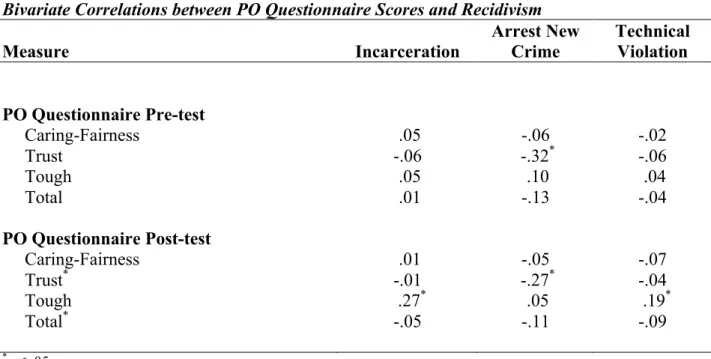
Table 9 Bivariate Correlations between CSS-M Scores and Risk Level 39 Table 10 Comparison between Offender Perceptions of the Offender-Officer Relationship by Officer Fidelity to EPICS Model 40 Table 11 Comparison between CSS-M Scores by Officer Fidelity to CCP Model 41 Table 12 Bivariate Correlations between PO Questionnaire Scores and Recidivism 42 Table 13 Bivariate Correlations between CSS-M Scores and Recidivism 43
INTRODUCTION
Over the last decade, several attempts have been made to integrate the principles of effective intervention into community supervision (Bourgon, Bonta, Rugge, Scott, & Yessine, 2010; Lowenkamp, Holsinger, Robinson, & Alexander, 2012; Robinson, Vanbenschoten, Alexander, & Lowenkamp, 2011; Smith, Schweitzer, Labrecque, & Latessa, 2012; Trotter, 1996; 2006). In contrast with “traditional” community supervision – which has underscored the importance of monitoring compliance with court-ordered conditions and making referrals to service providers – these recent initiatives attempt to teach probation and parole officers how to structure their face-to-face interactions with offenders using evidence-based practices (Bourgon et al., 2010; Lowenkamp et al., 2012; Robinson et al., 2011; Smith et al., 2012; Trotter, 1996, 2006). Preliminary results from several jurisdictions suggest that the use of core correctional practices within the context of community supervision has been associated with meaningful reductions in offender recidivism (Bourgon et al., 2010; Robinson et al., 2011; Lowenkamp et al., 2012). This work affirms the role of probation and parole officers as agents of behavioral change, and provides empirical support for the notion that community supervision can be effective in reducing recidivism.
In an effort to determine the success of a recent initiative designed to teach probation and parole officers to apply the principles of effective intervention to community supervision practices in the state of Ohio, the Ohio Office of Criminal Justice Services (OCJS) funded the University of Cincinnati Corrections Institute (UCCI) to implement the Effective Practices in Community Supervision (EPICS) model in four jurisdictions throughout Ohio and to study the results of the implementation. A quasi-experimental study was undertaken with a twofold purpose. First, UCCI was interested in how successfully probation and parole officers were able
to translate into daily practice the skills taught during the training and coaching process. Second, UCCI examined whether offenders supervised by EPICS-trained officers experienced reductions in recidivism compared with offenders supervised by untrained officers. The primary objective of this study is to examine the effectiveness of a newly integrated practice model that enhances the service delivery role of community supervision. The study addressed the following research questions:
1. Can researchers and practitioners work together to maintain research and program fidelity and translate EPICS techniques into practice?
2. Can researchers and practitioners collaborate to study and improve probation officer-offender interactions?
3. Can the EPICS model increase the effectiveness of community supervision outcomes? What follows is a detailed report on the implementation of the EPICS model in Ohio, as well as an analysis of study outcomes.
Traditional Community Supervision
Previous research suggests that the effect of probation and parole services on recidivism is less than optimal (Bonta, Rugge, Scott, Bourgon, & Yessine, 2008; Solomon, Kachnowski, & Bhati, 2005; Taxman, 2002). For example, Bonta et al. (2008) conducted a meta-analysis of 15 community supervision studies and 26 effect sizes. Results indicated that probation was no more effective than other community-based sanctions, such as fines and community service. Similarly, a study by the Urban Institute reported that prisoners released without parole performed about as well as their counterparts released with mandatory or discretionary parole requirements (Solomon et al., 2005). It is perhaps not surprising that previous research has also reported that relatively few probation officers adhere to the principles of effective intervention in their
individual sessions with offenders. For example, Bonta et al. (2008) evaluated audiotaped meetings in a community supervision setting with 62 probation officers and 154 adult and juvenile offenders, and reported that probation officers only discussed pro-criminal attitudes in 3% of sessions and used cognitive-behavioral interventions in less than 25% of the sessions. Results also indicated that officers did not discuss criminogenic needs in the majority of cases, and used community resources minimally to assist offenders. Moreover, officers based offenders’ case plans more on what had been mandated by the court, and less on the results of offender risk assessments. Similarly, Raynor (2004, 2008) reported limited adherence to the principles of effective intervention in community correctional settings in the United Kingdom.
Notably, there has been a demand for a theory to explain the mechanism through which traditional community supervision would achieve the goal of reduced crime (Taxman, 2002). In the past, researchers have measured community supervision success by studying two main aspects of supervision: the number of contacts sessions per month—or the “intensity” of the supervision—and the caseload size of an officer. However, studies found that manipulating these variables had no effect on offender outcomes (Latessa, Travis, Fulton, & Stichman, 1998; Petersilia & Turner, 1993; for a review, see Taxman, 2002). That is, no matter the size of an officer’s caseload or how frequently an offender met with his supervising officer, the outcomes for offenders remained unchanged.
The above evidence has suggested that traditional community supervision - both as an alternative to residential supervision (probation) and as a means to continue supervision after release from a correctional institution (parole) – is ineffective. All else being equal, sentencing an offender to community supervision instead of incarceration does not reduce that offender’s likelihood to engage in future criminal activity (Bonta, Rugge, Scott, Bourgon, & Yessine, 2008;
Taxman, 2002). However, infused throughout the community supervision literature is studies that exemplify what can be expected when a therapeutic component is added to traditional community supervision practice: reductions in recidivism (Andrews et al., 1979; Petersilia, 1999; Trotter, 1996). When treatment is approached comprehensively, in accordance with the principles of effective intervention, community supervision agencies can expect to reduce the likelihood of re-offending by up to 50% (Bonta et al, 2008).
The Principles of Effective Intervention
Since Robert Martinson’s (1974) declaration that “nothing works”, Canadian psychologists Paul Gendreau, Robert Ross, Don Andrews, and James Bonta have led the efforts to delineate the characteristics that distinguish effective treatment from ineffective treatment (Cullen & Gendreau, 2000). American scholars supported these efforts resulting in now more than 40 published meta-analyses (or quantitative syntheses) of the correctional treatment literature, and the results have been replicated with remarkable consistency (see Smith, Gendreau, & Swartz, 2009). These findings have been summarized, and are collectively referred to as the “principles of effective intervention” (Andrews & Bonta, 2010; Gendreau, 1996). In what follows, we will briefly review the three main principles of risk, need, and responsivity.
The risk principle asserts that criminal behavior is predictable using actuarial assessments of static (e.g., criminal history) and dynamic risk factors (e.g., pro-criminal attitudes, peers, and substance abuse). Furthermore, previous research has consistently indicated that the most intensive treatment should be delivered to higher risk offenders (Andrews & Bonta, 2010; Lowenkamp & Latessa, 2004; Lowenkamp, Latessa, & Holsinger, 2006).
The need principle highlights the importance of targeting dynamic risk factors, or criminogenic needs, in order to reduce offenders’ likelihood of future criminal behavior
(Andrews, Bonta, & Hoge, 1990). Dynamic risk factors include those personal characteristics of offenders that both increase their risk of committing future offenses and are amenable to change (e.g., pro-criminal attitudes, peers, and substance abuse).
The responsivity principle refers to the fact that the most effective modes of treatment are those based on behavioral, cognitive, and social learning theories (Andrews, 1995). The responsivity principle also implies that interventions should be tailored to the learning style, motivation level, abilities, and strengths of the offender (Andrews & Bonta, 2010). This principle seeks to reduce potential barriers that offenders have to participating meaningfully in treatment. This principle is perhaps one of the most challenging (and least well understood) for correctional practitioners.
Previous training initiatives have attempted to increase staff adherence to the risk-need-responsivity (RNR) approach. Interestingly, the research demonstrates a cumulative impact of adherence to the RNR principles. For example, Andrews, Zinger, Hoge, Bonta, Gendreau, and Cullen (1990) reviewed 80 studies of juvenile and adult treatment interventions and determined that treatment effectiveness varied with the level of adherence to the RNR approach. Specifically, studies adhering to all three principles (i.e., risk, need, and responsivity) had a mean effect size of .32 (or a 32% reduction in offender recidivism) compared to a mean effect size of -.07 (or a 7% increase in offender recidivism) for those that did not adhere to any of the principles. More recently, Andrews and Bonta (2010) reviewed 374 treatment effect sizes, and reported that programs that did not adhere to any of the principles were associated with increases in recidivism (r = -.02), whereas interventions that adhered to only one of the principles (i.e., risk, need, or responsivity) produced a slight decrease (r = .02). Furthermore, interventions that
adhered to two principles produced a larger decrease (r = .18), and those that adhered to all three principles produced the most dramatic reductions (r = .26) in offender recidivism.
As space does not permit a detailed review of the empirical status of the principles of effective intervention, the reader is referred to Smith et al. (2009) for a more comprehensive discussion of the topic (see also Andrews & Bonta, 2010, Cullen & Gendreau, 2000; Gendreau, 1996). In short, it is clear the field of corrections has witnessed significant advancements in translating research into practice over the past two decades (Gendreau, Goggin, & Smith, 1999, 2000a, 2000b; Goggin & Gendreau, 2006; Mihalic, Irwin, Fagan, Ballard, & Elliot, 2004). The integration of these ideas into community supervision, however, is still a relatively new concept. It is possible that the effectiveness of community supervision may be enhanced as adherence to the principles of risk, need, and responsivity improves.
Core Correctional Practices
These principles have been used to develop a set of core correctional practices (CCPs) that are designed to increase the therapeutic potential of correctional programs (Dowden & Andrews, 2004). Since their inception in the 1980s, these practices have evolved as a result of on-going empirical evaluation. Andrews and Kiessling (1980) first introduced five CCPs (effective use of authority, anticriminal modeling and reinforcement, problem solving, use of community resources, and interpersonal relationships) that were later expanded into a training curriculum (see Andrews & Carvell, 1998). In 1989, Gendreau and Andrews added to this list of practices with the development of the Correctional Program Assessment Inventory (CPAI). The CPAI is an instrument designed to evaluate how closely correctional treatment programs adhere to the known principles of effective correctional treatment (Smith & Schweitzer, 2012). The CPAI has gone through several revisions, including the 2000, and most recently the
CPAI-2010 (Gendreau, Andrews, & Theriault, CPAI-2010). While space does not permit a detailed review of the CCPs, the eight service delivery skills identified in the CPAI-2010 are described below:
Anticriminal modeling – officers serve as an anticriminal model for offenders by engaging in prosocial behaviors and reinforcing them when they do the same.
Effective reinforcement – officers use effective reinforcement to reinforce a specific behavior that includes immediate statements of approval and support and the reasons why this behavior is desirable followed by consideration of the short- and long-term benefits associated with continued use of the behavior.
Effective disapproval – officers use effective disapproval to communicate disapproval for a specific behavior that includes immediate statements of disapproval and the reasons why this behavior is undesirable followed by consideration of the short- and long-term costs associated with continued use of the behavior and a clear demonstration of an alternate, prosocial behavior.
Effective use of authority – officers make effective use of their authority by guiding offenders toward compliance, which includes focusing their message on the behavior exhibited, being direct and specific concerning their demands and specifying the offender’s choices and attendant consequences.
Structured learning – structured learning takes place when officers use behavioral strategies to assist offenders in developing prosocial skills to avoid or manage high risk situations. Skills are taught in a structured manner that involves defining, modeling, and rehearsing the skill followed by the constructive feedback. Likewise, offenders must practice the skill in increasingly difficult situations.
Problem solving – problem solving is a specific social skill that is taught to offenders to address a variety of high risk situations.
Cognitive restructuring – cognitive restructuring occurs when officers help offenders generate descriptions of problematic situations, the related thoughts and feelings, and then help offenders identify risky thinking and practice more prosocial alternatives.
Relationship skills – effective officers possess several critical relationship skills including warm, open, nonjudgmental, empathetic, flexible, engaging, solution-focused, and directive to name a few.
These CCPs have been validated on more than 700 individual adult and juvenile programs by correlating scores with offender recidivism (Lowenkamp, 2004; Lowenkamp, Latessa, &
RNR Approaches to Community Supervision
During the last decade, several attempts have been made to improve the effectiveness of community supervision by implementing RNR and other evidence-based research into community supervision practices. (Bourgon, Bonta, Rugge, Scott & Yessine, 2010; Lowenkamp et al., 2012; Robinson et al., 2011; Smith et al., 2012; Trotter, 1996, 2006). Whereas traditional community supervision focuses on monitoring compliance with court-ordered conditions and making referrals to service providers, these recent initiatives teach probation and parole officers how to use RNR to manage caseloads and structure face-to-face interactions with offenders. Generally, RNR can be translated to community supervision by following the guidelines below.
Community supervision agencies that follow the risk principle assess offenders with a validated risk and need assessment and focus time and treatment resources on offenders who are deemed a moderate or high risk to reoffend (Andrews & Bonta, 2010). Probation and parole officers seeking to follow the need principle should focus on the dynamic risk factors that a validated needs assessment indicate are contributing to the likelihood that an offender will engage in future criminal behavior. Researchers have found seven dynamic risk factors linked to future offending (Andrews & Bonta, 2010). The top three of these factors are the most widespread among correctional populations and are thus considered the most important to focus on: antisocial attitudes and beliefs, antisocial peer groups, and certain personality characteristics, such as low self-control and lack of problem solving skills. The four remaining factors include education and employment status, family support, substance abuse, and recreational activities. These four factors tend to work through the top three—meaning, for example, that unless offenders are able to change the negative attitudes that support their substance abuse, they may
fail to achieve lasting reductions in substance use. Officers should target these needs directly during contact sessions, with a focus on long-term attitude and behavior change.
Applying the responsivity principle to community supervision means that officers incorporate techniques that are known to impact behavior change and do so in a manner that meets the individual learning styles of the offender. Cognitive-behavioral approaches grounded in social learning theory and focused on skill development and cognitive restructuring have been found to be the most effective with correctional populations (Andrews & Bonta, 2010). Therefore, officers trained in RNR use cognitive-behavioral interventions during contact sessions to target criminogenic needs. Such officers also refer offenders to treatment providers in the community that use cognitive behavioral approaches to focus on needs that cannot be fully met during contact sessions. Further, officers take steps to address any barriers that are preventing offenders from complying with treatment or the terms of supervision. For example, an officer may work with an offender to increase motivation to change before referring the offender to a treatment program.
Preliminary results from several jurisdictions suggest that when RNR is applied to community supervision meaningful reductions in offender recidivism occur (Bonta et al., 2011; Bourgon and Gutierrez, 2012; Robinson et al., 2011). This work affirms the role of probation and parole officers as agents of behavioral change, and provides empirical support for the notion that community supervision can be effective.
One of the earliest attempts to implement “what works” in community supervision was undertaken by Chris Trotter (1996, 2006). He compared the recidivism rates of offenders who were supervised by untrained officers with those supervised by officers who had been trained on relationship skills, prosocial modeling, effective use of reinforcement and punishment, and
problem solving. Despite the small sample size and non-random evaluation design, the recidivism rate for the experimental group was 18% lower than the control group over a follow-up period of four years (46% vs. 64%, respectively).
More recently, Bonta, Bourgon, and colleagues developed the Strategic Training Initiative in Community Supervision (STICS) model (Bonta et al., 2011; Bourgon et al., 2010; Bourgon and Gutierrez, 2012). STICS was designed to provide a framework for officers to adhere to the RNR model and for agencies to ensure implementation and evaluation of the strategy. The STICS model includes three main components: an initial three-day training, on-going clinical supervision of skill maintenance, and a one-day refresher workshop one year after the initial training. Bonta and colleagues (2010) evaluated the impact of the training initiative in terms of officer proficiency in the model and reduction in recidivism of offenders supervised by trained officers. In order to evaluate the impact of the training initiative, officers were required to submit audiotapes of offender interactions after the intake assessment, after three months, and after six months. The audiotapes were then coded for the content of the discussions and the quality and use of the techniques of influence (structuring skills, relationship building skills, behavioral techniques, cognitive techniques, and effective correctional skills). The study included 295 audiotapes submitted by 52 probation officers, and the results were promising. As expected, trained officers spent significantly more time focusing on criminogenic needs and procriminal attitudes (61% of audiotapes) than untrained officers (45% of audiotapes) and significantly less time discussing non-criminogenic needs and conditions of release. Most important, the results indicated that offenders supervised by trained officers had lower rates of recidivism (25.3%) in comparison with offenders supervised by untrained officers (40.5%) during a two-year follow up period.
In another evaluation of the STICS model, Bourgon and Gutierrez (2012) found similar reductions in recidivism for offenders supervised by officers who used cognitive-behavioral techniques during contact sessions. Officers who discussed procriminal attitudes and cognitions had a one-year recidivism rate of 18.3% compared with a 28% recidivism rate for offenders supervised by officers who did not discuss procriminal cognitions. Similarly, officers who used cognitive techniques reduced their offenders’ risk to recidivate by 18.3%.
Robinson et al. (2011) used an experimental pre-post design to investigate the effectiveness of the Staff Training Aimed at Reducing Re-arrest (STARR) curriculum. The STARR model takes a skill focused supervision approach and includes the following skills: Active Listening, Role Clarification, Effective Use of Authority, Effective Disapproval, Effective Reinforcement, Effective Punishment, Problem Solving, and Teaching, Applying, and Reviewing the Cognitive Model
.
In this study, a total of 88 federal probation and pretrial officers submitted 598 audio recordings for review. Officers in the experimental group participated in an initial training session. The officers then submitted three audiotaped interactions with offenders (i.e., the initial intake meeting, and then again after three and six months of community supervision). The audiotapes were used to provide feedback to the officers on their performance. A total of four booster sessions were held over the course of a year to provide additional training in deficient areas. Results from the STARR pilot indicate that trained officers were almost twice as likely to use behavioral strategies to shape offender behavior. In addition, discussions about cognitions, peers, and impulsivity occurred significantly more often among officers in the experimental group (44%) than the control group (30%). The experimental group also had a significantly lower recidivism rate at 12 months compared to the control group (26% vs. 34%, respectively). These results indicate that not only can training increase officer use of corecorrectional practices, but it can also reduce the likelihood that offenders on supervision will commit future offenses (Robinson et al., 2011).
The results of Trotter (1996, 2006), Bonta et al. (2010), Bourgon and Gutierrez (2012) and Robinson et al. (2011) indicate that officers can be trained on evidence-based practices and can successfully translate these practices in their face-to-face interactions with offenders. Furthermore, the translation of these practices to contact sessions has been shown to reduce the risk that offenders on supervision will commit future offenses.
EPICS in Ohio
The research on RNR, coupled with the most recent research on community supervision and implementation, provided impetus for the development of EPICS at UC.1 Similar to the purposes of the STICS and STARR models, the EPICS model is designed to teach community supervision officers how to translate the principles of effective intervention into practice.
During the three-day EPICS training, officers learned to devote more contact time to offenders assessed at moderate and high risk levels. More face-to-face time allows officers to use the cognitive behavioral techniques taught during the training to target criminogenic needs and promote behavioral change during office visits with the offenders they supervise. Officers are also taught that EPICS is not to replace the traditional supervision practices of compliance monitoring and referring offenders out for community treatment; rather, EPICS incorporates compliance monitoring into the structure of a contact session and teaches officers to use compliance monitoring as a way to assist them in identifying an offender’s most acute criminogenic needs. Further, when a need is so great that it cannot be fully addressed during
1 The EPICS model was originally developed by Paula Smith and Christopher T. Lowenkamp,
and has been revised since this time by the University of Cincinnati Corrections Institute. Additional training materials have been developed to adapt the EPICS model for case managers and for use with families.
contact session visits, officers are taught to refer offenders for treatment in the community. For example, an offender struggling with an aggression problem should be referred to a quality, cognitive-behavioral anger management treatment program. As such, officers are trained to include supervision, monitoring, and specific cognitive-behavioral techniques into their contact sessions with offenders.
A core component of EPICS is the on-going fidelity monitoring and coaching process that follows the classroom training. During this time, UCCI staff work closely with agency supervisors to plan and conduct monthly coaching sessions that focus on officer skill development. As part of fidelity monitoring, UCCI staff also train supervisors to provide support and feedback to the officers implementing these skills.
A preliminary study on officers’ adherence to the EPICS model shows the importance of the coaching process (Smith et al., 2012). Results from coding audiotapes of trained and untrained officers indicate that trained officers became more proficient at core correctional skills as the coaching sessions progressed. For example, trained officers were twice as likely to use cognitive restructuring techniques after a coaching session in which UCCI staff demonstrated the skill, gave officers an opportunity to practice the skill, and provided officers feedback on their performance (Smith et al., 2012).
Implementation
The Smith et al. (2012) study identified the importance of on-going coaching to help officers develop skills and increase fidelity to the model. Despite the importance of ensuring adherence to the RNR model and core correctional practices, corrections professionals continue to experience considerable challenges related to “how to make it work” (Gendreau, Goggin, & Smith, 2000a; Gendreau, 2001); in other words, practitioners often find it difficult to translate
research into practice. It is perhaps not surprising that the vast majority of correctional treatment programs assessed on measures of program integrity (e.g., the Correctional Program Assessment Inventory-2010, Evidence-Based Correctional Program Checklist) do not receive a passing grade (Gendreau, Goggin, & Smith, 2000b; Lipsey, 1989; see also Andrews & Bonta, 2010). For example, Taxman (2006), after implementing a proactive model of community supervision in which officers were trained to adhere to the principles of effective intervention, found that a process was needed to develop supervisor skills to assist staff skill develop and ensure long-term fidelity. A discussion of the challenges faced in “real world” applications of the principles of effective intervention, therefore, is critical in order to develop a “science of implementation” in the field of corrections generally, and community supervision specifically.
METHOD
This section illustrates the research objectives for the study along with details regarding the methodological processes that were implemented. More specifically, it describes the sample, officer training and coaching process, data collection methods and forms, and data analytic procedures.
Research Objectives
The primary purpose of this study is to test the overall effectiveness of the Effective Practices in Community Supervision (EPICS) model in reducing recidivism among criminal offenders within the context of a community supervision setting. To achieve this purpose, probation and parole officers were evaluated on their use of effective interventions in their contact sessions with offenders in order to determine if those interventions result in better outcomes for the offenders (i.e., fewer reincarcerations, new arrests, or technical violations, and improvements in attitude and quality of their relationship with supervising officer). This study
also assesses for potential differential effects of the effectiveness of the model (i.e., offender risk, race, gender, and age).
Participants
Research took place at four sites within the state of Ohio: Hamilton County Juvenile Probation (HCJP), Hamilton County Adult Probation (HCAP)2, Franklin County Adult Probation (FCAP), and Ohio Department of Rehabilitation and Correction Adult Parole Authority (ODRC). The ODRC site includes officers from three separate parole offices: Dayton, Defiance, and Lima. In order to best answer the research objectives of the study it examines data from two populations of interest (community supervision officers and the criminal offenders they supervise).
Community Supervision Officers. The first sample consists of probation and parole officers from each of the four sites. Officers were randomly assigned to one of two groups by a site coordinator: a trained group (i.e., trained in the EPICS model) and an untrained group (i.e., untrained in the EPICS model).
EPICS Officer Training. All of the supervision officers assigned to the trained group attended a three-day training on the EPICS model. University of Cincinnati Corrections Institute (UCCI) staff facilitated the training for the Hamilton County Adult and Juvenile sites on May 18-21, 2010 and the Franklin County Adult site with the Lima and Dayton regions of the Ohio Department of Rehabilitation and Correction on June 28 – June 30, 2010.
The primary objective of the training was to provide officers with a sound understanding of the model and its implementation in officer-offender contact sessions. The first day of training introduced the rationale and development of the model in addition to the EPICS model
structure. Day two of the training focused on various interventions and the mechanisms for their inclusion in the EPICS model. The last day of the training focused on behavioral practices, working with family and other sources of support, and the training summation. The format of the training included visual presentations, demonstrations of skills, workbook and participation exercises, and several opportunities for officers to practice skills.
EPICS Coaching Sessions. Following the initial training, officers and supervisors participated in 24 coaching sessions (approximately one per month). Coaching sessions were led by UCCI staff and were designed to refresh officers on the EPICS model. Specifically, several coaching sessions were held with emphasis on the four components of the EPICS model (i.e., Check-In, Review, Intervention, and Homework), the importance of helping offenders recognize the link between thoughts and behaviors, and identifying high risk situations, thinking and behaviors and alternative prosocial thoughts and behaviors. Additional topics included techniques to address client motivation, skill building and problem solving, and other core correctional practices (e.g., anti-criminal modeling, effective reinforcement, effective disapproval, effective use of authority, and officer-client relationships).
The format of coaching sessions mirrored the EPICS model in that there were four components to the session. UCCI staff began sessions with a check-in on model implementation, questions, and concerns. Following was a discussion of topics from previous sessions. Officers were given the opportunity to ask questions and receive feedback regarding their performance through the recorded audios. After the review, a different topic from the initial training was expounded. UCCI staff provided the overview, and then provided additional demonstrations of the topic via audio, video, or live modeling. Following the demonstrations, officers were given the opportunity to practice with feedback from peers and UCCI staff.
Probationers and Parolees. The second sample consists of selected offenders supervised by the probation and parole officers in the study. Only probationers and parolees that met the following criteria were eligible to participate in the study: moderate- or high-risk for recidivism, age 14-65, and fluent in English. In addition, those offenders who were low-risk, diagnosed mentally ill, or classified as sex offenders were excluded. The criterion of risk level was adopted based on the principles of effective intervention, which demonstrate that the most promising reductions in recidivism are with moderate- to high-risk offenders versus low-risk offenders (for a review see Andrews & Bonta, 2010). Non-native English speakers, individuals with a diagnosed mental illness, and sex offenders were excluded due to their status as special populations.
Data Collection
In addition to officer training and ongoing coaching of the model, data was collected on a regular basis by UCCI staff (i.e., officer and offender demographics, officer performance, offender views and feedback, and other offender case information). Sites provided UCCI access to pertinent offender and officer information.
Audio-Recordings
In order to evaluate the impact of the training initiative and ongoing coaching feedback, officers were required to submit audio-recordings of interactions with offenders. Officers were instructed to record and submit three audiotapes with an offender new to supervision: the first within a month after placement on supervision, the second after three months, and the third after six months of supervision. Trained UCCI staff listened to each audio-recording and evaluated
the content according to the EPICS officer rating form3 (see Appendix A). Each audiotape was coded for the content of the discussions and the quality and use of the techniques of influence (e.g., structuring skills, relationship building skills, behavioral techniques, cognitive techniques, and effective correctional skills). UCCI staff provided officers with feedback based on the ratings of each audiotape. Feedback indicated which components the officer satisfactorily completed and which components needed improvement.
Use of Core Correctional Practices
Officer use of core correctional practices was measured in two ways: an EPICS adherence score and a dichotomous categorization in either a low fidelity or high fidelity group based on the EPICS score.
EPICS Adherence Score. Thirty-two of the coding sheet items went into the calculation of the composite EPICS adherence score. Only items where there was an opportunity for the officer to use the skill were included. Specifically, items were scored as 0 if the officer had the opportunity to use the skill, but did not, .5 = used the skill, but missed some major steps, and 1 =
proficient use of the skill. Yes or no items were scored as 0 = no and 1 = yes. We then divided this total score by the number of included items. This produced a range of potential overall scores from .00 to 1.00. Thirty-eight officers in this study submitted a total of 755 recorded sessions for review. The number of tapes received per officer ranged from one to 47, with the average mean number of tapes per officer being 20. In order to obtain one overall EPICS adherence score for each officer, we added the scores for each officer and divided by the number of tapes submitted.
3 The officer rating form was developed by the UCCI in conjunction with the EPICS model and
Fidelity to the EPICS Model. The EPICS adherence score was used to classify officers into one of two categories: the high-fidelity group (overall scores ≥ .50) and a low-fidelity group (overall scores < .50).
Offender Surveys
The perspectives and participation of offenders are relevant to the effectiveness of the EPICS model. For this study, two different surveys were given to offenders to complete: the PO Questionnaire and the Criminal Sentiment Scale-Modified.
PO Questionnaire. There is evidence to suggest that the effectiveness of interventions can be influenced by the quality of the offender-officer relationship (Klockars, 1972; Paparozzi & Gendreau; 2005; Skeem & Manchak, 2008). Specifically, a strong therapeutic alliance can positively impact treatment success, offender motivation and supervision compliance (Kennedy, Skeem, Manchak, & Eno Louden, in press; Skeem, Eno Louden, Polaschek, & Camp, 2007). The philosophy of EPICS is that the standard compliance monitoring approach to community supervision is less effective in behavioral change than a combined therapeutic and supervision approach. Likewise, this study uses the PO Questionnaire to measure the quality of officer-offender relationships.
The PO Questionnaire is an offender-completed instrument designed to measure the relationship quality with their supervising probation or parole officer (see Appendix B). The PO Questionnaire comes from an earlier version of the Dual-Role Relationship Inventory-Revised (DRI-R) (Skeem et al., 2007). Similar to the DRI-R, the PO Questionnaire groups items into three factors: Caring/Fairness, Trust, and Toughness. One the whole, the items are generally consistent across the PO Questionnaire and the DRI-R; however, there are some notable differences. First, several items are negatively worded in the PO Questionnaire, whereas the
items of the DRI-R flow in the same direction. For example, item 26 on the PO Questionnaire is “I keep some important things to myself and don’t tell my PO,” where the equivalent question on the DRI-R is “I feel free to discuss the things that worry me with my PO”. As such, the negatively worded items were reverse coded in order to compute the PO Questionnaire scale scores. Second, the PO Questionnaire words the Toughness factors slightly different than the DRI-R. For example, item 14 on the PO Questionnaire is “My PO scolds me and tells me off when I’ve done something wrong,” where the equivalent question on the DRI-R is “I feel that he is looking to punish me”. Four of the five Tough items on the PO Questionnaire and the DRI-R match up in this way; however, one item would not match logically, so it was eliminated from the analyses.
There are 35 items on the PO Questionnaire. The responses to each item fall on a seven-point Likert scale, where 1 = never, 2 = rarely, 3 = occasionally, 4 = sometimes, 5 = often, 6 =
very often, and 7 = always. The subscale of Fair/Care has 20 items, the subscale of Trust has five items, and the subscale of Tough has four items. Items that were negatively worded and all of the Tough items were reverse coded for scoring purposes. The PO Questionnaire total score is the sum of the Fair/Care, Trust, and Tough subscales, where higher scores indicate a fairer, caring, trusting and non-tough relationship than lower scores. As part of the research design, community supervision officers were to have participating offenders complete a PO Questionnaire within the first three months of supervision and then again during the final contact session (posttest) so that any change in relationship quality could be measured. There were a total of 290 PO Questionnaire assessments turned in for analysis (176 pretests and 114 posttests). Criminal Sentiment Scale-Modified (CCS-M). There is strong evidence that links antisocial attitudes or beliefs – or procriminal sentiments – to criminal behavior (Andrews &
Bonta, 2010; Gendreau, 1996). Since EPICS is grounded in cognitive-behavioral theory (for more information see Spiegler & Guevremont, 2003) antisocial attitudes are a primary focus of the model. Thus, it is relevant to include an assessment of offender attitudes. In order to assess the level of procriminal beliefs and values, this study uses the Criminal Sentiment Scale-Modified (CCS-M; Shields & Simourd, 1991).
The CSS-M is an offender-completed instrument designed to measure antisocial attitudes (see Appendix C). The CSS-M is a modified version of the original Criminal Sentiment Scale (CSS; Gendreau, Grant, Leipciger, & Collins, 1979). The CSS-M is a 41-item questionnaire that requires offenders to rate their agreement with general statements on a 3-point Likert scale (i.e., agree, uncertain, or disagree). Statements can be prosocial or antisocial depending on the content and wording. Each endorsement of an antisocial statement (or rejection of a prosocial one) yields 2 points, whereas each rejection of an antisocial statement (or acceptance of a prosocial one) yields 0 points. Undecided responses receive a score of 1. Given the scoring scheme, higher scores are indicative of higher levels of antisocial attitudes than lower scores.
Offenders receive an overall score as well as ratings on three dimensions. The first sub-scale, Attitudes towards the Law, Courts, and Police (LCP, 25 items), evaluates respect for the law and the criminal justice system. The second sub-scale, Tolerance for Law Violations (TLV, 10 items), explores rationalizations for criminal behavior. The third subscale, Identification with Criminal Others (ICO, 6 items), assesses offenders’ opinions of law violators.
A number of studies have established the validity of the CSS-M among criminal offenders (Shields & Simourd, 1991; Simourd, 1997). As part of the research design, community supervision officers were to have participating offenders complete a CSS-M during the first contact session (pretest) and then again during the final contact session (posttest) so that
any change in criminal attitudes could be measured. There were a total of 359 CSS-M assessments turned in for analysis (238 pretests and 121 posttests).
Officer Information
The demographics of each officer were collected to determine if there are any differential effects of EPICS on recidivism by gender, race, or years of experience. Years of experience are defined here as a limited metric variable representing the total number of years the officer has worked for the agency. Gender and race were coded dichotomously, where 0 = female and 1 =
male, and 0 = nonwhite and 1 = white. Offender Information
Pertinent case information was also collected for each offender. This data included gender (0 = female and 1 = male), race (0 = nonwhite and 1 = white), marital status (0 = not married and 1 = married), education (0 = less than high school diploma or GED and 1 = high school diploma, GED, or higher degree), employment (0 = not employed at arrest and 1 =
employed at arrest), age, risk level (see below), criminal history (level of current offense: 0 =
Misdemeanor, 1 = Felony 1, 2 = Felony 2, 3 = Felony 3, 4 = Felony 4, and 5 = Felony 5);
number of months served for instant offense; and number of prior convictions, incarcerations, and probations) and recidivism data (see below).
Risk. The adult community supervision departments examined here changed the type of risk/needs instrument used to classify offenders from the Static Risk Assessment (SRA) to the Ohio Risk Assessment System (ORAS) during the course of this study. Since the change in assessments occurred early in the study, the majority of the offenders (n = 217) were classified with an ORAS assessment and 35 were classified with the SRA (five cases were assessed with the Wisconsin Risk/Needs Assessment). The juvenile department used the Ohio Youth
Assessment System (OYAS) to measure risk for the juveniles in the study (n = 16). Risk category was based on the respective standard cutoff scores for each assessment and is operationalized here as 0 = moderate-risk and 1 = high-risk.
Recidivism. The study is primarily focused on the relationship that the use of the EPICS model has on subsequent offender criminal behavior. Recidivism is operationalized here in the following three ways: (1) any reincarceration (0 = no and 1 = yes), (2) any arrest for a new crime (0 = no and 1 = yes), and (3) any technical violations of community supervision (0 = no and 1 =
yes). Technical violations include, but are not limited to, failing to refrain from the use or possession of drugs or alcohol, failing to report as instructed, or failing to complete treatment as ordered by the court.
Data Analysis
Given the nature of the research design proposed in this study, analysis will begin with simple bivariate analyses comparing the study groups. Descriptive statistics and bivariate analyses for all measures will be developed and reported for the entire sample and also by group. Correlations, t-tests, and chi-square tables will be calculated as appropriate. More complex multivariate analyses will also be conducted to analyze the data. The multivariate analyses will include linear models predicting residual scores for intermediate measures, and logistic regression models predicting all outcome measures.
RESULTS
Table 1 describes the demographic information of the 41 trained and untrained probation and parole officers in this study. The majority of these officers are white and just about half are male. Both officer groups have approximately 10 years of experience in their current position. Pearson chi-square results indicate that the trained and untrained groups were not significantly
different on gender (χ2 = .02, df = 1, p = .879) or race (χ2 = 1.22, df = 1, p = .269) and an independent samples t test indicates trained and untrained groups were not significantly different on years of service (t = .80, df = 39, p = .432).
Table 1
Descriptive Statistics of Officers for the Total Sample and Disaggregated Sample by Agency
Trained Untrained
Characteristic n % n %
Total Sample (n = 41) n = 21 n = 20
Male 10 47.6 10 50.0
White 20 95.2 17 85.0
Mean years of service (SD) 9.6 4.4 10.8 4.1
HCJP (n = 8) n = 4 n = 4
Male 2 50.0 2 50.0
White 3 75.0 3 75.0
Mean years of service (SD) 7.8 3.2 8.5 3.4
FCAP (n = 20) n = 10 n = 10
Male 3 30.0 3 30.0
White 10 100.0 9 90.0
Mean years of service (SD) 9.0 4.1 9.8 5.6
ODRC (n = 13) n = 7 n = 6
Male 5 71.4 5 83.3
White 7 100.0 5 83.3
Mean years of service (SD) 11.4 5.1 13.8 4.4
Table 1 further describes the sample by disaggregating officers by agency. Two things are noteworthy in this regard. First, all of the HCAP officers and offenders have been excluded. As indicated above, HCAP dropped out of the study due to difficulties with recruitment. As a municipal probation department, HCAP supervises a high-proportion of low-risk offenders. Subsequently, HCAP submitted only information on low-risk cases, which were not included due
to the studies eligibility requirements. Second, there is a rather noticeable difference in the number of officers from the three remaining counties (8 from HCJP, 20 officers from FCAP, and 14 from ODRC). However, similar to the finding of statistical equivalence noted above for the total sample, no significant differences were found between groups within the individual sites. This finding indicates trained and untrained officers in this study are statistically similar on the characteristics of gender, race, and years of service.
Table 2 describes the 272 probationers and parolees in the study. This table separates offenders by their assignment to either a trained or untrained officer. Approximately half of the sample is white and the average age of the offenders in both groups is 31 years old. The only significant difference between the two groups is that the trained officer group has significantly more male offenders (χ2 = 4.27, df = 1, p = .039). However, despite this gender difference, the majority of both groups consist of male offenders (87.9% trained and 78.6% untrained).
Table 2 further reveals 72.3% of the cases come from FCAP, 22.0% from ODRC, and 5.7% from HCJP. The total sample includes 159 moderate-risk and 113 high-risk offenders. While the trained group has a higher percentage of high-risk offenders than the untrained group (44.0% vs. 38.9%), Pearson chi-square results indicate there is not a statistically significant relationship between risk level and group (χ2 = .71, df = 1, p = .399). Finally, the two groups have nearly identical criminal histories. Comparisons of both officers (Table 1) and offenders (Table 2) reveal a high degree of equivalence between the trained and untrained groups. This increases the internal validity of the studies design by eliminating many plausible alternative explanations for its findings.
Table 2
Descriptive Statistics of Offenders (N = 272)
Trained (n = 141) Untrained (n = 131) Characteristic n % n % Demographics Male* 124 87.9 103 78.6 White 67 47.5 68 51.9 Marrieda 18 12.9 18 13.7 ≥ H.S. diploma or GEDb 81 58.7 75 58.6 Employed at arrestc 49 35.3 55 42.6 Mean age (SD) 31.1 9.4 31.5 10.2 Agency HCJP (n = 15) 8 5.7 7 5.3 FCAP (n = 200) 102 72.3 98 74.8 ODRC (n = 57) 31 22.0 26 19.8 Risk Level Moderate (n = 159) 79 56.0 80 61.1 High (n = 113) 62 44.0 51 38.9 Criminal History
Level of current offensed
Misdemeanor 4 3.1 2 2.0 Felony 1 6 4.6 8 7.7 Felony 2 24 18.5 21 20.2 Felony 3 26 20.0 23 22.1 Felony 4 31 23.8 16 15.4 Felony 5 39 30.0 34 32.7
Mean months of current incarceratione (SD) 6.1 16.1 6.2 13.3 Mean prior arrestsd (SD) 10.3 8.0 11.1 10.4 Mean prior convictionse (SD) 8.6 5.8 9.0 8.1 Mean prior incarcerationsf (SD) 2.5 3.5 2.8 4.2 Mean prior probationsg (SD) 2.2 1.8 2.1 2.0
*p ≤ .05.
an = 271 (140 trained and 131 untrained); bn = 266 (138 trained and 128 untrained); cn = 268 (139 trained and 129 untrained); dn = 234 (130 trained and 104 untrained); en = 257 (136 trained and 121 untrained); fn = 264 (137 trained and 127 untrained); g n = 260 (135 trained and 125 untrained); hn = 249 (127 trained and 122 untrained); i n = 260 (134 trained and 12 untrained).
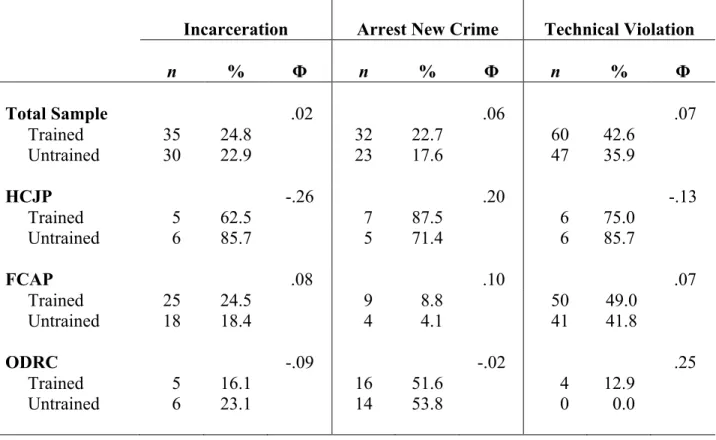
Table 3 examines the effect of group assignment (trained and untrained) on recidivism. In the total sample, the trained group of offenders has a higher percentage of reincarcerations (24.8% vs. 22.9%), arrests for new crimes (22.7% vs. 17.6%), and technical violations filed (42.6% vs. 35.9%). However, none of these differences meet statistical significance: reincarceration (χ2 = .14, df = 1, p = .710), arrest for new crime (χ2 = 1.11, df = 1, p = .292) or technical violations (χ2 = 1.27, df = 1, p = .260).
Table 3
Recidivism by Group Assignmentfor the Total Sample and Disaggregated Sample by Agency
Incarceration Arrest New Crime Technical Violation
n % Φ n % Φ n % Φ Total Sample .02 .06 .07 Trained 35 24.8 32 22.7 60 42.6 Untrained 30 22.9 23 17.6 47 35.9 HCJP -.26 .20 -.13 Trained 5 62.5 7 87.5 6 75.0 Untrained 6 85.7 5 71.4 6 85.7 FCAP .08 .10 .07 Trained 25 24.5 9 8.8 50 49.0 Untrained 18 18.4 4 4.1 41 41.8 ODRC -.09 -.02 .25 Trained 5 16.1 16 51.6 4 12.9 Untrained 6 23.1 14 53.8 0 0.0
When the analyses are disaggregated by agency the percentage of offenders that are incarcerated is lower in the trained group for HCJP (62.5% vs. 85.7%) and ODRC (16.1% vs. 23.1%), but is higher for FCAP (24.5% vs. 18.4%). The percentage of offenders that are arrested for a new crime is also lower in the trained group for ODRC (51.6% vs. 53.8%), but is higher for
HCJP (87.5% vs. 71.4%) and FCAP (8.8% vs. 4.1%). The percentage of offenders that had a technical violation filed against them was lower in the trained group for HCJP (75.0% vs. 85.7%), but is higher for FCAP (49.0% vs. 41.8%) and ODRC (12.9% vs. 0.0%). Pearson chi-square results indicate there are no statistically significant relationships between any of the three recidivism measures and group type by agency. All of the effect sizes (Φ = -.26 to .25) are also considered smaller than typical for the behavioral sciences according to Cohen’s (1988) standards.
Prior research indicates an increased benefit for RNR approaches to supervision with moderate-risk offenders in comparison to high-risk offenders (Robinson et al., 2011). Therefore, Table 4 examines the effect of group assignment on recidivism separated by offender risk level. In the moderate-risk sample, the offenders supervised by trained officers have worse outcomes on all three measures of recidivism in comparison to the offenders supervised by the untrained officers. In the high-risk sample, offenders supervised by the trained officers have better outcomes for technical violations, but worse outcomes for incarceration and arrest for a new crime. However, none of these differences is significant.
Table 4
Recidivism by Group Assignment and Offender Risk Level
Incarceration Arrest New Crime Technical Violation
n % Φ n % Φ n % Φ Moderate-Risk .02 .05 .15 Trained 17 21.5 21 26.6 33 41.8 Untrained 16 20.0 18 22.5 22 27.5 High-Risk .02 .11 -.06 Trained 18 29.0 11 17.7 27 43.5 Untrained 14 27.5 5 9.8 25 49.0
To explore why there may be different effects by officer group assignment, offender risk level, and site location, the officer use of EPICS skills is examined. In order to determine the impact of training on the subsequent officer use of core correctional practices skills, Table 5 uses independent samples t tests to compare the mean scores of the trained group with the mean scores of the untrained group. It should be noted that four officers did not submit any audiotapes; therefore, they could not be included in this analysis.
Table 5
The Effect of EPICS Training on Officer Use of Core Correctional Practices (n = 37)
EPICS Score M SD t df p Cohen’s d
Total Sample -9.63a 29.9a < .001 3.2 Trained (n = 21) .49 .12 Untrained (n = 16) .20 .06 HCJPb -3.03 3 .056 - Trained (n = 4) .47 .08 Untrained (n = 1) .20 - FCAP -10.27 12.8a < .001 4.8 Trained (n = 10) .56 .10 Untrained (n = 10) .20 .05 ODRC -3.41 10 .007 2.2 Trained (n = 7) .40 .11 Untrained (n = 5) .19 .08
aThe t and df were adjusted because variances were not equal
bThe SD for the untrained officers was not computed because there was only one officer. Also, Cohen’s d could not
be computed because there was only one untrained officer.
A couple of interesting findings emerge through this analysis. First, there is a significant difference between the EPICS scores of the trained and untrained officers. For the total sample, the trained officer outperformed untrained officer to 49% to 20%. Based on the values of Cohen’s d (3.2), the magnitude of these group differences is considered much larger than typical
(Cohen, 1988). Large differences were also noted in the FCAP (d = 4.8) and ODRC (d = 2.2). Cohen’s d could not be computed for the HCJP sample because there was only one untrained officer compared to four trained officers. However, in HCJP the mean EPICS score for trained officers (47%) was much higher than the score for the untrained officer (20%).
Second, untrained officers seem to perform with scores on average around 20%. There is much more variation between sites in how well the trained officers performed, with FCAP receiving the highest scores and ODRC the lowest. Despite this variation, the mean performance score was still under 50%. This means the average officer in this study correctly used the EPICS skills less than half of the time it was appropriate. This finding is much lower than expected and indicates officers struggled with using these skills in their interactions with offenders.
It is likely more important that an officer uses core correctional practices in his or her interactions with offenders, rather than whether or not the officer completed the EPICS training. As other programs and interventions also teach officers core correctional practices, it is likely that some of the untrained group may employ such techniques in their interactions with offenders. It is also possible, that an officer could go through the training and not utilize any of the skills taught through EPICS, or do a poor job using the skills.
Table 6 examines the officer use of EPICS skills on recidivism. All officers that submitted audiotapes were divided into one of two groups: a high-fidelity group (overall scores ≥ .50) and a low-fidelity group (overall scores < .50). Eight offenders did not have an officer that submitted an audiotape; therefore those officers could not be included in this analysis. In the total sample, offenders supervised by high fidelity officers had 3.3% fewer incarcerations and 3.6% fewer arrests for new crimes in comparison to the offenders supervised by low fidelity
officers. Offenders supervised by high fidelity officers also had 8.1% more technical violations filed against them than the offenders supervised by low fidelity officers.
Table 6
Recidivism by Officer Use of CCP for the Total Sample and Disaggregated Sample by Agency (n = 264)
Incarceration Arrest New Crime Technical Violation
n % Φ n % Φ n % Φ Total Sample -.04 -.04 .08 High-Fidelity 17 20.5 13 15.7 46 44.6 Low-Fidelity 43 23.8 35 19.3 66 36.5 HCJP -.07 .43 .15 High-Fidelity 3 60.0 5 100.0 4 80.0 Low-Fidelity 4 66.7 4 66.7 4 66.7 FCAP -.05 .05 -.01 High-Fidelity 14 18.9 6 8.1 33 44.6 Low-Fidelity 29 23.0 7 5.6 58 46.0 ODRC -.14 .01 -.08 High-Fidelity 0 0.0 2 50.0 0 0.0 Low-Fidelity 10 20.4 24 49.0 4 100.0
When the analyses are disaggregated by agency the percentage of offenders that are incarcerated is lower for the high fidelity officers in all three sites. The reductions in incarceration range from a 4.1% difference in FCAP to a 20.4% difference in the ODRC. The percentage of offenders that are arrested for a new crime is also lower in the high fidelity officer groups in all three sites, and the percentage of offenders that had a technical violation filed against them was lower in the high fidelity group for FCAP and ODRC, but is higher in HCJP. Pearson chi-square results indicate there are no statistically significant relationships between any of the three recidivism measures and group type by agency.
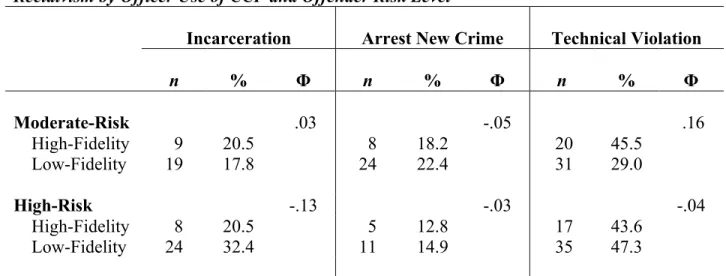
Table 7 examines the effect of officer use of EPICS skills on recidivism separated by offender risk level. In the moderate-risk sample, the offenders supervised by high-fidelity officers had a lower rate of new arrest, but a higher rate of incarceration and technical violations. Interestingly, in the high-risk sample, offenders supervised by the high fidelity officers had better outcomes on all three measures of recidivism compared to offenders supervised by low fidelity officers. This finding is consistent with the risk principle and suggests that there is an added benefit to targeting high-risk versus moderate-risk offenders for RNR approaches to supervision. Table 7
Recidivism by Officer Use of CCP and Offender Risk Level
Incarceration Arrest New Crime Technical Violation
n % Φ n % Φ n % Φ Moderate-Risk .03 -.05 .16 High-Fidelity 9 20.5 8 18.2 20 45.5 Low-Fidelity 19 17.8 24 22.4 31 29.0 High-Risk -.13 -.03 -.04 High-Fidelity 8 20.5 5 12.8 17 43.6 Low-Fidelity 24 32.4 11 14.9 35 47.3 Intermediate Measures
This study employs two offender-completed instruments: the PO Questionnaire – which is designed to measure the relationship quality with their supervising probation or parole officer, and the Criminal Sentiment Scale-Modified (CSS-M) – which is designed to assess offender criminal attitudes.
Table 8 examines the bivariate correlations between the measures of the PO Questionnaire and offender risk level. Supervising officers administered the pre-test