PROCESS OF IDENTIFYING
COMPETENCIES BASED ON A
FUNCTIONAL APPROACH
NAOUFAL SEFIANI¹³*, ABDERAZAK BOUMANE², JEAN-PIERRE CAMPAGNE¹, DRISS BOUAMI³
1
University of Lyon, INSA-Lyon, F-69621, Villeurbanne, France Laboratory for Information and Decision Systems Production (DISP)
² Laboratory of Innovative Technologies (LTI))
National School of Applied Sciences, PO Box 1818, Ziatine, Tangier, Morocco ³ Laboratory of Quality Safety and Maintenance (LQSM)
Mohammadia Engineering School, Mohamed V, Agdal University, Rabat, Morocco [email protected], [email protected]
Abstract :
To cope with fast change of the technological and organizational context, managers need tools to help them to improve competence management. Our contribution aims at supporting the task of competence identification that is considered as the first step of the management process. The proposed identification involves tree stages. The first stage concerns the research of competences based on a functional approach. The second stage is to define a typology of the component of competence (characterization) and the third stage to define the core competencies of competence (prioritization). The application of the method in an industrial case in the logistics field confirms the possibility of using the “principle of solution” to provide a dynamic process for the identification of requisite competencies.
Keywords: Requisite competencies; Identification; Functional analysis; Process.
1. Introduction
In today's economy that is experiencing strong competition and globalization of markets, the enterprise must acquire the appropriate competencies to ensure its sustainability. However, competencies are not a new reality. People have been interested about competencies since a long time but according to a different perception of the concept. Thus, enterprises are always concerned about competencies but it is not the same content, nor the same concept they need [Le Boterf (2004)].Currently, the competency challenges the enterprise as well as the individual and gives rise to debates on the evolution of work and social relationships. This is undeniably a profound evolution of organizations and the place occupied by the human resources. Competencies become then a major issue for the enterprise. They are at the heart of the enterprise's performance, of the quality of its products and its services [Boucher et al (2007)].The excellence targeted by the enterprise depends on acquiring the competencies required for all its stakeholders. Due to the limited scope of operation of the concept of competence identified in the practices of organizations, we will in the first stage focus our attention on an in-depth analysis of the concept of competence. We share in this context the suggestions of Le Boterf that state that most projects of competences, management fail or are being phased out because they do not have a relevant concept of the competence [Le Boterf (2004)].Indeed, the key question is to know "what concept of competence", organizations need in order to cope with the stresses to which they are subject.
2. Literature Survey Of Competence
At the dawn of the competences’ approaches, [Zemke (1982)], in his work on the continuing vocational training, noted that the term competence had little more precise meaning than that attributed to it by the person that uses it. In France, during the 1990s, the promoters of the "logic of competence" sound the alarm. [Zarifian (1995)] wrote, "The notion of competence remains unclear." At the same time, of the North American coast, [Russ-Eft (1995)] observed: "The debate continues about what are competences and how they can be measured."
[Lichtenberger (2003)] notes that the definitions of competence are less guided by the concern for theoretical precision of the authors than by their own concerns: "The competence is defined according to the operative aim of the author who uses it, the work organization, the training, the employment management, the negotiation of recognition ... Everyone, head of operations, head of human resources, member of the union, consultant, trainer, ... understands its meaning that is relevant to them. Today “what is a competence?” remains an unresolved issue. Competence is a polysemic concept that gave rise to a variety of definitions and connotations. And if we have to make a panorama of its definitions, it will take several pages! Without going that far, we will review some extracts from the literature:[Le Boterf (2000)] believes that competence is dynamic and that there is a "risk of analogy with the quantum physics: the image of the electron that can behave as either a particle or a wave depending on the monitoring system in place "and argues that competence can be considered either as a disposition to act or as a process, depending on the point of view where one is placed. In sociology, [Zarifian (2001)]: "Competence is a practical intelligence of the situations that is based on gained knowledge and that turns them with greater force than when the diversity of situations increases."In HRM, [Grundstein (1995)]: "Competence is the ability of people to implement the knowledge and skills constituting the knowledge of the company in given working conditions: the desktop, a specific role, a specific mission. Competence is achieved in the action; it is a process that, beyond the knowledge and know-how, uses the know-be of people and their ethical abilities. "In Psychology, [Levy-Leboyer (1997)]: "Competences relate to the integrated implementation of skills, personality traits as well as the knowledge to carry out a complex mission in the context of the company that commissioned the individual, and in the spirit of its strategies and its culture."In industrial Engineering, [Bonjour and Dulmet (2002)], "competence is the mobilization of a set of heterogeneous knowledge, resulting in the production of proven performance with respect to a given environment and in the context of finalized activity."According to the Movement of Enterprises in France [MEDEF (2002)], "professional competence is a combination of knowledge, skills, experiences and behaviors happening in a specific context. It is noted when put in a professional situation from which it can be validated. Thus, it is the company to which the competence belongs, to spot, to validate and evolve it. "Competence is thus defined as a dynamic process of combining resources and is directly contingent of an explicit professional situation. Based on these definitions, we have retained the following definition: "competence is the ability of an actor (an individual, a collective work), to act and react with the required relevance to perform an activity or set of activities in a given type of work situations. The actor is at the heart of a process of selecting, combining and mobilizing his knowledge, skills, abilities and behaviors on the one hand, and environmental resources on the other hand, in order to achieve the expected performance. "This definition highlights four key characteristics of competence that are recognized by most authors:
- Competence is centred on the individual (dimension: individual). We have shifted from the model of the workstation to the competence in which the individual is an actor in the workplace [Zarifian (2001)].
- Competence is related to work situations (dimension:contextual). A major element springs from the analysis of the proposed definitions. It is the anchoring of the competence in the context in which the action takes place [Levy-Leboyer (1997)].
- Competence relates to the mission (dimension: objective or finalized): the competence is finalized; it is related to a task set by the organization of work. [Levy-Leboyer (1997)].
- Competence can be regarded as a process but also as a disposition to act (dimension: dynamic) [Le Boterf (2004)]. The competence is a process that allows building or adapting action strategies by mobilizing the necessary resources in order to accomplish a given mission.
3. Competences Management
strategy of the organization. On the other hand, it implies a horizontal integration that consists of harmonizing the activities of human resources. Competences management is based on different tools and approaches. While business practices are different, the general pattern of competences management follows three steps [Défelix (2003)]:Acquire competences: Specify the required competences (standards) and identify the competences held; Motivate competences: Evaluate competences from the standards of competences and establish salaries based on competences; Regulate competences: Elaborate strategies for the development of individual and collective competences. Move from a predictable management of jobs to an anticipated management of competences. In practice, competences management resulted in six different types of approaches [Held (1995)]:
- Approaches based on knowledge; - Approaches based on the know-how; - Approaches based on behavior;
- Approaches that integrate knowledge, know-how and know-be; - Approaches based on "cognitive skills";
- Approaches based on activities.
In industrial engineering, work on competences management considers the company as [Burlat and Boucher (2003)]:
- A system of production of goods and services: Its performance resides in the control of the process of the creation of the added value.
- A system of production of knowledge and competences: Its competitiveness is based on the control of the process of capitalization of knowledge and competences development.
Although research on competences and its management are currently underway, the competence is already integrated as a transversal concept and fundamental for the control and the improvement of the enterprise performances. Furthermore, based on the literature of industrial engineering studied, we have found a shortage in research that has focused on the problems of competences identification [Sefiani et al (2011)]. For this reason, we will address in this article the question of identification of competences: what methodology to choose and what tools to implement?
4. Identification of competences
The identification of competences required by the tasks and activities of the organization, in a manner compatible with the expected performance is an unavoidable stage on which depend the decisions of competences management at all horizons. It is the target to which the process of competences development must be oriented (competency framework). It is defined by reference to the work situation and is described in terms of activities to be performed. It must respond to various issues: - Develop a competence framework, the base element for all decisions of competences management; - Achieve the best in recruitment;
- Reorganize the work in accordance with the new requirements (poly-competence, autonomy, initiative, etc.). - Identify the competences needed for projects of reorganization and improvement of performances of an organization. In this paper, we propose an approach for the identification of competences based on functional analysis in order to develop a profile of an actor capable of meeting the needs of the organization by referring to specific work situations. It is primarily an aid to construction of a competence framework. The advantage of this approach is to improve the construction of competences frameworks based not on subjective estimates of a human actor (usually the manager) but on an assessment and a deeper analysis involving the actors involved.
4.1. The functional analysis
questions about the real needs of users, the environmental constraints and the inviolability of them. By putting the individual at the heart of its business environment, the functional approach helps to develop a profile of a best suited actor in order to carry out the tasks requested by the company.
4.2. The identification process of competences
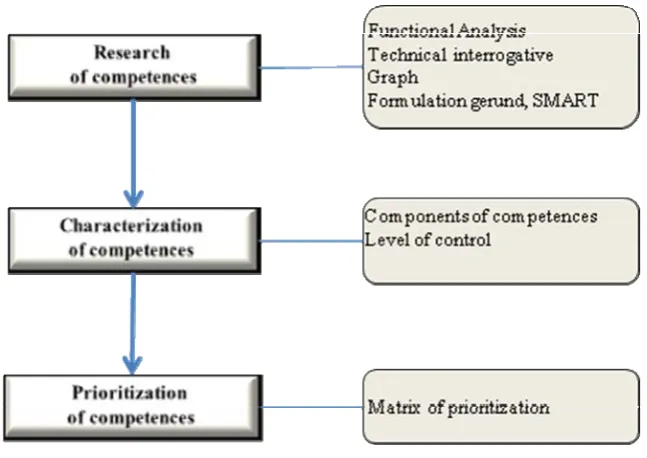
The identification process of competences must meet some constraints. It must be based on simple and operational tools, for its effective implementation by users, scalable and flexible in order to reflect the diversity of encountered situations. It must find the balance between transversality and contextualization [Prévot and Sirjean-Soler (2003)]. In addition, it must be based on an analysis of not only individual characteristics but also characteristics of the work situation [Evereare (2000)]. In this context, we propose a process for identifying competences based on functional analysis. The proposed process has three main steps (Fig 1):
Fig. 1. Process of identifying competences.
4.2.1. Research of competences
This step is to determine the competences required. To do this, we have to:
- Identify the elements of the business environment that are related to the actor in the workplace, -Establish the different interactions actor-professional environment,
-Define the main functions (MF) and adaptation functions (AF). -Identify the required competences linked to these functions.
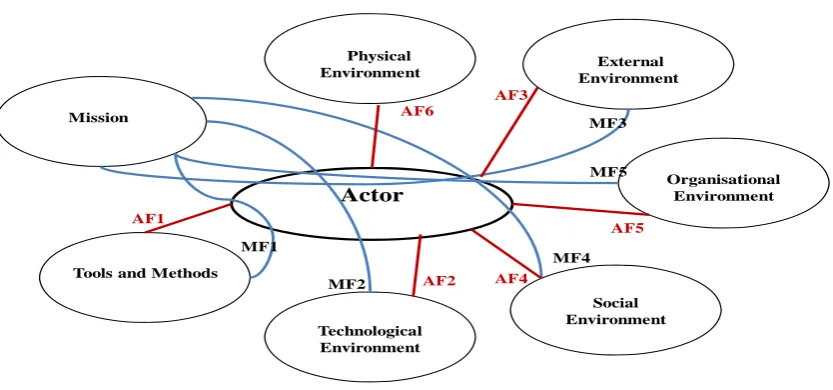
(Fig. 2) represents a generic model of the business environment in which we distinguish:
- Technological environment: it includes the production machines, peripheral equipment, used technologies (hydraulic, pneumatic, mechanical, etc.).
- Organizational environment: distribution of activities, evaluation methods, methods of work and communication, collaboration between and within entities, job descriptions, instructions, organization of working time, information channels, etc..
- Social environment: internal relations (hierarchy, colleagues, collaborators, etc...), professional identity, culture, etc...
- Physical environment: locals, space, noises, vibrations, lighting, thermal environment, etc...
- Tools and methods:Tools, material and immaterial, Methods of work: procedures, techniques, standards and regulations ... etc.
Actor
Physical
Environment EnvironmentExternal
Social Environment Mission
Technological Environment Tools and Methods
Organisational Environment
MF1
MF2
MF4 MF3 AF6
AF3
AF1
AF2 AF4
AF5 MF5
Fig. 2. Generic model of functional analysis.
The study of different interactions, actor-professional environment, leads to put the actor at the heart of the work situation. He must act, react and deal with much information from its professional context in order to achieve the mission set by the company. We focus on two categories of interactions: The actions of the actor on the elements of his business environment, linking the mission to other elements. These are the main functions (MF) that the actor must ensure. The actions and / or the reactions of the actor on the various elements of its environment enabling the actor to adapt to various demands of the business environment. These are the adaptation functions (AF) that the actor must satisfy. A function is expressed by a verb characterizing the action, and adverbial elements representing elements of the professional environment involved in the duty.
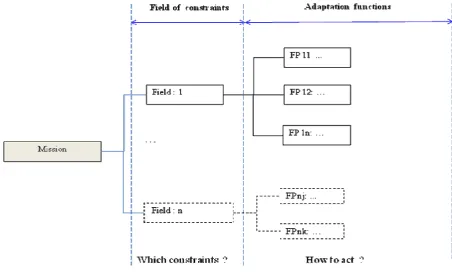
Fig 3. Method of defining the key functions
Furthermore, to identify the functions of adaptation, we will follow a similar approach to that used for the main functions (Fig.4).
Based on the mission, we are going to determine the field of constraints, imposed by each element of the business environment, to which the actor must fit. Next, we will identify the functions of adaptation by answering the question: How to react to these constraints? After defining the main functions and the functions of adaptation, we will determine the required competences that the actor must master to ensure all functions. Thus, we translate the various functions in terms of competences that enable the actor to act and react with the required relevance.Taking into account the context and the business requirements, the required competence is described in terms of functions to perform. It must be formulated by an action verb that is concrete and observable, followed by an object complement specifying the nature and context of the action. We can also use the gerund and inspire from the formulation SMART (Specific, Measurable, Achievable, Realistic and Time-bound) [Drucker (1990)].
4.2.2. Characterization of competences
This step is used to describe the competence that is abstract in nature through tangible components, evaluated by quantitative or qualitative measures indicating the level of control of these components. It consists more precisely of the following:
- Define a typology of the component of competences. - Define a rating scale of proficiency levels.
- Develop a method and a procedure for the characterization. The definition of a typology of the components of a competence depends on the specificity of the activity field. Several typologies have been proposed in the literature to describe the components of the competence [Acuna and Juristo, (2004)], [Ley (2006)]...
The most used typology in Industrial Engineering is the triplet: knowledge, know-how and know-be (the skills and behaviours).Knowledge includes general knowledge, context-free, consisting of concepts, theories, etc ...., and specific knowledge related to the work context.With regards to the know-how, we can list: - The operational know-how concerning the methods, procedures, techniques used to solve technical problems; - The relational know-how that includes actions constructed by the individual in a team work (informal relationship, networking ...)
- The cognitive know-how relates to intellectual operations (information processing, reasoning, abstraction, inference ....).Skills and behaviours are closely related to the characteristics of the person. They are difficult to describe and identify. To overcome this difficulty, we will translate them in terms of professional requirements. To assess the levels of competences proficiency, we associate to each identified competence, the level of the required proficiency.
We retain a grid at three levels:
- Level 1: basic. - Level 2: Fluency. - Level 3: expert
We can also carry out a characterization of the components of competence by their degree of criticality with relation to the objectives of the company. This is done in order to assess the overall level of competence [Boucher and Burlat (2003)] or the value of the criticality of the competence with relation to the competition objectives[Pepiot(2005)].
4.2.3. Prioritization of competences
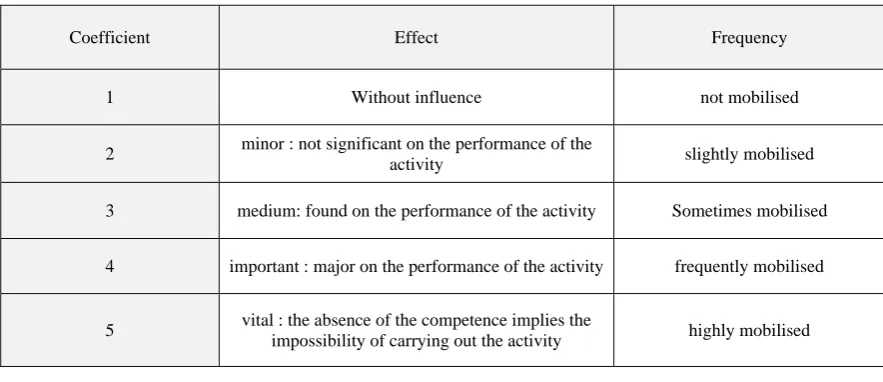
Table 1. Evaluation of competence grid.
Coefficient Effect Frequency
1 Without influence not mobilised
2 minor : not significant on the performance of the
activity slightly mobilised
3 medium: found on the performance of the activity Sometimes mobilised
4 important : major on the performance of the activity frequently mobilised
5 vital : the absence of the competence implies the
impossibility of carrying out the activity highly mobilised
We define the criticality (C) of each competence in the formula: C = E x F (1)
Once the criticality is calculated, it is possible to establish a criticality matrix that allows prioritization of competences.
5. Application
The person in charge of logistics, whether the logistics manager or the supply chain manager, develop in the course of his job multi-faceted competences, a subtle combination of competences, both technical, managerial and human [Penard (2007)].These competences seem to be challenged in recent years [Murphy and Poister (2007)], due to the development of new challenges and new constraints in logistics: development of information and communication technology, increased outsourcing of activities, emergence of strong environmental and safety constraints, etc... In view of these mutations, it seems interesting to define the competences that a logistics manager must have today and that will be important in the future given the current developments of the
job.The application of our approach in the identification of the required competences was done with the
collaboration of an industrial company located in the free zone of Tangier. It deals with the competences of the logistics manager, the success key of the supply chain. At the current state of the application, we conducted a partial validation of the approach.
5.1. Definition of missions
The missions that we have retained for the logistics manager are adapted from the SCOR model.
The SCOR model (Supply Chain Operations Reference) is a reference model initialized in 1996 by The Supply Chain Council [CSC (2000)] with the objective of defining a standard guide for businesses, which defines an approach, processes, indicators and current best practices to represent, assess and diagnose the Supply Chain.
The logistics manager is responsible for the following: - Plan all logistics operations,
- Manage inventory and supplies,
- Control the physical and information flows - Optimize the supply chain management.
5.2. Definition of the functions of the logistics manager
Table 2.Example of functions: MF1 and AF1
.
Mission Plan all logisticsoperations
Scope - Information system (EDI, ERP, WMS, TMS, ...)
- Planning Methods (Kanban, MRP, ....)
- Procedures, Standards and Regulations
- Budget planning
Main functions
MF1
- MF11: use the information system in the planning of logistics operations. - MF12 : plan according to the procedures and standards
- MF13 : plan supplies and shipments according to customer demands, constraints (budget, technical, ..) and hazard
Field of constraints
- Development of tools and methods of work (new version, ...)
- Complexity of the tools
adaptation functions AF1
AF11 : adapting to changes in the information system
AF12 : adapt to changing tools and planning methods
Competences - Plan the logistics operations by using appropriate tools and methods and by respecting professional requirements
- Plan by integrating the development of tools and methods of planning
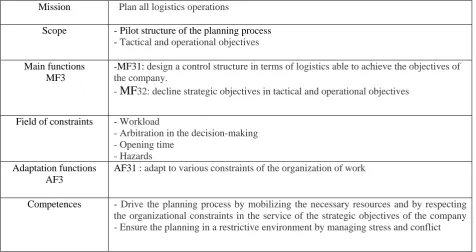
Table 3.Example of functions: MF3 and AF3
.
Mission Plan all logistics operations
Scope - Pilot structure of the planning process
- Tactical and operational objectives
Main functions MF3
-MF31: design a control structure in terms of logistics able to achieve the objectives of the company.
-
MF
32: decline strategic objectives in tactical and operational objectivesField of constraints - Workload
- Arbitration in the decision-making - Opening time
- Hazards
Adaptation functions AF3
AF31 : adapt to various constraints of the organization of work
We proceed in the same way to detect all the functions of logistics manager. Having identified the main and adaptation functions, we then determine the required competences.
5.3. Determination of the required competences
We willtranslate thefunctionsin terms of competences that allow thelogistics managerto succeedthe planning
mission.Analysis of the identifiedfunctions led us toanswer the following questions:
- What competencesto mobilizeto ensureahomogeneous familyof functions?
- What competences to mobilizeto adapt toenvironmental constraints?
Tables 2 and3 present the competences we havedetermined forthe functions:MF1,AF1, MF3, AF3.
The set of competences retained at the end of this analysis are:
- Plan logistics operations by using the appropriate tools and methods and by respecting the professional
requirements.
- Identify and assess the impact of the technology evolution on the planning process through regular
technological monitoring.
- Plan by incorporating the developments of tools and planning methods.
- Develop a dashboard for managing logistics by defining performance indicators that provide relevant
monitoring of them.
- Manage the planning process by mobilizing the necessary resources and by respecting the
organizational constraints in the service of the strategic goals of the company.
- Ensure the planning in a restrictive environment by managing stress and conflict
- Provide leadership role by mobilizing, motivating employees and helping them to progress in order to
achieve logistics goals.
6. Conclusion
Management of competences is, in all sectors of activity, a vital necessity and a key success factor. From this perspective, it seems interesting to pose the problem of identifying competences. This arises most acutely when we treat the businesses of logistics that involve a variety of actors and activities in different spaces and times. To provide some answers to this problem, we have proposed the key elements of the competences identification process.
Having analyzed the concept of competence, we have presented a synthesis on the competences management. We then have developed a competence identification process divided into three stages: research, characterization and prioritization of competences. Given that it relies on a functional approach, which demonstrated its relevance in the areas of design and innovation, our process takes advantage of the strengths of this approach (methodology, creativity, teamwork, favoured communication, etc.. ), and can be transferable to
the field of Human Resource Management ( HRM ).The application of the process has allowed us to identify the
competences required by the activity of the logistics manager. However, given the current state of the
experiment, it remains to validate the steps of characterization and prioritization. Furthermore, based on
practical tools and models that are easy to use for action, the recommended approach is operational and can be applied and adapted according to the specific activities of the company and its developing context.
References
[1] Acuna, S.T.; Juristo, N. (2004). Assigning people to roles in software projects: Software Practice and Experience, Vol. 34, pp.
675-696.
[2] Beirendonck, L.V.(2006) :. Tout compétents ! Le management des compétences dans l’entreprise.
[3] Bonjour, E.; Dulmet, M.(2002): Relationship between competences control systems and knowledge management skills, the first
conference management skills and knowledge in industrial engineering, Nantes, 12-13 December.
[4] Boucher, X.; Bonjour, E.; Grabot, B. (2007). Formalization and use for industrial performance optimization: A survey, Computer in
industry, vol.58, issue2, pp. 98–117.
[5] Boucher, X. ; Burlat, P. (2003): Towards integration of skills in the performance management of the company, JESA, Vol. 37, No. 3,
pp. 363-390.
[6] Defélix, C.(2003) : Ce que gérer les compétences veut dire, Revue Economique et Sociale.
[7] Drucker, P. (1990): Managing the Nonprofit Organization: Principles and Practices, Harper Collins,New York.
[8] Evereare, C.(2000) : La compétence : un compromis multidimensionnel fragile, Gestion 2000, 17, 4, pp. 53-71.
[9] Grundstein, M. (1995): La capitalisation de connaissances de l'entreprise, système de production de connaissances. Actes du colloque
L'entreprise apprenante et les sciences de la complexité.
[10] Held, D. (1995): La gestion des compétences, Revue Economique et Sociale.
[12] Le Boterf, G.(2004) : Construire les compétences individuelles et collectives : les réponses à 90 questions, 3éme édition, Éditions d’Organisation.
[13] Lévy-Leboyer, C.(1997) : La gestion des compétences, 2ième tirage, Editions d’Organisation, Paris..
[14] Ley , T.(2006). Organizational Competency Management : A Competence Management Approach, Shaker Verglas.
[15] MEDEF , (2002) : L’influence des contextes nationaux sur le management par les compétences, Cahiers du MEDEF, Objectif
compétences, des pratiques européennes innovantes, France.
[16] Lichtenberger, Y. (2003) : Compétence, compétences, in J. Allouche (éd.), Encyclopédie des Ressources Humaines, Paris : Vuibert,
pp. 203-215.
[17] Murphy, P.; Poist, R.,(2007). Skill requirements of senior-level logisticians: a longitudinal assessment. Supply Chain Management: An
International Journal, Vol.12, n˚6, pp. 423-431.
[18] NF X 50-100, (1996). Analyse Fonctionnelle Caractéristiques fondamentales.
[19] Parlier, M., (1997) Les enjeux et les ambivalences de la gestion des compétences, Connexions 70-2.
[20] Penard, L., (2007).L’homo supply chain: Supply Chain Magazine, n˚11, pp. 80-81.
[21] Pépiot, G. (2005): Méthodologie des entreprises sur la base des compétences, thèse de doctorat en génie mécanique, EPFL de
Lausanne.
[22] Prévot, F.; Sirjean, S.S. (2003). Proposition d’une démarche d’identification des compétences individuelles: le cas des métiers
opérationnels de la logistique. Gestion 2000.
[23] Russ-Eft, D. (1995). Defining competencies: A critique, Human Resource Development Quarterly, vol. 6, n° 4, pp. 329-335.
[24] Sefiani, N.; Boumane, A.; Campagne, J-P.; Bouami, D.(2011): Modeling a dynamic process of identifying individual
Competence,proceedings of the international conference on Production Research ( ICPR 21).ISBN 978-3-8396-0293-5.
[25] SCC (2000). Supply Chain Operations Reference Model, 203 pp. Cypress, Texas, Etats-Unis: Supply Chain Council.
[26] Zarifian, P. (1995). Le modèle de la compétence : une démarche inachevée, Le Monde, 1er mars.
[27] Zarifian, P. (2001). Le modèle de la compétence-Trajectoire historique, enjeux actuels et propositions, Paris : Editions Liaisons.