RESEARCH
Effect of long-term storage in Safe
Cell
+
extender on boar sperm DNA integrity
and other key sperm parameters
Wiesław Bielas
1, Wojciech Niżański
1*, Agnieszka Partyka
1, Anna Rząsa
2and Ryszard Mordak
3Abstract
Background: There is some controversy about the extent of changes in different sperm cell features in stored boar semen, especially regarding the potential role of the DNA fragmentation assay for assessment of sperm fertiliz-ing ability. The aim of this study was to assess the effect of time of storage and the dynamic changes in sperm cell characteristics in normospermic boar semen stored in long-term extender, in order to determine the susceptibility to damage of particular structures of spermatozoa during cooling and storage at 17 °C for 240 h post collection. The study included five ejaculates from each of seven boars of the Polish Large White breed (n = 35 ejaculates). The sperm characteristics were assessed using a flow cytometer and a computer assisted sperm analyzer on samples at 0, 48, 96, 168 and 240 h post collection.
Results: The sperm chromatin structure assay (SCSA) showed a significant abrupt increase (P < 0.01) in the DNA fragmentation index (%DFI) after 48 h of semen storage with only subtle changes thereafter, not exceeding 5% on average after 240 h of storage. The use of a combination of SYBR-14/PI stains did not reveal any significant changes in the percentage of live sperm cells up to 168 h of semen storage. A significant (P < 0.01) decrease in the percentage of live spermatozoa with intact acrosomes was observed after prolonged semen storage (168 h). A significant and progressive decrease in sperm motility was recorded during the whole period of semen storage.
Conclusions: Storage of boar semen extended in long-term diluent at 17 °C for 48 h initially induced a decrease in the integrity of sperm DNA. This suggests that the structure of boar sperm DNA is susceptible to damage, especially during semen extension and at the beginning of sperm storage. These findings support the opinion that the SCSA test has only a low potential for routine assessment of boar semen preserved in the liquid state and for assessment of sperm quality changes during 10 days of semen preservation. Remarkably, the integrity of acrosomes and plasma membranes remained nearly unchanged for 7 days.
Keywords: Boar, Spermatozoa, DNA fragmentation, Flow cytometry, Acridine orange, SCSA, CASA
© The Author(s) 2017. This article is distributed under the terms of the Creative Commons Attribution 4.0 International License (http://creativecommons.org/licenses/by/4.0/), which permits unrestricted use, distribution, and reproduction in any medium, provided you give appropriate credit to the original author(s) and the source, provide a link to the Creative Commons license, and indicate if changes were made. The Creative Commons Public Domain Dedication waiver (http://creativecommons.org/ publicdomain/zero/1.0/) applies to the data made available in this article, unless otherwise stated.
Background
In the pig industry, the vast majority of sows are still sub-jected to artificial insemination (AI) with extended liquid semen, so that preservation of the fertilizing capacity of boar spermatozoa for several days remains an important target for the industry [1]. Up until now, there has been
no breakthrough in the use of frozen boar semen [2], mainly due to the high sensitivity of boar spermatozoa to cooling, freezing and thawing [3]. Commonly, boar sper-matozoa are stored in liquid at 15–17 °C for routine use in artificial insemination, but extenders for boar semen for storage even at lower temperatures have also been available for a number of years [4–8]. Therefore, there is a growing interest in the development of new extend-ers and determination of optimal storage conditions for diluted boar spermatozoa. To preserve the quality of spermatozoa in diluted boar semen during long-term
Open Access
*Correspondence: [email protected]
1 Department of Reproduction and Clinic of Farm Animals, Faculty of Veterinary Medicine, Wrocław University of Environmental and Life Sciences, pl. Grunwaldzki 49, 50-366 Wrocław, Poland
storage, the choice of long-term extender is critically important [9]. Long-term extenders have certain advan-tages: they allow for better organization in collection centers, support long-distance transport and provide the ability to conduct research on the semen before use [4]. Unfortunately, even if extenders and lower temperatures can prolong the lifespan of spermatozoa, physiologi-cal senescence of sperm cells still cannot be completely avoided. Aging-related changes may occur, consisting of non-regulated, capacitation-like modifications [10], structural and functional changes [1], oxidative processes in cell membranes [11] and damage to DNA integrity [12]. These changes can only be partially delayed by using different extenders [13].
Among the different indicators of sperm quality dur-ing storage, motility and integrity of the sperm plasma membrane have been the most evaluated characteristics in boars. Motility is assessed by means of computer-assisted semen analysis (CASA) [14], and sperm plasma membrane integrity through flow cytometry [1, 16]. These methods are good tools for sensitive assessment of storage effects on sperm quality as well as for evaluation of new extenders and preservation methods [16]. Both sperm evaluation systems have been shown to be accu-rate, precise and repeatable and have greatly improved the accuracy, objectivity and reproducibility of sperm evaluation [17, 18]. However, assessment of motility and sperm membrane integrity during storage only par-tially addresses the lowering of sperm fertilizing poten-tial caused primarily by aging due to free radicals. Many factors including storage length, extender type, male effect, boar age and breed affect boar sperm quality. With respect to this, assessment of the capacity of a specific extender to maintain the quality of stored boar spermato-zoa should also include DNA integrity [12, 19], acrosome intactness [13, 20], mitochondrial activity [21], bacterial contamination, pH determination [9], tyrosine phospho-rylation [15] and apoptotic changes [18].
One of the key features related to sperm fertility is the integrity of the nuclear DNA, whose stability largely depends on the integrity of the chromatin. Therefore, some authors recommend assessment of chromatin integrity as a good, complementary and independent indicator of sperm quality [22]. Sperm DNA fragmenta-tion tests, such as the DNA fragmentafragmenta-tion index (%DFI), may provide a reliable guide to identify individuals that are at risk of failing to initiate a healthy pregnancy [23]. There are several methods to assess sperm DNA frag-mentation, which have been used in the assessment of boar spermatozoa. These methods are the TUNEL assay [24, 25], the sperm chromatin structure assay (SCSA) [26, 27], the Comet assay [28] and the sperm chromatin dis-persion test (SCD) [29, 30].
A number of studies have indicated the potential of the SCSA for assessment of boar sperm quality [12, 26, 31] and fertility [32–34]. The negative, damaging effect of semen handling and storage on boar sperm DNA has previously been described, both with respect to liquid storage [12, 16, 28, 34, 35] and frozen storage [36–38]. Dilution conditions [28, 35, 39], time of storage of liq-uid semen [12] and age of boars [40], as well as variation between ejaculates within boars [12, 32, 41], may be to some extent implicated and responsible for the dam-age to boar sperm DNA integrity. Thus, damdam-aged DNA is considered to be one element responsible for reduced capability of sperm cells to bind to the oviductal epithe-lium [41], as well as to underdevelopment of embryos [42, 43], and can lead to early embryonic or fetal death or have a dramatic impact on health of the offspring [27]. In recent studies, which investigated the relationship of flow cytometric sperm integrity assessments with boar fertil-ity, none of the individual membrane integrity variables was significantly related to fertility except the amount of DNA damage. These studies have shown that only sperm chromatin stability had a relationship with fertility from 7 to 10 days and again from 14 to 15 days after ejaculation, dilution and long-term storage of semen [34]. Contradic-tory results were obtained in some recent experiments showing that the level of DNA fragmentation in liquid stored boar semen is very low for a long time [16, 19].
The aim of this study was to investigate changes in the %DFI determined by SCSA along with changes in key sperm parameters in boars to elucidate effects of boar and time of storage on sperm cell quality. During the study, semen was diluted and stored in Safe Cell+, a long-term extender for 240 h at 17 °C.
Methods
Animals and semen collection
Seven mature boars of the Polish Large White breed were used, ranging from 18 months to 3 years of age and selected according to the normal semen quality criteria, i.e., >50 × 108 total sperm cells per ejaculate, initial
and preparation of smears for subsequent staining with Giemsa stain [44] and routine sperm morphology assess-ment (1250× magnification). The sperm-rich fraction was diluted with Safe Cell+ (IMV Technologies, l’Aigle, France) long-term extender to a final concentration of 30 × 106
spermatozoa/mL to prepare conventional AI doses for fresh semen. The extended semen doses of 100 mL contain-ing approximately 3 × 10⁹ sperm were packaged in plastic
bags. They were slowly cooled down to 17 °C and subse-quently transported to the Laboratory of Andrology at the Department of Reproduction, Faculty of Veterinary Medi-cine in Wrocław within 5 h after collection. In the labora-tory, the semen doses were stored at 17 °C in a boar semen incubator (Minitüb). Samples for computer assisted sperm analysis and assessment in a flow cytometer were taken immediately after arrival at the laboratory (0 h) and again after 48, 96, 168 and 240 h of storage at 17 °C.
Assessment of sperm cell characteristics
Motility
Sperm motion characteristics in extended semen were evaluated using CASA (Hamilton-Thorne Sperm Ana-lyser IVOS version 12.2l, Hamilton Thorne Biosciences, MA, USA), under 1.89 × 10 magnification. A 3 µL ali-quot of semen was placed in a Leja4 analysis chamber (Leja, Nieuw-Vannep, Netherlands) at 35 °C and evalu-ated. Settings of the IVOS were the following: frame acquired 45, frame rate 60 Hz, minimum cell contrast 46, minimum cell size 7, straightness threshold 45%, path velocity threshold 45 µ/s, path velocity cut off 20 µ/s, straight line velocity cutoff 5 µ/s, head size non-motile 7, head intensity non-motile 50, static head size 0.65–4.90, static head intensity 0.50–2.50, static elongation 0–87. Six fields randomly selected by a computer were analyzed for each semen sample. The motility parameters obtained by the IVOS analyzer were: VAP (average path velocity, µm/s), VSL (straight line velocity, µm/s), VCL (curvilin-ear line velocity, µm/s), ALH (amplitude of lateral head displacement, µm), BCF (beat cross frequency, Hz), LIN (linearity, %), MOT (total motility, %), PMOT (progres-sive motility, %), subpopulation of RAPID cells (veloc-ity > mean velocity of sperm population, %). CASA was set for analysis (5 microscopic views), more than 200 spermatozoa per sample were examined.
Sperm membrane integrity
Sperm membrane integrity was assessed using dual flu-orescent probes, SYBR-14 and propidium iodide (PI) (Live/Dead Sperm Viability Kit, Life Technologies Ltd., Carlsbad, CA, USA). Samples with a concentration of 30 × 106 spermatozoa/mL were taken for the analysis.
Portions (300 µL) of the samples were pipetted into cyto-metric tubes and 5 µL of SYBR-14 working solution was
added. The working solution was obtained by diluting SYBR-14 in DMSO at a ratio of 1:49. Samples were mixed and incubated at room temperature for 10 min and then the cells were counterstained with 5 µL PI (2.4 mM work-ing solution) for 5 min before analysis [45–47].
Acrosome integrity
Acrosomal damage was assessed using PNA Alexa Fluor 488 (Lectin from Arachis hypogaea, Merck Biosciences, Darmstadt, Germany). Ten microliter PNA Alexa Fluor 488 working solution (1 µg/mL) was added to 500 µL of sperm sample (30 × 106 spermatozoa/mL) and incubated
for 5 min at room temperature in the dark. Following incubation, the supernatant was removed by centrifuga-tion (500×g for 3 min) and the sperm pellets were re-sus-pended in 500 µL of Safe Cell+. Then, 5 µL of PI (2.4 mM working solution, AO; Life Technologies Ltd.) was added to samples before cytometric analysis [48].
Assessment of chromatin status
Sperm samples were diluted in Safe Cell+ diluent to a final concentration of 1 × 10⁶ spermatozoa/mL. The
suspension (200 µL) was subjected to brief acid dena-turation by mixing with 400 µL of lysis solution [Triton X-100 0.1% (v/v), NaCl 0.15 M, HCl 0.08 M, pH 1.4], held for 30 s and mixed with 1.2 mL acridine orange solution (AO; Life Technologies Ltd.) (6 µg AO/mL in a buffer: citric acid 0.1 M, Na2HPO4 0.2 M, EDTA 1 mM, NaCl
0.15 M, pH 6). After 3 min samples were aspirated into a flow cytometer [49].
Assessment of mitochondrial activity
The percentage of spermatozoa with functional mito-chondria was estimated by combining fluorescent stains: Rhodamine 123 (R123; Life Technologies Ltd.) and PI. R123 solution (10 µL) was added to 500 µL of diluted sperm samples (50 × 106 spermatozoa/mL) and
incu-bated for 20 min at room temperature in the dark. Sam-ples were then centrifuged at 500×g for 3 min and the sperm pellets were resuspended in 500 µL Safe Cell+
extender. Then PI (2.4 mM working solution) was added as previously described [48].
Flow cytometry (FC)
fluorescence of acridine orange (double-stranded DNA) was detected on the FL1 detector and red fluorescence of AO (single-stranded DNA) with detector FL3. This is the standard protocol for flow cytometer analysis.
Gates were set according to forward and side scatters to eliminate particles smaller than sperm in cell aggre-gates. For SYBR-14/PI, PNA Alexa Fluor 488/PI and Rhodamine 123/PI fluorochrome quadrants were set on dot plots of the logs of green fluorescent events (live spermatozoa, damaged acrosomes, active mitochondria), and red fluorescent events (dead spermatozoa) and dual staining [45, 47].
The extent of DNA denaturation, expressed as the DNA fragmentation index (%DFI), was calculated based on the ratio of red/total (red + green) fluorescence for each sperm cell in the sample [22]. For each sample, two terms of DFI were evaluated: the percentage of sper-matozoa outside the main population with denatured DNA (%DFI) and the percentage of spermatozoa with an abnormally high DNA stainability (%HDS). The percent-age of HDS cells was calculated by setting the appropri-ate gappropri-ate above the upper border of the main cluster of the sperm population with no detectable DNA denaturation, mainly immature cells.
Acquisitions were performed using the CellQuest 3.3 software (Becton–Dickinson, San Jose, CA, USA). The non-sperm events were gated out based on scatter prop-erties and excluded from analysis. A total of 40 × 103
events (spermatozoa) were analyzed for each sample.
Statistical analysis
The results obtained, presented as mean ± SD of meas-urements on samples from 35 replicate determinations, were analyzed by ANOVA considering the time of stor-age and boars as the main variables. When ANOVA revealed a significant effect, values were compared by the least significant difference pairwise multiple com-parison post hoc test (Tukey’s test). Differences were considered to be significant if the calculated probability of their occurring by chance was <5% (P < 0.05). The sta-tistical model included the effect of time of storage and the interaction between boar and time of storage. All percentage data were arc sin transformed to normalize unequal variances.
The Spearman’s rank correlation coefficients were cal-culated to measure the statistical dependence among all variables, i.e., among all parameters assessed in the study at 0, 48, 96, 168 and 240 h of sperm storage.
Results
Characteristics of fresh semen
The mean volume of ejaculates collected from the boars was 264.2 ± 47.4 mL. The percentage of progressively
motile spermatozoa assessed subjectively in fresh semen and the concentration of spermatozoa per mL were 76.6 ± 6.1 and 516.5 × 10⁶ ± 134.2 × 10⁶, respectively.
The percentages of sperm cells with primary and second-ary defects of morphology were 12.9 ± 4.6 and 3.1 ± 1.7, respectively (mean ± SD).
CASA and flow cytometric assessment of spermatozoa
Motility
A gradual decrease of MOT and PMOT of sperma-tozoa was observed in samples stored in long-time extender (Table 1). The decrease of MOT was signifi-cant (P < 0.01) in all analysis periods, beginning from 48 h. The values for MOT of spermatozoa stored at 168 and 240 h were relatively low. Similarly, initial values of PMOT were below 25%. There were no significant differences between PMOT at 0, 48 and 96 h. A sig-nificant drop of PMOT at 168 h was noted (P < 0.001). The initial mean value of STR was 40.9% ± 4.7 and LIN was 20.4% ± 2.7 (mean ± SD). STR and LIN increased concomitantly with the decrease of ALH and PMOT. A gradual decrease in the velocity of spermatozoa was observed. A dramatic drop of VAP and the subpopula-tion of RAPID cells at 96 and 168 h of semen storage was observed. A significant effect on all sperm motion char-acteristics was shown for time of storage (P < 0.0001), and with the exception of MOT and BCF, for the fac-tors boar and interaction of boar and time (P < 0.05, P < 0.0001) (Table 1).
Viability
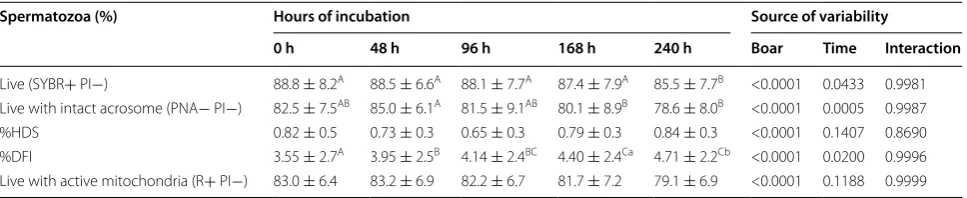
The percentage of spermatozoa with an intact plasma membrane (i.e., live spermatozoa) was relatively high and nearly unchanged up to 168 h of sperm storage (Table 2). At 240 h of storage a significant (P < 0.01) decrease in live cells was observed. The percentage of dead cells increased (P < 0.01) earlier, i.e., at 168 h of sperm stor-age. The percentage of cells that exhibited a partly green fluorescence and a partly red fluorescence (moribund, dying cells) remained unchanged during the whole stor-age period.
Acrosome integrity
increased significantly (P < 0.05) at 240 h of sperm stor-age whereas the percentstor-age of sperm cells with damstor-aged plasma membranes and damaged acrosomes remained nearly constant during the whole period of sperm storage.
Chromatin structure
The %DFI, describing the percentage of spermatozoa out-side the main population with denatured DNA, increased significantly (P < 0.01) within a short time after semen collection and dilution, and was already apparent at 48 h of sperm storage (Table 2). At each time point of sperm assessment, a significant increase in %DFI was observed. A significant effect on sperm chromatin integrity was shown for boar and time (P < 0.0001 and P < 0.05, respectively) The percentage of spermatozoa with an
abnormally high DNA stainability (%HDS), i.e., immature cells was similar at all times of sample analysis.
Mitochondrial activity
A gradual increase in the percentage of live spermato-zoa with inactive mitochondria was observed. There was a significant difference (P < 0.05) between 0, 168 and 240 h of storage (Table 2). No significant differences were noted in the percentage of live spermatozoa with active mitochondria during storage (P > 0.05) between 0 and 240 h. There were no significant differences between the percentages of dead sperm cells with active and inactive mitochondria in consecutive measurements. However, a significant effect on these subpopulations of dead sperm cells was shown for boar and time of storage (P < 0.0001 and P < 0.05, respectively).
Table 1 Motion characteristics of boar spermatozoa assessed by computer assisted semen analyzer (CASA) in semen stored for 240 h at 17 °C (mean ± SD, n = 35)
Characteristics assessed by CASA: MOT-percentage of motile spermatozoa; PMOT-percentage of progressively motile spermatozoa; VAP-average path velocity; VSL-straight line velocity; VCL-curvilinear velocity; ALH-amplitude of lateral head displacement; BCF-beat cross frequency; STR-straightness; LIN-linearity; RAPID-subpopulation of rapid cells
Different superscripts within a row indicate significant differences a,b P < 0.05; A,B,C,D,E P < 0.01
Spermatozoa Hours of incubation Source of variability
0 h 48 h 96 h 168 h 240 h Boar Time Interaction
MOT (%) 77.3 ± 12.4A 67.3 ± 19.6B 55.7 ± 19.0C 32.0 ± 18.1D 20.8 ± 15.3E 0.0083 <0.0001 0.2397
PMOT (%) 24.0 ± 9.6A 21.2 ± 10.1A 20.2 ± 11.9A 11.3 ± 7.4Ba 6.6 ± 5.4Bb 0.0001 <0.0001 0.0040
VAP (µm/s) 99.0 ± 17.9A 98.8 ± 17.2A 79.1 ± 17.1B 65.1 ± 15.9C 53.2 ± 20.4D 0.0004 0.0000 0.0390
VSL (µm/s) 38.2 ± 6.4A 38.3 ± 7.4A 35.8 ± 8.4AB 32.5 ± 5.9B 27.7 ± 9.1C 0.0004 0.0000 0.0004
VCL (µm/s) 209.2 ± 37.4A 209.8 ± 35.7A 173.5 ± 37.9B 143.3 ± 34.3C 119.1 ± 47.2D 0.0008 0.0000 0.0399
ALH (µm) 9.4 ± 1.1A 9.6 ± 0.9Aa 9.5 ± 0.9A 8.9 ± 1.3Ab 7.7 ± 2.6B <0.0001 <0.0001 0.0001
BCF (Hz) 34.8 ± 2.8A 34.4 ± 3.1A 32.8 ± 2.9A 33.1 ± 3.2A 30.4 ± 9.1B 0.1660 <0.0001 <0.0001
STR (%) 40.9 ± 4.7A 41.0 ± 4.6A 47.1 ± 7.0Ba 52.2 ± 8.4Bb 51.1 ± 17.4B 0.0001 <0.0001 <0.0001
LIN (%) 20.4 ± 2.7Aa 20.4 ± 2.4Aa 22.9 ± 3.4AC 25.6 ± 4.5B 24.6 ± 8.5BC <0.0001 <0.0001 <0.0001
RAPID (%) 63.5 ± 16.4A 55.7 ± 21.8A 41.7 ± 19.6B 21.2 ± 15.2Ca 12.5 ± 10.6Cb 0.0039 <0.0001 0.0477
Table 2 Plasma membrane integrity, acrosome integrity, sperm chromatin structure assay and mitochondrial activity of boar spermatozoa in semen stored for 240 h at 17 °C (mean ± SD, n = 35)
SYBR, SYBR-14; PI, propidium iodide; PNA, PNA Alexa Fluor 488 (lectin from Arachis hypogaea); PI, propidium iodide; %DFI (DNA fragmentation index)—the percentage of spermatozoa with DNA fragmentation; %HDS (high DNA stainability)—the percentage of spermatozoa with immature chromatin (less chromatin condensation); R, Rhodamine 123; PI, propidium iodide
Different superscripts within a row indicate significant differences a,b P < 0.05; A,B,C P < 0.01
Spermatozoa (%) Hours of incubation Source of variability
0 h 48 h 96 h 168 h 240 h Boar Time Interaction
Live (SYBR+ PI−) 88.8 ± 8.2A 88.5 ± 6.6A 88.1 ± 7.7A 87.4 ± 7.9A 85.5 ± 7.7B <0.0001 0.0433 0.9981
Live with intact acrosome (PNA− PI−) 82.5 ± 7.5AB 85.0 ± 6.1A 81.5 ± 9.1AB 80.1 ± 8.9B 78.6 ± 8.0B <0.0001 0.0005 0.9987
%HDS 0.82 ± 0.5 0.73 ± 0.3 0.65 ± 0.3 0.79 ± 0.3 0.84 ± 0.3 <0.0001 0.1407 0.8690 %DFI 3.55 ± 2.7A 3.95 ± 2.5B 4.14 ± 2.4BC 4.40 ± 2.4Ca 4.71 ± 2.2Cb <0.0001 0.0200 0.9996
Relationships among boar sperm cell characteristics during storage
In Fig. 1, the relationship between the %DFI and motil-ity (MOT and PMOT) and the viabilmotil-ity, acrosome and plasma membrane integrity characteristics, is shown for 35 ejaculates, representing different patterns of changes in these boar sperm cell parameters during storage.
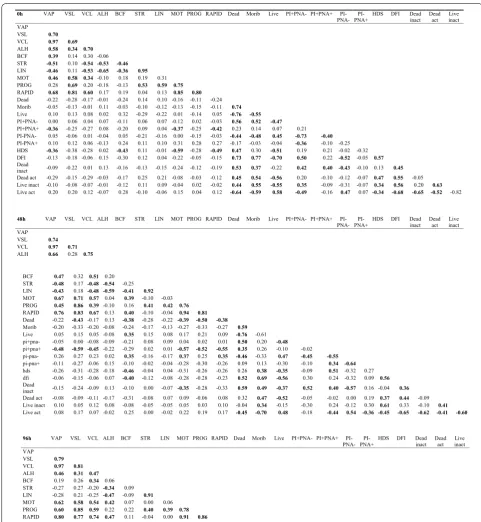
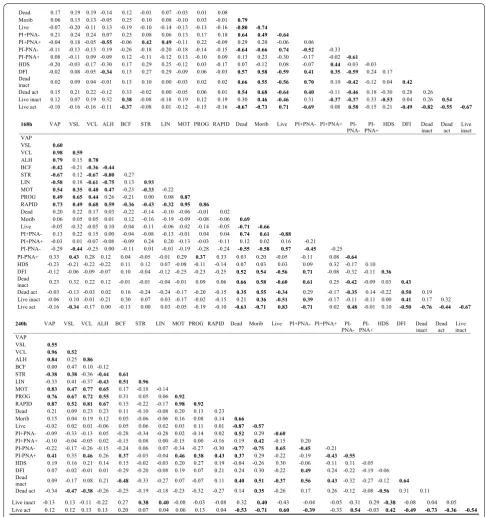
Statistically significant correlations between motility parameters at consecutive hours of semen incubation (Figs. 2, 3) were observed. The experiment also revealed many statistically significant correlations among the majority of the structural parameters of boar sperm cells during incubation. Moreover, the %DFI and %HDS were well correlated with structural parameters at 0 h of incu-bation. After that only %DFI was strongly correlated with sperm structural features while %HDS lost that feature. At 240 h of incubation, neither parameter presented sig-nificant correlations with structural characteristics of sperm cells. Overall, there were no strong correlations between motility parameters and structural parameters of boar spermatozoa stored in the liquid state.
Discussion
Artificial insemination in pigs is mostly done using boar semen preserved in the liquid state at 16–17 °C. There-fore, semen in the present study was diluted and stored
in extender at 17 °C. While extenders for boar semen for storage at lower temperatures have been available for a number of years [4–8], these are not sufficiently effective for practical use in pig AI and further work is needed to produce efficient low temperature extenders.
The decrease of MOT and PMOT is similar to values obtained by others [18, 50]. The percentages of motile sperm stored for 5 days in long-term extenders X-cell, Androstar and Mulberry III were 55.6, 49.9 and 80.5, respectively [18].
We found that the percentages of boar spermatozoa with intact plasma membranes were usually more that 80% and did not change significantly during storage for 168 h. Similar results concerning sperm plasma mem-brane integrity in stored boar spermatozoa were obtained by others [18].
The study revealed a relative stability of sperm acroso-mal membranes during storage of boar semen in the liq-uid state. It should be noted that there was a discrepancy between apparent loss of sperm motility and unchanged percentages of acrosome intact spermatozoa at consecu-tive measurements up to 168 h of semen storage.
Based on a total of 35 ejaculates collected from seven boars over a period of 5 weeks, 17.1% of the sperm samples showed >3%DFI, 11.4% showed >5%DFI, and 5.7% showed >10% of %DFI. Thus, our findings confirm
0 10 20 30 40 50 60 70 80 90 100
0 h 48 h 96 h 168 h 240 h
MOT
PMOT
PSA-
PI-
SYBR-14+/PI-%DFI
%
0h VAP VSL VCL ALH BCF STR LIN MOT PROG RAPID Dead Morib Live PI+PNA- PI+PNA+
PI-PNA- PNA+PI- HDS DFI Dead inact Dead act Live inact VAP
VSL 0.70 VCL 0.97 0.69
ALH 0.58 0.34 0.70
BCF 0.39 0.14 0.30 -0.06 STR -0.51 0.10 -0.54 -0.53 -0.46 LIN -0.46 0.11 -0.53 -0.65 -0.36 0.95
MOT 0.46 0.58 0.34 -0.10 0.18 0.19 0.31
PROG 0.28 0.69 0.20 -0.18 -0.13 0.53 0.59 0.75 RAPID 0.68 0.81 0.60 0.17 0.19 0.04 0.13 0.85 0.80 Dead -0.22 -0.28 -0.17 -0.01 -0.24 0.14 0.10 -0.16 -0.11 -0.24 Morib -0.05 -0.13 -0.01 0.11 -0.03 -0.10 -0.12 -0.13 -0.15 -0.11 0.74 Live 0.10 0.13 0.08 0.02 0.32 -0.29 -0.22 0.01 -0.14 0.05 -0.76 -0.55 PI+PNA- 0.00 0.06 0.04 0.07 -0.11 0.06 0.07 -0.12 0.02 -0.03 0.56 0.52 -0.47 PI+PNA+ -0.36 -0.25 -0.27 0.08 -0.20 0.09 0.04 -0.37 -0.25 -0.42 0.23 0.14 0.07 0.21 PI-PNA- 0.05 -0.06 0.01 -0.04 0.05 -0.21 -0.16 0.00 -0.15 -0.03 -0.44 -0.48 0.45 -0.73 -0.40 PI-PNA+ 0.10 0.12 0.06 -0.13 0.24 0.11 0.10 0.31 0.28 0.27 -0.17 -0.03 -0.04 -0.36 -0.10 -0.25 HDS -0.36 -0.38 -0.28 0.02 -0.43 0.11 -0.01 -0.59 -0.28 -0.49 0.47 0.30 -0.51 0.19 0.21 -0.02 -0.32 DFI -0.13 -0.18 -0.06 0.15 -0.30 0.12 0.04 -0.22 -0.05 -0.15 0.73 0.77 -0.70 0.50 0.22 -0.52 -0.05 0.57 Dead
inact -0.09 -0.22 0.01 0.13 -0.16 -0.13 -0.15 -0.24 -0.12 -0.19 0.53 0.37 -0.22 0.42 0.40 -0.43 -0.10 0.13 0.45 Dead act -0.29 -0.15 -0.29 -0.03 -0.17 0.25 0.21 -0.08 -0.03 -0.12 0.45 0.54 -0.56 0.20 -0.10 -0.12 -0.07 0.47 0.55 -0.05 Live inact -0.10 -0.08 -0.07 -0.01 -0.12 0.11 0.09 -0.04 0.02 -0.02 0.44 0.55 -0.55 0.35 -0.09 -0.31 -0.07 0.34 0.56 0.20 0.63 Live act 0.20 0.20 0.12 -0.07 0.28 -0.10 -0.06 0.15 0.04 0.12 -0.64 -0.59 0.58 -0.49 -0.16 0.47 0.07 -0.34 -0.68 -0.65 -0.52 -0.82
48h VAP VSL VCL ALH BCF STR LIN MOT PROG RAPID Dead Morib Live PI+PNA- PI+PNA+
PI-PNA- PNA+PI- HDS DFI Dead inact Dead act Live inact VAP
VSL 0.74 VCL 0.97 0.71 ALH 0.66 0.28 0.75
BCF 0.47 0.32 0.51 0.20
STR -0.48 0.17 -0.48 -0.54 -0.25
LIN -0.43 0.18 -0.48 -0.59 -0.41 0.92
MOT 0.67 0.71 0.57 0.04 0.39 -0.10 -0.03
PROG 0.45 0.86 0.39 -0.10 0.16 0.41 0.42 0.76
RAPID 0.76 0.83 0.67 0.13 0.40 -0.10 -0.04 0.94 0.81
Dead -0.22 -0.43 -0.17 0.13 -0.38 -0.28 -0.22 -0.39 -0.50 -0.38 Morib -0.20 -0.33 -0.20 -0.08 -0.24 -0.17 -0.13 -0.27 -0.33 -0.27 0.59 Live 0.05 0.15 0.05 -0.08 0.35 0.15 0.08 0.17 0.21 0.09 -0.76 -0.61 pi+pna- -0.05 0.00 -0.08 -0.09 -0.21 0.08 0.09 0.04 0.02 0.01 0.50 0.20 -0.48 pi+pna+ -0.48 -0.59 -0.45 -0.22 -0.29 0.02 0.01 -0.57 -0.52 -0.55 0.35 0.26 -0.10 -0.02 pi-pna- 0.26 0.27 0.23 0.02 0.35 -0.16 -0.17 0.37 0.25 0.35 -0.46 -0.33 0.47 -0.45 -0.55 pi-pna+ -0.11 -0.27 -0.06 0.15 -0.10 -0.02 -0.04 -0.28 -0.30 -0.26 0.09 0.13 -0.30 -0.10 0.34 -0.64 hds -0.26 -0.31 -0.28 -0.18 -0.46 -0.04 0.04 -0.31 -0.26 -0.26 0.26 0.38 -0.35 -0.09 0.51 -0.32 0.27 dfi -0.06 -0.15 -0.06 0.07 -0.40 -0.12 -0.08 -0.28 -0.28 -0.23 0.52 0.69 -0.56 0.30 0.24 -0.32 0.09 0.56 Dead
inact -0.15 -0.24 -0.09 0.13 -0.10 0.00 -0.07 -0.35 -0.28 -0.33 0.59 0.49 -0.37 0.52 0.40 -0.57 0.16 -0.04 0.36 Dead act -0.08 -0.09 -0.11 -0.17 -0.31 -0.08 0.07 0.09 -0.06 0.08 0.32 0.47 -0.52 -0.05 -0.02 0.00 0.19 0.37 0.44 -0.09 Live inact 0.10 0.05 0.12 0.08 -0.08 -0.05 -0.05 0.05 0.03 0.10 -0.04 0.34 -0.15 -0.30 0.24 -0.12 0.30 0.61 0.33 -0.10 0.41 Live act 0.08 0.17 0.07 -0.02 0.25 0.00 -0.02 0.22 0.19 0.17 -0.45 -0.70 0.48 -0.18 -0.44 0.54 -0.36 -0.45 -0.65 -0.62 -0.41 -0.60
96h VAP VSL VCL ALH BCF STR LIN MOT PROG RAPID Dead Morib Live PI+PNA- PI+PNA+
PI-PNA- PNA+ PI- HDS DFI Dead inact Dead act inact Live
VAP
VSL 0.79
VCL 0.97 0.81
ALH 0.46 0.31 0.47
BCF 0.19 0.26 0.34 0.06
STR -0.27 0.27 -0.20 -0.34 0.09
LIN -0.28 0.21 -0.25 -0.47 -0.09 0.91
MOT 0.62 0.58 0.54 0.42 0.07 0.00 0.06
PROG 0.60 0.85 0.59 0.22 0.22 0.40 0.39 0.78
RAPID 0.80 0.77 0.74 0.47 0.11 -0.04 0.00 0.91 0.86
Dead 0.17 0.19 0.19 -0.14 0.12 -0.01 0.07 -0.03 0.01 0.08 Morib 0.06 0.15 0.13 -0.05 0.25 0.10 0.08 -0.10 0.03 -0.01 0.79 Live -0.07 -0.20 -0.11 0.13 -0.19 -0.10 -0.14 -0.13 -0.13 -0.16 -0.80 -0.74 PI+PNA- 0.21 0.24 0.24 0.07 0.25 0.08 0.06 0.13 0.17 0.18 0.64 0.49 -0.64 PI+PNA+ -0.04 0.18 -0.05 -0.55 -0.06 0.42 0.49 -0.11 0.22 -0.09 0.29 0.20 -0.06 0.06 PI-PNA- -0.11 -0.13 -0.13 0.19 -0.26 -0.18 -0.20 -0.18 -0.14 -0.15 -0.64 -0.66 0.74 -0.52 -0.33 PI-PNA+ 0.08 -0.11 0.09 -0.09 0.12 -0.11 -0.12 0.13 -0.10 0.09 0.13 0.23 -0.30 -0.17 -0.02 -0.61 HDS -0.20 -0.03 -0.17 -0.30 0.17 0.29 0.25 -0.12 0.03 -0.17 0.07 -0.12 0.08 -0.07 0.44 -0.03 -0.03 DFI -0.02 0.08 -0.05 -0.34 0.13 0.27 0.29 -0.09 0.06 -0.03 0.57 0.58 -0.59 0.41 0.35 -0.59 0.24 0.17 Dead
inact 0.02 0.09 0.04 -0.01 0.13 0.10 0.00 -0.03 0.02 0.02 0.66 0.55 -0.56 0.70 0.10 -0.42 -0.12 0.04 0.42 Dead act 0.15 0.21 0.22 -0.12 0.33 -0.02 0.00 -0.05 0.06 0.01 0.54 0.68 -0.64 0.40 -0.11 -0.46 0.18 -0.30 0.28 0.26 Live inact 0.12 0.07 0.19 0.32 0.38 -0.08 -0.18 0.19 0.12 0.19 0.30 0.46 -0.46 0.31 -0.37 -0.37 0.33 -0.53 0.04 0.26 0.54 Live act -0.10 -0.16 -0.16 -0.11 -0.37 -0.08 0.01 -0.12 -0.15 -0.16 -0.67 -0.73 0.71 -0.69 0.08 0.58 -0.15 0.21 -0.49 -0.82 -0.55 -0.67
168h VAP VSL VCL ALH BCF STR LIN MOT PROG RAPID Dead Morib Live PI+PNA- PI+PNA+
PI-PNA- PNA+PI- HDS DFI Dead inact Dead act inactLive VAP
VSL 0.60 VCL 0.98 0.59 ALH 0.79 0.15 0.78 BCF -0.42 -0.21 -0.36 -0.44
STR -0.67 0.12 -0.67 -0.80 0.27
LIN -0.58 0.18 -0.61 -0.75 0.13 0.93
MOT 0.54 0.35 0.48 0.47 -0.23 -0.33 -0.22
PROG 0.49 0.65 0.44 0.26 -0.21 0.00 0.08 0.87
RAPID 0.73 0.49 0.68 0.59 -0.36 -0.43 -0.32 0.95 0.86 Dead 0.20 0.22 0.17 0.03 -0.22 -0.14 -0.10 -0.06 -0.01 0.02 Morib 0.06 0.05 0.05 0.01 0.12 -0.16 -0.19 -0.09 -0.08 -0.06 0.69 Live -0.05 -0.32 -0.05 0.10 -0.04 -0.11 -0.06 -0.02 -0.14 -0.05 -0.71 -0.66 PI+PNA- 0.13 0.22 0.15 0.00 -0.04 -0.08 -0.13 -0.01 0.04 0.04 0.74 0.61 -0.88 PI+PNA+ -0.03 0.01 -0.07 -0.08 -0.09 0.24 0.20 -0.13 -0.03 -0.11 0.12 0.02 0.16 -0.21 PI-PNA- -0.29 -0.44-0.25 0.00 -0.11 0.01 -0.01 -0.19 -0.28 -0.24 -0.55 -0.58 0.57 -0.45 -0.25
PI-PNA+ 0.33 0.43 0.28 0.12 0.04 -0.05 -0.01 0.29 0.37 0.33 0.03 0.20 -0.05 -0.11 0.08 -0.64 HDS -0.23 -0.21 -0.22 -0.22 0.11 0.12 0.07 -0.08 -0.11 -0.14 0.07 0.03 0.03 0.09 0.32 -0.17 0.10 DFI -0.12 -0.06 -0.09 -0.07 0.10 -0.04 -0.12 -0.25 -0.23 -0.25 0.52 0.54 -0.56 0.71 -0.08 -0.32 -0.11 0.36 Dead
inact 0.23 0.32 0.22 0.12 -0.01 -0.01 -0.04 -0.01 0.09 0.06 0.66 0.58 -0.60 0.61 0.25 -0.42 -0.09 0.03 0.43 Dead act -0.03 -0.13 -0.03 0.02 0.16 -0.24 -0.24 -0.17 -0.20 -0.15 0.35 0.55 -0.34 0.29 -0.17 -0.35 0.14 -0.22 0.50 0.19 Live inact -0.06 0.10 -0.01 -0.21 0.30 0.07 0.03 -0.17 -0.02 -0.15 0.21 0.36 -0.51 0.39 -0.17 -0.11 -0.11 0.00 0.41 0.17 0.32 Live act -0.16 -0.34 -0.17 0.00 -0.13 0.00 0.03 -0.05 -0.19 -0.10 -0.63 -0.71 0.83 -0.71 0.02 0.48 -0.01 0.10 -0.50 -0.76 -0.44 -0.67
240h VAP VSL VCL ALH BCF STR LIN MOT PROG RAPID Dead Morib Live PI+PNA- PI+PNA+
PI-PNA- PNA+ PI- HDS DFI Dead inact Dead act Live inact
VAP
VSL 0.55
VCL 0.96 0.52
ALH 0.84 0.25 0.86
BCF 0.00 0.47 0.10 -0.12
STR -0.38 0.38 -0.36 -0.44 0.61
LIN -0.33 0.41 -0.37 -0.43 0.51 0.96
MOT 0.83 0.47 0.77 0.65 0.17 -0.18 -0.14
PROG 0.76 0.67 0.72 0.55 0.31 0.05 0.06 0.92
RAPID 0.87 0.52 0.81 0.67 0.15 -0.22 -0.17 0.98 0.92
Dead 0.21 0.09 0.23 0.23 0.11 -0.10 -0.08 0.20 0.13 0.23
Morib 0.15 0.04 0.19 0.12 0.05 -0.06 -0.06 0.16 0.08 0.14 0.66 Live -0.02 0.02 0.01 -0.06 0.05 0.06 0.02 0.03 0.11 0.01 -0.87 -0.57 PI+PNA- -0.09 -0.33 -0.13 0.05 -0.28 -0.34 -0.28 0.02 -0.14 0.02 0.52 0.29 -0.60 PI+PNA+ -0.10 -0.04 -0.05 0.02 -0.15 0.08 0.00 -0.15 0.00 -0.16 0.19 0.42 -0.15 0.20 PI-PNA- -0.22 -0.17 -0.26 -0.15 -0.24 0.06 0.07 -0.34 -0.27 -0.30 -0.77 -0.75 0.65 -0.45 -0.21 PI-PNA+ 0.41 0.35 0.46 0.26 0.37 -0.03 -0.04 0.46 0.38 0.43 0.37 0.29 -0.22 -0.19 -0.43 -0.55 HDS 0.19 0.16 0.21 0.14 0.15 -0.02 -0.03 0.20 0.27 0.19 -0.04 -0.26 0.30 -0.06 -0.11 0.11 -0.05 DFI 0.07 -0.02 -0.01 0.01 -0.29 -0.20 -0.08 0.19 0.07 0.21 0.24 0.30 -0.22 0.49 0.24 -0.22 -0.19 -0.06 Dead
previous observations about relatively low levels of %DFI in fresh boar semen [16, 26, 31, 34].
It has been proved that differences in sperm DNA damage between ejaculates can result from external fac-tors such as collection procedure, handling, dilution or internal factors, e.g., inherent chromatin packaging of the spermatozoa, the composition of seminal plasma and of accessory gland fluid including zinc ions, zinc-binding proteins, low molecular weight antioxidants and proteins with antiperoxidant properties [16, 34]. There is a current debate about whether these intrinsic or extrinsic factors cause different reactions of the sperm chromatin to the SCSA procedure. In our study, the influences of external factors were minimized just as in earlier studies [16, 34]. However, in the present study, sperm rich fractions were used, which may mean that the antioxidant properties of the entire seminal plasma were reduced [51].
In the present study, the average %DFI of spermatozoa in fresh semen after extension (0 h) in 35 ejaculates from seven boars was 3.55%. We found an initial significant, abrupt rise of %DFI at 0 h and again at 48 h of incuba-tion in long-term extender. The %DFI obtained here increased slightly but significantly during the 240 h of storage after collection, up to an average of 4.71 ± 2.2%. This increase was greatest (+34.48%) between day 0 and day 2, and in most boars the percentages of spermatozoa with fragmented DNA were almost always lower than 5% up to 240 h of storage. Our data agree with the results of Broekhuijse et al. [34] who reported that the %DFI at day 0 was 3.15% and increased to 4.19% during 15 days of liquid storage, and the greatest increase of %DFI was observed between day 0 and day 1.
It was also previously reported that extended boar spermatozoa showed an increase in DNA instability from day 0 to day 4 in some extenders [12, 28]. Contrary to this, De Ambrogi et al. [19] suggested that the customary storage of boar semen for 96 h at 17 °C was too short an interval to cause loss of integrity in nuclear DNA. Similar results were obtained by Waberski et al. [16] in the first part of their study. However, in the second part of their study, they obtained a slight but significant increase in mean %DFI results from 2.2% initially up to 2.7% at 120 h of semen storage.
In our study, only two out of 35 ejaculates showed an increase of %DFI above 10% (12.6; 10.8) during 240 h of storage. This is in accordance with findings of other authors who showed a significant increase of DFI during 168 h of storage in only three out of 42 ejaculates [16].
The results support the concept of relatively low sen-sitivity of boar sperm DNA to defragmentation during storage of liquid semen [12, 16, 19, 34]. The differences in DNA fragmentation on different days of storage were generally rather low compared to changes in motility or
sperm viability. It can be assumed that these slight differ-ences may have no biological significance. This assump-tion supports the conclusion presented by Hernandez et al. [38] who stated that the low overall DNA damage observed in frozen-thawed spermatozoa seemed to have little biological importance. Waberski et al. [16] also demonstrated that evaluation of sperm chromatin struc-tural integrity by the SCSA has only limited value for identifying deficiencies in normospermic fresh or stored boar spermatozoa.
The values of %HDS in boars of the Polish White Large breed were similar to values obtained by others [12] for Landrace, Danish Large White and Hampshire boars. We did not observe any trend of decrease or increase of %HDS during sperm storage. The similarity of HDS val-ues during the whole period of semen storage is probably due to the fact that the %HDS value is mainly determined by the initial integrity of DNA structure resulting from the quality of spermatogenesis. In humans, the popula-tion of %HDS is supposedly composed of immature cells that lack chromatin condensation [52] and may also rep-resent doublets or triplets of spermatozoa. This is con-sistent with our observation that storage of boar semen did not increase the %HDS population. Thus, it seems that %HDS is not a useful marker of changes in the qual-ity of liquid stored boar spermatozoa.
Sperm characteristics, especially all motility and struc-tural parameters, were also significantly affected by the storage time. This means that the time points when these characteristics were assessed during storage had a signifi-cant impact on these properties of the stored boar sperm cells.
The interaction of boar and time of incubation as a source of variability only affected motility parameters (without MOT) assessed by CASA during storage, which indicates that the boar factor as well as time of semen storage play important roles in assessment of these motil-ity traits during long-term liquid storage of boar semen. Meanwhile, the non-significant interactions between boar and time points in the remaining assays of sperm characteristics indicate that influences of boar and time of semen storage were homogeneously distributed among the sperm parameters studied. This may mean that these characteristics of spermatozoa provide an additive value in assessing the quality of long-term liquid-stored boar spermatozoa.
Significant negative correlations among SCSA variables and most classical sperm quality parameters in fresh and cryopreserved semen were shown in rams [54], bulls [55] and humans [22]. The significant correlations between SCSA and classical sperm quality parameters suggest that, taken together, both types of assays are better pre-dictors of sperm quality and male fertility than each one separately. The negative correlation between %DFI and sperm viability was also detected in stored boar sperma-tozoa [12]. In another study [19] when ejaculates from only four boars were included, the increase of %DFI was accompanied by increased deterioration of sperm plasma membrane integrity during storage. Other researchers [34] did not find a significant correlation between the %DFI and the standard boar sperm variables during long-term storage. We found significant correlations between %DFI and %HDS and structural sperm parameters at 0 h of storage after which the only significant correla-tions were observed for %DFI. It may be concluded that %DFI changes are associated with the disruption of other sperm structures during storage. On the other hand, %HDS is the parameter associated with abnormalities of spermatogenesis and is only partly independent from storage time. Correlations between both parameters and structural features were lost at 240 h of storage. This may indicate that assessing DNA integrity has an addi-tive value for standard sperm assessment only in cases of extremely long storage times.
It is noteworthy that detailed analysis of correlations between values obtained in the present study revealed high, significant correlations among the majority of motility parameters. Therefore, it may be suggested that routine analysis on 1–2 motility parameters is adequate
for proper evaluation of motion properties of stored boar spermatozoa. It should be borne in mind that we revealed almost no correlation between motility fea-tures and structural sperm parameters. The high cor-relation between all motility parameters and the lack of correlation between motility and structural features was characteristic during the whole time of sperm storage. Therefore, motility and structure may be treated as sepa-rate, partly independent features that always have to be separately assessed.
We did not observe abrupt changes of mitochondrial activity over time in the populations of live and dead spermatozoa. It is obvious, that in the population of dead spermatozoa the proportion of cells with inactive mitochondria remained nearly unchanged at consecu-tive assessment points. However, it is more difficult to understand why changes in mitochondrial potential were so subtle in the group of live cells in spite of the rapid decrease in progressively motile spermatozoa. It appears that the dynamics of the increase in percentages of live cells with inactive mitochondria were similar to the dynamics of other tests performed on the flow cytometer rather than the dynamics of motility changes recorded on CASA.
Conclusions
The most sensitive method for assessing changes in sperm cell features during storage at 17 °C are those describing populations of motile cells and parameters related to speed of motility. Plasma and acrosome mem-brane integrity and mitochondrial function charac-teristics are relatively resistant to storage in long-term semen extender and change to a lesser degree. Although increased DNA fragmentation was revealed, the extent of these changes was relatively low and it appears that extenders efficiently protect DNA structure. These find-ings support the opinion that the SCSA test has rela-tively little value for routine evaluation of changes in boar sperm characteristics during semen storage in long-term extender.
Authors’ contributions
WB participated in the study design and was involved in manuscript prepara-tion; WN contributed to the study design, interpretation of the results, coordi-nated clinical work and was responsible for revision of the manuscript; AP per-formed semen analysis, and participated in statistical analysis; AR participated in collection of samples and coordinated clinical work; RM participated in the collection of samples. All authors read and approved the final manuscript.
Author details
Wrocław University of Environmental and Life Sciences, pl. Grunwaldzki 47, 50-366 Wrocław, Poland.
Competing interests
The authors declare that they have no competing interests.
Availability of data and materials
The datasets used and/or analyzed during the current study are available from the corresponding author on reasonable request.
Consent for publication Not applicable.
Ethics approval
The experimental protocol was previously approved by the Local Ethical Com-mittee for Experimentation with Animals, Wrocław Poland.
Funding
This study was supported by a Polish Government grant provided by the Min-istry of Science and Higher Education/National Science Center in Poland-N308 008 31/3067. Project supported by Wrocław Centre of Biotechnology, pro-gramme The Leading National Research Centre (KNOW) for years 2014–2018.
Publisher’s Note
Springer Nature remains neutral with regard to jurisdictional claims in pub-lished maps and institutional affiliations.
Received: 7 March 2017 Accepted: 3 September 2017
References
1. Johnson LA, Weitze KF, Fiser P, Maxwell WMC. Storage of boar semen. Anim Reprod Sci. 2000;62:143–72.
2. Watson PF. The causes of reduced fertility with cryopreserved semen. Anim Reprod Sci. 2000;60(61):481–92.
3. White IG. Lipids and calcium uptake of sperm in relation to cold shock and preservation: a review. Reprod Fertil Dev. 1993;5:639–58.
4. Paulenz H, Kommisrud E, Hofmo P. Effect of long-term storage at different temperatures on the quality of liquid boar semen. Reprod Domest Anim. 2000;35:83–7.
5. Fraser L, Lecewicz M, Krasicki R, Strzeżek J. Effect of extender composition and storage temperatures on motility of preserved boar semen. J Anim Feed Sci. 2002;11:661–9.
6. Schmid SH, Henning H, Oldenhof H, Wolkers WF, Petrunkina A, Waberski D. The specific response to capacitating stimuli is a sensitive indicator of chilling injury in hypothermically stored boar spermatozoa. Andrology. 2013;1:376–86.
7. Gączarzewicz D, Udała J, Piasecka M, Błaszczyk B, Stankiewicz T. Storage temperature of boar semen and its relationship to changes in sperm plasma membrane integrity, mitochondrial membrane potential, and oxidoreductive capability. Turk J Biol. 2015;39:582–94.
8. Karunakaran M, Chakurkar EB, Ratnakaran U, Naik PK, Mondal M, Mondal A, Singh NP. Characteristics of boar semen preserved at liquid state. J Appl Anim Res. 2017;45:217–20.
9. Vyt P, Maes D, Dejonckheere E, Castryck F, Van Soom A. Comparative study on five different commercial extenders for boar semen. Reprod Domest Anim. 2004;39:8–12.
10. Bailey JL, Bilodeau JF, Cormier N. Semen cryopreservation in domestic ani-mals: a damaging and capacitating phenomenon. J Androl. 2000;21:1–7. 11. Cerolini S, Maldijian A. Surai, Nobler R. Viability, susceptibility to
peroxida-tion and fatty acid composiperoxida-tion of boar semen during liquid storage. Anim Reprod Sci. 2000;58:99–111.
12. Boe-Hansen GB, Ersbøl AK, Greve T, Christensen P. Increasing storage time of extended boar semen reduces sperm DNA integrity. Theriogenology. 2005;63:2006–19.
13. Huo L-J, Ma X-H, Yang Z-M. Assessment of sperm viability, mitochondrial activity, capacitation and acrosome intactness in extended boar semen during long-term storage. Theriogenology. 2002;58:1349–60.
14. Martin-Hidalgo D, Barón FJ, Robina A, Bragado MJ. Inter and intra-breed comparative study of sperm motility and viability in Iberian and Duroc boar semen during long-term storage in MR-A and XCell extenders. Anim Reprod Sci. 2013;139:109–14.
15. Dubé C, Beaulieu M, Reyes-Moreno C, Guilemette C, Bailey JL. Boar sperm storage capacity of BTS and Androhep Plus: viability, motility, capacita-tion, and tyrosine phosphorylation. Theriogenology. 2004;62:874–86. 16. Waberski D, Schapmann E, Henning H, Riesenbeck A, Brandt H.
Sperm chromatin structural integrity in normospermic boars is not related to semen storage and fertility after routine AI. Theriogenology. 2011;75:337–45.
17. Amann R, Katz DF. Reflections on CASA after 25 years. J Androl. 2004;25:317–25.
18. Waterhouse KE, De Angelis PM, Haugan T, Paulenz H, Hofmo PO, Farstad W. Effects of in vitro storage time and semen-extender on membrane quality of boar sperm assessed by flow cytometry. Theriogenology. 2004;62:1638–51.
19. De Ambrogi M, Bellester H, Saravia F, Caballero I, Johanisson A, Wallgren M, et al. Effect of storage in short- and long-term commercial semen extenders on the motility, plasma membrane and chromatin integrity of boar spermatozoa. Int J Androl. 2006;29:543–52.
20. Kommisrud E, Paulenz H, Sehested E, Grevle IS. Influence of boar and semen parameters on motility and acrosome integrity in liquid boar semen stored for five days. Acta Vet Scand. 2002;43:49–55. 21. Bussalleu E, Pinart E, Yeste M, Briz M, Sancho S, Garcia-Gil N, et al.
Development of a protocol for multiple staining with fluorochromes to assess the functional status of boar spermatozoa. Microsc Res Tech. 2005;68:277–83.
22. Evenson DP, Larson KL, Jost LK. Sperm chromatin structure assay: its clinical use for detecting sperm DNA fragmentation in male infertility and comparisons with other techniques. J Androl. 2002;23:25–43.
23. Agarwal A, Ramadan AS, Bedalwy MA. Role of reactive oxygen species in the pathophysiology of human reproduction. Fertil Steril. 2003;79:829–43. 24. Gorczyca W, Traganos F, Jesionowska H, Darzynkiewicz Z. Presence of
DNA strand breaks and increased sensitivity of DNA in situ to denatura-tion in abnormal human sperm cells: analogy to apoptosis of somatic cells. Exp Cell Res. 1993;207:202–5.
25. Sun JG, Jurisicowa A, Casper RF. Detection of deoxyribonucleic acid fragmentation in human sperm: correlation with fertilization in vitro. Biol Reprod. 1997;56:602–7.
26. Evenson DP, Thompson L, Jost L. Flow cytometric evaluation of boar semen by the sperm chromatin structure assay as related to cryopreser-vation and fertility. Theriogenology. 1994;41:637–51.
27. Evenson DP, Jost LK. Sperm chromatin structure assay for fertility assess-ment. In: Robinson P, editor. Current protocols in cytometry. New York: Wiley; 2000.
28. Fraser L, Strzeżek J. The use of comet assay to assess DNA integrity of boar spermatozoa following liquid preservation at 5 degrees C and 16 degrees C. Folia Histochem Cytobiol. 2004;42:49–55.
29. Fernández JL, Muriel L, Goyanes V, Segrelles E, Gosálvez J, Enciso M. Simple determination of human sperm DNA fragmentation with an improved sperm chromatin dispersion (SCD) test. Fertil Steril. 2005;84:833–42.
30. Enciso M, López-Fernández C, Fernández JL, Garcı P, Gosálbez A, Gosálvez J. A new method to analyze boar sperm DNA fragmentation under bright-field or fluorescence microscopy. Theriogenology. 2006;65:308–16. 31. Rybar R, Faldikova L, Faldyna M, Machatkova M, Rubes J. Bull and boar
sperm DNA integrity evaluated by sperm chromatin structure assay in the Czech Republic. Vet Med. 2004;49:1–8.
32. Boe-Hansen GB, Christensen P, Vibjerg D, Nielsen MBF, Hedeboe AM. Sperm chromatin structure integrity in liquid stored boar semen and its relationships with field fertility. Theriogenology. 2008;69:728–36. 33. Didion BA, Kasperson KM, Wixon RL, Evenson DP. Boar fertility and
sperm chromatin structure status: a retrospective report. J Androl. 2009;30:655–60.
34. Broekhuijse ML, Šoštarić E, Feitsma H, Gadella BM. Relationship of flow cytometric sperm integrity assessments with boar fertility performance under optimized field conditions. J Anim Sci. 2012;90:4327–36. 35. Pérez-Llano P, Enciso M, Garcıá-Casado P, Sala R, Gosálvez J. Sperm DNA
• We accept pre-submission inquiries
• Our selector tool helps you to find the most relevant journal
• We provide round the clock customer support
• Convenient online submission
• Thorough peer review
• Inclusion in PubMed and all major indexing services
• Maximum visibility for your research Submit your manuscript at
www.biomedcentral.com/submit
Submit your next manuscript to BioMed Central
and we will help you at every step:
36. Cordova A, Pérez-Gutiérez JF, Lleo B, Garcia-Artiga C, Alvarez A, Drobchak V, Martin-Rillo S. In vitro fertilizing capacity and chromatin condensation of deep frozen boar semen packaged in 0.5 and 5 mL straws. Theriogen-ology. 2002;57:2119–28.
37. Fraser L, Strzeżek J. Effects of freezing-thawing on DNA integrity of boar spermatozoa assessed by the neutral comet assay. Reprod Domest Anim. 2005;40:1–7.
38. Hernández M, Roca J, Ballester J, Vazquez JM, Martinez EA, Johannisson A, et al. Differences in SCSA outcome among boars with different sperm freezability. Int J Androl. 2006;29:583–91.
39. Szczęśniak-Fabiańczyk B, Bochenek M, Smorąg Z, Ryszka F. Effect of anti-oxidants added to boar semen extender on the semen survival time and sperm chromatin structure. Reprod Biol. 2003;1:81–7.
40. Tsakmakidis IA, Khalifa TA, Boscos CM. Age-related changes in quality and fertility of porcine semen. Biol Res. 2012;45:381–6.
41. Ardón F, Helms D, Sahin E, Bollwein H, Töpfer-Petersen E, Waberski D. Chromatin-unstable boar spermatozoa have little chance of reaching oocytes in vivo. Reproduction. 2008;135:461–70.
42. Larson-Cook KL, Brannian JD, Hansen KA, Kasperson KM, Aamold ET, Evenson DP. Relationship between the outcomes of assisted reproductive techniques and sperm DNA fragmentation as measured by the sperm chromatin structure assay. Fertil Steril. 2003;80:895–902.
43. Fatehi AN, Bevers MM, Schoevers E, Roelen BA, Colenbrander B, Gadella BM. DNA damage in bovine sperm does not block fertilization and early embryonic development but induces apoptosis after the first cleavages. J Androl. 2006;27:176–88.
44. Watson PF. Use of a Giemsa stain to detect changes in acrosomes of frozen ram spermatozoa. Vet Rec. 1975;97:12–5.
45. Garner DL, Johnson LA. Viability assessment of mammalian sperm using SYBR-14 and propidium iodide. Biol Reprod. 1995;53:276–84.
46. Love CC, Thompson JA, Brinsko SP, Rigby SL, Blanchard TL, Lowry VK, Varner DD. Relationship between stallion sperm motility and viability as detected by two fluorescence staining techniques using flow cytometry. Theriogenology. 2003;60:1127–38.
47. Niżański W, Klimowicz M. Application of SYBR-14, propidium iodide and flow cytometry in assessing the quality of dog semen stored in liquid state. Med Weter. 2005;61:1022–8 (In Polish).
48. Graham JK, Kunze E, Hammerstedt RH. Analysis of sperm cell viability, acrosomal integrity, and mitochondrial function using flow cytometry. Biol Reprod. 1990;43:55–64.
49. Bochenek M, Smorąg Z, Pilch J. Sperm chromatin structure assay of bulls qualified for artificial insemination. Theriogenology. 2001;56:557–67. 50. Tejerina F, Buranaamnuay K, Saravia F, Wallgren M, Rodriguez-Martinez
H. Assessment of motility of ejaculated, liquid-stored boar spermatozoa using computerized instruments. Theriogenology. 2008;69:1129–38. 51. Fraser L, Strzeżek J. Is there a relationship between the chromatin status
and DNA fragmentation of boar spermatozoa following freezing–thaw-ing? Theriogenology. 2007;68:248–57.
52. Evenson DP. Loss of livestock breeding efficiency due to uncompensable sperm nuclear defects. Reprod Fertil Dev. 1999;11:1–15.
53. Sutkeviciene N, Riskeviciene V, Januskauskas A, Zilinskas H, Andersson M. Assessment of sperm quality traits in relation to fertility in boar semen. Acta Vet Scand. 2009;16:51–3.
54. Peris SI, Morrier A, Durour M, Bailey JL. Cryopreservation of ram semen facilitates sperm DNA damage: relationship between sperm andrologi-cal parameters and the sperm chromatin structure assay. J Androl. 2004;25:224–33.