International Journal of Current
Medical and Pharmaceutical
Research
Available Online at http://www.journalcmpr.com
DOI: http://dx.doi.org/10.24327/23956429.ijcmpr20170146
RESEARCH ARTICLE
SYSTEMIC THERAPY FOR OPERABLE STAGE OF NON-SMALL CELL LUNG
CANCER, A SHORT REVIEW OF THE MAIN APPROACHES
Alexandru C. Grigorescu*
Institute of Oncology Bucharest Sos. Fundeni 252, ZIP: 022328
Bucharest Romania
ARTICLE INFO ABSTRACT
This review try to describe the mai studies which demonstrated the role of chemotherapy before surgery and after surgery in rezectable nonsmal-cell lung cancer (NSCLC). The final paragraph was dedicated to new therapies represented by target therapy and immunotherapy who represent the modern terapeutic approach. The trials dedicated to neo adjuvant chemotherapy revealed clearly benefit adding chemotherapy prior to surgical resection with statistical significance reached almost in all trials described. The adjuvant chemotherapy had a lower track but statistical significance was reached for some study demonstrated a small but a real benefit for postoperative chemotherapy applied.
New therapies: targeted therapy and immunotherapy represent options that gain more evidence. For
bevacizumab added to chemotherapy didn’t the results were not positive. For TKI inhibitors and EML4-ALK translocation inhibitors the results are promising. The use of immunotherapy is under investigation but the last results in clinical trials encourage researchers to continue the investigation in this direction.
Copyright © 2017 Alexandru C. Grigorescu. This is an open access article distributed under the Creative Commons Attribution License, which permits unrestricted use, distribution, and reproduction in any medium, provided the original work is properly cited.
INTRODUCTION
Lung cancer is leading cause of cancer death in worldwide. Unfortunately even early diagnostic is performed the 5 years survival ranged from 30 to 60%. The main histological types of lung cancer are represented by non-small cell lung cancer and small cell lung cancer. Non-small cell lung cancer (NSCLC)r makes up about 87% of cases. Agency for Research in Cancer give in 2012 the following data in Europe: incidence of lug cancer is 254532 (rate 59,1/100.000), mortality was 290705 (rate 68,3/100.000) [1].The American Cancer Society’s estimates for lung cancer in the United States for 2016 are:
About 224,390 new cases of lung cancer (117,920 in men and 106,470 in women)
About158,080 deaths from lung cancer (85,920 in men and 72,160 in women)among both men and women.
We will present the systemic therapy in NSCLC in operable stages, therapy for which it has been demonstrated that can determine an increase in survival.
Neoadjuvant chemotherapy
Neoadjuvant chemotherapy was studied sice 1990. In an effort to improve the numbers of overall survival in NSCLC despite
adequate surgical resection, neoadjuvant clinical trials have also been performed. From the studies performed, both benefits and disadvantages to receiving chemotherapy in the neoadjuvant setting were observed. Several potential advantages of neoadjuvant chemotherapy over adjuvant therapy included earlier introduction of systemic therapy to address micro metastatic disease, improved drug delivery and patient tolerance in the preoperative setting, enhanced evaluation of the biological effects of conventional and novel agents, and facilitation of more limited surgical resections. Potential disadvantages included imprecise initial staging, the possibility of progression on therapy that may preclude surgical resection, and the risk of increased surgical morbidity or mortality following neoadjuvant chemotherapy. In 1990, a randomized phase II trial was published that compared initial surgery to induction chemotherapy with cisplatin, cyclophosphamide and vindesine followed by surgery. The trial was stopped prematurely after accruing only 26 patients because 4 patients on the chemotherapy arm experienced disease progression, ultimately precluding resection in 2 of those patients. An important argument in the introduction of neoadjuvant chemotherapy were two randomized phase III clinical trials in 1990s years. In this trials was reported a significant overall survival benefit obtained by neoadjuvant chemotherapy. In one of this trials 60 patients randomly
Article History:
Received 15th April, 2017 Received in revised form 18th May, 2017
Accepted 12th June, 2017 Published online 28th July, 2017
Key words:
I.Neoadjuvant chemotherapy II Adjuvant chemotherapy III New agents
received between 1987 and 1993 six cycles of chemotherapy with cyclophosphamide, etoposide, and cisplatin befor surgery (study group) and only surgery (control group). For patients who received chemotherapy the response to treatment vas evaluated by measurement after each cycles of chemotherapy. Patients with tumor regression after chemotherapy received and tree cycles of chemotherapy after surgery. The median overall survival for patients receiving chemotherapy was 64month. Patients who were only operated had an median overall survival of 11 month (P < .008by log-rank test). Was estimated and 2 and 3 years survival rate which was 60% and 56% for patients receiving chemotherapy and 25% and 15% for patients receiving only surgery. Radiotherapy was not administered in either arm (2). The second trial also included 60 patients with stage IIIA NSCLC, and they were randomized to surgery followed by radiotherapy versus induction chemotherapy with mitomycin, ifosfamide, and cisplatin followed by surgery and radiotherapy[3].
Median survival was 26 months for those who received chemotherapy compared with 8 months for those who received surgery alone (P < .001). Both of these trials were stopped early because of positive interim analyses. Although criticized for their small sample sizes and shorter than expected survival in the control arms, these trials nevertheless generated substantial interest in the neo adjuvant approach. For further analysis of the potential role of neoadjuvant chemotherapy, Burdett et al [4] performed a meta-analysis of randomized trials comparing induction chemotherapy followed by surgery to surgery alone. With 7 trials and 988 patients, the combined results showed a significant increase in survival associated with neoadjuvant chemotherapy. The absolute improvement in survival was 6% at 5 years (P = .02), with an 18% relative reduction in the risk of death (HR = 0.82; 95% CI, 0.69–0.97). The largest studies included in this meta-analysis were the French Thoracic Cooperative Group and the Southwest Oncology Group (SWOG) S9900 trials [5,6]. The French Thoracic Cooperative Group trial involved 355 patients with stages I (except T1N0), II, or III A NSCLC who were randomized to either primary surgery or preoperative chemotherapy with 2 cycles of cisplatin, mitomycin, and ifosfamide.22 Median survival was 37 months in the chemotherapy arm and 26 months for the surgery-alone arm (P = .15). At baseline, there was an excess of patients with clinical N2 disease in the chemotherapy group (72 vs 50 patients in the primary surgery group; P = .065). Sixteen postsurgical deaths occurred in the preoperative chemotherapy group compared with 9 in the group randomized to primary surgery (P = .16). In an unplanned subgroup analysis, patients with clinical stages I and II NSCLC appeared to benefit from preoperative chemotherapy (HR = 0.68; 95% CI, 0.49–0.96; P = .027), while patients with stage IIIA disease did not (HR = 1.04; 95% CI, 0.68–1.60; P = .85). Patients with an objective response to preoperative chemotherapy were eligible to receive postoperative chemotherapy; 84% of those patients actually received chemotherapy after surgery. Postoperative radiotherapy was administered to patients in both groups with pathological T3 or N2 disease or those with incomplete surgeries. The SWOG S9900 trial was stopped prematurely when the positive results from the adjuvant chemotherapy trials were reported. The trial enrolled only 354 of the planned 600 patients, prior to closing the accrual. Patients with stage IB-IIIA NSCLC (excluding clinical N2 disease) were randomized to either primary surgery or 3 cycles of
carboplatin and paclitaxel followed by surgery. The results of the study were updated at the 2009 World Conference on Lung Cancer (WCLC) and revealed a 41% response rate to chemotherapy with a median follow-up of 64 month (HR for death = 0.80; 95% CI, 0.61–1.04; P = .11) in favor of chemotherapy [7]. These results were not statistically significant; however, the authors did point out that the trial was closed to accrual early. Finally, the largest randomized trial published that compared neoadjuvant chemotherapy to surgery alone was the Medical Research Council (MRC) LU22/ Dutch Society of Pulmonologists (NVALT) 2/European Organisation for Research and Treatment of Cancer (EORTC) 08012 trial [8]. This trial enrolled 519 patients and compared 3 cycles of platinum-based preoperative chemotherapy followed by surgery to primary surgery in patients with stages I to III NSCLC. A wide variety of chemotherapy regimens were permitted, with the most commonly used ones being cisplatin/ vinorelbine and cisplatin/gemcitabine. Postoperative complications were not increased in the group receiving chemotherapy, and the overall response rate was 49%. However, the use of preoperative chemotherapy did not improve survival (HR = 1.02; 95% CI, 0.80–1.31; P = .86). At 55 months, median survival was better than expected in the surgery-alone arm. Neoadjuvant chemotherapy trials in NSCLC are a heterogeneous group, with many differences in methods of staging, use of chemotherapy combinations, and use of postoperative radiotherapy or chemotherapy. These differences make it challenging to compare results across trials or to utilize these data to identify patients most likely to benefit from neoadjuvant chemotherapy [9].
The Cochrane Collaboration Review group reported an important review and mata-analysis of seven randomized controlled clinical trials. This meta-analysis include 988 patients and evaluated the neo-adjuvant chemotherapy in non-small cell lung cancer (NSCLC). Trials analyzed included patients with stage I,II and III.A NSCLC. Authors of meta-analysis find an absolute benefit in 5 years survival of 6% across all stages of disease for patients receiving chemotherapy before surgery (HR, 0.82; 95% CI, 0.69–0.97; P = .022).A large study presented in cancer .gov. enrolled 519 patients who were randomly assigned to receive surgery alone or after 3 cycle of platinum based chemotherapy. The analysis of this study demonstrates improvement in survival of 5% at 5 years (10).
Adjuvant chemotherapy
The first evidence of the beneficial effect of adjuvant chemotherapy was the results of a meta-analysis published in BMJ in 1995 [11]. This meta-analisis included 9387 patients from 52 randomized trials published or unpublished. The main objective of this meta-analysis was to determine overall survival. At the time progression free survival was not a factor to watch. The results for regimens of chemotherapy containing cisplatin was favorable in all comparisons and reached
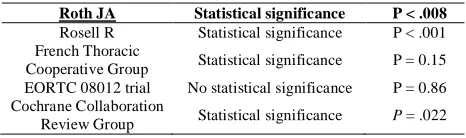
Table 1 Study with neo adjuvant chemotherapy versus
surgery alone
Roth JA Statistical significance P < .008
Rosell R Statistical significance P < .001
French Thoracic
Cooperative Group Statistical significance P = 0.15
EORTC 08012 trial No statistical significance P = 0.86
Cochrane Collaboration
conventional levels of significance when used with radical radiotherapy and with supportive care. The comparison between patients receiving surgery fallowed by chemotherapy versus surgery alone results in a hazard ration of 0.87 that means in reduction of risk of death of 13% and an absolut benefit of 5% at five years. Trials comparing radical radiotherapy with radical radiotherapy plus chemotherapy gave comparable results to those where chemotherapy was associated or not to surgery (hazard ratio of 0.87 that means 13% reduction in the risk of death; absolute benefit of survival of 4% at two years). Also patients treated with chemotherapy and supportive care had a gain in survival compared to those treated only by supportive care only (hazard ratio 0.73 that means 27% reduction in the risk of death; 10% improvement in survival at one year).At the beginning of years 2000 Scagliotti and colleagues realized a randomized trial which compare patients who receive mitomycin C (8 mg/m2 on day 1), vindesine (3 mg/m2 on days 1 and 8), and cisplatin (100 mg/m2 on day 1) every 3 weeks for three cycles (MVP group; n = 606) or no treatment (control group; n = 603) after complete resection. This trial failed to prospectively confirm a statistically significant role for adjuvant chemotherapy in completely respected NSCLC [12].
NCCN Guidelines 2016 recommend adjuvant chemotherapy for operable NSCLC stages starting with stage IB to IIIA stage. For stage IB and IIA resection with negative margins observation or chemotherapy is recommended for high-risk patients (high -risk patient's). In stage IIA with positive margins and N0 is recommended radiotherapy and chemotherapy. For stage IIA with negative margins N1cu recommend adjuvant chemotherapy. For stage IIA N1 and positive margins are recommended chemo and radiotherapy sequentially or concurrently. Recommended for stage IIIA sequential chemotherapy and radiation only in case of N2 if the margins are negative. If the margins are positive recommend chemo-radiotherapy is recommended (concurrent) (13). A Cochrane analysis publish online in March 2015 carried out a new systematic review and meta-analysis of individual participant data that included all trials, old and new. This study aimed to find out if giving chemotherapy after surgery (with or without radiotherapy) can a) help patients live longer, b) stop the cancer coming back (recurrence), and c) stop the cancer spreading to other parts of the body (metastases). There were carried out two studies called meta-analyses that included patients with non-small cell lung cancer that took part in randomized controlled trials comparing :a) surgery versus surgery plus adjuvant chemotherapy; and b) surgery plus radiotherapy versus surgery plus radiotherapy plus adjuvant chemotherapy.
Results were first published in the Lancet in 2010. Authors searched for relevant trials up to December 2013. The studies brought together trial data from all over the world with 26 trials (34 trial comparisons) and 8447 patients in the first meta-analysis (surgery versus surgery plus adjuvant chemotherapy); and 12 trials (13 trial comparisons) and 2660 patients in the second meta-analysis (surgery plus radiotherapy versus surgery plus radiotherapy plus adjuvant chemotherapy). Trials were carried out between 1979 and 2003. Results found that people with NSCLC that had surgery followed by chemotherapy (with or without radiotherapy), lived longer than those who had surgery without chemotherapy (with or without radiotherapy). After five years, 64 out of every 100 patients who were given chemotherapy after surgery were alive
compared to 60 patients out of every 100 who just had surgery. For those who also received radiotherapy, after five years, 33 out of every 100 patients who received chemotherapy, surgery and radiotherapy were alive compared to 29 out of every 100 patients who received surgery and radiotherapy. In both studies, there was little variation in the effect of chemotherapy according to the type of chemotherapy given, other trial characteristics, or by the type of patient included in the trial [14]. Some large study were aimed to demonstrate the benefit of chemotherapy after surgery:
ALPI (Adjuvant Lung Cancer Project Italy) trial enrolled 1209 patients with completely respected stage I, II, or IIIA NSCLC. Patients were randomized to received a combination of cisplatin, mitomycin, and vindesine or to observation. Patients were permitted to receive radiotharpy according to the local institutional protocol. The trial was designed to detect a 20% relative improvement in OS or an absolute benefit of 7%. The median duration of follow-up was 64.5 months. The results showed no statistically significant difference in OS between the treatment and control arms (HR, 0.96; P = .59). However a trend toward improved progression-free survival (PFS) was observed with addition of adjuvant chemotherapy (HR, 0.89; P = .13). In this study patients were prospectively evaluated for molecular markers p53, Ki-67, and KRAS codon 12 mutations; in this trial no statistically significant association between any of the tumor markers and OS was observed.
IALT (International Adjuvant Lung Trial) was another tentative to find if adjuvant cisplatin-based chemotherapy compared with observation for patients with resected stage I,
II, or IIIA NSCLC could have a benefit in survival. The primary endpoint was overall survival (OS), and
secondary endpoints consisted of disease free survival (DFS), other objectives were the incidence of second primary cancers, and adverse effects. Because of slow accrual study was closed early. Finally a total of 1867 patients were randomized to receive chemotherapy (n = 932) or observation (n = 935). Patients in the chemotherapy arm were treated with one of 4 different agents to cisplatin: etoposide, vinorelbine, vindesine, or vinblastine. Patients with pathologic stage N1 or N2 disease were allowed to receive radiotherapy after completion of chemotherapy regardless they had been assigned to treatment or to observation. In the chemotherapy group, 74% of patients received at least a 240 mg/m2 cumulative dose of cisplatin and 8% did not receive chemotherapy. Compared with the observation arm, the chemotherapy arm had better median OS (HR, 0.86; P <.03) and a higher 5-year OS rate (40.5% vs 44.5%, respectively). DFS was also significantly higher in the chemotherapy group (HR, 0.83; P <.003).
observation arm (95 mo vs 73 mo, respectively; HR, 0.69; P = .04). The survival was studied by stages of disease. The results of this study revealed no statistically significant benefit associated with chemotherapy in patients with stage IB NSCLC (P = .79). Patients with stage II NSCLC derived signify cant benefit. In 2010 was published long-term follow-up data, accrued during a median of 9.3 years. This data confirmed initial results of the trial namely a benefit from adjuvant chemotherapy (HR, 0.78; P = .04). So prolongation of disease-specific survival was reported (HR, 0.73; P = .03).8 Also was reported a correlation between benefit from chemotherapy and stage of disease. Patients with stage II disease who received chemotherapy demonstrated a significant OS benefit (HR, 0.68; P = .01) compared with their from observation arm. Patients with stage IB disease showed no OS benefit versus the subgroup of patients with stage IB disease in
the observation arm (HR, 1.03; P = .87).
Analysis of patients with stage IB disease found that patients with tumors >4 cm benefited from adjuvant chemotherapy compared with observation, but the level of benefit was not statistically significant (HR, 0.66; 95% CI, 0.39-1.14; P = .133) ANITA (Adjuvant Navelbine International Trialist Association) was a European multinational study of adjuvant chemotherapy consist in vinorelbine plus cisplatin versus observation. Patients enrolled were in stage IB-IIIA NSCLC and received a total resection. A number 840 patients received chemotherapy after randomization (n = 407) or observation (n = 433). Radiotherapy was permitted at the local protocol. Median duration of follow-up was 76 months.
Overall median survival was 65.7 months for patients in the chemotherapy arm and 43.7 months for patients in the observation arm (HR, 0.80; P = .017). OS benefit at 5 years with the use of chemotherapy was 8.6% at 5 years and 8.4% at 7 years. The subgroup analysis of patients with stage IB revealed no benefit from chemotherapy, with a 5-year OS rate of 62% in the chemotherapy group versus 64.5% in the observation group (HR, 1.10; CI, 0.76-1.57). In patients with stage II disease it was observed a trend toward significant benefit for patients randomized to chemotherapy versus those randomized to observation, with a 5-year OS rate of 51% versus 39%, respectively (HR, 0.71; CI, 0.49-1.03). An important results was for patients with stage IIIA in the chemotherapy arm. They experienced a significant prolongation of survival, with a 5-year OS rate of 42% versus 26% in the observation group (HR, 0.69; CI, 0.53-0.90 (P = .07) [15,16].In 2016 clinical trial in lung cancer from ASCO were presented by David R. Gandara, Heather A. Wakelee: In this respect was reviewed study E1505, which was a large, multicenter, randomized phase III study comparing standard adjuvant platinum-based chemotherapy with or without the antiangiogenic agent bevacizumab in patients with early-stage, resected NSCLC. The trial enrolled patients with stage IB NSCLC at least 4 cm in size up through IIIa. For stages II and III, the size of the tumor did not matter. Patients were assigned to four 21-day cycles of cisplatin with vinorelbine, docetaxel, or gemcitabine. The vinorelbine regimen was used in all of the previous positive adjuvant trials, and the docetaxel and gemcitabine combinations were standard first-line platinum doublets for metastatic NSCLC. A subsequent 2009 trial amendment also allowed for pairing of cisplatin with pemetrexed because of its approval in nonsquamous disease. The primary endpoint was OS with a secondary endpoint of disease-free survival (DFS).
The primary analysis of E1505 was presented in September 2015 at the 16th World Conference on Lung Cancer conclusion was that Bevacizumab did not improve OS or DFS. “In that previous presentation, study investigators showed that, at 5 years post registration, approximately 60% of patients were still alive. That is actually quite good considering the patient population. These updated results provide slightly longer term OS information but still show no benefit from bevacizumab therapy”. After separating patients by histology
(Heather A. Wakelee), the OS P values across chemotherapy
regimens for nonsquamous and squamous patients were 0.18 and 0. 99, respectively [17]. Similarly, the DFS P values were 0.58 and 0.83, respectively, and none of the OS or DFS HRs, as compared with the cisplatin/vinorelbine regimen for reference, was statistically significant. This chemotherapy subset analysis (David R. Gandara), which showed that patients with squamous cell histology did just as well as those with nonsquamous histology, is an incredibly important study update. I anticipated that patients with squamous histology would demonstrate worse outcomes, but patients with both histologies fared equally well as did the 4 chemotherapeutic regimens. The pemetrexed chemotherapy regimen was actually the most used (Heather A. Wakelee). Almost one third of patients received cisplatin/pemetrexed, but this regimen was only given to patients who had nonsquamous histology. However the answer regarding the efficacy of other combination in adjuvant setting without cisplatin/vinorelbine still not clear.
At the 2016 ASCO meeting, many questions arose regarding cost and if it made sense to use the more expensive regimens when cisplatin/vinorelbine is much more economical. That is something that will continue to be a debate. The randomized JIPANG trial is currently ongoing in Japan, comparing cisplatin/vinorelbine with cisplatin/pemetrexed. This study will give us a lot more information. Until then, the E1505 chemotherapy subset analysis was really the biggest update on adjuvant treatment. All of these regimens look relatively equivalent, in some cases with pemetrexed as a good choice for reduction in toxicity (18).
New agents
In our days when the small molecules, especially tyrosine kinase inhibitors (TKI) and monoclonal antibody are largely used in advanced cancer, many trials try to reveal and the role of these compounds and in early stage of lung cancer.
Target therapy
RAS/RAF/MEK pathway is a potential therapeutic targets in lung cancer. We have evidence only in the metastatic setting where the MEK1 inhibitor, selumetinib, combined with docetaxel, demonstrated improved PFS and a trend toward improved overall survival compared with docetaxel alone. BRAF is a serine-threonine protein kinase that functions in the RAS/mitogen-activated protein kinase signaling pathway. BRAF is downstream of KRAS and directly phosphorylates MEK. Subsequent phosphorylation of Extracellular Signal-regulated Kinase (ERK) is involved in proliferation and survival. Mitogen-activated protein (MAP) kinases is also known as extracellular signal-regulated kinases (ERKs), are thought to act at an integration point for multiple biochemical signals because they are activated by a wide variety of extracellular signals. (26) Mutant BRAF proteins have increased kinase activity and are transforming in vitro.(27) BRAF mutations in NSCLC affect 1% to 3% of cancers. (28 -29). In NSCLC, BRAF mutations are seen almost exclusively in adenocarcinomas and is more common in current and former smokers. The inactivating D594G mutation are resistant to vemurafenib but sensitive to dasatinib (30).
HER2 (ERBB2) is a member of the ERBB family of receptor tyrosine kinases. (31). Activation of HER2 in this way initiates the PI3K-AKT-mTOR and RAS-RAF-MEK-ERK pathways, promoting cell survival and proliferation [32]. While HER2 overexpression or gene copy number gains are relatively common in NSCLC, HER2 mutations are found in only 2% to 4% of NSCLC cases.[33-34] The most common mutation is an in-frame insertion in exon 20. Clinically, HER2 mutations appear to be more common in women and in never-smokers with adenocarcinoma histology. The HER2 monoclonal antibody, trastuzumab, and the TKI, lapatinib, have been evaluated in NSCLC patients. Trastuzumab combined with chemotherapy in unselected patients did not result in improved outcomes compared with historical controls treated with chemotherapy alone.[35,36] Similarly, single-agent lapatinib in an unselected population of patients with NSCLC demonstrated an overall response rate of only 1.3%.[37] Individual cases of response to HER2 targeted therapy in patients with HER2 mutations have been reported [ 38,39]. Also was reported partial responses to the pan-HER inhibitor, afatinib, in 3 pretreated patients with HER2 mutations [40].
Angiogenesis play an important role in the tumor development, increased angiogenic signaling has been associated with poor prognosis in a number of malignancies, including NSCLC(41). In the last years were developed therapies targeting components of angiogenic signaling. One of the most known is Bevacizumab, a humanized monoclonal antibody with a high affinity for vascular endothelial growth factor (VEGF) which binding circulating VEGF and inhibits binding of VEGF to its receptors. [42] In AVAiL study the combination of bevacizumab with cisplatine plus gemcitabine was superior in term of progression free survival versus chemotherapy alone. [43] DDR2 is a tyrosine kinase, and mutations of this have been described in 4% of lung squamous cell carcinomas Dasatinib inhibits tyrosine kinases, including DDR2. [44]
Immunotherapy
The use of immunotherapy is under investigation but many positive trials have led the FDA to approve several agents for immune therapy in the treatment of NSCLC. The first results
were obtained by trials in advanced stages of NSCLC. Recently some studies reveled that immunotherapy could be beneficial and in adjuvant settings. Immunotherapy include and vaccine therapy and immune checkpoint modulation. The glycoprotein mucin 1 (MUC1) promotes cellular adhesion and is expressed by a number of epithelial tissues and carcinomas. MUC1 expressed in malignant cells has been shown to differ structurally from MUC1 expressed in normal tissues BLP-25 is a liposomal vaccine preparation that targets the exposed peptide core of MUC1 expressed in malignant tissues. (45) In the adjuvant setting, the MAGE-A3 vaccine is under evaluation. MAGE-A3 is a protein that is produced almost exclusively by malignant cells and occurs in 35% of NSCLC cases. A phase II randomized, placebo-controlled trial in patients with completely resected stages IB and II NSCLC report a trend in favor of improved overall and disease-free survival. (46)
Compounds targeting CTLA-4, PD-1, and PDL-1 have led to the introduction in the therapy of NSCL of Nivolumab and Pembrolizumab. The PD-1 receptor is a coinhibitory receptor present on T cells. Binding of ligands PD-L1 or PD-L2 (produced by tumor or stromal cells) to PD-1 results in inhibition of antitumor immune responses.(47,48) Ipilimumab was also tested in clinical trials but is not clear if it determine an real clinical benefit in NSCLC.. The combination of phased ipilimumab and chemotherapy is also being evaluated in the neoadjuvant setting for patients with early-stage NSCLC (NCT01820754) [49].
CONCLUSIONS
Neo adjuvant and adjuvant systemic therapy for early stage NSCLC is promising but still (especially neoadjuvant therapy) not well defined. New compounds used in personalized medicine brings a diversification of treatment possibilities and a gain in survival. New studies are necessary to establish the best therapeutic associations between chemotherapy and personalized therapy and between personalized therapies which have different mechanisms of action.
References
1. http://eco.iarc.fr/eucan/Cancer.aspx?Cancer=18 2. Roth JA1, Fossella F, Komaki R, Ryan MB, Putnam
JB Jr, Lee JS, Dhingra H, De Caro L, Chasen M, McGavran M, et al., A randomized trial comparing perioperative chemotherapy and surgery with surgery alone in resectable stage IIIA non-small-cell lung cancer. J Natl Cancer Inst. 1994 May 4; 86(9):673-80. 3. Rosell R, Gomez-Codina J, Camps C, et al. A
randomized trial comparing preoperative
chemotherapy plus surgery with surgery alone in patients with non-small-cell lung cancer. N Engl J Med. 1994; 330(3):153-158.
4. Burdett S, Stewart L, Rydzewska L. A systematic review and metaanalysis of the literature: chemotherapy and surgery versus surgery alone in non-small cell lung cancer. J Thorac Oncol. 2006; 1(7):611-621.
5. DePierre A, Milleron B, Moro-Sibilot D, et al. Preoperative chemotherapy followed by surgery compared with primary surgery in resectable stage I (except T1N0), II, and IIIa non-small cell lung cancer.
6. Pisters K, Vallieres E, Bunn P, et al. S9900: A phase III trial of surgery alone or surgery plus pre-operative (pre-op) paclitaxel/carboplatin (PC) chemotherapy in early stage non-small cell lung cancer (NSCLC): preliminary results. J Clin Oncol. 2006; 24:7012. 7. Pisters K, Vallieres E, Bunn P, et al. S9900 trial
update, mature analysis. J Thorac Oncol. 2009; 4(9):S201.
8. Gilligan D, Nicolson M, Smith I, et al. Preoperative chemotherapy in patients with resectable non-small cell lung cancer: results of the MRC LU22/ NVALT 2/EORTC 08012 multicentre randomised trial and
update of systematic review. Lancet.
2007;369(9577):1929-1937
9. Dautzenberg B, Benichou J, Allard P, et al. Failure of the perioperative PCV neoadjuant polychemotherapy in resectable bronchogenic non-small cell lung cancer.
Cancer. 1990;65(11):2435-2441.
10. Winton T, Livingston R, Johnson D, et al. Vinorelbine plus cisplatin vs. observation in resected non-small-cell lung cancer. N Engl J Med. 2005;352(25):2589-2597
11. Non-small Cell Lung Cancer Collaborative Group. Chemotherapy in non-small cell lung cancer: a meta-analysis using updated data on individual patients from 52 randomised clinical trials. BMJ. 1995 Oct 7; 311(7010): 899-909. PMCID: PMC2550915
12. Giorgio V. Scagliotti, Roldano Fossati, Valter Torri, Lucio Crinò, Giuseppe Giaccone, Giovanni Silvano, Massimo Martelli, Maurizia Clerici, Francesco Cognetti, Maurizio Tonato For the Adjuvant Lung Project Italy/European Organisation for Research Treatment of Cancer–Lung Cancer Cooperative Group Investigators, Randomized Study of Adjuvant Chemotherapy for Completely Resected Stage I, II, or IIIA Non–Small-Cell Lung Cancer, Oxford Journals Medicine & Health JNCI: Jnl of National Cancer Institute, 2003, Volume 95, Issue 19, Pp. 1453-1461 13. https://www.nccn.org/professionals/physician_gls/pdf/
nscl.pdf
14. http://www.cochrane.org/CD011430/LUNGCA_chem otherapy-after-surgery-for-early-stage-non-small-cell-lung-cancer
15. Ángel Artal Cortés, Lourdes Calera Urquizu, and Jorge Hernando Cubero, Adjuvant chemotherapy in non-small cell lung cancer: state-of-the-art, Transl
Lung Cancer Res. 2015 Apr; 4(2): 191-197. doi:
10.3978/j.issn.2218-6751.2014.06.01, PMCID: PMC4384209
16. http://meetinglibrary.asco.org/content/166472-176 17. E1505: Chemotherapy Subset Analysis of OS and
DFS by Histology, J Clin Oncol 34, 2016 (suppl; abstr 8507)
18. 18.. JIPANG trial. Randomized controlled first Ⅲ-phase study of pemetrexed + cisplatin combination therapy with vinorelbine + cisplatin combination therapy for completely resected squamous non-small cell lung cancer. UMIN000006737. Available at: https://translate.google.com/translate?hl=en&sl=ja
&u=https://upload.umin.ac.jp/cgi-open-bin/ctr/ctr.cgi%3Ffunction%3Dbrows%26action%3D brows%26type%3Dsummary%26recptno%3DR00000 7955%26language%3DJ&prev=search. Accessed July 28, 2016
19. From the Departments of Pathology and
Thoracic/Head and Neck Medical Oncology, University of Texas M. D. Anderson Cancer Center, Houston, TX. American Society of Clinical Oncology Educational Book. American Society of Clinical Oncology. Meeting [2012:459-464], Type: Journal Article DOI: 10.14694/EdBook_AM.2012.32.459 20. Mok TS, Wu Y-L, Thongprasert S, et al. Gefitinib or
carboplatin-paclitaxel in pulmonary adenocarcinoma.
N Engl J Med. 2009; 361(10):947-957.
21. Rosell R, Carcereny E, Gervais R, et al. Erlotinib versus standard chemotherapy as first-line treatment for European patients with advanced EGFR mutation-positive non-small-cell lung cancer (EURTAC): a multicentre, open-label, randomised phase 3 trial.
Lancet Oncol. 2012; 13(3):239-246.
22. Soda M, Choi Y, Enomoto M, et al. Identification of the transforming EML4-ALK fusion gene in non-small cell lung cancer. Nature. 2007; 448: (7153)561-566.
23. Shaw AT, Yeap BY, Mino-Kenudson M, et al. Clinical features and outcome of patients with non-small-cell lung cancer who harbor EML4-ALK. J Clin
Oncol. 2009; 27(26):4247-4253.
24. Camidge DR, Bang Y-J, Kwak EL, et al. Activity and safety of crizotinib in patients with ALK-positive non-small-cell lung cancer: updated results from a phase 1 study. Lancet Oncol. 2012; 13(10):1011-1019. 25. 25. Slebos RJC, Kibbelaar RE, Dalesio O, et al. K-ras
oncogene activation as a prognostic marker in adenocarcinoma of the lung. N Engl J Med. 1990; 323(9):561-565.
26. Craig M. Crews, Allesandro Alessandrini, and Raymond L. Erikson, Science,http:// go.galegroup. com/ps/anonymous?id=GALE%7CA12711044&sid= googleScholar&v=2.1&it=r&linkaccess=fulltext&issn =00368075&p=AONE&sw=w&authCount=1&isAno nymousEntry=true
27. Davies H, Bignell GR, Cox C, et al. Mutations of the BRAF gene in human cancer. Nature. 2002; 417(6892):949-954.
28. Brose MS, Volpe P, Feldman M, et al. BRAF and RAS mutations in human lung cancer and melanoma.
Cancer Res. 2002; 62(23):6997-7000.
29. Pratilas CA, Hanrahan AJ, Halilovic E, et al. Genetic predictors of MEK dependence in non-small cell lung cancer. Cancer Res. 2008; 68(22): 9375-9383. 30. Egbert Smit, BRAF Mutations in Non-Small-Cell
LungCancer, Journal of Thoracic Oncology, Volume 9, Number 11, November 2014, 1594-1595.
31. Yarden Y, Sliwkowski MX. Untangling the ErbB signalling network. Nat Rev Mol Cell Biol. 2001; 2(2):127-137.
32. Graus-Porta D, Beerli RR, Daly JM, et al. ErbB-2, the preferred heterodimerization partner of all ErbB receptors, is a mediator of lateral signaling. EMBO J.
1997; 16(7):1647-1655.
33. Buttitta F, Barassi F, Fresu G, et al. Mutational analysis of the HER2 gene in lung tumors from Caucasian patients: mutations are mainly present in adenocarcinomas with bronchioloalveolar features. Int
34. Shigematsu H, Takahashi T, Nomura M, et al. Somatic mutations of the HER2 kinase domain in lung adenocarcinomas. Cancer Res. 2005;65(5):1642-1646. 35. Stephens P, Hunter C, Bignell G, et al. Lung cancer: intragenic ERBB2 kinase mutations in tumours.
Nature. 2004; 431(7008):525-526.
36. Li C, Sun Y, Fang R, et al. Lung adenocarcinomas with HER2-activating mutations are associated with distinct clinical features and HER2/EGFR copy number gains. J Thorac Oncol. 2012; 7(1):85-89. 37. Langer CJ, Stephenson P, Thor A, et al. Trastuzumab
in the treatment of advanced non-small-cell lung cancer: is there a role? Focus on Eastern Cooperative Oncology Group Study 2598. J Clin Oncol. 2004; 22(7):1180-1187.
38. Gatzemeier U, Groth G, Butts C, et al. Randomized phase II trial of gemcitabine-cisplatin with or without trastuzumab in HER2-positive nonsmall-cell lung cancer. Ann Oncol. 2004; 15(1):19-27.
39. Ross HJ, Blumenschein, GR, Aisner J, et al. Randomized phase II multicenter trial of two schedules of lapatinib as first- or second-line monotherapy in patients with advanced or metastatic non-small cell lung cancer. Clin Cancer Res. 2010; 16(6):1938-1949.
40. Cappuzzo F, Bemis L, Varella-Garcia M. HER2 mutation and response to trastuzumab therapy in non– small-cell lung cancer. N Engl J Med. 2006; 354(24):2619-2621.
41. De Grève JL, Teugels E, De Mey J, et al. Clinical activity of BIBW 2992, an irreversible inhibitor of EGFR and HER2 in adenocarcinoma of the lung with mutations in the kinase domain of HER2neu. J Thorac
Oncol. 2009; 4(9 suppl 1):S307.
42. Hanahan D, Folkman J. Patterns and emerging mechanisms of the angiogenic switch during tumorigenesis. Cell. 1996; 86(3):353-364.
43. 4244. Weidner N, Folkman J. Tumor vascularity as a prognostic factor in cancer. In: De Vita VT, Hellman S, Rosenberg SA, eds. Important Advances in Oncology. Philadelphia, PA: Lippincott-Raven; 1996:167-190.
44. M. Reck, J. von Pawel, P. Zatloukal,R. Ramlau, V. Gorbounova, V. Hirsh, N. Leighl, J. Mezger, V. Archer, N. Moore, C. Manegold, BO17704 Study Group, Overall survival with cisplatin-gemcitabine and bevacizumab or placebo as first-line therapy for nonsquamous non-small-cell lung cancer: results from a randomised phase III trial (AVAiL), Ann Oncol
(2010) 21 (9): 1804-1809.
45. Hammerman PS, Sos ML, Ramos AH, et al. Mutations in the DDR2 kinase gene identify a novel therapeutic target in squamous cell lung cancer.
Cancer Discov. 2011; 1(1):78-89.
46. Samuel J, Budzynski WA, Reddish MA, et al. Immunogenicity and antitumor activity of a liposomal
MUC1 peptide-based vaccine. Int J Cancer. 1998; 75(2):295-302.
47. Vansteenkiste J, Zielinski M, Linder A, et al. Final results of a multicenter, double-blind, randomized, placebo-controlled phase II study to assess the efficacy of the MAGE-A3 immunotherapuetic as adjuvant therapy in stage IB/II non-small cell lung cancer. J Clin Oncol. 2007; 25(18 suppl):7554. 48. Topalian SL, Hodi FS, Brahmer JR, et al. Safety,
activity, and immune correlates of anti-PD-1 antibody in cancer. N Engl J Med. 2012; 366(26): 2443-2454. 49. Brahmer JR, Tykodi SS, Chow LQM, et al. Safety and
activity of anti-PD-L1 antibody in patients with advanced cancer. N Engl J Med. 2012; 366(26):2455-2465.
50. Lynch TJ, Bondarenko I, Luft A, et al. Ipilimumab in combination with paclitaxel and carboplatin as first-line treatment in stage IIIB/IV non-smallcell lung cancer: results from a randomized, double-blind, multicenter phase II study. J Clin Oncol. 2012; 30(17):2046-2054.