_____________________________________________________________________________________________________
25(1): 1-12, 2019; Article no.IJBCRR.47439
ISSN: 2231-086X, NLM ID: 101654445
Evaluation of Galantamine, Phenolics, Flavonoids
and Antioxidant Content of Galanthus Species in
Turkey
Ibrahim Bulduk
1and Yasemin Sunucu Karafakıoğlu
2*1Department of Occupational Health and Safety, Uşak University, Turkey. 2Faculty of Science Education, Uşak University, Turkey.
Authors’ contributions
This work was carried out in collaboration between both authors. Author IB designed the study, performed the statistical analysis, wrote the protocol, and wrote the first draft of the manuscript. Author YSK managed the analyses of the study and managed the literature searches. Both authors read and approved the final manuscript.
Article Information
DOI: 10.9734/IJBCRR/2019/v25i130068 Editor(s): (1) Prof. Halit Demir, Department of Chemistry, Faculty of Art and Science Yuzuncu, Yil University, Turkey. (2)Prof. Hector M. Mora Montes, Department of Biology, Division of Natural Sciences, University of Guanajuato, Noria Alta s / n, Col. Noria Alta Guanajuato, Gto. CP 36050, Mexico. Reviewers: (1) Uchendu, Mbah Okuwa, Michael Okpara University of Agriculture, Umudike, Abia State, Nigeria. (2)Dr. Bhushan Gandhare, Srikrupa Institute of Pharmaceutical Sciences, Telengna, India. (3)Márcio Rodrigues, University of Beira Interior, Portugal. Complete Peer review History:http://www.sdiarticle3.com/review-history/47439
Received 24 October 2018 Accepted 18 February 2019
Published 06 March 2019
ABSTRACT
Aims: The aim of the present study was to determine the total phenolic and flavonoid content and
antioxidant activities in Galanthus species (Gaalanthus woronowii, Galanthus nivalis, and Galanthus elwesii) indigenous to Turkey.
Study Design: The plant materials used in the study, Galanthus elwesii samples were collected in
Antalya province, Galanthus nivalis samples were collected in Istanbul province, and Galanthus woronowii samples were collected in Çaykara, Trabzon province in September 2018.
Place and Duration of Study: Plant samples were stored in Herbarium Material Warehouse at
Afyon Kocatepe University. The plant leaves and grated bulbs were dried in an incubator at 60°C. The bulb and leaf samples were then pulverized to 80 mesh particle size for analysis.
Methodology: Total phenolic content was determined spectrophotometrically with Folin-Ciocalteu
procedure and calculated as gallic acid equivalent (GAE). Total flavonoid content was determined
with aluminum chloride colorimetric method and calculated as catechin equivalent (CAE). Antioxidant activities were determined with TEAC (Trolox equivalent antioxidant capacity) and DPPH (diphenyl-p-picrylhydrazyl radical) methods. The phenolic acid and galantamine content were determined by reversed phase HPLC.
Results: The highest total flovanoid content was determined as 33 mg CAE/g DW in Galanthus
woronowii leaves and as 27 mg CAE / g DW in bulbs. DPPH removal activity was 77% in 500 μg/mL Galanthus woronowii leaf extract concentration and 93% in the ascorbic acid control group. The highest antioxidant content was observed in the leaves of Galanthus woronowii as 23 µmol Trolox/100 g DW and as 21 µmolTrolox/100 g DW in the bulbs. Higher galantamine content was determined in aerial parts (leaves) when compared to the underground parts (bulbs). The galantamine content in the leaves of all three Galanthus species was about 0.082%. The galantamine content in the bulbs of all three species was about 0.045%. Gallic, protocatechic, vanilic, caffeic, syringic, rosmarinic acid and catechin were identified in the leaves and bulbs of the three species with HPLC phenolic acid analysisIt was determined that the major phenolic acid was gallic acid.
Conclusion: The present study findings demonstrated that Galantthus species has antioxidant
capacity. Galanthus spp. leaves had higher antioxidant activity when compared to the bulbs. Galanthus woronowii exhibited the highest antioxidant activity among the scrutinized species.
Keywords: Galanthus spp; phenolic; flavonoid; antioxidant.
1. INTRODUCTION
The interest in natural antioxidants, especially those found in fruits and vegetables, have been increasing among consumers and scientists during recent years. Epidemiological studies demonstrated that frequent fruit and vegetable intake is associated with a lower age-related coronary heart disease [1] and cancer risks [2,3]. Several natural nutrients contain dietary antioxidants that could scavenge free radicals. Certain studies demonstrated that phenolics such as flavonoids, phenolic acids, and tannins are more powerful antioxidants when compared to vitamins C and E [4]. These phenolic compounds also serve various biological functions, including anti-inflammatory, anti-carcinogenic and anti-atherosclerotic activities, which may be related to their antioxidant activities [5]. Several studies demonstrated a high degree of correlation between the total antioxidant activity of certain fruits and their phenolic content [6].
In addition to fruit and vegetable-based antioxidants, another important source of antioxidants is traditional medicinal plants, which could exhibit stronger antioxidant activities when compared to traditional dietary plants [7,8]. The Amaryllidaceae family is the most important plant family among 20 plant families that contain alkaloid, and it includes 85 genera and about 1100 perennial bulb species. These plants are distributed in the warm climates and tropical regions in the world [9]. It was reported that
Galanthus (Amaryllidaceae) genus has about 14 species and 1 hybrid (15 taxa) indigenous to Turkey [10]. The images of the three species in genus Galanthus are presented in Fig. 1.
The herbal pharmaceuticals developed from Galanthus L. genus plants contain several active biological compounds: Amarillidaceae alkaloids [17-19], flavonoids, organic and hydroxycinnamic acids [20]. Alkaloids are biologically active substances that reflect the strong pharma cological activities of medicinal plants [21, nivalis and G. elwesii are two of the best known and most commonly grown bulbous plants. Their popularity is due to their beauty and longevity. They have numerous varieties and clones (Davis, 1999). Every year Turkey exports several bulbs collected from the nature. In early 1980s, this trade increased and millions of
bulbs were exported to the Netherlands. The large volume of Galanthus bulb trade caused great concern, since it was unclear whether such a large bulb collection was sustainable. Thus, Galanthus was included in CITES Annex II in 1990. The harvest of wild G. elwesii
controlled and monitored, and annual export quotas are determined. Certain wild snowdrop species are endangered, and harvesting bulbs in the wild is illegal in several countries. However, CITES allows the limited trade of the wild bulbs of only three species in Turkey (
G. elwesii, and G. woronowii) [23].
Galanthus elwesii Hook (Amaryllidaceae) is an easily recognized species with broad yellowish leaves, large flowers and thick marks on t inner parts. It has a relatively wide distribution in the eastern regions of former Yugoslavia, northern Greece, eastern Aegean Islands, southern Ukraine, Bulgaria and Turkey. This species has the widest distribution among other species in Turkey and it is indigenous to northwest, western and southern Anatolia [24,25]. Galanthus elwesii (snowdrop) is a small bulbous plant distributed throughout South-Eastern European countries and Eurasia [26], and the plant is cultivated for its elegant flowers. Earlier research on Galanthus elwesii
Fig. 1A. Galanthus woronowii
Bulduk and Karafakioğlu; IJBCRR, 25(1): 1-12, 2019; Article no.
The herbal pharmaceuticals developed from genus plants contain several active idaceae alkaloids 19], flavonoids, organic and hydroxycinnamic acids [20]. Alkaloids are biologically active substances that reflect the strong
pharma-vities of medicinal plants [21,22]. G. are two of the best known and most commonly grown bulbous plants. Their popularity is due to their beauty and longevity. They have numerous varieties and clones (Davis, 1999). Every year Turkey exports several bulbs collected from the nature. In early 1980s, nd millions of G. elwesii bulbs were exported to the Netherlands. The large volume of Galanthus bulb trade caused great concern, since it was unclear whether such a large bulb collection was sustainable. Thus, Galanthus was included in CITES Annex II in G. elwesii bulbs is now controlled and monitored, and annual export quotas are determined. Certain wild snowdrop species are endangered, and harvesting bulbs in the wild is illegal in several countries. However, ited trade of the wild bulbs of only three species in Turkey (G. nivalis,
(Amaryllidaceae) is an easily recognized species with broad yellowish leaves, large flowers and thick marks on the inner parts. It has a relatively wide distribution in the eastern regions of former Yugoslavia, northern Greece, eastern Aegean Islands, southern Ukraine, Bulgaria and Turkey. This species has the widest distribution among other is indigenous to tern and southern Anatolia (snowdrop) is a small
bulbous plant distributed throughout Eastern European countries and Eurasia
[26], and the plant is cultivated for its elegant Galanthus elwesii
led to the isolation of a large variety of Amaryllidaceae alkaloids [27-29]. It was found that many of these compounds exhibited strong acetylcholinesterase inhibitory, cytotoxic and antiviral activities among others [30].
Although the Galanthus species
partially studied, most reported phytochemical studies demonstrated alkaloid structure diversity and no bioactivity studies were conducted. Thus, it is necessary to determine antioxidant capacity, phenolic and flavonoid content of this species.
2. MATERIALS AND METHODS
2.1 Plant Materials
The plant materials used in the study,
elwesiiIbradi samples were collected in Antalya province, Galanthus nivalis samples were collected in Istanbul province, and
woronowii samples were collected in Çaykara, Trabzon province in September 2018. The plant was collected and identifie
KARCIOGLU. Plant samples were stored in Herbarium Material Warehouse at Afyon Kocatepe University. The plant leaves and grated bulbs were dried in an incubator at 60 The bulbs and leaf samples were then pulverized to 80 mesh particle size for analysis.
2.2 Chemical Materials
Chemicals and solvents used in all experiments were analytical purity. All chemicals used for chromatographic purposes were in HPLC purity. All solvents were filtered with a 0.45 µm filter (Millipore, Bedford, MA, USA). Galantamine hydrobromide, Gallic, protocatechic, vanilic, caffeic, syringic, rosmarinic acids and catechin standard were purchased from Sigma Chemical Co.
Fig. 1B. Galanthus elwesii Fig. 1C. Galanthus nivalis
; Article no.IJBCRR.47439
led to the isolation of a large variety of 29]. It was found unds exhibited strong acetylcholinesterase inhibitory, cytotoxic and antiviral activities among others [30].
Galanthus species have been partially studied, most reported phytochemical studies demonstrated alkaloid structure diversity
ioactivity studies were conducted. Thus, it is necessary to determine antioxidant capacity, phenolic and flavonoid content of this
AND METHODS
The plant materials used in the study, Galanthus Ibradi samples were collected in Antalya samples were collected in Istanbul province, and Galanthus samples were collected in Çaykara, Trabzon province in September 2018. The plant was collected and identified by Mustafa KARCIOGLU. Plant samples were stored in Herbarium Material Warehouse at Afyon Kocatepe University. The plant leaves and grated
ere dried in an incubator at 60°C. The bulbs and leaf samples were then pulverized
o 80 mesh particle size for analysis.
Chemicals and solvents used in all experiments were analytical purity. All chemicals used for chromatographic purposes were in HPLC purity. All solvents were filtered with a 0.45 µm filter llipore, Bedford, MA, USA). Galantamine hydrobromide, Gallic, protocatechic, vanilic, caffeic, syringic, rosmarinic acids and catechin standard were purchased from Sigma Chemical
2.3 Ultrasonic Assisted Plant Extraction
Ultrasonic assisted extraction was conducted in ultrasonic bath (Bandelin Sonorex with a frequency of 50 kHz). 1 g leave and bulb samples of of the dried plants were weighed and each plant sample and extracted separately with 30 ml 70% methanol for 30 minutes. After the extraction, the mixture was filtered with Whatman brand white band filter paper and extract was stored in a +4°C refrigerator until the analysis. Total phenolic, flavonoid, and phenolic acid content, galantamine analysis and antioxidant capacity were determined using the plant extracts.
2.4 Determination of Galantamine Content with
Galantamine content of the extract was determined with the analysis method specified in the USP 40-NF 35 monograph. All analyses were conducted with an Agilent 1260 HPLC system equipped with a UV detector. The analytical column was an Agilent Zorbax extended C18 (5 µm, 150 mm X 5 mm) with a mobile phase that included a mixture of solvent A (acetonitrile) and B (water with 4.0 g/L. Potassium dihydrogen phosphate) and employed the isocratic elution (10/90, v/v) at a flow rate of 1.2 mL/min (Table 1). The column temperature was maintained at 30°C and the detection wavelength was set to 288 nm for galantamine. The solvent was filtered through a 0.22 µm filter and degassed. The sample injection volume was 20 µL [31].
Table 1. Analytical conditions of HPLC for galantamine analysis
Parameters Conditions
Column Zorbax extended-C18 (C18, 4.6 mm X 150 mm, 5 µm)
Flow rate 1.2 mL/min Injection volume 20 µL UV detection 288 nm Run time 12 min
2.5 Total Phenolic Substance Determina-tion
Phenolic content of the extracts was determined with the Folin-Ciocalteu method modified by Elzaawely and Tawata [32]. 7250 μl deionized water, 500 μL extract, and 250 μL Folin-Ciocalteu reagents were added to 10 mL tubes and mixed and stored in a dark environment for
5 minutes. After adding 2000 μl of Na2CO3 solution (7.5%), the volume was completed to 10 mL with deionized water and the mixture was incubated for 30 min. After incubation, the absorbance values of the samples were measured with a Shimadzu brand UV-1800 spectrophotometer at 765 nm wavelength. Gallic acid was used as the standard and the resultss were expressed in mg Gallic acid equivalent (GAE)/1 g dry weight (DW).
2.6 Total Flavonoid Substance Determination
Flavonoid content of the extracts was determined with aluminum chloride colorimetric method [33]. 50 μl of the extract was transferred into 10 ml test tube and 950 μl methanol and 6400 μl deionized water were added, followed by 300 μl of NaNO2 solution (5%). Then, 300 μl of AlCl3 solution (10%) was added to the mixture and remixed. After 5 minutes of incubation, 2000 μl of 1 M NaOH solution was added and the total volume of the mixture was completed to 10 mL. Mixture was incubated for 15 m. and the absorbance value was measured at 510 nm with a Shimadzu brand UV-1800 spectrophotometer. Catechin was used as the standard and the total flavonoid content was expressed as mg catechin equivalent (CAE) / 1 gr. dry weight.
2.7 Antioxidant Activity Analysis
2.7.1 2,2-Diphenyl-1-picrylhydrazyl test
(DPPH)
Antioxidant activity of the extracts were determined with the 2,2-diphenyl-1-picrylhydrazyl (DPPH) test as previously described in certain previous modifications [34]. Briefly, 200 μL of each extract (100 μL/mL) was mixed with 3.8 mL DPPH solution and incubated for 1 hour at room temperature in the dark. The absorbance of the mixture was measured at 517 nm. Ascorbic acid was used as the positive control. The ability of the sample to remove the DPPH radical is determined using the following formula:
% DPPH free radical = [(ABlank–ASample)/ABlank] × 100
ABlank is the absorbance of the control and ASample
is the absorbance of the test compound.
The sample concentration that provided % 50
inhibition (IC50) was calculated by plotting the inhibition rates against the sample
Bulduk and Karafakioğlu; IJBCRR, 25(1): 1-12, 2019; Article no.IJBCRR.47439
2.7.2 Inhibition of the ABTS*+ Radical Cation (TEAC) test
Antioxidant activities of the samples were determined with Trolox equivalent antioxidant capacity (TEAC) method [35]. This method is based on the inhibition of ABTS radical cation (ABTS * +), produced by the oxidation of 2,2'-azinobis (3-ethylbenzothiazoline-6-sulfonic acid) (ABTS) and potassium persulfate (K2S2O8), with the addition of antioxidants to the medium. The antioxidant activity is determined by the reduction of the absorbance of the radical that has blue-green color at 734 nm wavelength for 6 minutes. Trolox (6-hydroxy-2,5,7,8-tetramethychroman-2-carboxylic acid) was used as the positive control. The sample antioxidant activity figures were expressed as µmol Trolox/100 g.
2.8 Determination of Phenolic Acids by HPLC
The phenolic acids were seperated with an Agilent 1260 series HPLC system equipped with C18 (4.6 mm × 150 mm, 5 µm) column. The flow rate of the mobile phase was 0.5 mL/min. Mobile phase A was water containing 0.02% TFA, and mobil phase B was methanol containing 0.02% TFA. The gradient conditions were as follows: 0-5 min, 25% B; 5-10 min, 25-30% B; 10-16 min, 30-45% B; 16-18 min, 45% B; 18-25 min, 45-80% B; 25-30 min, 45-80% B; 30-40 min, 80-25% B. The temperature of the column was controlled at 25°C. Injection volume was 10 µL. The detection wavelengths of DAD were set at four positions: 254, 275, 305, and 320 nm [36].
2.9 Statistical Analysis
The total phenolic and flavonoid contents of each sample were compared with the "Minitab® for Windows Release 1.12" program. An analysis of variance (ANOVA) table was made, general linear modeling was performed and whether the data were statistically significant. When the model was found to be meaningful, pairwise comparisons were made with the Tukey dual comparison test at 95% confidence level and the
difference between the samples was examined. In addition, the results of antioxidant activity by DPPH method and total phenolic substance, flavonoid matter and anthocyanin content of all sample types were investigated by regression analysis with Minitab program. HPLC analyzes were performed with three replicates, mean values and standard deviation values were obtained.
3. RESULTS AND DISCUSSION
3.1 Determination of Galantamine Content with HPLC
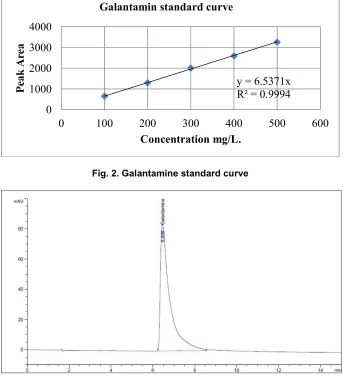
Determination of the amount of galantamine in the samples was made out by reverse phase HPLC method. For this, the galantamine standard at 5 different concentrations (100, 200, 300, 400 and 500 mg / L.) was injected into the
device. A graph of concentration was plotted against the resulting peak area. The
obtained linearity graph was given in Fig. 2.
The HPLC chromatogrames of the galantamine standard and Galanthus spp. extract are presented in Figs. 3 and 4.
The galantamine content determined in the
leaves and bulbs of all three Galanthus species are presented in Table 2. The
galantamine content was higher in the erial parts (leaves) when compared to the underground parts (bulbs). Galantamine content of the samples are presented in Table 2.
3.2. Total Phenolic Content
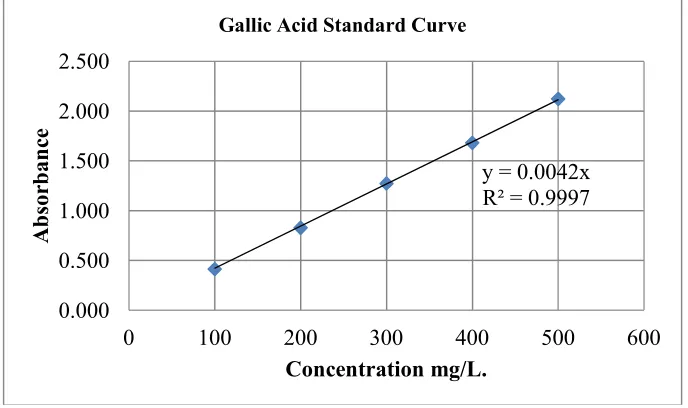
The absorbance values for different concentrations of Gallic acid standard solutions were measured at 765 nm with a Shimadzu brand UV-1800 spectrophotometer. Gallic acid standard curve was plotted and presented in Fig. 5.
The total phenolic content in G. nivalis, G. elwesii
and G. Woronowii leaves and bulbs are presented in Table 3.
Table 2. Galanthus spp. galantamine content
Galanthus species Aerial and underground parts Galantamine content % ± S.D.
Galanthus nivalis Leaf 0.075 ± 0.0075
Bulbs 0.038 ± 0.0090
Galanthus elwesii Leaf 0.082 ± 0.0085
Bulbs 0.045 ± 0.0090
Galanthus woronowii Leaf 0.078 ± 0.0080
Fig. 2. Galantamine standard curve
Fig. 3. HPLC chromatograme of galantamine standard solution (400 mg/L.)
Fig. 4. HPLC chromatograme of Galanthus woronowii leaf extract
y = 6.5371x
R² = 0.9994
0
1000
2000
3000
4000
0
100
200
300
400
500
600
P
ea
k
A
re
a
Bulduk and Karafakioğlu; IJBCRR, 25(1): 1-12, 2019; Article no.IJBCRR.47439
Fig. 5. Gallic acid standard curve
Table 3. Total phenolic content analysis findings
Galanthus species Aerial and underground
parts
Total phenolic content mg GAE / gr. D.W. ± S.D.
Galanthus nivalis Leaf 36 ± 0.45
Bulbs 32 ± 0.52
Galanthus elwesii Leaf 34 ± 0.43
Bulbs 30 ± 0.50
Galanthus woronowii Leaf 44 ± 0.42
Bulbs 36 ± 0.48
A relatively high total phenolic content was determined in the leaves of all three Galanthus species when compared to the bulbs. The total phenolic content of the Galanthus woronowii species leaves and bulbs were higher when compared to the other species. The highest total phenolic content (22 mg GAE/g DW) was determined in Galanthus woronowii bulbs.
3.3 Total Flavonoid Content
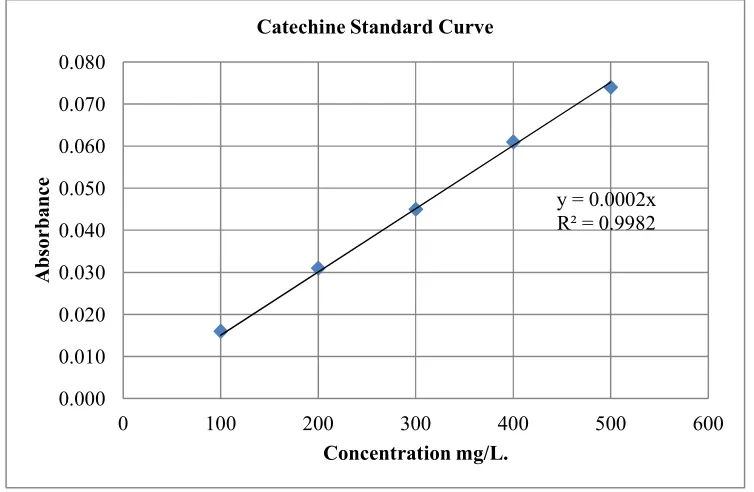
The absorbances for five concentrations of catechin standard solutions were measured at 510 nm wavelength with a Shumadzu brand UV-1800 spectrophotometer. Catechin standard curve was plotted and showed in Fig. 6.
The total flavonoid content in G. nivalis, G. elwesii and G. Woronowii leaves and bulbs are presented in Table 4.
Relatively higher total flavonoid content was determined in all three Galanthus species bulbs when compared to the leaves. The total flavonoid content in Galanthus woronowii leaves and bulbs were higher when compared to the other
species. The highest total flavonoid content was determined in the bulbs of the Galanthus woronowii (5.3 mg GAE/g DW) species.
3.4 Antioxidant Activity
3.4.1 1,1-Diphenyl-2-Pixyl-Hydrazyl Test
DPPH
Radical scavenging method was used to investigate the antioxidant capacity of the methanol extracts of three Galanthus species leaves and onions against free radicals. The DPPH radical is commonly used in the analysis of free radical scavenging activity due to its reaction facility. In this method, primarily the proton transfer reaction with the DPPH free radical due to the antioxidant leads to a decrease in absorbance at 510 nm. This process is based on monitoring the visible area with the spectrophotometer until the absorbance is constant. DPPH scavenging activity was 77% in the 500 μg/mL Galanthus woronowii leaf extract concentration and 93% in the ascorbic acid control group (Fig. 7). The percentage inhibition of species extracts was presented in Fig. 7.
y = 0.0042x
R² = 0.9997
0.000
0.500
1.000
1.500
2.000
2.500
0
100
200
300
400
500
600
A
b
so
rb
a
n
ce
3.4.2 Inhibition of the ABTS*+ Radical Cation (TEAC) test findings
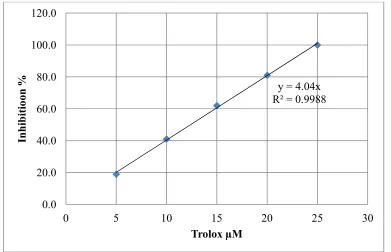
The inhibition curve developed with different concentrations of the standard Trolox (6-hydroxy-2,5,7,8-tetramethychroman-2-carboxylic acid) solutions is presented in Fig. 8.
G. nivalis, G. elwesii and G. Woronowii species leaf and bulb antioxidant content are presented in Table 5. The sample antioxidant activities were expressed as µmol Trolox/100 g.
3.5 Chromatographic Analysis of Phenolic Acids
Determination of the amount of phenolic acids in the samples was made out by reverse phase HPLC method. Gallic acid, chlorogenic acid,
gentsic acid, vanillic acid, caffeic acid, syringic acid, sinapic acid, p-coumaric acid, ferulic acid, anisic acid, rosmarinic acid, salicylic acid, and cinnamic acid were used as standard material. For this, the phenolic acids standards at 5 different concentrations (20, 40, 60, 80 and 100 mg / L.) was injected into the device. A graph of concentration was plotted against the resulting peak area. Chromatograme of standard phenolic acids was presented in Fig. 9.
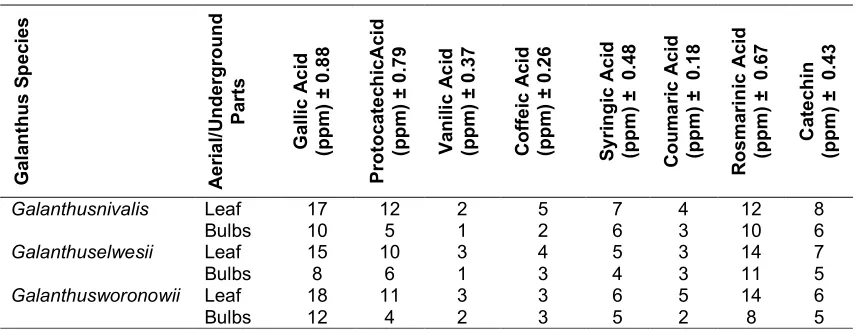
The highest phenolic acid content was observed in gallic acid content in the extracts, while the lowest phenolic acid content was observed in the vanilic acid content. Following the gallic acid, significant phenolic acid protocatechic acid content were determined in extracts. Phenolic acid content are presented in Table 6.
Fig. 6. Catechin standard curve
Table 4. Total flavonoid analysis findings
Galanthus species Aerial and underground parts Total flavonoid content
mg CAE / gr. D.W.
Galanthus nivalis Leaf 32 ± 0.25
Bulbs 24 ± 0.20
Galanthus elwesii Leaf 22 ± 0.30
Bulbs 19 ± 0.22
Galanthus woronowii Leaf 33 ± 0.28
Bulbs 27 ± 0.18
y = 0.0002x R² = 0.9982
0.000 0.010 0.020 0.030 0.040 0.050 0.060 0.070 0.080
0 100 200 300 400 500 600
A
b
so
r
b
a
n
c
e
Bulduk and Karafakioğlu; IJBCRR, 25(1): 1-12, 2019; Article no.IJBCRR.47439
Fig. 7. Free radical scavenging activity of methanolic extracts of Galanthus spp. Ascorbic acid
was included as a positive control
Fig. 8. ABTS*+ radical removal activity by Trolox standards
Table 5. Antioxidant activities
Galanthus species Aerial and underground
parts
Antioxidant activity µmol Troloks/100 g D.W. ± S.D.
Galanthus nivalis Leaf 20 ± 0.78
Bulbs 19 ± 0.80
Galanthus elwesii Leaf 20 ± 0.85
Bulbs 17 ± 0.78
Galanthus woronowii Leaf 23 ± 0.64
Bulbs 21 ± 0.71
0.0 10.0 20.0 30.0 40.0 50.0 60.0 70.0 80.0 90.0 100.0
0 100 200 300 400 500 600
In
h
ib
it
io
n
%
Concentration (µg/mL.)
Ascorbic Acid
G. Nivalis Leaf.
G. Nivalisi Bulbs
G. Woronowii Leaf
G. Woronowii Bulbs
G. Elwesii Leaf.
G. Elwesii Bulbs
y = 4.04x
R² = 0.9988
0.0
20.0
40.0
60.0
80.0
100.0
120.0
0
5
10
15
20
25
30
In
h
ib
it
io
o
n
%
Fig. 9. Typical chromatogram of 13 phenolic acid standards
Gal = Gallic Acid; Chl = Chlorogenic Acid; Gen = Gentsic Acid; Van = Vanillic Acid; Caf = Caffeic Acid; Syr = Syringic Acid; Sin = Sinapic Acid; Cou = P-coumaric Acid; Fer = Ferulic Acid; Ani = Anisic Acid;
Ros = Rosmarinic Acid; Sal = Salicylic Acid; Cin = Trans-cinnamic Acid
Table 6. Phenolic acid content of the samples
G a la n th u s S p e c ie s A e ri a l/ U n d e rg ro u n d P a rt s G a ll ic A c id (p p m ) ± 0 .8 8 P ro to c a te c h ic A c id (p p m ) ± 0 .7 9 V a n il ic A c id (p p m ) ± 0 .3 7 C o ff e ic A c id (p p m ) ± 0 .2 6 S y ri n g ic A c id (p p m ) ± 0 .4 8 C o u m a ri c A c id (p p m ) ± 0 .1 8 R o s m a ri n ic A c id (p p m ) ± 0 .6 7 C a te c h in (p p m ) ± 0 .4 3
Galanthusnivalis Leaf 17 12 2 5 7 4 12 8
Bulbs 10 5 1 2 6 3 10 6
Galanthuselwesii Leaf 15 10 3 4 5 3 14 7
Bulbs 8 6 1 3 4 3 11 5
Galanthusworonowii Leaf 18 11 3 3 6 5 14 6
Bulbs 12 4 2 3 5 2 8 5
4. CONCLUSION
Most previous phytochemical studies on Gallanthus species have reported alkaloid structure diversity and no bioactivity studies have been conducted. The present study is the first in this area. Plants contain a significant number of phytochemical components, most of which are known to be biologically active and responsible for various pharmacological activities. Some of these secondary plant metabolites are preferred natural antioxidant sources against synthetic ones due to safety concerns. It was demonstrated that bioactive secondary metabolites reduce the risk and slow the progression of diseases such as cancer, cardiovascular and neurodegenerative diseases, etc. by scavenging free radicals through various biological mechanisms [37]. Phenols have the
Bulduk and Karafakioğlu; IJBCRR, 25(1): 1-12, 2019; Article no.IJBCRR.47439
very important in the analysis of antioxidant properties [39]. Thus, the present study may serve as a guide for future researchers in pharmacology to conduct further studies on these plants by providing different perspectives.
COMPETING INTERESTS
Authors have declared that no competing interests exist.
REFERENCES
1. Scarborough P, Allender S, Rayner M, Goldacre M. Validation of model-based estimates (synthetic estimates) of the prevalence of risk factors for coronary heart disease forwards in England. Health Place. 2009;1:54-60.
2. Skuladottir H, Tjoenneland A, Overvad K, Stripp C, Olsen JH. Doeshighintake of fruit and vegetables improve lung cancer survival. LungCancer. 2006;3:267-273. 3. Ling LT, Radhakrishnan AK, Subramaniam
T, Cheng HM, Palanisamy UD. Assessment of antioxidant capacity and cytotoxicity of selected Malaysian plants. Molecules. 2010;15: 2139-2151.
4. [Vinson JA, Dabbagh YA, Serry MM, Jang J. Plant flavonoids, especially tea flavonols, are powerfu lantioxidants using an in vitro oxidation model for heart disease. J. Agric. Food Chem. 1995;43: 2800-2802.
5. Amarowicz R, Estrella I, Hernández T, Robredo S, Troszyńska A, Kosińska A, Ronald B. (Free radical-scavenging capacity, antioxidant activity, and phenolic composition of greenlentil (Lens culinaris). Food Chem. 2010;3:705-711.
6. Velioglu YS, Mazza G, Gao L, Oomah BD. Antioxidant activity and total phenolics in selected fruits, vegetables, and grain products. J. Agric. Food Chem. 1998;10: 4113-4117.
7. Yoo KM, Lee CH, Lee H, Moon B, Lee CY. Relative antioxidant and cytoprotective activities of common herbs. Food Chem. 2008;3:929-936.
8. Tavare L, Carrilho D, Tyagi M, Barata D, Serra AT, Duarte CMM, Duarte RO, Feliciano RP, Bronze MR, Chicau P, Espírito-Santo MD, Ferreira RB, Santos CN. Antioxidant capacity of Macaronesian traditional medicinal plants. Molecules. 2010;15:2576-2592.
9. Willis JC. Amaryllidaceae. A dictionary of the flowering plants and ferns. 8th Ed. Cambridge: Cambridge University Press; 1988.
10. World Checklist of Selected Plant Families (WCSP). Royal Botanic Gardens, Kew. Available:http://apps.kew.org/wcsp/home.d o
[Lastcited on 2018 April 25].
11. Davis AP, Galanthus L. Flora of Turkey and the East Aegean Islands. Edinburgh University Press, Edinburgh. 2000;11:265-270.
12. Davis AP, Özhatay N. Galanthustrojanus: A new species of Galanthus (Amaryllidaceae) from north-western Turkey. Bot J Linn Soc. 2001;137:409-412. 13. Davis AP. The genus Galanthus. In: A Botanical Magazine Monograph. Timber Press Inc. Oregon. 1999;165-170.
14. Davis AP. The genus Galanthus-snowdrops in the wild In: Snowdrops a monograph of cultivated Galanthus. Griffin Press Publishing Ltd. Cheltenham. 2006; 44-47.
15. Özhatay N. Diversity of bulbousmonocots in Turkey with special reference chromosome numbers. Pure Appl Chem. 2002;74:547-555.
16. Tarım ve Köy İşleri Bakanlığı, Doğal Çiçek Soğanlarının. Yılı İhracat Listesi Hakkında Tebliğ (2009/55), Resmi Gazete, Sayı. 2010;27404.
17. Bokov DO, Samylina IA, Malinkin AD, Nikolov S. Application of HILIC-UV method in analysis of medicines containing Amaryllidaceae alkaloids. Russ J Biopharm. 2017;9:52-58.
18. Sarikaya BB, Kaya GI, Onur MA, Bastida J, Somer NU. Phytochemical investigation of Galanthus woronowii. Biochem Syst Ecol. 2013;276–279.
19. Berkov S, Codina C, Viladomat F, Bastida J. Alkaloids from Galanthus nivalis. Phytochemistry. 2007;68:1791-8.
20. Bokov DO, Malinkin AD, Samylina IA, Bessonov VV. Hydroxy cinnamic and organic acids of snowdrops (Galanthus L.) J Appl Pharm Sci. 2017;7:36-40.
21. Prakasia PP, Nair AS. Evaluation of in vitro antioxidant potential of the total crude alkaloid extract of Glycosmispentaphylla (Retz.) Correaleaves. Int J Pharm Pharm Sci. 2016;8:85-91.
plants and their antibacterial activity. Int J Pharm Pharm Sci. 2015;7:223-7.
23. Berkov S, Codina C, Bastida J. The genus Galanthus: A source of bioactive compounds. Phytochemicals – A Global Perspective of Their Role in Nutrition and Health. 2012;236-254.
24. Bishop M, Davis AP, Grimshaw JP. Snowdrops: A monograph of cultivated Galanthus. Cheltenham: Griffin Press. 2006;32-36.
25. Yüzbaşıoğlu S. Morphological variations of Galanthus elwesii in Turkey and difficulties on identification. Bocconea. 2012;24:335-339.
26. Webb DA. In: Flora Europaea. Tutin TG, Heywood VH, Burges NA, Moore D, Valentine DH, Walters SM, Webb DA. Cambridge University Press; Cambridge, U.K. 1980;5:77.
27. Boit H, Horst E. Amaryllidaceae alkaloids VIII. Alkaloids from Sprekelia
formosissima, Galanthus elwesii, Zephyranthes candida and Crinumpowellii. Chem. Ber. 1955;88:1590–1594.
DOI: 10.1002/ cber. 19550881019
28. Cherkasov O. Plantsources of galanthamine. Khim.-Farm. Zh. 1977;11: 84–87.
29. Latvala A, Önür M, Gözler T, Linden A, Kivçak B, Hesse M. Alkaloids of Galanthuselwesii. Phytochemistry. 1995; 39:1229–1240.
DOI: 10.1016/0031-9422(95)00187-C
30. Bastida J, Lavilla R, Viladomat F. In: The Alkaloids. Cordell G. ElsevierInc. Amsterdam, The Netherlands. 2006;6:87– 179.
31. The galantamine extended-release capsules revision bulletin supersedes thecurrently officia lmonograph. The Revision Bulletin will be incorporated in USP 40–NF 35; 2016.
32. Elzaawely AA, Tawata S. Antioxidant activity of phenolic rich fraction obtained from Convolvulus arvensis L. leavesgrown in Egypt. J. Crop. Sci. 2012;4:32–40. 33. Chang C, Yang M, Wen H, Chern J.
Estimation of total flavonoid content in propolis by two complementary colorimetric methods. J. Food Drug Anal. 2002;10:178-18.
34. Villano D, Fernandez Pachon MS, Moya ML, Troncoso AM, Garcıa-Parrilla MC. Radical scavenging ability of polyphenolic compounds towards DPPH free radical. Talanta. 2007;71:230.
35. Re R, Pellegrini N, Proteggente A, Pannala A, Yang M, Rice-Evans C. Antioxidant activity applying an improved ABTS radical cation decolorization assay. Free Radical Biology and Medicine. 1999;26:1231-1237.
36. Dawei W, Chen Chen L, Hao D, Yiping L, Huwei L. A universal HPLC method for the determination of phenolic acids in compound herbal medicines. J. Agric. Food Chem. 2005;53:6624−6629.
37. Al-Owaisi M, Al-Hadiwi N, Khan SA. GC/MS analysis, determination of total phenolics, flavonoid content and free radical scavenging activities of various crude extracts of Moringa peregrina (Forssk.) Fiorileaves. Asian Pac J Trop Med. 2014;4(12):964-970.
38. Sengul M, Yildiz H, Gungor N, Cetin B, Eser Z, Ercisli S. Total phenolic content, antioxidant and antimicrobial activities of some medicinal plants. Pak J Pharm. Sci. 2009;22 (1):102-106.
39. Kuppusamy P, Yusoff MM, Parine NR, Govinda N. Evaluation of in vitro antioxidant and antibacterial properties of Commelin anudiflora L. Extracts prepared by different polar solvents. Saudi J Biol Sci. 2015;22(3):293 30.
_________________________________________________________________________________ © 2019 Bulduk and Karafakıoğlu; This is an Open Access article distributed under the terms of the Creative Commons Attribution License (http://creativecommons.org/licenses/by/4.0), which permits unrestricted use, distribution, and reproduction in any medium, provided the original work is properly cited.
Peer-review history: