DOI 10.1007/s13173-011-0043-5 O R I G I N A L PA P E R
IMA
–
CID
: an integrated modeling approach for developing
educational modules
Ellen Francine Barbosa·José Carlos Maldonado
Received: 7 November 2010 / Accepted: 20 September 2011 / Published online: 8 October 2011 © The Brazilian Computer Society 2011
Abstract Educational modules—concise units of study, composed of theoretical and practical content, which can be delivered to learners by using technological and com-putational resources—are relevant mechanisms to improve the learning processes. Similar to software products, educa-tional modules require the establishment and integration of innovative methods, tools and procedures into well-defined processes aiming at producing flexible, adaptable and high-quality products. In this sense, content modeling activity plays a fundamental role in the development of educational modules, providing a way to structure the relevant parts of the learning content. Motivated by this scenario, we propose IMA–CID—an approach for modeling learning content, capable of addressing conceptual, instructional and didactic issues altogether, in an integrated way. By means of a set of models,IMA–CIDhelps the author in determining the relevant parts of the learning content, providing a system-atic way to structure the concepts and related information. IMA–CID also explores the idea ofopen specifications, providing support for the definition of dynamic contexts of learning. Besides that, the translation of IMA–CID models into machine-readable specifications, automatically or by hand, makes possible interoperability and promotes reusability. IMA–CID has been applied in the develop-ment of educational modules for different domains. The re-sulting modules have been evaluated in terms of the authors’ and learners’ perspectives. The results obtained provide
pre-E.F. Barbosa (
)·J.C. MaldonadoUniversity of São Paulo (ICMC-USP), P.O. Box 668, São Carlos, SP 13560-970, Brazil
e-mail:[email protected] J.C. Maldonado
e-mail:[email protected]
liminary evidence of the learning effectiveness, quality and flexibility achieved by the educational modules produced.
Keywords Educational modules·Content modeling· Instructional design
1 Introduction
Several initiatives in order to provide new learning oppor-tunities and facilitate the learning process have been in-vestigated in the last decades. One of the main challenges in this direction is how to create flexible, adaptable and high-quality educational products, capable of motivating the users (learners and instructors) and effectively contribute to knowledge construction processes in active learning envi-ronments.
The envisioned scenario is that the user can be “free” to dynamically decide which topics to navigate, progress-ing more or less deeply into them, accordprogress-ing to characteris-tics such as course length and type, instructor’s preferences, learner’s profiles and learning goals. Also, there is a need for a global education, capable of crossing international, cul-tural and social borders in order to prepare the learners for the global market [5].
Although much effort has been put toward the definition of learning standards, models of instructional design and content modeling initiatives, there are still open issues re-garding the development of educational modules to be ad-dressed. For instance, despite the existing models of intional design, no complete and systematic process for struc-turing the activities and tasks to be performed during the de-velopment of educational products has been defined. Indeed, most of such models address the fundamental activities re-lated to the development of educational products. However, when creating an educational product, other relevant activ-ities must be considered as complement to the fundamental ones. For instance, configuration management, documenta-tion, coordination support, communication and infrastruc-ture are examples of activities that should take place when developing an educational product.
Regarding the content modeling initiatives, we notice that most of the existing approaches work in a coordina-tion level, being concerned to modeling learning designs. In short, these modeling approaches provide mechanisms to formalize the flow of activities and to identify actors, roles and resources used or produced in the learning environment, keeping open to the author the decisions regarding the con-tent itself. Even considering the initiatives specifically de-signed to modeling learning content, each of them addresses different modeling issues, which can be suitable for a given learning scenario but inadequate for others. Thus, no inte-grated solution capable of addressing conceptual, instruc-tional and didactic issues altogether has been explored in the modeling of learning content yet.
Motivated by this scenario, we have investigated the es-tablishment of a systematic process for developing educa-tional modules, aiming at providing a more complete and well-defined set of guidelines and supporting mechanisms to create, reuse and evolve them [3,5].SP–DEM (Stan-dard Process for Developing Educational Modules) is based on ISO/IEC 12207 standard [31], taking also in account practices from instructional design [17,23], aspects of open development [40, 42] and of distributed and cooperative work [36].
Particularly, as part of SP–DEM, we have addressed three different issues of content modeling—conceptual, in-structional and didactic—working in the establishment of an integrated approach for modeling learning content— IMA–CID(Integrated Modeling Approach—Conceptual, Instructional and Didactic) [4].
IMA–CID focuses on the development of learning content, and can be used in a complementary way with learning models working in a coordination level of abstrac-tion. By means of a set of models, it helps the author to determine the relevant parts of the learning content, provid-ing a systematic way to structure the concepts and related information.
The modeling approach also explores the idea ofopen specifications, providing support for the definition of dy-namic contexts of learning. Considering a development/re-engineering process, theIMA–CID models can be espe-cially useful to represent the instructional design rationale, playing a key role to easier evolve and maintain the result-ing educational products. Besides that, the translation of IMA–CID models into machine-readable specifications, automatically or by hand, makes possible interoperability and promotes reusability.
In this paper we focus on the content modeling activity and discuss the establishment of theIMA–CIDapproach. We present the main characteristics ofIMA–CIDand dis-cuss the practical application of its models in the develop-ment of educational modules for different knowledge do-mains. TheIMA–CID based modules have been applied and preliminarily evaluated considering both the authors’ and the learners’ perspectives. In summary, we observe a very positive feedback with respect to the benefits of hav-ing a learnhav-ing content well-structured and to the several dif-ferent possibilities of navigation through the same content. The results obtained also provide preliminary evidence of the learning effectiveness achieved by the educational mod-ules produced.
The remainder of the paper is organized as follows. In Sect.2, we provide a literature review regarding standards, models of instructional design and content modeling initia-tives that have been adopted in the development of educa-tional modules. In Sect.3, we provide an overview of edu-cational modules, describing their main components. Also, we summarize our previous work in the establishment of IMA–CID, presenting a set of modeling requirements and perspectives we adopted in its proposal. In Sect.4we dis-cuss the main characteristics and modeling mechanisms of IMA–CIDand describe the models it comprises. We also provide a set of guidelines to help instructors and/or content developers with applying the approach. Results and lessons learned from the application ofIMA–CID in the devel-opment of educational modules for different knowledge do-mains are described in Sect.6. Finally, in Sect.7we summa-rize our contributions and discuss the perspectives for fur-ther work.
2 Background
In this section we provide an overview of the research and literature associated with the development of educational modules. Besides to provide a general view of some of the major initiatives being conducted in the area, we also intend to make the reader aware that there are open issues regarding the development of educational modules to be addressed.
development of searchable, reusable and interoperable edu-cational modules.
In the second part, we briefly describe some of the exist-ing models of instructional design. At the same time that these models provide an overall understanding about the fundamental activities a process for educational modules should consider, they also help on identifying the relevant activities that have not been covered by any model yet.
In the last part, we summarize the initiatives to modeling learning content. The idea is to illustrate how different are the existing content modeling initiatives and motivate the reader about the need for an integrated modeling approach, capable of addressing conceptual, instructional and didactic issues altogether, in order to create flexible, adaptable and high-quality educational modules.
2.1 Learning standardization initiatives
According to Caeiro-Rodríguez [12], the learning standard-ization initiatives intend to: (i) facilitate the search and lo-cation of appropriate and useful learning objects; (ii) enable the transfer of learning objects between systems; and (iii) enable the use of learning objects in different systems.
The first standardization efforts were devoted to the de-velopment of metadata schemas in order to facilitate the search of educational resources. The IEEE LOM (Learning Object Metadata) [28] is a multipart standard, developed to facilitate search, evaluation, acquisition, use and manage-ment of learning objects. The LOM data model specifies which aspects of a learning object should be described and what vocabularies may be used for these descriptions. More-over, it defines how this data model can be amended by ad-ditions or constraints. Other parts of the standard are related to the bindings of the LOM data model, i.e., to define how LOM records should be represented in XML and RDF.
Still in the scope of learning objects metadata, we point out the Dublin Core Metadata Initiative (DCMI) [13]. DCMI intends to establish and maintain metadata standards for de-scribing Internet resources, allowing for discovery and in-teroperability of resources across a range of platforms and systems. Key principles are simplicity, interoperability, ex-tensibility and refinement. The specification is intended to be used as a core element set that may be extended for spe-cific use.
Standards for the packaging of learning objects have been proposed to enable their transfer between systems. Since a learning object is an aggregation of several related units, an agreement is needed on resource packaging to facilitate their transfer. Packaging models define how to encapsulate all el-ements that made up a course or a lesson as a single unit to be easily transferred from system to system. As an exam-ple, we highlight the IMS Content Packaging specifications (IMS CP) [30], developed to promote the interoperability
of learning resources between different platforms and learn-ing managements systems. Basically, an IMS content pack-age consists of a compressed packpack-age containing learning resources in the form of learning objects and an XML man-ifest that describes the content of the package.
Several standardization initiatives have also considered the organization of the content and other resources that made up the learning object to facilitate the operation of final learning systems. These specifications define how the com-ponents of a learning object should be organized in a hierar-chical structure, establishing the order in which they should be delivered to learners. Such specifications are important to ensure that the same learning object may be used in different learning systems, supporting their interoperability.
SCORM (Sharable Content Object Reference Model) [1], for instance, is an implementation model for reusable learn-ing content. It is a collection of standards, specifications and guidelines that are integrated with one another to form a single reference model. The idea is to provide a consis-tent framework within which learning objects can be de-scribed, assembled or package for delivery via web servers connected to learning management systems.
To sum up, standards play an essential role in the devel-opment of learning objects and, for this reason, much ef-fort has been put toward their definition and practical ap-plication. As a consequence, learning standards have been adopted by a lot of tools and important projects. Nonethe-less, there is still a lot of space for improvement and even redesign. For instance, although the existing metadata devel-opments have established a solid framework for describing technical and physical attributes of learning objects, there are still issues that remain opened for investigation. It is the case of metadata and dynamic annotation. Memmel et al. [43] pose the idea that learning objects must be watched as they are used. Since current metadata concepts do not sup-port dynamic annotation, the authors claim that the future of learning has to bring, among other things, extensions of metadata concepts that go far beyond the current conven-tional approaches.
As a final remark, even though our work does not focus on the research issues directly related to learning standards, it is important to highlight that the learning content we have produced is aligned with such standards, particularly with those widely adopted and supported by the learning com-munity.
2.2 Models of instructional design
by the design and development of learning objectives and methodologies, implementation of the learning content, and a summative evaluation of the resulting product.
One of the strengths of the ADDIE model is that it of-fers a series of questions to ensure a critical examination of instructional goals, learning objectives and learner needs at each stage of the design process. The model proceeds from one stage to another with revision occurring throughout the design process to ensure that the product of design does not run askew from the instructional goals [22]. ADDIE is con-sidered the starting point to derive specific models for de-veloping educational products. Although several models for instructional design have been developed, most of them are still based on the core ideas of ADDIE model.
Besides ADDIE, there are several other models of in-structional design. The CLE (Constructivist Learning En-vironment) [32], for instance, focuses on authentic learner problem-solving model. The Jonassen’s model conceives of a meaningful problem, question or project as the focus of the environment, surrounded by interpretative and intellectual support systems such as related cases and information re-sources; cognitive, conversation and collaboration tools; and social context that support learner problem solving [32]. The learner’s goal is to interpret and solve the problem or com-plete the project. Basically, CLE establishes a list of learning activities that students should perform (Exploration, Artic-ulation andReflection) and a list of instructional activities that the environment should provide in order to support the learners (Modeling,CoachingandScaffolding).
HDM (Hypermedia Design Model) [42] is a construc-tivist model of design created for the Web and other hyper-media environments. The model comprises six stages. The first two stages (Define your learning domainandIdentify cases within the domain) define the instructional content, goals and format. HDM then splits into two paths [16]: (1) in the guided path, HDM provides suggestions to the learner as to the design goal (Identify themes and perspectives) and includes multiple paths to follow (Map multiple paths link cases); (2) in the learner-controlled path, learners are able to specify their own learning objectives and are able to navi-gate a path of their own creation (Provide learner-controlled navigation through cases). The final step in HDM (Focus learner self-reflection) is to encourage learner self-reflection in order for learners to determine if their learning objectives have been achieved.
Aiming at applying the principles of objectivist and con-structivist design, Farrell & Carr [22] proposed the Learn-ing Object Design Model. In short, the model implements the strengths of the ADDIE, CLE and HDM models by in-tegrating ADDIE’s comprehensive and systematic approach to design, CLE’s focus on relevant and engaging problem solving, and HDM’s provision for learner control and design guidance.
LODAS (Learning Object Design and Sequencing The-ory), proposed by Wiley [68], addresses the issues of granu-larity (scope and design) and sequencing (combination) for developing learning objects. LODAS was designed to sup-port the instructional use of learning objects and facilitate a significant amount of reusability across objects. By com-bining a number of existing instructional design theories, including Elaboration Theory [53]), Work Model Synthe-sis [24], Domain Theory [68], and the Four-Component In-structional Design model [45], LODAS provides taxonomy and design guidance for different types of learning object. Wiley’s proposal is composed of six steps [68]:
1. Preliminary activities: In this step the designer needs to determine the appropriateness of using the LODAS for achieving the organization or course goals.
2. Content analysis and synthesis: In this step the designer needs to: (a) identify the necessary cognitive skills to achieve the overall goal of instruction; (b) break larger tasks into their associated smaller components, getting simpler as the decomposition continues until no more de-composition is possible; and (c) synthesize work models, i.e., the constituent skills are recombined into activities that people perform in the real world.
3. Design practice and information presentation: In this step the designer needs to identify the practice and in-struction necessary for each task.
4. Learning object selection or design: In this step the de-signer needs to: (a) review preexisting learning objects available in metadata repositories; and (b) create new learning objects.
5. Learning object sequencing: In this step the designer needs to sequence educational resources based on their cognitive complexity.
research and design operations increase the researchers’ and the designers’ understanding of each other and the context.
By analyzing the models of instructional design de-scribed, we notice that most of them address the funda-mental (primary) activities related to the development of educational products. However, when applying a specific instructional model in the practice, many other relevant activities must be considered as complement to the funda-mental ones. Supporting activities (e.g., Configuration Man-agement, Documentation) and organizational activities (e.g., Coordination, Communication, Infrastructure) are examples of activities that should take place when developing an edu-cational product.
Despite the several models of instructional design, no complete and systematic process for structuring the activi-ties and tasks to be performed during the development of ed-ucational products has been defined so far. Indeed, as impor-tant as the selection of the appropriate model of instructional design is the definition of the adequate supporting technolo-gies and tools to be used, the human resources and their roles in the development, as well as the deliverables (i.e., the pre-cisely described products of this process).
In this sense, we argue that there is a lack of well-defined processes for instructional design, capable of defining a complete and systematic way to produce flexible, adaptable and high-quality educational products. This scenario moti-vated us to work on the establishment ofSP–DEM, briefly described in Sect.3.2.
2.3 Content modeling initiatives
All models of instructional design point out the need for structuring and organizing the learning content. In general, the establishment of models for representing learning con-tent involves several different aspects. For instance, we have to consider the specific characteristics related to the knowl-edge domain, to define the practical tasks and the evaluation mechanisms that will be applied to learners, and to estab-lish pedagogical sequences for presenting the information. Besides that, the content modeling activity can take place in different levels of abstraction, from coordination to instruc-tional and pedagogical levels.
EMLs (Educational Modeling Languages) [21] have been proposed to support the description of instruction mechanisms and resources used in the learning. Accord-ing to Villani [66], they provide a meta-model that enables to capture the resources (e.g., texts, figures and tools) used during the instruction as well as the instructional design in-formation that establish in which manner such resources are intended to be used.
An EML focus on the coordination of the entities (e.g., persons, documents, tools) involved in instruction instead on the pedagogical approaches or instruction elements. In-deed, the main goal of EMLs is to support the modeling
of the coordination issues between such entities (e.g., the documents/tools that can be accessed/used by a learner) to-gether with the establishment of particular goals responsible for driving and controlling the way in which such entities are intended to participate and interact. To allow this kind of modeling, EML meta-model uses to be arranged according to an activity scheme involving three main entities: (1) the Goalsthat have to be achieved in each Activity, which are usually related with anObjectto be produced; (2) the Sub-ject(s)that have to carry out eachActivity, who participate playing specificRoles; and (3) theEnvironmentwhere each Activityhas to be carried out.
Following the basic EML activity scheme, Learning De-sign specification (LD) [29] provides a notation to sup-port the description of instruction in computational envi-ronments. Such notation is expressed using XML tags that must be arranged in accordance with the LD meta-model. As pointed out by Paquette et al. [50], the LD specifica-tion leaves open the choice of instrucspecifica-tional models and tools that can support designers in the development of educational products.
The main problem related to LD specifications is the lack of explicit support of the instructional design rationale. Thus, LD uses low level coordination mechanisms to de-scribe the coordination of the learning elements, but it does not explicitly capture the coordination rationale involved in the instructional design. Villani [66] argues that this problem can be solved considering a similar solution as in computer programming languages, where high-level languages and as-sembler languages are focused on different concerns. EMLs have already been considered as assembler languages (e.g., LD) and high-level educational modeling languages remains to be developed yet.
In a related perspective, Rodríguez-Artacho [55] intro-duced the PALO language as a cognitive-based approach to EMLs. Basically, the PALO language provides a layer of ab-straction for the description of learning material, including the description of learning activities, structure and schedul-ing. The language is adherent with a reference framework to describe learning materials [56]. Such framework makes use of domain and pedagogical ontologies as a reusable and maintainable way to represent and store learning content, and to provide a pedagogical level of abstraction in the au-thoring process.
In each of phases 2 to 6, MISA proposes the development of four axes. TheKnowledge Modelenables the identifica-tion of various types of link and knowledge, including the competencies to be developed. Shortly, the model embod-ies the following types of knowledge: (1)conceptual knowl-edge—allows the description of the objects of the designer must use or produce; called documentation elements, such objects make up the blueprint and specifications for a learn-ing system; (2)procedural knowledge—aims to define the actions to be performed on these objects, or how the designer achieves each task necessary to the production of the train-ing system; (3)strategic knowledge—consists of statements to help the designer decide when or why to make a partic-ular choice during the application of a certain procedure. Additionally, the concept ofcompetenceis reconciled with concepts of knowledge, skills, and learning needs; skills are classified enabling integrated processing of cognitive, affec-tive, social and psychomotor aspects.
TheInstructional Modelguides the creation of learning units. It is responsible for the identification of a set of in-structional strategies describing the learning activities, of-fering a precise and broad definition of the central concept of the instructional scenario. Paquete et al. [50] observed that MISA’s specification of anInstructional Modelcan be seen as a kind of EML.
The Learning Modelmakes it possible to carry out the macro-design of the instructional materials without prejudg-ing the decisions that will be taken later by specialists as the various media are built (micro-design).
The Delivery Model covers the delivery infrastructures and the training management tasks and processes necessary to access the learning system.
MISA involves the interaction of many specialists such as content experts, instructional designers, media producers and training managers. Each of these main actors is central to one of the four axes, but they all interact and intervene in all axes as well.
According to Paquete et al. [50], MISA deals with mod-eling of learning designs in the sense it formalizes the flow of activities and precisely identifies the actors, their roles as well as the resources used or produced in the environment. Furthermore, the authors claim that LD specification and the MISA method complement each other. The LD specification provides a standardized formal and machine-readable repre-sentation of learning design, whereas MISA proposes a sys-temic and systematic method to design and implement such learning designs.
Finally, there are some approaches specifically designed for developing educational hypermedia applications. DAPH-NE (Portuguese acronym forDefinição de Aplicações Hiper-mídia na Educação) [33] is based on the Concept Map-ping Theory [48] and on the Information MapMap-ping Tech-nique [27]. EHDM (Educational Hyperdocuments Design
Method) [49] is based on the Concept Mapping Theory and on the Michener’s work [46]. MAPHE (Portuguese acronym for Metodologia de Apoio a Projetos de Hipertextos Edu-cacionais) [51] incorporates to the Concept Mapping The-ory some usual relationships of the Object-Oriented Model-ing [57].
By analyzing the content modeling initiatives described, we notice that EMLs, PALO language and MISA focus on coordination issues. In short, these modeling approaches are concerned to modeling learning designs, keeping open to the author the decisions regarding the content itself. Since the focus ofIMA–CID is to model the content details (fine-grained modeling approach), we can explore its adoption in a complementary way, especially considering the MISA ap-proach.
On the other hand, DAPHNE, EHDM and MAPHE focus on the modeling of learning content; hence, in the same di-rection ofIMA–CID. However, each approach addresses specific issues of content modeling. Conceptual aspects, for instance, are emphasized in DAPHNE and MAPHE while EHDM just provides mechanisms to support the do-main modularization. Instructional issues are addressed by DAPHNE and EHDM; MAPHE does not provide specific mechanisms for dealing with them. Didactic aspects are con-sidered in all approaches by means of precedence relations, but no support for dynamic contexts of learning are pro-vided.
Motivated by this scenario, we are interested in an inte-grated approach for modeling the learning content, capable of providing a complete set of models to address the concep-tual, instructional and didactic perspectives altogether. Also, we intend to investigate a way to represent dynamic contexts of learning, where the elements of the content can be dynam-ically determined according to specific parameters defined in terms of the characteristics of the course, learners and in-structors. Such characteristic is important to foster aspects of customization and adaptability of the educational prod-ucts in order to better engage the learners (and teachers as well) in an active learning process. Besides that, we intend to explore the translation of the graphical representations of the learning content into machine-readable specifications (as al-ready occurs at the coordination level), as a way to promote interoperability and reusability. These research points have not been considered by the existing modeling approaches at the content learning level, motivating us to the proposition ofIMA–CID, described in Sect.4.
3 Developing educational modules
3.1 Educational modules: a definition
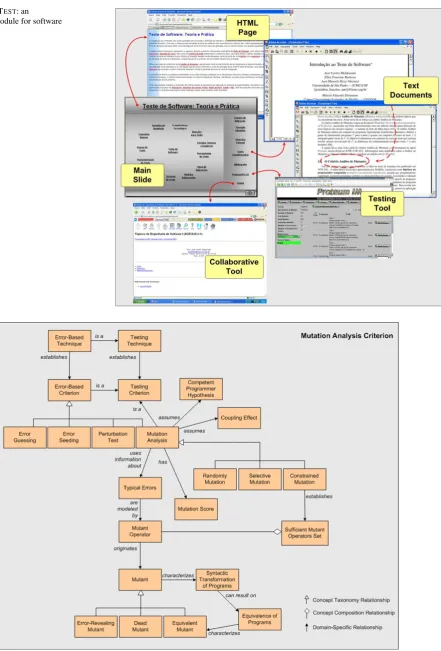
Educational modules are concise units of study, composed of theoretical and practical content, which can be delivered to learners by using technological and computational re-sources [3]. Figure1illustrates the main components of an educational module.
For theoretical content, instructors use books, papers, web information, slides, class annotations, audio, video, and so on. Practical content is the instructional activities and associated evaluations, as well as their resulting artifacts (e.g., executable programs, experimental studies, collabora-tive discussions). Specific tools related to the subject knowl-edge domain and the results obtained from their application can also be seen as practical content. Such tools can be inte-grated as part of an educational module in order to enable the application of fundamental concepts in realistic scenarios. This integration fosters training situations and promotes ex-change of technology between industry and academia, also providing learners with domain-specific skills.
Theoretical and practical content are integrated in terms of learning materials. In order to deliver the materials to learners, an adequate infrastructure is also needed. Learn-ing environments (e.g.,WebCT [25],Blackboard[8], Moo-dle [20], Sakai [59], DotLRN [19]) as well as technolog-ical and computational resources, such as mechanisms to transform the content of traditional lectures into search-able and extensible digital media (e.g., e-Class [11, 52]) and to support collaborative work and augment communi-cation and discussion among instructors and learners (e.g., CoWeb[18]), illustrate some of the required infrastructure related to the educational modules.
It is also important to define an educational module in terms of a learning object. In a very broad definition, IEEE/LTSC states that a learning object corresponds to “any entity, digital or non-digital, that can be used, reused or ref-erenced during technology supported learning. . . Examples of learning objects include multimedia content, instructional content, learning objectives, instructional software and soft-ware tools, and persons, organizations, or events referenced during technology supported learning” [28].
Considering the IEEE/LTSC’s definition of learning ob-jects, both theoretical and practical content can be seen as learning objects. Since educational modules are composed of theoretical and practical content, they can also be de-fined as a collection of learning objects. Moreover, learning objects can be hierarchically aggregated and represented in different granularities, i.e., a learning object can also be seen as a collection of learning objects. Therefore, an educational module can be defined as a learning object. In this paper we use the termeducational modulewith the same meaning of learning object.
The development of educational modules should take in account some key characteristics of knowledge. We have to consider, for instance, the knowledge structure and organi-zation, i.e., how the information related to the subject do-main can be integrated and how to establish a well-defined structure to represent it. The way the educational module is structured and organized deeply impacts its learning ef-fectiveness. Hence, it is fundamental that when creating an educational module the authors (not necessarily the domain experts) clearly understand the subject domain, being able to identify and organize concepts and relevant information
and, also, to specify practical activities and related evalua-tions.
Other characteristic to be considered refers the dynamic and evolutionary aspect of knowledge, i.e., new knowledge is continuously produced and referenced in consequence from previous learning experiences. In each class, tradi-tional, blended or distance one, new content (e.g., slides, annotations, texts, results and sub-products from practical activities) is created when delivering the module to learners, and should be incorporated into the content previously de-fined. In fact, the learning content is continuously expanded (active growth) in consequence from the contributions of all participants (learners and instructors) of the course. Further-more, such content is frequently referenced (intrinsic ref-erence), aiming at both consolidating the previous knowl-edge acquired as well as motivating the apprenticeship of new concepts and information inter-related.
Finally, issues regarding knowledge reuse and sharing should also be addressed. Reusability allows the content de-veloped in a given learning context to be easier available and transferable to another one, with different educational pur-poses. Nevertheless, different needs, backgrounds and skills can represent a barrier to effective learning. Since there can be widely different viewpoints and assumptions regarding the same subject matter, the consequent lack of a shared un-derstanding can lead to poor communication and collabo-ration, impacting the learning processes in general. Indeed, a shared conceptualization of the knowledge domain repre-sents the basis for developing and for reusing high-quality educational modules.
3.2 A process for developing educational modules
Similar to software products, educational modules require the establishment and integration of innovative methods, tools and procedures into systematic processes aiming at producing flexible, adaptable and high-quality products. The development of such modules can involve developers from different domains, working on multi-disciplinary and het-erogeneous teams, geographically dispersed or not. They should cooperate, sharing data and information regarding the project. Furthermore, we should consider the adoption of supporting tools, which can be used either as part of the educational module under construction or as a mechanism to automate its development process.
Considering this scenario, we have investigated the stan-dardization of processes for developing educational mod-ules [3, 5]. The Standard Process for Educational Mod-ules (SP–DEM) is based on the International Standard ISO/IEC 12207 [31], tailored to the context of educational modules by including aspects of content modeling [3,4], practices from instructional design [17], and issues of dis-tributed and cooperative work [36].
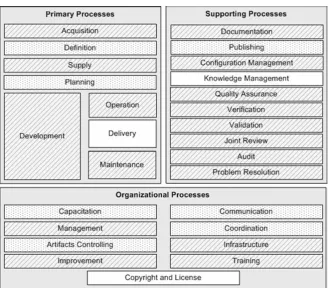
In short,SP–DEMestablishes a set of processes that can be employed to acquire, supply, develop, deliver, oper-ate, and maintain educational modules. Three categories of processes are defined: (1) the primary processes deal with the main activities and tasks performed during the life cycle of an educational module; (2) the supporting processes sup-port other processes and contribute to the success and qual-ity of the development project, and (3) the organizational processes are employed by an organization to establish, im-plement and improve an underlying structure made up of as-sociated life cycle processes and personnel. Figure2shows the general structure of the standard. Dashed rectangles are the processes adapted from the ISO/IEC 12207 [31]. Dot-ted rectangles are the processes adapDot-ted from the standard process for geographically dispersed working groups [36]. White rectangles are the processes specifically developed to the context of teaching and learning.
SP–DEM is responsible for the establishment of a unique development structure to be adopted and followed by the entire organization [3,5]. However, changes in organi-zational procedures, educational paradigms and principles, learning requirements, development methods and strategies, as well as the size and complexity of the projects, among other aspects, impact the way an educational module is pro-duced. In this sense, to be used in particular projects, the processes should be defined case by case, taking into ac-count the specific features of each project.
Process specialization and instantiation have also been explored in order to apply the standard process into specific learning environments and organizations. Basically, the def-inition of a process for developing a given educational mod-ule should consider its adequacy to: (1) the involved tech-nologies, supporting mechanisms and budget; (2) the do-main of the educational application; (3) the characteristics of the module; (4) the maturity level of the development team; and (5) the characteristics of the organization. As a conse-quence, processes into different levels of abstraction are de-fined. More detailed information about SP–DEM defini-tion, specialization and instantiation can be found in [3,5].
3.3 Content modeling requirements
As mentioned before, content modeling plays a key role in the development process of educational modules [12, 39, 56]. Basically, it helps the author in determining the main concepts to be taught, providing a systematic way to struc-ture the relevant parts of the subject knowledge domain. Be-sides that, how the content is structured and organized di-rectly impacts the reusability, evolvability and adaptability of the module.
Fig. 2 Main structure of
SP–DEM
knowledge domain, to define the practical tasks and the eval-uation mechanisms that will be applied to learners, and to establish pedagogical sequences for presenting the modeled information.
As discussed in Sect.2, the existing modeling approaches work in different levels of abstraction; some of them address learning coordination issues while others specifically deal with the content development itself. Besides that, even con-sidering only the modeling initiatives in the same level of ab-straction, we noticed that each approach addresses specific issues; thus, since there is not a set of predefined require-ments for content modeling, each model deals with different perspectives which can be suitable for a given learning sce-nario but inadequate for others.
Motivated by this scenario and based on the typical fea-tures required by educational modules, we proposed a pliminary set of content modeling requirements [3]. Nine re-quirements were defined as part of our set: (1) concept tax-onomy; (2) concept composition; (3) domain-specific re-lationships; (4) hierarchical decomposition; (5) knowledge categories; (6) pedagogical order; (7) learning contexts; (8) history mechanisms; and (9) event propagation (broadcast mechanisms). They are briefly described next.
1. Concept taxonomy: According to Ausubel’s learning the-ory [2], the meaningful learning takes place by incorpo-rating new concepts and propositions into the learner’s previous knowledge framework. In this sense, the es-tablishment of hierarchical structures of the knowledge
domain can enhance the learning process and promote the integration among learner’s previous and new knowl-edge.
Concept taxonomy relationships, in which the more inclusive and general concepts are identified and repre-sented prior to the more specific ones, can be useful for establishing hierarchical structures, helping to define and organize the relevant concepts associated with the knowl-edge domain.
2. Concept composition: Some concepts are better under-stood when “broken” into small pieces. The idea of con-cept composition indicates that a concon-cept is compounded by other ones and can be explored to facilitate the com-prehension of the knowledge domain.
3. Domain-specific relationships: Both concept taxonomy and concept composition represent generic categories of relationships, applicable to any kind of knowledge domain. To address the details and particularities of each different knowledge, domain-specific relationships should also be represented. Domain-specific relation-ships have their meaning associated to a particular sub-ject, carrying their own semantics. In other words, they represent specific relations, user-defined, whose interpre-tation depends on the domain (or application) subject to modeling.
Ac-tually, if the number of relevant concepts associated with the knowledge domain is high, their representation in a unique space may compromise the legibility of the con-tent model and affect the quality of the material under development. So, mechanisms for structuring large bod-ies of knowledge into several smaller groups of concepts are fundamental. Notice that each group contains only concepts strictly related, characterizing a cohesive unit of study. Also, general (basic) units should be presented prior to specific ones.
The idea of hierarchical decomposition allows us to represent the knowledge domain under different abstrac-tion levels. The lower is the level more are the details which can be explored in terms of structure of concepts. 5. Knowledge categories: Different kinds of information
can be categorized as part of the knowledge domain or as a mechanism to facilitate its understanding. Several theories and techniques are referred to support the estab-lishment of knowledge categories [27,44,46]. Merrill’s Component Display Theory [44], for instance, divides the information intoconcepts,facts,proceduresand prin-ciples. Michener’s technique [46] specifiesconcepts, re-sults and examples as the basic elements for structur-ing mathematical knowledge. Horn [27] proposed the In-formation Mapping Technique, which consists of divid-ing the information related to the nodes of a concep-tual map into small portions of information, called in-formation maps(concept,structure,procedure,fact, pro-cess, classification, and principle). Similarly, informa-tion maps can be divided into smaller parts, called in-formation blocks(definition,example,classification list, rule,synonym,theorem,exercise, and so on).
We highlight that there is a vast literature on Artificial Intelligence exploring the topic of knowledge represen-tation as well. However, providing a deep view on the related theories and techniques is out of the scope of this paper. Readers interested in the foundations of knowl-edge representation can see [10]. For a more current per-spective, also addressing issues of knowledge in learning, see [58].
Actually, regardless of the theory or technique adopted, the main issue is to provide adequate mechanisms to specify and differentiate the information, avoiding incon-sistencies and/or ambiguities. At the end, the establish-ment of knowledge categories is an important support to qualify the elements of the learning content in terms of their roles and instructional purposes.
6. Pedagogical order: The most basic way for representing the didactic dependencies related to a knowledge domain is to define pedagogical orders among its components. The idea is simple: if an information is prerequisite for another one, the former must be studied before the latter, establishing a sequence of presentation for them. A ped-agogical order may characterize a simple “preference”
for presenting the information or can be “mandatory”, pedagogically necessary for the effectiveness of learning. Also, notice that more than one pedagogical order can be established for the same information, varying according to the learner’s profile, instructor’s preferences, learning goals, course length, among other aspects.
7. Learning contexts: Learning contexts are defined to al-low learners with different profiles and goals to ex-plore the same material through distinct perspectives. Learning contexts and pedagogical orders are intrinsi-cally related—each sequence of presentation established among the components of the knowledge can be seen as a specific learning context. Notice that alternative ways to access the information (e.g., guided tours, indexes, learn-ing scenarios) constitute supportlearn-ing mechanisms to the establishment of learning contexts and should be consid-ered when modeling the learning content.
8. History mechanisms: Sometimes an active learning con-text needs to be suspended and restored later. For in-stance, suppose a learner who is navigating through a the-oretical content and, at a given point, he/she is required to practice the theory by doing an exercise. Clearly, there is a context change since the learner has now to navigate through problems and exercises instead of concepts and theoretical information. After finishing the proposed ex-ercise, the learner must go back to the original context, and restart to explore the theory related to the knowledge domain. History mechanisms, as those proposed by Harel in the statechart definition [26], are suitable for modeling such situation.
History mechanisms are also useful to “remember” the paths the learner has traversed when exploring the material. As a consequence, assessment and evaluative aspects can be explored as well.
We have also worked on the identification of modeling perspectives in order to characterize adequate models for better representing the elements of the learning content. In short, learning content can be defined based on the descrip-tion of concepts and other relevant informadescrip-tion of the knowl-edge domain, together with additional elements (examples, further explanations, exercises, problems to be solved, sug-gestions for further study, evaluations, and so on) [39]. In this sense, three different perspectives were identified [3,4]: (1) the conceptualperspective refers to the main concepts description; (2) theinstructionalperspective deals with ad-ditional information used to perform the learning process; and (3) thedidacticperspective aims at relating the concep-tual and instructional objects, providing facilities to estab-lish a sequence for presenting them.
Based on the modeling requirements and perspectives, we carried out a series of comparisons involving the existing modeling approaches [3]. The goal was to identify strengths and weaknesses of each of them. In general, while some ap-proaches seem to be particularly interesting in addressing conceptual issues, others deal with relevant elements un-der the instructional perspective, and other ones demonstrate an expressive power on representing didactic aspects. How-ever, none of them provides a complete and integrated set
Table 1 Perspectives and requirements for content modeling Modeling perspectives Modeling requirements
Conceptual Concept taxonomy
Concept composition Domain-specific relationships Instructional Hierarchical decomposition
Knowledge categories
Didactic Pedagogical order
Learning contexts History mechanisms Event propagation
of features addressing the conceptual, instructional and di-dactic perspectives altogether. These observations provide evidence of the need for integrated modeling approaches, capable of putting together in a unique proposal the variety of aspects and issues that should be addressed.
Finally, we established a connection between the mod-eling perspectives and the modmod-eling requirements. Table1 illustrates this matching. The first three requirements are rel-evant under the conceptual perspective, the fourth and fifth ones are related to the instructional perspective, and the oth-ers refer to the didactic poth-erspective. Actually, this connec-tion was the starting point to the definiconnec-tion of the models for representing the learning content and their integration into theIMA–CID approach.IMA–CID is described next. More details about the modeling requirements and perspec-tives we proposed are available in [3].
4 IMA–CID: an integrated approach for modeling educational content
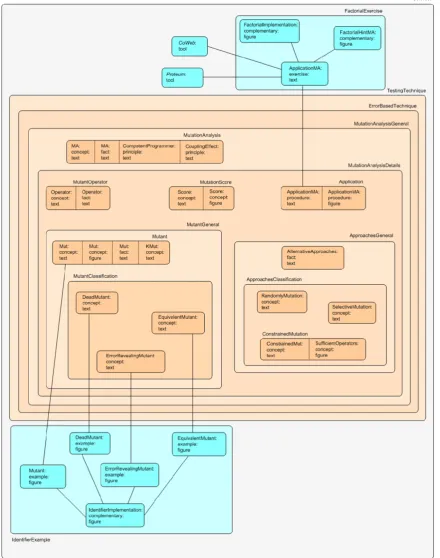
Based on the modeling requirements and perspectives dis-cussed in the previous section, we proposed IMA–CID (Integrated Modeling Approach—Conceptual, Instructional and Didactic) [3,4]—an integrated approach for modeling learning content, composed of a set of models, each one ad-dressing specific issues (conceptual, instructional and didac-tic) to support the development of learning content. Figure3 summarizes the key points of our proposal.
4.1 Conceptual model
The Conceptual Model consists of a high-level descrip-tion of the knowledge domain, representing its main con-cepts and the relationships among them. The relationships can be divided into two classes: structural and domain-specific. Structural relationships are useful to set up tax-onomies among concepts and make inferences about the
knowledge, representing a generic category of relationships, applicable to any kind of domain. Relations such astype-of andpart-ofare examples of structural relationships. On the other hand, domain-specific relationships are user-defined and have their meaning associated to a particular subject, carrying their own semantics. That is, they represent spe-cific relations, whose interpretation depends on the domain being modeled.
To construct the conceptual model, we focused on the Conceptual Mapping Technique, proposed by Novak [48]. Among the reasons for choosing this technique we point out: (1) it is suitable for representing concepts and for structur-ing the knowledge domain; (2) it is intuitive and easy to use; (3) it is based on educational principles, having a good ac-ceptance among educational specialists and professionals; and (4) it is adopted by the majority of existing modeling approaches for learning content. In addition to the rules for creating conceptual maps, we included some specific nota-tions aimed at representing the relanota-tionships of concept tax-onomy (type-of) and concept composition (part-of).
4.2 Instructional model
Besides concepts, information items and instructional ele-ments should also be considered as part of the knowledge domain. In the Instructional Model we are interested in defining such additional information related to the concepts previously identified. Notice we are not interested in how the information will be associated, but in what kind of informa-tion we can use to develop more significant and motivating learning content.
The construction of the instructional model involves two phases: (1) the refinement of the conceptual model; and (2) the definition of the instructional elements. In the first phase we specify what kind of additional information can be in-corporated to the concepts already represented in the con-ceptual model. We call theminformation items.
As we mentioned before, several theories and techniques can be referred to support the establishment of information items [27,44,46]. In our work we adopted the Component Display Theory (CDT), proposed by Merrill [44]. Regarding content, CDT specifies the following elements:
– Concepts: Symbols, events and objects that share charac-teristics and are identified by the same name. Concepts make up a large portion of language and understanding them is essential to communication.
– Facts: Logically associated pieces of information. Names, data and events are examples of facts.
– Procedures: A set of ordered steps to solve a problem or accomplish a goal.
– Principles: Elements that work through either cause-and-effect or relationships. They explain or predict why some-thing happens in a particular way.
Among the reasons for choosing the Merrill’s theory we point out: (1) it has been widely used for structuring and representing “pieces of information”; (2) it is simple and easy to use (Horn’s Information Mapping Technique, for instance, divides the information into several different in-formation maps, which are divided again into parts even smaller, calledinformation blocks); and (3) it can be used for structuring any type of knowledge domain (Michener’s technique, for instance, is more suitable for structuring ele-ments of the mathematical knowledge).
It is important to highlight that we did not prescribe the use of Merrill’s knowledge categories as mandatory. For in-stance, the author could adopt Michener’s categories [46], structuring the information content into concepts, results andexamples. Actually, the author is free for choosing the knowledge categories he wants. The flexibility of choosing the knowledge categories to be represented in the instruc-tional model aims to guarantee the model to be independent of particular learning theories and/or principles, which can be defined by the author.
In the second phase we define theinstructional elements, used to complement the information items. Three types of element are identified [3,4]:
– Explanatory elements: Deal with the complementary in-formation used for explaining a given topic—examples, hints, suggestions of study, and so on. They can play different roles depending on their purpose. An example, for instance, can be associated according two distinct perspectives—to motivate the study of the topic, or to il-lustrate its use.
– Exploratory elements: Allow the learner to navigate through the domain, practising concepts and other rel-evant information. Guided exercises, simulations and hands-on assignments are representative of this category. – Evaluative elements: Allow to assess the learner’s profi-ciency on the domain. Diagnostic, formative and summa-tive evaluations, in terms of subjecsumma-tive and/or objecsumma-tive questions, are examples of evaluative elements.
At this point it is also important to define the media (con-tinuous and discrete elements) to be related to information items and instructional elements. Indeed, the establishment of adequate media, specially the continuous ones, is funda-mental for developing richer interactive content, capable of motivating the learners and effectively contributing to their knowledge construction processes in learning environments. As a support to construct the instructional model, we adopted the HMBS (Hypertext Model Based on Statecharts) model, proposed by Turine et al. [63]. The HMBS definition is the following.
application;R is aset of readers, or channels of presenta-tion, which are abstractions used to specify the requirements involved in the presentation of information contained in the pages. A reader is an interpreter for a page (e.g., text for-matters, graphic decoders, program interpreters, audio and video players, data manipulation systems);M:SS→P is a
value functionmapping states into data objects (in the form of a page).SSis the subset ofScomprising basic states and OR states (AND states are not mapped into data objects);L is the visibility level used for defining the hierarchy depth when displaying pages during navigation; andV :P→Ris thevisualization relationshipwhich associates each hyper-document page with a single reader that is able to interpret it.
In short, HMBS uses the structure and execution seman-tics of statecharts [26] to specify the structural organization and the browsing semantics of hyperdocuments. Turine et al.use the term “browsing semantics” as referring to the dy-namic properties of a reader’s experience when navigating through a document, i.e., it is the manner in which infor-mation is to be visited and presented to the reader. In this sense, HBMS may be included in the category of behavioral models.
Besides that, HMBS is also adequate for describing the hierarchical structure common to many hyperdocuments since the hierarchy levels are directly mapped into the dif-ferent levels of an underlying statechart model. In addition to the hierarchy mechanism, the model provides parallel and sequential decompositions with associated semantics.
Another major advantage of a statechart-based model is that it provides a mathematical model with associated se-mantics and algorithms, yet it has an easy and intuitive vi-sual notation associated. It also has the advantage of being a very intuitive model, as statecharts are an extension of finite-state machines, and modeling based on finite-states and events is well-established approach. Moreover, as statecharts were designed to model concurrent reactive systems, HMBS is suitable for describing concurrency aspects inherently asso-ciated to the navigation through a hyperdocument.
In the instructional level, we focused on the mechanisms for hierarchical decomposition HMBS provides, comple-menting the idea of hierarchical organization, already ex-plored in the conceptual model. Observe that the notion of hierarchical decomposition can be related to the depth of the learning content to be presented.
As mentioned in Sect.3.3, the establishment of knowl-edge categoriesis one of the modeling requirements related to the development of educational modules, being relevant to qualify the elements of the content in terms of their roles and instructional purposes. In order to make HMBS suitable for modeling such instructional aspects, it was extended for representing different knowledge categories. The idea was to allow the model representing information items (concepts,
facts, principles and procedures) and instructional elements (explanatory, exploratory and evaluative).
As said before, the content of a hyperdocument in HMBS is represented by a finite set of information pages P. Each pagep∈P is conceptually defined by the triple c, t, Ancp, where crepresents the information content,t is the title that uniquely identifies the page, andAncprefers to the collection of anchors contained in the page. The infor-mation contentccan be expressed in any static (text, graphic or image) or dynamic (audio, video, animation) media. More information about the main features of HMBS and its formal definition can be found in [63].
To represent different knowledge categories into the HMBS model, we redefined the set of pages P to the triple C, t, Ancp, where C represents the finite set of information content, formalized by the quadruple C =
IInfo, EExplan, EExplor, EEval, where:
– IInfo represents the finite set of information items that constitute the content of the page.IInfois defined by the quadrupleIInfo= Conc, F,Princ,Proc, where:
– Conc= {conc1,conc2, . . . ,conci}, i≥0 is the finite set of concepts associated with the page;
– F= {f1, f2, . . . , fj}, j≥0 is the finite set of facts as-sociated with the page;
– Princ= {princ1,princ2, . . . ,princk}, k≥0 is the finite set of principles associated with the page; and
– Proc= {proc1,proc2, . . . ,procl}, l≥0 is the finite set of procedures associated with the page.
– EExplanis the finite set of explanatory elements that con-stitute the content of the page.EExplan is defined by the tupleEExplan= Ex,Compl, where:
– Ex= {ex1,ex2, . . . ,exi}, i≥0 is the finite set of exam-ples associated with the page; and
– Compl= {compl1,compl2, . . . ,complj}, j ≥0 is the finite set of complementary information associated with the page.
– EExploris the finite set of exploratory elements that con-stitute the content of the page. EExplor is defined by
EExplor= Exer, where:
– Exer= {exer1,exer2, . . . ,exeri}, i≥0 is the finite set of exercises associated with the page.
– EEvalis the finite set of evaluative elements that consti-tute the content of the page.EEvalis defined by the triple
EEval= DE,FE,SE, where:
– DE= {de1,de2, . . . ,dei}, i≥0 is the finite set of di-agnostic evaluations associated with the page;
– F E= {fe1,fe2, . . . ,fej}, j≥0 is the finite set of for-mative evaluations associated with the page; and – SE= {se1,se2, . . . ,sek}, k≥0 is the finite set of
sum-mative evaluations associated with the page.
4.3 Didactic model
As we said before, one of the main challenges in active learning scenarios is how to develop and deliver more flex-ible, adaptable and personalized educational products. The aim is that the user (learner or instructor) can be “free” to dynamically decide which topics to navigate, progressing more or less deeply into them. In other words, it is impor-tant to provide educational modules that can be traversed ei-ther in breadth or in depth, according to characteristics such as course length and type, instructor’s preferences, learner’s profiles and learning goals.
TheDidactic Modelis responsible for the establishment of precedence relations (prerequisites and sequences of pre-sentation) among concepts, information items and instruc-tional elements. In short, it can be used to illustrate the way the didactic space is modified while being navigated by the user, i.e., which information becomes active/inactive when a given path is traversed. Moreover, it is useful to represent dynamic contexts of learning, where the elements of the con-tent are determined according to specific parameters defined in terms of the characteristics of the course, learners and in-structors.
Since HMBS addresses relevant requirements under the didactic perspective (history mechanisms, event propaga-tion andlearning contexts definition), it was also adopted in order to construct the didactic model. Moreover, by us-ing HMBS we can validate the learnus-ing content through the analysis of the subjacent statechart properties [63].
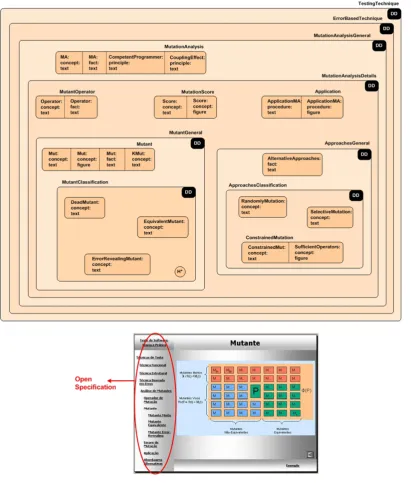
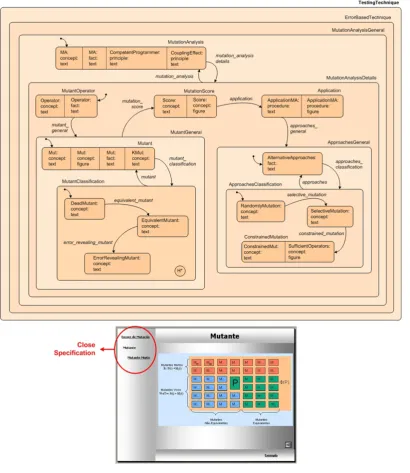
As an extension to HMBS at the didactic level, we in-troduced the idea ofopen specifications, providing support for the definition of dynamic contexts of learning. Depend-ing on aspects such as audience, learnDepend-ing goals and course length, distinct ways for presenting and navigating through the same content can be required. An open specification al-lows representing all sequences of presentation in the same didactic model.
So, from a single model, several versions of the same content can be generated according to different pedagog-ical aspects. Additionally, when an educational module is implemented based on an open specification, its navigation paths can be defined by the user (the instructor, in case of traditional classes; the learner, in distance environments; or both, in case of blended learning), in “execution time”. Dur-ing the presentation, the user is able to dynamically decide which topics should be navigated and in which sequence based on the learner’s skills, understanding and feedback, for instance.
Aiming at representing open specifications, we extended HMBS with the notion ofDD(Dynamically Defined)states. In short, aDDstate has the following properties:
1. Only one state can be active at a given time.
2. ADDstate does not include the representation of initial state (default), which is dynamically defined by the user, in execution time.
3. All OR substates of aDDstate (ORDD) are totally con-nected to each other.
4. Hierarchy of DD-superstates—leaving a DD state X (XDD) can activate the ORDD states from the hierarchy ofDD-superstates ofXDD.
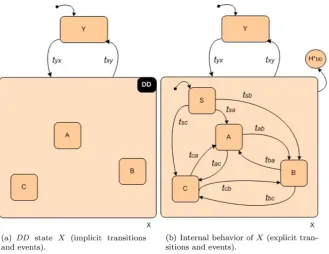
Properties (1), (2) and (3) do not require any change in the HMBS syntax and semantics. Actually, the modifica-tions are limited to the model’s graphical notation—for the sake of legibility, transitions and events are implicitly rep-resented. On the other hand, Property (4) requires the fol-lowing extensions to the HMBS model (and to the subjacent statechart):
– Let the hierarchy of superstates of a given stateXDD be defined by the sequence:
SeqAncestors(XDD)
=ancestorS1,ancestorS2,ancestorS3, . . . ,ancestorSi
such thatancestorSj−1∈ρ(ancestorSj),
j=1, . . . , i−1.
The hierarchy ofDD-superstates ofXDDis defined by the sequence:
SeqAncestorsDD(XDD)
=ancestorS1,ancestorS2,ancestorS3, . . . ,ancestorSn
such that∀ancestorSk, k=1, . . . , n:
ψst(ancestorSk)=ORDD
and ancestorSk−1∈ρ(ancestorSk),
whereFunction Type ψst :S → {OR,ORDD,AND} de-fines the type of eachORstate.
Both the notion ofDDstates as well as the hierarchy of DD-superstates help to establish open specifications since they allow to represent all sequences of presentation in the same didactic model.
Figure4(a) illustrates the representation of aDDstateX (XDD). Figure 4(b) shows the internal behavior of X, ex-plicitly representing its transitions and events. The notation HDD∗ represents the hierarchy ofDD-superstates.
Notice that the representation of DD states (and open specifications) is related to the establishment of learning contexts. This modeling requirement, discussed in Sect.3.3, is important to allow learners with different profiles and goals to explore the same material through distinct perspec-tives.
Fig. 4 Representation of aDD
state
4.4 Guidelines for applyingIMA–CID
Aiming at helping instructors and/or content developers on the application ofIMA–CID, we have developed a set of 11 guidelines. Guidelines from (1) to (4) refer to the con-struction of the conceptual model; guidelines from (5) to (8) refer to the construction of the instructional model; guide-lines (9) and (10) refer to the construction of the didactic model; and guideline (11) refers to the creation of the learn-ing content accordlearn-ing to the models.
1. Identify the main concepts of the topic to be taught/learn-ed.
– Hint: If you are using a source document (e.g., a book chapter, a technical report, a previous presentation, class notes) as the basis for creating the learning con-tent, you can use the table of contents (or something similar that can provide the overall structure of the document) as a starting point to look for significant concepts.
– Hint: Write down a list of main concepts. Inspect the source document looking for substantives used to de-scribe the topic. They can help on identifying con-cepts.
2. Identify taxonomy and composition relations among the concepts.
– Hint: Write down a list of concept taxonomy rela-tions. Inspect the source document looking for verbs and expressions such as “is a type of” and “is classi-fied in”. They can help on identifying concept taxon-omy relations.
– Hint: Write down a list of concept composition rela-tions. Inspect the source document looking for verbs and expressions such as “is composed of”, “is formed by” and “is part of”. They can help on identifying concept composition relations.
3. Identify domain-specific relations among the concepts. – Hint: Write down a list of domain-specific relations.
Inspect the source document looking for verbs and expressions such as “implies on”, “is a consequence of”, “assumes” and “uses”. They can help on identi-fying domain-specific relations.
4. Construct the conceptual model, graphically represent-ing the identified concepts and the relations among them.
– Hint: Check and revise all the concepts and relations you have identified. If necessary, return to the pre-vious steps in order to include/exclude any concept and/or relation.
5. For each concept represented in the conceptual model, identify its definition and the related information items.
– Hint: Inspect the source document looking for con-cept definitions. Mark in which parts of the document they can be found.
6. For each concept and information item, identify the re-lated instructional elements.
– Hint: Inspect the source document looking for exam-ples, hints, suggestions of study, exercises and evalu-ations that can be related to each concept and infor-mation item. Mark in which parts of the document they can be found.
7. For each concept, information item and instructional el-ement, specify the media to be used.
– Hint: Inspect the source document looking for dis-crete (text, code, graphic, link, figure) and continuous (animation, video, audio, simulation) media that can be related to concepts, information items and instruc-tional elements. Mark in which parts of the document they can be found.
8. Construct the instructional model, graphically repre-senting the concepts, information items, instructional elements and media previously identified by means of a statechart.
– Hint: Information items related to the same con-cept are generally represented as orthogonal (AND) states.
– Hint: Concept taxonomy and composition relations generally suggest a representation by means of hier-archical decompositions and OR states.
– Hint: Domain-specific relations generally suggest a representation by means of OR states.
– Hint: Instructional elements are related to a concept or an information item by means of explicit transi-tions among states.
– Hint: Check and revise all the elements you have identified. If necessary, return to the previous steps in order to include/exclude any element.
9. Identify the precedence relations1among the elements represented in the instructional model.
– Hint: Write down a list of precedence relations. Con-sider characteristics such as course length and type (traditional, distance, blended), instructor’s prefer-ences, learner’s profiles and cognitive styles, learning goals, among others.
10. Construct the didactic model, providing a sequence to present the concepts, information items and instruc-tional elements.
1Notice that precedence relations are only needed for close and par-tially open specifications. For open specifications, all elements are to-tally connected to each other by means of implicit transitions. In this case, Guideline 9 can be skipped.
– Hint: If the didactic model establishes an open spec-ification, there is no precedence relation to be repre-sented. In this case, all relations among the elements should be represented by means of implicit transi-tions (DD states and hierarchy of DD-superstates). – Hint: If the didactic model establishes a close
specifi-cation, precedence relations suggest a representation by means of explicit transitions.
– Hint: If the didactic model establishes a partially open specification, precedence relations suggest a representation by means of explicit transitions and all other relations should be represented by means of implicit transitions (DD states and hierarchy of DD-superstates).
– Hint: Check and revise all the relations you have identified. If necessary, return to the previous steps in order to include/exclude any relation.
11. Create the learning content according to the IMA–
CIDmodels developed.
– Hint: Each state in the didactic model can correspond to one or more slides (or pages) in the learning ma-terial, depending on the amount of information to be presented.
– Hint: Hierarchical decomposition suggests a repre-sentation by means of a navigation menu.
– Hint: Both implicit and explicit transitions among states suggest a representation by means of links in the navigation menu.
– Hint: Relations among concepts/information items and instructional elements suggest a representation by means of buttons.
– Hint: Besides the main slides (or pages), some spe-cific slides (or pages) regarding references and sum-mary can be created. Links for complementary mate-rials, such as websites, working documents and tools, can be added as well.
In this section we summarized the main points of the IMA–CID application by means of a set of guidelines. It is important to highlight that everyone interested in teach-ing and learnteach-ing can benefit fromIMA–CID: instructors, domain experts, content developers, educators and training professionals, among others.