Abstract
Extensive and complete documentation must be present-ed for marketing authorization of a mpresent-edicinal product in the EU. Presented documentation should prove quality, safety and efficacy of the medicinal product. It is ensured that the applicant supplies the authorities with complete information. The legislation in Federation of Bosnia and Herzegovina has also taken more steps towards those European directions.
The presentation and content of the dossier in the European Union has been redefined. The "old" EU for-mat will be replaced with the Common Technical Document (EU CTD format) agreed in 2000, within the International Conference on Harmonization framework. These two formats are intended to coexist during the transition period until July 2003. The CTD is an interna-tionally agreed upon format for the preparation of a well structured presentation for applications to be submitted to regulatory authorities in the three ICH regions of Europe, US and Japan.
Key words: marketing authorization, application dossier, domestic laws
Introduction
The centralized and mutual recognition procedures became applicable in the EU from 1995. In order to achieve the free movement of medicinal products within the Community, a Committee for the Proprietary Medicinal Products is set up. The Committee has a responsibility to examine any question relating to granti-ng, variation, suspension or withdrawal of marketing authorization in EU. In order to obtain authorization to place a medicinal product on the market, an application shall be made by the competent authority of the Member State concerned, and followed by the particulars and doc-uments (1):
- Information about the applicant and, where applica-ble, about the manufacturer;
- Name of the medicinal product;
- Qualitative and quantitative particulars of all the constituents of the medicinal product;
- Description of the manufacturing method;
- Therapeutic indications, contraindications and
- Posology, pharmaceutical form, method and route of administration and expected shelf life;
- Reasons for any precautions and safety measures, with an indication of any potential risk presented by the medicinal product for the environment;
- Description of the control methods employed by the manufacturer;
- Results of the physical-chemical biological or microbiological tests, toxicological and pharmaco-logical tests, clinical tests;
- A Summary of the product characteristics, packag-ing and labellpackag-ing information, with a package leaflet;
- A document showing that the manufacturer is authorized in his own country to produce medicinal products;
- Copies of the authorizations obtained in another Member State or in the third country, with a list of Member States in which an application for authori-zation submitted is under examination, accompa-nied with particulars and information about this process.
The European Commission and the European Agency for the Evaluation of Medicinal Products published The rules governing medicinal products in the European Union. Volume 2B in this series is dealing with the pres-entation and content of the application dossier.
Volume 2B was first published as a separate volume in 1998. It provides guidance for the compilation of dossier for applications for European marketing authorizations. This EU format of dossier will be replaced with new update in July 2003. Format of the Common Technical Document (CTD) was internationally agreed upon for-mat for the preparation of a well-structured presentation for applications to be submitted to regulatory authorities in the three ICH regions of Europe, US and Japan (3).
Correlation between old and new
format of the application dossier
According to the Common Technical Document applica-tion dossier should be presented in five Modules:
- Module 1, Administrative and prescribing informa-tion;
- Module 2, CTD Summaries;
Dossier for marketing authorization in the European Union
Maida Todi}- Module 4, Non-clinical study reports; - Module 5, Clinical study reports.
The content of the Module 1 is defined in consultations with authorities of the Member State, and Modules 2, 3, 4 and 5 are intended to be common for all regions. The first Module is containing regional and national
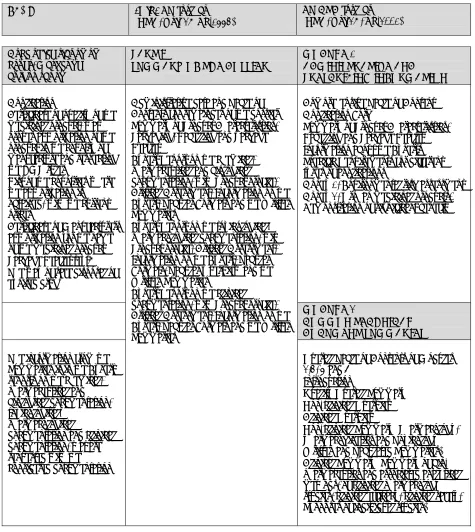
informa-tion. The old EU format was composed of 4 parts. First part includes administrative information, prescribing information and Expert reports on the chemical, pharma-ceutical and biological documentation, toxico-pharmaco-logical documentation and clinical documentation. The content of this Part is divided into Modules 1 and 2 of the EU CTD format (table 1).
Table 1 Correlation between old and new way of presentation of the application dossier in the EU (Part I -Module 1 and 2) and FBiH
FB H sOlds EU format
(NTA, Vol. 2B Ed.1998)
EU CTD format (NTA, Vol.2B, Ed.2001)
Code of legislation on drugs, Marketing authorization
PART I
SUMMARY OF THE DOSSIER
MODULE 1
ADMINISTRATIVE AND PRESCRIBING INFORMATION
Application
Certificate of quality of the medicinal product, that proves authorization of the product in the country of manufacture and respecting the GMP rules
List of the countries where the authorization is obtained, with the current prices
Certificate of Manufacturers authorization for the name of the medicinal product Package Leaflet text; The way of safe disposal of expired drug
Comprehensive Table of Content Application Form
Summary of Product Characteristics, Labelling and Package Leaflet Information about the Experts Specific Requirements for different types of applications
Annex 1, Environmental risk assessment Annex 2, Orphan medicinal products/ Demonstration of significant benefit
MODULE 2
COMMON TECHNICAL DOCUMENT SUMMARIES
The information from the Summaries is in the Expert reports on the chemical, pharmaceutical and biological documentation,
toxicological-pharmacological
documentation and clinical documentation, that are requested with the considered documentation
Administrative data and Table of Contents for remainder of the dossier Summary of Product Characteristics, Packaging, Labelling and Package Leaflet
Expert Report on the chemical, pharmaceutical and biological documentation, with Product profile, Critical Assessment, Information on the Expert, Tabular Formats and the Written Summaries
Expert Report on the toxicological-pharmacological documentation, with Product profile, Critical Assessment, Information on the Expert, Tabular Formats, Tabular Overview and the Written Summaries
Expert Report on the clinical documentation, with Product profile, Critical Assessment, Information on the Expert, Tabular Formats and the Written Summaries
Overall Table of Contents of Modules 2,3, 4 and 5
Introduction
Quality Overall Summary Non-clinical Overview Clinical Overview
The qualitatively different approach can be seen in Module 1, which is including the Environmental risk assessment and Demonstration of significant benefit for Orphan medicinal products in the Annexes. A space for Environmental risk assessment describes present attitude in valuing drugs, regarding their influence on the envi-ronment. The task of this evaluation is to discus possible risks to the environment from the point of view of prod-ucts use and disposal, with proposition of measures for reducing this risk. In the EU format the Environmental risk assessment was divided and placed in Part II or III, depending on the presence of GMOs (genetically modi-fied organisms) in the medicinal product.
There is another change in organization of the dossier in Module 2. Here should be presented the CTD Summaries, prepared by suitably qualified Experts. The classical "Expert Report" known from the EU format does not exist here. The term "Expert Report" is main-tained for legal reasons, but the information is given in the form of Overviews and Summaries.
The Quality Overall Summary present information that provides an overview of Module 3, and discus key issues that support information from other Modules. The Non-clinical Overview is continuing with presentation of
batches of active substance used in this study should be discussed, so as the effects seen with related products. The Clinical Overview should be a critical analysis of the clinical data. It should include: description of the overall approach to the clinical development of the medicinal product, a brief overview of the clinical findings, an eval-uation of benefits and risks of the medicinal product in its intended use, and description how the study results sup-port critical parts of the prescribing information.
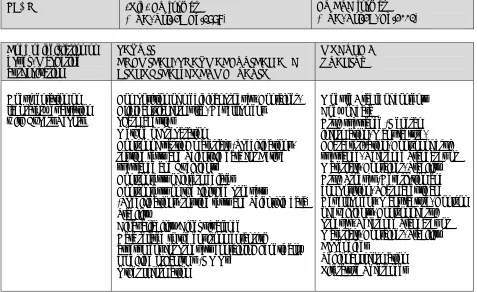
The content of the Module 3, 4 and 5 is parallel to the information from Part 2, 3 and 4 of the EU format. Mentioned parts include chemical, pharmaceutical and biological documentation, toxicological-pharmacologi-cal documentation and clinitoxicological-pharmacologi-cal documentation.
The scientific information from both versions of applica-tion dossier can be globally divided on: Quality, Non-clinical and Clinical information. The quality Part/Module is dealing with the quality of the manufac-ture series and the characteristics of the used test samples that can affect the results of evaluation process (table 2). The information on bioequivalence was more present in the pharmaceutical documentation of EU format and in EU CTD format is primary discussed inside of the clini-cal information and in Biopharmaceuticlini-cal studies of Table 2 Correlation between old and new way of presentation of the application dossier in the EU (Part II -Module 3) and in the FBiH
FB H sOlds EU format
(NTA, Vol. 2B Ed.1998)
EU CTD format (NTA, Vol.2B, Ed.2001)
Code of legislation on drugs, Marketing authorization
PART II
CHEMICAL, PHARMACEUTICAL AND BIOLOGICAL DOCUMENTATION
MODULE 3 QUALITY
Documentation on laboratory evaluation with Expert Report
Composition of medicinal product, Container, Clinical trial formulae, Development
pharmaceutics Method of preparation
Control of starting materials (Specifications, routine tests and Scientific data for Active substance and Excipients)
Control tests of intermediates Control tests on the finished products
(Specifications, routine tests and Scientific data) Stability
Bioavaliability/Bioequivalence Data related to the environmental risk
assessment for products containing genetically modified organisms (GMOs)
Other Information
Module 3 table of contents Body of data
Drug substance (General information, Manufacture, Characterization, Control of drug substance, Reference Standards or Materials, Container, Stability) Drug Product (Description and composition, Pharmaceutical Development, Manufacture, Control of excipients, Control of drug product, Reference Standards or Materials, Container, Stability) Appendices
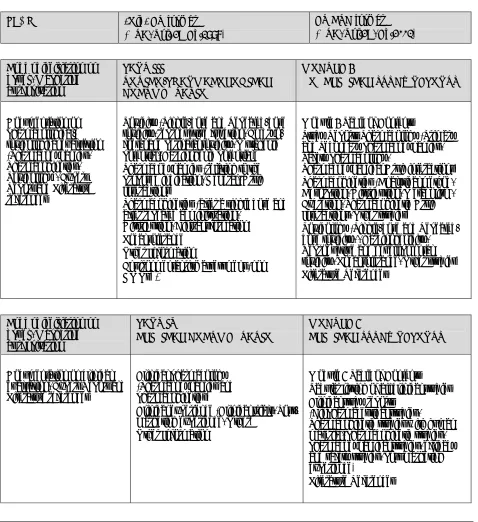
Non-clinical documentation should present the advan-tages of the new product pharmacological-toxicological profile, compared with the existing similar medicinal products, and define needed specific conditions and safe-ty issues regarding the administration of the drug (4). The role of clinical documentation in the dossier is to provide information for analysis of one medicinal product with grading its effectiveness, safety and global therapeutic value (5). There has been an organizational change in the CTD format, regarding clinical information. The Tabular Overview of the Expert Report on the Clinical
Documentation of Part I is now formed as Tabular listing of all clinical studies in Module 5 (table 3).
Correlation between the application
dossier in the European Union and
the Federation of Bosnia and
Herzegovina
In the Federation of Bosnia and Herzegovina were dis-cussed the differences between European and domestic
Table 3 Correlation between old and new way of presentation of the application dossier in the EU (Part III and IV - Module 4 and 5) and in the FBi H
FB H sOlds EU format
(NTA, Vol. 2B Ed.1998)
EU CTD format (NTA, Vol.2B, Ed.2001)
Code of legislation on drugs, Marketing authorization
PART III
TOXICO-PHARMACOLOGICAL DOCUMENTATION
MODULE 4
NONCLINICAL STUDY REPORTS
Documentation on pharmacological-toxicological evaluation (Pharmacodynamics, Pharmacokinetics, Toxicology), Expert Report and Literature references
Toxicity (Single-dose and Repeated-dose toxicity, reproductive function, Embryo-foetal and perinatal toxicity, Mutagenic potential, Carcinogenic potential) Pharmacodynamics (relating to the proposed indication, General, Drug Interactions)
Pharmacokinetics (after a single dose and after repeated administration,
Distribution, Biotransformation) Local tolerance
Other Information
Environmental risk assessment (non GMOs) *
Module 4 Table of Contents
Study Reports Pharmacology (Primary and Secondary pharmacodynamics, Safety pharmacology,
Pharmacodynamical Drug interactions) Pharmacokinetics (Analytical method, Absorption, Distribution, Metabolism, Excretion, Pharmacokinetic Drug Interactions, Other studies)
Toxicology (Single-dose and Repeated-dose toxicity, , Carcinogenicity, Reproductive and developmental toxicity, Local tolerance, Other studies) Literature References
Code of legislation on drugs, Marketing authorization
PART IV
CLINICAL DOCUMENTATION
MODULE 5
CLINICAL STUDY REPORTS
Documentation on clinical evaluation, Expert Report and Literature references
Clinical pharmacology (Pharmacodynamics and pharmacokinetics)
Clinical experience (Clinical trials, Post-marketing experience, Other)
Other Information
Module 5 Table of Contents Tabular listing of all clinical studies Clinical study reports
(Biopharmaceutical studies,
Pharmacokinetic studies with human material, pharmacokinetic studies, pharmacodynamical studies, efficacy and safety studies, post marketing experience)
rules for authorization, and some propositions that are in our country possibilities are adapted. In order to obtain marketing authorization, Applicant is considered to sub-mit the following to the Regulatory authorities (2):
- Application with basic information about Manufacturer and medicinal product;
- Documentation on clinical, pharmacological-toxico-logical and laboratory evaluation;
- Certificate of quality of the medicinal product according to the World Health Organization rules for quality of the products intended for internation-al trade, that proves authorization of the product in the country of manufacture and that the manufacture process was by the rules of the Good manufacture practice;
- List of the countries where the authorization is obtained, with the current prices;
- Certificate of Manufacturers authorization for the name of the medicinal product;
- Package Leaflet text;
- The way of safe disposal of expired drug; - Manufacturers price of the medicinal product; - Samples of the medicinal product.
Conclusion
There are no substantial changes regarding the content of old and new EU format, but the way of presentation and organization of the files is redefined. The parts of the dossier that describes in details all characteristics of the medicinal product are more strictly defined in the EU CTD format, so the new way of presenting information has less space for improvisation.
If we compare the legislation of the content of the appli-cation dossier in the EU and Federation no substantial difference in the content of documentation is present. But application and presented information about the medici-nal product are more defined and extensive in the dossier for European Union marketing authorization process. Generally, our legislation is trying to keep step with EU. One of the goals of our health management policy is to develop the legislation in this segment that will corre-spond to European standards.
References
1. European Commission, The rules governing medicinal products in the European Union, Volume 2, Notice to applicants for marketing authorization for medicinal product for human use in the Member States of the European Community, Official Journal of the European Communities, November 2001, http
//pharmacos.eudra.org/F2/eudralex/vol-2/home.htm.
2. Parliament of Federation of Bosnia and Herzegovina: Code of legislation on drugs. Official Journal of Federation of Bosnia and Herzegovina, November 2001, Sarajevo.
3. European Commission, The rules governing medicinal products in the European Union, Volume 2, Notice to applicants, Volume 2B, Presentation and content of the dossier Common Technical Document (CTD), October 2001, Final- Revision 1, Brussels. http //pharmacos.eudra.org/F2/eudralex/vol-2/home.htm.
4. Velja~a M, Role of Expert Reports in Drug Registration in European Community- on Pharmaco-Toxicological Documentation, Medicus, 1997, Vol.6, No.1,121-4.