2016
volume 33
Review Board 2016 Amanda Alexander University of Texas, Arlington Dan Barney
Brigham Young University Terry Barrett
University of North Texas Sharif Bey
Syracuse University Patty Bode
The Ohio State University Melanie Buffington
Virginia Commonwealth University Juan Carlos Castro
Concordia University Kimberly Cosier
University of Wisconsin, Milwaukee Tyler Denmead
University of Illinois, Urbana-Champaign Michelle Bae Dimitriadis
Buffalo State College Elizabeth Garber University of Arizona Olivia Gude
University of Illinois, Chicago Laura Hetrick
University of Illinois, Urbana-Champaign Lisa Hochtritt
Chicago Art Institute
Ami Kantawala
Teachers College, Columbia University Alexandra Kollisch
Syracuse University Sheri Klein
Kansas City Art Institute Amelia Kraehe University of North Texas Jorge Lucero
University of Ilinois, Urbana-Champaign Dónal O Donoghue
University of British Columbia Natasha S Reid
University of Arizona James Sanders III The Ohio State University Manisha Sharma University of Arizona Kryssi Staikidis Northern Illinois University Robert Sweeny
Indiana University of Pennsylvania Laura Trafí-Prats
University of Wisconsin, Milwaukee Jason Wallin
University of Alberta Courtnie Wolfgang
Virginia Commonwealth University Senior co-Editors
Karen Hutzel, The Ohio State University Ryan Shin, University of Arizona Associate Editor
Joni Acuff
The Ohio State University Managing Editor Elle Pierman The Ohio State University
USSEA President/
Ex Officio Member of the Review Board Alice J. Wexler
State University of New York, New Paltz Past Editor
Elizabeth Garber University of Arizona
Publication:
Once a year by the United States Society for Education through Art (USSEA). Subscriptions:
jCRAE is an open-source online publication of USSEA. While access is free, readers and people interested in supporting the mission and activities of the journal and of USSEA are encouraged to join USSEA (for more information about the organization, please visit www.ussea.netU). Annual membership dues are $25 and include issues of the Newsletter. Check or money orders should be made payable to USSEA and sent to:
Nanyoung Kim Jenkins Fine Art Center East Carolina University Greenville, NC 27858 [email protected] Editorial Office:
Karen Hutzel, Senior co-Editor
Associate Professor and Department Chair, Department of Arts Administration, Education and Policy
1813 N High St, 2nd floor Columbus, OH 43210 [email protected]
Ryan Shin, Senior co-Editor Associate Professor School of Art University of Arizona Art, PO 210002 Tucson, AZ 85721-0002 [email protected] Copyright:
United States Society for Education through Art, 2011-2014. All rights reserved.
Permission:
Individual must request permission from the editor to reproduce more than 500 words of journal material.
Cover:
Pamela Harris Lawton, Recipe for Disaster, 2015. For more information, please refer to article by Pamela Harris Lawton in this issue.
Layout:
Elle Pierman, The Ohio State University
jCRAE
2016 Volume 33Journal of Cultural Research
in Art Education
The Journal of Cultural Research in Art Education is published through generous support from United States Society for Education through Art
(USSEA), The Ohio State Univerisy, and The University of Arizona.
USSEA was founded in 1977 to promote multicultural and cross-cultural research in art education. It is an independent organization affiliated with the International Society for Education through Art (InSEA) and the
National Art Education Association (NAEA).
The editors of the Journal of Cultural Research in Art Education are indebted to Elle Pierman, PhD Student, Department of Arts Administration, Education, and Policy, The Ohio State University, for integral editorial and
jCRAE
2016 Volume 33Past Editors
Volumes 1-4Volume 5-8
Volumes 9-12
Volume 13
Volumes 14-18
Volumes 19-22
Volumes 23-25
Volumes 26, 27
Volumes 28,29
Volumes 30-32
Larry Kantner 1982-1986
University of Missouri
Rogena Degge 1986-1990
University of Oregon
Volume 6 Guest Editors: Paul Bolin, Doug Blandy, & Kristin Congdon
Ronald W. Neperud 1990-1994
Douglas Marschalek
University of Wisconsin-Madison
Ronald W. Neperud 1994-1995
Don H. Krug
University of Wisconsin-Madison
Don H. Krug 1995-1999
The Ohio State University Volume 18 Guest Editor: Patricia L. Stuhr
Tom Anderson 2000-2004
Florida State University
Enid Zimmerman 2004-2007
Indiana University
Kristin G. Congdon 2008-2009
University of Central Florida
Dipti Desai 2010-2012
New York University
Elizabeth Garber 2012-2015
jCRAE
2016 Volume 338
12
27
48
68
92
124
137
154 Editorial: Media in a Post-Racial Society
Ryan Shin and Karen Hutzel
Fostering Dialogue in a Post-Racial Society Melanie L. Buffington
The Need for Visibility and Voice of Sami People in Art Education Laurie A. Eldridge
Rumi: A Cosmopolitan Counter-Narrative to Islamophobia Ehsan Akbari
Media Resistance and Resiliency Revealed in Contemporary Native Art: Implications for Art Education
Nancy Pauly
Why is it not Just a Joke? Analysis of Internet Memes Associated with Racism and Hidden Ideology of Colorblindness
InJeong Yoon
Teaching for Respect and Understanding of Difference: Social Media and Contemporary Art as Vehicles for Addressing Racism Pamela Harris Lawton
Investigating Race and Racism through African American Art and Artists
EunJung Chang
Media Arts Education in the Post-Racial Classroom: An Interview with Janaya Greene about the Short Film, Veracity
| 8 | Journal of Cultural Research in Art Education Vol. 33 2016 | 9 | Editorial: Media in a Post-Racial Society
Ryan Shin & Karen Hutzel Senior co-Editors
Promises and hopes for a better society and future often sustain our lives. However, false hopes and unrealistic and misconceived expec-tations survive only temporarily with hype that simply covers and disguises reality, like a bubble. Historically, the British South Sea Bub-ble in the early 18th century was the first recorded case of an economic bubble (Dale, 2004). Economists, therefore, caution about a bubble economy—overly heated and unhealthy expectations without real growth and value creation. Upon the 2008 election of Barack Obama as President of the United States, many people, perpetuated by mass media and news analysts, indicated our society had officially become “post-racial” (Kaplan, 2011). This hype, compared to a bubble econo-my, can be described as a bubble of diversity, a promise and hope that the United States had achieved a form of equality.
Many scholars (Foster, 2013; Higginbotham, 2013; Kaplan, 2011) have responded in clear opposition to the notion of a post-racial society, indicating the many ways in which race and racism still function as unaltered forms of social construction, contributing to a fixed white privilege and unequal racial structures. Media educator Douglas Kell-ner (2011) argues that mass media often play a significant role in rein-forcing and perpetuating such racial inequalities, while social media outlets have provided grassroots efforts to draw attention to instances of overt racism.
More than ever, individuals, beyond cultural industries, have been empowered to produce and share non-conforming cultural messag-es and practicmessag-es through social media and networked connections. Progressive educators who welcome a participatory culture (Jenkins, Purushotma, Weigel, Clinton, & Robison, 2009; Duncum, 2011) of social media find innovative ways of engaging with mass and social media outlets in their teaching. In this volume, authors share cultural research on the topic of “Media in a Post-Racial Society,” addressing impacts and possibilities of mass and social media on a range of mi-nority groups, such as African-Americans, Asians, Latinx, Muslims, and Sami people.
Contributors to this volume embrace various media as a form of re-sistance against society’s ideological manipulation and oppression. They explore alternatives and changes in their theoretical explorations and teaching practices. They ask how social media outlets can be used to address issues of racism (e.g. capturing and releasing images and videos of police use of excessive force) and facilitate media literacy and citizenship. Subverting media messages or intentions of cultural
producers, they also ask how art and new media forms effectively ad-dress race, gender, and other social identities and constructions por-trayed in mass media. Their concerns result in creative and empower-ing practices and strategies to address the potential for art educators to act against the prevalence of racism in mass media, engage with social media activism and counter-storytelling, and provoke thought-ful public pedagogy.
Buffington’s article, “Fostering Dialogue in a Post-Racial Society,” shares strategies and methods for addressing racism and inequalities through analyzing music videos and advertisements, awakening insidious effects of media saturated racism for most white population pre-service art teachers in her university. She reports continuous encounters of overt resistance from students, which we, as co-editors of this journal, also face regularly in art education programs. Her discussion of whiteness, intersectionality, and cultural appropriation related to media provides a significant background and concrete approaches for art educators to infuse authentic race and cultural issues in their classes.
As a Native American educator and researcher, Eldridge introduces readers to media stereotypes about Sami people and the lack of educational responses from schools in Finland. From her
microethnographic/narrative inquiry, readers encounter the voices and struggles of several Sami educators and artisans in maintaining their language and cultural identity, a common issue across the world. At the end of her article, she encourages art educators to develop and teach art curriculum on Sami and other minority cultures to advance decolonization efforts and resist unequal power relationships in education.
Akbari’s article challenges and counters media saturated negative stereotypes that deplore pandemic Islamophobia featured in the media. He provides an important counter-narrative of Islam by offering Rumi’s cosmopolitan philosophy in education. He asks art educators to play an antidotic role of countering Islamophobia by engaging students in conversations about artists and thinkers relying on cosmopolitan facets of the Islamic world. He claims that as a Sufi scholar and poet, Rumi’s openness to the diversity of cultures and other religions offers educational opportunity to dismantle single stories, along with Iranian-American artist and cosmopolitan Shirin Neshat, who explores themes of gender, identity, and her complex relationship with her homeland.
Media’s negative influence on Native people and identity is discussed in Pauly’s article, which reviews historic and contemporary media’s saturated misrepresentation and stereotypes of Native people.
| 10 | Journal of Cultural Research in Art Education Vol. 33 2016 | 11 | expose students to views and perspectives of diverse contemporary
Native artists in order to resist dominant ideologies and unequal power-relations. Pauly highlights Native artists’ resistance to media and popular culture influences, providing critical discussions about historical contexts, indigenous aesthetics, and counter-narrative artworks.
Yoon contradicts the appeal of social media through a critical analysis of its influence on sustaining racism. She suggests that art educators pay attention to the detrimental effects of Internet memes that facilitate colorblindness as a subtle form of racism, an outcome of the lack of critical discourse in popular visual culture. After collecting and analyzing Internet memes addressing racism from the Memecenter website, she concludes that these Internet memes perpetuate
colorblindness, deny structural racism, and mock people of color. Her article offers a case study of web-based and social media research employing Critical Discourse Analysis (CDA) and Multimodal Discourse Analysis (MDA) as research methodologies.
Lawton suggests that we embrace social media in our teaching, as artists and activists have demonstrated how to effectively facilitate sociopolitical grassroots activism and counter-narratives to racism and stereotypes. By adopting a Critical Race Theory lens and incorporating visibility and accessibility of social media in art education classrooms, she argues that art teachers can enliven art curricula to offer relevant, culturally responsive and accessible learning opportunities. She probes art educators to engage students in critical discourse on difficult topics to resist implicit mainstream media messages and encourage students to create their own counter-narratives on racism and distribute them via social media.
Museums as informal institutions offer important educational resources for art educators to teach about minority artists’ complex identities and related sociocultural issues. Opening her article with the question, “How can art educators successfully address issues of race and racism in their classrooms?” Chang shares her surprising findings of how African-American students can deeply engage in art to explore their heritage and social issues. She offers Hampton as an example of addressing the cultural identities of minority students. Applying Critical Race Theory, she provides instructional resources on several African-American artists, addressing and discussing social justice and diversity within a setting of a predominately African-American student population.
In this volume, we introduce new and alternative submissions grounded in scholarship and research. As a response to our call, Sandlos offers her interview with Janaya Greene, who wrote the screenplay for the film, Veracity, working with her two classmates.
Sandlos’ interview portrays Greene’s experiences growing up with media stereotypes and how a film can serve to facilitate critical con-versations about media stereotypes, calling to attention issues of power and representation of minority groups. The readers will also find that the interview format of this entry creates a space for multiple interpretations of the story, which can encourage more inclusive and diverse voices in the classroom.
The culmination of this important volume provides a timely contribution of research in art education through the work of these authors. They have taken a strong stand, supporting the necessity of eliminating the hype, the bubble of diversity and social justice, instead advancing society to continue to challenge the notion of “post-racial.” Their research demands art educators to harness their power to teach with, about, and through media and social networking to generate equality, respect, and diversity against a biased and white supremacist society. At the heart of attaining these changes are teachers and students equipped with seeing their art and their teaching as a practice in social justice.
References
Dale, R. (2004). The first crash: Lessons from the South Sea Bubble. Princeton, N. J.: Princeton University Press.
Duncum, P. (2011). Prosumers in a peer-to-peer participatory culture. The International Journal of Arts Education, 9(2), 24-39.
Foster, J. D. (2013). White race discourse: preserving racial privilege in a post-racial society. Lanham, MD: Lexington Books.
Higginbotham, F. (2013). Ghosts of Jim Crow: Ending racism in post-racial America. New York: New York University Press.
Hall, S. (2011). The whites of their eyes: Racist ideologies and the media. In G. Dines, & J. M. Humez (Eds.), Gender, race, and class in media: A critical reader (pp. 81-84). Los Angeles, CA: Sage.
Jenkins, H., Purushotma, R., Weigel, M., Clinton, K., & Robison, A. (2009). Confronting the challenges of participatory culture: Media education for the 21st century. Cambridge, MA: MIT Press.
Kaplan, H. R. (2011). The myth of post-racial America: Searching for equality in the age of materialism. Lanham, MD: Rowan & Littlefield Education.
| 12 | Journal of Cultural Research in Art Education Vol. 33 2016 Fostering Dialogue | 13 |
Fostering Dialogue in a Post-Racial Society
Melanie L. Buffington
Virginia Commonwealth University
ABSTRACT
This article explores strategies for promoting classroom discussions with pre-service art teachers. Ranging from ways to build a classroom environment conducive to sharing ideas to some specific video resources, the author explains some techniques she has implemented. Though the results of these efforts are mixed, continuing to explore ways to address race and culture in our post-racial society is an important step towards building the cultural competency of pre-service teachers. Because of the far-reaching and insidious effects of institutionalized racism throughout society and education, it is especially important for teachers to see and understand the profound effects of racism to work toward a more just society.
KEYWORDS: pre-service teacher preparation, race, culture, higher education, video
In response to the journal theme Media in a Post-Racial Society, I reflected upon my attempts at teaching university students about race and how it operates in contemporary society. Because of the need for greater cultural understanding among teachers and students, addressing race and culture is of paramount importance in education. As societies change and interact, finding ways to help pre-service teachers expand their cultural knowledge may have significant effects on their future teaching and their cultural competence in a classroom. Decker and Rimm-Kaufman (2008) note that there is no handbook for teaching; teachers frequently make decisions based upon their understanding of the circumstances, and these understandings are shaped by teachers’ belief systems. Thus, the values that a teacher holds have a significant impact upon how that teacher interprets situations, treats students, makes pedagogical and curricular decisions, and decides which topics are appropriate for class discussion.
Because I want to build the value of understanding and appreciating a range of students and their unique contributions, I address race, gender, culture, class, and sexual orientation throughout my classes of pre-service and in-service teachers. Finding ways to build an environment for an open and honest exchange of ideas around race and culture is a challenge and a continual learning process for me. Many university students may not have a significant degree of comfort with conversations about race and inequities, but it is crucial to have these discussions while they are in a formative period of becoming a teacher. Decker and Rimm-Kaufman (2008) point out that teachers’ views are more flexible during their teacher preparation program than when they have their own classroom, thus making this time a critical point for intervention.
In a recent study, Brown (2009) found that the majority of pre-service teachers completing their student teaching thought they were inadequately prepared for the multicultural and multiethnic settings of public schools. This is an important issue for pre-service teacher preparation programs because “these White middle class teachers possess very limited intercultural experiences to bring into the classroom that will provide students with the knowledge and skills to work for a more just society” (Brown, 2009, p. 1). Sleeter (2001) notes that white pre-service teachers often have limited experience with and knowledge of people from cultures other than their own. Instead, pre-service teachers frequently hold views that are influenced by the media, their cultural environment, and their values (Garmon, 2004). Kaplan (2011) writes that many teachers in urban schools are young and white, often right out of college, and may not be prepared to work with students from cultural backgrounds different from their own. This problem comes, in part, from an educational system that is more segregated than it was in 1954 (Orfield & Lee, 2005), before legal desegregation. The lack of diversity within public schools today means that many students come to college with limited experiences working with and learning alongside people from different
| 14 | Journal of Cultural Research in Art Education Vol. 33 2016 Fostering Dialogue | 15 | Pre-Service Teachers, Diversity, and Whiteness
The students I teach at Virginia Commonwealth University reflect the fact that 86% of teachers are white and that 80-93% of students in teacher preparation programs are white (Dedeoglu & Lamme, 2011)1. Additionally, the vast majority are middle-class women who mostly attended high school with people from similar backgrounds, as Orfield and Lee (2005) note. Further, a significant majority of faculty members who teach pre-service teachers are also white women (Matias & Zembylas, 2014).
Interestingly, students frequently mention that diversity is one of their favorite aspects of Virginia Commonwealth University. Many students are comfortable with diversity and freely share experiences from their own lives or from friends and families, throughout the US or abroad, and have nuanced understandings of race and culture. However, this is not true for all students. Though I address race and culture in various ways in different classes, I continually encounter overt resistance from some students, a level of reticence among others, and a desire not to see or address inequities from others. At times, university students have referred to resources including noted multicultural education scholar James Banks’ (2008) An Introduction to Multicultural Education as racist. After reading Jonathan Kozol’s (1991) Savage Inequalities, some students described it as “too
depressing” and did not want to deeply engage with his points. One student stated that Kehinde Wiley was “playing the race card” in reference to his portrait of Ice-T from 2005. When viewing an art exhibit that contained handmade contemporary dolls reminiscent of stereotypical pickaninny2 imagery, some students expressed the idea that, though the imagery was problematic, it was acceptable since the dolls were made to help children.
1 Though other studies (Kaplan, 2011) differ slightly in the numbers, many put the percentage of female teachers around 75% and the percentage of white teachers between 80-85%.
2 A pickaninny is a stereotyped racial caricature of an African American child that is depicted with exaggerated facial features that often include extremely large eyes, nose, and mouth.
Further, some students have felt the need to privately relay to me a negative personal experience with a person of color after discussions of race occur in class. While I usually want to jump in when students make these comments, I have noticed that it seems to be more powerful when one of their peers asks a question or challenges what was said. Through an open peer dialogue that allows for questions without immediate negative assumptions, I think more students begin to see the world differently. If another student does not address what the student said, I do intervene and explain, to the best of my ability, how or why some of the ideas may be problematic. These classroom experiences reinforce that the concept of the United States as a post-racial society is not accurate and that systemic racism is indeed deep and prevalent throughout contemporary society including in laws, public institutions, and education.
Whiteness
Addressing social constructions of whiteness is an area I am working to develop in my own teaching. Within a city that is still grappling with its history as the capital of the Confederacy, critically interrogating whiteness in Richmond, Virginia3 is a challenge. For example, the building where I work is located about one half mile from a large monument to a Confederate leader, J.E.B. Stuart, and there are four other large Confederate monuments within close proximity along the same street. I typically include 1-2 classes specifically on public art each semester and address ways to respond to works of public art and how that can be part of a curriculum (Buffington & Waldner, 2012).
Roediger (1991), an early theorist of whiteness, explained the social, political, historical, and changing aspects of whiteness that, at times,
| 16 | Journal of Cultural Research in Art Education Vol. 33 2016 Fostering Dialogue | 17 | excluded certain groups now widely understood to be white. The
construct of whiteness later included a wider range of people as they embraced certain class values. Mccarthy (2003) specifically discusses teacher education and points to the unequal relationship of knowledge and power within the system. He writes: “White teachers and students benefit from such an asymmetry. White identity, then, is an effect of the practical operation of systems of privilege and material advantages – not simply a matter of physical characteristics or markers such as skin color” (p. 128). As noted by researchers (Gallagher, 2008; Matias & Zembylas, 2014), many white people believe they are not racist and use cautious and guarded language around race. To Matias and Zembylas (2014), this reticence to engage in discussions of race creates an additional challenge when some people may be hesitant to unpack their identities, instead believing that they are “normal” and labeling people they perceive to be different as “other” or “having culture.”
Intersectionality
Educators and theorists recognize that identity is not a fixed or singular demographic category. Crenshaw (1991) explains that intersectional identity is complex and involves a constantly shifting combination of personal, cultural, societal, and political factors that work together. Rather than individuals having a set identity, aspects of their environment, peers, circumstances, emotions, and other factors continually influence how an individual may identify. Additionally, intersectionality addresses how various aspects of a person’s identity may intersect with other aspects to create particular unique circumstances. Purdie-Vaughns and Eibach (2008) discuss what happens when an individual’s identity distances them from the prototype of white, male, and heterosexual. They posit the term “intersectional invisibility” to refer to the marginalization that can occur, even within subordinate groups. For instance, in the classes I teach that are predominantly white and female, we could consider the lesbian students, the students of color, or international students
to potentially be experiencing intersectional invisibility. Powers and Duffy (2016) believe that it is crucial for educators to “develop an understanding of intersectional identities to develop cultural competence” (p. 63). Further, pulling from Freire’s work (1998), Powers and Duffy argue that teacher education can assist pre-service teachers in becoming aware of their own intersectional identities as well as their future students’. Developing awareness could lead to small openings in preconceived or fixed notions about self or others (Hatch & Groenke, 2009). Related to Freire’s (1998) belief that coming to conscientization tends to be an incremental process of small steps, these small openings may lead to greater awareness in the future and potentially impact the pre-service teachers’ future classroom communities.
Classroom Community
I have made and continue to make changes to the content and how I teach in an effort to better prepare students for their future teaching positions. In terms of altering the classroom environment, I work with students to build a classroom community that allows students to feel comfortable sharing their ideas and experiences. Community building starts on the first day of the semester with overt conversations of how classroom discussions could unfold. I ask students to brainstorm, at times with a partner and sometimes as a whole group, successful strategies for discussion. After
brainstorming, I usually stop the discussion and let the students know that they have until the next class to think about the best strategies they have seen in various classrooms throughout their education.
| 18 | Journal of Cultural Research in Art Education Vol. 33 2016 Fostering Dialogue | 19 |
seems to help because, when given time to reflect about previous experiences, they seem much more likely to contribute to forming our
discussion norms.
Video Resources
Recently, I have also begun using more video resources in teaching and find that viewing and discussing videos is a helpful tool for eliciting meaningful discussions. Because many of my students spend significant amounts of time consuming media, including video, they tend to have robust comments and are easily able to make connections between and among various videos, frequently introducing
classmates and me to related resources. Additionally, I intentionally work to introduce pre-service teachers to strong resources, including
Teaching Tolerance, a publication and website from the Southern Poverty Law Center that focuses on anti-bias curriculum. Though their art-specific resources are limited, many of their resources relate to contemporary culture. One article in particular, written by English professor Neal Lester (2014), addresses the problematic parodies of some music videos.
In the spring of 2015, in the context of an undergraduate curriculum class for Art Education majors, I asked students to read Lester’s (2014) article, and then we watched the videos he discusses – Will Smith’s (1997) Miami and the video Christmas card parody of it created by the Holderness family (2013), Xmas Jammies, as well as the Toyota Swagger Wagon (2010; 2015) advertisements that are corporate parodies of rap videos. Lester makes the point that while there is nothing inherently wrong with white people rapping or with satire in general, it can be viewed as a form of modern day blackface when stereotypes related to language, fashion, culture, etc. are also employed. He writes, “These modern hip-hop parodies—integrated into the mainstream media as innocent fun—devalue the creative integrity and impact of hip-hop as a genre of social change and social justice” (2014, para. 5).
Reading Lester’s article and watching the three videos he mentions
led to a long, insightful, and, at times, passionate discussion about race and how it operates in contemporary society. While many students agreed with Lester’s point that these parodies could be problematic and perpetuate stereotypes, other students vehemently disagreed. Students shared many ideas, including: rap and hip hop is for everyone; analyzing someone’s video Christmas card was just reading too much into something intended for fun; and they had never thoughtfully considered these videos. One point that multiple students raised is that in the Will Smith Miami video, both he and some of the actors say the phrase, “Welcome to Miami” in English as well as the Spanish translation, “Bienvenidos a Miami.” The use of Spanish became a significant topic of discussion; some students compared it to Lester’s (2014) point that using language from another culture in a stereotypical way can be problematic. Other students disagreed and brought up the points that Miami has a significant Spanish-speaking population and that neither Will Smith nor the other performers dressed or acted in a stereotypical manner meant to imitate Latino people. Students also mentioned other videos that include words and phrases from Spanish. Our discussion then
centered around linguistics in the Miami and Xmas Jammies videos, as it was the point about which more students were passionate.
In watching the Swagger Wagon commercials (Toyota, 2010; 2015),
the factor that a few students pointed to was the participation of the
acclaimed hip-hop artist Busta Rhymes in the 2015 version. Some students believed that as a legendary figure in hip-hop, his presence was a “stamp of approval” from a knowledgeable person, so the commercial was not racist. Thus, they disagreed with Lester’s (2014)
assertions that the Swagger Wagon commercials are funny if you believe certain stereotypes. Though we did not come to a group
consensus on either of these issues, it was important to me that a
wider range of students than usual shared their viewpoints, were able to disagree with one another and still be respectful. To a small degree,
this dialogue reduced the stigma of discussing race and culture in a
| 20 | Journal of Cultural Research in Art Education Vol. 33 2016 Fostering Dialogue | 21 |
more engaged than in an average discussion simply based around readings that I select.
Cultural Appropriation and Microaggression
As a result of my experiences with music videos and advertisements, I have worked to include more videos as fodder for class discussions, including ones on related topics – microaggressions created by MTV (Kornhaber & Romagnoli, 2015) and another by teenage actor Amandla Stenberg (2015) on cultural appropriation. The ensuing class discussions were interesting, and the use of video seemed to prompt students to consider other perspectives, rather than only their own lived experiences. By referencing numerous popular culture icons and fashion trends, Amandla Stenberg creates an interesting link between the popularity of cultural appropriation of African Americans by white musicians at the very same time that police killed numerous unarmed black youth, igniting the Black Lives Matter movement. She points out how some celebrities felt it was acceptable to use black culture to further their careers, but then seemed to ignore the issues that go along with black culture and did not participate in the movement. Certainly not all students were in agreement with Stenberg’s points, but the videos elicited passionate responses from students and helped them think about daily occurrences in new ways.
Questioning Strategies
Certainly, using video to start a classroom discussion is not a panacea, but I have found that contemporary media, along with carefully worded open-ended questions, can draw more students into a discussion. Simply showing videos and asking, “What do you think?” is not likely to be successful. The strategy that I have used is to compose 5-7 open-ended questions ahead of time that relate to the video, as well as other recent readings, current events, or the students’ personal experiences. I have a copy of the questions prepared for everyone and allow students to read over them and pick
our starting point. Usually we only address a few of the questions that I generated, but having them written out is a helpful tool to begin a discussion; it aids in redirecting a floundering discussion, and it allows for students to have some choice and direction related to our discussion. What typically occurs is that we start with some of the questions that I have prepared, students raise other points that lead our discussion to their areas of interest, and then we return to a different question. This strategy builds a back-and-forth among the class members and allows for the natural flow of conversation as well as the opportunity for students to take the conversation in another direction.
Building Comfort
| 22 | Journal of Cultural Research in Art Education Vol. 33 2016 Fostering Dialogue | 23 | Becoming More Aware of Inequity
Many current university students were in elementary or middle school when Barack Obama was elected in 2008, and the idea of a colorblind or post-racial society has been prevalent throughout their formative years. They also consume media virtually all the time through their various screens with some estimates placing their usage at up to 11 hours per day (Fountaine, Ligouri, Mozumdar, & Schuna, 2011). Thus, they are learning constantly from both the general milieu that promotes the idea of a post-racial society as well as the actual media they consume that may be filled with stereotypes and cultural appropriations. What I experience in the classroom relates more to Foster’s (2013) ideas about the complex contradictions embedded in the racetalk of many white Americans.
One particular aspect that I have noticed in some pre-service art teachers is what I am tentatively calling the “Pollyanna paintbrush.” Through this technique, students look at videos, art objects, other people’s experiences, or anything that relates to challenging existing racial oppression and view the works through an extremely happy lens, ignoring the system of oppression that the work is addressing. For instance, when looking at works of art that challenge societal inequities, the university students may focus on the bright colors, rather than the overall meaning of the work. They may gloss over the issues of the work to quickly move on to designing a ‘school art’ (Efland, 1976) style replica of the artist’s work without engaging in an interpretation of the meaning of the original work. Because so many contemporary artists create works with meaning related to race and culture, it is crucial to work with pre-service teachers to help them build comfort with discussions of art that relate to critical interpretations of both the work itself and of society.
One stereotype that I think we as art educators need to retire is the idea of who is or can be an artist. Through many different means – posters readily available through the major art supply companies, reproductions available through various means, and the curriculum
of many college art history courses – we learn mostly about white male artists. A few years ago I worked with a student teacher who was placed in a school where 100% of the students were students of color. Both the student teacher and the cooperating teacher were white women. The first time I visited this placement, I was struck by the fact that the cooperating teacher had named the student worktables after artists, which is a great strategy to help manage a classroom and build student familiarity with artists. But what stood out were the names she chose for the tables – Picasso, Van Gogh, and Dali. Certainly these are all important artists, but I questioned the relevance of deceased European male artists from the 19th and 20th centuries to a room full of contemporary children in North America. While I view this as problematic for all children, it is even more so because all the students were children of color. Taking steps, albeit small ones like changing the names of the tables in a classroom to reflect a range of artists from different cultural backgrounds and genders, can make classrooms more welcoming to a range of students, validate their lived experiences, and promote interest in art.
Conclusion
I agree with Kaplan (2011), who writes that the United States “does not need to be colorblind, but cognizant and respectful of the differences that have made us who we are” (p. 4). It is the concept of being cognizant and respectful that is a challenge as an educator. We need to take the time to think through our practices, question them, learn about the experiences of others, and be ready to change and adapt what we do throughout our careers. Because the popular media that we consume are embedded with stereotypes and cultural appropriation, educators need to learn to see these stereotypes, learn ways to address them, and work to help our students recognize these stereotypes so they can work against them too.
| 24 | Journal of Cultural Research in Art Education Vol. 33 2016 Fostering Dialogue | 25 | equality is a challenge for a variety of reasons. Not only were most
pre-service teachers educated alongside students from similar socioeconomic and racial backgrounds, but many of them have also learned not to acknowledge race or cultural differences. Garmon (2005) outlines two major areas that influence pre-service teachers’ thoughts on diversity: dispositions and experiences. Within each larger category, he positions three sub-categories. Dispositions include openness, self-awareness/self-reflectiveness, and commitment to social justice. The experiences relate to intercultural experiences, educational experiences, and support group experiences. When considering the practices I described in this article through Garmon’s (2005) lens, it is clear that I have focused primarily on the experiences rather than the dispositions. In order to better prepare my students, I need to make changes within my teaching to relate to openness, self-awareness/self-reflection, and foster in students a commitment to social justice. Perhaps asking students to engage in a reflective discussion or written piece after one of the videos would be a good tool to help them understand their own openness or develop their self-awareness related to race. Through the use of more first person and narrative videos, I can assist students in understanding a wider range of experiences and people, delving deeply into cultural issues. To create a forum for an extended discussion beyond this special journal issue, perhaps multiple other journals in our field or large national conferences could overtly address systemic racism throughout educational policy and practice.
References
Banks, J. A. (2008). An introduction to multicultural education. Boston, MA: Pearson.
Brown, L. D. (2009). Pre-service teachers’ attitudes toward their preparedness to teach culturally diverse student populations (Unpublished doctoral dissertation). The University of Alabama, Tuscaloosa, AL.
Buffington, M. L., & Waldner, E. E. (2012). Beyond interpretation: Responding critically to public art. In K. Hutzel, F. M. C. Bastos, & K. Cosier (Eds.),
Transforming city schools through art. (pp. 138-147). New York, NY: Teachers College Press.
Crenshaw, K. W. (1991). Mapping the margins: Intersectionality, identity politics,
and violence against women of color. Stanford Law Review, 43(6), 1241-1299.
Decker, L. E., & Rimm-Kaufman, S. E. (2008). Personality characteristics and teacher beliefs among pre-service teachers. Teacher Education Quarterly, 35(2), 45-64.
Dedeoglu, H., & Lamme, L. L. (2011). Selected demographics, attitudes, and beliefs about diversity of pre-service teacher education. Education and Urban Society, 43(4), 468-485.
Efland, A. (1976). The school art style: A functional analysis. Studies in Art Education, 17(2), 37-44.
Foster, J. D. (2013). White race discourse. Landham, MD: Lexington Books.
Fountaine, C. J., Ligouri, G. A., Arupendra, M., & Schuna, J. M. (2011). Physical activity and screen time sedentary behaviors in college students. International Journal of Exercise Science, 4(2), 102-112.
Freire, P. (1998). Cultural action and conscientization. Harvard Educational Review,
68(4), 499-521.
Gallagher, C. A. (2008). ‘The end of racism’ as the new doxa: New strategies for researching race. In T. Zuberi & E. Bonilla-Silva (Eds.), White logic, white methods: Racism and methodology (pp. 163-179). Lanham, MD: Rowman & Littlefield Publishers.
Garmon, M. A. (2004). Changing preservice teachers’ attitudes/beliefs about diversity: What are the critical factors? Journal of Teacher Education, 55(3),
201-213.
Garmon, M. A. (2005). Six key factors for changing preservice teachers’ attitudes/beliefs about diversity. Educational Studies, 38(3), 275-286.
Hatch, J. A., & Groenke, S. L. (2009). Issues in critical teacher education: Insights from the field. In S. L. Groenke & J. A. Hatch (Eds.). Critical pedagogy and teacher education in the neoliberal era, small openings (pp. 19-36). New York, NY: Springer Science.
Holderness, K., & P. (2013). Xmas jammies. Retrieved from: https://www.youtube.com/watch?v=2kjoUjOHjPI
Kaplan, H. R. (2011). The myth of post-racial America. Lanham, MD: Rowman & Littlefield Education.
Kornhaber, A., & Romagnoli, L. (Producers) & Hunter, R. (Director). (2015). If microaggressions happened to white people. [video]. United States: MTV.
Kozol, Jonathan. 1991. Savage inequalities. New York, NY: Crown.
Lester, N. A. (January 10, 2014). Playing black for laughs. Teaching Tolerance website: http://www.tolerance.org/blog/playing-black-laughs.
Matias, C. E., & Zembylas, M. (2014). ‘When saying you care is not
really caring’: Emotions of disgust, whiteness ideology, and teacher
| 26 | Journal of Cultural Research in Art Education Vol. 33 2016
Mccarthy, C. (2003). Contradictions of power and identity: Whiteness
studies and the call of teacher education. International Journal of Qualitative Studies in Education, 16(1), 127-133.
Orfield, G., & Lee, C. (2005). Why segregation matters: Poverty and educational inequality. Retrieved from Civil Rights Project UCLA website:
http://civilrightsproject.ucla.edu/research/k-12-education/integration- and-diversity/why-segregation-matters-poverty-and-educational- inequality
Powers, B., & Duffy, P. B. (2016). Making invisible intersectionality visible through Theater of the Oppressed in teacher education. Journal of Teacher Education, 67(1) 61–73.
Purdie-Vaughns,V., & Eibach, R. P. (2008). Intersectional invisibility: The
distinctive advantages and disadvantages of multiple subordinate-group
identities. Sex Roles, 59(5-6), 377-391.
Roediger, D. (1991). The wages of whiteness: Race and the making of the American working class. New York, NY: Verso.
Sleeter, C. E. (2001). Preparing teachers for culturally diverse schools: Research and the overwhelming presence of whiteness. Journal of Teacher Education, 52(2), 94–106.
Smith, W. (1997). Miami. On Big Willie Style (CD). Sony Records. Available from https://www.youtube.com/watch?v=IwBS6QGsH_4
The Need for Visibility and Voice of Sami | 27 |
The Need for Visibility and Voice of Sami People in Art
Education
Laurie A. Eldridge Independent Scholar
ABSTRACT
In 2013, I spent six months in Finland pursuing questions concerning the pres-ence of Sami people (the Indigenous people of northern Europe) in Finnish art education. In this combination study of microethography and narrative analysis that utilizes an Indigenous research paradigm, I asked Sami research participants about how they would like to be represented in art classes. Data description highlights the Sami research participants’ voices, as the presence of Indigenous people is often lacking in education due to the effects of colonization. Analysis of the data shows that these research participants think that media, education, and tourism all contribute to negative stereotypes of Sami people. In conclusion, art educators are in a unique and important position to educate students about Sami people so that stereotypes are not perpetuated and so that Sami people gain visibility and voices in global discourse concerning decolonization efforts in education.
KEYWORDS: Sami, Indigenous, decolonization, art education, Finland, Indige-nous research, microethnography, narrative analysis
I spent the first six months of 2013 in Finland, and during this time I focused my research on how the Sami people (the Indigenous people of northern Europe) are represented in Finnish public schools and how Sami people want to be represented in Finnish and global art classes. As a Native American woman who is an elementary art educator, I am interested in decolonizing efforts in art education. I am particularly interested in listening to the experiences of Indigenous people in education to learn how to better teach my art students about the need for social justice for Indigenous people. As an experienced art educator, I am familiar with seeing a Native American presence, albeit often a stereotypical one, in U.S. curricula. I was unprepared to find the almost complete lack of mention of Sami people in the Finnish art classrooms and general education classrooms that I
| 28 | Journal of Cultural Research in Art Education Vol. 33 2016 The Need for Visibility and Voice of Sami | 29 |
and findings grounded in Indigenous subjectivities and experiences of everyday life (Eldridge, 2008, 2014). I found that in sharing my culture, the history of my nation, and my personal stories of being Native, I was welcomed by several Sami people who wanted to share their experiences in the hopes of increasing education for Sami students that is free of negative stereotypes.
My Indigenous research framework is based on the overarching idea stated by Keskitalo, Määtä, and Uusiautti (2011, 2012b) that research involving Sami people should benefit Sami society or disseminate information about “Saminess.” Indigenous research methodologies must respect local traditions, values, cultures, histories, and families. Additionally, the research must be just, valuable to Sami people, “good-producing,” and not cause harm (Keskitalo, et al., 2011, 2012b). An important aspect of decolonizing research is that the research material is constructed through dialogue and social communication with Sami people (Keskitalo, et al., 2011, 2012b). Given the history of
the types of research done on Sami people and not with them, I felt it necessary to employ this Indigenous framework in an effort to not repeat past wrongs.
Important to Indigenous philosophies is that of “giving back” (Eldridge, 2008, 2014). This can include a strong commitment to not using academic practices, knowledge, and research as tools of colonization and exploitation of Indigenous people by taking their knowledge without giving something in return. For example, research should have relevance for the Indigenous people being studied (Kuokkanen, 2008). I gave back to the teachers and students by wearing my traditional regalia of a Cherokee tear dress and talking about Cherokee arts, handicrafts, traditions, history, and culture to students, teachers, and administrators. Students and faculty, particularly of the vocational school I visited, were very interested in my attire and my presentation of culture and history. Also, I developed a unit of instruction on examining stereotypes, which included learning about Sami artists and art forms and issues surrounding both non-Sami and Sami students’ identities. I sent this unit to all research participants. The teachers with whom I shared the unit of instruction were grateful, but in one case a little doubtful of her ability to teach about art.
A Combination of Microethnography and Narrative Inquiry
Ethnography usually requires substantial time in the field, and When visiting classrooms in Helsinki, located in the southern tip of
Finland, I asked Finnish educators about the Sami people’s inclusion in learning. Repeatedly I heard that I needed to “go north” to see a Sami presence in education. I was able to make a short trip to two northern villages to visit schools that had classrooms dedicated to the teaching of Sami crafts and languages.
While in Finland, I was a participant observer of Sami National Day1
in Helsinki, and in northern villages I talked with Sami teachers, artists, and advocates. During my visits, I employed an open-ended questionnaire. This study focuses on the voices of three Sami research participants as a way to break the silence that surrounds the Sami and include Sami voices in the decolonization efforts of Indigenous people globally.
Decolonization and Indigenous Research
Colonization is a complex set of relationships that stem from one group of people having power over another people’s cultures, languages, lands, economy, and education (Ballengee-Morris, Mirin, & Rizzi, 2000). Decolonization is not simply a transfer of power, but also a process where one re-becomes oneself (Fanon, 1967). In research, decolonization can be about the process of reclaiming, valuing, and foregrounding Indigenous voices (Swadener & Mutua, 2015). As a Native American woman who is an art educator, I am particularly interested in including Indigenous voices and positions in the field of art education. In this paper, I employ an Indigenous research paradigm by adapting research frameworks developed by Keskitalo, Määtä, and Uusiautti (2011, 2012b) and Kuokkanen (2008) that focus research on Sami representation in education. I selected works by Sami researchers who employ an Indigenous research paradigm that supports Sami communities to inform this study. Research conducted in an Indigenous framework is culturally relevant and appropriate for Indigenous peoples and satisfies the academy (Smith, 2000). Indigenous research methods should preserve Indigenous voices, build resistance to dominant discourses, create political integrity, and be meaningful to the communities studied. Researchers from Indigenous communities are expected to speak from experience and not just theory, with their methods, methodologies
| 30 | Journal of Cultural Research in Art Education Vol. 33 2016 The Need for Visibility and Voice of Sami | 31 | (Henriksen, 2008; Jonsson, Sari, & Alerby, 2012; Kuokkanen, 2003). Various formal censuses in these countries do not ask for ethnic origin, so it is difficult to state exactly how many people identify themselves as Sami (Jonsson et al., 2012). The Finnish Sami home region consists of the northern municipalities of Inari, Enontekïo, Utsjoki, and the northern part of Sodenkylä (Stevenson, 2001).
The Sami define themselves as an Indigenous people, as stated in the International Labor Organization Convention 169, and are recognized as an Indigenous people in the Constitution of Finland (Keskitalo et al., 2012a). The various Sami groups have attempted to unify by instituting a Sami Parliament Council that encompasses each of the Nordic countries, creating a pan-Sami flag, and celebrating Sami People’s Day (Keskitalo et al., 2012a).
There are over one thousand years of history of trading and levying taxes on items used in trade by the Sami. Trading was one of several ways that kings and statesmen attempted to increase control over the northern territory and its people as the kingdoms surrounding the Sami competed for supremacy (Kuokkanen, 2003). Competing forces also claimed ownership of the northern land by encouraging Finnish, non-Sami settlers to move there and establish farms. Additionally, Christianization was another form of Sami colonization (Kuokkanen, 2003). In the 1400s, the earliest churches were built on coastal areas, and the Danish-Norwegian crown declared reduced fines for criminal charges against Christianized Sami. Later in the century, anyone recognized as a noaidi (Sami shaman, healer, and visionary) was put to death, and Sami sacred sites were destroyed (Kuokkanen, 2003).
A governmental focus on assimilating the Sami into the majority populations of Norway, Sweden, and Finland took place during the nineteenth and twentieth centuries. Both Norway and Sweden passed laws early in the nineteenth century that prohibited the use of Sami languages in school and at home. Finland’s assimilation policies were not as explicitly stated as in Norway and Sweden. Compulsory education became nationalized, which, due to the long distances in northern Finland, led to the establishment of boarding schools (Kuokkanen, 2003). Children were sent to centralized schools, staying in boarding houses. Young students went home on weekends, and at the upper levels, only on long holidays and during the summers (Lehtola, 2010).
Boarding schools were not specifically for Sami students; they were for anyone, including Finnish students who were too far from a school microethnographic research is usually conducted in a small site/
community and in a short time period by use of ethnographic methods such as interviews, participation, observation, and
documentation (Lai, 2012). Narrative inquiry is the study of the ways in which humans experience the world through their storied lives (Connelly & Clandinin, 1990). As Indigenous research is often about reclaiming native voice and presence, I wanted to incorporate Sami voices in this micro-study, which led me to a combination of narrative inquiry informed by ethnographic methods.
My Sami and Finnish language skills are non-existent, so I had to rely upon the various abilities of my Sami research participants to communicate in English. One individual was almost completely fluent, another was understandable but uncertain of her ability to communicate in English, and I primarily communicated in written English with the third participant. This meant that I had to “read” the “text” of the surroundings in some cases where I was a participant observer.
This microethnographic/narrative inquiry study began with the collection of data through participant observation that lasted a little over a week. Data collection included informal interviewing, note-taking, photographing while visiting schools and classrooms, and later use of a questionnaire. The three research participants who are the focus of this study answered the questionnaire via email after my visit to the northern region of Finland. I contacted each research participant through email for member checks. I used the constant comparative method to determine the overarching ideas presented in the data of the questionnaires, and rich, thick description to describe my time as a participant observer. The voices of the research participants are the focus of the data description. What they have to say is not only important to me as an Indigenous person, but also as a way for others to both “see” the Sami people as present in education and listen to what Sami people feel is important to say.
Foundational Information and History of Colonization of Sami Peoples
| 32 | Journal of Cultural Research in Art Education Vol. 33 2016 The Need for Visibility and Voice of Sami | 33 | Damaging Stereotypes of Sami People
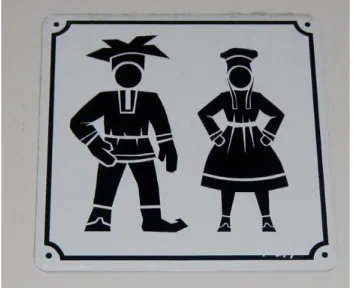
The Sami are stereotypically defined as reindeer herders. This stereotype continues today, despite the fact that less than 10% of all Sami throughout Sapmi are involved in any way with reindeer husbandry (Conrad, 2000; Lehtola, 2011). The majority of Sami people pursue a wide variety of livelihoods, from hospitality to computer sciences. However, the image of the reindeer-herding Sami living in nature is emphasized and promoted by institutions of education (Conrad, 2000), the media, and tourism, if mentioned at all.
Figure 1. A restroom sign in a mall in Rovaniemi, Finland using generic, stereotypical Sami figures. Photo: Laurie Eldridge
In previous decades, research was done on the Sami people, not with them or by them, and not for their benefit. The 19th century
European romantic nationalists considered the “Lapps2,” as the Sami
were called, to be exotic and primitive; they were a curiosity that provided the more “civilized” Europeans a glimpse of their nature-based past. World’s fairs and exhibitions in the 19th century featured
“live Lapp” displays, complete with reindeer and tents (Conrad, 2000; Koslin, 2010). During the first half of the 20th century, the Sami were
categorized as a separate and inferior race based on cranial form and measurements by pseudo-scientists who practiced scientific
2 In the beginning, “Lapp” meant people who lived on the periphery that were not farmers and were therefore uncivilized. Despite the disparaging essence of the term “Lapp,” and the explicit wishes of the Sami people, the term “Lapp” is still widely used (Pietikäinen, 2001), however the term became derogatory and should no longer be used (Lehtola, 2010).
to attend regularly. The schools were run directly by the government, and the majority of teachers and supervisors were Finns from
other parts of Finland (Kuokkanen, 2003). There was not a separate jurisdiction and bureaucracy used to control the Sami as there was used to control Native Americans and First Nations peoples in the United States and Canada (Kuokkanen, 2003). Also, there was no acknowledgement of the different linguistic and cultural backgrounds of the Sami students. Finnish culture and language dominated
schools, and children were only taught in the Finnish language and exclusively learned Finnish cultural traditions (Keskitalo et al., 2012a).
The understanding of the Sami as distinct, Indigenous peoples was not and still is not commonly shared in the eyes of the majority public of Finland (Kuokkanen, 2003). The Sami are not considered a sovereign nation or wards of the state, as was the case with Native peoples in America and Canada. However, in spite of differences in official policies between Finland, the U.S., and Canada, the mentality in Finland was similar to other colonial settler states. It was the denigration of Indigenous cultures with a clear message of cultural inferiority. Differences in educational policies between the U.S., Canada, and Finland resulted in similar effects including low self-esteem of students, alienation from one’s cultural background, and difficulty in integrating and adapting in society (Kuokkanen, 2003). Traditional knowledge that had been transmitted through centuries, such as handicrafts, was forgotten or never learned. Boarding schools affected everything from dress and behavior to spiritual values (Lehtola, 2010).
Thanks to extensive activism during the 1960s and later, a pan-Sami identity was reawakened and fostered. This was done through
| 34 | Journal of Cultural Research in Art Education Vol. 33 2016 The Need for Visibility and Voice of Sami | 35 | roughly 750 inhabitants make their livelihoods through a flexible combination of forestry, fishing, reindeer husbandry, and the service and tourism industry. Tourism is a significant part of the economy (Pietkäinen & Kelly-Holmes, 2011). Inari is central for the Finnish pan-Sami community as many pan-Sami institutions and services are located there, including the Finnish Sami parliament, Siida (a nationally and internationally recognized Sami culture and nature museum), schools, and media. A third research participant, located in Utsjoki, the Finnish Sami domicile area near the Norwegian border, was only able to communicate with me via email.
Decolonization: Listening to Sami Voices
Helbme. I initially met Helbme3 in Helsinki during a lunch break at the Ministry of Education where she and a small number of other Sami teachers were working to revise the Sami component of the Finnish national curriculum. Sami language and culture is taught to Sami students in the northern regions of Finland as part of the Finnish national curriculum. Although her English was very understandable, she was reluctant to speak because she felt her English was
inadequate. She did share her email address, and with a big smile invited me to visit her primary Sami language classroom in Inari. A few weeks later I stepped into the hallway outside Helbme’s classroom in what seemed to be a typical Finnish primary school in Inari. A large sign posted on her classroom door had “anarâš-luokka” (Inari language school) printed with small sticks glued onto tan paper and surrounded with zigzag designs in the colors of the Sami national flag (see Figure 2). Helbme greeted me at her door dressed in street clothes with a welcoming smile. I was dressed in my Cherokee tear dress; I would later give back to Helbme, her students, and the school for having me as their guest by giving a short presentation on Cherokee history and customs. I wanted to share my own culture as a way to build rapport and connect cultures, and this was one way of building a learning experience for all.
Helbme did not speak much to me during the time I spent observing in her classroom; she primarily spoke to her students in the Inari
3 All names used in this study are pseudonyms. The names were selected by me and are a combination of Finnish and Sami names. Some of the research participants only shared with me their Finnish names, others shared that they had both Finnish and Sami names.
racism (Levy, 2006). Social Darwinists described pan-Sami as “lower” and “more primitive” than agricultural societies because of their historical focus on hunting, reindeer herding, and fishing. Researchers who studied Sami languages, history, and ethnography were called “Lappologists,” and their work displayed social Darwinist leanings (Lehtola, 2010).
Media Representations of the Sami
Stereotypical representation of the Sami in popular media and historical documents reviewed by Pietikäinen (2003) have described them as child-like, greedy, and dirty people prone to excessive drinking. In several historical documents reviewed by Minde (2005), Sami people were also regarded as impoverished, beggarly, old fashioned, reactionary, and in many instances, heathen. In typical historical and contemporary tourist brochures, representatives of Sami culture are dressed in traditional clothing, sometimes not accurately, standing in front of huts or tents, surrounded by reindeer and the vast outdoors of the Nordic north. This portrayal conveys an image of the Sami people as historical, monolithic, and dominated by nature, similar to how other Indigenous people have been stereotyped around the world (Pietikäinen, 2003). The idea that Sami culture, attire, and language are singular, uniform, and unchanging is a strong stereotype (Lehtola, 2010).
Mainstream television and radio programs about the Sami, with the exception of nature documentaries and movies about “mythical Lapland,” are rare for Finland (Pietikäinen, 2001). A recent study of news representations of the Sami in the leading national daily newspaper showed that the issues, cultures, and ways of life of the Indigenous people of Finland were to a great extent ignored (Pietikäinen, 2001). The Sami appear so rarely in the news
(Pietikäinen, 2003) and in general educational discourse that public discussion hardly exists in those areas.
Data Description
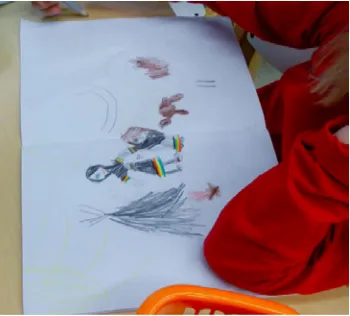
| 36 | Journal of Cultural Research in Art Education Vol. 33 2016 The Need for Visibility and Voice of Sami | 37 | Figure 3. Student creating a drawing of her Sami life ways. Photo: Laurie Eldridge Helbme then asked a second grade boy to demonstrate his ability with a back strap loom. He continued weaving a boot tie, which is a traditional Sami item used to wrap around the pant legs where they are tucked into boots to prevent the accumulation of snow. The designs woven into the bootstrap can indicate the wearer’s gender, family, village and/or region. Nearby was a finished drawing in which he had estimated the length and width of the boot tie and charted out the design. He had also created a poster that illustrated the process and had pictures of completed boot ties, all labeled in Inari Sami.
Figure 4. Student weaving on a boot tie on a back strap loom in Helbme’s class. Photo: Laurie Eldridge
Figure 2. Sign on the door of Helbme’s classroom. Photo: Laurie Eldridge Sami language. She conversed minimally with me in English and indicated where she wanted my attention. Her classroom was filled with items such as posters, alphabets, number lines, and illustrations of the human body that either she or her students had made. I saw only a few books published in Inari Sami. Most of the supporting educational materials, such as worksheets, she had made herself.
The seven students, who ranged from kindergarteners to second graders, were working on illustrating stories they had written in the Inari language. Some were coloring and some were painting. Art materials were freely available to them on the work table. Many were in the early stages of their illustrations, but two children were far enough along that I could discern their specific ideas. One girl was creating drawings of a bear in different habitats. Another girl had drawn a traditional Sami tent with a fire. She was with her mother in traditional Sami dress, and there were dogs with them. A completed drawing on display showed foxes or wolves in their snowy habitat with stars above them.
| 38 | Journal of Cultural Research in Art Education Vol. 33 2016 The Need for Visibility and Voice of Sami | 39 | was definitely different from the normal school day and was perhaps an eye opening experience for the Finnish students.
Helbme’s voice. Although Helbme was reluctant to speak in English, she did agree to complete a short open-ended questionnaire and email me her answers. It is from this exchange that I have drawn Helbme’s voice, with her permission, and with only very slight changes in spelling and punctuation to make her writing more clearly readable.
Helbme was born in Inari, but her family moved to southern Finland when she was four. She attended primary school and high school there. She returned to Sapmi when she was twenty. Her experience in learning about Sami people in public school was “poor, hardly nothing.” She thinks that “stereotypical information is born because of unconsciousness about Sami people.” Helbme believes that “more and better information in school books” at all grade levels is needed, and “web-pages that offer material for every grade in school” are important. Also, having Sami people visit schools in person and including information about Sami people in teacher education are necessary to bring about change in educating the general population about Sami people; “…our history, heritage and traditions are important to know by pupils all over Finland.” Additionally, Helbme believes the Sami Parliament of Finland, the representative body for people of Sami heritage in Finland, should be responsible for teaching about the Sami people in Finland through the development of webpages and educational materials; “if we don’t do it ourselves, I think stereotypical thinking does not disappear” (personal
communication, April, 18, 2013).
Kata. I met Kata on the same day at the same time that I met Helbme, which was during their lunch break at the Ministry of Education. Kata was part of the small group of Sami educators who were working on revising the Sami language component of the Finnish national curriculum. Kata was enthusiastic about my research questions, and she invited me to her Sami language classroom as well. Unfortunately, due to time, distance (her school is located in Utsjoki, near the
Norwegian border), and finances, I was not able to observe her classroom. However, we did exchange emails and it was through this exchange that I interviewed her.
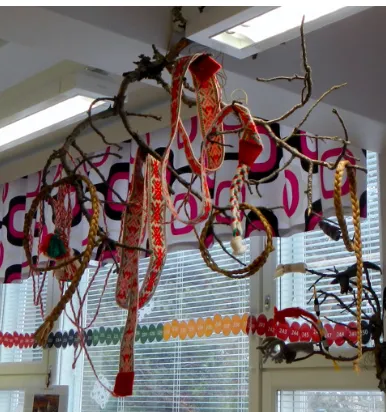
Kata’s voice. Kata belongs to the generation of students who were sent to boarding school. She spent grades one through three in her village school where her teacher was from southern Finland and spoke only Finnish. During her fourth grade year, her father was Helbme then pointed out a large tree branch that dangled from the
ceiling of her classroom. The tree branch held boot ties made by her students as well as examples made by adults. Helbme told me that she was trying to integrate nature and art into her classes, but without making each a separate subject, as that was not the Sami way. In the Sami languages there is no actual word for art but duodji,
a North Sami word mostly used to refer to Sami handicrafts made of traditional materials by traditional Sami methods (Pietkäinen & Kelly-Holmes, 2011; Stevenson, 2001).
![Figure 2. Judith Lowry, My Aunt Viola, 1996, [painting] acrylic on canvas. [book] Berry, Sweet, Hauser & Pritzker (2001).](https://thumb-us.123doks.com/thumbv2/123dok_us/8416073.1692379/39.792.78.317.222.400/figure-judith-lowry-viola-painting-acrylic-hauser-pritzker.webp)