Mathew Jam es Page
A thesis subm itted to the University of London for the degree of Doctor of Philosophy
Mullard Space Science Laboratory D epartm ent of Space and Climate Physics
University College London
All rights reserved
INFORMATION TO ALL U SE R S
The quality of this reproduction is d ep en d en t upon the quality of the copy subm itted.
In the unlikely even t that the author did not sen d a com plete manuscript
and there are m issing p a g e s, th e se will be noted. Also, if material had to be rem oved, a note will indicate the deletion.
uest.
ProQ uest 1 0 0 4 5 8 6 0
Published by ProQ uest LLC(2016). Copyright of the Dissertation is held by the Author.
All rights reserved.
This work is protected against unauthorized copying under Title 17, United S ta tes C ode. Microform Edition © ProQ uest LLC.
ProQ uest LLC
789 East E isenhow er Parkway P.O. Box 1346
selected in the 0.5 - 2 keV X -ray band is studied using th e sam ple of AGN from
the RIXOS survey. It is found th a t pure evolution models represent the d a ta well,
provided rapid evolution stops at redshift ~ 2.
T he evolution of narrow emission line galaxies (NELGs), which may be im por
ta n t contributors to the cosmic X -ray background, is exam ined using the sam ple of
NELGs obtained from th e R O S A T UK Deep Survey and RIXOS. I detect evolution at high significance bu t find th a t this evolution is probably slower than the evolution
of broad line AGN, a n d /o r ceases at a lower redshift.
^ D ata from deeper R O S A T surveys are used to extend th e AGN lum inosity func tion to lower luminosities and higher redshifts, and biases caused by the dispersion
of AGN spectral slopes are incorporated in the analysis. Some deviations from pure
lum inosity evolution are seen for a critical = 0.5) universe, and the previous
conclusions regarding th e lack of evolution a t high redshift are strengthened.
T he possibility of improved surveys of AGN w ith the next generation of X -ray
satellites is investigated. An efficient survey for the study of the high redshift (z > 2) AGN lum inosity function is described.
T he X -ray variability of the narrow line Seyfert 1 galaxy M arkarian 766 is studied
using R O S A T data. The spectrum is well described by a power law and a blackbody soft excess. T he power law com ponent varies continuously but variability of the
soft excess is not detected w ithin th e observations. The power law com ponent is
always steeper when it is brighter. This variability can be explained if th e power
law is produced by therm al or non-therm al C om ptonisation of soft photons. The
behaviour of M arkarian 766 is analogous to th a t of G alactic black hole candidates
in th e low state.
Finally, th e results of this thesis are related to th e evolution and history of
A b s tr a c t 2
1 I n tr o d u c tio n 12
1.1 Active G alactic N u c l e i ... 12
1.1.1 W hat Powers an Active G alactic N u c le u s ? ... 13
1.1.2 Types of A G N ... 13
1.1.3 T he Basic Design of A G N ... 15
1.1.4 M ulti wavelength Spectra of A G N ... 16
1.1.5 X -rays from AGN ... 18
1.2 K Gorrection ... 19
1.3 D etection and Identification of AGN ... 20
1.4 T he X -ray B a c k g ro u n d ... 23
1.5 The Space D istribution of A G N ... 24
1.5.1 P ure Lum inosity E v o lu tio n ... 26
1.5.2 Pure D ensity E v o lu tio n ...27
1.5.3 O ther Observable Q uantities R elated to the Lum inosity Func tion ...27
1.6 Evolution of th e AGN Lum inosity Function a t Non X -ray W avelengths 28 1.6.1 T he Radio Lum inosity F u n c ti o n ...28
1.6.2 T he O ptical Lum inosity F u n c t i o n ... 29
2.2.1 X -ray O b se rv a tio n s... 34
2.2.2 O ptical O b s e rv a tio n s ...35
2.2.3 C onstruction of the RIXOS AGN S a m p le ... 37
2.2.4 C om bination of th e RIXOS and EMSS AGN S a m p le s 38 2.3 Log N - Log S ...42
2.4 Evolution Testing and F ittin g th e Luminosity F u n c tio n ...46
2AT (14/% ) ...46
2.4.2 1 / % ...48
2.4.3 M axim um Likelihood F it tin g ... 49
2.4.4 The 2 Dimensional Kolmogorov Smirnov T e s t ...50
2.5 R e s u lts ...54
2.5.1 The Sim plest M o d e ls ... 54
2.5.2 Two P aram eter Evolution M o d e ls ...57
2.5.3 Evolution a t High R e d s h ift... 60
2.6 D is c u s s io n ...60
2.6.1 Effect of Changing th e C F ... 60
2.6.2 Comparison w ith Previous Results ... 60
2.6.3 Fainter fluxes and the Soft X -ray B a c k g ro u n d ... 64
2.7 C o n c lu s io n s ... 65
3 E v o lu tio n o f X - r a y s e le c te d N E L G s 67 3.1 In tr o d u c tio n ... ■... 67
3.1.1 NELGs as a Com ponent of X -ray S u r v e y s ...67
3.1.2 Previous D eterm inations of the X -ray Evolution of NELGs . . 68
3.2 RIXOS and th e UK Deep S u r v e y ... 69
3.3.1 (Ve/Va) T e s t i n g ... 70
3.3.2 T he NELG X -ray Lum inosity F u n c tio n ... 71
3.4 P aram eterising the Evolution ... 74
TÆ1 (T 4/% ) 77 3.4.2 M axim um L ik e lih o o d ... 78
3.5 D is c u s s io n ... 79
3.6 T he NELG C ontribution to the Soft X -ray B a c k g ro u n d ...84
3.7 C o n c lu s io n s ... 85
4 A D e e p e r lo o k a t th e X —ray E v o lu tio n o f Q SO s 86 4.1 In tr o d u c tio n ...86
4.2 T he Sample of Q S O s ...87
4.2.1 X -ray Surveys From W hich the Sample is T a k e n ...87
4.2.2 G eneral Properties of th e S a m p l e ...88
4.2.3 Conversion from Einstein to R O S A T F l u x e s ...89
4.3 Lum inosity Function and Evolution M o d els... 95
4.3.1 Dispersion in the Spectral Index a x ... 95
4.4 C onstruction of the X LF and D eterm ination of its E v o l u tio n ...96
4.5 R e s u lts ... 98
4.5.1 Evolution at High R e d s h ift... 100
4.6 D is c u s s io n ...107
4.7 T he QSO Log N - Log S and the QSO C ontribution to th e Soft X -ray B a c k g r o u n d ...110
4.8 C o n c lu s io n s ... 113
5 E p ilo g u e 114 5.1 X -ray A stronom y in th e F u t u r e ... 114
5.2 Source Populations at Faint F l u x e s ... 115
5.3 Energy Range for S e le c tio n ... 117
5.8 Low Luminosity AGN a t 2 < z < 3 ... 122
5.9 AGN a t z > 3 ...124
6 T h e V a ria b le S o ft X —ra y S p e c tr u m o f t h e N a r r o w L in e S e y fe rt 1 G a la x y M a r k a r i a n 766 127 6.1 In tr o d u c tio n ... 127
6.1.1 Models of th e X -ray Power Law and Soft E x c e ss ...128
6.1.2 T he Narrow Line Seyfert 1 Galaxy M arkarian 766 ... 129
6.2 O b se rv a tio n s... 130
I 6.2.1 Use of Off axis O b s e rv a tio n s ...131
6.2.2 Use of the D a t a ...132
6.3 T he Three X -ray B a n d s ... 133
6.3.1 Correction for th e PSPC P S F ... 133
6.3.2 Hardness R atio D e fin itio n s...134
6.4 T he X -ray Light c u r v e s ... 134
6.5 Spectral M o d e ll in g ... 136
6.5.1 Splitting the observations ... 136
6.5.2 Model F i t t i n g ... 138
6.5.3 A bsorption ... 140
6.5.4 PSPC C alibration U n c e rta in tie s ... 143
6.5.5 The Shape of th e Soft E x c e s s ... 146
6.5.6 The Spectral Model T ranslated to the Three X -ray Bands . . 149
6.6 Three Colour and Hardness R atio V a ria b ility ...151
6.6.1 Changes in the S p e c tru m ... 151
6.6.2 Variability A m p l i t u d e ...157
7 T h e P r o p e r tie s o f M ark arian 766 and o th e r N L S ls 162
7.1 Long and Short Term Variability Properties of M arkarian 766 . . . . 162
7.2 T he Origin of the Power Law ...163
7.3 T he Origin of the Soft E x c e s s ...165
7.4 X -ray Emission from M arkarian 766 and O ther NLSl Galaxies . . . . 166
7.5 Analogy with G alactic Black Hole C a n d i d a t e s ...168
7.6 T he M ulti wavelength Spectrum of M arkarian 766 and O ther Narrow Line Seyfert Is ... 169
7.7 C o n c lu s io n s ... 175
8 C o n c lu sio n s 177 8.1 T he Big P i c t u r e ... 177
8.2 Some C urrent T h e o r ie s ... 178
8.3 W h at Light Does This Thesis Shed on These Issues? ...180
8.3.1 The AGN Lum inosity F u n c t i o n ... 180
8.3.2 N E L G s... 181
8.3.3 N L S l s ... 182
8.3.4 T he X -ray B a c k g ro u n d ... 183
8.4 M ultiw avelength E v o lu tio n ... 184
8.5 In S u m m a r y ... 184
A c k n o w le d g e m e n ts 186 B ib lio g r a p h y 188 A D is tr ib u tio n o f sp e c tr a l slo p e s and th e lu m in o s ity fu n c tio n 196 A .l I n tr o d u c tio n ...196
A .2 Single U nbounded Power Law Lum inosity F u n c t i o n ... 197
A.3 Real e v o lu tio n ... 198
A.4 Bounded Power Law Luminosity F u n c t i o n ...199
2.1 RIXOS cum ulative sky coverage corrected for incompleteness . . . . 41
2.2 Results of fitting evolution m o d e ls ...53
3.1 Results of ( K / K ) t e s t s ...72
3.2 F itte d evolution rates and lum inosity functions ... 76
4.1 Results of fitting evolution m o d e ls ...99
6.1 The 9 R O S A T observation datasets used in this a n a l y s i s ... 131
6.2 Exposure tim es of s p e c t r a ...137
6.3 F ittin g of spectra grouped by o b serv atio n ... 141
6.4 Normalised variability am plitude in the three X -ray b a n d s ...157
1.1 T he unified model for a radio quiet A G N ... 17
2.1 T he identified fraction of sources, with flux greater than 5 ...39
2.2 R edshift distribution of R I X O S ... 40
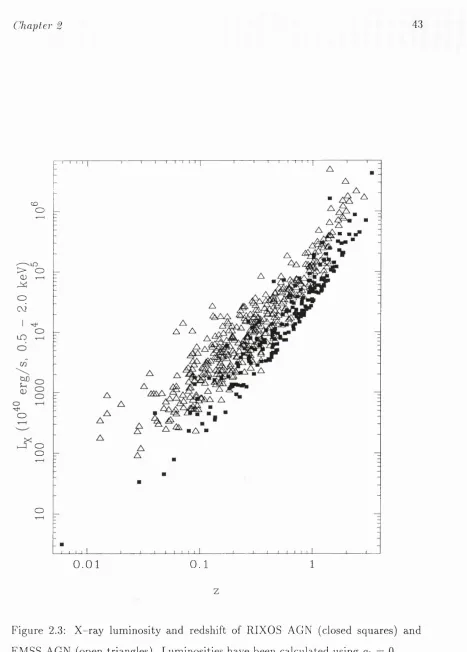
2.3 X -ray lum inosity and redshift of RIXOS and EMSS A G N ...43
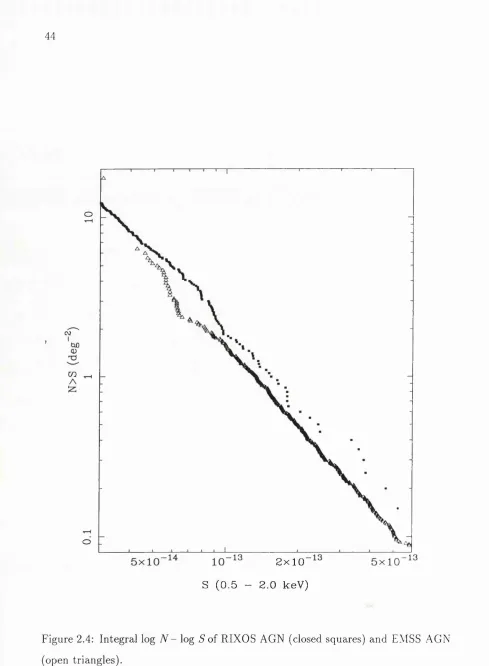
2.4 Integral log N - log S of RIXOS and EMSS A G N ... 44
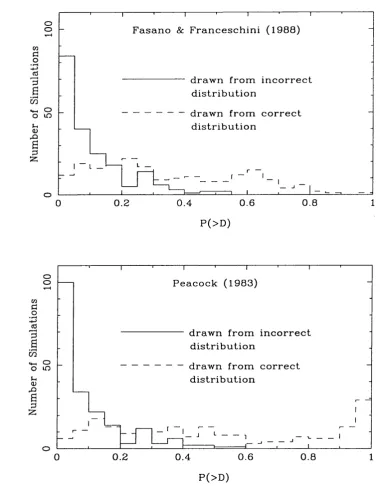
2.5 R esults of applying the two different 2D K.S. tests to sim ulated data. 52 2.6 Binned I / I 4 XLF and best fit power law evolution m o d e l... 55
2.7 Binned I / K XLF and best fit exponential evolution m o d e l ...56
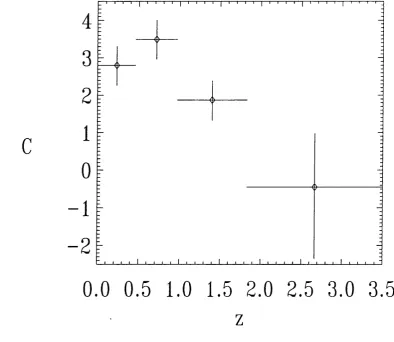
2.8 Power law evolution param eter C in redshift b i n s ... 58
2.9 Exponential evolution param eter C in redshift b i n s ... 59
2.10 (Ve/Va) test in th e redshift interval z = to z = 3.5 for qo = 0 . . . . 61
2 .11 (Ve/Va) test in the redshift interval z = Z(, to z = 3.5 for % = 0.5 . . . 62
2.12 Log N - log S of the evolution models extrapolated to faint fluxes . . 66
3.1 R edshift - lum inosity d is tr ib u tio n ... 71
3.2 B inned 1/14 NELG X -ray lum inosity f u n c ti o n ...75
3.3 Observed redshift distribution com pared to PLE predictions w ith C = 2 . 7 ... 82
4.1 Lum inosity and redshift of the AGN ...90
4.2 Sky area available to objects of flux > S ...91
4.3 Integral log N - log S of Q S O s ...93
4.4 Confidence contours for the slope of th e log N - log S and CF . . . . 94
4.5 Spurious evolution due to a dispersion of spectral slopes ... 97
4.6 I /Va estim ates of ^ for % = 0 ... 101
4.7 l/Va estim ates of for % = 0 . 5 ... 102
4.8 Com parison of the three PLE m o d e l s ... 103
4.9 (V e/K ) test for Zf, < z < 4 for % = 0 ...105
4.10 {Ve/Va) test for zt < z < 4 for ço = 0 . 5 ... 106
4.11 \/Va estim ates of <f) when NELGs are added to the QSO sam ple . . . 108
4.12 Log N - Log S curves for models in Table 4.1 112 5.1 Log N - log S of different classes of sources from 0 . 5 - 2 k e V ... 116
5.2 Log N - log S and the redshift distribution of high luminosity AGN . 121 5.3 Log N - log S and the redshift distribution of low lum inosity AGN . 123 5.4 Log N - log S and the redshift distribution of AGN with 3 < z < 4 . 125 5.5 Log N - log S and the redshift distribution of AGN with 4 < z < 5 . 126 6.1 Variations in th e 3 colour count rates and hardness r a t i o s ... 135
6.2 Residuals from a power law model w ith fixed Galactic to th e P2 s p e c tru m ... 139
6.3 Best fit param eters for a blackbody soft e x c e s s ... 144
6.4 Residuals from a power law model w ith fixed Galactic V» to th e P9 s p e c tru m ... 145
6.5 M o d el/d ata for two PSPC spectra of th e galaxy cluster A2199 . . . . 147
6.6 Behaviour of th e power law c o m p o n e n t...148
6.7 Comparison of th e count rates for M arkarian 766 in the 3 X -ray bands 152 6.8 HRsoft as a function of (hard) R7 countrate and HRhard as a function of (soft) R IL countrate for different soft excess te m p e r a tu r e s ...154
6.10 / / Rsoft as a function of (hard) R7 countrate and HRhard as a function of (soft) R IL countrate for different power law s l o p e s ... 156
6.11 Discrete correlation function of R IL , R4, and R7 for th e five long
o b s e rv a tio n s ...161
7.1 The m ultiwavelength spectrum of M arkarian 766 ... 170
7.2 The m ultiwavelength spectra of the outlying N LSls of W alter & Fink
In tr o d u c tio n
1.1
A c tiv e G a la ctic N u c le i
Active galactic nuclei (AGN) are very lum inous, very energetic, and very com pact
sources of radiation found a t th e centres of some galaxies. Galaxies which contain
AGN are known as ‘active galaxies’. In the nearby universe, m ost active galaxies
are Seyfert galaxies which have bright, point like nuclei and strong emission lines in
th eir optical spectra. In the far d istant universe, m ost of th e active galaxies th a t
we are aware of are th e very luminous quasi stellar objects (QSOs); they are point
sources presum ably because th e gafàxies which contain th em are so d istant as to be
beyond detection. The extrem e lum inosity of AGN allow them to be detected at
greater distances th an any other class of astronom ical objects; AGN thus provide an
unique opportunity to study the universe when it was only a fraction of its present
age.
1.1.1
W h at Powers an A ctive G alactic N ucleus?
It has long been known th a t AGN show large am plitude rapid variability, particularly
in X -rays (e.g. M arshall et al. 1981). This variability provides lim its on the size of th e em ittin g region, because signals cannot propagate across a source faster than
th e light travel tim e. It is found th a t the central engines of .AGN m ust be extrem ely
com pact, less th a n a light day across. It is thought th at the only m eans of producing
such a high lum inosity in such a small volume is a c c r e tio n o n to a m a s s iv e b la c k
h o le (Rees 1984).
Dense sta r clusters w ith high rates of supernovae could reproduce m any prop
erties of at least low lum inosity AGN (Terlevich et al. 1992, Terlevich et al. 1995) b u t would have difficulty reproducing the rapid X -ray variability seen in AGN, and
would probably evolve into massive black holes on a cosmologically short tim e scale
of ~ 10^ years (Frank, King and Raine 1992).
1.1.2
T yp es o f A G N
It is common to categorise AGN on the basis of their observed (m ostly spectral)
properties. I give a brief description of all types, concentrating on those which are
relevant to this thesis.
Q S O s are high lum inosity AGN th a t show strong, broad (> 1000km s“ ^) per
m itte d emission lines, narrow forbidden emission lines, and non-stellar continua in
th eir optical spectra. Originally, only unresolved sources were classified as QSOs,
b u t now host galaxies of nearby QSOs can be seen in deep images, and the lum i
nosity lim it Mb < —23 (Schm idt & Green 1983) is used to (arb itrarily) separate QSOs and Seyfert galaxies. Those QSOs which em it a significant fraction of their
lum inosity at radio frequencies are called q u a s a r s or ‘radio loud’ QSOs; they are
S e y f e r t 1 g a la x ie s are norm ally spirals, and have bright point like nuclei which
are less lum inous th an QSOs (i.e. have Mb > —23). The nuclear optical spectrum of a Seyfert 1 is sim ilar to th a t of a QSO w ith broad p erm itted , and narrow forbidden,
emission lines and a non-stellar power law continuum . It is often considered th a t
Seyfert 1 nuclei are low lum inosity QSOs because of th e apparent continuity between
the two classes. Some Seyfert galaxies have properties in term ediate between Seyfert
1 and Seyfert 2 galaxies (see below), showing both broad and narrow com ponents
in their p erm itted emission lines; they are commonly classified as Seyfert 1.5, 1.8 or
1.9 galaxies. T he widespread classification scheme used for Seyfert galaxies can be
found in O sterbrock 1993.
S e y f e r t 2 g a la x ie s , like Seyfert Is, have bright point like nuclei and are nor
mally spiral galaxies. B oth p erm itted and forbidden emission lines of Seyfert 2
nuclei are narrow, and th e ratio of the p erm itted line lum inosities to the forbidden
line lum inosities is generally sm aller th an for Seyfert 1 nuclei. Seyfert 2 nuclei are
norm ally of lower lum inosity th an Seyfert type 1 nuclei, and their optical spectra
■ have a m uch stronger contribution from the host galaxy.
N a r r o w lin e S e y f e r t 1 g a la x ie s have p erm itted lines which are only slightly
broader th an the forbidden lines, b u t have a ratio of p erm itted to forbidden emission
line flux which is more typical of Seyfert 1 galaxies th an Seyfert 2 galaxies (O ster
brock & Pogge 1985). Many narrow line Seyfert 1 galaxies (unlike Seyfert 2s) are
particularly soft X -ray sources (Boiler B randt and Fink 1996, Puchnarewicz et al.
1992). Narrow line Seyfert 1 galaxies often show strong blends of Fe 11 lines in their
optical spectra; these features are rarely seen in Seyfert 2 spectra (Goodrich 1989).
In chapter 5 th e X -ray emission from one such object, M arkarian 766, is exam ined
in detail.
R a d io g a la x ie s have a somewhat analogous relationship w ith Seyfert galaxies
Radio galaxies have point like optical nuclei and em it a significant fraction of th eir
luminosity at radio frequencies. This radio emission is frequently arranged as jets
or lobes em anating from the optical nucleus. Nearby radio galaxies and quasars are
frequently found to be giant elliptical galaxies at th e centres of galaxy clusters, and
in many cases may be fueled by cooling flows from the cluster gas (B urns, W hite &
Hough 1981, Jones & Forman 1984).
N a rro w e m is s io n lin e g a la x ie s or N E L G s are those galaxies w ith only narrow
(< lOOOkms"^) emission lines in th eir optical spectra. This is a broad classification,
th a t includes Seyfert 2 galaxies as well as low ionisation nuclear emission region
(LINER) galaxies, starb u rst and HII region-like galaxies. In starb u rst and HII
region-like galaxies the emission lines are believed to come from gas photo-ionised
by hot massive stars. LINERs are more ambiguous, and it is not clear w hether th e
emission line gas is illum inated by hot stars or non therm al emission from accretion
onto a massive black hole, or w hether shocked gas, perhaps from supernovae, is
responsible for th e emission lines. In m any cases there is evidence th a t b o th a
massive black hole and star form ation contribute to th e emission (e.g. Gonzalez-
Delgado 1995); the relation between ‘real’ activity (i.e. accretion onto a massive
black hole) and star form ation in NELGs is currently the subject of m uch debate.
B la z a rs are highly variable and highly polarised AGN. O ptically violent vari
ables (OVVs) show emission lines in their spectra, particularly when faint, while
BL Lacertae type objects (BL Lacs) have no emission lines. B oth have strongly
enhanced continuum emission. These properties are thought to be th e result of
relativistic beam ing of synchrotron radiation. All blazars are radio loud.
1.1.3
T he B asic D esign o f A G N
It is thought th a t AGN form a single family, and th a t all types of AGN have a
is possible to explain m ost of th e observed properties of AGN using only a single
‘unified’ model, in which th e different types of AGN are explained by orientation
and lum inosity effects. Fig. 1.1.3 illustrates th e different com ponents of an AGN in
the unified scheme. T he essential features of th e current AGN unified model are as
follows:
At th e centre of an AGN a black hole accretes m aterial, probably through an
accretion disk. Surrounding this, w ithin a few light m onths of the central source,
are th e high velocity broad line clouds, from which the p erm itted lines are em itted.
Of th e order of a few parsecs from the central region, a massive, dusty, optically
thick m olecular torus obscures th e central regions from about half of the sky. In
two ionisation cones, hundreds of parsecs in ex ten t, around the axis of sym m etry
of th e torus, lies the low density forbidden line em ittin g region (the narrow line
region). W hen viewed end on (along the axis of sym m etry of the torus) both the
broad and narrow line regions are seen (i.e. a Seyfert 1 type of spectrum is observed)
but when viewed edge on th e broad line region is obscured by the m olecular torus
and only the narrow lines are visible (i.e. a Seyfert 2 type of spectrum ). A similar
description can explain the difference between broad line and narrow line radio
galaxies. W hen a radio galaxy is viewed straight down a radio je t, th e relativistically
beam ed continuum emission dom inates the spectrum ; this is a blazar.
1.1.4
M ultiw avelength Spectra o f A G N
To w ithin an order of m agnitude, the spectrum of a typical QSO from the far
infrared right up to hard X -ray frequencies is a power law of the form oc
where a ~ 1 (W eedman 1986). This means th a t approxim ately the sam e am ount of
energy is em itted in each decade in frequency. Radio loud objects have a power law
spectrum th a t extends far into th e radio, while th e emission of radio quiet objects
dies a t greater th an a few m m wavelength. The multiw avelength spectrum becomes
Seyfert 1
< 4 . Seyfert 2
o
o
o
o
o
o
o
o
o
o
o
O
O
o
o
Obscuring Torus O O Oo
o
o
o
®o
N arrow Line Cloud Broad L ine C loud
M assiv e B lack H ole and A ccretion D isk
Obscuring Torus
O
0
100 D istan ce from c e n tre (p arsecs)
0
Is to Seyfert 2s. Seyfert 2 nuclei show strong absorption of blue, ultraviolet and
soft X -ray radiation by dust and gas; this is subsequently reem itted as tlie infrared
bum p which is seen in both Seyfert type Is and type 2s. Seyfert 1 nuclei frequently
have a strong excess of emission from ultraviolet to soft X -ray frequencies, called the
big blue bum p. This is generally thought to be therm al in origin, from optically thin
gas near th e central engine, or, m ore likely, from optically thick gas in an accretion
disk. A com bination of blended F ell and B aim er lines produces another spectral
bum p, called the small blue bum p, around 4000 A. Radio emission (in those objects which show it) is alm ost certainly synchrotron emission from relativistic electrons,
and has a power law form.
1.1.5
X -ra y s from A G N
In the 1970s it was established th a t X -ray emission was a common property of
AGN from the num ber of Seyfert 1 galaxies in th e Ariel 5 sky survey catalogue. It is now believed th a t there m ay no X -ray quiet Seyfert galaxies or QSOs. From 1 to 10 keV, QSOs and Seyfert Is have a powerlaw spectrum , F„ = v~°‘ where a ~ 1; this spectrum appears to be modified by refiection from cold m aterial in Seyfert 1
galaxies, giving them have an effective observed spectral index of a ~ 0.7 and an
Fe fluorescence line at 6.4 keV. Emission lines and absorption features from highly
ionised m aterial, particularly O V ll and O V lll, further modify the spectrum . An
additional soft excess com ponent seems to be common in Seyfert 1 galaxies, with
30% of all hard X -ray selected AGN showing some excess below 1 keV (Turner &
Pounds 1989). It is thought th a t this soft excess may be th e high energy tail of the
big blue bum p seen from optical to ultraviolet wavelengths, although line emission
could equally account for it.
Seyfert 2 nuclei, which probably have obscured central regions, are photo-electrically
absorbed and are therefore harder sources, although th eir intrinsic unabsorbed spec
population in hard X -rays, where absorption by neutral m aterial has a sm aller effect.
Narrow emission line galaxies appear to have, on average, harder sp ectra than
QSOs (see Romero Colmenero et al. 1996 and Almaini et al. 1996 for observa tional evidence of this), but th e heterogeneity of NELGs as a class, m eans th a t they
probably have a wide mix of X -ray spectra.
1.2
K C o rrectio n
T he redshift of extragalactic objects, such as AGN, makes it necessary to correct
lum inosities, so th a t all lum inosities are over th e same em itted band (w ithout this
correction all lum inosities are over th e same observed bands and hence different
em itted bands for different redshifts). This em itted band is usually chosen to be the
detection band, hence at z = 0 no K correction is applied.
L — LqI)s X Acorr(^)
where Lobs is the lum inosity in th e observers’bandpass and L is th e lum inosity over th e sam e bandpass in the em ittin g o b je ct’s fram e of reference. For an object w ith a
power law spectrum
K c o r r ( z ) =
(1
+This is the form of typical K corrections used in the X -ray regime.
The K correction is unity (and hence can be neglected) for ao = 1. If ao ^ 1 then neglecting the K -correction will result in spurious pure lum inosity evolution
w ith redshift.
In practice, not all AGN have th e same spectral index, and th e K corrections
for individual AGN are not known. An average K correction is applied, equivalent
to th e assum ption th a t all AGN have the same spectral index. In th e appendix
I discuss the more realistic assum ption th a t AGN have a distribution of spectral
1.3
D e te c tio n an d Id e n tific a tio n o f A G N
To study th e AGN population, we have to detect AGN, and distinguish them from
stars and ordinary galaxies. The selection of AGN is crucial to most of the work in
this thesis, so I review the various m ethods of obtaining AGN samples, and their
relative m erits.
O p tic a l s p e c tr o s c o p y is th e only accurate way to classify and determ ine the
redshifts of AGN. It is not efficient to search for AGN by taking slit spectra of all
objects over a region of sky, because th e sky density of AGN is less th an th a t of
norm al galaxies at faint m agnitudes and less th an th a t of galactic stars a t bright
m agnitudes. The advantage of optical spectroscopic surveys is th a t they are very
thorough; if good spectra are taken of every object down to some lim iting m agnitude,
it is unlikely th a t m any AGN will be missed. W ith m ulti object spectrographs it is
possible to observe enough sources th a t a reasonable num ber of AGN are identified.
Faint galaxy redshift surveys, which use this technique, inevitably produce useful
samples of AGN as a by product.
O b je c tiv e p r is m s u rv e y s have been successfully used to search for AGN; each
object w ithin th e field of view has a low resolution optical spectrum projected across
the detector. This is th e m ethod used by M arkarian who looked for galaxy nuclei
w ith unusually strong ultraviolet emission. The technique is useful for finding bright,
nearby AGN. More recently th e Palom ar g r is m s u r v e y was successful in detecting
objects w ith strong emission lines down to My ~ 18. A m ajor advantage of prism and grism surveys is th a t redshifts for m ost of the identified AGN are obtained
from th e prism or grism spectra, leaving a relatively small num ber which require slit
spectroscopy.
O p tic a l c o lo u r s e le c tio n is one of th e m ost successful m ethods for identifica
tion of QSOs. The broadband spectra, and hence optical colours, of QSOs are very
colour selection criteria are then identified spectroscopically. The optical colours of
QSOs change with redshift because different parts of th e intrinsic QSO spectrum
are seen at different redshifts through fixed observation passbands. It is im p o rtan t
th a t the redshift dependence of colour selection is taken into account when calcu
lating the space density of colour selected QSOs. The m ost widely used QSO colour
selection is ultraviolet excess, known commonly as 'U V X \ selection based on U — B
colour. It is only suitable for selection of QSOs w ith 0.3 < z < 2.2.
V a r ia b ility can also be used to select QSOs: Hawkins & Veron (1995) success
fully selected a sample of QSOs on the basis of long term optical variability. The
lack of colour dependence in this selection technique m eans th a t th a t th ere are no
obvious redshift dependent selection effects. V ariability am plitude and tim e scale do
change w ith lum inosity (Veron &: Hawkins 1994) hence variability based selection
will have some lum inosity dependent selection effects.
R a d io s e le c tio n is an effective m ethod of selecting radio loud objects because
the sky density of other radio bright objects is low; at high galactic latitu d es alm ost
all radio sources in flux lim ited samples are extragalactic (Peacock 1985). However,
m ost AGN are radio quiet, hence cannot be selected by radio emission.
F a r in f r a r e d s e le c tio n is efficient at selecting AGN, which have different I R A S
colours to m ost stars and star forming galaxies (Keel et al. 1988). This technique is particularly effective for finding Seyfert 2 galaxies (see de Grijp et al. 1992), which are difficult to select at other wavelengths due to their obscured nature.
X —ra y e m is s io n is perhaps th e most efficient m ethod of selecting AGN. Tfie^t
R O S A T UK Deep Survey finds AGN with a greater sky density th a n any other de tection m ethod (Jones et al. 1995). O bjects are spectroscopically observed on the basis of X -ray emission, not X -ray colours, which minimises redshift dependent se
because of th e lack of high spatial resolution instrum ents a t hard X -ray energies.
Obscured sources (i.e. Seyfert 2s) are selected against a t soft X -ray energies, be
cause of th eir intrinsic photoelectric absorption. W ith th e next generation of X-ray
1.4
T h e X -r a y B ack grou n d
The dilTuse X -ray background was discovered by Giacconi {et al. 1962) using a rocket borne instrum ent. Since then, the spectrum and isotropy of th e background
have been m easured from 0.1 keV to gam m a ray (MeV) energies. Below 1 keV m ost
of the X -ray background originates w ithin our own galaxy and is probably due to
a local bubble of hot gas (M cCam m on & Saunders 1990), but above 1 keV alm ost
all of the X -ray background is thought to be th e integrated emission of unresolved
X -ray sources. T he observed isotropy of the X -ray background a t >3 keV and the
presence of a weak dipole anisotropy which is probably caused by th e m otion of
the Galaxy (Fabian & B ar cons 1992) strongly suggests th a t it has an extragalactic
origin. A tru ly diffuse (intergalactic) origin for th e extragalactic X -ra y background
has been ruled out by th e lack of C om pton distortion in th e shape of th e cosmic
microwave background, which was m easured by th e C OBE satellite (M ather et al.
1990).
From 3 to 45 keV th e spectrum of th e X -ray background can be well fitted by a
~ 40 keV therm al brem sstrahlung m odel (M arshall et al. 1980). This is equivalent to a power law w ith energy index a ~ 0.4 in the 1 - 7 keV band, which is th e observed spectrum from joint R O S A T and A S C A fitting (Chen et al. 1996). Between 0.5 and 1 keV the X -ray background is brighter and softer th an an extrapolation of th e >1
keV background; this may be due to th e contribution of Seyfert galaxies and quasars
which have softer spectra ( a ~ 1) th a n th a t of th e background (Fabian & B ar cons
1992). T he X -ray background m ay harbour inform ation about large scale stru ctu re
in the universe, and galaxy form ation a t early epochs. D eterm ining how m uch of the
X -ray background is produced by AGN, NELGs, absorption line galaxies, clusters,
stars, etc., and at w hat energies th e different classes of objects dom inate, is clearly
1.5
T h e S p a ce D is tr ib u tio n o f A G N
As AGN can be detected to a greater distance th an any other class of object (up to
2T ~ 5 to date), they are of great interest for w hat they can tell us about the universe
at earlier epochs. In this section I present a concise description of the m athem atical
tools which are used for exam ining th e AGN population and its change with cos
mological epoch. A Friedm an m odel universe has been assumed (i.e. the universe
is sufficiently rarefied th a t there is no pressure, and th e cosmological constant A is
assumed to be zero.) W here possible, I have given equations which are applicable
for any value of the cosmological deceleration param eter In this thesis I have
used 9o = 0 and % = 0.5 which is common in the literature; equations relevant to
both these specific cases are given here.
' All observations have a lim iting flux for detection, such th a t an object w ith a
flux less th an this lim it cannot be distinguished from th e background or noise of the
detector. T he flux over a band is related to th e lum inosity of a source by
5 - ^
( 4 n D f ) K , , „
where S is flux, L is intrinsic luminosity, and Kcorr is th e K correction term . Di is the lum inosity distance and is:
c (l — ço + + (<?o — I)(2% z -f-1)^/^)
A = ,0 = 0
tlQ
tlQ
where c is th e speed of light, Hq is the H ubble constant, and z is th e redshift. The lim iting lum inosity for detection varies w ith distance and so we are seeing
different populations of AGN a t different redshifts. To enable us to show w hat is
observed in term s of num bers of objects a t different distances and luminosities we
per unit volume per unit luminosity interval, i.e.
In general 0 is a function of luminosity and redsliift. For all calculations in this
thesis, the comoving volume has been used rath er than the observed volume. The
comoving volume is the volume th a t a region of space would have if it was seen at
the present cosmological epoch. This comoving volume is obtained by integrating
the differential comoving volume, which is equal to (1 + tim es th e observed
differential volume.
The differential observed volume is
dVo = —cdtDldü
where Vq is the observed volume. Da is the angular distance, t is light travel tim e and n is solid angle.
= D,/{1 + z)^
and
" Ho{l + z P ° (1 2 )
—dz
= % ( l + z ) ' ( l + 2% z) '/2 % > 0 ( 1 3 )
Hence the comoving volume, Vc between here and redshift zi is:
y _ Q ^1 + {Qo - !)((! + - l ) Y d z Jo H ^ { 1 z y q i ( l - { - 2 q o z y / ^
There are analytical expressions for the volume in th e special cases % = 0 and
qo = 0.5:
— g ^ ( ( l -\- z Ÿ — { \ -\- z) ^ — 4/n(l + z)) qo = 0
The comoving volume is independent of the expansion of th e Universe, and hence
there is no density evolution of objects caused by this cosmological expansion.
Evolution in the comoving space density or lum inosity of AGN, w ith redshift, is
seen as a change in cf).
The two sim plest forms of evolution are pure density and pure lum inosity evo
lution (PLE). In pure density evolution, the num ber of AGN per unit comoving
volume is assum ed to evolve while the distribution of lum inosities rem ains constant.
In PLE, th e num ber of AGN per unit comoving volume rem ains constant, while the
lum inosity of each AGN evolves.
1.5.1
Pure L um inosity E volution
»
PLE has been a successful model for the evolution of AGN at X -ray, optical, and
radio wavelengths, although deviations from this model are seen a t high redshift.
Most evolutionary models found in the literatu re for th e last ten years have been
based on PLE.
In PL E, only the lum inosities of AGN evolve, a t a ra te which is the sam e for
AGN of all luminosities. The space num ber density of objects rem ains constant,
which is equivalent to:
(j){L^z)dL = 4>o{Lo)dLo (1.4) or in integral form
'L2 rLo2
rJb2 /•i/02
/ (j){L^z)dL= / (l>o{Lo)dLo
J Lj\ J Lo\
where Lo is th e de-evolved (i.e. z = 0) lum inosity and <^q is the de-evolved
(i.e. z = 0) lum inosity function. This relation is used to determ ine the lum inosity
function a t any redshift if th e de-evolved (z = 0) lum inosity function is known. The
evolution is independent of luminosity, hence depends only on redshift:
Changing the variable in the right hand side of equation 1.4 to L, we obtain
In the framework of a PLE model the XLF retains its shape a t all redshifts,
hence the XLF at any redshift depends on only the evolution law and the X LF at
zero redshift (hereafter z = 0 XLF).
1.5.2
Pure D en sity E volution
A lthough P D F does not fit th e current observations very well, it is im p o rtan t to
define it, since it may describe behaviour at high redshift where th e lum inosity
function is less well understood, and good models of th e lum inosity function may
be a com bination of density evolution and lum inosity evolution. For PD F:
L{z) = Lo
(f){z,L) = g{z)4>o{L) (1.6) where Lo and (f)o are th e lum inosity and lum inosity function respectively a t z = 0. Due to the lum inosity independence of g(z), th e X LF retains its shape at all redshifts in PD F,.
1.5.3
O ther Observable Q uantities R elated to th e Lum inos
ity Function
It requires a large am ount of observing tim e to obtain optical spectra of sufficient
quality to give reliable redshifts, and hence distances, for faint samples of AGN. The
num ber flux relation (num ber of sources N brighter th an a flux 5 as a function of 5 , often expressed as th e log N - log S) is used as a tool for studying evolution of faint samples w ithout redshift inform ation. T he observed log N - log S at faint fluxes can be com pared to the predictions of evolution models, if th e lum inosity
brighter th an a given lum inosity L is simply th e integral of th e differential lum inosity
function from L to infinity, and so th e lum inosity function is related to the num ber
flux relation by:
roo roo r/T/
N { > S ) = dz <!>{L,z)--dL Jo J{4TrDfS)Kcorr dz
T he lum inosity function can also be used to predict th e num ber of AGN seen as
a function of redshift to a given lim iting flux by:
rz2 foo d Y
N { > S , z i < z < Z2) = / dz I <j){L,z)-—dL Jzi J { 4 n D f S ) K c o r r dz
The lum inosity function is also an essential tool for calculating th e fraction of the
X -ray background due to the combined lum inosity of AGN. This am ounts to finding
the X -ray flux per square degree. The flux of each object w ith {L ,z ) m ultiplied by
(f){L^z) gives th e flux per unit lum inosity interval per un it volume. To obtain the to tal X -ray background we m ust integrate over volume and luminosity, b u t this tim e
there is no lim iting flux for detection, we simply integrate over given Lum inosity (or
de-evolved Lum inosity) and redshift ranges.
1.6
E v o lu tio n o f th e A G N L u m in o sity F u n ctio n
at N o n X —ray W a v elen g th s
Much of this thesis is concerned w ith th e X -ray lum inosity function of AGN, which is
discussed in detail in th e next chapter. To pu t this work in context, I briefly describe
our current knowledge of th e AGN lum inosity function in other wavebands.
1.6.1 T he R adio L um inosity Function
It has long been known (since Schm idt 1968), th a t th e num ber of radio quasars
in the d istant past is much greater th an th a t observed locally, even after correcting
for cosmological expansion of the universe. Initially, the evolution was param eterised
as PD E, but this model was found to be a poor fit when quasar sam ples increased
in size. Dunlop and Peacock (1990) dem onstrated th a t PLE could describe the
evolution of both quasars and radio galaxies, and th a t the strong evolution at low
redshift could not continue beyond z ~ 2. The different environm ent of radio loud
objects to th at of radio quiet objects may lead to different evolutionary properties
between the two classes.
1.6.2
T he O ptical L um inosity Function
Soon after the evolution of radio quasars had been established, evolution was also
discovered in the B raccèsi ei a i (1970) optically selected sam ple of QSOs. Boyle
et al. (1988) showed th a t PLE is a good model for th e evolution of QSOs using a substantial UVX sample (> 400 QSOs) observed spectroscopically a t the Anglo
A ustralian Telescope (AAT). For 0.3 < z < 2.2 th e evolution can be m odelled as
L oc (1 + L Subsequent sam ples of higher redshift QSOs have constrained
th e lum inosity function a t e > 2.2. Hawkins & Veron 1995, using a variability
selected sample, proposed th a t the evolution slows from z ~ 1.5 to z ~ 2 and the
lum inosity function is roughly constant for 2 < z < 3.2. However, in an analysis
of th e Large Bright Q uasar Survey (LBQS), which was conducted using several
com plem entary selection criteria, H ewett et al. (1993) propose th a t th e lum inosity function continues to increase in the interval 2 < z < 3, although a t a m uch reduced
ra te com pared to the evolution seen a t z < 2. At z > 3 a decline in th e lum inosity
function w ith redshift is found by Hawkins & Veron (1996) using variability selection,
1.7
E v o lu tio n o f N E L G s
Redshift surveys conducted in the B and I bands (Ellis et al. 1996 and Lilly et al.
1995 respectively) show th a t blue galaxies, th e m ajority of which are NELGs, are
evolving w ith cosmological epoch out to z ~ 1. It has not yet been determ ined
w hether all blue galaxies, NELGs, or only some subclasses, are evolving. At faint
optical m agnitudes, blue galaxies are very numerous; a t B j = 25, blue galaxies are overabundent by a factor of 5 - 15 com pared w ith the expected num bers if the
population were not evolving w ith redshift (Tyson 1988). This evolution is not seen
in th e red galaxy population.
Rowan-Robinson et al. (1993) find th a t faint radio sources, which are largely spiral galaxies including m any starb u rsts and some Seyferts, are evolving w ith PLE
&,t a sim ilar ra te to quasars. The low redshift of th e sam ple, up to z ^ 0.5, means
th a t evolution a t higher redshift has not been determ ined.
Surveys of Infrared Astronom y Satellite (IRAS) sources show th a t galaxies se
lected by 60-micron emission are evolving strongly w ith cosmological epoch (Saun
ders et al. 1990), although w ith IRAS samples PLE and PD E can not be dis tinguished. The lim ited sensitivity of IRAS means th a t IRAS galaxy samples are
dom inated by objects w ith z < 0.1, and hence it has not been possible to study
evolution at z > 0.5. Most of the IRAS selected galaxies are NELGs, m any of which
are starb u rsts and some of which are Seyferts. Much of th e activity in IRAS galaxies
E v o lu tio n o f th e R IX O S A G N
L u m in o sity F u n ctio n
2.1
T h e X —ray L u m in o sity F u n ctio n B efo re R IX O S
T he first X -ray lum inosity functions were constructed for AGN using d a ta from
Uhuru (Pye and Warwick 1979) and H E A O 1 A-2 (P iccinotti et al. 1982), however the sam ple sizes were so sm all th a t it was not possible to investigate evolution. A
m ajor im provem ent in th e sam ple sizes of AGN came w ith the Einstein satellite. Using the 31 AGN found in th e com pletely identified Einstein M edium Sensitivity Survey, Maccacaro et a i (1983) proved th a t th e X -ray lum inosity function of AGN was evolving.
T he Einstein E xtended M edium Sensitivity Survey (hereafter EMSS Gioia et al.
1990, Stocke et al. 1991) contains 421 AGN from a surveyed sky area of 778 deg^. It is still the largest single sam ple of X -ray selected AGN published, and is alm ost
com plete in th a t 96% of th e EMSS sources have been optically identified. M accacaro
et al. (1991) constructed th e X -ray lum inosity function of th e EMSS AGN in several redshift shells, showing th e evolution w ith redshift visually, in a non param etric
way. T he X -ray lum inosity function of the EMSS AGN is clearly steeper a t high
lum inosities th an a t low luminosities; M accacaro et al. (1991) used a two power law form to model the lum inosity function:
(f) = L < LftreaA:
</> = L > Lbreak
where Lbreak is th e lum inosity at which th e two power laws m eet, and K i and K 2 are norm alisations of th e two power laws. Since we require th e lum inosity function to
be continuous, th e two norm alisations are not independent. A single norm alisation
fCi is adequate, since
T he evolution of the EMSS AGN was successfully modelled by pure lum inosity
evolution, and Della Ceca et al. (1992) showed th a t th e evolution of the EMSS AGN is b e tte r modelled as power law PLE,
L{z) = L{0){1 + z f ( 2 . 1) than as PL E which is exponential w ith look back tim e.
L{z) = Z,(0)e'^" (2.2)
where r is look back tim e,
T = z / { l + z) qo = 0
r = 1 — 1/(1 -f z)^/^
qo =
0.5In both cases, C is th e p aram eter which defines th e speed of evolution. M accacaro found bestfit values of (7 = 2.56 ± 0.17 for th e power law evolution model, and
keV) means th a t it is dominated by low redshift objects (median 0.2). Evolution and the luminosity function at high redshift could not be constrained using only the 13 EMSS AGN with z > 1.3; fainter samples were required to exam ine evolution over a greater area of (A.z) paranu’t('r space. D('<'per E instein surveys (Primini et al. 1991) identified only 11 .\GN. and less than 70Vr of the sources were optically identified.
Only R O S A T , with its high sensitivity, low instrum ental background and good spatial resolution, has made large deej) surveys possible. The survey of Boyle
et al. (1994) included 107 broad line AGN discoxered in 5 deep R O S A T point
ings. This survey covers about 1.5 deg^ and j^robes to flux levels lower than 4 x 10~^^erg s~^ c m “ ^ (0.5 to 2.0 k e \ ' ). but is only 709c complete at this flux limit. In Boyle et al. (1994), and Boyle et at. ( 1993), it was proposed that evolution may stop at high redshifts z > 2 and that evolution was occurring at a faster rate tha n found by Maccacaro et al. (1991) and Della Ceca et al. (1992). This conclusion was based on results obtained by adding the faint R O S .A T .AGN sample to the EMSS AGN sample, and is very sensitive to the conversion of E in ste in to R O S A T fluxes. The
R O S A T survey of Boyle et al. (1994) has very little overlap in source fluxes with
the EMSS, so a comparison of the log N - log S relations to check for consistency is not practical.
A number of other R O S A T surveys have been used to construct samples of AGN suitable for investigation of the X-ray luminosity function and were contemporary with this work. They will be discussed in detail in Chapters 3 and 4.
2.2
T he TJOS'
a
IT In tern ation al X -r a y O ptical
Sur-vey
The R O S A T International X -ray Optical Survey (hereafter R lX O S f was a pro
gram to optically identify serendipitously discovered R O S A T X -ray sources. Deep
[exposure > 8000^) R O S A T pointings were searched for X -ray sources, which were subsequently identified using optical spectroscopy. T he RIXOS project was awarded
international tim e on four optical telescopes at La Palm a by the Com ite Cientihco
International. T he large scale of th e project m eant th a t th e observations and re
duction of both X -ray and optical d a ta were undertaken by a considerable num ber
of people at a num ber of institutions. I went to three spectroscopic observing runs,
and most of my share of the workload was reducing a significant proportion of the
RIXOS optical spectra.
2.2.1
X -r a y O bservations
I will describe only briefly the points relevant to the work in this thesis, because I )
was not involved directly w ith either obtaining or reducing the X -ray observations
which were used for RIXOS.
T he m ajority of X -ray d a ta reduction took place at M PE in Germany. Initially,
40 R O S A T fields were searched. More were added to suit optical telescope scheduling as required; u ltim ately 98 R O S A T pointings were searched for sources. All th e fields were in regions of high galactic latitu d e (|6| > 28°) to ensure a high proportion
of extragalactic objects, and m ost fields have a low galactic column [N^ < 3 x 1 0^°cm“ ^) according to the survey of Stark et al. (1992). All fields were reasonably long exposures (>8,000 s), some longer th an 30,000 s. A sliding cell source detection
algorithm was used to detect sources in the 0.4 to 2.4 keV band, the poorer point
spread function, interstellar absorption, diffuse G alactic X -ray emission, and the
increased contribution of G alactic stars com plicate th e detection of extragalactic
sources in th e O.Lvto 0.4 keV band. The positions of th e X -ray sources were then
cross correlated w ith positions of optical objects in th e field of view to correct
corrected for absorption by G alactic N^. Sources m ore than 17 arc m inutes off axis have been excluded due to their larger positional uncertainty (th e point spread
function of R O S A T deteriorates as off axis angle increases) and possible m asking by the detector window support stru ctu re. The targ et of each observation and sources
very close by (< 3 arc m inutes) have also been excluded, so th a t RIXOS consists of
only serendipitous sources.
Only sources w ith fluxes of greater th an 3.0 x lO'^'^erg s“ ^ cm “ ^ (0.5 to 2.0
keV) have been used. At this flux lim it, all th e X -ray sources are substantially
above the 5cr detection threshold and source confusion is not a significant problem;
the RIXOS X -ray source lists can therefore be considered statistically complete.
RIXOS source positions are well determ ined, w ith 1er error circles typically of 10 arc
seconds diam eter for point sources. This level of positional accuracy is essential for
effective optical identification.
2.2.2
O ptical O bservations
The X -ray source positions were cross correlated w ith large astronom ical databases
including NED, SIMBAD and LED A. X -ray sources coincident w ith likely cata
logued counterparts (e.g. catalogued QSOs) were considered identified and were not
observed spectroscopically; in cases where catalogue identification was ambiguous
(for exam ple catalogue objects w ithout accurate positions) the X -ray source was
included in the optical observing program .
The au to m atic plate m easuring (APM ) facility at th e Royal Greenwich Obser
vatory, Cam bridge, and th e Palom ar Sky Survey E and 0 plates were used to make
finding charts for each X -ray source. Error circles of th e X -ray position were then
superim posed. W here the A PM finding charts were not sufficient (for exam ple if
no optical counterparts appeared near the X -ray source position) CCD images were
obtained using the 2m Nordic O ptical Telescope (N O T), the 2.5m Isaac Newton
tion was still blank, th e 4.5m W illiam Herschel Telescope.
O ptical sp ectra were taken of optical counterparts w ithin the Icr error circle of
each X -ray source. If no likely counterpart was found, th e optical counterparts
in th e larger 2cr and 3cr error circles were investigated. T he m ajority of the optical identification was perform ed using th e interm ediate dispersion imaging spectrograph
(ISIS) on th e W H T and th e faint object spectrograph (FOS) on the INT. ISIS is
a two arm spectrograph w ith CCD detectors; it was used w ith the 5,400Â dichroic and the R300B (blue arm ) and R158 (red arm ) gratings, resulting in wavelength ranges of approxim ately 3,900A - 5,400 Â for th e blue arm and 5,200A - 8,300A
for the red arm . Most observations were taken through a 1 arc second slit, giving
a resolution of ~ OA for th e red arm and ~ 3A for the blue arm. FOS is a fixed
form at spectrograph w ith a cross disperser and covers th e wavelength range 5,200A - 10,000A (first order) and 3600A - 5500A (second order). It was used w ith a 1 arc second slit to give a resolution of about 15A (first order) and 8A (second order). The interm ediate dispersion spectrograph (IDS) on th e IN T was used for high resolution
spectroscopy of bright star optical counterparts, and was used for low resolution
spectroscopy ( ~ 20 A) w ith a wavelength range of 3,000 - 10,000 A, when FOS was unavailable in 1995. Observations were m ade at th e paralactic angle, except for some cluster candidates, when the slit was positioned to observe two or more
galaxies simultaneously.
O ptical counterparts were reobserved if th e spectra were not of sufficient quality.
As well as im proving th e overall com pleteness, reobserving objects th a t could not be
identified on th e basis of th eir original spectrum was essential to prevent selection
effects w ithin th e AGN sam ple, such as th e loss of AGN w ith ~ 0.7, whose only
2.2.3
C onstruction o f th e RIXOS A G N Sam ple
Owing to the lim ited am ount of optical telescope tim e available, some X -ray sources
remain unobserved a n d /o r unidentified. To obtain the optim um sam ple for study
of the AGN population, we have not used all the RIXOS fields to th e intended
3 X 10“ *‘’crg s“ * cm “ ^ flux lim it. Of the 98 fields th a t were originally searched for
sources, I have excluded 17 fields, of which, 15 have had no optical identification,
1 is a repeat exposure of another field, and 1 has an error in the pointing position
which has m ade optical identification impossible.
This leaves 81 fields in which some or all of th e X -ray sources have been observed.
In 62 fields, all objects have been identified or observed spectroscopically to the
intended flux lim it of 3.0 x 10“ ^'‘erg s“ ^ cm “ ^ (0.5 to 2.0 keV), while in each of the
other 19 fields some, but not all, of the X -ray sources have been observed to this
limit; these 19 fields are, however, fully observed to a flux of 8.4 x 10“ ^^^erg s“ ^ cm~^
(0.5 to 2.0 keV) and are included in the RIXOS AGN sam ple w ith this flux lim it.
It would be possible to include some of these 19 fields at a lower flux lim it th a n
8.4 X 10“ ^^erg s ~ ^ cm “ ^. However, the lim ited observation tim e devoted to these
fields m eans th a t the identification rate below 8.4 x lO'^'^erg s“ ^ cm “ ^ is lower th an
for the 62 completely observed fields. Incompleteness and spectroscopic selection
effects would therefore be increased in the sam ple as a whole if m ore flux lim its were
used.
It is im p o rtan t to stress th a t these limits are based on w hether th e X -ra y sources
in a field have been observed, not on w hether they are identified. As a result,
th e com pleteness of the sam ple is representative of th e spectroscopic success rate.
If completeness lim its were assigned to each field on th e basis of identification,
system atic biases will be present in the sample. For exam ple, fields w ith fewer
sources would be more likely to be included to the lowest flux lim it, while fields w ith
a large num ber of sources would be those most likely to contain unidentified sources,
on th e basis of identification would result in a sample th a t was 1 0 0% com plete
in th a t all th e X -ray sources above the flux lim its of their parent fi('lds would be
identified; however this completeness level would not be representative of the actual
spectroscopic success rate.
Spectroscopic completeness of the fields used in the RIXOS AC.\' sample, as a
function of lim iting flux, is shown in Figure 2.1.
At th e lowest flux lim it, 3.0 x 1 0“ ^'^erg s~^ cm “ ^, the sample is complete; the rem aining 7% of sources which are unidentified are those for which the optical
counterpart(s) were too faint for us to obtain reliable optical spectra. 1 have made
the assum ption th a t the fraction of unidentified sources which are AGN is the same
as th a t for th e identified sources. Accordingly, the sky area used for this analysis has
been corrected by m ultiplying th e area by the fraction of sources identified; as the
unidentified fraction is small, this has only a small effect on the results. Since optical
completeness is a function of flux lim it we have calculated the effective sky area
at 3.0 X 10“ ^'^erg s“ ^ cm “ ^, 8.4 x 10“ ^^erg s~^ cm “ ^, and three interm ediate fluxes
corresponding to significant changes in spectroscopic completeness. Again, the high
level of completeness in RIXOS makes this a small correction, which has only a
small effect on the results. The num ber of R O S A T fields, corrected sky coverage and identified fractions at their respective lim iting fluxes are listed in Table 2.1.
2.2.4
C om bination o f th e RIXOS and EM SS A G N Samples
The redshift distribution, A (z ), of th e 198 AGN in the RIXOS sample is shown
in Figure 2.2. The sam ple has a significantly higher m edian redshift, 0.6, th an the
EMSS (0.2).
To o b tain th e largest possible working sample of AGN, the RIXOS and EMSS
surveys have been combined coherently (Avni & Bahcall 1980). This means th a t the
source lists have been merged, and are treated as though each AGN could have been
C O
05 o
CO 0 5
C5
0 5
O 4 6 8
S (0.5 - 2 . 0 keV)
Figure 2.1: T he identified fraction of sources, w ith flux greater th an S. T he calcu lation includes all sources from th e 62 fields which are fully observed, and sources
w ith flux greater th an 8.4 x 10“ ^'*erg s~^ cm ” ^ from the 19 fields used w ith this flux
o C\2
LO
O
LO
O
2
30
1
Figure 2.2: Redshift D istribution, 7V(z), of RIXOS. The solid histogram is th e actual
Table 2.1: RIXOS cum ulative sky coverage corrected for incom pleteness
Flux Limit Corrected O ptically N um ber of
(erg s“ * cm “ ^) Area Identified Fields
0.5 — 2 keV (deg^) Fraction
3.0 X lO-^-' 14.16 93% 62
3.5 X lO-^'^ 14.36 95% 62
5.0 X 10⁻¹⁴ 14.73 97% 62
6.0 X 10⁻¹⁴ 15.09 99% 62
8.4 X 10⁻¹⁴ 20.04 99% 81
flux of the AGN. The few sources common to bo th samples are only included once,
and the overall sky area is corrected for overlapping fields. This com bined sample
contains over 600 AGN and will be referred to as ‘RIXOS + EM SS’ hereafter.
1 use the sam e AGN classification criteria in RIXOS as Stocke et al. (1991) use for the EMSS, which m eans th a t any object w ith a t least one broad (FW H M
> lOOOkm/s ) emission line a n d /o r [OIII]5007 > [OII]3727 has been included in th e
AGN sample. This classification scheme has been followed to avoid any significant
difference between the RIXOS and EMSS optical selection. The RIXOS AGN sam ple
(like th e EMSS AGN sample) does include some objects for which only narrow lines
( FW HM < lOOOkm/s ) are visible; th e effect of excluding these narrow line objects
is discussed in Section 2.6.2.
To correct the EMSS sample for incom pleteness, th e EMSS ‘exp ected ’ AGN (see
M accacaro et al. 1991) have been included in th e EMSS and EMSS + RIXOS samples. An AGN power law X -ray spectral index, a x 1, has been assumed. This is appropriate for both th e EMSS AGN which have a m edian X -ray slope