2829
The Perception Of The Impacts Of Mergers And
Acquisitions On Shareholders’ Value In The
Banking Sector
Atul Bansal, & Maryam Abdulla Isa Almalki
ABSTRACT: The main aim of this research was to establish the impacts of mergers and acquisitions on the value of shareholders in the Bahraini banking sector. The population of the study comprised of 27 managers in the banking sector of Bahrain. The study was conducted within the Bahraini banking sector. The study used the descriptive approach to investigate the impacts of mergers and acquisitions on shareholder wealth. Using an electronic questionnaire, the study collected quantitative data that was then analyzed using the SPSS statistical tool. The study established that the value of shareholders is increased by mergers and acquisitions in the banking sector. Accordingly, it was found out that mergers and acquisitions also enhance the performance of merged institutions as well as reducing their operational costs. Nonetheless, the study was wide and required significant amount of resources to fully meet the research objectives. Given this understanding, this research recommends for further research on the same problem to establish information that will not only be beneficial to the banking sector, but also the educational sector.
Key-words: mergers and acquisitions, value of shareholders
————————————————————
1. INTRODUCTION
The world is changing at an alarming rate, and the business environment dynamism is only allowing innovative business firms to survive. Competition is no longer a specific market but instead comes from across the world. Companies that give in to competition are often eliminated through takeovers, mergers, acquisitions, or any other restructuring form. Mergers and Acquisitions represent a crucial change agent in the business world. Across all business sectors, there has been an increasing trend in M&As.As. Mergers and Acquisitions are driven by different motives, including creating value for the acquiring companies and the acquiring stakeholders, and M&As.As result in shareholder value creation. However, the empirical evidence from this study shows that not all M&As.As create value for shareholders. In some circumstances, M&As.As occur because the acquiring firm managers want to make their corporation bigger and increase their control or bonuses of the firm. Similarly, other M&As.As occur because of gaining monopolistic powers. The shareholders of the target company gain significantly, especially where the acquirer company is paying a premium to stall competitive bidding in advance. The acquirers, on the other hand, experience underperformance of the share price in moths after the acquisition with no significant gains in the long-run. Marks and Mirvis (2010) state that in the after-merger period, the company loses two-thirds of its market share in the first quarter and 90% by the third quarter. The global banking sector has tremendously transitioned from the conventional rigid and inflexible operational systems to dynamic, connected, and flexible operations. Success in business is a no longer lone venture, but rather a collection of efforts to achieve a collective goal; remaining afloat and increasing
profitability. Mergers and Acquisitions have become an essential corporate strategy that business organizations are adopting to exhaustively serve and meet customer needs within the dynamic business environment. Major financial organizations are in existence today because of their continued restructuring efforts, including mergers and acquisitions. Businesses have different reasons for mergers and acquisitions, including market power enhancement, lowering risk profile, and expanding business opportunities. Accordingly, mergers and acquisitions are used to replacement of management teams that are inefficient, foster products, and markets diversification, and achieve economies of scale.
Research Motivation
According to the Central Bank of Bahrain, the Bahrain banking sector had 17 banking sector mergers and acquisitions in the 2004-15 period. Twelve of the seventeen M&As.As were in the form of incorporations (branches and local integrations), this comprised of local banks, Islamic banks, and investment banks. The Central Bank of Bahrain supports the banking sector’s M&As.As, particularly for banks with lower capitalization, given the fact that it results in organizations that are sustainable in the long run. Besides, Bahrain has a small size of financial markets with a 1.3 million population, and thus, consolidation was reasonable after the 2007/8 economic downturn (Ganguli, 2017).
Research Statement
In corporate financing Mergers and Acquisitions play a vital role within a given economy and thus enables firms to different objectives as well as financial strategies. Mergers and Acquisitions are becoming an avenue for firms to attain higher performance which is the ultimate goal any business organization. In the kingdom of Bahrain, banks merge with the sole purpose of enhancing their performance financially. Different studies in the Kingdom of Bahrain on M&As.As do not fully establish the concrete literature on how banks befit from mergers and acquisitions. Various studies across the world have explored on mergers and acquisitions impacts from around the globe (Ganguli, 2017). However, in Bahrain, little has been done to fully understand the implication of mergers and acquisition on the value of
_______________________________
Dr. Atul Bansal, Associate Professor- Accounting, College of Administrative and Financial Sciences, GULF University, Kingdom of Bahrain.
2830 shareholders in the banking sector, leaving room for
research. There is little or no documented literature on the subject. In the Bahraini banking sector, the impacts of M&As.As is a question that remains unanswered. The present study sought to find out the impacts of mergers and acquisitions on the value of shareholders in the Bahrain banking sector.
Research Aim and Objectives
The primary aim was to investigate impacts of M&As.As on shareholder wealth in the Bahraini banking sector. To meet the primary research goal, the following specific objectives were used:
Objectives
i. To establish the implication of mergers and acquisitions on shareholders’ wealth in the banking sector of Bahrain.
ii. To find out the effects of M&As. As on the Bahraini banking sector performance Research Question What are the impacts of M&As.As on the value of shareholders in the Bahrain banking sector?
Was the main research question. The following specific questions were used to answer the main research question: i. What are the impacts of M&As.As on the value of
shareholders in the Bahraini banking sector? ii. How is Bahraini banking sector performance
affected by M&As.As?
Research Scope
The study in point was conducted in the Kingdom of Bahrain. The study sought to find out the impacts of mergers and acquisitions on shareholders’ value in the Bahraini Banking sector. The study thus, the study scope was the banking sector of Bahrain.
Research software and hardware requirements
The study required both software and hardware. The hardware in this regard included a laptop computer, and a printer. The software used include Microsoft Word Processor, and SPSS.
Research limitations
1. Lack of monetary resources to conduct an exhaustive study
2. The study scope was wide and thus the researcher could not meet all the study objectives within the set period of time
3. The use of online questionnaire did not give the researcher an opportunity to fully establish the level of respondents’ feelings about how mergers and acquisitions impact on shareholder value
Research Contribution
The in-point research findings significantly contribute to the improvement of knowledge on M&As.As in the banking sector, not only in Bahrain but also in other countries. The outcomes of the study will ultimately improve the available literature on how M&As.As affect the banking sector. Bankers and other financial institutions can use the information established in the current research to enhance their business operations by deciding whether to enter into
an M&As.A transaction or going it alone. The study will also benefit banking sector management by helping in identifying the timing for undertaking mergers and acquisition. Poor M&As.A timing can result in the ultimate collapse of a financial institution or financial distress, given the dynamic business environment. Furthermore, the knowledge from this study will also be essential for future studies on the research topic.
2. LITERATURE REVIEW
Mergers and Acquisitions (M&As) involves more than one organization coming together with a singular objective of enhancing business operations. Mergers and Acquisition theories focus on improving value of shareholders, increasing business efficiency, and boosting operational synergies and managerial motives. Business organizations that enter M&A expect to enhance their overall operational efficiencies and revenues after combining their operations. These expectations are based on the prospects of positive gains to both the target and the acquirer. In the banking sector M&As are on the rise, especially after the global recession of 2007/8 (Abdulwahab & Ganguli, 2017). This section provides a review of the literature available on the problem under investigation. The review covers the M&As impacts on the value of shareholders in the banking sector, and how M&As affect banking sectors’ performance.
2.1 Theoretical Literature
Organizations merger or takeover are used for creating value more than the total of the individual companies. Mergers and Acquisitions often happen when firms are facing various issues and want to survive during troubling periods. The companies come together and combine to favourably compete, reduce operating costs as well as increase their market share. Myers (2003) state that, when companies can no longer stand-alone, they give in to pressure to merge or be taken over by more prominent capable firms.
2.1.1 The User Cost of Capital Theory
The user cost of capital theory by Biørn, (2017), states that the monetary capital used by companies is owned and not rented by the company that uses it. In this essence, for an organization to take over or combine with other firms, the users cost of capital theory must be considered by the firm in making its decision. For instance, it should either continue using its capital, work in partnership, or sell it. This theory, however, is limited, according to Muniu (2011), it does not clearly show the best way change in capital is affected by expectations. Similarly, the cost of adjustment is not taken into consideration.
2.1.2 Synergy Theory
2831 synergies here are the financial and operating synergy. The
operating synergy is a mix of both economies of scope and economies of scale that are crucial in determining wealth creation for shareholders. The efficiency improvements come from improved operating practices by managers. Financial synergy is the decline in the cost of capital of the acquiring firm because of a merger or acquisition. Financial synergy happens when the combined firms have relatively uncontrolled cash flows. Accordingly, merging can lead to a comprehensive matching of opportunities for investment with the internally generated funds.
2.1.3 Agency Theory
The incentive for the managers to grow the company may to ―value-destroying mergers‖ is called the agency theory. The urge of company managers to significantly grow the business compel them to engage in M&As (Frensch, 2007). By managers separating control and ownership, this theory claims that M&As happen when the organization’s leadership want to enhance personal gains at the acquirer's firms. The agency problem can necessitate stiff rivalry among firms but does not remove by the competition in itself; however, target firm shareholders significantly gain from the competition. The agency motive leads to value destruction in M&As. Gupta and Misra (2007) state that managers who are efficient and effective to run companies with efficiency monitoring and incentive systems that work while ensuring that the organization’s policy is in line with value maximization. Agency problems, according to Gupta and Misra (2007) are the main contributing factors to the buyouts triggered by the management, especially when stockholders and managers don’t agree on how to use extra income. The objective of any firm seeking profits is creating and preserving shareholder value (European Commercial Bank, 2010)
.
2.2 Empirical Review
According to previous studies, firms either increase their shareholder value and performance or after M&As. However, the impacts of M&As on the value of shareholders in the Bahraini banking sector is a question that remains unanswered. The present study investigates M&As implication on the wealth of shareholders in the Bahraini banking sector.
2.2.1 Implication of M&As on shareholders’ value
Shareholder value is the value shareholders enjoy by possessing company shares. The value the company delivers to its shareholders. The increase in the value of shareholders is of significant importance for company managers. The company management must always work and decide with shareholders' interest in mind. The higher the value of shareholders, the excellent it is for the company and the management. For M&As, it is not clear whether they lead to improved shareholder value in the banking sector. According to Depamphillis (2014), acquirer bank shareholders experience gains financially above what would not have been in the takeover absence. Nonetheless, in three to five years after the takeover, there is limited evidence that shows shareholders continue to benefits from the takeover deal. After the acquisition, several factors come in to impact performance that makes it hard determining the extent to which M&As directly change the
performance organizations in the banking sector. In theory, shareholder wealth is created by mergers and acquisitions only in a limited number of circumstances. However, some argue that there is no value M&As add to shareholders’ wealth. There is no conclusive evidence indicating whether M&As enhance the value of shareholders or not. However, the impacts of M&As affect both the target and acquirer shareholders differently. The acquirer and target firms are differently affected and influenced by a variety of factors. The merging companies are affected by the prevailing economy, the firms’ sizes, and the management of the merger process. The combination of two organizations may result in both the target and acquirer firms’ stock price volatility. The acquiring firm shareholders experience a superficial shareholder value decline in pre-merger period, while target firm shareholders see a rise in the value of the share in a similar period. In post-merger, the merged firms share value is expected to increase resulting in higher profit for the target firm’s shareholders. When the economic environment is unfavourable, acquiring firm’s shareholders' see enhancement in the long-term performance and dividends. Consequently, the acquiring and target companies’ shareholders experience a decrease in their voting power due to the large number of shares floated to the market during the merging process. The shareholder voting power dilution is seen ―in stock-for-stock mergers.‖ Notably, when the acquirer firm floats its shares to change the target company’s shares at a fixed rate of conversion agreed rate of conversion. The acquiring firm shareholders experience marginal decline in their voting powers. On the other hand, target company’s shareholders see massive voting power loss of their voting power, especially in a relatively bigger pool of shareholders.
2.2.2 M&As’ implication the banking sector’s performance and profitability
2832 negative impact on liquidity measures. The profitability
implication after an M&A is also the outcome of the cost-efficiencies as well as revenue generation achieved through synergy. Al-shrkas, Hassan, and Lawrence (2008) observe lower operating costs in merged banks than independent banks. The merged banks use the available technologies to operational costs leading to merged banks enjoying economies of scale as compared to non-merged small and medium-sized banks. In the same way, the merged banks achieve performance enhancement l resulting in improved revenues and reduced costs. Cornett, McNutt, and Tehranian (2006) show that enhancement in revenues is significant in mergers that have lower operational costs. Commercial bank mergers in this respect, focus on significantly enhancing the value of shareholders (Bhatta, 2016). However, Chong, Liu, and Tan (2006) study reveal that only voluntary mergers lead to shareholder value enhancement. Forced mergers, on the other hand, destroy the economic scheme of target banks. Fatima and Shehzad (2014), however, found out that the implication of M&A is enormous on shareholders’ wealth in the short run and a devastating negative return in the long term in the banking industry. According to Vitale and Laux (2012) after analysing the banking sector of the USr in the post 2007 recession, including 105 M&As found a decrease in profitability after the merger regardless of assets growing marginally. The marginal growth in assets did not enhance return and capital ratios. In the Italian banking sector, in the1995-2005 period, Colombo and Turati (2014) established that M&As significant impact depends on the social development levels and the economy of the region. The investigation by Snha, Kaushik and Chaudhary (2010) on 17 merged Indian financial institutions show that over a half of banking sector mergers experienced performance improvement. Similarly, in the long run, the merged financial institutions showed improved cash flows and higher cost savings. The study examining major mergers during the 2001-2008 period by Kaur (2014) show that target companies gained more as compared to acquirers who received negative or zero gains. According to Michael (2013), bank shareholders in Nigeria got higher dividends in 2009 after M&As as compared to pre-merger periods in 2003. Given this understanding, M&As result in improved shareholder value after M&As. In the same line of the discussion, Tang (2015) affirmed that after a merger in the banking sector, there is no significant improvement in financial performance improvement. Further, M&As decreases efficiency, profitability, liquidity, and financial performance. Different studies by Kumar (2009), and Badreldin and Kalhoefer (2009) show no improvement in the operating balances after examining operating performance after the merger of the acquiring firms based on the analysis of financial ratios. However, the study by Pawaskar (2001) found out that after post-merger, banks had lower operating performance. The negative implication on operating performance in the banking sector after mergers and acquisition was observed by Mantravadi and Reddy (2008). According, Mantravadi and Reddy (2008) show that higher decline in operating performances is caused by horizontal mergers as opposed to vertical mergers. Lau, Proimos, and Weight (2008), and Tarawneg (2006) studies that show, mergers and acquisition result in
enhancement in operating performance in the period after the merger.
2.3 The Kingdom of Bahrain Scenario
After the 2007 financial down-turn, the Bahraini banking sector experienced more than 15 M&As. According to the Central Bank of Bahrain, only 17 mergers and acquisitions were reported between banking institutions in the 2004-15 period. Twelve of the seventeen M&As were in the form of incorporations (branches and local integrations), this comprised of local banks, Islamic banks, and investment banks. The Central Bank of Bahrain supports banking sector’s M&As, particularly for banks with lower capitalization, given the fact that it results in organizations that are sustainable in the long run. Besides, Bahrain has a small size of financial markets with a 1.3 million population, and thus, consolidation was reasonable after the 2007/8 economic downturn.
2.3.1 The Reshaping of the Bahraini banking sector by Mergers and Acquisitions
Bahrain, regardless of having a population of 1.2 million, has a complex banking landscape with over 100 licenced institutions. The country has 80 conventional banks that include 24 Islamic banks, 22 conventional retail banks. The Central Bank of Bahrain (CBB) has been on the forefront spearheading banking sector consolidation to create capable financial institutions that can weather any financial shocks. The banking sector consolidation in Bahrain took place in 2013-14 period and it is expected to continue. The consolidations include:
Mixed mergers: Al Salam Bank Bahrain (ASBB) and BMI
Bank in February 2014 merged by swapping 11 ASBB shares for on BMI bank share. The BMI merger deal materialized two years after ASBB acquired the Bahrain Saudi Bank. The merger between ASBB and BMI created the fourth-largest bank in Bahrain
NBB and Bahrain Islamic bank: NBB, Bahrain’s second
largest bank by asset and Social Insurance Organization Asset Management Company, purchased 51.6% stake in Bahrain Islamic Bank where each firm owned 25.8% share.
Ibdar Islamic Bank: The Ibdar Islamic Bank was
established after merging Elaf Bank, Capivest, and Capital Management House in 2013. The merger empowered the new-formed organization to undertake substantial and high-quality deals while effectively participating in the capital markets.
3. RESEARCH METHODOLOGY
3.1 Overview
2833 also sought to find out the implication of M&As on the
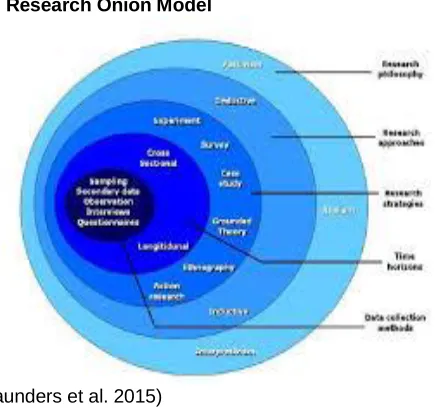
performance of the banking sector. The study achieved these objectives by applying the onion research model. Using the research onion model compelled the study to have a systematic approach to the study. The investigation used the Research Onion Model of research.
3.2 Research Onion Model
(Saunders et al. 2015)
Figure 1: Research Onion Model
3.2.1 The philosophy of the study
The beliefs and practices that guide the researcher during the process of research is called the research philosophy. Positivism and Interpretivism are the two main research philosophy categories (Kumar, 2019). Positivism philosophy claims that reality is constant, and thus, the collected and analyzed data has a sense of reality in it that can be understood easily. The interpretivism philosophy, claims that the outcomes of a research study are unpredictable and hence the collected data can be a function various different variable (Flick, 2015). In this study the positivism philosophy was used.
3.2.2The approach to the research
The plan or procedure for undertaking the research activity is the research approach. The main three approaches to research include quantitative approach, qualitative approach, and mixed methods approach (Flick, 2015). The current study is a quantitative study where quantitative data was collected and analyzed analytically using SPSS. The study focused on collecting numerical data through a questionnaire. The research question was examined by deductively by coming up with hypotheses derived from theory. By using the quantitative approach, the researcher was able to investigate the impacts of M&As in the banking sector.
3.2.3 Research design
The approach that the study uses to answer the research questions is called research design. The current study was descriptive whereby the research sought to identify the impacts of M&As in the banking sector of Bahrain.
3.2.4 The research strategy
The overall plan that the research adopts to make it easy answering research question is the research strategy
(Saunders et al. 2015). The main goal of the current study was investigating the impacts of M&As in the Bahraini banking sector. The research in this regard used the case study strategy to fully address the research objective. The case study strategy empowered the researcher to investigate how M&As impact the banking sector of Bahrain. Using the questionnaire, the study was able to acquire relevant data, analyze data, and come up with conclusions that openly describe how the Bahraini banking sector is affected by mergers and acquisitions.
3.2.5 Data collection
The questionnaire was used to collect data for the current study. The study targeted top and middle managers in the banking sector. The study was an online research where the researcher sent a questionnaire to the respondents electronically. To meet this objective, the researcher created a Facebook group that invited participants to subscribe freely to become members. After subscription, the participants were directed to a questionnaire link; ―impacts of mergers and acquisitions on shareholder value in the banking sector.” Clicking on the link, allowed participants to access the study questionnaire. The questionnaire was simple containing both structured and unstructured questions. The respondents had an opportunity to fill the questionnaire at their convenience. The use of questionnaire as the data collection tool provided research participants with an opportunity to provide the relevant information. Equally, the questionnaire ensured that participants respond to specific questions. Using the questionnaire allowed the researcher to enhance the data analysis as well as boost the validity of the content. The questionnaire also ensured that well thought responses which are in-line with the needed information are captured.
3.2.6 Sample Population
The current study targeted the top leadership in the banking sector of Bahrain. The study expected responses from 50 top banking officials in Bahrain; however only 27 questionnaires were completed on time.
3.2.7 Ethical consideration
The present study used quantitative data. In the data collection process the study ensured that the rights of respondents were respected. The respondents of the study were of the legal age. Although, the study did not involve physical contact, the anonymity of the respondents was upheld. Accordingly, no single respondent was forced to participate, participation was voluntary. Professionalism was also maintained throughout the data collection process.
4. RESULT & DISCUSSION
2834 instance, the target bank shareholders tend to earn more by
selling their stocks to the acquirer bank. The study also established that the shareholders’ voting powers are diluted after mergers. For instance, the company decisions once made by a few shareholders, are made by more people after the merger.
4.1 Demographics
1. Gender
TABLE 1: PARTICIPANTS GENDER
Frequency Percent Valid Percent
Cumulative Percent
V Male 16 59.3 59.3 59.3
F-male 11 40.7 40.7 100.0
Total 27 100.0 100.0
Figure 2: Participants' Gender Pie Chart
Out of 27 participants (100%), 16 respondents (59.3%) were male while 11 (40.7%) were female. These results clearly indicate that the Bahrain banking sector is dominated by the men. However, it is also important to note that the female gender is working hard to assume positions that were conventionally the mainstay of the male gender. 40.7 % of women working in managerial positions in the Bahraini banking sector is a strong indicator that the country is driving towards achieving gender equality in employment.
2. Age Group
TABLE 2: PARTICIPANTS AGE GROUP
Frequency Percent Valid Percent
Cumulative Percent
V 25 - 30 4 14.8 14.8 14.8
30 - 35 6 22.2 22.2 37.0
35 - 40 7 25.9 25.9 63.0
40 - 45 4 14.8 14.8 77.8
45 and
above 6 22.2 22.2 100.0
Total 27 100.0 100.0
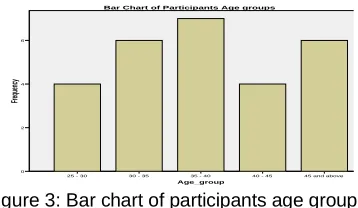
Figure 3: Bar chart of participants age groups
Based on the results above, the leading age-group in management of the banking sector is 35 – 40. This age group has 7 participants (25.9%). Age groups 30-35 and 45 and above, have 6 participants a piece. While age groups 25-30 and 40-45 have 4 participants each. These results show that the Bahraini banking sector has an energetic workforce; the majority of the management personnel is under 45 years and below.
3. Participants Nationality
TABLE 3: PARTICIPANTS' NATIONALITY
Frequency Percent Valid Percent
Cumulative Percent
V Bahraini 24 88.9 88.9 88.9
Non-Bahraini 3 11.1 11.1 100.0
Total 27 100.0 100.0
A majority of respondents 24 (88.9%) out of 27 were Bahraini nationals with only 11.1% being non-Bahraini nationals. Based on these results, the Kingdom of Bahrain has a skilled population capable of spearheading the economic development. The young and skilled population in the banking sector can be a reflection of country’s skill levels.
4. Marital Status
TABLE 4: PARTICIPANTS' MARITAL STATUS
Frequency Percent Valid Percent
Cumulative Percent
V Married 20 74.1 74.1 74.1
Single 7 25.9 25.9 100.0
Total 27 100.0 100.0
Female Male
Gender
Age_group
45 and above 40 - 45
35 - 40 30 - 35 25 - 30
Frequenc
y
6
4
2
0
2835 Figure 4: Participants' Marital Status
A majority of participants, 74.1% are married with only 25.9% being single. The large number of married individuals indicate that the Bahraini society value family.
5. Level in Management
TABLE 5: PARTICIPANTS' MANAGEMENT LEVEL
Frequency Percent Valid Percent
Cumulative Percent
V Financial
Manager 10 37.0 37.0 37.0
Credit
Manager 6 22.2 22.2 59.3
Operations
Manager 5 18.5 18.5 77.8
Marketing
Manager 6 22.2 22.2 100.0
Total 27 100.0 100.0
Out of the 27 participants (100%), 10 respondents (37.0%) were financial managers, 6 (22.2%) were credit managers, 5 (18.5%) operations managers, and 6 (22.2%) were marketing managers. In this case, it can be deduced that financial managers are more involved in mergers and acquisition deals than other managers in the banking industry.
6. Worked in a Merger before
TABLE 6: PARTICIPANTS' WORKED IN A MERGER BEFORE
Frequen
cy Percent
Valid Percent
Cumulative Percent
V Yes 9 33.3 33.3 33.3
No 18 66.7 66.7 100.0
Total 27 100.0 100.0
In accordance with the table above, a large number of participants 66.7% had never worked in organizations formed after mergers and acquisition. In this essence, it is observed that in the Bahraini banking sector, mergers and acquisitions are still a new venture. However, the practice is gaining traction with time.
7. Time worked in the banking sector
TABLE 7: PERIOD IN THE BANKING SECTOR
Frequency Percent Valid Percent
Cumulative Percent
V 0 - 5 Years 8 29.6 29.6 29.6
5 - 10 Years 13 48.1 48.1 77.8
10 Years
and above 6 22.2 22.2 100.0
Total 27 100.0 100.0
Figure 5: Period in the banking sector
According to the findings above, more participants indicated that they have been in the banking sector for less than ten years. For instance, 0-5 years period there are 8 respondents (29.6%) and 5-10 years, we have 13 respondents (48.1%). On the other hand, respondent with more than 10 years’ working experience in sector makes 22.2% of the study population. The study thus reveal that, the Bahraini banking sector is steadily attracting young and skilled individuals.
4.3 Effects of M&As on the wealth of shareholders
8. M&A increase shareholder value
TABLE 8: MERGERS AND ACQUISITIONS INCREASE SHAREHOLDERS' VALUE
Frequency Percent Valid Percent
Cumulative Percent
V Always 10 37.0 37.0 37.0
Often 6 22.2 22.2 59.3
Sometimes 3 11.1 11.1 70.4
Rarely 5 18.5 18.5 88.9
Never 3 11.1 11.1 100.0
Total 27 100.0 100.0
Marital_Status
Single Married
F
re
q
u
en
cy
20
15
10
5
0
Marital_Status
Period_in_Bankin_Sector
10 Years and above 5 - 10 Years
0 - 5 Years
F
re
q
u
en
cy
12.5
10.0
7.5
5.0
2.5
0.0
2836 The results indicate that many participants agree that, in the
banking sector M&As improve the shareholders’ value. For example, the table above indicate that 50% of participants agree that mergers and acquisitions increase the value of shareholders. Only a small percentage of 18.5% and 11.1% said that M&As rarely and never increase the value of shareholders respectively. Banking Sectors’ M&As have the effect of enhancing the value of shareholders.
9. Managers in the banking sector have a
responsibility of enhancing shareholder value
TABLE 9: MANAGERS IN THE BANKING SECTOR HAVE A RESPONSIBILITY OF INCREASING SHAREHOLDERS'
VALUE
Frequency Percent Valid Percent
Cumulative Percent
V Always 9 33.3 33.3 33.3
Often 7 25.9 25.9 59.3
Sometimes 6 22.2 22.2 81.5
Rarely 4 14.8 14.8 96.3
Never 1 3.7 3.7 100.0
Total 27 100.0 100.0
There is a major agreement among participants that managers in the banking sector have a responsibility of enhancing the value of shareholders. In essence, 33.3% and 25.9% of respondents agreed that mergers and acquisitions always and often have the responsibility of increasing shareholder wealth respectively.
10. M&As do not increase shareholder value in the
banking sector
TABLE 10: M&AS IN THE BANKING SECTOR DO NOT INCREASE SHAREHOLDERS' VALUE
Frequency Percent Valid Percent
Cumulative Percent
V Always 1 3.7 3.7 3.7
Often 7 25.9 25.9 29.6
Sometimes 2 7.4 7.4 37.0
Rarely 10 37.0 37.0 74.1
Never 7 25.9 25.9 100.0
Total 27 100.0 100.0
The participants do not agree that M&As do not increase the value of shareholders. The study revealed that only 3.7% and 25.9% agreed that M&As always and often do not increase shareholder value respectively. However, a majority of the participants disagreed that M&As do not increase shareholder value.
11. Shareholder value of both target and acquirer
companies is affected by Mergers and Acquisition
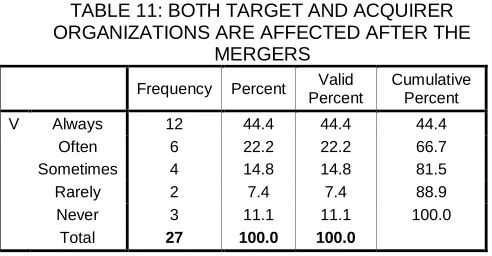
TABLE 11: BOTH TARGET AND ACQUIRER ORGANIZATIONS ARE AFFECTED AFTER THE
MERGERS
Frequency Percent Valid Percent
Cumulative Percent
V Always 12 44.4 44.4 44.4
Often 6 22.2 22.2 66.7
Sometimes 4 14.8 14.8 81.5
Rarely 2 7.4 7.4 88.9
Never 3 11.1 11.1 100.0
Total 27 100.0 100.0
The acquirer and target companies’ shareholders’ value is affected by the M&As process. Over 50% of the study respondents said that M&As affect the shareholder value of both target and acquirer companies. For instance, 44.4% and 22.2% said that process always or often affect value of shareholders for both target and acquirer companies respectively.
12. Mergers and Acquisitions dilute shareholders
voting powers
TABLE 12: M&AS DILUTE SHAREHOLDER VOTING POWERS
Frequ ency
Percen t
Valid Percent
Cumulative Percent V Always 12 44.4 44.4 44.4
Often 5 18.5 18.5 63.0
Sometim
es 5 18.5 18.5 81.5
Rarely 2 7.4 7.4 88.9
Never 3 11.1 11.1 100.0 Total 27 100.0 100.0
The voting powers of shareholders are diluted through M&A as indicated in the above analysis. The results show that over 44% of the participants stated that M&As always dilute the voting powers of shareholders. This is an indication that after the merger, the number of shareholders increase which in return reduce the voting powers of individual shareholders.
4.4. Effects of M&As on Performance
13. M&As result in performance and profitability
enhancement
TABLE 13: M&AS LEAD TO ENHANCED PERFORMANCE AND PROFITABILITY
Frequency Percent Valid Percent
Cumulative Percent
V Always 7 25.9 25.9 25.9
Often 8 29.6 29.6 55.6
Sometimes 3 11.1 11.1 66.7
Rarely 5 18.5 18.5 85.2
Never 4 14.8 14.8 100.0
Total 27 100.0 100.0
2837 merged organizations always experience improved
performance and profitability while 29.6% often realize improved performance. In this regard, over 50% of the mergers improved performance and profitability after merging.
14. The bank’s performance differs in the pre- and
post- merger periods
TABLE 14: THERE IS A DIFFERENCE IN BANK’S PERFORMANCE AND PROFITABILITY IN THE PRE- AND
POST- MERGER PERIODS
Frequency Percent Valid Percent
Cumulative Percent
V Always 11 40.7 40.7 40.7
Often 7 25.9 25.9 66.7
Sometimes 3 11.1 11.1 77.8
Rarely 4 14.8 14.8 92.6
Never 2 7.4 7.4 100.0
Total 27 100.0 100.0
It is evident from this study that pre- and post-merger period performances are different with over 50% of the participants agreeing. For instance, 40.7% and 25.9% of the respondents showed that there is always and often a difference in the pre- and post-merger periods respectively. This is a clear indication firms gaining more resources in the merger process and thus increasing their performance and reducing on operational costs due to economies of scale.
15. In the banking sector, voluntary M&As lead to
improved performance and profitability
TABLE 15: VOLUNTARY M&AS IN THE BANKING SECTOR LEAD TO IMPROVED PERFORMANCE AND
PROFITABILITY Freq
uenc y
Percent Valid Percent
C-lative Percent
V Always 8 29.6 29.6 29.6
Often 10 37.0 37.0 66.7
Sometimes 4 14.8 14.8 81.5
Rarely 3 11.1 11.1 92.6
Never 2 7.4 7.4 100.0
Total 27 100.0 100.0
Out of 27 participants, 29.6% and 37% of the study respondents agreed that voluntary mergers always and often lead to improved performance after the merger respectively. There is thus a clear indication, that voluntary mergers boost the confidence of the acquirer company to perform even better after the merger. Furthermore, in the Bahraini banking sector, it is evident that the voluntary merged banks end up performing better in the long run.
16. In the banking sector Mergers and Acquisitions
lead to a decline in operational costs
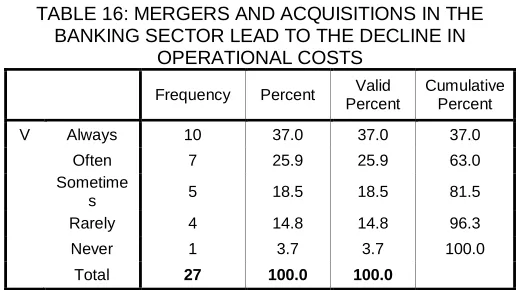
TABLE 16: MERGERS AND ACQUISITIONS IN THE BANKING SECTOR LEAD TO THE DECLINE IN
OPERATIONAL COSTS
Frequency Percent Valid Percent
Cumulative Percent
V Always 10 37.0 37.0 37.0
Often 7 25.9 25.9 63.0
Sometime
s 5 18.5 18.5 81.5
Rarely 4 14.8 14.8 96.3
Never 1 3.7 3.7 100.0
Total 27 100.0 100.0
The banking sector based on these findings enjoy reduced operational costs after the merger. The analysis show that 37% of the banks always experience a decline in operational costs, and 25.9% of organizations often experience reduced costs of operation. This is a clear show that merging banks brings together resources while at the same time allowing the organizations to enjoy the economies of scale.
5. CONCLUSION &RECOMMENDATIONS
2838
increase the value of shareholders in the banking sector.”
Further, each step of the study was standardized, and thus, widely minimizing the level bias during data collection and analysis. This study using quantitative approach ensured the validity of results that are generalized to a larger population.
Limitations of the Study
Despite the achieved success in collecting and analysing data on the impacts of mergers and acquisitions on shareholders’ value in the banking sector of the Kingdom of Bahrain, the study was limited. Not only did the study experience methodological limitations, but also the researcher was hindered by numerous factors to successfully accomplish the objectives of the study. Given this understanding, the limitations below were encountered:
1. The study topic was wide and thus required a wider sample population to fully provide a clear picture of how M&As affect the value of shareholders in the banking sector. The study used a population of 27 bank managers which is a skewed sample that do not fully exhibit the reality of the problem. Shareholders perhaps could have been involved to help provide the full scale understanding of how mergers and acquisitions affect their value.
2. The Bahraini banking sector is small and hence the available literature on how mergers and acquisitions in the banking sector affect shareholder wealth is limited. Based on this understanding, it was hard for the study to have valuable information from which to derive hypothesis to be tested.
3. The research utilized a close-ended questionnaire to collect data; although the data collection method was ideal for the researcher to collect non-biased data, it denied the respondents to provide personal views as to how mergers and acquisitions in the banking sector affect the value of shareholders. 4. The longitudinal effects also limited the research
process. The research topic was wide and thus required significant amount of time to fully investigate and answer the research question. The current study never had enough time to expansively deliberate on the research topic.
Scope for Further Studies
The study in point established that mergers and acquisitions in the banking sector enhance the value of shareholders. However, the reality of this establishment need to be explored further to refine findings and come up with information that will not only be helpful in the educational sector, but also help managers, shareholders, banking institutions, and the government. The proposed future research despite using the same research topic, it is important to increase the sample population as well as involve other entities like bank shareholders and bank customers. Accordingly, the proposed study should not be for academic purposes, but rather be commissioned by the Central Bank of Bahrain and accorded enough time.
REFERENCES
[1] Abdulwahab, B. A., & Ganguli, S. (2017). The Impact of Mergers and Acquisitions on Financial Performance of Banks in the Kingdom of Bahrain during 2004-15. Information Management and Business Review, 9(4), 34-45.
[2] Amu, C. U., & Chigbu, E. E. (2015). Relationship between Pre and Post Merger and Acquisition Banking Industry Performance in Nigeria.
Independent Journal of Management & Production,
6(3), 850-865.
[3] Badreldin, A., & Kalhoefer, C. (2009). The effect of mergers and acquisitions on bank performance in Egypt. Journal of management Technology, 8(4), 1-15.
[4] Bhatta, M. K. (2016). Effect of bank merger on the shareholders wealth and post-merger situation of Nepalese banking industry. Information Management and Business Review, 8(4), 41-51. [5] Biørn, E. (2017). Taxation, technology, and the
user cost of capital (Vol. 182). Elsevier.
[6] Chong, B. S., Liu, M. H., & Tan, K. H. (2006). The wealth effect of forced bank mergers and cronyism.
Journal of Banking & Finance, 30(11), 3215-3233. [7] Colombo, L. V., & Turati, G. (2014). Why do
acquiring banks in mergers concentrate in well-developed areas? Regional development and mergers and acquisitions (M&As) in banking.
Regional Studies, 48(2), 363-381.
[8] Cornett, M. M., McNutt, J. J., & Tehranian, H. (2006). Performance changes around bank mergers: Revenue enhancements versus cost reductions. journal of Money, Credit, and Banking,
38(4), 1013-1050.
[9] DePamphilis, DM (2014). Mergers, acquisitions, and other restructuring activities, 5th ed. San Diego: Academic Press.
[10]Fatima, T., & Shehzad, A. (2014). Analysis of Impact of Merger and Acquisition of Financial Performance of banks: A case of Pakistan. Journal of Poverty, Investment and Development and Open Access International Journal, 5, 29-36.
[11]Flick, U. (2015). Introducing research methodology: A beginner's guide to doing a research research. Sage.
[12] Frensch, F. (2007). The Social Side of Mergers and Acquisitions: Cooperation relationships after mergers and acquisitions. Springer Science & Business Media.
[13] Ghauri, P., & Hassan, I. (2014). Evaluating companies for mergers and acquisitions. Emerald Group Publishing.
[14]Gupta, A., & Misra, L. (2007). Deal size, bid premium, and gains in bank mergers: The impact of managerial motivations. Financial Review, 42(3), 373-400.
[15] Joshua, O. (2011). Comparative analysis of the impact of mergers and acquisitions on financial efficiency of banks in Nigeria. Journal of Accounting and Taxation, 3(1), 1-7.
2839 European Union members and candidate
countries. Economic Modelling, 27(3), 648-655. [17] Kaur, T. (2014). Value creation through mergers
and acquisitions: Evidence from existing empirical literature. International Journal of Trade & Global Business Perspectives, 3(2), 907.
[18]Kumar, N. (2009). How emerging giants are rewriting the rules of M&A. Harvard Business Review, 87(5), 115.
[19]Kumar, R. (2019). Research methodology: A step-by-step guide for beginners. Sage Publications Limited.
[20]Kwoka, J., & Pollitt, M. (2010). Do mergers improve efficiency? Evidence from restructuring the US electric power sector. International Journal of Industrial Organization, 28(6), 645-656.
[21] Lu, W. (2014). Corporate Cultural Spillover and Synergistic Gains: Evidence from Mergers and Acquisitions. Available at SSRN 2618937.
[22] Mantravadi, D. P., & Reddy, A. V. (2008). Post-merger performance of acquiring firms from different industries in India. International Research Journal of Finance and Economics, (22).
[23] Mantravadi, P., & Reddy, A. V. (2008). Type of merger and impact on operating performance: the Indian experience. Economic and Political Weekly, 66-74.
[24]Marks, M. L., & Mirvis, P. H. (2010). Joining forces: Making one plus one equal three in mergers, acquisitions, and alliances. John Wiley & Sons. [25] Michael, N. B. (2013). Bank mergers and
acquisition and shareholders' wealth maximization in Nigeria. Journal of applied Finance and Banking,
3(3), 255.
[26] Myers, S. C. (2003). Financing of corporations. In
Handbook of the Economics of Finance (Vol. 1, pp. 215-253). Elsevier.
[27] Mylonidis, N., & Kelnikola, I. (2005). Merging activity in the Greek banking system: A financial accounting perspective. South Eastern Europe Journal of Economics, 1(1), 121-144.
[28]Pathak, H. P. (2016). Motives for mergers and acquisitions in the Nepalese perspective.
Economic Literature, 13, 9-18.
[29]Pawaskar, V. (2001). Effect of mergers on corporate performance in India. Vikalpa, 26(1), 19-32.
[30]Saunders, M. N., Lewis, P., Thornhill, A., & Bristow, A. (2015). Understanding research philosophy and approaches to theory development. [31]Singh, G., & Gupta, S. (2015). An impact of mergers and acquisitions on productivity and profitability of consolidation banking sector in India.
Abhinav International Monthly Refereed Journal of Research in Management & Technology, 4(9), 33-48.
[32] Sinha, N., Kaushik, K. P., & Chaudhary, T. (2010). Measuring post merger and acquisition performance: An investigation of select financial sector organizations in India. International journal of Economics and Finance, 2(4), 190-200.
[33]Tang, A. C. (2015, March). Mergers and Acquisitions and its effects on firm Performance: A New Look. In Proceedings of the DLSU Research Congress.
[34] Vander Vennet, R. (1996). The Effect of Mergers and Acquisitions on the Efficiency and Profitability of EC. Vitale, R., & Laux, J. A. (2012). The Economic Efficacy Of Banking Mergers: 2006-2008.
[35] Yang, H., & Lin, Z. (2005). Interfirm distances as channels for external resources: The choice between alliances and mergers & acquisitions
(Doctoral dissertation, University of Texas at Dallas).
AUTHORS PROFILE
Professor (Dr.) Atul Bansal, is a
graduate of CCSU, Meerut, INDIA. He received his Ph.D. Degree in Commerce-Accounts from CCS University in 2000. He is a self-motivated individual with over 22+ years’ experience in the gamut of
Teaching, Research and
Administration. He is the author of more than 18 books and has published more than 90 research papers in journals of International repute. His area of expertise includes: Forensic Accounting, IFRS, Taxation and Finance. He has presented a number research papers in international conferences. Prof. Bansal is also associated with various international and National Professional bodies such as AIB-Michigan State University- USA, IEDRC-Hong Kong, IAA,ICA,ITC and AICP etc.
Ms. Maryam Abdulla Isa Almalki,
(Enrolment No.: Student ID: 160101114107), is the final year student of Bachelor of Accounting and Finance, College of Administrative and Financial Science, GULF University, Kingdom of Bahrain. Her research interest centre around the Banking, Insurance and financial sector. Her current research is on Mergers and Acquisitions on Shareholder Value in the banking sector. She is planning to move her career in teaching and research.