Development of a Moodle VLE Plug-in to Support Simultaneous Visualisation of
a Collection of Multi-Media Sign Language Objects
Markus Hofmann
1, Kyle Goslin
2, Brian Nolan
3, Lorraine Leeson
4, Haaris Sheikh
51,2,3
Department of Informatics Institute of Technology Blanchardstown
Blanchardstown Road North Dublin 15
Ireland
4
Centre for Deaf Studies 40 Lower Drumcondra Rd.
Drumcondra Dublin 9
Ireland
5
Interesource Group (Ireland) Limited 48 South William Street
Dublin 2 Ireland
E-mail: [email protected], [email protected], [email protected], [email protected], [email protected]
Abstract
Using Virtual Learning Environments (VLE) to support blended learning is very common in educational institutes. Delivering learning material in a flexible and semi-structured manner to the learner transforms such systems into powerful eLearning tools. However, the presentation and visualisation of individual or multiple learning objects is mostly dictated by the system and cannot be altered easily. This paper reports on a project between Trinity College Dublin (TCD) and the Institute of Technology Blanchardstown (ITB) that aims to improve the simultaneous visualisation of multiple multimedia objects for deaf learners of ISL. The project was implemented using the Open Source VLE Moodle. Moodle’s nature of being Open Source and having the ability to code plug-ins qualified it to be the most suited vehicle to address the visualisation problem. Traditionally VLEs allow the viewing of one learning object at a time, which meant that deaf learners could either view a pre-recorded, signed in ISL, video lecture or concentrate on textual accompanying content but not both. The developed Moodle plug-in allows academics to group multiple videos into a ‘lecture’. It further facilitates the addition of rich text content to each video. The learner can select and view one video from a possible sequence of many as well as view the text that belongs to the video. The paper further outlines detailed implementation and techniques applied.
1.
Introduction
Using Virtual Learning Environments (VLE) to support blended learning is very common in educational institutes. Delivering learning material in a flexible and semi-structured manner to the learner transforms such systems into powerful eLearning tools. However, the presentation and visualisation of individual or multiple learning objects is mostly dictated by the system and cannot be altered easily.
Irish Sign Language (ISL) is an indigenous language of Ireland and is recognized by the EU as a natural language. It is a language separate from the other languages used in Ireland, including Irish, English and, in Northern Ireland, British Sign Language. Some 6,500 Deaf people use ISL on the island of Ireland. Our goal is to deliver third level
programmes to students online to resolve problems of time, geography and access, maximizing multi-functional uses of digital assets across our programmes to maximize the “Deaf-friendliness” of blended learning delivery for Deaf and hard of hearing students.
video lecture or concentrate on textual content but not both. The developed Moodle plug-in allows academics to group multiple videos into a ‘lesson’. It further facilitates the addition of rich text content to each video. The learner can select and view one video from a possible sequence of many as well as view the text that belongs to the video. The paper further outlines detailed implementation and techniques applied.
2.
Background
2.1 Deaf Studies in Ireland and Europe
Approximately 1 person in a 1000 is a signed language user (Johnston 2004, Conama 2008), which suggests that there are some 490,426 Deaf signed language users in the EU. In Ireland, there are approximately 5,000 Irish Sign Language users in the Republic (Matthews 1996) and an approximate 1,500 ISL users in Northern Ireland.
Irish Sign Language (ISL), an indigenous language of Ireland, is recognized by the European Union as a natural language. It is a language separate from the other languages used in Ireland, including English, Irish, and, in Northern Ireland, British Sign Language. Some 6,500 Deaf people use ISL across the island of Ireland. In great part, because of the history of suppression of signed languages across the EU, the average Deaf person leaves school with a reading age of 8.5 to 9 years. Given this, it is no surprise that Deaf people are the most under-represented of all disadvantaged groups at third level. This poses two initial challenges: (1) getting Deaf people into third level and (2) presenting education in an accessible form (Nolan and Leeson, 2009).
In tackling these challenges, Trinity College Dublin and the Institute for Technology, Blanchardstown, Dublin (ITB) have partnered to create a unique eLearning environment based on Moodle as the learning management system, in the delivery of Deaf Studies programmes at TCD. This partnership delivers third level programmes to students in a way that resolves problems of time, geography and access, maximizing multi-functional uses of digital assets across our programmes. Our digital assets include a corpus of ISL, the ‘Signs of Ireland Corpus’ which is one of the largest, most richly annotated in the world. We have operated with some online delivery since 2005, hosted by ITB, and in early 2008 were successful in attracting significant Irish government funding to expand delivery of a series of undergraduate diplomas to degree level nationwide under the Strategic Innovation Fund, Cycle II and SIGNALL II.
2.2 Moodle VLE
Moodle is a popular open-source course management system that can be scaled from several users and courses to several hundred thousand users with thousands of course modules. The VLE is used around the world and is available in approximately 100 different languages. Moodle has almost 50,000 validated installations in over 200 countries with a total of over 30 million users (Moodle, 2010).
One of the strength of this VLE is that, firstly, it is open-source which makes it possible to access and change the code but also, and more importantly, that the framework Moodle is based on allows the development of plug-ins that easily slot into the existing structure of the application. This project takes advantage of this framework and developed the plug-in that lets users view video and text side by side to support the learning requirement of deaf learners.
2.3 Project Rationale
Signed languages, by their nature, are visual-gestural languages, which (unlike spoken languages) do not have a written form. Given this, the online content is required to be multi-modal in nature and we utilize rich-media learning objects in our delivery. This presents a number of serious and important challenges which include:
Universal design in an online curriculum for Deaf and hearing students;
Identifying what aspects of ISL learning can best be supported & assessed online;
Assessing signed language interpreting skill in an online context;
Decisions regarding ISL annotation & mark-up standards;
Using the Signs of Ireland corpus in blended learning contexts;
Leveraging a corpus within digital learning objects in a Moodle environment;
Architecture of a digital learning environment to support ISL learning;
Issues of assessment in an eLearning context;
Creating a plug-in for Moodle to facilitate delivery of large multimedia files online rather than text-only data.
2.4 Learning Objects
The learning objects that are of significance to the deaf learner are signed video recordings that are accompanied by text. It was also of importance that the structure of several videos and their textual content can be incorporated into the structure of how Moodle presents these learning objects.
3.
Moodle Plug-in Development
container implementation was suited for the development of this project. A resource plug-in was then developed for the Moodle platform as a way to deliver the content of the Deaf Studies Lesson.
The plug-in developed as part of this project is an Activity Module that allows lecturers to create a learning object called ‘Lesson’. Once created, each lesson can be populated with one or more videos and each video can be associated with format rich textual information including embedded images and links. Several aspects needed to be considered:
The plug-in needed to work independently of Moodle settings and should not depend on any other optional modules or plug-ins. This was important so that it works for all Moodle installations without setting any system requirements other than the version number (version 1.9).
The plug-in takes advantage of the xmlDB framework which facilitates the creation and manipulation of new data tables that are part of the main Moodle database. Each video therefore creates a new record in a table that needs to be included in the backup functions that Moodle has as core functionality. This was solved using specific backup functions that included the data created by the plug-in to be incorporated in the overall (and pre-existing) backup procedure provided by Moodle.
This tool will also be used as part of a European project which meant that localisation was required resulting in the requirement of the integration of different languages is a possibility. Certain domain specific terminology is not part of Moodle’s language packs and it was therefore necessary to include an environment that facilitated multi-language support.
The selected default language of the Moodle installation is also the default language of the developed plug-in. Should the plug-in language pack for the selected default language be unavailable, it reverts back to English as second default language. Additional languages can be added easily by modifying one single file.
Moodle constantly stores users’ activities recording IP address, date, time, and viewed learning object. Traditionally most learning objects uploaded and displayed by Moodle are single files. Our tool however produces a learning object called ‘Lesson’ that consists of several files (one for each video and text). This meant that data collection needed to be integrated in such a way that the Moodle log files also include the users’ behaviour within the ‘Lesson’ object. In brief, we wanted detailed user data in relation to the selection of videos. We believe that this data will provide us with information that could be used for subsequent analyses.
The last consideration was the availability of online, on the spot help functionality. Ambiguous plug-in sections as well as text boxes now have a help button that describes the rationale behind the object and what values it expects.
4.
Features of the Visualisation Tool
The tool contains a number of unique features as outlined in the following subsections.
4.1 Simultaneous Visualisation
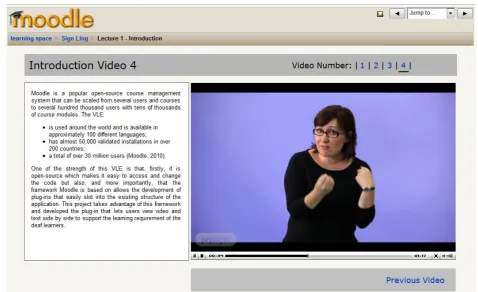
[image:3.595.69.548.480.772.2]The key feature of the tool is the facility to display formatted information (including rich text format, links
and images) and video side by side to improve the content provision for deaf students. This is an important aspect considering the different learning characteristics of deaf learners. This is displayed in Figure 1 showing the layout of the tool. Learners can navigate either directly to the desired video by clicking on the ‘Video Number’ or use the ‘Next’ and ‘Previous’ links located underneath the video screen. The text area to the left of the video allows the lecturer to add subject related text, images and hyperlinks. In case the content exceed the space provided a scrollbar will allow the student to move up and down.
4.2 Localisation
The plug-in will be used in various different countries across Europe and therefore a great importance was to add the ability for the tool’s interface descriptions strings to be localised to the users native language. The project uses the plug-in framework provided by Moodle which makes it possible to take advantage of the native localisation features that are available to all the components of the VLE. Localised terms are added to the language files inside the plug-in and whatever language is selected by the administrator for the installation of Moodle, will reflect which one of the languages the plug-in interface description strings will be translated to. If the terms are not available in the respective language files the default English values will be applied.
4.2 Data Collection
When implemented on a live server, the students who interact with the tool provide a wide range of unique personal usage patterns, that provide an insight to the most used and disused sections of the tool. For this reason, data collection facilities were integrated into the tool to capture this data.
Two data collection tools were used to record this data. The first of these was Moodle’s integrated data collection tool. By default Moodle stores information about the various different pages which were accessed by students into its database. This information when filtered, gives an initial raw look at the most visited parts of the plug-in. In addition to this a data collection tool was created that records plug-in specific data such as which video has been watched and for how long. This data collection feature therefore lets the educator analyse the click stream of each individual user creating a better picture of the learners. More frequently watched video could indicate that the topic is particularly difficult to understand.
4.2 Structure and Administration
The deaf studies content visualisation tool can be managed within Moodle and it follows the same structure and layout constraints as the native Moodle learning objects. Keeping this uniformed creation and editing process was of great importance, to ease the learning curve of the tool so administrators do not have to learn a new procedure but can apply their existing Moodle knowledge to create lessons and their respective video and text content. When adding new videos to the lesson
which was created, various different content manipulation controls are available to the administrator. These controls give the administrator the ability to move the current video further up or down on the list of videos for the lesson, delete videos from the lesson and also edit an individual lesson sections with a full HTML markup editor.
5.
Future Process & Development
5.1 Implementation
At present the tool has passed its piloting stage and will be rolled out in the coming weeks in countries such as Ireland, UK, Poland, Czech Republic and Finland. The feedback of this rollout will be used to improve and finalise the tool after which it will be provided as downloadable plug-in under the GNU General Public Licence.
5.2 Future Development
One of the future development aims is to add multiple video tagging so that the textual content assigned to a video can change based on the progression of the video clip. This is of particular importance when longer videos are used as learning objects. Existing work reviewing video tagging tools, and investigating automated segmentation (for example see Campos et al. 2008), suggests that it will be possible to add such features to our tool.
In addition we aim to improve the visualisation of the student’s usage pattern data to give the teacher a graphical representation of the most beneficial aspects of the course content which was provided
5.3 Data Analysis
The tool described in this paper has extensive data collection facilities as described above. These data can be used to gain previously unknown patterns and learner behaviour. For example, it will be possible to investigate whether there is a correlation between usage of the tool and academic performance. Other interesting measures could be students’ time, frequency and duration of usage.
6.
Conclusion
7.
Acknowledgements
We would like to acknowledge the funding from the Strategic Innovation Fund (Cycle 2), SIGNALL II as well as ongoing support from the Institute of Technology Blanchardstown and the Centre for Deaf Studies (TCD).
8.
References
Campos, L., Fernández-Luna, J., García, J, Gómez, F., Huete, J. and, C. Martín-Dancausa (2008). A Video Segmentation and Annotation Tool for Parliamentary Recordings and Transcriptions. IADIS International Conference Informatics. Amsterdam, Netherlands. Conama, J.B. (2008): Review of the Signing Information
Project, Mid-West Region. Limerick: Paul Partnership. Johnston, T (2004) W(h)ither the deaf community?
Population, genetics, and the future of Australian Sign Language, American Annals of the Deaf 148:5. Matthews, Patrick A. (1996). The Irish Deaf Community-
Volume 1, ITE, Dublin.
Moodle (2010). Moodle Statistics (online) http://moodle.org/stats. Last accessed: March 2010. Nolan, B. and L. Leeson (2009). Creating access to