Review Article
A systematic review and meta-analysis of comparative
studies on the efficacy of cytoreductive prostatectomy
in patients with metastatic prostate cancer
Yan Zhao, Dashuai Peng, Jie Liang, Yingli Lin, Jingguang Qi
Department of Urology, Xuzhou Cancer Hospital, Affiliated Hospital of Jiangsu University, Xuzhou, Jiangsu, China Received October 22, 2019; Accepted December 14, 2019; Epub February 15, 2020; Published February 28, 2020
Abstract: Background: In several studies, cytoreductive prostatectomy has been performed for the survival benefits in metastatic prostate cancer (mPCa). However, these researches revealed conflicting effects. The present study
was designed to determine the relationship between cytoreductive prostatectomy and mPCa. Methods: Original articles concerning cytoreductive prostatectomy published until November 1st, 2018 were searched in PubMed
database. The main clinical outcomes included overall mortality (OM), cancer-specific mortality (CSM) and progres -sion-free survival (PFS). Afterwards, meta-analysis was performed. Results: A total of 14 studies were included.
Compared with no local therapy (NLT), radical prostatectomy (RP) of mPCa was associated with decreased OM
(HR=0.47, 95% CI=0.44 to 0.51, I2=90.6%) and CSM (HR=0.36, 95% CI=0.31 to 0.43, I2=28.6%). Subsequent
stratified analysis demonstrated that levels below T2a (HR=0.38, 95% CI=0.34 to 0.42, I2<0.01%) were the pos-sible sources of heterogeneity of OM in RP for mPCa. In detection of the relationship between non-radical
prosta-tectomy (NRP) and mPCa, our results indicated that NRP had beneficial effect on CSM (HR=0.37, 95% CI=0.20 to
0.68, I2=76.0%) and PFS (HR=0.52, 95% CI=0.33 to 0.482, I2=0.0%) when compared with NLT. Conclusions: The
outcomes demonstrated that cytoreductive prostatectomy including RP and NRP might reveal survival benefits in mPCa patients in comparison with NLT. Additional high-quality trials are still warranted to establish the efficacy of
cytoreductive prostatectomy among men with mPCa.
Keywords: Metastasis prostate cancer, prostatectomy, cytoreductive, meta-analysis
Introduction
Prostate cancer is one of the most important cancers, which continues to be a leading cause of cancer-related death in Europe [1]. Survival in males with mPCa is poor with a 5-year overall survival rate of 30% [2]. Therapeutic options in mPCa have still been limited, and androgen deprivation therapy (ADT) with or without che -motherapy remains the traditionally recom-mended therapy [3]. However, under ADT, pro -gression of mPCa is common and responsible for local complications in most patients [4]. In this setting, new multimodal therapeutic options are being commonly considered and advocated.
Cytoreduction of the primary tumor in the set-ting of metastatic disease has been an estab-lished concept in the survival benefits of solid
tumors such as renal and ovarian cancers [5, 6], in which two aspects of the role stood out, interrupting the re-seeding of the primary tu- mor and reducing the overall tumor burden [7, 8]. According to the aspects of the role, one notion has recently been received attention is cytoreductive prostatectomy, which involves surgical removal of the prostate in the setting of metastatic disease [9]. Such an approach of cytoreductive prostatectomy should include RP and NRP, and NRP should include transurethral resection of the prostate (TURP) and cryosur -gery. TURP and cryosurgery have been widely used as mature surgical techniques. Due to the great progress in techniques, RP is becoming safer and more effective in patients with mPCa [10].
mPCa patients in comparison with patients undergoing NLT [11, 12], suggesting that cyto -reductive prostatectomy might have advantag-es over NLT. By contrast, Moschini’s radvantag-esearch showed no survival benefits using such a surgi -cal approach [13]. Thus, the benefits of cytore -ductive prostatectomy in mPCa patients remain inconsistent. Hence, the objective of this cur-rent meta-analysis was to examine the avail-able evidence and to further assess the poten-tial effect on mPCa by using such an approach of cytoreductive prostatectomy.
Materials and methods
Search strategy
We performed a systematic PubMed literature search with the terms “metastatic prostate cancer”, “metastatic cancer of the prostate”, “mPCa” and “cytoreduction”, “cytoreductive”, “debulking”. Only English language literature for studies were enrolled and searched up to November 1st, 2018. By cross-referencing the bibliography of previously selected articles, additional relevant articles were collected. The major inclusion criteria were listed in the
reviewers, a consensus would be reached after a consultation with a third reviewer (J. L). In studies where patients were divided into more than two groups, only comparisons between cytoreductive prostatectomy and NLT were extracted to keep the baselines as similar as possible.
Outcomes
The primary outcome was survival analysis, including CSM, OM and PFS, which was shown as HR and 95% confidence interval (CI). The fol -lowing data were retrieved from relevant stud-ies, including publication year, first author’s name, mean age, months of follow-up, domi-nant ethnicity, number of patients, treatment, P value, most Gleason score, most PSA and most tumor stage. If the data of HRs with 95% CIs could not be directly obtained, it would be extracted from Kaplan-Meier curves [14, 15]. Quality assessment
[image:2.612.89.376.72.383.2]We used Newcastle-Ottawa scale (NOS) tool to evaluate the risk of bias in these studies. A score of 1-9 stars was allocated to all cohort
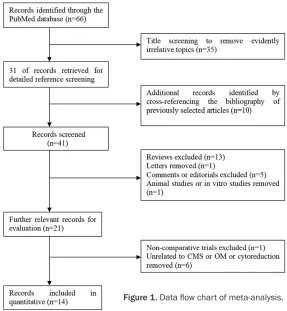
Figure 1. Data flow chart of meta-analysis.
following: (1) Patients with mPCa; (2) Focused on the relationship between cytore-ductive prostatectomy and mPCa; (3) Prospective ran-domized clinical trials (RCTs) (single-blinded, double-blind-ed or cross-over) and obser-vational (case-control or co- hort) studies; (4) Patients in the control group were treat-ed with NLT only. The major exclusion criteria were as fol-lows: (1) Unrelated to CSM or OM or PFS or cytoreduction; (2) Reviews or comments or letters or editorials; (3) Patients in the control group were not treated with NLT; (4) In vitro studies or animal studies.
Data extraction
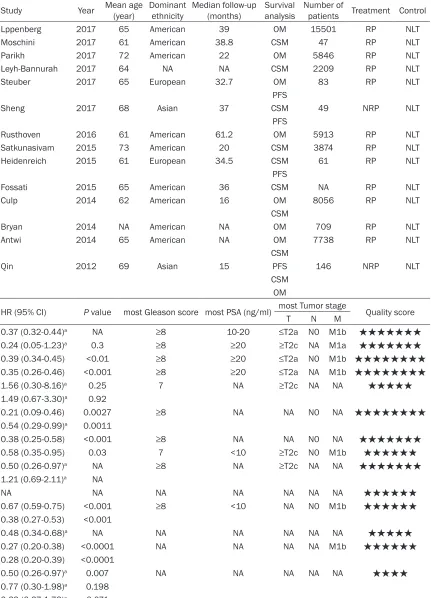
Table 1. Characteristics of included studies in the systematic review and meta-analysis
Study Year Mean age (year) Dominant ethnicity Median follow-up (months) Survival analysis Number of patients Treatment Control
Lppenberg 2017 65 American 39 OM 15501 RP NLT
Moschini 2017 61 American 38.8 CSM 47 RP NLT
Parikh 2017 72 American 22 OM 5846 RP NLT
Leyh-Bannurah 2017 64 NA NA CSM 2209 RP NLT
Steuber 2017 65 European 32.7 OM 83 RP NLT
PFS
Sheng 2017 68 Asian 37 CSM 49 NRP NLT
PFS
Rusthoven 2016 61 American 61.2 OM 5913 RP NLT
Satkunasivam 2015 73 American 20 CSM 3874 RP NLT
Heidenreich 2015 61 European 34.5 CSM 61 RP NLT
PFS
Fossati 2015 65 American 36 CSM NA RP NLT
Culp 2014 62 American 16 OM 8056 RP NLT
CSM
Bryan 2014 NA American NA OM 709 RP NLT
Antwi 2014 65 American NA OM 7738 RP NLT
CSM
Qin 2012 69 Asian 15 PFS 146 NRP NLT
CSM OM
HR (95% CI) P value most Gleason score most PSA (ng/ml) most Tumor stage Quality score
T N M
0.37 (0.32-0.44)a NA ≥8 10-20 ≤T2a N0 M1b ★★★★★★★
0.24 (0.05-1.23)a 0.3 ≥8 ≥20 ≥T2c NA M1a ★★★★★★★
0.39 (0.34-0.45) <0.01 ≥8 ≥20 ≤T2a N0 M1b ★★★★★★★★
0.35 (0.26-0.46) <0.001 ≥8 ≥20 ≤T2a NA M1b ★★★★★★★★
1.56 (0.30-8.16)a 0.25 7 NA ≥T2c NA NA ★★★★★
1.49 (0.67-3.30)a 0.92
0.21 (0.09-0.46) 0.0027 ≥8 NA NA N0 NA ★★★★★★★★
0.54 (0.29-0.99)a 0.0011
0.38 (0.25-0.58) <0.001 ≥8 NA NA N0 NA ★★★★★★★
0.58 (0.35-0.95) 0.03 7 <10 ≥T2c N0 M1b ★★★★★★
0.50 (0.26-0.97)a NA ≥8 NA ≥T2c NA NA ★★★★★★★
1.21 (0.69-2.11)a NA
NA NA NA NA NA NA NA ★★★★★★
0.67 (0.59-0.75) <0.001 ≥8 <10 NA N0 M1b ★★★★★★
0.38 (0.27-0.53) <0.001
0.48 (0.34-0.68)a NA NA NA NA NA NA ★★★★★
0.27 (0.20-0.38) <0.0001 NA NA NA NA M1b ★★★★★★
0.28 (0.20-0.39) <0.0001
0.50 (0.26-0.97)a 0.007 NA NA NA NA NA ★★★★
0.77 (0.30-1.98)a 0.198 0.69 (0.27-1.73)a 0.071
Abbreviations: NA, not available; OM, overall mortality; CSM, cancer-specific mortality; PFS, progression-free (from mHSPC to HRPC) survival; RP, radical prostatectomy; NRP, non-radical prostatectomy; NLT, no local therapy. aData was extracted from
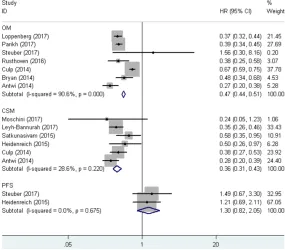
Figure 2. Forest plots of overall mortality (OM), cancer-specific mortality
(CSM) and progression free survival (PFS) in association with RP for mPCa.
and case-control studies in the Newcastle-Ottawa scale [16].
Statistical analysis
A pooled hazard ratio (HR) with 95% CI was computed for all clinical outcomes reported in the enrolled studies by use of Stata software (version 11.0; StataCorp LP, College Station, TX). We employed Cochrane Chi-square χ2
(Cochran Q) statistic and the I2 test to analyze
heterogeneity [17]. I2>50% or Chi-square test
P<0.1 indicated significant heterogeneity. Meta-analysis was performed using the fixed-effects method (Mantel-Haenszel method) or the random-effects method (DerSimonian-Laird method) when significant heterogeneity was not identified [18]. According to treat-ment, different levels of Gleason score, PSA, T-stage, M-stage or ethnicity, the patients were divided into several groups, and subgroup anal-yses were further performed to explore possi-ble heterogeneity then. Moreover, we explored the existence of publication bias in included studies by use of a contour-enhanced funnel plot and Egger’s method to determine other causes of publication bias through the way of examining the symmetry of the plot [19, 20], where P<0.05 indicated the presence of
publi-Characteristics of all the 14 studies were pre-sented in Table 1. All the studies were ob- servational cohort studies published between 2012 and 2017. Of the 14 included studies, 12 articles with 50,037 patients focused on RP vs. NLT and the remaining two with 195 patients focused on NRP vs. NLT. In the 12 studies comparing RP and NLT, most of them focused on one or both of the OM and the CSM, except for Steuber et al. and Heidenreich et al. who concentrated on not only OM or CSM, but also PFS [8, 29]. In the two studies focusing on NRP vs. NLT, one adopted TURP and the other one adopted cryosurgery when taking the sur-vival analysis item into account. Qin et al. focused on OM, CSM and PFS, while Sheng et al. focused on CSM and PFS [12, 21].
OM, CSM and PFS associated with RP for
mPCa
The forest plots on the OM, CSM and PFS asso -ciated with RP for mPCa were shown in Figure 2. Overall, RP was associated with reduction in OM using fixed-effects model (pooled HR=0.47, 95% CI=0.44 to 0.51, P<0.001, I2=90.6%). Meanwhile, these included studies
revealed a prognostic role of RP for mPCa on CSM by fixed-effects model based on moderate cation bias. Further, sensitivi-ty analyses were performed to assess the robustness of pooled estimates.
Results
Characteristics of enrolled studies
heterogeneity (P=0.220, I2=28.6%). RP for
mPCa was associated with decreased CSM (pooled HR=0.36, 95% CI=0.31 to 0.43). Nevertheless, in comparison with NLT, RP did not show any superiority in decreasing PFS using fixed-effects model (pooled HR=1.30, 95% CI=0.82 to 2.05, P=0.675, I2<0.01%).
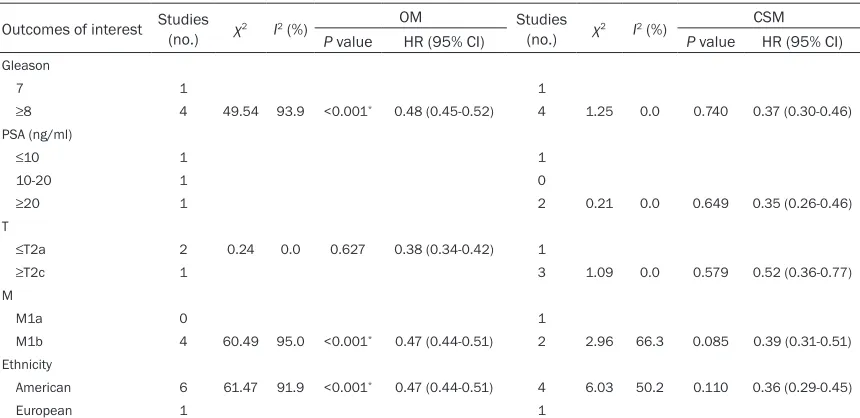
Overall estimates on OM were significantly heterogeneous (P<0.001, I2=90.6%). Subgroup
analyses were carried out by multiple factors, which contained Gleason score, PSA, ethnicity and tumor stage, to explore the possible rea-sons for the heterogeneity. As a result, levels below T2a (pooled HR=0.38, 95% CI=0.34 to 0.42, P=0.627, I2<0.01%) were the possible
two studies, NRP use was associated with increased risk of PFS among patients with mPCa (pooled HR=0.52, 95% CI=0.33 to 0.82, P=0.867, I2<0.01%) (Figure 4).
Publication bias
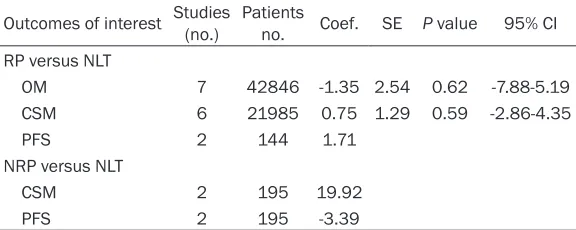
[image:5.612.92.522.83.292.2]The combined application of Begg’s and Egg-er’s test was utilized to evaluate the publica-tion bias. The results of publicapublica-tion bias based on the Egger’s test of RP versus NLT and NRP versus NLT were shown in Table 3. In the pooled analysis of OM associated with RP for mPCa, the p value of Egger’s test was 0.62. Moreover, in the pooled analysis of CSM associated with Table 2. Subgroup analysis of OM and CSM comparisons of RP versus NLT
Outcomes of interest Studies (no.) χ2 I2 (%) OM Studies
(no.) χ2 I2 (%)
CSM
P value HR (95% CI) P value HR (95% CI)
Gleason
7 1 1
≥8 4 49.54 93.9 <0.001* 0.48 (0.45-0.52) 4 1.25 0.0 0.740 0.37 (0.30-0.46)
PSA (ng/ml)
≤10 1 1
10-20 1 0
≥20 1 2 0.21 0.0 0.649 0.35 (0.26-0.46)
T
≤T2a 2 0.24 0.0 0.627 0.38 (0.34-0.42) 1
≥T2c 1 3 1.09 0.0 0.579 0.52 (0.36-0.77)
M
M1a 0 1
M1b 4 60.49 95.0 <0.001* 0.47 (0.44-0.51) 2 2.96 66.3 0.085 0.39 (0.31-0.51)
Ethnicity
American 6 61.47 91.9 <0.001* 0.47 (0.44-0.51) 4 6.03 50.2 0.110 0.36 (0.29-0.45)
European 1 1
Abbreviations: RP, radical prostatectomy; NLT, non-local treatment; OM, overall mortality; CSM, cancer-specific mortality. *Statistically significant.
Figure 3. Forest plots of T subgroup analysis of OM in RP versus NLT.
sources of heterogeneity of OM in RP for mPCa (Table 2 and Figure 3).
CSM and PFS associated with
NRP for mPCa
Only two studies reported CSM and PFS in the compari-son of NRP and NLT. Overall, NRP was associated with reduced risk of CSM using fixed-effects model (pooled HR=0.37, 95% CI=0.20 to 0.68). Meanwhile, overall esti-mates on CSM showed a significant heterogeneity (P= 0.041, I2=76.0%). Moreover,
[image:5.612.92.375.326.515.2]RP for mPCa, the p value of Egger’s test was 0.59. There was no significant publication bias. The funnel figures of OM and CSM for RP versus NLT were shown in Figure 5.
Sensitivity analysis
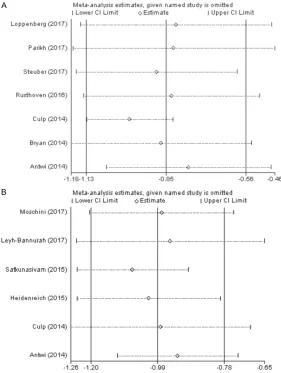
By sequentially deleting one single study each time to reflect the impact of the individual to overall, sensitivity analysis was performed to access the stability of results. No significant differences were detected for any parameters. The robust results of sensitivity analysis of OM and CSM for RP versus NLT were shown in Figure 6.
Discussion
Prostate cancer continues to be the important cause of death among men each year [31]. The
seeding theory suggested that increased circu-lating tumor cells portended a worse overall survival in mPCa, which were the intermediar-ies between primary tumors and metastases [34, 35]. It might be appropriate to reduce overall tumor volume or remove the primary tumor for reducing effects to fatal circulating tumor cells burden in mPCa. Moreover, sup-pression of androgen activity by use of ADT might lead to a dramatically increased sensitiv-ity of tumor cells to androgens, which renders PCa cells survival in a low androgen environ-ment in primary tumor [36]. These hypersensi -tive PCa cells would be the sources of recur-rence and metastasis. Removal of primary tumor could eliminate these PCa cells, leading to improved outcomes. In addition, the tumor microenvironment is a source of continued androgen production, which has the potential
high-risk patients with PCa are those likely to benefit fr-om multi disciplinary interven-tions as they are more likely to have biochemical recurrence after initial treatment [32]. Patients with mPCa have a poor survival rate compared to men with non-metastatic PCa [33]. ADT with or without chemotherapy is traditionally recommended by EAU guide -lines for mPCa. However, no sign of the survival benefit has been definitely demon -strated by use of ADT. Clea-rly, additional therapies for mPCa are urgently needed. There has been strong evi -dence showing improved sur-vival rate in patients undergo-ing cytoreductive surgery in examining other malignan- cies with metastasis [5, 6]. Therefore, interest in the role of cytoreductive prostatecto-my for mPCa has been rising. In recent years, some retro-spective data have suggested survival benefits for such an approach in patients with mPCa.
The potential mechanisms by which cytoreduction in mPCa can improve survival has been explored. Tumor self-Figure 4. Forest plots of cancer-specific mortality (CSM) and progression free
[image:6.612.90.374.70.263.2]survival (PFS) in association with NRP for mPCa.
Table 3. Publication bias based on the Egger’s test of RP versus NLT and NRP versus NLT
Outcomes of interest Studies (no.) Patients no. Coef. SE P value 95% CI
RP versus NLT
OM 7 42846 -1.35 2.54 0.62 -7.88-5.19
CSM 6 21985 0.75 1.29 0.59 -2.86-4.35
PFS 2 144 1.71
NRP versus NLT
CSM 2 195 19.92
PFS 2 195 -3.39
Abbreviations: RP, radical prostatectomy; NLT, non-local treatment; OM, overall mortality; CSM, cancer-specific mortality; NRP, non-radical prostatectomy; PFS,
[image:6.612.91.379.341.456.2]function of driving tumor cells to grow and spread [37]. Removing the primary tumor could mitigate this function.
Local complications are important consider-ations in patients with mPCa. Prevention of local complications should be taken seriously before determining suitable therapeutic approaches. A previous study showed that mPCa patients treated with RP experienced a low complication rate of 0%, while the mPCa patients treated with ADT alone experienced a higher local progression related complication rate of 33% [8]. In addition, Won’s research ret -rospectively compared complication rates of patients with mPCa treated by RP plus ADT and ADT alone [38]. The findings indicated that the
In detection of the relationship between NRP and survival in patients with mPCa, our results revealed that NRP had beneficial effect on CSM and PFS when compared with NLT. In other words, cytoreductive prostatectomy could sig-nificantly reveal survival benefits in mPCa patients. Subsequent publication bias and sen-sitivity analysis manifested the robustness of our study.
It is critical to identify appropriate candidates for cytoreductive prostatectomy in mPCa. Fossati’s study [25] demonstrated that the potential benefits of RP among mPCa patients greatly depended on baseline characteristics and patient selection. Furthermore, Heiden- reich’s study [8] only considered RP in mPCa
complication rate was signifi -cantly lower in patients who initially received RP. These evidences demonstrated the feasibility of RP for mPCa. Another form of cytoreductive prostatectomy is NRP, includ-ing TURP and cryosurgery. These two traditional appr-oaches were safe and effec-tive, which have been impor-tant surgical options to relie- ve complications in patients with prostate cancer [39, 40]. Hence, cytoreductive prosta-tectomy as an approach of local surgery could mitigate the related complications and be feasible in patients with mPCa.
[image:7.612.89.373.70.456.2]In recent years, some retro-spective data have suggested a possible role for cytoreduc-tive prostatectomy in patients with mPCa. However, such an approach has not been rigor-ously evaluated, with contro-versial survival benefits on it. Hence, we carried out a meta-analysis to clarify the merits of cytoreductive prostatecto-my. Our results successfully shed light on the relationship that RP for mPCa was associ-ated with decreased OM and CSM in comparison with NLT. Figure 5. Funnel figures of included studies. A. Overall mortality for radical
prostatectomy versus non-local treatment. B. Cancer-specific mortality for
patients with three or less bone metastases and no bulky lymphadenopathy, indicating that patients with less extent of metastatic disease appeared to benefit most. However, population-based studies reported a survival benefit of RP regardless of tumor metastasis extent [22, 24]. Hence, it is of great significance to identify appropriate candidates for RP in mPCa. In selecting the appropriate NRP patients in mPCa, Sheng’s research [12] identified lower PSA at diagnosis and lower biopsy Gleason score as independent predictive factors of lon-ger PFS.
Importantly, there are several limitations of our meta-analysis. First, in the group of NRP vs. NLT, the fewer studies could be a potential cause for the heterogeneity of CSM in the pooled study estimates. Second, there was a relative high heterogeneity of OM in the group
prostatectomy for mPCa. In addition, well-designed RCTs and comparative studies with long-term follow-up results should be further conducted to elaborate the efficacy in the future.
Disclosure of conflict of interest
None.
Address correspondence to: Dr. Yingli Lin, De-
partment of Urology, Xuzhou Cancer Hospital, Affiliated Hospital of Jiangsu University, Xuzhou, Jiangsu, China. Tel: 15996959302; Fax:
+86-85528553; E-mail: [email protected]
References
[image:8.612.91.372.72.445.2][1] Heidenreich A, Bellmunt J, Bolla M, Joniau S, Mason M, Matveev V, Mottet N, Schmid HP, Figure 6. Sensitivity analysis of included studies. A. Overall mortality for
radi-cal prostatectomy versus non-loradi-cal treatment. B. Cancer-specific mortality
for radical prostatectomy versus non-local treatment.
of RP vs. NLT. Several studies included failed to perform a regression or propensity anal-ysis, therefore, the group of treated and the NLT group perhaps were statistically dif-ferent in several categories such as levels below T2a, per -formance status of patients, comorbidities, dosage of NLT and exclusion of patients because of missing data. Third, the two approaches of cytoreductive prostatectomy might vary in the enrolled studies, which could not be identified in this meta-analy -sis. In addition, the included researches were all cohort studies derived from retro-spective data, which could not have a clear impact on group baseline features as RCTs.
van der Kwast T, Wiegel T and Zattoni F;
European Association of Urology. EAU guide -lines on prostate cancer. Part 1: screening, di-agnosis, and treatment of clinically localised
disease. Eur Urol 2011; 59: 61-71.
[2] Wu JN, Fish KM, Evans CP, Devere White RW
and Dall’Era MA. No improvement noted in overall or cause-specific survival for men pre -senting with metastatic prostate cancer over a 20-year period. Cancer 2014; 120: 818-823. [3] Heidenreich A, Bastian PJ, Bellmunt J, Bolla M,
Joniau S, van der Kwast T, Mason M, Matveev V, Wiegel T, Zattoni F and Mottet N; European
Association of Urology. EAU guidelines on pros -tate cancer. Part II: treatment of advanced, re-lapsing, and castration-resistant prostate
can-cer. Eur Urol 2014; 65: 467-479.
[4] Wiegand LR, Hernandez M, Pisters LL and Spiess PE. Surgical management of lymph-node-positive prostate cancer: improves
symp-tomatic control. BJU Int 2011; 107:
1238-1242.
[5] Flanigan RC, Mickisch G, Sylvester R, Tangen
C, Van Poppel H and Crawford ED. Cytoreductive nephrectomy in patients with metastatic renal
cancer: a combined analysis. J Urol 2004; 171:
1071-1076.
[6] Bookman MA. Optimal primary therapy of ovar-ian cancer. Ann Oncol 2016; 27 Suppl 1: i58-i62.
[7] Kim MY, Oskarsson T, Acharyya S, Nguyen DX, Zhang XH, Norton L and Massague J. Tumor
self-seeding by circulating cancer cells. Cell 2009; 139: 1315-1326.
[8] Heidenreich A, Pfister D and Porres D.
Cytoreductive radical prostatectomy in pa-tients with prostate cancer and low volume skeletal metastases: results of a feasibility and
case-control study. J Urol 2015; 193: 832-838.
[9] Faiena I, Singer EA, Pumill C and Kim IY. Cytoreductive prostatectomy: evidence in sup-port of a new surgical paradigm (Review). Int J Oncol 2014; 45: 2193-2198.
[10] Mathieu R, Korn SM, Bensalah K, Kramer G and Shariat SF. Cytoreductive radical prosta-tectomy in metastatic prostate cancer: does it
really make sense? World J Urol 2017; 35:
567-577.
[11] Loppenberg B, Dalela D, Karabon P, Sood A, Sammon JD, Meyer CP, Sun M, Noldus J,
Peabody JO, Trinh QD, Menon M and Abdollah F. The impact of local treatment on overall sur -vival in patients with metastatic prostate can-cer on diagnosis: a national cancan-cer data base
analysis. Eur Urol 2017; 72: 14-19.
[12] Sheng MX, Wan LL, Liu CM, Liu CX and Chen
SS. Cytoreductive cryosurgery in patients with bone metastatic prostate cancer: a retrospec-tive analysis. Kaohsiung J Med Sci 2017; 33: 609-615.
[13] Moschini M, Morlacco A, Kwon E, Rangel LJ
and Karnes RJ. Treatment of M1a/M1b pros -tate cancer with or without radical pros-tatec- prostatec-tomy at diagnosis. Prostate Cancer Prostatic Dis 2017; 20: 117-121.
[14] Williamson PR, Smith CT, Hutton JL and
Marson AG. Aggregate data meta-analysis with time-to-event outcomes. Stat Med 2002; 21: 3337-3351.
[15] Tierney JF, Stewart LA, Ghersi D, Burdett S and
Sydes MR. Practical methods for incorporating summary time-to-event data into
meta-analy-sis. Trials 2007; 8: 16.
[16] Wells GA, Shea B, O’Connell D, Peterson J,
Welch V, Losos M and Tugwell P. The
Newcastle-Ottawa Scale (NOS) for assessing the quality of nonrandomised studies in meta-analyses. 1999.
[17] Van Houwelingen HC, Arends LR and Stijnen T.
Advanced methods in meta-analysis: multivari-ate approach and meta-regression. Stat Med 2002; 21: 589-624.
[18] DerSimonian R and Laird N. Meta-analysis in
clinical trials. Control Clin Trials 1986; 7:
177-188.
[19] Deeks JJ, Macaskill P and Irwig L. The perfor -mance of tests of publication bias and other sample size effects in systematic reviews of diagnostic test accuracy was assessed. J Clin Epidemiol 2005; 58: 882-893.
[20] Peters JL, Sutton AJ, Jones DR, Abrams KR and Rushton L. Contour-enhanced meta-analysis funnel plots help distinguish publication bias from other causes of asymmetry. J Clin Epidemiol 2008; 61: 991-996.
[21] Qin XJ, Ma CG, Ye DW, Yao XD, Zhang SL, Dai B, Zhang HL, Shen YJ, Zhu Y, Zhu YP, Shi GH, Xiao WJ, Lin GW and Swanson GP. Tumor cytoreduc -tion results in better response to androgen ablation--a preliminary report of palliative transurethral resection of the prostate in met-astatic hormone sensitive prostate cancer.
Urol Oncol 2012; 30: 145-149.
[22] Antwi S and Everson TM. Prognostic impact of definitive local therapy of the primary tumor in
men with metastatic prostate cancer at diag-nosis: a population-based, propensity score analysis. Cancer Epidemiol 2014; 38: 435-441.
[23] Bryan RT, Kirby R and Mostafid H. Does the nonurologic scientific community understand urothelial bladder cancer? Eur Urol 2014; 66:
601-602.
[24] Culp SH, Schellhammer PF and Williams MB. Might men diagnosed with metastatic prostate
cancer benefit from definitive treatment of the primary tumor? A SEER-based study. Eur Urol
2014; 65: 1058-1066.
[25] Fossati N, Trinh QD, Sammon J, Sood A,
Montorsi F, Briganti A, Menon M and Abdollah F. Identifying optimal candidates for local treat-ment of the primary tumor among patients di-agnosed with metastatic prostate cancer: a
SEER-based study. Eur Urol 2015; 67: 3-6.
[26] Satkunasivam R, Kim AE, Desai M, Nguyen MM, Quinn DI, Ballas L, Lewinger JP, Stern MC, Hamilton AS, Aron M and Gill IS. Radical pros-tatectomy or external beam radiation therapy
vs no local therapy for survival benefit in meta -static prostate cancer: a SEER-medicare
analy-sis. J Urol 2015; 194: 378-385.
[27] Rusthoven CG, Jones BL, Flaig TW, Crawford ED, Koshy M, Sher DJ, Mahmood U, Chen RC, Chapin BF, Kavanagh BD and Pugh TJ.
Improved survival with prostate radiation in ad-dition to androgen deprivation therapy for men with newly diagnosed metastatic prostate can-cer. J Clin Oncol 2016; 34: 2835-2842. [28] Parikh RR, Byun J, Goyal S and Kim IY. Local
therapy improves overall survival in patients with newly diagnosed metastatic prostate can-cer. Prostate 2017; 77: 559-572.
[29] Steuber T, Berg KD, Roder MA, Brasso K, Iversen P, Huland H, Tiebel A, Schlomm T, Haese A, Salomon G, Budaus L, Tilki D, Heinzer
H, Graefen M and Mandel P. Does cytoreduc-tive prostatectomy really have an impact on prognosis in prostate cancer patients with low-volume bone metastasis? Results from a
pro-spective case-control study. Eur Urol Focus
2017; 3: 646-649.
[30] Leyh-Bannurah SR, Gazdovich S, Budaus L, Zaffuto E, Briganti A, Abdollah F, Montorsi F, Schiffmann J, Menon M, Shariat SF, Fisch M,
Chun F, Steuber T, Huland H, Graefen M and
Karakiewicz PI. Local therapy improves
surviv-al in metastatic prostate cancer. Eur Urol 2017;
72: 118-124.
[31] Siegel R, Ma J, Zou Z and Jemal A. Cancer sta-tistics, 2014. CA Cancer J Clin 2014; 64: 9-29. [32] Bremer M. Radical prostatectomy versus
observation for localized prostate cancer. Strahlenther Onkol 2012; 188: 1159-1160. [33] SEER Cancer Statistics Review, 1975-2010.
National Cancer Institute. Bethesda; 2013.
[34] Shao YH, Kim S, Moore DF, Shih W, Lin Y, Stein
M, Kim IY and Lu-Yao GL. Cancer-specific sur -vival after metastasis following primary radical prostatectomy compared with radiation thera-py in prostate cancer patients: results of a population-based, propensity score-matched
analysis. Eur Urol 2014; 65: 693-700.
[35] Goldkorn A, Ely B, Quinn DI, Tangen CM, Fink LM, Xu T, Twardowski P, Van Veldhuizen PJ,
Agarwal N, Carducci MA, Monk JP 3rd, Datar RH, Garzotto M, Mack PC, Lara P Jr, Higano CS,
Hussain M, Thompson IM Jr, Cote RJ and
Vogelzang NJ. Circulating tumor cell counts are prognostic of overall survival in SWOG S0421: a phase III trial of docetaxel with or without atrasentan for metastatic castration-resistant prostate cancer. J Clin Oncol 2014; 32: 1136-1142.
[36] Mostaghel EA, Page ST, Lin DW, Fazli L, Coleman IM, True LD, Knudsen B, Hess DL,
Nelson CC, Matsumoto AM, Bremner WJ, Gleave ME and Nelson PS. Intraprostatic an-drogens and androgen-regulated gene expres-sion persist after testosterone suppresexpres-sion: therapeutic implications for castration-resis-tant prostate cancer. Cancer Res 2007; 67: 5033-5041.
[37] Negri-Cesi P and Motta M. Androgen metabo-lism in the human prostatic cancer cell line LNCaP. J Steroid Biochem Mol Biol 1994; 51: 89-96.
[38] Won AC, Gurney H, Marx G, De Souza P and Patel MI. Primary treatment of the prostate im-proves local palliation in men who ultimately develop castrate-resistant prostate cancer.
BJU Int 2013; 112: E250-255.
[39] Nguyen HD, Allen BJ and Pow-Sang JM. Focal cryotherapy in the treatment of localized pros-tate cancer. Cancer Control 2013; 20: 177-180.
[40] Pelletier J, Cyr SJ, Julien AS, Fradet Y, Lacombe
L and Toren P. Contemporary outcomes of pal -liative transurethral resection of the prostate in patients with locally advanced prostate