EFFECT OF MONETARY INCENTIVES ON WORKERS’ PERFORMANCE A STUDY OF
SELECTED FIRMS IN ANAMBRA STATE
Dike Lotanna, Okeke
Department of Business administration, Chukwuemeka Odumegwu Ojukwu University, Igbariam
ARTICLE INFO ABSTRACT
This research work examined the
particular reference to selected firms in Anambra state. This research work became necessary following incessant conflict in the organization as a result of the incentive scheme. Relevant literatur relating to the monetary incentives and workers performance were reviewed. The firms selected for the study was drawn from the three senatorial districts of Anambra state. The population used for the study was 1019; a sample size of 287 using taro Yamane
the study. The principal instrument for collection of primary data was the questionnaire which was structured in five point likert scale. A content validity approach was adopted. The test retest method was used f
acceptable degree of consistency. Data collected were presented in tables using frequency and percentages. The Pearson product moment correlation coefficient was u
T-test for test of significance at 0.05 was adopted to equally estimate for the significance of the coefficient and to ascertain whether the claim of the null or alternative hypothesis would still remain valid after the test.
incentives and workers performance. The study therefore recommended that incentives preferences of employees should be considered in the distribution of reward types to deserving e
maximum employee performance.
Copyright©2016, Dike Lotanna et al. This is an open access article distributed under the Creative Commons Att distribution, and reproduction in any medium, provided the original work is properly cited.
INTRODUCTION
Organizational performance is a complex phenomenon largely affected by the ability and motivation of the
firm. One of the major problems facing most employers in both public and private sector is how to motivate their employees in order to improve performance. Economics is largely based on the assumption that monetary incentives improve performance (Igbaekemem, 2014). Thus, employees of an organization have motives and inner desires that are expressed in the form of actions and efforts towards job roles to meet their needs. Employee motivation is the level of energy, commitment, and creativity that a company's workers apply to their job (Ebrurajolo, 2004). The issue of employee performance cannot be over emphasized. The most important thing for an organization is the devotion and loyalty of its employees, which is achieved if the employees are
better rewards. Rewards are highly concerned to overcome dissatisfaction and to increase performance of employees (Mehta, 2014).
*Corresponding author: Mbah Stella, I.
Department Of Business Administration, Chukwuemeka Odumegwu Ojukwu University, Igbariam.
ISSN: 0975-833X
Article History: Received 08th July, 2016
Received in revised form 14th August, 2016
Accepted 19th September, 2016
Published online 30th October,2016
Key words: Monetary Incentives, Workers’ Performance, Motivation, Organizational Objectives, Resources.
Citation: Dike Lotanna, Okeke Goodfaith and Mbah Stella, I. anambra state”, International Journal of Current Research
RESEARCH ARTICLE
EFFECT OF MONETARY INCENTIVES ON WORKERS’ PERFORMANCE A STUDY OF
SELECTED FIRMS IN ANAMBRA STATE
Dike Lotanna, Okeke Goodfaith and *Mbah Stella,
dministration, Chukwuemeka Odumegwu Ojukwu University, Igbariam
ABSTRACT
This research work examined the effect of monetary incentives on workers’ performance with particular reference to selected firms in Anambra state. This research work became necessary following incessant conflict in the organization as a result of the incentive scheme. Relevant literatur relating to the monetary incentives and workers performance were reviewed. The firms selected for the study was drawn from the three senatorial districts of Anambra state. The population used for the study was 1019; a sample size of 287 using taro Yamane formulae which was considered adequate for the study. The principal instrument for collection of primary data was the questionnaire which was structured in five point likert scale. A content validity approach was adopted. The test retest method was used for the reliability test. The result gave a reliability coefficient of 73% which indicated an acceptable degree of consistency. Data collected were presented in tables using frequency and percentages. The Pearson product moment correlation coefficient was u
test for test of significance at 0.05 was adopted to equally estimate for the significance of the coefficient and to ascertain whether the claim of the null or alternative hypothesis would still remain valid after the test. The result shows that there is a significant relationship between monetary incentives and workers performance. The study therefore recommended that incentives preferences of employees should be considered in the distribution of reward types to deserving e
maximum employee performance.
is an open access article distributed under the Creative Commons Attribution License, which distribution, and reproduction in any medium, provided the original work is properly cited.
Organizational performance is a complex phenomenon largely affected by the ability and motivation of the workforce in any firm. One of the major problems facing most employers in both public and private sector is how to motivate their employees in order to improve performance. Economics is largely based on the assumption that monetary incentives rmance (Igbaekemem, 2014). Thus, employees of an organization have motives and inner desires that are expressed in the form of actions and efforts towards job roles to meet their needs. Employee motivation is the level of that a company's workers The issue of employee performance cannot be over emphasized. The most important thing for an organization is the devotion and loyalty of its employees, which is achieved if the employees are paid with better rewards. Rewards are highly concerned to overcome dissatisfaction and to increase performance of employees
Department Of Business Administration, Chukwuemeka Odumegwu
In most business and other organizations, money is actually used in keeping an organization adequately staffed and not primarily as a motivator. Any bonus scheme for manual workers should be related to criteria which are meaningful the employees and which are capable of being measured consistently. The incentive to achieve one particular objective for example, increased volume, should not act as an incentive to worsen other standards of achievement like quality. It is therefore, important to know what induces a worker most, as many people have different needs and aspirations.
fact that reward management has received substantial research attention, this has dwelt more on developed and
economies (Carton, 2004; San, Theen,
little done in the developing economies (Agwu, 2013).
researchers have come up with various ways to motivate people at work. However, because human beings are different from one another in terms of needs, culture, re
does what motivates them also varies. Some employees are motivated by financial and other incentives and some non financial incentives. Managers continuously seek for ways to create a motivating environment where employees will work at their optional levels to achieve the organizational objectives. Since human resource is the most valuable resource of any organization, it must activate, train, develop and above all
International Journal of Current Research
Vol. 8, Issue, 10, pp.40151-40160, October, 2016
INTERNATIONAL
Dike Lotanna, Okeke Goodfaith and Mbah Stella, I., 2016. “Effect of monetary incentives on workers’ performance a study of selected firms in
International Journal of Current Research, 8, (10), xxxxxxxxxxxx.
EFFECT OF MONETARY INCENTIVES ON WORKERS’ PERFORMANCE A STUDY OF
I.
dministration, Chukwuemeka Odumegwu Ojukwu University, Igbariam
effect of monetary incentives on workers’ performance with particular reference to selected firms in Anambra state. This research work became necessary following incessant conflict in the organization as a result of the incentive scheme. Relevant literature relating to the monetary incentives and workers performance were reviewed. The firms selected for the study was drawn from the three senatorial districts of Anambra state. The population used for the formulae which was considered adequate for the study. The principal instrument for collection of primary data was the questionnaire which was structured in five point likert scale. A content validity approach was adopted. The test retest method or the reliability test. The result gave a reliability coefficient of 73% which indicated an acceptable degree of consistency. Data collected were presented in tables using frequency and percentages. The Pearson product moment correlation coefficient was used to test the hypotheses and test for test of significance at 0.05 was adopted to equally estimate for the significance of the coefficient and to ascertain whether the claim of the null or alternative hypothesis would still remain The result shows that there is a significant relationship between monetary incentives and workers performance. The study therefore recommended that incentives preferences of employees should be considered in the distribution of reward types to deserving employees for
ribution License, which permits unrestricted use,
In most business and other organizations, money is actually used in keeping an organization adequately staffed and not primarily as a motivator. Any bonus scheme for manual workers should be related to criteria which are meaningful to the employees and which are capable of being measured consistently. The incentive to achieve one particular objective for example, increased volume, should not act as an incentive to worsen other standards of achievement like quality. It is mportant to know what induces a worker most, as many people have different needs and aspirations. Despite the nt has received substantial research n, this has dwelt more on developed and emerging n, Theen, and Heng, 2012), with little done in the developing economies (Agwu, 2013). Various researchers have come up with various ways to motivate people at work. However, because human beings are different from one another in terms of needs, culture, religion etc. so does what motivates them also varies. Some employees are motivated by financial and other incentives and some non-financial incentives. Managers continuously seek for ways to create a motivating environment where employees will work at optional levels to achieve the organizational objectives. Since human resource is the most valuable resource of any organization, it must activate, train, develop and above all
INTERNATIONAL JOURNAL OF CURRENT RESEARCH
motivate in order to achieve individual and organizational goals. Monetary rewards as a motivator is high in developing countries due to high cost of living and low quality of lives which they are facing. Most activities of man are related to making money. To this extent, money is the most critical incentive to work but when money is taken away, how many people will continue to work in Nigeria today? In Nigeria, employee in both public and private sectors are sometimes owed between 3-6 months ‘salary and yet they have not resigned, but continue to work because they know they will be paid and not because they so much value the job. The truth here is that primarily, people are motivated by economic rewards. It is believed that man, if motivated will go extra mile in satisfying his employer. All organizations are concerned with what should be done to achieve sustained high levels of performance through people. Consequently the subject of adequate motivation of workers as derived from the so many attempts made by management practitioner is to look for the best way to manage so as to accomplish an objective or mission with the least inputs of materials and human resources available (Ehiorobo, 2004).
Statement of the problem
There have been several problems associated with monetary incentives on workers’ performance on the part of workers and managers in various business organizations. These are;Poor incentives package which have been a major factor affecting employees’ commitment and productivity, employees lack of willingness to increase their performance because they feel that their contributions are not well recognized by their organizations and Management lacks the necessary skills that could help in the formulation of a good monetary incentive policy. The success and the survival of any organization are determined by the way the workers are remunerated and rewarded (Lawler, 2003). The reward system and motivating incentives will determine the level of employees’ commitment and their attitude to work. According to Kreitner and Kinicki (2007), incentives are the compensation for doing work well given to a worker in the form of both financial and non-financial incentives. However, for any organization to achieve its objective in any competitive society, employers of labour must have a thorough understanding of what drives the employees to perform efficiently and reward them accordingly. There is rising need for organizations to develop reward systems that motivate staff to work hard. To this effect, this study attempts to critically analyze the effect of monetary incentives on workers performance in firms within the three senatorial districts of Anambra State.
Objectives of the study
The main aim of the study is to examine the effect of monetary incentives on worker’s performance. The specific objectives are:
To ascertain if there is a relationship between salary, wages and workers performance.
To determine if special benefits have an effect on workers performance.
To assess the extent of relationship between bonuses and job performance.
To ascertain if there is a relationship between commission and worker’s performance.
Research questions
The following research questions were formulated to achieve the objectives of the study:
1.Does salary and wages have a motivating potential in increasing worker’s performance in an organization?
2.Do special benefits have an effect on workers performance? 3.What is the extent of relationship bonuses and worker’s performances?
4.Is there is a relationship between commission and worker’s performance?
Research hypotheses
The following null hypotheses were formulated to guide this study:
Hypothesis One
Ho1: salary and wages have no significant effect on worker’s
performance.
Hypothesis Two
Ho2: special benefits have no significant effect on worker’s
performance.
Hypothesis Three
Ho3: There is no significant relationship between bonuses and
workers performance.
Hypothesis Four
HO4: There is no significant relationship between commission
and workers performance.
Review of related literature
Concept of Monetary Incentives
high-level needs (Long and Shields, 2010). In this study, financial incentives are designed to motivate employees to improve their performance to increase effort and output and by producing better results expressed in such terms as objectives for profit, productivity, sales turnover, cost reduction, quality customer service and on time delivery. This financial compensation provides extra money for achievement in terms of contribution or output. The emphasis in financial compensation is on equity, in the sense of paying people according to their just deserts. For example, monetary rewards provide employees with the means to enhance the well-being of their families, as well as pay for leisure activities with friends and colleagues, thereby helping satisfy the higher-level need to belong in groups. Employees can also use monetary rewards to purchase status symbols such as bigger houses (satisfying the higher level need for respect from others) and pursue training, development, or higher education (satisfying the higher-level need for achieving mastery).
Theoretical literature
Salary and wage and its effect on workers performance
While many workers claim that job satisfaction and a sense of purpose drive their productivity, salary also plays a distinctive role in how well your employees perform. Workers have a wide range of reasons for heading to the office, factory or farm every day, but monetary compensation is generally at the top of the list (Linda, 2016).The determination of wages is a central concern in labor economics, and a long standing tradition emphasizes the wage policy of the firm (Paul, 2009). The key is to structure compensation optimally to get maximum productivity from workers, acknowledging that talented employees must be rewarded and retained in competitive job markets. People are often motivated by money. It is argument that mostly individuals that get higher education are not satisfied their jobs. This has made organizations design a good compensation plan to retain and motivate their employees. The salary a worker is paid by his employer can have a great influence on his performance in the administration. A worker doesn’t simply view his salary as an amount; he sees it as the value his employer places on him as a worker. The level of appreciation he feels can have a direct impact on his overall performance (Laura, 2016). Although psychologists point to the inherent value of work to human beings and identify the beneficial impact it has on their wellbeing, the rational economic behavioral model underpinning labour economics equates effort with disutility. As such, economists assume employees are motivated by monetary rewards (Alex, Babatunde and Rob, 2010). A worker is more likely to perform to his potential if he’s happy with the salary he is earning. A person earning a high salary feels motivated to do a good job, because he wants to please his employer to retain his position. His salary brings him a feeling of security, allows him to feel accomplished and gives him a high status ranking that he enjoys. A person is much more willing to put in extra hours at the office if he feels his financial rewards are a fair trade-off. According to Zeynep Ton, a professor at the MIT Sloan School of Management, research has shown that an employee satisfied with his pay is more productive and motivated. When a company doesn’t pay its employees well, the general office morale is low. Many workers may need to get second job to make ends meet, which leaves them tired, overworked and resentful. Performance rates are typically low; as workers feel little motivation to exceed
standards and absentee rates tend to be high. Employee turnover in these companies is often very high, as people don’t want to work for a company paying below industry standards. Meyer et al. (2001) implies that a well-constructed compensation package will enhance productivity through attraction of higher levels of talent, increased effort, and reduced turnover.
Effect of special benefits on workers satisfaction
No resource is more critical to an organization’s success than its human resources (DeNisi and Griffin, 2008); people are the only strategic weapon a company has that cannot be copied by its competition (DeCenzo and Robbins, 2010,). Employee benefits have a small role to play in engagement; they tend to be more effective on recruitment and retention. Benefits are what management theorist Frederick Hertzberg would call a ‘hygiene factor’. The idea is that if you don’t give people enough hygiene factors they will be demotivated, but not necessarily motivated. You don’t necessarily get anything back by being overly competitive or giving people additional provision on benefits, or indeed pay. But if you fail to meet their needs personally or if you fail to be competitive in the marketplace then you are screwed. So not offering benefits can damage business performance and affect the ability to compete for recruits, and perhaps chock off access to key talent; but offering them does not directly drive business growth. As with all business and human capital strategies, what and how you offer benefits depends on your particular workforce’s business drivers. For example, such as Job training, educational assistance, meals that are provided for the convenience of the employer, and employer-provided vehicles used for business are among the common working condition benefits for most small businesses. Currently, especially in the developed world, employee benefits packages have become an important part of the total compensation or organizational expenses. Employee benefits average 40% of the total compensation package (DeCenzoand Robbins, 2010). Benefits have grown in size, importance and variety (DeCenzo and Robbins, 2010; Edgar and Geare, 2005; Milkovich and Newman, 2008), and the U.S. Chamber of commerce, concludes that employee benefits are one of the greatest challenges in business today in attracting and retaining quality employees (U.S. Chamber of Commerce, 2008). This growth suggests that employees increasingly value employee benefits as part of their overall compensation package (Mussie, Kathryn and Abel, 2013)
Effect of bonuses on workers performance
Performance Bonus
Employers pay performance bonuses to employees who achieve satisfactory or high ratings during their annual performance appraisals. An incentive-based bonus links the amount of the payment to the level of performance.
Year-End Bonus
Employers who provide year-end or holiday bonuses don't necessarily connect performance ratings to the amount of the bonus, but it's probably safe to assume that company leadership would like to think they are rewarding employees who perform well. For year-end or holiday bonuses, employees generally receive the same amount, regardless of position, tenure, salary level or performance rating. This type of bonus really has no effect on performance because it's the type of bonus that's customary at the same time each year.
Profit-Sharing Bonus
Employees who receive profit-sharing bonuses depend on the organization meeting its service or profitability goals for the year.
Discretionary Bonus
Most employers qualify their policy by stating the bonus is discretionary, meaning they cannot promise an employee will always receive a bonus or that business conditions may dictate the amount of employee bonuses. Some of these bonuses also are tied to employee performance, which means the possibility of a bonus becomes an incentive for many employees. On the other hand, companies that experience ups and downs in revenue can provide employees with notice sometime during the year that the company will be unable to reward employees by paying bonuses on top of their salaries. The result is that employees who realize they are the company's most valuable resource will continue to strive for high performance ratings regardless of whether they are anticipating a bonus because they are intrinsically motivated to do good work. Other employees will do just enough work to earn satisfactory ratings.
Effect of Commission on Workers Performance
Properly designed sales commissions are widely used to motivate sales employees. The blend of straight salary and commissions should be carefully balanced to achieve optimum sales volume, profitability, and customer satisfaction. The commission plan is different for every role and for every department. Commission beyond sales to customers is the commission paid to sales personnel which are aligned with the organization’s strategy and core competencies. As a result, besides sales volume, the commission is determined by customers’ satisfaction and sales team outcomes such as meeting revenue or profit goals. In many companies, the paycheck of sales employees is a combination of a base salary and commissions. Sales commissions involve rewarding sales employees with a percentage of sales volume or profits generated. Sales commissions should be designed carefully to be consistent with company objectives. For example, employees who are heavily rewarded with commissions may neglect customers who have a low probability of making a
quick purchase. If only sales volume (as opposed to profitability) is rewarded, employees may start discounting merchandise too heavily, or start neglecting existing customers who require a lot of attention. Therefore, the blend of straight salary and commissions needs to be managed carefully. Pay for some jobs are based entirely on individual incentives. However, because of the risk factor, in the uncertain economy of recent years many companies have instituted a combination payment system plan in which individual receives a guaranteed amount of money regardless of how the person performs. So a sales person might be paid 10 percent of all sales with minimum guarantee per month. Another popular approach is to give the person a combination salary/incentive plus 5 percent of all sales. A third approach is to give the person a “drawing amount” against which the individual can take money and then repay it out of commissions (Luthans, 2005).
Theoretical framework
The theoretical foundation of this study is anchored in Herzberg two factor model and expectancy theory of work motivation. Although there are many competing theories of motivation, these theories may all be at least partially true and help to explain the behaviour of certain people in specific times. Reviewing these theories of motivation facilitates our understanding of how monetary and non-monetary Incentives can motivate employees to perform in organizational setting. Herzberg two factor model of employee motivation is one of the widely discussed need-based theories of employee motivation. Fredrick Herzberg Two-Factor Theory is the aftermath of landmark study of 203 accountants and engineers interviewed to determine factors responsible for job satisfaction and dissatisfaction. According to Werner and Desimone (2006), Herzberg claimed that people have two sets of basic needs, one focusing on survival and another focusing on personal growth. Herzberg contended that factors in the workplace that satisfy survival needs or hygiene factors, cannot provide job satisfaction but only prevent dissatisfaction. These hygiene factors are pay and security, working conditions, interpersonal relationship, company policy and supervisor. The personal growth factors he considered as motivators are achievement, recognition, the work itself, responsibility, advancement and growth. Herzberg argued that the motivator factors create feelings of job satisfaction but their absence will not necessarily lead to job dissatisfaction. Herzberg two-factor model implies that management must not only provide hygiene factors to avoid dissatisfaction but also must provide motivators (intrinsic factors) for the job itself to have motivating potential. Their motivation-hygiene theory constitutes a good framework for the validity of the argument that non-monetary incentives can be as effective as monetary incentives in the motivation of personnel.
consequence; valence means the extent to which an employee values a particular consequence. The implications of their theory is that if an employee believes that no matter how hard he works he will never reach the necessary level of performance, then his motivation will probably be low in respect of expectancy. As regards instrumentality, the employee will be motivated only if his behavior results in some specific consequence. If he works extra hour, he expects to be incentives while for valence, if an employee is rewarded, the incentives must be something he values.
Empirical review
Al-Nsour (2012) examined the relationship between incentives and organizational performance for employees in the Jordanian universities. This study aims at identifying the role of the Jordanian universities in meeting the employees' societal needs, knowing the implemented incentives approach and knowing the level of performance in the Jordanian universities. Statistical Packages for Social Sciences (SPSS) program were used for descriptive analysis. Five universities were selected for the purpose of this study. The main findings indicate that there is an adequate level of incentives provided to employees. Financial incentives ranked in 1st place while moral incentives ranked in the 2nd place. Also, it was found that there is a high level of organizational performance. Customer satisfaction ranked in the 1st place, internal business process in the 2nd place followed by learning and growth. There is relationship between financial and moral incentives and organizational performance as well as between financial and moral incentives and internal business process and customer satisfaction. There is an effect of moral incentives on learning and growth but there is no relationship between financial incentives and learning and growth.
Falola et al (2014) examined incentives packages and employees’ attitudes to work: a study of selected government parastatals in Ogun State, South-West, Nigeria. A descriptive research method was adopted for this study using one hundred twenty valid questionnaires which were completed by members of staff of four (4) selected government parastatals in Ogun State, South-West Nigeria using stratified and systematic sampling technique. The data collected were carefully analyzed using percentage supported by standard deviation to represent the raw data in a meaningful manner. The results show that strong relationship exists between incentives packages and employees’ attitudes towards work and the workers are not satisfied with the present incentives packages. The summary of the findings indicates that there is strong correlation between the tested dependent variable and independent construct. Ahmed and Ali (2008) carried out a research on the “impact of reward and recognition programs on employee motivation and satisfaction”. Research design used was exploratory. Sample chosen for the study was 80 employees of Unilever companies and data collection instrument used was a questionnaire. Pearson’s correlation was used to analyze data to determine the degree of relationship between reward and satisfaction and motivation. Major findings indicated a positive relationship between rewards and work satisfaction as well as motivation. Factors affecting satisfaction were identified; payment 86%, promotion 74%, works conditions 61%, personal 37%. Analysis showed support for a positive relationship between reward and employee satisfaction. The researchers recommended that further studies can be done on ‘impact of reward and
recognition on motivation and satisfaction for diverse groups of people’ example gender, race and disability. Abubakar (2013) studied employees monetary and the profitability to banks in Nigeria. This study evaluates the impact of employees’ monetary motivation on the profitability of banks Nigeria. The study employed historical and descriptive research methods and data were collected from secondary sources. The data collected were analyzed using correlation and regression analyses and t-test of significance. The findings revealed that employees’ monetary motivations have significant impact on the profitability of Nigerian banks.
Duberg and Mollen (2010) undertook a study on reward systems within the health and geriatric care sector. The problem of the study was how reward systems designed in health and geriatric care are and whether the current reward systems affect the care quality. The thesis aimed to extend the knowledge of reward systems in health and geriatric care and know how these systems are designed and what their effects on quality of health and geriatric care are. The methodology took a qualitative approach and interviewed a sample of six leaders in both private and public organizations. Two of the leaders worked in geriatric care and four in health care. The theoretical framework was based on scientific literature about motivation and reward systems. Also literature specifically about wage conditions in the health care sector and the public sector was used. Findings showed that salary is an important aspect in the reward system; however other incentives like bonuses and shares were seen to generate an enjoyable work place and happy workers than motivate employees to be more efficient. Results showed that conditions for working with reward systems in the public sector are limited due to the lack of resources and complex large organization structures with old traditions. This must be reconsidered to be able to work with well-designed reward systems similar to those in private care organizations. The researcher recommended that further studies should be done to compare reward system and investigate its impact on an organization in relation with one that does not. Baxelsson and Bokedal (2009) did a study on rewards – motivating different generations at Volvo Car Corporation. The thesis was based on a case study of Volvo Car Corporation in Göteborg. Empirical data was based on twenty Interviews with managers at the company. Major findings showed that challenging work and non-monetary rewards motivate managers, bonuses and shares are not very motivating. Titles are not motivational at all. However, opportunities for growth are motivating for both generations. It was concluded that there exists generational differences. However, both generations considered salary as important and non-monetary rewards to be of great importance. The authors recommended research to be carried out on reward systems and how they impact on other interesting aspects like gender, life stage.
highest contribution to boost the job performance of employees in Babcock University. Muogbo (2013) studied the impact of employees’ motivation on organizational performance; a study of some selected firms in Anambra state Nigeria. The study used descriptive statistics (frequencies, mean, and percentages) to answer three research questions posed for the study. The spearman rank correlation coefficient was used to test the three hypotheses that guided the study. The result obtained from the analysis showed that there is an existing relationship between employees’ motivation and organizational performance. The study revealed that extrinsic motivation given to workers on an organization has a significant influence on the workers performance.
MATERIALS AND METHODS
The population consists of the staff of Juhel Pharmaceutical Limited, Ibeto Groups Limited, Eastern Distillers West Africa Limited, Onitsha, Cutix cable manufacturing industry limited, Nnewi, Life breweries, Onitsha, Innoson groups of company, Nnewi and Millennium industries limited, Awka. From available record in these organizations, their total staff strength is One thousand and nineteen (1,019). Taro Yamane will be the formula used for determining sample size and it was estimated to about 287. Random sampling technique was used for the selection of the respondents. Information was gathered from respondents through close-ended structured questionnaires.
The questionnaire was divided into two parts i.e. demographic characteristics of the respondents and the analysis of the survey questions on effective communication. It followed thelikert attitudinal ordinal measurement scale of; strongly agreed (SA) = 5points, Agreed (A) = 4 points, Undecided (UD) = 3 Points, Disagreed (D) = 2 points, strongly agreed (SD) = 1 point. The reliability of the questionnaire that was used for data collection was also tested. This was done by administering twenty (20) copies of it to twenty (20) lecturers in federal polytechnic, Oko. Also, the same set of questionnaire was administered to the same institution after a two-week interval and it was discovered that the responses was similar in two cases, and it also proves that the instrument has the quality of consistency and therefore reliable for the study. The resulting sets of responses from the sample were analyzed using spearman rank order correlation coefficient and the sectional coefficients and the average were respectively 0.88, 0.68, 0.80, and 0.74. The implication of this result is that the respondents were 74% consistent in their opinions on the issues surrounding the study.
Presentation, analysis and interpretation of data
Socio-Economic Profile of the Respondents
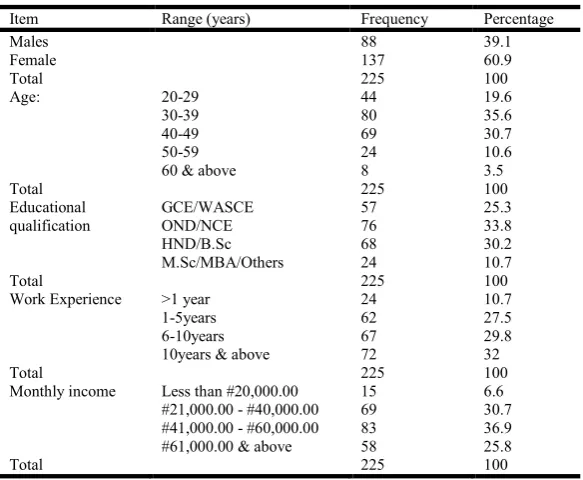
[image:6.595.156.448.407.647.2]This table is the analysis of the socio-economic profile of the staff of the three firms under study in Anambra state.
Table 1. Demographic data of respondents
Item Range (years) Frequency Percentage
Males 88 39.1
Female 137 60.9
Total 225 100
Age: 20-29 30-39 40-49 50-59 60 & above
44 80 69 24 8
19.6 35.6 30.7 10.6 3.5
Total 225 100
Educational qualification
GCE/WASCE OND/NCE HND/B.Sc M.Sc/MBA/Others
57 76 68 24
25.3 33.8 30.2 10.7
Total 225 100
Work Experience >1 year 1-5years 6-10years 10years & above
24 62 67 72
10.7 27.5 29.8 32
Total 225 100
Monthly income Less than #20,000.00 #21,000.00 - #40,000.00 #41,000.00 - #60,000.00 #61,000.00 & above
15 69 83 58
6.6 30.7 36.9 25.8
Total 225 100
Source: Field Survey, 2016
Table 2. Calculation of correlation coefficient for hypothesis one
S/N Options X points Y responses Xy X2 Y2
1 Strongly Agree 5 108 540 25 11025
2 Agree 4 86 344 16 7396
3 Undecided 3 6 18 9 36
4 Disagree 2 13 26 4 169
[image:6.595.150.452.688.758.2]Test of hypotheses
Under this section, the research hypotheses will be tested.
Hypothesis one
Ho: There is no significant relationship between salary and wages and workers performance.
Hi: There is a significant relationship between salary and wages and workers performance.
Using the Pearson product moment correlation coefficient formula given as
r= ∑ ∑ .∑
[ ∑ (∑ ) ⌈ ∑ (∑ ) ]
r= [ ( ( ) ( ).( )
) ( )⌈ ( ) ( )]
1325 1470
r= 0.90
The correlation coefficient r= 0.90 as shown above is an indication that there is a significant relationship between salary and wages and workers performance. Nevertheless, there was a need to equally estimate for the significance of the coefficient and to ascertain whether the claim of the null hypothesis would still remain valid after the test. T-test for test of significance was adopted as follows:
Tcal= ( )
Substituting the value of the correlation coefficient r= 0.87 in the above formula. We obtained the result:
Tcal= 0.90 ( . )
Tcal= 3.57
But t0.05, 3= 2.35
Therefore the null hypothesis was rejected since Tcal= 3.57
>Ttab=2.35, and the alternative which suggest that salary and
wages have a motivating potential in increasing worker’s performance in an organization.
Hypothesis two
Ho: There is no significant relationship between special benefits and workers performance.
Hi: There is a significant relationship between special benefits and workers performance.
Using the Pearson product moment correlation coefficient formula given as
r
=
∑ ∑ .∑[ ∑ (∑ ) ⌈ ∑ (∑ ) ]
r
=
( ) ( ).( )[ ( ) ( )⌈ ( ) ( )]
1210 1395
R= 0.88
The correlation coefficient r= 0.88 as shown above is an indication that there is a significant relationship between special benefits and workers performance. Nevertheless, there was a need to equally estimate for the significance of the coefficient and to ascertain whether the claim of the null hypothesis would still remain valid after the test. T-test for test of significance was adopted as follows:
T
cal=
( )Substituting the value of the correlation coefficient r= 0.87 in the above formula. We obtained the result:
T
cal= 0.88 ( . )T
cal= 3.21
But t0.05, 3= 2.35
Therefore the null hypothesis was rejected since Tcal= 3.21
>Ttab=2.35, and the alternative which suggest that special
benefits have an impact on workers performance.
Hypothesis Three
Ho: There is no significant relationship between bonuses and workers performance.
Hi: There is a significant relationship between bonuses and workers performance.
Using the Pearson product moment correlation coefficient formula given as
r
=
∑ ∑ .∑[ ∑ (∑ ) ⌈ ∑ (∑ ) ]
r
=
( . ) ( ).( )[ ( ) ( )⌈ ( ) ( )]
1282 1482
R= 0.87
The correlation coefficient r= 0.87 as shown above is an indication that there is a significant relationship between bonuses and workers performance. Nevertheless, there was a need to equally estimate for the significance of the coefficient and to ascertain whether the claim of the null hypothesis would still remain valid after the test. T-test for test of significance was adopted as follows:
Substituting the value of the correlation coefficient r= 0.87 in the above formula. We obtained the result:
Tcal= 0.87 ( . )
Tcal= 3.056
But t0.05, 3= 2.35
Therefore the null hypothesis was rejected since Tcal= 3.056
>Ttab=2.35, and the alternative which suggest that there is a
significant relationship between bonuses and workers performance.
Hypothesis four
Ho: There is no significant relationship between commission and workers performance.
Hi: There is a significant relationship between commission and workers performance.
Using the Pearson product moment correlation coefficient formula given as
r
=
∑ ∑ .∑[ ∑ (∑ ) ⌈ ∑ (∑ ) ]
r
=
( ) ( ).( )[ ( ) ( )⌈ ( ) ( )]
1335 1505
R= 0.89
The correlation coefficient r= 0.89 as shown above is an indication that there is a significant relationship between commission and workers performance. Nevertheless, there was a need to equally estimate for the significance of the coefficient and to ascertain whether the claim of the null hypothesis would still remain valid after the test. T-test for test of significance was adopted as follows:
Tcal= ( )
Substituting the value of the correlation coefficient r= 0.89 in the above formula. We obtained the result:
Tcal= 0.89 ( . )
Tcal= 3.38
But t0.05, 3= 2.35
Therefore the null hypothesis was rejected since Tcal= 3.38
>Ttab=2.35, and the alternative which suggest that there is a
significant relationship between commission and workers performance.
DISCUSSION OF RESULTS
[image:8.595.135.460.76.148.2]From the data analyzed, it is obvious that monetary incentive play a vital role in increasing work performance. This is in line with the view of Jack Welch that “If you pick the right people and give them the opportunity to spread their wings - and put compensation and incentive as a carrier behind it - you almost don’t have to manage them.” The results of the hypotheses tests formulated from the four objectives of this study were discussed below;
Table 3. Calculation of correlation coefficient for hypothesis two
S/N Options X points Y responses Xy X2 Y2
1 Strongly agree 5 106 530 25 11236
2 Agree 4 78 312 16 6084
3 Undecided 3 9 27 9 81
4 Disagree 2 16 32 4 256
5 Strongly disagree 1 16 16 1 256
[image:8.595.139.457.180.251.2]Total 15 225 917 55 17913
Table 4. Calculation of correlation coefficient for hypothesis four
S/N Options X points Y responses Xy X2 Y2
1 Strongly agree 5 110.2 551 25 12144
2 Agree 4 79.4 318 16 6304
3 Undecided 3 6 18 9 36
4 Disagree 2 15 30 4 225
5 Strongly disagree 1 14.4 14.4 1 207
Total 15 225 931.4 55 18916
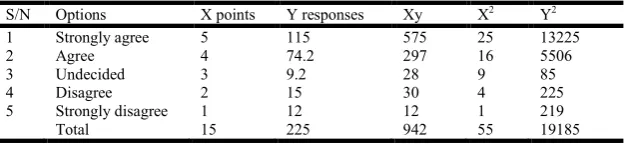
Table 5. Calculation of correlation coefficient for hypothesis four
S/N Options X points Y responses Xy X2 Y2
1 Strongly agree 5 115 575 25 13225 2 Agree 4 74.2 297 16 5506 3 Undecided 3 9.2 28 9 85
4 Disagree 2 15 30 4 225
5 Strongly disagree 1 12 12 1 219
[image:8.595.142.455.283.355.2]The first hypothesis is that salary and wages have a motivating potential in increasing worker’s performance in an organization. This is in consistent with the view of Laura (2016); she asserts that the salary a worker is paid by his employer can have a great influence on his performance in the administration. A worker doesn’t simply view his salary as an amount; he sees it as the value his employer places on him as a worker. The level of appreciation he feels can have a direct impact on his overall performance. The second hypothesis indicated that special benefits have an effect on workers performance. This is in consistent with the view of Mussie, Kathryn and Abel, (2013), they asserted that employees increasingly value employee benefits as part of their overall compensation package. This is what management theorist Frederick Hertzberg would call a ‘hygiene factor’. The idea is that if you don’t give people enough hygiene factors they will be demotivated, but not necessarily motivated
The third result of the hypothesis shows that bonuses have an effect on workers performance. This is in consistent with the view of Ruth (2016), she asserts that Bonuses for whatever reason affect employee performance in a number of different ways such as improving employee morale, motivation and productivity. The fourth result of the hypothesis shows that commission has an effect on workers performance. Employees are also satisfied because their effort was not denied as they were monetarily rewarded according to their performance, it was also observed that effective incentive system is the “glue” that binds the employee and the employer together and in the organized sector, this is further codified in the form of a contract or a mutually binding legal document that spells out exactly how much should be paid to the employee and the components of the compensation package. Hence, monetary inventive is something that firms/organizations must take seriously if they are to achieve a competitive advantage in the business sector/market for talent. When the organization is implementing some monetary incentive plan, it is necessary to consider a number of factors specific to each organization to ensure and achieve its objectives: attract, retain and motivate employees. These factors relates to organizational structure, culture and values of the organization, communication and management style. The monetary incentive scheme is directly related to all human resources processes, for which strategic coordination is essential, in particular, performance evaluation systems. When implementing an incentive scheme, it is necessary to understand the culture of the country where the organization is working; this will cause a differential impact on the perceptions and priorities of employees, depending on the cultural aspects valued as rewards.
Summary of findings, conclusion and recommendations
Summary of findings
The major findings of the research work were summarized below:
There is a relationship between monetary incentives and workers performance in the organization
Effective incentive scheme remains a panacea for cordial employer-employee relationship.
Salary and wages have a motivating potential in increasing worker’s performance in an organization.
Employees are willing to put in extra hours at the office if he feels his financial rewards are a fair trade-off.
Employee benefits are one of the greatest challenges in business today in attracting and retaining quality employees.
Providing Special benefits improves workers performance
Bonus pay improves employee morale, motivation and productivity.
Sales commissions involve rewarding sales employees with a percentage of sales volume or profits generated
Employees who are heavily rewarded with commissions may neglect customers who have a low probability of making a quick purchase.
Commission has an effect on workers performance.
Conclusion
Monetary incentive stigma is seen as one of the most important strategies in the human resource management function as it influences the productivity and growth of an organization. Hence, modern corporate organizations have deemed it imperative to incorporate effective monetary incentive scheme for workers as part of their corporate goals and objectives. This is believed to shape a work force focused on strategic performance goals and capable of achieving them. This research work is also about monetary incentives and workers performance. The total incentive scheme is based on a rethinking of employee incentive and investment systems into an employee-driven system. Monetary Incentive scheme have been raising questions about the structure of existing and often rigid pay systems for some time. Therefore, this study’s idea of monetary incentive goes beyond pay alone to propose an incentive system - a group of variables that together encompass the varieties of kinds of monetary incentives that today’s employees want from work. Pay is among them, of course (including both base pay, or salary, and one-time pay received in form of overtime or bonuses). But in addition to monetary incentive, contemporary employees want and are increasingly demanding incentive diversity and incentive choice. In today’s diverse, employers are finding that employees want a range of different things from the work place. Employees will even exchange some level of base pay to get some of the other things they want. Conclusively, the significance of effective monetary incentive scheme cannot be overemphasized in a bid to attracting and motivating employees for improved organizational productivity. A major task from a human resource management and industrial relations perspective is to understand how to design and administer monetary incentive policies that best meet the goals of employers and employees in the employment exchange. In this sense both the employers and the employees benefit and in general positively and significantly influence the overall corporate performance. There is a relationship between employee performance and monetary incentive, it is possible to recognize the existence of a trend that suggest that incentive, when both concept have a properly designed manage, these can influence the employees to show better performance.
Recommendations
Finally, the study recommends that:
Monetary incentives like bonuses, performance based rewards, should be provided to attract, retain and motivate employees for better performance.
Sales commissions are designed carefully in consistent with company objectives.
Management should seek and obtain feedback on how employees perceive monetary incentives. Feedback combined with appropriate monetary incentive schemes produce the strongest effect on job productivity.
Performance goals should be clearly defined. The goals should be specific measurable, achievable, and time bounded. Productivity cannot easily be assessed if what constitutes productivity is not clearly and objectively defined at the onset.
Non-monetary incentives like autonomy, recognition and praise should be offered to employees to promote employee retention, loyalty and performance of employees.
Monetary Incentives preferences of employees should be considered in the distribution of reward types to deserving employees for maximum employee performance.
Employee benefits should be provided in attracting and retaining quality employees.
REFERENCES
Agwu, M. 2013. Impact of Fair Reward System on Employees Job Performance in Nigerian Agip Oil Company Limited Port-Harcourt. British Journal of Education, Society and
Behavioural Science, 3(1), 47-64.
Ahmed, M.S., and Ali, R. 2009. The Impact of Reward and Recognition Programs on Employee’s Motivation and Satisfaction: An Empirical Study. International Review of
Business Research Papers, 5(4), 270-279
Alex B., Babatunde B. and Rob S. 2010. NIESR Discussion PaperNo.366.National Institute of Economic and Social
Research, 2, DeanTrench Street, London SW1P 3HE
Al-Nsour, M. 2012. Relationship between incentives and organizational performance for employees in the Jordanian Universities. International Journal of Business and Management, 7(1), 78-89.
Axelsson, A., andBokedal, 2009. Reward Systems- Motivation Different generation (A Case Study of Volvo Cars Corporation). University of Gothenburg, School of Business, Economics and Law. Bachelor of Thesis in Management Control.
Carton, R. 2004. Measuring Organizational Performance: An Exploratory Study. Unpublished Doctoral Dissertation, the University of Georgia, Athens.
DeCenzo, D. A. and Robbins, S. P. 2010. Fundamentals of Human Resource Management (10th ed.), Hoboken, NJ: John Wiley and Sons, Inc.
DeNisi, A. S. and Griffin, R. W. 2008. Managing Human Resources (3rd ed.), Boston: Houghton-Mifflin.
Duberg, C., andmollen, M. 2010. Reward systems with the health and geriatric care sector. Retrieved from: http://gupea.u.b.se/bistream/2077/21241/1/gupea_2077_21241 _1.pdf
Eburajolo, V. O. 2004. Globalization: The Human Resources Challenge. Chartered Institute of Personnel Management
Annual Conference. Held on 25th September at Abuja.
Edgar, F. and Geare, A. 2005. “HRM practice and employee attitudes: Different measures different results”, Personnel
Review, Vo l . 34, No. 5, pp. 534-549.
Falola, H. O., Ibidunni, A. S. and Olokundun, M. 2014. Incentives Packages and Employees’ Attitudes TO Work: A Study of Selected Government Parastatals In Ogun State, South-West, Nigeria. International Journal of Research in Business and
Social Science IJRBS, 3 (1) 2147-4478
Igbaekemem G. O. 2014. Monetary incentives Motivates Employee’s Organizational Performance. Global Journal of
Arts Humanities and Social Sciences, 2. (7). 61-69.
Kreitner, R. and Kinicki, A. 2007. Orgnisational Behaviour (7th edition) Boston: McGraw Hill/Iron
Lawler, E. E. 2000. Rewarding excellence. San Francisco: Jossey-Bass.
Linda R. 2016. How Does Salary Affect A Worker's Productivity? Demand Media
Long, R.J., and Shields, J.L. 2010. From pay to praise? No cash employee recognition in Canadian and Australian firms. The international journal of human resources management, 21(8), 1145-1172
Luthans, F. 2003. Organizational Behaviour. Boston: McGraw- Hill Irwin.
Mehta, A. M. 2014. Impact of Monetary Rewards Employee Performance and Job Satisfaction. (An Empirical Study of the Insurance Sector of Pakistan. Interdisciplinary Journal of Contemporary Research in Business, 5, (11)
Milkovich, G. T. and Newman, J. M. 2008. Compensation (9th ed.), Boston: McGraw-Hill Irwin.
Mujtaba, B., and Shuaib, S. 2010. An equitable total rewards approach to pay for performance management. Journal of
management policy and practice, 11(4), 111-121.
Muogbo, U.S. 2013. The Impact of Employee Motivation on Organizational
Mussie, T. T., Kathryn, J. and Abel B. E. 2013. The Effects of Employee Recognition, Pay, and Benefits on Job Satisfaction: Cross CountryEvidence. Journal of Business and Economics,
ISSN 2155-7950, USA
Myer, C.S., Mukerjee, S., andSestero, A. 2001. Work Family Benefits: Which One Maximizes Profit? Journal of
Managerial Issues, 13, 28-44
Niki, N., Nili, M., Nilipour, A. 2012. Designing distribution system of rewards and influence on employees satisfaction case study: Hamgamkhodro Asia factory. International
Journal of Business and Social Science, 3(12), 305-312
Ong, T., and Tech, B. 2012. Reward system and performance within Malaysian manufacturing companies. World Applied
Sciences Journal, 19 (7), 1009-1017.
Onu, C.A., Akinlabi, B.H., and Fakunmoji., S.K. 2014. Motivation and Job Performance of Non-Academic Staff In Private Universities in Nigeria. (A Study of Babcock University). Global Advanced Research. Journal of Management and Business Studies (GARJMBS) ISSN: 2315-5086
Paul, O. 2010. The Wage Effects of High Performance Work Organization in Manufacturing. Industrial and Labour
Relations Review, 2010 Vol.59, N0 2 Pg 187-204 Cornell
University School of Industrial and Labour Relations.
Performance. A Study of Some Selected Firms in Anambra State Nigeria. The International Journal of Academic Research in Business and Social Sciences 42(7). 70-86
San, O., Theen, Y., and Heng, T. 2012. The Reward Strategy and Performance Measurement (Evidence from Malaysian Insurance Companies). International Journal of Business,
Humanities and Technology. 2(1), 211-223.
Trank, C.Q., Rynes, S.L. and Bretz, R.D. 2002. Attracting Applicants in the War for Talent: Difference in Work Preferences among High Achievers. J. Business Psychology. 17(3):331-45
Warner, M. J. and Desimone, L. R. 2006. Human Resources
Development. Canada: Thomson South-Western.