An inquiring framework for changing project management
practice: A qualitative method study
TIPI, Lucian
Available from Sheffield Hallam University Research Archive (SHURA) at: http://shura.shu.ac.uk/23404/
This document is the author deposited version. You are advised to consult the publisher's version if you wish to cite from it.
Published version
TIPI, Lucian (2018). An inquiring framework for changing project management practice: A qualitative method study. Doctoral, Sheffield Hallam University.
Copyright and re-use policy
See http://shura.shu.ac.uk/information.html
Sheffield Hallam University Research Archive
An Inquiring Framework for
Changing Project Management
Practice: A Qualitative Method Study
by
Lucian B. Tipi
A thesis submitted in partial fulfilment of the
requirements of Sheffield Hallam University for
the degree of Doctor of Philosophy
Supervisors: Prof. Nigel Garrow
Dr. John Kawalek
Declaration
I hereby certify that this material which I now submit for the assessment on the programme of study leading to the award of Doctor of Philosophy is entirely my own work, that I have exercised reasonable care to ensure that the work is original and does not in the best of my knowledge breach any law of copyright and has not been taken from the work of others and to the extent that such work has been cited and acknowledged within the rest of my own work.
The right of Lucian Tipi to be identified as the author of this work is asserted in accordance with ss. 77 and 78 of the Copyright, Designs and Patents Act 1988. At this date copyright is owned by the author.
Ethics approval
The research work conducted in this thesis has been granted Ethics approval by the Sheffield Business School Ethics Committee.
Papers emerging from this thesis
Acknowledgements
There are a great many people who deserve my gratitude for supporting me to complete this thesis and I will mention some in my acknowledgements.
My family, and in particular my wife Nicoleta deserve a substantial part of my thanks for encouraging me along the way, giving me ideas of how I might approach this work during the very limited amount of time that our busy lives afforded. My daughter Cristina also deserves my thanks for bearing with me during the times when I could not be available to watch her dancing performances.
My supervisors, Prof. Nigel Garrow and Dr. John Kawalek are credited with helping me along this research journey. Dr. Kawalek has supported me in clarifying my research ideas and Prof. Garrow has supported me in his dual role as a supervisor and Head of Department by creating much needed space that allowed me to make the real progress needed for the completion of this work.
I would like to thank my friend, Dr. Murray Clark, who has helped me to clarify some of my ideas and gave me valuable advice on how to present these ideas consistently and logically.
1
Abstract
This research is designed to advance the theoretical and practical knowledge in the area of project management through the development of an inquiring, integrative project management framework.
The methodological framework used in this work is based on an interpretivist philosophy using grounded theory building within a systems thinking framework. This research is based on a qualitative methodology resulting in an in depth analysis of data provided by interviews.
The data collected and analysed in this research shows that project management is a very complex and multifaceted issue, context dependent and in a continual state of flux.
People are a major cause of complexity and the case for an inquiring approach is introduced by a study of project management literature and supported by the results of the analysis of the data sets acquired in this work.
The research is concerned with the development of an inquiring, integrative project management framework that allows for a high degree of contextualization to take place during its application to reflect the real world nature of projects. The concept of a project system is used to underpin the framework. The project system used to underpin the framework, supports the dynamic, contextual and iterative nature of project management.
A comparison of the framework with the real world view of project management practitioners was carried out (validation), resulting in some refinements of the framework, increased confidence that it has practical applicability and some future directions for research.
A claimed methodological contribution is the use of grounded theory for construction of new knowledge within a systems thinking framework.
The inquiring, integrative project management framework developed in this work contributes to project management practice and a user guide is provided to support its application.
The framework, which represents the outcome of this research, can be seen as a useful instrument to aid project management practitioners.
The framework can be utilized to carry out inquiry with varying levels of detail and it offers the flexibility necessary for contextualization of projects to support decision making.
2
Table of Contents
Abstract ... 1
Table of Contents ... 2
List of Figures ... 7
List of Tables ... 9
List of Abbreviations ... 12
1.
Introduction ... 13
1.1. Purpose of this research ... 13
1.2. Background and justification of this research ... 14
1.3. Personal motivation and experience informing this research ... 17
1.4. Research aim, question and objectives ... 21
1.5. Some literature and methodology considerations ... 24
1.6. Thesis outline ... 27
1.7. Conclusion ... 30
2.
Literature review ... 31
2.1. Introduction ... 31
2.2. Considerations on project management ... 33
2.3. Issues in project management ... 34
2.3.1 Projects and goals ... 38
2.3.2 Project management methodologies and methods ... 39
2.3.3 Project managers ... 42
2.3.4 Importance of project managers ... 44
2.3.5 Knowledge and learning in projects ... 45
2.3.6 Stakeholder relationships and engagement ... 47
2.3.7 Projects and organisational culture ... 50
2.3.8 Project complexity and soft skills ... 51
2.3.9 Communication in projects ... 53
2.3.10 Return on investment ... 54
2.3.11 Project success ... 56
2.3.12 Project failure ... 59
2.3.13 Project forecasting ... 60
3
2.4. Project management as a human, social, organisational activity .... 63
2.5. Areas of interest in project management from academic literature . 64 2.6. Current project management professional bodies agenda ... 78
2.7. Projects and goals – thoughts on methodology ... 83
2.7.1 Purposeful activities and systems ... 86
2.7.2 The concepts of system and design of systems ... 87
2.7.3 Soft systems thinking ... 90
2.8. Establishing the research gap ... 97
2.9. Relating the concept of system to the creation of a project management framework ... 98
2.10. Conclusion ... 101
3.
Methodology ... 103
3.1. Introduction ... 103
3.2. Exploring the nature of this research ... 104
3.3. Research philosophies ... 104
3.4. Interpretivism ... 106
3.5. The role of Soft Systems Methodology in this research ... 108
3.6. Inductive research approach ... 112
3.7. Research Design ... 114
3.8. Research Strategy – making the case for Grounded theory ... 118
3.9. Grounded theory as a vehicle for analysing data ... 119
3.10. Computer software to support data analysis ... 125
3.11. Data collection ... 126
3.11.1 Selecting the interview sample ... 127
3.11.2 Interviews for data collection ... 129
3.11.3 Recording the interviews and transcription ... 135
3.11.4 Ethical considerations ... 135
3.12. Building theory from data - achieving a conceptual framework .. 137
3.13. Comparison with real world – validation of the project management framework ... 138
3.14. Pulling it all together – research process ... 141
3.15. Conclusion ... 143
4.
Process for exploring data and some results from analysis
... 145
4
4.2. Building a rich picture of project management ... 145
4.3. A project system as the basis for the project management framework ... 146
4.4. Review of data coding for framework construction ... 148
4.5. Review of variables ... 159
4.6. Conclusion ... 161
5.
Exploration of data ... 162
5.1. Introduction ... 162
5.2. Review of exploration of data ... 162
5.3. The “Project” theme ... 166
5.3.1 Barriers when running a project ... 167
5.3.2 Project brief ... 171
5.3.3 Defining project failure and reasons ... 174
5.3.4 Defining project success and reasons ... 180
5.3.5 Defining the project ... 183
5.3.6 Ideal or desirable changes through projects ... 187
5.3.7 Measures for project failure ... 190
5.3.8 Measures for project success ... 194
5.3.9 Assertions on a project's end ... 199
5.3.10 Feasible changes through projects... 202
5.3.11 Summarizing the “Project” theme ... 205
5.4. The “Project Manager” theme ... 207
5.4.1 Running a project - recommended practice ... 208
5.4.2 Communicating a project to others ... 211
5.4.3 Assertions on projects and project management ... 213
5.4.4 Representing a project ... 217
5.4.5 Running a project - interviewee's practice ... 219
5.4.6 Running a project - in an ideal world ... 223
5.4.7 Assumptions made when running a project ... 226
5.4.8 Most important factor when running a project ... 229
5.4.9 Summarizing the “Project Manager” theme ... 232
5.5. The “Project Stakeholders” theme ... 234
5.5.1 Engagement and motivation of project stakeholders ... 235
5.5.2 Relationships between the stakeholders in a project ... 238
5
5.5.4 The real project beneficiaries ... 245
5.5.5 Summarizing the “Project Stakeholders” theme ... 247
5.6. The “Project Management Framework and Methods” theme ... 249
5.6.1 Advantages of project management methods ... 250
5.6.2 Assertions on project management frameworks ... 253
5.6.3 Disadvantages of project management methods ... 255
5.6.4 Project management methods employed ... 259
5.6.5 Summarizing the “Project Management Framework and Methods” theme ... 262
5.7. Identifying “Project Measurement Criteria” ... 263
5.8. Data saturation ... 265
5.9. Relationships between the nodes elicited from the data ... 267
5.10. Conclusion ... 271
6.
Constructing the project management framework ... 272
6.1. Introduction ... 272
6.2. Aggregating the results of data analysis for inclusion in the project management framework ... 272
6.3. Developing the project management framework ... 282
6.4. Representing “Project Measurement Criteria” in the framework ... 284
6.5. Progress so far ... 288
6.6. Conclusion ... 290
7.
Validating the project management framework ... 291
7.1. Introduction ... 291
7.2. Further data for framework validation ... 292
7.3. Analysis of validation data ... 293
7.3.1 Are the main components of the framework appropriate? ... 293
7.3.2 Are there obvious problems with the project management framework? ... 295
7.3.3 Is the framework useful for project management practitioners? ... 297
7.3.4 How can the framework be improved? ... 300
7.3.5 Other insights resulting from validation ... 303
7.4. Implications for the project management framework ... 304
7.5. Conclusion ... 307
8.
Conclusions and future work ... 308
6
8.2. How the research aim, question and objectives were addressed .. 309
8.3. Contributions to theory through an inquiring and integrative approach ... 312
8.4. Contributions to methodology ... 315
8.5. Contributions to practice ... 316
8.6. Limitations of this research ... 318
8.6.1 Researcher related (including bias) ... 319
8.6.2 Inductive/qualitative research process related ... 319
8.6.3 Data related - general ... 320
8.6.4 Data related – achieving data saturation ... 321
8.6.5 Framework validation process related ... 322
8.6.6 Project management framework related ... 322
8.7. Future research ... 323
8.8. Reflections on the researcher’s research experience ... 325
8.9. To conclude ... 328
9.
List of references ... 329
10.
Appendices ... 350
10.1. Appendix 1 - Data Nodes, Variables, Sources References and Coding Memos ... 350
10.2. Appendix 2 – User guide for the project management framework .... ... 377
7
List of Figures
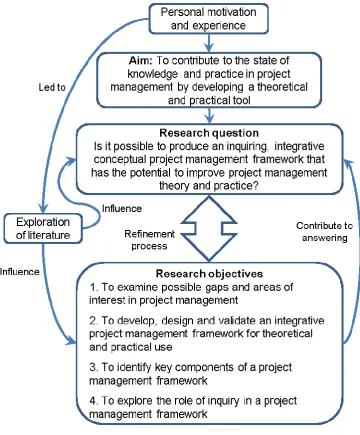
Figure 1.1: The process of determining the research question and
objectives ... 24
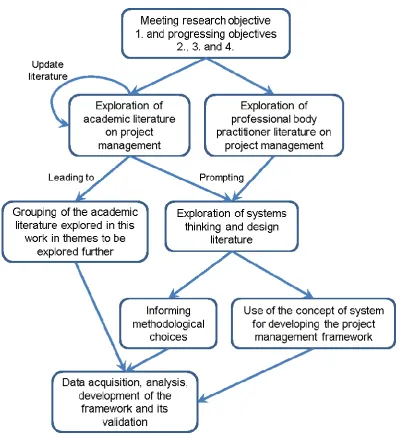
Figure 2.1: Literature review process ... 33
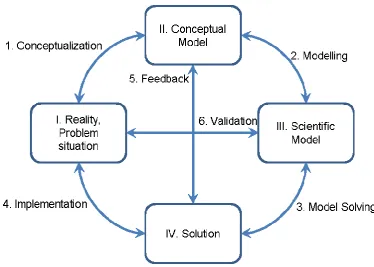
Figure 2.2: A systems view of problem-solving ... 85
Figure 2.3: An inquiry system for inductive research approach ... 85
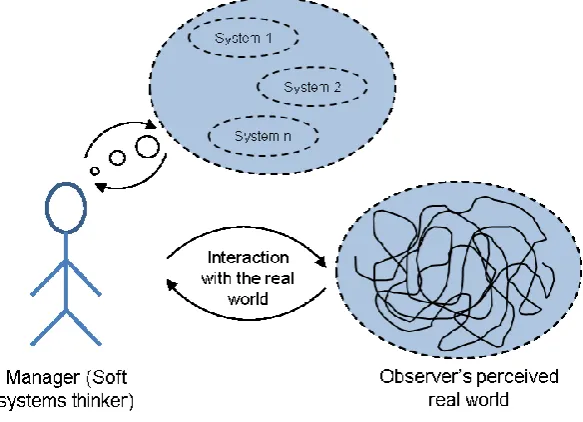
Figure 2.4: A soft systems thinker’s interaction with the world ... 92
Figure 2.5: Checkland (1999) representation of SSM ... 94
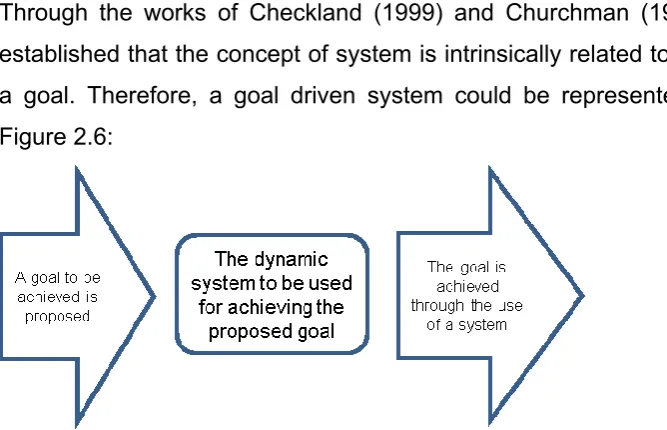
Figure 2.6: A goal driven system (author’s representation)... 98
Figure 2.7: A goal driven project system (author’s representation) ... 99
Figure 2.8: The scope of this thesis ... 99
Figure 3.1: This research using SSM ideas ... 112
Figure 3.2: The role of theory in an inductive research approach ... 114
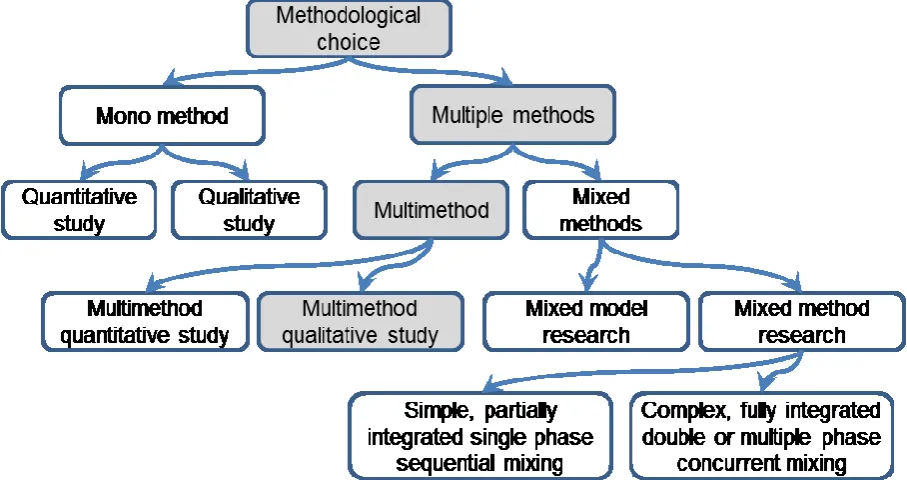
Figure 3.3: Methodological choices, adapted from Saunders et al. (2012, p.165) ... 115
Figure 3.4: Grounded theory process in this thesis ... 124
Figure 3.5: The semi-structured interview framework used in this research ... 131
Figure 3.6: Research process, including data collection and analysis .... 142
Figure 4.1: Rich picture representing project management ... 146
Figure 4.2: The project system as the basis for the project management framework ... 147
Figure 4.3: Results of data analysis using a grounded theory process .. 149
Figure 4.4: Indexing of variables ... 149
Figure 4.5: Indexing of nodes ... 154
Figure 5.1: Node and variables tables explained ... 165
Figure 5.2: Node relationships information ... 268
Figure 6.1: The first iteration of the project management framework ... 273
Figure 6.2: Initial view of the second iteration of the project management framework ... 274
8
Figure 6.4: The second iteration of the project management framework ... ... 283 Figure 6.5: Initial view of the third iteration of the project management
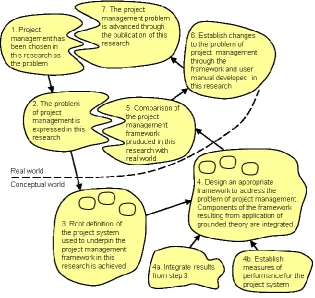
framework ... 285 Figure 6.6: The third iteration of the project management framework ... 287 Figure 6.7: This research so far ... 289 Figure 7.1: The final project management framework following validation
9
List of Tables
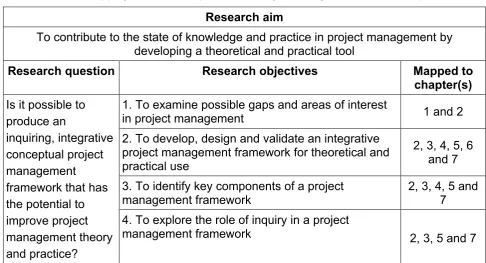
Table 1.1: Mapping the research question and objectives against the
thesis chapters ... 27
Table 1.2: Thesis chapters and relationships between chapters ... 29
Table 2.1: Exploration areas from literature ... 66
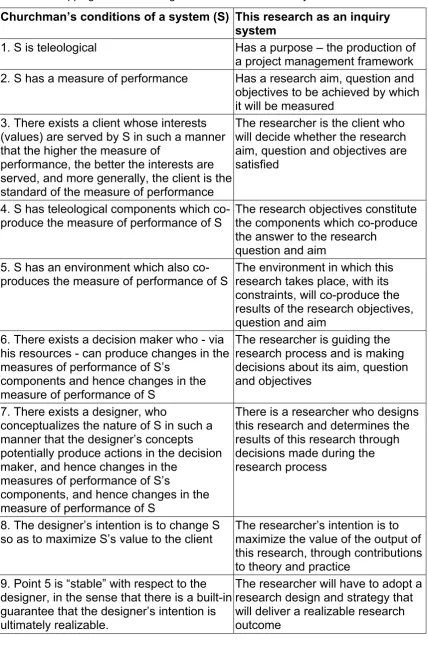
Table 2.2: Mapping this research against the conditions for a system ... 93
Table 2.3: Mapping this research against SSM stages ... 95
Table 2.4: Exploration areas emerging from literature ... 100
Table 3.1: Mapping this research against SSM stages ... 110
Table 3.2: Mapping this research to research approaches ... 113
Table 3.3: Differences between qualitative and quantitative research designs ... 116
Table 3.4: Mapping this research against qualitative research design .... 117
Table 3.5: Coding approaches in grounded theory ... 121
Table 3.6: List of interviewees ... 133
Table 3.7: List of validation interviewees ... 141
Table 4.1: Root definition of the project system underpinning the framework ... 147
Table 4.2: Initial codes (variables) resulting from data analysis ... 150
Table 4.3: Codes (variables) not used for constructing the framework ... 154
Table 4.4: Nodes resulting from focused data coding ... 155
Table 4.5: Themes representing the main components of the framework ... 156
Table 4.6: Nodes and themes ... 157
Table 4.7: Project Measurement Criteria ... 158
Table 4.8: Components of the project management framework ... 159
Table 4.9: Colour coding convention for the variables ... 160
Table 5.1: Summary of themes, nodes and variables ... 163
Table 5.2: Information associated with nodes and variables ... 164
Table 5.3: The “Project” theme nodes ... 166
Table 5.4: The “Barriers when running a project” node ... 167
Table 5.5: The “Project brief” node ... 171
10
Table 5.7: The “Defining project success and reasons” node ... 180
Table 5.8: The “Defining the project” node ... 183
Table 5.9: The “Ideal or desirable changes through projects” node ... 187
Table 5.10: The “Measures for project failure” node ... 190
Table 5.11: The “Measures for project success” node ... 194
Table 5.12: The “Assertions on a project's end” node ... 199
Table 5.13: The “Feasible changes through projects” node ... 202
Table 5.14: Variables underpinning the “Project” theme ... 205
Table 5.15: The “Project Manager” theme nodes ... 207
Table 5.16: The “Running a project - recommended practice” node ... 208
Table 5.17: The “Communicating a project to others” node ... 211
Table 5.18: The “Assertions on projects and project management” node ... 213
Table 5.19: The “Representing a project” node ... 217
Table 5.20: The “Running a project - interviewee's practice” node ... 219
Table 5.21: The “Running a project - in an ideal world” node ... 223
Table 5.22: The “Assumptions made when running a project” node ... 226
Table 5.23: The “Most important factor when running a project” node ... 229
Table 5.24: Variables underpinning the “Project Manager” theme ... 232
Table 5.25: The “Project Stakeholders” theme nodes ... 234
Table 5.26: The “Engagement and motivation of project stakeholders” node ... 235
Table 5.27: The “Relationships between the stakeholders in a project” node ... 238
Table 5.28: The “Main stakeholders in a project” node ... 243
Table 5.29: The “The real project beneficiaries” node ... 245
Table 5.30: Variables underpinning the “Project Stakeholders” theme ... 247
Table 5.31: The “Project Management Framework and Methods” theme nodes ... 249
Table 5.32: The “Advantages of project management methods” node ... 250
Table 5.33: The “Assertions on project management frameworks” node ... 253
Table 5.34: The “Disadvantages of project management methods” node ... 255
11
Table 5.36: Variables underpinning the “Project Management Framework
and Methods” theme ... 262
Table 5.37: Project measurement criteria ... 263
Table 5.38 Further project measurement criteria 1 ... 264
Table 5.39: Further project measurement criteria 2 ... 264
Table 5.40: Variables breakdown for “Project Measurement Criteria” ... 265
Table 5.41: Nature of variables for framework construction ... 266
Table 5.42: Nodes relationship matrix ... 270
Table 6.1: “Project” theme inquiry areas ... 276
Table 6.2: “Project Manager” theme inquiry areas ... 278
Table 6.3: “Project Stakeholders” theme inquiry areas ... 280
Table 6.4: “Project Management Framework and Methods” theme inquiry areas ... 281
Table 6.5: Project Measurement Criteria ... 284
Table 7.1: List of validation interviewees ... 292
Table 7.2: Data resulting from the first exploration area for framework validation ... 294
Table 7.3: Data resulting from the second exploration area for framework validation ... 296
Table 7.4: Data resulting from the third exploration area for framework validation ... 299
Table 7.5: Data resulting from the fourth exploration area for framework validation ... 300
12
List of Abbreviations
APM - Association for Project Management BCS – British Computer Society
IS - Information Systems
NHS - National Health Service UK
PERT - Program Evaluation Review Technique PM Today – Project Management Today
PM3 - Project Portfolio Management
PMBOK - Project Management Body of Knowledge PMI - Project Management Institute
PMIRS - Project Management Inquiry and Resolution System PROMSG - Project Management Specialist Group
13
1. Introduction
1.1. Purpose of this research
Project management is challenging, as demonstrated by the significant proportion of projects that are not fully successful on one, or more, dimensions, with many actually failing (Anthopoulos et al., 2016; Brookes and Locatelli, 2015; Cavaleri et al., 2012; Keil et al., 2002; Mitchell, 2006; Zhang et al., 2003). The consequences of this are that the costs incurred by organisations due to unsuccessful or unrealized project are very significant, running into tens of billions of pounds (Ojiako et al., 2008).
The researcher’s personal experience in the area of project management, stemming from his professional background, is that all of the projects that he has been involved with suffered from difficulties. The motivation for this research comes from a desire to contribute to the project management agenda by developing a novel, integrative approach to project management, that considers people and the complexities that they introduce in projects.
Whilst much research is already available in the area of project management, the researcher will make the case for this new exploration, based on evidence (discussed in the next section), that project failures are still commonplace.
This research will be looking into the state of knowledge in project management and seeks to add to the body of knowledge in this area. It will propose an inquiring, integrative project management framework. The novel framework provides an approach to project management based on including the complexities posed by people, as elements of the project management framework, through a process of inquiry.
14
The evidence that justifies this research is given in the next section, which provides support for the need for further research in this area.
1.2. Background and justification of this research
A broad range of literature is available that illustrates current issues with projects and project management, with a focus on the high rate of project failures (Anthopoulos et al., 2016; Brookes and Locatelli, 2015), especially in relation to large projects.
One of the project dimensions that is typically not met in a project is that of cost (Cantarelli et al., 2012a), with a high degree of variation in terms of cost overruns that occur, for example, in construction projects worldwide. Project management suffers from many problems related to cost and delays (Cavaleri et al., 2012), especially where, for example, market conditions have changed significantly from the original conditions that gave rise to the project in the first place. Cost overruns are one of the most common causes of project failure in industries such as IT and construction (Doloi, 2011), with overruns averaging over 200% in relation to the original estimates. Evidence of projects not being delivered on time or having failed in the construction industry is shown in Naaranoja and Uden (2007).
Typically the majority of projects will exceed their initial cost budget (Jørgensen and Wallace, 2000) due to poor estimation of cost factors. Over 75% of the IT projects investigated failed on one or more criteria (Keil et al., 2002), with cost overruns of 90% and schedule overruns of 120% being common. Other reports (Ojiako et al., 2008) show that 20% to 30% of projects could not meet stakeholders specified criteria and resulted in wasted yearly spending of approx. £75 billion in the US and £70 billion within the EU. US data shows that public sector IT projects tend to be wasteful and not meeting expectations on a range of factors (Rosacker and Rosacker, 2010) with yearly figures of over $25 billion in expenditure that is locked into poorly performing projects.
15
considered fully successful (Kutsch et al., 2015). Some authors put the failure rate of projects at 78% (Lee and Hirshfield, 2006), which represents a worrying figure and correlates well with other literature consulted here.
Discussing success rates in the IT industry further reveals that only 28% of projects are successful (Lierni and Ribière, 2008), while 49% are challenged (partially delivering on time, on budget and to specification) and 23% have failed (never having been implemented). Similar data shows that only 26% of projects have been finalized on time and in budget, 28% of projects have failed and 46% of projects were challenged on one or more criteria (Saleh and Alshawi, 2005; Smith and Keil, 2003).
Data presented by Mitchell (2006) shows the rate of partially successful IT projects standing at 49%, with large time overruns being common while the completion rates show a downwards trend.
A look at historical figures of project management failure (Zhang et al., 2003) shows that the trends of project success are not encouraging and that the amount of money overspent on projects is on the increase.
An interesting, though worrying, aspect of how projects may evolve consists of a range of projects that continue to waste valuable resources while not delivering any business benefits (Montealegre and Keil, 2000). Therefore, not only is there a problem in terms of high rates of challenged or failed projects, but also a persistence in terms of failed projects that continue to escalate in the face of overwhelming evidence that they should be stopped (Burström and Jacobsson, 2012; Lenferink et al., 2014; Montealegre and Keil, 2000).
A review of a number of high profile UK based failed projects is discussed by White and Fortune (2009) who argue that the most well-known project management methods are not sufficiently anchored in the complexities and uncertainties emerging from the project’s own environments.
16
project failures (Gomes et al., 2008). Many projects have an element of innovation attached to them, but conventional project management methods fail to capture the multidimensionality of these projects resulting in high failure rates (Kapsali, 2013).
Failure to recognize or acknowledge the reality of a project’s given state and ability to deliver its scoped outcomes results in irrational and erroneous behaviour where more resources are poured into failing projects (Guah, 2008). This seems to be the case in large IT projects within the National Health Service UK (NHS) for example (Guah, 2008). The challenges in recognising that problems arise in projects and what is the nature of such problems is one of the most common reasons for the large numbers of project failures (Dalcher, 2012; Keil and Robey, 1999; Pan, 2005).
An indication that people’s interactions with projects may not be understood well is emerging. People's behaviour when engaged in project activity is complex and potentially needs investigating further (Aubry et al., 2012; Kapsali, 2013; Kerzner, 2013). As illustrated by Kerzner (2013), project management is a human based organisational, social activity. Aubry et al. (2012) go as far as to consider project management as an organisational function and as such, there is a role for embedding project management research into wider management research, where aspects related to complexities introduced by people are considered.
There is evidence that a significant amount of project management research is theory free or not sufficiently embedded in theory (Morris, 2010) and as such it will provide variable results in practice. From a practising project manager’s point of view, this will be confusing and frustrating, as s/he is left with a choice of theoretical frameworks to choose from that may produce different outcomes (Carvalho, 2013; Hällgren and Maaninen‐Olsson, 2009).
17
national and international bodies (Muzio et al., 2011). This is evidence of the growth of the project management area, which therefore warrants more research efforts to support its evolution. Most project management knowledge is derived from general management or engineering management (Walker et al., 2008), with little evidence that the project management community is actively involved in the production of project management frameworks, tools or techniques. This gives justification for more engagement with the project management community to elicit new knowledge in this area.
It is estimated that approximately 30% of the global economy uses project-based management (Parker et al., 2013a) and this gives a strong justification for sustained research in this area.
A number of ideas, which help to focus the direction of this research, emerge from this preliminary examination of the project management literature:
- there is significant evidence that project failures are stubbornly high over time and that their organisational impact is significant (Ojiako et al., 2008);
- project management methods are perhaps not sufficiently able to capture complexities, including people related issues, emerging from the project’s environments further (Aubry et al., 2012; Kapsali, 2013; Kerzner, 2013);
- a significant amount of project management research is not underpinned sufficiently by theory (Morris, 2010).
These points give a justification and a starting point for the researcher to explore the possibility of producing a project management framework that is able to capture project related complexities and is well anchored in theory.
1.3. Personal motivation and experience informing this research
18
management area and this is what is driving the research, supported by the evidence from the literature.
A first person account of the researcher’s motivation is given in this section, to allow the readers to better understand the personal drive that led to this work. My background is technology related, in the area of Information Systems (IS). I have been part of a number of projects, mainly IS, but with estate and other business processes implications. My involvement in project work started during employment with British Steel and then Cap Gemini where I had helped to plan and deliver multi-technology and multi-site projects.
One of the recurring themes during my involvement with project work was (and still is) related to what one might refer to as the “complexity” surrounding project work. This complexity can be found at all levels of project work, including the planning stage, the implementation stage and the benefits assessment stage. This latter stage seems to cause most problems to project workers and senior stakeholders and could be related to difficulties related to defining and articulating what the project is actually supposed to deliver in the first place. My view is that people (who are different from project to project) and their relationship with projects need further investigation.
Another aspect worth mentioning here is that, particularly in a business commercial environment, things move fast at times. The implication of this is that a lengthy project may deliver on goals that were valid at the start of the project, but may no longer be as relevant as time goes by. This could be one of the reasons why, in my personal experience, it is so difficult to deliver a fully successful project. A project is always delivered in a certain organisational and broader environmental context and during lengthy projects the organisation and its priorities may change whilst the external environment (particularly in very fast-moving areas such as information technology driven activities) may have overtaken and rendered obsolete the core elements / deliverables of a given project.
19
view of the project stakeholders. As mentioned earlier, project stakeholders may change over time (or indeed their views and priorities may change) and therefore ensuring project robustness to stakeholder changes is difficult to achieve, constant updating of understanding is needed.
One of the important aspects of a project is the time required to deliver it. Whilst some variability is possible in as far cost and quality aspects of the project deliverables are concerned (in both directions, for example cost or quality increases/decreases), my personal experience is that as far as the time dimension is concerned this variability seems to lead to time increases in most cases. In other words, it is very difficult to reduce timescales due to time lost on staff sickness, competing priorities, just underestimating productivity or even due to many “unknown unknowns” occurring during the delivery of a project. All of this leads to the possibility of unsuccessful projects due to a lack of understanding of key project drivers and underestimating the amount of time required for their completion. A process of inquiry into these issues could help.
All projects that I have worked on suffered from a range of issues and this has seeded the idea that perhaps project manager professionals and stakeholders don’t fully understand the complexities associated with project planning and implementation and therefore take too much of a reductionist approach to projects. This results in overreliance on technological tools such as Microsoft Project or methods such as Prince 2 and I had observed attitudes such as “well since I am using Microsoft Project, if the project fails, it is not my fault!”. It seems that a transfer of responsibility seems to be happening, from the project manager and stakeholders to various support tools.
20
I had experienced first-hand just how difficult it is for project stakeholders to articulate what a project is supposed to achieve. Whilst it is easier (for example in a construction project) to articulate some project deliverables (such as a production line), it is much harder to articulate the longer-term impact or business benefit of such deliverables. Since my experience is mainly in IS projects, I had noticed that the more physically intangible the deliverables of a project are, the harder it is to articulate what the project is supposed to achieve and how this can be measured (for example in business benefits terms). It was apparent to me that whilst projects are clearly supposed to deliver an outcome – this outcome is not always easy to articulate or define. Therefore, an extensive exploration of what might be the goal of a project is necessary, indeed this could be key to ensuring that a project is in fact successful.
The involvement of project beneficiaries in defining what a project is supposed to achieve was poor. For example, end users of the project deliverables were rarely involved in specifying what these deliverables were or in defining its success criteria in the researcher’s experience. This means that the very goal that a project is supposed to achieve is frequently set without the involvement of the people who are supposed to benefit from said goal, giving support for the need to understand better all of the views of the people related to projects.
A personal belief that current methods and practice are not sufficient to capture the many dimensions of a projects had led me to question whether I could make a contribution in this area, to allow for a better understanding of project management theory and practice. I had first hand evidence that projects that I had been involved in suffered many difficulties, with the inevitable outcome that they were delivered late, or with extra costs (not originally considered) that were incurred, or that indeed some of the project deliverables have changed since the start of the project.
21
knowledge and practice in the area of project management and had eventually led to this research.
In this thesis my focus is to produce a project management framework that will attempt to contribute to knowledge and practice by exploring an inquiring, integrative approach, that allows complexities introduced by people to be captured and represented through its application.
1.4. Research aim, question and objectives
The discussions so far indicate that while project management and project work is widespread, the challenges associated with project management are also increasing. High rates of project failures are common (Anthopoulos et al., 2016; Brookes and Locatelli, 2015), the financial implications of such failures are significant (Ojiako et al., 2008), and this evidence shows that there is further need for project management research in the context of the increased use of projects by organisations.
The researcher’s personal interests and motivation have led him to attempt to advance the project management agenda through the research presented in this thesis.
This work proposes a further exploration of project management to contribute to the state of knowledge and practice in the discipline.
22
Whilst it can be argued that a wide range of project management methods and tools already exist, it can also be argued that their application is not having the desired effect, as the rates of project failure previously illustrated demonstrate.
Based on these considerations, there is a need to establish a way forward that can contribute to improvements in project management theory and practice. There is also a need to expand on the three classical project management dimensions of time, cost and quality specification to ensure the capture of the true complexities that exist in a project.
This thesis develops a contribution to knowledge and practice by proposing a novel project management framework. It is quite important therefore to establish the research aim, question and objectives at this stage. These will determine the current literature to be consulted, the methodology to be adopted and the research process that will be carried out in this work.
Given the context provided by Churchman (1972) and the researcher’s personal interests and beliefs, the idea that has formed in the researcher’s mind at this stage is that this work will contribute to the strengthening of the theory around models used to represent projects and project management activity by providing an integrative project management framework based on an inquiring approach. What is meant by an inquiring framework is the possibility of allowing for a mechanism to capture the complexities of project management, including those complexities related to people. This mechanism will be a process of inquiry.
The aim of this research is:
To contribute to the state of knowledge and practice in project management by developing a theoretical and practical tool.
The research question to be explored in this thesis is:
23
The inquiring aspect of the framework emerges from the need to understand a project’s given state, particularly given that projects involve human participants, which, as will be discussed in Chapter 2 and Chapter 3 of this thesis, are not deterministic in the way in which an object might be.
The need for an integrative approach, that looks at all parts of the project management process, emerges from the insights obtained from the literature which provide evidence that much of the research work carried out in project management is taking a limited view of projects, focusing on specific aspects.
To answer the research question, research objectives have been developed:
1. To examine possible gaps and areas of interest in project management;
2. To develop, design and validate an integrative project management framework for theoretical and practical use;
3. To identify key components of a project management framework;
4. To explore the role of inquiry in a project management framework.
24
Figure 1.1: The process of determining the research question and objectives
1.5. Some literature and methodology considerations
As previously stated, project management is essentially a human activity with a range of social dimensions that usually take place within an organisational setting.
Projects are goal driven activities and a range of definitions of projects is given in the literature. The Project Management Institute (PMI) gives project management the following definition (Brill et al., 2006, p.116):
“the application of knowledge, skills, tools, and techniques to project activities to meet project requirements”
25
“high quality projects [as those that] deliver the required product, service, or result, within scope, on time, and within budget”
Kerzner (2013, p.2) defines projects as:
"a series of activities and tasks that have specific objectives to be completed within certain specifications, have defined start and end dates, have funding limits, consume a range of resources and are multifunctional"
Successful project management is defined (Kerzner, 2013, p.3) as:
"having achieved the project objectives within time and cost, at desired performance level, while using the assigned resources effectively and efficiently and having been accepted by the customer"
However, such definitions give a limited view of the world as they largely ignore one of the most important components of projects and project management – the stakeholders.
Some ideas emerge at this stage, principally that projects are goal driven, that they are likely to be complex and that the stakeholders could be seen as playing a key role in projects. These ideas will be followed up in the literature to try and relate them to the research question and objectives stated earlier in this chapter.
The theoretical basis for analysing project management needs to be extracted from a range of literature focused on the current state of project management theory and practice and this will be explored in Chapter 2 of this thesis.
Given the multidimensional nature of project management, with an important role to be played by people, the methodology used for this research must be suitable to address the complexities and open nature of the area and should be able to provide components for producing an integrative framework.
26
high level of thinking, that could be a barrier to practical implementations. Therefore, a greater level of detail and specificity is required to produce a genuinely useful project management framework, one that can be used to advance theoretical knowledge in the field as well as to provide practical support for project management practitioners, through an integrative approach, based on a broad range of components. To achieve such a level of detail and specificity in this research, new data is required. To identify project management issues, a good source of such data will be the project management practitioners themselves, with relevant experience in a range of industries to ensure a good level of generalizability of the results.
The issue of specificity when using systems thinking in project management is addressed in this work through the provision of a detailed project management framework.
Having established that project management is a people driven, business activity, the identification of an appropriate research methodology must be sought. A deterministic approach does not appear to be the best way forward at this stage, having established the importance of people in projects. Given the complexities introduced into projects by people, it would appear that to take account of this, an interpretative methodological approach is needed.
Grounded theory is seen as suitable for engaging with business-related research (Douglas, 2006; Oliver et al., 2005; O'Reilly et al., 2012) and provides the basis for a detailed understanding of the factors that occur in projects and project management. Grounded theory provides a unique engagement with a phenomenon from the perspective of the people living that phenomenon (Corley, 2015) and it is widely used to provide new theory that emerges from such an engagement (Dai et al., 2015; Douglas, 2005).
27
Integrating a grounded theory approach with systems thinking is argued here as an appropriate way forward for producing a detailed project management framework and it provides a methodological innovation in this work. A review of over 420 research papers in the area of project management and associated research methodologies reveals only one paper (Rose, 1997) that mentions the possibility of such a combination of methods, but no actual application of this combination has been found.
Thus, a combination of systems thinking with a detailed underpinning from results provided by a grounded theory approach will be used in this research to generate a novel approach to developing an inquiring, integrative project management framework.
1.6. Thesis outline
[image:33.595.79.566.483.746.2]In the following, a narrative is given of how this thesis is structured to contribute to achieving the research aim, question and objectives. How the aim, research question and objectives were achieved is mapped to the various chapters and a view of the thesis chapters is given in Table 1.1 and Table 1.2.
Table 1.1: Mapping the research question and objectives against the thesis chapters
Research aim
To contribute to the state of knowledge and practice in project management by developing a theoretical and practical tool
Research question Research objectives Mapped to
chapter(s)
Is it possible to produce an
inquiring, integrative conceptual project management framework that has the potential to improve project management theory and practice?
1. To examine possible gaps and areas of interest
in project management 1 and 2 2. To develop, design and validate an integrative
project management framework for theoretical and practical use
2, 3, 4, 5, 6 and 7
3. To identify key components of a project management framework
2, 3, 4, 5 and 7 4. To explore the role of inquiry in a project
management framework 2, 3, 5 and 7
28
To understand relevant issues in project management a literature review was carried out.
A selection of an appropriate research methodology was necessary to ensure that new data could be collected to advance theory and practice.
Data was collected and analysed, constituting the basis for the development of the project management framework and an inquiring, integrative project management framework was produced based on the components identified from data analysis.
A validation of the project management framework was carried out, by presenting the framework to experienced project management practitioners and receiving their feedback, to ascertain its suitability as a support tool for project management practitioners. Future research directions have also emerged.
The conclusions emerging from this research were presented in relation to the research aim, question and objectives.
The limitations of this research were explored and future research recommended to address these limitations and to take forward the research agenda started in this thesis.
29
Table 1.2: Thesis chapters and relationships between chapters
Chapter Brief content outline Links to other
chapters 1. Introduction An overview of the background to this research, and
its justification, including personal motivation and experience, is presented.
The research aim, question and objectives are stated.
2, 3, 4, 5, 6, 7 and 8
2. Literature review Current knowledge in the area of project management, from both an academic and professional body perspective is summarized. The choice of methodology and data collection process are informed by literature.
Data collection is directed by findings from this chapter.
1, 3, 4, 5 and 6
3. Methodology The research philosophy and method are reviewed and selected in this chapter.
The data collection instrument and process are determined.
The data analysis process is established.
1, 2, 4, 5, 6 and 7
4. Process for exploring data and some results from analysis
A detailed review of the process for exploring data is presented in this chapter.
Some results from data are presented. The components of the project management framework are outlined.
2, 3, 5 and 6
5. Exploration of data
An in depth analysis of the data is carried out. The components of the project management framework are identified.
The relationships between key components of the framework are presented.
2, 3, 4 and 6
6. Constructing the project
management framework
The development of the project management framework by aggregating its components and the relationships between them is carried out.
2, 3, 4, 5 and 7
7. Validating the project
management framework
Further data collection and analysis, to ascertain the suitability of the project management framework as a practical support tool for project management practitioners, is undertaken.
2, 3, 6 and 8
8. Conclusions and future work
How the research aim, question and objectives were achieved is discussed.
Limitations of this research, leading to future research, are explored.
Future research directions are identified. The researcher’s personal reflection on the research journey is included.
30
1.7. Conclusion
This work emerges from the researcher’s personal interest in the area of project management and personal experiences in project management during his professional career.
This chapter has set the scene for the thesis whilst exploring some preliminary issues in project management, in particular the evidence that justifies this research.
High project failure rates with implications in terms of significant monetary losses are common in project management, prompting the need for further research in this area.
Current project management methods and tools do not seem to be sufficient to change this state of affairs and there is some evidence that the rate of project failures is, in fact, increasing.
Idealized, reductionist project management methods produce a disconnect from reality and this is a possible contributor to the high rates of project failures.
Some definitions of projects and project management fail to capture the complexities introduced by people and a broader, integrative view underpinned by an inquiring approach needs to be taken.
Therefore, there is a potential need to develop an inquiring, integrative project management framework that mirrors as closely as possible the reality of projects. This work, therefore, develops an inquiring, integrative project management framework that results in theoretical and practical contributions to project management.
31
2. Literature review
2.1. Introduction
Since the current status of project management seems to be characterized by high project failure rates, attracting costly overruns, a review of the issues in this area was necessary. Therefore, a wide range of literature was consulted (including practitioner literature associated with project management professional bodies), to ascertain prevalent issues in project management, including the importance of people.
Insights were drawn in terms of the main categories of issues encountered in project management which then inform both an appropriate research methodology for this work and the areas of exploration necessary to generate new data that can be used to further knowledge in project management.
A picture of complexity emerged, with people being an important driver for most of this complexity. The multidimensional nature of project management emerges as well as the highly contextual nature of projects.
A piecemeal approach was revealed, with many project management studies being focused on limited, specific aspects of project management, while trying to ascertain the impact of interventions in these specific areas only, without taking an integrative approach, where all key components of projects are considered.
Preliminary observations indicated that systems thinking can play a part in this research. An exploration of systems thinking literature was carried out as it is found that systems thinking is suitable for application in project management as both projects and systems are goal driven.
32
Research objective 2 "To develop, design and validate an integrative project management framework for theoretical and practical use" is being progressed through the exploration of what might be the nature of such a framework and what concepts may be used to underpin it.
Chapter 2 will lay the groundwork for achieving research objective 3 "To identify key components of a project management framework" by setting the directions of exploration emerging from the review of the literature.
Research objective 4 "To explore the role of inquiry in a project management framework" is addressed through assessing the importance of people and complexities introduced by their project management related activities.
A diagram of how the literature review was carried out is presented in Figure 2.1, which shows how the literature review chapter contributes to progressing this research and the relationships between the stages of literature review.
The literature review chapter is focused on immersing the researcher into the issues associated with project management, as found in academic literature obtained through databases such as SCOPUS. Practitioner literature such as the Association for Project Management (APM) aligned Project journal and the Project Management Specialist Group (PROMSG) distributed independent Project Manager Today (PM Today) are consulted. PROMSG is part of the British Computer Society (BCS). This approach allows both an academic and a practitioner view to be taken and it is used to inform this research.
33
Figure 2.1: Literature review process
2.2. Considerations on project management
In this research project management is viewed as a set of people driven activities that allow the realization of a project which has an outcome (Kerzner, 2013, p.4). Moreover, since a project is a designed, purposeful human activity (Kerzner, 2013) there is an alignment with the idea of a purposeful system, as discussed by Churchman (1968).
34
stakeholder's project requirements (Eigbe et al., 2015), giving the impression that the application of such elements is a straight forward activity.
The exploration of project management in this chapter is trying to move things on from a reductionist definition (Eigbe et al., 2015), which is suggested as being too narrowly focused.
Project management, through activities of planning and scheduling, is recognizable, starting with major projects such as the Manhattan Project and similar very large scale projects such as the US space programme (Bryde, 1997; Hällgren et al., 2012). Although projects have existed for millennia, project management as a management methodology is a relatively recent development and it has its roots in positivist thinking emanating from operational research (Lacerda et al., 2011), with the dominant models taking a rational, deterministic approach. This inevitably leads to a reductionist approach to project management, which may not be able capture the complexities introduced by people.
Projects are multidimensional entities in which political, social, economic and ethical dimensions can be identified (Hemming, 2012) and these dimensions may result in actions that may, or may not, be in conflict with each other.
A way forward that fully considers the complexities of projects and allows for the inclusion of people as active components of a project management framework may be necessary. To this end, an exploration of issues in project management will be undertaken and this will help to inform the directions to be taken for data collection.
2.3. Issues in project management
35
Project managers have typically seen projects as clearly defined entities (Lacerda et al., 2011) with linear and deterministic behaviour, where rational decisions produce highly predictable results. This view will be challenged in Chapter 5, by the findings emerging from the data. However, the researcher's own experience and evidence from literature points towards a situation where, due to the fact that people are integral to the process of managing projects, a deterministic approach is not likely to provide the desired results. The reason for this is that people are not deterministic entities, similar to machines on a production line for example. The same action applied by several people will likely produce several different outcomes. This observation gives an indication that a process of inquiry is necessary to establish the impact of various actions taking place in a project environment. This idea will be explored in more detail throughout this chapter.
A range of problems are identified when applying hard (deterministic) project management practices to soft (non-deterministic) projects such as organisational change (Crawford et al., 2003). For example, top down projects based on hierarchical, rational models still dominate, whilst being applied to human, social, irrational contexts. The classical view is that the project sponsor performs some key activities to kick off the project while giving a suggestion that a hands off approach (Kloppenborg et al., 2011) should then follow, with the details of clarifying the outputs and running the project being transferred to the project manager. This could lead to a disconnect between the strategic objectives of the organisation and the project outputs.
The management of projects is a complex and dynamic mesh of relationships, in a continuous state of evolution (Dalcher, 2012), a mechanistic approach cannot capture this level of complexity. This is in contrast with findings that the use of standard (well determined) project management methodologies increases the chances of project success (Cervone, 2007), at least in relation to time and cost parameters.
36
2014). This state of affairs is further propagated by the research community by trying to give the impression that hard and soft approaches are very distinct and illustrate opposite traits. The researcher's experience is that in project management, the approach that practitioners take is a lot more nuanced, with aspects of both hard (deterministic, rational) and soft (non-deterministic, self-regulated by people) methods being used throughout the project’s life. It is seen as unhelpful for the provision of new insights into project management to differentiate artificially between hard and soft approaches, as these are all constructs put in place by the project management researcher and practitioner communities (Staadt, 2012). A systems thinking approach may be preferred (Checkland, 1999) as this allows for the integration of hard and soft components. This is a significant find and systems thinking ideas will be explored further in Section 2.7 of this chapter to ascertain their suitability for advancing this research.
In certain public sector organisations while awareness of project management concepts is relatively high, this is not fully capitalized on due to other factors such as out-dated information systems (Gomes et al., 2008). This idea supports the necessity of an inquiring approach that allows for continuous actualization.
37
performance implications. This strengthens the case for an inquiring approach in project management.
The use of organisational entities such as Project Management Offices to increase the efficiency of using resources, reduce risks and increase success rates in relation to the project business cases have been met with mixed results in practice (Kutsch et al., 2015). The main difficulty is the identification of added value that such entities bring to the organisation. However, the use of such entities may prevent the formation of communities of practice (Walker and Christenson, 2005) and can have a counterproductive effect in terms of senior management satisfaction with projects, whilst not contributing to the overall rates of project success (Ward and Daniel, 2013). Micromanagement of projects by such entities, instead of supporting efforts directed towards the start and the end of the projects, is seen to be the cause of such effects (Ward and Daniel, 2013). Again, an inquiring approach may be appropriate, to determine where efforts are best directed.
The use of project management practices can provide a common language and can result in better allocation of resources to improve overall organisational efficiencies (Maddox Abbott and Laskowski, 2014). Whilst innovation and flexibility are expected dimensions of a project, the increased need for the addition of efficiency and reliability (Majoor, 2015) creates a paradoxical situation, which is typically highly dependent on the project context. One should not attempt to resolve the paradox, but rather attempt to understand the relationships between its components and deal with their requirements as such. To fully understand the multidimensional nature of project, an inquiring approach could help, that will help to shed light on its complexities.
38
management practices and their highly temporary and contextual nature is confirmed by Scott‐Young and Samson (2009). Therefore, an inquiring approach could be preferable, as it will support the process of determining what are the most important aspects of specific projects in their own context.
In the following sections the academic literature explored in this thesis is grouped in the areas of interest that have been found by the researcher in relation to project management.
2.3.1 Projects and goals
New projects emerge for three reasons – an opportunity, a problem or a directive. Determining the feasibility of a project is not an easy task, given the range of criteria that may be used to evaluate whether a project should go ahead or not. For example, will the determining factor in a project be operational or economical, will it be technical or necessity (Cervone, 2008a)?
Abdel-Hamid et al. (1999) identify clearly that goal setting in projects and project management is of crucial importance as project managers make planning decisions and act in such a way as to fulfil the stated goals of the project. This leads to the obvious question, are the goals of the project clearly stated and suitable? For example, is achieving a target cost really a project goal or is it, in fact, a constraint, depending on the stakeholder? It would be hard to argue that delivering a project at a given target cost would constitute an outcome of the project for some project beneficiaries. An interesting conclusion (Abdel-Hamid et al., 1999) is that goals have weaker effects on complex tasks compared to simple tasks. This emphasises the practical need for project managers to break down their projects into easy to understand, clear goals that can be further translated into simple activities.
39
The iterative nature of achieving the project goals’ quality related dimensions is discussed by Bryde (1997), who also illustrates the high and complex level of engagement needed with the project customers to ensure the identification of suitable goals, especially when these are not related to tangible business benefits.
An accurate definition of the desired project outcomes and deliverables is seen as important (Cervone, 2012) for project success. The activity of scoping a project, whilst fraught with difficulty, will significantly influence a project’s outcomes (Miller and Lantz Jr, 2010). Clarity in scoping projects will have impacts beyond time and cost, whilst scoping changes are very likely to have undesired impacts. Involvement of external stakeholders is essential to scoping the project, even if it is likely to be difficult in practice.
Project goals need to be defined and measured not only in terms of easily quantifiable hard facts, but also on more intangible soft aspects such as trust and employee satisfaction (Niebecker et al., 2010), with the use of tools such as balanced scorecards seen as suitable for such purposes.
It can be established at this point that projects are intrinsically linked to goals and as such can be considered goal driven entities. This is a significant idea that will be explored further towards the end of this chapter. The concept of system (also a goal driven entity) will be aligned with the concept of project and will form a vehicle for furthering this research.
2.3.2 Project management methodologies and methods
It is seen as quite important that project stakeholders have sufficient knowledge and experience of project management methods when using these (Ahonen, 1999).
40
focused exclusively on very narrowly scoped techniques, for example mathematical programming or analysis models that do not consider the human dimension of the project well (Babu and Suresh, 1996; Tavares, 2002; Xia and Lee, 2005; Yang and Zou, 2014; Zhang et al., 2003). Gillard (2005) illustrates that companies often channel financial resources into project management tools rather than, for example, managers’ communication competency.
Another pitfall that can occur at organisational level is a large investment into project management systems that are not then aligned to organisational strategy that support project management as a way of working (Eve, 2007). The adoption of a standardized framework for project management is not sufficient for effective communication (Carvalho, 2013) as it is also clear that there is often a lack of commitment towards such standardized tools. Regular, targeted communication is seen as essential (Cervone, 2011) for overcoming stakeholder resistance for example throughout the duration of the project.
There is significant evidence that using standardized project management practices helps with achieving customer satisfaction (Eigbe et al., 2015). However, which dimensions of such practice attract the most benefits is not clear. This preoccupation with identifying the factors or tasks that will have the most impact is explored by Cervone (2009) and even if definitive answers cannot be found, breaking down larger issues into smaller components (Cervone, 2009) will help achieve some clarity.
41
Whilst increased efficiency in initiating and completing projects is helped by the introduction of structured project management processes (Feeney and Sult, 2011; Gemino et al., 2007), the introduction of such methods alone is not sufficient: additional stakeholder engagement and communication activities must ta