Blending of Alternative Fuels with Diesel for Cost
Efficiency and their Testing for Engine
Performance
Kanhaiya Yadav1, Kunal Sharma2, Avinash Nath Tiwari3, Jitendra Dixit4 1,2,3
Department of Mechanical Engineering, JNIT University Jaipur, 4Anandice Jaipur
Abstract: Biodiesel is a non-toxic, biodegradable and renewable alternative fuel that can be used in diesel engines with little or no modification. Biodiesel is currently expensive but would be more cost effective if it could be produced from low-cost oils (restaurant waste, frying oils, and animal fats). This low-cost feedstock is more challenging to process because they contain high levels of free fatty acids. This paper presents an experimental investigates of the bio-diesel preparation from alternative fuel i.e. mustard oil, Soyabeen, neem oil. First time, the bio-diesel has been prepared by trans-esterification reaction or chemical process and blend in different proportion of 4%, 6%, 8%, 10%, 12%, 14%, and 20% and named as B4, B6, B8, B10, B12, B14 and B20. The properties of the fuel i.e. density, viscosity, dynamic viscosity, and calorific value of pure oils and its blends have been carried out in the laboratory. The performance parameters evaluated were brake thermal efficiency, specific fuel consumption, volumetric efficiency and brake power. The comparisons were made between the blended bio-fuels which was prepared with trans- esterification reaction.
Keywords: Alternative fuel, biodiesel, performance parameters, trans-esterification, Diesel.
I. INTRODUCTION
An enormous increase in the number of automobiles in recent years has resulted in greater demand for petroleum products. With crude oil reserves estimated to last only for a few decades, therefore, effort are on way to research now alternatives to diesel. Depletion of crude oil would cause a major impact on the transportation sector. The increase in energy consumption particularly in the past several decades has raised fears of exhausting vital natural resources. Rapid industrialization and massive growth in population has increased the dependence and use of natural fuels. Studies suggest that if exploited at the same rate, the coal reserves will deplete in the next 200-300 years and petroleum deposits will deplete in the next few decades. So, it is important for us to engage in research and development of alternative fuels so we may face scarcity of natural resources in the future. The present scenario on global warming and climate change has become the cause of concern due to the increasing level of pollution and high fossil fuel consumption. The combustion of the fossil fuels emits greenhouse gases into our atmosphere which the scientist believes that it has produced emission from carbon, nitrogen and sulphur have created a hot zone. This layer holds the heat in the surface of earth itself, which causes the rise in land and water temperature steadily. This rise in temperature has resulted in the melting of ice caps which causes the elevation of sea level. There are many alternative sources of renewable energy such as solar power, geothermal, wind and biomass that met with sustainable and few of these will satisfy only economically feasibility. Biodiesel has been chosen for its captivating international attention as the main alternative source of diesel fuel due to its properties like such as highly biodegradability, eco-friendly low toxicity and lower level of emissions of CO, PM and UB-HC. As compared with fossil fuels, it produced very less emissions of greenhouse gases, such as volatile organic compounds, sulphur and nitrogen oxide. Various efforts have been taken by the governments across the world to commercialize bioenergy based products like biodiesel and bioethanol in the market for end user applications in day to day life. As far as India is concerned, the national policy approved by government of India proposed the use of 20% biofuels blends, for both biodiesel and bioethanol by the end of 2017.
Approximately 90% of our energy requirements are met by fossil fuels Of the various alternate fuels under consideration, biodiesel, derived from esterified vegetable oils, appears to be the most promising alternative fuel to diesel due to the following reasons
A. Biodiesel can be used in the existing engines without any modifications.
B. Biodiesel is an oxygenated fuel; emissions of carbon monoxide and soot tend to reduce.
D. The Occupational Safety and Health Administration classify biodiesel as a non- flammable liquid.
E. The use of biodiesel can extend the life span of diesel engines.
F. Biodiesel is mostly obtained from renewable vegetable oils/animal fats and hence it may improve the fuel or energy security and thus leading to economy independence.
[image:2.612.99.510.278.592.2]The resources of petroleum as fuel are dwindling day by day and increasing demand of fuels, as well as increasingly stringent emission regulations, pose a challenge to science and technology. This aspect has drawn the attention to conserve and stretch the oil reserves by conducting research on alternative fuels. Therefore, research on biodiesel derived from vegetable oils and animal fats lead to the study of alternative to petroleum based diesel fuels. To improve the properties of fuel such as viscosity and breaking down of higher hydrocarbons, the oil is esterified with low molecular weight alcohols. Generally methyl alcohol is used for esterification and hence these fuels are known as methyl esters. The objective of this study was to determine the effect of alternative fuel blends on diesel engine performance characteristics. Engine performance characteristics are major criteria that govern the suitability of a fuel. This study was concerned with the evaluation of specific fuel consumption and brake power of the blended fuel. The explanation of the observed performance has been based on inferences drawn from combustion characteristics.
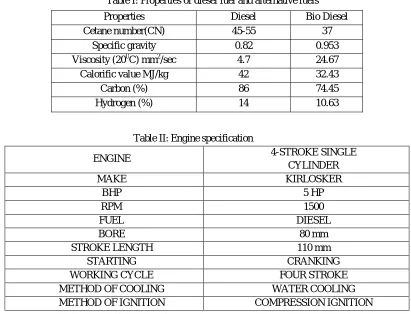
Table I: Properties of diesel fuel and alternative fuels
Table II: Engine specification
ENGINE 4-STROKE SINGLE
CYLINDER
MAKE KIRLOSKER
BHP 5 HP
RPM 1500
FUEL DIESEL
BORE 80 mm
STROKE LENGTH 110 mm
STARTING CRANKING
WORKING CYCLE FOUR STROKE
METHOD OF COOLING WATER COOLING
METHOD OF IGNITION COMPRESSION IGNITION
II. EXPERIMENTALSETUP
The engine used for this experiment was naturally aspirated, water-cooled, 4-cylinder, direct-injection diesel engine. The specifications of the engine are shown in Table II. The engine was connected to an alternator and a control system was used for adjusting its speed and torque. The fuels used in this study include diesel fuel, biodiesel and biodiesel blends. The blending percentage of biodiesel with diesel was mixed to 0%, 5%, 10%, 20%, 30, 40% and 50%, and are identified as BD0, BD5, BD10, BD20, BD30, BD40 and BD50 fuels. The biodiesel was collected from local market as required. The main parameters expected from the engine were power produced by the engines, speed, fuel consumption, exhaust gas temperature; exhaust gas analysis measured using Global Diagnostic Software (GDS) system. The major properties of the diesel and biodiesel are shown in table I.
Properties Diesel Bio Diesel
Cetane number(CN) 45-55 37
Specific gravity 0.82 0.953
Viscosity (200C) mm2/sec 4.7 24.67
Calorific value MJ/kg 42 32.43
Carbon (%) 86 74.45
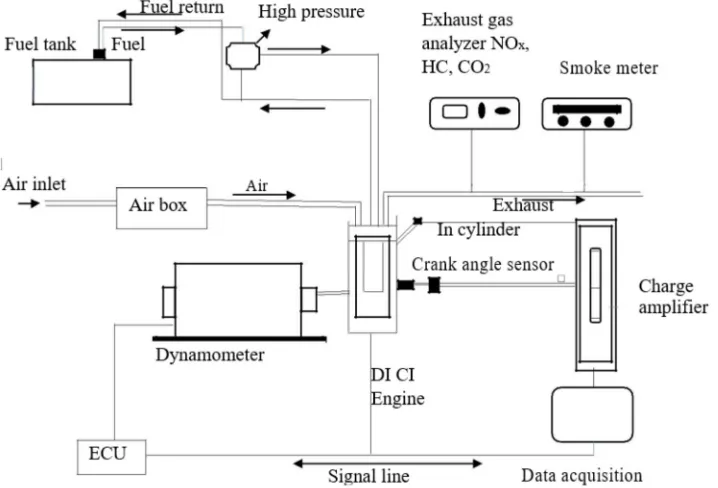
Figure 1: Schematic diagram of experiment setup.
Figure 2: La experimental setup.
III.ENGINETESTPROCEDURE
This study was conducted to investigate the performance of single cylinder diesel engine run on different alternative fuels blends with diesel (10:90, 14:86, and 20:80 etc. by volume) and also on diesel fuel alone. The engine was coupled to a brake drum, the rope is wound round the brake drum and is connected to dead weight and spring the spring balance S. the load can be varied by rotating by hand wheel provided. Before initiating the studies, the engine was started and allowed to warm up for about 15 minutes. The engine was operated first on diesel fuel alone. In order to evaluate the performance of oil blends and pure diesel fuel, following parameters were recorded:
A. Brake power(BP)
B. Mass of fuel consumption(mfc)
[image:3.612.164.451.362.552.2]D.Brake thermal efficiency
The engine was tested under different loads (0, 1, 2, 4, 8, 10 kg etc.) conditions at a constant speed of, for each percentage of blending. Thereafter, time taken for fixed quantity of fuel consumption was noted for each load. The procedure was repeated for various blends used in studies.
E. Fill up the fuel into the fuel tank mounted on the panel frame.
F. Connect the instrumentation power input plug to a 230V, single phase power source. Now the digital meters namely, RPM and
temperature indicators display the respective readings.
G.Connect the water line to the engine jacket and brake drum.
H.Check the lubricating oil in the oil sump.
I. Open the fuel valve and ensure no air trapped in the fuel line.
J. Start the engine and allow it to stabilize rated speed (1500 RPM).
K. Now load the engine in steps of ¼, 1/2, 3/4, full load &10% over load and allow the engine to stabilize at each load.
L. Record all the required parameters indicated on the digital indicators which are mounted on the panel board like,
IV.RESULTS
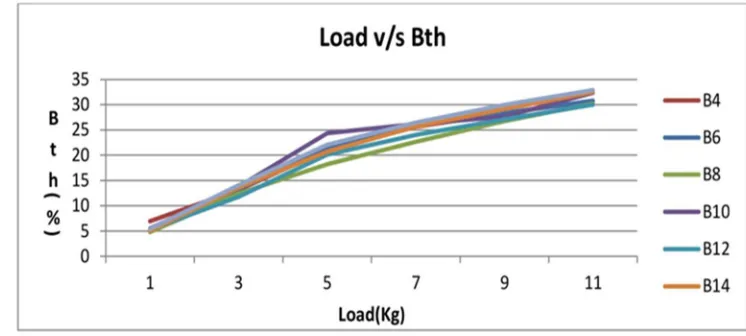
[image:4.612.60.539.397.504.2]It According to the results obtained, the graphs between BTE and Load, MFC and Load and, BTE and load are plotted. The graph (fig 7.7) shows that there is increase in brake power as the increase in the applied load. This is due to increase in the fuel consumption rate as the increase in load which is shown in fig 5.8. The graph shows the brake power for different blend (B4, B6, B8, B10, B12, B14 and B20) with respect to load. Fig 7.9 indicates variation of brake thermal efficiency with respect to load for different blends. In all cases, brake thermal efficiency was having tendency to increase with increase in applied load. This was due to the reduction in heat loss and increase in power developed with increase in load. At atmospheric temperature all blends shows nearly 30%-35% efficiency for full load. Thermal efficiency of the engine was improved with increase in concentration of the biodiesel in the blend. The possible reason for this is the additional lubricity provided by the biodiesel. The molecules of biodiesel (i.e. methyl esters of the oil) contain some amount of oxygen, which takes active part in combustion process.
Fig 3: Graph of load v/s BP Fig 4: Graph of load v/s mfc
[image:4.612.70.502.401.710.2][image:4.612.103.476.546.714.2]
A. Cost Analysis
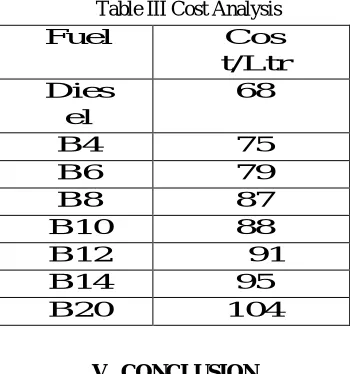
[image:5.612.219.394.158.345.2]The present costing of running a diesel engine with bio- diesel blends derived from mustard oil are given in Table. From Table it is clear that, running diesel engine with biodiesel blends is costly as compared to diesel fuel. How- ever, cost can be drastically reduced, if methanol can be recycled after the transesterification reaction. Moreover, in our experiment we have used food grade mustard oil. And using raw or unprocessed oil would also cause to decrease the biodiesel production cost.
Table III Cost Analysis
V. CONCLUSION
Experiment was conducted on a small four stroke diesel engine to determine the feasibility of mustard oil as an alternative to diesel engine. In regard to the present experimental work of pure diesel to check engine performance than studied about different types of alternative fuels and their properties and cost efficiency Further studied was made on the properties of Biofuel with trans-esterification reaction. The following conclusions may be drawn from the experiment.
A. The trans-esterification process, used for making biodiesel, is simple and cost effective to solve viscosity problems encountered with vegetable oils
B. The cost of dual fuel can be considerably high than pure diesel is used
C. Esterified mustard oil, soyabean oil and esterified neem oil as a biodiesel satisfies the important fuel properties
D. It is possible to run diesel engine with biodiesel blends.
REFERENCES
[1] Atabani, Abdelaziz E., Arridina S. Silitonga, Irfan Anjum Badruddin, T. M. I. Mahlia, H. H. Masjuki, and S. Mekhilef. "A comprehensive review on biodiesel
as an alternative energy resource and its characteristics."Renewable and Sustainable Energy Reviews 16, no. 4 (2012): 2070-2093.
[2] O. O. Awolu, R.O. Obafaye and B.S. Ayodele, Optimization of Solvent Extraction of Oil from Neem (Azadirachta indica) and Its Characterizations, Journal of
Scientific Research & Reports, Vol.25, pp. 300-367, 2013.
[3] Tunmise Latifat Adewoye and Oladipupo Olaosebikan Ogunleye, Optimization of Neem Seed Oil Extraction Process Using Response Surface Methodology,
Journal of Natural Sciences Research, 2012.
[4] P.Tamil Porai, N.Nagarajan, Evaluation Of Performance & Emission Of Neem Oil Methyl Ester In A Diesel Engine, Asian Journal of Computer Science And
Information Technology, Vol 3, No 4, (2013)
[5] J.M.N. van Kasteren and A.P. Nisworo, A process model to estimate the cost of industrial scale biodiesel production from waste cooking oil by supercritical
transesterification Resources, Conservation and Recycling, Volume 50, pp. 442–458, 2007.
[6] Ayhan Demirbas, Biodiesel from waste cooking oil via base-catalytic and supercritical methanol transesterification Energy Conversion and Management,
Volume 50, pp. 923–927, 2007.
[7] Anh N. Phan , Tan M. Phan, Biodiesel production from waste cooking oils, Fuels, Volume 87,17–18, pp.3490–3496, 2008.
[8] T. Eevera, K. Rajendran, S. Saradha, ‘Biodiesel production process optimization and characterization to assess the suitability of the product for varied environmental conditions’, Renewable Energy, Volume 34, pp. 762–765, 2009.
[9] Y. Zhang , M.A. Dube, D.D. McLean, M. Kates, Biodiesel production from waste cooking oil: 2. Economic assessment and sensitivity analysis, Bioresource
Technology, Volume 90, pp. 229–240, 2003. 54
[10] Subramaniam, D., A. Murugesan, and A. Avinash. "A comparative estimation of CI engine fuelled with methyl esters of punnai, neem and waste cooking oil.
"International Journal of Energy and Environment 4, no. 5, pp.859-870, 2013.
[11] Nabi, Md Nurun, Md Shamim Akhter, and Mhia Md Zaglul Shahadat. "Improvement of engine emissions with conventional diesel fuel and diesel–biodiesel
blends." Bioresource Technology 97, no. 3, pp.372-378, 2006.
[12] Radha, K. V., and G. Manikandan. "Novel production of biofuels from neem oil." In World Renewable Energy Congress, pp. 471-478. 2011.
Fuel Cos
t/Ltr Dies
el
68
B4 75
B6 79
B8 87
B10 88
B12 91
B14 95
[13] Ramning, Amol M., V. N. Ganvir, Aditaya Akheramka, and Y. C. Bhattacharyulu. "Optimization of neem oil methyl ester using response surface methodology (RSM)." (2013).
[14] Rajam, L., DR Soban Kumar, A. Sundaresan, and C. Arumughan. "A novel process for physically refining rice bran oil through simultaneous degumming and
dewaxing." Journal of the American Oil Chemists' Society 82, no. 3 (2005): 213-220.
[15] Banković-Ilić, Ivana B., Olivera S. Stamenković, and Vlada B. Veljković. "Biodiesel production from non-edible plant oils." Renewable and Sustainable Energy Reviews 16, no. 6 (2012): 3621-3647.
[16] Zhang, Yen, M. A. Dube, DDl McLean, and M. Kates. "Biodiesel production from waste cooking oil: 1. Process design and technological
assessment."Bioresource technology 89, no. 1 (2003): 1-16.
[17] Zhang, Yen, M. A. Dube, DDl McLean, and M. Kates. "Biodiesel production from waste cooking oil: 2. Economic assessment and sensitivity analysis "Bioresource technology 89, no. 1 (2003): 1-16.
[18] Meng, Xiangmei, Guanyi Chen, and Yonghong Wang. "Biodiesel production from waste cooking oil via alkali catalyst and its engine test." Fuel Processing
Technology 89, no. 9 (2008): 851-857. 55
[19] Eevera, T., K. Rajendran, and S. Saradha. "Biodiesel production process optimization and characterization to assess the suitability of the product for varied environmental conditions." Renewable Energy 34, no. 3 (2009): 762-765.
[20] Smiles, Aileen, Yukio Kakuda, and Bruce E. MacDonald. "Effect of degumming reagents on the recovery and nature of lecithins from crude canola, soybean