Entity Linking Korean Text: An Unsupervised Learning Approach using
Semantic Relations
Youngsik Kim
KAIST/Korea, The Republic of
Key-Sun Choi
KAIST/Korea, The Republic of
Abstract
Although entity linking is a widely re-searched topic, the same cannot be said for entity linking geared for languages other than English. Several limitations includ-ing syntactic features and the relative lack of resources prevent typical approaches to entity linking to be used as effectively for other languages in general. We describe an entity linking system that leverage se-mantic relations between entities within an existing knowledge base to learn and per-form entity linking using a minimal en-vironment consisting of a part-of-speech tagger. We measure the performance of our system against Korean Wikipedia ab-stract snippets, using the Korean DBpe-dia knowledge base for training. Based on these results, we argue both the feasibil-ity of our system and the possibilfeasibil-ity of ex-tending to other domains and languages in general.
1 Introduction
A crucial step in creating the Web of Data is the process of extracting structured data, or RDF (Adida et al., 2012) from unstructured text. This step enables machines to read and understand unstructured Web pages that consist the major-ity of the Web. Three tasks play a part in ex-tracting RDF from unstructured text: Named en-tity recognition(NER), where strings representing named entities are extracted from the given text; entity linking(EL), where each named entity rec-ognized from NER is mapped to a appropriate re-source from a knowledge base; and relation ex-traction(Usbeck et al., 2014). Although entity linking is an extensively researched field, most research done is aimed primarily for the English language. Research about entity linking for
lan-guages other than English have also been per-formed (Jakob et al., 2013), but most state-of-art entity linking systems are not fully language inde-pendent.
The reason for this is two-fold. Firstly, most entity linking systems depend on an existing sys-tem to perform named entity recognition before-hand. For instance, the system proposed by Us-beck (2014) uses FOX (Speck et al., 2014) to perform named entity recognition as the starting point. The problem with this approach is that an existing named entity recognition system is re-quired, and thus the performance of entity linking is bound by the performance of the named entity recognition system. Named entity recognition sys-tems for English achieve high performance even by utilizing a simple dictionary-based approach augmented by part-of-speech annotations, but this approach does not work in all languages in gen-eral. CJK1languages in particular are difficult to perform named entity recognition on because lan-guage traits such as capitalization and strict token separation by white-space do not exist. Other ap-proaches to named entity recognition such as sta-tistical models or projection models respectively require a large amount of annotated training data and an extensive parallel corpus to work, but the cost of creating these resources is also non-trivial. Some approaches to entity linking utilizing su-pervised and semi-susu-pervised learning also suffer from the lack of manually annotated training data for some languages. Currently, there is no proper golden standard dataset for entity linking for the Korean language.
In this paper, we present an entity linking sys-tem for Korean that overcomes these obstacles with an unsupervised learning approach utilizing semantic relations between entities obtained from a given knowledge base. Our system uses these semantic relations as hints to learn feature values
1Chinese, Japanese, Korean
for both named entity recognition and entity link-ing. In Section 3, we describe the requirements of our system, and present the architecture of both the training and actual entity linking processes. In Section 4, we compare the performance of our sys-tem against both a rule-based baseline and the cur-rent state-of-art system based on Kim’s (2014) re-search.
2 Related Work
The current state-of-art entity linking system for Korean handles both named entity recognition and entity linking as two separate steps (Kim et al., 2014). This system uses hyperlinks within the Ko-rean Wikipedia and a small amount of text man-ually annotated with entity information as train-ing data. It employs a SVM model trained with character-based features to perform named entity recognition, and uses the TF*ICF (Mendes et al., 2011) and LDA metrics to disambiguate between entity resources during entity linking. Kim (2014) reports an F1-score of 75.66% for a simplified task in which only surface forms and entities which ap-pear as at least one hyperlink within the Korean Wikipedia are recognized as potential entity can-didates.
Our system utilizes relations between entities, which can be said to be a graph-based approach to entity linking. There have been recent research about entity linking that exploit the graph struc-ture of both the named entities within text and RDF knowledge bases. Han (2011) uses a graph-based collective method which can model and ex-ploit the global interdependence between different entity linking decisions. Alhelbawy (2014) uses graph ranking combined with clique partitioning. Moro (2014) introduces Babelfy, a unified graph-based approach to entity linking and word sense disambiguation based on a loose identification of candidate meanings coupled with a densest sub-graph heuristic which selects high-coherence se-mantic interpretations. Usbeck (2014) combines the Hypertext-Induced Topic Search (HITS) algo-rithm with label expansion strategies and string similarity measures.
There also has been research about named en-tity recognition for Korean. Kim (2012) pro-poses a method to automatically label multi-lingual data with named entity tags, combin-ing Wikipedia meta-data with information ob-tained through English-foreign language parallel
Wikipedia sentences. We do not use this approach in our system because our scope of entities is wider than the named entity scope defined in the MUC-7 annotation guidelines, which is the scope of Kim’s research.
3 The System
Due to the limitations of performing entity linking for the Korean language described in Section 1, our system is designed with some requirements in mind. The requirements are:
• The system should be able to be trained and ran within a minimal environment, which we define as an existing RDF knowledge base containing semantic relations between enti-ties, and a part-of-speech tagger. In this pa-per, we use the 2014 Korean DBpedia RDF knowledge base and the ETRI Korean part-of-speech tagger.
• The system should be able to perform en-tity linking without using external informa-tion not derived from the knowledge base.
We define the task of our system as follows: Given a list of entity uniform resource identi-fiers(URI) derived from the knowledge base, an-notate any given text with the appropriate entity URIs and their positions within the text.
3.1 Preprocessing
The preprocessing step of our system consists of querying the knowledge base to build a dic-tionary of entity URIs and their respective sur-face forms. As we are using the Korean DB-pedia as our knowledge base, we define all re-sources with a URI starting with the names-pace ‘http://ko.dbpedia.org/resource/’ and which are not mapped to disambiguation nor redirection Wikipedia pages as valid entities. For each entity, we define all literal strings connected via the prop-erty ‘rdfs:label’ to the entity and all entities that disambiguate or redirect to the entity as possible surface forms.
The dictionary that results from preprocessing contains 303,779 distinct entity URIs and 569,908 entity URI-surface form pairs.
3.2 Training
from a large amount of unannotated text docu-ments. As the given text is not annotated with en-tity data, we use the following assumption to help distinguish potential entities within the text: Assumption. Entity candidates which have a high
degree of semantic relations with nearby en-tity candidates are likely actual entities. We define an ‘entity candidate’ of a document as a substring-entity URI pair in which the sub-string appears at a specific position within the document and the pair exists in the dictionary created during preprocessing, and a ‘seman-tic relation’ between two entity candidatesc1,
c2(RelPred(c1,c2)) as an undirected relation consisting of all predicates in the knowledge base that connect the entity URIs of the entity candidates.
The basis for this assumption is that some men-tions of ‘popular’(having a high degree within the knowledge base RDF graph) entity URIs will be accompanied with related terms, and that the knowledge base will have RDF triples connecting the entity to the other entity URIs representing the related terms. Thus we assume that by selecting all entity candidates with a high degree of semantic relations, these candidates display features more representative of actual entities than the remaining entity candidates do.
For each document in the training set, we first perform part-of-speech tagging to split the text into individual morphemes. Because the concate-nation of the morphemes of a Korean word is not always identical to the word itself, we transform the morphemes into ‘atomic’ sub-strings which represent minimal building blocks for entity can-didates and can have multiple POS tags.
After part-of-speech tagging is complete, we then gather a set of entity candidates from the document. We first find all non-overlapping sub-strings within the document that correspond to entity surface forms. It is possible for these sub-strings to overlap with each other([[Chicago] Bulls]); and because the average length of entity surface forms in Korean is very short(between 2 to 3 characters), we opt to reduce the problem size of the training process by choosing only the string with the longest length when multiple sub-strings overlap with each other.
[image:3.595.347.489.61.127.2]As to further reduce the number of entity candi-dates we consider for training, we only use the en-tity candidate with the most ‘popular’ enen-tity URI
Figure 1: All possible entity candidates within the text fragment ‘Gyeongjong of Goryeo is’ (Kim et al., 2014)
per group of candidates that share the same sub-string within the document. We define the ‘popu-larity’ of an entity URI in terms of the RDF triples in the knowledge base that has the URI as the ob-ject. More formally, we defineUriPop(c) for an entity candidatecwith the entity URIcu with the
equations below. A largerUriPopvalue means a more ‘popular’ entity URI, and Pred is meant to prevent overly frequent predicates in the knowl-edge base from dominatingUriPop.
(1)
UriPop(c)=log( X
p∈KBpredicates
Pred(p)
× |{s|(s,p,cu)∈KB}|)
(2)
Pred(p)=1− |{(s,|{(os,)|(p,s,op,)∈o)KB∈KB}| }|
At this stage of the training process, we have a set of non-overlapping entity candidates. We now classify these candidates into two classes:
eT(entity) and eF(non-entity) according to our
previous assumption. We measure the degree of semantic relations of an entity candidate c,
S emRel(c), with the following equation whereNc
is the set of entity candidates which are within 20 words from the target candidate in the document:
(3)
S emRel(c)= P
c0∈NcPp∈RelPred(c,c0)Pred(p)
|Nc|
Since we do not have enough evidence at this point to distinguish entities from non-entities, we use semantic relations from all nearby en-tity candidates to calculate S emRel. We order the entity candidates into a list in decreasing or-der of S emRel, and classify entity candidates from the start of the list into eT until either 1)
eT
document word # > lw or 2)S emRel(c) < lsare
satisfied, where both lw andls are constants that
We now update the current feature values based on the entity candidates in eT and eF. For each
feature f, we first define two sub-classes ef T =
{e|ehas f∧e∈eT}andef F={e|ehas f∧e∈eF}.
We then update the feature value of f from α
β to
α+|ef T|
β+|ef T|+|ef F|, which represents the probability of an entity candidate having feature f to be classified into eT(is an entity). The full list of features we
used is shown below:
f1: String length The length (in characters) of the sub-string of the candidate.
f2: POS tag The POS tag(s) of the sub-string of the candidate. If multiple POS tags exist, we take the average of the f2values for each tag as the representive f2value.
f3: Head POS tag The first POS tag of the sub-string of the candidate.
f4: Tail POS tag The last POS tag of the sub-string of the candidate.
f5: Previous POS tag The POS tag of the sub-string right before the candidate. If the can-didate is preceded by white-space, we use the special tag ‘BLANK’.
f6: Next POS tag The POS tag of the sub-string right after the candidate. If the candidate is followed by white-space, we use the special tag ‘BLANK’.
f7: UriPop The UriPop score of the entity URI of the candidate. Since UriPop has a con-tinuous range, we keep separate features for
UriPopscore intervals of 0.2.
Given these features, we define IndS core(c) of an entity candidatec, which represents the overall probability c would be classified in eT
indepen-dently of its surrounding context, as the average of the feature values forc.
We also define WeightedS emRel(c) as the amount of evidence via semantic relations c has of being classified ineT. We define this score in
terms of semantic relations relative to theUriPop
score of c in order to positively consider entity candidates which have more semantic relations than their entity URIs would normally have.
Finally, we define EntityS core(c) representing the overall evidence forcto be ineT. The
respec-tive equations for these scores are shown below.
WeightedS emRel(c)
= P
c0∈NcPp∈RelPred(c,c0)Pred(p)×UriPop(c0) UriPop(c)
(4)
(5)
EntityS core(c)= IndS core(c)
+WeightedS emRel(c)
As we want to assign stronger evidence for se-mantic relations with entity candidates that are likely actual entities (as opposed to relations with non-entities), we define WeightedS emRel to be have a recursive relation withEntityS core.
We end the training process for a single doc-ument by computing the EntityS core for each entity candidate in eT and eF, and adding these
scores respectively into the lists of scores distT
anddistF. As the EntityS core for the same
en-tity candidate will change as training proceeds, we only maintain the 10,000 most recent scores for both lists.
3.3 Entity Linking
Since the actual entity linking process is also about selecting entity candidates from the given docu-ment, the process itself is similar to the training process. We list the differences of the entity link-ing process compared to trainlink-ing below.
When we choose the initial entity candidates, we do not remove candidates with overlapping sub-strings. Although we do limit the number of candidates that map to the same sub-string, we choose the top 3 candidates based onUriPop in-stead of just 1.
We compute the EntityS core for each entity candidate without performing candidate classifica-tion nor feature value updates. Although the value of EntityS core(c) is intended to be proportional to the possibility the candidatecis actually an en-tity, we need a way to define a threshold constant to determine which candidates to actually classify as entities. Thus, we then normalize any given
EntityS core(c) score of an entity candidatecinto a confidence scoreCon f(c), which represents the relative probability of c being a member of eT
against being a member ofeF. This is computed
by comparing the score against the listsdistT and
distF, as shown in the following equations:
Con f T(c)= |{x|x∈distT∧x<EntityS core(c)}|
|distT|
Con f F(c)= |{x|x∈distF∧|xdist> EntityS core(c)}|
F|
(7)
(8)
Con f(c)= Con f TCon f T(c)+Con f F(c) (c)
Con f is a normalized score which satisfies 0≤
Con f(c)≤1 for any entity candidatec. This gives us the flexibility to define a threshold 0≤γ≤1 so that only entity candidates satisfyingCon f(c)≥γ
are classified as entities.
Algorithm 1The entity selection algorithm
E←[]
for allc∈Cdo ifCon f(c)≥γthen
unsetE←[]
valid=true
for alle∈Edo
ifsub-string ofccontainsethen
unsetE←unsetE+e
else if sub-string of c overlaps with e
then
valid =false
end if end for
ifvalidis truethen
E←E+c
for alle∈unsetEdo
E ←E−e
end for end if end if end for return E
Algorithm 1 shows the entity selection process, whereCis initialized as a list of all entity candi-dates ordered by decreasing score of Con f. We only select entity candidates which have a confi-dence score of at leastγ. When the sub-strings of multiple entity candidates overlap with each other, we prioritize the candidate with the highest fidence with the exception of candidates that con-tain(one is completely covered by the other, with-out the two being identical) other candidates in which we choose the candidate that contains the other candidates.
4 Experiments
4.1 Entity Linking for Korean 4.1.1 The Dataset
Although the dataset used by Kim (2014) exists, we do not use this dataset because it is for a sim-plified version of the entity linking problem as dis-cussed in Section 2. We instead have created a new dataset intended to serve as answer data for the entity linking for Korean task, based on guide-lines that were derived from the TAC KBP 20142 guidelines. The guidelines used to annotate text for our dataset are shown below:
• All entities must be tagged with an entity URI that exists in the 2014 Korean DBpedia knowledge base.
• All entities must be tagged with an entity URI which is correct to appear within the context of the entity.
• All entity URIs must identify a single thing, not a group of things.
• Verbs and adjectives that have an equiva-lent noun that is identified by an entity URI should not be tagged as entities.
• Only words that directly identify the entity should be tagged.
• If several possible entities are contained within each other, the entity that contains all other entities should be tagged.
• If several consecutive words each can be rep-resented by the same entity URI, these words must be tagged as a single entity, as opposed to tagging each separate word.
• Indirect mentions of entity URIs (ex: pro-nouns) should not be tagged even if co-resolution can be performed in order to iden-tify the entity URI the mention stands for.
Our dataset consists of 60 Korean Wikipedia ab-stract documents annotated by 3 different annota-tors.
4.1.2 Evaluation
We evaluate our system against the work of Kim (2014) in terms of precision, recall, and F1-score metrics. As Kim’s (2014) system(which we will refer to as KEL2014) was originally trained with the Korean Wikipedia, it required only slight ad-justments to properly operate for our dataset.
We first train our system using 4,000 documents randomly gathered from the Korean Wikipedia. We then evaluate our system with our dataset, while adjusting the confidence threshold γ from 0.01 to 0.99 in increments of 0.01. We compare our results with those of the best-performing set-tings of KEL2014.
[image:6.595.328.501.62.347.2]4.1.3 Results
Figure 2: The distribution ofdistT anddistF after
training with 4,000 documents
The results of the training process is shown in Figure 2. We can see that theEntityS corevalues of entity candidates classified ineT are generally
higher than those ineF. This can be seen as
evi-dence to our claim that the features of entities with a high degree of semantic relations can be used to distinguish entities from non-entities in general.
We show additional evidence to this claim with Table 1, which lists the feature values for the fea-ture f1(sub-string length) after the training process is complete. We observe that this feature gives rel-atively little weight to entity candidates with a sub-string of length 1, which is consistent with our ini-tial observation that most of these candidates are not entities.
Figure 3 shows the performance of our sys-tem compared to the performance of KEL2014 against our dataset. As we increase the confidence threshold, the recall decreases and the precision increases. The maximum F1-score of our system using our dataset, 0.630, was obtained with the confidence threshold γ = 0.79. This is an im-provement over KEL2014 which scored an
F1-Length eT eT+eF Value
1 37629 312543 0.120 2 41355 168672 0.245 3 20164 41098 0.490 4 12542 19619 0.637 5 13953 19722 0.704
6 5299 7503 0.698
7 3223 4187 0.753
8 2686 4282 0.616
9 2346 3034 0.751
10 922 1099 0.774
11 917 1011 0.830
12 477 546 0.750
13 249 276 0.687
14 218 274 0.615
15 155 170 0.618
16 109 116 0.567
17 99 118 0.523
18 48 52 0.434
19 49 55 0.433
[image:6.595.328.500.65.349.2]20 34 40 0.384
Table 1: Feature values of the featuref1after train-ing with 4,000 documents
score of 0.598. Although the performance dif-ference itself is small, this shows that our system trained with unannotated text documents performs better than KEL2014, which is trained with both partially annotated documents (Wikipedia articles) and a small number of documents completely an-notated with entity data. This also shows that KEL2014 does not perform as well outside the scope of the simplified version of entity linking it was designed for.
Our system currently is implemented as a sim-ple RESTful service where both training and ac-tual entity linking are initiated via POST requests. Our system can be deployed to a server at its initial state or at a pre-trained state.
4.2 Alternative Methods and Deviations 4.2.1 Using Feature Subsets
[image:6.595.72.291.269.399.2]Figure 3: The performance of our system against KEL2014. The dots represent the results of our system, and the cross represents the results of KEL2014.
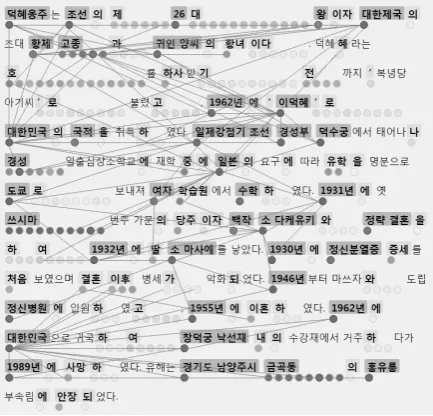
Figure 4: A temporary web interface for our sys-tem showing entity linking results for a sample text snippet
Dev1 All features except POS-related ones: f1,
f7.
Dev2 All POS-related features only: f2, f3, f4, f5,
f6.
Figures 5 and 6 shows the performance of our system using the feature subsets Dev1 and Dev2. For the feature subset Dev1, our system displays a maximum F1-score of 0.433 withγ = 0.99; for the features subset Dev2, our system performs best withγ=0.98 for an F1-score of 0.568.
As expected, both deviations perform worse than our system trained with the full set of fea-tures. We observe that the performance of Dev1 is significantly worse than that of Dev2. This sug-gests that POS-based features are more important
[image:7.595.309.524.244.375.2]Figure 5: The performance of our system using the feature subset Dev1.
Figure 6: The performance of our system using the feature subset Dev2.
in distinguishing entities from non-entities than the other features.
4.2.2 Using SVM Models
Kim (2014) effectively utilized trained SVM mod-els to detect entities within text. Based on Kim’s experiments, we investigate whether SVM can be also used to raise performance of our system.
Although we now need to base entity predic-tions with a trained SVM model instead of the confidence metricCon f, the training process de-scribed in Section 3.2 is mostly unaltered because it the classification of entity candidate intoeT and
eF results in the training data required to train a
SVM binary classification model. The differences in the training process are shown below:
• After we process each document, a list of fea-tures is produced for each entity candidate classified aseT oreF. Instead of appending
theEntityS corevalues of these entity candi-dates todistT anddistF, we append the
fea-ture lists of each entity candidate themselves into two lists of lists, listT andlistF. These
[image:7.595.73.290.267.475.2]10,000 entity candidates.
• After the entire training set is processed, we use the list of feature lists in listT andlistF
to train the SVM model. As the original fea-tures are not all numbers, we transform each list of features into 7-dimensional vectors by replacing each feature key into the feature value of the respective feature.
We use the same training data as in Section 4.1.2, and train a SVM model with a 3-degree polynomial kernel. We choose this kernel accord-ing to Kim’s (2014) work, where Kim compares the performance of SVM for the task of entity link-ing for Korean uslink-ing multiple kernels.
Our system, using a trained SVM model results in a F1-score of 0.569, which is about 0.07 lower than the best performance of our system using the confidence model. One possible reason our sys-tem performed worse using SVM classification is that the training data that we feed to the classi-fier is not correctly classified, but rather based on the semantic relations assumption in Section 3.2. As this assumption does not cover any character-istics of non-entities, the effectiveness of SVM de-creases as many entity candidates which are actual entities get classified aseF due to them not having
enough semantic relations.
4.3 Application on Other Languages
As our system does not explicitly exploit any char-acteristics of the Korean language, it theoretically is a language-independent entity linking system. We investigate this point using Japanese as a sam-ple language, and MeCab3 as the part-of-speech tagger.
As no proper dataset for the entity linking for Korean task exists, we have created a new dataset in order to measure the performance of our sys-tem. As we believe many other languages will also lack a proper dataset, we must devise an al-ternative method to measure the performance of our system for other languages in general.
We use Wikipedia documents and the links an-notated within them as the dataset to use for mea-suring performance of our system for languages other than Korean. Although the manually anno-tated links within Wikipedia documents do rep-resent actual entities and their surface forms, we
3http://taku910.github.io/mecab/
cannot completely rely on these links as answer data because of the following reasons:
• The majority of entities within a Wikipedia document are not actually tagged as links. This includes self-references (entities that ap-pear within the document describing that en-tity), frequently appearing entities that were tagged as links for their first few occurrences but were not tagged afterwards, and entities that were not considered important enough to tag as links by the annotators. Due to the existence of so many untagged entities, we effectively cannot use precision as a perfor-mance measure.
• Some links represent entities that are out-side the scope of our research. This includes links that point to non-existent Wikipedia pages (‘red links’), and links that require co-resolution to resolve.
Due to these problems, we only use the recall metric to measure the approximate performance of our system when using Wikipedia documents as answer data. We compare the performance of our system for Korean and Japanese by first train-ing our system with 3,000 Wikipedia docuem-nts, and measuring the recall of our system for 100 Wikipedia documents for both respective lan-guages while adjusting the confidence thresholdγ
[image:8.595.316.526.502.639.2]from 0.01 to 0.99 in increments of 0.01.
Figure 7: The recall of our system against Korean and Japanese Wikipedia documents
Korean and Japanese. Although this does not ac-curately represent the actual performance of our system, we leave the task of improving our system to display consistent performance across multiple languages as future work.
5 Future Work
As our system currently only uses labels of en-tity URIs to determine surface forms of entities, it can not detect entities with irregular surface forms. For instance, the entity ‘Steve˙Jobs’ has the labels ‘Steve Jobs’ and ‘Jobs’ within the Korean DBpe-dia knowledge base, but does not have the label ‘Steve’. This results in the inability of our system to detect certain entities within our dataset, regard-less of training. We plan to improve our system to handle derivative surface forms such as ‘Steve’ for ‘Steve˙Jobs’, without relying on external dic-tionaries if possible.
Kim (2014) shows that a SVM classifier using character-based features trained with Wikipedia articles achieves better named entity recogni-tion performance than a rule-based classifier us-ing part-of-speech tags. Although our system uses trained features based on part-of-speech tags rather than a rule-based method, we may be able to remove even the part-of-speech tagger from the re-quirements of our system by substituting these fea-tures with the character-based feafea-tures suggested in Kim’s (2014) work.
Finally, future work must be performed about replacing the part-of-speech tagger currently used in our system with a chunking algorithm that does not utilize supervised training. Our system cur-rently utilizes the list of morphemes and their re-spective POS tags that are produced from the part-of-speech tagger. Since our system does not re-quire this information to be completely accurate, a dictionary-based approach to chunking might be applicable as well.
6 Conclusion
In this paper, we present an entity linking system for Korean that utilizes several features trained with plain text documents. By taking an unsu-pervised learning approach, our system is able to perform entity linking with a minimal environ-ment consisting of an RDF knowledge base and a part-of-speech tagger. We compare the perfor-mance of our system against the state-of-art sys-tem KEL2014, and show that our syssys-tem
outper-forms KEL2014 in terms of F1-score. We also briefly describe variations to our system training process, such as using feature subsets and utilizing SVM models instead of our confidence metric.
Many languages including Korean are not as rich in resources as the English language, and the lack of resources might prohibit the state-of-art systems for entity linking for English from per-forming as well in other languages. By utilizing a minimal amount of resources, our system may provide a firm starting point for research about en-tity linking for these languages.
7 Acknowledgements
This work was supported by Institute for Infor-mation & communications Technology Promo-tion(IITP) grant funded by the Korea govern-ment(MSIP) (No. R0101-15-0054, WiseKB: Big data based self-evolving knowledge base and rea-soning platform)
References
B. Adida, I. Herman, M. Sporny, and M. Birbeck. RDFa 1.1 Primer. Technical report, World Wide Web Consortium, http://www.w3.org/TR/2012/ NOTE-rdfa-primer- 20120607/, June 2012.
Usbeck, R., Ngomo, A. C. N., Rder, M., Gerber, D., Coelho, S. A., Auer, S., and Both, A. (2014). AGDISTIS-graph-based disambiguation of named entities using linked data. In The Semantic We-bISWC 2014 (pp. 457-471). Springer International Publishing.
Daiber, J., Jakob, M., Hokamp, C., and Mendes, P. N. (2013, September). Improving efficiency and accu-racy in multilingual entity extraction. In Proceed-ings of the 9th International Conference on Semantic Systems (pp. 121-124). ACM.
Speck, R., and Ngomo, A. C. N. (2014). Ensemble learning for named entity recognition. In The Se-mantic WebISWC 2014 (pp. 519-534). Springer In-ternational Publishing.
Y. Kim, Y. Hamn, J. Kim, D. Hwang, and K.-S. Choi, A Non-morphological Approach for DBpedia URI Spotting within Korean Text, Proc. of HCLT 2014, Chuncheon, 2014.
P. N. Mendes, M. Jakob, A. Garca-Silve, and C. Bizer, ”DBpedia spotlight: shedding light on the web of documents,” Proc. of i-SEMANTICS 2011 (7th Int. Conf. on Semantic Systems, 2011.
conference on Research and development in Infor-mation Retrieval (pp. 765-774). ACM.
Alhelbawy, Ayman, and Robert Gaizauskas. ”Col-lective Named Entity Disambiguation using Graph Ranking and Clique Partitioning Approaches.” Moro, Andrea, Alessandro Raganato, and Roberto
Navigli. ”Entity linking meets word sense disam-biguation: a unified approach.” Transactions of the Association for Computational Linguistics 2 (2014): 231-244.