ISSN Online: 2327-5227 ISSN Print: 2327-5219
Development of Multi-Purpose, Variable, Light
Aircraft Simulator
Seunghee Yu, Yongjin Kwon
*Department of Industrial Engineering, College of Engineering, Ajou University, Suwon, South Korea
Abstract
Most aircraft simulators are manufactured separately for each model because the structure and flight characteristic of each model is different. However, light aircrafts are somewhat similar in terms of form and structure. In addi-tion, from the flight schools’ point of view, it is not economically beneficial to purchase and maintain light aircraft simulators for each different aircraft type. Globally, there are four types of light aircraft models that are most widely used for basic flight training. If all four models are separately selectable within a single flight simulator, there will be a lot of economic benefits in terms of reducing the purchasing costs as well as the reduction of pilot training costs. In this regard, this study aims at developing the multi-purpose variable-type simulator technology so that it can train four different aircraft types using on-ly a single simulator. The utility of simulator is divided into the use of flight training and the use of leisure time. The flight characteristics are analyzed for each model type to emulate the actual aircraft. It is anticipated that the devel-oped simulator can be produced at a lower cost while occupying less floor space and using less electric energy than the previous one.
Keywords
Simulator, Flight Training, Light Aircraft, Aeronautical, Cockpit Instrument
1. Introduction
Aircraft simulators are flight training equipment that provides an environment similar to an actual flight. It is customary to produce them by aircraft type for the purpose of performing type-specialized training [1]. In the case of a large aircraft cockpit, the shape and structure of each aircraft are different, but the shape and structure of small aircraft are similar. Globally, there are four types of light aircraft models that are most widely used for basic flight training. If all four models are separately selectable within a single flight simulator, there will be a
How to cite this paper: Yu, S. and Kwon, Y.J. (2017) Development of Multi-Purpose, Variable, Light Aircraft Simulator. Journal of Computer and Communications, 5, 44- 52.
https://doi.org/10.4236/jcc.2017.57005
Received: April 12, 2017 Accepted: May 14, 2017 Published: May 17, 2017
Copyright © 2017 by authors and Scientific Research Publishing Inc. This work is licensed under the Creative Commons Attribution International License (CC BY 4.0).
lot of economic benefits in terms of reducing the purchasing costs as well as the reduction of pilot training costs. In addition, from the flight schools’ point of view, it is not economically beneficial to purchase and maintain light aircraft simulators for each different aircraft type. Therefore, by developing the multi- purpose variable-type simulator technology, it is possible to train four models in one light aircraft simulator [2]. The selected four types of light aircraft are the most widely used light aircraft for pilots training around the world, including Cessna 172, Carenado CT182T, Carenado SR-22 and DA-42. The flight charac-teristics are analyzed for each model type to emulate the actual aircraft. In fact, the flight simulator is an essential part of aviation training. Without the simula-tor, the pilots cannot be able to train under various conditions. In real-world using a real aircraft, it is simply impossible to expose the expensive vehicle and the life of the trainee pilots, in an attempt to acquire the skills under many ad-verse conditions. Therefore, most aviation training schools resort to the simula-tor and use it for adverse weather condition training or for emergency steps un-der system malfunctions [3]. In this way, the life of the pilots and the aircraft it-self can be preserved without any danger. The importance of simulators is in-creasing, due to the fact that the newer aircraft becomes more and more expen-sive. In addition, the life of passengers and the value of onboard cargos are also considered irreplaceable [4]. Hence, the aircraft accidents need to be avoided at all costs. In this regard, the aviation training schools use the simulators more than ever, and the training costs and efficiency become crucial.
Therefore, the purpose of this study is to develop a touchscreen-based multi-purpose variable light aircraft simulator that implements four types of aircraft models in one system. The goal is to develop a simulator that can be converted between four different models according to the user’s request, so that it can train four kinds of models by using only one simulator. With such technology, it is possible to maximize the training effect, while reducing the procurement and training costs. However, if such simulator should be used for training, the simu-lator should be highly accurate in terms of reproducing the flight characteristics of each aircraft type. The exterior and the location of each control knob also need to be accurately reproduced [5]. Both physical layout and the operating software, therefore, should be close to the real system. According to our litera-ture review, the development of such simulation system is hardly reported. If successful, our effort will bring about many advantages to both pilots and the training schools.
2. Light Aircraft Analysis
The heart of this development is flight characteristics data from which deriving simulated flight envelops and a display method for graphically displaying it to the user. The development process is as follows.
and verify whether simulation data and instrument data are the same and work-ing in real time.
2) Establish data linkage algorithm between simulation and instrument, and design gauge panel for each model and instrument module. Verify that the func-tion works properly. Implement touch display specificafunc-tion definifunc-tion and touch input calculation algorithm for display in the size similar to actual instrument panel of aircraft.
3) Control plane and engine power control for each aircraft model. After de-fining the specification, make a design drawing and construct hardware similar to the cockpit of light aircraft.
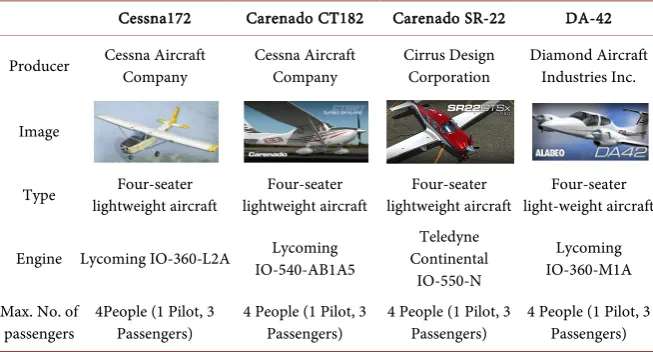
Each light aircraft to be implemented is globally known and selected for use in many countries. They have stable flight performance, reasonable prices, and reasonable size as a light aircraft. Table 1 describes the four light aircraft se-lected in this study, including the aircraft’s Producer, Image, Type, Engine, and Max Numbers of Passengers.
3. Software Design
The software design of the flight simulator for multipurpose variable light air-craft refers to the data linkage algorithm and the instrument panel design be-tween the simulation and the instrument. It extracts simulated flight data inside the simulation and manages the data without missing any critical parameters. We extended the information extraction technology of the simulation flight through the microprocessor and applied it to the software design [6].
Instrument Panel Design
Instrument panel design requires the following.
• Precise instructions are required because the measurement range of
temper-ature, pressure, and the speed range is very wide.
• Since the aircraft is fast, it is easy to judge the scale or indication of each
[image:3.595.208.535.556.732.2]in-strument.
Table 1. Light aircraft information for simulator production.
Cessna172 Carenado CT182 Carenado SR-22 DA-42
Producer Cessna Aircraft Company Cessna Aircraft Company Cirrus Design Corporation Diamond Aircraft Industries Inc.
Image
Type lightweight aircraft Four-seater lightweight aircraft Four-seater lightweight aircraft Four-seater light-weight aircraft Four-seater
Engine Lycoming IO-360-L2A IO-540-AB1A5 Lycoming Continental Teledyne IO-550-N
Lycoming IO-360-M1A
Max. No. of
• Adopt a compound gauge that allows a combination of multiple instruments
or systems to be combined in one instrument in a readable manner, or a comprehensive indication of a lot of information needed for a particular purpose in one instrument.
• If you do not need to read the scale of the meter in detail, use visual marking
or color marking [7].
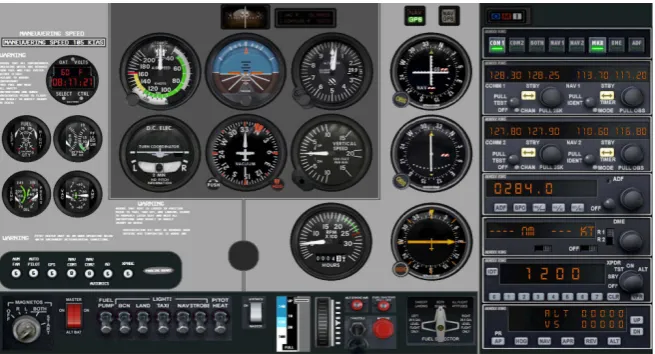
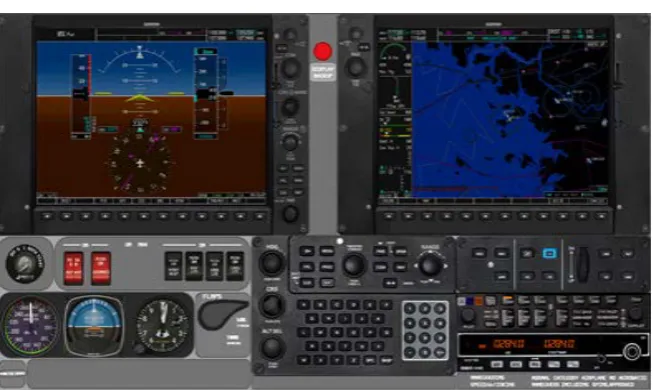
[image:4.595.210.538.538.715.2]Figures 1-3 show the four different types of touch screen-based instrument panels that are exactly the same as the actual aircraft, which have been designed by our team. The gauge panel below has the same image as the actual light air-craft. The instrument panel consists of various systems such as Airspeed Indica-tor, Horizontal Indicators, Altimeter, Turn IndicaIndica-tor, Heading IndicaIndica-tor, Ver-tical Speed, Fuel, Nav GPS Annunciator, Gear Switches, Magnetic Compass, Communications Switches, Flap Control Lever, and many more. The developed model uses G1000 system except C172, and C182, DA42, and SR22 are com-bined using PFD and MFD. The G1000 system is typically an integrated avionics system that provides information such as communication, navigation, flight
Figure 1. Instrument panel realization of C182 model.
Figure 3. Instrument panel realization of SR22 models.
guidance, flight instrumentation, and aircraft system monitoring. The units pro-vide the weather data, attitude data, heading data, communications, navigation, transponders, weather radar, satellite-broadcast weather information, traffic in-formation, measurement data of the engine and fuel system. This is precisely demonstrated. In addition, the G1000 system analyzes the aircraft system status, displays the status of the aircraft in emergency and abnormal situations and ad-visory situations. It has the ability to automatically detect, report and adjust the various functions.
4. Hardware Design
4.1. Design Drawing Production
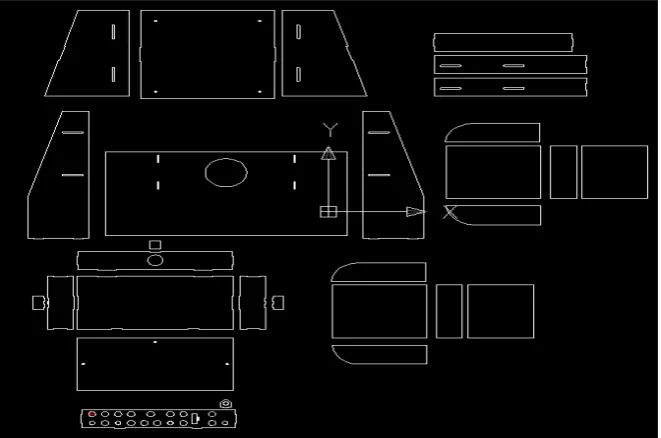
In order to construct a realistic cockpit, we measured the interior of the light aircraft and made a display stand using Sketch-Up CAD software, based on the actual information. Figure 4 illustrates the example design drawing.
Based on the drawings, the prototype was designed, the information was veri-fied, and finally the drawing was revised. Figure 5 is a final prototype drawing, prior to the actual production.
4.2. Panel Production
Figure 4. Drawing with Sketch-up CAD software.
Figure 5. Design and integration of prototype.
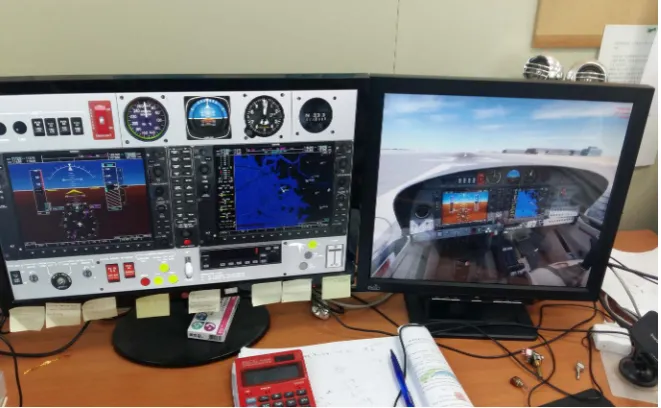
workings of the SW has been extensively tested and verified according to the aviation regulations. Each gauge, instrument, and the switch have been faithfully reproduced. Under user input, each switch and dial can be rotated or pushed. Then, the associated instrument gauge graphically adjusts the status of each gauge. The instrument design (for pilot user interface) is integrated with aircraft flight data. The test platform is shown in Figure 6.
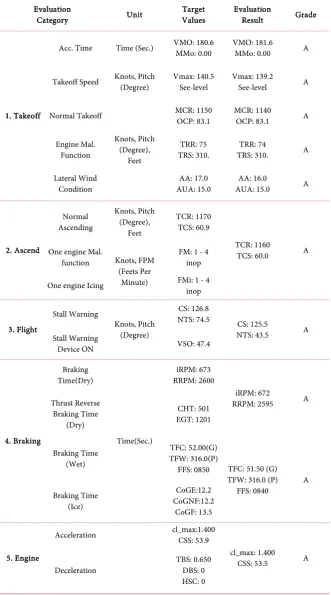
Figure 7 shows the exterior of the assembled simulator. After the completion, the final data interlock test and operation test were carried out, and all functions were confirmed to be working normally and properly [9]. Table 2 shows the evaluation results of the simulator developed in this study. All five items were evaluated, and almost all of them reached the target value, resulting in satisfac-tory results.
5. Conclusion
Figure 6. Verification of software design for each aircraft model.
Figure 7. The exterior of completed simulator.
Table 2. The evaluation results of the developed simulator.
Evaluation
Category Unit Values Target Evaluation Result Grade
1. Takeoff
Acc. Time Time (Sec.) VMO: 180.6 MMo: 0.00 VMO: 181.6 MMo: 0.00 A
Takeoff Speed Knots, Pitch (Degree) Vmax: 140.5 See-level Vmax: 139.2 See-level A
Normal Takeoff
Knots, Pitch (Degree),
Feet
MCR: 1150
OCP: 83.1 MCR: 1140 OCP: 83.1 A
Engine Mal.
Function TRS: 310. TRR: 75 TRS: 310. TRR: 74 A
Lateral Wind
Condition AUA: 15.0 AA: 17.0 AUA: 15.0 AA: 16.0 A
2. Ascend Normal Ascending Knots, Pitch (Degree), Feet TCR: 1170 TCS: 60.9 TCR: 1160
TCS: 60.0 A One engine Mal.
function Knots, FPM (Feets Per
Minute)
FM: 1 - 4 inop
One engine Icing FMi: 1 - 4 inop
3. Flight
Stall Warning
Knots, Pitch (Degree)
CS: 126.8
NTS: 74.5 CS: 125.5
NTS: 43.5 A Stall Warning
Device ON VSO: 47.4
4. Braking Braking Time(Dry) Time(Sec.) iRPM: 673 RRPM: 2600 iRPM: 672
RRPM: 2595 A Thrust Reverse Braking Time (Dry) CHT: 501 EGT: 1201 Braking Time (Wet) TFC: 52.00(G) TFW: 316.0(P)
FFS: 0850 TFC: 51.50 (G) TFW: 316.0 (P)
FFS: 0840 A Braking Time (Ice) CoGE:12.2 CoGNF:12.2 CoGF: 13.5 5. Engine
Acceleration cl_max:1.400 CSS: 53.9
cl_max: 1.400 CSS: 53.5 A Deceleration TBS: 0.650 DBS: 0
HSC: 0
Acknowledgements
References
[1] Park, J., Jang, D., Choi, H., Tak, M., No, J. and Kim, S. (2013) Integrated Simulator of Airborne Multi-Function Radar Resource Manager and Environment Model.
KSAS Journal, 41, 577-587.
[2] Oh, H., Choi, K. and Lee, H. (2014) Implementation of Aircraft Control Simulator Server and Pilot Station Considering of Next Generation Navigation System. KSAS Conference, 1637-1640.
[3] Park, J. (2014) Study on Efficient Light Aircraft Design by Integrated Database De-velopment. Konkuk University, Seoul.
[4] Cheon, Y.H., Lee, S.P. and Park, J.H. (2014) Aviation Communication Technique: Considering the Multi-Purpose Display Designed for Aircraft Lightning Protection.
KONI, 445-454.
[5] Choi, H., Lee, S. and Jo, J. (2013) Conceptual Design of Multi-Purpose Modular Aircraft. KSAS Journal, 1071-1074.
[6] Google (2017) Flight-Simulator.
http://www.dailian.co.kr/news/view/614459/?sc=naver
[7] No, G., Demyanov, M., Park, J., Lee, S., Kim, I. and Ko, S. (1999) A Study on Engi-neering Simulator Application for Aircraft Development. KSAS Journal, 105-109. [8] Lee, D., Jang, I., Park, H., Kim, W., Kim, S., Park, D. and Yang, S. (2012) Weapon
Simulator Used for Armed Helicopter. KSAS Conference, 865-868. [9] Naver Flight Simulator (2017).
http://www.kukinews.com/news/article.html?no=441200
[10] Choi, S., Chae, S., Han, Y. and Lee, C. (2003) 3D Flight Simulator for Education of Flying Tactics. KSS Journal, 1-11.
Submit or recommend next manuscript to SCIRP and we will provide best service for you:
Accepting pre-submission inquiries through Email, Facebook, LinkedIn, Twitter, etc. A wide selection of journals (inclusive of 9 subjects, more than 200 journals)
Providing 24-hour high-quality service User-friendly online submission system Fair and swift peer-review system
Efficient typesetting and proofreading procedure
Display of the result of downloads and visits, as well as the number of cited articles Maximum dissemination of your research work
Submit your manuscript at: http://papersubmission.scirp.org/