
Essay #66039
98
0
0
Full text
(2) This report is ment for the University of Twente UT/IO-21-07-2014 University of Twente Bachelor Industrial Design Postbus 217, 7500 AE Enschede +31 53 4899111 First supervisor: Dr.ir. ing. J.M. Juaregui Becker Second supervisor: Dr.ir. M.B. de Rooij ProSun International 2442 23rd Street North St. Petersburg FL 33713-4018 +1 727 825 0400 Supervisor: Tom Henkemans Student Industrial Design Daniel Janson Noorderhagen 20B 7511 EL Enschede +31 6 22895165 Amount printed: 3 Pages: 98 included appendices The content of this bachelor assignment is confidential. The report is written for the 3e year final bachelor assignment 2014. 3 Months.
(3) 3. 18 Appendix. 98 pages.
(4) Preface This research and design project is completed as a graduation requirement for my Bachelor’s degree in Industrial Design Engineering at the University of Twente. This project was conducted at ProSun International LCC in Florida, in the south eastern of the United States of America, within a period of three months. The motive for the assignment for ProSun was to improve and redesign their existing Massage Bed. The University of Twente is eager to work with companies such as ProSun, to create the opportunity for students to broaden their experience. For me, Daniël Janson, this was an interesting opportunity to combine my interests in the world with gaining experience in design. I want to thank everyone that contributed to making this project a success: First, I would like to thank Juan Jauregui Becker for the guidance and critical feedback. The input of Tom Henkemans, CEO of ProSun, was very helpful during this project. At last, the helping hand of Arjan Dommisse, Product Manager of ProSun, was very appreciated. Now, 5 months after the start of this project, I hope and expect that its results will contribute to the further development and successful launch of the AquaFrixio..
(5) 5.
(6) TABLE OF CONTENT.
(7) 7. Table of Contents Preface 4 Summary 8 Samenvatting 9 1.. Introduction 10 1.1. ProSun International LLC 10 1.2. Bachelor assignment 12. 2.. Product and manufacturing analysis 16 2.1. The WaterWave 16 2.2. Expert interview 18 2.3. Disassembly of the product 20 2.4. Cost analysis 22 2.5 Manufacturing analysis 25 2.6. Competitor analysis 26 2.7. Other improvements made by ProSun 27 2.8. Quality of function deployment 28 2.9. 2.10. 2.11.. Failure modes and effects analysis 29 Analysis conclusion 30 Requirements specifications 32. 3.. Component redesign 34 3.1. The massage mechanism 36 3.2. Water pressure regulator 41 3.3 The chiller 45 3.4. The framework 49 3.5. The tub 53 3.6. The top frame 57 3.7. Cost calculation 63 3.8. Overall product 64. 4.. Prototype 66 4.1. Boundaries 66 4.2. Prototype assembly 67 4.3. Prototype testing 68 4.4. General things noticed 69 4.5. Conclusion 70 4.6 Design recommendations 71. 5.. Conclusion 72 5.1. Feasibility 72 5.2. Conclusions 73 5.3. Recommendation 74 5.4. Evaluation 75. 6. Reference 76. Appendix 78.
(8) Summary The objective of ProSun is to develop a manufacturable new massage concept for their massage bed, the AquaFrixio. Their former massage bed, the WaterWave, was removed from the market, as the product experienced problems on several levels. In the past few years, multiple designers tried to solve these problems with small adjustments to the mechanical system and other components. Unfortunately, these adjustments never delivered the performance that were required. Therefore, ProSun decided to take other directions to solve these problems. This project aims at designing a new concept for the massage mechanism that will be used for the AquaFrixio. To be able to do this, an extended product analysis is done, to identify the problems which were encountered with the WaterWave. This product analysis consisted of the disassembly of the WaterWave, several interviews, competitors analysis, a Quality of Function Deployment and a Failure Mode and Effects Analyses. Based on the analyses that are done, the following list of components needs to be redesigned is composed: • The massage mechanism • The pressure controller • The chiller • The framework • The tub • The top frame The massage mechanism is the key functioning device of the massage bed, being the main component which is redesigned. The redesign of the massage mechanism had influence in the design of the other components as well. The requirements that were focussed on during the redesign of these components, were the use of basic parts, the relocation of the production to their own facility and the focus for delivering a prototype. Within a short amount of time, each of these six components were redesigned for the AquaFrixio. Due to the limited time and the size of the assignment, it was not possible to elaborate deeply about every component or go deep into the technique which will be used. Instead, the focus was set on developing a new potential massage mechanism. In the end, a working prototype of the AquaFrixio is delivered. The main goal was to see if the redesigned massage mechanism was a good potential concept which is designed for the AquaFrixio. Based on the prototype, it can be said that it is feasible that the AquaFrixio can meet the requirements. The two main recommendations are focussing on the technical development of the massage mechanism and manufacture a prototype that contains the components which will be used in the real AquaFrixio..
(9) 9. Samenvatting Het doel van ProSun is het herontwerpen van hun massagebed de WaterWave. De WaterWave moest van de markt gehaald worden, aangezien het product op verschillende gebieden problemen ondervond. In de afgelopen jaren hebben verschillende ontwerpers geprobeerd de problemen op te lossen, dit middels aanpassingen aan het mechanische systeem en veranderingen aan andere onderdelen. De aanpassingen leverden niet het gewenste resultaat, wat er voor heeft gezorgd dat ProSun opzoek ging naar een heel nieuw massage mechanisme dat wel aan deze voorwaarden voldoet. Om dit mogelijk te maken moest een uitgebreide product analyse gedaan worden. Deze product analyse bestond uit meerdere interviews, een kosten analyse, een concurrentie analyse, een Quality of Funtion Deployment, een Failure Mode and Effect Analyses en het demoteren van de WaterWave zelf. Dit creëerde een gefundeerde basis aan informatie, dat gebruikt kon worden voor het opstellen van de volgende lijst met onderdelen die herontworpen moesten worden: • The massage mechanism • The pressure controller • The chiller • The framework • The tub • The top frame Het massage mechanisme is het meest belangrijke onderdeel in het massage bed, de focus werd hier dan ook op gelegd tijdens de ontwikkeling van het massage bed. Het herontwerpen van het massage mechanisme heeft ook invloed gehad op het herontwerpen van de andere onderdelen. De eisen waren voornamelijk gericht op het gebruik van standaard onderdelen, de verplaatsing van de productie van de onderdelen naar hun eigen werkplaats en het afleveren van een werkend prototype. In een vrij korte periode zijn de zes onderdelen herontworpen. Het was echter niet mogelijk om diep in te gaan op de technische aspecten van elk onderdeel of het uitdiepen van de techniek die gebruikt werd. Dit kwam voornamelijk door de breedte van de opdracht in combinatie met de geringe tijd die stond voor de uitvoering. Het is uiteindelijk gelukt een werkend prototype af te leveren. De hoofddoel was het ontwikkelen en ontwerpen van een maakbaar concept voor de AquaFrixio. Gebaseerd op de prototype kan gezegd worden dat de AquaFrixio aan deze eisen heeft voldaan. Er zijn twee aanbevelingen voor de verdere ontwikkeling van de AqiaFrixio. Alseerste, de verdere ontwikkeling van het technische aspect van het massage mechanisme en daarnaast een prototype maken waarbij gebruik gemaakt wordt van onderdelen die ook daadwerkelijk in de AquaFrixio gebruikt zullen worden..
(10) 1. Introduction Think of that moment when you are relaxing in a hot tub with warm water jets against your back. Imagine that moment while you are staying dry, that is what a HydroMassage bed is able to do for you. ProSun is one of the leading companies in this branch with their own Hydro Massage bed namely, the WaterWave. They produced hundreds of those beds and sold them all over North- and South-America. Recently, they experienced several problems regarding their Massage Bed, which desperately has to be solved. The development of a working concept for their massage bed is the key topic in this bachelor thesis (Watermassagebed, 2011). This chapter provides background information about ProSun and elaborates on the assignment of this project. First, the background information is discussed which is about their massage bed, their business model and the stakeholders. Second, more information regarding the assignment is presented which is about the goal of the project and the method used.. 1.1. ProSun International LLC This report is the result of a bachelor thesis that was realized by a collaboration of the University of Twente with the company ProSun International LLC. ProSun is an indoor tanning bed manufacturer, established in 1994. The roots of the company go back to 1979 when Tom Henkemans founded the company HAPRO in the Netherlands. ProSun has been manufacturing quality, high-end and affordable tanning beds for over 25 years now. Fulfilling their customers wishes and continuing their quality and service is their principle goal. Besides producing indoor tanning beds, the company also provides equipment, realizes the installation and gives in-salon training about the use of their products. They support clients starting a new salon and walk them through the whole process (ProSun, 2013). 1.1.1. The WaterWave About ten years ago, ProSun launched the Hydro Massage Bed “WaterWave” on the market. The product was brought from an other company with the required techniques to be able to produce and manufacture this product. The WaterWave is a complex product, but the massaging technique itself is actually a very simple but clever technique. The WaterWave uses a technique called hydrotherapy massage. Here high powered water jets massage the muscle tissue on the human body. This increases the blood circulation which relieves stress in the muscles. After a while, the massage bed experienced several problems that finally resulted in the removal of the massage bed from the market. In fact, the moving parts within the product broke down because of the frequent use of the product. Unfortunately, these parts could not easily be repaired or replaced. Another problem is that the water reached an uncomfortable high temperature after some period in time..
(11) 11. The company decided to start developing an improved version of the massage bed named the Hydro Massage Bed “AquaFrixio”. For the development of the AquaFrixio, they would like to use the framework of the WaterWave, as a base for the development of the new massage bed. ProSun tried to improve the current massage mechanism by making small changes to the concept. Unfortunately, they were not able to solve the problems Figure 1.1.1. ProSun’s business accommodation. encountered with the massage bed. Therefore, a new massage concept needs to be developed. Further deepening about the these problems will be discussed in the next few chapters. 1.1.2. The division of labor ProSun is divided into multiple departments. This tells shortly about the responsibilities of each department. The management team consist of five Dutch people that flew over in the past twenty years, with Tom as CEO. Three of the. Figure 1.1.2. My accommodation in Florida for those three months. managers are head of their own department. One is the head of the sales, another for the financial department and the last for the purchasing department. And the last manager is responsible for two departments, the service and manufacturing department. The sales, service and financial departments all consist of two other employees. The purchasing department has no employees. The manufacturing department consist of eleven employees. The sales department is the division which is responsible for selling the tanning beds, the massage bed and other accessories. The financial department is responsible for the financial structure of the company. The service department handle all service calls and solves problems encountered with their products. The manufacturing department is responsible for the assembly of their product. The employees working at the assembly line are able to assemble multiple product. The main research and design department is located in the Netherlands, at their affiliated company Hapro. Small changes to their products are done at the production facility of ProSun, which are done by the manager responsible for the manufacturing department. The major product developments are done at Hapro International..
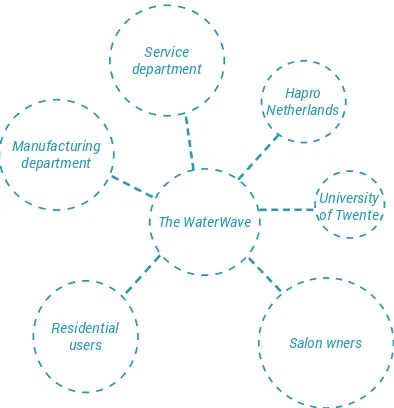
(12) 1.1.3. The business model ProSun uses a business model that is divided into two parts: business to business (B2B) and business to consumer (B2C). The sales department focusses on selling their product to consumers (B2C). The products sold by these employees have a standard price that goes to the company, the amount that comes on top of this price is for the sales employee. A huge discount for the customer will influence the hight of their income. The consumers are the residential users and salon owners, which are spread over North- and Central-America. On the other hand ProSun works with several intermediairs that stand between the customer and ProSun, which are also spread over North- and Central-America. They sell the product locally and earn a little amount of every product they sell. These people do not work directly for ProSun. 1.1.2. The Stakeholders For the development of a new massage concept for the Aquafrixio it is important to identify ProSun’s stakeholders and their perspectives and interests. To clearly understand the relationship between all the stakeholders an overview is made, which is shown in figure 1.1.3. The size of the circle identifies the importance of the stakeholder. The stakeholders influence the redesign of the product, as some of them featured ProSun with some essential feedback. The maintenance and service department are two important stakeholders during the concept development as they will be responsible for the manufacturing and maintenance of the product. The salon owner is slightly more important then the residential user because they often have more products and use the product more frequently. Hapro is a small stakeholder because the close collaboration and the opportunity to involve the Dutch market. The delivered work and experience comes together in this final report which means that the University is a small stakeholder for this project.. 1.2.. Bachelor assignment. This assignment has as goal to develop a new concept for the massage mechanism which can be used for the AquaFrixio. During this assignment the focus is on the manufacturability of the new designed massage concept. 1.2.2. The goal ProSun needs to structure the problems they encountered with the WaterWave and to find a sustainable solution for these problems. In the past few years, ProSun tried to solve several problems with small modifications to the WaterWave. The small modifications were not enough to solve the overall problems encountered with the WaterWave..
(13) 13. At this point, they want to revise the massage bed and come up with a whole new massage concept which will solve these. Service department. problems. The main goal of this bachelor assignment is to develop. Hapro Netherlands. a manufacturable new massage concept for the AquaFrixio.. Manufacturing department. The WaterWave. University of Twente. To establish this goal, it is not possible to elaborate deeply about every component that is redesigned or go deep into the technique will be used for the AquaFrixio. The first reason for this is the time which is available in combination with the size of. Residential users. the assignment. The second reason is that the company pushes. Salon wners. for a working prototype which means that the focus lays more on the manufacturability of the mechanism. The third reason is. Figure 1.1.3. Stakeholders visualisation. the missing knowledge about this technical subject at ProSun. The final reason is the available personal and material at the workshop which means that ideas easily can be translated into. Mm. to. 25,40. /25,4. Liters. to. 0,264. x3.785411784. Kg 0,454. to /0,45359237. Inch. prototyping.. 1,00 Gallon 1,00 Pound 1,00. °C. to. °F. 0°. /9x5+32. 32°. The next step after this bachelor assignment will be about finalizing the product and deepen the technology used inside the product. This cannot be done within three months but is an essential step to succeed this product.. Figure 1.2.1. The conversion form American 1.2.4. Methods standards to European standards. A combination of multiple methods is used to accomplish this. determined goal. Using a variation of methods is a good way to verify the results and by comparing the information of the different methods, it is more likely to catch biases or false information. The use of multiple methods structures and quantifies all the information. The first method used is a product analysis which gives insight in the current product. The second method is expert interviews, which gives insight in the experience and problems with the product. The third method is a market research that helps during the idea generation. The fourth method is a cost analysis which gives insight in the current costs for the WaterWave. The fifth method is a Quality of Function deployment which can improve the experience of the user. The final method is the Failure Mode and Effect Analysis which elaborates on the failure of the product..
(14) This method form is a logic sequence because it goes slowly deeper into the matter. The first few methods give a broad base of information which can be used for the more specific research methods. 1.2.5. Structure report This has the following structure. Chapter 2 is about analysing the product determining the problems regarding the WaterWave. This is done by doing the methods explained in the previous paragraph. This will result in the requirements for developing a manufacturable new concept for the AquaFrixio. Chapter 3 includes designing a manufacturable new concept which focus on the essential problems that were encountered. The redesigned components needs to meet the conformed requirements. Chapter 4 is about manufacturing a prototype of the concept that is designed during chapter 3. It includes the prototype testing that should be done. Chapter 5 elaborates on the feasibility of the new designed concept for the AquaFrixio. The end result is a 3D model of the AquaFrixio, that can be used for the further development of the product. Note: This project uses English standard units that are shown in figure 1.2.1 and will be used in this report.. Figure 1.2.2. View at the environment of Florida.
(15) 15.
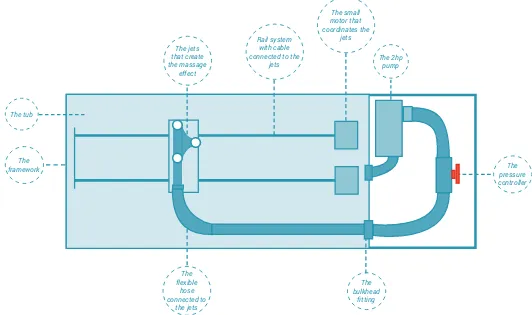
(16) 2.Product and manufacturing analysis This chapter describes several analyses used to quantify the problems, define the requirements and understand the product and its working mechanism. To realise this, three expert interviews, manufacturing analysis, failure modes and effects analysis and a cost analysis are done. Besides this, the product is also disassembled and a house of quality is made. A synthesis of the results of these analysis is used to define the specification of the requirements.. 2.1.. The WaterWave. This paragraph explains the technique used for the massage bed and provides information regarding the components that are used to create the massage effect. 2.1.1. The massage mechanism The Waterwave provides a hydro massage therapy through a traveling water jet, that delivers a powerful stream of warm water along your entire body. The WaterWave keeps you dry using a thin flexible bladder. The bed massages the muscle tissue to increase the blood flow and release the stress. Figure 2.1.1 shows a figure of The WaterWave. (PolarSpas, 2010) A schematic visualisation of the Massage Bed, shown in figure 2.1.2, gives more insight in the functioning of the WaterWave. The Massage Bed is powered by a 1½ HP pump, that stows the water though 2’’ PVC connected to the jet located inside the tub. The jet is mounted on a rail system that is able to position the jet at the location the user prefers. The next paragraphs will give more clarification about the components used insight the product, this will be done by showing images of those components.. The jets that create the massage effect. Rail system with cable connected to the jets. The small motor that coordinates the jets The 2hp pump. The tub. The framework. The pressure controller. The flexible hose connected to the jets. Figure 2.1.2. The schematic top view of the WaterWave. The bulkhead fitting.
(17) 17. 2.1.2. Components to provide the massage effect The WaterWave consist of a aluminium framework, that serves as base for the whole product. The framework gives a solid base for the placement of the tub, the massage equipment with related components and the heating system.. Figure 2.1.1. The WaterWave. The tub is filled with 70 gallons of water that stand directly in contact with the jet that provide the actual massage. The jet is. 1. 6. 2. 7. 3. 8. 1. 4. 6. 9. 2. 5. 7. 0. 3. placed on a rail system, that is attached to the aluminium frame.. 1 2 3 4. 8. 5. 4 2.1.3.9This shows the jet (1) Figure connected1tot the rail6 system (2) inside the 5 2 0tub7(3). 3. 8. 4. 9. 5. 0. 1. 6. 2. 7. 3. 8. 4. 9. Two little and synchronised motors drive the jet. An electronic 6 system is responsible for the positioning of the jet and a 2 HP 7 pump is circulating the water through the jet, so it gives a desired 8 massage effect. Figure 2.1.2 shows the tub with the rail system 9 and jet inside. 0 A stainless steal thermostat heats the water and controls the temperature within the system. The heating element takes around 4¼ hours to get the 70 gallons of water at the desired temperature. The heating element is positioned at the side of the tub, close to the pump and the other electronics.. 1. 6. 5 1. 0 6. The tub is sealed watertight by using a top frame with three. 2. 7. 2. 7. layers of different fabric placed on the edge. The first fabric is. 3 8 8 1 6 4 9 4 9 Figure 2.1.4. Here 2 you see 7the WaterWave without shows5the pump 0(1), 5 the skirting.It 0 8 (3), the tub the electric box 3(2), the frame 3. (4) and the remote controller (5). 4. 9. 5. 0. a rope net that supports the weight of the user, the second is a latex cover that seals the tub watertight and the last fabric is a nylon anti bacterial sheet that covers the top of the bed. Figure 2.1.3 shows the WaterWave without the skirting with the basic parts mounted on the frame. (SolaJet, 2007).
(18) 2.2. Expert interviews After getting the first information about the functioning of the WaterWave, some more information regarding the problems that were encountered is preferred. To acquire this information, three interviews with different people within the company are done. A more extensive version of the interviews can be found in appendix A. The first interview is with Tom Henkemans, the CEO of ProSun. He will elaborate on the fact that he removed the WaterWave from the market. The second interview is with an assembly mechanic, who will speak about his experience during the manufacturing of the WaterWave. The last interview is with a maintenance mechanic, who tells about his experience with the maintenance of the WaterWave. 2.2.1. The CEO In brief, Tom stated that there were several problems responsible for removing the WaterWave from the market: •. The water rose above usable temperature.. •. The mechanical system within the WaterWave broke down and could not be easily repaired or replaced.. •. The tensioned net broke to easily.. Tom continued with a number of initial requirements that will be important during the development of a new massage concept for the AquaFrixio. These requirements will influence the process and give boundaries to the freedom during the design phase (Henkemans, 2014). The initial requirements are: •. The outside dimensions of the product must stay the same, because the existing skirt is still intact and complies with the requirements.. •. ProSun prefers to use as much standard part as possible, to prevent additional mold costs.. •. ProSun does not wish to purchase new machines for other production techniques, what costs to much money.. •. ProSun prefers to produce most of the components at their own facility, to stay independent and keep the stock low..
(19) 19. 2.2.2. Assembly mechanic The assembly employee described the WaterWave as a “product with many problems”, as it was difficult and took to long to assemble. It would take two people 8 till 10 hours to assemble the WaterWave. A small displacement could cause major problems within the product and everything needed a double check to get it waterproof (John, 2014). 2.2.3. Maintenance mechanic At the maintenance they experience two mayor problems. The first one, was regarding the heating system. Customers were experiencing a high temperature and were not able to turn it down. The second problem had to do with the mechanical system inside the WaterWave. The tracking system coordinating the nozzles broke down to easily and could not be replaced that easily. Most of the time, the whole mechanical system had to be recalibrated (Eddy, 2014). 2.2.4. Conclusion The problems mentioned by Tom and the maintenance mechanic correspond with each other. These problems are derived from long term use. The problems mentioned by the assembly mechanic are more focussed on logistic level..
(20) 2.3. Disassembly of the product By disassembling the WaterWave it is possible to complete the overview of the product. This is useful during the redesign of the components that experience the fatal problems. The disassembly of the WaterWave will be divided into multiple categories to provide a clear view of the components used. These components will be discussed step by step, starting with the body, then the top and finally the mechanical system. 2.3.1. The body The body consist of the skirt, the tub, four leather pads and the framework, as shown in figure 2.3.1. The skirting creates the appearance of the product. The skirting is made out of two different panels, a side-panel and an end-panel. Both panels are vacuum formed in the manufacturing facility of ProSun and made out of polyester. The tub is made out from polyethylene, formed using thermoforming and manufactured by an external company. The tub has several ribs and a wall thickens of ¼’’ which creates the desired strength and stiffness. Since several components are placed underneath the tub, which means that the head-end has not the same depth as the rest of the tub which ensure that components like the motor and valve are place underneath the tub. The framework is made out of several aluminum parts, which are welded together and severs as a skeleton for the WaterWave. This framework is produced by an external company. The four leather pads are used to cover the mounting locations of the panels and protect the user. Two side-pads secure the long side of the bed and two end-pads secure the shorter side of the bed. The end-pads come with a rounding at the end of the pads. The pads are show in figure 2.3.1. The parts for the pads are brought externally and assembled at the workshop. 2.3.2. The top frame The top frame consist of an aluminum frame and three layers of different fabric. The three layers are shown in figure 2.3.2. The frame is made out of an aluminum extrusion which is welded together. The frame is modified to the three layers that are placed on the frame. The frame is made by an external company. The first layer is a black net which is stained between the frame and supports the weight of the user. The net has a thickness of 1/8’’ and a mesh size of 1’’ by 1’’. The net is fastened to the framework using screws for every mesh (around 64 screws). There are several thick threads in the midsection of the net as reinforcement. The second layer is a polyurethane bladder that provides a watertight sealing to the bed. It is made out of two layers of polyurethane and the sides contain a strip of polyvinyl chloride (PVC) and thermoplastic polyurethane (TPU)..
(21) 21. 1. 6. 2. 7. 3 4. 8Thermoplastic polyurethane is used to stick the polyvinyl to the 9bladder, because the polyvinyl is not able to stick on its own.. 5. 0The polyvinyl is a reinforcement to fasten the bladder to the WaterWave.. 1 2 3 4 5. 1. 6. 2 6 1 3 7 2 4 8 3 5 9 4 0 5. 7. The third layer is a nylon anti-bacterial sheet that protects the polyurethane bladder and makes it comfortable for the user.. 6 8 7 9. 2.3.3. The mechanical system. 8 0 9. The mechanical system consist of three nozzles that are combined to one jet that is mounted on a carriage system. The. 0. jet is driven by two swivel adapters that make sure that the jet can freely move up and down the rail. The two swivel adapters. Figure 2.3.1. Shows the WaterWave with the skirting loose next to the bed. The skirt (1), the tub (2), the framework (3) and the leather pads (4).. are connected with a control box which makes it able to control the positioning of the jet. The two swivel adapters are connected to two cables that move synchronized. (ProSun WaterWave 230, 2010). 1. 6. 2. 7. 3. 8. 4. 1 9. 6. 5. 2 0 3. 7. 4. 9 1 02. 6. 4. 9. 5. 0. 5. A 500 watt heating element, placed at the head end of the tub, ensures that the water is at the desired temperature. The heating element is shown in figure 2.3.3. To keep the water a the right temperature, the heating element is connected to a control box with a thermostat, which switches the heating element off when. 8. the desired temperature is reached. A 1½ HP electric pump produces water pressure that stows the. Figure 2.3.2. The net (1), the Polyurethane7 bladder (2) and the Nylon anti-bacterial 3 8 water out of the jet and creates the massage effect. Before the sheet (3). water reaches the jet, is goes through a whole plumbing system. The plumbing system consist of a valve and several pipeline parts. A small electronic motor, on top of the valve, makes it able to vary the water pressure that creates a different massage effect. All the electronics come together in the electronic box at. 1. 6. 2. 7. Figure 2.3.3. Heating 3 element 8 (1). 4. 9. 5. 0. the foot-end of the bed. A wired remote control is connected to the box to operate the bed. Hardware with preprogrammed software is placed to be able to use various massage programs. It regulates the water pressure, positions the jet and controls the water temperature. Figure 2.3.4 gives an overview of the parts used for the WaterWave which is shown on the next page..
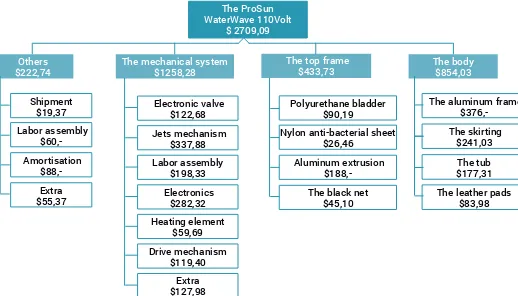
(22) 1. 6. 1. 2. 7. 2. 7. 8. 3. 8. 4. 9. 4. 9. 5. 1 0. 3. 2 3. 1 26 37. 4. 48 59. 5. 0. 6 5 71. 6. Figure 2.3.4. An overview of the parts used inside the WaterWave:. 06. 82 93. 7. 04 5. 9. 8. 1. 6. 2. 7. 3. 8. 4 1 5 2. 9 6 0 7. 3. 8. 4. 9. 5. 0. 0. 1. 6. 2. 7. 3. 8. 4. 9. 5. 0. 1. 2. 3. 4. 5. 6. 7. 8.. The electronic box The plumbing The pump The valve The drain The wiring The remote control The thermostat. 2.4. Cost analysis Analysing and structuring the costs for the components used inside the WaterWave provides information about the cost division. This way it is possible to estimate the influence of the redesigned components that shall be used for the AquaFrixio. The costs will also influence the design decisions. The data shown in this paragraph is delivered by ProSun and originates from the parts list used during the production of the product. The parts list consist of more then 300 parts which are categorised in sub-components. The costs shown in this paragraph are structured and categorised in the same categories used in chapter 2.3. Figure 2.4.1 shows the overall cost for the production of the WaterWave. The total costs of $2709,09 are divided into the following four categories: 1. The body 2. The top frame 3. The mechanical system 4. Others These categories are divided into several components, as shown in figure 2.4.1. Each component is the combination of several individual parts. Not only the material costs but also the labor costs to assembly the component are covered by these costs. The labor costs to assemble the whole WaterWave is assigned to the category others. The mechanical system is the most expensive section of the bed. This category consist of many different parts, which is the reason why it is divided into several sub-components. This is also the reason that it needs a bit more attention..
(23) 23. The list below gives some clarification regarding the most important parts which are connected to the sub-components: 1. Drive mechanism: rail system, 2 cables and two little motors 2. Heating element: the heating element and thermostat 3. Electronics: wiring, hand-controller, electronic box and the fan 4. Jet mechanism: all the plumbing, jets, drain and the hose 5. Electronic valve: the manual valve and the motor 6. Labor: the labor for the assembly of the mechanical system 7. Extra: part that cannot be categorised Other is the category that does not directly refer to parts used for the WaterWave. This category consists of the proceedings for shipment, the labor costs for the final assembly and the amortisation costs which are the cost for designing the WaterWave. Finally, this information will be used when there is more clarity about the components that need to be redesigned. The focus is about design for performance which means that the costs are less relevant during the development of the potential concept. This information is an addition to the product analysis.. The ProSun WaterWave 110Volt $ 2709,09 Others $222,74. The mechanical system $1258,28. The top frame $433,73. The body $854,03. Shipment $19,37. Electronic valve $122,68. Polyurethane bladder $90,19. The aluminum frame $376,-. Labor assembly $60,-. Jets mechanism $337,88. Nylon anti-bacterial sheet $26,46. The skirting $241,03. Amortisation $88,-. Labor assembly $198,33. Aluminum extrusion $188,-. The tub $177,31. Extra $55,37. Electronics $282,32. The black net $45,10. The leather pads $83,98. Heating element $59,69 Drive mechanism $119,40 Extra $127,98 Figure 2.4.1. The cost for the materials and labor the produce the WaterWave..
(24)
(25) 25. 2.5. Manufacturing analysis. ProSun has brought several machines to support multiple manufacturing processes. Beside the basic manufacturing process, they are also able to use more advanced manufacturing processes. Over the past few years, they brought several machines so they are able to produce components for their tanning beds, what made them more independent and more self-sufficient. The following three machines increased their independence: 1. The punch press they use to make aluminum and steel plate material parts which are used inside their tanning beds. This machine is shown in figure 2.5.1. 2. The hydraulic press is able to bend the plate material with maximum force off 350 ton. This machine is used to make parts similar to the electronic box which is used inside the WaterWave. 3. The vacuumformer is used to fabricate the skirt for several tanning beds as well as the WaterWave. As mentioned earlier in the interview with Tom, ProSun prefers to produce parts at their own facility, to reduce the costs and create more independent construction. The goal is to make use of these manufacturing processes during the development of the new massage concept used of the AquaFrixio.. Figure 2.5.1 The punch press.
(26) 2.6. Competitor analysis Before starting with the redesign of the WaterWave, it is important to explore the market and compare the current competitors. They might use different techniques that could provide a solution for the problems encountered. It also gives an idea of the level of performance that needs to be acquired and what market group the AquaFrixio is focussing on. Currently there are three real competitors in North-America. Two of the three competitors have a product that is in the exact same segment as the WaterWave. The third competitor has two products on the market that use a slightly different technique. Hydro Massage The first competitor is Hydro Massage which uses the same technique used for the WaterWave. A rail system guides a jet which is electronically controlled with a interactive touch screen. The user can select different programs which massage from your feet up to your head. Besides selecting different programs, the user is also able to set the time and the temperature of the bed. The starters price for this bed lays around the $18000.- and increases for the more extended versions (HydroMassage, 2009). The Hydro Massage is shown in figure 2.6.1. H2OMassage The second competitor is H2O Massage which has also a product that uses the same technique as the WaterWave. They mounted four jets on a carriage system which are controlled by a touch screen, were the user is able to select different types programs. The bed is available in several versions that extends the amount of options on the product. This product is slightly lower of quality then the one from Hydro Massage and the price starts from $12000,-. The H2O Massage is shown in figure 2.6.2. (H2OMassge Systems, 2012) Hydrojet Massage The third competitor is Hydrojet Massage which has two massage bed that are located in a slightly different segment. The top of the Spa Jet completely closes with the user inside. Water sprinkles out of different jets located around your body, what means that the person has to were a bathing suit. The Medi Jet is a more similar product and keeps the user dry while using the product. However, the Medi Jet does not use the water through air principle but the water though water principle. This means that the bed is completely filled with water. Multiple pumps produce enough pressure to force water through two jets. These jets create a massage effect similar to a hot tub. The jets are controlled by a mechanical system that uses a carriage system inside the product. Through a touch screen it is possible to run different programs that create a variety of options for the sure (Hydrojet, 2014). The Hydrojet products are shown in figure 2.6.3. This information is used during the redesign of the massage mechanism inside the AquaFrixio. Their techniques will be examined and used during the idea generation..
(27) 27. 2.7. Other improvements made by ProSun In the past few years several other designers improved various components of the bed. These improvements should have fixed the problems with the WaterWave, but never delivered the required performance. Some enhancements did improve some components of the massage bed, so those improvements were not entirely a waste. Figure 2.6.1. The Hydro Massage. The enhancements they designed are reviewed, to see if some of these can be useful for the AquaFrixio. The enhancements which can be useful for the AquaFrixio, are shown in the table below (Merks, 2010) (Motie, 2011). What part. Improvement. The massage mechanism A jet with three nozzles. The nozzles are able to circulate the water what covers a larger area. Figure 2.6.2. The H2O Massage system. 1. 6. 2. 7. 3. 8. 4. 9. 5. 0. The framework. A framework already designed for production facility of ProSun. These steps are useful for the redesign of the framework.. The anti-bacteria sheet. A human pattern in the anti-bacteria sheet guides the user to the desired position, to ensure the positioning of the jet is correct and reduces the amount of noise created.. The net. An increase of the mesh size of the net to 1,5’’ x 1,5’’ with a thickness off 0,25’’. The tub. The tub size is decreased to 30 gallons of water. Less material is used for the tub, they can produce it at their own workshop and more space is left inside the massage bed. A special drain is installed that prevents a vortex. More elaboration about these improvements can be found in. 1 2. 6 appendix B. 7. 3. 8. 4. 9. Figure 2.6.3. The Spa Jet (1) and the Medi Jet (2) 5 0.
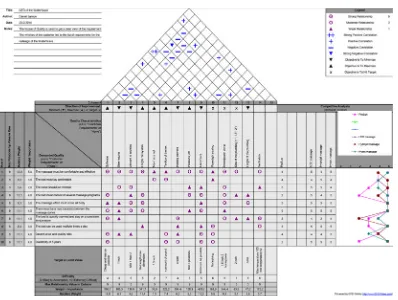
(28) 2.8. Quality of function deployment Quality Function Deployment is used to design on the customers demands and how these demands can be reached. The QFD is used to transform qualitative user demands into quantitative parameters. The House of Quality consists of translating customer desires into design characteristics (Institute, 1999). The house of Quality can be found in Appendix C. The information that is used for the QFD is gathered from the interviews that were done and the product analysis that is done. The QFD is made in cooperation with ProSun, unfortunately do they not have any experts on this field that was familiar with a QFD. The following results came forward out of the QFD: Importance Software. 566,7. Size of the nozzles. 183,3. Amount of nozzles. 138,9. Length rail system. 341,7. Mesh size of the net. 38,9. Tension of the net. 222,2. Heating element. 194,4. Positions of the jets. 150,3. Electronics. 463,9. Watertight sealing. 163,9. HP of the pump. 244,4. Size of the plumbing (1’’, 1,5’’, 2’’). 63,9. Length of the plumbing. 47,2. Ventilation. 127,2. The two most important characteristics fall outside the boundary of this bachelor assignment. The electronics and software have an important part in the performance of the massage bed but the focus of this assignment is more on developing a new massage concept. The implementation and customization of the electronics and software are of importance during the finalization of the AquaFrixio, what is way ahead of this assignment. The three design characteristics which are important during the development of a manufacturable concept are: length rail system, HP of the pump and tensions of the net. Two of these characteristics are components of the massage mechanism, which are the key functioning device of the massage bed. The other characteristics play a less important role in formulating and defining the requirements for the redesign of the AquaFrixio..
(29) 29. 2.9. Failure modes and effects analysis The Failure Modes and Effect Analysis (FMEA) is used to get a clear view into the problems regarding the WaterWave. The product quality regarding the potential failure, of all important components, is quantified during the FMEA. The FMEA is established with the same information gathered for the QFD (PQRI, 2008). The full version of the FMEA can be found on Appendix D. Figure 2.8. The House of Quality.. Based on the Failure Mode and Effect Analysis, the following conclusion can be made. First, the failure of the cable that snaps during the use of the WaterWave can be caused by two things: 1. The jet misses one of the two magnets through the fluctuation of the water level, which means that only one motor stops and the other one continues. This way the carriage system wants to move sideways and wrecks the cable controlling the movement of the carriage system. 2. Two times a year would be enough to keep the inside of Figure 2.9. The Failure Modes and Effect Analysis.. the bed clean. When the user forgets to do so, the carriage system will fail to preform and finally the cable will snap. Second, the failure of the valve with the small motor mounted on top of the valve that regulates the water pressure. The torque of the motor is extremely high producing the failure of the valve. The failure of the valve can have two consequences: the whole bed wont work or the bed still works but with one pressure level. Third, the increase of water temperature while using the massage bed. The friction of the water circulation through the plumbing system, heats the water to an uncomfortable level. This effect is definitely occurs when the massage bed us used for multiple times a day in a salon. Another issue that is noticed during the FMEA, is the importance of the electronics and software. As is explained earlier, this falls outside the boundaries of this assignment but is an important factor that should be acknowledged during the finalization of the AquaFrxio..
(30) 2.10. Analysis conclusion In this chapter the problems encountered with the WaterWave were mapped, the production facility of ProSun was analysed and the elements that were redesigned by previous designers were examined. This summarizes the outcome of this chapter. 2.10.1. Components to redesign Based on the analyses that are done, the following list of components needs to be redesigned for the new massage concept that will be developed. • The massage mechanism The massage mechanism is continuously experiencing problems regarding the carriage system used inside the massage bed, which results in extremely high maintenance costs. The previous improvements did not solve the problems and ended up having the same problems all over again. The existing mechanism needs to be replaced with a new mechanism that works properly. • The pressure controller The valve with a small motor mounted on its top experiences many problems that needs to be replace with an other solution to control the pressure. • The chiller The fan is not able to keep the water at the desired temperature, therefore it is important to design a chiller that makes sure that the water temperature stays at a comfortable level. • The framework The manufacturing of the framework needs to be relocated to production facility of ProSun, which means that the frame needs to be redesigned to fit the manufacturings methods used by ProSun. • The tub The changes to the massage mechanism will affect the form and dimensions of the tub. A tub that fits the dimensions of all redesigned components needs to be developed. • The top frame Currently the user mounts the net on the top frame, using a not efficient and user-friendly approach. The top frame needs to be redesigned to fit these requirements. 2.10.2. Competitors There are a few companies that manufacture similar products as the WaterWave. Only two products use a similar technique as the WaterWave and can be of use during the design of the AquaFrixio. Their techniques need to be examined during the development of a new massage mechanism. It can bring new insight into the mechanism and reduce the time to develop a new mechanism. It will not offer any guarantee as it is hard to find detailed information about their mechanism..
(31) 31. 2.10.3. Production Methods In the past few years, ProSun brought several machines do be able to produce and manufacture components they use for their product, at their facility. They want to relocate more of the development of components they use, to their facility. In the end it will reduce the manufacturing costs and make them more independent. 2.10.4. Size of the assignment The QFD and the FMEA give more clarity about the size of the assignment. The two most important characteristics which were qualified fall outside the scope of this assignment, since the task will be to complex in three months. Therefore, the focus is on developing a manufacturable new massage concept for the AquaFrixio. The specific technical details will be left out the assignment. 2.10.5. Course of action It is decided to start redesigning the massage mechanism. This components creates the massage effect and is the most essential component inside the WaterWave. The other components are redesigned, based on the changes made to the massage mechanism..
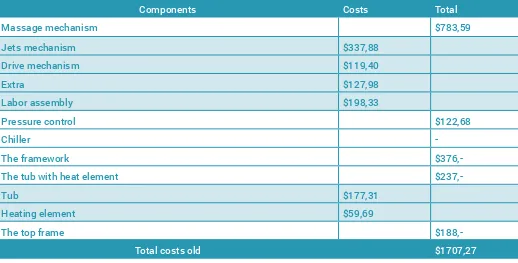
(32) 2.11. Requirements specifications The following list of requirements which can be seen in figure 2.11.1, is compiled out of the information that is gathered during the analysis phase. To illustrate why some requirements were set, an elaboration on the requirements is added below. The overall requirements are divided into functional, maintenance and production requirements. This subdivision is made because of the relation between the problems that were encountered and the section were the problems were encountered. Besides the overall requirements, the components that need to be redesigned got more specific requirements. These requirements are discussed before redesigning the components because these requirements can change during the redesign of other components. During the cost analysis it became clear that there is no overall target for the costs of the AquaFrixio. It is more important to develop the manufacturable massage concept, then reducing the costs. That is why there is no overall cost requirement. Figure 2.11.2 shows the current costs for every component that will be redesigned, what is analysed during the costs analysis. Components. Costs. Massage mechanism. Total $783,59. Jets mechanism. $337,88. Drive mechanism. $119,40. Extra. $127,98. Labor assembly. $198,33. Pressure control. $122,68. Chiller. -. The framework. $376,-. The tub with heat element. $237,-. Tub. $177,31. Heating element. $59,69. The top frame. $188,Total costs old. Figure 2.11.2. The cost for every component that will be redesigned for the AquaFrixio. $1707,27.
(33) 33. Purpose The purpose is to develop and design a manufacturable new massage concept used inside the AquaFrixio. Therefore the six main components in the massage bed need to be redesigned. Functional The usability of the product must stay the same. The outside dimensions of the product must stay the same. The noise must be reduced to a comfortable level. WISH: The massage effect is preferred to be in improved. WISH: The usability is desired to improve. Maintenance The product must function with half yearly maintenance. The product components must be accessible. The product must have an easy maintenance. The product must include of consistent components. Production The product must be able to be assembled in one day by two person(s). The product must be produced at the production line in the workshop. The product must have identical part as much as possible. The product must be as symmetric as possible. The product must consist of pre-drilled holes as much as possible. The material cost must be as low as possible. The materials must be able to be ordered in bulk numbers. WISH: The production cost are desired to be lower then 2909,09. Figure 2.11.1. The overall requirements for the redesign of the WaterWave..
(34) 3. Component redesign. Pressure controlled pump. The problems were quantified, the requirements were established and the goal was formulated. This chapter is about changing ideas into concepts.. Extra valve without massage effect. Every component that is selected in the previous chapter, will be redesigned in this chapter. Multiple ideas will be generated and Several smaller valves. these will be translated into a concept. For every component, several concepts are generated, what ends with making a decision for one of the concepts. In order to explore different solutions and generate ideas, a brainstorm session is done. The brainstorm session is done based on the information gathered during the analyses phase, what focussed on every component which needs to be redesigned. Figure 3.0 shows the results of the brainstorm session.. Withstand a x-amount of weight. As the time is progressing rapidly and due the size of the assignment, not every component can be widely discussed. The focus lays on developing a prototype for the new designed massage concept for the AquaFrixio.. Pop rivet. Welded together. Powder coating. Carriage system. Water though water. Rotating nozzles. Water jets. Figure 3.0. The results of the brainstorm session. Warm (jade) stones.
(35) 35 2x small pump. Ribs Electric flow control valve. Pressure control. Fibre glass. Polyester Cleaning the tub. Vacuum formed. Water pressure booster. Tub Water heated. Water containing. Open a second zone. Water standing still for longer. Drain. Bulkhead fitting. Pressure reducing valve. Net in a second frame Water resistant. Freon cooling system. A clip with rounded edge Welded nuts. Waterproof. Bolt and nuts. To many screws. The use of a tool. Welded clips. Top Frame. Clamps (destaco) Blind rivet nut. Framework Aluminum. A clip in a angle Rotary component. Click system with tubing. Straps. Aluminum extrusion. Square frame Steel Wheels. Oil cooler. Drive system. Motor driving. Internal small chiller. Massage mechanism. Eternal cooler. Internal radiator. Chiller. Refrigerator. Processor cooler Water cooler. Water bed massage Multiple fans Dry massage technique Water through air. Condenser core. Aluminum extrusion. Sprinkler system. Vibration plate. Freon cooling system. Air conditioning cooling system.
(36) 3.1. The massage mechanism The massage mechanism is the most important component of the AquaFrixio, as it delivers the key function of the product. Because of that, this component will be the first one that will be redesigned. The product analysis determined the current solution is not delivering the required performances, which means that there will be looked for a whole new mechanism. 3.1.1. Requirements The requirements specific for the massage mechanism are shown in figure 3.1.1. The most important requirement for the massage mechanism is the quality of the massage effect. The other requirements are formed based on the current mechanical system, the objective that is in mind and on basis of the problems that currently exists. These requirements will be the guideline during the redesign of the massage mechanism The cost of this component is less important than the quality of the mechanism, which is the reason that the costs are a wish and not a requirement. Out of the cost analysis became clear that the current massage mechanism has a total cost off $937.93 what includes the following sub-components: the jets mechanism ($337,88), the electronics ($282.32), the drive system ($119,40) and the assembly labor ($198,33). Component 1: The massage mechanism Quality of the massage effect must stay the same or be improved Pressure of the massage effect must be improved The massage technique must fit the 1-Speed Spa Flo 48-Frame Pump The massage technique must fit in the new tub The massage technique must cover the whole body WISH: The massage mechanism is desired to cost less then $937.93 The massage technique must consist of 4 zones minimum Figure 3.1.1. The requirements for the massage mechanism. 3.1.2. Idea generation After the brainstorm is decided to go through with the water though air technique, which means that the water leaving the jet travels through air before reaching your back. This effect can be created using a tub that is not completely filled with water. This technique is used because the company has many experience on this field that can be handy during the design of the AquaFrixio and the other techniques are mostly based on mechanical techniques that do not deliver the required massage effect..
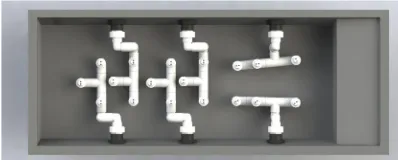
(37) 37. Another decision that is made effects the size of the tub. The current tub cover almost all the dimensions of the bed, which leaves less space for the mechanical components and creates weak points as that tub is to deep to be vacuum formed. That is why the tub must be less deep so there is enough space left for components underneath the tub and the weak spots within the tub are solved. Figure 3.1.2. The jets for the massage technique. The QFD showed the importance of the water pump. The pump used is a 1½ HP pump, but is also available in a 2 HP version. To increase the water pressure, the 2 HP version will be used for the massage mechanism. This is advised by an expert of Waterway, who are specialised in pools and spas (Waterway, 2011). An other important restriction is the inside dimensions of the. Figure 3.1.3. Basic frame with tub used during the concept detailing. skirt. Appendix E shows those dimensions that need to be kept in mind during the design of the mechanical components. This influences the overall dimensions of the massage mechanism. There is also more clarity on the jets that will be used for the AquaFrixio. A previous designer already did some research to the jets that will deliver the desired performances. These jets will. Figure 3.1.4. An example of a human body laying on top of the AquaFrixio. be used based on his findings. Figure 3.1.2 shows a image of those jets. Sketches of ideas that are made in during the idea generation can be found in Appendix F. (Merks, 2010) 3.1.2. Concept design There are a few restrictions during the redesign of the massage mechanism, since it is the most essential component for the redesigned AquaFrixio. The frame with tub shown in figure 3.1.3 are based on the decisions made during the idea generation and the outside dimensions of the skirt. The frame and tub will be modified and fit the massage mechanism later on during the design process, but this will be used as a guideline during the design of the massage mechanism..
(38) The positioning of the jets is important to create the required quality of massage. Therefore the average body height of NorthAmericans will be used to estimate the positioning of the jets. The average body size of the North-Americans is taken as. 1. 6. 2. 7. 3. 8. 4. 9. 5. 0. guideline because that is the target group for the AquaFrixio. Figure 3.1.5 shows an example of a human body laying on top of. 1. the AquaFrixio. (Disabled World, 2008) (DINED, 2014) Based on the sketches shown in Appendix F and the gathered information during the analyse phase, three concepts are created. Concept 1.. 1 62. 16 27. 2. 6 7. 73 84. 3. 38 4 Figure 3.1.5 Concept 1 with 49 the pump 95 (1), plumbing (2), valves (3) and jets (4). 5 50 0 1 6 2. 7. possible. A 2’’ mainline plumbing guides water through six. 3. 8. different zones. The main line is like a spine as it is exactly in the. 4. 9. middle of the bed. Every zone is provided with a electric valve. 5. 0. The first concept focusses on using as few components as. that controls the passage of the water. The water goes through the wall of the tub and divides into three jets. The nozzles on top of the jets great the massage effect against the body. Figure 3.1.5 shows a model of concept 1. Concept 2. The second concept uses a mainline that lays at the side of the. 8 9 0. 1. 6. 2. 7. 1. 6. 3. 8. 2. 7. 2. 3. 7. 8. 4. 9. 3. 4. 8. 9. Figure 3.1.6 5 Concept 0 2 with the4 pump 5 (1),9 plumbing (2), valves (3) and jets (4).. 0. 1. 5. 6. 0. bed. The 2’’ mainline splits into five zones that are also provided with electric valves to control the passages of the water. The water goes through the bottom wall of tub and ends up in the middle of the tub. The water splits into three different jets and sprays the person through the nozzles on the jets. A model of concept 2 is shown in figure 3.1.6. Concept 3.. 1 26. 1. 1. 6. 2. 2. 7. 31. 3. 42. 4. 37 8 6 48 9 7 59. 53. 5. 08. A 2’’ mainline is connect with six valves which are connected to. 4. 9. different zones and can be controlled by the hand-controller as. 5. 0. 0. the valves are connected to the electric circuit. The ramifications in the main line are symmetric, what ensures that the gaps in the tub are at the opposite of each other. This all is shown of figure 3.1.7. that creates a overview of concept 3. (Waterway, 2011). Figure 3.1.7. Concept 3 with the pump (1), plumbing (2), valves (3) and jets (4).. 6 7 8 9 0.
(39) 39. 3.1.3. Concept choice Figure 3.1.8 shows the outcome of the concepts that were criticized using the specific requirements. To be able to make this decision, an employee of Waterway was able to come over and give some useful information about spa and pool components. With his help and the use off the internet, it is also possible to further develop a new concept which creates a similar massage effect and is easier for maintenance and production. Component 1: The massage mechanism. Concept 1. Concept 2. Concept 1. Quality of the massage effect must stay the same or be improved. /. /. /. Pressure of the massage effect must be improved. /. /. /. The massage technique must fit the 1-Speed Spa Flo 48-Frame Pump. +. +. +. The massage technique must fit in the new tub. +. +. +. The massage technique must cover the whole body. ++. +. ++. WISH: The massage mechanism is desired to cost less then $937.93. -. -. -. The massage technique must consist of 4 zones minimum. ++. ++. ++. Figure 3.1.8. The requirements for the massage mechanism. The first two requirements are difficult to asses, as the quality of the massage affect needs to be tested during the development of a prototype and all three concept use the same 2HP pump and 2’’ plumbing. Without examining the concepts deeply it is hard to decide which concept preforms better. Concept three is more symmetric, uses less parts and covers more area of the body which is the reason to choose concept three over the other two concepts. Less parts and the symmetry makes it easier for assembly and maintenance. The six zones cover more are than five zones. The cost estimation of the three concepts are close together. Unfortunately, it does cost around the $1300,-. The functioning of the massage bed is of that importance that the costs are accepted. This results in the final selection of concept three, that is based on all the arguments described above..
(40) 3.1.4. Concept description The massage mechanism is mostly build out of basic plumbing parts that can supplied by all plumbing suppliers. As it is importance that the defected components can be replaced easily, the mechanism is made out of many consisted components and the maintenance can be done easily, which is necessary to use. Figure 3.1.9. Top view of the mechanism.. some specialised parts. Figure 3.1.9 and 3.1.10 show the working of the massage mechanism. The 2HP pump is connected to the 2’’ mainline positioned in the middle of the bed. Three ramifications divide the mainline into the six zones. Every ramification is connected to a valve with a union which makes it able to replace the valve when it is broken without replacing any other valve. The plumbing enters the tub using a bulkhead tank fitting which seals the tub watertight. Between the jets and the bulkhead tank fitting is. Figure 3.1.10. Isometric view to the massage mechanism. another union, that makes it possible to replace the valve and simplifies the assembly of the AquaFrixio. The average body height is used to determine the positioning of the jets. More detailed drawings are shown on Appendix H. As explained earlier, the previous designed jets are used for the upper for jets inside the mechanism. For the legs is a different type of jet designed, that is shown in figure 3.1.11. The jets used for the legs is also build out of three nozzles that are positioned in one line. The two upper nozzles create the massage effect in the thigh and the lower nozzle creates the massage effect in the lower leg (DINED, 2014). 3.1.5. Estimated costs The exact cost estimation can be found on Appendix G. The estimated cost for the massage mechanism is $1.025,92. This includes the pump, all the plumbing and the labor to assemble the mechanism.. Figure 3.1.11. The jet used for the legs.
(41) 41. 3.2. Water pressure regulator Every user prefers a different pressure for the massage technique. Currently there is a manual valve mounted with a small motor on top of the valve to control the water pressure. The motor has too much torque that demolishes the valve and makes the bed unusable. The current valve needs to be replaced with a component that is able to regulate the water pressure properly. 3.2.1. Requirements There are two things that are most important for the water pressure regulator. First, the water pressure regulator needs to be compatible with the new massage mechanism. Second, the water pressure needs to be regulate on three different levels, as it is preferred to be able to put the pressure harder and lower. The pressure regulator is of that importance that a good placement is more in need then the cost reduction. The requirements are shown in figure 3.2.1. Component 3: The water pressure regulator The water pressure regulator must be compatible with the redesigned massage mechanism The water pressure regulator must regulate the water pressure on three different levels minimum The water pressure regulator must be replaced easily The cost of the water pressure regulator must be as low as possible WISH: The cost of the water pressure regulator is desired to be lower then $122,68 Figure 3.2.1. The requirements for the water pressure regulator.. These requirements will be used to search for an alternative that replaces the current valve and makes it possible to regulate the pressure used for the massage technique. 3.2.1. Idea generation Several ideas are generated which differ from a pressure controlled pump to a water pressure booster.. Appendix F. shows several drawings of ideas that came forward out of the brainstorm session..
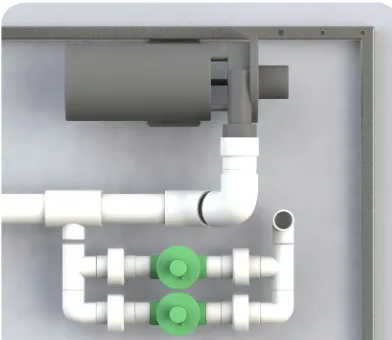
(42) 3.2.2. Concept design Based on the sketches made in the idea generation phase, the information gathered during the analyse phase and the formulated requirements, three concepts are made. Concept 1. The first concept is replacing the current water pump with a variable speed water pump. The variable speed pumps available variate from 2 till 4 different speeds. The size and the price of the pumps increase tremendously. The pump can be connected tot the electronic circuit of the AquaFrixio which it possible to adapt the speed of the pump with the hand-controller (TomTom2, 2011). Concept 2. The second concept is about a valve that is able to electronically controls the amount of water that goes through the valve. The water pressure is at maximum when the valve is completely open. To lower the water pressure, the valve will narrow the gap so that less water goes through the main line. This way the pressure of the AquaFrixio can be controlled using the hand-controller. The valve is located at the mainline. Concept 3. The third concept is about two smaller valves that are connected to the main line. The two valves can be switched on and off separately. When the two valves are closed, the water pressure is at maximum. If one valve is open, the water pressure will drop down. The minimum water pressure is acquired when both valves are open. These valves are connected to the electric circuit and can be controlled with the hand-controller (see figure 3.2.2.). 3.2.3. Concept choice To be able to make a funded decision, some internet research is done and an expert is consulted. The expert was able to provide more information about the different types of valves that are on the market. Figure 3.2.3 shows the outcome of the requirements compared to the three concepts.. Figure 3.2.2. The 2 times 1’’ valves.
(43) 43. Component 3: The water pressure regulator. Concept 1 Concept 2 Concept 3. The water pressure regulator must be compatible with the redesigned massage ++ mechanism. +/-. ++. The water pressure regulator must regulate the water pressure on three different ++ levels minimum. ++. +. The water pressure regulator must be replaced easily. -. +. ++. The cost of the water pressure regulator must be as low as possible. -. +/-. +. -. +. WISH: The cost of the water pressure regulator is desired to be lower then -$122,68 Figure 3.2.3. The outcome of the requirements for the water pressure regulator.. Currently there is no standard electronic valve on the market that is compatible with the new designed massage mechanism. The other two concepts are compatible with the new mechanism, which is an advantage for concept one and three. Concept one and two have far more options than the required pressure levels. Concept three is only able to use three different levels of water pressure, as more levels will need to much space inside the AquaFrixio. The advantage of concept three is its easy to replace the two valves. The variable speed pump is mounted on the framework which is difficult to replace and the electronically controlled valve is connected to the mainline, which needs a lot of effort to replace this component. The variable water pump cost around $1200,-, the variable valve costs around the $300,- and two smaller valves cost about $12,each. In the end is concept three way cheaper then the other two, what is a huge advantage for this concept. (Pentair, 2014) Based on these arguments and the requirements for the water pressure regulator, concept 3 is chosen to use for the AquaFrixio..
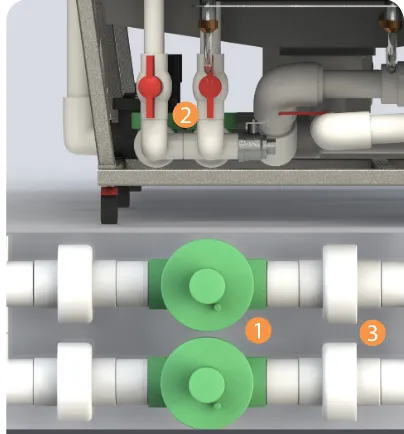
(44) 3.2.4. Concept description To control the pressure of the massage mechanism, two smaller electric valves are connected to the 2’’ mainline. The two valves go separately up through a bulkhead tank fitting into the tub. The bulkhead tank fitting is placed above the water level to reduce. 1. 6. the amount of potential leaks.. 2. 7. 3. 8. The two manual valves in line with the two electronic valve are. 4. 9. able to reduce the passage of the water. This way the user can. 5. 0. variate the three different levels of water pressure. A narrower passage reduces the pressure difference between the three. 1 2. levels. The manual valve will be set to a standard position and. 1. the user has to remove the skirt to change the position.. 2. 63 74. 3. At both sides of the valve is a union located that makes it. 85 Figure 3.2.5. The 1’’ electronic 4 valves9(1),. the unions (3) possible to replace one valve when it is damaged. This to keep the 1’’ manual valves (2) and 5 0. the maintenance user-friendly. 3.2.5. Estimated costs. The pressure control is build out of basic parts that are available at most of the plumbing suppliers. The cost of the pressure controller is estimated at $83.74, which is shown on Appendix G. The estimated costs for this component are less expensive compared to the current component..
(45) 45. 3.3 The chiller Currently there is one fan that moves air out of bed through a opening in the skirting. This is not enough to keep the water at comfortable level when the bed is used for multiple times a day. Unfortunately, there is no working WaterWave left to measure the temperature, which means that the current problems is based on customer experience and cannot be verified. The use of the massage bed differs from ones a day to several times a day, which affects the temperature of the water. Frequent use means a huge increase in water temperature, as the movement of the water creates heat due to the friction between the water and the plumbing (Gramoll, 2008). The aim is to sell the AquaFrixio to salon owners that use the bed multiple times a day, which means that there can be assumed that the temperature needs to be chilled a lot. 3.3.1. Requirements Figure 3.3.1. shows the requirements specific for the chiller. Because the missing experience, some more experimentation has to be done afterwards. This assignment focusses on a workable solution but the deepening into the exact working of the chiller is not possible within the timeframe of this assignment. Component 2: The chiller The chiller must keep the water at 95 degree while using the AquaFrixio The chiller must be placed within the AquaFrixio The chiller must be made out of standard parts The chiller must be as cheap as possible Figure 3.3.1. The requirements specific for the chiller. An important requirements of the chiller is keeping the water at 95 degrees. This is the average temperature that is used for the AquaFrixio (ProSun WaterWave 230, 2010). Another requirement is that the chiller needs to be placed inside the AquaFrixio and not outside the bed, what limits the possible solutions. The final requirement is the use for standard parts, to keep the labor restricted...
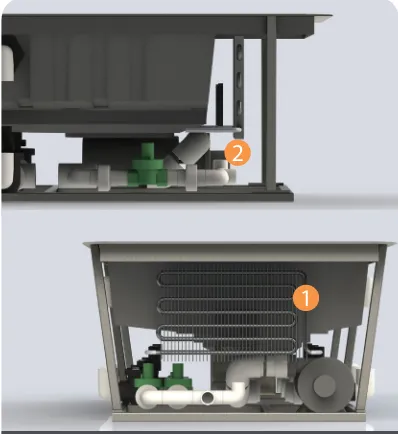
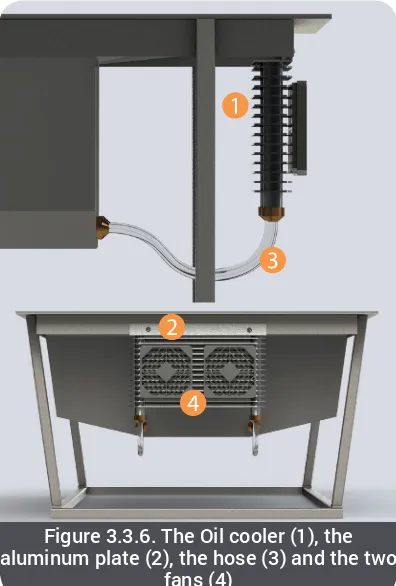
(46) 3.3.2. Idea generation The ideas that are generated for the chiller are based on similar products. The Hydro Massage and H2O Massage are reviewed, based on information that could be found on the internet about. 1. 6. these products. Appendix F shows several sketches of ideas. 2. 7. that could solve the problem encountered.. 3. 8. 4. 9. 5. 0. 3.3.3. Concept design The size of the chiller plays an important role. The amount of space that is left within the AquaFrixio is limited with the new technique that is used. Another element that influences the variety of options is the requirement that the chiller needs to be made from basic parts. Designing an aluminum extrusion with ribs that transfer heat to air, does not directly meet the. 1. 6. 2. 7. 3. 8. 4. 9. Figure 3.3.2. The Condensor core5(1) with a 0 fan behind (2) the core.. requirement. In the end, three concept are created. Concept 1. An air conditioning uses a condensor core to cool down water at the back of the conditioning. The water flows to tubing that is inside a framework. A fan blows air through the framework so the heat from the water is transferred to the air as the framework. 1. 6. 2. 7. 3. 8. 4. 9. 5. 0. has many contact points with the air. Figure 3.3.2 gives an idea of the size and positioning of the condensor core within the product. Concept 2. An oil cooler is frequently used inside cars and motorcycles. It works the same as the condensor core as the oil goes through. 1. 6. 2. 7. 3. 8. 4. 9. Figure 3.3.3. The Oil cooler (1) with a fan 0 behind the cooler (2) 5. the cooler were the heat is transferred to the air. The oil cooler can be brought externally and does not need any modification. Figure 3.3.3 shows a oil cooler of medium size located within the product. Concept 3. A new designed aluminum extrusion is filled with water. When the water reaches an certain temperature, the chiller will go on.. 1. 6. 2. 7. 3. 8. 4. 9. 6. 20. 7. extrusion. Two fans blow air through the ribs of the extrusion. 3. 8. which will transfer the heat from the water to the air. This is. 4. 9. 5. 0. Two smal pumps go on and push water through the aluminum. shown in figure 3.3.4.. 5. 1. Figure 3.3.4. The aluminum extrusion (1) with the fan (2).
(47) 47. 3.3.4. Concept choice As the knowledge about a chiller is limited, the choice for the best qualified chiller is difficult. Based on the gathered information, a decision is made. Figure 3.3.5. shows the outcome of the requirements regarding the three concepts. Component 2: The chiller. Concept 1. Concept 2. Concept 3. The chiller must keep the water at 95 degree while using the AquaFrixio. /. /. /. The chiller must be placed within the AquaFrixio. +. +. +. The chiller must be made out of standard parts. +. +. +/-. The chiller must be as cheap as possible. +. +. -. Figure 3.3.5. The outcome of the requirements specific for the chiller. The first requirement is hard to evaluate, as the functioning of the part will be tested with the prototype. Deeper research is required to determine the functioning which is not possible within the time frame of this assignment. An estimation is done to be able to make a decision. The disadvantage of concept one is the width and height of the core, as the to fans have a limited area they can cover. The second concept has the disadvantage of the low capacity compared to the other concepts, what can minimize the effect of the chiller. The third concept has the disadvantage that the end of the extrusion cannot be place near the skirt to mount the fan, what makes it hard to circulate the air. A problem encountered with concept one core, is the availability of this component. It is hard to find the part separated, because it is mostly delivered as a component within a product. Concept two is available as a part and can be delivered in all different dimensions. The concept three is not made from basic parts, as a mall for the aluminum extrusions has to be made. The costs for these components differ tremendous. The price for the aluminum extrusion is not that expensive, the problems is the purchase of the mall. This starts somewhere around the $2.000,-. The condensor core and oil cooler both fit in the same price range, starting form the $40,- till somewhere &120,-. Based on these arguments, the decisions is made to use the oil cooler for the AquaFrixio..
Figure
+7
Related documents
The PROMs questionnaire used in the national programme, contains several elements; the EQ-5D measure, which forms the basis for all individual procedure
information to reap an unfair benefit. Many of these donations were made at a time when it would have been illegal to make a sale of the same securities due to their access to this
Using text mining of first-opinion electronic medical records from seven veterinary practices around the UK, Kaplan-Meier and Cox proportional hazard modelling, we were able to
• Follow up with your employer each reporting period to ensure your hours are reported on a regular basis?. • Discuss your progress with
○ If BP elevated, think primary aldosteronism, Cushing’s, renal artery stenosis, ○ If BP normal, think hypomagnesemia, severe hypoK, Bartter’s, NaHCO3,
All of the participants were faculty members, currently working in a higher education setting, teaching adapted physical activity / education courses and, finally, were
4.1 The Select Committee is asked to consider the proposed development of the Customer Service Function, the recommended service delivery option and the investment required8. It
more than four additional runs were required, they were needed for the 2 7-3 design, which is intuitive as this design has one more factor than the 2 6-2 design
