A Phrase-Based Alignment Model for Natural Language Inference
Bill MacCartney, Michel Galley, Christopher D. Manning Natural Language Processing Group, Stanford University
{wcmac,mgalley,manning}@stanford.edu
Abstract
The alignment problem—establishing links between corresponding phrases in two related sentences—is as important in natural language inference (NLI) as it is in machine transla-tion (MT). But the tools and techniques of MT alignment do not readily transfer to NLI, where one cannot assume semantic equiva-lence, and for which large volumes of bitext are lacking. We present a new NLI aligner, the MANLI system, designed to address these challenges. It uses a phrase-based alignment representation, exploits external lexical re-sources, and capitalizes on a new set of su-pervised training data. We compare the per-formance of MANLI to existing NLI and MT aligners on an NLI alignment task over the well-known Recognizing Textual Entailment data. We show that MANLI significantly out-performs existing aligners, achieving gains of 6.2% inF1over a representative NLI aligner
and 10.5% over GIZA++.
1 Introduction
The problem of natural language inference (NLI) is to determine whether a natural-language hypothesis H can reasonably be inferred from a given premise textP. In order to recognize thatKennedy was killed
can be inferred from JFK was assassinated, one must first recognize the correspondence between
Kennedy and JFK, and between killed and assas-sinated. Consequently, most current approaches to NLI rely, implicitly or explicitly, on a facility for
alignment—that is, establishing links between cor-responding entities and predicates inP andH. Re-cent entries in the annual Recognizing Textual En-tailment (RTE) competition (Dagan et al., 2005) have addressed the alignment problem in a variety of ways, though often without distinguishing it as a separate subproblem. Glickman et al. (2005) and
Jijkoun and de Rijke (2005), among others, have ex-plored approaches based on measuring the degree of lexical overlap between bags of words. While ig-noring structure, such methods depend on matching each word inH to the word inP with which it is most similar—in effect, an alignment. At the other extreme, Tatu and Moldovan (2007) and Bar-Haim et al. (2007) have formulated the inference problem as analogous to proof search, using inferential rules which encode (among other things) knowledge of lexical relatedness. In such approaches, the corre-spondence between the words ofPandHis implicit in the steps of the proof.
Increasingly, however, the most successful RTE systems have made the alignment problem explicit. Marsi and Krahmer (2005) and MacCartney et al. (2006) first advocated pipelined system architec-tures containing a distinct alignment component, a strategy crucial to the top-performing systems of Hickl et al. (2006) and Hickl and Bensley (2007). However, each of these systems has pursued align-ment in idiosyncratic and poorly-docualign-mented ways, often using proprietary data, making comparisons and further development difficult.
In this paper we undertake the first systematic study of alignment for NLI. We propose a new NLI alignment system which uses a phrase-based repre-sentation of alignment, exploits external resources for knowledge of semantic relatedness, and capi-talizes on the recent appearance of new supervised training data for NLI alignment. In addition, we examine the relation between NLI alignment and MT alignment, and investigate whether existing MT aligners can usefully be applied in the NLI setting.
2 NLI alignment vs. MT alignment
The alignment problem is familiar in machine trans-lation (MT), where recognizing that she came is a good translation forelle est venuerequires
ing a correspondence betweensheandelle, and be-tweencameandest venue. The MT community has developed not only an extensive literature on align-ment (Brown et al., 1993; Vogel et al., 1996; Marcu and Wong, 2002; DeNero et al., 2006), but also standard, proven alignment tools such as GIZA++ (Och and Ney, 2003). Can off-the-shelf MT aligners be applied to NLI? There is reason to be doubtful. Alignment for NLI differs from alignment for MT in several important respects, including:
1. Most obviously, it is monolingual rather than cross-lingual, opening the door to utilizing abundant (monolingual) sources of information on semantic relatedness, such as WordNet. 2. It is intrinsically asymmetric: P is often much
longer thanH, and commonly contains phrases or clauses which have no counterpart inH. 3. Indeed, one cannot assume even approximate
semantic equivalence—usually a given in MT. Because NLI problems include both valid and invalid inferences, the semantic content of H may diverge substantially from P. An NLI aligner must be designed to accommodate fre-quent unaligned words and phrases.
4. Little training data is available. MT align-ment models are typically trained in unsu-pervised fashion, inducing lexical correspon-dences from massive quantities of sentence-aligned bitexts. While NLI aligners could in principle do the same, large volumes of suit-able data are lacking. NLI aligners must there-fore depend on smaller quantities of supervised training data, supplemented by external lexi-cal resources. Conversely, while existing MT aligners can make use of dictionaries, they are not designed to harness other sources of infor-mation on degrees of semantic relatedness. Consequently, the tools and techniques of MT align-ment may not transfer readily to NLI alignalign-ment. We investigate the matter empirically in section 5.2.
3 Data
Until recently, research on alignment for NLI has been hampered by a paucity of high-quality, publicly available data from which to learn. Happily, that has begun to change, with the release by Microsoft Re-search (MSR) of human-generated alignment
anno-In most Pacific countries there are very few women in parliament .
Womenare poorlyrepresente d
[image:2.612.363.487.64.249.2]in parlia ment .
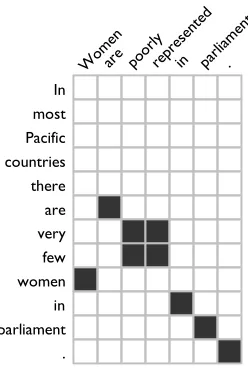
Figure 1: The MSR gold-standard alignment for problem 116 from the RTE2 development set.
tations (Brockett, 2007) for inference problems from the second Recognizing Textual Entailment (RTE2) challenge (Bar-Haim et al., 2006). To our knowl-edge, this work is the first to exploit this data for training and evaluation of NLI alignment models.
The RTE2 data consists of a development set and a test set, each containing 800 inference problems. Each problem consists of a premise and a hypoth-esis. The premises contain 29 words on average; the hypotheses, 11 words. Each problem is marked as a valid or invalid inference (50% each); how-ever, these annotations are ignored during align-ment, since they would not be available during test-ing of a complete NLI system.
The MSR annotations use an alignment repre-sentation which is token-based, but many-to-many, and thus allows implicit alignment of multi-word phrases. Figure 1 shows an example in whichvery fewhas been aligned withpoorly represented.
SURE-only annotation is to be preferred.
Each RTE2 problem was independently annotated by three people, following carefully designed an-notation guidelines. Inter-annotator agreement was high: Brockett (2007) reports Fleiss’ kappa1scores of about 0.73 (“substantial agreement”) for map-pings fromH tokens toP tokens; and all three an-notators agreed on∼70% of proposed links, while at least two of three agreed on more than 99.7% of proposed links,2 attesting to the high quality of the annotation data. For this work, we merged the three independent annotations, using majority rule,3 to obtain a gold-standard annotation containing an average of 7.3 links per RTE problem.
4 The MANLI aligner
In this section, we describe the MANLI aligner, a new alignment system designed expressly for NLI alignment. The MANLI system consists of four el-ements: (1) a phrase-based representation of align-ment, (2) a feature-based linear scoring function for alignments, (3) a decoder which uses simulated an-nealing to find high-scoring alignments, and (4) per-ceptron learning to optimize feature weights.
4.1 A phrase-based alignment representation
MANLI uses an alignment representation which is intrinsically phrase-based. (Following the usage common in MT, we use “phrase” to mean any con-tiguous span of tokens, not necessarily correspond-ing to a syntactic phrase.) We represent an alignment Ebetween a premiseP and a hypothesisHas a set of phrase edits{e1, e2, . . .}, each belonging to one of four types:
• anEQedit connects a phrase inPwith an equal (by word lemmas) phrase inH
• aSUB edit connects a phrase inP with an un-equal phrase inH
• aDELedit covers an unaligned phrase inP
• anINSedit covers an unaligned phrase inH For example, the alignment shown in fig-ure 1 can be represented by the set {DEL(In1),
1
Fleiss’ kappa generalizes Cohen’s kappa to the case where there are more than two annotators.
2
TheSURE/POSSIBLE distinction is taken as significant in computing all these figures.
3The handful of three-way disagreements were treated as POSSIBLElinks, and thus were not used here.
DEL(most2), DEL(Pacific3), DEL(countries4), DEL(there5), EQ(are6, are2), SUB(very7 few8, poorly3 represented4), EQ(women9, Women1), EQ(in10, in5), EQ(parliament11, parliament6), EQ(.12,.7)}.4
Alignments are constrained to be one-to-one at the phrase level: every token inP andH belongs to exactly one phrase, which participates in exactly one edit (possiblyDELorINS). However, the phrase representation permits alignments which are many-to-many at the token level. In fact, this is the chief motivation for the phrase-based representation: we can alignvery fewandpoorly representedas units, without being forced to make an arbitrary choice as to which word goes with which word. Moreover, our scoring function can make use of lexical resources which have information about semantic relatedness of multi-word phrases, not merely individual words. About 23% of the MSR gold-standard align-ments are not one-to-one (at the token level), and are therefore technically unreachable for MANLI, which is constrained to generate one-to-one align-ments. However, by merging contiguous token links into phrase edits of size > 1, most MSR align-ments (about 92%) can be straightforwardly con-verted into MANLI-reachable alignments. For the purpose of model training (but not for the evalua-tion described in secevalua-tion 5.4), we generated a ver-sion of the MSR data in which all alignments were converted to MANLI-reachable form.5
4.2 A feature-based scoring function
To score alignments, we use a simple feature-based linear scoring function, in which the score of an alignment is the sum of the scores of the edits it con-tains (including not onlySUBandEQedits, but also DEL and INS edits), and the score of an edit is the dot product of a vector encoding its features and a vector of weights. IfEis a set of edits constituting
4
DELandINSedits of size>1 are possible in principle, but are not used in our training data.
5
an alignment, andΦis a vector of feature functions, the scoresis given by:
s(E) =X e∈E
s(e) =X e∈E
w·Φ(e)
We’ll explain how the feature weights ware set in section 4.4. The features used to characterize each edit are as follows:
Edit type features. We begin with boolean
fea-tures encoding the type of each edit. We expectEQs to score higher thanSUBs, and (sincePis commonly longer thanH)DELs to score higher thanINSs.
Phrase features. Next, we have features which
encode the sizes of the phrases involved in the edit, and whether these phrases are non-constituents (in syntactic parses of the sentences involved).
Lexical similarity feature. For SUB edits, a very
important feature represents the lexical similarity of the substituends, as a real value in[0,1]. This simi-larity score is computed as a max over a number of component scoring functions, some based on exter-nal lexical resources, including:
• various string similarity functions, of which most are applied to word lemmas
• measures of synonymy, hypernymy, antonymy, and semantic relatedness, including a widely-used measure due to Jiang and Conrath (1997), based on manually constructed lexical re-sources such as WordNet and NomBank
• a function based on the well-known distribu-tional similarity metric of Lin (1998), which automatically infers similarity of words and phrases from their distributions in a very large corpus of English text
The ability to leverage external lexical resources— both manually and automatically constructed—is critical to the success of MANLI.
Contextual features. Even when the lexical
sim-ilarity for a SUB edit is high, it may not be a good match. If P or H contains multiple occur-rences of the same word—which happens frequently with function words, and occasionally with content words—lexical similarity may not suffice to deter-mine the right match. To remedy this, we introduce contextual features for SUB and EQ edits. A real-valued distortion feature measures the difference
Inputs
• an alignment problemhP, Hi • a number of iterationsN(e.g. 100)
• initial temperatureT0(e.g. 40) and multiplierr(e.g. 0.9) • a bound on edit sizemax(e.g. 6)
• an alignment scoring function,SCORE(E)
Initialize
• LetE be an “empty” alignment forhP, Hi(containing onlyDELandINSedits, noEQorSUBedits)
• SetEˆ=E
Repeatfori= 1 toN
• Let{F1, F2, ...}be the set of possible successors ofE.
To generate this set:
– Consider every possible editfup to sizemax
– LetC(E, f)be the set of edits inE which “con-flict” withf(i.e., involve at least some of the same tokens asf)
– LetF=E∪ {f} \C(E, f)
• Lets(F)be a map from successors ofEto scores gener-ated bySCORE
• Setp(F) = exps(F), and then normalizep(F), trans-forming the score map to a probability distribution • SetTi=r·Ti−1
• Setp(F) =p(F)1/Ti, smoothing or sharpeningp(F) • Renormalizep(F)
• Choose a new value forEby sampling fromp(F) • IfSCORE(E)>SCORE( ˆE), setEˆ=E
ReturnEˆ
Figure 2: TheMANLI-ALIGNalgorithm
between the relative positions of the substituends within their respective sentences, while boolean
matching neighborsfeatures indicate whether the to-kens before and after the substituends are equal or similar.
4.3 Decoding using simulated annealing
independent decisions.
To address this difficulty, we have devised a stochastic alignment algorithm,MANLI-ALIGN (fig-ure 2), which uses a simulated annealing strategy. Beginning from an arbitrary alignment, we make a series of local steps, at each iteration sampling from a set of possible successors according to scores as-signed by our scoring function. The sampling is con-trolled by a “temperature” which falls over time. At the beginning of the process, successors are sampled with nearly uniform probability, which helps to en-sure that the space of possibilities is explored and local maxima are avoided. As the temperature falls, there is a ever-stronger bias toward high-scoring suc-cessors, so that the algorithm converges on a near-optimal alignment. Clever use of memoization helps to ensure that computational costs remain manage-able. Using the parameter values suggested in fig-ure 2, aligning an average RTE problem takes about two seconds.
While MANLI-ALIGN is not guaranteed to pro-duce optimal alignments, there is reason to believe that it usually comes very close. After training, the alignment found by MANLI scored at least as high as the gold alignment for 99.6% of RTE problems.6
4.4 Perceptron learning
To tune the parameters w of the model, we use an adaptation of the averaged perceptron algorithm (Collins, 2002), which has proven successful on a range of NLP tasks. The algorithm is shown in fig-ure 3. After initializingwto 0, we performN train-ing epochs. (Our experiments used N = 50.) In each epoch, we iterate through the training data, up-dating the weight vector at each training example ac-cording to the difference between the features of the target alignment and the features of the alignment produced by the decoder using the current weight vector. The size of the update is controlled by a learning rate which decreases over time. At the end of each epoch, the weight vector is normalized and stored. The final result is the average of the stored
6This figure is based on the MANLI-reachable version of the gold-standard data described in section 4.1. For the raw gold-standard data, the figure is 88.1%. The difference is almost entirely attributable to unreachable gold alignments, which tend to score higher simply because they contain more edits (and because the learned weights are mostly positive).
Inputs
• training problemshPj, Hji,j= 1..n • corresponding gold-standard alignmentsEj • a number of learning epochsN(e.g. 50) • a “burn-in” periodN0< N(e.g. 10)
• initial learning rateR0(e.g. 1) and multiplierr(e.g. 0.8) • a vector of feature functionsΦ(E)
• an alignment algorithm ALIGN(P, H;w) which finds a good alignment forhP, Hiusing weight vectorw Initialize
• Setw= 0
Repeatfori= 1 toN
• SetRi=r·Ri−1, reducing the learning rate • Randomly shuffle the training problems • Forj= 1 ton:
– SetEˆj=ALIGN(Pj, Hj;w)
– Setw=w+Ri·(Φ(Ej)−Φ( ˆEj)) • Setw=w/kwk2(L2 normalization)
• Setw[i] =w, storing the weight vector for this epoch
Returnan averaged weight vector: • wavg = 1/(N−N0)PNi=N0+1w[i]
Figure 3: TheMANLI-LEARNalgorithm
weight vectors, omitting vectors from a fixed num-ber of epochs at the beginning of the run (which tend to be of poor quality). Using the parameter values suggested in figure 3, training runs on the RTE2 de-velopment set required about 20 hours.
5 Evaluating aligners on MSR data
In this section, we describe experiments designed to evaluate the performance of various alignment sys-tems on the MSR gold-standard data described in section 3. For each system, we report precision, recall, and F-measure (F1).7 Note that these are macro-averaged statistics, computed per problem by counting aligned token pairs,8 and then averaged over all problems in a problem set.9 We also
re-7MT researchers conventionally report results in terms of alignment error rate (AER). Since we use onlySURElinks in the gold-standard data (see section 3), AER is equivalent to1−F1.
8
For phrase-based alignments like those generated by MANLI, two tokens are considered to be aligned iff they are contained within phrases which are aligned.
9
port the exact match rate, that is, the proportion of problems in which the guessed alignment exactly matches the gold alignment. The results are sum-marized in table 1.
5.1 A robust baseline: the bag-of-words aligner
As a baseline, we use a simple alignment algorithm inspired by the lexical entailment model of Glick-man et al. (2005), and similar to the simple heuristic model described in (Och and Ney, 2003). Each hy-pothesis wordhis aligned to the premise wordpto which it is most similar, according to a lexical sim-ilarity function sim(p, h) which returns scores in [0,1]. While Glickman et al. used a function based on web co-occurrence statistics, we use a much sim-pler function based on string edit distance:
sim(w1, w2) = 1−
dist(lem(w1), lem(w2)) max(|lem(w1)|,|lem(w2)|)
(Herelem(w)denotes the lemma of wordw;dist() denotes Levenshtein string edit distance; and| · | de-notes string length.)
This model can be easily extended to generate an alignment score, which will be of interest in sec-tion 6. We define the score for a specific hypoth-esis token h to be the log of its similarity with the premise tokenp to which it is aligned, and the score for the complete alignment of hypothesis H to premiseP to be the sum of the scores of the to-kens inH, weighted byinverse document frequency
in a large corpus10 (so that common words get less weight), and normalized by the length ofH:
score(h|P) = log max
p∈P sim(p, h)
score(H|P) = 1
|H|
X
h∈H
idf(h)·score(h|P)
Despite the simplicity of this alignment model, its performance is fairly robust, with good recall. Its precision, however, its mediocre—chiefly because, by design, it aligns everyhwith somep. The model could surely be improved by allowing it to leave someHtokens unaligned, but this was not pursued.
not greatly affected. 10
We useidf(w) = log(N/Nw), whereNis the number of documents in the corpus, andNwis the number of documents containing wordw.
System Data P % R% F1% E%
Bag-of-words dev 57.8 81.2 67.5 3.5 (baseline) test 62.1 82.6 70.9 5.3
GIZA++ dev 83.0 66.4 72.1 9.4
(using lex,∩) test 85.1 69.1 74.8 11.3
Cross-EM dev 67.6 80.1 72.1 1.3
(using lex,∩) test 70.3 81.0 74.1 0.8 Stanford RTE dev 81.1 61.2 69.7 0.5 test 82.7 61.2 70.3 0.3 Stanford RTE dev 81.1 75.8 78.4 — (punct. corr.) test 82.7 75.8 79.1 —
MANLI dev 83.4 85.5 84.4 21.7
(this work) test 85.4 85.3 85.3 21.3
Table 1: Performance of various aligners on the MSR RTE2 alignment data. The columns show the data set used (800 problems each); average precision, recall, and F-measure; and the exact match rate (see text).
5.2 MT aligners: GIZA++ and Cross-EM
Given the importance of alignment for NLI, and the availability of standard, proven tools for MT align-ment, an obvious question presents itself: why not use an off-the-shelf MT aligner for NLI? Although we have argued (section 2) that this is unlikely to succeed, to our knowledge, we are the first to inves-tigate the matter empirically.11
The best-known MT aligner is undoubtedly GIZA++ (Och and Ney, 2003), which contains im-plementations of various IBM models (Brown et al., 1993), as well as the HMM model of Vogel et al. (1996). Most practitioners use GIZA++ as a black box, via the Moses MT toolkit (Koehn et al., 2007). We followed this practice, running with Moses’ de-fault parameters on the RTE2 data to obtain asym-metric word alignments in both directions (P-to-H and H-to-P). We then performed symmetrization using the well-knownINTERSECTIONheuristic.
Unsurprisingly, the out-of-the-box performance was quite poor, with most words aligned apparently at random. Precision was fair (72%) but recall was very poor (46%). Even equal words were usually not aligned—because GIZA++ is designed for cross-linguistic use, it does not consider word equality be-tween source and target sentences. To remedy this, we supplied GIZA++ with a lexicon, using a trick
common in MT: we supplemented the training data with synthetic data consisting of matched pairs of equal words. This gives GIZA++ a better chance of learning that, e.g., man should align with man. The result was a big boost in recall (+23%), and a smaller gain in precision. The results for GIZA++ shown in table 1 are based on using the lexicon and INTERSECTION. With these settings, GIZA++ prop-erly aligned most pairs of equal words, but contin-ued to align other words apparently at random.
Next, we compared the performance of INTER-SECTION with other symmetrization heuristics de-fined in Moses—including UNION, GROW, GROW-DIAG,GROW-DIAG-FINAL(the default), and GROW-DIAG-FINAL-AND—and with asymmetric align-ments in both directions. While all these alterna-tives achieved better recall thanINTERSECTION, all showed substantially worse precision and F1. On the RTE2 test set, the asymmetric alignment from H toP scored 68% inF1; GROWscored 58%; and all other alternatives scored below 52%.
As an additional experiment, we tested the Cross-EM aligner (Liang et al., 2006) from the Berke-leyAligner package on the MSR data. While this aligner is in many ways simpler than GIZA++ (it lacks any model of fertility, for example), its method of jointly training two simple asymmetric HMM models has outperformed GIZA++ on standard eval-uations of MT alignment. As with GIZA++, we ex-perimented with a variety of symmetrization heuris-tics, and ran trials with and without a supplemental lexicon. The results were broadly similar: INTER-SECTION greatly outperformed alternative heuris-tics, and using a lexicon provided a big boost (up to 12% inF1). Under optimal settings, the Cross-EM aligner showed better recall and worse preci-sion than GIZA++, withF1just slightly lower. Like GIZA++, it did well at aligning equal words, but aligned most other words at random.
The mediocre performance of MT aligners on NLI alignment comes as no surprise, for reasons dis-cussed in section 2. Above all, the quantity of train-ing data is simply too small for unsupervised learn-ing to succeed. A successful NLI aligner will need to exploit supervised training data, and will need ac-cess to additional sources of knowledge about lexi-cal relatedness.
5.3 The Stanford RTE aligner
A better comparison is thus to an alignment sys-tem expressly designed for NLI. For this purpose, we used the alignment component of the Stanford RTE system (Chambers et al., 2007). The Stanford aligner performs decoding and learning in a simi-lar fashion to MANLI, but uses a simpler, token-based alignment representation, along with a richer set of features for alignment scoring. It represents alignments as an injective map from H tokens to P tokens. Phrase alignments are not directly repre-sentable, although the effect can be approximated by a pre-processing step which collapses multi-token named entities and certain collocations into single tokens. The features used for alignment scoring in-clude not only measures of lexical similarity, but also syntactic features intended to promote the align-ment of similar predicate-argualign-ment structures.
Despite this sophistication, the out-of-the-box performance of the Stanford aligner is mediocre, as shown in table 1. The low recall figures are partic-ularly noteworthy. However, a partial explanation is readily available: by design, the Stanford system ignores punctuation.12 Because punctuation tokens constitute about 15% of the aligned pairs in the MSR data, this sharply reduces measured recall. However, since punctuation matters little in inference, such re-call errors probably should be forgiven. Thus, ta-ble 1 also shows adjusted statistics for the Stanford system in which all recall errors involving punctua-tion are (generously) ignored.
Even after this adjustment, the recall figures are unimpressive. Error analysis reveals that the Stan-ford aligner does a poor job of aligning function words. About 13% of the aligned pairs in the MSR data are matching prepositions or articles; the Stan-ford aligner misses about 67% of such pairs. (By contrast, MANLI misses only 10% of such pairs.) While function words matter less in inference than nouns and verbs, they are not irrelevant, and because sentences often contain multiple instances of a par-ticular function word, matching them properly is by no means trivial. If matching prepositions and ar-ticles were ignored (in addition to punctuation), the gap inF1between the MANLI and Stanford systems
would narrow to about 2.8%.
Finally, the Stanford aligner is handicapped by its token-based alignment representation, often failing (partly or completely) to align multi-word phrases such as peace activists with protesters, or hackers
withnon-authorized personnel.
5.4 The MANLI aligner
As table 1 indicates, the MANLI aligner was found to outperform all other aligners evaluated on ev-ery measure of performance, achieving anF1 score 10.5% higher than GIZA++ and 6.2% higher than the Stanford aligner (even with the punctuation cor-rection).13 MANLI achieved a good balance be-tween precision and recall, and matched more than 20% of the gold-standard alignments exactly.
Three factors seem to have contributed most to MANLI’s success. First, MANLI is able to outper-form the MT aligners principally because it is able to leverage lexical resources to identify the similar-ity between pairs of words such asjailandprison,
preventandstop, orinjuredandwounded. Second, MANLI’s contextual features enable it to do bet-ter than the Stanford aligner at matching function words, a weakness of the Stanford aligner discussed in section 5.3. Third, MANLI gains a marginal ad-vantage because its phrase-based representation of alignment permits it to properly align phrase pairs such asdeath penaltyandcapital punishment, or ab-dicateandgive up.
However, the phrase-based representation con-tributed far less than we had hoped. Setting MANLI’s maximum phrase size to 1 (effectively, restricting it to token-based alignments) caused F1 to fall by just 0.2%. We do not interpret this to mean that phrase alignments are not useful—indeed, about 2.6% of the links in the gold-standard data in-volve phrases of size>1. Rather, we think it shows that we have failed to fully exploit the advantages of the phrase-based representation, chiefly because we lack lexical resources providing good informa-tion on similarity of multi-word phrases.
Error analysis suggests that there is ample room for improvement. A large proportion of recall errors (perhaps 40%) occur because the lexical similarity function assigns too low a value to pairs of words
13
Reported results for MANLI are averages over 10 runs.
or phrases which are clearly similar, such as con-servationandprotecting, serverandcomputer net-works,organization andagencies, or bone fragility
andosteoporosis. Better exploitation of lexical re-sources could help to reduce such errors. Another important category of recall errors (about 12%) re-sult from the failure to identify one- and multi-word versions of the name of some entity, such asLennon
andJohn Lennon, orNike Inc. andNike. A special-purpose similarity function could help here. Note, however, that about 10% of recall errors are un-avoidable, given our choice of alignment represen-tation, since they involve cases where the gold stan-dard aligns one or more tokens on one side to a non-contiguous set of tokens on the other side.
Precision errors may be harder to reduce. These errors are dominated by cases where we mistakenly align two equal function words (49% of precision er-rors), two forms of the verbto be(21%), two equal punctuation marks (7%), or two words or phrases of other types having equal lemmas (18%). Be-cause such errors often occur beBe-cause the aligner is forced to choose between nearly equivalent alter-natives, they may be difficult to eliminate. The re-maining 5% of precision errors result mostly from aligning words or phrases rightly judged to be highly similar, such asexpandingandincreasing,laborand
birth,figuresandnumber, or223,000and220,000.
6 Using alignment to predict RTE answers
System data acc % avgP % Bag-of-words aligner dev 61.3 61.5
test 57.9 58.9
Stanford RTE aligner dev 63.1 64.9
test 60.9 59.2
MANLI aligner dev 59.3 69.0
(this work) test 60.3 61.0
RTE2 entries (average) test 58.5 59.1 LCC (Hickl et al., 2006) test 75.4 80.8
Table 2: Performance of various aligners and complete RTE systems in predicting RTE2 answers. The columns show the data set used, accuracy, and average precision (the recommended metric for RTE2).
If an aligner generates real-valued alignment scores, we can use the RTE data to test its ability to predict inferential validity with the following simple method. For a given RTE problem, we predictYES (valid) if its alignment score14 exceeds a threshold τ, and NOotherwise. We tuneτ to maximize accu-racy on the RTE2 development set, and then measure performance on the RTE2 test set using the sameτ.
Table 2 shows results for several NLI aligners, along with some results for complete RTE systems, including the LCC system (the top performer at RTE2) and an average of all systems participating in RTE2. While none of the aligners rivals the perfor-mance of the LCC system, all achieve respectable results, and the Stanford and MANLI aligners out-perform the average RTE2 entry. Thus, even if align-ment quality does not determine inferential validity, many NLI systems could be improved by harnessing a well-designed NLI aligner.
7 Related work
Given the extensive literature on phrase-based MT, it may be helpful further to situate our phrase-based alignment model in relation to past work. The stan-dard approach to training a phrase-based MT system is to apply phrase extraction heuristics using word-aligned training sets (Och and Ney, 2003; Koehn et al., 2007). Unfortunately, word alignment mod-els assume that source words are individually
trans-14For good results, it may be necessary to normalize the alignment score. Scores from MANLI were normalized by the number of tokens in the problem. The Stanford aligner performs a similar normalization internally.
lated into target words, which stands at odds with the key assumption in phrase-based systems that many translations are non-compositional. More re-cently, several works (Marcu and Wong, 2002; De-Nero et al., 2006; Birch et al., 2006; DeDe-Nero and Klein, 2008) have presented more unified phrase-based systems that jointly align and weight phrases, though these systems have not come close to the state of the art when evaluated in terms of MT per-formance.
We would argue that previous work in MT phrase alignment is orthogonal to our work. In MANLI, the need for phrases arises when word-based rep-resentations are not appropriate for alignment (e.g., betweenclose downandterminate), though longer phrases are not needed to achieve good alignment quality. In MT phrase alignment, it is beneficial to account for arbitrarily large phrases, since the larger contexts offered by these phrases can help realize more dependencies among translated words (e.g., word order, agreement, subcategorization). Per-haps because MT phrase alignment is dealing with much larger contexts, no existing work in MT phrase alignment (to our knowledge) directly models word insertions and deletions, as in MANLI. For exam-ple, in figure 1, MANLI can just skipIn most Pacific countries there, while an MT phrase-based model would presumably align In most Pacific countries there are to Women are. Hence, previous work is of limited applicability to our problem.
8 Conclusion
While MT aligners succeed by unsupervised learn-ing of word correspondences from massive amounts of bitext, NLI aligners are forced to rely on smaller quantities of supervised training data. With the MANLI system, we have demonstrated how to over-come this lack of data by utilizing external lexical resources, and how to gain additional power from a phrase-based representation of alignment.
AcknowledgementsThe authors wish to thank the
References
R. Bar-Haim, I. Dagan, B. Dolan, L. Ferro, D. Giampic-colo, B. Magnini, and I. Szpektor. 2006. The Sec-ond PASCAL Recognising Textual Entailment Chal-lenge. In Proceedings of the Second PASCAL Chal-lenges Workshop on Recognising Textual Entailment. R. Bar-Haim, I. Dagan, I. Greental, and E. Shnarch. 2007.
Semantic Inference at the Lexical-Syntactic Level. In
Proceedings of AAAI-07.
A. Birch, C. Callison-Burch, M. Osborne, and P. Koehn. 2006. Constraining the Phrase-Based, Joint Probabil-ity Statistical Translation Model. InProceedings of the ACL-06 Workshop on Statistical Machine Translation. C. Brockett. 2007. Aligning the RTE 2006 Corpus. Tech-nical Report MSR-TR-2007-77, Microsoft Research. P. F. Brown, S. D. Pietra, V. J. D. Pietra, and R. L. Mercer.
1993. The Mathematics of Statistical Machine Trans-lation: Parameter Estimation. Computational Linguis-tics, 19(2):263–311.
N. Chambers, D. Cer, T. Grenager, D. Hall, C. Kid-don, B. MacCartney, M. C. de Marneffe, D. Ramage, E. Yeh, and C. D. Manning. 2007. Learning Align-ments and Leveraging Natural Logic. InProceedings of the ACL-07 Workshop on Textual Entailment and Paraphrasing.
M. Collins. 2002. Discriminative training methods for hidden Markov models. In Proceedings of EMNLP-02.
I. Dagan, O. Glickman, and B. Magnini. 2005. The PAS-CAL Recognising Textual Entailment Challenge. In
Proceedings of the PASCAL Challenges Workshop on Recognising Textual Entailment.
J. DeNero and D. Klein. 2008. The Complexity of Phrase Alignment Problems. InProceedings of ACL/HLT-08: Short Papers, pages 25–28.
J. DeNero, D. Gillick, J. Zhang, and D. Klein. 2006. Why Generative Phrase Models Underperform Surface Heuristics. InProceedings of the ACL-06 Workshop on Statistical Machine Translation, pages 31–38. B. Dolan, C. Quirk, and C. Brockett. 2004. Unsupervised
construction of large paraphrase corpora. In Proceed-ings of COLING-04.
A. Fraser and D. Marcu. 2007. Measuring Word Alignment Quality for Statistical Machine Translation.
Computational Linguistics, 33(3):293–303.
O. Glickman, I. Dagan, and M. Koppel. 2005. Web based probabilistic textual entailment. InProceedings of the PASCAL Challenges Workshop on Recognizing Textual Entailment.
A. Hickl and J. Bensley. 2007. A Discourse Commitment-Based Framework for Recognizing Tex-tual Entailment. InACL-07 Workshop on Textual En-tailment and Paraphrasing, Prague.
A. Hickl, J. Williams, J. Bensley, K. Roberts, B. Rink, and Y. Shi. 2006. Recognizing Textual Entailment with LCC’s GROUNDHOG System. InProceedings of the Second PASCAL Challenges Workshop on Rec-ognizing Textual Entailment.
J. J. Jiang and D. W. Conrath. 1997. Semantic simi-larity based on corpus statistics and lexical taxonomy. InProceedings of the International Conference on Re-search in Computational Linguistics.
V. Jijkoun and M. de Rijke. 2005. Recognizing tex-tual entailment using lexical similarity. InProceedings of the PASCAL Challenges Workshop on Recognizing Textual Entailment, pages 73–76.
P. Koehn, H. Hoang, A. Birch, C. Callison-Burch, M. Federico, N. Bertoldi, B. Cowan, W. Shen, C. Moran, R. Zens, et al. 2007. Moses: Open source toolkit for statistical machine translation. In Proceed-ings of ACL-07, demonstration session.
P. Liang, B. Taskar, and D. Klein. 2006. Alignment by Agreement. InProceedings of NAACL-06, New York. D. Lin. 1998. Automatic retrieval and clustering of simi-lar words. InProceedings of COLING/ACL-98, pages 768–774, Montreal, Canada.
B. MacCartney, T. Grenager, M. C. de Marneffe, D. Cer, and C. D. Manning. 2006. Learning to Recognize Features of Valid Textual Entailments. InProceedings of NAACL-06, New York.
D. Marcu and W. Wong. 2002. A phrase-based, joint probability model for statistical machine translation. InProceedings of EMNLP-02, pages 133–139. E. Marsi and E. Krahmer. 2005. Classification of
se-mantic relations by humans and machines. InACL-05 Workshop on Empirical Modeling of Semantic Equiv-alence and Entailment, Ann Arbor.
F. J. Och and H. Ney. 2003. A Systematic Comparison of Various Statistical Alignment Models.Computational Linguistics, 29(1):19–51.
M. Tatu and D. Moldovan. 2007. COGEX at RTE3. In
Proceedings of ACL-07.
S. Vogel, H. Ney, and C. Tillmann. 1996. HMM-based word alignment in statistical translation. In