SCHOOL ENGAGEMENT, SELF-ESTEEM AND WELLBEING DURING TRANSFER FROM PRIMARY TO SECONDARY SCHOOL
Margaret Vivienne Horobin
A Thesis Submitted for the Degree of PhD at the
University of St. Andrews
2008
Full metadata for this item is available in the St Andrews Digital Research Repository
at:
https://research-repository.st-andrews.ac.uk/
Please use this identifier to cite or link to this item:
http://hdl.handle.net/10023/693
School engagement, self-esteem and wellbeing
during transfer from primary to secondary school
A thesis submitted to the University of St. Andrews
for the degree of Doctor of Philosophy
Margaret Vivienne Horobin
School of Geography and Geosciences
University of St. Andrews
I, Margaret Vivienne Horobin, hereby certify that this thesis, which is approximately 80,000 words in length, has been written by me, that it is the record of work carried out by me and that it has not been submitted in any previous application for a higher degree.
I was admitted as a research student in February, 2005 and as a candidate for the degree of Ph.D. in February, 2005; the higher study for which this is a record was carried out in the University of St Andrews between 2005 and 2009.
date …… signature of candidate ………
I hereby certify that the candidate has fulfilled the conditions of the Resolution and Regulations appropriate for the degree of Ph.D. in the University of St Andrews and that the candidate is qualified to submit this thesis in application for that degree.
date …… signature of supervisor ………
In submitting this thesis to the University of St Andrews we understand that we are giving permission for it to be made available for use in accordance with the regulations of the University Library for the time being in force, subject to any copyright vested in the work not being affected thereby. We also understand that the title and the abstract will be published, and that a copy of the work may be made and supplied to any bona fide library or research worker, that my thesis will be electronically accessible for personal or research use unless exempt by award of an embargo as requested below, and that the library has the right to migrate my thesis into new electronic forms as required to ensure continued access to the thesis. We have obtained any third-party copyright permissions that may be required in order to allow such access and migration, or have requested the appropriate embargo below.
The following is an agreed request by candidate and supervisor regarding the electronic publication of this thesis:
Access to Printed copy and electronic publication of thesis through the University of St Andrews.
date ……
Acknowledgements
A study of this nature can only be achieved with the support and co-operation of many
people who contribute in various ways. First, I am grateful to my supervisors, Professor Paul
Boyle and Dr. Arlene Astell, for their advice and encouragement. I would also like to thank
the University of St. Andrews for financial assistance. In the early stages of this work there
were a number of discussions with Fife Education and Ken Keighren from Fife Council
Psychological Service, who not only enabled access to the schools involved but also
encouraged them to take part and I would like to express my appreciation for their initial and
ongoing support. I am indebted to the many school staff who tolerated disruption to their
teaching schedule with equanimity, organised children and provided practical help with the
administration of the questionnaire. I am also grateful to Victoria Easton, Jenny Mackay,
Linden Reekie and Kate Hood for providing additional help in some of the larger schools.
Above all, I must thank all the children in the study for discussing their views openly and for
stalwartly completing a series of lengthy questionnaires honestly and conscientiously.
Many other people made a substantial contribution to my wellbeing during the course of the
study. Early apprehension was quickly dispelled by acceptance and friendship in the
Geography department in general and by other postgraduates, particularly Iain Atherton,
Swarthick Salins, Monica Chizororo, Lois Jones, Tom Clemens and Sarah McGarroll. I
would also like to thank Zhiqiang Feng for his friendly encouragement and help.
I have been touched by the interest that this research has engendered among my friends and
in my village of Blebo, where I have been sustained through ups and downs with coffee, tea,
wine and encouragement. Jennifer Flowerdew and Caroline Fladmark were there whenever
my spirits flagged. My two children accepted their reversed roles with aplomb, making me
Abstract
For many years, educators, psychologists and parents have expressed concern about the
apparent deterioration of pupil motivation and performance after children move to secondary
school. This study used a longitudinal design to examine the transfer process from the
perspective of a group of 393 children (195 boys, 198 girls) as they moved from 19 primary
schools to four secondary schools in Fife. Children’s self-perceptions of school
commitment, school belonging, school participation, self-esteem and global wellbeing were
evaluated four times over a 13 month period, twice before transfer in the final year of
primary school and twice after transfer in the first year of secondary school. Information
was also collected about family and home life, emotions, lifestyle and school on each
occasion. The data was analysed using multilevel modelling in order to examine how each
of the five outcome variables changed over the time of the study, and how they related to a
series of independent variables.
It was anticipated that changes in these outcomes may have occurred immediately after the
move to secondary school, perhaps followed by an improvement six months later after they
had adapted to changes and settled in to their new schools. The results showed that, contrary
to expectations, all outcomes except school participation recorded an improvement at wave
3, immediately after the transfer to secondary school. However, there was some evidence
that after an initial ‘honeymoon period’, children perceived certain aspects of school in a less
positive light and by wave 4 there was a decline in all outcomes except for the perception of
self-esteem, which continued to improve. Since wave 4 was only a few months after
transition, a significant change in children’s views is seen quite quickly after transfer. It is
not clear whether this represents a return to a more realistic level or if this signals the
beginning of a more prolonged negative attitude towards school and education in general.
The general conclusion is that the process of transfer to secondary schools is well managed,
but it might be helpful for induction programmes to prepare children for the changes in
teaching and learning methods that might be encountered, and perhaps other types of
Contents
Acknowledgements .. .. .. .. .. .. .. .. ii
Abstract .. .. .. .. .. .. .. .. .. iii
List of figures .. .. .. .. .. .. .. .. .. viii
List of tables .. .. .. .. .. .. .. .. .. x
List of models .. .. .. .. .. .. .. .. xii
List of appendices .. .. .. .. .. .. .. .. xiii
Chapter One. Introduction .. .. .. .. .. .. .. 1
Introduction .. .. .. .. .. .. .. .. .. 1
Measuring the effects of school transition .. .. .. .. .. 3
Longitudinal study design .. .. .. .. .. .. .. 6
Objectives .. .. .. .. .. .. .. .. .. 8
Structure of thesis .. .. .. .. .. .. .. .. 9
Conclusion .. .. .. .. .. .. .. .. .. 9
Chapter Two. Literature Review .. .. .. .. .. .. 11
Introduction .. .. .. .. .. .. .. .. .. 11
Early studies.. .. .. .. .. .. .. .. .. 13
Children’s perception of transfer and the school environment .. .. 17
Emotional and behavioural response to transfer .. .. .. .. 19
Individual factors influencing pupil response to transfer .. .. .. 25
Aspects of school context affecting school transfer.. .. .. .. 30
Academic context .. .. .. .. .. .. .. .. 39
Conclusion .. .. .. .. .. .. .. .. .. 40
Chapter Three. Discussion of outcome variables.. .. .. .. .. 43
Introduction .. .. .. .. .. .. .. .. .. 43
Engagement .. .. .. .. .. .. .. .. .. 44
School belonging .. .. .. .. .. .. .. .. 49
School participation .. .. .. .. .. .. .. .. 50
Value of engagement as a concept .. .. .. .. .. .. 51
Self-esteem .. .. .. .. .. .. .. .. .. 52
Wellbeing .. .. .. .. .. .. .. .. .. 57
Descriptive statistics .. .. .. .. .. .. .. 60
Conclusion .. .. .. .. .. .. .. .. .. 68
Chapter Four. Discussion of explanatory variables .. .. .. .. 71
Introduction .. .. .. .. .. .. .. .. .. 71
Explanatory variables .. .. .. .. .. .. .. 74
Outcome variables as explanatory variables .. .. .. .. 74
Time and gender .. .. .. .. .. .. .. .. 75
Family and home .. .. .. .. .. .. .. .. 76
Local neighbourhood environment .. .. .. .. .. 82
Lifestyle .. .. .. .. .. .. .. .. .. 84
Emotions .. .. .. .. .. .. .. .. .. 85
School factors .. .. .. .. .. .. .. .. 90
School socioeconomic background .. .. .. .. .. 90
Descriptive statistics .. .. .. .. .. .. .. 107
Conclusion .. .. .. .. .. .. .. .. .. 111
Chapter Five. Methodology .. .. .. .. .. .. .. 112
Introduction .. .. .. .. .. .. .. .. .. 112
Ethical implications .. .. .. .. .. .. .. .. 113
Study design.. .. .. .. .. .. .. .. .. 113
Sample .. .. .. .. .. .. .. .. .. 114
Pilot studies .. .. .. .. .. .. .. .. .. 120
Pilot study 1: questionnaire response formats .. .. .. .. 120
Pilot study 2: primary 7 class discussion and secondary 1 focus group .. 121
Pilot study 3: questionnaire reliability .. .. .. .. .. 122
Definition and measurement of variables .. .. .. .. .. 126
Outcome variables .. .. .. .. .. .. .. .. 128
Explanatory variables .. .. .. .. .. .. .. 134
Preparation for questionnaire visits .. .. .. .. .. .. 158
Questionnaire visits .. .. .. .. .. .. .. .. 161
Response rates .. .. .. .. .. .. .. .. 162
Data entry and preparation .. .. .. .. .. .. .. 164
Statistical analysis .. .. .. .. .. .. .. .. 165
Conclusion .. .. .. .. .. .. .. .. .. 168
Chapter Six. Results and discussion .. .. .. .. .. .. 170
Introduction .. .. .. .. .. .. .. .. .. 170
School commitment .. .. .. .. .. .. .. .. 170
School commitment/time (Model 6.1) .. .. .. .. .. 175
School commitment/time/gender/secondary school (Model 6.2) .. .. 179
School commitment complex and parsimonious models .. .. .. 179
School belonging .. .. .. .. .. .. .. .. 183
School belonging/time (Model 6.5) .. .. .. .. .. .. 188
School belonging, time/gender/secondary school (Model 6.6) .. .. 191
School belonging complex and parsimonious models .. .. .. 191
School participation .. .. .. .. .. .. .. .. 194
School participation/time (Model 6.9) .. .. .. .. .. 198
School participation/time/gender/secondary school (Model 6.10) .. .. 201
School participation complex and parsimonious models .. .. .. 201
Self-esteem .. .. .. .. .. .. .. .. .. 208
Self-esteem/time (Model 6.13) .. .. .. .. .. .. 212
Self-esteem/time/gender/secondary school (Model 6.14) .. .. .. 215
Self-esteem complex and parsimonious models .. .. .. .. 215
Wellbeing .. .. .. .. .. .. .. .. .. 219
Wellbeing/time (Model 6.17) .. .. .. .. .. .. 223
Wellbeing/time/gender/secondary school (Model 6.18) .. .. .. 227
Wellbeing complex and parsimonious models .. .. .. .. 227
Chapter Seven. Conclusion .. .. .. .. .. .. .. 239
Introduction .. .. .. .. .. .. .. .. .. 239
Objectives .. .. .. .. .. .. .. .. .. 240
Objective 1 .. .. .. .. .. .. .. .. .. 241
Objective 2 .. .. .. .. .. .. .. .. .. 242
Objective 3 .. .. .. .. .. .. .. .. .. 245
General discussion .. .. .. .. .. .. .. .. 249
Geographical aspects of study .. .. .. .. .. .. 252
Policy implications .. .. .. .. .. .. .. .. 255
Advantages of method .. .. .. .. .. .. .. 257
Limitations of study .. .. .. .. .. .. .. .. 258
Future research questions .. .. .. .. .. .. .. 260
Conclusion .. .. .. .. .. .. .. .. .. 262
References .. .. .. .. .. .. .. .. .. 263
List of figures
Figure 1.1: Location of Fife, Scotland .. .. .. .. .. 8
Figure 5.1: Structure of three level model.. .. .. .. .. 165
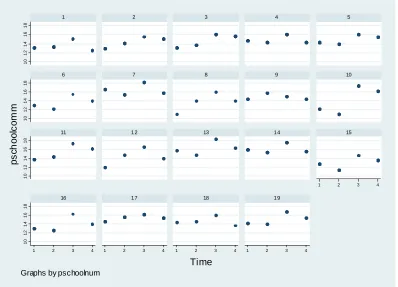
Figure 6.1: Average school commitment over time for all children .. 172
Figure 6.2: School commitment over time by gender .. .. .. 173
Figure 6.3: Average commitment over time by primary school .. .. 174
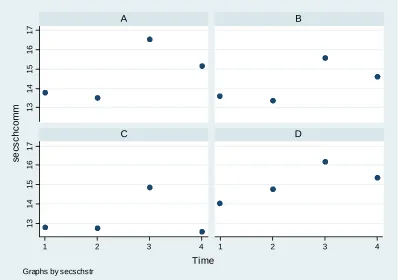
Figure 6.4: Average commitment over time by secondary school .. 175
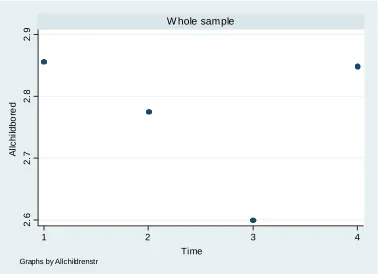
Figure 6.5: Average boredom over time for all children .. .. .. 181
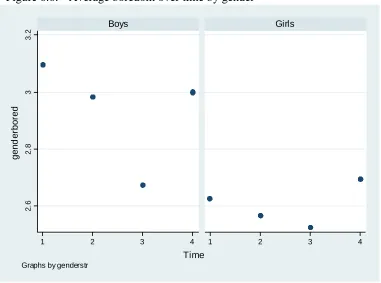
Figure 6.6: Average boredom over time by gender .. .. .. 182
Figure 6.7: Average belonging over time for all children .. .. .. 185
Figure 6.8: Average school belonging over time by gender .. .. 186
Figure 6.9: Average school belonging over time by primary school .. 187
Figure 6.10: Average school belonging over time by secondary school .. 188
Figure 6.11: Average school participation over time for all children .. 195
Figure 6.12: Average school participation over time by gender .. .. 196
Figure 6.13: Average school participation over time by primary school .. 197
Figure 6.14: Average school participation over time by secondary school 198
Figure 6.15: Average participation in extracurricular activities for all children 204
Figure 6.16: Average participation in extracurricular activities by gender.. 205
Figure 6.17: Average self-esteem over time for all children .. .. 209
Figure 6.18: Average self-esteem over time by gender .. .. .. 210
Figure 6.19: Average self-esteem over time by primary school .. .. 211
Figure 6.20: Average self-esteem over time by secondary school .. .. 212
Figure 6.21: Average wellbeing over time for all children .. .. .. 220
Figure 6.23: Average wellbeing over time by primary school .. .. 222
Figure 6.24: Average wellbeing over time by secondary school .. .. 223
Figure 6.25: Average incidence of bullying over time for all children .. 230
List of tables
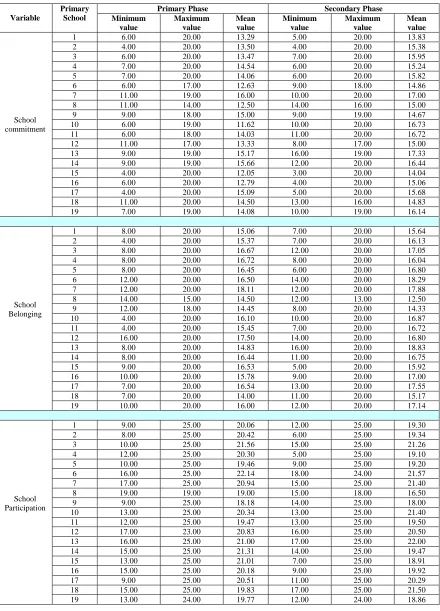
Table 3.1: Minimum, maximum and mean values of all outcome variables .. 61
Table 3.2: Mean values of outcome variables for children at each
measurement time, and pre- and post-school transfer .. .. 62
Table 3.3: Minimum, maximum and mean values of school commitment,
school belonging and school participation for children by primary school 63
Table 3.4: Minimum, maximum and mean values of self-esteem and
wellbeing for children by primary school.. .. .. .. .. 64
Table 3.5: Highest and lowest values overall of each outcome variable by
primary school .. .. .. .. .. .. .. 66
Table 3.6: Minimum, maximum and mean values of all outcome variables
for children before and after transfer by secondary school .. .. 67
Table 3.7: Highest and lowest values overall of each outcome variable by
secondary school .. .. .. .. .. .. .. 68
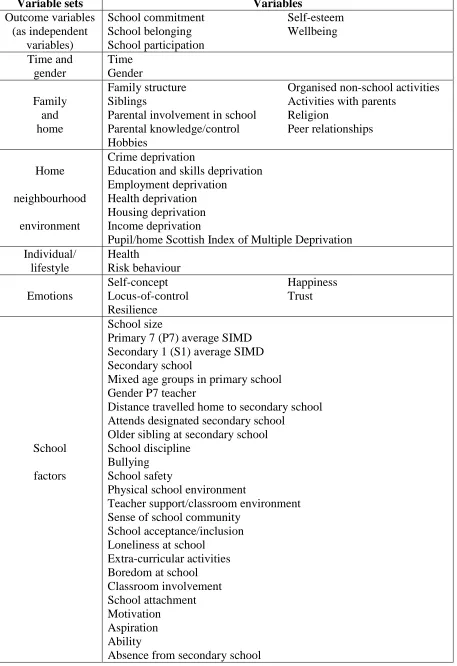
Table 4.1: Explanatory variables .. .. .. .. .. .. .. 73
Table 4.2: Minimum, maximum and mean values of all explanatory variables 108
Table 4.3: Means for explanatory variables at each measurement time and
before and after transfer .. .. .. .. .. 110
Table 5.1: Timetable of questionnaire visits .. .. .. .. 114
Table 5.2: Free school meal percentage figures for schools in Fife and in sample 115
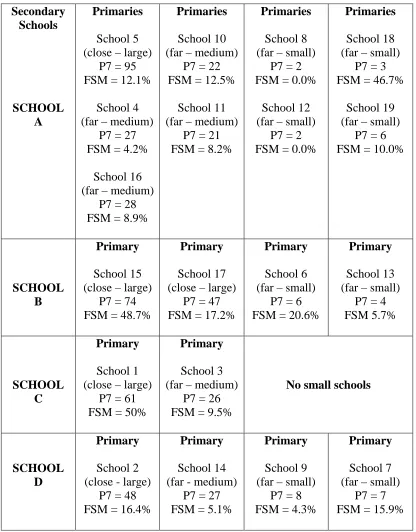
Table 5.3: Size and free school meal percentage of secondary schools .. .. 116
Table 5.4: Primary school sample and characteristics .. .. .. .. 118
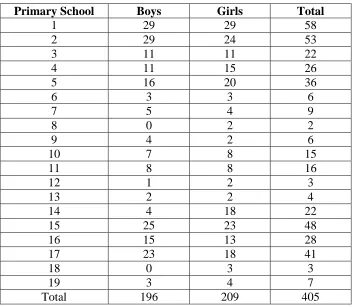
Table 5.5: Composition of sample by gender and primary school .. .. 119
Table 5.6: Summary of variable characteristics .. .. .. .. 127-128
Table 5.7: Pre-transfer participation rates .. .. .. .. .. 163
Table 5.8: Post-transfer participation rates .. .. .. .. .. 163
Table 5.9: Overall percentage participation rates .. .. .. .. 163
Table 5.10: Percentage participation rates by gender .. .. .. .. 163
Table 6.2: Summary of models for school belonging .. .. .. 189-190
Table 6.3: Summary of models for school participation .. .. .. 199-200
Table 6.4: Summary of significant explanatory variables of parsimonious models models for school commitment, school belonging and school
participation .. .. .. .. .. .. .. .. 206
Table 6.5: Summary of models for self-esteem .. .. .. .. 213-214
Table 6.6: Summary of models for wellbeing .. .. .. .. 225-226
Table 6.7: Summary of significant explanatory variables of parsimonious
List of models
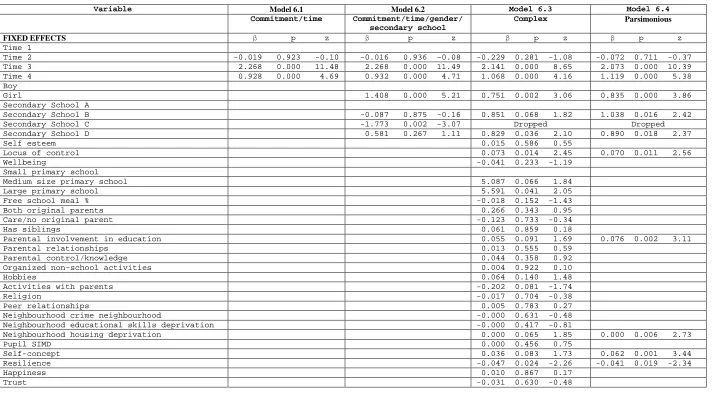
6.1 School commitment over time .. .. .. .. 177-178
6.2 School commitment, time, gender and secondary school .. 177-178
6.3 School commitment complex model .. .. .. .. 177-178
6.4 School commitment parsimonious model .. .. .. 177-178
6.5 School belonging over time .. .. .. .. .. 189-190
6.6 School belonging, time, gender and secondary school .. 189-190
6.7 School belonging complex model .. .. .. .. 189-190
6.8 School belonging parsimonious model .. .. .. 189-190
6.9 School participation over time .. .. .. .. 199-200
6.10 School participation, time, gender and secondary school .. 199-200
6.11 School participation complex model .. .. .. .. 199-200
6.12 School participation parsimonious model .. .. .. 199-200
6.13 Self-esteem over time .. .. .. .. .. .. 213-214
6.14 Self-esteem, time, gender and secondary school .. .. 213-214
6.15 Self-esteem complex model .. .. .. .. .. 213-214
6.16 Self-esteem parsimonious model .. .. .. .. 213-214
6.17 Wellbeing over time .. .. .. .. .. .. 225-226
6.18 Wellbeing, time, gender and secondary school .. .. 225-226
6.19 Wellbeing complex model .. .. .. .. .. 225-226
List of appendices
Appendix 5.1: Details of ethics application .. .. .. .. 300
Appendix 5.2: Introductory letter to secondary schools .. .. 311
Appendix 5.3: Introductory letter to primary schools.. .. .. 313
Appendix 5.4: Summary of comments by P7 pupils in pilot study 2 315
Appendix 5.5: S1 focus group comments, pilot study 3 .. .. 317
Appendix 5.6: Cronbach alpha calculations for pilot study 3.. .. 318
Appendix 5.7: Explanatory letter to parents and consent form .. 321
Appendix 5.8: P7 participation rates for primary schools .. .. 322
Appendix 5.9: Child consent form .. .. .. .. .. 323
Appendix 5.10: Examples of puzzles for P7 pupils .. .. .. 324
Appendix 5.11: S1 poster competition .. .. .. .. .. 327
Appendix 5.12: Standard questionnaire instructions .. .. .. 328
Appendix 5.13: Performance indicators in primary schools (PIPS) .. 329
Appendix 5.14: Questionnaire .. .. .. .. .. .. 331
CHAPTER ONE
TRANSFER FROM PRIMARY TO SECONDARY SCHOOL
‘a critical turning point in teenagers’ social and academic lives’
(Schiller, 1999, p.216)
Introduction
Every summer, thousands of children in Scotland leave their primary schools to
embark on the next stage of their education at secondary school. Most of these
children approach transfer with excitement and look forward to new challenges and
experiences. However, some are more nervous about the move and may find it
daunting both academically and personally, experiencing feelings of inadequacy,
insecurity and alienation.
The transfer to secondary school is marked by several changes in educational
expectations and practices (Galton and Morrison, 2000; Makri-Botsari, 1999). In
most primary schools, children are taught in self-contained classrooms, by one or two
teachers, for an entire year. They also move through the school with the same set of
peers from the age of five onwards. Once children reach secondary school they must
interact with more peers and more teachers, while moving throughout the day to
different classrooms and, often, to different buildings. Primary education is
characterised by group-centred activities, while secondary school requires individual
learning skills, with more testing and examinations, and there are greater demands in
terms of performance and individual responsibility. There may be less teacher
support and decreased contact between students and teachers and students and peers
and the new school structure may make it more difficult to develop strong
relationships with teachers. Thus, the transfer from primary to secondary school
requires adjustment to new settings, structures and expectations. In addition to
organisational differences, children also experience a change in their position in
school. In their final year at primary school, children are the oldest, most responsible,
most well-known and most demonstrably able pupils in their school. When they
transfer to secondary school they become the youngest, and the least known members
of the school community. Children also experience a host of changes associated with
Paikoff and Brooks-Gunn, 1991; Rice, 1975). They begin to mature physically and to
think of themselves as individuals outside their families and the local home
community. Not all children will react unfavourably to these changes, but for some
there may be negative effects relating to behaviour, confidence, academic
performance and attitude towards school.
Recognising that the discontinuity between primary and secondary school may
present problems of varying kinds as children move away from their familiar primary
schools, most secondary schools now have transfer programmes to ease the initial
stress that may accompany this move. The nature of these varies but they usually
involve an opportunity to visit the new school for a day to be shown around the
buildings and perhaps to meet some of the teachers. Some schools organise a day or
so when activities can be shared with children from other primary schools who are
transferring to the secondary school at the same time. However, other than this, there
may be little advice or additional preparation to allay the apprehension and trepidation
experienced by some children as they make this move.
The transfer away from primary school into the larger and perhaps more challenging
environment of secondary school may have a number of consequences including
implications for subsequent behaviour (Galton and Willcocks, 1983), motivation
(Galton and Willcocks, 1983; Harter, Whitesell and Kowalski, 1992), attendance
(Barone, Aguirre-Deandreis and Trickett, 1991) and performance (Alspaugh, 1998a;
Blyth, Simmons and Carlton-Ford, 1983; Eccles, Lord and Midgley, 1991). School
transfer may also be one of the factors that encourages some children to disengage
from school.
Various suggestions have been put forward to explain the gradual disenchantment
with education as children progress through the high school years (Demetriou, Goalen
and Ruddock, 2000; Eccles et al., 1993b; Feldlaufer, Midgley and Eccles, 1988;
Summerfield, 1986). These include those stemming from the family, such as less
parental involvement with education after children have left primary school (Jenkins,
1997), school factors, such as larger schools with greater anonymity, poorer
discipline, and lower levels of participation and attendance (Duke and Trautvetter,
inadequacy, or not fitting in (Voekl, 1997). However, since the most severe
manifestations of school disenchantment occur in secondary school, it possible that
the actual event of transfer from primary to secondary school, together with factors
associated with it, act as a trigger for disengagement, with some of the indicators
becoming identifiable at this time. In other words, is the very process of transition
itself a significant factor influencing children’s success in secondary school?
Although it is common to think of the transition from primary to secondary education
as a single event which occurs at a particular time in the child’s life, it is in fact a
process that each student experiences differently and one that engenders a collection
of expectations and fears about the changes that will be encountered. It begins when
the issue of moving school is raised in primary school, some time before the actual
move takes place, and its implications may last well beyond the day or week in which
it occurs once the child has moved to secondary school. Enmeshed with academic
expectations is the anticipation of a new social regime with its resulting problems and
opportunities. In fact, social issues tend to dominate the worries of young adolescents
as they move from primary to secondary school, especially bullying (Brown and
Armstrong, 1986; Franklin, 2000), getting lost (Graham and Hill, 2003) and losing
friends (Brown and Armstrong, 1982; 1986), although there are also concerns that the
work will be difficult with too much homework (Akos and Galassi, 2004; Bryan,
1980). Many children worry that they will be pressured to drink and smoke, but most
look forward to having more freedom, independence, new subjects, and making new
friends.
Measuring the Effects of School Transition
There have been relatively few studies on school transfer and measuring the effects of
transfer is difficult. This is because it is a multi-faceted event associated with a whole
host of changes such as in the general routine, learning styles and friendships. Thus
there is no one factor which can summarise the experience of transition. For example,
some children may find the work difficult to cope with but excel in new sporting
activities, while others may be academically talented but struggle to make friends.
There is no single test to measure the smoothness or success of school transfer and,
bearing in mind the many issues and ramifications of the process, it is unlikely that
progress (Neal, 1975; Nisbet and Entwistle, 1969; Sumner and Bradley, 1977), but
there is increasing acceptance that other areas of children’s lives are also important
and the improvement of many non-academic aspects of life is also a valuable
educational aim. However, nearly all subsequent research has focused on assessing
only one aspect of children’s lives during the time of transition. Some classic studies
include Nottelman (1987), who examined self-esteem, Anderman and Midgley
(1997), who looked at motivation and Alspaugh (1998a), who investigated
achievement change during transfer. While these types of studies are valuable, it is
more realistic to take a number of elements into account since the transfer to
secondary school is probably one of the key events for early adolescents and likely to
impact on several aspects of children’s lives.
Over the past few years there has been increasing support for using the concept of
school engagementto describe children’s participation in school, and their likelihood
of staying in school and achieving academic success. Of course, ‘engagement’ itself
is a multi-dimensional concept. Generally, engagement has been found to comprise
both academic and social components that include student behaviours directly related
to learning, as well as student interactions with teachers or with fellow students
(Anderson et al., 2004; Gest, Welsh and Domitrovich, 2005). Most researchers agree
that engagement comprises at least the three core components of school participation,
feelings of school belonging and the belief that education is valuable for its own sake
(e.g. Fredricks, Blumenfeld and Paris, 2004, Willms, 2003). This concept, and more
specifically the three elements of participation, belonging and commitment, were
therefore adopted for use in this study as this approach is helpful in providing a broad
framework around which a more detailed understanding can be developed to help
explain how schools influence pupils’ attitudes towards education and how this
ultimately affects their educational achievement.
Engagement has been linked with academic success (Finn, 1993; Fredricks,
Blumenfeld and Paris, 2004; Skinner, Wellborn and Connell, 1990), reduced
absenteeism (Hudley, 1995) and improved health and wellbeing (Putnam, 2000) while
conversely, lack of engagement has been related to various outcomes such as absence,
truancy and ultimately school dropout (Finn, 1989; Pellerin, 2000; Rumberger, 1995).
may affect only a minority of students, it is an important issue and has been
recognised for a number of years. The problem is not confined to Scotland, but also
occurs in many developed countries. According to a report by the Organization for
Economic Cooperation and Development, which draws on data from 42 mostly
developed nations, student absenteeism and disaffection with school pose widespread
challenges for teachers and policy makers (Willms, 2003). In addition, a significant
proportion of children leave school early with very few, or even no, school
qualifications. Teenagers who do not complete secondary school are more at risk of
unemployment, underemployment, and ultimate dependency on social services
(Christenson et al., 1995).
While the use of engagement as a measure includes a wide range of attitudes towards
school, there are a number of other angles from which school transfer can be
approached. As well as exploring children’s response to school, it is also important to
discover, if possible, how children actually feel during this time. Of all the personal
characteristics that could be monitored,self-esteemmay be particularly important as it
is believed that good self-esteem helps adolescents to function effectively in a variety
of situations (Sirin and Rogers-Sirin, 2004) and it may enhance the capacity to adapt
well to changing circumstances (Kahle, Kulka and Klingel, 1980). However, the
self-esteem of some children may be vulnerable at this time of early adolescence
(Simmons et al., 1979). The concept is widely accepted in schools as being
particularly important in developing and maintaining self-confidence (Jacobsen,
Edelstein and Hofmann, 1994) and may be helpful in encouraging the resilience to
cope in difficult circumstances (Zimmerman et al., 1997). As well as being
vulnerable to change at the time of transfer, children’s self-esteem is likely to
influence all aspects of their lives, including their academic, social and emotional
response to school. Children’s self-esteem has been shown to be strongly related to
educational attainment (Wilson and Portes, 1975) better coping skills (Alvarez-Icaza,
Gomez-Maqueo and Patino, 2004) and confidence (Coopersmith, 1967).
Wellbeing, although used less frequently than self-esteem in relation to children, is
another broad outcome which can be used to assess students’ relative situations.
Wellbeing is not the same as happiness, but can be described as the extent to which a
a great part of their day at school, how they feel about school and the school
environment is an important element of their overall wellbeing. There seems to be
increasing evidence that wellbeing and educational attainment are linked, and the
concept is being used more widely to improve our understanding of schoolchildren’s
lives (de Fraine et al., 2005; Konu, Lintonen and Rimpelä, 2002; Opdenakker and
Van Damme, 2000).
This study therefore adopts five main concepts to examine the progress of children
through the process of school transfer from primary to secondary school:
participation, belonging, commitment (these three comprising the broad concept of
engagement), self-esteem and wellbeing. It is quite clear that they do not cover all
areas of children’s lives at this time, nor all factors impinging on them, but when
combined they provide a reasonably broad picture of the impressions and feelings
experienced by students. In particular, this study was designed to explore how these
outcomes varied during the transition from primary to secondary school, controlling
for other factors expected to be influential.
Longitudinal Study Design
It is difficult to give an accurate definition of transition, and perhaps it is not
necessary to do so. It is clear, however, that school transition is a process, rather than
a single event in time. It begins in primary school as children are introduced to the
imminent change of school environment and they prepare themselves for the
transition. The issue of how long that process continues remains open to question.
Most secondary schools seem to make extra allowances for new pupils during the
initial few days and weeks of the first term but it is not clear how long and in what
ways this stage continues – it is likely to vary across institutions. Many parents of
pupils in the first year of secondary school note that once the initial excitement has
worn off, it can take a year or longer for children to settle down properly in their new
schools. A longitudinal approach was therefore adopted for this study. Longitudinal
studies obtain information from the same group of respondents on two or more
occasions and they are particularly appropriate when studying how individuals change
over time. They contrast with cross-sectional studies which provide data from a
single point in time. In this case data were collected from 393 children at four time
the spring term, about three months before pupils took part in any induction
programme and the second was in the last month of primary school after pupils had
attended induction courses. The third questionnaire session took place within a month
of the move to secondary school and the final questionnaire was completed in the
second term of secondary school, six months after transfer.
The study design involved the administration of a self-report questionnaire, requesting
information on many areas of children’s lives. It captured information both on the
five outcomes described above, but also on a range of individual characteristics,
family circumstances and school conditions. Thus, the outcome variables could be
related to a range of independent variables and also considered over time, particularly
in relation to the transition from primary to secondary school which occurred
mid-way during the data collection.
The children were first identified in 19 primary schools scattered across Fife in
eastern Scotland (Figure 1.1). These schools fed into four secondary schools. Both
the 19 primary and the four secondary schools were selected to provide a range of
school size and relative affluence, as described by the percentage of children eligible
for free school meals. In the case of the primary schools, their location in terms of
distance from their allocated secondary school was also taken into account in the
Figure 1.1 Location of Fife, Scotland
Objectives
This study focuses on the transition from primary to secondary school and the
influence it has on 5 measures which broadly describe child engagement, self-esteem
and wellbeing. The specific objectives of the study are:
i) to summarise how school commitment, school belonging, school
participation, self-esteem and wellbeing vary across children in the
sample;
ii) to examine how school commitment, school belonging, school
participation, self-esteem and wellbeing change over the time of
iii) to explore the main individual, family and school factors that influence
school commitment, school belonging, school participation,
self-esteem and wellbeing using multi-level, longitudinal models.
Structure of thesis
The process of school transfer has been studied for the last 50 years but the nature of
education and the problems of children and their families have changed over that
time. This study therefore continues with a review of the literature on school transfer,
outlining the changes in the educational concerns and research that have taken place
(Chapter 2). The background, characteristics and rationale for using the five outcome
variables described above are then discussed in Chapter 3. A number of independent
variables have been used to provide some explanation of the change observed in the
five outcome variables and these are described in Chapter 4, where their possible
effects are discussed together with some of the knowledge derived from previous
research. Chapter 5 outlines the methodology, including the overall process of
obtaining the data, the measures used, and the methods of analysis adopted. The
results of the analyses are then presented and discussed for each of the dependent
variables in Chapter 6. The final chapter revisits the objectives outlined above and
assesses how far these aims have been met. Some suggestions are made about ways
in which some aspects of the first year of secondary school might be changed to
improve pupils’ experience and, consequently, their attitudes toward education. The
limitations and advantages of the method are also discussed and some possibilities for
future research are provided.
Conclusion
The issue of transition, with its associated questions and problems, is not a new one
(Cox, 1978; Dutch and McCall, 1974). However, it is an issue that is increasingly
coming under scrutiny. At one time the main question asked about school transfer
was how far the move to new schools interrupted the academic progress of the
children involved. Since then, both education and society have moved on and schools
are increasingly asked, not only to teach information and skills, but also to provide
support and guidance to pupils in other areas of their lives. As children lead more
complex and demanding lives, it is valid to examine how they fare as they move into
successful move. This is a unique study which followed the lives of 393 children as
they changed schools at the age of 12. It explores a number of different outcomes and
assesses whether the transition itself has an influence on them, controlling for a range
of other factors such as the home environment, the nature of the school, and other
individual characteristics. Consequently, it provides an insight into some of the
CHAPTER TWO LITERATURE REVIEW
Introduction
The issue addressed in this research, and outlined in Chapter 1, is how far the move
from primary to secondary school is responsible for any of the reported problems
experienced by some secondary schoolchildren such as falling achievement, poor
motivation, declining school attendance and increasing disenchantment and
disengagement from school. These difficulties by no means affect all children, but
sufficient numbers are involved to make it a matter of concern for parents, teachers,
school administrators and policy makers.
School transfer is a relatively new phenomenon. Until the twentieth century schools
were not divided by age, as children left school at the age of twelve. However, the
Education Act of 1944 (England) recommended separate primary and secondary
education with transfer occurring at around eleven years of age. Later, the Primary
Memorandum (Scottish Education Department, 1965) in Scotland discussed whether
age or stage of learning should be the basis for moving to secondary school, but there
was no mention of any need to prepare for transfer.
The transfer of children from primary to secondary school received little attention
from educational researchers before the 1960s, perhaps because it was not seen as a
problem for either schools or students. The process of transfer was largely taken for
granted and accepted as part of the normal course of children’s lives. Even the early
research focused largely on the practical issues surrounding transfer and there was
little recognition of any difference, other than academic, between children and
certainly no suggestion that school characteristics, apart from that of size, might have
any part to play in influencing the progress of children at school. This state of affairs
may have been partly the consequence of the practice of allocating children to
secondary schools on the basis of a selective examination. However, with the
introduction of comprehensive education, all children were thrown into the same
melting pot and this may have been one of the factors highlighting pupil differences,
By the mid 1980s, some researchers began to move beyond thinking about practical
issues and merely listening to children’s views and experiences about transfer. From
this time, much more thought was given to the implications of children’s feelings,
particularly of competence, motivation and self-esteem. The notions of pupil
engagement and wellbeing, although not widely considered, were also introduced to
describe student satisfaction with school. There was a gradual realisation that any
problems might be partly attributable to the school environment itself and not solely
the consequence of relatively unalterable factors such as socioeconomic background,
parental support and academic ability. Thus, the importance of social relationships
within school, especially with teachers and peers, was considered and the trend in
research gradually moved from listening to children’s views to analysis of their
implications and consequences. The importance of school context emerged, together
with the first suggestions that schools needed to take some responsibility for
addressing the social and emotional problems of their students. Of course, although
this is the general pattern in the way research developed and changed, the old issues
of ability, curriculum continuity and general views about transfer, continued to thread
their way through the literature right up to the present time.
When children transfer from primary to secondary school, they leave behind an
environment that has been familiar for the previous seven years. The move usually
involves longer journeys, to a different place with more demanding daily routines,
strange people and new friends. It marks the end of childhood and the beginning of
adolescence and development towards independence. While recognised for many
decades as a significant event in the lives of children, the need for research has
emerged more gradually and, over time, the emphases of studies have changed and
developed.
Apart from early studies, there is relatively little research on school transfer in the
United Kingdom. Much of the literature derives from America, Australia and New
Zealand where, although children still transfer from primary to secondary school,
there are various systems operating. In the literature schools may be described
variously as elementary and high schools (Canada), primary and secondary schools
(Australia and New Zealand), primary, middle and high schools (England), middle,
(Scotland). Depending on the system, the age of transfer to secondary school also
varies but is usually at the age of eleven or twelve. Thus, direct comparison of
research with the British system may not always be possible, although, regardless of
school types, only studies referring to transfer at the time of early adolescence are
discussed here.
The two terms used in the literature to describe the process of moving from primary to
secondary school are ‘transfer’ and ‘transition’. Strictly, the term transfer refers only
to the movement of children between schools, while transition describes the
movement between different years of schooling. However, both terms are used
interchangeably in the literature.
Early Studies
Forty or so years ago, much less consideration than now was given to the views of
children in general, and very little to any concerns they might have about the
educational process. In fact, the move from primary to secondary school was widely
regarded as a rite of passage (Measor and Woods, 1984) rather than as a process that
might engender any cause for concern. Most of the early studies on school transfer
examined practical issues such as curriculum continuity (Croll, 1983; Galton and
Willcocks, 1983; Ginnever, 1986; Neal, 1975; Stillman, 1986), organisational features
(Dutch and McCall, 1974), the optimum age for transfer (Nisbet and Entwistle, 1969;
Plowden, 1967) and ability (Nisbet and Entwistle, 1969; Spelman, 1979; Sumner and
Bradley, 1977).
Most of these studies recognised that a change of school could be stressful and
interrupt progress but, despite aiming for curriculum continuity and transfer of
records, there was often poor liaison between primary and secondary schools (Neal,
1975) and teachers frequently did not look at transfer records (Ginnever, 1986;
Gorwood, 1986). Despite these lapses, children were tested on their academic
progress, which was thought to provide a guide to effectiveness of general school
continuity, but there is little evidence that their feelings and perceptions were
Three of these early studies were large-scale longitudinal studies (Neal, 1975; Nisbet
and Entwistle, 1969; Spelman, 1979) examining ability and performance during the
time of transfer. Each of these three studies followed thousands of children from their
primary schools to their secondary schools, mainly collecting data to measure
academic achievement before and after transfer. Neal’s (1975) study included case
studies of children showing positive or negative adjustment to secondary school;
poorly adjusted pupils reported feelings of rejection while even those who adjusted
well were described as apprehensive. No further detail was given of this part of the
study but the value of good teacher/pupil interactions was noted. However, the
difference in teacher interactions between primary and secondary school was not
investigated.
Of particular interest is the study by Nisbet and Entwistle (1969), as it is one of the
few large studies carried out in Scotland. Over 3000 children in Aberdeen were
studied for five years as they progressed from Primary 5 (P5) to Secondary 2 (S2).
The study started at a time when selection was important but by the end of the study
selection had been abandoned. Although the main thrust of the study was to
investigate how far age, ability and performance determined the success of transfer,
Nisbet and Entwistle (1969) also made some attempt to assess the ease of social
adjustment by taking a survey of teachers’ and children’s views, and examining
various other factors such as socioeconomic background, parental involvement and
social maturity. The results led them to suggest that children from poorer homes, with
parents providing limited support and understanding, would have greater difficulty
than others in adjusting during transition, and they provided some early evidence that
social and motivational factors become more important when children move to
secondary school (Nisbet and Entwistle, 1969). A follow-up study concentrating on
academic performance after S2, found that the best prediction of final secondary
school performance was given by attainment in the first two years of secondary school
(Nisbet, Welsh and Entwistle, 1972), but this study did not explore any other factors
which might impinge on, or affect, academic achievement, such as parental
involvement with school, self-esteem or teacher influences. Academic progress
seemed to be the main measure of the success of transfer at this time and there is little
evidence that schools themselves, apart from the transfer of records and curriculum
their possible effect on students’ ability – the main measure of transfer. It was as if
ability was accepted as an unalterable given.
However, Nisbet and Entwistle (1969) did emphasize that children differ in many
ways, such as intellectually, physically socially and emotionally, and that this made it
impossible to specify any one age as the ideal time for school transfer. This was also
the view taken by the Plowden Report (Plowden, 1967) as
“wherever the age of transfer is fixed, there will be some children
who would have been better left in the primary school, and some
for whom the reverse would be true. There is, therefore, need to
treat the years immediately before and after transfer as a
transitional period” (Plowden, 1967, p.144).
For this reason some countries have introduced middle schools, as in England, and
junior high schools in the United States with the intention of softening the impact of
transfer by enabling it to occur at a later stage when pupils are more mature. This is
not a system that has been introduced in Scotland, although in an experiment to
discover if a transition year could ease the abruptness of transfer, Dutch and McCall
(1974) used a cross-sectional approach to compare a group of children who had
transferred directly from primary to a Scottish comprehensive secondary school with
two groups who had spent the final year of primary school in a transition department
before moving to secondary school. The results were inconclusive, partly because of
the cross-sectional design of the study, but there was some evidence of a small
improvement in the social relationships of children who experienced the transition
department, compared with those moving directly to secondary school, but whether
this was due to the smaller size of the unit, or simply the advantage of making friends
from other schools a year earlier was not made clear (Dutch and McCall, 1974).
Some years later, Spelman (1979) examined the experiences of nearly 3000 children
during transfer from primary to secondary school in Northern Ireland. At the time,
the eleven plus examination was still in operation and the children moved to various
different types of school depending on their results. Like Nisbet and Entwistle
who were self-confident and socially aware, and who tended to have strong parental
support. This comprehensive longitudinal study took account of children’s
socio-cultural differences and also looked at some aspects of the secondary school context
such as teachers’ attitudes, discipline and motivational climate and, in fact, is one of
the few studies to consider the changing disciplinary environment between primary
and secondary school. The study was at a time when there were four different types
of secondary school. These were grammar, secondary (intermediate), bilateral and
junior high schools. Each had their own distinctive characteristics, and it is difficult
to draw any general conclusions but, regardless of school type, it was found that the
quality of teacher/pupil relationships was particularly important in pupil adjustment,
confirming Neal’s (1975) earlier results.
Finally, at the end of the 1970s two important studies broadened the scope of earlier
research. Youngman (1978), while continuing to use measures of ability and
achievement, introduced the additional dimensions of attitude towards school and
personality. Using these factors, he tested children before and after the move to
secondary school and identified six subgroups of children. While most of these
groups gave no cause for concern, two sets of children were particularly worrying and
these he labelled ‘disinterested’ and ‘disenchanted’. Both these groups showed little
interest in schooling but he believed the disenchanted group qualified as a particular
problem as it consisted of children with moderately high ability but with some
indication of inferior performance. This was one of the first studies to consider ways
other than academic progress, in which children might react to school transfer. Not
only that, but it was the first note of disenchanted pupils. Youngman’s (1978)
description of pupils with an identified negative attitude towards school was a lone
voice at this time and the issue was not picked up until some time later when the
concept of disengaged students was revisited in the 1980s. This concept will be
discussed further in the context of engagement.
The second study taking a different approach at this time was the research by Blyth,
Simmons and Bush (1978). Although still essentially focusing on the best age for
transfer, they used the concept of self-esteem rather than academic progress to
measure how well children adjusted to the move from primary to secondary school.
greater loss of self-esteem and participated less in school activities than older children
making the same move. They were not certain why this was the case but suggested
that older pupils might be able to cope better with a larger school, more children and
all the other changes involved. This study showed how criteria other than ability and
achievement could be used to assess the impact of school transfer.
All these early studies recognised that school transfer is a significant, and possibly
disruptive, milestone in children’s lives but the main emphasis at this time was to
ensure that there was as little interruption as possible to academic achievement and
progress. The success of school transfer was measured in terms of sustained
academic progress. Consequently, they focused on the practical arrangements that
could be implemented to help ensure a seamless continuation of study between
primary and secondary school. Although recognising differences between children
academically, scant attention was paid to any differences in personality or background
or even to school factors which might influence academic progress at this time. There
were one or two exceptions, however. As already noted, Nisbet and Entwistle (1969)
recognised the importance of a supportive family background, and linked this, rightly
or wrongly with the child’s socioeconomic background. They also emphasized,
without giving specific examples, that children would vary in their ability to cope
with transfer depending on their individual personalities. The study by Spelman
(1979) was an interesting one as it one of the earliest to introduce the concept of
school context, albeit in a limited fashion, by including measures of class discipline
and teacher support. The issue of school context is important, and will be discussed
later in this chapter, but it seems largely to have been ignored in these early studies.
Children’s Perception of Transfer and the School Environment
Before the 1980s, the main thrust of research on school transfer concentrated on
academic progress and problems with administrative procedures connected with the
move from primary to secondary schools. With one or two exceptions (Blyth,
Simmons and Bush, 1978; Spelman, 1979; Youngman, 1978) there was surprisingly
little research that either investigated children’s views about transferring schools, or
looked at any problems other than academic, that might occur on first adjusting to
secondary school. However, during the 1980s, some research, while continuing to
achievement might influence the school performance after transfer to secondary
school (Dowling, 1980; Summerfield, 1986; Youngman, 1980). These studies
provide limited detail of the measures used but they do go beyond academic testing to
include school behaviour and attitudes to school, the general consensus being that “it
is rarely satisfactory to isolate single determinants of success or failure during this
period” (Youngman, 1980, p.51).
Although Youngman (1978) showed that many children had worries of some kind
during the process of transfer, there was little attempt to define the kinds of concerns
they had. However, since then, recognising that pupils themselves could make a
valuable contribution to the discussion, some researchers began to examine more
precisely the feelings and worries that children experienced both before and after
school transfer (Akos, 2002; Brown and Armstrong, 1982; 1986; Bryan, 1980;
Cotterell, 1982; Jennings and Hargreaves, 1981; Mitman and Packer, 1982; Murdoch,
1986). These studies confirmed that most children have concerns of some sort or
another, even if transitory. Brown and Armstrong (1982) analysed essays written
during the first two terms of secondary school, noting that they produced a varied
range of worries with an average of 2.2 per child. Worries generally included
bullying by older children (Brown and Armstrong, 1986; Bryan 1980, Cotterell, 1982;
Franklin, 2000; Sweetser, 2003), homework (Brown and Armstrong, 1982; 1986;
Bryan, 1980), school routine (Cotterell, 1982; Jennings and Hargreaves, 1981), losing
friends (Brown and Armstrong, 1982; 1986; Bryan, 1980), getting lost (Brown and
Armstrong, 1986; Cotterell, 1982; Graham and Hill, 2003), getting on the right bus to
go home (Schumacher, 1998), the size of the school (Letrello and Miles; 2003; Lucey
and Reay, 2000) and being the smallest (Bryan, 1980; Brown and Armstrong, 1982;
1986).
It would be wrong to think that children only have worries and anxieties about the
move to secondary school. Many experience a combination of excitement and anxiety
(Galton and Morrison, 2000; Hawk and Hill, 2004), but most look forward to
secondary school (Kirkpatrick, 1992; Zeedyk et al., 2003), especially to the
opportunity of making new friends (Smith, Feldwisch and Abell, 2006; Sweetser,
2003), and they are often eager to leave behind the close attention of primary school
Despite their apprehension, nearly all children adjust well, and a study by Suffolk
County Council (2002) found that by the end of the first term, most worries had
vanished, and only a few hankered for the old situation. A longitudinal study,
interviewing pupils a few weeks after transfer, found that nearly 70% of pupils
preferred secondary school to primary school, although they frequently complained
about bullying, homework and some lessons (Franklin, 2000). The things they missed
most from primary school were their teachers and friends (Franklin, 2000). Advice
given by first year secondary students to primary children just about to transfer
focused mainly on the need for organisational skills followed by advice to work hard
and keep up with homework, perhaps indicating the main concerns for these pupils
(Akos, 2005).
Emotional and Behavioural Response to Transfer
Researchers have identified declines in academic performance (Alspaugh, 1998a;
Blyth, Simmons and Carlton-Ford, 1983), motivation (Galton and Willcocks, 1983),
self-esteem (Blyth, Simmons and Carlton-Ford, 1983), extracurricular participation
(Seidman et al., 1994), enjoyment (Galton and Willcocks, 1983) and perceived
support from school staff (Seidman et al., 1994) as well as an increase in daily hassles
(Seidman et al., 1994) after transfer. However, there appear to be large individual
differences between children in their response to transfer. Some adolescents negotiate
the move to secondary school without difficulty (Nottelman, 1987) while others
experience a loss of self-esteem (Wigfield et al., 1991), difficulty in maintaining
friendships (Demetriou, Goalen and Ruddock, 2000), and a decline in academic
performance (Eccles, Lord and Midgley, 1991), although these losses may be
temporary. The true response may not emerge until some time after the move to
secondary school.
At the beginning of secondary school there is often a ‘honeymoon’ period during
which children express considerable excitement about new friends, new classes,
lockers, and new activities (Galton, Gray and Ruddock, 2003; Harter, Whitesell and
Kowalski, 1992). It is possible that teachers strengthen this honeymoon effect by
initially avoiding confrontation over poor behaviour (Gordon et al., 1999). However,
in time, the reality of success or failure, both academic and social, sets in and, for
Transfer programmes typically aim to reduce pupils’ anxiety about new routines,
rather than helping them to learn new ways of teaching and studying. While the
practical difficulties associated with transfer tend to resolve themselves and are
mostly short lived (Galton, Gray and Ruddock, 1999), there is a general consensus
that students find the disjunction between learning styles at primary and secondary
school difficult to manage (Galton and Morrison, 2000). Galton, Edwards,
Hargreaves and Pell (2003) found that school enjoyment remained at about the same
level before and immediately after transfer and then dipped, with the result that by the
end of the first year, pupils found school less enjoyable than before. Among the most
common and noticeable responses to transfer is a sequence of reactions moving from
declining self-perceptions of competence to lowered motivation, boredom, increased
absence and declining school engagement.
Competence
Adolescents’ perceptions are important predictors of their changing
self-evaluation and adjustment (Lord, Eccles and McCarthy, 1994). There is some
evidence that children suffer a dramatic decline in perceived competence when they
move to secondary school (Alspaugh, 1998a; Anderman and Midgley, 1997; Harter,
Whitesell and Kowalski, 1992). This does not seem to be because the work is harder
as it is generally believed to be less challenging than primary school (Anderman and
Midgley, 1997; Fouracre, 1993; Kirkpatrick, 1992). The problem may be that for
many children, the nature of the learning environment at secondary school changes in
a negative way during early adolescence (Eccles et al., 1993b; Feldlaufer, Midgley
and Eccles, 1988; Harter, Whitesell and Kowalski, 1992; Seidman et al., 1994).
However, Nottelman (1987), measuring competence three times over the course of
school transfer, found that overall, children’s perceived competence increased and
was stable across the period of transition. Whatever effect transfer has on
competence, responsibility must not be laid solely at the door of secondary schools as
research indicates that pre-transition academic self-perception and ability contribute to
achievement during the first year of secondary school (Silverthorn, DuBois and
Crombie, 2005; Trent et al., 1994). Similarly, stress or other pre-existing problems
prior to transfer can be exacerbated by the move (Chung, Elias and Schneider, 1998;
Rudolph et al., 2001; McDougall, 1998). These vulnerable students tend to feel
results in lower achievement (Rudolph et al., 2001). Whatever the cause, any decline
in self-perceived competence tends to have direct consequences on student
motivation.
Motivation
Among the many changes associated with the move to secondary school is that of a
different classroom environment where there is more whole class organisation and
public evaluation of work, while for some subjects pupils may be streamed, or
grouped according to ability. This change in approach means that children measure
their ability in relation to other children, so ability has to be re-evaluated (Anderman
and Midgley, 1997). In addition, it is quite likely that teachers will use higher
standards than primary teachers in assessing performance which results in lower
marks for many students (Eccles and Midgley, 1989). Some children may well take
this an indication of a drop in their ability, even though this may not be the case. The
effect of decreasing perception of competence encourages children to lower the value
they attach to these subjects with an accompanying decline in motivation (Harter,
Whitesell and Kowalski, 1992; Midgley, Feldlaufer and Eccles, 1989a and b).
Motivation may also drop when pupils experience a more impersonal teacher
approach (Makri-Botsari, 1999), with possibly a change from a child-centred
approach to subject-centred teaching (Galton and Willcocks, 1983). The declining
motivation of adolescents is a critical issue and must be solved (Anderman and
Maehr, 1994) and, in fact, could be influenced for the better if schools altered the way
in which they evaluate, reward, and recognise achievement and select learning tasks
for children (Anderman, Maehr and Midgley, 1999).
Boredom
There is broad agreement that many children do have problems at transfer
(Summerfield, 1986) and teachers may take this account during the early days at
secondary school. Some students note a decreasing incidence of interesting learning
experiences, even over the first few weeks in secondary school (Cotterell, 1982). This
is supported by Green (1987) who tracked a small group of primary pupils into their
secondary school and noted less opportunity for meaningful writing with more
emphasis on mundane activities such as mindless note copying, fill-in-the-gap
concerned to provide a gentle start, making few real demands on pupils, especially the
more able, and so fail to establish an immediate momentum (Suffolk County Council,
1999). Although it is clearly essential to allow new pupils time to settle in and adjust
to secondary school, it is equally important to provide stimulation and challenge,
especially where children are motivated and able. Apparently, some 57% of children
look forward to academic subjects in secondary school and when they first arrive,
they are expectant and excited about new learning challenges (Zeedyk et al., 2003).
The issue of homework was one of the top student concerns before transfer (Akos and
Galassi, 2004), yet a study of secondary school pupils in Aberdeen found that after
transfer most pupils agreed they had less homework than in primary school (Fouracre,
1993). They also said that the work was harder in primary school and that much of
the work at secondary school was like revision (Fouracre, 1993). This lack of
challenge is disappointing for many children and can quickly lead to boredom and
loss of interest. The result is that many children lose enthusiasm and only make as
much effort as they have to (Willcocks, 1983).
The slow introduction of new work may also partly be a consequence of the ‘fresh
start’, often advocated by teachers to be an advantage (Galton, 1983; Suffolk County
Council, 1999; Sumner and Bradley, 1977). Thus secondary teachers often did not
wish to have evidence of children’s earlier performance, (Stillman, 1986) and over
80% of primary children interviewed valued the idea that the move to secondary
school would allow them a fresh start (Chedzoy and Burden, 2005). Primary teachers
may also be reluctant to pass on information which they think could lead to prejudice
about a child (Dowling, 1986).
Boredom was also an issue in a couple of studies which identified small groups of
children who failed to adapt well to secondary school or became less interested over
time (Murdoch, 1986; Summerfield, 1986). Like Youngman (1978), Summerfield
(1986) described various groups of children according to attitude towards school. She
described three groups particularly at risk after transfer as ‘hostile’, unsuccessful’ and
‘detached’, with attainment and adjustment deteriorating for all three groups after
transfer; some of these children also considered lessons as ‘boring’. There is clearly a
link between disenchantment, or lack of interest, and boredom and it is an ongoing
“too many pupils become disaffected too fast during the middle
years of schooling and many of the rest are bored most of the time”.
Performance
There is evidence that immediately following transfer, there is a decline in marks
(Alspaugh, 1998a; Barone, Aguirre-Deandreis and Trickett, 1991) and it appears that
the attitude towards school work changes. Kirkpatrick (1995) found that before
transfer 50% attributed success to effort but after transfer only 38% thought effort was
necessary. This is important as, generally, those who believe that effort improves
results do better (Kirkpatrick, 1995). However, the decline in achievement is not
uniform across all students. Girls’ achievement declines less than that of boys
(Barone, Aguirre-Deandreis and Trickett, 1991) perhaps because they tend to make
more effort or because they have a different attitude towards education.
Absence
It may not be reasonable to draw conclusions from a comparison of absence figures
before and after transfer. Children usually attend primary school near home and are
often accompanied to and from school by an adult. Once children go to secondary
school, they are more independent. They often travel by bus and there is more
opportunity to miss school without parental knowledge. Figures show that attendance
rates initially improve when children move to secondary school but they then drop to
significantly lower levels than at the beginning of secondary school (Isakson and
Jarvis, 1999). Barone, Aguirre-Deandreis and Trickett (1991), also noted a drop in
attendance in the first year of secondary school which continued to decline over the
year. However, absence may not be so high that schools feel the need to intervene
(Isakson and Jarvis, 1999) and if poor attendance rates persist this is likely to be
reflected in poor school performance (Blyth, Simmons and Carlton-Ford, 1983;
Crockett et al., 1989; Seidman et al., 1994).
Engagement
Engagement involves positive school behaviours such as attendance, paying attention,
and participation in class, as well as feeling cared for and an important member of the