APPLIED PHYSICS REVIEWS—FOCUSED REVIEW
Direct and indirect measurements on electrocaloric effect: Recent
developments and perspectives
YangLiu,1,a)James F.Scott,2,3and BrahimDkhil1 1
Laboratoire Structures, Proprietes et Mod elisation des Solides, CentraleSupelec, CNRS-UMR8580, Universite Paris-Saclay, Ch^atenay-Malabry Cedex 92295, France
2
School of Chemistry, University of St Andrews, St Andrews, Scotland, United Kingdom
3
School of Physics and Astronomy, University of St Andrews, St Andrews, Scotland, United Kingdom (Received 3 May 2016; accepted 23 June 2016; published online 27 July 2016)
It has been ten years since the discovery of the giant electrocaloric effect in ferroelectric materials showed that it is possible to employ this effect for substantial cooling applications. This last decade has been marked by increasing research interest, especially in characterizing and measuring the electrocaloric effect using both the so-called indirect and direct approaches. In this context, a com-prehensive summary and careful reexamination of these approaches are very timely and of great importance to justify the assumptions used in different measurement techniques. This review is therefore dedicated to cover recent important and rapid advances from both the indirect and direct measurements and provides critical insights relevant for quantifying the electrocaloric effect. It involves electrocaloric materials from normal ferroelectrics, antiferroelectrics, and relaxors, and it fundamentally focuses on how the electrocaloric entropy changes in response to electric field in these typical electrocalorics. The article addresses recent developments, especially during the past three years, such as technical selection of proper polarization-electric field loops, negative electro-caloric effect in antiferroelectrics and relaxors, the controversial debate on the indirect method in relaxors, the important role of field dependence of specific heat, kinetic factors, and so on. Moreover, this review also is concerned with extracting reliable data by direct measurements. Four typical techniques and devices used recently, such as thermocouples, differential scanning calorim-eters, specifically designed calorimcalorim-eters, and scanning thermal microscopy, are briefly reviewed, while infrared cameras are emphasized. We hope that our review will not only provide a useful background to understand fundamentally the electrocaloric effect and what one reallymeasuresbut also may act as a practical guide to exploit and develop electrocalorics towards the design of suita-ble devices.Published by AIP Publishing.[http://dx.doi.org/10.1063/1.4958327]
TABLE OF CONTENTS
I. INTRODUCTION . . . 1
II. INDIRECT MEASUREMENTS. . . 2
A. Basic thermodynamic description of electrocaloric refrigeration . . . 2
B. Selection of isothermalP-T curves . . . 4
C. Negative electrocaloric effect in antiferroelectrics . . . 5
D. Electrocaloric effect in relaxors . . . 7
E. First-order phase transition. . . 8
F. Heat capacity and kinetics . . . 9
G. Depolarizing field . . . 10
H. Clausius-Clapeyron method. . . 11
III. DIRECT MEASUREMENTS . . . 11
A. Thermocouple and thermometer . . . 12
B. Differential Scanning Calorimetry (DSC) . . . 12
C. Specifically designed calorimeters . . . 13
D. Infra-red camera . . . 13
E. Scanning thermal microscopy . . . 15
IV. PERSPECTIVES . . . 15
V. CLOSING REMARKS . . . 16
I. INTRODUCTION
In dielectrics, reversible thermal changes can be driven when an electric field is applied or removed either adiabati-cally or isothermally.1This phenomenon is called the elec-trocaloric effect, which is considered as a new refrigeration solution to replace current vapor-cycle cooling technolo-gies.1–12It is now known that electrocaloric materials often exhibit the largest response near their phase transitions.3,8 However, this effect did not attract as much attention as its magnetic counterpart, the magnetocaloric effect,1,3,8,12 because the magnitude of the electrocaloric effect was too small to be of interest for practical cooling applications.3 Since its discovery in Rochelle Salt in 1930,13many studies
a)Email: [email protected]
related to ferroelectric/antiferroelectric/relaxor ceramics were reported, but the best electrocaloric effect data yielded an adiabatic temperature change of less than 2.5 K in Pb0.99Nb0.02(Zr0.75Sn0.20Ti0.05)O3 ceramics in 1981.14 In addition, a similar electrocaloric effect of 2.4 K was reported in PbSc0.5Ta0.5O3 ceramics in 2002.15 It is not until 2006 that a Science paper16inspired both fundamental physics and exciting device applications for electrocaloric effect. Mischenko et al. at Cambridge reported a giant electro-caloric effect with an adiabatic temperature change of about 12 K in antiferroelectric PbZr0.95Ti0.05O3ceramic thin films under a high electric field of 780 kV/cm.16Two years later, another breakthrough related to a giant electrocaloric effect in organic P(VDF-TrFE) thin films was announced by the Penn State group of Zhang.17 In these two pioneering works,16,17high electric fields could be achieved at low vol-tages in thin films. As a result, significantly enhanced elec-trocaloric response can be obtained.
Both studies16,17 employed indirect measurement to characterize the electrocaloric effects. Since then this indi-rect measurement, based on the Maxwell relations, has become a well-established practice in the field.1–12 This approach is useful for rapid selection of electrocaloric mate-rials. However, uncertainties can arise when improper meth-ods are used in such approach. In this regard, a direct measurement is quite necessary to inspire the confidence of measured electrocaloric effect for commercial device appli-cations.1Direct measurement means a direct determination of the electrocaloric temperature change of the sample when the external electric field is applied or removed adiabatically. Usually, the direct measurements are performed by using a thermocouple, differential scanning calorimeter (DSC), infra-red (IR) camera, scanning thermal microscopy, or spe-cifically designed calorimeters.1According to the literature, most of the experimental data reported are obtained by spe-cific homemade calorimeters, and some of the data vary sig-nificantly even for the same class of materials.1,5 In this context, it is of importance to compare the results measured using different experimental techniques. For instance, com-mercially available techniques such as IR cameras or other calorimeters may be helpful to allow a standard practice between different groups at least at the materials level. This can avoid any overestimation or underestimation of the elec-trocaloric effect and would provide a reliable basis for devel-opments of electrocaloric prototypes.
Although the goal is to arrive towards commercial appli-cations, research in the field of electrocaloric effect is still at its early stage. Current publications mainly focus on the properties of materials, and only few works are devoted to the design of electrocaloric prototypes for applications.1,12In contrast, significant engineering developments have been achieved in magnetocaloric refrigeration: about 60 magneto-caloric prototypes have been developed all over the world during the past two decades.18 A part of delay encountered in the field of electrocalorics is due to the way of extracting the electrocaloric data and their reliability. Therefore, it is of great importance to gain insights into the different (indirect and/or direct) approaches and address their basic characteris-tics. Summarizing recent developments on indirect and direct
measurements on electrocaloric effect will also provide a useful background and practical guide to understand and exploit the electrocaloric effect. Therefore, this review is intending to bring an overview on the current electrocaloric measurements complementary to other excellent works, i.e., a recent book1and other reviews,2–12which we strongly rec-ommend to readers. We address recent developments that were not systematically and comprehensively discussed or focused on in the previous works1–12 especially during the past three years, such as selection of polarization-electric field PðEÞ loops, negative electrocaloric effect in antiferro-electrics, controversial debate on the indirect method in relaxors, the important role of field dependence of specific heat, kinetics factors, and so on. Our aim is to gain deeper insights into electrocaloric effect by addressing the indirect method based on Maxwell relations while emphasizing the direct measurements to set a solid foundation for developing electrocaloric prototypes.
The review is organized as follows: the first section (SectionII) is devoted to indirect measurement, where basic thermodynamic descriptions of electrocalorics are presented and discussed. It includes introduction to electrocaloric re-frigeration and indirect method based on the Maxwell rela-tions, selection of the isothermal P-T curves, negative electrocaloric effect in antiferroelectrics, applications of the Maxwell method to relaxors and first-order phase transitions, the role of heat capacity, kinetics, and the depolarizing field, and brief information about the Clausius-Clapeyron method. It also physically involves the typical entropy change profile with respect to electric field in the most studied electrocalor-ics—normal ferroelectrics, antiferroelectrics, and relaxors. The second section (Section III) concerns direct measure-ments. Five typical measuring techniques used recently, such as thermocouple, DSC, specifically designed calorimeters, IR camera, and scanning thermal microscopy, are briefly reviewed, while IR camera is particularly addressed. Finally, perspectives on electrocaloric studies in the future are pro-posed in Section IVand then the article is briefly summar-ized in SectionV.
II. INDIRECT MEASUREMENTS
A. Basic thermodynamic description of electrocaloric refrigeration
There are three typical thermodynamic refrigeration cycles: Carnot, Brayton, and Ericsson cycles, which were used to present basic thermodynamic features of magnetic refrigeration.18 Here, we use electrical analog to depict re-frigeration through electrocaloric Brayton-like cycles (see Figure 1), which was discussed in Scott’s review3and used in electrocaloric cooling or heat pumping devices (Refs.
between the extracted heat with respect to the input work)— over 50% of Carnot efficiency.23
According to Figure 1, thermodynamic Brayton cycles can be described as follows: (A-B) adiabatic application of external electric field (with no contact with any sink); (B-C) isofield cooling of the electrocaloric material (with contact with the cold sink); (C-D) adiabatic removal of the external field (with no contact with any sink); and (D-A) isofield heat-ing of the electrocaloric material (with contact with the hot sink). The specific electrical work corresponds to the area bounded by the surface A–B–C–D, while the maximum extracted heat of the electrical Brayton refrigeration cycle is denoted as QR, i.e., inside the surface 1-A-D-2. Therefore, the coefficient of performance COP can be defined as COPB¼QR=jWj. Considering an ideal Carnot cycle, the
COP can be written as COPC¼TR=ðTHTRÞ, where TR and TH indicate the temperature of cold and hot reservoirs, respectively. The relative efficiency of a refrigerator with respect to an ideal Carnot cycle can be defined as g¼COP=COPC.
Now let us concentrate the basic thermodynamic descrip-tion of the electrocaloric effect. Based on the Maxwell
rela-tionship @S
@E T¼
@P
@T E, the reversible electrocaloric change
in temperatureDT of an electrically responsive material due to a change in external electric fieldDE¼E2E1under adi-abatic conditions can be determined by
DT¼
ðE2
E1
T C Eð ;TÞq
@P
@T
E
dE; (1)
where T is the temperature; P is the polarization; q is the mass density; andCðE;TÞis the heat capacity; all depend on both electric field and temperature. Note that another quan-tity called isothermal entropy change DS¼ÐE2
E1
@P
@T EdE; is
equally important to describe the electrocaloric effect. However, its important role is not widely recognized in the literature since DS is directly related to the absorbed or ejected heat in response to isothermal application/removal of electric field.8 The entropy behavior will be discussed in detail later in several typical electrocalorics.
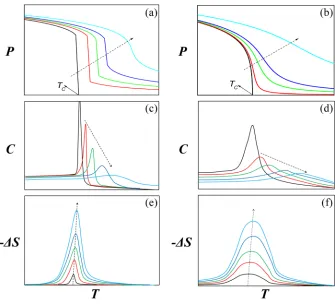
According to Equation (1), DT or DSis usually maxi-mized near the phase transition, where thermally driven changes in measured polarizationParising from changes in
the magnitude @@PT
E are largest. Recalling the features of
[image:3.612.58.291.64.235.2]phase transition,P changes discontinuously at the transition temperature TC for first-order phase transition, whereas for second order transitions it decays continuously with FIG. 1. Schematic of ideal electrocaloric Brayton refrigeration cycle in
space of total entropy-temperature.
[image:3.612.52.387.468.772.2]increasing temperature untilTC (see Figures 2(a) and2(b)). In this regard, the electrocaloric response in terms ofDSis usually significantly stronger in materials undergoing first order phase transitions than those with second order (see Figures2(e)and2(f)); a tricritical point is often optimum.
As long as PðE;TÞ is precisely known, it simply becomes a mathematical problem to calculate its derivative, its integral, and thusDT orDS. This approach can naturally include the boundary conditions and/or coupling to the strains (for example, in thin films) and therefore is a standard practice in this field.11,24,25However, in practical situations, precise determination ofPðE;TÞand its derivative @P
@T Eare
challenging, especially for discontinuous first-order phase transitions, and cause several concerns (see SectionsII Band Section II E). Moreover, the specific heat CðE;TÞ in Equation (1) is both temperature- and field-dependent. In particular, compared with the zero-field heat capacityCð0Þ, CðE;TÞusually experiences a significant change under ultra-high electric fields, regardless of the nature of phase transi-tion (see Figures2(c)and2(d)). However,CðE;TÞis usually taken as a constant, i.e., zero-fieldCð0Þin the literature. This unwarranted assumption may lead to serious systematic errors, which will be discussed in Section II F. Moreover, usually application of an electric field would lead to the ordering of electrical dipoles accompanied by reduction of entropy regardless of the nature of phase transition (see Figures 2(e) and 2(f)). This thermal phenomenon corre-sponds to positive (conventional) electrocaloric effect. In addition, the electrocaloric response induced by a first-order phase transition is sharper than that corresponding to second-order transition. In other words, as shown in Figures2(e)and
2(f), the magnitude of electrocaloric effect associated with first-order phase transition can be significantly larger than that accompanied by second-order phase transition, whereas the working temperature window becomes narrower using a first-order phase transition.
B. Selection of isothermalP-Tcurves
As mentioned in Section II A, the electrocaloric effect can be derived based on the data from the temperature de-pendence of the polarization (isothermal P-T curves) obtained either from theory or experiment. Figure 3shows antiferroelectric PðEÞloops measured at room temperature. In experiments, upper branches of PðEÞ loops (E>0), in which the ferroelectric/antiferroelectric domain configura-tions are not significantly modified due to the large electric field, are usually selected to ensure that the indirect method based on Maxwell relations is reliable.16In the case of lower branches, the electric field threshold is not high enough (E>0) and undesired ferroelectric switching occurs. In addition, in antiferroelectrics, there may be some lower-voltage regions of the upper legs of the hysteresis cycle (which we denote as “lower” regions in Figure3) which are also associated with polarization switching and remarkable changes in the domain configurations. The concern about using the lower hysteresis leg or this “lower” part of the upper branches to calculateDTis that a significantly smaller
electrocaloric effect may be predicted. For instance, experi-mental results in BaTiO3single crystals showed that electro-caloric responses (DT) derived from the lower branches show 50% smaller values than that from the upper branches or the result from direct measurement.26
This finding was attributed to the dramatic change in ferroelectric domain configurations when a modest electric field is applied.26However, according to the following anal-ysis, there are at least two overlooked factors which demand further considerations: (1) The role of electric field depend-ence of specific heat24,27 was not taken into account. This may also lead to remarkable underestimation of electro-caloric responses when a constant heat capacity is used in Equation (1) (see Section II F). In other words, the use of upper and lower branchPðEÞloops to calculateDTboth suf-fer from this important factor. (2) Direct measurement results26,28 indicate that the electrical hysteresis losses may play an important role leading to an asymmetry between the electrocaloric heating (lower branches with electrical field increasing) and the cooling responses (upper branches corre-sponding to decreasing electric field). To be more specific, if the upper branches (excluding the “lower” regions in Figure
3) correspond to the intrinsic electrocaloric cooling (preclud-ing the contributions from ferroelectric switch(preclud-ing and hyster-esis losses) when the field is removed, the lower branches in turn would reflect the extrinsic contributions from the hyster-esis losses to the electrocaloric heating; the change in do-main configuration (growth or switching) is responsible for thePðEÞhysteresis loops. As a result, the electrocaloric heat-ing temperature change (lower branches) may move through the cooling peak temperature (upper branches). This was observed in recent direct measurements on organic thick films28 and also BaTiO3 single crystals.26 Therefore, we argue that the concern about DT by using lower branches could arise as a result of hysteresis losses. As hysteresis losses strongly depend on the magnitude of external fields, and their contributions to extractDT become less dominant with decreasing field. This evidence implies that remarkable FIG. 3.PðEÞloops of antiferroelectric (Pb0.97La0.02)(Zr0.95Ti0.05)O3thin films
measured under different frequencies at room temperature. The single phase films were fabricated on a Pt(111)/Ti/SiO2/Si substrate using sol-gel spin
discrepancies between upper and lower branches can only be observed under high electric fields. As a result, it implies that reasonable estimations can be obtained even though a significant domain configuration change exists, i.e., near the antiferroelectric-to-ferroelectric switching regions.29In addi-tion, Joule heating under high fields can also result in a simi-lar asymmetry.30 As addressed in the review,3the materials will get hotter and hotter if the Joule heating is dominant, and no cooling effect will be obtained asymptotically.
We also note that even the ferroelectric switching in fer-roelectrics or antiferfer-roelectrics is a complex phenomenon, and the electrocaloric effect during ferroelectric switching is poorly understood since it is related to kinetic factors. Indeed, the ferroelectric switching mechanism is usually described by nucleation of new domains, forward growth fol-lowed by their sideways growth. Yet in many materials, nucleation is the rate-limiting step. It therefore still requires more efforts to provide solid experimental evidence or theo-retical insights. In order to avoid ferroelectric switching, Crossley suggested an alternative approach using proper PðEÞ loops.31 However, factors such as applied frequency are not taken into account and analyzed. Indeed, the shape of PðEÞ loops also depends on the measured frequency (see Figure3), which is often ignored in the literature and will be discussed in SectionII F.
PðEÞloops are measured at a constant temperature and for different temperatures when the sample is cooled or heated. In standard practice, fourth (or sixth)-order polyno-mial16or Gaussian fittings17toP-Tcurves are carried out to infer@P=@T in Equation(1). It is usually required that the temperature interval should be small enough to ensure that isothermalP-Tcurves are as smooth as possible. Otherwise, very strange electrocaloric responses might be obtained, such as remarkable shifts of electrocaloric peak positions, significant variation in the values of predicted DT intro-duced by different smoothing approaches, and erroneous prediction of electrocaloric peaks even without any phase transitions.32
Special concern for antiferroelectrics when selecting P-T curves is to exclude the contributions from isentropic-like polarization rotations.29To be more specific, in the anti-ferroelectric region (E1¼ 0 kV/cm), Equation (1) actually not only takes into account the contribution arising from the change in the magnitude of the staggered polarization PA¼PaPb33 (where Pa and Pb are the polarizations of two sublattices) but also that resulting from the polarization rotations driven by changes in the directions of the dipoles being not collinear with the electric field. The former part is the truly physical contribution to the entropy change, while the later plays a negligible role even though it may be accompanied by a modest polarization rise during the initial application of a low electric field (well below the antiferroelectric-ferroelectric transition field EAFE–FE). Therefore, Equation(1) may overestimate the electrocaloric effect (E1 ¼0 kV/cm) in antiferroelectrics, since it artificially includes the contribution from isentropic-like polarization rotation during the initial poling process (E1 EAFE–FE), which should be subtracted.29 One common treatment using Equation(1)is to deliberately apply a high electric field E1
(much larger than antiferroelectric-ferroelectric transition field EAFE–FE) to stabilize the ferroelectric regime.16 After
that, a larger electric field E2>E1 is applied to induce the positive (conventional) electrocaloric response. In this case, using the upper branches subjected to high electric fields might avoid the controversy using of lower branches proposed in Ref.26. However, the phase transition from anti-ferroelectric phase to anti-ferroelectric phase is not employed to optimize the electrocaloric response in antiferroelectrics sim-ply because it is energetically too expensive and inefficient.
C. Negative electrocaloric effect in antiferroelectrics
Recent publications in antiferroelectric materials either simply followed the foregoing strategyE1>EAFE–FE (Refs.
16,34, and35and references therein) or studied the electro-caloric response for the case of E1¼0 (Refs. 29, 32, and
36–42 and references therein) in order to use the electric-induced antiferroelectric-to-ferroelectric phase transition. However, recent findings (E1 ¼0) in the literature appear controversial with respect to positive or negative electro-caloric effect. A negative electroelectro-caloric effect means mate-rials will cool rather than warm in the case of positive electrocaloric effect when an electric field is applied adia-batically, whereas they warm when the field is withdrawn adiabatically. Specifically, a giant positive electrocaloric effect of 45.3 K at 17C (it is always positive within the temperature of interest) was predicted in antiferroelectric Pb0.8Ba0.2ZrO3 thin films using indirect measurements,
37
while a moderate negative electrocaloric effect (about
0.5 K to 1.5 K depending on the field) was observed by direct measurements in prototypical PbZrO341 and Pb0.94 Ba0.06ZrO342 ceramics near room temperature. A negative electrocaloric effect was predicted in (Na,Bi)TiO3-based ceramics by indirect measurements,36,40while recent direct measurements on similar ceramic compositions near the morphotropic phase boundary showed significant dis-crepancies between the direct and indirect electrocaloric measurements.43 Moreover, a giant negative electrocaloric effect (about 5 K) was demonstrated in La-doped Pb(Zr0.95Ti0.05)O3thin films (0.65lm) near room tempera-ture using indirect method,29 while only positive electro-caloric effect was reported in La-doped Pb(Zr0.85Ti0.15)O3 thin films (1lm) within the whole temperature of interest including both room temperature and higher temperatures.39 These inconsistencies in the literature may be probably attributed to (1) the unjustified nature of antiferroelectricity [somePðEÞloops even show evidence of ferroelectricity or slim relaxor type!] without further evidence of microscopic
structure, and (2) inaccurate fits of @@PT
E without
As mentioned in Section II B, it may be risky to use Equation (1) in antiferroelectrics where the transition is between antiferroelectric and ferroelectric phases. Moreover, simply choosing the measured (average) polar-ization as the primary ferroic order parameter may be questionable since the relevant order parameter in the anti-ferroelectric state is the staggered polarization rather than the average polarization.33 While very similar concerns about the magnetic order parameters in antiferromagnetics were raised by Gschneidneret al.,44 treating the measured magnetization as the primary order parameter is frequently used in the magnetocaloric community.45–52 It seems that the indirect method might still yield reasonable estimations about direct measurement results. For instance, it was reported that the direct measurement results in FeRh com-pounds can be well reproduced by the indirect method based on the magnetization measurements.52
The entropy change DSðEÞunder an applied field in an antiferroelectric is not always negative, as shown in Figures
2(e)and2(f)in normal ferroelectric (Edoes not increase the existing antiferroelectric order). This may lead to a negative electrocaloric effect, changing our general understanding of the electrocaloric effect.29,32,41,42 One can already realize that, for the case of normal ferroelectrics (Figures2(e) and
2(f)), applying a (conjugate) fieldEalways reduces entropy by further aligning dipoles, therefore leading to a conven-tional (positive) electrocaloric effect, according to Equation
(1)and recalling that @S
@E T ¼
@P
@T E. Therefore, this process
should always be accompanied by a decrease in entropy, as shown in Figures 2(e) and 2(f). A negative electrocaloric effect, however, indicates that electrocaloric entropy increases when an external electric field is applied isother-mally and becomes smaller when the field is withdrawn.
Indeed, being able to observe a negative electrocaloric effect in antiferroelectric under a moderate electric field is reasonable and understandable if one recalls the magnetic analog (called the negative magnetocaloric effect) which was found in antiferromagnetic FeRh alloys 26 years ago.45 In order to understand physically this electrically induced thermal effect in antiferroelectrics, using the Kittel model, Pircet al.predicted a crossover temperature above which the low-temperature negative electrocaloric effect transforms into high-temperature positive type.41This was qualitatively confirmed by recent experimental works in antiferroelectric thin films29 together with Young’s pioneering work.32 Moreover, a possible mechanism was proposed to explain the origin of the negative electrocaloric effect in antiferro-electrics when subjected to a modest electric field under iso-thermal conditions.29To be more specific, the non-collinear responses of dipoles in antiferroelectrics to an applied elec-tric field lead to the increase of the entropy components per-pendicular to the direction of the electric field with the entropy component along the direction of electric field nearly unchanged (see Figure 4). As a result, the application of a modest electric field in antiferroelectrics will generally increase the entropy by misaligning (canting) the dipoles, therefore generating the negative electrocaloric effect.29We also note that this collective non-collinear response of
antiferroelectric dipoles is different from the initial random arrangement of dipoles as aforementioned.
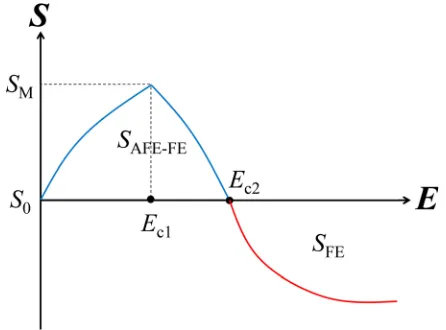
[image:6.612.322.555.62.213.2]Furthermore, since both antiferroelectric state and ferro-electric state are ordered with nominally different order pa-rameters, the existence of negative electrocaloric effect in antiferroelectrics seems to be reasonable. Entropy clearly plays the key role in electrocaloric properties. Let us qualita-tively analyze the electric-field-induced entropy change in antiferroelectrics as depicted in Figure 5 as follows: It is known that a ferroelectric order can be always stabilized from an antiferroelectric state and more easily at relatively higher temperatures and higher electric fields.29,33 Without any external fields, the antiferroelectric state is stabilized with a nominal entropy SAFEðE¼0Þ (which is deliberately set to be a constant S0 in our following analysis). When the electric field is applied isothermally (E1¼0), local antifer-roelectrically arranged dipoles will rotate and align along the direction of electric field until local phase switches from antiferroelectric domain configuration to ferroelectric-like type in the antiferroelectric matrix, assuming a first-order phase transition. In this case, the whole system becomes “disordered” or less ordered with an intermediate entropy SAFE–FE, which is larger thanS0. This provides a simple and FIG. 4. Schematic of a possible mechanism of negative electrocaloric effect in antiferroelectric: (a) without any electric field and (b) under a modest electric field. Due to temperature fluctuations, local polarization Plocally moves around, roughly in cones. The dipoles are collinear only on average and the cones have the same radii without any field.
[image:6.612.327.550.573.738.2]common physical image for the origin of negative electro-caloric effect in antiferroelectrics under a modest electric field. The upper bound magnitude of negative electrocaloric responseSMis limited by the competition between antiferro-electric and ferroantiferro-electric orderings. With the antiferro-electric field up to a critical electric fieldEc1(EAFE–FE), the entropy contri-bution from ferroelectric order becomes comparable with its antiferroelectric counterpart. The electric field decreases the antipolar order while increasing the polar one. This means that antipolar entropy contribution increases, whereas the po-lar one decreases. In this regard, the whole system becomes ordered again, accompanied by a decrease in the entropy SAFE–FE. The entropy behavior ends within a ferroelectric
re-gimeSFE (E>Ec2) where the negative electrocaloric effect is completely compensated by the positive electrocaloric one and the sign of the electrocaloric effect changes to positive.
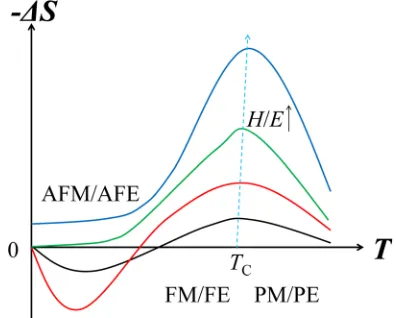
The physical description proposed above is not only re-stricted in understanding the thermal behavior in antiferro-electrics but can be also useful to explain the non-monotonic magnetocaloric behavior in antiferromagnetic materials when subjected to field-induced phase transition from an antiferromagnetic phase to a ferromagnetic phase.48–51 To simplify, in Figure6, we do not consider any specific infor-mation such as the material and the direction of fields but focus on the general physical behavior of an antiferroic sys-tem. The magnetocaloric or electrocaloric entropy change
DSwith a positive sign at lower temperatures (TC) (1) first experiences an increase in its magnitude (becoming more positive) with magnetic or electric field increasing; (2)jDSj
then decreases when a critical magnetic or electric field is reached; and (3)DSchanges its sign from positive to nega-tive, which indicates that the nature of magnetocaloric or electrocaloric effect changes from negative type to positive type (also see positive electrocaloric entropy change in Figures 2(e) and 2(f)). In the higher temperatures near the Curie temperature, entropy change is always negative indi-cating positive caloric response due to the field induced
transition from a paraelectric or paramagnetic phase to a fer-roelectric or ferromagnetic phase.
Regarding antiferroelectrics, the analysis above implies a subtle coupling between antiferroelectric and ferroelectric polarizations, and their structural instabilities might be at the heart of this complex mechanism.53 Indeed, recent first-principles calculations predicted the existence of a so-called scaling law of DTfor the fields below EAFE–FE in PbZrO3.54 However, the computational results failed to reproduce sev-eral typical experimental behaviors:29,32the remarkable shift of polarization peak with temperature under various electric fields, the shift of negative DT peak with temperature under various electric fields, and the sign reversal under ultrahigh electric fields. In addition, relaxor ferroelectics were also found to display a modest negative electrocaloric effect in a limited temperature range, which will be discussed in Section II D. The potential interest for negative electro-caloric or magnetoelectro-caloric effect is not only to develop a new class of caloric materials in solid-state caloric family but also to enhance the cooling efficiency if both negative and positive caloric effects can be combined properly.
D. Electrocaloric effect in relaxors
Relaxors are characterized by strong dielectric constant anomalies in which temperature of the susceptibility maxi-mum depends on the measurement frequency. It is believed that polar nanoregions cause such anomalies and that a clas-sical long-range ferroelectric state is avoided because of the presence of random electric fields. There is still debate on the validity of electrocaloric data from the indirect approach based on the Maxwell relations especially for these relaxor ferroelectric materials, because they are not in thermal or mechanical equilibrium. For instance, it was reported that the indirect method using Equation (1) may not necessarily yield a reliable basis for electrocaloric response in the relax-ors.43,55–58 Note that the relaxors are known to be not me-chanical, polar, or thermal equilibrium and therefore it is technically unjustified to use the Maxwell relations in relax-ors whose SðEÞis generally unknown. The interest of relax-ors for electrocaloric studies originated from the following considerations: The magnitude of DT in relaxors is highly competitive with that in normal ferroelectrics;1,5the opera-tional temperature window can be quite wide;17,55–58 a dual broad peak was observed;59–63there are small electrical and thermal losses;17 and the non-equilibrium state of polar phase and the coexistence of numerous polar phases may provide multiple sources of entropy change especially near the critical composition,64,65which is also applicable in nor-mal ferroelectric solid solutions with critical point.66–68
[image:7.612.74.272.62.221.2]Recently, a theoretical model without the use of Maxwell relations was proposed to describe the electro-caloric effect in relaxor ferroelectrics.69The total entropy of a polar material was divided into two parts: one is dipolar degrees of freedom or polar nanoregions, which corresponds to polar contributions and thus is electric-field-dependent. The other component results from the lattice, which is a field-independent contribution (phonons, electrons, etc). Another assumption is that the dipolar free energy can be FIG. 6. Schematic of the principle about the temperature dependence of
written in the standard Landau form. Therefore, following the thermodynamic relations as described in Ref. 69, the electrocaloric effectDT ¼T2T1 in response to an applied fieldEcan be implicitly derived from:69
T2 ¼T1exp 1
2Clatt a1ð ÞT2 P 2
E;T2
ð Þ a1ð ÞT1 P2ð0;T1Þ
;
(2)
whereClatt is the lattice heat capacity per unit volume and assumed to be nonsingular and dependent weakly on the temperature.a1¼da=dT, whereais a temperature depend-ent Landau free energy expansion coefficidepend-ent. As a result, this model can explain the maximum electrocaloric strength observed near the critical point where the first-order phase transition transforms into second-order type (tricritical point) as the field increases27,58,69,70and is also applicable to nor-mal ferroelectrics.70 In addition, based on this framework, theoretical descriptions of the elastocaloric71and barocaloric effects72associated with uniaxial stress and hydrostatic pres-sure were reported recently. The interest in these predictions is to demonstrate the promise of ferroelectrics in mechano-caloric cooling applications together with recent and rapid developments in this field (Refs. 73–82 and references therein). Indeed, this model (see Equation (2)) can be also used to justify the negative electrocaloric effect found in relaxors as long as the parameters such as polarization and heat capacity are precisely known. Efforts in relaxors require further investigations. For instance, from the theoretical point of view, first-principles calculations combined with non-equilibrium molecular dynamics can be used to deter-mine the electrocaloric effect without the use of Maxwell relations.83
It was reported that single crystals of PbMg1/3Nb2/3O3 -PbTiO3 (PMN-PT) were also found to display a negative electrocaloric effect.62,84 For instance, a negative electro-caloric effect with a quite small magnitude of about 0.025 K was first evidenced around 60C in h011i-oriented PMN-28PT single crystals under an electric field of 9 kV/cm.62 Later on, h001i-oriented PMN-30PT single crystals were studied in detail by both indirect measurement and direct measurement based on DSC.84 The findings confirmed the existence of negative electrocaloric effect near a relatively narrow region [75–95C]. Moreover, both the indirect and direct measurement results agree with each other within the experimental errors, even for relaxors.84 The origin of this effect in relaxors was theoretically studied by using a one dimensional statistical mechanical lattice model, and the change in electrocaloric sign was attributed to the variation in free energies driven by electric field.85 Nevertheless, in contrast to these results, no negative electrocaloric response was found in ceramics made of the same material PMN-30PT.58
According to recent theoretical developments in relaxors [for instance, Ba(ZrxTi1x)O3relaxors], there is a dielectric peak around a specific temperature,Tm, associated with the application of weak dc electric fields.86 No macroscopic paraelectric-to-ferroelectric transition occurs in this material down to the lowest possible temperatures. Such behavior
therefore implies that the (induced) polarization decreases as the temperature decreases below Tm when applying these weak fields, which thus should result in the negative electro-caloric effect according to Equation (1). Finally, theoretical insights using ab initio calculations are highly desired to understand particularly the origin of the negative electro-caloric effect in antiferroelectrics and relaxors.
The microscopic model we described in Section II C
may be applied to relaxors. Indeed, relaxors can be seen as a similar system where the polar state should fight against the random fields (rather than antiferroic interactions).
E. First-order phase transition
Strictly speaking, Equation(1)is not valid in the case of first-order phase transitions (these are not thermodynami-cally reversible6). Recalling the phase diagram in the space ofðP;TÞ, the polarization exhibits a discontinuous change at a critical temperature TC corresponding to the first-order
phase transition (Figure2(a)). Both @@PT
E and heat capacity
(Figure2(c)) are rather challenging to define. In experiments, the phase transition usually occurs in a specific temperature range with phase coexistence. Latent heat referring to the heat energy rejected or absorbed within the coexistence range of two phases is an import factor describing the first-order phase transition, whose contribution to electrocaloric response fails to be taken into account in Equation (1).87 Typically, a noticeable thermal hysteresis is often observed when the first-order phase transition is driven by cooling and heating processes.24 However, few experimental studies were conducted to consider this aspect of the electrocaloric response;88most of the results were obtained through a sin-gle thermal path by either cooling or heating the samples. In the ideally isothermal condition, the electrical hysteretic losses should also be considered when the field is applied and removed. In this case, the relaxor has a positive charac-teristic due to its slimPðEÞloops, which are not as sensitive to temperature compared with the normal ferroelectrics.1On the contrary, the hysteresis loss in antiferroelectrics could be problematic in addition to its great volume change near the antiferroelectric-to-ferroelectric phase transition.29,33
Both the thermal and electrical losses contribute to the final electrocaloric response. Moreover, if these two factors are dominant, the electrocaloric effect may be irreversible and it would exist for only a few cycles. This degradation (“fatigue”) is surely detrimental to any cooling applications. Similar issues have attracted much more attention for mag-netocaloric refrigeration,12,89–94while investigation on elec-trocaloric counterpart is in its infancy stage.1–12Quantitative analysis of contributions of thermal and electrical losses to the electrocaloric effect is of great importance especially for the design of electrocaloric prototype devices.
transition, electrocaloric entropy change DS was suggested to be modified as follows:1,6
DS¼
ðE
0
@D
@T
E
dEDD @E
@T
: (3)
From Equation (3), the Maxwell relation can be expressed in two forms: one in whichdSis proportional to dE, and the other form in which dS is proportional to the change of the displacementdDhaving a proportional factor
of @E
@T . Note that Equation (3) is also an approximate
expression and it seems technically complex; it has not been employed in experimental work yet.
First-principles-based simulations were carried out to test the applicability of the Maxwell relations. Ponomareva and Lisenkov demonstrated that the indirect approach based on the Maxwell relations provides an accurate and reliable basis for electrocaloric effect as long as Equation(1)is accurately integrated.95To the contrary, according to Rose and Cohen’s computations, Equation(1) is an exact expression and both indirect and direct approaches must agree within the error of experiments or simulations but not necessarily depend on detailed numerical integration techniques.96 Note that both simulations95,96 started from the first-order phase transition; however, neither of them took into account the field- and temperature-dependent heat capacity nor reported any dissipa-tive non-equilibrium effects resulting from latent heat associ-ated with the first-order phase transitions. These important factors were included in a more recent computational frame-work87that demonstrated that the indirect approach can only be valid as long as the first order transition is not crossed. They also found that systematic errors by using indirect
approach may arise due to inaccurate fits of @@PT
E(as we
dis-cussed above) and the use of a constant specific heat which we will address in SectionII F. The theoretical approach87by Maratheet al.represents an important advance to quantify the electrocaloric effect by usingab initiocalculations. One prac-tical route to further theoreprac-tical explorations is suggested to carry out theoretical simulations which can be directly com-pared with the experimentally available data.
F. Heat capacity and kinetics
Assuming a constant value of heat capacity CðE;TÞ in Equation(1)despite the phase transition is often used in the literature since this treatment may still yield a reasonable estimate of the electrocaloric effect.8 Indeed, the heat capacity measured at zero electric field can be significantly different from those at modest and strong fields. This field-and temperature-dependence of heat capacity may raise con-cern about the simple treatment widely used in the literature. Previous thermodynamic calculations24 showed that heat capacityCðE;TÞpeak (or divergence) near the phase transi-tion in normal ferroelectric (like BaTiO3) thin films will be smeared at high electric fields with a shift in its peak position towards higher temperatures (see Figure2(c)). This behavior in normal ferroelectric BaTiO3 is confirmed by the first principles-based calculations very recently.87In addition, the
field-dependence of heat capacity in BaxSr1xTiO3(x from 0 to 1) at various temperatures was also calculated using Green’s functions and the results imply that the value of heat capacity decreases remarkably with increasing field.97
Moreover, it is known that latent heat associated with the first-order phase transition will be fully released as long as the field is high enough. This indicates that a smearing of phase transition from first-order to second-order shape should be observed by experiments. As a result, the heat capacity peak should decrease significantly since the latent heat is determined by the area of this peak, which was exper-imentally observed in KDP98 and theoretically predicted in BaTiO3.24,87This behavior is also confirmed in BaTiO327,70 and PMN-PT99,100single crystals by using a high-resolution calorimeter with ac and relaxation modes. According to these recent calorimetric measurements, together with fore-going theoretical findings, it is reasonable to conclude here that the heat capacity is not constant but strongly dependent on the electric field and also changes with temperature.
Let us now reexamine the assumption that heat capacity is electric-field independent. According to the analysis above (see Figures2(c)and2(d)), the relationCðE;TÞ<Cð0;TÞis usually satisfied, and any discrepancies become more signifi-cant in the case of ultrahigh electric field which drives the giant electrocaloric effect near the phase transition. The real physical contribution of heat capacity to the integral in Equation(1)is overestimated. Therefore,DTestimated using Cð0;TÞorCð0Þshould be smaller than the true electrocaloric response. This simple treatment can lead to underestimations of the real DT, which was ignored by most of the studies in the literature.1 Indeed, even for quasi-direct measurement using DSC, numerous concerns exist when heat data are used to calculate DT according to the simple relation TDS¼Cð0ÞDT, which will be discussed in detail in Section
III B. Given that field-dependent heat capacity can be also a source of underestimations of DT, further works are highly desired to determine the role of ferroelectric switching, field-dependent heat capacity, and hysteresis loss.
Maxwell relations must be explicitly time dependent. Another concern about Equation (1) is the different relaxa-tion times for heat capacity and polarizarelaxa-tion; these often dif-fer and both are difdif-ferent from the rise time of the applied field in the experiments. Hence, the electrocaloric response depends upon three characteristic times. Future device opti-mization must frequency-match the detector response time and the polarization decay time.
It is known that shape of PðEÞ loops depends on mea-surement frequency101 and the frequency has an important effect onPmax in a specific electric field and thus the calcu-lated DT. This complicates the calculations of DT or DS based on Equation (1) compared with the magnetocaloric analog, whereas the dc magnetic field does not have a fre-quency. For instance, as shown in Figure3, the measurement frequency has a negligible influence on PðEÞ loops and therefore results in a trivial effect on the predicted DT in antiferroelectric PLZT [(Pb0.97La0.02)(Zr0.95Ti0.05)O3] thin films.29 On the contrary,PðEÞloops of BaTiO3single crys-tals show a remarkable dependence on measured frequency at 100C (near the Curie temperature of about 130C).103 As a result, the predictedDTbased on Equation(1)depends on the frequency, and the nominalDTis larger at higher fre-quencies. Recalling the foregoing concern aboutPðEÞloops, it is therefore risky to reach the conclusion that electrocaloric effect in BaTiO3 single crystals is strongly dependent on electric field frequency. Moreover, it was recently suggested by Crossley et al. that sufficiently low frequency measure-ment might be useful to achieve near isothermal conditions and was reported to support the validity of the indirect method even in relaxors.104 However, PðEÞ loops at other frequencies were not reported and similar comparison of loops (see Figure3) between different frequencies is lacking. In this context, careful reexamination of the experimental data is strongly recommended in the future studies.
In addition, deeper insights into the contributions of ferro-electric switching,105,106 domain growth,107,108 and domain wall109–112 to the electrocaloric effect are highly desired in order to provide basic understandings. For instance, a recent study using non-adiabatic direct measurement on PZT-5 ceramics showed thatDT displays a hysteresis behavior with Eand the sign of electrocaloric effect reverses at the coercive field where polarization switching occurs.105 Using a phase field method, similarDT-E curves were predicted in PbTiO3 nanoparticle in which vortex domain switching was consid-ered.106Moreover, phase field theory predicted a sign reversal of electrocaloric response at the domain walls (180 in Ref.
107and90 in Ref.108). However, this does not necessarily indicate that the coexistence of both negative and positive electrocaloric effects can really exist. The existence of re-markableDT gradient across the domain walls will immedi-ately lead to fast heat exchange between different domains, and therefore only a purely positive or negative electrocaloric effect should be observed with a significantly reducedDT.
G. Depolarizing field
It is known that in magnetocaloric refrigeration, the mag-netocaloric response usually needs to be corrected by taking
into account the demagnetizing field.113–117Considering the case of the depolarizing field in ferroelectrics, its influence on electrocaloric properties is ignored in most studies. This is because for strongly polar materials, such as ferroelectrics,
DP, one can have @@DT
E
@P
@T Eand therefore may
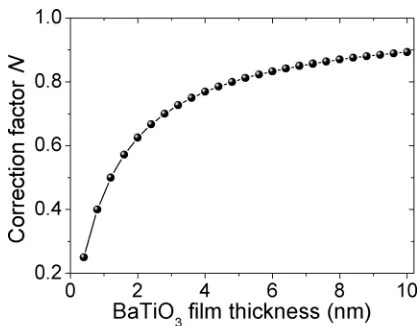
vali-date the use of Equation(1). However, this is not the case for ultrathin films in which the depolarizing field due to incom-plete screening from the electrode has to be taken into account.118The electrocaloric effect in ultrathin ferroelectric films was systematically studied by taking into account the film thickness, electrode, mechanical stress, and depolarizing field.77,119–121 For instance, Liu et al.77 found that such approximation is only valid for a film thicknesshbeing rela-tively big (h>4.8 nm). The correction factorN (see Figure
7) describing the deviation between the two derivatives such
that @D
@T E¼N
@P
@T E is introduced.
77
N can be written as
N¼1 2ebk
he0þ2keb where the second term arises exactly from
the contribution of depolarizing field77,119–121(ebis the back-ground dielectric constant, and e0 is the permittivity of free space.kis the effective screening length of ferroelectric/elec-trode interface). Whenhdecreases down to the critical thick-nesshc,N experiences a sharp drop, which clearly indicates that the effect of the depolarizing field becomes dominant.
Tuning the electrocaloric effect by adjusting the magni-tude of the residual depolarizing field has been reported recently in Pb(Zr0.4Ti0.6)O3nanodots by Prosandeevet al.83 Similarly, the depolarizing field is found to play a major role in determining the electrocaloric properties and is especially detrimental for the thinner films since it cancels out a large part of the external electric field.77 This conclusion is reached by considering only the single domain configuration. Moreover, Glazkovaet al.revealed a positive effect of resid-ual depolarizing field on the electrocaloric effect, which is attributed to formation of nanodomain in ultrathin ferroelec-tric thin films.122Also note that the strict Maxwell relation
@S
@E T¼
@D
@T E was also frequently employed to deriveDT
in organic materials (Refs.17and55and references therein], while there are also some studies using the relation @D
@T E @P
@T E even in nanoscale organic films.
[image:10.612.332.541.59.222.2]123The difference
in calculatingDT originating from these two different rela-tions was unknown since it was not explicitly discussed in these works (Refs.17,55, and123and references therein].
H. Clausius-Clapeyron method
In addition to indirect method based on the Maxwell relationships, the Clausius-Clapeyron method can be also used for first-order phase transitions.8This approach repre-sents a nominally equivalent indirect method as that based on the Maxwell relationships, and it remains rarely employed to extract the electrocaloric effect in the literature. Moreover, the Clausius-Clapeyron equation can be used to evaluate the contributions from the latent heat of the first order phase transition which is not included in Equation
(1).87In this approach, the temperature dependence of equi-librium transition temperatureT0 and then values of entropy changes for the fully driven transition can be obtained using the Clausius-Clapeyron equation below (Equation (4)), in which order parameter changes across first-order phase tran-sitions are denoted by the subscript “0”8
DS¼DD0ðdT0=dEÞ1: (4)
III. DIRECT MEASUREMENTS
At first glance, the direct approach measurement can inspire more confidence for the design of electrocaloric devi-ces. However, in practical cases, there are several factors making it difficult to achieve perfect adiabatic conditions. This difficulty in using the direct method can be readily seen according to the statistic result obtained from Web of Science as summarized in Figure8. Specifically, experimen-tal studies using direct measurements only comprise less than 15% (about 50 articles) of the total articles entitled “electrocaloric,” while most works (about 85%) were con-ducted by using indirect measurements. Most works are car-ried out to search for new materials and improve their properties, whereas only a few concepts for electrocaloric re-frigeration and heat pump have been proposed (see the review in Ref.12or Chapter 10 in Ref. 18). These data not only imply that direct measurement is challenging but also clearly reflect the current research stage of the electrocaloric effect. This is also one reason why indirect measurements
dominate this review. Because the topic of electrocaloric effect is increasing interest since 2006 (see Figure 1 in Ref.
8), Figure8also underlines the need to pursue more efforts into direct measurements and design of electrocaloric cool-ing devices. Sections II A–II H have provided critical insights into the indirect measurements, which should be useful to understand and quantify the electrocaloric effect. Regarding the direct measurements which have been reviewed in detail in the previous publications,1,5,11here we only give a brief overview of several direct techniques in order to avoid unnecessary repetition. Specifically, we will mainly focus on IR camera.
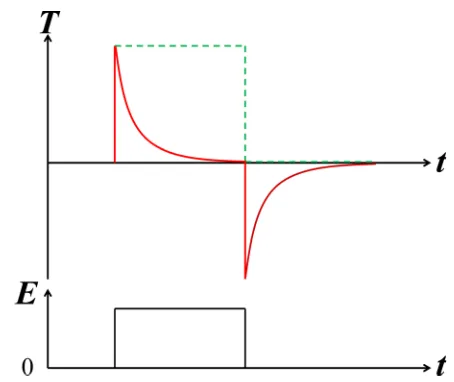
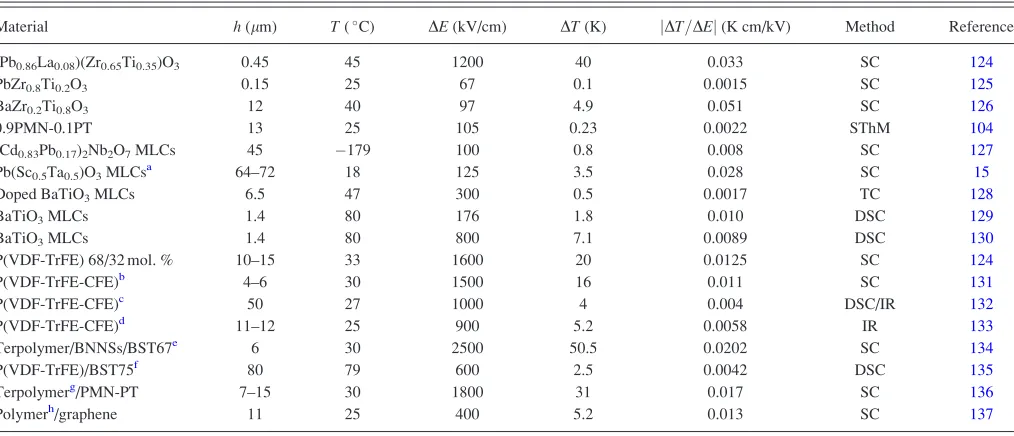
[image:11.612.323.550.58.249.2]Typical result by direct measurement (such as thermo-couple or thermometer, specifically designed calorimeter, IR camera, scanning thermal microscopy, and so on) is sche-matically shown in Figure 9. The thermal isolation of the sample is the key factor in the direct measurements. For instance, in perfectly adiabatic conditions, the sample tem-perature should remain constant after the electrocaloric effect is activated (dashed line in Figure9), and the electric field is applied or removed instantaneously in contrast to the isothermal measurement carried out under nearly equilib-rium conditions. However, in practical situations, the thermal exchange between the electrocaloric materials and the sur-roundings always exists, which leads to exponential decay of the electrocaloric peak with measurement time (see solid line in Figure 9). In this case, it is usually required that the characteristic time constant for the application (or removal) of the field should be significantly smaller than the time con-stant for heat exchange between sample and ambient envi-ronment in order to achieve near adiabatic conditions. This requirement can be met in bulk in most cases but fails in thin films with substrates, which makes direct determination of electrocaloric temperature change extremely challenging in thin films. As a result, it can be seen in TableIthat only two experimental results were reported on nanoscale thin films124,125during the past ten years, while most other works carried out direct measurement on thick films with a FIG. 9. Typical schematic of electrocaloric response (red line) as a function of time measured directly under near adiabatic conditions; the dashed green line indicates the ideal electrocaloric response under perfectly adiabatic conditions.
[image:11.612.58.289.68.203.2]thickness of few micrometers or bulk, including ceramics and single crystals. It would either require the device to be engineered with a thinner substrate, a thermal barrier, and a greater film volume fraction or demand technological achievements to get precise thermal measurements (as in pyroelectric detector devices). More importantly, reasonable calibration has always to be considered to compensate for unavoidable thermal losses during the measurements.
A. Thermocouple and thermometer
A thermocouple (based on thermoelectric effect) or ther-mometer (based on various principles) is a simple device to determine the temperature and electrocaloric temperature change. Usually, it is attached on a bulk sample using ther-mally conducting paste in order to meet good thermal contact between the sample and the thermocouple or thermome-ter.26,59,60,62,128,138Otherwise, thermal losses may lead to the measurements conducted in non-adiabatic conditions.105The thermocouple or thermometer by itself cannot be used to pro-vide reliable determination of the electrocaloric effect in thin films and is sensitively influenced by the surroundings. However, it can be integrated into a calorimeter system (i.e., high-resolution calorimeter11,58,124,139 and scanning thermal microscope104,138) as one of the key elements to achieve high-resolution probe of the electrocaloric effect even in thin films.
B. Differential Scanning Calorimetry (DSC)
Modified DSC can provide a good and precise character-ization of electrocaloric heat of samples in quasi-isothermal
conditions. Different from the standard mode measuring zero-field heat capacity, modified DSC evaluates the heat flowdQ=dEby applying an electric field at a controlled tem-perature.26,43,57,84,129,130,132 The electrocaloric heat can be then obtained byQ¼Ð0EðdQ=dE0ÞdE0, which corresponds to the area of the exothermic (endothermic) peak. Therefore, the entropy change can be determined by DS¼Q=T. To obtain the temperature dependence of heat flow, this proce-dure is repeated at different measurement temperatures from cooling or heating. Due to the thermal conduction of the ap-paratus, a long waiting period is usually required to stabilize the temperature before the electrocaloric measurement starts. Therefore, this approach is a slow measurement. The thermal losses from imperfect thermal contact between a sample and DSC sensors should be taken into account.43,57,84In addition, a quasi-direct method by measuring the heat flowdQ=dTat fixed finite field was also reported.26 Further information about various DSC setups can be found elsewhere (Refs.26,
43,57,84,129,130, and132and references therein]. As long as the temperature dependence of entropy change is given by the DSC method, the temperature change is often calculated by DT¼TDS=Cð0Þ where a constant zero-field and temperature-independentCð0Þare used (Refs.
[image:12.612.54.561.74.292.2]26,43,57,84,129,130, and132and references therein]. As we analyzed in SectionII F, this inappropriate assumption is not supported by recent experimental and theoretical evi-dence.24,27,70,87,97–100 Indeed, a very similar issue was al-ready discussed comprehensively in the magnetocaloric community. For instance, Pecharsky and Gschneidner addressed in detail140 that the unrealistic assumption (that TABLE I. Comparison of typical results by direct measurement on electrocaloric effect in thin and thick films.
Material h(lm) T(C) DE(kV/cm) DT(K) jDT=DEj(K cm/kV) Method Reference
(Pb0.86La0.08)(Zr0.65Ti0.35)O3 0.45 45 1200 40 0.033 SC 124
PbZr0.8Ti0.2O3 0.15 25 67 0.1 0.0015 SC 125
BaZr0.2Ti0.8O3 12 40 97 4.9 0.051 SC 126
0.9PMN-0.1PT 13 25 105 0.23 0.0022 SThM 104
(Cd0.83Pb0.17)2Nb2O7MLCs 45 179 100 0.8 0.008 SC 127
Pb(Sc0.5Ta0.5)O3MLCsa 64–72 18 125 3.5 0.028 SC 15
Doped BaTiO3MLCs 6.5 47 300 0.5 0.0017 TC 128
BaTiO3MLCs 1.4 80 176 1.8 0.010 DSC 129
BaTiO3MLCs 1.4 80 800 7.1 0.0089 DSC 130
P(VDF-TrFE) 68/32 mol. % 10–15 33 1600 20 0.0125 SC 124
P(VDF-TrFE-CFE)b 4–6 30 1500 16 0.011 SC 131
P(VDF-TrFE-CFE)c 50 27 1000 4 0.004 DSC/IR 132
P(VDF-TrFE-CFE)d 11–12 25 900 5.2 0.0058 IR 133
Terpolymer/BNNSs/BST67e 6 30 2500 50.5 0.0202 SC 134
P(VDF-TrFE)/BST75f 80 79 600 2.5 0.0042 DSC 135
Terpolymerg/PMN-PT 7–15 30 1800 31 0.017 SC 136
Polymerh/graphene 11 25 400 5.2 0.013 SC 137
aPb(Sc
0.5Ta0.5)O3was modified by doping Co and Sb.
bThe terpolymer P(VDF-TrFE-CFE) content is 59.2/33.6/7.2 mol. %.
cThe terpolymer P(VDF-TrFE-CFE) was purchased from Piezotech SA with the composition not reported. dThe terpolymer P(VDF-TrFE-CFE) content is 62.6/29.4/8 mol. %.
eTerpolymer refers to the relaxor ferroelectric P(VDF-TrFE-CFE) with a composition of 62.3/29.9/7.8 mol. %, BNNSs refers to Boron nitride nanosheets (9
vol. %), and BST67 refers to Ba0.67Sr0.33TiO3(8 vol. %). fP(VDF-TrFE) 52/48 mol. % and Ba
0.75Sr0.25TiO3(10 vol. %).
gTerpolymer refers to P(VDF-TrFE-CFE) (59.4/33.4/7.2 mol. %) and PMN-PT refers to 0.9PMN-0.1PT nanoparticles with the content of 37.5 wt. %.
h(VDF-TrFE-CFE)/P(VDF-TrFE) 90/10 wt. % blend and graphene (1.0 wt. %). In the method column, SC, SThM, TC, DSC, and IR indicate specific
heat capacity is magnetic-field independent) may fail to yield a reasonable approximation for magnetocaloric temperature change. Moreover, they suggested an approach by combining heat capacity and magnetization data to extract DT. And even for obtaining the entropy change by integrating the measured heat from DSC, the deleterious effects of intrinsi-cally inaccurate heat capacity should also be eliminated or minimized carefully especially for first-order transitions.141 One practical route to ensure reasonable and useful data obtained by DSC is to compare it with other direct measure-ments or from indirect data based on proper isothermal curves. This demands the modification of the application mode of DSC further to determine the field-dependence of heat capacity or combine other techniques available.
C. Specifically designed calorimeters
A specific calorimeter sensor was developed by Zhang’s group.124The operational principle is to compare the electro-caloric heat originated from samples with the heat generated by a reference resistor. The reference resistor heater attached to the samples with the same integrated areas produces a Joule heat which can be detected by IR sensor or heat flux sensor. For instance, the voltage signal peaks, detected by the heat flux sensor and then amplified by the low-noise pre-amplifier, can be observed by the oscilloscope (Refs. 134
and136and references therein]. The integrated areas of the peaks correspond to the amount of heat released or absorbed by the reference resistor (Refs.134and 136and references therein]. When the electrocaloric effect is induced in the samples, the electrocaloric heat released or absorbed is then calibrated by this reference resistor and DT can be finally obtained through simple calculations. This technique is use-ful for bulk samples and thick films (>1lm).
Another specific calorimeter called high-resolution calo-rimeter was recently developed by Kutnjaket al.to measure directly the electrocaloric effect.11,27,58,70,124,139 High-resolution calorimeter was first used to determine the field-dependence of latent heat to study the phase transitions in
relaxors.99 The latent heat can be extracted by comparing results of the ac mode and the relaxation mode.11,27,99,100,142 Moreover, the modified calorimeter is shown to be useful not only in probing the electrocaloric response for bulk including single crystals and ceramics11,27,41,42,58,70,139 but also for thin films.124 The readers are recommended for further details to Refs.1and11.
In addition to these two specific calorimeters, there are other examples available according to the literature. For instance, laser-based calorimeter using temperature-dependent reflectance measurements of the top metal (addi-tionally sputtered on the top electrode of the thin films) was used to characterize the electrocaloric effect directly in nanometer-scale thin films.125 The experimental results revealed an invisible contribution arising from elastocaloric effect related to substrate clamping through the piezoelectric coefficient of thin films, which is not necessarily taken into account into Equation (1) (see Ref. 125). In other words, Equation (1) using the polarization as the order parameter under proper mechanical boundary conditions24,25 may fail to describe the electrocaloric effect. Finally, a homemade calorimeter using a microfabricated resistance thermometer (integrated onto the substrate) was developed by Jia and Ju to provide direct measurement on electrocaloric effect in or-ganic thick films.28
D. Infra-red camera
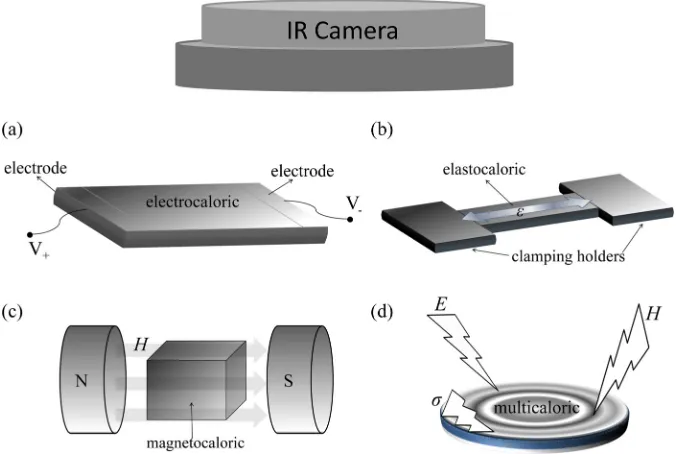
[image:13.612.50.388.64.291.2]describing the capability of the camera to capture thermal change is one of the key parameters, since it is correlated to the measurement conditions. For instance, higher frequencies (i.e., 100 Hz) can ensure the adiabatic conditions in most of the measurements on bulk materials.132,133,138,143–149In this case, the camera is sensitive enough to capture thermal change in each pixel in near adiabatic conditions.
To ensure the high accuracy in temperature measure-ments, it is usually required that the surface of samples is flat since the surface emissivity is strongly related to its rough-ness. In the case of a rough surface, the corresponding ther-mal image recorded by the camera will represent a false profile of inhomogeneity in temperature before the caloric effect is driven by an external stimulus.138This can be over-come by measuring the intensity of the thermal radiation at two adjacent temperatures and interpolating linearly but at expense of the high accuracy temperature measurements.138 This can be also achieved by manually adjusting the emissiv-ity of different selected regions without compromising the resolution of camera,149 which corresponds to setting the temperature of the sample to a specific measurement temperature.
As mentioned above, an IR camera has been frequently used to measure the magnetocaloric, elastocaloric, and elec-trocaloric effects.132,133,138,143–149A non-contact IR camera is compact and fast compared with the other techniques, i.e., DSC, and its use is rather simple. More importantly, an IR camera can directly image spatial caloric response, which is the main advantage over other techniques such as DSC, ther-mocouple, and other specifically designed calorimeters. Recent studies specifically demonstrated that IR imaging as a function of real time and magnitude of stimulus can pro-vide reliable data for caloric response with good preci-sion.132,138,144,146 For instance, in order to ensure the reliability of this technique, data obtained by an IR camera are compared with those from thermocouple138,144,146 and DSC measurements132and were found to be consistent. An IR camera is very sensitive to the surroundings, the people who are carrying out this kind of measurement not mention-ing the inevitable temperature variation in a day. This makes temperature dependence of measurement difficult since the temperature fluctuations can directly contribute to the ther-mal images of the camera if no therther-mal shield is arranged. In addition, IR measurement is usually limited in a temperature window [about 0–100C] near room temperature.
In addition to temporally resolved measurement, spatial thermal images captured by IR cameras are an ideal noncon-tact tool to explore the distribution of temperature profiles sub-jected to external stimuli such as uniaxial stress.144,147,148,150 In this case, the thermal response is correlated with structural degrees of freedom of materials, which can be very useful to study the microstructure dynamics such as nucleation.144,148 Spatially resolved measurements have been conducted to study the local inhomogeneities of elastocaloric and magnetocaloric responses.143,144,147,148 However, similar studies on electro-caloric effect are rarely reported. In turn, electroelectro-caloric effect is always characterized by an isotropicDT with a homogene-ous distribution along the sample in the literature except for very few studies.138,151,152 For instance, it was reported that
uniaxial Sr0.75Ba0.25Nb2O6 and Pb(Mg1/3Nb2/3)O3-PbTiO3 relaxor single crystals display anisotropy of electrocaloric cooling (about 0.20–0.25 K) due to strong polarization anisot-ropy151and different crystal orientations.152In addition, extrin-sic variation of electrocaloric effect (approximately 0.2 K) due to specific geometry in multilayer capacitors was observed between the metallic terminals and electrocaloric active ceramic regions in multilayer capacitors.138 This underlines that spatially distributed electrocaloric effects should exist over the multilayer capacitors in contrast to theoretical assumptions.153,154 Moreover, using IR camera, Liu et al. revealed the existence of a significant variation of electro-caloric effect up to 0.285 K between the central region and the region near the terminals.149 This result corresponds to about 50% of the average value in the sample, which is larger than the previous ones on anisotropy and inhomogeneity of electrocaloric cooling.138,151,152
Let us briefly recall that current interest in design of electrocaloric prototypes is mainly based on multilayer capacitors. The multilayer capacitors consist of around 200 ceramic layers each of thickness about 10lm separated by interdigitated inner electrodes with a thickness of several lm. The electrocaloric effect in multilayer capacitors was al-ready reported.15,127But it is only recently that the promise of multilayer capacitors in practical electrocaloric refrigera-tion was addressed22,128,129,153 and was regarded as one of the main breakthroughs in this field.3 Using multilayer capacitors is a successful compromise allowing high break-down field and relative large electrocaloric active volume. Moreover, electrocaloric refrigerator prototypes based on multilayer capacitors were designed, confirming the potential of multilayer capacitors for real cooling applica-tions.19,20,22,155In this case, the IR camera is a powerful tool to detect the dynamic performances of multilayer capacitors, i.e., the electrocaloric response under external fields with dif-ferent temporal shapes and frequencies,156the contributions of Joule heating,30,157 as well as the electrocaloric fatigue properties under cyclic operating. These unexplored data are extremely desirable to the design of electrocaloric prototypes.