A co-creative perspective
on a marketing strategy.
Implementing it on the riser-recliner chair LeChair of Sowecare.
A co-creative perspective
on a marketing strategy.
Implementing it on the riser-recliner chair LeChair of Sowecare.
This Bachelor assignment was commissioned by
Sowecare BV Twentelaan 10 7609 RE, Almelo Tel.: 0546 49 32 51 E-mail: [email protected] www.sowecare.nl
and
University of Twente
Faculty of Engineering Technology Industrial Design
Postbus 217
7500 AE Enschede
The responsible person for this assignment is
M.W.M. van Lune S1447904
Industrial Design
Commission of the Exam Committee
Mentor University Dr. C.V. Gelhard
Mentor University Prof. Dr. Ir. M.C. van der Voort
Mentor Sowecare Msc. M.J.M. Olde Daalhuis - Damhuis
Date: 28-02-2017
Amount of Pages: 74
Preface
All the technologies that surround us nowadays have a big influence on the society. It changes the way we see, the way we think, the way we socialize. It changes the way we are involved in this world. Because of all the technologies, the human being has access to more information than ever before. These vast amounts of information result in people knowing more and wanting to know more. These people with knowledge want to put that knowledge to good use. They want to be involved.
This also affects the market. Just buying is not enough anymore. They want to see what is behind the product, they want to be involved in its design. That is why co-creation of value has grown so fast in the last few years.
During my internship at Sowecare BV I tried to implement these value co-creation tools into their marketing strategy. Because of this, their products would not only be fully adjustable to the wishes and requirements of the user, but also be designed and marketed by the inputs of different stakeholders. With an improved
company-consumer relationship as a result.
During the assignment, I learned a lot. I learned not only the importance of involving stakeholders in the design of a product and how to create that involvement, but also to be in a working
environment and to put everything I learned during my bachelor Industrial Design in practice.
I would like to thank Miranda Olde Daalhuis and Carsten Gelhard for their help, support and feedback during the assignment. I would also like to thank Evert Elbertsen for his feedback on my work, and all the other employees for the pleasant working environment.
I also would live to give thanks to Bep Klaassen for playing the role in the promotional video, Jessica van Lune and Jochem Braakhuis for granting me their voices for the voice-over, Carint Reggeland for allowing me to film at their location, and Danny Dam Wichers for borrowing me all the camera equipment.
Finally I would like to thank all the users, occupational therapists and employees for the time and effort they put in the post market surveillance.
Summary
After changing the image of their riser-recliner chair LeChair, Sowecare was in need of a new marketing strategy for the product. This assignment created a marketing communication channel for this new marketing strategy by implementing value co-creation tools in the process. The concept of the co-creation of value describes collaboration between multiple stakeholders (Prahalad & Ramaswamy, 2000), both internal and external, and focuses on the idea of these stakeholders as a creator of value, interacting with each other (Mathis, Kim, Uysal, Sirgy, & Prebensen, 2016). This can be done in two ways. The first is co-production, where the company still holds all the power and external stakeholders can give suggestions and insights, but the final value creation is done through the company. The second is the contrary, where the external stakeholders creates the value almost on his own through using the product, without the help of the company, and is called value-in-use.
Both value-in-use and co-production are used to create the marketing communication channel. Through value-in-use, opinions are created about wat LeChair and Sowecare. These opinions from value-in-use were then translated into something useful in two ways: production and
co-marketing.
Co-production was used to translate these insights into recommendations. Through a post market surveillance, the insights were gathered and analysed, and afterwards recommendations were given on how to improve LeChair, as well as the communication and promotion of Sowecare.
Co-marketing was used by creating a
Samenvatting
Nadat het imago van de aangepaste stoel c.q. sta-op stoel LeChair was veranderd, had Sowecare een nieuwe marketing strategie nodig. Deze opdracht heeft een communicatie kanaal gemaakt voor deze nieuwe marketing strategy, door value co-creation te implementeren. Value co-creation is een samenwerking tussen verschillende belanghebbenden (Prahalad & Ramaswamy, 2000), zowel intern als extern, en ziet deze belanghebbenden als de ontwerper van value door interactie te hebben met elkaar (Mathis, Kim, Uysal, Sirgy, & Prebensen, 2016). Dit kan op twee manieren. De eerste is co-productie, waarbij het bedrijf nog altijd de touwtjes in handen heeft, maar suggesties en inbreng van externe stakeholders gebruiken bij de value creation. De tweede is het tegenovergestelde en geeft de
externe belanghebbenden bijna alle macht door het product te gebruiken, en heet value-in-use.
Zowel value-in-use, als co-productie zijn gebruikt bij het maken van een marketing
communicatie kanaal. Via value-in-use worden er
meningen gevormd over LeChair en Sowecare. Deze meningen vanuit value-in-use zijn
vervolgens naar iets bruikbaars vertaald op twee manieren: co-productie en co-marketing.
Co-productie is gebruikt om de meningen te vertalen in aanbevelingen voor verbeteringen. Via een post market surveillance zijn deze meningen vergaard en ge-analyseerd, waarna er aanbevelingen zijn gedaan over hoe zowel LeChair, als de communicatie en promotie van Sowecare verbeterd kan worden.
Co-marketing is gebruikt in het creëren van een communicatie middel. De meningen vanuit value-in-use, samen met een volledige marketing communicatie analyse, is gebruikt om een
Content
Preface ... Summary ... Samenvatting ...
Introduction ...
User-Centred Marketing Research ... 1. User-Centred Marketing ... 1.1. Value Co-Creation ... 1.2. Co-Creation of Value in Practice ... 1.3. Conclusion ... 2. Implementation ...
Case-Study: Sowecare ...
3. Background Analysis ... 3.1. Sowecare ...
3.2. The Products ... 3.3. LeChair ... 3.4. Conclusion ... 4. Target Audience Analyis ... 4.1. Riser Recliner Chair Users ... 4.1.1. Users because of an illness ... 4.1.2. Users because of age ... 4.2. Occupational Therapists ... 4.3. Stakeholders ... 4.4. Conclusion ... 5. Market Analysis ... 5.1. Stand Up Help ... 5.2. Riser Reciner Chairs ... 5.3. Custom Seats ... 5.4. Conclusion ... 6. Post Market Surveillance ... 6.1. Goals ... 6.2. Preparations ... 6.3. Procedure ... 6.4. Outcome Procedure ... 6.5. In Depth Analysis ... 6.6. Cross Case Analysis ... 6.7. Recommendations in response to the PMS... 7. Marketing Communication Analysis ... 7.1. Marketing Communication Research ... 7.2. Developing Effective communications ... 7.3. Current marketing communication channels of Sowecare ... 7.4. Developing effective communication for Sowecare ... 7.5. Conclusion ... 5 6 7
10
11 11 11 13 16 17
18
8. Promotional Video ... 8.1. Preparations ... 8.2. Implementation ... 8.3. Results ... 8.4. Conclusion ...
Discussion ... Conclusion ... Recommendations ...
Bibliography ...
Appendix ... A. Order form ... B. Option Form ... C. Participants ... D. Questionnaire Users ... E. Questionnaire OT’s/Dealers ... F. Questionnaire Employees ... G. Filled in User Surveys ... H. Filled in OT Surveys ... I. Filled in Employee Surveys ... J. Communication Channels ... K. Old Script Promo Video ... L. Sript Promotional Video ... M. Screenshots from the Promotional Video ...
61 61 62 63 63
65 67 68
69
Introduction
In this report can be read how value co-creation is implemented in the marketing strategy of Sowecare BV. Sowecare is a manufacturer of innovative rehabilitation devices since 1998. Under their own brand they design, manufacture and sell riser-recliner chairs, pedal chairs
and wheelchairs which are sold domestically and abroad. Sowecare distinguishes itself by developing qualitative and innovative solutions which enhance the independency of the user. Because they produce their own products, the chair can be fully adjustable to all the wishes and requirements of the users.
The sales of their riser-recliner chair LeChair plummeted in the last few years, since the rules for the reimbursement of riser-recliner chairs in the Netherlands tightened in 2009 and only a few people are now able to get a reimbursement, and only if they have such a disability or illness, that sitting in a ‘normal’ chair is not doable anymore. The rest has to pay for the chair out of their own hand.
Because of this, Sowecare changed the image of the chair. Instead of just an armchair that can help a person standing up, they changed it into a medical device which supports people with different disabilities and illnesses to sit in a chair. Because of this, they had to create a new marketing strategy. Creating a marketing communication channel for this new marketing strategy was the purpose of this assignment.
The design of the communication channel was done through value co-creation. In order to be able to do this, first research had to be done about what co-creation is, with its building blocks, and how it could be implemented in a marketing strategy. This research can be found in chapter 1 and 2.
After this, a full analysis was made about Sowecare, LeChair, and its users. A background analysis, target analysis and market analysis can be found in chapter 3, 4 and 5.
When all the background information was collected, the value co-creation could start. This was done through a post marketing surveillance. The surveillance and its analysis can be found in chapter 6. The recommendations for a redesign of LeChair and the communication tools can also be found in chapter 6.
1. User-Centred Marketing
Ever since the rise of mass production and more evolved communication tools a company-centric, an efficiency-driven view of value creation, shaped the industrial infrastructure and the entire business system (Prahalad & Ramaswamy, 2002). Products were basic and designed for the mass market. The goal was to standardize everything so that the production costs could be as low as possible, and thus they could be priced lower and made more affordable to more buyers. Value creation was seen as a process of cost-effectively producing goods and services. It is what Philip Kotler et al (2010) call the product-centric era.
Nowadays, the society has changed. The fast advances in technology have altered the way people communicate, make decisions, socialise, entertain themselves, interact with each other or even do their shopping (Constantinides & Fountain, 2008). These current information and communication technologies, with the Internet in particular, are forcing companies to think differently about value creation and to be more responsive to consumer input. Driven by the consumer-centric culture of the Internet, with its emphasis on interactivity, speed, individuality and openness – Web 2.0 (Erragcha & Romdhane, 2014; O’Reilly, 2005) – the consumer’s influence on value creation has never been greater
and it is spreading to all points in the value chain (Prahalad & Ramaswamy, 2002). This emerging reality is forcing a re-examination of the traditional system of company-centric value creation, to a premise centred on co-creation of unique value with customers (Prahalad & Ramaswamy, 2004 a).
1.1. Value co-creation
The concept of the co-creation of value describes collaboration between multiple stakeholders (Prahalad & Ramaswamy, 2000), both internal and external, and focuses on the idea of these stakeholders as a creator of value, interacting with each other (Mathis, Kim, Uysal, Sirgy, & Prebensen, 2016). It is a continuous dialogue
between internal stakeholders – the company – and external stakeholders – the customer – about problem definition and problem solving. The experience of one is used to co-create personalized experience to suit his/her personal context. The variety of experiences of many is used to know how the external stakeholders see the business in real time (Prahalad & Ramaswamy, 2004 b). This is done through direct and indirect collaboration across one or more stages of the value chain (Ranjan & Read, 2016). According to Ranjan and Read
(2016), value co-creation consists of two distinct elements: co-production and value-in-use.
Co-Production
“Co-production consists of direct or indirect ‘co-working with customers’ or participation in the product/service design process.” (Ranjan & Read, 2016, p. 292). It is a more traditional approach and based on a goods-dominant logic
(Terblanche, 2014). The consumer participation plays a big role in co-production, but the
company also has a big influence on the process, and it is a firm-centric approach (Chathoth, Altinay, Harrington, Okumus, & Chan, 2013). In co-production, control of the process is located at the side of the firm, which defines the nature and extent of co-production (Vargo & Lusch, 2004). There are acts of mutual exchange, physical and mental activities, and access to mutual expertise. However, co-production still considers consumers as exogenous targets and as resources of the firm. Nonetheless, it does not rule out the possibility of customers being psychologically involved in the co-production process (Ranjan & Read, 2016). Co-production is mostly carried out in the design and product development phase, or the production phase of the value chain, but also a bit in the marketing phase.
in use value. Personalization is the uniqueness of the actual or perceived use process, the value being contingent on individual characteristics, and results in possibilities of cultural reshaping and reinforcement through the uniqueness of the process
Building blocks of value co-creation
As could be read in previous sections, according to Ranjan and Read (2016), co-creation consists of six elements, divided in two dimensions: knowledge sharing, equity, and interaction for co-production, and experience, relationship, and personalization for value-in-use.
Prahalad and Ramaswamy (2004 b) came up with the DART method: Dialog, access, risk-benefits, and transparency. They see these four elements as the building blocks of interaction. However, they take a lot of the other elements into account and thus these four elements rather can be seen as the building blocks of these elements and the means to link the six elements of value co-creation.
Dialog implies interactivity, deep engagement, and the ability and willingness to act on both sides. Dialog also encourages the knowledge sharing and understanding between companies and consumers. However, it is difficult to have a dialog between two unequal partners, so the firm and the consumer must become equal and joint problem solvers. This equality is difficult if consumers do not have the same access and transparency to information. Access challenges the notion that ownership is the only way for the consumer to experience value, and transparency of information is required to create the trust between institutions and individuals (Prahalad & Ramaswamy, 2002). Both are critical to have a meaningful dialog. But more importantly, dialog, access, and transparency can lead to a clear assessment by the consumer of the risk-benefits of a course of action and decision. With risk-benefits comes the risk reduction, which assumes that if consumers become co-creators consumers’ knowledge, ideas, and creativity
in the articulation and expression of current and future needs. Equity means the firm’s
willingness to share control in favour of consumer empowerment and the consumer’s desire to contribute to their role in co-creation activities. Interaction is the primary interface between company and consumer. It is an opportunity to understand, share, and serve needs, and to simultaneously assess and adapt resource commitment.
Value-in-use
“Value-in-use extends beyond the co-production, exchange, and possession of a good or service, and it requires customers to learn how to use, repair, and maintain a product or service proposition.” (Ranjan & Read, 2016, p. 293). By Prahalad and Ramaswamy (2004 a), value-in-use is also referred to as co-creating experience, since it focuses on the experience that customers will seek to create. It describes the way actors behave, interact, interpret, experience, use, and evaluate propositions based on the social construction of which they are a part (Prahalad & Ramaswamy, 2004 b; Vargo & Lusch, 2004; Ranjan & Read, 2016). In contrast to the co-production, value-in-use is a more
service-dominant logic (Lusch & Vargo, 2006). Where the firm had the control in co-production, with value-in-use they only have partial control (Prahalad & Ramaswamy, 2004 b), and it may even be mostly independent of the company’s intervention or exchange (Vargo & Lusch, 2004). It regards customers as active players who can co-develop and personalize their relationships with and adopt a multitude of different roles (Payne, Storbacka, & Frow, 2008). Value-in-use is carried out in the consumption phase of the value chain, but can also be used in the marketing phase.
Ranjan and Read (2016) identified three elements that value-in-use consists of: experience,
of value with companies, they will demand more information about potential risks of goods and services, but they may also have to bear more responsibility for handling those risks (Prahalad & Ramaswamy, 2002). So, these building blocks already take knowledge sharing, interaction, and equity into account. These building blocks can also be used to link experience, relationship, and personalization with knowledge sharing, equity and interaction.
Dialog aids knowledge sharing in interaction. This knowledge sharing cannot be done without equity, which can be done through access and transparency. A good interaction with dialog and risk benefits, makes sure there is a good relationship between the company and the consumer. And experience with dialog turns into an interaction, and experience, aided with dialog,
access, transparency and risk benefit, can turn into personalization. See also table 1.
So, the six elements are important in order to make the co-creation process work. Without knowledge sharing, interaction, equity,
relationship, experience and personalization, the process would go les smoothly. The four linking elements help to achieve the six building blocks.
1.2. Co-creation of value in practice Previously was already mentioned that
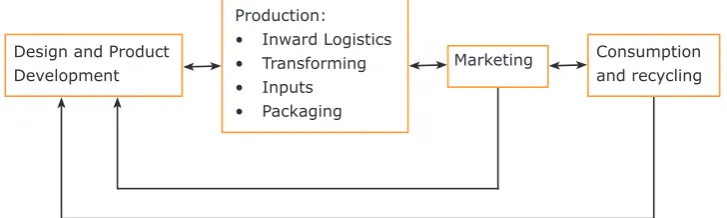
co-creation is spreading to every phase of the value chain. The value chain describes the full range of activities which are required to bring a product or service from idea to the customer. Figure 1
(Kaplinsky & Morris, 2001), shows the different phases of the value chain: design and product development; production; marketing; and consumption/recycling. It was also mentioned that co-production mostly takes place in the design, product development and production stage of the design process. Value-in-use, on the other hand, occurs in the marketing and consumption phase. So there is a dichotomy, right in the middle of the value chain, where the value chain is split between co-production and value-in-use. This means that not all phases have the same dimensions of the co-creation process, and thus in every phase, different methods can be used to involve people in the value creation process. in the next section, the co-creation practices that can be used per phase are elaborated.
Co-creation element 1
Linking element
Co-creation element 2 Knowledge
sharing
Dialog Acces
Transparency
Interaction
Knowledge sharing
Acces
Transparency
Equity
Interaction Dialog
Risk benefit
Relationship
Experience Dialog Interaction
Experience Dialog
Access Transparency Risk Benefit
[image:13.595.38.290.99.314.2]Personalization
Table 1: Co-creation building blocks.
Design and Product
Development Marketing
Consumption and recycling Production:
• Inward Logistics • Transforming • Inputs • Packaging
[image:13.595.132.496.662.771.2]Design, product development and production
Participatory Design
Participatory design is a research method, which uses design as research (Spinuzzi, 2005), actively involving all the stakeholders in the process as much as possible (Casali, 2013). It is an approach in which the (future) users play a critical role in designing it (Schuler & Namioka, 1993), where the roles of the designer and the researcher blur and the user becomes a critical component of the process (Sanders E. B., 2002), becoming both user and designer. The designer strives to learn the realities of the users’ situation, while the user strives to articulate their desired aims and learn appropriate technological means to obtain them. Through interactions with prototypes and mock-ups, among other things, the user can have a voice in the design of the product, without needing to speak the language of professional technology design. (Simonsen & Robertson, 2013)
Co-design
Co-design is the successor of participatory design, and can be seen as collective creativity as it is applied across the whole span of a design process (Sanders & Stappers, Co-creation and the new landscapes of design., 2008). Classical roles of users, researchers, and designers in the design process get mixed up. The person who will eventually be served through the design process is given the position of ‘expert of his/her experience’, and plays a large role in knowledge development, idea generation and concept development. The designer and the researcher
collaborate on the tools for ideation, and may even be the same person. The designer switches to a support role, and the user can get the opportunity to design the solution themselves
(Casali, 2013). However, this is not always possible. In some situations, a lesser degree of user involvement is needed.
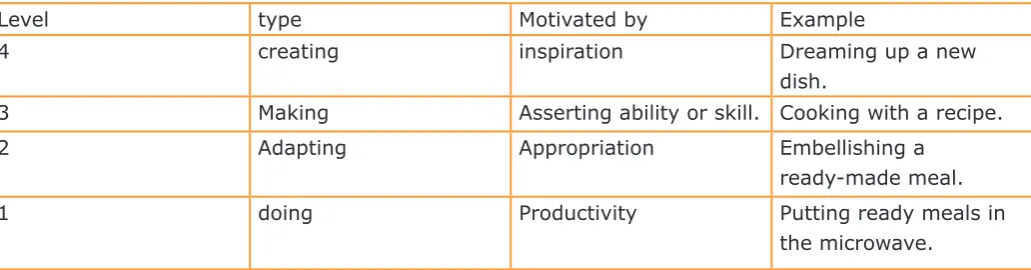
The role of the user can be in four levels of creativity: doing, adapting, making and creating
(Sanders E. B., 2006). The motivation behind doing is to accomplish something through productive activity, which requires a minimal amount of interest and skill requirements. The next level, adapting, is more advanced. The motivation behind it is to make something one’s own by changing it in some way, to better fit a personality or the functional needs. It needs adaptive creativity, which requires more interest and a higher skill level than doing. The third level of creativity is making, which motivation is to use one’s hands and mind to make or build something that did not exist before. Usually, there is some guidance involved. It requires a genuine interest and prior experience in the domain. The most advanced level of creativity is creating, which motivation is to express oneself or to innovate. Advanced creative efforts are fuelled by passion and guided by a high level of experience. It differs from making in that creating relies on the use of raw materials and the absence of a pre-determined pattern. Table 2 gives an overview of the different levels of creativity.
Level type Motivated by Example
4 creating inspiration Dreaming up a new
dish.
3 Making Asserting ability or skill. Cooking with a recipe.
2 Adapting Appropriation Embellishing a
ready-made meal.
1 doing Productivity Putting ready meals in
[image:14.595.42.558.633.768.2]the microwave.
The difference between participatory design and
co-design.
Both processes have in common that they involve people in the design process in order to design something that is more effective for the user. However, co-design leans more on teaching the skills to the recipients of the process, while participatory design stress more the involvement factor (Casali, 2013).
Marketing
Marketing 2.0
Marketing 2.0 is a response to the changes of the society and the rise of Web 2.0. The fundamental principle of marketing 2.0 is to integrate consumers at all levels of the marketing approach and considers them as an active player in the marketing process, instead of a single receiver (Erragcha & Romdhane, 2014). It is a relationship-based strategy (in contrast to the product-based strategy of marketing 1.0), where customers and companies work in collaboration to explore a need and then create a unique product or serving meeting that need (Corbae, Jensen, & Schneider, 2003). The golden rule “customer is king” works well in this strategy. This way, customers are better off because their needs and wants are well addressed. Marketers try to touch the consumer’s mind as well as their hearts (Kotler, Kartajaya, & Setiawan, 2010).
This marketing strategy thus connects the companies directly with their customers (Neti, 2011) and empowers them to participate in several marketing activities, including branding, product development, product feedback, and customer service (Parise & Guinan, 2008). This leads to a shift in the locus of power away from the firm, towards the customer (Berthon, Pitt, Plangger, & Shapiro, 2012). Because of the social media and its online communities, social networks, blog marketing, and many other communication tools within it, consumers are in control, driving content to build personal relationships. This means that companies have to give up some control of certain processes in order
to allow consumers more direct input into driving the organization’s value proposition. However, it is important that companies have a community moderator role, who helps manage and facilitate discussions, and ensures that the community is active by encouraging member participation in blogs, wikis and forums, pointing out community events such as podcasts, training sessions, or conferences, and sharing electronic articles and links to relevant websites. (Parise & Guinan, 2008)
When looking at this, there are three important things in order for marketing 2.0 to work: social media, so that everyone is connected and consumers are able to give their input; creative consumers, to have their say in the matter, give their input and keep the community active; and the company as a community moderator, to keep the community active and helps manage everything. This
can also be seen in figure 2.
Marketing 3.0
Kotler et al (2010) go a step further: Marketing 3.0. Marketing 3.0 is the promotion of an authentic and sincere message,
and translating into all aspects of the company: product development, personnel management, and marketing (R., 2014). Consumer choices are based more and more on more deeper needs, and marketing 3.0 is a respond to this. It is value-driven, searches for a meaning and sees the human with an holistic approach, looking at the consumer as a human that is multidimensional (Kotler, Kertajaya, & Setiawan, 2010). it is the result of collaboration between a group of entities, adopting all the same values, and is responding to cultural issues (Erragcha & Romdhane, 2014). Companies are evaluated not
Marketing 2.0 Social Media Creative Consumers Company Moderator
only with respect to the profit they generate, but also in terms of their behaviour towards humans and the planet.
Marketing 3.0 has the same execution as marketing 2.0, involving users in the process and using social media to accomplish their goals. However, it has this extra dimension added to it, trying to create a meaning in the world.
Consumption
Consumption is where the true co-creation of experience happens. The consumers have bought the product and are using it. The power is now out of the company’s hand and the consumer has all the time and place to create his/her own value and experience. However, the company can still get its hand on this information: by being open for feedback. This can either be passive or active.
Passive feedback
For passive feedback the company does not have to do much more than maintain the ways people can contact them, e.g. phone, mail, social media, in person, et cetera. When people have the need to give the company feedback, they can contact the company.
Active feedback
The company itself can also play an active role in receiving the feedback. An example for this is surveys. Companies can take the opportunity to perform a surveillance with people who have already been using the product for a while. They know what they like and do not like about the product, and can give that information to the company.
1.3. Conclusion
All the changes in technology and society are forcing companies to re-examine their product-based approach to a user-product-based approacht: Value co-creation. Value co-creation is a collaboration between multiple stakeholders and focuses on the idea of these stakeholders as a creator of value, interacting with each other.
Co-creation can be divided into two parts: co-production and value-in-use. Co-co-production is an approach where the company still holds most of the strings. However, user are given the opportunity to have their say in the matter and help designing the product. Value-in-use, on the other hand, is almost fully dependable on the user and is an approach where the company cannot really do anything. Value-in-use is an approach where users create their own value while using the product.
In order to make co-creation work, there are six building blocks that have to be taken into account: knowledge sharing, equity, interaction, experience, relationship and personalization. In order to create these six building blocks, four elements are needed: dialog, acces, transparency and risk benefit.
When all the building blocks are taken care of, the company can start with the co-creation process. In all four stages of the value chain (design and product development, production, marketing, and consumption/recycling), co-creation can take place. In the design and production stage, co-production is used through participatory design or co-design. In the
2. Implementation
This research has been done to see how different stakeholders can be integrated in the value creating process. In order to see if it works, the theory is implemented in a case study. The case study consist of the co-creation of LeChair, a riser-recliner chair designed and produced by Sowecare BV.
LeChair is a riser recliner chair, unique in its movement and adjustability, which makes it a perfect medical device for all sorts of physical disabilities. However, LeChair is not often seen as the medical device that it is. Because of that, their image needs to be changed. This will be done through value co-creation.
The first important part is to find out what the different stakeholders think of LeChair right now. For this, co-creation of experience will be used. Different stakeholders, like employees, users and occupational therapists have opinions of LeChair. These stakeholders have been working with LeChair for some time, since they either use it, produce it, or give advice about LeChair. This means they have quite some knowledge about LeChair, and because they are all different opinions, it can be very valuable to hear all of them.
These opinions can be divided into two groups: internal and external insights. Employees are covered by the internal opinions, users and employees by the external opinions. To change the image that the external stakeholders have, their opinions need to be compared to the internal stakeholders. The internal stakeholders should have a very clear view of the image of LeChair, or at least the image that they want to reach. By comparing the internal opinions to the external opinions, it will be clear what is missing where, in order to translate the internal opinions to the external opinions.
This translation can be done in two ways: co-production and co-marketing. First of all, the opinions of the co-creation of experience can
be used to see what can or should be changed about LeChair itself. So with these insights, recommendations will be made about how the design of LeChair can be changed. This is done through a post market surveillance. Besides recommendations about LeChair, also recommendations about the communication and promotion of Sowecare can be made, since these insights will also be gained.
3.1. Sowecare B.V.
Sowecare B.V. is a manufacturer of rehabilitation devices and thereby partner in the healthcare industry. Their mission is to develop and produce innovative products, which improve the living conditions of people with disabilities, so that they will be independent for a longer time and are able to continue their everyday lives. The company owns its own workshop, which allows them to custom-make all their chairs and adjust them to the individual requirements and wishes of the user. Besides their own products, Sowecare B.V. also produces healthcare products for third parties, like Philips Medical Systems. (Eigen Productie)
To accomplish all this, Sowecare B.V. has around 40 employees, divided in two departments (upholstery and assembly department) and a small staff (Sowecare, 2015). In the upholstery department, chairs are upholstered and extra attention is payed to the specific requirements and wishes, like the back lumbar, deviating foam or coating materials and specific shape requirements. In the assembly department, chairs are assembled. The frame of all the chairs is set to the specific sizes of the user. On this department the final inspection also takes place.
In the Netherlands, the products are in particular sold to private buyers, big insurance companies, WMO and nursing homes. Abroad they work together with wholesalers and larger dealers.
3.2. The Products
Sowecare B.V. develops different kinds of rehabilitation devices, like a riser recliner chair, a pedal chair, an electric wheelchair and a pedal-wheelchair combination.
A riser recliner chair is an adapted chair, which makes rising from a chair easier for people with a physical disability. A riser recliner chair rises because of an electric motor and tips the user forwards, which makes the rising easier. Besides
3. Background Analysis
a help with rising, the chair is also a help with sitting down, which prevents plumping down on the chair. The user ‘sits down’ with the chair in the highest position and uses the electric motor to lower the chair again. The chair can go even lower than the standard sitting position, into a reclining position. (Sta-op-stoel, 2013)
A pedal chair is a helping device, which enables the user to sit down in a stable way and to move around the house independently. The chair can be put so high that the user is almost on the same height as when he would be when standing. This means that the user does not have to stand up or sit down all the time anymore, but can keep sitting down in the chair while working. It is also often used for transfers. Then the height of the chair is put on the same height of, for example, the bed, so the user can make the transfer from the pedal chair to the bed easier, without having to stand up. (Trippelstoel, 2015)
A wheelchair is a means of transportation for people who have difficulties walking. There are three ways of moving: either the user moves the wheelchair manually, there is a person who pushes the wheelchair, or the wheelchair contains an electric motor which drives the wheelchair. There are a wide variety of wheelchairs to meet the specific needs of the user (for example for sports, active wheelchairs, passive wheelchairs, et cetera). (Wheelchair, 2016; Rolstoel, 2016)
LeChair
the exact kinetic action of a person when they stand up or sit down. The virtual centres of rotation of the chair correspond with the centres of rotation of a person’s joint, which prevents abrasion to the chair. LeChair is, however, most often used as a custom seat instead of a riser-recliner chair. For example, a person with scoliosis needs extra support while sitting, so he can achieve the right sitting posture. Because of different adjustments in LeChair, this is possible. (Leaflet LeChair III, 2014; Aangepaste stoel; sta-opstoel LeChair)
LeRoulé Plus LeRoulé Plus is a
wheelchair, which is very adaptable to the user, and can be used as a wheelchair, as well as a pedal char. The modular construction of the chair enables the user to adapt the chair to his individual requirements and wishes. When getting in and out of the wheelchair is challenging, there is an added electric high/low
and stand up functions. Because the user can handle these options without help, the user stays independent and utilizes his possibilities. (Leaflet
LeRoulé Plus, 2013; Hoog-laag sta-op rolstoel LeRoulé Plus)
LeTriple
LeTriple is a pedal chair, which can be fully adjusted to the individual requirements and a variety of
options can be added. The chair is provided with an electric high/ low function, which enables the user to reach even high spaces, without losing stability.
Another aspect of the chair is the undercarriage; the chair is equipped with a special M-shaped undercarriage, which provides the user with a lot of space to make an efficient pedal movement without a lot of force. The undercarriage also provides a lot of stability in all positions of the chair. (Leaflet LeTriple, 2013;
Trippelstoel/trippel-werkstoel LeTriple)
LeTriple Basic LeTriple Basic has the same functions as the LeTriple, but with less options. The chair still can be adjusted to suit the dimensions of the user. This way the correct working posture can be created, which makes the chair a perfect working chair.
The LeTriple Basic, however, does not have the specific M-shaped undercarriage, like LeTriple. These different shapes, together with different materials, made it possible to reduce the selling price. (Leaflet LeTriple Basic, 2012)
[image:19.595.307.551.235.502.2]LeTriple Wheels LeTriple Wheels unites shifting and wheelchair functions into a light moving chair, which is the solution for people for whom a standard ‘pedal’ chair is not sufficient, but a wheelchair is also not useful. The sprung rear wheels of the chair ensures that indoor obstacles such as bumps can be easily and safely traversed, while the large wheels ensure that even in small spaces, the user can still move with great flexibility. The electric high/ Figure 4: LeRoulé Plus
Figure 5: LeTriple
Figure 6: LeTriple Basic
[image:19.595.42.285.611.780.2]low reach gives the user the possibility to work at different heights, with a footrest that moves with the chair, for when the feet cannot reach the floor anymore. (Leaflet LeTriple Wheels, 2013;
Trippelrolstoel LeTriple Wheels)
Medical devices
All products of Sowecare are medical devices. A medical device is every instrument, apparatus, appliance, material, software or other article intended by the manufacturer to be used for humans to detect, treat, mitigate or prevent diseases of disabilities (Kruisinga, 1970). There are essential requirements to which a medical device has to meet. The overall requirements, including the efficiency requirement, is about the technical safety, sterility, and biocompatibility of the product. The manufacturer or importer is responsible, as well as certain administrative requirements. Then, the products will have a CE marking, and is the company free to trade throughout the European Economic Area (EEA). Manufacturers who launch their own products, have to register with the competent authorities.
(CE-markering: richtlijn medische hulpmiddelen)
3.3. LeChair
In the last section LeChair was already explained. However, in this section there will be a bit more in depth explanation about the chair, the design, the options, the settings, the control, and about applying and financial support.
The design
The following points are the basis of the design of LeChair: comfort, function, safety, lifetime and environment. These points are partly realised by use of exceptional, sustainable materials. The fabric is hardwearing, easy to clean, and fire retardant. Comfort and a good functionality are reached by minimalizing the shear forces through the use of the unique movement pattern, the settings and adjustments of the chair to the user, good specifications, and all the available options. The unique movement pattern is already
explained in section 3.2., in the next sections first LeChair Basic, together with the basic routine before manufacturing, will be explained with the specifications, followed by the different options, the settings and the control.
LeChair Basic
Before LeChair is made for the future user, first a fitting is performed with the person concerned. Most of the time, these fittings take place at the home of the future user and will be performed by an employee of Sowecare, together with an occupational therapist. In some cases, mostly when abroad, there will not be an employee of Sowecare or an occupational therapist present, but is it the dealer that performs the fitting of the chair.
When the fitting is done, then the sizes will be filled in on the order form (see also Appendix A). The future user has the possibility to buy the basic edition or to add extra options. In the basic edition, there are still some adjustments possible, so that the chair suits the body of the user in the best way possible.
The standard specifications of LeChair are (Karakteristieken LeChair III, 2009):
• The mechanism of the chair, made of steel; • The mechanism of the footrest, made of
steel;
• The seat, made of plywood with foam and latex;
• The back rest, made of an metal frame with plywood, coated with polyether foam, and a lumbar cushion, with the length of 80 centimeters;
• The coating, made of fabric, hardwearing, easy to clean, and fire retardant;
• The armrests, made of wood with polyether foam;
• The side consoles, made of plywood and wood;
• Two motors: the rising-reclining motor (6000 Newton), and the footrest motor (2000
Newton). There is a third, optional motor: the back motor (3500 Newton). All motors have an 220-240 Volt toroidal transformer;
• A blocking Switch, which blocks the outgoing movement of the footrest in the rising
position;
• A 4 or 6 button control (depending on the amount of motors), with a synchronised funtion: standing up means the footrest goes in (for safety).
Extra, adjustable options
Besides the basic option, the chair can be adapted to comply with the needs of the user (see also Appendix B). There are a lot of options that can be added or adjusted to the chair to meet the users’ needs:
• The Fabric (also possible in the basic edition); • The Adjustment;
• The Seat;
• The Seat width (also possible in the basic edition);
• The back;
• The back height;
• The neck support (also possible in the basic edition);
• The armrests;
• The seat height (also possible in the basic edition);
• The seat depth (also possible in the basic edition);
• Other adjustments
Sometimes, future users also would like some extra options added to the chair which are not on the option form. If Sowecare is able to either buy, or make these extra parts, and it is safe to add these options, they will make sure these options will end up on the chair.
Besides all the extra options, there are a few more things that makes the LeChair standard different from LeChair basic:
• LeChair basic has metal legs, while the standard has wooden legs;
• LeChair basic has single stitched fabric, while the standard has a double stitch;
• LeChair standard has a manually adjustable head rest;
• The motors and control of LeChair basic is different from the standard;
• LeChair standard has a side pocket.
• LeChair has an console below, where LeChair basic only has a upholstered plate.
Settings
As seen in the specifications, there are three separate motors present in the chair. One for the rising and reclining function, one for the foot rest, and one for the back. All motors can be controlled separately, except when rising, because then the foot rest automatically moves in to ensure safety. The chair is stepless adjustable from the reclining position, through the active sitting position, to the rising position. The minimum angle between the seat and the backrest is in the stand-up motion 90 degrees, in which the backrest always remains vertical.
Control
operation. When there is a four-button handset, the lower two buttons for the back operation are not present.
Besides the handset, there are two specifications which can be manually controlled by the user: the lumbar and the neck cushion. Using the pump on the lumbar, the desired thickness can be attained. Using the button on the pump, air can escape from the lumbar to make it smaller. The separate neck cushion can be adjusted in the height by shifting is over the back rest.
International Market
Sowecare does not only sell their chairs in the Netherlands, there is also export. Specifically looking at LeChair, the countries where a lot of export is going, are England and Switzerland
(verkoop monitor Acces, nd). There is also a little export going to France and Germany, but since this is not so much, in the next sections the focus will lay only on the Netherlands, England and Switzerland
Applying and financial support for LeChair The Netherlands
Financial support for a riser recliner is only possible if there are specific sitting problems and a simple chair is not possible anymore. Then a person can go to the health insurance company. If there are not any specific sitting problems, but the user does need the chair to participate in everyday life, the person can try to get financial aid through the ‘wet maatschappelijke ondersteuning’ (WMO) – law for social support – at the local community.(Vergoeding, nd)
Applying for a riser recliner chair at a health insurance company is different for every company, but broadly the following procedure is gone through. Applying for a riser recliner chair is only possible with a medical statement. Depending on the health insurance company, this can come from the general practitioner, the occupational therapist, and/or the doctor treating you. This statement has to be sent to the health
insurance, together with a request form. The application will then be handled by the resources department, where based on the medical
statement is checked whether the person is eligible for the riser recliner chair. When in doubt, the health insurance may choose to do a home visit (Sta-opstoel aanvragen).
After applying, in a few weeks there will either be an approval, a rejection, or a message that an appointment will follow for further assessment. When the application is approved, the fitting of the chair can be performed, after which the chair will be ordered and delivered.
The riser recliner chair is most of the time a loan provision and the health insurance company is the owner of the chair. The user has to agree to the terms of delivery and sign the loan statement. When the user does not need the chair anymore, it will be picked up.
With an objection of the rejection, it is possible to object within six weeks from the decision of the municipality at the WMO. After filling in a complaint, a hearing will be held, often by a separate committee. The committee then makes a recommendation to the city, after which a decision on the objection is formed. If there is a disagreement, the user can appeal to the administrative court. Finally, it is possible to do a higher appeal at the Central Council of Appeals
(Vergoeding).
United Kingdom
A Disabled Facilities Grant is a form of local authority grant to help towards the cost of adapting your home to enable the person to continue to live there. A grant is paid when the council considers that changes are necessary to meet their needs, and that the work is reasonable and practical (Equipment and changes to your home). Only certain people qualify for help with the costs. The first step is to get a needs assessment form the social services department of their local authority. Then local authorities have the legal duty to carry out that needs assessment if they think he might be eligible for local authority care. If the person is assessed as needing care, it is possible to apply for financial help, where after the local authority will carry out a financial assessment of his income, savings and assets to decide how much help they can give.
So it depends on the amount of capital as well as the income, if you are eligible for local authority funding. (Getting Local Authority Funding for Care at Home).
The local authority must give their decision in writing within six months of the date of application. If there is disagreement with the decision, the user could use the local authority’s complaints system. A further complaint could be made to the Local Government Ombudsman
(Equipment and changes to your home).
Switzerland
In Switzerland, riser recliner chairs are hardly ever compensated. Sometimes the local authorities provided some financial support, or there is a charitable organisation that helps out. However, this is only for specific persons or cases. In general, most of the population have to pay for the riser recliner chair themselves.
3.4. Conclusion
Sowecare is a company that have three
characteristics that they value highly. The first is that all their chairs are innovative. This can be seen in their products, because every product contains something new. This can either be a part of the product, like the movement through virtual pivot points of LeChair, or the complete product itself, like LeTriple Wheels.
The second value of Sowecare is the quality. This can be seen in the type of products that they make - rehabilitation devices - and in the way they make the products.
The last charactericstic that Sowecare values highly is user friendliness. This can be seen in the adaptability of the chair. In this chapter only the adaptability of LeChair was brought up, since this thesis is about LeChair. However, all chairs of Sowecare are fully adjustable, not only in the standardized options, but also in options that the user needs or requires - as long as it is safe.
4. Target Audience Analysis
4.1. Riser recliner chair users
People who have to use a riser recliner chair are the primary target audience for the chair . Since this target audience is very broad, this will be further specified. The target audience can be divided in two major groups: People who have to use the chair because of an illness, and people who have to use the chair because of disabilities through age.
4.1.1. Users because of an illness
There are a lot of different illnesses for which people have to use the chair. All these different diseases give different reasons for using the chair, and different reasons give different functions to the chair. That is why, in the following sections, every disease will be shortly explained.
Kyphosis
Kyphosis is an exaggerated curvature of the upper (thoracic) spine that creates a hunchback appearance (Kyphosis Defenition). There
are three main types of kyphosis: postural, Scheuermann’s, and congenital (Eck, 2016). Postural kyphosis is noticed during adolescence, and is caused by poor posture and a weakening of the muscles and ligaments in the back. Scheuermann’s kyphosis is the result of a structural deformity of the vertebrae and is also noticed during adolescence. Congenital kyphosis is the least common type of kyphosis, which is caused by an abnormal development of the vertebrae during development prior to birth. Kyphosis is estimated to affect 4 to 8% of the population (Kyphosis , 2003), which is equally as common in male and female (Kyphosis).
The most common symptoms for patients with kyphosis are the appearance of a hunchback. Symptoms may include back pain, muscle fatigue, and stiffness in the back. Most often, these symptoms remain fairly constant and do not become progressively worse with time. However, sometimes it is progressive, causing a more exaggerated hunchback. In rare cases,
this leads to compression of the spinal cord with neurologic symptoms including weakness, loss of sensation, or loss of bowel and bladder control. For both postural and Scheuermann’s kyphosis, physical therapy and exercise are often effective. Surgery is recommended for congenital kyphosis and more severe cases of Scheuermann’s
kyphosis.
Scoliosis
Scoliosis is an abnormal curve in the spine in the vertical plane of the body, where only a lateral curvature is normal (Davis, 2016). Scoliosis affects about 2% of females and 0,5% of males. Most patient get the disorder around age 10 to 12 and in their early teens, because this is the time when children are growing fast (What Is
Scoliosis?, 2014). The most common symptom of scoliosis is an abnormal curve of the spine. Scoliosis may cause the head to appear off centre, leaning to one side or notice one hip or shoulder to be higher than the opposite side. If the scoliosis is more severe, it can make it more difficult for the heart and lungs to work properly, which causes shortness of breath and chest pains. In most cases, scoliosis is not painful, but some types of scoliosis can cause back pain, rib pain, neck pain, muscle spasms, and abdominal pain.
The most common type of scoliosis is idiopathic scoliosis, which means that there is no cause for the disease and affects over 80% of all scoliosis patient. Besides that, there are three other main types: functional, where the spine is normal, but an abnormal curve develops because of a problem somewhere else in the body;
Oedema
Oedema is a swelling, usually of the legs, feet and/or hands due to the accumulation of excessive fluid in the tissues (Cunha, 2016). There are two types of oedema: peripheral and pulmonary (Mathur, 2015). Peripheral oedema is oedema in tissues perfused by the peripheral vascular system (veins and arteries in arms, hands, legs and feet) (Peripheral edema, 2016). Symptoms include swelling of the affected area(s), which cause the surrounding skin to “tighten”. The swelling from peripheral oedema is gravity-dependent. Pulmonary oedema is oedema in the tissue and air spaces of the lungs
(Pulmonary oedema, 2016). Symptoms may include shortness of breath, difficulty breathing when lying flat, waking up breathless, and requiring multiple pillows to raise the head at night for a comfortable sleep. Oedema affects about 1.6% of people, can occur in all ages and occurs ten times more often in females then in males (Ely, Osheroff, Chambliss, & Ebell, 2006).
Decubitus ulcers
Decubitus ulcers are pressure sores, which is an injury to the skin caused by constant pressure or shear forces (Pressure Sores, nd), shear forces and/or friction (Pressure Ulcer, 2017). This often occurs when a person lies in bed or sits in a chair for a long time. Pressure reduces blood supply to the skin. Over time, this can cause the skin to break down and form an open sore. There are different stages, and each stage had different symptoms. Depending on the stage, it may include: skin discoloration, pain in the affected area, infection, open skin, skin that does not lighten to the touch, and skin that is softer of firmer than the surrounding skin.
Pressure sores occur at every age, but mostly in patients older that age 65 (Wiersma, 2015). 0.19% of males, and 0.27% of females have the disorder.
Parkinson’s disease
Parkinson’s disease is a neurodegenerative (progressive loss of structure or function of neurons) disorder, which leads to progressive deterioration of motor function due to loss of dopamine-producing brain cells (Heyn, 2016).
The progression and degree of impairment vary from individual to individual. Most individuals who develop Parkinson’s disease are over 60 years old. Estimated is that 6.3 million people worldwide have the disease (About Parkinson’s Disease, 2010), and men are affected about 1,5 to 2 times more often than women. Incidence of Parkinson’s increases with age, but an estimated four percent of people with Parkinson’s Disease are diagnosed before the age of 50 (Statistics on Parkinson’s).
Symptoms may include trembling in fingers, hands, arms, feet, legs, jaw, or head; stiffness of the limbs and trunk; slowness of voluntary movement; posture inability, and parkinsonian gait. Secondary symptoms are anxiety, insecurity, stress, confusion, memory loss, dementia,
constipation, depression, difficulty swallowing, diminished sense of smell, increased sweating, male erectile dysfunction, skin problems, slowed, quieter speech, monotone voice, and urinary frequency/urgency.
Amyotrophic Lateral Sclerosis (ALS)
ALS is a neuromuscular disorder, which leads to insufficient functioning of the muscles (De Ziekte). This is because the motor neurons in the spinal cord and the brain stem are withering away. As a result, the signals from the brain are no longer transferred to the muscles. The brain can no longer trigger muscle movements. Estimated is that around 0.088% of the
Symptoms may include: weakening muscles resulting in the failure of arms or legs; stiffness, muscle spasm and reduction in force; difficulty standing, walking and turning; reduction in speech and swallowing with pneumonia effect; anxiety and depression; hanging of the head by impairment of the neck muscles; and difficulty breathing (Symptomen en diagnose).
Multiple Sclerosis (MS)
MS is a neurological disease which causes demyelination of the brain and spinal cord nerve cells (Taylor, 2016). MS occurs predominantly in younger persons, with those aged 15 to 60 most likely to be diagnosed, and about 2.5 million people worldwide have been diagnosed. Women are about twice as likely as men to develop multiple sclerosis.
MS symptoms are dependent on the area of demyelination, and may include: visual changes; double vision; a sensation or feeling of numbness, tingling, or weakness; vertigo or dizziness; a lack of coordination of the arms or legs, problems with balance, problems with walking, and falling; slurred speech; Lhermitte sign (a sense of an electrical charge traveling down the spine with neck flexion); and incontinence or the inability to empty the bladder.
In a progressed stage, patient have muscle spasms, or an involuntary painful contraction of certain muscles.
Arthritis
Arthritis is used to describe around 200 rheumatic diseases and conditions that affect joints, the tissues that surround the joint, and other connective tissue (Nichols, 2015). The most common types are osteoarthritis and rheumatoid arthritis. Arthritis is most commonly seen in adults, with two-thirds of people with arthritis are under age 65. However, half of adults over age 65 have arthritis (Arthritis Facts) women than men (Macon & Reed-Guy, 2015), with 26 percent of women and 18 percent of men.
Symptoms usually develop over time, but they may also appear suddenly, and may include: joint pain, stiffness, swelling, decrease in range of motion, redness of skin around the joint. In the case of rheumatoid arthritis, symptoms may also include feeling tired, losing appetite, becoming anaemic, or having a fever, and severe cases cause joint deformity.
For clarity, all facts were put into a table, as can be seen in table 3.
Illness Starting Age Male : Female Total % of
Population % Male Population %Female Population
Kyphosis <0, 10-18 1:1 8 - 16% -
-Scoliosis 10 - 15 - - 2% 0.5%
Oedema All Ages 1:10 1.6% -
-Decubitus
Ulcers >65 - - 0.19% 0.27%
Parkinson’s
Disease >50 2:1 0.084% -
-ALS 20-40 3:2 0.088% -
-MS 15-60 1:2 0.03% -
-Arthritis All Ages - - 18% 26%
4.1.2. Users because of age
The other major group of people who use the chair, are the elderly. Because the term ‘elderly’ is very broad, just as in the last section, this will be exemplified through some facts. These facts will also tell why elderly are in the target group of riser recliner chair users.
In most developed world countries, the
chronological age of 65 years old is accepted as a definition of the term ‘elderly’ (Proposed working
definition of an older person in Africa for the MDS
Project, 2002). In the Netherlands lived in 2015 3 million elderly people, which will rise to 4,7 million people in 2040 (Feiten en cijfers). In the United Kingdom there live 11.6 million elderly people, which is expected to rise by over 40 per cent in the next 17 years to over 16 million (Later Life in the United Kingdom, 2016). In Switzerland was in 2015 18 per cent of all population above age 65 (Population ages 65 and above (% of total)).
Changes
As people age they change in a myriad of ways – both physical and cognitive. In the following sections, both physical and cognitive changes that elderly experience, are elaborated.
Physical Changes
Physical changes of elderly include the following: Bones. Once we reach the age of 30, bone marrow gradually starts to disappear from the bones in our arms and legs, and there is a
reduction in calcium that leads to decreased bone mass (Aging: Age-Related Physical Changes, 2011).
• Hair. Hair loss and greying are commonly associated with aging. Receding hairlines and thinning of the hair are common by age 50, especially for men. Greying tends to vary by ethnics groups and individuals.
• Height. On average, beginning on our 40’s, people can lose up to 5 centimetres in height. Most of the loss occurs in the spine as the disks between the vertebrae shrink.
• Muscles. Most people experience a steady reduction in physical strength due to a loss of muscle tissue, with the most rapid decline occurring after age 50.
• Skin. Age spots and wrinkles become noticeable around age 40 or 50 and skin becomes less elastic. Wrinkles and sagging skin are most common in the arms, face and neck.
• Teeth. With ageing, teeth become more sensitive to hot and cold temperatures. Tooth decay, gum disease and discoloration of teeth occur with age.
• Digestive system. About 40% of the time, old age is marked by digestive disorders such as difficulty swallowing, inability to eat enough and to absorb nutrition, constipation and bleeding (Old Age, 2016).
• Hearing. Over time, changes in the ear make high-frequency sounds harder to hear and changes in tone and speech less clear. These changes tend to speed up after age 55 (50+: Live Better, Longer, 2014).
• Vision. Most people in their 40s develop a need for reading glasses as the lenses in the eyes become less flexible (presbyopia). It’s normal for night visions and visual sharpness to decline.
• Incontinence. Weakening muscles can cause incontinence, because of weak bladder muscles (Urinary Incontinence, 2016).
• Balance. Often several conditions can come together to produce balance problems, which may include: inner ear problems, eye problems, numbness in feet and legs, arthritis, heart of blood circulation problems, long-term diseases of the nervous system, and taking multiple medications (Aging & Health A to Z, 2016).
Cognitive changes
Cognitive changes of elderly include the following:
adults are more affected by the division of attention than young adults, particularly when the attentional demands of the two tasks are high (Glisky, 2007).
• Working memory. Older adults exhibit
significant deficits in tasks that involve active manipulation, reorganization, or integration of the contents of working memory.
• Long term memory. Ageing principally
affects episodic memory, namely memory for specific events or experiences that occurred in the past. It is likely that older memories have become more semantic, retaining the general core information but lacking details, particularly spatial and temporal context. • Perception. Perceptual function is reduced
in most older adults and is not always correctable by external aids. However, a big part of reduced perception is because of hearing and vision loss.
• Speech and language. Under normal
conditions speech and language processing are largely intact, although processing time may be somewhat slower than in young adults. In fact, discourse skills actually improve with age.
• Decision making. Older adults often come to the same kinds of decisions as younger adults, but reach their conclusions in a different way. They tend to rely more on prior knowledge about the problem domain and less on new information, whereas young people, who likely have less knowledge about these issues, tend to sample and evaluate more current information and consider more alternatives before making their decision. Older adults also tend to rely on expert opinion to a greater degree than young adults.
These are a lot of the most common changes people experience when getting older. Mostly the physical changes are interesting, and then especially the deteriorated bones, muscles, incontinence, and balance. These three physical changes are interested, because these three cause a limitation in the movement of the elderly.
So for these people the riser recliner chair is very interesting, because then they can sit down and stand up with less effort.
Movement restriction.
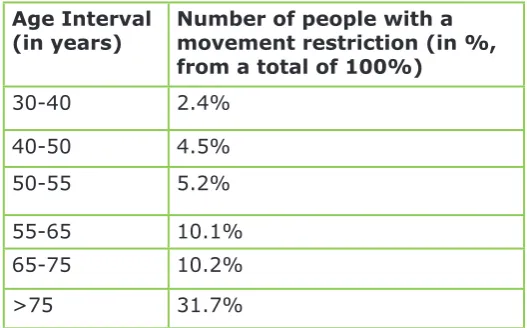
As can be seen in table 4, statistically elderly are the ones in the Netherlands who have the most restrictions in movement. More than 10 per cent of the people aged between 65 and 75, and over 30 per cent for people aged over 75 – and 3 per cent of the total population
(Gezondheid, aandoeningen, beperkingen; persoonskenmerken, 2010-2013, 2015).
4.2. Occupational Therapists
Occupational therapists are an important secondary target audience. An occupational therapist will most likely recommend a riser recliner chair to the (future) user, and will be available during the fitting. Occupational therapists are not that important for the post market surveillance, but will be an important target audience for the promotional video.
Occupational therapy
Occupational therapy is the use of assessment and treatment to develop, recover, or maintain the daily living and work skills of people with a physical, mental, or cognitive disorder. It is a client-centred practice that places emphasis on the progress towards the client’s goals. It focuses Age Interval
(in years) Number of people with a movement restriction (in %, from a total of 100%)
30-40 2.4%
40-50 4.5%
50-55 5.2%
55-65 10.1%
65-75 10.2%
[image:28.595.301.565.304.468.2]>75 31.7%
on adapting the environment, modifying the task, teaching the skill, and educating the client/ family in order to increase participation in and performance of daily activities, particularly those that are meaningful to the client (Occupational therapy, 2016). These daily activities can be in various fields, like activities of daily living (ADL), productivity, leisure, living, and mobility
(Ergotherapie, 2016).
An occupational therapist works systematically through a sequence of actions known as the occupational therapy process. There are several versions of this process, but all include the basic components of evaluation, intervention and outcomes. (Occupational therapy, 2016)
Work areas
The work of occupational therapists can be divided into five areas: Mental health, geriatrics (a specialty that focuses on health care of elderly people), developmental disorders, physical revalidation, and cognitive revalidation.
Occupational therapists are employed by, among other things, hospitals, rehabilitation centres, educational establishments, social welfare institutions such as sheltered workshops, day care centres, nursing or caring homes, residential facilities for people with mental
disabilities or independently in their own practice.
(Ergotherapie, 2016)
Statistics
In 2014 there were 114600 occupational therapists in the United Kingdom. Expected is that the employment will grow 27 per cent from 2014 to 2024 (Occupational Therapists, 2015). Most occupational therapists are between 20 and 30 years old, and about 95 per cent is female (Craik, Chacksfield, & Richards).
In 2014 there were 4142 occupational therapists working in the Netherlands, and the amount increases every year. The average age is 37 years, and 66 per cent is younger than 40 years
old. Only 6.3 per cent of occupational therapists is male. (Hassel & Kenens, 2014)
In Switzerland, there were 22.000 occupational therapists employed in 2015. In Switzerland, a lot more males are employed as an occupational therapist. 23 per cent of the occupational
therapists are male. (Arbeitsmarkt Ergotherapie, Physiotherapie, 2015)
4.3. Stakeholders
Besides importance to analyse the target audience, it is also useful to map all the stakeholders. Every stakeholder has his own interests and roles.
1. The company: Sowecare and its employees. a. The company develops and produces
LeChair. His goals are to develop great products and to make a profit.
b. His interests are an innovative product, a reliable imago, good quality, low
production costs and to be better than his competition.
2. LeChair User: the people that have a reduced mobility and thus cannot sit down or stand up in a normal chair anymore.
a. The goal of the user is to improve its mobility, to make sitting and standing up easier, and thus improve daily living. b. The interests are a reliable chair, easy to
maintain, adjustable to his own needs, and a good quality.
3. The Local Authorities or health insurance: they provide financial aid and deliver LeChair.
a. The goal is to improve the independence of the patient and to reduce costs.
b. The interests are low costs, reusable chairs, good quality, and a short delivery time.
4. The occupational therapists: they prescribe the chair, and accompany during fittings.