http://wrap.warwick.ac.uk
Original citation:
Calvi, L. and Cristea, Alexandra I. (2002) Towards generic adaptive systems : analysis
of a case study. In: De Bra, P. and Brusilovsky, P. and Conejo, R., (eds.) Adaptive
Hypermedia and Adaptive Web-Based Systems. Lecture Notes in Computer Science,
Volume 2347 . Springer-Verlag, pp. 79-89. ISBN 9783540437376
Permanent WRAP url:
http://wrap.warwick.ac.uk/61197
Copyright and reuse:
The Warwick Research Archive Portal (WRAP) makes this work by researchers of the
University of Warwick available open access under the following conditions. Copyright ©
and all moral rights to the version of the paper presented here belong to the individual
author(s) and/or other copyright owners. To the extent reasonable and practicable the
material made available in WRAP has been checked for eligibility before being made
available.
Copies of full items can be used for personal research or study, educational, or not-for
profit purposes without prior permission or charge. Provided that the authors, title and
full bibliographic details are credited, a hyperlink and/or URL is given for the original
metadata page and the content is not changed in any way.
Publisher’s statement:
“© 2002 IEEE. Personal use of this material is permitted. Permission from IEEE must be
obtained for all other uses, in any current or future media, including reprinting
/republishing this material for advertising or promotional purposes, creating new
collective works, for resale or redistribution to servers or lists, or reuse of any
copyrighted component of this work in other works.”
A note on versions:
The version presented here may differ from the published version or, version of record, if
you wish to cite this item you are advised to consult the publisher’s version. Please see
the ‘permanent WRAP url’ above for details on accessing the published version and note
that access may require a subscription.
Towards Generic Adaptive Systems:
Analysis of a Case Study
Licia Calvi and Alexandra Cristea
Information System Department, Technical University Eindhoven, The Netherlands
{a.i.cristea, l.calvi}@tue.nl http://wwwis.win.tue.nl/~{calvi, alex}
Abstract. This paper analyses one of the most well-known general purpose adaptive hypermedia systems, AHA!, and, based on this analysis, make some general observations about adaptive hypermedia systems and some improve-ment suggestions for the AHA! system. We suggest here a concept-based ap-proach to the structuring of adaptive hypermedia systems, as well as an exten-sion of the well-known rule-based overlay method for user-adaptation. This ap-proach is another step towards flexible generic-purpose adaptive hypermedia.
1 Introduction
Adaptation in hypermedia has been traditionally divided [3] into adaptive navigation support (link level adaptation) and adaptive presentation (content level adaptation). However, this division causes problems at a conceptual level, which can lead, from an authoring point of view, to difficulties in the definition of concept relationships.
Defining which links to show to users and which concept granularity to associate to those links presupposes a correlation between concepts and links that is not directly matched onto the simple link visibility function adopted by most adaptive systems. Learning is indeed always situated, it never occurs in the vacuum. In a situated learn-ing scenario, concepts interact with one another to the extent that one concept may assume a meaning on the basis of the context it belongs to, i.e., of the concepts that surround it. The influence of contextualization on the learning process is more evident if we think of the adaptive system as a tool to enhance knowledge acquisition.,
In this view, concepts and links need to be intertwined in order to allow authors to distinguish between the events producing the knowledge (the actions, i.e., add-ing/deleting links or concept fragments, triggering the acquisition of knowledge, what Idinopulos [13] calls causally mediated knowledge) and the inferential process at its basis, i.e., how to construct the ì newî evidence the information that is presented to the user may lead to once clicking on a link (epistemic mediated knowledge [13]).
links, or text/ multimedia content, etc.) is triggered. Actually, some systems (e.g., AHA! [8]) do not make this distinction in their adaptation model totally explicit.
We argue however that, for an adaptive hypermedia author, it is difficult to separate the two notions (links versus concepts; adaptive navigation versus adaptive presenta-tion) and at the same time to carefully design the whole system so that adaptive navi-gation support actions, triggered directly by the adaptive engine, and adaptive presen-tation actions, triggered by in-page (or in-concept/ content) rules, are synchronous.
In the following, we propose a better way to look at the whole authoring problem in adaptive hypermedia. This approach consists of a combination of the concept mapping paradigm to construct the course narrative and of several new adaptation rules. We also show how the two formalisms may be integrated on an example version of AHA!.
2 The AHA! system
AHA! [1] is a well-known system, one of the pioneers of adaptive hypermedia (with its first version developed in 1996/97), which became almost a benchmark for the domain. One of the co-authors was involved in the research and development from the very beginnings [7], while the other is involved in supervising the project towards new developments since the support received from the NL foundation.
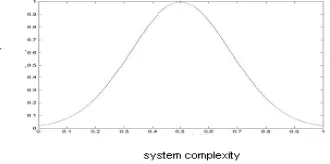
[image:3.612.233.398.414.496.2]The power and popularity of AHA! lies on the fact that it is very simple. However, this simplicity can have drawbacks, as shown in Figure 1: if the system complexity is low, the authoring efficiency cannot be very high ñ unless the author puts a great ef-fort into creative authoring. This is about the point where the AHA! system is now.
Fig. 1. Relation between system complexity and authoring efficiency
In its present form, AHA! offers the following adaptation methods:
1. each page is considered a concept, and is presented or not according to some conditions (on some variables) present in an XML file called ìrequirement listî;
2. the variables changing rules are relatively simple, and are recorded in another XML file called ìgenerate listî;
3. AHA! uses an XML based AHA tag language for conditional fragments within pages.
Items 1-2 permit adaptive navigation support at page level, and item 3 permits adap-tive presentation. Recently, AHA! was extended with the following authoring tools:
1. an editor to connect requirements to pages; 2. an editor for the generate rules;
3. forms to make changes to the user model. The most important one is a form that allows the adaptive hypermedia user to modify knowledge attributes associated to page-concepts.
impor-tance of context in concept meaning attribution (as discussed in Section 3). In particu-lar, the possibility of altering knowledge attributes in the user model seems dangerous if this is not coupled with a redefinition of knowledge within the whole system, with the inevitable consequences that such an action has in determining concept presenta-tion. AHA! now is moving towards database-base multiple-attribute concepts (while still trying to keep complete compatibility with the so fashionable XML format). Next, we will present some suggestions on the conceptual structure and on adaptation tech-niques, also pointing to possible problems that AHA! will have to face and deal with.
3 The concept-mapping paradigm
A quite intuitive classification is to divide the source material into concepts [6], as derived from the concept mapping paradigm [18]. In such a structure, each piece has an independent semantics - in the sense of the semantic Web [21]: starting with low level, atomic concepts, to collections of concepts (composite concepts), that together form a concept hierarchy. Concepts can relate at any level of the hierarchy. The crea-tion of these building bricks is the role of the adaptive hypermedia designer [6].
This hierarchy represents the primitive building blocks of the hypermedia. Putting these building blocks together with different sequences generates different presenta-tions at a relatively high granularity level (concept level). At this level, indeed, we would be only speaking of adaptive navigation support. Normally, adaptive presenta-tion is at a lower, concepts fracpresenta-tions level. A simple example is the construcpresenta-tion of text introduction. This construct can be used together with other introductory frag-ments in an introductory chapter, or dropped at later browsing, etc. However, such a construct has usually no independent meaning. A common solution to this is to divide concepts into sub-concepts, without sometimes caring about the loss of semantics. Such sub-concepts cannot be easily further used (in the context of collaborative au-thoring), because they cannot be semantically annotated, and therefore will not be significant for searching mechanisms.
A more appropriate solution, introduced in [6], is to sub-divide the concept into its attributes. These can be a concept name, alternative contents, fragments, etc. By map-ping the course content on a concept hierarchy, and describing the concepts with a set of attributes, the adaptation has only to deal with concept-level adaptation and attrib-ute adaptation. The advantage is that it can all be performed (and viewed) from a high level, and does not need separate consideration of conditional fragments written within the text, which are more difficult to re-use by other authors. In this way, the content authoring and the adaptative engine rules authoring is clearly separated, mak-ing also automatic checks easier. Adaptation is here only a matter of combinmak-ing con-cept attributes into pages (pieces of information that can be show at a time). Naviga-tion, in this context, is dependent on the presentation format (Figure 2). (e.g., a hand-held device with shorter pages (than the regular browser) will display the ì nextî but-ton more often within the same lesson(check SMIL [22], for presentation issues).
partially implemented a similar structure, the main important difference being that concepts are at the granulation of pages, and can have a single attribute in the current implementation. Constructs within pages (such as conditional fragments) are not con-cept attributes in AHA!, and cannot be independently used with other concon-cepts or concept attributes. New under development versions of AHA! consider multiple at-tributes, and a database structure, that will allow more flexibility ñ including hopefully dropping of the artificial separation of conditional fragments (such as in adaptive presentation) and concept linking (such as in adaptive navigation support.
Fig. 2. A unit X is composed of, e.g., parts of 3 concepts (A, B and C) which have some attrib-utes (attr-k, attr-l, attr-m). The presentation order is represented by directed connections be-tween concept attributes. The unit is formed of 2 chapters that contain (parts of) the concepts. The information in a chapter is presented (by a browser) in pages (which may be shorter than a chapter). ì Nextî buttons at page level are navigation support of presentation nature, and have nothing to do with the user-model related adaptation.
Figure 2 shows how connections are done at concept attribute level. Concept at-tributes can appear more than once, within one or more unit(s), and there is no restric-tion for attribute contents: text, video, audio, flash technology, etc. Next, we will ex-plain the benefits of this simplification by presenting new adaptation types based on it.
4 New Adaptation Rules: How to Augment the Adaptation Engine
Different rules can be conceived to augment the functionality of the adaptation en-gine. As they trigger when some quality measurement is reached, these rules, although apparently retraceable to standard commands in traditional programming languages, can be also viewed as deriving from the Genetic Graph modeled by Goldstein [14]: both paradigms indeed explain how the userís knowledge can evolve during learning.
Most adaptive systems are rule-based. Adaptation is mainly triggered by condi-tional rules, which take the form:
We propose some alternative forms of conditional rules that allow more freedom, both in authoring as well as in studying with this type of environment.
1. A level rule [6]:
IF ENOUGH (<PREREQUISITES>) THEN <ACTION>
where ENOUGH = function of number and quality of prerequisites; true when, e.g., a given number of prerequisites from a PREREQUISITES set is fulfilled. This type of relaxation of the prerequisites is intuitive, in the sense that it allows the author to write simplified rules, instead of writing a great number of complex ones; the idea is derived from game levels.
Example: PREREQUISITES = time_spent; ACTION = ìgo to next levelî
The rule becomes:
IF ENOUGH (time_was spent on current level) THEN ìgo to next levelî Where ENOUGH is defined, e.g., as follows:
ENOUGH (time) = 30 time units;
time (advanced topic) = 10 (time units per topic); ENOUGH (medium topic) = 5 (time units per topic); ENOUGH (beginner topic) = 2 (time units per topic);
2. A temporal rule: a certain action is repeated as long as one or more conditions hold. To capture unbound minimization, we add therefore the WHILE construct:
WHILE <CONDITION> DO <ACTION>
According to the concept mapping paradigm, concepts are not canned but are as-sembled depending on the user model based on their attributes (see Section 3). Therefore this operation requires more than the mere addition/deletion of links. 3. A repetition rule: a certain action (simple / composed) is repeated for a number of
times that is predefined by the author. This rule forces the user to reread a concept (as described in [15]) that is presented to her invariably. In non-educational con-texts, this rule might have a lyrical effect1 ñ such as a refrain in a song.
The temporal rule could be expressed as: FOR <i=1…n> DO <ACTION>
This rule therefore describes the time this action has to last before the reader can move on to another one.
4. An interruption command: the action the user is performing is interrupted (broken) and she is forced to undertake a different one abruptly.
BREAK <ACTION>
The adoption of this rule might be due to lyrical reasons. This is the case in A life set for two [11], where the reader is forced to reach the end of the fiction once she has read a predefined percentage of it In educational contexts, this rule might be used by the author to constraint the userís explorative behavior within predefined boundaries, i.e., those corresponding to the pedagogical rules implemented in the system. In this sense, the implementation of this rule represents an exacerbation of the traditional behavior of AH systems: here, indeed, the user is ì punishedî if she does not stick to the learning pathways provided by the system.
5. A generalization command: the new concept the reader has come across is com-pared with the more general ones it refers to. As a result of this inductive action, the reader is pointed to the related concepts she may be interested in reading. So, the reader has selected a node that describes a certain concept in specific,
1 The lyrical use of repetitions in hyperfiction has given rise to a particular design pattern as
ual terms. The system ì interpretsî this behavior as an interest from the reader about that particular notion and therefore performs an inductive action to point her to the more general ones it refers to.
GENERALIZE (COND, COND1, Ö , CONDn)
6. A specialization command: conversely, if the concept is general, the system deduc-tively points the reader to its more specific instantiations.
SPECIALIZE (COND, COND1, Ö , CONDn)
So, for instance, if a student is reading a page about the concept of the ì Model Readerî in a course about postmodern literature, she could be further pointed to an extract from Calvinoís novel ëSe una notteí, where this notion is exemplified, or to a further theoretical elaboration on the same topic (by, for example, Genette), or, again, to a description of how this idea is realized in hyperfiction (see [4]).
Other commands that could appear are comparison (concept analogy search) and difference ñ both instances of generalization; or duration ñ a rule related to repetition.
The appropriateness of these rules directly depends on the context and on the con-cepts to be modeled. Certainly, educational material may be simpler and more straight-forward to model than a less formal one, like, for instance literary material. In an edu-cational setting, Indeed, the assumption is often to guide the student to evolve from novice to expert in the content domain [5]: this is why the content structure has to be well defined and normally hierarchically organized. Literature, however, exemplifies a case where not only the readerís goal is not clear (contrary to the learning goal of edu-cational systems2) and, as a consequence, the way readers use information to construct
meaning [12], but, also, it enacts a different approach: not a ì guided pullingî ap-proach [19] like in educational systems, but one based on a ì suspension of disbeliev-ingî [9], on the importance of rereading in constructing meaning [15], on suspense, on playing with the reader3 .
Some of these principles would however be effective also in educational systems: we think, for instance, of the notion of rereading (the old say ì repetita iuvantî ); of suspension, of disbelieving as a way of addressing the question of authority and au-thenticity by assigning it to the author of the content; of a sort of suspense in the way information is presented to readers as to encourage and to motivate them to read fur-ther. Moreover, the possibility of expressing these sorts of rules is precisely what guar-antees the general-purpose character of the underlying formalism.
4 Implementing New Rules in the Current AHA!
Following the present syntax used by AHA! to express rules, we could extend it to represent the above mentioned functions in the following way :
2 For an overview of the possible goals and their related reading strategies adopted by readers in
hyperfiction see, for instance, [4].
3 We refer again to the illuminating paper in [12], where they describe one of the first
1. :the level rule: 2. the temporal rule:
<if expr=îenoughî> <enough>
Here definition of enough </enough>
<block>
Here a conditional fragment </block>
<block>
Here an optional alternative frag-ment
</block>
<while expr=ìwrong_search>50î> <block>
Here a conditional fragment </block>
</while>
In this case, a certain action is repeated as long as a certain condition holds. For instance, a warning is repeated that the search per-formed by the user is in the wrong direction, while the system is still performing the search. Another condition then could trigger a service denial response if the above threshold would be passed.
Another example is:
<WHILE expr=ìart>70 and not cul-ture>80î>
<BLOCK>
Here a predefined sequence of events
</BLOCK> <BLOCK>
Here an alternative event (action) </BLOCK>
</WHILE>
3. the repetition rule: 4. the interruption command:
<for expr=îquestion&sm;5î> <block>
Here a conditional fragment </block> </for>
In a particular context, this action may make sense. For the example above, some explana-tion is given as long as the number of ques-tions is not larger than 5. After that, a different strategy has to be taken into consideration ñ such as the suggestion of consulting different material, etc.
<break> <block>
Here a conditional fragment </block>
</break>
5. the generalization command: 6. the specialization command:
<generalize concept=îmyconceptî> Here details of generalization (levels, etc.) </generalize>
Example:
<generalize concept= ìdouble_code_theoryî> Here details of generalization (levels, etc.) </generalize>
Such a rule can be used to jump 1 or more levels in the hierarchy of concepts. Extra processing can be done in the body of the above command, such as giving comments on the level to be visited and the reason why.
<specialize concept=îmyconceptî> Here details of specialization (levels, etc.)
</specialize> Example:
<specialize concept=ìModel Readerî> Here details of specialization (levels, etc.) </specialize>
The application is similar as the above com-mand, with the difference that the direction of the processing in the concept hierarchy is
4 Problems and the need of checking mechanisms
As shown in Figure 1, by increasing the system complexity, the authoring efficiency grows for a while, and then drops. The problem with the current AHA! system is that is it somewhere at the beginning of the slope. Adding to many more features and flexibilities can increase the authoring efficiency for a while, but it is necessary to stop before the down-curve. When authors have to deal with complex unit graphs with many concepts and many concept attributes, it is easy to leave something out by mis-take. AHAM [24] tries to deal with such problems as:
termination ( avoiding of loops) and
confluence (equivalence of order of rule execution - for rule-based adaptation engines). Their suggestion is to use activation graphs (from the static analysis of active data-base rules), therefore constructing the whole graph of possible states that is deter-mined by the concepts, their links, the attributes, their values (especially, initial values and possible ranges ñ to eliminate unnecessary branches and optimize the search tree with the help of constrains) and the rule sets. If such a graph has no loops, the system will always terminate. For confluence, a difficult procedure of checking the possibility of commutation between each rule pair (so their order equivalence) is proposed. AHA! at the moment ensures termination by allowing only monotonic increases of the attributes (per concept), which will be more difficult for the following version with multiple attributes. As for confluence, AHA! doesnít deal with it at all.
Other problems that can appear are:
concepts (or concept fragments) never reached;
rules (or other adaptation mechanisms) that generate attributes with out of range (or
domain) values.
The good news is that the added rules that we have proposed donít require extra checking mechanisms than the ones studied previously in the AHAM context [24]. Basically, loops existing in the regular rules will also be present (and noticeable) in level rules, temporal rules or repetition rules. (and vice-versa). Non-equivalent rules that can be executed at a given time but are not commutable will pose the same prob-lems on regular rules as on the extended set. The extended commands of generaliza-tion and specializageneraliza-tion can be treated the same as regular links (or rules). The interruption command can actually help in breaking infinite loops, or signaling problems, similar to the catch-throw mechanism of exception handling in Java.
The bad news is that such a mechanism can be rather time - and space -consuming. A better way of dealing with this problem is by means of various simplifications and complexity decreasing assumptions. One such simplification could be by means of a belief revision technique to check inconsistencies among knowledge attributes to concepts and the consequent knowledge acquisition problem. Belief revision consists in the introduction of a sort of case-based heuristics that:
1. recalls a previous concept with the same features and its associated attributes;
2. adapts, via some rule-based formalism, the course structure (the narrative) to the current learning scenario;
6 Future directions
With the standardization of the building bricks of adaptive systems (such as LOM [17], Learner model [16]ñ IEEE, LTSC for education, RDF [20], etc.) it becomes more and more feasible to collaborate and share adaptive techniques, technologies but also, system parts, developed adaptive hypermedia presentations, etc. Adaptive and adaptable systems are necessary in education, where learners come with different cultural and knowledge backgrounds, different learning styles, genders, ages, espe-cially in the new context of life-long learning. Such systems are definitely necessary in commerce (and are having a tremendous success in e-commerce, even with extremely simple adaptation techniques ñ such as the well-known Amazon.com technique of suggesting ì buyers who bought this book also bought Ö .î ). But they can have, as we have shown also some other, surprising applications, such as adaptive literature and adaptive art.
It is extremely important to find the right balance between system complexity and authoring efficiency, as shown in figure 1. Extending adaptive systems with extra adaptation rules can be beneficial, especially if these rules can express situations that were not possible (or difficult) to express with the given set of tools/ rules. Moreover, this enhancement makes sense if it does not impose on the checking mechanisms, by increasing dramatically the types of tests an adaptive hypermedia author has to per-form in order to verify his/her output.
As a direction we predict to be rewarding for such checking mechanisms we see the replacement of large state trees with all possible situations to be reached from the existing rule base (or, generally speaking, adaptation procedure) with a visual, dy-namical representation of the processes involved. For example, the effect of a new rule on the rest can be shown on the static (and much smaller) unit link graph, as the propagation of some colored fluid through the graph, etc.
7 Conclusion
The paper has started with a criticism on the widespread practice to distinguish ad-aptation in hypermedia between an adaptive navigation support and an adaptive pres-entation. This criticism is based on the claim that, in this way, authors of adaptive courseware have to artificially separate links from concepts but still to coordinate and tune them in order to provide an adaptation that is conceptually valid and that contrib-utes to a significant knowledge acquisition.
We have suggested a better way to look at the whole authoring problem in adaptive hypermedia. This approach consists in the combination of the concept mapping para-digm to construct the course narrative and of several new adaptation rules. We have highlighted a few new rules that should be integrated into an adaptive authoring shell or toolkit.
to allow it more adaptivity. We claim that this approach is another step towards flexi-ble generic-purpose adaptive hypermedia.
References
1. AHA, Adaptive Hypermedia for All; http://aha.win.tue.nl/
2. Bernstein, M.: Patterns of Hypertext. Ninth ACM Conference on Hypertext (1998) 21-29 3. Brusilovsky, P.: Methods and Techniques of Adaptive Hypermedia. User Modeling and
User-Adapted Interaction 6 (1996) 87-129
4. Calvi, L.: ëLector in rebusí: the Role of the Reader and the Characteristics of Hyperread-ing. Tenth ACM Conference on Hypertext í99. ACM Press (1999) 101-109
5. Calvi, L., De Bra, P.: Using Dynamic Hypertext to Create Multi-Purpose Textbooks. In T. M¸ ldner and T.C. Reeves (eds.), ED-MEDIAí97, AACE Press (1997), 130-135
6. Cristea, A., Okamoto, T.: MyEnglishTeacher ñ A WWW System for Academic English Teaching ICCE 2000, Taipei, Taiwan (2000)
7. De Bra, P., Calvi, L.: AHA! An open Adaptive Hypermedia Architecture. The New Re-view of Hypermedia and Multimedia (1998) 115-139
8. De Bra, P., Ruiter, J.P.: AHA! Adaptive Hypermedia for All. WebNet (2001) 262-268 9. Eco, U.: Six Walks in the Fictional Woods. Harvard University Press (1994) 10. Goldman, A.: Telerobotic Knowledge: A Reliabilist Approach. In K. Goldberg (ed.). The
Robot in the Garden. Telerobotics and Telepistemology in the Age of the Internet. MIT Press (2000) 126-142
11. Kendall, R.: A Life Set For Two. Eastgate Systems, Watertown, MA (1996) 12. Kendall, R., RÈty, JH.: Toward an Organic Hypertext. Hypertext í00. (2000) 161-170 13. Idinopulos, M.: Telepistemology, Mediation, and the Design of Transparent Interfaces. In
K. Goldberg (ed.). The Robot in the Garden. Telerobotics and Telepistemology in the Age of the Internet. MIT Press (2000) 312-329
14. Goldstein, I.: The genetic graph: a representation for the evolution of procedural knowledge. In D. Sleeman and J.S. Brown (eds, Intelligent Tutoring Systems. Academic Press, 1982. 15. Joyce, M.: Nonce Upon Some Times: Rereading Hypertext Fictions. Modern Fiction
Studies 43(3) (1997) 579-597
16. Learner Model. IEEE Learning Technology Standards Committee (LTSC); http://ltsc.ieee.org/wg2/index.html
17. LOM (Learner Object Metadata). IEEE Learning Technology Standards Committee (LTSC); http://ltsc.ieee.org/wg12/index.html
18. Novak, J. D.: Clarify with concept maps. The Science Teacher, 58(7), (1991) 45-49 19. Perrin, M.: What Cognitive Science Tells us About the Use of New Technologies. Invited
Talk given at the Conference on Languages for Specific Purposes and Academic Purposes: Integrating Theory into Practice. Dublin, 6-8 March (1998)
20. RDF (Resource description framework) standard: http://www.w3.org/RDF/ 21. Semantic Web: http://www.w3.org/2001/sw/
22. SMIL, W3C standard, http://www.w3.org/AudioVideo/
23. W3C Recommendation: Authoring Tool Accessibility Guidelines 1.0 (3 February 2000); http://www.w3.org/TR/ATAG10/