A Study of Vote Verification Technologies
Part I: Technical Study
Prepared for the Maryland State Board of Elections
February 2006
National Center for the Study of Elections
of the
Maryland Institute for Policy Analysis & Research
University of Maryland, Baltimore County
A Study of Vote Verification Technologies
Part I: Technical Study
Prepared for the Maryland State Board of Elections
Principal Investigator: Donald F. Norris Co-principal Investigator: Andrew Sears Co-principal Investigator: Charles Nicholas
Editor: Anne V. Roland
National Center for the Study of Elections of the Maryland Institute for Policy Analysis and Research
University of Maryland, Baltimore County February 2006
Faculty Researchers Aryya Gangopadhyay Stephen H. Holden George Karabatis A. Gunes Koru Chris M. Law Donald F. Norris John Pinkston Andrew Sears Alan T. Sherman Dongsong Zhang
Graduate Student Assistants Markus Dale
Kevin Fisher
Rosa Heckle Kenny Khoo Evan Perlman
Mohammad Ammar Sheikh Tonya Zimmerman
Undergraduate Student Assistant Chiedozie (Fred) Unachukwu
A Study of Vote Verification Technologies
Part I: Technical Study
Prepared for the Maryland State Board of Elections
Scholars at UMBC, working through the National Center for the Study of Elections of the Maryland Institute for Policy Analysis and Research, conducted a technical review of vote verification systems for the Maryland State Board of Elections (SBE). Initially, the review was supposed to include up to seven systems from the following organizations and individuals: VoteHere (Sentinel); SCYTL (Pnyx.DRE); Prof. Ted Selker, MIT (VVAATT); Diebold’s VVPAT; Democracy Systems, Inc. (VoteGuard); IP.Com; and Avante. We determined that IP.Com did not represent a true vote verification technology, and Avante and Democracy Systems, Inc., declined to participate in the study. We also examined the SBE’s procedures for “parallel testing” of the Diebold AccuVote-TS (touch screen) voting system in use in Maryland and used this as a baseline against which to evaluate the vote verification systems.
In conducting our analysis, we received demonstrations from the vendors, and we
examined the vendors’ hardware, software, and documentation to determine if their products did what their vendors claim that they do. That is, do they enable voters who use the touch screen voting system in use in the State of Maryland to verify that their votes were cast as intended, recorded as cast, and reported as recorded, and do they permit post-election auditing? We examined such issues as:
implementation
impact on current state voting processes and procedures impact on voting
functional completeness
security against fraud, attack and failure privacy
reliability accessibility
We also compared these systems to one another and to the state’s current voting system and procedures, which includes the SBE’s use of parallel testing around that system.
We note several specific concerns about these products, including the following:
1. Only one of these products, the Diebold VVPAT, provides for a pure paper solution. 2. All of these products would impose significant one-time implementation and
on-going management burdens (cost, effort, security, etc.) on the SBE and the state’s 24 Local Boards of Elections.
3. All would increase the complexity of the act of voting. 4. All would increase the amount of time required to vote.
5. All would at least double the amount of effort required to administer elections. 6. All would adversely affect voter privacy.
7. These products would have both potentially positive and potentially negative impacts on security and election integrity.
8. None can be considered as fully accessible to persons with disabilities and none of them fully meets the accessibility standards of Section 508 of the Rehabilitation Act. 9. Integration of these systems will require the cooperation of Diebold to develop and/or
ensure the viability of a working interface between the vendors’ products and the Diebold system.
Our principal findings are, first, that each of the systems we examined may at some point provide a degree of vote verification beyond what is available through the Diebold System as currently implemented. But this is true only if the system were fully developed, fully integrated with the Diebold DREs and effectively implemented.
Our secondprincipal finding is that none of these systems is yet a fully developed, commercially ready product. None of these products had been used in an election in the U.S. (SCYTL has been used outside the U.S. and a different version of the Diebold VVPAT has been used in the U.S.).
Were the State of Maryland to decide to acquire any of these products, the vendor would have to invest additional money and effort to produce an actual product and make the product ready for use in actual elections. Indeed, nearly all of these vendors are looking for some level of external support to fully develop and commercialize their products.
In our expert opinion, it is a bad idea for governments to buy products that are not functionally complete and that either do not have positive records in the market place or that cannot be fully and effectively tested in simulated elections to ascertain their performance characteristics.
Therefore, based on the evidence from this study, we cannot recommend that the State of Maryland adopt any of the vote verification products that we examined at this time.
We would note that no election system – regardless of the technology involved – is foolproof nor is any election system completely immune or secure from fraud and attack. Indeed, there is a long and inglorious history of election fraud in the U.S. that involves nearly all methods and technologies of voting, especially paper voting systems. Moreover, it would be prohibitively costly to make any election totally secure.
Finally, regardless of what the State of Maryland does in the near term with regard to vote verification and vote verification systems, in future elections, it should expand the use of parallel testing. The state should also undertake a full-scale assessment of the security
procedures and practices around its current voting system. We say this even with the knowledge that current security procedures are reasonable and prudent and that the SBE’s system of parallel testing, as currently implemented, reduces considerably the possibility of fraud and attack on the system.
Acknowledgements
To begin with, the study team wishes to thank Ms. Linda Lamone, State Administrator of Elections, and her staff, particularly Ross Goldstein, Deputy Administrator and Nikki Trella, Election Reform Director, for their assistance during the course of this study. They worked very closely with us throughout the study. In particular, they performed an important liaison function between the study team and the vendors, encouraged vendors to participate, provided
information to the study team about a variety of issues around voting in Maryland and the roles and functions of the SBE and the LBEs, provided briefings and demonstrations and written documentation about the state’s current voting policies and procedures, and, finally, provided useful feedback on our draft report.
We also wish to express our appreciation to Ms. Anne Roland (MIPAR and Public Policy) who edited this report and to Ms. Gay Warshaw (MIPAR) who typed and formatted it. They took the work of a group of disparate academics and made it readable and presentable.
As part of this study, all of the UMBC faulty investigators and research assistants (the study team) attended vendor demonstrations, briefings by SBE staff and regular study team meetings. They received and analyzed documents provided by vendors, SBE staff, and they reviewed scholarly literature relevant to this project. In addition, individual team members had specific responsibilities for various aspects of the study, including lead responsibility for initial drafts of sections of the draft and final project reports. The faculty investigators also directed and guided the research assistants in their assignments throughout the project. Finally, all of the faculty investigators and at least two of the graduate research assistants critically reviewed and provided feedback to the principal investigator on the draft and final reports. In all respects, this report is the product of the joint efforts of the entire study team.
Faculty investigators’ responsibilities:
Prof. Norris, the project principal investigator, was in charge of overall project management. With Prof. Holden, he took lead responsibility for the report sections on implementation and impact on elections. He also guided research assistants in examining the literature around electronic voting. Finally, he compiled and edited the draft and final reports from materials provided by all of the team members.
Prof. Nicholas, co-principal investigator, participated in project management activities and in discussion and analysis of various aspects of the project and reviewed and commented on drafts of the report.
Prof. Sears, co-principal investigator, participated in project management activities and, with Mr. Law, conducted the accessibility analyses of each of the vote verification technologies.
Prof. Gangopadhyay, in conjunction with Prof. Karabatis, conducted the data management analysis for each of the vote verification systems.
Prof. Holden assisted Prof. Norris in project management and, with Prof. Norris, took lead responsibility for the report sections on implementation and impact on elections. Prof. Holden also developed description of the SBE’s procedures for parallel testing.
Prof. Karabatis, in conjunction with Prof. Gangopadhyay, conducted the data management analysis for each of the vote verification technologies in the study.
Prof. Koru conducted the functionality testing of all of the systems, except parallel testing, and wrote the descriptions of the products from Prof. Ted Selker and SCYTL.
Mr. Law, in conjunction with Prof. Sears, conducted the accessibility analyses of each of the vote verification technologies.
Prof. Pinkston participated in discussion and analysis of various aspects of the project, particularly security procedures, and reviewed and provided comments on drafts of the report, particularly on the security-related matters.
Prof. Sherman was responsible for the analyses of election integrity (security) and privacy of each of the technologies and also wrote the description of the VoteHere product.
Prof. Zhang had responsibility for analysis and description of the VoteGuard product from Democracy Systems, Inc. However, because Democracy Systems, Inc., did not participate in this study, his work was not included herein. Additionally, Prof. Zhang reviewed and
provided comments on drafts of the report. Graduate Research Assistants
Markus Dale (Computer Science and Electrical Engineering) performed a static analysis of the source code of VoteHere reference library.
Kevin Fisher (Computer Science and Electrical Engineering) participated in discussions about the security analyses of the verification systems and created the figure showing the Voter Experience for VoteHere.
Rosa Heckle (Department of Information Systems) assisted in the literature review and analysis of privacy risks for vote verification systems.
Kenny Koo (Department of Information Systems) assisted in studying the security threats and countermeasures of DREs using voter verifiable paper trails.
Evan Perlman and Tonya Zimmerman (MIPAR and Public Policy) conducted a search for and review of literature on the subject of electronic voting. They drafted the sections in the report about Electronic Voting in the U.S., HAVA, and Issues around Electronic Voting. They also reviewed and provided comments on the draft project report.
Mohammad Ammar Sheik (Department of Information Systems) assisted in testing the voting verification systems.
Undergraduate Research Assistant
Chiedozie (Fred) Unachukwu (Department of Information Systems) assisted in the review for electronic voting literature and in particular, electronic voting risks.
A Study of Vote Verification Technologies
Part I: Technical Study
Prepared for the Maryland State Board of Elections Table of Contents
Introduction...1
Scope of Work...2
Background...4
Electronic Voting in the U.S....4
Help America Vote Act (HAVA)...4
Issues Around Electronic Voting...5
Maryland’s Voting System...6
Election Administration in Maryland...8
Study Methodology and Evaluation Criteria...9
Implementation...9
Impact on Current Election Procedures and on Voters...10
Data Management...13
Reliability...16
Functional Completeness...17
Accessibility...18
Security and Privacy...19
Summary Evaluation Criteria...20
Evaluation Metrics...21
Limitations of the Study...22
Vote Verification Technologies...23
Parallel Testing...23
VVAATT...25
Pnyx.DRE...26
VVPAT...28
VoteHere...29
Evaluation of Vote Verification Technologies...34
Parallel Testing...35
VVAATT...38
Pnyx.DRE...41
VVPAT...44
VoteHere...48
Conclusions and Recommendations...54
Parallel Testing...55 VVAATT...56 Pnyx.DRE...56 VVPAT...57 VoteHere...58 Additional Considerations...58
Findings and Recommendations...59
References...62
About UMBC...65
About MIPAR...65
About NCSE...65
A Study of Vote Verification Technologies
Part I: Technical Study
Prepared for the Maryland State Board of Elections
Introduction
On August 19, 2005, the University of Maryland, Baltimore County (UMBC) on behalf of the University’s Maryland Institute for Policy Analysis and Research (MIPAR) entered into a memorandum of understanding (MOU) with the State Administrator of Elections to provide a technical analysis of commercially developed vote verification technologies. This document constitutes the final report of that analysis.1 This report constitutes Part 1, Technical Study, of a two part study conducted about vote verification technologies for the State Board of Elections. Part 2, Usability Study, was conducted by researchers at the University of Maryland, College Park (Herrnson, et al., 2006).
We conducted this study at a time when concerns about electronic voting, specifically, voting on Direct Recording Electronic systems or DREs – otherwise known as touch screen voting systems – and independent verification of voting on DREs, have become a focus of national attention. Over the past year or so, a nationwide rush to adopt a solution to the “problem” of touch screen voting appears to have occurred. Twenty-six or more states, for example, have adopted or appear to be in the process of adopting requirements for the inclusion of independent verification systems, nearly all based on the voter verified paper audit trail (VVPAT), for touch screen voting systems. The difficulty is that, at the moment, neither the problem (if there is one) of touch screen voting nor the solution (independent verification systems) is well understood.
The issue almost always raised is whether the touch screen voting systems are reliable. Do they record, store, and count each voter’s vote as the voter voted it? Can they be corrupted? Can they be effectively audited?
The apparent favored solution is to require VVPATs to be attached to DREs. However, this option is even less well understood in terms of what it will accomplish in terms of vote verification and auditing, and what its negative consequences might be. Moreover, there are alternatives beyond VVPAT that may offer better solutions, and we discuss some of these alternatives in this report.
The reason that neither the alleged problems nor the apparent solutions are well understood is that no one has conducted the kind of analysis of independent vote verification systems that we have undertaken in this study. Indeed, previous studies have examined touch
1
The State Administrator of Elections contracted with us for this study. However, we conducted the study completely independently. No one from the SBE influenced our research questions or objectives, methodologies, analytical techniques, findings, conclusions or recommendations although the staff of the SBE were given an opportunity to review and comment on the draft. The results of this study are those of the researchers alone. It is an independent scientific work.
screen systems and/or vote verification systems in isolation. In this study, we examine vote verification systems within the context of the processes and the conduct of elections. This study, therefore, should be helpful in answering some of the questions around touch screen voting and vote verification. The information in this report is intended to help the citizens of Maryland, members of the General Assembly, this Governor’s Commission on the Administration of Elections, the State Board of Elections and the Governor in coming to informed decisions about how to proceed with the administration of elections in Maryland.
Our primary emphasis in this study of vote verification systems was to determine how effective each vote verification system is as a means for: (1) independent verification of the vote recorded on the Diebold AccuVote-TS voting system (the voting system used in the state of Maryland); and (2) creating an acceptable audit trail.
Scope of Work This study includes:
1. A technical review of each of the participating vote verification systems specified by the Administrator of the SBE (see below). This review involved examination and testing of all hardware, software, documentation, and any and all other elements necessary for the verification systems to produce independent verification under actual election conditions; 2. A comparative risk analysis that examined how each vote verification system performed
against selected review criteria relative to each other and relative to the Diebold AccuVote-TS voting system with no modification;
3. An analysis of the susceptibility to attack, fraud or failure of each of the vote verification systems;
4. An assessment of the accessibility (e.g., for individuals with disabilities, the elderly, etc.) of each vote verification system (independently, researchers at the Center for Politics and Citizenship at the University of Maryland, College Park conducted a usability analysis); 5. An assessment of the magnitude of effort and cost to implement and integrate each vote
verification system with the current voting system and maintain the integrated system (e.g., on-going maintenance and support, cost to operate per election, etc.); and 6. An estimation of the impact, if any, of each vote verification system on the ability of
voters to vote in the state’s elections, on the State’s current election procedures and on the ability of election officials, election judges and volunteers to perform their jobs in actual elections and to adapt, manage, and effectively use these systems.
For purposes of this study, the following terms have the meanings indicated.
Auditing means the ability, through an alternative means and after the election is conducted, to establish that the votes recorded by the Diebold AccuVote-TS voting system correspond to the votes recorded by the independent vote verification system.
Vote verification means the ability to independently confirm the accuracy of the Diebold AccuVote-TS voting system.
The systems for possible inclusion in this study were those from the following organizations and individuals: VoteHere (Sentinel); SCYTL (Pnyx.DRE); Prof. Ted Selker’s Voter Verified Audio Audit Transcript Trail (VVAATT); Diebold VVPAT; Democracy Systems, Inc. (VoteGuard); IP.Com; and Avante. We also agreed to review the SBE’s policies and procedures, including security procedures, around the Diebold touch screen voting system and the SBE’s procedure of “parallel testing” of the Diebold AccuVote-TS voting system.2 We used the Diebold touch screen voting system as currently implemented in Maryland as a baseline against which to evaluate the vote verification systems.
We determined that IP.Com did not meet the criteria of an independent vote verification system and, thus, did not include it in the study. The staff of the SBE contacted Avante, which indicated that it did not want to participate in the study.
Democracy Systems, Inc. (DSI) did not provide its system (VoteGuard) for inclusion in the study. UMBC signed non-disclosure agreements with each of the other vote verification system vendors to have access to their systems. However, DSI required that UMBC also sign a non-compete agreement in order to provide access its system. Non-compete agreements are against UMBC policy. Therefore we were unable to include DSI’s VoteGuard system in this study.3
In the MOU, we agreed to provide the SBE with a draft report of our findings no later than December 15, 2005, and a final report within 30 days of receiving written comments on the draft from the SBE.4 However, because there were considerable delays in our receiving access to the vendors’ systems, we were unable to meet this deadline. In fact, we gained access to two of the five systems very late in the fall of 2005. We received access to the VoteHere system on November 16, 2005, and we received access to the final vendor’s system (Diebold) on December 20, 2005.
2
In conducting this review, we received briefings and a demonstration from SBE staff as well as written documentation. As extensive as this review was, it was not a full security analysis of the state’s election system.
3
As of a meeting between the president of DSI and UMBC officials on January 11, 2006, a compromise appeared to have been reached under which DSI will provide UMBC with access to the VoteGuard system for the purpose of testing it in the same manner as we tested the technologies reported herein (not including source code). However, this agreement occurred too late for VoteGuard to be included in this report. In the future, should we undertake an analysis of additional vote verification technologies, we intend to include VoteGuard in that study.
4
We asked for this review because we wanted to provide the staff of the SBE the ability to read the report and provide comments on it to us before we completed the final report. However, we made it clear to the SBE, and the SBE readily agreed, that we retained full substantive and editorial control over the report.
Background Electronic Voting in the U.S.
Voting methods in American elections have been called into serious question in recent years, specifically as a result of problems that occurred in the 2000 election in Florida (Cranor, 2003; Wang, 2004). This election dramatically brought to the attention of the public the possibility of errors with punch card voting systems. Punch card systems exhibited the now familiar problems of hanging chads and misaligned ballots (Beiler, 1989a; Cranor, 2003). Several older voting technologies (punch cards, optical scans and lever systems) have also been prone to undervoting (not voting in a race), overvoting (voting multiple times for one race) and misvoting (Cranor, 2003). One study noted a particular problem in the 1988 election in Florida, which had large numbers of no-votes (Beiler, 1989b). This was blamed on both placement of the race on the ballot and improper recording of ballots (Beiler, 1989b). Other studies have
indicated that punch cards have the worst record of all voting systems in the last four presidential elections, whereas lever machines have the worst record in Senate and gubernatorial elections over the last three election cycles as regards unmarked, uncounted, or spoiled ballots (Cal Tech/MIT, 2001). According to this same study, touch screen voting systems have the second worst record of unmarked, uncounted and spoiled ballots in presidential, Senate and
gubernatorial elections (Cal Tech/MIT, 2001).
Due to these reported problems with other systems and as a result of the issues
surrounding the 2000 presidential election in Florida, there has been movement toward electronic or touch screen voting (Cranor, 2003). According to one study, the proportion of voters using electronic systems is expected to have increased from 13 to 29 percent between 2000 and 2004 (Wang, 2004, and Election Data Services, 2004). Touch screen voting systems are also popular because it is felt that the systems are easy to use, more accessible to persons with disabilities, better able to accommodate multiple languages, prevent overvoting, provide quick results (with less human error), and eliminate costs associated with printing ballots (Burmester and Magkos, 2003; Wang, 2004). A principal concern about touch screen voting systems is whether the underlying software of these systems can be trusted, especially whether the software can be trusted to record and count votes as cast by voters.
Help America Vote Act (HAVA)
The election controversies of November 2000 also prompted a response at the federal level. In 2002, Congress passed the Help America Vote Act (HAVA). This legislation attempted to bring voting procedures, which until that point had been the responsibility of individual state governments, under the purview of the federal government, (Kurlantzick, 2004).
The bill was designed to combat a host of issues plaguing the voting process. Through a mix of new guidelines, requirements, and federal programs and funding, this legislation provides assistance for states as they update and improve their voting processes. Among other provisions, it requires states to upgrade away from the older voting systems, in this case mainly away from lever and punch card systems, and toward new touch screen and optical scan systems (Holt, 2005).
HAVA also provided for the formation of the Election Assistance Commission (EAC), a federal body designed to promote the goals of the 2002 bill. Among other duties, the EAC was charged with helping the states successfully make the upgrade to new voting technology. The EAC would offer administrative and technical support, as well as provide grants to develop and test new election systems. It would also develop a program to test, certify and decertify election systems as they were introduced (EAC, 2005).
What raised the concerns of critics of touch screen voting in this instance was that HAVA does not provide guidelines for states regarding performance tests on the newly approved voting technologies (especially touch screen voting systems), nor does it contain a requirement for any sort of independent verification systems (Kurlantzick, 2004; Holt, 2005; Pynchon, 2005).
There are also problems with the implementation timetable as far as providing access for disabled voters. Although the law did not go into effect until January 1, 2006, some voting system vendors are selling systems now, to be used for the foreseeable future, which do not meet the access standards of HAVA (Pynchon, 2005).
To address these criticisms, Representative Rush Holt (D-NJ) introduced the Voter Confidence and Increased Accessibility Act (HR 2239 in the 108th Congress, HR 550 in the 109th Congress). According to Representative Holt’s web site, the bill is chiefly concerned with a requirement that all voting machines produce a verifiable paper trail and a more general
requirement for an “accessible voter-verification method.” Finally, it addresses concerns raised by some security experts who warn of hacks and attacks if a voting system is ever connected to the Internet. Holt’s bill prohibits such systems from being connected to the Internet or being attached to any non-secure communication device, (Holt, 2005). HR 550 has been relegated to a subcommittee, and it is unknown whether or how soon it will emerge, but it is important to note the bill because it encapsulates many of the concerns that lawmakers have about touch screen voting and limitations in HAVA’s scope.
Issues Around Electronic Voting
Several potential or actual problems have been identified around touch screen voting. First, problems exist on an individual level that might affect elections. These problems include voter trust in the system, readability of the touch screen systems, problems with smart cards (which prevent persons from voting more than once), issues around instructions and assistance to voters, ability to write in candidates, issues concerning the ability to administer the system, and privacy (Herrnson, et al., 2005; Rubin, et al., 2005). An additional, and to many a greater concern involves the security of touch screen systems. Security issues including malicious programming, unintentional but nevertheless bad programming, equipment errors, system
malfunctions including crashes, the inability to independently recount votes, and issues about the correct capture of votes (Burmester and Magkos, 2003; Cranor, 2003; Hall and Alvarez, 2004; Machlis, 2004; Rubin, et al., 2005; Selker, 2004; Wang, 2004; The Economist, 2002). To correct these security issues, calls have been made for open source coding (which would allow for independent examination of programming of electronic voting systems), voter verifiable paper trails (which could also be used for auditing), and active testing programs of the equipment and
software (Beiler, 1989a; Brunvard, et al, 2004; Selker, 2004; Wang, 2004; The Economist, 2002).
Finally, the concerns about touch screen voting have propelled a number of states to enact legislation regarding independent verification. Twenty-six (26) states have adopted legislation requiring some form of paper ballot or paper trail to be used in their voting systems (see Appendix A: “Paper Solution States”).
Maryland’s Voting System5
In 2001, the Special Committee on Voting Systems and Election Procedures recommended to the Governor and General Assembly that a statewide voting system be implemented in Maryland. Subsequently, House Bill 1457 (2001) which required a statewide, uniform voting system for polling place voting and a uniform system for absentee voting was introduced into the General Assembly and adopted. The law did not specify the type of voting system, just that there be a uniform system. After the law became effective, and as the result of an open, competitive bid process, the State Board of Elections selected Diebold Election
Systems, Inc., to provide a DRE voting system for polling place voting and an optical scan voting system for absentee voting.
This voting system was implemented in phases. Phase I counties (Allegany, Dorchester, Montgomery and Prince George's Counties) implemented the voting system for the 2002
elections. These counties were selected for Phase I because they used the oldest voting systems in the State: punch card for Montgomery County and lever machines for the others. The contract for Phase I was signed in 2002.
The Phase II contract was signed in 2003, and Phase II counties (which include the remaining counties but not Baltimore City) implemented for 2004 elections. Phase III, which includes Baltimore City, will be implemented for the 2006 elections. (Two other counties, Cecil and Caroline Counties, were eligible to implement in Phase III, but chose to implement in Phase II.) With the completion of Phase III, Maryland will have almost 20,000 DRE voting units.
Table 1 presents the costs of the implementation of the touch screen voting system in Maryland. It shows that by FY 2009, a total of about $95.5 million will have been spent by state government on this system. Of that amount, about $45.6 million will have been spent on
hardware and maintenance and almost $50 million on a variety of necessary support services including security measures, warehousing, transportation, voter outreach, support services, technical support, testing of various kinds, and project management. This amounts to a state government cost of almost $2.82 for every Maryland resident (5.6 million) and just over $5.10 for every Maryland registered voter (3.1 million) per year for each of the six years. This cost includes providing every jurisdiction in the state with all of the equipment needed to conduct an election as well as some level of technical assistance and voter outreach.
5
Table 1: Maryland Touch Screen Voting System Costs6
STATEWIDE COSTS*
FY03 FY04 FY05 FY06 FY07 FY08 FY09 Total
Hardware Payments 2,131,933 5,034,100 9,654,582 8,142,292 6,412,403 6,411,015 6,409,343 44,195,668 Maintenance 0 0 449,880 1,509,318 1,628,890 828,455 4,416,543 Warehouse 237,797 237,215 348,166 321,996 318,874 316,674 1,780,722 Transportation 280,776 280,776 177,198 775,126 517,695 355,177 2,386,748 All Training (SBE/LBE/Judges) 341,271 56,271 47,877 183,624 111,385 88,633 829,061 Absentee Ballot Printing 72,023 72,023 178,222 214,462 116,476 110,428 763,634 Voter Outreach 1,000,000 354,394 500,000 444,120 50,000 50,000 2,398,514 Support Services 1,064,140 1,119,422 1,757,665 2,018,814 1,696,040 2,110,978 9,767,059 Total Services 914,704 2,996,007 2,120,101 3,009,128 3,958,142 2,810,470 3,031,890 18,840,442 Technical Support 1,497,263 1,529,513 3,520,456 5,207,019 3,607,748 1,529,145 16,891,144 Acceptance Testing 491,400 0 163,830 75,000 75,000 75,000 880,230 IV&V 380,000 191,673 1,000,000 1,200,000 600,000 500,000 3,871,673 Set-up/Breakdown 182,000 182,000 0 545,200 326,601 239,701 1,475,502 DRE Ballot Preparation 37,950 37,950 0 105,800 47,050 43,550 272,300 Project Mgmt 733,688 816,515 800,000 750,000 750,000 750,000 4,600,203 Total Optional Services 3,322,301 2,757,651 5,484,286 7,883,019 5,406,399 3,137,396 27,991,052
Total 3,046,637 11,352,408 14,532,334 17,085,586 19,762,882 16,256,774 13,407,084 95,443,705
*This chart assumes that the State continues to use the voting system without any additional verification methodology.
Notes:
1. Hardware total for Phase III which begins in FY2006 totals $7,570,750, financed over five years, estimated at $1.9 million/year.
2. FY2003, 2004, and 2005 were not altered since they occurred in the past.
3. Voter Outreach: This chart assumes that SBE will provide the brochure the LBEs pay for printing/distribution costs as needed. $50,000 is included for misc unexpected costs.
4. Diebold currently provides all services except for Project Mgmt and IV&V and Acceptance Testing (which are all provided through separate vendors). The Diebold contract is through half of FY09; the services will be rebid at that point.
5. If the 2006 primary is moved forward, the bulk of the training costs will occur in FY06 rather than FY07.
Election Administration in Maryland
The State of Maryland has a dual election system in which the SBE and the local boards of election (LBEs) share authority and responsibility for administering elections in the state. The following description was provided by the staff of the SBE (January 2006).
The State Board of Elections is a five-member body charged with managing and supervising elections in the State and ensuring compliance with election laws. With the advice and consent of the State Senate, the Governor appoints the members to staggered four-year terms. No more than three members may be from the same political party. The law for board membership requires no specific knowledge or training. The Governor may remove a member for incompetence, misconduct, or other good cause. A member of the SBE may not serve more than three consecutive terms.
The State Board appoints the State Administrator who may be removed for
incompetence, misconduct, or other good cause by a vote of not fewer than four members. As the State’s chief election official, the State Administrator is charged with oversight of the State Board functions as well as with supervising the operations of the local boards.
The primary responsibilities of the State Board and the Administrator are: Manage and supervise elections in the State
Maintain a central voter registration database Oversee the local election management system
Maintain an electronic campaign finance reporting system
Maintain a records management program for State and local election records Direct, support, monitor, and evaluate the activities of each local board office Develop a program of instruction for election judges and oversee its
implementation locally
Select and certify a statewide voting system, in consultation with local boards Adopt regulations/uniform guidelines governing voter petitions, canvassing of
the vote, recount procedures, and absentee voting Conduct biennial meetings with local boards and staff
Maintain a web site, including prompt and accurate posting of election results Each jurisdiction in Maryland (23 counties and Baltimore City) has a local board of elections (LBE). Under Maryland’s Election Law Article, the local board and its staff are subject to the direction and authority of the State Board and are accountable to the State Board for its actions in implementing the requirements of Maryland’s election law.
The LBEs generally consists of three regular members and two substitute
members. Two regular members and one substitute member are registered voters of the same political party as the Governor of Maryland, and one regular member and one substitute member are registered voters of the other principal political party. These
Caroline, Dorchester, and Kent Counties, for which confirmation is made with the Maryland House of Delegates).
The local boards are responsible for overseeing the conduct of all elections held in its county and ensuring that the election process is conducted in an open, convenient, and impartial manner. The local boards also have the authority to appoint an election director and counsel, serve as the local board of canvassers and certify the results of each election conducted by the local board, establish precinct boundaries, determine polling places, assign voters to precincts, and provide information about voter registration and elections.
The election director in each jurisdiction manages the operations and supervises the staff of the local board, trains election judges, provides notice to voters about voter registration and elections, follows procedures issued by the State Board relating all aspects of election administration, verifies petitions, and conducts a canvass for each election conducted by the local board.
Study Methodology and Evaluation Criteria
In conducting this study, we examined both non-technical and technical aspects of the vote verification technologies. The non-technical aspects included implementation of these systems within the framework of the current Maryland election policies and
procedures and the impact of the vote verification technologies on current Maryland election procedures and on voters and voting in Maryland elections. The technical aspects included: data management, reliability, accessibility, election integrity (security) and privacy. We describe our study methodologies and evaluation criteria below.
Implementation
Assessing implementation impacts from adding vote verification systems to the existing base of the Diebold Accuvote TS units is difficult for several reasons. First, the lack of maturity of many of the vote verification products makes it difficult to estimate impacts, especially one-time and on-going costs. Because none of these products is available in the U.S. market at this time as functionally complete solutions, pricing discussions between study team members and vendor representatives often devolved into oral commitments by the vendors “to be competitive.” Second, several of the verification systems vendors have requested access to the proprietary software that runs the Diebold Accuvote TS to estimate integration costs. Understandably, since Diebold has its own solution for providing vote verification, it has little business incentive to cooperate with its competitors to integrate their verification solutions with Diebold’s DREs. As a result, cost estimates for integration are speculative due to lack of data.
This analysis relies on data from a variety of sources. In response to requests from the SBE prior to the commencement of this study and subsequent requests for data from the study team, vote verification system vendors provided data on estimated costs of implementation. Vendors also met with the study team on at least one occasion to demonstrate their vote verification solution. There are also some cost estimates from
other organizations, most notably the Asian Pacific American Legal Center, which
provided an estimate of the impact of voter verified paper trail submitted to the California Assembly in 2004. In some cases, the study team was left to make assumptions about how the state would implement a verification solution since the vendor did not have a “standard” configuration. Any state, including Maryland, might make different
configuration decisions based on on-going risk analyses, changes to policy and process, and availability of resources to mitigate identified risks.
We gave the products rankings between 1 and 5, with 5 being the easiest and least costly to implement within current Maryland election technologies and procedures, and 1 being the most difficult and most costly.
Impact on Current Election Procedures and on Voters
Here, we examined the ways in which adding vote verification technologies to the current Maryland system of elections would affect that system and could affect voters, exclusive of usability and accessibility (which are addressed elsewhere). As noted below, the impacts are numerous and some are potentially significant. Moreover, as we discuss with respect to each verification technology, some have more and more serious impacts than others.
The addition of any vote verification system or technology to the Diebold AccuVote-TS system that Maryland currently uses in elections will at least double the complexity of the act of voting and the administration of elections. Some vote verification systems will add even greater complexity.
This complexity will affect voters who, if they so choose (or may be required), will have to review (and, in some cases, verify) the results of the votes that they cast on the touch screen as displayed on the vote verification equipment and also verify their votes on the touch screen.7 This adds somewhat more time to the act of voting and adds from one to several more steps to the voting process for the voters.8 For some, perhaps many voters, this will also add a degree of confusion that is independent of any potential equipment malfunctions or failures that may occur on the verification systems. Finally, it will undoubtedly result in more voters (perhaps significantly more) requiring assistance from election judges.9
7
In the precincts that were observed in Las Vegas in the Nevada election in 2004 that used VVPATs, something less than 40 percent of voters actually did the verification. That is, less than 40 percent actually looked at the printer screen, compared what it displayed to the DRE, and touched the DRE to indicate that they had verified. The rest did not look at the printer at all and simply touched the screen to say that they had verified. (DVD provided by the Los Angeles County, CA, Register/Recorder 2004)
8
Because of the absence of standardization among tested systems, researchers at the University of Maryland, College Park (UMCP) conducting the usability study were unable to compute the additional amounts of time required for voters to cast ballots using the vote verification systems. This was because of time, cost and vendor cooperation issues, and it meant that none of the vote verification systems could be integrated with the Diebold AccuVote TS system for the study. Thus, all we can say is that each one adds some increment of time to the act of voting. (Herrnson, et al., 2006).
9
Researchers at UMCP noted that a substantial fractionof voters requested help when voting when independent verification systems were employed in field tests (Herrnson, et al., 2006).
The addition of any vote verification system will also affect election administration on both a one-time and on a continuing basis. One time impacts include at least the following:
1. The SBE will have to acquire up to 20,000 vote verification devices (the actual number of devices may be greater) to install onto and interface with the Diebold DREs;
2. The SBE will have to contract with some entity to make the necessary physical adjustments to the DREs to accept installation of the devices;
3. The SBE will have to contract with some entity to write the interface between the DRE and the verification device (except for the VVAATT) so that the device will receive the necessary and correct information or instructions from the DRE for taking the actions for which the device is selected, e.g., printing a vote for the voter to verify. This will involve both cost and time;
4. The SBE will have to securely transport the devices to the LBEs; 5. The LBEs will have to securely store the devices;
6. The SBE will have to provide training for the LBE officials (and volunteers) in the operation of the devices, including training in how to connect them physically to the DREs, how to address issues of device malfunctions and failures, and how to assist voters under various problem scenarios;
7. The SBE will have to develop security procedures regarding the devices, promulgate those procedures and train the LBE officials in those procedures; 8. The LBEs will have to implement these security procedures;
9. Periodically, the SBE will have to monitor the implementation of security procedures by the LBEs and take corrective action when deficiencies are found; and
10.The SBE will have to provide at least initial (if not also on-going) technical assistance or support to the LBEs regarding all aspects of the implementation, management, security, and use of the devices involved.
11.The SBE and the LBEs will have to undertake extensive initial voter outreach and education about the new technology.
Continuing impacts include at least the following:
1. The devices will have to be serviced and maintained both during an election and between elections;
2. The devices will need to be securely stored between elections;
3. The devices need to be securely transported from storage to the election precincts prior to an election and returned immediately after an election;
4. The SBE will need to provide continuing training to the LBEs in all aspects of managing and using the devices and in the security around them;
5. The SBE will need to provide continuing technical assistance or support to the LBEs regarding all aspects of the device technology;
6. In setting up for an election, the LBEs will have to physically install the devices onto the DRES and will have to securely manage all of the physical elements associated with the devices (e.g., printer rolls, flash cards, audio tapes);
7. During an election, the LBEs will be responsible for the operational functionality of the devices on all DREs and will have to address (replace or repair) all
malfunctions;
8. During an election, the LBEs will be responsible for assisting voters with using the devices on all DREs and will have to have knowledgeable staff and volunteers available in all precincts who can instruct and assist voters in how to use the devices, who can address technical problems that will inevitably occur with the devices, and who can address any voter’s belief that the device and the DRE recorded different voter selections and the possibility that the device and the DRE actually recorded different selections; and
9. When closing an election, the LBEs will have to remove the devices from the DREs, remove any physical elements associated with the devices and the physical elements associated with them (e.g., printer rolls, flash cards, audio tapes), secure the devices and the physical elements, transport the devices and their physical elements to the LBE office; inventory and store the physical elements securely. 10.The LBEs will have to understand how and be able effectively to use the
technologies in the event of a recount.
11.The SBE and the LBEs will have to undertake a continuing program of voter outreach and education about the verification technology.
At a minimum, these actions will at least double the amount of effort required for election administration. For some vote verification technologies, the added effort will be
greater than one order of magnitude. Since most of these costs are “soft” – that is, they involve personnel and do not, for example, involve purchasing hardware or services – they are difficult to estimate. But they certainly would increase the cost of election
administration considerably. Consider the following examples. First, the SBE and the LBEs will have to train all election judges10 to: understand and be able to use the selected vote verification technology; be able instruct voters to use the technology; understand and be able to correct problems that may occur with the technology during an election; in case of malfunctions or failures, take the technology off line and replace it with functioning technology; also in case of malfunctions or failures, address what happens to the voter’s vote on both the touch screen and the vote verification technology (i.e., did it get recorded and counted as intended by the voter); at the end of an Election Day, remove and securely handle both the vote verification technology and all physical elements associated
with the technology (e.g., paper rolls, memory cards, etc.); and much more. Second, the LBEs will have to securely transport the vote verification devices and all physical elements associated with them to and from their voting precincts for Election Day, and between elections they will have to provide secure storage for the devices and all physical elements associated with them.
In our examination of the impacts on elections of the individual vote verification technologies later in this study, we use this generic discussion of impacts as a baseline. That is, at the minimum, all of the vote verification technologies will have at least these impacts on elections and voters. We examine and discuss only additional impacts on elections that each technology may produce.
We gave the products rankings between 1 and 5, with 5 signifying that a technology had the least adverse impact on voters and election administration, and 1 signifying that it had the greatest adverse impact.
Data Management
Regardless of how well a file system is designed and implemented, it is always vulnerable to hardware failures, malicious attacks, and or natural disasters that may render it inaccessible or useless. It is therefore, important to devise plans which ensure that the data will remain accessible or restorable if the system is compromised.
Table 2: Data Management Issues
Event Problem
Voter casts vote
Voter verifies vote as cast in DRE screen
Voter verifies vote as cast in verification system
Vote recorded in verification system Inconsistent records in DRE and verification system
Verification system flags an error Can the vote be aborted in DRE?
10
When a voter casts his vote, it must be recorded in a buffer (temporary location) in the computer memory (possibly at the time the voter is verifying the vote) before it is actually committed to a persistent data file under the control of the operating system. In the case of a failure in the operating system or a power loss after the time verification is done by the voter but before the data is written in a persistent data file, the vote in the main memory will be lost. Given that the DRE and the verification systems are
independent of each other there are several conceivable scenarios when this problem of “lost vote” may take place.
We explain the above with an example of events shown in Table 2. Events such as those noted in the table may occur due to systems failures resulting from natural causes. In this example, the vote is recorded in the DRE but not in the verification system. Hence, a possible way to recover from this situation is to discard the vote from the DRE and start over again, asking the last voter to re-vote. Such actions would require the DRE to be able to delete the last vote but not the other votes cast prior to that. The other associated
problem is that the verification system must convey the message to the DRE that it is unable to record the correct vote. Any automatic means for doing this would require a signal back to the DRE, entailing collaboration between DRE and verification system. Events such as the above may occur due to systems failures which do occur as a result from natural causes. However, it is possible to envision a “denial-of-service” attack that systematically causes one of the two independent systems (DRE or the verification system) to flag a failure after a pre-determined or randomized number of votes. This will make the entire system fail caused by an adversary who gained control over just one of the two systems. Thus, the addition of a redundant system may jeopardize the very advantage it was designed for.
Atomicity
Atomicity refers to a data management issue related to recording the votes cast. In the voting booth, the DRE and verification system comprise a two-unit distributed system. Each of the two units contains a repository of “votes cast” (in a form of persistent
memory). In such system, a voter casts a vote as a transaction spanning the DRE and the verification system. The two repositories should remain “consistent,” that is, each one should record the same vote cast by the voter. Each vote in the DRE should be present in the verification system, to ensure that both DRE and verification system have recorded the same vote. This property, called atomicity, as a feature of the voting transaction, refers to recording the vote in both DRE and the verification system or in neither of them. It is also known as the “all-or-nothing” property. If atomicity is not enforced, the two repositories may not record the same votes, leading to a discrepancy in the vote counts between the DRE and the verification system, i.e., exhibiting the undesirable phenomenon of “lost” or “not recorded votes.” Therefore, if votes are not correctly recorded in both systems, the DRE vote count (total number of votes recorded in the DRE) would not equal the
A sample scenario exhibiting a case of not recorded vote: A voter in the booth votes in the DRE, and the vote is transmitted to the verification system. The voter then proceeds to check the vote on the verification system, ensures that the verification system has recorded the correct vote, and then walks away. However, the voter did not go back to the DRE to complete the transaction by pressing the "Final OK" or “commit” button on the DRE screen, so the DRE does not record that vote.
This way, a vote was recorded on the verification system, but not on the DRE, leading to discrepancies between the total counts on the DRE and the verification system. And vice versa, there can be similar scenarios where a vote would be recorded in the DRE but not in the verification system. The result is the same: When atomicity is not enforced between DRE and verification system, there may be not recorded votes in either the DRE or the verification system. Such scenarios could occur several times with different voters, on the same or several machines during an election!
A solution that guarantees atomicity calls for the collaboration between the DRE and the verification system during the integration phase of the two units (DRE and verification system) of a distributed system.
The above problems have been addressed in various areas in the Database and Operating System community. There are solutions to the above problems, and they require specific steps to be taken in both DRE and verification systems. As of December 2005, these steps are completely absent in the versions of the systems that we evaluated (with the exception of the Pnyx.DRE system from Scytl, although still not complete), therefore the problems created by the absence of atomicity still exist.
To implement such solutions, modifications have to be made to both DRE and verification system systems. In addition, there is a need to integrate both systems and some of the above problems can be solved during the integration process. By “integration process” we mean the existence of Application Programming Interface (APIs) that will contain functions which can be called by both DRE and verification system systems. This entails modifications to software at the DRE and Verifier systems.11
Therefore, in this study we examined each system for its data management capabilities and ranked them between 1 and 5 depending on the extent to which they achieved a desirable state of data management. We adopt the following criteria from the guidelines for security, accuracy, recovery, and integrity provided by the FEC voting system standards, based on their relevance to data storage and management.
1. Single-point failure: The FEC voting standards recommends that the systems should “protect, by a means compatible with these Standards, against a single point
11
It is important to note that atomicity is independent from security. Possible solutions on atomicity may have an effect on the security of the system and vice versa. That is, solutions implemented for the security of the system may have an effect on data management.
of failure that would prevent further voting at the polling place.” We refer to this as single-point failure. This can occur unless the system is capable of rolling back individual votes in case of a problem.
2. Atomicity (lost votes): “Protect against the failure of any data input or storage device.” We refer to this as atomicity (lost votes). This can occur unless a two-phase commit protocol ensures atomicity of votes across the DRE and the verification system. The two-phase commit protocol requires a two-way communication between the DRE and the verification system in order to check consistency of voting records at the level of individual votes. If there is no
communication between the two systems this cannot be implemented in any way. Simply displaying the votes to the individual voters, either by electronic or paper media, does not guarantee consistency in the way votes are recorded internally in the systems.
3. Tamper-proof data entry: “Protect against any attempt at improper data entry or retrieval.” We refer to this as tamper proof data entry. This could be caused by an adversary deliberately attempting to tamper with the voting system. The inclusion of a separate verification system adds to the vulnerability of the overall system against this type of attack. Without a two-phase commit protocol between the DRE and the verification system it is possible to launch a programmatic attack by
getting hold of any one of the two systems (either the DRE or the verification system).
4. Event recording: “Record and report the date and time of normal and abnormal events.” This is an important functionality for auditability of the system. However, this may also raise privacy concerns. We refer to this as event recording. This is only possible if the events are recorded with a timestamp in the verification system.
5. Exception recorder: “Detect and record every event, including the occurrence of an error condition that the system cannot overcome, and time-dependent or
programmed events that occur without the intervention of the voter or a polling place operator.” We refer to this as the exception-recorder, which is useful in auditing and maintenance of the system. This is very similar to the previous case with the exception that this refers to error conditions only.
6. Self-management: “Include built-in measurement, self-test, and diagnostic software and hardware for detecting and reporting the system’s status and degree of operability.” We refer to this as self-management.
Reliability
During an election, failures of vote verification systems can lead to considerable loss of time and effort and can also lead to lost or improperly counted votes. In addition,
such failures would prevent the vote verification systems from fulfilling their original purpose, which is to increase our confidence in the voting process.
Therefore, it is desirable to understand the reliability of the alternative vote verification systems. At the time of this study, only three of the systems had reached an operational level where it was possible to make a judgment about their reliability. These three systems were Diebold’s AccuVote TS, Prof. Ted Selker’s Voter-Verified Audio Audit Transcript Trail (VVAATT) system, and SCYTL’s Pnyx.DRE system. For reasons discussed below, we were unable to evaluate the VoteHere system for reliability. Our reliability assessments for these three systems were subjective assessments on a scale of 1 to 5 as shown in Table 3.
Table 3: Reliability Assessment
To assess reliability, we tested the high-level usage scenarios for the systems. Our test cases covered the main functionalities provided by the vote verification systems. Obviously, there may be additional and more detailed failure scenarios for these systems. Testing cannot prove the absence of errors. However, it increases our confidence level.
For the remaining system, VoteHere, the vendor did not provide us with an
operational system that fulfilled its promises. The system lacked functional completeness. The equipment provided by VoteHere was a bare prototype that lacked operational (or functional) features and was only developed to give the “look and feel of the intended system for demonstration purposes.” For example, the system provided did not have the capability to store votes. More importantly, there was no web site set up for the purpose. These are important omissions, and because of them, there is no way to verify the claims made by VoteHere or to test for the reliability or usability of the VoteHere system.
Functional Completeness
In our evaluation, we used an additional measure, functional completeness, which refers to the degree that a system actually provides the functions given in its specifications and allows users to run those functions. Functional completeness provided by the vote verification systems is an important criterion for their acceptance. If a system does not actually provide the adequate functions it originally promised, reliability becomes less observable.
Ranking Reliability Assessment
0 No assessment could be made 1 Very frequent failures
2 Frequent failures
3 Occasional failures
4 Infrequent failures
Functional completeness is important because all of the vote verification systems that we examined, except VVAATT, involve software. Complexity is an inherent
characteristic for software systems (F. P. Brooks, 1987). Many researchers previously observed that software projects suffer from complexity and failure risks are high for software projects compared with those in other manufacturing and engineering disciplines (J. F. P. Brooks, 1995). The software products often require a substantial field
(operational) testing and maintenance period to eventually become robust systems (Musa, 1998).
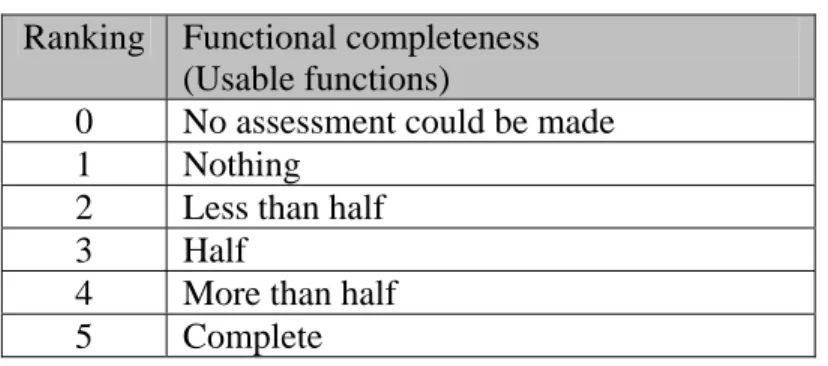
To assess functional completeness, we used a five-scale ranking scheme shown in Table 4. It is a subjective assessment of the ratio of system functions actually
implemented and made available to the users to those promised in the system specifications.
Table 4: Assessment of Functional completeness
Accessibility
To examine the accessibility of the four vote verification devices we used the standards of Section 508 (www.section508.gov) of the Rehabilitation Act of 1973, as amended in 1998, for procurement of electronic and information technology (Authority: 29 U.S.C. §794d.). Specifically, we used the following subsections of the 508 Standards (see Appendix B):
Subpart B – Technical Standards
Self contained, closed products Subpart C – Functional Performance Criteria
Subpart D – Information, Documentation, and Support
We evaluated the four devices in a laboratory environment at UMBC. This was an expert review based on accepted standards. The user-based assessment regarding use by individuals with disabilities is part of the study undertaken by researchers at the University of Maryland, College Park.
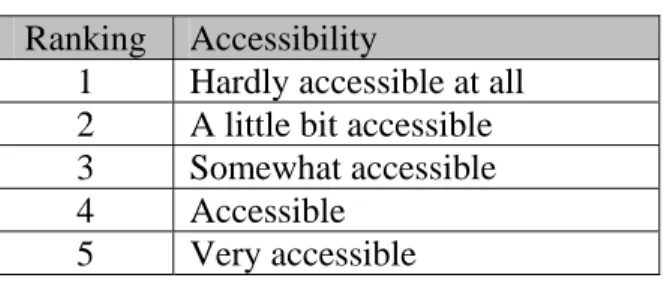
An accessibility expert conducted the evaluation, judging each of the applicable Section 508 criteria for each device. We then assigned a summary evaluation to each device based on a scale from 1 (hardly accessible) to 5 (very accessible). In the Section 508 criteria, Subpart B §1194.25 (a) requires that “Self contained products shall be usable
Ranking Functional completeness (Usable functions)
0 No assessment could be made 1 Nothing
2 Less than half 3 Half 4 More than half 5 Complete
by people with disabilities without requiring an end-user to attach assistive technology to the product. Personal headsets for private listening are not assistive technology.” We evaluated the voting systems as self-contained products and, therefore, the assistive technology clauses in Subpart C §1194.31 “Functional performance criteria” were not appropriate.
We ranked the systems according to the following scale: Table 5: Accessibility Evaluation Ranking Accessibility
1 Hardly accessible at all 2 A little bit accessible 3 Somewhat accessible 4 Accessible
5 Very accessible
Security and Privacy
To evaluate each vote verification and audit system for security and privacy, we consider how well each system mitigates threats to election integrity, voter privacy, and reliable operations. We report our findings in two ways: a narrative of the strengths and weaknesses of each system, and a summary comparison table.
In our evaluations, we focus primarily on election integrity and voter privacy. We concentrate less on resistance to malicious disruption, because most voting systems (and most information systems) are highly vulnerable to such disruption. For example, an adversary could disrupt an election with a bomb, bomb threat, fire, dispersing toxic substances, physically tampering with machines, or disrupting electrical power. Most of these threats must be mitigated with procedures beyond the verifier. Corrupt DREs or verifiers could try to disrupt elections through maliciously generating incorrect displays, results, or printed outputs.
How well a system enhances election integrity can be completely separate from how well the system protects voter privacy. Therefore, we make no attempt at combining these two characteristics into a single security and privacy rating. Also, because it is impossible to compare security and privacy in any simple strictly quantitative objective fashion, our summary comparisons necessarily have a strong subjective qualitative element. The narratives explain the basis of our comparisons.
In the rest of this section we summarize specific evaluation criteria and metrics for election integrity and vote privacy. In Appendix C, we discuss further issues regarding the methodology for examining security and privacy.
Goals
There are three main security and privacy goals of any voting system: (1) to give voters high confidence in the integrity of the election results, (2) to preserve voter privacy to the maximum extent possible consistent with law, and (3) to reduce chances of
disruptions to the election as much as reasonably possible.
Election integrity means that each voter casts his ballot as intended; the system records the ballot as cast; the system tallies the votes as recorded; and the Election Boards certify the results as tallied. Thus, an adversary, must not be able to modify the election results. Election integrity is central to giving voters confidence in election results and, for many people, is the most crucial characteristic of any voting system.
Voter privacy means that no one (besides the voter) can learn how the voter voted. Many voters view privacy as a fundamental right that is vital to prevent coercion, vote selling, and bribery. If a system provides the voter with a receipt to take home, the receipt must not reveal how the voter voted.
Resistance to disruption means that it is difficult for an unintentional or malicious adversary to cause a delay, rescheduling, or stoppage of the election process. Such denial-of-service attacks are virtually impossible to prevent entirely for any type of voting system, even for an unsophisticated yet determined attacker.12
A major difficulty in conducting elections is to achieve both election integrity and voter privacy. It would be much easier to achieve election integrity without voter privacy (e.g., by posting all marked ballots on a public bulletin board).
Summary Evaluation Criteria
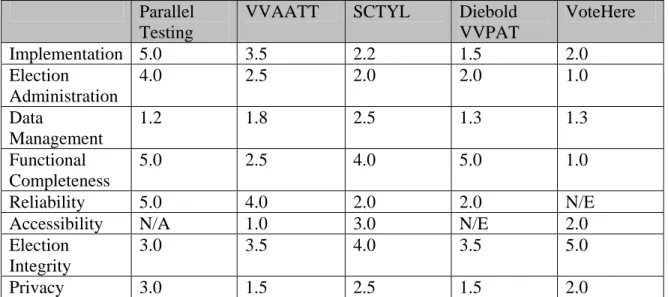
In our summary evaluations for security and privacy, we subjectively rate each system with a score on a five-point scale (1=poor, 5=excellent) by various criteria. The evaluations are for the entire composite systems, when used in combination with
Maryland’s existing Diebold voting system and the security policies and procedures, including parallel testing, that have been adopted around it. Thus, the score for parallel testing refers to Diebold with parallel testing, and the score for Sctyl refers to Diebold with Sctyl and parallel testing. The scores provide a useful relative comparison of the security and privacy characteristics of the study systems.
We organize our summary evaluation criteria in two groups: goals and means.
12
We do not discuss resistance to disruption in the product analyses included in the section below entitled “Evaluation of Vote Verification Technologies.” Instead, see Appendix I.