A Foundation for Spatial Thinking:
Towards a Threshold Concept Framework in GIScience and its Implications for STEM Education
by
Seung Beom Hamm
A thesis
presented to the University of Waterloo in fulfilment of the
thesis requirement for the degree of Master of Science
in Geography
Waterloo, Ontario, Canada, 2016
ii
A
UTHOR
’
S
D
ECLARATION
I hereby declare that I am the sole author of this thesis. This is a true copy of the thesis, including any required final revisions, as accepted by my examiners.
I understand that my thesis may be made electronically available to the public.
iii
A
BSTRACT
Geographic Information Science (GIScience) is a fairly modern, rapidly emerging multidisciplinary field, addressing the theories and concepts behind the spatial technology called Geographic Information Systems (GIS). With the proliferation of this technology, the demand for GIS professionals has also increased, as has pressure to support their competency in the community of practice. This study investigates a framework of threshold concepts to provide insight into the learning process for distinctive ways of thinking and practising within GIScience. Despite some theoretical investigations of this framework, no empirical studies have explored learner insights on this topic and its implications. The main goal of the study is to investigate empirical evidence of a threshold concept framework in GIScience and its potential implications for Science, Technology, Engineering, and Mathematics (STEM) education.
The investigation relied on data collected through survey questionnaires and personal interviews, administered in an introductory GIS course at the University of Waterloo in Ontario, Canada. The qualitative assessment of the study was based on a phenomenographic approach to examine different ways in which students experience GIS learning. First, threshold concepts were explored and examined based on their transformative, irreversible, integrative, bounded, and troublesome characteristics. In addition, statistical analyses were employed to identify important factors promoting student proficiency in GIScience. These factors were further examined with respect to variations in students’ discipline-specific ways of thinking and practising. The implications for STEM education were also discussed, in terms of shared misconceptions, spatial thinking abilities, and academic and career competencies.
Findings from this study suggest that the most prominent threshold concepts perceived by GIScience students are map projections and advantages and disadvantages of raster and vector data models, which are likely to open up new and previously inaccessible ways of thinking (i.e., ways of looking at a map). Important factors for students to acquire an understanding of such concepts were also identified, including academic preparedness, educational status, major field of study, type of academic background, ArcGIS software experience, GIS learning resource, and prior subject learning experience in mathematics, GIS, programming, or computer science. The implications include enhanced spatial thinking ability, as well as creativity, critical thinking, and problem-solving skills, all of which can help to promote interest and self-confidence in pursuing STEM fields. Overall, results from this study offer valuable insights for enhancing the efficacy of teaching and learning in GIScience.
iv
A
CKNOWLEDGEMENTS
First and foremost, I would like to express my sincere gratitude to my supervisor, Dr. Su-Yin Tan, for her continued encouragement, support, and patience throughout the “liminal spaces” of my research. I have been remarkably fortunate to benefit from her invaluable guidance and mentorship during my research and my academic and personal development.
I would like to extend my sincere appreciation to my committee members, Dr. Ian McKenzie, Dr. Julie Timmermans, and Dr. Brent Hall, for reading my thesis and providing me with insightful suggestions and comments.
I would also like to acknowledge that this research project was partially supported by generous grants from the Social Sciences and Humanities Research Council (SSHRC). In addition, I am grateful for the Graduate Research Studentship from my supervisor, as well as the Graduate Studies Research Travel Assistantship from the Graduate Studies Office (GSO) and the Graduate Studies Endowment Fund (GSEF) at the University of Waterloo, all of which enabled me to attend the 2015 Esri Education GIS Conference in San Diego, CA, to present my research work. I would also like to thank the Centre for Teaching Excellence (CTE), University of Waterloo, for accepting my work for presentation at the 2015 Teaching and Learning Conference: Opportunities and New Directions (OND).
Next, my appreciation goes to James McCarthy from the Mapping, Analysis, and Design (MAD) office and to my colleague Dongrong Li for their assistance in the development phase of the GIS Education User Questionnaire. I am also indebted to my fellow lab members in the Applied Geomatics Research Laboratory (AGRL) and friends for the enjoyable memories and support during my graduate studies.
I am also thankful to Dr. Angie Bukley, Dean and Professor, from the International Space University (ISU), France, whom I met during the completion of my MSc in Space Studies. Her enthusiasm for this field ignited my passion in further pursuing geomatics education, which I was able to do at the University of Waterloo through her kind recommendation to my current supervisor, Dr. Su-Yin Tan (also the Chair of the Space Applications Department in the ISU’s Space Studies Program).
In addition to all the foregoing, I would like to express my profound, heartfelt gratefulness to my beloved parents and sister, for their unconditional and endless love, patience, encouragement, and unequivocal support, for which my mere expression of thanks likewise does not suffice.
v
TABLE OF CONTENTS
Author’s Declaration ... ii
Abstract ... iii
Acknowledgements ... iv
List of Figures ... vii
List of Tables ... ix
Chapter 1 Introduction ... 1
1.1 Research Background ... 1
1.2 Statement of the Problem ... 2
1.3 Research Goal and Objectives ... 3
1.4 Thesis Structure ... 4
Chapter 2 Review of the Literature ... 5
2.1 Threshold Concept Framework ... 5
2.1.1 Background ... 5
2.1.2 Key Characteristics ... 6
2.1.3 Forms of Troublesome Knowledge ... 7
2.1.4 The Developmental Process of Learning ... 9
2.1.4.1 Pre-liminal State ... 11
2.1.4.2 Liminal State ... 11
2.1.4.3 Post-liminal State ... 15
2.2 Narrowing Down Potential Threshold Concepts ... 16
2.3 Course Curriculum Design and Development Considerations ... 18
2.4 Theoretical Foundation for Threshold Concepts within GIScience ... 22
2.5 Implications for GIScience in STEM Education ... 24
2.6 Chapter Summary ... 28
Chapter 3 Research Design and Methodology ... 29
3.1 Survey Population ... 29
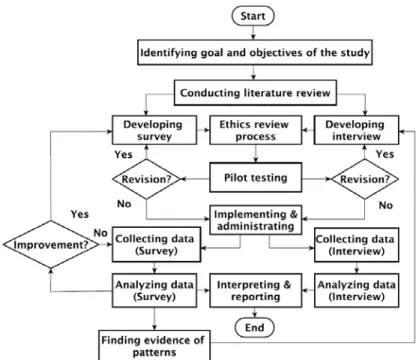
3.2 Research Design ... 29
3.3 Development and Structure of Study Instruments ... 31
3.3.1 Survey Questionnaire ... 31
3.3.2 Personal Interviews ... 36
3.4 Research Ethics, Pilot Testing, and Administration ... 39
3.5 Data Collection ... 41
3.6 Data Analysis ... 43
vi
Chapter 4 Results ... 49
4.1 Common Troublesome Knowledge and Threshold Concepts in GIScience ... 49
4.1.1 Identifying Potential Troublesome Knowledge Areas and Threshold Concepts ... 49
4.1.2 Threshold Concepts Identified by GIScience Students ... 52
4.1.3 Characteristics of Threshold Concepts... 54
4.1.3.1 Map Projections ... 54
4.1.3.2 Advantages and Disadvantages of Raster and Vector Data Models ... 61
4.2 Variation in Students’ Ways of Thinking and Practising ... 67
4.2.1 Pre-liminal Variation: Student Background Factors for Proficiency in GIScience ... 67
4.2.2 Liminal Variation: Negotiating Liminal Spaces and Crossing Thresholds ... 71
4.2.2.1 Student Background ... 72
4.2.2.2 GIS Software Learning (ArcGIS) ... 80
4.2.2.3 GIS Learning Resources ... 83
4.2.2.4 Differences Between Semester Cohorts ... 88
4.2.4 Post-liminal Variation: Potential Implications for STEM... 94
4.4 Chapter Summary ... 99
Chapter 5 Discussion and Conclusions ... 100
5.1 Summary of Findings ... 100
5.2 Research Limitations and Future Directions ... 111
5.3 Conclusions ... 114
References ... 116
Appendices ... 128
Appendix A – Course Pathways of the GEOG/PLAN 281 GIS Course ... 128
Appendix B – Sample Survey Questionnaire... 129
Appendix C – Key GIS Knowledge Areas and Concepts used in the Survey ... 137
Appendix D – Histogram of GEOG/PLAN 281 Course Performance ... 138
Appendix E – Personal Interview Guide Template ... 139
Appendix F – Ethics Materials... 141
Appendix G – Interview Room and Equipment ... 148
Appendix H – Themes and Coding Categories for Thematic Analysis ... 149
vii
L
IST OF
F
IGURES
Figure 2.1 – Five key characteristics of threshold concepts. ... 6 Figure 2.2 – A conceptual model illustrating the process of acquiring threshold concepts across liminal states [adapted from a model of transitional learning spaces by Savin-Baden (2008b) and from a
relational view of the features of threshold concepts by Land, Meyer, and Baillie (2010)]. ... 10 Figure 2.3 – A visual illustration of variation in students’ learning journeys through a liminal space (Baillie, Kabo, & Reader, 2012). ... 14 Figure 2.4 – The integrative nature of GIS threshold concepts (black boxes) with other concepts
(Srivastava, 2013). ... 22 Figure 3.1 – Methodological flowchart of research. ... 30 Figure 4.1 – Challenging GIS knowledge areas identified by introductory GIScience students (from Winter 2012 to Winter 2015). ... 49 Figure 4.2 – Difficulty rankings of key concepts for each GIS knowledge area (from Winter 2012 to Winter 2015). ... 51 Figure 4.3 – A linkage of the threshold concept (map projections) with other GIS concepts (red =
bottlenecks; blue = fundamental building blocks). ... 56 Figure 4.4 – A linkage of the threshold concepts (advantages and disadvantages of raster and vector data models) with other GIS concepts (red = bottlenecks; blue = fundamental building blocks). ... 63 Figure 4.5 – Students’ average academic performance in the GIS course and their major field of study. . 70 Figure 4.6 – Students’ academic performance in an introductory GIS course and their prior subject learning experiences (The maximum course performance is 100; *p < .05). ... 71 Figure 4.7 – The difficulty rating of learning ArcGIS and its visual layout (left) and language (right) aspects of learning. ... 83 Figure 4.8 – Ranking of helpfulness regarding resources available for GIS learning (from Winter 2012 to Winter 2015). ... 84 Figure 4.9 – Average ranking score of helpfulness for learning resources by the performance groups (*p < .05). ... 85 Figure 4.10 – Students’ academic preparedness by inter-seasonal academic semesters of Winter’12-15, Spring’12-14, and Fall’12-14. ... 89 Figure 4.11 – Students’ educational status by inter-seasonal academic semesters of Winter’12-15,
Spring’12-14, and Fall’12-14. ... 90 Figure 4.12 – Students’ major fields of study by inter-seasonal academic semesters of Winter’12-15, Spring’12-14, and Fall’12-14. ... 91
viii
Figure 4.13 – Students’ type of academic background by inter-seasonal academic semesters of
Winter’12-15, Spring’12-14, and Fall’12-14. ... 92
Figure 4.14 – Students’ prior subject learning experiences by inter-seasonal academic semesters of Winter’12-15, Spring’12-14, and Fall’12-14 (*p < .05). ... 93
Figure 4.15 – Students’ difficulty rating of the ArcGIS software by inter-seasonal academic semesters of Winter’12-15, Spring’12-14, and Fall’12-14. ... 93
Figure 4.16 – Students’ average ranking score of helpfulness for learning resources by inter-seasonal academic semesters of Winter’12-15, Spring’12-14, and Fall’12-14 (*p < .05). ... 94
Figure 4.17 – Students’ average spatial thinking scores by their performance groups in GIScience. ... 95
Figure 4.18 – Students’ current interest in STEM by the performance groups in GIScience. ... 96
Figure 4.19 – Students’ current interest in STEM and their levels of agreement/disagreement with the statements relevant to the GIS learning experiences: spatial skills (left) and critical thinking and problem-solving skills (right). ... 97
Figure 4.20 – Career goals (left) and most useful application areas of GIS (right) indicated by students interested in pursuing STEM fields. ... 98
Figure A.1 – A diagram of GEOG/PLAN 281 course pathways as of Spring 2016 (*Elective, **One of the requirements, ***Required/compulsory). ... 148
Figure D.1 – Histogram of GEOG/PLAN 281 Course Performance. ... 148
Figure G.1 – The interview room setting. ... 148
Figure G.2 – The interview equipment. ... 148
Figure I.1 – A visual representation of the acquisition of a threshold concept with respect to the levels of learning outcomes in the SOLO taxonomy: (a) when students cannot cross the threshold and (b) when students cross the threshold. ... 150
ix
L
IST OF
T
ABLES
Table 3.1 – Description of each section in the GIS Education User Questionnaire... 31 Table 3.2 – Description of interview sections conducted with GEOG/PLAN 281 students. ... 36 Table 4.1 – The identified potential threshold concepts based on the most frequent ranking order value. 52 Table 4.2 – Prevalence (%) of threshold concepts in students’ responses regarding their transformative learning experiences, with a 95% confidence interval (95% CI). ... 53 Table 4.3 – Forms of troublesome knowledge for students who indicated georeferencing as a difficult area. ... 60 Table 4.4 – Average GEOG/PLAN 281 course performance according to student background factors. ... 68 Table C.1 – List of key GIS knowledge areas and concepts used in the survey questionnaire. ... 149 Table H.1 – Themes and coding categories used for thematic analysis of qualitative data. ... 149
1
C
HAPTER
1
I
NTRODUCTION
This chapter introduces the background of the research problem, explains the significance of this study’s contribution, and addresses the research goal and objectives. Then, it outlines the remaining chapters for the overall structure of the thesis.
1.1 RESEARCH BACKGROUND
According to Obermeyer and Pinto (2008), there has been growing pressure within the academic community to find a mechanism for educational programs that will support students’ professional competency in Geographic Information Science (GIScience). This field is multidisciplinary in nature, addressing the theories and concepts behind the technology called Geographic Information Systems (GIS), which is used for integrating and analyzing spatial data or geographic information. Thus, GIS can “provide a digital lens [emphasis added] for exploring the dynamic connections between people … and changing physical and social environments (Kidman & Palmer, 2006, p. 290). Over the years, this technology has become more affordable and user-friendly, proliferating in both the public and private sectors (Obermeyer & Pinto, 2008). This trend has consequently increased the demand for GIS professionals, as well as the number of GIS users and learners across a wide range of fields (Kemp, 2009; Srivastava, 2013). Along with such expansion and diversification, GIScience educators face a variety of challenges concerned with ensuring a competent, adequately educated and trained workforce of GIS professionals in the community of practice.
To explore such challenges and offer insight into student engagement with learning materials, the notion of threshold concepts (Meyer & Land, 2003) has been adopted as a theoretical framework in this current study. Learning threshold concepts is likely to entail troublesome knowledge, which provide useful insight into why many students often become “stuck” at certain points of the curriculum (Perkins, 1999; Meyer & Land, 2006a). Particularly, these concepts are described as “akin to a portal, opening up a new and previously inaccessible way of thinking about something” (Meyer & Land, 2006a, p. 3). Thus, crossing thresholds means the acquisition of threshold concepts, helping students to attain “a transformed internal view of subject matter” (Meyer & Land, 2006a, p. 3). This crossing accounts for the progression in the level of learners’ disciplinary understanding (Meyer & Land, 2010). An investigation of a threshold concept framework, therefore, provides valuable insight into distinctive ways of thinking and practising within a discipline (Meyer & Land, 2003), as well as its effective teaching and learning strategies (Cousin, 2006a; Land, Cousin, Meyer, & Davies, 2005, 2006). Above
2
all, GIS learning is a key factor in augmenting students’ spatial thinking abilities (Lee & Bednarz, 2009); in addition, its multidisciplinary nature has characteristics for integration of its knowledge and applications in other disciplinary areas (DiBiase et al., 2006; Srivastava, 2013).
1.2 STATEMENT OF THE PROBLEM
Since GIScience is a relatively new field, research on identifying its troublesome knowledge and threshold concepts is fairly limited. Although some theoretical foundations of a threshold concept framework in GIScience have been explored based on expert points of view (e.g., Srivastava, 2013), virtually no empirical studies have provided evidence of this framework from learner perspectives. Particularly, Land, Cousin, Meyer, and Davies (2006) point out that it is difficult for teachers and experienced experts within a discipline “to gaze backwards across thresholds and understand the conceptual difficulty or obstacles that a student is currently experiencing” (p. 199). Moreover, students are from diverse backgrounds, which can affect variation in their learning process or even their performance levels (Land et al., 2006; Meyer & Land, 2003; Srivastava, 2010). In the GIScience community, the question still remains why some students overcome barriers to learning in the discipline with relative ease, while others find difficulty in doing so. Therefore, an empirical evidence gap exists in the knowledge in terms of defining a threshold concept framework in GIScience based on the student perspectives, the role of student characteristics in the process of learning, and the potential implications of crossing thresholds for particular disciplinary ways of thinking.
The findings of this current study, therefore, expect to supplement current knowledge about a threshold concept framework in GIScience, achieved through empirical evidence and insight gained from students undertaking an introductory GIS course at the University of Waterloo, Canada. The empirical evidence of this framework expects to be present based on the key characteristics of threshold concepts (transformative, irreversible, integrative, bounded, and troublesome) proposed by Meyer and Land (2003). In particular, the troublesome and transformative aspects of students’ disciplinary understanding in GIScience are to be located in the curriculum. Moreover, since students’ prior subject knowledge, aptitudes, and other characteristics are highly varied, this present study also intends to reveal those student factors that are significant for proficient GIS learning. The study then investigates how these student factors may account for variations in overcoming barriers to learning and acquiring threshold concepts. Such findings bear a significant pedagogical importance in curriculum design and development given that they shed light on the ways of supporting teaching and learning (Cousin, 2006a; Land et al., 2006; Osmond, Turner, & Land, 2008). The target audience includes GIScience educators,
3
advisors, researchers, and practitioners in higher education and research institutions. This present study may identify new opportunities for this target audience (e.g., transforming their own views in teaching, enhancing student preparations in learning).
GIS has gained tremendous popularity over the years, as reflected by the growth of enrollment in GIS courses, the emergence of GIS degree programs/courses in the majority of Canadian universities, and the inclusion of a GIS course prerequisite in many disciplinary programs. Thus, this study has implications not only for the specific course investigated or for the Geomatics Program, but also for the University of Waterloo as a whole and beyond. For example, implications extend beyond GIScience to other Science, Technology, Engineering, and Mathematics (STEM) fields, through their links to shared misconceptions (e.g., Bampton, 2012), spatial thinking abilities (e.g., Lee & Bednarz, 2009), and academic and career competencies (e.g., National Research Council, 2006).
1.3 RESEARCH GOAL AND OBJECTIVES
To fill an empirical evidence gap that exists in the current knowledge about GIScience threshold concepts and their implications for academic and professional practice, the following key research questions are addressed in this study: (1) What are common troublesome knowledge areas and threshold concepts in GIScience? (2) What are the important student characteristics for proficiency in GIScience and how do they account for variations in students’ ways of thinking and practising within GIScience? (3) What are the potential implications for GIScience in STEM education?
The main goal of this study is to investigate exploratory empirical evidence of a threshold concept framework in GIScience and its potential implications for STEM education. More specifically, the thesis objectives are the following:
(i) To explore common troublesome knowledge and threshold concepts identified by GIScience students;
(ii) To examine variations in students’ ways of thinking and practising within GIScience; and
(iii) To discuss potential implications of threshold concepts and proficiency in GIS learning on other STEM-related fields.
4
1.4 THESIS STRUCTURE
The thesis consists of five chapters. First, Chapter 1 – Introduction provides the research background and the statement of the problem, addressing the scope of this study with the specific research goal and objectives. The remaining chapters are structured as follows:
Chapter 2 –Review of the Literature:This chapter reviews literature on the theoretical foundations of this study, including the threshold concept framework and its pedagogical significance in GIScience and other implications for STEM-related fields.
Chapter 3 – Research Design and Methodology: This chapter describes the framework of the research design and methods employed to answer the research questions and how this study was conducted to achieve research goal and objectives. This chapter also details the development and implementation of the study instrument tools.
Chapter 4 – Findings and Discussion: This chapter reports the analysis results based on the quantitative and qualitative data collected through the study instrument tools.
Chapter 5 – Discussion and Conclusion: This chapter interprets and explains the key findings and how they answer the research questions of this study. In addition, the limitations of the study are discussed, providing suggestions for future research. This chapter concludes with a reflection on the significance of the research findings and their contributions.
5
C
HAPTER
2
R
EVIEW OF THE
L
ITERATURE
This chapter summarizes the literature regarding the threshold concept theory and its values on teaching and learning in higher education. Then, the existing theoretical framework of threshold concepts specific to GIScience is reviewed, as well as the potential implications for GIScience in STEM education.
2.1 THRESHOLD CONCEPT FRAMEWORK
2.1.1 BackgroundThe idea of threshold concepts originated in Meyer and Land’s (2003) work assessing aspects of student learning in economics, as part of their “Enhancing Teaching–Learning Environments in Undergraduate Courses” project. Since then, the threshold concept framework has become popular and gained recognition across a wide range of disciplinary areas, including biology (Taylor, 2008), computer science (e.g., Zander et al., 2008), economics (e.g., Ashwin, 2008), engineering (e.g., Carstensen & Bernhard, 2008), educational development (e.g., Timmermans, 2014), geography (e.g., Slinger, 2011), mathematics (e.g., Quinnell & Thompson, 2010), and spatial awareness (e.g., Osmond et al., 2008).
Threshold concepts are not necessarily the same as the core concepts or fundamental concepts typically considered by teachers as being important for a subject (Davies, 2006; Davies & Mangan, 2005). Meyer and Land (2006a) specified that threshold concepts are a subset of core concepts which, once grasped, lead to a transformed view of subject matter. This transformed view may represent “how people ‘think’ in a particular discipline or how they perceive, apprehend or experience particular phenomena within that discipline” (Meyer & Land, 2006a, p. 3). On the other hand, core concepts “do not necessarily lead to a qualitatively different view of subject matter” (Meyer & Land, 2006a, p. 6); rather, they may act as building blocks that help learners progress in understanding and learning. More precisely, a threshold concept is:
“akin to a portal, opening up a new and previously inaccessible way of thinking about something. It represents a transformed way of understanding, or interpreting, or viewing something without which the learner cannot progress. As a consequence of comprehending a threshold concept there may thus be a transformed internal view of subject matter, subject landscape, or even world view” (Meyer & Land, 2006a, p. 3).
Similarly, Perkins (2006) argued that threshold concepts “act like gateways. Once through the gate, learners come to a new level [emphasis added] of understanding [in particular topics] central to the
6
discipline” (p. 43). This new, deeper level of conceptual understanding may represent ways of thinking and practising that are distinctive to a discipline (Davies & Mangan, 2007; Meyer & Land, 2003). Therefore, mastery of threshold concepts is essential to further progress in a discipline (Meyer & Land, 2003; O’Donnell, 2010).
2.1.2 Key Characteristics
As described in Figure 2.1, Meyer and Land (2003) determined that threshold concepts are likely to be transformative, irreversible, integrative, bounded, and troublesome. These five features are interrelated, as the first three (transformative, irreversible, and integrative) are mutually interdependent and the last two (bounded and troublesome) are derived from the first three (Davies, 2006; Davies & Mangan, 2007).
The three characteristics – transformative, irreversible, and integrative – are mutually interdependent. First, when the crossing of thresholds occurs, the transformative quality of threshold concepts reflects the learners’ new ways of thinking and understanding (i.e., through transformation of their perceptions about the subject matter and even the world around them). Such transformation is also linked with the irreversible and integrative qualities of threshold concepts. For example, irreversibility is associated with a significant shift in learners’ conceptual perspectives, making it difficult to return to the way they used to think. Moreover, transformation is accomplished through the integration of learners’ existing and new
Figure 2.1 – Five key characteristics of threshold concepts.
Results in a significant shift in the perception of a subject CHARACTERISTICS OF THRESHOLD CONCEPTS Bounded Transformative Irreversible Integrative Troublesome
Frequently challenging or troublesome to understand for a variety of reasons
Possessing terminal frontiers, bordering with thresholds into new conceptual areas
Unlikely to be forgotten
Exposing the previously hidden interrelatedness of something
7
knowledge and experiences. Such integration often helps expose previously hidden interrelatedness as a means of making sense of the ideas of a subject that did not make sense before (Davies, 2006; Meyer & Land, 2003).
Furthermore, the bounded and troublesome characteristics of threshold concepts are affiliated with the transformative, irreversible, and integrative features (Davies & Magnan, 2007). For example, the transformed ways of understanding can lead to a privileged or dominant view of a discipline, often defining the boundary of disciplinary conceptual areas or academic terrains (Meyer & Land, 2003, 2005). This bounded feature, also related to the discursive nature of threshold concepts, can be evidenced by the extension of the learners’ language use or disciplinary discourse shared particularly within the community of practice (Ashwin, 2008; Meyer & Land, 2003). Thus, this bounded feature is associated with the reconstitution of self in relation to the subject. However, a transformative learning experience can be troublesome because “it requires reconfiguration of previously acquired understanding.” (Davies & Magnan, 2007, p. 712). For example, this process can be emotionally uncomfortable or unsettling due to a sense of loss of the previously held conceptual stance (Cousin, 2006b; Meyer & Land, 2003; Savin-Baden, 2008b). The integration process involved in acquiring threshold concepts can also be troublesome if students’ previously held conceptual stances or their intuitive belief systems conflict with the new conceptual material being encountered (Meyer & Land, 2005).
In addition, the troublesome criterion of threshold concepts is important for defining their transformative nature. According to Schwartzman (2010), “real learning requires stepping into the unknown, which initiates a rupture in knowing” (p. 38), and such “a significant learning is often troublesome, and indeed needs to be so as to ‘provoke’ learners to move on from their prevailing way of conceptualizing a particular phenomenon to new ways of seeing” (Land, 2011, p. 176). Thus, the troublesome nature of understanding threshold concepts can provoke, trigger, or stimulate in a way that makes learners realize the sense of transformation occasioned by a significant shift in the perception of a subject and a sense of being (Meyer & Land, 2003; Ricketts, 2010). Therefore, threshold concepts often prove to be troublesome in the learning process (Meyer & Land, 2003, 2005; Perkins, 2006).
2.1.3 Forms of Troublesome Knowledge
The notion of “troublesome knowledge,” a potential barrier to students’ ability to grasp threshold concepts, was first introduced by Perkins (1999). His work provided useful insight into why many students often become “stuck” at certain points of the curriculum. Perkins (1999) proposed ritual,
8
inert, conceptually difficult, and alien (or foreign) knowledge, and Meyer and Land (2003) built upon the work by including tacit knowledge and troublesome language as other sources of troublesomeness. Meyer and Land (2006a) have suggested that learning threshold concepts is likely to encompass these forms of troublesome knowledge.
Perkins (1999, 2006) has suggested designing appropriate, targeted constructivist methods in response to different forms of troublesome knowledge. Such constructivist methods consider students’ learning as the construction of a personalized knowledge that is continuously being refined from an interaction between experience and ideas (Perkins, 1999, 2006; Srivastava, 2012). Based on the work of Perkins (1999, 2006) and Meyer and Land (2003, 2006a), the forms of troublesome knowledge and their constructivist response examples are summarized below:
1. Ritual knowledge:This form of troublesome knowledge has “a routine and rather meaningless character” (Perkins, 1999, p. 9). A typical example of ritual knowledge is a diagram used to represent complex relationships in economics. For example, students may have learned and know how to plot a diagram to represent economic relationships, but they may not have understood the mathematical functional complexity that lies behind the representation in this model. A constructivist response to this troublesomeness is to make it more meaningful by facilitating problem-solving activities.
2. Inert knowledge: This form of troublesome knowledge is held in the back of one’s mind and recalled only when specifically needed (e.g., for a quiz). The use of passive vocabulary (i.e., words that are understood but used only rarely or not used actively) was provided as an example by Perkins (1999). This situation is likely to occur when students simply learn concepts but cannot find relevance to or meaning in the world around them. Thus, this troublesomeness is closely related to the integrative characteristic of threshold concepts (Davies, 2006). A constructivist response is to engage learners in active problem-solving that makes connections to everyday experiences and applications.
3. Conceptually difficult (or counter-intuitive) knowledge: This form of troublesome knowledge occurs due to “a mix of misimpressions from everyday experience…, reasonable but mistaken expectations…, and the strangeness and complexity of scientists’ views of the matter…, [often resulting in] a mix of ritual knowledge and misunderstandings” (Perkins, 1999, p. 9). For example, McCloskey (1983) observed that learners had difficulties in accepting that “heavier objects fall at the same rate as lighter ones, air resistance aside,” due to the conflict with their
9
intuitive beliefs and interpretations that heavier objects would fall faster. A constructivist response is to engage students with experiments and observations (e.g., demonstrations), encouraging them to deal with and accept any discrepancies in their intuitive belief systems.
4. Alien (or foreign) knowledge:This form of troublesome knowledge “comes from a perspective that conflicts with our own” (Perkins, 1999, p. 10). For example, some learners may struggle to understand issues or value systems carried by others’ different perspectives or cultural mindsets. A constructivist response is to engage learners to identify and compare alternative perspectives in relation to one another. It can be facilitated by compare-and-contrast discussions, dialogues, debates, or role-playing activities.
5. Tacit knowledge: This form of troublesome knowledge is often shared within a specific community of practice that remains mainly personal and implicit. That is, the troublesomeness is related to “the complexity of the knowledge, its seeming inconsistency or paradoxical nature or because it contains subtle distinctions, such as that between weight and mass” (Meyer & Land, 2006a, p. 12, emphasis in original). An example of constructivist response is to bring out and examine together all the tacit presumptions that educators and learners have in their minds.
6. Troublesome language: This form of troublesome knowledge is concerned with the specific language shared and frequently used within a discipline. Meyer and Land (2006a) argued that specific discourses have been developed within different disciplines, representing distinctive ways of seeing and thinking in their communities of practice. For example, a concept used and understood in one discipline can be very different in another discipline (e.g., jargon). Thus, such discursive practices of a given community may be less familiar and conceptually difficult for new entrants. A potential constructivist response is to provide examples of diverse disciplinary applications.
2.1.4 The Developmental Process of Learning
Meyer and Land (2006a) described the process of grasping threshold concepts by using the visual metaphor of a portal or a conceptual gateway. They argued that this metaphor “invites a consideration of how the portal initially comes into view, how it is approached, negotiated, and perhaps even experienced as a transition in terms of sense of self” (p. 19). This process involves a transition through an in-between state of uncertainty, a state of liminality (derived from a Latin word limen meaning boundary or threshold), which is not an easy passage to move through because of its troublesome nature. The space or period of such a rite of passage that learners undergo to acquire
10
Figure 2.2 – A conceptual model illustrating the process of learning threshold concepts across liminal states [adapted from a model of transitional learning spaces by Savin-Baden (2008b) and from
a relational view of the features of threshold concepts by Land, Meyer, and Baillie (2010)].
threshold concepts is referred to as liminal space (Meyer & Land, 2006b). Similarly, Bishop (2006, p. 192) described student learning processes as “a journey along a path,” which may involve “times when they are obstructed by a ditch or gully that they will need to cross in order to continue.” Thus, “the most significant aspect of learning lies not in the outcomes of learning, but in the process of learning” (Timmermans, 2010, p. 3, emphasis in original) in terms of understanding its developmental process.
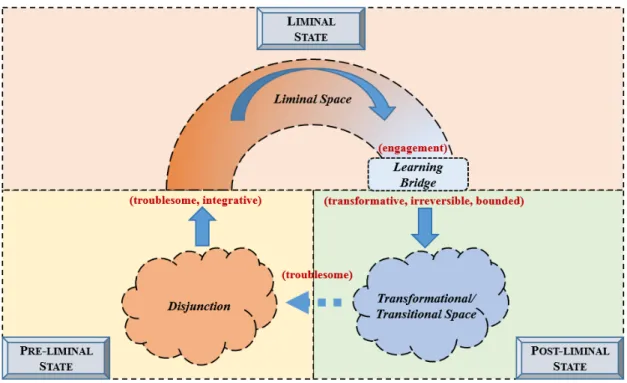
The learning journey involved in acquiring threshold concepts is illustrated in Figure 2.2, which is developed in this current study by adapting a model of transitional learning spaces (Savin-Baden, 2008a, 2008b) and a relational view of the features of threshold concepts (Land, Meyer, & Baillie, 2010). For example, a notion of learning spaces (e.g., disjunctive spaces, liminal spaces, transformational and transitional learning spaces) was proposed by Savin-Baden (2008b) to illustrate the cyclical nature of the journey that learners undergo in the process of acquiring threshold concepts. Furthermore, Meyer and Land (2010) suggested that this learning journey may involve variation in the pre-liminal, liminal, and post-liminal states, helping to identify “at which points, and in what ways, individual students might experience conceptual difficulty and experience barriers to their understanding” (p. 64). With this in mind, each liminal phase is further reviewed in the following sub-sections, delineating the learning journey towards, through, and beyond thresholds.
11
2.1.4.1 Pre-liminal State
The learning journey towards thresholds shown in Figure 2.2 begins with disjunction, a space or position where learners initially encounter or realize the troublesomeness of new conceptual materials. Described as “being a little bit like hitting a brick wall” (Savin-Baden, 2008b, p. 81), this state is associated with a form of troublesome knowledge because “it often feels alien and counter-intuitive” (p. 81). In other words, the learner’s impression upon beginning the journey is like darkness, making it difficult to find the ways towards thresholds (Orsini-Jones, 2008). Land, Meyer, and Baillie (2010) also claimed that “the journey towards the acquisition of a threshold concept is seen to be initiated by an encounter with a form of troublesome knowledge in the pre-liminal state” (p. ix). Thus, this stage accounts for “a sense of vague stuckness or a feeling of confusion” (Savin-Baden, 2008b), as a threshold concept is first encountered. On the other hand, disjunction “can [also] be seen as the kind of place that students might reach after they have encountered a threshold concept that they have not managed to breach [or conquer]” (Savin-Baden, 2008b, p. 81).
Furthermore, pre-liminal variation is concerned with how individual learners perceive a threshold concept in the first place or how it initially “comes into view” (Meyer, 2012; Meyer, Land, & Davies, 2008). This variation depends on different prior tacit knowledge, experiences, or disciplinary backgrounds that learners bring with them (Meyer, 2012; Meyer & Land, 2005, 2006b; Savin-Baden, 2006; Shanahan, Foster, & Meyer, 2008, 2010). For example, Meyer and Land (2005) argued that “as a way of helping students, we can distinguish, in theory at least, between variation in students’ ‘tacit’ understanding (or lack thereof) of a threshold concept” (p. 384). Such student characteristics help to explain the variations associated with “the shifts that are made away from a belief in core concepts and the idea that some knowledge is necessarily foundational to other knowledge” (Savin-Baden, 2006, p. 164). Therefore, understanding students’ pre-liminal variations helps to answer the following questions:
“Why [do] some students ... productively negotiate the liminal space and others find difficulty in doing so [?] Does such variation explain how the threshold will be, or can be, or can only be approached (or turned away from) as it ‘comes into view’? And how does it ‘come into view’ for individual students?” (Land et al., 2006, p. 203).
2.1.4.2 Liminal State
As argued by Meyer and Land (2005), liminality is concerned with “the conceptual transformations students undergo, or find difficulty and anxiety in undergoing, particularly in relation to notions of being ‘stuck’” (p. 377). As mentioned earlier, the idea of liminal space is described as the
12
space or period of the rite of passage towards a threshold (Meyer & Land, 2006b); thus, a liminal space is referred to as the period of oscillation between the old and new states of students’ learning stances (Meyer & Land, 2005; Savin-Baden, 2006). Therefore, a liminal space can be considered not only as a “stuck place” (Ellsworth, 1997) but also as a place for “processes of growth, transformation, and the formulation of old elements in new patterns” (Turner, 1967, p. 99).
Moreover, liminal variation can occur in the process of how learners enter, occupy and negotiate, and pass through a liminal space (Meyer & Land, 2006b; Meyer, Land, & Davies, 2008).
1) Entering into a Liminal Space
Entering into a liminal space begins with a learner overcoming the first shock of disjunction and re-examining the sense of self (Savin-Baden, 2008b). However, a feeling of confusion may also arise in a liminal space. According to Savin-Baden (2008a), Ellsworth’s (1997) “conception of stuck places would seem to imply that stuckness is a place one travels to – whereas disjunction is often a position one seems to find oneself in, often somewhat unexpectedly” (p. 107). Thus, unlike disjunction, a learner may choose to enter into a liminal space by being willing to confront and deal with troublesomeness. In other words, some students may enter into a liminal space at ease and become more readily engaged, while others find doing so problematic because they do not acknowledge the troublesome nature of learning or simply avoid dealing with it (Savin-Baden, 2008b).
Individual students may also bring to the classroom their own preconceptions about the subject matter and how the world works (Bampton, 2012). Such preconceptions can determine how students enter into a liminal space for their engagement. For example, “if their initial [emphasis added] understanding is not engaged, they may fail to grasp the new concepts and information that are taught, or they learn them for purposes of a test but revert to their preconceptions outside the classroom” (Bransford et al., 2000, p. 14-15). This statement implies that students’ preconceptions or their existing belief systems can affect their initial understanding of and engagement with new conceptual materials. In this way, students should be willing to deal with troublesomeness in learning, as doing so will guide them into a liminal space.
2) Occupying and Negotiating a Liminal Space
Meyer and Land (2006b) argued that the process of acquiring threshold concepts involves the occupation of a liminal space, where students oscillate between the old and emergent understandings. In the liminal state, this reconstruction of the sense of being involves the integration of existing and new knowledge and experience (Land et al., 2010). For example, “to understand one concept[,] one might
13
require some understanding of another” (Ashwin, 2008, p. 181); however, students often “develop their own conception of it, encrusted with previous experiences and metaphors from everyday life, sometimes leading to misconceptions” (Mead & Gray, 2010, p. 98). Such misconceptions can be in the form of incorrect ideas and theories about how the world works, which may hamper students’ ability to grasp threshold concepts (Bampton, 2012; Hestenes, Wells, & Swackhammer, 1992).
More importantly, students who are unable to occupy and negotiate a liminal space are more likely to drop out of or be less competent in a course than those who manage to grasp threshold concepts (Bain & Bass, 2012; Shanahan et al., 2008, 2010). Such consequences are also addressed in Savin-Baden’s (2008a) argument regarding the general trends of coping strategies adopted by students when encountering threshold concepts and finding them troublesome to learn:
“Students may opt to retreat from disjunction [withdrawing from any further learning], to postpone dealing with it [because they had similar experience and already know how to manage], to temporize and thus choose not to make a decision about how to manage it [waiting for an event or stimulus that will help them to progress], to find some means [of circumventing strategies] to avoid it and thus create greater disjunction in the long term, or to engage with it [directly] and move to a greater or lesser sense of integration” (p. 106, emphasis in original).
In other words, students have different ways of managing troublesomeness when dealing with threshold concepts. Avoidance and retreat may also lead to turning back to disjunction from the liminal space, whereas temporization and postponement may require students to spend some time before they engage in learning and eventually cross the thresholds (Savin-Baden, 2008b). In this regard, those who decide to avoid or retreat will likely drop out of or be less competent in a course (Bain & Bass, 2012; Shanahan et al., 2008, 2010).
In the process of occupying and negotiating a liminal space, the fear of failure and anxiety can bring up the issues of mimicry or lack of authenticity (Cousin, 2006b; Davies, 2006; Meyer & Land, 2005). Such concerns include students undertaking surface learning as a coping strategy (e.g., memorization of facts and routine procedures, reproduction of subject knowledge just to pass a test), which provides only a limited understanding of the underlying meaning of subject knowledge (Entwistle, 2003; McCartney et al., 2009). On the other hand, because students take different paths in dealing with troublesomeness in learning, surface learning can be the first stage for concrete understanding for some students, but be just the opposite for others (Cousin, 2006b; McCartney et al., 2009).
14
Figure 2.3 – A visual illustration of variation in students’ learning journeys through a liminal space (Baillie, Kabo, & Reader, 2012).
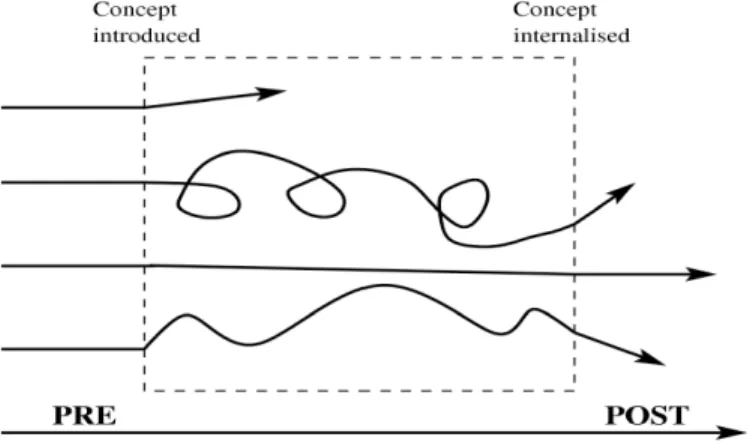
Furthermore, studies have demonstrated that pre-liminal variation can play a crucial role in negotiating a liminal space (e.g., Shanahan et al., 2008, 2010). For example, prior tacit knowledge and experience can provide bits of knowledge, helping students to integrate and engage with new conceptual materials for necessary scaffolding and meaningful learning (Davies, 2006; Meyer & Land, 2006a; Savin-Baden, 2008b). Such pre-liminal variation can be coupled with students’ recognition of identity in learning, referred to as learning stances (Perkins, 2006; Savin-Baden, 2008b). For example, this identity in learning is inherent in “the sense of one’s attitude, belief or disposition towards a particular context, person or experience” (Savin-Baden, 2008a, p. 16). All in all, as illustrated in Figure 2.3, individual students enter, occupy and negotiate, and eventually move out of a liminal space differently (i.e., some learners may pass right across, while others may journey back and forth in different ways).
3) Moving Through a Liminal Space Towards a Transitional/Transformational Space
Land et al. (2010) argued that the process of moving through a liminal space “requires a reconfiguring of the learner’s prior conceptual schema and a letting go or discarding of any earlier conceptual stance” (p. xi). Savin-Baden (2008b) suggested that the most effective way of helping students to cross thresholds or move out of a liminal space may involve locating a learning bridge, which refers to engagement for developing greater self-understanding. In other words, learning bridges are mechanisms that “help to link or connect different past and present positions in ways that enable shifts” (p. 85) from the liminal state to the post-liminal state. Such mechanisms should encourage students “to analyze a new context, identify similarities that might enable them to pull from past knowledge and experience, and consciously adapt to differences” (Moore, 2012, p. 23).
Baillie and Johnson (2008), however, asserted that the fear of the unknown in a liminal space can act as a barrier to engagement. Cousin (2006) also proposed that emotional capital (e.g., learner anxiety) can
15
affect mastery of threshold concepts. For example, some factors (e.g., age) may affect different life experiences that individuals can draw from in relation to their learning. Studies have also shown that students’ different levels of confidence or feeling of knowing (i.e., dependent on their prior knowledge and academic preparation) can affect their engagement in learning (Efklides, 2006; Quinnell & Thompson, 2010). One way to overcome the barrier to engagement is “learning to live with tensions ... that may occur in the process of gaining greater self-understanding and acquiring new ways of thinking ... [and] not eliminat[ing] but learn[ing] to value doubt and uncertainty as central principles of learning” (Savin-Baden, 2008b, p. 83). Thus, students’ anxiety should be addressed rather than avoided, so that they can confront and attempt to deal with it (Baillie & Johnson, 2008; Savin-Baden, 2008b).
2.1.4.3 Post-liminal State
Acquisition of threshold concepts leads to new ways of thinking and practice that are specific to a discipline. This acquisition involves ontological and epistemic shifts in a transformational/transitional learning space (Meyer & Land, 2003; Savin-Baden, 2008b). The movement from liminal to post-liminal state induces a sense of moving from one place to another, achieved through learners’ identity construction, self-realization, and transformation (Davies, 2006; Meyer & Land, 2003; Savin-Baden, 2008b). Thus, acquiring a threshold concept is an act of identity formation or perspective transformation (Davies, 2006; Meyer & Land, 2003) associated with “a change in sense of self, a change in subjectivity on the part of the learner” (Land & Meyer, 2010, p. 72). This development is “an irreversible transformation and is marked by a changed use of discourse” (Land et al., 2010, p. xi).
Post-liminal variation contributes to how individuals may achieve a particular way of thinking and practising within a discipline (Davies, 2006). This variation also accounts for “students’ level [emphasis added] of new conceptual understanding” (Meyer & Land, 2010, p. 63), which “may involve a ‘performance element’” (Meyer & Land, 2003, p. 4). For example, the transformative nature of threshold concepts may enable students to open up “a new and previously inaccessible way of thinking” (Meyer & Land, 2003, p. 1) for the progression of their understanding of conceptual materials.
Davies and Mangan (2006, 2007, 2008) argued that acquiring a threshold concept involves different but mutually interdependent types of transformation. The first type, basic conceptual change, is related to “naïve or ‘common-sense’ understanding supplemented by a more powerful discipline-based mode of thinking” (Davies & Mangan, 2007, p. 713). This transformation is associated with the integration of newly met disciplinary concepts/ideas and students’ personal experience in the world around them. Another type of transformation is called discipline-based conceptual change, which involves the
16
integration and re-working of other disciplinary concepts or ideas that the learner already possesses. Finally, procedural conceptual change is also a transformation type, which involves constructing discipline-specific narratives and arguments (i.e., acquiring granted or particular ways of thinking and practice shared in a subject community).
As mentioned earlier, the transformative nature of threshold concepts, however, may sometimes be emotionally uncomfortable, unsettling, or disturbing, due to a sense of loss of previously held conceptual stances (i.e., leaving a familiar position and moving to a new and less certain terrain) (Cousin, 2006b; Meyer & Land, 2003; Savin-Baden, 2008b). In addition, as students encounter different conceptual materials, the new established learning stances and ways of thinking can be part of another disjunction, continuing in the cyclical process of the learning journey.
2.2 NARROWING DOWN POTENTIAL THRESHOLD CONCEPTS
The idea of threshold concepts initially arose from concerns associated with supporting students who tend to get stuck at particular points of the curriculum in a discipline (Meyer & Land, 2003, 2005). With a similar motivation, the methodology of Decoding the Disciplines (DtD) was developed by Middendorf and Pace (2004). During the process of developing DtD methodology, a number of scholars met in a series of group seminars and discussed common learning barriers (also known as bottlenecks) that students tend to face in their disciplinary fields. In discussing how to devise ways that can help students to overcome bottlenecks, they proposed the following seven steps of DtD: (1) identifying the bottlenecks to learning in class; (2) exploring how experts in the field overcome these bottlenecks (e.g., through skills, approaches, procedures); (3) determining how these tasks may be explicitly modelled, applied, and incorporated in instruction and teaching practices; (4) providing opportunities for students to practice these adapted approaches and to receive feedback; (5) motivating students with respect to why they are employing such practices; (6) assessing how well students are mastering those approaches to overcome the bottlenecks; and (7) sharing any lessons learned from the previous steps among faculty to suggest necessary institutional changes.
The DtD methodology is a useful approach to explore threshold concepts within a discipline. Middendorf and Pace (2004) argued that bottlenecks can be potential indicators of which areas of disciplinary thinking are not made clear to students. In other words, these difficulties of bottlenecks may arise from students failing to fully understand a threshold concept (Shopkow, 2010). This idea can help to distinguish those who are “inside” the subject and those who have not yet gained that way of disciplinary thinking (Davies, 2006). More importantly, bottlenecks themselves “may be threshold
17
concepts ... [or] clusters of threshold concepts ... [that] constitute disciplinary ways of knowing” (Shopkow, 2010, p. 327); therefore, concepts that are central to a discipline but often prove to be troublesome are a good place to begin narrowing down potential threshold concepts (Bampton, 2012; Cousin, 2006b; Cowart, 2010; Davies & Mangan, 2007; Male & Baillie, 2011; Meyer & Land, 2003; Ross, 2010; Zander et al., 2008). As such, troublesome and transformative characteristics are widely used in the process of identifying threshold concepts (e.g., Male & Baillie, 2011; Zander et al., 2008).
Moreover, the DtD methodology itself offers opportunities for teaching and learning (Díaz, Middendorf, Pace, & Shopkow, 2008; Meyer & Land, 2005; Shopkow, 2010). For example, Shopkow (2010) recommended that this methodology can offer and facilitate the following:
• Identifying concepts and understandings which may be related to threshold concepts; • Revealing the troublesome nature of threshold concepts (e.g., tacit knowledge); • Providing guidance to re-examine and re-evaluate instructors’ own teaching practices; • Re-designing lessons to support students’ learning experiences; and
• Motivating intervention among faculty within and across disciplines to encourage any necessary institutional changes to guide students in achieving shared learning goals.
Shopkow (2010, p. 329) further highlighted the importance of the last point about collaboration among faculty regarding a threshold concept approach in DtD:
“The impediments to our students learning one threshold concept arise from their difficulties with another, perhaps one they have never encountered. … We need collaboration within disciplines because we have a shared charge in educating our students and we need collaboration across disciplines not only because there are common problems we might confront … but also because it can clarify for us what thresholds our discipline might be constructing … as we consider other thresholds shaped by other disciplines within the shared architecture of higher education.”
This statement implies that students’ prior knowledge and experiences from other disciplines can also play a crucial role in shaping and crossing the thresholds for any associated transformative learning. This implication also articulates the threshold concept research work by Barradell (2012) and Cousin (2008) regarding transactional curriculum inquiry (i.e., exploring the difficulty of a subject by mediating educator’s knowledge, students’ learning experience, and educational developers’ help). Therefore, the threshold concept framework provides an opportunity to open up dialogue and collaboration among students, academic researchers, and teaching staff in developing curricula and facilitating teaching and learning (Cousin, 2008; Cousin, 2010; Osmond et al., 2008).
18
2.3 COURSE CURRICULUM DESIGN AND DEVELOPMENT CONSIDERATIONS
This section highlights the implications of the threshold concept framework on teaching and learning in higher education. These implications are assessed with respect to the following key considerations (e.g., Land et al., 2005, 2006): (1) the “jewels” in the curriculum, (2) sequence of threshold concepts in teaching, (3) the importance of engagement, (4) listening for understanding, (5) recursiveness and excursiveness, (6) supportive liminal environment for tolerating confusion and uncertainty, (7) the role of pre-liminal variation, (8) unintended consequences, and (9) the underlying game.
1) The “Jewels” in the Curriculum
Threshold concepts can be viewed as “jewels” in curricula because these concepts can serve as powerful transformative and meaningful areas in the developmental process of learning for a discipline. For example, Meyer and Land (2006a) contended that “where threshold concepts exist within curricula[,] there is likelihood, owing to their powerful transformative effects, that they may prove troublesome for students” (p. 16). Thus, threshold concepts can play a diagnostic role in alerting educators, course instructors, or tutors to areas of the curriculum where students are likely to get stuck. In this regard, threshold concepts may offer a “less is more” approach by encouraging educators to focus on those jewels in the curriculum (e.g., key areas that need mastery for richer insights into the subject) (Cousin, 2006a; Meyer & Land, 2010). However, it is important to note that concentrating only on threshold concepts in teaching can lead to students becoming obsessed with them to the exclusion of other concepts. This blinkered approach may ultimately not help improve students’ comprehensive understanding of subject matter (Entwistle, 2008; Reimann & Jackson, 2006).
2) Sequence of Threshold Concepts in Teaching
Instruction and course curricula should also consider the sequence of threshold concepts in order to foster students’ integrative understanding (e.g., Carstensen & Bernhard, 2008). For example, if threshold concepts are introduced too early, students may not be able to fully grasp them due to a lack of fundamental understanding (Davies, 2006). In this respect, Davies (2006) suggested that fundamental concepts should be introduced at the beginning of the course so that learners can first acquire necessary bits of knowledge and have time to process them. These bits of knowledge can integrate and consequently serve as foundational building blocks to foster meaningful learning in the process of moving through a liminal space. However, students may still struggle to truly “get inside” the subject if their existing bits of knowledge are not re-constructed or re-interpreted in the process of learning
19
threshold concepts. For this reason, both teaching sequences and students’ engagement are important in the context of learning threshold concepts (Carstensen & Bernhard, 2008).
3) The Importance of Engagement
As mentioned earlier, a learning bridge or a mechanism for engagement, helps learners shift from a liminal space to a transformational/transitional space, causing transformation with respect to subject matter. For this mechanism, educators can help students to engage in conceptual materials by encouraging them “to explain it, to represent it in new ways, to apply it in new situations and to connect it to their lives” (Land et al, 2006, p. 199). For example, learning by doing or active participation (i.e., experiential learning) can promote an understanding of abstract principles (Davies, 2006). This approach can further be enhanced if the theory-practice gap is reduced by linking between conceptual materials covered in lectures and practical exercises arranged in lab tutorials (Kinchin, Cabot, & Hay, 2010). In addition, reflective examination activities can be used to help students foster their engagement (Davies & Mangan, 2008; Moore, 2012; Schwartzman, 2010). In particular, they can support the integrative and transformative nature of learning threshold concepts (Moore, 2012) by dynamic engagement between students’ internal processes and conceptual materials being covered (Schwartzman, 2010).
4) Listening for Understanding
Because acquiring threshold concepts involves perspective and conceptual shifts, the new way of thinking is irreversible or unlikely to be forgotten (Eckerdal et al., 2006; Meyer & Land, 2006b). Subsequently, teachers or experts find it difficult to retrace the journey back across thresholds and reflect on their past troublesome and transformative learning experiences (Cousin, 2006b; Meyer & Land, 2006a; Ricketts, 2010). Attempts by teachers or expert to retrace and reflect so as to understand untransformed student perspectives become even more challenging if their crossing of thresholds occurred a long time ago (Meyer & Land, 2006a). Therefore, the acquisition of a “third ear” (i.e., through listening to and interiorizing learners’ feedback and comments) will be helpful in assessing current challenges or uncertainties that students may be facing (Cousin, 2006b; Felton, 2013; Land et al., 2006). Furthermore, understanding student perspectives can consequently transform teachers’ perspectives with respect to the ways of teaching or delivering course content (Meyer, 2012).
5) Recursiveness and Excursiveness
The complexities of learning that students may undergo should also be acknowledged. The troublesome nature of threshold concepts makes learners likely to take recursive steps, journeying back
20
and forth in liminal spaces until the integration necessary for engagement takes place. Evidently, students do not learn threshold concepts in a simple and/or linear approach. It is also important to note that learning is excursive; that is, students can digress or deviate from an intended direction or outcome (i.e., revisiting the eventual destination to be reached in learning journeys). The recursive and excursive nature of learning is visually illustrated in Figure 2.3 on page 14. Some learners may pass right through in a straight forward fashion, while others may journey back and forth in different ways.
6) Supportive Liminal Environment for Tolerating Confusion and Uncertainty
Land et al. (2006) recommended provision of a supportive liminal environment, originally referred to as a holding environment by Winnicott (1971), to help students withstand and tolerate confusion and uncertainty involved in troublesome learning experiences. For example, a supportive liminal environment can be created through interaction between learners and teachers/tutors (i.e., sharing feedback or reflections on ongoing difficulties in learning) (Cousin, 2008). A form of peer assessment can also be used to help students discover and share common difficulties and anxieties that they are retaining. According to Savin-Baden (2008a), such supportive liminal environments are promised to “convince students to step outside their comfort zones and enter zones of uncertainty, while supporting their endeavours through the provision of adequate learning resources and technologies as well as access to enhanced student-teacher interaction [emphasis added]” (as cited in Gnaur & Hüttel, 2014, p. 221).
7) The Role of Prior Content Knowledge as Pre-Liminal Variation
As detailed in Section 2.1.4, pre-liminal variations include students’ prior knowledge and experience. Kinchin, Cabot, and Hay (2010) argued that “the determination of prior knowledge is essential to understand how a particular student may approach [emphasis added] a particular threshold – the trajectory of approach being influenced by what is already known” (p. 91). Thus, identifying necessary prior knowledge for students’ scaffolding learning can help them productively occupy, negotiate and move through liminal spaces (Meyer & Land, 2003, 2006; Reimann & Jackson, 2006; Savin-Baden, 2008b). In the field of GIScience, students’ prior programming, mathematical, and statistical knowledge were proposed as necessary prior knowledge or learning experiences to perform advanced GIS analyses (Srivastava, 2013). Furthermore, students from engineering and information and technology programs were found to be more successful in GIS assessment tasks (i.e., applying GIS to real-world problems), due to their existing computer and programming-related knowledge and experience (Srivastava, 2010). Other studies (e.g., Bampton, 2012; Sui, 1995) also argued that physical geography is foundational knowledge to students’ understanding of GIScience. Nevertheless, “if ...
21
everything appears familiar already, the environment is unlikely to provide sufficient stimuli for students to review and revise their existing knowledge” (Reimann, 2004, p. 20). For example, Reimann (2004) found evidence that, if a threshold concept was already familiar, students considered it as a “revision rather than stimulating them to re-evaluate their pre-existing knowledge and conceptualizations” (p. 26).
8) Unintended Consequences of Generic Good Pedagogy
Due to the troublesome nature of threshold concepts discussed earlier, educators and course designers may consider good pedagogy as a means of simplifying the complexity of these concepts. However, such an attempt can be dysfunctional for students. For example, Shanahan and Meyer (2006) argued that simplifying threshold concepts may act as a barrier to learning by leading to a ritualized (i.e., routine and meaningless) form of troublesome knowledge. Similarly, Land et al. (2006) also argued,
“The simplified interpretation of the concept, intended to some extent as a proxy for the fuller, more sophisticated understanding which it was intended to lead on to, was found to operate more frequently as a false proxy, leading students to settle for the naive version, and entering into a form of ritualized learning or mimicry” (p. 203).
Moreover, relating concepts to everyday phenomena is sometimes ineffective, particularly for first-year students because they have relative lack of relevant experiences (Land et al., 2005, 2006).
9) The Underlying Game
Perkins (2006) argued that “disciplines are more than bundles of concepts” (p. 41-42) that complement and operate together to establish distinctive ways of knowing (i.e., “the whole is more than the sum of its parts” as originally coined by the philosopher Aristotle), also known as the underlying game or episteme (Carstensen & Bernhard, 2008; Land et al., 2005, 2006; Land et al., 2010; Mead & Gray, 2010; Perkins, 2006). More specifically, an episteme can be defined as “a system of ideas or way of understanding that allows us to establish knowledge” (Perkin, 2006, p. 42). An episteme can also be considered as “a common feature of the process of entry, meaning making and identity formation typically required for entry to a given community of practice” (Land et al., 2010, p. xi). Since threshold concepts do not operate as discrete or separate entities, an episteme of a subject may explicitly evolve through making their links in a web fashion, known as a web of concepts (Davies & Mangan, 2005, 2007, 2008). Thus, concept-mapping (Novak, 1990) can be used as a graphical or visual representation tool to organize knowledge so as to reveal the links or relationships between various concepts or students’ understanding, thinking, and ideas (e.g., Kinchin et al., 2010; Wheeldon & Faubert, 2009).