Getting Ready
for College
An Implementation and Early Impacts
Study of Eight Texas Developmental
Summer Bridge Programs
Heather D. Wathington elisabeth A. barnett evan Weissman Jedediah teres Joshua Pretlow
Aki Nakanishi oCtobeR 2011
tHe
DeVeLoPMeNtAL
SUMMeR bRIDGe
PRoJeCt
National Center for Postsecondary Research
www.PostsecondaryResearch.orgNational Center for Postsecondary Research
www.PostsecondaryResearch.orgNational Center for Postsecondary Research
www.PostsecondaryResearch.orgNational Center for Postsecondary Research
www.PostsecondaryResearch.orgNational Center for Postsecondary Research
www.PostsecondaryResearch.org
National Center for Postsecondary Research
www.PostsecondaryResearch.org
National Center for Postsecondary Research
www.PostsecondaryResearch.org
National Center for Postsecondary Research
www.PostsecondaryResearch.orgNational Center for Postsecondary Research
www.PostsecondaryResearch.orgNational Center for Postsecondary Research
www.PostsecondaryResearch.orgNational Center for Postsecondary Research
www.PostsecondaryResearch.orgNational Center for Postsecondary Research
www.PostsecondaryResearch.org
National Center for Postsecondary Research
www.PostsecondaryResearch.org
National Center for Postsecondary Research
Getting Ready for College
An Implementation and Early Impacts Study of
Eight Texas Developmental Summer Bridge Programs
Heather D. Wathington
University of Virginia, Curry School of Education
Elisabeth A. Barnett
Community College Research Center
Evan Weissman
MDRC
Jedediah Teres
MDRC
Joshua Pretlow
University of Virginia, Curry School of Education
Aki Nakanishi
Community College Research Center with
Matthew Zeidenberg, Community College Research Center Madeline Joy Weiss, Community College Research Center
Alison Black, MDRC
Claire Mitchell, University of Virginia, Curry School of Education John Wachen, Community College Research Center
October 2011
The National Center for Postsecondary Education is a partnership of the Community College Research Center, Teachers College, Columbia University; MDRC;
The National Center for Postsecondary Research (NCPR) was established by a grant (R305A060010) from the Institute of Education Sciences of the U.S. Department of Education. The Texas Developmental Summer Bridge Programs Study is supported by NCPR and by Houston Endowment.
The contents of this report were developed under a grant (R305A060010) from the Institute of Education Sciences, U.S. Department of Education. However, those contents do not necessarily represent the policy of the Institute or the U.S. Department of Education, and you should not assume endorsement by the federal government. The findings and conclusions in this report do not necessarily represent the official positions or policies of the funders.
For information about NCPR and NCPR publications, visit www.postsecondaryresearch.org. Copyright © 2011 by the National Center for Postsecondary Research. All rights reserved.
Overview
In 2007, the Texas Higher Education Coordinating Board (THECB) funded 22 colleges to establish developmental summer bridge programs. Aimed at providing an alternative to traditional developmental education, these programs involve intensive remedial instruction in math, reading, and/or writing and college preparation content for students entering college with low basic skills. In 2009, the National Center for Postsecondary Research (NCPR) launched an evaluation of eight developmental summer bridge programs in Texas (seven at community colleges and one at an open-admissions four-year university), the early findings of which are described in this report.
Students who participated in the study were randomly assigned to the program group or the control group. Program group students participated in the developmental summer bridge programs, while control group students received colleges’ regular services. All developmental summer bridge programs had four common features: accelerated instruction in math, reading, and/or writing; academic support; a “college knowledge” component; and the opportunity for participants to receive a $400 stipend.
The main findings of this preliminary report are:
• All eight programs in the study were implemented with reasonable fidelity to the model framed by the THECB, but they varied on some key dimensions.
• Program costs averaged about $1,300 per student but varied widely. • Program group students did not enroll in either the fall or spring
semester at significantly different rates than control group students; enrollment rates were high for both groups.
• There is evidence that the program students were more likely to pass college-level courses in math and writing in the fall semester following the summer programs. The findings also suggest that program students were more likely to attempt higher level reading, writing, and math courses compared with control group students.
Contents
Overview iii
List of Exhibits vii
Preface ix
Acknowledgments xi
Executive Summary ES-1
Chapter
1 Introduction to the Texas Developmental Summer Bridge Program 1
The Developmental Summer Bridge Program Model 2
Key Findings of the Study 3
Organization of This Report 5
2 Study Methods 7
Site Selection 7
Data Collection and Analysis Design 8
Characteristics of Participating Students 11
Data Sources 13
3 The Developmental Summer Bridge Program Models 15
The Colleges and Their Models 15
Developmental Summer Bridge Program Features 19
Administering Texas Developmental Summer Bridge Programs 27
Program Updates: Summer 2010 31
Program Costs 32
4 The Student Experience 35
The Control Group Student Experience 35
The Program Group Student Experience 36
5 Program Impacts on Educational Outcomes 43
Key Impact Findings and Selected Outcomes 43
Fall 2009 Semester Outcomes 46
Spring 2010 Semester Outcomes and Cumulative Measures 50
6 Conclusion: A Positive Early Look 59
The Developmental Summer Bridge Model 59
Implications for Policy and Practice 60
Final Follow-Up Report 60
Appendix A: Estimating Effects 61
List of Exhibits
Table
ES.1 Study Enrollment ES-2
2.1 Program Enrollment at Participating Institutions in Summer 2009 10
2.2 Participant Demographics 12
3.1 Structure of Developmental Summer Bridge Programs 21 3.2 Academic Support at Each Participating Institution 23 3.3 College Knowledge Components at Each Participating Institution 26 3.4 Program Management at Each Participating Institution 28
3.5 Program Costs 34
4.1 Percentage of Study Participants Enrolled in One or More College Courses
During the Summer 2009 Term 36
4.2 Program Enrollment and Completion 41
5.1 Select Academic Outcome Measures 47
5.2 Academic Outcomes by Gender 52
5.3 Academic Outcomes by Program Type 55
Box
Preface
Each year, colleges across the nation, and open-access community colleges in particular, face a difficult challenge — how to improve the skills of incoming students who arrive underprepared for college-level coursework. Typically, colleges recommend that underprepared students enroll in developmental education courses; nationally, almost 60 percent of community college students take at least one developmental education course. However, taking developmental courses delays the accumulation of college credits, and evidence suggests that the more developmental courses students must take, the less likely they are to ultimately earn a degree or credential.
Developmental summer bridge programs may offer a partial solution to this problem. Designed to reduce the need for developmental education in college, summer bridge programs provide recent high school graduates with remedial instruction in reading, writing, or math, or some combination of these, along with an introduction to college. These programs, which typically run for four to six weeks during the summer, may allow students to advance through the developmental curriculum in a compressed time frame and ideally enroll in college-level courses in the fall semester.
In addition to supporting students’ academic progress, summer bridge programs may also help students make the psychological and emotional adjustments involved in the transition from high school to college. The relationships that students develop with their peers and program faculty during the intensive program may strengthen their ties to college. Summer bridge programs may also help students become familiar with the support services that colleges offer and how to access them.
Recognizing the need to increase participation and success in higher education, in 2007 the Texas Higher Education Coordinating Board (THECB) began to encourage the creation of developmental summer bridge programs and other similar initiatives around the state. In 2009, the National Center for Postsecondary Research (NCPR) began a collaboration with eight Texas colleges and the THECB to study the effectiveness of the developmental summer bridge program model. This report describes their implementation and reports early findings on their impact on student outcomes. A final report, to be released next year, will describe students’ progression through developmental education, their success in college-level courses, and their persistence into and through the second year of college. Despite the popularity of summer bridge programs, little empirical research on their implementation or outcomes has previously been conducted. The research in this report represents an important step toward developing an understanding of how these programs work and what benefits they may provide for students.
The early results described here are modest but encouraging. While the eight developmental summer bridge programs examined had no effect on college enrollment rates, they appear to have improved student success rates in entry-level college courses in math and writing. Reducing the barriers to college-level coursework for underprepared students may increase the likelihood that these students will persist and earn a college credential. Developmental summer bridge programs, then, may form an important part of a strategy to improve completion rates at colleges in Texas and elsewhere.
Thomas Bailey Director, NCPR
Acknowledgments
We would like to first express our deep gratitude to the administrators and faculty at each of the eight colleges that participated in this study: El Paso Community College, Lone Star College–CyFair, Lone Star College–Kingwood, South Texas College, Texas A&M International University, Palo Alto College, San Antonio College, and St. Philip’s College.
Each of these institutions welcomed our collaboration and courageously subjected their innovative programs to rigorous evaluation. We would like to express special thanks to each of the site liaisons — Irma Camacho, Christine Timmerman, Ruben Flores, Michael Chavez, Ruben Izaguirre, Luzelma Canales, Conchita Hickey, Michael Flores, and Abel Gonzales — who devoted countless hours to the students, the bridge programs, and the research study. We also appreciate the assistance of our data liaisons at each of the colleges, who aided our data collection efforts by sending us student data files — Art Gonzalez, Carol Kay, Doug Schirmer, Troy Touchette, Kristina Lopez, Rhonda Johnson, Mecca Salahuddin, Brenda Cole, Jinhao Wang, Wesley Jennings, Siobhan Fleming, Daniel Dean, Frank Segovia, Robert Aguinaga, and Catherine Chapa. We thank the Texas Higher Education Coordinating Board for their partnership and support. In particular, we want to thank David Gardner, Lynette Heckman, Robin Zuniga, Belinda Hernandez, and Judith Loredo for sharing information with us, providing us with student data, and helping us to coordinate meetings with the colleges.
The Texas Developmental Summer Bridge Programs Study is part of the National Center for Postsecondary Research (NCPR), which is generously supported by a grant (R305A060010) from the Institute of Education Sciences, U.S. Department of Education. Katina Stapleton, our program officer, has been a stalwart supporter of this project since its inception. We also received considerable financial support from Houston Endowment that enabled the summer bridge programs to recruit many more students than ever before. We thank George Grainger at Houston Endowment for his endorsement and support of this project.
Additionally, we want to acknowledge the varied and important contributions of members of NCPR who made this report possible. NCPR was designed to be a collaborative research center, and this research project has truly been a team effort. Thomas Bailey, director of NCPR, was instrumental in recruiting institutions, designing the study, and weighing in with useful comments at every critical juncture. Thomas Brock and Robert Ivry helped guide the early design of the Texas Summer Bridge project and provided detailed suggestions on drafts of this report. Marie-Andrée Somers provided invaluable technical advice on the statistical analyses. Clive Belfield devised and conducted the cost study. Kendris Brumfield worked tirelessly with the colleges to support recruitment efforts
and random assignment procedures. Elliot Peterson and Vanessa Martin provided critical support in developing, implementing, and monitoring random assignment procedures. Scott Lloyd, Katherine Hughes, and Michelle Hodara conducted field research at the various college sites. Rachel Hare Bork drafted the executive summary and helped with countless meeting logistics. We are grateful to Katherine Hughes, David Breneman, and Mary Visher for their candid and insightful comments on earlier drafts. M. Joel Voss and Jacob Rooksby helped us to organize chapters, edited text, and created tables for the report. Amy Mazzariello and Doug Slater skillfully edited the report and prepared it for publication.
Finally, we thank the hundreds of students who participated in this study. We hope the findings from this study will be used to improve the programs and institutions that serve them.
Executive Summary
Displayed on billboards and license plates alike, “College for All Texans” is the unofficial motto that is promoted statewide to encourage college readiness, participation, and success in Texas. Policymakers, educators, and business leaders agree that Texas must increase rates of college participation and success to preserve the economic vitality of the state and to secure the future well-being of Texas residents. To address the dynamic needs of the growing state population, Texas launched in 2000 an ambitious statewide strategic plan called Closing the Gaps by 2015. One of the primary objectives of this plan is to increase enrollment and academic success in Texas colleges and universities.
One component of the Closing the Gaps by 2015 initiative was the creation of developmental summer bridge programs — intensive summer experiences that offer eligible students remedial instruction in math, reading, and/or writing along with an introduction to college. Developmental summer bridge programs aim to reduce or eliminate the need for developmental courses so that more students are prepared for college-level courses in their first semester of college. Programs typically offer intensive, targeted coursework for four to five weeks over the summer, accompanied by tutoring, additional labs, and student support services. The integrated approach used in developmental summer bridge programs is thought to help ease students’ transition into college. But despite the increasing popularity of summer bridge programs across the country, little empirical research on their outcomes or impacts has been conducted.
In 2009, the National Center for Postsecondary Research (NCPR)1 launched an
evaluation of eight developmental summer bridge programs in Texas to assess whether these programs reduce the need for developmental coursework and improve student outcomes in college. The evaluation uses an experimental design to measure the effects of these programs on college enrollment and success. At each college, students who consented to participate in the study were randomly assigned to one of two groups: a program group that was eligible to participate in a developmental summer bridge program and a control group that was eligible to receive their college’s regular services. (Random assignment creates two groups that are similar in both characteristics that can be measured, such as age or academic attainment, and those that cannot be reliably measured, such as motivation. This ensures that any differences in observed outcomes — called impacts — between the
1NCPR is funded by a grant (R305A060010) from the Institute of Education Sciences, U.S.
Department of Education. NCPR is a partnership of the Community College Research Center, Teachers College, Columbia University; MDRC; the Curry School of Education at the University of Virginia; and faculty at Harvard University. NCPR conducts studies that measure the effectiveness of programs designed to help students make the transition to college and master the basic skills needed to advance to a
two groups can be attributed with confidence to participation in the developmental summer bridge programs.) Students participated in the developmental summer bridge programs in summer 2009, and their academic progress is being followed through the 2010–2011 academic year. All developmental summer bridge programs had four common features: an accelerated format, academic support, a “college knowledge” component, and the opportunity for participants to receive a $400 stipend. Eight institutions were selected for inclusion in this study:
• El Paso Community College (El Paso, TX)
• Lone Star College–CyFair (Houston, TX)
• Lone Star College–Kingwood (Houston, TX)
• South Texas College (McAllen, TX)
• Texas A&M International University (Laredo, TX)
• Palo Alto College (San Antonio, TX)
• San Antonio College (San Antonio, TX)
• St. Philip’s College (San Antonio, TX)
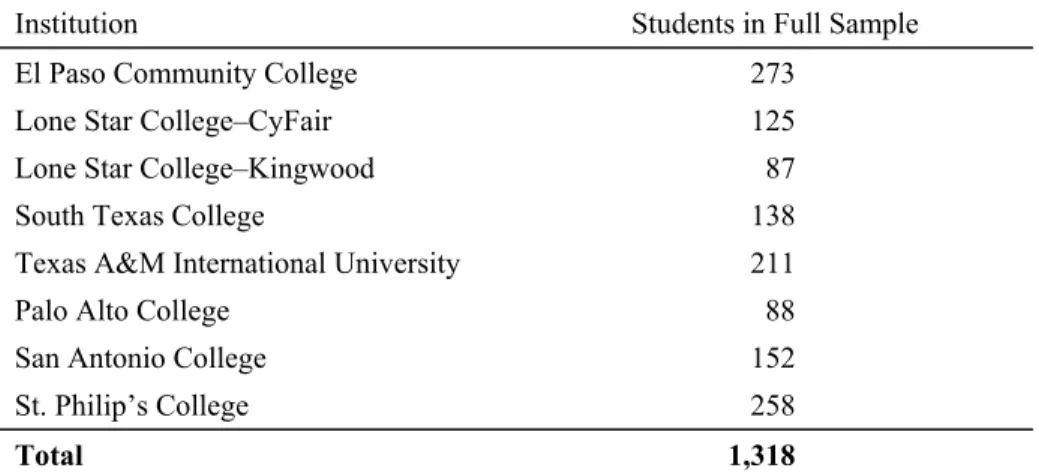
Table ES.1 shows the number of students enrolled in the study at each participating college.
Texas Developmental Summer Bridge Programs Table ES.1
Study Enrollment
Institution Students in Full Sample El Paso Community College 273
Lone Star College–CyFair 125 Lone Star College–Kingwood 87
South Texas College 138
Texas A&M International University 211
Palo Alto College 88
San Antonio College 152
St. Philip’s College 258
This report is the first of two that will be published related to this research. This report presents early impact results from the evaluation and information on how the developmental summer bridge programs were implemented. It focuses on the models used, the range of design features incorporated, how the programs were administered, and how they were perceived by those involved, including college and program leaders, faculty, advisors, and students. A cost study of developmental summer bridge programs is also included. The following are the main findings of this preliminary report:
• All eight programs in the study were implemented with reasonable fidelity to the model framed by the Texas Higher Education Coordinating Board (THECB), but they varied on some key dimensions.
• Program costs averaged about $1,300 per student but varied widely.
• Program group students did not enroll in either the fall or spring semester at significantly different rates than control group students; enrollment rates were high for both groups.
• There is evidence that the program students were more likely to pass college-level courses in math and writing in the fall semester following the summer programs. The findings also suggest that program students were more likely to attempt higher level reading, writing, and math courses compared with control group students.
Implementation of the Developmental Summer Bridge Program
Of the eight developmental summer bridge programs included in the study, four were course-based, while the other four were freestanding. Course-based programs were essentially standard developmental courses, modified or condensed to create a shorter, more intensive experience. Freestanding programs were designed to provide students the opportunity to advance multiple skill levels by offering basic skills instruction and were not based on a specific course. These programs did not require students to enroll in a summer course and did not award any form of credit. In both course-based and freestanding programs, students received additional academic support, instruction in college knowledge, and a stipend upon successful completion.
• All eight programs in the study were implemented with reasonable fidelity to the model framed by the THECB, but they varied on some key dimensions.
The goals of the summer bridge programs were primarily achieved through the teaching and learning that occurred in the classroom and via the various support structures. In most cases, faculty, tutors, and mentors worked together with the goal of facilitating student learning. Bundling an array of services into the programs and actively bringing those services to the students also featured prominently in an underlying theory of change for the summer bridge program model. Each of the core features — accelerated instruction in math, reading, and/or writing; college knowledge; academic support; and the student stipend — functioned together to deliver a coherent learning experience. Though there were many common elements across the eight programs, there were also unique features in each, based on the institutional contexts.
• Program costs averaged about $1,300 per student but varied widely.
Across the eight sites, approximately one third of costs were for staffing and just over one quarter for student resources. Total costs ranged from $62,633 to $296,033, which reflects the significant variance across sites in program enrollment, duration, and intensity. Across the eight sites, the average per-student cost ranged from $840 to $2,349. The average across all eight sites was $1,319 — an estimate of the resources needed per student to offer a developmental summer bridge program.2 Unsurprisingly, there is no strong
evidence of economies of scale in terms of numbers of students enrolled; the high-value stipend is a constant for each student.
Key Impact Findings
Using data obtained from the Texas Higher Education Coordination Board and from the colleges that ran the summer bridge programs, we conducted several analyses of the overall effectiveness of the developmental summer bridge program model, comparing outcomes for program and control group students. Primary indicators of students’ academic progress included enrollment in college in the fall of 2009 and progression in developmental and college-level courses in math, reading, and writing.
• Program group students did not enroll in either the fall or spring semester at significantly different rates than control group students; enrollment rates were high for both groups.
We found that the programs did not have any impact on fall 2009 registration rates; that is, students in the program group registered for courses in the fall 2009 semester at a
2Some costs may be interpreted as start-up costs and so are unlikely to be needed if the programs are
run in subsequent years. If these costs are amortized over three years, then the average cost of the programs is reduced.
rate that is statistically indistinguishable from the registration rate of the control group. This finding contradicts the hypothesis that the summer bridge programs would boost enrollment rates among the program group students.
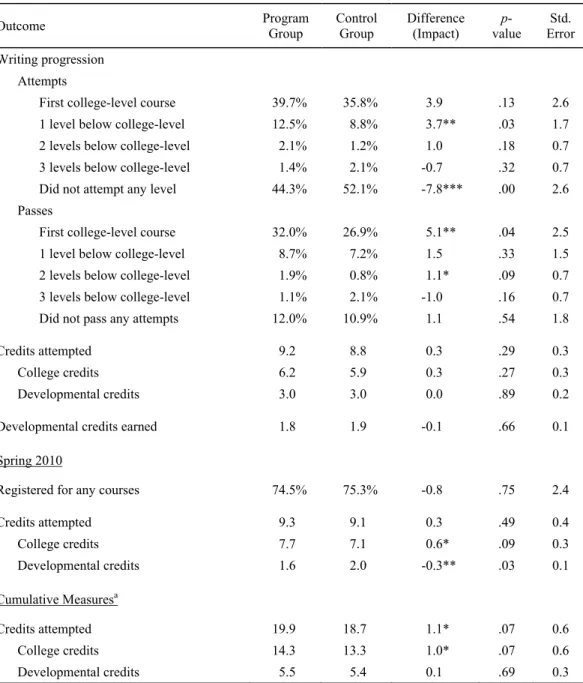
• There is evidence that the program students were more likely to pass college-level courses in math and writing in the fall semester following the summer programs. The findings also suggest that program students were more likely to attempt higher level reading, writing, and math courses compared with control group students.
While students in the program and control groups attempted at least one math course at similar rates, students who participated in a developmental summer bridge program went on to attempt the first college-level math course at a significantly higher rate than students in the control group. A significantly higher percentage of program group students passed this first college-level math course. Program group students were also significantly more likely to attempt a college-level reading course and significantly less likely to attempt the lowest level of developmental reading. Significantly more program group students than control group students attempted at least one writing course and passed their first college-level writing course. In addition, during the 2009–2010 academic year, students in the program group attempted one more college-level credit than students in the control group.
Looking Ahead to the Impact Findings
Overall, the evidence catalogued in this early look at the impact of the developmental summer bridge programs suggests that students’ course-taking patterns are trending in the desired direction. In addition, these early results suggest that developmental summer bridge programs might help prepare students to pass introductory college-level math and writing courses. It is important to note that these early findings reflect student academic progress for only one year, and longer follow-up will provide additional evidence. A final report with two years of longitudinal follow-up will be released within the next year. We expect to learn more about students’ progression through developmental education, their success in college-level courses, and their persistence into and through the second year of college.
Chapter 1
Introduction to the Texas Developmental
Summer Bridge Program
Displayed on billboards and license plates alike, “College for All Texans” is the unofficial motto that is promoted statewide to encourage college readiness, participation, and success in Texas. Policymakers, educators, and business leaders agree that Texas must increase rates of college participation and success to preserve the economic vitality of the state and to secure the future well-being of Texas residents. To address the dynamic needs of the growing state population, Texas launched in 2000 an ambitious statewide strategic plan called Closing the Gaps by 2015. One of the primary objectives of this plan is to increase enrollment and academic success in Texas colleges and universities.
To this end, the Texas Higher Education Coordinating Board (THECB) in 2007 funded 22 colleges to establish developmental summer bridge programs — intensive summer experiences that offer eligible students remedial instruction in math, reading, and/or writing along with an introduction to college. These programs were designed to provide an alternative to traditional developmental education course sequences, which may span several semesters, by helping students with low basic skills to build competencies before entering college. Summer bridge programs have become a popular strategy in Texas for increasing college readiness among recent high school graduates, and other two- and four-year colleges in the state have developed summer bridge programs independent of the THECB.
Nationally, summer bridge programs have emerged as a potentially promising strategy for improving postsecondary success. These programs — typically held in the summer between high school graduation and fall matriculation in college — offer students accelerated, focused learning opportunities that can help them acquire the knowledge and skills needed for college success. But despite the increasing popularity of summer bridge programs across the country, little empirical research on their outcomes or impacts has been conducted.
In 2009, the National Center for Postsecondary Research (NCPR) launched an evaluation of eight developmental summer bridge programs in Texas to assess whether these programs reduce the need for developmental coursework and improve student outcomes in college. The evaluation uses an experimental design to measure the effects of the programs on college enrollment and success. At each college, students who consented to participate in the study were randomly assigned to one of two groups: a program group that
was eligible to participate in a developmental summer bridge program and a control group that was eligible to receive their college’s regular services.
The Developmental Summer Bridge Program Model
The developmental summer bridge programs in this study were offered primarily to recent high school graduates at eight institutions of higher education — one open-admissions four-year university and seven community colleges — throughout the state of Texas in the summer of 2009.1 Students attended the developmental summer bridge
programs three to six hours daily for four to five weeks and received instruction in at least one area of academic need — math, reading, or writing — as well as guidance in the “college knowledge” needed to navigate new academic terrain. The programs were free of charge to the students at most sites. The developmental summer bridge programs at each institution in this study had four common features: accelerated instruction in math, reading, and/or writing; academic support; a college knowledge component; and the opportunity to earn a $400 stipend. All of these features except the stipend were a part of the summer intensive experience model framed by the THECB. The addition of the opportunity to earn a $400 stipend was initiated by NCPR.
Research suggests that underprepared students who participate in summer bridge programs show improvement in their academic performance (Bengis, 1991). Proponents of summer bridge programs suggest there are several ways in which these programs may be more effective than traditional models of developmental education in helping students with below-average skill sets to build competencies and succeed in college. First, the accelerated instruction they provide may allow at-risk students to advance through developmental course sequences in a compressed time frame, ideally enabling recent high school graduates to enroll in college-level courses in the fall of their first year of college. Immediacy is important: at least one study posits that the length of time students spend in developmental education courses is negatively related to degree completion (Adelman, 1998). This could be because students in developmental education arrive at college without being adequately prepared for the work they will have to do there. An alternate hypothesis is that developmental courses themselves tend to discourage students and lead them to drop out. If this hypothesis is true, enrolling students in college-level courses as soon as possible after high school may improve students’ probability of degree attainment.
Another reason that developmental summer bridge programs may be more effective than traditional developmental education sequences is that the former offer an array of support services to ease the transition, both academically and socially, from high school to
college. Program students are required to attend tutorials and other specialized academic support services (e.g., writing or math labs and advising sessions). Services such as these might aid students in their transition to college and encourage their success in the college environment (Santa Rita & Bacote, 1997). Programs link students with a mentor or advisor, and the intensive time frame of summer bridge programs may help students form close relationships with their peers and faculty. Research literature on learning communities and career academies suggests that cohort membership is positively related to relationship building (Maher, 2005; Tinto, 1997). Relationships with mentors, peers, and faculty may strengthen students’ academic and social support networks as well as their ties to the institution, which may in turn promote student persistence.
In addition, developmental summer bridge programs help participants become accustomed to their new environment. Students attending open-access institutions require social know-how to be successful in selecting courses, obtaining help, and navigating bureaucracies. This knowledge is often less accessible to traditionally underserved students. Introducing at-risk students to the college environment and actively teaching them how to navigate and take advantage of services may make these students more likely to persist (Deil-Amen & Rosenbaum, 2003; Rosenbaum, Deil-Amen, & Person, 2006).
Finally, students in the current study who successfully completed the program were provided a $400 stipend. In making the stipend part of the program model, NCPR aimed to enable students to devote more time to their studies by reducing their need to work — providing another mechanism by which summer bridge programs could potentially improve students’ academic performance.
All four components of the developmental summer bridge programs were designed to facilitate students’ success in both the program and their future courses. While all programs contained the features described above, each institution tailored the developmental summer bridge program model to meet the needs of its students and to align with institutional beliefs about best practices.
Key Findings of the Study
This report, prepared by NCPR, documents the implementation and early findings of the efficacy of eight developmental summer bridge programs in Texas. NCPR is a partnership funded by a grant (R305A060010) from the Institute of Education Sciences, U.S. Department of Education. NCPR includes the Community College Research Center at Columbia University’s Teachers College, MDRC, the Curry School of Education at the University of Virginia, and faculty at Harvard University. NCPR conducts studies that
measure the effectiveness of programs designed to help students make the transition to college and master the basic skills needed to advance to a degree.
NCPR began its work in Texas by establishing a close, cooperative agreement with the THECB. A number of developmental summer bridge programs had received THECB funding and technical assistance for two years prior to beginning the research, resulting in a pool of colleges with experience in implementing these programs. Houston Endowment also was interested in increasing participation rates in college and became another partner in this study.
Following an intensive period of initial investigation into the kinds of programs offered around the state, eight colleges were selected to participate. NCPR worked closely with these colleges to recruit students who were defined as at-risk, that is, likely to be placed into developmental education when they entered college. Students were then chosen by random assignment to participate in the limited number of slots available in the eight programs. Students who participated in the programs, as well as those not selected to participate (who were instead assigned to the control group), were asked to allow researchers access to their enrollment and transcript data. Access to these data permitted researchers to assess whether participation in a summer bridge program would affect key student outcomes, such as enrollment in college, need for developmental education, academic performance, credit accumulation, and persistence. In addition, site visits were made to participating colleges to learn how the summer bridge programs were designed and implemented.
This report is the first of two that will be published related to this research. This report presents early impact results from the evaluation and information on how the developmental summer bridge programs were implemented. It focuses on the models used, the range of design features incorporated, how the programs were administered, and how they were perceived by those involved, including college and program leaders, faculty, advisors, and students. A cost analysis of the developmental summer bridge programs is also included. The following are the main findings of this preliminary report:
• All eight programs in the study were implemented with reasonable fidelity to the model framed by the THECB, but they varied on some key dimensions.
• Program costs averaged about $1,300 per student but varied widely.
• Program group students did not enroll in either the fall or spring semester at significantly different rates than control group students; enrollment rates were high for both groups.
• There is evidence that the program students were more likely to pass college-level courses in math and writing in the fall semester following the summer programs. The findings also suggest that program students were more likely to attempt higher level reading, writing, and math courses compared with control group students.
Organization of This Report
The following chapters provide greater detail about the study. Chapter 2 details the study’s random assignment methodology and provides information on the sample characteristics. Chapter 3 provides information on program implementation, administration, and costs. Chapter 4 details participating students’ experiences and perceptions. Chapter 5 discusses early impacts on selected outcomes. Chapter 6 provides a brief conclusion. A final follow-up report, due to be released in 2012, will provide longer follow-up on students and additional measures of the programs’ effects.
Chapter 2
Study Methods
This chapter provides a chronological overview of the site selection process, a description of NCPR’s collaboration with the THECB, and information on site visit activities, conducted during the summer of 2008, that facilitated final selection of sites. In addition, this chapter describes the random assignment process, introduces the students in the sample, and outlines the data sources for the study.
Site Selection
Criteria for the eligibility of programs to be included in the NCPR research were defined by the legislation that established the programs that were funded by the THECB (see Section 29.098, Texas Education Code). Because the THECB criteria did not require all programs to function the same way, program designs varied somewhat across colleges. For example, several colleges offered developmental summer bridge programs specializing solely in math, while others offered math, reading, and writing. It should be noted that five of the programs in this study were not funded by the THECB at the time of site selection, but the colleges still agreed to model their programs on the THECB criteria.
Site selection was an extensive and multi-phased process. NCPR searched for sites that met a set of criteria for potential inclusion in the study, specifically those that: (1) had offered developmental summer bridge programs for several years; (2) were able to serve large numbers of students; (3) offered programs targeted to students in need of remediation; (4) included accelerated coursework in developmental education (math, reading, and/or writing), academic supports, and a college knowledge component; and (5) were able and willing to participate in a rigorous evaluation of the program.
To identify possible college partners, we looked first at sites that submitted proposals in response to the THECB request for proposals for developmental summer bridge program funding in 2007 and 2008. We then conducted Internet searches for summer bridge programs at Texas colleges and universities and followed up with phone calls to program administrators to learn more about the programs and share information about the NCPR study. Finally, in the summer and fall of 2008 we visited the colleges that best met our criteria.
NCPR initially selected seven sites to participate in the study: El Paso Community College, San Antonio College, Texas A&M International University, St. Philip’s College,
South Texas College, and Lone Star College campuses at CyFair and Kingwood.1 To
increase the number of students participating in the study, NCPR selected an eighth site, Palo Alto College, in February of 2009. Three of these sites’ programs were funded by the THECB; the others were funded by the colleges themselves. All sites received additional program funding from NCPR.
In an effort to ensure that the programs were strong for summer 2009, NCPR offered technical assistance to all of the sites. One faculty expert on academic preparedness and remediation in community colleges worked with several colleges on creating strong summer bridge curricula. One institution requested that NCPR provide funds that would allow summer bridge instructors and tutors to work with a faculty member and expert on developmental mathematics education to review the curriculum and refine instructional practices. All of the participating institutions also attended a conference in which technical assistance was provided on various instructional, administrative, and recruitment issues related to the implementation of developmental summer bridge programs.
Data Collection and Analysis Design
The following provides a broad overview of the data collection plan and process used in the NCPR research, including sample criteria, size, recruitment, and random assignment procedures.
Sample Criteria
NCPR set a total recruitment goal of 1,400 students to ensure that the evaluation would be sufficiently powerful to detect relevant differences in outcomes as statistically significant. In other words, NCPR sought enough students in both the program and control groups to ensure that if the programs had a meaningful impact on students we would have the statistical power to know that those differences were caused by the programs and not by chance. The specific sample goals for each college in the study were based on several factors, including the capacity of the program, the number of students enrolled in the program in previous years, and the college’s ability to maintain program quality at scale. These college-level enrollment goals, which ranged from 300 students (serving 180 students) to 75 students (serving 45 students), represented a large increase over the number of students served in previous summer terms for many of the institutions. Four of the sites met or exceeded their target numbers, two reached over 80 percent of their target numbers,
1The Lone Star College System (LSCS) runs summer bridge programs at several of its five
campuses. NCPR partnered with two of the LSCS campuses, which were treated throughout the study as distinct sites.
and two reached over 50 percent of their target numbers. At the conclusion of the random assignment process, there were 1,332 students in the study (95 percent of the total target); this relatively small shortfall does not have any analytic implications for the study.
Recruitment
Recruitment was a major undertaking at all of the institutions, especially where sites had set high recruitment goals. For example, St. Philip’s College, which had the highest target, enrolled 90 students in its developmental summer bridge program in 2008; the recruitment target (for program and control groups combined) for summer 2009 was 300 students — a 233 percent increase. Colleges had to scale up their recruitment efforts and their program offerings to meet their targets. To support these efforts, NCPR provided funding to the colleges, stipends to the students, and technical assistance. Institutions used their recruitment funds for a variety of purposes, including hiring additional recruitment staff, sending mass mailings to qualifying high school students, developing posters and brochures to distribute at high schools, and providing informational breakfasts or lunches for high school counselors. NCPR and the colleges believed that jobs and other stimulus-funded opportunities might significantly deter students from participation in the summer bridge programs. With NCPR funding from Houston Endowment, sites were able to offer students the opportunity to receive a $400 stipend; this feature was added as a core component of the program model. Program administrators believed that the opportunity to earn a $400 stipend was a major incentive for many students to join the study.
All eligible students who applied for admission into a developmental summer bridge program and agreed to participate in the study at participating institutions in the summer of 2009 were included in the research sample. About 60 percent of the students were assigned into the summer bridge program group (793 students) and 40 percent to the control group (525 students). Table 2.1 shows the numbers of students who entered the study from each participating college.
All colleges reached out to students who were likely to enroll (or were already registered) in the fall. In addition, some of the colleges devoted significant efforts to recruiting students who were undecided about college attendance in hopes that the summer bridge program could provide extra impetus for them to attend college in the fall.
Texas Developmental Summer Bridge Programs Table 2.1
Program Enrollment at Participating Institutions in Summer 2009
Institution Program (60%) Control (40%) Recruited Total Recruitment Target Recruitment % of Target
El Paso Community College 165 108 273 233 117
Lone Star College–CyFair 75 50 125 125 100
Lone Star College–Kingwood 52 35 87 75 116
South Texas College 83 55 138 167 84
Texas A&M International University 126 85 211 167 126
Palo Alto College 53 35 88 167 53
San Antonio College 91 61 152 283 54
St. Philip’s College 154 104 258 300 86
Total 799 533 1,332 1,517 88
Intake and Random Assignment
While the institutions’ program staff focused much of their energy on recruitment during the winter and spring of 2009, the NCPR research team created materials to help the sites navigate the complex student intake process. NCPR drafted intake flowcharts and developed individualized random assignment manuals adapted to the specific needs of each college and university, prepared the baseline information forms (BIF) and informed consent forms, and created an end-of-program survey for students. These materials were all shared and discussed extensively with the sites during regularly scheduled conference calls in the months leading up to the intake sessions.
Subsequently, NCPR research teams scheduled on-site training days for all partner sites. These visits included a review of random assignment manuals, training on computers for entering BIF information and navigating the online random assignment program, and informational sessions for college administrators interested in learning more about the NCPR study. The institutions distributed $30 gift cards to students who completed the BIF and went through the random assignment process.
Pooled Data for Analysis
While the programs varied in their delivery and implementation (as discussed in the following chapters), because all of the programs contained four common features — an accelerated format, a college knowledge component, academic support, and a stipend — NCPR pooled the data across all eight sites for analysis. Our site visits during the summer of 2009 allowed us to verify the presence of these four features, giving us confidence that the programs were substantially similar.
Characteristics of Participating Students
The students in the summer bridge programs were predominately Hispanic, recent graduates of high school, and willing to spend long hours in the summer studying to prepare themselves to enter college in the fall. (As one said, “I want to attend so I can take college classes and not remedial courses and waste money.”) Based on student baseline data collected at the eight colleges participating in this study, the overall demographic and educational characteristics were very similar for the program and control groups. Importantly, an omnibus test for significant differences between the two groups found that there were no systematic differences between program and control group students on the set of background characteristics collected, confirming that the random assignment process successfully created two comparable groups of students. Table 2.2 indicates the characteristics of students in the sample.
While demographic characteristics were comparable between students in the program and control groups, they did vary among student populations by college. For example, as a result of recruitment efforts that targeted continuing education students as well as recent high school graduates, South Texas College had a considerably larger number of older students than did the other colleges. While most participating students at the other colleges were 17–19 years old, more than half of participating students at South Texas College were 19 years old or older. Additionally, approximately a third of students at South Texas College had children — a significantly larger proportion than at the other colleges.
In terms of race and ethnicity, El Paso Community College, San Antonio College, Palo Alto College, South Texas College, and Texas A&M International University served mostly (more than 90 percent) Hispanic students. At both Lone Star College–Kingwood and Lone Star College–CyFair, fewer than half of students were Hispanic (the balance was comprised of White; African American; and, to a lesser extent, Asian American students). All institutions served more females than males, with Palo Alto College having the most imbalanced gender ratio at almost 3:1.
Texas Developmental Summer Bridge Programs Table 2.2
Participant Demographics
Program Control All
N 793 525 1,318 Gender Female 62.5% 62.1% 62.4% Male 37.5% 37.9% 37.6% Age as of June 1, 2009 Mean age 18.9 19.1 19.0 Age 18 or under 84.7% 84.8% 84.7% Age 19 or 20 11.9% 10.1% 11.2% Age 21 or over 3.4% 5.2% 4.1% Race/ethnicity African American 6.8% 6.4% 6.6% Hispanic 84.3% 84.2% 84.3% White 8.8% 8.6% 8.7% Other 1.8% 2.0% 1.8% Educational aspirations High school 12.8% 11.8% 12.4% Some college 1.5% 1.2% 1.4% Certificate 1.7% 1.2% 1.5% Associate degree 10.1% 11.2% 10.5% Bachelor’s degree 34.9% 34.8% 34.8% Master’s degree 34.9% 34.2% 34.6%
Doctoral or professional degree 3.2% 4.9% 3.9%
Educational attainment
Previously attempted college credits 23.4% 25.5% 24.2%
Previously earned college credits 21.0% 21.4% 21.2%
Graduated high school 79.5% 80.0% 79.7%
2007 or earlier 1.5% 4.6% 3.3%
2008 1.9% 2.3% 2.0%
2009 72.4% 71.% 71.9%
Fall 2009 college attendance plans
Table 2.2 (continued)
Program Control All
Part-time (3 courses per term or less) 22.4% 22.3% 22.4%
Not planning to attend 0.0% 0.0% 0.0%
Texas Success Initiative (TSI)
Met math TSI standards 20.2% 21.0% 20.5%
Met reading TSI standards 18.5% 16.4% 17.7%
Met writing TSI standards 39.5% 38.1% 38.9%
SOURCE: Self-reported by students on the Baseline Information Form.
NOTES: A student’s scores on one of several placement tests (i.e., ASSET, COMPASS, ACCUPLACER, and THEA) determine whether the student meets the TSI minimum passing standard. A passing score on the TSI indicates that a student is ready to enroll in freshman-level academic coursework. While institutions may set higher minimum passing scores than the state does, this report relies on the cut scores established by Texas. There was no statistically significant difference between the program and control group students in any of the three areas (math, reading, or writing) at baseline. Although the total number of students recruited was 1,332, the total number of students in the sample with usable data who remained in the study was 1,318.
All students said that they planned to attend college — either part or full time — in the fall of 2009, the semester immediately following enrollment into the study. Since the colleges utilized different placement tests (ACCUPLACER, Texas Assessment of Knowledge and Skills, COMPASS, ACT, etc.) to determine developmental placement, we were unable to capture the degree of developmental need for each student. However, we were able to examine student scores on the Texas Success Initiative (TSI), a college readiness indicator used within the state of Texas.
Of the 1,332 students who participated in random assignment, 793 students were selected to participate in the developmental summer bridge programs at participating colleges, while 525 students were assigned to the control group. Among those selected to participate in the developmental summer bridge programs, a total of 689 students (86 percent) actually enrolled.
Data Sources
Several data sources were used for the analyses presented in this report. First, students completed a questionnaire called the baseline information form (BIF) prior to the random assignment process — that is, before they could be influenced by the program. The BIF collected demographic and other background information on students. Baseline data were used to identify students for gender-based subgroup analyses, in which the outcomes
for men and women were analyzed separately and compared to determine whether programs had different effects for men and women. Second, the eight colleges that held summer bridge programs provided student-level transcript data for the sample members (program and control) participating in the study. These data provided a detailed look at sample members’ performance in college through measures such as enrollment status, credits attempted, and credits earned. Third, data were collected from the THECB. The THECB collects data on student enrollments statewide, including aggregate academic measures, such as the level of developmental courses attempted and passed. In addition, qualitative data were collected through interviews and observations conducted during two-day visits to each of the participating colleges during the summer of 2009.
Chapter 3
The Developmental Summer Bridge Program Models
This chapter describes the eight colleges and their summer bridge programs and discusses the four core components of the programs:
• accelerated instruction in math, reading, and/or writing;
• academic support;
• a college knowledge component; and
• a $400 student stipend.
This chapter reports the findings of our site visits, during which we observed how the program design at each college incorporated the expected program components and looked for indicators of high-quality implementation. This chapter also provides an overview of the management of the summer bridge programs, including information on the costs of implementing these programs.
The Colleges and Their Models
The eight institutions selected for inclusion in the study are El Paso Community College, Lone Star College–CyFair, Lone Star College–Kingwood, South Texas College, Texas A&M International University, Palo Alto College, San Antonio College, and St. Philip’s College. Of their developmental summer bridge programs, four were course-based, while another four were freestanding. Course-based programs were based on standard developmental courses, modified or condensed to create a shorter, more intensive experience. Students enrolled in course-based programs also received additional academic supports, guidance in college knowledge, and a $400 stipend to supplement their summer course work. Students were typically awarded developmental education credit1 (below the
college level) for completion of these courses. Freestanding programs were designed to provide students the opportunity to advance multiple skill levels by offering basic skills instruction and were not based on a specific course. These programs did not require enrollment in a summer course and did not award any form of credit. A brief description of each college and its developmental summer bridge program is provided in the pages that follow.
El Paso Community College
El Paso Community College (EPCC) is an urban institution that was established in 1969. El Paso County Community College District includes five campuses; its developmental summer bridge program, Project Dream, was operated at four of the campuses. In fall 2008, EPCC had a full-time-equivalent enrollment of 15,201 students. The student population was about 85 percent Hispanic, 8 percent White non-Hispanic, and 2 percent African American. These percentages closely reflect the demographics of El Paso County.
Project Dream has operated since 2006 and runs for five weeks each summer. The program was one of three in the study to receive funding through a grant from the THECB for 2009–2011. Project Dream, a freestanding program, enrolled students in coursework in math and reading, as well as a Dream Class that incorporated writing, cultural awareness, and college knowledge. Program instructors, trained in pedagogy, worked to offer contextualized instruction. Program students were mentored by older college students.
Lone Star College–CyFair
Lone Star College–CyFair, established in 2003, is the newest of five campuses of the Lone Star College System (LSCS), which serves the suburbs of Houston. In fall 2008, Lone Star College–CyFair had a full-time-equivalent enrollment of 6,709 students. The student population in 2008 was about 40 percent White non-Hispanic, 30 percent Hispanic, 10 percent African American, and 10 percent Asian American.
The Summer Bridge Program has operated since 2006 and runs for four weeks. In this course-based program, students participated in one developmental education course in math, reading, or writing. All had placed into the highest-level developmental course in the subject area. Other important elements of the program included the presence of tutors in each class, the use of MyMathLab and MyWritingLab software, college knowledge workshops, and individually assigned mentors for every student.
Lone Star College–Kingwood
Lone Star College–Kingwood, which is also part of the five-campus LSCS, was established in 1984. In fall 2008, Lone Star College–Kingwood had a full-time-equivalent enrollment of 3,820 students. The student population at Lone Star College–Kingwood in 2008 was about 55 percent White non-Hispanic, 20 percent Hispanic, and 12 percent African American.
The college has offered the four-week Summer Bridge Program since 2006. The course-based program offered classes in math and writing, and students took only one subject. Students in the writing option had class for four hours per day, while those in math had class for three hours per day. Both options were for students whose placement test scores put them at the highest level of the developmental course sequence.
Important elements of the program included tutors who were present in each class and available to provide students with extra help before and after class, four one-hour workshops on study skills and college knowledge, and College Connection mentors with structured time to interact with students.
South Texas College
South Texas College, founded in 1993, is a community college that recently began to offer baccalaureate degrees. It is located in McAllen, Texas, near the border of Mexico. In fall 2008, South Texas had a full-time-equivalent enrollment of 12,644 students. The student population at South Texas is primarily Hispanic (about 95 percent). Interestingly, the Hispanic student population of South Texas College is higher than the proportion of Hispanics in the city of McAllen.
The summer bridge program, called Jumpstart, was established in 2007 (the program did not run in 2008). A freestanding program, Jumpstart runs for four weeks and focuses only on developmental math instruction. Significant elements of the program included weekly college knowledge workshops, use of MyMathLab to supplement instruction, tutors in the classrooms and labs, and daily journal writing to informally develop writing skills. Students in the math courses were grouped without regard for the level of remediation needed.
Texas A&M International University
Texas A&M International University (TAMIU) is a four-year institution that first started to accept students in 1970 and became a campus of the Texas A&M University System in 1989. It is the only university in the NCPR study and one of three institutions in the study to receive funding through a grant from the THECB. Located in Laredo on the border of Mexico, TAMIU has a heavily Hispanic student population (over 90 percent). In fall 2008, TAMIU had a full-time-equivalent enrollment of 4,222 students.
The freestanding summer bridge program at TAMIU started in 2007. In previous summers, the program offered English and math, but for the summer 2009 program, the staff decided to focus solely on developmental math instruction with all levels mixed together in each section. The program was called Intensive College Math Prep. In addition
to the intensive, accelerated math instruction, other important elements of the program were tutor-administered math lab hours, weekly meetings with older-student mentors, and weekly college knowledge presentations. The program ran for five weeks.
Palo Alto College
Palo Alto College, a member of the Alamo Community College District (ACCD) in San Antonio, was established in 1983. In fall 2008, the college had a full-time-equivalent enrollment of 4,486 students. The student population in 2008 was about 66 percent Hispanic, 30 percent White non-Hispanic, and 2 percent African American. The demographics of Palo Alto College closely resemble those of greater San Antonio, where 59 percent of the population are Hispanic or Latino of any race.
In the past, Palo Alto College ran summer bridge programs that focused on SAT/ACT preparation. In the summer of 2009, Palo Alto College started the Early Start program, which offered only developmental math in a course-based format. Students attended class for four weeks. Distinctive features of the program included tutors in each class, provision of breakfast and lunch to all students, a cohort model, and a student development course.
San Antonio College
San Antonio College, also a member of ACCD, was established in 1925 and in fall 2008 had a full-time-equivalent enrollment of 12,226 students. The student population is about 48 percent Hispanic, 42 percent White non-Hispanic, and 5 percent African American. The summer bridge program at San Antonio College, established in 1999, is called Senior Summer.
Senior Summer allows students to enroll in developmental math, reading, and writing as well as college-level courses. Participating students chose two courses from the regular college summer offerings. The program ran three and a half hours per day for five weeks, with an additional hour two days each week. The program staff emphasized that they recruit students who are often overlooked as “college material.” Important elements of Senior Summer included enrollment in actual developmental-level courses, a pared-down version of a student development course, assistance with financial aid forms, and fostering college-going attitudes among students.
San Antonio College had difficulty recruiting students for the 2009 summer program. In previous years, program staff had worked closely with individual students during the recruitment process to provide assistance in completing financial aid forms, which is a key part of this course-based program because students pay tuition. Because of
the random assignment design, it became more complicated to work effectively with individual students.
St. Philip’s College
St. Philip’s College, another ACCD member in San Antonio, is a historically Black college and Hispanic-serving institution that was founded in 1898 and became a public two-year institution in 1942. In fall 2008, St. Philip’s College had a full-time-equivalent enrollment of 5,533 students. The student population is about 47 percent Hispanic, 34 percent White non-Hispanic, and 16 percent African American. The freestanding summer bridge program is called the Fresh X Summer Program.
The Fresh X program provides developmental education instruction in math, reading, and writing. Students took courses in one, two, or all three developmental subject areas based on remediation needs as indicated by ACCUPLACER2 test scores. The contact
hours of the program varied depending on the number of courses taken. The program ran five days per week for four weeks. Fresh X was marketed as an ACCUPLACER refresher course, and the goal of the program was to improve students’ scores on the test. The instruction was heavily focused on passing the test as a result. Other important elements of the Fresh X program included support from the math, writing, and reading labs; a credit-bearing student development course; and use of adaptive learning software to supplement math instruction.
Developmental Summer Bridge Program Features
The goals of each summer bridge program were primarily achieved through the teaching and learning that occurred in the classroom and the various support structures. In most cases, faculty, tutors, and mentors worked together with the goal of facilitating student learning. Bundling an array of services into the programs and actively bringing those services to the students — or being “intrusive,” as one program administrator described it
— features prominently in the underlying theory of change for the summer bridge program model. Teaching and learning at each site were directly influenced by the structure of the summer bridge program. Each of the core features — accelerated instruction in math, reading, or writing; academic support; the college knowledge component; and the student stipend — functioned together to deliver a coherent learning experience. Though there were many common elements across the eight programs, each program also had unique features to accommodate the institution’s student population or, in some cases, to fit with the
academic calendar or institutional culture. This section describes each of the four core program features in detail.
Accelerated Instruction in Math, Reading, and/or Writing
All sites offered developmental education instruction in an accelerated format, with some degree of contextualized learning and active learning. Formats, schedules, and content differed from site to site and were influenced by the subject areas taught, as well as by program goals. South Texas College, TAMIU, and Palo Alto College offered only math; Lone Star College–Kingwood offered math and writing; and St. Philip’s College, EPCC, Lone Star College–CyFair, and San Antonio College offered a combination of math, reading, and writing. A few programs offered one developmental subject (e.g., math) but taught students of different developmental levels together in a freestanding program.
The length and intensity of the developmental summer bridge programs also varied, as shown in Table 3.1. The minimum time required to complete a program was about 35 hours for a student taking only one subject at St. Philip’s College; a large majority of the college’s students, though, took two classes for over 50 hours of program time. Conversely, students enrolled at EPCC or TAMIU spent approximately 100 hours on campus. These hours represent required time at the college and do not include hours spent on homework or group project assignments.
Instructors appreciated the flexibility offered by the freestanding programs. Freestanding programs could be structured in the ways that program coordinators and faculty members thought best, without needing to follow pre-established curriculum guidelines. As one faculty member from EPCC stated, “I think what makes this program neat is that it is different from a [regular developmental] class because you are allowed to kind of step out of the box and be a little more creative with what you are doing, as opposed to having to follow the syllabus.” A student at EPCC saw this flexibility as a way to smooth the passage between high school and college and commented, “It’s not a hardcore college class, but not high school either. … It makes the transition easier.”
Student assessment practices also differed between the course-based and freestanding programs. As with a standard developmental course, students enrolled in course-based programs were graded based on performance; students who earned a C or better earned developmental credit and were allowed to advance to the next course in the sequence. In contrast, students in freestanding programs were not given traditional grades. Rather, they worked toward retaking and passing the institution’s placement test (COMPASS, ACCUPLACER, etc.) at the end of the program. All programs were designed to help developmental students advance at least one level of proficiency during the program.
Texas Developmental Summer Bridge Programs Table 3.1
Structure of Developmental Summer Bridge Programs
Institution Hours Weeks Course-Based College LevelLevels Below
Student Ability Levels Subjects Offered El Paso Community
College 100 5 No All Mixed
Math, Reading, and
Writing Lone Star
College–CyFair 67 4 Yes 1 Not Mixed
Math, Reading, and Writing Lone Star College– Kingwood 64 (Math)
52 (English) 4 Yes 1 Not Mixed
Math and Writing
South Texas
College 80–100 4 No All Mixed Math
Texas A&M International University
100 5 No All Mixed Math
Palo Alto College 60–76 4 Yes (lowest) 2 and 3 Not Mixed Math
San Antonio
College Approx. 97 5 Yes All Not Mixed
Math, Reading, and Writing St. Philip’s College Approx.
35–95 4 Yes All Mixed
Math, Reading, and
Writing
Program administrators generally believed that the accelerated format offered students a chance to quickly increase their readiness for college. A number of faculty members concurred, believing that there were clear instructional advantages to focusing on one or two subject areas exclusively for a short period of time. However, others found this format to be pedagogically challenging. Some faculty remarked that a summer program is