Available Online at www.ijpret.com 1236
INTERNATIONAL JOURNAL OF PURE AND
APPLIED RESEARCH IN ENGINEERING AND
TECHNOLOGY
A PATH FOR HORIZING YOUR INNOVATIVE WORK
IDENTIFICATION OF FACE AND FINGERPRINT USING SERIAL MULTIMODAL
BIOMETRIC TECHNIQUE
PRANALI ANANT NALANGE1, PROF. MANISHA MADHUKAR AMBEKAR2 1. P.G Student, Department of computer science P.E.S College of Engineering, Aurangabad
2. Associate Professor, Department of computer science P.E.S College of Engineering, Aurangabad
Accepted Date: 15/03/2016; Published Date: 01/05/2016
\
0
Abstract: Multimodal biometric recognition system, which is having two modes of operation
they are parallel mode and another is serial mode. The parallel mode needs that all types of desired traits be always captured for each individual or user in both the enrollment as well as the recognition stages. In the serial mode, the user goes through the authentication process step by step. At each step, a certain type of trait or modalities is sampled and matched against a template library. Once she or he passes the authentication at a certain step, all the later steps will be ignored. In this project we concentrate only on serial modes of operation.
Keywords: Multimodal biometric, Face, Fingerprint, Serial mode of operation
Corresponding Author: MS. PRANALI ANANT NALANGE Access Online On:
www.ijpret.com
How to Cite This Article:
Pranali Anant Nalange, IJPRET, 2016; Volume 4 (9): 1236-1243
Available Online at www.ijpret.com 1237
INTRODUCTION
The term biometrics is extracted from the Greek words bio (life) and metrics (to measure). Automated biometric systems have only become usable over the last few decades, due to important advances in the field of computer processing [01].
Biometrics is specified as the science of determining an individual based on his/her physical or behavioral property. As password or PIN can lost or forgotten, but biometrics cannot be forgotten or lost and needs physical existence of the individual to be authenticated. Thus personal authentication systems using biometrics are more trustworthy, proper and valuable than the traditional identification methods [02].
2. Literature Survey
There are two types of biometric systems are available. They are unimodal and multimodal.
Biometric systems that perform using any single biometric characteristic are called unimodal biometric system. But unimodal biometric systems having some disadvantages that’s why now a day’s multimodal biometric systems used in large amount.
Biometric systems that perform using combination of two or more than two biometric traits are called multimodal biometric system.
There are two modes of operation are available in multimodal biometric system. One is parallel mode and another is serial mode.
The parallel mode needs that all types of desired traits are always captured for each individual or user in both the enrollment as well as the recognition stages.
In the serial mode, the user goes through the authentication process step by step. At each step, a certain type of trait or modalities is sampled and matched against a template library. Once she or he passes the authentication at a certain step, all the later steps will be ignored. Generally speaking, most individuals or users do not have to go through the whole chain of steps for the authentication. As a result, user time and effort will be automatically saved and system efficiency improved which makes the serial mode more promising in most real applications than the parallel mode [03].
Available Online at www.ijpret.com 1238
2.1 summaries of works done on multimodal biometrics
C.N.Dinakardas et al. [04] proposed a multimodal approach for face and fingerprint, with fusion at matching score level using fisherface and PCA (Principal component analysis) algorithm.
A.Rattani et al. [05] proposed a multimodal approach for face and fingerprint, with fusion at feature extraction level using scale invariant feature transform (SIFT) and minutiae matching technique algorithms.
A.S.Deshpande et al. proposed a multimodal biometric system for fingerprint, face and palmprint, with fusion at matching score level using minutiae extraction, eigenfaces approach, Gabor transformation as well as principal component analysis (PCA) algorithms.
Lin Hong et al. [06] proposed a multimodal approach for face and fingerprint, with fusion at decision level using eigenfaces approach and minutiae extraction algorithms.
N. Geethanjali et al. [07] proposed a multimodal biometrics approach for ATM system with the help of fingerprint, iris and face. In this approach feature extraction level fusion is used. Minutiae extraction, hamming distance and eigenfaces algorithms are used by the author for biometric system purpose.
J.Deny et al. [08] proposed a multimodal biometric system for fingerprint, speech or voice and face, with fusion at feature extraction level using minutiae matching, hidden markov model (HMM), Kernel Direct Discriminant Analysis (KDDA) algorithms.
Arun Ross et al. [09] proposed multimodal biometric system for face, fingerprint and hand geometry, with fusion at matching score level using eigenfaces, principal component analysis (PCA) , minutiae matching and Euclidean distance algorithms.
Muhammad Imran Razzak et al. [10] proposed a multimodal approach for face and finger veins, with fusion at score matching level using Linear Discriminant Analysis (LDA) and Client Specific Linear Discriminant Analysis (CSLDA) algorithms.
Available Online at www.ijpret.com 1239 Praveen Kumar Nayak et al. [12] proposed a multimodal biometric approach for face and fingerprint, with fusion at decision level using Principal Component Analysis (PCA) and Multilayer Perceptron (MLP) algorithms.
3. Proposed Work
3.1 block diagram
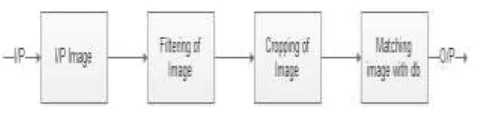
Figure 3.1: Block diagram for proposed system
First take an input face and fingerprint image of a person in digital form i.e. scanned format. After taking scanned images of face and fingerprint of any person filter those images. That is before matching filtering of data will be done.
Match the input image with the database image using bit by bit or pixel by pixel matching. After that necessary output will be generated. And according to that decide the image is matched or not.
3.2 modules
In this system there are five modules are available. They are as follows.
3.2.1 User Module
In this module, details of user like name, age, address, phone number, password and image is taken.
3.2.2 Image Filtering Module
In this module, image is to be cropped and resolution, contrast, color is to be adjusted.
3.2.3 Image Extraction Module
Available Online at www.ijpret.com 1240 3.2.4 Matching Module
In this module, input image and extracted image will be matched using matching algorithm. For that purpose we use one threshold value. If the matching score is equal to or greater than threshold value then the match is successful or person is authorized. Otherwise if match score is less than threshold value, then the match is unsuccessful or person is unauthorized.
3.2.5 Output Module
In this output module, necessary output will be generated.
3.3 algorithm
For the matching purpose I use pixel by pixel matching or bit by bit matching algorithm. The steps of that algorithm are as follows.
Step 1: Take input an image of person in digital form i.e. scanned form.
Step 2: Filtering of images are done.
Step 3: Cropping images into fix sizes.
Step 4: Particular image will be extracted from database.
Step 5: Input image and extracted image will be match.
Step 6: Generated output decides image is match or not.
4. Performance Analysis
Available Online at www.ijpret.com 1241
Table 4.1 EER, FAR, FRR for recognizer
Trait Algorithm FAR(%) FRR(%) EER(%)
Face Pixel by pixel 1.89 2 0.945
Fingerprint Pixel by pixel 0.76 1.58 0.48
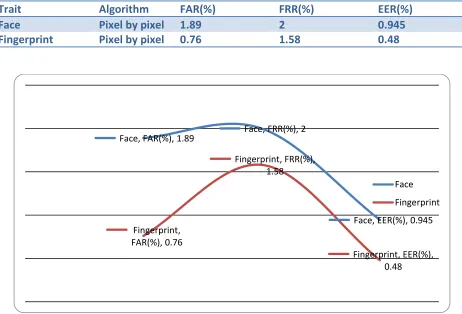
Figure 4.1 EER Graph for Each Biometric Trait
FacePix Databse Link : https://cubic.asu.edu/content/facepix-database
CASIA Database Link: http://biometrics.idealtest.org/dbDetailForUser.do?id=7
5. CONCLUSION
Biometrics is vital for human identification and made more secure by combining two or more biometrics known as multimodal biometrics system. The unavoidable problem in unimodal biometric, that can be correcting by using of multimodal to enhance the performance for recognition and verification with different types of biometrics. The people with bad intentions are successful in cheating unimodal biometric systems. But multimodal biometric systems are difficult to be deceived. It is more difficult for the criminals to obtain two traits or modalities of the same individual. The searching is easy in large databases and in better way to match or non
Face, FAR(%), 1.89 Face, FRR(%), 2
Face, EER(%), 0.945 Fingerprint,
FAR(%), 0.76
Fingerprint, FRR(%), 1.58
Fingerprint, EER(%), 0.48
Face
Available Online at www.ijpret.com 1242 match by using of threshold to determine the degree of similarity needed to result in a match declaration by the acceptance or rejection of biometric data.
RESULT
By observing values from the table 4.1 and analyzing fig. 4.1, we conclude that EER for face is 0.9 and EER for fingerprint is 0.48.
Lower the value of EER better the biometric system.
REFERENCES
1. Web site- http://www.biometrics.gov/documents/biohistory.pdf
2. Mrs. Asmita S. Deshpande, Mr. S. M. Patil, Mrs. Rekha Lathi, “A Multimodal Biometric Recognition System based on Fusion of Palmprint, Fingerprint and Face” International Journal of Electronics and Computer Science Engineering ISSN- 2277-1956
3. Qing Zhang, Yilong Yin, De-Chuan Zhan, and Jingliang Peng, “A Novel Serial Multimodal Biometrics Framework Based on Semisupervised Learning Techniques” IEEE Transactions on Information Forensics and Security, Vol. 9, No. 10, October 2014
4. C. N. Dinakardas, S. Perumal Sankar, and Nisha George, “Bimodal Person Identification System” International Journal of Machine Learning and Computing, Vol. 3, No. 2, April 2013 5. A. Rattani, D. R. Kisku, M. Bicego, Member IEEE and M. Tistarelli, “Feature Level Fusion of Face and Fingerprint Biometrics ”
6. Lin Hong and Anil Jain, “Integrating Faces and Fingerprints for Personal Identification”
7. N. Geethanjali and K. Thamaraiselvi, “Feature Level Fusion of Multimodal Biometrics and Two Tier Security in ATM System” International Journal of Computer Applications (0975 – 8887) Volume 70– No.14, May 2013
8. J. Deny, Dr. M. Sudhararajan, “Efficient Methods of Multimodal Biometric Security System- Fingerprint Authentication, Speech and Face Recognition” International Journal of Electrical and Electronics Research Vol. 2, Issue 2, Month: April - June 2014
9. Arun Ross, Anil Jain and Jian-Zhong Qian, “Information Fusion in Biometrics” Appeared in Proc. of 3rd Int'l Conference on Audio- and Video-Based Person Authentication (AVBPA), Sweden, June 6-8, 2001
10. Muhammad Imran Razzak, Muhammad Khurram Khan, Khaled Alghathbar, and Rubiyah
Available Online at www.ijpret.com 1243 11. Anil Jain, Lin Hong, and Yatin Kulkarni, “A Multimodal Biometric System Using Fingerprint, Face, and Speech”
12. Praveen Kumar Nayak, Prof. Devesh Narayan, “Multimodal Biometric Face and Fingerprint