Microorganisms for wheat improvement under biotic stress and
dry climate
Wafaa Mohamed Haggag
1*, Rafat Ramadan Ali
2(1. Plant Pathology Department, National Research Centre, Cairo, Egypt; 2. Field Crop Department, National Research Centre, Cairo, Egypt)
Abstract: Wheat is the most important grain crop, a main sustenance for a third of the world population. Biotic stress by diseases represents a serious risk to wheat production particularly under dry condition. In this work the use of plant beneficial microorganisms as bio elicitors to improve the productivity of two common wheat varieties (i.e. Gemmiza 10 and Sakha 93) were achieved. The Bio elicitors used are Streptomyces griseus, Trichoderma harzianum, T. viride, Rhodotorula glutinis, Paenibacillus polymyxa, Bacillus subtilis, Pseudomonas putida, P. fluorescens reduced wheat diseases occurrence including rust, net blotches and powdery mildew in comparison with natural elicitors, as methyl jasmonate, chitosan, ascorbic acid and Putrescine grown in new reclaimed areas in Sinai and arable land in Behira Governorate. Results show that bio elicitors enhanced and increase total phenols (mg catechol/g F.W.), hormonal stress as peroxidase activity (U g-1 of fresh weight),
chitinase (nKat/mg-1 of Protein) and total soluble protein (µg/mg FW) in both varieties as well as promote growth rate, yield,
flour starch, protein contains and gluten in both wheat grains verities. The obtained data show that the used microorganisms have enhanced and improved the wheat tolerance to biotic stress. That innovation might make advantageous in alleviating effects of environmental changes on other crops and expanding the wheat cultivation in the new reclaimed lands under arid climate condition.
Keywords: Bio elicitors, biotic stress, dry climate, wheat
Citation: Haggag, W. M., and R. R. Ali. 2019. Microorganisms for wheat improvement under biotic stress and dry climate. Agricultural Engineering International: CIGR Journal, 21(2): 118–126.
1 Introduction
Wheat (Triticum aestivum L.) is the most important
grain crop in all over the world. In Egypt, wheat total
cultivated area is 3.2 million feddan (1 feddan = 4200 m2)
and 9.5 million tonaverage production (Hasan, 2013). At
the same time, diseases as rusts, powdery mildew, spots represent the main biotic stress that reduce wheat production (Haggag and Abd-El-Kareem 2009; Haggag,
2013). Wheat leaf rust caused by Puccinia triticina,
blotch (Pyrenophoratriticirepentis) and septoria complex
(Septoria spp.) are the common diseases in the new
cultivated area (Agrios, 2005). The fungal Puccinia
hordei Otth is an economically important disease in most
Received date: 2018-03-02 Accepted date: 2018-07-23
*Corresponding author: Wafaa Mohamed Haggag, Plant Pathology Department, National Research Centre, Cairo, Egypt. Tel: +00201224269551; Email: [email protected].
of temperate regions, which could largely decrease the yield of susceptible cultivars up to about 60% and reduces grain quality. Pathogens threats are measure by complex changes in crops and agricultural practice that may result from climate change (Butterworth et al., 2010).
Key of disease management issues should be address for refining and increase food security under climate change (Pautasso et al., 2012; Haggag, 2016). Innovative approaches in plant diseases management is required for given an increased importance of altered agroecosystems (Haggag et al. 2014; Newton et al., 2011). Bio elicitors associated with plant roots are known to protect, promote plant growth, induce systemic resistance of plant to stress include signaling molecules such as salicylic acid and jasmonic acid as reported by (Walters et al., 2002; Haggag, 2005; Haggag and Abd-El Khair, 2007; Holopainenauer et al., 2009). The rhizobacterium
low-nutrient conditions and induce systemic resistance against plant stress (Haggag, 2013, Haggag et al., 2013).
Pseudomonas spp., Streptomyces spp. and Bacillus spp.
could colonise the roots of crop plants and produce metabolites represent a real alternative to the application of chemical fungicides. The aim of this study is to investigate the effect of different bio elicitors to improve the tolerance of wheat against biotic stress including leaf rust, blotch and septoria diseases under aridity condition of new reclaimed areas in Sinai compared with arable land in Behira Governorate.
2 Materials and Methods
2.1 Field experiments
Two field experiments were implemented for wheat cultivation using Gemmiza 10 and Sakha 93 varieties. The first field is located in North Sinai, while the second is situated in Behira Governorate as shown in Figure 1. Experimental design was randomized complete block
design with five replicates and 10.5 m2 experimental unit.
Ten rows of wheat seeds were sown with a density of 500 seeds per square meter. All plots were fertilized immediately after sowing with ammonium nitrate
(NH4NO3) at the rate of 100 kg·N·ha−1. Wheat seeds were
surface-sterilized, treated with the selected bioagents. Liquid formulations were sprayed, especially, on the wheat leaves at 30 and 60 days after sowing. In this study,
107 cfu mL−1 of bacterial cell suspension and 105 cfu mL−1
of fungal cell suspension were used. Two months later, 10 individual plant samples from each experimental unit were carefully harvested an adhering soil removed by washing. Fungal infection of roots was evaluated and fresh weight and dry weight (70°C for 72 h) were determined.
2.2 Climate
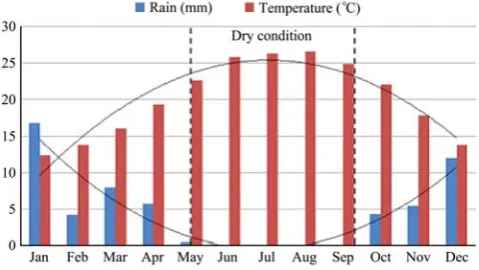
The data recorded by the Central Laboratory for Agricultural Climate (CLAC, 2015) indicate that the average of air temperature in North Sinai ranges between 13.6°C and 27.0°C while it varied from 12.4°C to 26.6°C In Behira Governorate. Low values of air temperature are recognized during December - February period, while the high values associated with June - September interval in both areas. Rainfall reaches a total of 103.9 and 56.9 mm per year in the experimental fields of Sinai and Behira
respectively. Usually, dry season stretched from June to September interval in North Sinai, while extended from May to September in Behira as shown in Figures 2 and 3. Averages of relative humidity (%), wind speed (Node), and sunshine (hour) are 70.5,4.5 and 8.4 in North Sinai, while attained 63.9, 4.4 and 9.0 in Behira Governorate respectively. These data indicate that the experimental fields are characterized by exact dry condition. According to USDA-NRCS (2010) and the above mentioned data the
soil moisture regime is Torric while the temperature
regime is Thermic.
Figure 1 Location of the experimental fields
Figure 2 Air temperature and rainfall averages (2015) of North Sinai
2.3 Microorganisms
Isolates of the bio elicitors, Streptomycesgriseus,
Trichoderma harzianum, T. viride, Rhodotorula glutinis,
Paenibacillus polymyxa, Bacillus subtilis, Pseudomonas
putida and P. fluorescens isolated from healthy wheat
plants were used as bio-elicitors in this study in compare with natural elicitors as methyl jasmonate, chitosan, ascorbic acid and putrescein.
The fungus and the bacterial isolates were routinely cultured on Potato Dextrose, nutrients and King’s Medium B (KMB), respectively. Isolates density were
standardized by adjusting it to approximately 6×10⁵ and
6×10⁷ cfu mL-1 for fungus and bacteria respectively.
Isolates were previously screening for their abilities to grow in medium supplemented with different concentrations of NaCl (0.2 to 1.8 M) as well as temperature at 25°C, 30°C, 35°C, 40°C and 45°C (Haggag et al., 2016).
2.4 Leaf rust
Disease incidence, i.e. per cent of disease-affected
leaves (P) was calculated according to the formula: n ─ P
= N·100, where n – number of affected leaves, N – number of assessed leaves. The disease-affected leaf area was estimated in per cent according to the scale recommended by the European Plant Protection Organisation (EPPO). This scale is included in the EPPO Standards (1997). Disease severity (R) was calculated according to the formula, having added per cent of affected leaf area of each leaf and having divided the sum
by the number of assessed leaves: ∑(n·b) ────, R = N
where ∑(n·b) – sum of product of the number of leaves
with the same percent of severity and value of severity, N – number of assessed leaves.
2.5 Powdery mildew
Leaves colonization by the fungus was quantified by measuring mildew colonies covering the surface of the leaves. Ten days after inoculation, disease severity was
recorded according to the following scales: 0=0%; 1≤
5%; 3=6%-15%; 5=16%-25%; 7=26%-50%; and 9≥
50% (Leath and Heun, 1998). Leaf spots were measured
by measuring spots colonies covering the surface of the
leaves.
2.6 Soil and water analyses
Soil and water samples were collected according to
FAO (2006) guidelines to represent the experimental
fields. Laboratory analyses for representative samples
were carried out following the methods detailed by Soil Survey Staff (2014).
2.7 Plant analysis
Two months after sowing, ten leaves per plant were separately collected, frozen for 36 h, dried and powdered. Generally, 100 mg dried sample were used for analysis.
• Total phenols: Free and conjugated phenols were
determined in treated leaves, 15 days after plant spraying with chemical elicitors according to (AOAC, 1975) using the Folin–Danis reagent. Total phenols were identified by HPLC using a reverse phase C8 column and compared with a catechol standard (Sigma chemicals). Hormonal stress as peroxidase activity and chitinase were also determined. The reaction mixture contained 0.1 mmol
EDTA, 1 mL of 0.2 mol/m3potassium phosphate buffer
with pH = 7.6, 0.1 mL of 2 m mol (NADPH), 0.5 mL of 3 m mol DTNB, 0.1 mL enzyme extract. The raise within absorbance at 412 nm was recorded at 25°C in excess of a period of 5 min on a spectrophotometer. Chitinase was assayed using 3, 5-dinitrosalicylic acid reagent to determine the free aldehydic groups of hexoaminase liberated on chitin digestion according to the method described by (Ishaaya and Casida 1974).
• Total soluble protein: Soluble protein extraction
was carried out according to Bollag and Eldelstein (1992).
2.8 Grain quality tests
All the plants of different treatments were harvested and data on wheat grain yield was recorded. The flour yield is of importance to the miller because it is a general indication of how much flour can be made from a given grain. It was conducted on a laboratory mill (e.g., Buhler or Miag Multomat) under a standard operating procedure.
The value obtained (i.e. the percentage of flour based on
the initial weight of wheat) relates to the extraction rate on a commercial mill. Gluten content was determined on 10 g sample by washing with a 2% NaCl solution buffered at pH 6.8 (AACC, 2000). The extracted wet gluten was dried in a heated plate, weighed and the result was adjusted on dry matter basis.
2.9 Statistical analysis
transformed data. Significant differences were assessed by comparison the differences between means using Least Significant Difference (LSD) value at 0.05.
3 Results
3.1 Soils and Water
Analyses of soils and water samples of the
experimental sites indicate that the experimental fields are
characterized by sandy soil texture, soil salinity (EC) of
7.12 dS/m in Saini and 1.72 dS/m in Behira fields, soil pH
reach 7.7 in Sinai site and 7.9 in Behira. The dominant
salts in the soils of experimental field are NaCl and CaCl2.
Analyses of irrigation water indicate that the water
salinity (EC) is high in Sinai experimental field
(8.01 dS m-1), while it is low in Behira (1.9 dS m-1). The
values of water pH are 7.5 in North Sinai and 7.8 in Behira. In view of the Keys to Soil Taxonomy detailed by USDA-NRCS (2010) the investigated soils were
classified as Typic Torripsamment.
3.2 Evaluation of bio-elicitors
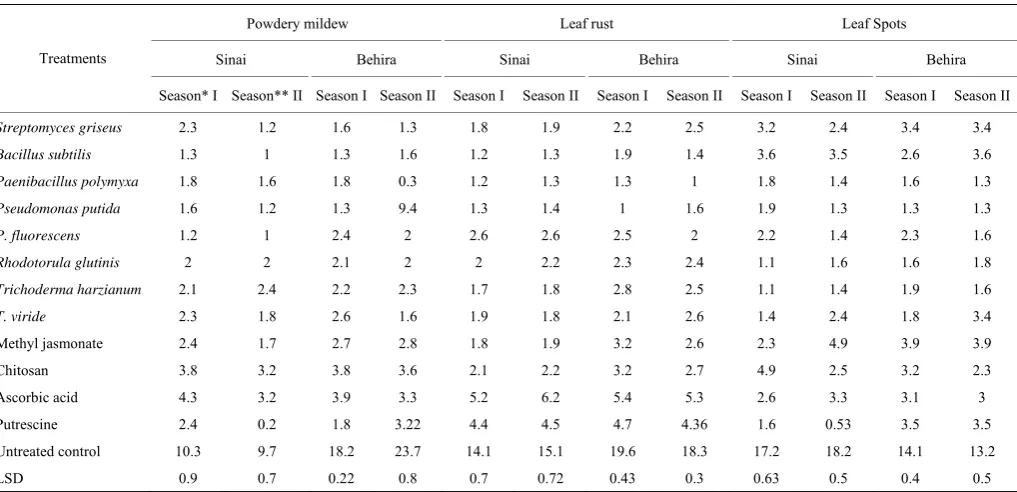
Effective of different bio and natural elicitors on controlling of foliar diseases of two wheat varieties i.e. cv. Gemmiza 10 and Sakha 93 were evaluated in two different environmental conditions i.e. new reclaimed areas in Sinai and arable land in Behira during 2015, 2016 and 2017 seasons. Data showed that the all diseases incidence were higher in untreated wheat plants in both
wheat varieties i.e. cv. Gemmiza 10 and Sakha 93, regions and seasons. Powdery mildew, leaf rust and leaf spots are the most important and theater diseases of wheat that cause severe infection, respectively in both varieties (Tables 1 and 2). Significant differences of diseases incidence were recorded among treatment, regions, cultivars and untreated control. Wheat variety Sakha 93 cv. is more resistant to all diseases than Gemmiza cv. Powdery mildew and leaf rust are the most important that cause severe losses in Behira Governorate, meanwhile leaf spots causes severe loss in Sinai (Tables 1 and 2). Our experiments showed that under stress condition, bio-elicitors reduced diseases incidence significantly,
whereas Pseudomonas sp. and P. polymyxa showed
significant potential against all diseases in both regions
and seasons (Tables 1 and 2). Rhodotorula glutinis was
more effective against spots in both wheat varieties and seasons. Analysis of data indicated that all compounds treatments significantly reduced disease severity under normal and saline conditions in both wheat varieties. Significant differences were obtained among treatments and untreated control. Our results clearly show that the
chitosan and methyl jasmonate markedly enhanced
resistance to diseases control. The control plant developed a strong disease severity. This may be to increase plant defense compounds against pathogens. In salt soil, most of the tested isolates showed good effects.
Table 1 Diseases severity of wheat plants cv. Sakha 93 grown under dry condition of Sinai and Behira
Powdery mildew Leaf rust Leaf Spots
Sinai Behira Sinai Behira Sinai Behira Treatments
Season* I Season** II Season I Season II Season I Season II Season I Season II Season I Season II Season I Season II
Streptomycesgriseus 2.3 1.2 1.6 1.3 1.8 1.9 2.2 2.5 3.2 2.4 3.4 3.4
Bacillus subtilis 1.3 1 1.3 1.6 1.2 1.3 1.9 1.4 3.6 3.5 2.6 3.6
Paenibacillus polymyxa 1.8 1.6 1.8 0.3 1.2 1.3 1.3 1 1.8 1.4 1.6 1.3
Pseudomonas putida 1.6 1.2 1.3 9.4 1.3 1.4 1 1.6 1.9 1.3 1.3 1.3
P. fluorescens 1.2 1 2.4 2 2.6 2.6 2.5 2 2.2 1.4 2.3 1.6
Rhodotorula glutinis 2 2 2.1 2 2 2.2 2.3 2.4 1.1 1.6 1.6 1.8
Trichoderma harzianum 2.1 2.4 2.2 2.3 1.7 1.8 2.8 2.5 1.1 1.4 1.9 1.6
T. viride 2.3 1.8 2.6 1.6 1.9 1.8 2.1 2.6 1.4 2.4 1.8 3.4
Table 2 Diseases severity of wheat plants cv. Gemaza 10 grown under dry condition of Sinai and Behira
Powdery mildew Leaf rust Leaf Spots
Sinai Behira Sinai Behira Sinai Behira Treatments
Season I Season II Season I Season II Season I Season II Season I Season II Season I Season II Season I Season II
Streptomycesgriseus 1.3 1.1 1.4 1.4 0.4 0.3 2.7 2.6 2.7 2.3 2.4 2.3
Bacillus subtilis 1.1 1 1.5 1.4 0.5 0.3 2.8 2.6 3.7 3.2 2.3 2.2
Paenibacillus polymyxa 1.6 1.3 3.2 2.2 0.8 0.9 2 2 2 2 1.1 1.3
Pseudomonas putida 1.1 1.1 1.7 1.6 0.8 7.3 0.6 2.3 2.2 2.3 1.2 1.3
P. fluorescens 1.6 1.3 3.2 2 0.5 0.9 2.2 2.4 2.6 2.3 2.1 2.3
Rhodotorula glutinis 1.3 1.2 2.8 2.3 0.8 1.2 2.5 2 3.6 3.4 3.4 3
Trichoderma harzianum 1.9 1.3 2.7 2.1 1.1 1 2.1 2 1.7 1.2 3.5 3
T. viride 1.7 1.3 2.2 2.3 2.2 2.2 2.2 2.2 1.6 1.7 3.1 3
Methyl jasmonate 1.7 2.6 2.5 2.6 2.6 1.4 3.2 4.4 3.2 3.9 3.2 4.9 Chitosan 2.7 2 5.7 3.3 2.2 2.6 3 3.3 2.9 3.3 4.5 3 Ascorbic acid 2.3 2 3.2 4.3 2.4 2.3 3.1 3.3 2.7 3.4 3.1 3 Putrescine 3.5 3.2 3.6 3.2 2.5 2.3 3.4 3.2 3.1 3.4 4.1 3.32 Untreated control 21.3 22.7 28.3 29.3 8.2 9.3 11.8 10.8 31.2 30.2 21.2 22.2 LSD 0.4 0.5 0.6 0.4 0.36 0.3 0.37 0.4 0.51 0.3 0.4 0.5 Note: *Season I: 2015 and 2016 season; ** season II: 2016 and 2017 season.
3.3 Biochemical changes associated with induced
resistance
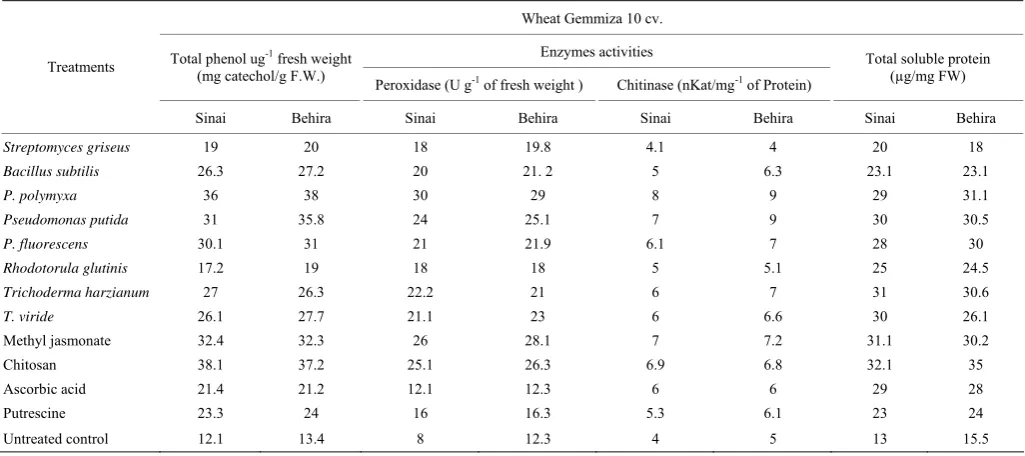
Plant treatment with bio elicitors induced resistance in wheat plants against powdery mildew, rust and leaf spots with substantial reduction in disease severity. The induction of resistance was associated with many biochemical changes viz. increase in total phenols (mg catechol/g F.W.), hormonal stress as peroxidase activity
(U g-1 of fresh weight), chitinase (nKat mg-1 of Protein)
and total soluble protein (µg/mg FW) in the two wheat varieties, seasons and regions (Table 3 and 4).
Pseudomonas sp. and P. polymyxa were more effective in
increasing total phenols, peroxidase, chitinase and total soluble protein. At the same time, results clearly show
that the chitosan andmethyl jasmonate markedly increase
the total phenols, peroxidase, chitinase and total soluble protein in both varieties.
Table 3 Chemical compositions in leaves of wheat plants, cv. Sakha grown under dry condition of Sinai and treaded with different products, 10 days after spraying, compared with normal condition of arable land in Behira
Wheat Sakha 93 cv.
Enzymes activities Total phenol ug-1 fresh weight
(mg catechol/g F.W.)
Peroxidase (U g-1 of fresh weight ) Chitinase (nKat/mg-1 of Protein)
Total soluble protein (µg/mg FW) Treatments
Sinai Behira Sinai Behira Sinai Behira Sinai Behira
Streptomycesgriseus 19.2 20.2 18.7 19.4 4.2 4.9 20.1 20
Bacillus subtilis 27.1 28.2 20.1 20.7 5.1 6.6 24.1 25.1
P. polymyxa 36.2 38.1 29.3 29.9 7.6 9.8 35.1 36.2
Pseudomonas putida 33.1 35.2 25.2 25.7 7.2 9.2 31.1 31.5
P. fluorescens 31.8 32 21.3 22.9 6.8 7.2 29 30.7
Rhodotorula glutinis 19.1 19.9 18.3 18.7 5 5.7 25.1 25.9
Trichoderma harzianum 27.2 27.8 23.8 22.5 6.9 7.1 31.2 31.7
T. viride 26.8 27.2 21.9 23.9 6.1 6.8 30.2 29.1
Methyl jasmonate 34.1 33 27.4 28.6 7.3 7.8 32.2 31.2
Chitosan 40.1 39.1 26.1 26.8 7 7.3 33.1 35.1 Ascorbic acid 23.4 22.4 12.3 12.7 6 6.5 29.2 28.2
Table 4 Chemical compositions in leaves of wheat plants cv. Gemmiza grown under dry condition of Sinai and treaded with different products, 10 days after spraying, compared with normal condition in Behira
Wheat Gemmiza 10 cv. Enzymes activities Total phenol ug-1 fresh weight
(mg catechol/g F.W.) Peroxidase (U g-1 of fresh weight ) Chitinase (nKat/mg-1 of Protein)
Total soluble protein (µg/mg FW) Treatments
Sinai Behira Sinai Behira Sinai Behira Sinai Behira
Streptomycesgriseus 19 20 18 19.8 4.1 4 20 18
Bacillus subtilis 26.3 27.2 20 21. 2 5 6.3 23.1 23.1
P. polymyxa 36 38 30 29 8 9 29 31.1
Pseudomonas putida 31 35.8 24 25.1 7 9 30 30.5
P. fluorescens 30.1 31 21 21.9 6.1 7 28 30
Rhodotorula glutinis 17.2 19 18 18 5 5.1 25 24.5
Trichoderma harzianum 27 26.3 22.2 21 6 7 31 30.6
T. viride 26.1 27.7 21.1 23 6 6.6 30 26.1
Methyl jasmonate 32.4 32.3 26 28.1 7 7.2 31.1 30.2
Chitosan 38.1 37.2 25.1 26.3 6.9 6.8 32.1 35 Ascorbic acid 21.4 21.2 12.1 12.3 6 6 29 28
Putrescine 23.3 24 16 16.3 5.3 6.1 23 24 Untreated control 12.1 13.4 8 12.3 4 5 13 15.5
3.4 Yield and Quality analysis
Yield of wheat is highly inter-related and both are significantly influenced by salt stress in Sinai than in normal soil (Table 5). According to presented data in Table 5, it could be noticed that the yield had a very significant influence. There was a highly significance difference between control and treated plants with different bio elicitors. Overall, the results suggest that the wheat yield was negatively influenced under saline soil that influence yield performance, meanwhile it’s improved under treated conditions. Wheat plants treated
with P. putida, P. polymyxa as well as methyl jasmonate,
and Chitosan resulted in a significantly higher increase in
the grain yield. The highest grain yields were obtained
with the application of P. polymyxa or R. glutinis the gave
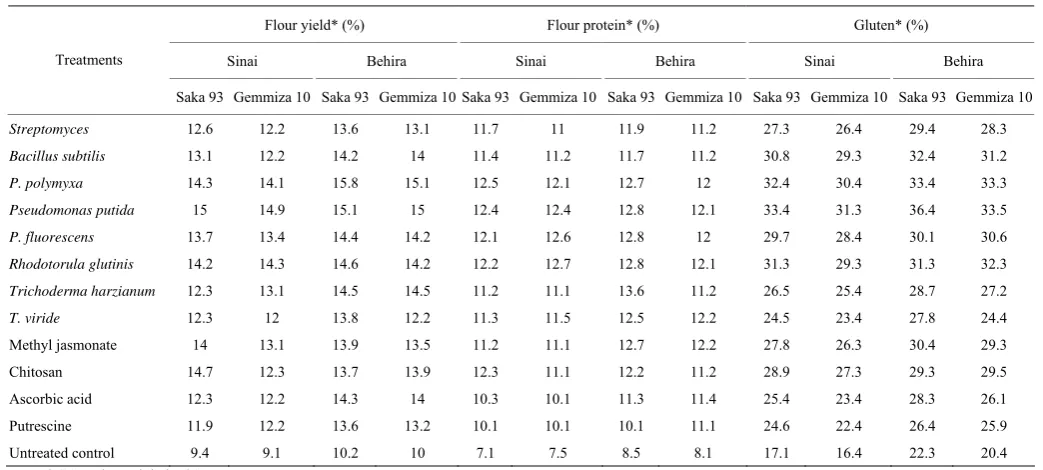
the highest grain yields either in new reclaimed soils in Saini or arable land in Behira Governorate. These results are exact with both wheat cultivars as well as in both seasons (Table 5). It is worthy to mention that all treatments increased significantly the grain yield in comparison to untreated control. The results showed that flour, protein and gluten contents in wheat grains were highly inter-related and both are significantly influenced
by salt stress as the result in (Table 6). P. putida, P.
polymyxa resulted in a significantly greater increase of
flour, protein and gluten contents in wheat grains under stress conditions. Methyl jasmonate, and Chitosan also give good results.
Table 5 Yield (ardab/fed.) of wheat grains, cvs Sakha and Gemmiza treaded with bio elicitors grown under dry condition of Sinai, compared with normal condition in Behira
Sinai Behira Sinai Behira Treatments
Season I Season II Season I Season II Season I Season II Season I Season II
Streptomyces 18.7 20 18.4 20.7 18.9 17.3 19 21.1
Bacillus subtilis 19 19.9 21.6 22.1 19.5 20.3 21 20.3
P. polymyxa 21.5 22.1 22.3 22.8 20.9 22.3 22.4 22.4
Pseudomonas putida 21.1 21.2 22.3 23.6 20.7 21.8 22.2 21.5
P. fluorescens 20.6 19.8 20.4 22.3 18.8 21.2 20.6 20.3
Rhodotorula glutinis 20.4 20.7 22.4 22.8 18.5 21.2 19.2 19.7
Trichoderma harzianum 19.7 19.2 20.4 22.3 18.3 20.6 21.2 19.8
T. viride 17.6 18.5 19.8 19.9 19 20.5 20 19.7
Table 6 Mean of flour content in wheat plants treaded with bio elicitors grown under saline soil in Sinai, compared with normal condition in Behira
Flour yield* (%) Flour protein* (%) Gluten* (%)
Sinai Behira Sinai Behira Sinai Behira Treatments
Saka 93 Gemmiza 10 Saka 93 Gemmiza 10 Saka 93 Gemmiza 10 Saka 93 Gemmiza 10 Saka 93 Gemmiza 10 Saka 93 Gemmiza 10
Streptomyces 12.6 12.2 13.6 13.1 11.7 11 11.9 11.2 27.3 26.4 29.4 28.3
Bacillus subtilis 13.1 12.2 14.2 14 11.4 11.2 11.7 11.2 30.8 29.3 32.4 31.2
P. polymyxa 14.3 14.1 15.8 15.1 12.5 12.1 12.7 12 32.4 30.4 33.4 33.3
Pseudomonas putida 15 14.9 15.1 15 12.4 12.4 12.8 12.1 33.4 31.3 36.4 33.5
P. fluorescens 13.7 13.4 14.4 14.2 12.1 12.6 12.8 12 29.7 28.4 30.1 30.6
Rhodotorula glutinis 14.2 14.3 14.6 14.2 12.2 12.7 12.8 12.1 31.3 29.3 31.3 32.3
Trichoderma harzianum 12.3 13.1 14.5 14.5 11.2 11.1 13.6 11.2 26.5 25.4 28.7 27.2
T. viride 12.3 12 13.8 12.2 11.3 11.5 12.5 12.2 24.5 23.4 27.8 24.4
Methyl jasmonate 14 13.1 13.9 13.5 11.2 11.1 12.7 12.2 27.8 26.3 30.4 29.3 Chitosan 14.7 12.3 13.7 13.9 12.3 11.1 12.2 11.2 28.9 27.3 29.3 29.5 Ascorbic acid 12.3 12.2 14.3 14 10.3 10.1 11.3 11.4 25.4 23.4 28.3 26.1 Putrescine 11.9 12.2 13.6 13.2 10.1 10.1 10.1 11.1 24.6 22.4 26.4 25.9 Untreated control 9.4 9.1 10.2 10 7.1 7.5 8.5 8.1 17.1 16.4 22.3 20.4 Note: * (% on dry weight basis).
4 Discussion
Wheat plants are exposing to biotic stress as pathogenic fungi that seriously reduce their growth and productivity. One of the direct results of climate changes in the host-pathogen-interaction is the plants resistance to pathogens. Reaction of plants to integrate environment and pathogen is strongly based on crop varieties, stage of growth and stress. Plant reaction to these stresses is multi-complex and includes different physiological and cellular adaptations and responses. Resistance to biotic stress has been well notarized in crop varieties through different type of defenses (Haggag, 2005; Pautasso et al., 2012; Haggag et al., 2014; Haggag et al., 2016). The plants defense strategy against biotic stress as diseases showed different types of stress proteins with different protective functions (Gianinazzi et al., 1970). The use of bioagents isolates as bio-elicitors in either dry climate stress in new reclaimed soils and arable land is possible to improve the tolerance of wheat plants against diseases. The applied approach could promote and encourage additive or synergistic inhibitory effects resulting from
use of bioformulation of bio elicitors (Choudary et al.,
2007 and Haggag et al., 2013). Application of bio-agents fungi and bacterium have been mentioned to support plant growth and elicit induced systemic resistance to plants against a range of pathogens when applied as seed
treatments, soil drenches or foliar sprays. Field experiments confirmed the potentially of different bio elicitors in reducing the infection of diseases incidence and severity. The antagonistic efficiency has often been corresponding to production of different secondary metabolites, hormonal stress, biological and molecular characterization of microorganisms. These are useful as biocontrol agents or as producers of bioactive compounds, which are of noteworthy relationship for the echo-environment compatible agriculture. The potentially of a bio-elicitors to encourage resistance to disease has also been noted as a mechanism of controlling and management of plant diseases (Haggag et al., 2013. The
effective species were P. putida, P. polymyxa, R. glutinis
resulted in a significantly greater decrease in the diseases incidence as powdery mildew, rust and spots moreover, increased of total soluble protein, total phenols, chitinase and peroxidase in wheat plants grown in dry and normal regions. Application of methyl jasmonate, chitosan, an antioxidant in the form of ascorbic acid and a polyamine in the form of putrescein, significantly reduced diseases incidence and increased the total soluble protein, total phenols, chitinase and peroxidase. Strain of
Pseudomonas spp. is known to produce HCN, and
antibiotics (Jan et al., 2011). Fluorescent pseudomonads as P. putida, P. polymyxa and P. fluorescens are among
soil-borne fungal diseases. Several species of Bacillus
including B. subtilis and P. polymyxa are widely known
for their biocontrol and growth promotion abilities as they produce several antibiotics and phytohormones, solubilization of phosphate, releasing ammonia from nitrogenous organic matter (Hayat et al., 2010). Mechanisms of these bacterial species is mainly due to their potentially to produce antibiotics, lipopolysaccharides and iron regulated metabolites (Raaijmakers et al., 2002). Jasmonate, are known to play a great role in plant defense and protection via induced antifungal protein and proline –rich cell wall proteins as well as stimulate effect on secondary metabolite production including alkaloids, terpenes, phenolics and polyamines (Martin et al., 2002). In a previous research, a positive corroboration between bean rust disease inhibition and the over-accumulation of free and acid-
soluble polyamineconjugates induced by a precursor of
polyamines was obtained (Haggag, 2005). Bio elicitors increased plant growth, grain yield and flour, flour protein of wheat. The role of bio elicitors in plant growth promotion is widely known as equally important for overall plant growth. The quality characteristics specially flour, flour protein concentration and glutamine, are important one for the utilization the wheat bread and others use. These characteristics usually are effective by cultivar and interactions of cultivar with environment and diseases (Souza et al., 2004). In this study applying of bio-elicitors become more integrated into management control strategies in protection of wheat from biotic stress and permits a reduction in fungicide inputs. The results show that it could be possible to replace traditional chemical fungicides with bio-elicitors; it is safe for human health, environment and thus provided potential, economic and ecological value.
The results show that the used plant beneficial microorganisms as bio elicitors have improved the wheat tolerance to biotic stress under environmental changes in the new reclaimed lands under arid climate condition (Haggag, and Abdall, 2011).
References
AACC. 2000. Approved Methods of the American Association of Agrios, G. N. 2005. Plant Pathology. 5th ed., pp. 922. New
York, USA:. Academic Press. .
AOAC. 1975. Official Methods of Analysis of the Association of Official Agricultural Chemists. 12th ed. 1042 p. Washington, DC: Association of Official Agricultural Chemists, Inc. Bollag, D. M. and S. J. Eldelstein. 1992. Protein extraction. In
Protein Methods, ed. Bollag DM and Eldelstein SJ., 27–42. New York: Wiley-Liss Inc.
Butterworth, M. H., M. A. Semenov, A. Barnes, D. Moran, J. S. West, and B. D. L. Fitt. 2010. North–South divide: contrasting impacts of climate change on crop yields in Scotland and England. Journal of the Royal Society, Interface, 7: 123–130. Choudary, D. A., K. R. N. Reddy, and M. S. Reddy. 2007.
Antifungal activity and genetic variability of Trichoderma harzianum isolates. Journal of Mycology Plant Pathology, 37(2): 295–300.
CLAC. 2015. Climatological normal of Ismailia and Tahrir stations. Central Laboratory for Agricultural Climate, Giza .Available at: www.clac.edu.eg/.
EPPO Standards. 1997. Guidelines for the efficacy evaluation of plant protection products. Fungicide 2: 5-105.
FAO. 2006. Guidelines for soil description. FAO, Rome.
Gianinazzi, S., and C. J. C. Martin. 1970. Hypersensitivity to the virus, temperature and soluble protein of Nicotiana xanthi: appearance of new macromolecules at the time of viral synthesis. Comptes rendus de l'Académie des Sciences Paris, 270: 2382–2386.
Haggag, W. M. 2005. Polyamines: induction and effect on rust disease control of bean. Plant Pathology Bulletin, 14: 89–102. Haggag, W. M., M. Saber, H. F. Abouziena, E. M. Hoballah, and A.
M. Zaghloul. 2016. Climate change potential impacts on plant diseases and their Management. Der Pharmacia Lettre, 8(5): 17–24.
Haggag, W. M., M. A. E. Saleh, I. Mostafa., and N. Adel. 2013. Mass production, fermentation, formulation of Pseudomonas putida for controlling of die back and phomopsis diseases on grapevine. Advances Bioscience and Biotechnology, 4: 741–750.
Haggag, W. M. 2013. Wheat diseases in Egypt and its management. Journal of Applied Sciences Research, 9(1): 46–50.
Haggag, W. M., and F. Abd-El-Kareem. 2009. Methyl jasmonate stimulates polyamines biosynthesis and resistance against leaf rust in wheat plants. Archives of Phytopathology and Plant Protection, 42(1): 16–31.
Haggag, W. M., M. M. Hussein, H. M. Mehanna, and E. M. DiaaAbd. 2014. Bacteria polysaccharides elicit resistance of wheat against some biotic and abiotic stress. International Journal of Pharma Sciences Review Research, 29(2): 292–298.
blights. Journal of Food Agriculture and Environment, 5(2): 157–163.
Haggag, W. M. and A. M. Abdall, 2011. Foliar application of Streptomyces Aureofaciens improve protection in mango against post-harvest anthracnose and enhances fruit yield. European Journal of Scientific Research, 63(1): 139–149. Hasan, E. M. D. 2013. Physiological and anatomical responses of
wheat plant to some antitanspirants substances and fungal pathogens. Ph.D. diss., Faculty of Agriculture, Zagazig University, Egypt.
Hayat, R., S. Ali, U. Amara, R. Khalid, I. Ahmed. 2010. Soil beneficial bacteria and their role in plant growth promotion: a review. Ann Microbiol, 60(4): 579–598.
Holopainenauer J. K., J. Heijari, A. M. Nerg, M. Vuorinen, and P. Kainulainen. 2009. Potential for the use of exogenous chemical elicitors in disease and insect pest management of conifer seedling production. The Open Forest Science Journal, 2: 17–24.
Ishaaya I., and J. E. Casida. 1974. Dietary TH 6040 alters composition and enzyme activity of housefly larval cuticle. Pesticide Biochemistry and Physiology, 4: 484–490.
Jan, A. T., M. Azam, A. Ali, Q. R. Haq. 2011. Novel approaches of beneficial Pseudomonas in mitigation of plant diseases – an appraisal. Journal of Plant Interactions, 6(4): 195–205. Leath, S., and M. Heun, 1998. Identification of powdery mildew
resistance genes in cultivars of soft red winter wheat. Plant Disease, 74(10): 747–752.
Martin D., D. Tholl, J. Gershenzon, and J. Jörg. 2002. Methyl jasmonate induces traumatic resin ducts, terpenoid resin
biosynthesis and terpenoid accumulation in developing xylem of Norway spruce stems. Plant Physiol, 129: 1003–1018. Newton, A. C., S. N. Johnson, and P. J. Gregory, 2011.
Implications of climate change for diseases, crop yields and food security. Euphytica, 179(1): 3–18.
Pautasso M., T. F. Döring, M. Garbelotto, L. Pellis, M. J. Jeger. 2012. Impacts of climate change on plant diseases - opinions and trends. European Journal of Plant Pathology, 33(1): 295–313.
Raaijmakers J. M., M. Vlami and J. T. Souza. 2002. Antibiotic production by bacterial biocontrol agents. Antonie van Leeuwenhoek, 81: 537–547.
Soil Survey Staff. 2014. Keys to Soil Taxonomy. 11th ed. United States Department of Agriculture, Natural Resources Conservation Service (NRCS).
Souza, E. B. C., J. M. Martin, K. M. Guttieri, M. J. Guttieri, K. M. O'Brien, D. K. Habernicht, S. P. Habernicht, R. Lanning, G. R. McLean, L. E. Carlson,, and., L. E. Talbert. 2004. Influence of genotype, environment, and nitrogen management on spring wheat quality. Crop Science, 44(2): 425–432.
USDA-NRCS. 2010. Field indicators of hydric soils in the United States. In A Guide for Identifying and Delineating Hydric Soils, Version 7.0, eds. L. M. Vasilas, G. W. Hurt, C. V. Noble. Washington DC: USDA-NRCS, in cooperation with the National Technical Committee for Hydric Soils.