Open Access
Methodology
Combining metal oxide affinity chromatography (MOAC) and
selective mass spectrometry for robust identification of
in vivo
protein phosphorylation sites
Florian Wolschin and Wolfram Weckwerth*
Address: Max Planck Institute of Molecular Plant Physiology, 14424 Potsdam, Germany
Email: Florian Wolschin - [email protected]; Wolfram Weckwerth* - [email protected] * Corresponding author
Protein phosphorylationNano-ESISeedsIMACMOACNeutral lossMS3
Abstract
Background: Protein phosphorylation is accepted as a major regulatory pathway in plants. More than 1000 protein kinases are predicted in the Arabidopsis proteome, however, only a few studies look systematically for in vivo protein phosphorylation sites. Owing to the low stoichiometry and low abundance of phosphorylated proteins, phosphorylation site identification using mass spectrometry imposes difficulties. Moreover, the often observed poor quality of mass spectra derived from phosphopeptides results frequently in uncertain database hits. Thus, several lines of evidence have to be combined for a precise phosphorylation site identification strategy.
Results: Here, a strategy is presented that combines enrichment of phosphoproteins using a technique termed metaloxide affinity chromatography (MOAC) and selective ion trap mass spectrometry. The complete approach involves (i) enrichment of proteins with low phosphorylation stoichiometry out of complex mixtures using MOAC, (ii) gel separation and detection of phosphorylation using specific fluorescence staining (confirmation of enrichment), (iii) identification of phosphoprotein candidates out of the SDS-PAGE using liquid chromatography coupled to mass spectrometry, and (iv) identification of phosphorylation sites of these enriched proteins using automatic detection of H3PO4 neutral loss peaks and data-dependent MS3-fragmentation of the corresponding MS2-fragment. The utility of this approach is
demonstrated by the identification of phosphorylation sites in Arabidopsis thaliana seed proteins. Regulatory importance of the identified sites is indicated by conservation of the detected sites in gene families such as ribosomal proteins and sterol dehydrogenases. To demonstrate further the wide applicability of MOAC, phosphoproteins were enriched from Chlamydomonas reinhardtii cell cultures.
Conclusion: A novel phosphoprotein enrichment procedure MOAC was applied to seed proteins of A. thaliana and to proteins extracted from C. reinhardtii. Thus, the method can easily be adapted to suit the sample of interest since it is inexpensive and the components needed are widely available. Reproducibility of the approach was tested by monitoring phosphorylation sites on specific proteins from seeds and C. reinhardtii in duplicate experiments. The whole process is proposed as a strategy adaptable to other plant tissues providing high confidence in the identification of phosphoproteins and their corresponding phosphorylation sites.
Published: 01 November 2005
Plant Methods 2005, 1:9 doi:10.1186/1746-4811-1-9
Received: 27 August 2005 Accepted: 01 November 2005
This article is available from: http://www.plantmethods.com/content/1/1/9
© 2005 Wolschin and PWeckwerth; licensee BioMed Central Ltd.
Background
The proteome of different developmental stages of any kind of organism reflects more directly than the genome or the transcriptome the metabolic specialisation for the actual developmental state. In plants several studies on the proteome of different developmental stages have been conducted [1]. Seed dormancy plays a crucial role in the life cycle of plants and its proteome reflects the metabolic processes during this important developmental period. However, investigation on posttranslational modifica-tions of the proteins gives an even more detailed view on the complex nature of seed metabolism. Protein phospho-rylation has been widely described as a major regulatory protein posttranslational modification influencing many important processes in living cells [2-4]. Thus, measuring protein phosphorylation is essential to reveal regulatory and signal pathways. However, the study of protein phos-phorylation confronts the researcher with several hurdles.
A complicating fact is that many proteins are not only phosphorylated at one site, but on multiple sites and that each modification seems to have different regulatory func-tions [5,6]. Therefore, detection of protein phosphoryla-tion and identificaphosphoryla-tion of phosphorylaphosphoryla-tion sites are needed for the understanding of protein regulation.
Traditionally, phosphorylation is detected by specific antibodies and/or by incorporating radioactive [32P]orthophosphate into proteins. However, while
immunolabelling is often unspecific, incorporation exper-iments using radioactivity might result in artificial phos-phorylation events and impose waste disposal problems. Only recently has it become possible to reliably detect protein phosphorylation by resolving the proteins of interest on a gel and submitting the gel to fluorescent phosphate specific dyes followed by a staining of total protein [7-11].
The low abundance of phosphoproteins and the accurate identification of the specific phosphorylation sites, how-ever, still impose problems.
Because of their sensitivity and resolving power, selective enrichment of phosphorylated peptides/proteins and liq-uid chromatography coupled to mass spectrometry (LC-MS) based methods are now widely used for phosphoryla-tion site identificaphosphoryla-tion (for review see [4,12,13]).
The low abundance of phosphorylated peptides can be circumvented in part by enrichment of the phosphopep-tides with IMAC (Immobilised metal affinity chromatog-raphy) after tryptic digestion of phosphoproteins. While numerous publications exist describing the enrichment of phosphopeptides from animal sources considerably less studies have been published for plant tissue (for review
see [14]). These broad range studies focus for example on thylakoid proteins and plasma membrane proteins of A.
thaliana [15,16] or on the moss Physcomitrella patens [17].
However, relying on just one peptide for protein identifi-cation (as is commonly done after phosphopeptide enrichment) is prone to the identification of false posi-tives. What is more, peptides phosphorylated on serines or threonines tend to loose their phosphate group during the fragmentation process in the mass spectrometer thus further complicating correct assignment. This drawback can be circumvented by the enrichment of complete phos-phoproteins since this approach leads to the identifica-tion of several peptides per protein and therefore enhances the reliability of protein identification.
Recently, we reported a novel method for the enrichment of phosphorylated proteins out of complex mixtures termed MOAC (metal oxide affinity chromatography) [18]. This method adds another tool to the repertoire of methods for the identification of phosphorylated proteins and might help to overcome some of the specificity prob-lems associated with IMAC. In this initial study we showed that MOAC can be used to enrich phosphorylated proteins from plant leaf tissue [18].
In the present study we use MOAC for the enrichment of phosphorylated proteins from A. thaliana seeds and for proteins from C. reinhardtii cell cultures and show that the method is suitable and reproducible for different kinds of samples.
However, for the identification of the exact sites of phos-phorylation further steps are necessary. As mentioned above the ionization efficiency and the quality of a phos-phopeptide spectra is sometimes not good enough for reliable identification and even more difficult is the deter-mination of the exact phosphorylation site. To circumvent these problems phosphate groups can be replaced by beta-elimination and Michael addition with more stable residues thereby increasing the ionization efficiency and improving the fragmentation behaviour [5,19-23]. Yet, these approaches sometimes result in unwanted side reac-tions and are difficult to perform on complex mixtures. Another promising method is the analysis of peptide sequences by electron transfer dissociation [24] but this requires sophisticated modification of the mass spectrom-eter not yet widely available.
The approach we employed to identify phosphorylation sites makes use of the neutral loss of H3PO4 during MS2
fragmentation. The dominant neutral loss peak observed in many MS2 spectra derived from serine/threonine
automatically detected in a single LC/MS run [26]. The resulting MS3 spectra are often informative enough to
identify the correct peptide and the phosphorylation site in a database search. However, considering the informa-tion of both MS2 and MS3 data is sometimes necessary to
obtain unambiguous identification [27,28].
In the present work we combine the MOAC enrichment of phosphoproteins and selective mass spectrometry for a detailed study of protein phosphorylation. Phosphoryla-tion site identificaPhosphoryla-tion is demonstrated for enriched seed proteins and is achieved using data-dependent MS2 as well
as neutral-loss triggered MS3 fragmentation on a linear ion
trap mass spectrometer. The proposed strategy is suitable to identify putative phosphoprotein candidates with high sequence coverage and at the same time it allows identifi-cation of corresponding protein phosphorylation sites. To avoid false positive identification of phosphorylation sites only hits with congruent MS2 and MS3 spectra were
con-sidered in this study. Careful validation of the data led to the identification of 16 phosphorylation sites in nine seed proteins, some of them known to be phosphorylated also in the mammalian system such as ribosomal proteins. A comparison with microarraydata showed that these pro-teins are mainly seed specific.
Results
General strategy for the identification of serine/threonine phosphorylation in plants
An overview on the general strategy for the identification of serine /threonine phosphorylation in plants is shown in Figure 1. The strategy includes enrichment of phospho-proteins using MOAC, phosphorylation detection using fluorescent dye technology, and determination of the phosphorylation site with neutral loss driven MS3. Most
important, each step of the procedure gives further confi-dence for a robust identification of phosphoproteins and phosphorylation sites. For a detailed description see the following sections.
MOAC enrichment of phosphoproteins
Proteins were extracted with phenol and enriched for phosphoproteins using metaloxide affinity chromatogra-phy (MOAC) [18]. Proteins were separated using SDS-PAGE and visualised with a phosphate-specific stain fol-lowed by staining with coomassie R-250 (Figure 1). Simi-lar amounts of total protein from samples taken before and after MOAC (Figure 2B) are accompanied by strong differences in the phosphostain signal indicating clear enrichment of phosphoproteins out of the complex sam-ple (Figure 2A). Bands corresponding to enriched seed proteins with a strong signal in the phosphostain were excised, digested with trypsin, and analysed by mass spec-trometry (see below).
Identification of in vivo phosphorylation sites in A. thaliana seed proteins
Following the proposed strategy (see Figure 1) we identi-fied after careful validation 16 phosphorylation sites in 9 proteins using the combined information of MS2 and MS3
data. The advantage of using the combined data is exem-plified by the MS2 and MS3 spectra in Figure 3. In the first
MS2 fragmentation step a very intense fragment ion
stem-ming from a dominant neutral loss of phosphoric acid is seen. This spectrum alone is often not suitable for data-base search. On the other hand it is a distinct indication for a phosphopeptide. The dominant neutral loss frag-ment triggers in a second scan event an MS3 fragmentation
step. The combination of MS2 and MS3 leads to the clear
phosphorylation site identification with increased confi-dence based on the observed neutral loss of phosphoric acid [27,28]. A further level of confidence is provided by the combination of protein identification (see Figure 1 and protein sequence coverage in table 1) and the corre-sponding protein phosphorylation site in one LC/MS analysis. This information is missing in strategies where only phosphopeptides are enriched and protein identifi-cation is based solely on the detection of one phos-phopeptide. The phosphorylation sites are shown in Table 1. The sites of the two ribosomal proteins are known to be phosphorylated in mouse [29]. For some of the proteins Proposed strategy for robust identification of
serine/threo-nine phosphorylation in plants
Figure 1
Proposed strategy for robust identification of serine/threo-nine phosphorylation in plants. In case of low stoichiometry as for the in vivo situation enrichment of phosphoproteins is necessary. To cope with this a novel enrichment procedure called metaloxide affinity chromatography (MOAC) is used in the strategy [18]. The whole approach is applicable to iden-tify phosphorylation sites out of complex samples. The library of in vivo sites may be used for screening of protein phosphorylation dynamics using triple-quadruple mass spec-trometry [6].
Proteins with low phosphorylation stoichiometry
Enrichment using MOAC
Phosphorylation site identification with mass spectrometry (automatic MS3on neutral loss peaks)
Separation of proteins with high phosphorylation stoichiometry on SDS-PAGE
Detection of phosphorylation with fluorescent dye technology
Increa
s
ing
in
fo
rma
ti
on
Proteins with low phosphorylation stoichiometry
Proteins with low phosphorylation stoichiometry
Enrichment using MOAC
Phosphorylation site identification with mass spectrometry (automatic MS3on neutral loss peaks)
Separation of proteins with high phosphorylation stoichiometry on SDS-PAGE
Detection of phosphorylation with fluorescent dye technology
Increa
s
ing
in
fo
rma
ti
identified after MOAC, MS2 data suggested
phosphoryla-tion but MS3 data were lacking. All these ambiguous
results were not included in the table. The analysis of gene expression data revealed that five of the identified pro-teins are apparently seed specific (table 1). Notably, phos-phorylation is most probably not confunded with o-sulfonation in these experiments since sulfated peptides exhibit the characteristic loss of 80 Da instead of 98 Da during collision induced dissociation [30], which does not lead to the triggering of an MS3 spectrum.
Reproducibility of the method
The enrichment process was repeated using A. thaliana leaf and C. reinhardtii proteins. Similar patterns were observed in SDS PAGE analysis combined with phospho-and coomassiestaining (data not shown). Two prominent
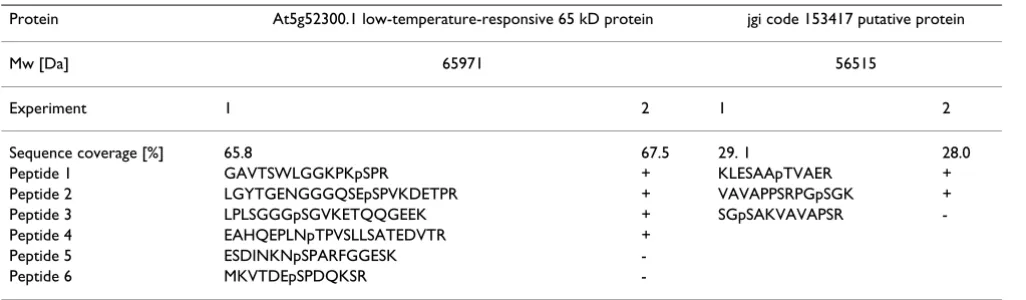
bands, one of the enriched seed sample at about 65 kDa (corresponding to the mw of the protein with the highest number of phosphorylation sites identified in the first experiment), and one of the enriched C. reinhardtii sam-ple (in duplicate) at about 56 kDa, were selected for test-ing the reproducibility of phosphorylation site identification. With the seed protein we tested analytical reproducibility after storage of the sample for 1 month (see table 2). Reproducibility of the whole procedure including MOAC enrichment is demonstrated by the repeated identification of phosphorylation sites in the 56 kDa C. reinhardtii phosphoprotein (table 2).
Phosphorylation of sterol dehydrogenase
One phosphorylation site was identified as serine 95 in an isoform of the A. thaliana short chain sterol
dehydroge-A. thaliana seed proteins and C. reinhardtii proteins before and after MOAC
Figure 2
A. thaliana seed proteins and C. reinhardtii proteins before and after MOAC. M: marker S: sample (before MOAC) E: eluate (after MOAC); A: A. thaliana seed proteins, Coomassiestaining; B: A. thaliana seed proteins, Phosphostaining. C: C. reinhardtii
proteins, Coomassiestaining; D: C. reinhardtii proteins, Phosphostaining. The labelled marker protein in the phosphostain is the phosphorylated protein Ovalbumin.
S
E
M
A
B
S
E
M S
E
M
A
B
S
E
M
C
D
C
D
S
E
M
S
E
M
C
D
C
D
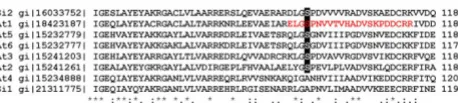
nases gene family. We aligned protein sequences belong-ing to the same family from A. thaliana (At) and Sesamum indicum (Si) (Figure 4). Shown is the region surrounding the phosphorylation site. The region of interest is part of a proposed NADP+ binding domain [31] and displays high homology. The serine phosphorylation site is con-served in 6 out of 8 sequences. The two remaining sequences (At4 and Si1) show no serine at the site of inter-est and might belong to a separate group.
Discussion
The approach described in this work is suitable to reliably identify and routinely screen for serine/threonine phos-phorylation in plant proteins. Several lines of evidence are integrated into the strategy thus making unambiguous identification of protein phosphorylation possible: (i)
Enrichment for phosphoproteins based on the affinity of phosphate to MOAC, (ii) a specific phosphostain reveals phosphorylation of the proteins and confirms enrich-ment, (iii) gel separation of the proteins helps to guaran-tee high confidence in protein identification, and (iv) a highly selective method based on mass spectrometry spe-cific for phosphorylation is used for site identification.
Phosphorylated proteins are enriched by MOAC, a method that can be easily adapted to suit the sample of interest since it is inexpensive and the components needed are widely available. For demonstration MOAC phosphoprotein enrichment was applied to A. thaliana
leaf proteins [18], A. thaliana seed material and
Chlamydomonas reinhardtii cell cultures (this study, Figure
2).
MS2 spectrum and the cognate neutral loss MS3 spectrum of the phosphopeptide LGYTGENGGGQSEpSPVKDETPR
exemplify-ing the additional sequence information gained of an MS2 spectrum compared to a MS3 spectrum
Figure 3
MS2 spectrum and the cognate neutral loss MS3 spectrum of the phosphopeptide LGYTGENGGGQSEpSPVKDETPR
exemplify-ing the additional sequence information gained of an MS2 spectrum compared to a MS3 spectrum. A: MS2 spectrum (Xcorr:
2.424); B: MS3 spectrum (Xcorr: 3.248). Exact localisation of the phosphorylation site is only possible with the MS3 spectrum in
this case. Only ions above the noise signal were annotated.
0 200 400 600 800 1000 1200 1400 1600 1800
m/z 0 5 10 15 20 25 30 35 40 45 50 55 60 65 70 75 80 85 90 95 100 R elativ e A bun dan ce y1-15 y1-8 y1-5 y1-4 y1-9
Pm – H3PO4
Pm – H3PO4–H2O
b1-7
b2-22 -H2O
0 200 400 600 800 1000 1200 1400 1600 1800
The following staining with a phosphospecific fluorescent dye is a quick and easy to use method to detect protein phosphorylation and its changes on gels. However, mass spectrometry-based site identification leads to more detailed information about site specific regulation. This holds especially true for proteins phosphorylated at mul-tiple sites [5,6]. While it is not possible with the fluores-cent stain to define if a protein is singly or multiply phosphorylated and on which amino acid the phosphate moiety is located, this can be done by mass spectrometry [32]. Consequently, enriched proteins are digested and the peptides are analysed in experiments in which an additional fragmentation event (MS3) is triggered when a
peptide looses phosphoric acid during the first fragmenta-tion step (MS2). The combined information of MS2 and
MS3 data is then used to obtain high quality data about
the peptide sequence and its phosphorylation site (see also Figure 3A and 3B).
Since this is a proof of concept study we did not aim at identifying all phosphorylation sites present in the enriched fraction but at setting up a robust and conven-ient workflow for the analysis of in vivo protein phospho-rylation in plants. The major drawback of the method in its current state is that preferably phosphorylation sites of high abundant phosphoproteins are detected and that often the protein can be assigned reliably but data on the phosphopeptides are lacking. However, this might be cir-cumvented by separating complex mixtures using estab-lished chromatography prior to MOAC and/or by coupling a phosphopeptide enrichment step to the
pro-tein enrichment. Another problem could be dephosphor-ylation occurring during or prior to gel separation or during sample storage. This might also explain differences in the reproducibility test. Nevertheless, most of the tested sites could be reproducibly found in a second experiment thus reconfirming the robustness of the method. How-ever, if the sample amount is not limiting separation and digestion after enrichment might also be performed in solution without SDS-PAGE. This, of course would lead to a missing confirmation step in the strategy.
Albeit the phosphorylation of A. thaliana seed proteins probably plays a crucial role in seed development and dormancy [33,34], to our knowledge this is the first time a broad approach has been used to identify phosphoryla-tion sites in seed proteins. In more than half of the identi-fied seed derived phosphopeptides (9 out of 16) the identified phosphorylation sites are directly neighboured by a proline. Additionally, in three peptides the sites are located adjacent to aspartic acid residues. This could be due to enhanced cleavage at proline and aspartic acid res-idues during the fragmentation process in the mass spec-trometer which has been described before [35]. Interestingly, we did find dominant neutral loss in the respective MS2 spectra, even though it was reported
recently that proline and aspartic acid containing phos-phopeptides exhibit a less pronounced neutral loss of H3PO4 during fragmentation in a Q-Tof mass spectrome-ter [36]. This apparent difference might be explained by the different instrument types used in the studies or by the special nature of the investigated phosphopeptides. Both
Table 1: Identified phosphorylation sites in seed proteins. Gene expression data were derived from a previous study [38].
Accession nr. Description Protein sequence coverage Site of phosphorylation (designated as
"p")
Seed specific expression
At5g52300.1 low-temperature-responsive 65 kD
protein (LTI65)/desiccation-responsive protein 29B (RD29B)
65.8% (Mr 65971 Da) MKVTDEpSPDQKSR
ESDINKNpSPARFGGESK LPLSGGGpSGVKETQQGEEK LGYTGENGGGQSEpSPVKDETPR GAVTSWLGGKPKpSPR
EAHQEPLNpTPVSLLSATEDVTR +
At3g12960.1 expressed protein similar to seed
maturation protein from [Glycine max]
93% (Mr 9464 Da) DIKDIKGTRTDDpSPR.- +
At1g01100.1 60S acidic ribosomal protein P1
(RPP1A)
81.2% (Mr 11162 Da) KKDEPAEEpSDGDLGFGLFD.-
-At2g27710.1 60S acidic ribosomal protein P2
(RPP2B)
87% (Mr 11444 Da) KEEKEEpSDDDMGFSLFE.-
-At5g40420.1 glycine-rich protein/oleosin 42.2% (Mr 21279 Da) HFQFQpSPYEGGR +
At1g07985.1 Expressed protein 46.5% (Mr 16461 Da) KLVDKVVGSSSPTNIHpSK
At5g50600.1 short-chain dehydrogenase/reductase
(SDR) family protein similar to sterol-binding dehydrogenase steroleosin
from [Sesamum indicum]
61% (Mr 39087 Da)
STLYPESIRTPEIKpSD.-ELGpSPNVVTVHADVSKPDDCRR +
At1g29350.1 expressed protein 14.6% (Mr 90879 Da) SGpSTHFSSTDSGNFQGK No data
At4g25580.1 stress-responsive protein-related
contains weak similarity to Low-temperature-induced 65 kDa protein
57.8 % (Mr 66520 Da) RGAPTLTPHNTPVSLLpSATEDVTR
serine-proline (SP) and serine-aspartate (SD,E) contain-ing phosphorylation sites are postulated as putative kinase substrates [15]; SP is a MAP-kinase motif which coincides with the importance of MAP-kinases in cellular processes [37] (see also http://www.neb.com/nebecomm/ tech_reference/protein_tools/
protein_kinase_substrate_recognition.asp). A majority of the identified phosphoproteins appear to be seed specific since their expression is reported to be highly dominant if not exclusively expressed during this developmental stage (see table 1 and [38]).
Multisite phosphorylation seems to be quite common as indicated by the fact that more than one phosphorylation site was found in 3 of the 9 proteins. The sites identified on the two ribosomal proteins are the same c-terminal sites identified in mouse [29] thus adding another evi-dence for the conservation of phosphorylation sites throughout different species [39]. Phosphorylation of these ribosomal P-proteins at their c-terminal end has also been proposed for Saccharomyces cerevisiaea, Rattus
norvegi-cus, Trypanosoma cruzei, and Zea mays [40]. It has been
shown that phosphorylation of these proteins leads to accelerated degradation in yeast [41] and this might also hold true for A. thaliana. Interestingly, another two of the identified phosphopeptides, belonging to proteins other-wise unrelated to the ribosomal P-proteins were also found to be phosphorylated at their c-terminal end indi-cating either the accessibility of c-terminal phosphopep-tides for enrichment, digestion and detection or a general pattern, putatively for protein degradation.
The identification of a phosphorylated protein with homology to a short chain sterol dehydrogenase (Sop2) seems to be especially interesting for seed development. These proteins are thought to play a vital role in plant sig-nal transduction elicited by sterols [31,42] and therefore their phosphorylation/dephosphorylation might have large implications on seed development. Serine 95 in the
peptide ELGpSPNVVTVHADVSKPDDCRR derived from Sop2 (which we showed to be phosphorylated in A. thal-iana) is highly conserved in five out of six homologues in
A. thaliana as well as in one out of two homologues in
Ses-amum indicum (see Figure 4). It is located in the NADP+
binding domain of the protein [31] and might be impor-tant for enzyme specificity and selectivity.
Methods
Chemicals
All chemicals were from Sigma (München, Germany). The aluminium hydroxide was purchased as aluminium hydroxide hydrate (ordering nr. A-1577; Sigma).
Seeds
A. thaliana (ecotype Columbia) seeds were taken from an in-house seed stock.
Chlamydomonas reinhardtii culture
C. reinhardtii (wildtype CC-125) was grown for 7 days in 16/8 hour light/dark regime in liquid culture containing TAP Medium [43]. Cells were harvested in the light period and centrifuged for 10 min at 4000 rpm. The supernatant was discarded and the Pellet was used for the extraction of proteins.
Denatured protein extraction from A. thaliana seeds and C. reinhardtii
A. thaliana seed proteins and C. reinhardtii proteins were extracted by adding a mixture of three volumes buffer-sat-urated phenol (15 ml) and one volume 50 mM Hepes-KOH, pH 7.2 containing 1% β-mercaptoethanol, 40 % sucrose, and 40 mM NaF (5 ml) to 2 g of seed material ground in liquid nitrogen or to a pellet derived from 100 ml of C. reinhardtii culture, respectively. After mixing for 20 minutes at 4°C, protein was precipitated out of the phenol phase with five volumes ice-cold acetone over night at -20°C. The pellet was washed twice with 100% ice-cold methanol and air dried for 15 min.
Table 2: Reproducibility test of phosphorylation site identification. +: detected; -: not detected.
Protein At5g52300.1 low-temperature-responsive 65 kD protein jgi code 153417 putative protein
Mw [Da] 65971 56515
Experiment 1 2 1 2
Sequence coverage [%] 65.8 67.5 29. 1 28.0
Peptide 1 GAVTSWLGGKPKpSPR + KLESAApTVAER +
Peptide 2 LGYTGENGGGQSEpSPVKDETPR + VAVAPPSRPGpSGK +
Peptide 3 LPLSGGGpSGVKETQQGEEK + SGpSAKVAVAPSR
-Peptide 4 EAHQEPLNpTPVSLLSATEDVTR +
Peptide 5 ESDINKNpSPARFGGESK
-Enrichment of phosphoproteins using Metal Oxide Affinity Chromatography (MOAC)
The pellet obtained by denatured protein extraction was dissolved in 1.5 ml incubation buffer containing 30 mM MES, 0.2 M potassium glutamate, 0.2 M sodium aspartate, 0.25% Chaps, and 8 M urea with a pH of 6.1. 1.5 ml of a 0.5 mg/ml protein solution was used for 30 min incuba-tion with 80 mg of AlOH3 at 4°C (AlOH3 was washed before once with the incubation buffer described above). The incubation was followed by five washing steps of 1.6 ml and one step of 0.8 ml. Finally, proteins were eluted from the matrix by incubation with 800 µl of 100 mM potassium pyrophosphate buffer pH 9.0 containing 8 M urea for 30 min at RT. Proteins were precipitated with methanol/chloroform prior to gel loading as described by Wessel & Fluegge [44] and about one half of the eluted protein fraction was loaded onto the gel.
Determination of protein content
Protein concentrations were determined via the dye-bind-ing method of Bradford as described previously [45], using ovalbumin as a standard. Each measurement was made in triplicate and the mean values were used.
SDS-PAGE, Phosphostaining, and Coomassie staining
Pellets derived from the methanol/chloroform precipita-tion were dissolved in 2 × SDS sample buffer (90 mM Tris, pH 6.9, 20% Glycerin, 2% SDS, 0.02% bromophenol-blue, and 100 mM DTT) and approximately 30 µg were subjected to SDS-PAGE (800 µl MOAC eluate fraction was precipitated and dissolved in 40 µl of 1 × SDS sample buffer). After the separation proteins were stained with Pro-Q diamond stain (Invitrogen, Karlsruhe, Germany) essentially following the instructions in the manual. For specificity, we found exchanging fixation solution once (after 30 min) and leaving the gels in the fixation solution over night to be crucial steps. Phosphorylation was visual-ised using a chemdoc station and a 550 nm filter. After vis-ualisation the phosphostain gels were washed three times with ddH2O and stained with coomassie.
In-gel tryptic digest
Seed protein spots exhibiting a strong signal after phos-phostaining were excised and digested over night with trypsin as described before [46]. Peptides were extracted from the gel in three consecutive steps using increasing percentages of acetonitrile (5 %, 50 %, 90% each contain-ing 1% formic acid).
Protein and phosphorylation site identification using nano LC-linear-iontrap-MS
Peptides were loaded directly onto a ProteoSpher® Micro
column (0.5 mm × 15 mm) at a flow rate of 3 µl/min and separated in a 85 min gradient from 80% A (0.1% formic acid, and 2.5 % acetonitrile in water) to 100 % B (0.1% formic acid in methanol). Separation and measurements were performed with a nano-LC-pump (Agilent 1100) coupled to an LTQ ion trap (Thermoelectron) with a nano-ESI-source. The voltage was applied directly to the analyte solution using a T-piece. To identify tryptic pep-tides, phosphopeptides and phosphorylation sites, auto-matic data-dependent acquisition was performed consisting of a full scan (m/z 400–2000), a subsequent MS2, and a neutral loss scan of 98, 49, or 32.7 (H
3PO4 for
the +1, +2, and +3 charged ions, respectively) in the five most abundant MS2 fragments. An MS3 scan was
automat-ically collected on the corresponding neutral loss frag-ments of the MS2 scan events. Peptides were identified by
searching the spectra against an A. thaliana database http:/ /www.arabidopsis.org/ or against the C. Chlamydomonas database version 2.0 http://genome.jgi-psf.org/chlre2/ chlre2.download.html containing trypsin and keratin sequences using the Sequest algorithm (ThermoElectron, Dreieich, Germany) and filtering the results with an Xcorr of 2.0, 2.5, and 3.5 for singly, doubly, and triply charged ions, respectively. Protein hits were accepted when at least three peptides with the corresponding Xcorr criteria described above were identified. The spectra derived from phosphopeptides were verified manually (charge state and identification of MS2 and MS3 spectra were checked
for their concordance).
Sequence alignment
Sequences were derived from NCBI http:// www.ncbi.nlm.nih.gov/entrez/query.fcgi?db=Protein and alignment was performed using ClustalW http:// www.ebi.ac.uk/clustalw/ with the default settings.
Authors' contributions
FW carried out the optimization of MOAC with seed material, phosphorylation site identification using MS2
and MS3 and participated in writing and drafting the
man-uscript. WW drafted the conception of this study, advised throughout the project and participated in writing and drafting the manuscript.
Sequence alignment of different short chain sterol dehydro-genases
Figure 4
Acknowledgements
We thank Megan McKenzie for revising the manuscript. We thank the Max Planck Society for financial support and Mirko Glinski, Stefanie Wienkoop, and Mark Stitt for valuable discussion. Finally, we thank Daniel Karcher, Dietrich Köster, and Christian Bölling for providing C. reinhardtii, Regina Stark and Karsten Oelkers for technical assistance.
References
1. Agrawal GK, Yonekura M, Iwahashi Y, Iwahashi H, Rakwal R: System, trends and perspectives of proteomics in dicot plants Part II: Pro-teomes of the complex developmental stages. J Chromatogr B Analyt Technol Biomed Life Sci 2005, 815:125-136.
2. Rubin CS, Rosen OM: Protein phosphorylation. Annu Rev Biochem 1975, 44:831-887.
3. Ma H: Protein phosphorylation in plants: enzymes, substrates
and regulators. Trends Genet 1993, 9:228-230.
4. Glinski M, Weckwerth W: The Role of Mass Spectrometry in
Plant Biology. Mass Spectrometry Reviews 2005, in press:.
5. Glinski M, Romeis T, Witte CP, Wienkoop S, Weckwerth W: Stable isotope labeling of phosphopeptides for multiparallel kinase target analysis and identification of phosphorylation sites.
Rapid Commun Mass Spectrom 2003, 17:1579-1584.
6. Glinski M, Weckwerth W: Differential Multisite Phosphoryla-tion of the Trehalose-6-phosphate Synthase Gene Family in Arabidopsis thaliana: A Mass Spectrometry-based Process for Multiparallel Peptide Library Phosphorylation Analysis.
Mol Cell Proteomics 2005, 4:1614-1625.
7. Martin K, Steinberg TH, Goodman T, Schulenberg B, Kilgore JA, Gee KR, Beechem JM, Patton WF: Strategies and solid-phase formats for the analysis of protein and peptide phosphorylation employing a novel fluorescent phosphorylation sensor dye.
Comb Chem High Throughput Screen 2003, 6:331-339.
8. Schulenberg B, Goodman TN, Aggeler R, Capaldi RA, Patton WF:
Characterization of dynamic and steady-state protein phos-phorylation using a fluorescent phosphoprotein gel stain and
mass spectrometry. Electrophoresis 2004, 25:2526-2532.
9. Schulenberg B, Arnold B, Patton WF: An improved mechanically durable electrophoresis gel matrix that is fully compatible
with fluorescence-based protein detection technologies.
Pro-teomics 2003, 3:1196-1205.
10. Steinberg TH, Agnew BJ, Gee KR, Leung WY, Goodman T, Schulen-berg B, Hendrickson J, Beechem JM, Haugland RP, Patton WF: Global quantitative phosphoprotein analysis using Multiplexed
Pro-teomics technology. Proteomics 2003, 3:1128-1144.
11. Goodman T, Schulenberg B, Steinberg TH, Patton WF: Detection of phosphoproteins on electroblot membranes using a
small-molecule organic fluorophore. Electrophoresis 2004,
25:2533-2538.
12. Salih E: Phosphoproteomics by mass spectrometry and
classi-cal protein chemistry approaches. Mass Spectrom Rev 2004:DOI
10.1002/mas.20042.
13. Zeller M, Konig S: The impact of chromatography and mass spectrometry on the analysis of protein phosphorylation
sites. Anal Bioanal Chem 2004, 378:898-909.
14. Laugesen S, Bergoin A, Rossignol M: Deciphering the plant phos-phoproteome: tools and strategies for a challenging task.
Plant Physiol Biochem 2004, 42:929-936.
15. Nuhse TS, Stensballe A, Jensen ON, Peck SC: Phosphoproteomics of the Arabidopsis plasma membrane and a new
phosphor-ylation site database. Plant Cell 2004, 16:2394-2405.
16. Aro EM, Rokka A, Vener AV: Determination of phosphoproteins
in higher plant thylakoids. Methods Mol Biol 2004, 274:271-285.
17. Heintz D, Wurtz V, High AA, Van Dorsselaer A, Reski R, Sarnighausen E: An efficient protocol for the identification of protein phosphorylation in a seedless plant, sensitive enough
to detect members of signalling cascades. Electrophoresis 2004,
25:1149-1159.
18. Wolschin F, Wienkoop S, Weckwerth W: Enrichment of phos-phorylated proteins and peptides from complex mixtures using metal oxide/hydroxide affinity chromatography
(MOAC). Proteomics 2005, [Epub ahead of print]:.
19. Weckwerth W, Willmitzer L, Fiehn O: Comparative quantifica-tion and identificaquantifica-tion of phosphoproteins using stable iso-tope labeling and liquid chromatography/mass
spectrometry. Rapid Communications in Mass Spectrometry 2000,
14:1677-1681.
20. Jaffe H, Veeranna, Pant HC: Characterization of serine and thre-onine phosphorylation sites in beta-elimination/ethanethiol addition-modified proteins by electrospray tandem mass
spectrometry and database searching. Biochemistry 1998,
37:16211-16224.
21. McLachlin DT, Chait BT: Improved beta-elimination-based affinity purification strategy for enrichment of
phosphopep-tides. Anal Chem 2003, 75:6826-6836.
22. Goshe MB, Conrads TP, Panisko EA, Angell NH, Veenstra TD, Smith
RD: Phosphoprotein isotope-coded affinity tag approach for
isolating and quantitating phosphopeptides in
proteome-wide analyses. Anal Chem 2001, 73:2578-2586.
23. Klemm C, Schroder S, Gluckmann M, Beyermann M, Krause E: Deri-vatization of phosphorylated peptides with S- and N-nucle-ophiles for enhanced ionization efficiency in matrix-assisted
laser desorption/ionization mass spectrometry. Rapid
Commu-nications in Mass Spectrometry 2004, 18:2697-2705.
24. Syka JE, Coon JJ, Schroeder MJ, Shabanowitz J, Hunt DF: Peptide and protein sequence analysis by electron transfer dissociation
mass spectrometry. Proc Natl Acad Sci U S A 2004, 101:9528-9533.
25. DeGnore JP, Qin J: Fragmentation of phosphopeptides in an
ion trap mass spectrometer. J Am Soc Mass Spectrom 1998,
9:1175-1188.
26. Olsen JV, Mann M: Improved peptide identification in pro-teomics by two consecutive stages of mass spectrometric
fragmentation. Proc Natl Acad Sci U S A 2004, 101:13417-13422.
27. Giorgianni F, Beranova-Giorgianni S, Desiderio DM: Identification and characterization of phosphorylated proteins in the
human pituitary. Proteomics 2004, 4:587-598.
28. Jin WH, Dai J, Zhou H, Xia QC, Zou HF, Zeng R: Phosphopro-teome analysis of mouse liver using immobilized metal
affin-ity purification and linear ion trap mass spectrometry. Rapid
Commun Mass Spectrom 2004, 18:2169-2176.
29. Shu H, Chen S, Bi Q, Mumby M, Brekken DL: Identification of phosphoproteins and their phosphorylation sites in the
WEHI-231 B lymphoma cell line. Mol Cell Proteomics 2004,
3:279-286.
30. Medzihradszky KF, Darula Z, Perlson E, Fainzilber M, Chalkley RJ, Ball H, Greenbaum D, Bogyo M, Tyson DR, Bradshaw RA, Burlingame AL:
O-sulfonation of serine and threonine: mass spectrometric detection and characterization of a new posttranslational modification in diverse proteins throughout the eukaryotes.
Mol Cell Proteomics 2004, 3:429-440.
31. Lin LJ, Tzen JT: Two distinct steroleosins are present in seed oil
bodies. Plant Physiol Biochem 2004, 42:601-608.
32. Wolschin F, Lehmann U, Glinski M, Weckwerth. W: An integrated strategy for identification and relative quantification of site-specific protein phosphorylation using liquid
chromatogra-phy coupled to MS2/MS3. Rapid Commun Mass Spectrom 2005, in
press:.
33. Borisjuk L, Rolletschek H, Radchuk R, Weschke W, Wobus U, Weber H: Seed development and differentiation: A role for
metabolic regulation. Plant Biology 2004, 6:375-386.
34. Walker-Simmons MK: Protein kinases in seeds. Seed Science Research 1998, 8:193-200.
35. Wysocki VH, Tsaprailis G, Smith LL, Breci LA: Mobile and localized protons: a framework for understanding peptide
dissocia-tion. J Mass Spectrom 2000, 35:1399-1406.
36. Salek M, Di Bartolo V, Cittaro D, Borsotti D, Wei J, Acuto O, Rapp-silber J, Lehmann WD: Sequence tag scanning: a new explora-tive strategy for recognition of unexpected protein alterations by nanoelectrospray ionization-tandem mass
spectrometry. Proteomics 2005, 5:667-674.
37. Samaj J, Baluska F, Hirt H: From signal to cell polarity: mitogen-activated protein kinases as sensors and effectors of
cytoskeleton dynamicity. J Exp Bot 2004, 55:189-198.
38. Schmid M, Davison TS, Henz SR, Pape UJ, Demar M, Vingron M, Scholkopf B, Weigel D, Lohmann JU: A gene expression map of
Arabidopsis thaliana development. Nat Genet 2005,
37:501-506.
39. Weckwerth W, Selbig J: Scoring and identifying organism-spe-cific functional patterns and putative phosphorylation sites
in protein sequences using mutual information. Biochem Bioph
40. Rodriguez-Gabriel MA, Bou G, Briones E, Zambrano R, Remacha M, Ballesta JP: Structure and function of the stalk, a putative reg-ulatory element of the yeast ribosome. Role of stalk protein
phosphorylation. Folia Microbiol (Praha) 1999, 44:153-163.
41. Nusspaumer G, Remacha M, Ballesta JP: Phosphorylation and N-terminal region of yeast ribosomal protein P1 mediate its
degradation, which is prevented by protein P2. Embo J 2000,
19:6075-6084.
42. Lin LJ, Tai SS, Peng CC, Tzen JT: Steroleosin, a sterol-binding
dehydrogenase in seed oil bodies. Plant Physiol 2002,
128:1200-1211.
43. Harris EH: The Chlamydomonas Sourcebook. Academic Press, Inc, San Diego, CA, USA 1989.
44. Wessel D, Flugge UI: A method for the quantitative recovery of protein in dilute solution in the presence of detergents and
lipids. Anal Biochem 1984, 138:141-143.
45. Bradford MM: Rapid and Sensitive Method for Quantitation of Microgram Quantities of Protein Utilizing Principle of
Pro-tein-Dye Binding. Analytical Biochemistry 1976, 72:248-254.
46. Otto A, Thiede B, Muller EC, Scheler C, WittmannLiebold B, Jungblut
P: Identification of human myocardial proteins separated by
two-dimensional electrophoresis using an effective sample
preparation for mass spectrometry. Electrophoresis 1996,
![Table 1: Identified phosphorylation sites in seed proteins. Gene expression data were derived from a previous study [38].](https://thumb-us.123doks.com/thumbv2/123dok_us/9158745.1911670/6.612.55.556.98.353/table-identified-phosphorylation-sites-proteins-expression-derived-previous.webp)